Article

Weakening Mechanism and Microstructure Evolution of Coal Measure Coarse Sandstone Under Groundwater Action with Different pH Values


1
School of Mines, China University of Mining and Technology, Xuzhou 221116, China
2
Shaanxi Energy Fengjiata Mining Operation Co., Ltd., Yulin 719000, China
3
Shaanxi Xiaobaodang Mining Corporation Limited, Yulin 719302, China
*
Author to whom correspondence should be addressed.
Appl. Sci. 2026, 16(5), 2563; https://doi.org/10.3390/app16052563
Submission received: 13 January 2026 / Revised: 28 February 2026 / Accepted: 4 March 2026 / Published: 6 March 2026

Abstract

Variations in the groundwater chemical environment are a critical factor affecting the mechanical property degradation and structural alteration of coal measure strata. Addressing the engineering challenges commonly encountered in coal mining areas of Northwest China, where groundwater with varying pH leads to difficulties in controlling surrounding rock in underground spaces, this study established a comprehensive experimental methodology integrating mechanical loading, nuclear magnetic resonance (NMR) quantitative pore analysis, and scanning electron microscopy (SEM) microstructural characterization. The study revealed the mechanical degradation mechanisms and microstructural evolution characteristics of coal measure coarse sandstone under groundwater environments with different pH values (6–10). With prolonged immersion time, the peak strength and elastic modulus of the coarse sandstone exhibited exponential decay across all pH environments. NMR analysis revealed that the porosity evolved through a path of “increase–decrease–re-increase,” while the macroscopic mechanical failure mode shifted from brittle to brittle-ductile and finally to ductile characteristics. Micropores continuously transformed into medium and large pores, and the macroscopic failure mode exhibited a transition from brittle to brittle-ductile. The findings indicate that groundwater with varying acidity/alkalinity systematically alters the integrity and load-bearing capacity of coal measure coarse sandstone through the complex mechanism of “mineral dissolution (acidic H+ corrosion, alkaline OH hydrolysis)—structural damage—pore/fracture evolution—mechanical degradation.” This mechanism not only reveals the essence of progressive rock damage in weak acid to moderately strong alkaline environments but also provides important insights for the integrity, sealing capacity, and permeability modification of various underground engineering applications, such as CO2 geological storage, unconventional natural gas development, and underground space utilization.

1. Introduction

The hydrochemical environment of groundwater is one of the key environmental factors governing the mechanical properties of coal measure strata and the long-term stability of underground space structures. Its acidity/alkalinity (pH) exerts a significant influence on rock mineral composition, cementation structure, and mechanical behavior [1,2]. Water–rock interactions under groundwater with different pH conditions can induce a series of physicochemical processes, including the hydration and swelling of clay minerals, dissolution of carbonates, alteration of feldspars, weakening of grain boundaries, and evolution of pore structure [3]. These processes subsequently lead to the deterioration of surrounding rock strength, brittle-ductile transition, changes in failure mode, and enhanced plastic deformation capacity [4], posing a severe threat to the structural integrity, sealing capacity, and service safety of underground engineering projects [5,6].
The pH of groundwater in typical mining regions worldwide exhibits significant regional variability. In Northwest China (covering Shaanxi, Gansu, Ningxia, Inner Mongolia, Shanxi, and Xinjiang), influenced by factors such as intense evaporation, development of evaporites, and sluggish groundwater flow, mine groundwater is generally neutral to strongly alkaline (pH = 6.9–12.58) (Table 1). In alkaline environments, high concentrations of OH ions react with minerals (e.g., carbonates, silicates) in the roof strata through hydrolysis, generating expansive minerals. This process promotes the detachment of mineral grains, increases rock porosity and permeability, and consequently compromises the mechanical strength and stability of surrounding rock [7]. In contrast, in mining regions such as the Bushveld Complex (South Africa) for platinum group metals, the Appalachian Coalfields (USA), and certain sulfide mining districts in Western Europe (e.g., the Iberian Pyrite Belt, Spain), the oxidation of sulfide minerals (e.g., pyrite, chalcopyrite, sphalerite), catalyzed by oxygenated water and microorganisms (e.g., iron-oxidizing bacteria, sulfur-oxidizing bacteria), results in predominantly acidic groundwater (pH ≈ 2.0–4.2). Acidic groundwater continuously dissolves silicate framework minerals and carbonate cement, inducing structural loosening of the rock mass, reduction in cohesion, and rapid propagation of fractures, thereby significantly undermining the overall bearing capacity of coal and rock masses [8].
Extensive research indicates significant differences in the weakening mechanisms of rock mechanical properties induced by different types of groundwater [1,11]. In acidic environments, H+ preferentially dissolves carbonates, ferruginous cement, and certain siliceous components, leading to a continuous decline in the mass, wave velocity, and mechanical parameters of granite with increasing immersion time, accompanied by a transition in failure mode from brittle to ductile [12]. In carbonaceous shale exposed to oxalic acid solution, mineral loss and irreversible microstructural damage also result in mechanical property degradation and decreased structural stability [13]. Highly acidic environments further promote the transformation of micropores into macropores in coal samples, accelerating structural deterioration and undermining the bearing capacity of the rock mass [8]. Moreover, with increasing acidity of the immersion solution, the peak strength and elastic modulus of yellow sandstone continuously decrease, while the Poisson’s ratio increases, and the strength attenuation and deformation anisotropy of the specimens become increasingly pronounced [14]. Under pH = 2 conditions, sandstone exhibits a significant reduction in mechanical strength and an extended plastic deformation stage through coupled mechanisms such as mineral dissolution, ion exchange, and salt crystallization [15]. Notably, in weakly acidic saline solutions, the uniaxial compressive strength of sandstone shows an initial rapid decline followed by a slow recovery trend [16].
Compared to acidic environments, the damage mechanisms of rock under alkaline conditions exhibit distinct evolutionary characteristics. Studies have shown that the dynamic compressive strength of coal-rock composite bodies follows an increasing trend of “acidic < alkaline < neutral < natural state” [17]. In contrast, the tensile strength and peak strain characteristics of coal decrease in this order: no immersion, neutral, alkaline, and acidic conditions [18]. Alkaline solutions can induce the development of micro-fractures, pore expansion, and fracture coalescence in weakly cemented siltstone, leading to a continuous decline in its resistance to failure [7]. Under strongly alkaline conditions, the acoustic emission (AE) fracture energy of sandy mudstone significantly decreases, and the failure mode gradually transitions from tensile splitting to tensile-shear composite failure [2]. Furthermore, the fracture toughness of coal continuously decreases with prolonged immersion time, accompanied by a significant increase in fracture length, further confirming that alkaline mine water can further undermine the overall bearing capacity of coal-rock masses through crack propagation and interface weakening [19].
In summary, the pH of geofluids is a critical factor governing the dissolution behavior, pore structure damage, and mechanical degradation rate of sedimentary rocks. Acidic environments are characterized by carbonate dissolution and silicate alteration, whereas alkaline conditions primarily drive the hydrolysis of aluminosilicates and the reorganization of clay minerals. However, existing research has predominantly focused on the rapid degradation effects under strongly acidic or strongly alkaline conditions, with insufficient attention paid to the mechanisms of long-term, cumulative, and slowly evolving water–rock interactions in weakly acidic to moderately alkaline environments. Despite extensive studies on sandy mudstone, siltstone, and red sandstone, there remains a lack of systematic understanding regarding the structural response and strength degradation mechanisms of coarse sandstone—a widely distributed rock type in underground engineering—under hydrochemical perturbation. This knowledge gap constrains the scientific assessment of stability and sealing integrity in underground structures within coal measure strata. To address this, the present study focuses on coarse sandstone from the roof strata of Panel 3209 at Fengjiata Coal Mine in the Ordos Basin, China. By integrating uniaxial compression tests, low-field nuclear magnetic resonance (NMR), and scanning electron microscopy (SEM), the research elucidates the evolution of microstructure, degradation of macroscopic mechanical strength, and alteration of failure mode in coarse sandstone exposed to hydrochemical environments with pH ranging from 6 to 10. The findings not only provide theoretical support for evaluating the long-term service performance of underground engineering in high-salinity regions but also offer important references and insights for deep resource engineering applications, including CO2 geological storage, enhanced permeability fracturing in unconventional natural gas extraction, and efficient geothermal development.

2. Engineering Background

2.1. Project Overview

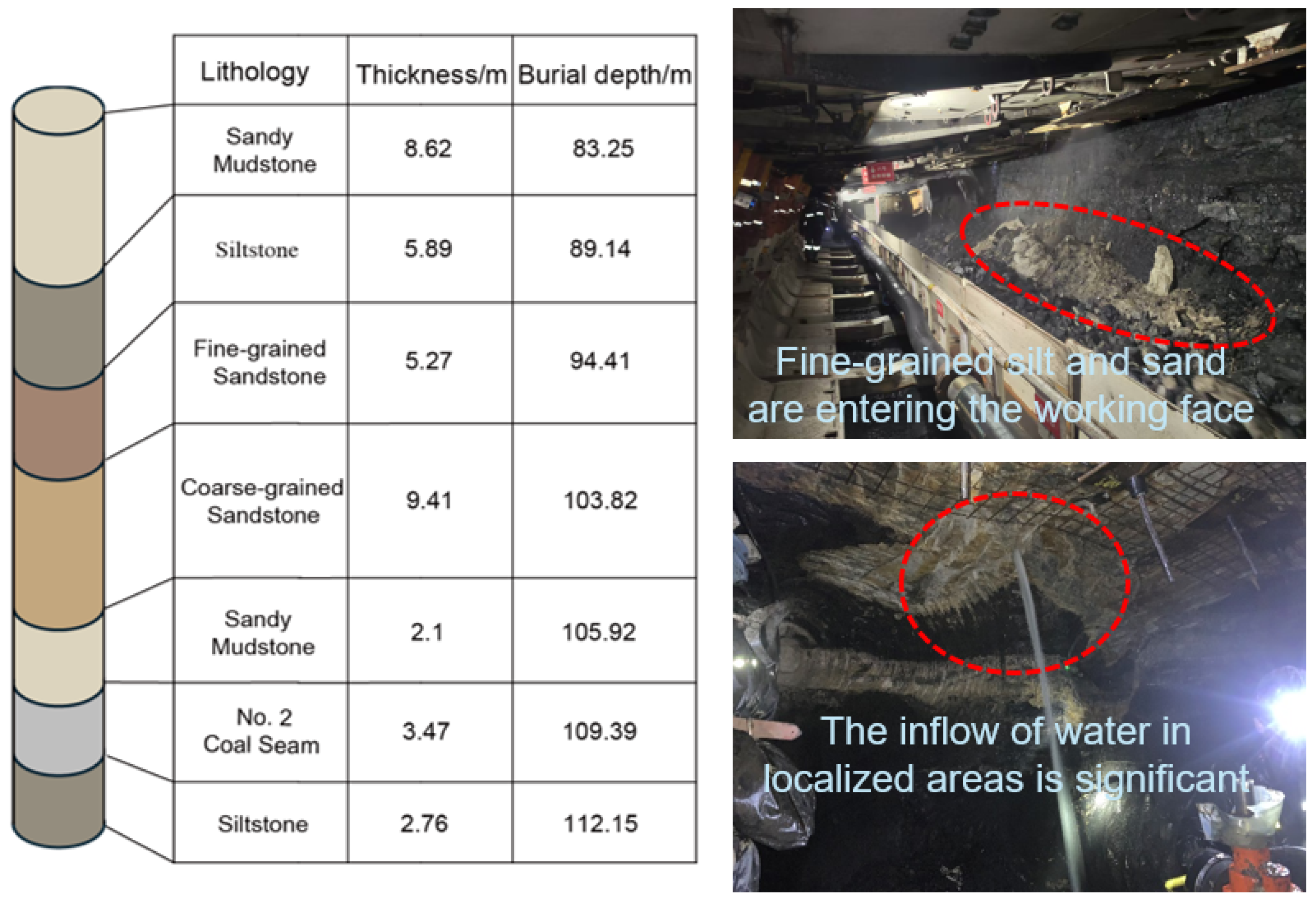
Fengjiata Coal Mine is located in the northern Shenfu Coalfield of the Ordos Basin. The mine primarily extracts the No. 2 and No. 4 coal seams. The No. 2 seam, mined in Panel 3209, is characterized by shallow burial depth, ranging from 30 to 150 m. Parts of the working face correspond to surface gullies, with a minimum overburden thickness of 31.5 m. The coarse-grained sandstone in the roof of the No. 2 seam features argillaceous cementation, massive bedding, and weak weathering, with an average thickness of 9.41 m. Due to intensive precipitation recharge in the shallow-buried sections, rainwater during summer storms readily infiltrates along surface fracture zones and flows downward to the working face (Figure 1). The clay minerals in the roof sandy mudstone exhibit strong water sensitivity, undergoing swelling, softening, and argillization upon contact with water, significantly weakening the deformation resistance of the surrounding rock. Under the combined influence of shallow burial, weathering, and hydrochemical action, a stable voussoir beam structure is difficult to form in the roof strata of the working face [20]. This leads to a reduction in the overall bearing capacity of the surrounding rock and increases the risk of instability during mining activities. Engineering hazards such as local roof falls, shield support crushing, and rib spalling occur frequently (Figure 1), seriously threatening roadway stability and mine safety production.

2.2. Hydrochemical Characteristics of Mine Water

The pH of groundwater varies significantly across different mining regions in China, typically ranging from 3 to 12. These hydrochemical characteristics can significantly deteriorate the mechanical properties of underground rock strata, thereby threatening the stability and sealing integrity of underground engineering structures such as roadways, chambers, and Oil and gas storage reservoirs. To accurately characterize the actual hydrochemical environment of the study area, we conducted water quality analysis on 14 water samples, including pore-fracture water from the No. 2 and No. 4 coal seams of Fengjiata Coal Mine. The results (Table 2) indicate that the mine water has a pH of 7.21–8.04, a salinity of 420–3214 mg·L−1, and is classified as a weakly alkaline water body with low to high salinity. The major ions include Na+, Ca2+, Mg2+, Cl, SO42−, and HCO3.
Given that the actual pH in this mining area falls within the weakly alkaline range, the pH scope of this study was extended to 6–10 to more comprehensively reveal the impacts of diverse hydrochemical environments on underground space engineering, thereby accommodating both regional representativeness and hydrochemical diversity. The research focused on investigating the characteristic changes in the macroscopic mechanical response, microscopic morphological evolution, and pore structure reorganization of coal measure coarse sandstone under the designed chemical environments. Furthermore, the intrinsic mechanism was elucidated, describing the evolution of rock mass from micro-damage accumulation to macroscopic instability and failure under water–rock interaction.

3. Deterioration Characteristics of Mechanical Properties of Coarse Sandstone Under Groundwater with Different pH Values

3.1. Sample Preparation

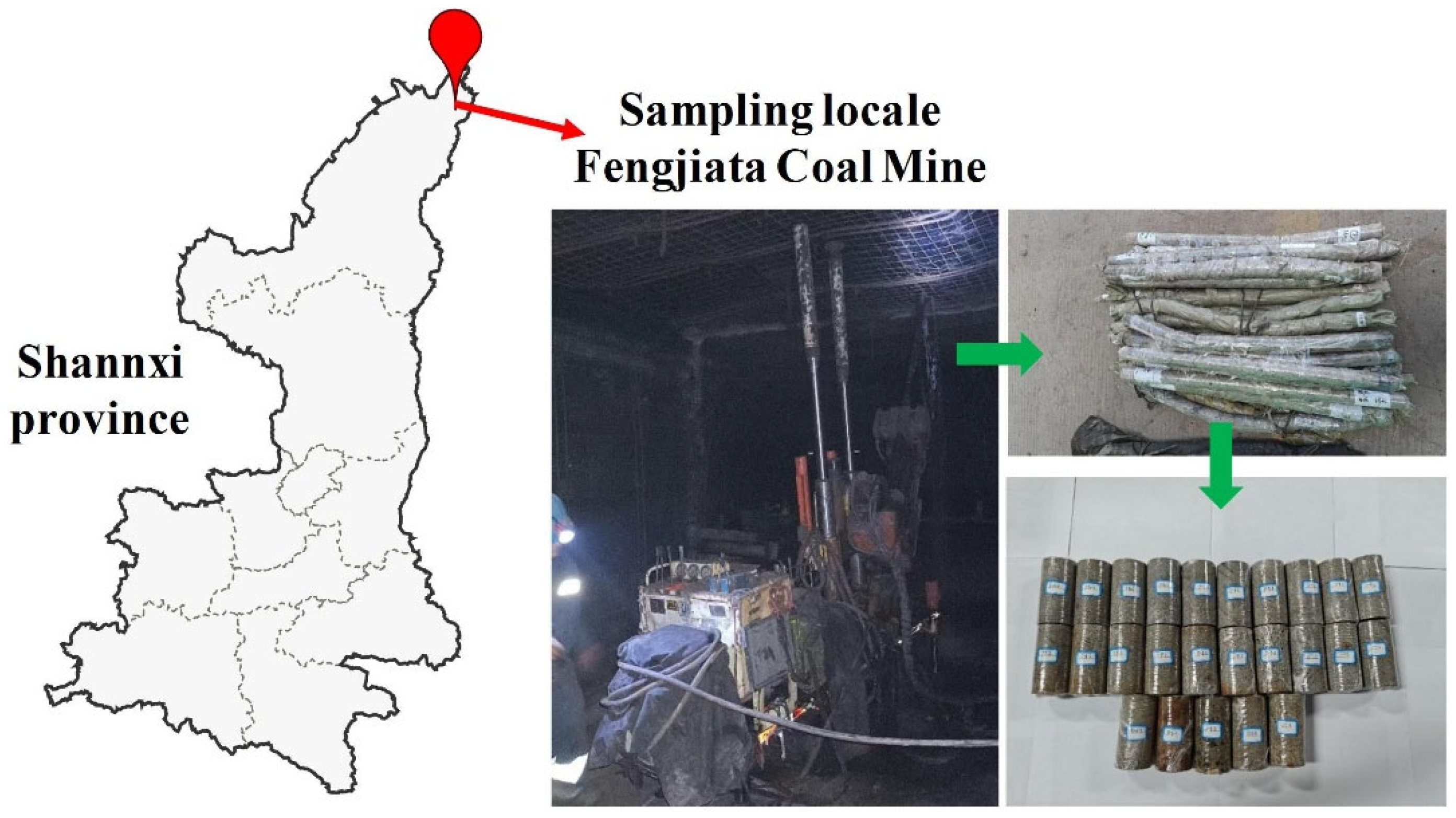
Core samples of coarse-grained sandstone from the roof of the No. 2 coal seam were obtained at Panel 3209 of Fengjiata Coal Mine using a double-wall core barrel with an inner diameter of 55 mm (Figure 2). Following the standards of the International Society for Rock Mechanics, the rock samples were cut and ground into standard specimens with a diameter of 50 mm and a height of 100 mm, with parallelism controlled within ±0.02 mm.
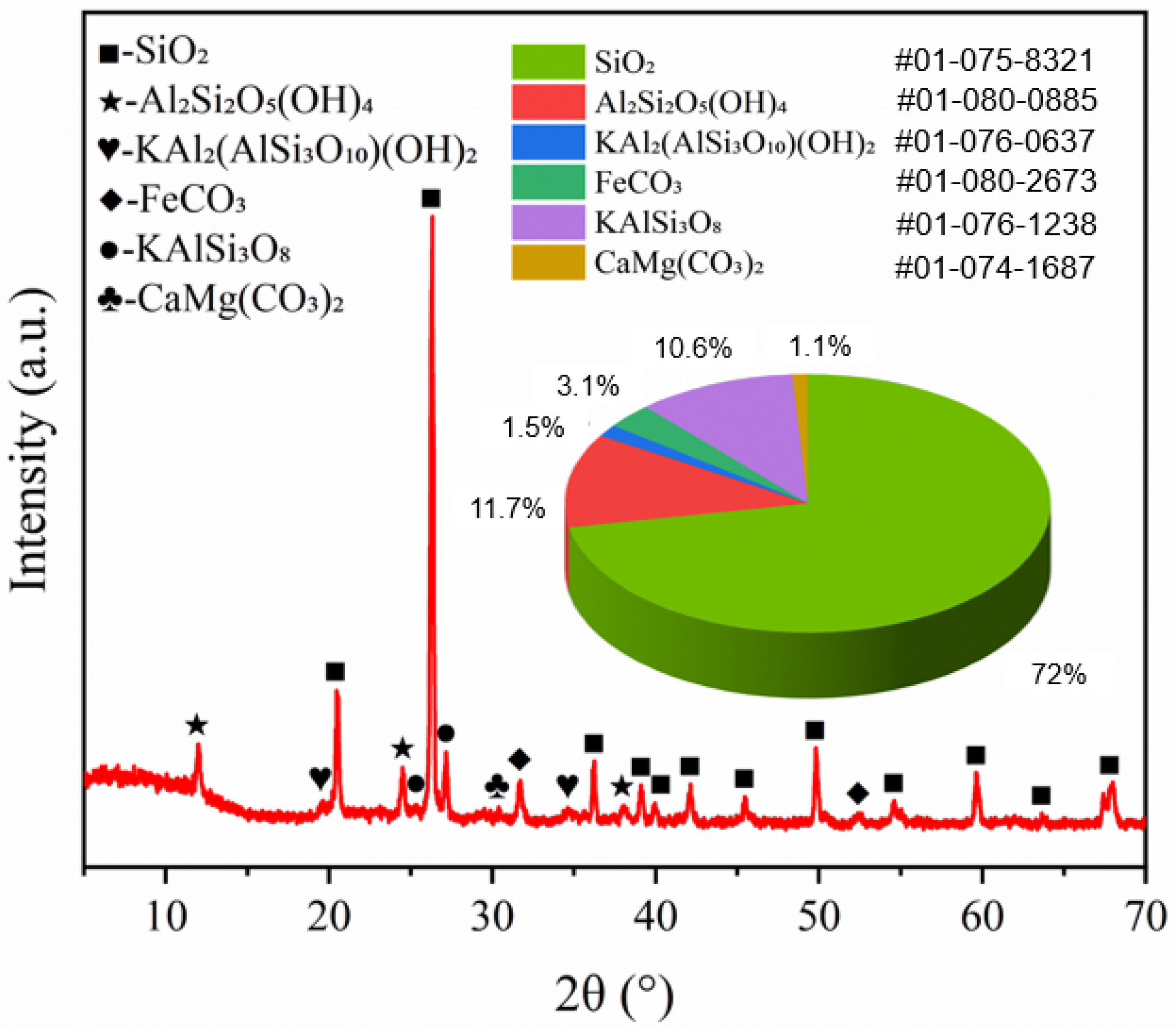
Through measuring the mass and wave velocity of standard specimens under natural conditions, 130 qualified specimens were ultimately selected, with an average mass of 551.03 g and an average wave velocity of 3501.9 m/s. X-ray diffraction (XRD) analysis was performed on powdered rock samples (<325 mesh) using a D8 ADVANCE diffractometer (Bruker AXS, Karlsruhe, Germany) over a 2θ range of 4–70°. Phase identification and quantitative mineral composition were determined using MDI Jade 6.5 software. The quantitative analysis was conducted via the Reference Intensity Ratio (RIR) method, with α-Al2O3 (corundum) added as an internal standard to each sample. The typical uncertainty of this approach in rock mineralogical analysis is approximately ±5%. As shown in Figure 3, quartz is the dominant mineral phase (~72%), followed by kaolinite (~11.7%) and K-feldspar (~10.6%). Illite, dolomite, and siderite are present in minor amounts (<4%). All identified minerals are labeled with their corresponding PDF card numbers directly in Figure 3.

3.2. Experimental Equipment and Methodology

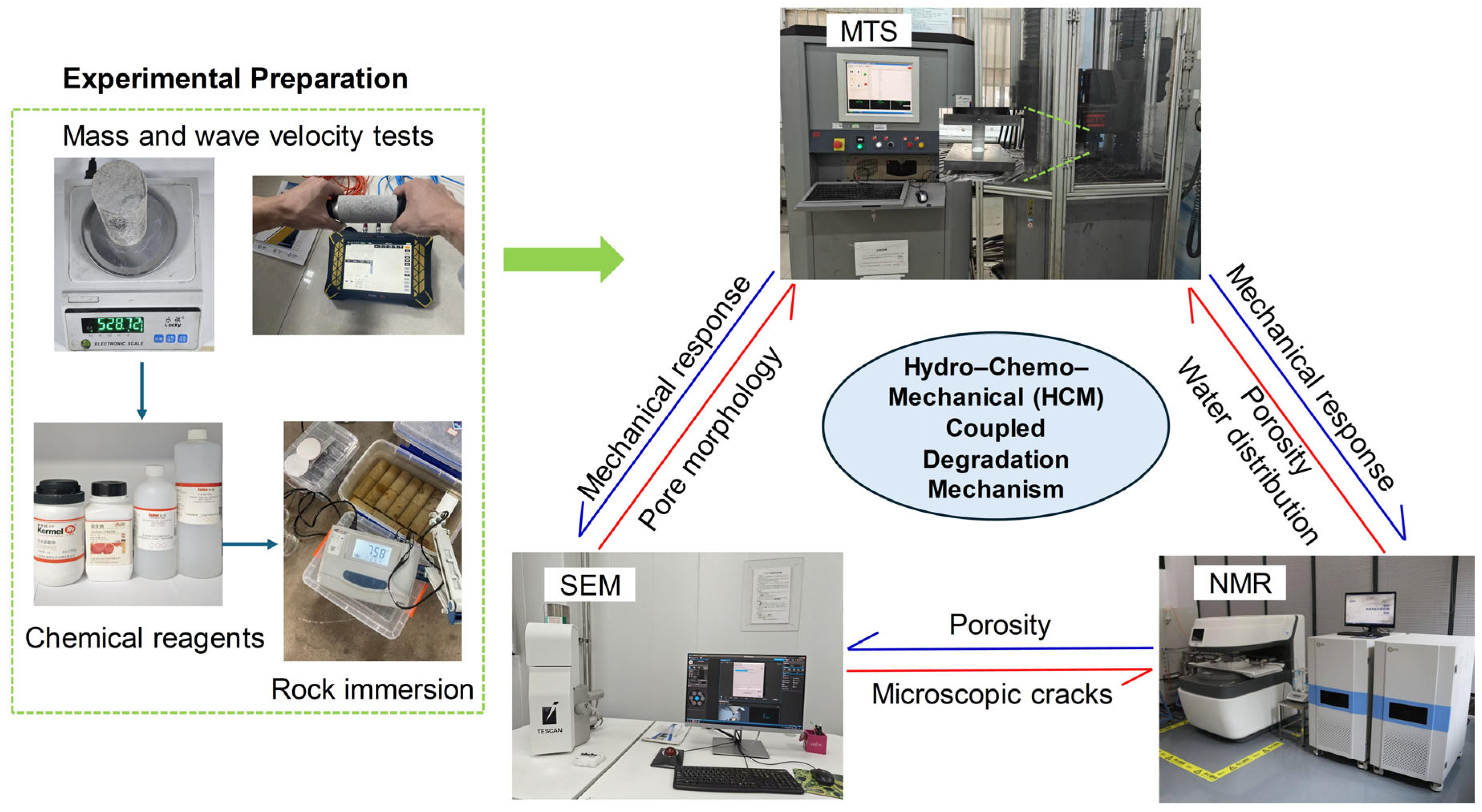
The experimental apparatus includes a servo-hydraulic universal testing machine (Model C64.106, MTS Systems Corporation, Eden Prairie, MN, USA), a low-field nuclear magnetic resonance (NMR) system (MacroMR12-150H-I, Niumag Analytical Instruments Co., Ltd., Suzhou, China), a scanning electron microscope (Tescan VEGA COMPACT, TESCAN, Brno, Czech Republic), an MC-6310 non-metallic ultrasonic detector (Wuhan Sinorock Tech Co., Ltd., Wuhan, China), and a multi-parameter water quality meter (Jinan Huiquan Electronics Co., Ltd., Jinan, China), as shown in Figure 4.
The experimental procedure is as follows:
(1) Simulated mine water (electrical conductivity, EC = 1500 μS/cm) was prepared using NaCl, Na2SO4, and CaCl2. The pH was adjusted to 6, 7, 8, 9, and 10 using 1 mol/L NaOH and HCl solutions. For each pH condition, 25 specimens were immersed, corresponding to five immersion durations (2 d, 5 d, 9 d, 15 d, 30 d), with five replicates per condition. Specimens are labeled as ‘pH–days’ (e.g., ‘6-2’ denotes pH = 6, 2 days of immersion).
(2) During immersion, the pH and EC of each solution were measured daily using a calibrated multi-parameter water quality meter. The probe was rinsed with distilled water between measurements to prevent cross-contamination.
(3) At each designated time point, five specimens from each pH group were subjected to uniaxial compression tests using an MTS 835 servo-hydraulic testing machine at a displacement-controlled loading rate of 0.020 mm/min, in accordance with ASTM D7012 [21]. Silicone grease was applied to both ends of the specimens to minimize end-friction effects. Load–displacement data were recorded at a frequency of 200 ms to analyze the mechanical behavior of coarse sandstone under varying pH and immersion duration conditions.
(4) Representative fragments from failed specimens were dried at 60 °C for 24 h, mounted on stubs, sputter-coated with gold, and examined under SEM at 500× magnification to observe microstructural features including grain cementation, mineral dissolution, microcracks, and pore morphology.
(5) To ensure integrity for NMR testing, five additional parallel specimens were prepared exclusively for NMR monitoring. These intact specimens were removed at each immersion time (2 d, 5 d, 9 d, 15 d, 30 d), surface-dried, and immediately tested using low-field NMR to obtain T2 spectra under water-saturated conditions. After testing, they were returned to their original solutions for continued immersion and were not used in any other tests. This non-destructive, repeated-measurement approach effectively eliminates interference from natural heterogeneity among different rock samples when assessing porosity evolution.

3.3. Uniaxial Compression (UC) Failure Characteristics of Rock Specimens

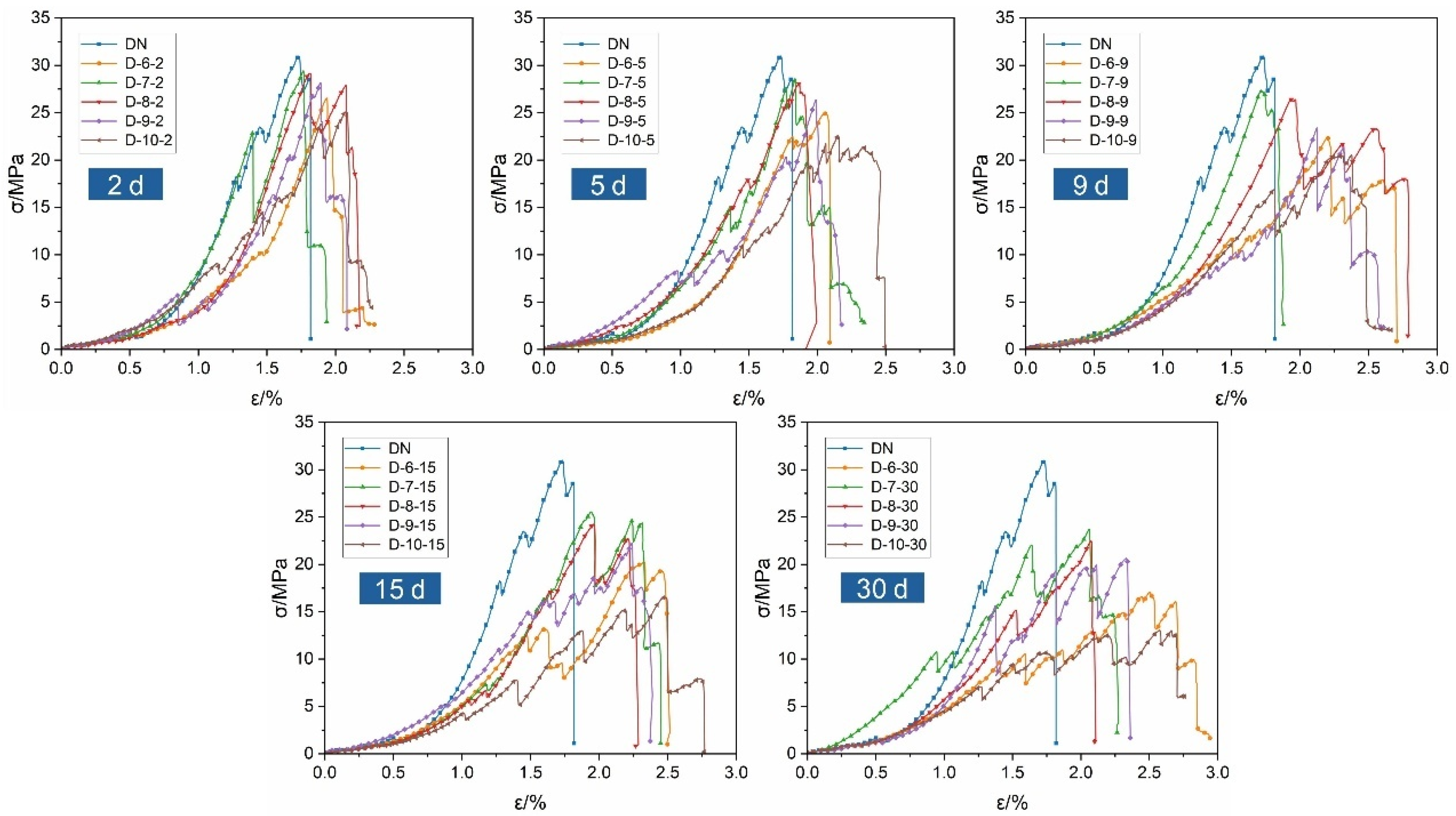
With prolonged immersion time and increased acidity/alkalinity of the solution, the specimens exhibited a continuous decrease in peak strength, a gradual increase in peak strain, and a transition in failure mode from brittle to brittle-ductile characteristics (Figure 5). Under weakly acidic conditions (pH = 6), H+ ions, through corrosion and dissolution, lead to structural deterioration of the rock, significantly reducing its mechanical properties. In contrast, the near-neutral solutions (pH = 7–8) exhibit weaker chemical activity. The pre-peak curves of specimens immersed for 2, 5, and 15 days nearly overlapped, indicating that physical water infiltration and weak ion exchange caused only a slight reduction in surrounding rock strength. Under moderately alkaline conditions (pH = 9–10), the degree of rock damage was significantly higher than in neutral solutions. This reflects that the higher concentration of OH ions promotes the gradual hydrolysis and dissolution of cementing materials within the rock, leading to reduced interparticle bond strength and consequently accelerating mechanical property degradation. Overall, the results indicate that coarse-grained sandstone follows an evolutionary path under different pH conditions: “slight damage under near-neutral conditions—moderate damage under weak acid conditions—severe damage under moderately alkaline conditions”.
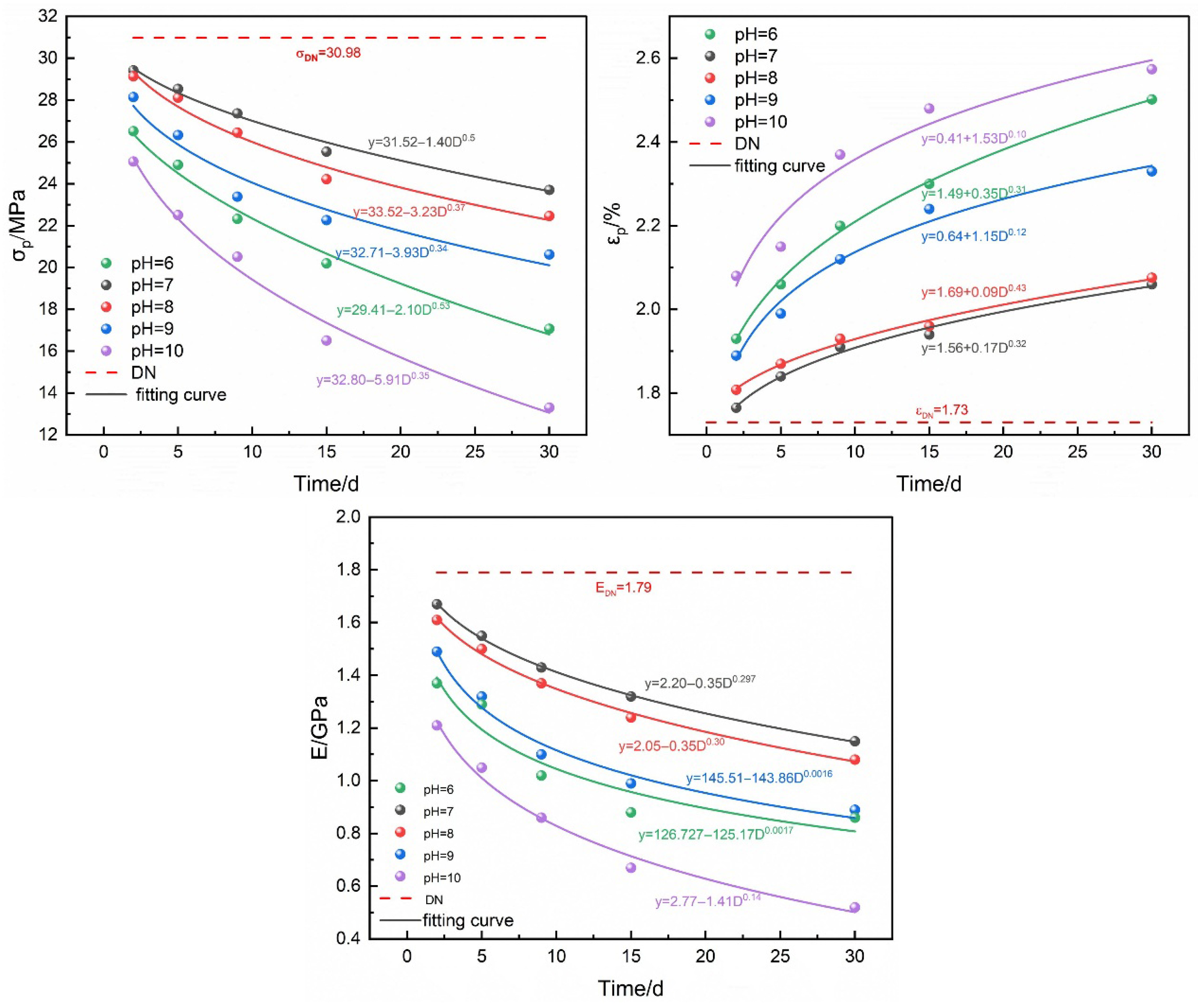
Further processing of the stress–strain curves in Figure 5 yielded the variations in peak strength, peak strain, and elastic modulus (E) of specimens with immersion time after soaking in solutions of different pH values (Figure 6). The study found that peak strength exhibits exponential decay with immersion time. Over the 30-day period, the strength consistently followed the order: natural state > pH = 7 > pH = 8 > pH = 9 > pH = 6 > pH = 10, with the most significant strength degradation occurring under pH = 6 and pH = 10 conditions (reduced by 42.5% and 57.04%, respectively). Furthermore, peak strain shows exponential growth with immersion time. The evolution curves under pH = 7 and pH = 8 conditions are highly consistent and only slightly higher than those of the natural state, indicating minimal changes in deformation capacity within this range. In contrast, pH = 6, pH = 9, and pH = 10 conditions all significantly increase peak strain, suggesting that the rock exhibits enhanced plastic deformation capacity and weakened brittle characteristics before failure. The elastic modulus also demonstrates exponential decay with immersion time, with the most severe stiffness reduction observed under pH = 10 conditions (a reduction of 71.2% after 30 days for pH = 10), far exceeding the reduction under other pH environments. These results indicate that both H+-dominated dissolution and OH-dominated hydrolysis can disrupt the Si–O–Si structural bonds, thereby leading to stress concentration at crack tips and accelerating stiffness loss [22].
The uniaxial compressive strength (UCS) and elastic modulus (E) of coarse sandstone exhibit a characteristic exponential decay pattern during immersion in solutions of different pH values, jointly controlled by both acidity/alkalinity and time. This indicates that both acidic and alkaline solutions can significantly damage the silicate framework structure of the rock. Consequently, fluctuations in the hydrochemical environment of groundwater exert a pronounced influence on the long-term stability of underground spaces, as well as on the integrity and sealing capacity of other underground engineering structures.

4. Evolution of Microscopic Morphology and Pore Structure of Rock Specimens Under Hydrochemical Action

4.1. Evolution of pH and EC in Solution During Water–Rock Interaction

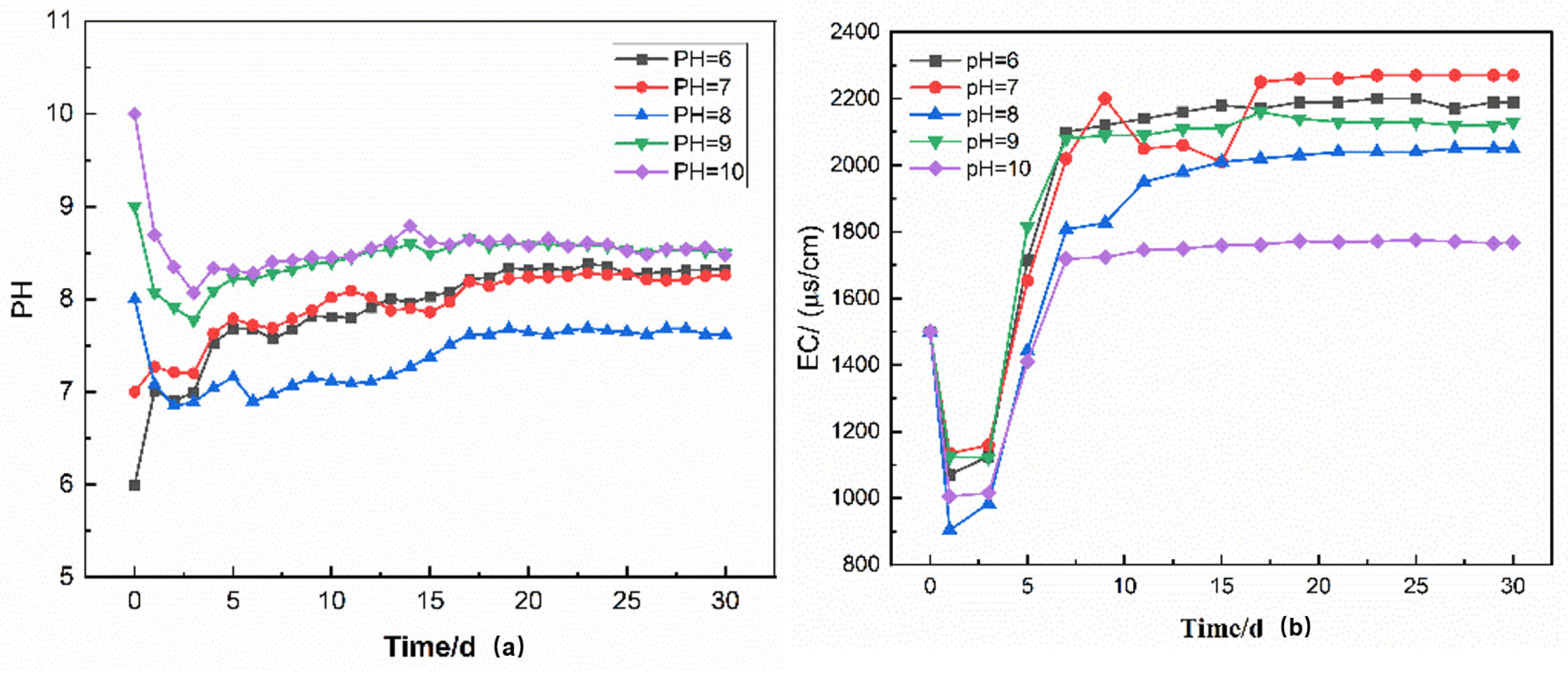
During water–rock interaction, the pH and electrical conductivity (EC) of the solution progressively change due to mineral dissolution, ion exchange, and precipitation reactions. The solution pH exhibits a three-stage variation (Figure 7a). In the initial immersion stage (0–3 d), significant changes were observed in solutions of different initial pH: the pH of the acidic solution (initial pH = 6) increased from 6 to 6.99 (a 16.5% increase), while the neutral solution (initial pH = 7) increased from 7 to approximately 7.20 (a 3.1% increase). Conversely, the pH of alkaline solutions showed a distinct decrease: pH = 8 decreased to 6.89 (a 13.9% decrease), pH = 9 decreased to 7.77 (a 13.7% decrease), and pH = 10 decreased to 8.07 (a 19.3% decrease). The decrease was more pronounced in solutions with higher initial alkalinity. This phenomenon occurs because H+ in acidic solutions is rapidly consumed through dissolution of clay minerals and ion exchange reactions, whereas OH in alkaline solutions reacts with cations such as Ca2+ and Mg2+ to form precipitates, leading to a significant short-term pH decrease. In the subsequent 3–10 d stage, the pH of all systems recovered to some extent due to the continuous dissolution of aluminosilicates (e.g., kaolinite, potassium feldspar) releasing OH. In the final 10–30 d stage, the pH values of all solutions gradually converged towards the neutral to weakly alkaline range. Dissolution-precipitation reactions and ion exchange processes reached chemical equilibrium, stabilizing around pH = 8.
The variation in electrical conductivity (EC) also exhibited a characteristic three-stage evolution (Figure 7b). During the initial immersion stage (0–1 d), EC decreased from approximately 1500 μS/cm to a range of 905–1135 μS/cm, representing a reduction of 24.3–39.7%, attributable to cation adsorption (e.g., Na+, K+) and initial precipitation. In the subsequent 1–10 d stage, EC increased to a range of 1724–2200 μS/cm, corresponding to an increase of 90.5–93.8%, as minerals such as kaolinite and potassium feldspar dissolved, releasing substantial quantities of ions including K+, Al3+, SiO32−, and OH. Upon entering the stable phase (10–30 d), the final stabilized EC value was influenced by the initial pH. Under weakly acidic to weakly alkaline conditions, stronger dissolution processes resulted in higher ion concentrations, with EC stabilizing between 1700–2300 μS/cm. In contrast, under strongly alkaline conditions (pH = 10), precipitation reactions were more pronounced, leading to pore filling by precipitates and a consequent reduction in free ion concentration, which resulted in EC stabilizing at approximately 1600–1800 μS/cm.

4.2. SEM Micro-Morphological Evolution Characteristics of Coarse-Grained Sandstone

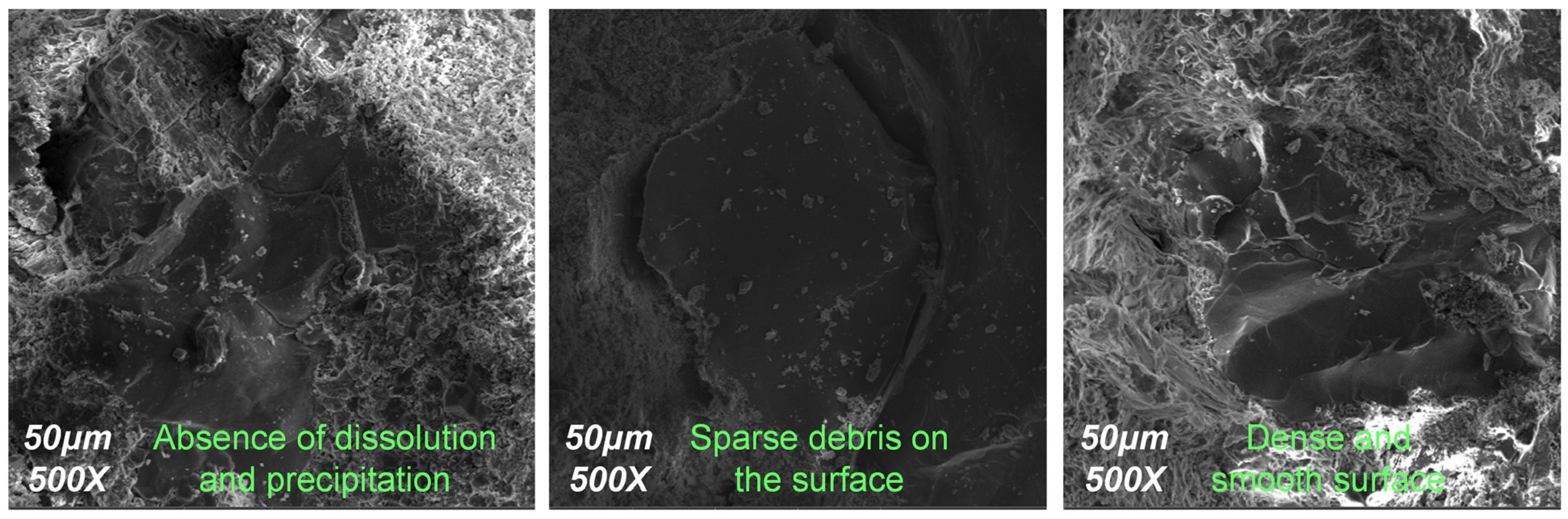
The micro-surfaces of sandstone specimens before and after immersion were observed using SEM, covering features such as primary pores, micro-cracks, secondary voids, structural planes, and grain boundaries. The observation areas were randomly selected for each specimen. To ensure comparability, all images were acquired at a magnification of 500×. As shown in Figure 8, the surface of coarse-grained sandstone in its natural state exhibits a uniform and compact structure, with tightly bonded grains. Pores are limited in number and appear as isolated distributions. No dissolution pits or secondary precipitation attachments were observed, with only a small amount of scattered debris visible. These characteristics indicate that the natural-state specimen possesses an intact framework structure and high mechanical integrity, serving as a baseline reference for analyzing the chemical degradation effects under different pH conditions.
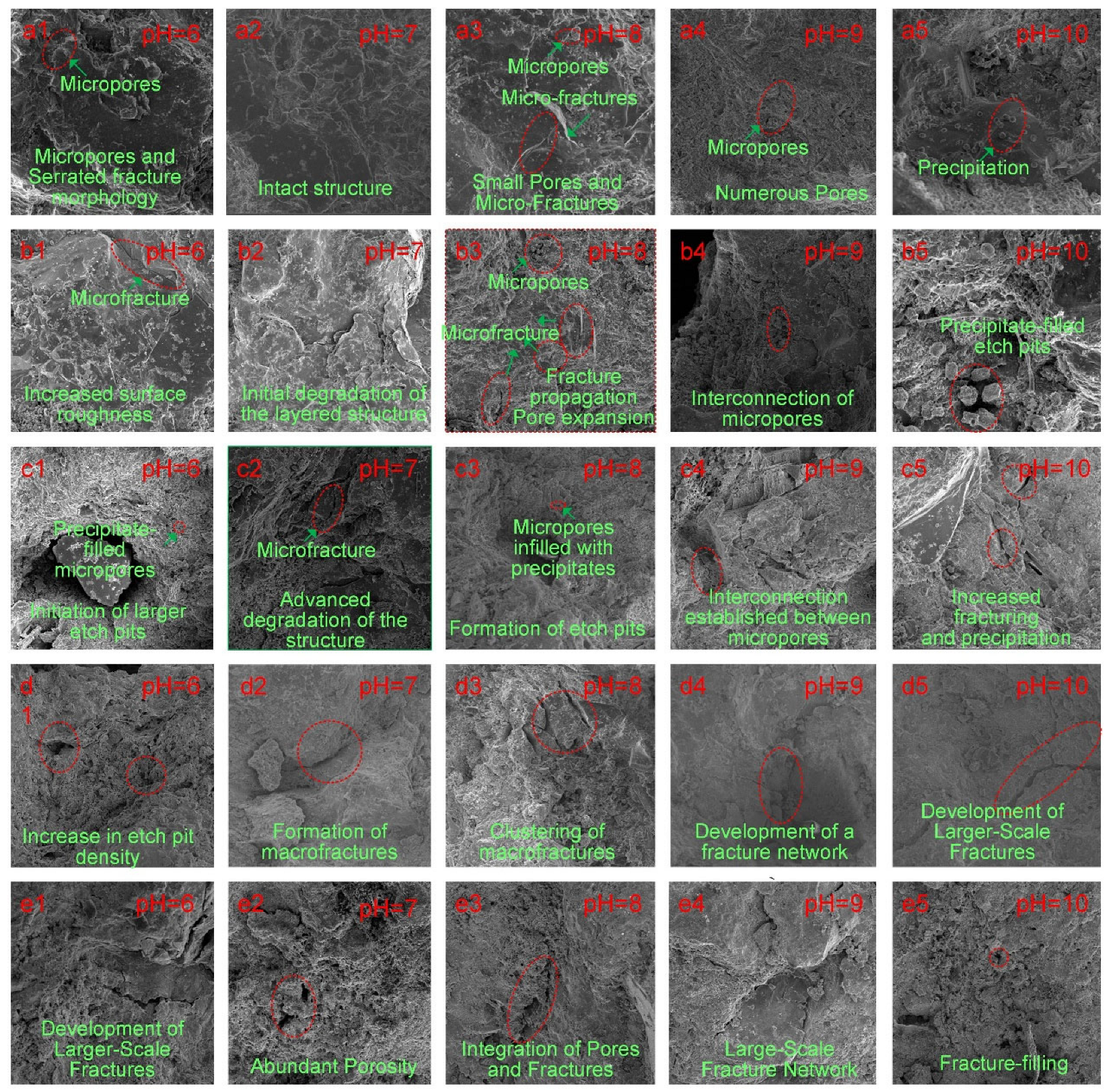
As illustrated in Figure 9, both the surface and internal microstructure of coarse-grained sandstone exhibit significant, pH-dependent, and staged chemical damage characteristics following immersion in solutions of varying pH. The weakly acidic environment (pH = 6) is characterized by selective mineral dissolution, preferentially targeting clay minerals such as kaolinite and potassium feldspar, resulting in serrated erosion patterns along pore edges. Under neutral conditions (pH = 7), water–rock interactions are minimal, and the structural integrity remains largely preserved. In weakly to moderately alkaline environments (pH = 8–9), OH ions accelerate the dissolution of the aluminosilicate framework, leading to particle loosening and the interconnection of pores and fractures. Under strongly alkaline conditions (pH = 10), intense dissolution coupled with secondary precipitation synergistically drives the transformation of micropores into a complex structure transitioning from “macropores—pore networks—precipitate infilling”
With prolonged immersion time, the damage progressively intensifies and exhibits a characteristic three-stage evolution. In the initial immersion stage (2–5 d): at pH = 6, dissolution along mineral edges emerged, and flocculent precipitates gradually formed; in the pH = 8–9 range, the development of minor fractures, delamination, and pore enlargement were observed; at pH = 10, rapid dissolution led to the initial appearance of localized precipitates. In the intermediate immersion stage (9–15 d): varying degrees of fracture network interconnection occurred across all systems. A honeycomb-like pore morphology developed at pH = 6, while larger fractures formed in the pH = 7–10 range, with a particularly extensive fracture network developing at pH = 10. In the final stage (30 d): at pH = 6, interconnected dissolution grooves developed, accompanied by flake-like spalling of fractures; at pH = 7–8, macroscopic fracture propagation was observed, with enhanced pore connectivity; at pH = 9, collapse of pore walls resulted in a labyrinth-like pore network; at pH = 10, an extreme failure morphology characterized by “dissolution–re-fracturing” was manifested, featuring precipitates and newly formed, wide penetrating fractures.
In summary, the evolution of microscopic damage follows the pathway of “selective mineral dissolution—pore expansion and interconnection—formation of a weak-plane pore network—fracture propagation and multiplication—overall structural failure.” Particularly under strong alkaline conditions, dissolution-precipitation interaction accelerates the deterioration of the pore-fracture system, providing critical evidence for understanding the macroscopic strength degradation and changes in failure mode.

4.3. Evolution of Pore Structure and Moisture State Characteristics of Rock Specimens

4.3.1. Quantitative Characterization of Porosity in Rock Specimens

This study employs low-field nuclear magnetic resonance (NMR) experiments to non-destructively and quantitatively characterize the porosity of coarse sandstone immersed in different pH solutions [23,24]. Due to the interaction between water or fluid molecules and the pore walls, the relaxation time (T2) is closely related to the pore size and wall properties. Smaller pores exhibit stronger surface effects, resulting in shorter T2 values, while larger pores show weaker surface effects and thus longer T2 values. The T2 distribution spectrum obtained through inverse Laplace transformation can effectively analyze the pore size distribution, porosity, and complexity.
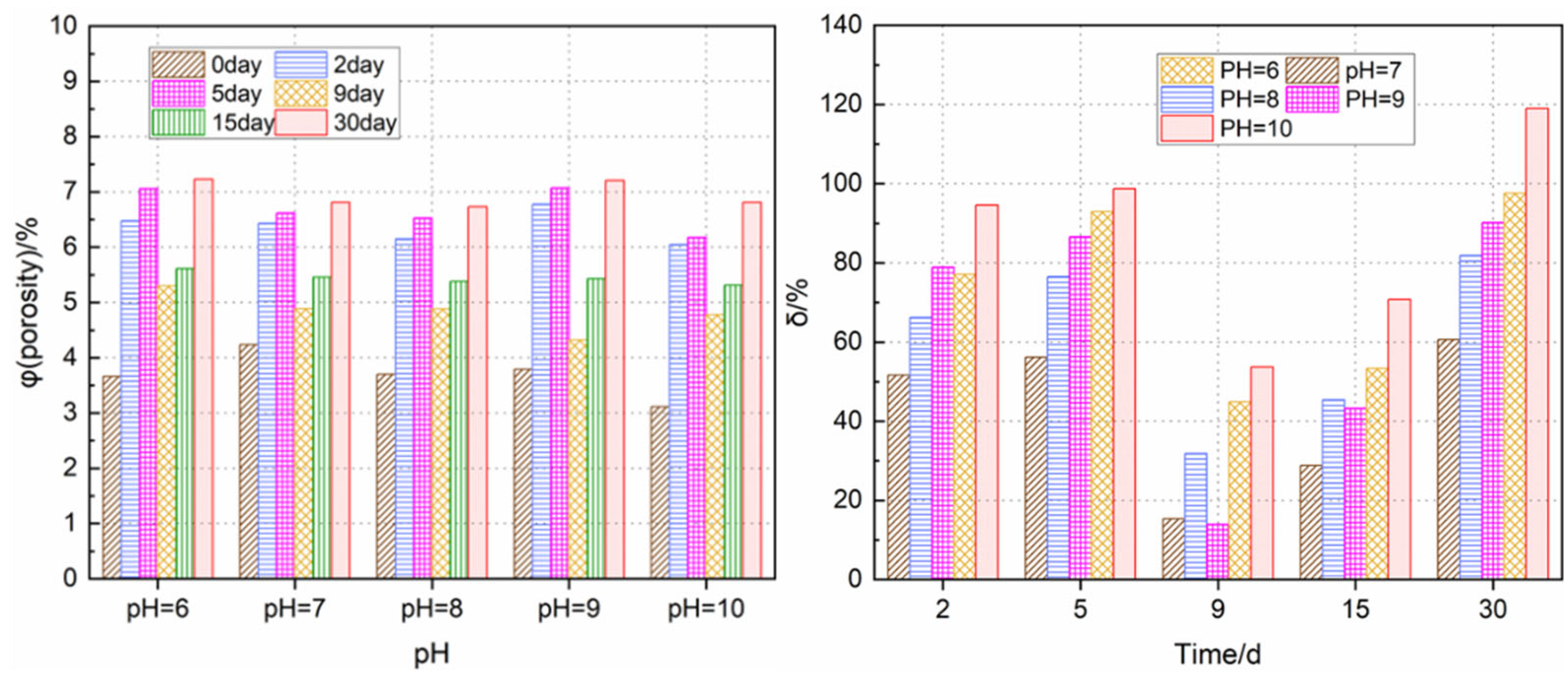
To further quantify changes in porosity during the immersion process, a porosity relative change rate δa (where a = 6, 7, 8, 9, 10) was introduced to characterize the magnitude of porosity change in rock specimens under various pH conditions relative to their natural state. Its calculation formula is as follows:
δ a = δ a d δ a 0 δ a 0 × 100 %   ( a = 6 , 7 , 8 , 9 , 10 ;   d = 2 , 5 , 9 , 15 , 30 )
where δad denotes the porosity of the rock specimen after immersion for d days at pH = a, and δa0 represents the porosity of each specimen in its natural state.
As shown in Figure 10, the porosity of rock specimens under different pH conditions exhibits a characteristic “three-stage” evolution trend: with prolonged immersion time, it follows an “increase—decrease—re-increase” pattern, generally reaching its peak value after 30 days. Pore expansion is most pronounced under moderately alkaline conditions (pH = 10), where the porosity increased from 3.11% to 6.81%, representing a rise of 118.97%. This is followed by weakly acidic conditions (pH = 6), while changes in porosity are more moderate under neutral to weakly alkaline conditions (pH = 7–8). This indicates that the damage inflicted by OH on the aluminosilicate framework in moderately alkaline solutions is significantly greater than that in weakly acidic or neutral solutions.
The relative change rate δa (Table 3) further reveals that the degree of pore structure evolution intensifies with increasing acidity or alkalinity of the solution. Only at pH = 10 did δa exceed 100% after 30 days, reflecting its strong chemical erosive effect. Notably, at 9 days of immersion, a transient decrease in porosity was observed across specimens immersed in solutions of all pH values. This is attributed to the short-term precipitation and clogging of reaction products within the pores, which temporarily offset the pore enlargement caused by mineral dissolution. As the reactions proceeded, precipitation and dissolution reached a dynamic equilibrium. In summary, The stronger the acidity (via H+ dissolution) or alkalinity (via OH hydrolysis), the more intense the water–rock interaction. This leads to more pronounced pore structure evolution and, consequently, significantly compromises the mechanical integrity of the rock.

4.3.2. Characteristics of T2 Spectra and Their Area Evolution Patterns

(1) Characteristics of T2 Spectra
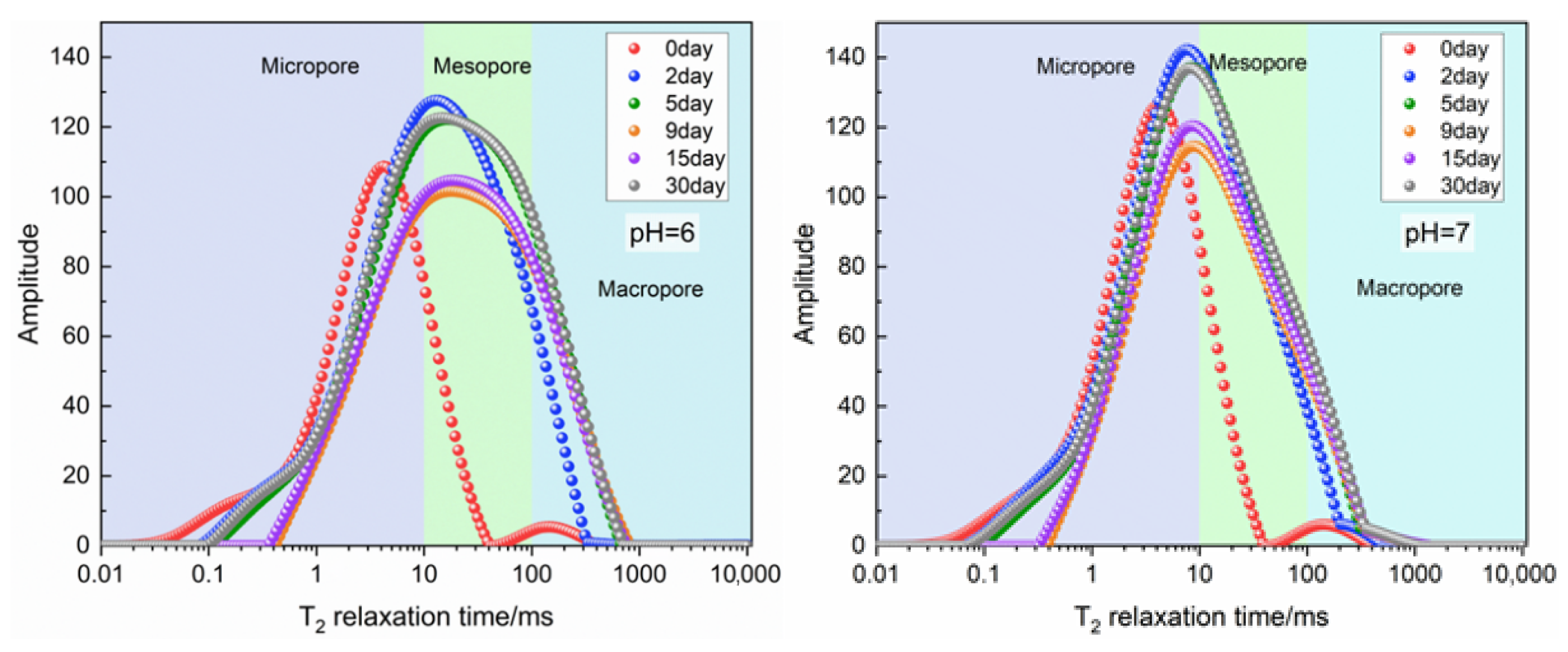
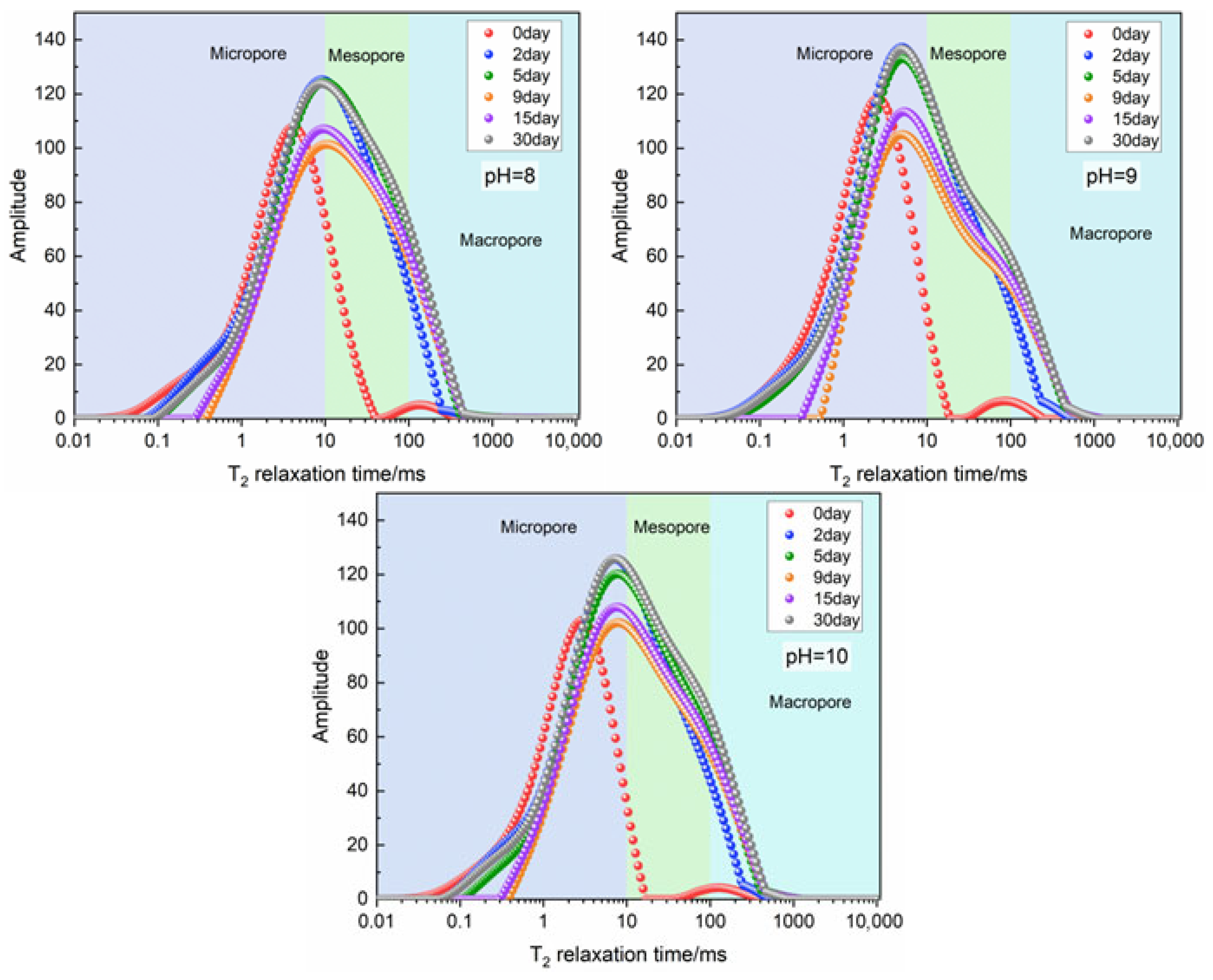
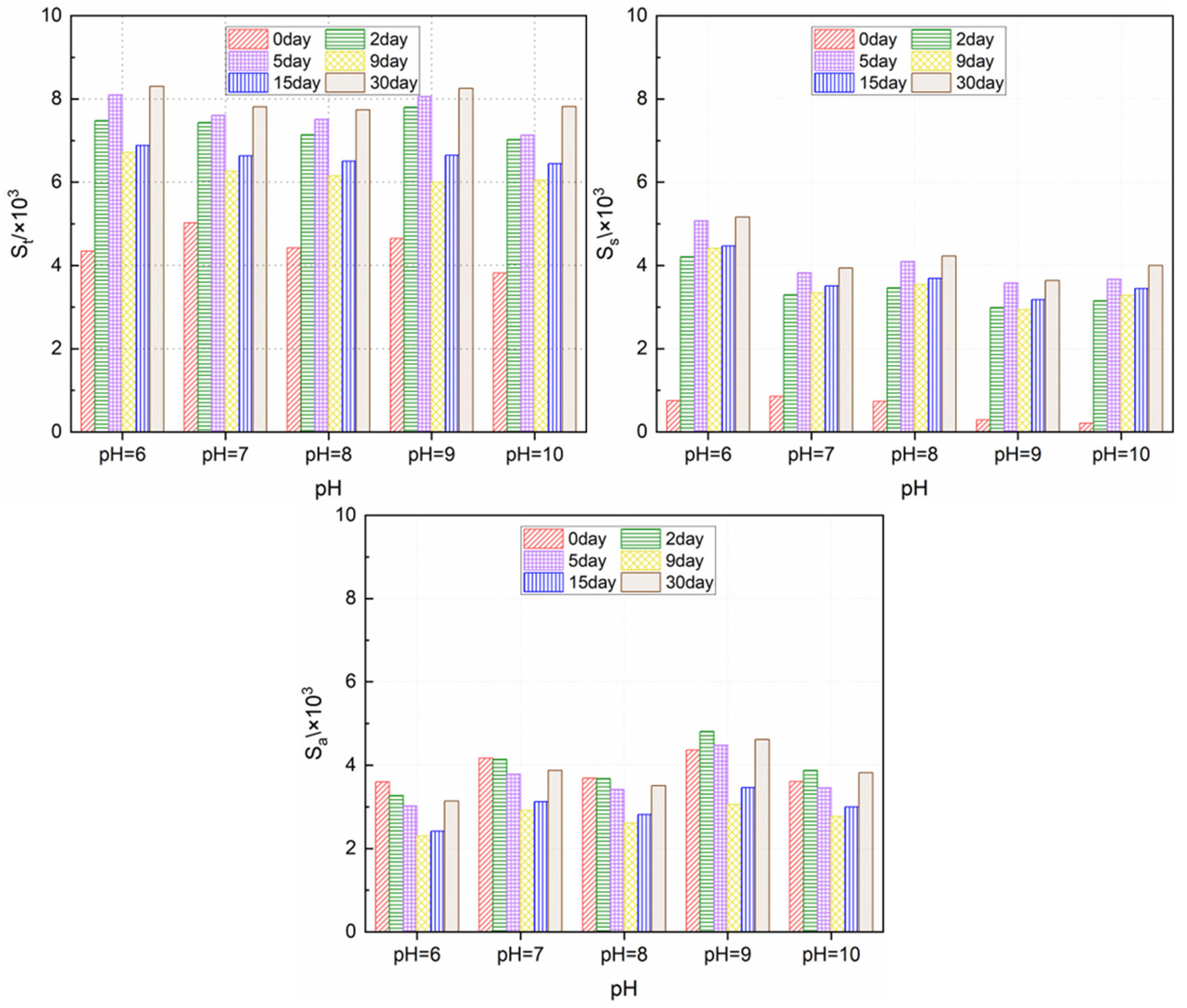
Low-field nuclear magnetic resonance characterizes pore structure by measuring the transverse relaxation time (T2) of hydrogen protons in pore fluids. According to the pore classification standard proposed by Ondrášik and Kopecký [25], pores are categorized as micropores (≤100 μm), mesopores (100–1000 μm), and macropores (≥1000 μm). By substituting these critical pore diameters into the T2–pore size conversion equation (Equation (2)) from Chao et al. [26], the corresponding T2 cutoff values are calculated as 10 ms and 100 ms. Thus, pores are classified as micropores (T2 < 10 ms), mesopores (10–100 ms), and macropores (T2 > 100 ms) [27,28]. The spectral areas corresponding to these ranges—adsorption pore volume (Sa), seepage pore volume (Ss), and total pore volume (St)—are used to non-destructively and quantitatively characterize the evolution of pore structure in rock samples subjected to groundwater chemical interactions.
( T 2 ) t o t a l r 10
The experimental results (Figure 11) indicate that after immersion in solutions of different pH, the T2 spectra of coarse sandstone evolved from an initial bimodal distribution toward a unimodal distribution, with the main peak shifting to the right and the spectral width broadening significantly. This suggests an overall transformation of the pore structure from micropores to medium and large pores. The peak of the T2 spectrum also exhibited an “increase—decrease—re-increase” trend over time, corresponding to the “increase—decrease—re-increase” evolutionary path of porosity. This reveals the staged nature of water–rock interaction: the initial stage is dominated by mineral dissolution and ion exchange reactions; the intermediate stage involves precipitation clogging, leading to a reduction in effective porosity; the later stage is marked by an increase in pore quantity and connectivity, as well as fracture enlargement, promoting the rapid development of medium and large pores. In summary, the systematic changes in the T2 spectra reflect that coarse sandstone undergoes a dynamic evolution under hydrochemical action, characterized by “mineral dissolution—micropore expansion—pore network formation—precipitation clogging—pore-fracture interconnection”.
(2) Evolution Patterns of T2 Spectrum Area
Quantitative analysis based on T2 spectrum area further reveals the evolutionary pattern of pore structure in response to hydrochemical environments (Figure 12). The total pore spectrum area St (reflecting total pore space) increased significantly above its initial value under all pH conditions (increase > 50%), with the order of increase being pH = 10 > pH = 6 > pH = 9 > pH = 8 > pH = 7. At pH = 10, the increase reached 104.89%. The adsorbed pore spectrum area Sa (reflecting micropore space) fluctuated slightly within 0–30 d, with the magnitude of change at 30 d remaining below 13% in all cases, indicating relatively stable micropore development. The seepage pore spectrum area Ss (reflecting medium to large pore space) exhibited a synchronized “increase—decrease—re-increase” trend with St. This trend was most prominent in moderately to strongly alkaline environments (pH = 9–10), where Ss increased by over 1000%.
These changing characteristics indicate that: in weakly acidic environments (pH = 6), H+ dissolves aluminosilicate cements and clay minerals, generating numerous micro-dissolution pits and micro-fractures, which increases the quantity of medium and large pores. In neutral to weakly alkaline solutions (pH = 7–8), water–rock interactions are dominated by physical water infiltration and weak ion exchange, resulting in slow pore evolution and the smallest increases in St and Ss. In moderately to strongly alkaline solutions (pH = 9–10), hydrolysis of aluminosilicate cements by OH disrupts the bonding between cement particles. This process gradually forms well-connected medium and large pores and is accompanied by the generation of secondary precipitates. Consequently, Ss increases rapidly, driving a significant rise in St.

4.3.3. Evolution Characteristics of Different Water Type Proportions in Rock Specimens

The changes in the proportions of three water types (ψBrW, ψSbW, and ψFrW) can quantitatively reflect the dynamic adjustment process of the pore structure in rock specimens under hydrochemical action: T2 < 10 ms corresponds to bound water (BrW, primarily residing in micropores), 10–100 ms corresponds to semi-bound water (SbW, primarily residing in mesopores), and T2 > 100 ms corresponds to free water (FrW, primarily residing in macropores and fractures).
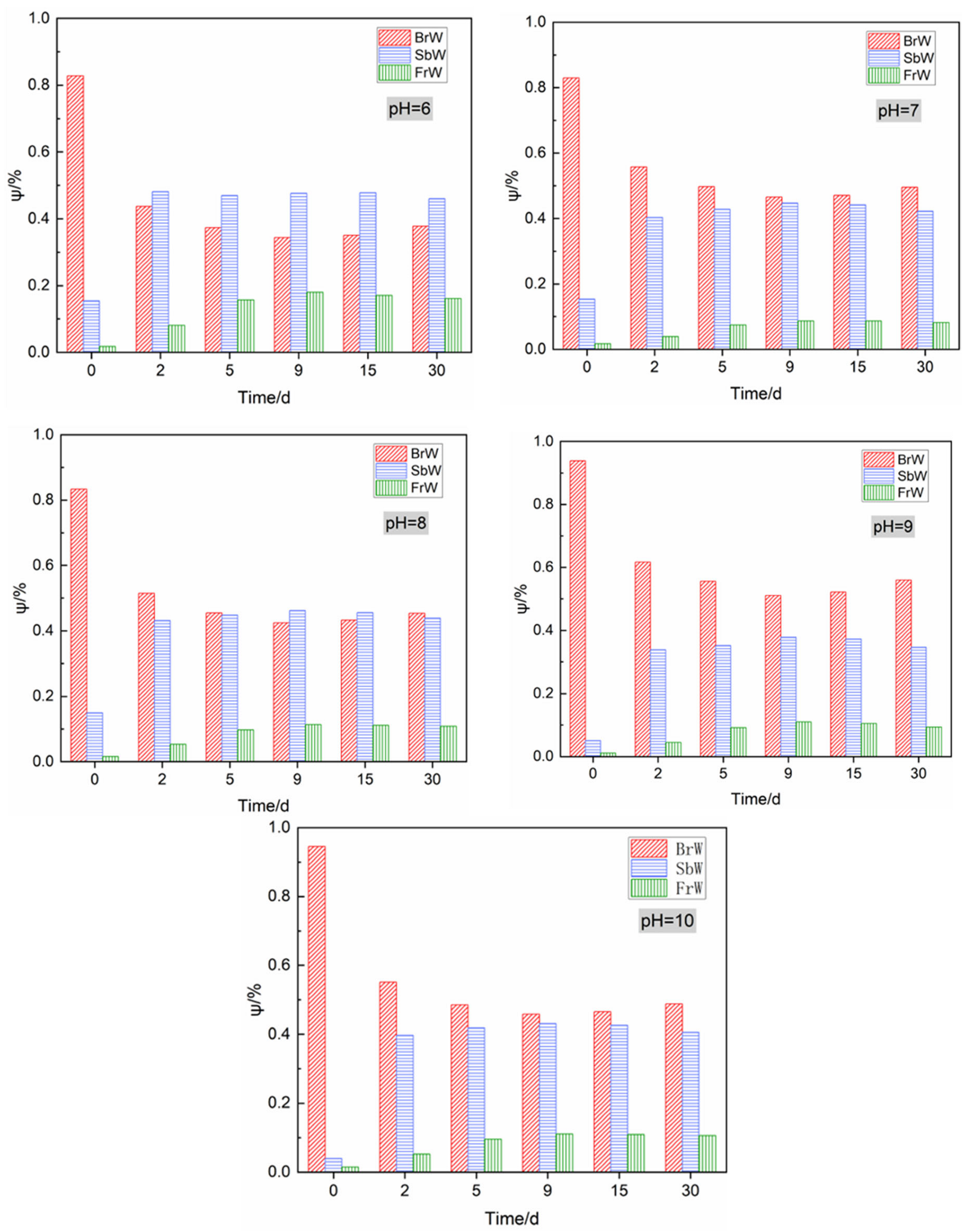
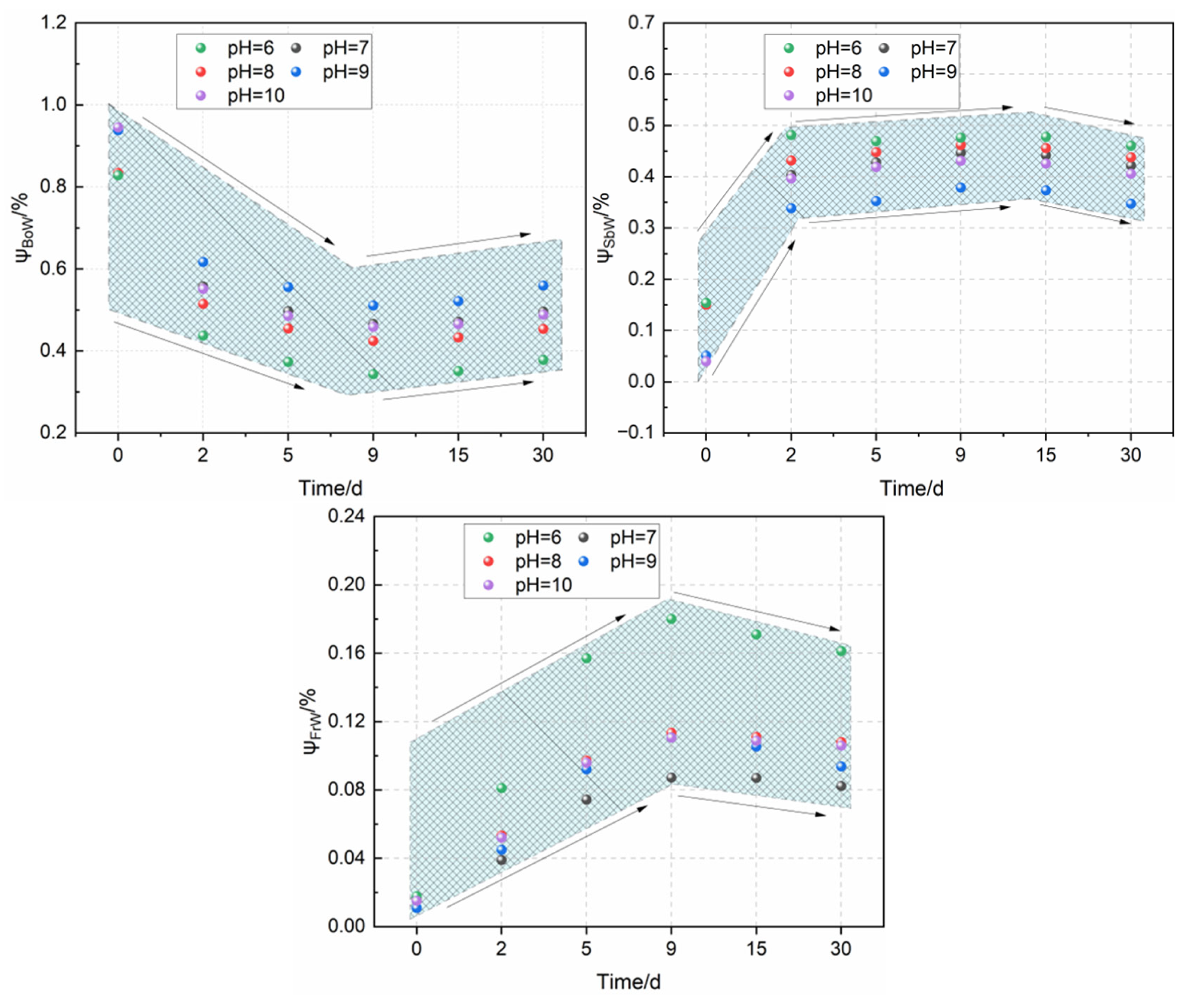
As shown in Figure 13 and Figure 14, the overall variation patterns of the three water-type proportions under different pH environments are as follows: bound water (ψBrW) exhibits a significant initial decline followed by a slow rise with increasing immersion time; semi-bound water (ψSbW) shows a rapid initial increase and then a slight decrease; and free water (ψFrW) demonstrates a gradual increase followed by relative stability. These patterns indicate that a large number of micropores were rapidly reduced in the early stage due to pore dissolution and interconnection, leading to a swift increase in the number of medium and large pores. In the mid to late stages, as the dissolution rate declined, soluble minerals were consumed, and secondary precipitates accumulated in large pores, the proportions of the three water types gradually stabilized. After 30 days of immersion, ψBrW decreased by approximately 35–60% under all pH conditions, while both ψSbW and ψFrW were significantly higher than their initial values. This indicates that approximately half of the bound water was converted into semi-bound or free water, demonstrating an overall transformation of the pore structure from micropore-dominated to medium/large pore-dominated. Notably, the conversion of water types was very rapid during the initial immersion period, highlighting the substantial promoting effect of early-stage hydrochemical action on the release and transformation of adsorbed water within pores.
In summary, rock specimens in their natural state are dominated by bound water. However, under water–rock chemical interaction, different pore types undergo an evolutionary path of “micropore disintegration—mesopore expansion—fracture interconnection”, leading to a gradual increase in pore scale and a corresponding shift in water occurrence states. This structural deterioration process directly compromises interparticle cementation strength and framework continuity, thereby significantly weakening the mechanical properties of the rock.

5. Discussion

The degradation of rock mechanical properties due to groundwater–rock interaction has received extensive attention. However, previous studies have predominantly focused on the damage evolution of rocks such as coal, sandstone, mudstone, and weakly cemented siltstone under strongly acidic (pH = 2–5) or strongly alkaline (pH = 8–12) conditions. Examples include the dynamic strength degradation of coal samples in strongly acidic/alkaline solutions [18,29], mechanical damage and changes in failure mode of sandstone in acidic environments of different pH [30,31], deterioration of dynamic characteristics in coal-rock composite under acidic environments [17], strain energy and failure evolution of mudstone after chemical corrosion [32], and the predictive evaluation of mechanical parameters for weakly cemented siltstone in alkaline solutions [7,33]. In acidic environments (pH = 6), H+ preferentially reacts with thermodynamically unstable carbonate minerals—such as dolomite and siderite—leading to rapid dissolution of cementing phases and initiating pore expansion. In contrast, under alkaline conditions (pH = 7–10), OH promotes the hydrolysis of aluminosilicate minerals (e.g., kaolinite and microcline) through nucleophilic attack on Si–O and Al–O bonds, releasing K+, Al(OH)4, and aqueous silica (SiO2(aq)). Both reaction pathways ultimately contribute to the progressive degradation of the rock’s overall load-bearing capacity and stiffness.
However, in practical engineering scenarios, the hydrochemical environment of groundwater typically falls within the weakly acidic to moderately alkaline range (pH = 6–10). Research on groundwater–rock interaction within this pH range remains relatively limited, and the underlying mechanism governing its progressive impact on rock mechanical properties is still not fully understood. This study investigates the damage effects of groundwater within this pH range on coal measure coarse sandstone. The results demonstrate that water-rock interactions in weakly acidic to moderately alkaline conditions also significantly compromise rock mechanical properties through processes such as mineral dissolution, framework erosion, and fracture propagation. For instance, after 30 days of immersion under pH = 6 and pH = 10 conditions, the uniaxial compressive strength (UCS) of the specimens decreased by 42.6% and 57.04%, respectively. This finding further enriches the theoretical understanding of rock damage in weakly acidic/alkaline environments. It underscores that the potential impact of hydrochemical action on rock mass stability within the commonly encountered pH range in practice cannot be overlooked, providing a crucial basis for further in-depth understanding and prediction of the long-term performance of engineering rock masses in complex groundwater environments.

5.1. Limitations and Extensibility

Through multi-scale experiments, this study systematically elucidates the complex mechanism of “mineral dissolution—pore evolution—mechanical weakening” in coal measure coarse sandstone under groundwater action within the pH range of 6–10, clarifying the core principle of “selective dissolution and pore structure deterioration in weakly acidic to moderately alkaline environments.” This understanding can be extended to other silicate-containing rocks and to underground engineering structures subject to long-term hydrochemical effects (Table 4). However, when extrapolating specific data and quantitative conclusions to practical engineering applications, the specific mineral composition of the experimental specimens used in this study, the simplified hydrochemical environment of the ionic solutions, and the experimental conditions—such as room temperature, absence of confining pressure, and short-term immersion—must be considered. These factors differ from the complex lithology, variable groundwater chemistry, and long-term action under deep high-temperature and high-pressure conditions encountered in actual underground engineering projects, which may lead to deviations in deterioration rates and patterns. Consequently, while this mechanism provides a clear framework for understanding water–rock chemical interactions in underground space engineering, its application to specific scenarios requires adaptation and refinement based on actual conditions.

5.2. Unique Contributions and Generalization Value of This Study

5.2.1. Unique Contributions

This study provides an in-depth investigation into the effects of different hydrochemical conditions (pH = 6–10) on the mechanical properties and microstructure of coal measure coarse sandstone. It establishes the complex mechanism of “mineral dissolution—structural damage—pore/fracture evolution—mechanical property degradation” and develops a multi-scale analytical framework integrating mechanical loading, NMR-based quantitative pore analysis, and SEM micro-morphological characterization. The findings not only reveal the influence of the hydrochemical environment on the micro-morphology, structure, and macroscopic mechanical performance of coal measure coarse sandstone, but also provide a theoretical foundation for assessing the stability of surrounding rock in underground space engineering.

5.2.2. Generalization Value

(1) Stability Assessment of Surrounding Rock in Underground Mine Spaces
Mines in the arid regions of Northwest China are characterized by highly mineralized, alkaline groundwater (pH can reach up to 12), which readily induces the deterioration of surrounding rock cementation structures and roof softening. In this study, coarse sandstone under pH = 10 conditions (30 days) exhibited a UCS reduction of 57%, indicating that high-pH hydrochemical environments can significantly accelerate fracture propagation and weaken the load-bearing framework. Existing research also demonstrates that under strongly alkaline conditions (pH = 11–13), the compressive strength and elastic modulus of sandstone decrease significantly, leading to more complex crack development [7,34]. These findings collectively enrich the theoretical basis for long-term stability assessment of surrounding rock in mining areas with highly alkaline groundwater.
(2) Unconventional Natural Gas Development
During flowback of fracturing fluids, changes in formation water pH can be induced, subsequently promoting mineral dissolution, clay swelling, and microfracture damage, thereby altering reservoir elasticity and permeability. Ref. [35] noted that weakly acidic to weakly alkaline environments can alter shale pore structure, while [36] found that alkaline water can enhance the hydration effect of clay minerals, promoting microfracture development. This study also confirms that significant dissolution of the aluminosilicate framework occurs in coarse sandstone under alkaline conditions, leading to an increase in the seepage pore area (Ss) exceeding 1000%. This indicates that the damaging effects of alkaline environments cannot be overlooked in reservoir integrity assessment, particularly as they may lead to long-term deterioration of bearing capacity during flowback–re-adsorption cycles.
(3) CO2 Geological Storage
After injection into geological formations, CO2 dissolves into formation water, typically forming low-pH acidic brines that significantly dissolve carbonate cements and compromise the mechanical integrity of reservoir rocks [37]. However, in deep formations of the Ordos Basin and other petroliferous basins in China, formation water often exhibits high salinity and alkaline characteristics [38,39]. In such native alkaline environments, CO2–brine–rock interactions can also induce dissolution of silicate frameworks and reorganization of clay minerals, affecting the long-term stability of caprocks and reservoirs. This study also finds that the elastic modulus and peak strength of coarse sandstone decrease sharply under pH = 10 conditions. This demonstrates that the assessment of caprock integrity must consider not only acidification damage caused by CO2 injection but also alkaline damage induced by native alkaline formation water or cement degradation fluids. Consequently, long-term integrity assessment models for CO2 storage should incorporate both acidic and alkaline damage mechanisms.
(4) Prediction of Dynamic Hazards in Deep Mining and Ultra-Deep Roadways
In deep high-stress environments, groundwater and its chemical interactions significantly influence the energy storage and release behavior of surrounding rock, thereby lowering the critical threshold for dynamic hazards such as rockburst. Existing research indicates that increased water content reduces the dynamic strength and energy storage capacity of rock [40,41,42]. This study reveals that mineral dissolution and pore damage in weakly acidic to moderately alkaline hydrochemical environments promote fracture interconnection, making brittle failure more likely under high-stress conditions. This suggests that under high stress, hydrochemical action not only compromises the static bearing capacity of rock but also, by reducing the storable elastic strain energy and facilitating fracture interconnection, drives the failure evolution towards dynamic instability and rockburst-type hazards. Consequently, prediction and early warning systems for dynamic hazards in deep mining and ultra-deep roadways should fully account for the influence of groundwater pH and its long-term chemical evolution on the stability of surrounding rock.
(5) Urban Underground Space Engineering in Clayey Soil and Mudstone Areas
The complex mechanism of “pore structure reconstruction—mechanical performance attenuation” in weakly acidic to moderately alkaline environments, as revealed by this study, provides a critical warning for urban subway and tunnel projects traversing sensitive strata such as clayey soil and mudstone. Existing research confirms that acidic environments (e.g., acid rain) significantly reduce the strength and increase the permeability of cohesive soils, leading to structural loosening of the soil mass [43,44]. Similarly, strongly alkaline environments can also trigger the hydrolysis and structural alteration of clay minerals (e.g., kaolinite, montmorillonite), altering their engineering mechanical properties [45]. This indicates that in urban underground spaces with poor drainage or that are subject to chemical erosion, disturbances in groundwater acidity or alkalinity may become a significant factor exacerbating surrounding rock deformation and foundation settlement. Consequently, urban underground engineering should incorporate hydrochemical variations into time-dependent models of geotechnical parameters and the support design system.

6. Conclusions

(1) The study systematically reveals the differentiated evolutionary pathways of the mechanical response of coarse sandstone under groundwater environments with different pH values. With prolonged immersion time, the mechanical properties of the rock exhibit a characteristic exponential decay pattern jointly controlled by acidity/alkalinity and time. The degree of damage follows the sequence: natural state < pH = 7 < pH = 8 < pH = 9 < pH = 6 < pH = 10. After 30 days of immersion, under pH = 6 and pH = 10 conditions, the UCS decreased by 42.6% and 57.04%, and the elastic modulus decreased by 62.5% and 71.2%, respectively. This reflects a progressive damage mechanism characterized as “slight damage under near-neutral conditions, moderate damage under weakly acidic conditions, and severe damage under moderately alkaline conditions.”
(2) A comprehensive analysis of the changes in solution pH, electrical conductivity (EC), and the microstructure of coarse sandstone after immersion in solutions of varying acidity/alkalinity indicates that: although soaking solutions with different initial pH values follow distinct water–rock reaction pathways (acidic H+ dissolution, alkaline OH hydrolysis), their pH ultimately converges to a weakly alkaline range (pH ≈ 8) and electrical conductivity (EC) reaches equilibrium. However, the damage to the microstructure of the coarse sandstone uniformly follows a progressive pathway of “mineral dissolution—pore expansion—weak plane formation—fracture interconnection—framework destabilization.” Particularly under strongly alkaline conditions, hydrolysis–precipitation drives the reconstruction of the fracture system, providing a microscopic foundation for the macroscopic exponential decay of mechanical properties and the transition of failure mode from brittle to ductile.
(3) Quantitative characterization via nuclear magnetic resonance (NMR) systematically reveals the dynamic process of pore structure evolution and the core mechanism of “transformation from micropores to medium and large pores” in coarse sandstone under groundwater chemical action at different pH values. Both porosity and T2 spectrum area exhibit a three-stage evolutionary path of “increase—decrease—re-increase,” elucidating the complete damage mechanism of “mineral dissolution—micropore expansion—pore network formation—precipitation clogging—pore-fracture interconnection.” Among these conditions, the strongly alkaline environment (pH = 10) exerts the most severe effects, with a porosity increase of up to 119% and a seepage pore spectrum area change rate (ηs) reaching 1812%. The alteration of pore structure is the fundamental cause of the macroscopic mechanical property degradation in rocks induced by hydrochemical action. This mechanism provides a crucial basis for understanding the long-term stability of rock masses in actual groundwater environments.

Author Contributions

Conceptualization, Data curation, Formal analysis, Writing—original draft, G.L.; Data analysis, Investigation, Validation, X.W.; Conceptualization, Formal analysis, Methodology, Resources, Supervision, Validation, Writing—review and editing, S.L.; Investigation, Methodology, Resources, Supervision, X.L. (Xuehua Li) and Q.Q.; Conceptualization, Methodology, Software, Validation, Supervision, Q.W.; Investigation, Methodology, Resources, Y.Z. and D.C.; Investigation, Validation, X.L. (Xiaokang Liang) and M.L.; Investigation, Methodology, H.L. All authors have read and agreed to the published version of the manuscript.

Funding

This research was funded by the National Natural Science Foundation of China (52174139), the Postgraduate Research & Practice Innovation Program of Jiangsu Province (KYCX25_2942), and the Graduate Innovation Program of China University of Mining and Technology (2025WLJCRCZL026).

Institutional Review Board Statement

Not applicable.

Informed Consent Statement

Not applicable.

Data Availability Statement

The data presented in this study are available on request from the corresponding author. The data are not publicly available due to privacy restrictions.

Conflicts of Interest

Authors Guoqing Liu, Xiaokang Liang, Ming Liang, and Haibin Liu were employed by the company Shaanxi Energy Fengjiata Mining Operation Co., Ltd. Author Xiaoyong Wang was employed by the company Shaanxi Xiaobaodang Mining Corporation Limited. The remaining authors declare that the research was conducted in the absence of any commercial or financial relationships that could be construed as a potential conflict of interest.

Abbreviations

The following abbreviations are used in this manuscript:
UCSUnconfined Compressive Strength
NMRNuclear Magnetic Resonance
SEMScanning Electron Microscopy
ECElectrical Conductivity

References

  1. Su, X.; Tang, H.; Huang, L.; Shen, P.; Xia, D. The role of pH in red-stratum mudstone disintegration in the Three Gorges reservoir area, China, and the associated micromechanisms. Eng. Geol. 2020, 279, 105873. [Google Scholar] [CrossRef] [Scilit]
  2. Liang, S.; Shen, J.; Elsworth, D.; Shan, C.; Yao, Q.; Wang, Q.; Chong, Z.; Li, X. Mechanisms of weakening in coal-measure rocks by hyperalkaline fluids. Rock Mech. Rock Eng. 2026, 59, 2765–2788. [Google Scholar] [CrossRef] [Scilit]
  3. Luo, J.; Guo, Q.B.; Li, Y.; Zhao, G.; Zhu, W. Experimental study on deformation and failure characteristics and energy evolution law of water-bearing sandstone in acidic environment. Bull. Eng. Geol. Environ. 2025, 84, 100. [Google Scholar] [CrossRef] [Scilit]
  4. Zheng, Z.; Li, R.; Zheng, H.; Li, S.; Su, G.; Xu, D.; Wang, W. Static-disturbance shear properties and failure mechanisms of karst limestone under different hydrochemical corrosions. Eng. Geol. 2025, 363, 108124. [Google Scholar] [CrossRef] [Scilit]
  5. Li, G.C.; Hao, H.R.; Sun, Y.T.; Li, J.; Yang, S.; Shao, Z.; Wo, X. Principle and technology of step strengthening control of soft rock argillization roadway in coal mine. J. China Coal Soc. 2025, 50, 810–823. [Google Scholar]
  6. Zeng, Y.F.; Zhu, H.C.; Wu, Q.; Wang, H.; Guo, X.; Cui, F.; Pang, Z.; Liu, S.; Yang, W. Disaster-causing mechanism and prevention and control path of different types of coal seam roof water disasters in China. J. China Coal Soc. 2024, 49, 1539–1555. [Google Scholar]
  7. Fan, G.W.; Luo, T.; Zhang, D.S.; Zhang, S.Z.; Fan, Z.L. Pore structure characteristics and nonlinear deterioration mechanism of weakly cemented sandstone under alkaline water action. J. China Univ. Min. Technol. 2024, 53, 34–45. [Google Scholar]
  8. Luo, J.Z.; Cai, Y.Y.; Tang, H.; Yu, J.; Zheng, L.W.; Li, H.H. Mechanism of the pore and molecular structure evolution of coal exposed to acid mine drainage (AMD). Sci. Total Environ. 2024, 906, 167836. [Google Scholar] [CrossRef] [Scilit]
  9. Menshikova, E.; Osovetzky, B.; Blinov, S.; Belkin, P. Mineral formation under the influence of mine waters (The Kizel Coal Basin, Russia). Minerals 2020, 10, 364. [Google Scholar] [CrossRef] [Scilit]
  10. McCarthy, T.S. The impact of acid mine drainage in South Africa. S. Afr. J. Sci. 2011, 107, 1–7. [Google Scholar] [CrossRef] [Scilit]
  11. Han, T.L.; Shi, J.P.; Chen, Y.S.; Li, Z.H.; Ma, W.T. Experimental study of mechanical properties and energy mechanism of calcareous sandstone subjected to water chemistry. Chin. J. Rock Mech. Eng. 2015, 34, 3793–3804. [Google Scholar]
  12. Zhang, H.; Sun, W.; Xie, Q.; Chen, Y.C.; Tu, Z.N.; Ban, Y.X. Study on mechanical properties and damage characteristics of acid corrosion in granite based on NMR technology. Eng. Geol. 2024, 340, 107678. [Google Scholar] [CrossRef] [Scilit]
  13. Zhang, X.Y.; Hu, B.; Li, J.; Huang, L.; Zhang, Z.; Li, B.Y.; Zhong, Z.X.; Wan, C.C. Acid corrosion deterioration of carbonaceous shale: Mechanism revealed from shear properties and macro-micro structure. Constr. Build. Mater. 2025, 474, 141062. [Google Scholar] [CrossRef] [Scilit]
  14. Liu, Q.; Xu, J.H.; Li, Q.H.; Chen, M. Study on the anisotropic mechanical properties of bedding sandstone under acid corrosion. J. Min. Strata Control Eng. 2024, 6, 063038. [Google Scholar]
  15. Zhang, X.P.; Wang, Q.Z.; Fang, J.H.; Huang, H.; Zhang, K. Macroscopic mechanical and microscopic characteristics variations of red sandstone from Qinghai Province with solution erosion. Bull. Eng. Geol. Environ. 2024, 83, 339. [Google Scholar] [CrossRef] [Scilit]
  16. Chen, C.; Wang, W.; Cao, Y.; Chen, C.W.; Liu, S.F.; Shen, W.; Zhu, Q.Z. Effect of hydro-chemical corrosion on mechanical properties of red sandstone under uniaxial and triaxial compression. Int. J. Rock Mech. Min. Sci. 2025, 185, 105967. [Google Scholar] [CrossRef] [Scilit]
  17. Chen, J.H.; Wang, S.J.; Zhang, H.; Hu, S.S.; Liu, P.; Zhang, J.W. Corrosion characteristics and dynamic properties of the coal-rock combination under hydrochemical condition. J. China Univ. Min. Technol. 2023, 52, 952–962. [Google Scholar]
  18. Xin, Y.; Yang, J.P.; Chu, W.Q.; Zhang, D.Y.; Gao, Z.G.; Ren, J.W.; Dong, H.J. Tensile test analysis and strength-fractal model on different pH water infiltrate coal specimens. J. China Univ. Min. Technol. 2024, 53, 79–92. [Google Scholar]
  19. Yao, Q.L.; Yu, L.Q.; Shan, C.H.; Xia, Z.; Chen, N.; Xie, H.X.; Zhu, L. Experimental study on the mechanical damage and deformation failure of water-bearing coal samples. Mine Water Environ. 2023, 42, 251–265. [Google Scholar] [CrossRef] [Scilit]
  20. Xu, J.L.; Qian, M.G. Study on the influence of key stratum movement on overburden and surface displacement. J. China Coal Soc. 2000, 25, 122–126. [Google Scholar]
  21. ASTM D7012; Standard Test Methods for Compressive Strength and Elastic Moduli of Intact Rock Core Specimens under Varying States of Stress and Temperatures. ASTM: West Conshohocken, PA, USA, 2023.
  22. Liu, K.X.; Wang, J.H.; Yin, G.F.; Chen, J.L.; Wu, Y.; Li, Y.L.; Dai, Z.M.; Yao, W.J.; Jiang, Z.; Xu, J. Quartz dissolution and its mechanisms in the Pinghu Formation, Baowu area, Xihu Sag, East China Sea Shelf Basin. Oil Gas Geol. 2025, 46, 1349–1366. [Google Scholar]
  23. Stingaciu, L.R.; Korvin, G.; McKinley, J.C. Determination of pore size distribution and hydraulic properties using NMR relaxometry. Water Resour. Res. 2010, 46, W11531. [Google Scholar] [CrossRef] [Scilit]
  24. Ondrášik, M.; Kopecký, M. Rock pore structure as main reason of rock deterioration. Stud. Geotech. Mech. 2014, 36, 79–88. [Google Scholar] [CrossRef] [Scilit]
  25. Wu, C.; Wang, S.; Li, D.; Wang, X. NMR experimental study on dynamic process of pore structure and damage mechanism of sandstones with different grain sizes under acid erosion. Shock. Vib. 2020, 20201–20213. [Google Scholar] [CrossRef] [Scilit]
  26. Velasco, M.I. Characterization of structure and functionality of porous media using NMR. J. NMR Mater. 2023, 14–15, 100099. [Google Scholar]
  27. Xie, H.; Yao, Q.; Zhang, Z.; Shan, C.; Gao, H.; Yu, L.; Li, Y.; Li, X. Pore structure characterization measurement and damage assessment of coal rock under dry-wet cycling for underground water reservoirs. Measurement 2025, 246, 116739. [Google Scholar] [CrossRef] [Scilit]
  28. Lu, Y.; Zhang, S.; Wang, L.; Zhao, T. Applying NMR T2; spectral parameters in pore structure characterization. Appl. Sci. 2021, 11, 8027. [Google Scholar] [CrossRef] [Scilit]
  29. Xu, D.; Gao, M.S.; Zhao, Y.C.; He, Y.L.; Yu, X. Study on the mechanical properties of coal weakened by acidic and alkaline solutions. Adv. Civ. Eng. 2020, 2020, 8886380. [Google Scholar] [CrossRef] [Scilit]
  30. Li, H.; Shi, Y.M. Study on the performance degradation of sandstone under acidification. ACS Omega 2020, 5, 28333–28340. [Google Scholar] [CrossRef] [Scilit]
  31. Luo, T.; Guo, B.H.; Feng, J.; Ju, C. The influence of hydrochemical erosion on the mechanical characteristics of sandstone. Chin. J. Undergr. Space Eng. 2019, 15, 1316–1328. [Google Scholar]
  32. Xu, D.; Wu, Y.; Cao, K.; Khan, N.M.; Hussain, S.; Lee, S.Y.; Ma, C. Analysis of mudstone fracture and precursory characteristics after corrosion of acidic solution based on dissipative strain energy. Sustainability 2021, 13, 4478. [Google Scholar] [CrossRef] [Scilit]
  33. Zhang, J.; Zhuo, Q.; Zheng, Q.; Wang, B.; Zhang, M.; Zhao, X.; Geng, J.; Li, X.; Bao, R. Study on the corrosion behavior and mechanical response of weakly cemented sandstone in alkaline solutions. PLoS ONE 2024, 19, e0309544. [Google Scholar] [CrossRef] [Scilit]
  34. Xie, Y.; Pan, P.Z.; Wang, Z.F.; Mei, W.Q.; Liu, X.F.; Zhao, X.X. Advanced multi-crack simulations in rocks using dynaset mesh refinement and dual mapping. Comput. Geotech. 2025, 185, 107318. [Google Scholar] [CrossRef] [Scilit]
  35. Hu, C.; Tan, J.J.; Lyu, Q.; Feng, G.; Shi, J.D.; Wang, K.X.; Wang, Z.H. Variations of shale’s pore characteristics and hydraulic properties after long-term imbibition in hydraulic fracturing fluids. Geomech. Geophys. Geo-Energ. Geo-Resour. 2022, 8, 183. [Google Scholar] [CrossRef] [Scilit]
  36. Lyu, Q.; Long, X.P.; Ranjith, P.G.; Tan, J.Q.; Kang, Y. Experimental investigation on the mechanical behaviours of a low-clay shale under water-based fluids. Eng. Geol. 2018, 233, 124–138. [Google Scholar] [CrossRef] [Scilit]
  37. Fuchs, S.J.; Espinoza, D.N.; Lopano, C.L.; Akono, A.-T.; Werth, C.J. Geochemical and geomechanical alteration of siliciclastic reservoir rock by supercritical CO2-saturated brine formed during geological carbon sequestration. Int. J. Greenh. Gas Control 2019, 88, 251–260. [Google Scholar] [CrossRef] [Scilit]
  38. Chen, G.; Sun, Y.J.; Xu, Z.M.; Li, X. Hydrogeological feasibility of mine water deep geological storage in Baotashan coarse sandstone: A case study in Ordos Basin. Deep Undergr. Sci. Eng. 2022, 1, 148–164. [Google Scholar] [CrossRef] [Scilit]
  39. Wang, J.; Zhou, L.; Liu, J.; Zhang, X.J.; Luo, X.J.; Zhu, R.; Wu, Y.; Ren, Z.Y.; Dick, J. Geochemistry of formation water and its implications for petroleum source rocks in the Fengcheng Formation, Mahu Depression, Xinjiang, China. Front. Earth Sci. 2021, 9, 774501. [Google Scholar] [CrossRef] [Scilit]
  40. Luo, Y.; Huang, J.C.; Wu, W.X.; Si, X.F.; Zhu, C.Q. Saturation effect on storage-dissipation properties and failure characteristics of red sandstone: Energy mechanism of water in preventing rockburst. Int. J. Coal Sci. Technol. 2025, 12, 32. [Google Scholar] [CrossRef] [Scilit]
  41. Wang, J.; Dai, F.; Yan, Z.L.; Pang, Y.Y.; Wei, M.D. Dynamic response of sandstone under hydro-mechanical coupling: Macroscopic behavior and microscopic mechanism. Int. J. Rock Mech. Min. Sci. 2026, 197, 106342. [Google Scholar] [CrossRef] [Scilit]
  42. Zhang, W.; Zhang, D.X.; Guo, W.Y.; Zhang, B.L. Experimental study on failure precursory characteristics and moisture content effect of pre-cracked rocks under graded cyclic loading and unloading. Int. J. Min. Sci. Technol. 2025, 35, 249–264. [Google Scholar] [CrossRef] [Scilit]
  43. Kamon, M.; Ying, C.Y.; Katsumi, T. Effect of acid rain on lime and cement stabilized soils. Soils Found. 1996, 36, 91–99. [Google Scholar] [CrossRef] [Scilit]
  44. Bakhshipour, Z.; Asadi, A.; Huat, B.B.K.; Sridharan, A.; Kawasaki, S. Effect of acid rain on geotechnical properties of residual soils. Soils Found. 2016, 56, 1008–1020. [Google Scholar] [CrossRef] [Scilit]
  45. Suthi, P.L.; Reddy, P.H.P. Effect of alkali concentration on swelling characteristics of transformed kaolinitic clays. Clays Clay Miner. 2020, 68, 373–393. [Google Scholar] [CrossRef] [Scilit]
Figure 1. Field photograph of the intensely weathered and fractured roof at Panel 3209.
Applsci 16 02563 g001
Figure 2. Sampling Location, Core Drilling, and Specimen Preparation of Coarse Sandstone.
Applsci 16 02563 g002
Figure 3. Mineral Composition and Proportion of Specimens under Natural Moisture Content.
Applsci 16 02563 g003
Figure 4. Experimental Procedure and Hydro-Chemo-Mechanical (HCM) Coupled Degradation Mechanism.
Applsci 16 02563 g004
Figure 5. Evolution of Stress–Strain Curves of Rock Specimens under Different pH Values and Immersion Durations.
Applsci 16 02563 g005
Figure 6. Evolution of peak strength, peak strain, and elastic modulus with time for immersed rock specimens under hydrochemical time-dependent effects.
Applsci 16 02563 g006
Figure 7. Evolution curves of solution pH and EC with time.
Applsci 16 02563 g007
Figure 8. Observation under natural state.
Applsci 16 02563 g008
Figure 9. SEM images (500×) of specimens immersed for (a1a5) 2 d, (b1b5) 5 d, (c1c5) 9 d, (d1d5) 15 d, and (e1e5) 30 d. Scale bar = 50 µm.
Applsci 16 02563 g009
Figure 10. Total porosity and its relative change rate of saturated rock specimens under different pH values.
Applsci 16 02563 g010
Figure 11. Evolution characteristics of T2 spectra for saturated specimens under different pH values.
Applsci 16 02563 g011aApplsci 16 02563 g011b
Figure 12. Spectrum areas of micropores and medium/large pores in saturated specimens under different pH values.
Applsci 16 02563 g012
Figure 13. Proportions of water types associated with different pore types under varying pH conditions.
Applsci 16 02563 g013
Figure 14. Evolution characteristics of water type proportions associated with different pore types under varying pH conditions. (The arrow indicates the direction of increasing immersion days).
Applsci 16 02563 g014
Table 1. Comparison of hydrochemical characteristics of groundwater in typical global mining regions [9,10].
TypeCountryMining RegionGroundwater pHSalinity (mg/L)
Highly Acidic Mine WaterChinaTongbao Coal Mine, Shanxi3.6–4.22000–4000
ChinaShuicheng Mining Area, Guizhou2.8–4.56000–8000
AustraliaMt Lyell Copper Mine2.2–3.8600–4900
South AfricaWitwatersrand Gold Mine2–316,999
RussiaKizel Coal Basin2–325,000
Slightly Acidic to Slightly Alkaline Mine WaterChinaJingyuan Coal Industry, Gansu7.4–7.7600–1500
ChinaCilinshan Coal Mine, Inner Mongolia7.44–8.10744–1045
ChinaYuanzigou Coal Mine6.9–8.08564–12,653
USAKentucky Coalfield5.98–8.53132–2016
South AfricaRaniganj Coalfield6.5–8.8171–1626
BangladeshBarapukuria Coal Mine7.1–8.0544–1307
Strongly Alkaline Mine WaterChinaLingxin Coal Mine, Gansu12.2–12.58>3000
ChinaLingwu Mining Area, Ningxia10.5–12.3800–3000
ChinaJunggar Coalfield, Xinjiang10.2–11.61000–4500
Spain Ronda Ultramafic Complex Mining Area10.9–12.0700–3300
United StatesThe Cedars (Nickel Belt)11–12.4650–4000
CyprusTroodos Asbestos Mine11.3–11.92000–6000
Table 2. Water Quality Analysis Results of Mine Roof Water.
Properties of Aqueous Solution
(mg·L−1)
Haulage Roadway 3209Goaf 3401Return Airway of No. 2 Coal Seam, Panel 3Goaf 1404
K+20.91.666.7321.06
Na+111.632.8396.89450.2
Ca2+205.444.31151.1267.9
Mg2+100.218.3248.86145.3
NH4+<0.02<0.02<0.021.03
Fe3+0.20<0.05<0.050.24
Fe2+<0.05<0.05<0.05<0.05
Cl224.20.294126.9184.2
SO2448.90.503371.71289
HCO3526.24.312276.6843.3
CO32−0.000.000.000.00
NO3<2.500.1952.66<2.50
NO20.006<0.020.0060.014
OH0.000.000.000.00
Salinity165242010923214
pH7.568.047.697.21
Electrical Conductivity(μS/cm)1.51 × 1030.471 × 1031.33 × 1033.60 × 103
Table 3. Porosity Relative Change Rates at Different pH Values.
Immersion Time (d)Porosity Relative Change Rate (δa)/%
pH = 6pH = 7pH = 8pH = 9pH = 10
277.05%51.65%66.22%78.89%94.53%
592.90%56.13%76.49%86.54%98.71%
944.81%15.33%31.89%13.98%53.70%
1553.28%28.77%45.41%43.27%70.74%
3097.54%60.61%81.89%90.24%118.97%
Table 4. Similar studies related to water-rock interaction.
LiteratureLithologyGroundwater pH RangeImmersion TimeUCS Reduction RatioPorosity Change Rate (SEM/NMR)
[2]Sandy Mudstone8, 10, 120–5 d84.4%
(pH = 12, 5 d)
16.8%→53.3% (SEM)
[12]Granite20–240 d82.7%
(pH = 2, 240 d)
0.125%→4.451% (NMR)
[17]Coal-Rock Composite2, 7, 120–28 d67.4% (pH = 2, 28 d) 40.8% (pH = 12, 28 d)No results reported
This studyCoarse Sandstone6, 7, 8, 9, 100–30 d42.6%
(pH = 6, 30 d)
57.04%
(pH = 10, 30 d)
3.66%→7.23% (pH = 6, NMR)
3.11%→6.81% (pH = 10, NMR)
Disclaimer/Publisher’s Note: The statements, opinions and data contained in all publications are solely those of the individual author(s) and contributor(s) and not of MDPI and/or the editor(s). MDPI and/or the editor(s) disclaim responsibility for any injury to people or property resulting from any ideas, methods, instructions or products referred to in the content.