Article

Sustainable Use of Fresh and Lyophilized Banana Peel Extracts as Biostimulants to Modulate Stress Tolerance and Bioactive Phytochemicals in Broccoli Microgreens


Department of Biology, Faculty of Science, University of Zagreb, Horvatovac 102a, 10000 Zagreb, Croatia
*
Author to whom correspondence should be addressed.
Appl. Sci. 2026, 16(5), 2303; https://doi.org/10.3390/app16052303
Submission received: 6 January 2026 / Revised: 18 February 2026 / Accepted: 24 February 2026 / Published: 27 February 2026

Abstract

With rising global temperatures, biostimulants might be a promising tool to alleviate plant stress and support adaptation. The potential of fresh (FBP) and lyophilized (LBP) banana peel aqueous extracts as biostimulants for protecting broccoli from high temperature (HT) stress was analyzed. Spectrophotometric and statistical analyses revealed that BP affected broccoli phytochemistry in a temperature-dependent manner. Under room temperature (RT), FBP and LBP decreased glucosinolates (−15% and −25%, respectively). Conversely, FBP increased flavonols and proanthocyanidins (141% and 202%, respectively). Under RT, LBP decreased sugars in broccoli (−27%). FBP had stronger effects at HT than at RT, further boosting phenolics (70%), flavonoids (89%), tannins (31%), and hydroxycinnamic acids (64%), and antioxidant capacity (FRAP) (10%). LBP also increased flavonoids (39%), flavonols (95%), and hydroxycinnamic acids (45%) under HT. Both FBP and LBP increased glucosinolates (47% and 46%, respectively) in HT-grown broccoli. HT significantly affected glucosinolates, decreased them in control plants, and increased them in BP-treated plants. All HT-grown plants had higher soluble sugars and lower hydrogen peroxide than RT-grown plants. Principal component analysis confirmed greater biochemical diversity under HT. Temperature–BP interaction significantly affected flavonoids and glucosinolates, highlighting the central role of environmental temperature in determining biostimulant outcomes. These findings suggest that global warming may markedly alter biostimulant efficacy and should be considered in their development.

1. Introduction

The growing global population has increased concerns about food security and placed additional pressure on agricultural systems to ensure sufficient food production [1,2]. To meet the increasing demand for food, agriculture is becoming progressively more intensive, developing strategies to grow crops faster, which mostly includes the use of chemical fertilizers [3]. Fertilizers are used to enrich soil with necessary nutrients to enhance plant growth and development and increase yield [4]. Most recognized elements contained in fertilizers are macronutrients such as nitrogen, phosphorus and potassium, but they can also contain various micronutrients [5]. Even though their numerous advantages are evident, the excessive use of chemical fertilizers has detrimental effects on the environment. Overuse leads to eutrophication and contributes to global warming and biodiversity loss. In addition to their harmful effects on the environment, high logistical demands associated with their use reduce their overall sustainability [6]. The use of organic-based fertilizers produced from renewable and easily available bioresources represents a promising alternative. Organic fertilizers can be derived from both plant and animal waste, and are environmentally friendly while supporting biodiversity conservation. Moreover, they are more economical since they are obtained from agricultural waste, whereas chemical fertilizers require energy-intensive synthetic processes [7]. Additionally, the growing rise of environmental- and health-related awareness supports the trend among consumers to buy crops grown by following organic farming practices [8]. One such promising alternative is the use of fruit and vegetable peels as organic fertilizers rather than disposing of them as waste [6].
An additional approach to improving agricultural sustainability and reducing reliance on chemical fertilizers is the application of plant biostimulants [9]. Plant biostimulants are various substances or microorganisms that improve physiological processes and thus enhance plant growth, regardless of their nutrient content. Main categories of plant biostimulants include humic substances, protein hydrolysates and other nitrogen-containing substances, seaweed extracts and botanicals, chitosan and other biopolymers, inorganic compounds, beneficial fungi and bacteria. They can promote plant growth, modulate development and quality traits, and increase nutrient use efficiency, thereby reducing the required input of fertilizers [10]. Their efficiency is based on the interspecies source-sink phytochemical transfer, in which bioactive compounds from the plant donor are transferred into the plant acceptor [11,12,13,14,15,16]. Even though synthetic biostimulants are commercially available, natural-product-based biostimulants represent a more sustainable and environmentally friendly alternative. Importantly, biostimulants can also enhance plant tolerance to environmental stress [9], making them particularly relevant in addressing another major challenge that agriculture is facing—rising global temperatures associated with climate change [17]. Elevated temperatures and heat stress alter the physiology and biochemistry of plants, leading to reduced crop yield. These alterations can influence the nutritional value and health benefits of plant-derived food [18,19].
Bananas are cultivated worldwide, especially in tropical and subtropical regions, and are available throughout the year. It is a fruit crop with the highest global production, with yields of more than 115 million tons [20,21]. Only the banana pulp is consumed, while the peel, which accounts for up to 40% of the total fresh fruit weight, is discarded [22]. Due to the widespread global consumption of bananas, the amount of banana peel waste generated is up to 36 million tons annually [23]. Technological advances enabled the utilization of this industrial by-product in the agricultural, chemical, and food industries [4]. However, most banana peel waste is still disposed of in landfills as solid waste at a large expense. In addition to high costs associated with their disposal, there are multiple environmental concerns, including the production of greenhouse gas methane and pollution of surface and groundwaters [4,23]. On the other hand, banana peel contains a wide range of macro- and micronutrients required for plant growth. It is particularly rich in potassium but also contains other minerals, as well as phenolic compounds, vitamins, and antioxidants [22]. Mineral content includes potassium, calcium, sodium, phosphorus, manganese, zinc, and iron, from most to least abundant [24]. Over 40 individual phenolic compounds have been identified in different banana varieties, including hydroxycinnamic acids, flavonols, flavan-3-ols, and catecholamines. However, their composition and concentration are affected by multiple factors, including variety, maturity stage, and cultivation conditions [25]. Its chemical composition, year-round availability, and high amount generated as a food industry waste highlight its potential as an under-utilized renewable resource for use as an organic fertilizer and biostimulant. Avoiding the high costs associated with disposal, as well as related environmental concerns, further emphasizes its potential for integration into the circular economy. Including banana peel in the circular economy is a promising strategy to mitigate pressure on the environment by utilizing the industrial waste as a sustainable product in agriculture. So far, research has been focused on the effects of banana peel-based fertilizers on plant growth and yield and physicochemical characteristics of soil (reviewed in [4]). Banana peel fertilizer improved germination rate and growth parameters, including the number of leaves, flowers, pods, seeds, and nodes, as well as the weight of the aerial part, in peas (Pisum sativum L.) [26]. Similarly, potato (Solanum tuberosum L.) and pea plants showed the shortest germination period after fertilization with decomposed banana peel compared with several other household wastes, and banana peel application increased the number of leaves and leaf area [27]. Banana peel powder enhanced growth and yield parameters such as plant height, leaf area, root length, chlorophyll content, fruit length, girth, and weight, and total yield in okra (Abelmoschus esculentus L.) [28]. Banana peel nano-fertilizer increased the germination rate of fenugreek (Trigonella foenum-graecum L.) and tomato (S. lycopersicum L.) plants, likely due to its high potassium and amino acid content [29]. Composite fertilizers containing additional fruit peels, such as pomegranate and orange, have also been investigated and have been shown to enhance growth and yield parameters of several plants, including okra and garden huckleberry (S. scabrum Mill.) [28,30]. While these studies demonstrate the positive effects of banana peel–based fertilizers on agronomic parameters, the high content of bioactive compounds and potent antioxidant and antimicrobial properties of banana peel [25] suggest its potential role to act as a biostimulant and enhance the nutritional value and health benefits of plant-derived food.
In recent years, microgreens have gained increasing popularity among both the food industry and health-oriented consumers [18]. They are ready-to-eat functional foods rich in bioactive compounds, antioxidants, vitamins, and minerals [31]. In early growth stages, plants hyperaccumulate nutrients and often contain higher concentrations of health-promoting compounds compared to traditionally consumed, fully grown plants [32]. Another advantage of microgreens is that they can be cultivated throughout the year in small spaces, enabling cultivation at home, for example, on balconies and windowsills [33]. A wide range of crops, such as vegetables, herbs, legumes, cereals, pseudo-cereals, and oilseeds, can be cultivated in the form of microgreens [31]. Among them, species from the Brassicaceae family are extensively used in the microgreens industry, with broccoli being a dominant species owing to its recognized health benefits [34]. Plant specialized metabolites, including polyphenols, glucosinolates, terpenes, and alkaloids, are primarily synthesized in response to specific environmental and developmental signals. As such, they have key roles in environmental interactions and stress responses [35]. These diverse bioactive compounds are also highly relevant for human health, for both dietary and pharmaceutical applications. Polyphenols, particularly quercetin, are recognized for their antioxidative, anti-inflammatory, anti-proliferative, anti-carcinogenic, anti-diabetic, and anti-viral properties [36]. Glucosinolates, predominantly found in Brassicaceae vegetables, and their degradation products also play a crucial role in plant defense. They were increased in cabbage and broccoli under drought stress [37], in kale under high temperature [38], and in canola exposed to salinity [39]. However, in broccoli grown under high temperatures, they were decreased [19]. A higher concentration of glucosinolates in brassicaceous plants grown in heavy metal-contaminated soil suggests their role in the protection of plants against metal stress [40]. They were also increased in broccoli sprouts grown under low-to-medium UV stress [40]. It was revealed that glucosinolates improve the antioxidant status of plants [41], act as signaling compounds [42], and serve as osmoregulators [43]. Moreover, their exogenous application via leaves controlled stomatal opening/closure in Arabidopsis thaliana and water loss [44]. Aside from abiotic stress, glucosinolates have an important role in plant protection against biotic stress also. For example, the lines of Brassica napus containing higher concentrations of glucosinolates limited grazing by pigeons and slugs [45]. A similar effect was recorded among herbivorous insects and Brassica rapa (syn. campestris) [46]. They show beneficial effects in the human organism as well, including antioxidative, anti-cancer, anti-inflammatory, and cardioprotective activities [47]. For example, broccoli rich in glucosinolates decreases the concentration of LDL-C in plasma [48].
While previous studies have largely focused on the effects of banana peel on plant growth and yield, its composition of bioactive compounds suggests potential to modulate the phytochemical content of plant acceptor and enhance its stress tolerance. Additionally, most studies have analyzed fresh banana peel or banana peel dried in the sun or by heat; no studies have analyzed the lyophilized peel so far. Therefore, the aim of this study was to evaluate the potential of extracts of fresh and lyophilized banana peel to act as biostimulants and alleviate heat stress in broccoli microgreens. For that purpose, we (a) grew broccoli microgreens with/without extract of fresh/lyophilized banana peel, analyzed (b) the amount of total intact glucosinolates, (c) different phenolics, (d) soluble sugars, (e) hydrogen peroxide, (f) their antioxidant capacity using standard ABTS, FRAP and DPPH method, and (g) statistically processed all the data using Student’s t-test, one-way and two-way ANOVA, principal component analysis, hierarchical clustering and Pearson’s correlation coefficients.

2. Materials and Methods

2.1. Plant Material and Growth Conditions

Brassica oleracea L. convar. botrytis (L.) Alef. var. cymosa Duch. (broccoli Calabrese) seeds Art. No. 424430 were purchased from International Seeds Processing GmbH (Quedlinburg, Germany). Seeds were sterilized using Izosan® G (Pliva Croatia d.o.o., Zagreb, Croatia) aqueous solution (2.55%) for 20 min and then thoroughly rinsed with deionized water. Sterilized seeds were sown in pots containing sterile soil substrate Stender B400 and grown in a plant growth chamber Fito Clima 600 PLH (Aralab, Rio de Mouro—Portugal) under long-day conditions (16 h light/8 h dark), at 65% relative humidity. Plants were maintained at room temperature (RT; 23 °C day/18 °C night) until the treatments [18,49,50].

2.2. Plant Treatment and Sampling

Treatments with banana peel extracts and high temperature started six days after sowing. Plants were irrigated with either fresh banana peel extract (300 mg/mL) or lyophilized banana peel extract (30 mg/mL). For extract preparation, banana peels were crushed, poured with boiling deionized water, and shaken for 1 h at 175 rpm. The resulting extracts were filtered through a filter paper. Control plants were irrigated with boiled deionized water only. All plants were irrigated with equal volumes of banana peel extract or water throughout the treatment period. The experiment was conducted under both RT and high temperature (HT; 38 °C day/33 °C night) conditions, with HT exposure starting simultaneously with the application of banana peel extracts. Treatments lasted for seven days, after which the aerial parts of plants were sampled, washed with distilled water, frozen in liquid nitrogen, and lyophilized using an Alpha 1–2 LSC basic freeze-dryer (Martin Christ Gefriertrocknungsanlagen GmbH, Osterode am Harz, Germany). Lyophilized broccoli samples were powdered, and extracts (30 mg/mL) were prepared in 70% ethanol and 80% methanol for different analysis methods [18,49,50].

2.3. Quantification of Specialized Metabolites

Specialized metabolites were quantified spectrophotometrically using a Fluostar Optima microplate reader (BMG LABTECH, Ortenberg, Germany). Phenolic compounds were determined in 70% ethanolic extracts, whereas total intact glucosinolates were determined in 80% methanolic extracts. Results were expressed as equivalents of the corresponding standard per gram of dry weight (mg/g dw).

2.3.1. Quantification of Total Intact Glucosinolates

Total intact glucosinolates content was determined according to Mawlong et al. [51] with modifications described in [18] at 405 nm, using sinigrin (Sin) as a standard, and were expressed as mg SinE/g dw. Color development was achieved by the reaction of glucosinolates with sodium tetrachloropalladate, resulting in the formation of colored complexes. A standard calibration curve was constructed using sinigrin solutions at concentrations ranging from 0.3 to 1 mg/mL.

2.3.2. Quantification of Total Phenolics

Total phenolics were determined by the Folin–Ciocâlteu method [52,53] at 740 nm, using gallic acid (GA) as a standard, and the results were expressed as mg GAE/g dw. The method is based on the reduction of the yellow Folin–Ciocâlteu reagent by phenolic compounds under alkaline conditions, forming a blue-colored complex. A standard curve was constructed using gallic acid solutions at concentrations ranging from 0.08 to 1.25 mg/mL.

2.3.3. Quantification of Total Flavonoids

Flavonoid content was determined using the AlCl3 colorimetric method [54], using 10 times less volume of AlCl3, at 485 nm, using quercetin (Q) as a standard, and expressed as mg QE/g dw. This method is based on the formation of yellow-colored complexes between Al(III) ions and the hydroxyl groups of flavonoids. A calibration curve was constructed using quercetin solutions at concentrations ranging from 0.04 to 0.63 mg/mL.

2.3.4. Quantification of Total Flavonols and Hydroxycinnamic Acids

For the determination of total flavonols and hydroxycinnamic acid extracts, a concentration of 6 mg/mL was used. Compounds were quantified according to Howard et al. [55]. Hydrochloric acid hydrolyzes ester-bound phenolic components, releasing free forms, which absorb light at specific wavelengths; hydroxycinnamic acids at 320 nm and flavonols at 355 nm. Caffeic acid (CA) and quercetin (Q) were used as standards, respectively. Results were expressed as mg CAE/g dw and mg QE/g dw, respectively. A standard curve was constructed using CA and Q solutions at concentrations ranging from 0.05 to 0.4 mg/mL and 0.02 to 0.31 mg/mL, respectively.

2.3.5. Quantification of Total Tannins

Total tannins were measured as previously described [56] at 740 nm, using gallic acid as a standard, and the results were expressed as mg GAE/g dw. The method is based on the reduction of metal components in the Folin–Ciocâlteu reagent by tannins under alkaline conditions, resulting in a color change. A standard curve was constructed using gallic acid solutions at concentrations ranging from 0.02 to 0.31 mg/mL.

2.3.6. Quantification of Total Proanthocyanidins

Proanthocyanidins were quantified according to Weidner et al. [57] at 485 nm, using catechin (Cat) standard, and expressed as mg CatE/g fw. Under acidic conditions, vanillin reacts with proanthocyanidins to produce a red-colored complex. A standard curve was constructed using catechin solutions at concentrations ranging from 0.04 to 0.62 mg/mL.

2.3.7. Quantification of Total Phenolic Acids

Total phenolic acids were determined by the Arnow method [58] at 485 nm, using caffeic acid standard, the results were expressed as mg CAE/g dw. The method is based on the reaction with Arnow reagent, consisting of sodium molybdate and sodium nitrite, under acidic conditions, leading to the formation of a pink-colored complex. A standard curve was constructed using caffeic acid solutions at concentrations ranging from 0.1 to 0.5 mg/mL.

2.4. Quantification of Soluble Sugars

For the determination of soluble sugars, 70% ethanolic extracts at a concentration of 6 mg/mL were used, and the method by Dubois et al. [59] was applied. Absorbance was measured at 485 nm, and sucrose (Suc) was used as a standard. The results were expressed as mg SucE/g dw. The quantification mechanism is based on the acid hydrolysis and dehydration of sugars to furfural derivatives, which subsequently condense with phenol to form a yellow-orange colored complex. A standard curve was constructed using sucrose solutions at concentrations ranging from 0.02 to 1 mg/mL.

2.5. Quantification of Hydrogen Peroxide Content

Hydrogen peroxide (H2O2) was measured spectrophotometrically in 70% ethanolic extracts following Junglee et al. [60]. Absorbance was measured at 405 nm, and H2O2 standards were used. H2O2 content was expressed as mM H2O2/g dw. In this assay, H2O2 oxidizes iodide ions to molecular iodine, which can be directly quantified spectrophotometrically. A standard curve was constructed using H2O2 solutions at concentrations ranging from 0.12 to 5 mM.

2.6. Determination of Antioxidant Capacity

The antioxidant capacity of the extracts was assessed spectrophotometrically in 70% ethanolic extracts using ABTS [61], DPPH [62] and FRAP [63] assays, as described in Šola et al. [64]. For the FRAP assay, extracts at a concentration of 6 mg/mL were used. The ABTS assay is based on the reduction of the blue-green ABTS radical cation to its colorless neutral form by antioxidants, whereas the DPPH assay involves the reduction of the stable purple DPPH radical to yellow-colored DPPH-H. The FRAP assay measures antioxidant potential by reducing Fe3+-TPTZ complex to a blue-colored Fe2+ form. Results were expressed as percentage of inhibition for the ABTS and DPPH assays, and as percentage of reduction for the FRAP assay, calculated according to the following equations:
%   inhibition = A b s 0 A b s t A b s 0 × 100
%   reduction = A b s t A b s 0 A b s t × 100
where Abst = absorbance of the extract and Abs0 = absorbance of 70% ethanol.

2.7. Statistical Analysis

Data were obtained from three biological replicates, each analyzed with four technical replicates. Statistical analyses were performed using Statistica software (version 14.1.0.8; TIBCO Software Inc., Palo Alto, CA, USA). To evaluate the effect of growing temperature, the Student’s t-test was applied. The effect of banana peel extracts in plants grown under the same temperature (either RT or HT) was assessed using one-way ANOVA followed by Duncan’s multiple range test (DMRT). To determine the relative contribution of growing temperature and banana peel extracts to the variation in the analyzed parameters, as well as their potential interaction, a two-way factorial ANOVA was conducted. Differences were considered statistically significant at the p ≤ 0.05 level. Principal component analysis (PCA) and hierarchical clustering (HC) using Euclidean distance were performed to assess sample similarity and grouping. Pearson correlation coefficients were calculated to evaluate relationships between parameters, with values of 0.80–1.00 considered very high [65].

3. Results and Discussion

3.1. Effect of Banana Peel Extracts and Elevated Temperature on Specialized Metabolites in Broccoli Microgreens

Both banana peel extracts and high growing temperature altered the profile of specialized metabolites in broccoli microgreens (Figure 1). Banana peel extracts did not significantly change the amount of total phenolics (Figure 1b), flavonoids (Figure 1c), tannins (Figure 1e), phenolic (Figure 1g), and hydroxycinnamic acids (Figure 1h) in broccoli microgreens grown at RT. However, they altered the concentration of total intact glucosinolates (Figure 1a), flavonols (Figure 1d), and proanthocyanidins (Figure 1f). Both fresh and lyophilized banana peel extracts significantly decreased the concentration of total intact glucosinolates, with lyophilized peel having a more pronounced effect. On the other hand, fresh banana peel extract caused a significant increase in total flavonols, whereas lyophilized banana peel showed a tendency to increase their amount. The amount of total proanthocyanidins was also notably increased by fresh banana peel, while lyophilized banana peel had no effect.
Banana peel extracts had different effects on specialized metabolites in broccoli microgreens grown at HT. Treating broccoli microgreens grown on HT with both fresh and lyophilized banana peel extracts led to a significant increase in the amount of total intact glucosinolates (Figure 1a). Since sulfur and nitrogen are needed for the synthesis of glucosinolates, this suggests that HT and banana peel extract together support sulfur and nitrogen metabolism in broccoli microgreens as a response to stress. Fresh banana peel markedly increased the amount of total phenolics (Figure 1b), flavonoids (Figure 1c), flavonols (Figure 1d), tannins (Figure 1e), and hydroxycinnamic acids (Figure 1h), whereas the increase caused by lyophilized banana peel was statistically significant for total flavonoids, flavonols, and hydroxycinnamic acids. This indicates to the activation of phenylalanine ammonia-lyase and downstream enzymes. No effect on the concentration of total proanthocyanidins (Figure 1f) and phenolic acids was recorded (Figure 1g). The amount of total flavonoids and flavonols was higher in plants irrigated with fresh than lyophilized banana peel extract, whereas they increased the amount of total hydroxycinnamic acids to the same extent.
Fresh banana peel showed more significant effect on broccoli microgreens at HT than at RT on the level of total phenolics, flavonoids, tannins, and hydroxycinnamic acids. The only exception was total proanthocyanidins, which were markedly increased by fresh banana peel at RT, but not at HT. This emphasizes the differential regulation of proanthocyanidins in broccoli depending on temperature. Fresh banana peel increased total flavonols at both RT and HT, while lyophilized banana peel showed a tendency to increase at RT and a significant increase at HT. Both fresh and lyophilized banana peel increased total flavonoids, flavonols, hydroxycinnamic acids, and intact glucosinolates in broccoli microgreens grown under HT. Interestingly, after treatment with fresh and lyophilized banana peel, the amount of total intact glucosinolates was significantly decreased in broccoli microgreens grown under RT, but significantly increased in plants grown under HT stress. Similar to proanthocyanidins, it suggests temperature-dependent regulation of these phytochemicals in broccoli.
Glucosinolates are a group of specialized metabolites containing nitrogen and sulfur abundantly found in the Brassicaceae family that have a major role in plant stress tolerance. Their metabolism changes in response to various environmental stresses, and products of their degradation have a protective role under temperature, water, light, and heavy metal stresses. Under temperature stress, glucosinolates modulate transcription factors, and their breakdown products function as stress markers and signaling compounds [66]. Phenolics are a diverse group of specialized metabolites containing a benzene ring with one or more hydroxyl groups, and are among the most prevalent phytochemicals in plants [67]. Accumulation of phenolic compounds in plants is also associated with stress conditions, including heat stress [68]. They act as antioxidants by scavenging reactive oxygen species and modulating signaling pathways to activate cellular defense mechanisms [67]. Additionally, some phenolic compounds are involved in strengthening the cell wall, which is also an important part of stress tolerance [68]. There is no research on the use of plant-based biostimulants (particularly banana peel extract) to improve high temperature stress in broccoli microgreens. However, it has been shown that agricultural waste can serve as a biostimulant for crops and enhance plant tolerance to abiotic stresses, including high temperature. Even though modes of action underlying the effects of biostimulants are not yet clearly defined, it is evident that they generally activate several response mechanisms, leading to multiple beneficial effects. Those mechanisms include activation of specialized metabolism, activation of both enzymatic and non-enzymatic antioxidant systems to counteract induced oxidative stress, osmolyte accumulation, control of ion transport and ion homeostasis, and regulation of photosynthesis [69]. For example, foliar application of brown algae (Sargassum spp. and Ascophyllum nodosum) extracts increased heat tolerance in tomato plants by improving stomatal conductance, photosynthetic pigments, and protein content, enhancing antioxidants, and upregulating defense gene expression [70]. Banana peel extracts showed a stimulatory effect on black gram (Vigna mungo L.) germination and seedling development [71]. Banana peel is rich in phenolics, with over 40 individual compounds identified, possessing potent antioxidant properties [25]. Plant phenolics are recognized as regulators of plant physiological processes when applied exogenously and play a critical role in suboptimal conditions [72]. Phenolics have a stimulating effect on plants through their influence on cell metabolism, sink/source regulation, photosynthesis, transpiration, stomatal conductance, ion uptake, and cell division and differentiation. It was found that algae and banana peel extracts alter the growth and chemical profile of clary sage (Salvia sclarea L.). Both extracts alone and in combination increased fresh and dry weight, total carbohydrates, and total phenolics [73]. Biostimulants can stimulate the synthesis of phenolics, but their effects vary depending on the specific biostimulant used, plant species involved, and the environmental conditions. It was shown that biostimulants based on phenolics [74], brown seaweed (A. nodosum) extract [75] and legume-derived protein hydrolysate [76] enhanced phenolic compounds in tomato and grapes (Vitis vinifera L.) and had a potential in enhancing stress response.
Elevated temperature caused a significant decrease in total flavonoids (Figure 1c) and phenolic acids (Figure 1g) in control plants and plants irrigated with lyophilized banana peel extract. This effect was not observed in plants treated with fresh banana peel extract, likely due to its stimulatory effect. On the contrary, HT increased the concentration of total proanthocyanidins (Figure 1f) in control plants and plants irrigated with lyophilized banana peel extract. Interestingly, HT had opposite effects on total intact glucosinolates in control and treated plants—it caused a decrease in control, and an increase in plants treated with banana peel extracts.
It has been previously shown that elevated growing temperature alters the profile of specialized metabolites in broccoli microgreens [18,19,77]. Consistent with our research, HT stress decreased the amount of total intact glucosinolates, flavonoids, and phenolic acids [18,19,77]. However, such a reduction in flavonoids and phenolic acids was not observed when broccoli was treated with fresh banana peel, and the concentration of glucosinolates was significantly increased under treatment with both types of banana peel extract. On the other hand, an increase in the amount of proanthocyanidins is consistent with one [77], but contrary to the second research [18]. For total phenolics, flavonols, tannins, and hydroxycinnamic acids, for which no significant effect was recorded in this study, different responses to HT were observed in previous studies [18,19,77]. Such variation among studies may be due to different species or cultivars used, that is, genetic background, or experimental conditions. This highlights the complexity of phenolic responses to thermal stress.

3.2. Effect of Banana Peel Extracts and Elevated Temperature on Soluble Sugars in Broccoli Microgreens

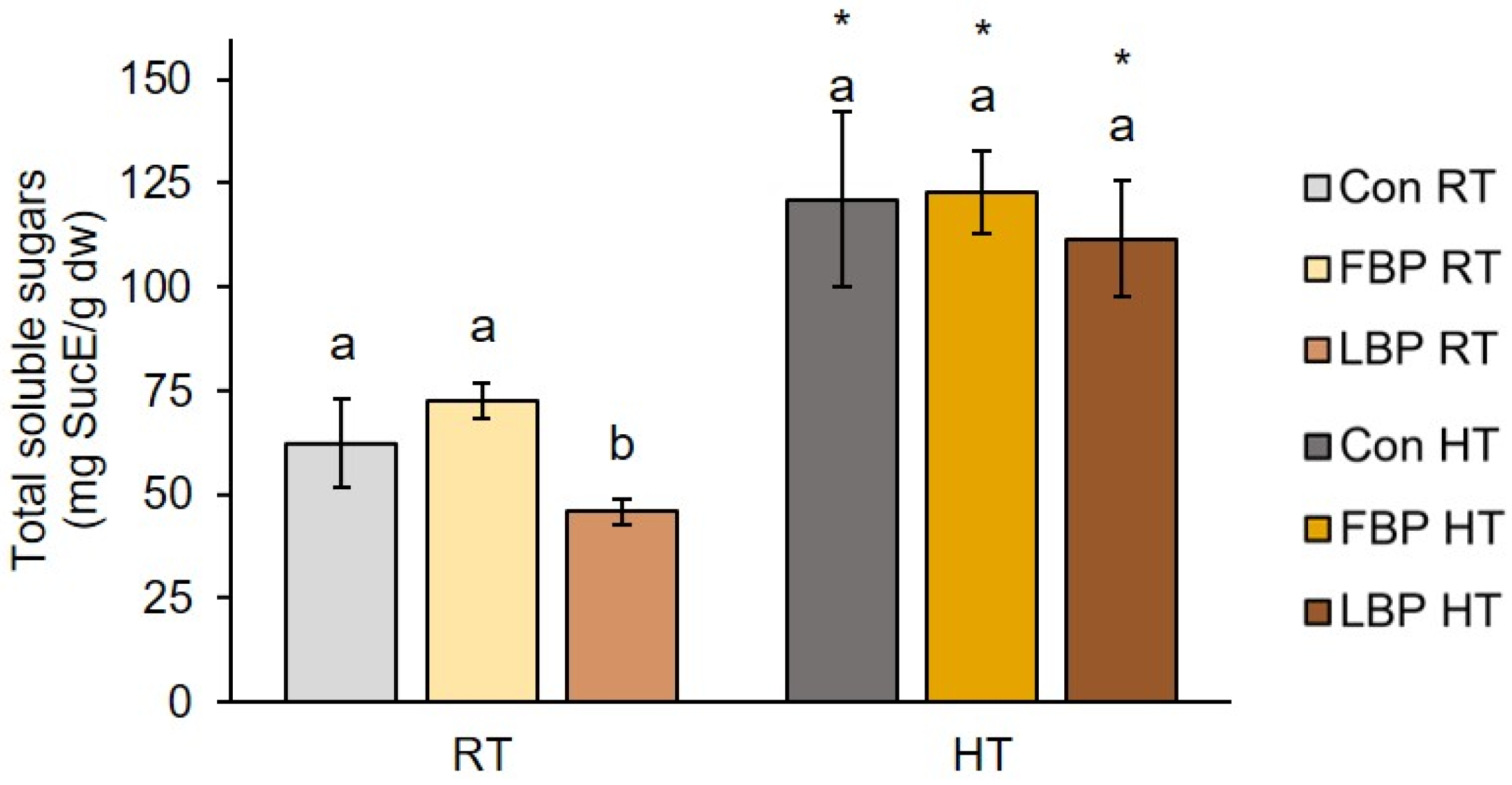
Lyophilized banana peel extract significantly affected the soluble sugar content in broccoli grown at RT, whereas growth at HT notably changed the soluble sugars in all treatment groups (Figure 2). Among all treatments, only lyophilized banana peel extract under RT had a significant effect—it led to a decrease in soluble sugars in broccoli microgreens. Contrary to our results, research shows that some types of biostimulants enhance heat stress tolerance through the stimulation of soluble sugars. Biostimulant derived from brown seaweed A. nodosum has been shown to enhance heat stress tolerance in tomato during the reproductive phase. In addition to upregulation of protective heat shock proteins in heat-stressed tomato flowers before fertilization, it also stimulated the accumulation of soluble sugars, sucrose, glucose, and fructose [78]. Application of algae solution and banana peel extract, alone and in combination, resulted in the accumulation of total carbohydrates in clary sage [73].
Elevated temperature caused a significant increase in soluble sugars in all analyzed broccoli microgreens (Figure 2). Research on the effects of heat stress on broccoli microgreens has shown that it stimulates the accumulation of soluble sugars [18,19,77], consistent with the findings of this study. This accumulation underscores their role under stressful conditions, as they function as osmoprotectants and signaling molecules, protect cells from oxidative damage, and contribute to protein and membrane stability [79,80].

3.3. Effect of Banana Peel Extracts and Elevated Temperature on Hydrogen Peroxide Level in Broccoli Microgreens

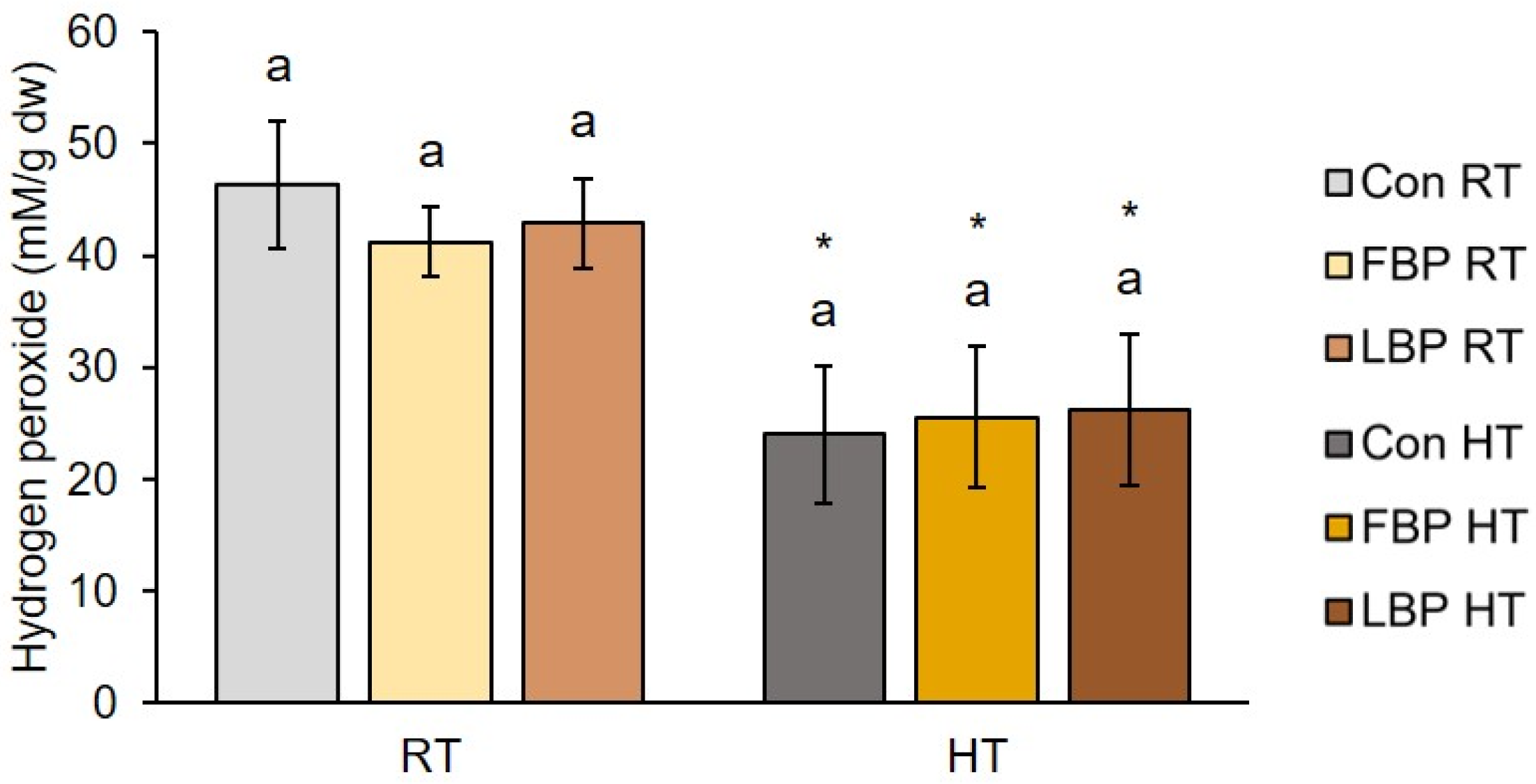
Banana peel extracts had no significant effect on H2O2 level, neither under RT nor HT (Figure 3). Hydrogen peroxide plays a dual role as a signaling molecule or damaging agent, depending on its concentration. As a signaling molecule, it is involved in the regulation of plant growth and development, as well as in the acclimatization of plants to stressful conditions. However, when its concentration spikes, usually as a consequence of stress, it can cause detrimental effects on cellular metabolism [81]. Because of this, it is very important to maintain a fine balance of generation and detoxification of reactive oxygen species, including H2O2, which depends on the antioxidant defense systems. Biostimulants can help mitigate oxidative stress, but their effects depend greatly on the type and dose of biostimulant used, as well as crop variety and developmental stage [82].
Broccoli microgreens grown under HT had notably lower concentrations of H2O2 (Figure 3). It was found that heat stress caused a decrease in H2O2 level in broccoli microgreens, seedlings, and mature leaves, while an increase was observed in mature heads [77]. The lower concentration of H2O2 observed in plants grown at elevated temperature could be the result of the activation of antioxidant defense systems responsible for its detoxification, as well as reduced production caused by metabolic adjustments aimed at minimizing oxidative damage.

3.4. Effect of Banana Peel Extracts and Elevated Temperature on Antioxidant Capacity of Broccoli Microgreens

Antioxidant capacity of broccoli microgreens was affected by banana peel extracts only when broccoli was grown under HT (Table 1). Fresh banana peel decreased antioxidant capacity measured by DPPH in broccoli grown under HT, but increased its antioxidant capacity measured by FRAP. This suggests that fresh banana peel under HT stress in broccoli favored antioxidants with higher reducing power rather than those with radical-quenching activity. Since DPPH is more suitable for lipophilic and FRAP for hydrophilic antioxidants, while ABTS reliably detects both types of antioxidants [83,84], the opposite effects observed in DPPH and FRAP ultimately may counterbalance each other and are therefore not reflected in the ABTS assay. Foliar application of biostimulants, such as brassinosteroid, methyl jasmonate, and salicylic acid, has been shown to improve heat stress tolerance in Kimchi cabbage (Brassica rapa L. ssp. pekinensis) by delaying growth reduction and physiological damage. They promoted photosynthesis recovery and enhanced the activity of antioxidant enzymes, namely catalase and peroxidase [85]. Similarly, various plant-based biostimulants, including banana peel extracts, have been observed to enhance the activity of antioxidant enzymes superoxide dismutase, peroxidase, catalase, and ascorbate peroxidase in wheat (Triticum aestivum L.). Their stimulating effect depended on biostimulant type and concentration, as well as wheat variety [86].
Elevated temperature did not significantly change the antioxidant capacity of broccoli microgreens (Table 1). The effect of HT on the antioxidant capacity of broccoli microgreens varied across studies. When antioxidant capacity was assessed by the ABTS assay, one study reported an increase [19], another a decrease [18], while a third did not observe a significant difference [77]. In the case of the DPPH method, only one study reported a decrease [19], whereas two studies reported no difference [18,77]. For the FRAP assay, two studies indicated an increase [19,77], while one study showed no effect [18].
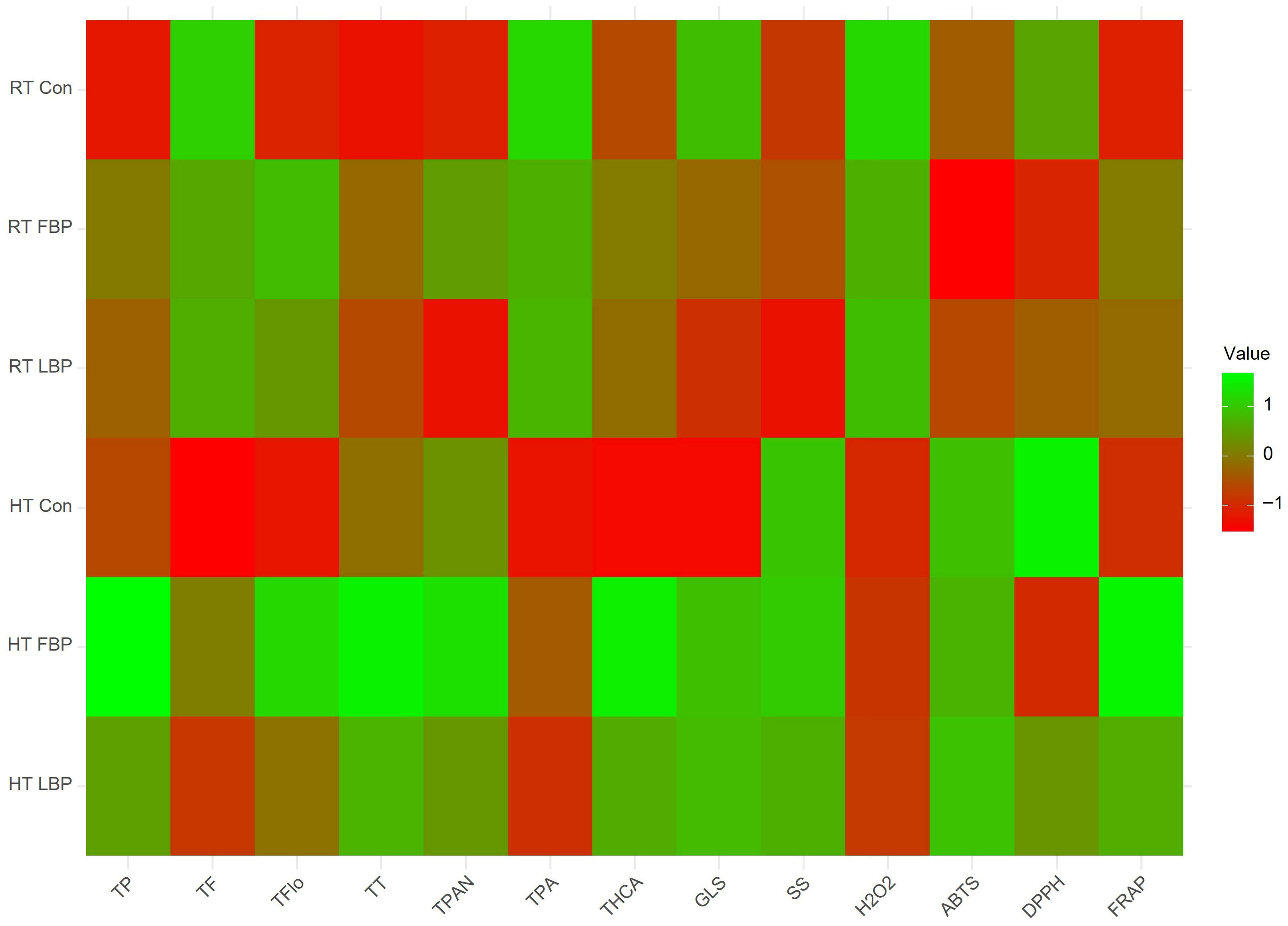
When all results are visualized in a heatmap, it becomes evident that the impact of banana peel extracts on broccoli microgreens is greater at HT than at RT (Figure 4). This suggests that HT is likely to increase the adaptive response capacity of broccoli microgreens to banana peel extracts. The results indicate the significance of environmental temperature for the outcome of potential biostimulants and should definitely be considered when evaluating its effects on plant systems.

3.5. Chemometric Analysis

Results of the two-way factorial ANOVA showed that temperature had a significant impact on eight analyzed variables—total phenolics, flavonoids, tannins, proanthocyanidins, phenolic acids, soluble sugars, hydrogen peroxide level, and antioxidant capacity measured by ABTS (Table 2). Banana peel extract had a significant effect on six analyzed variables—total phenolics, flavonols, tannins, proanthocyanidins, hydroxycinnamic acids, and antioxidant capacity measured by DPPH. This suggests that temperature is the dominant factor that regulates specialized metabolism, total soluble sugars, and H2O2 levels in broccoli microgreens. On the other hand, banana peel extracts show a weaker effect and only on phenolic compounds, which indicates a more discriminating influence. Obviously, banana peel extract acts as a biostimulant on broccoli microgreens at the level of phenolic antioxidants. The interaction between temperature and banana peel extract had a significant effect on two analyzed variables—total flavonoids and intact glucosinolates. Therefore, the response of these two groups of metabolites in broccoli to banana peel extract depends on temperature. This emphasizes the relevance of environmental temperature for the outcome of biostimulants. Due to global warming, their effect may be significantly changed, and this should be taken into account when creating new biostimulants.
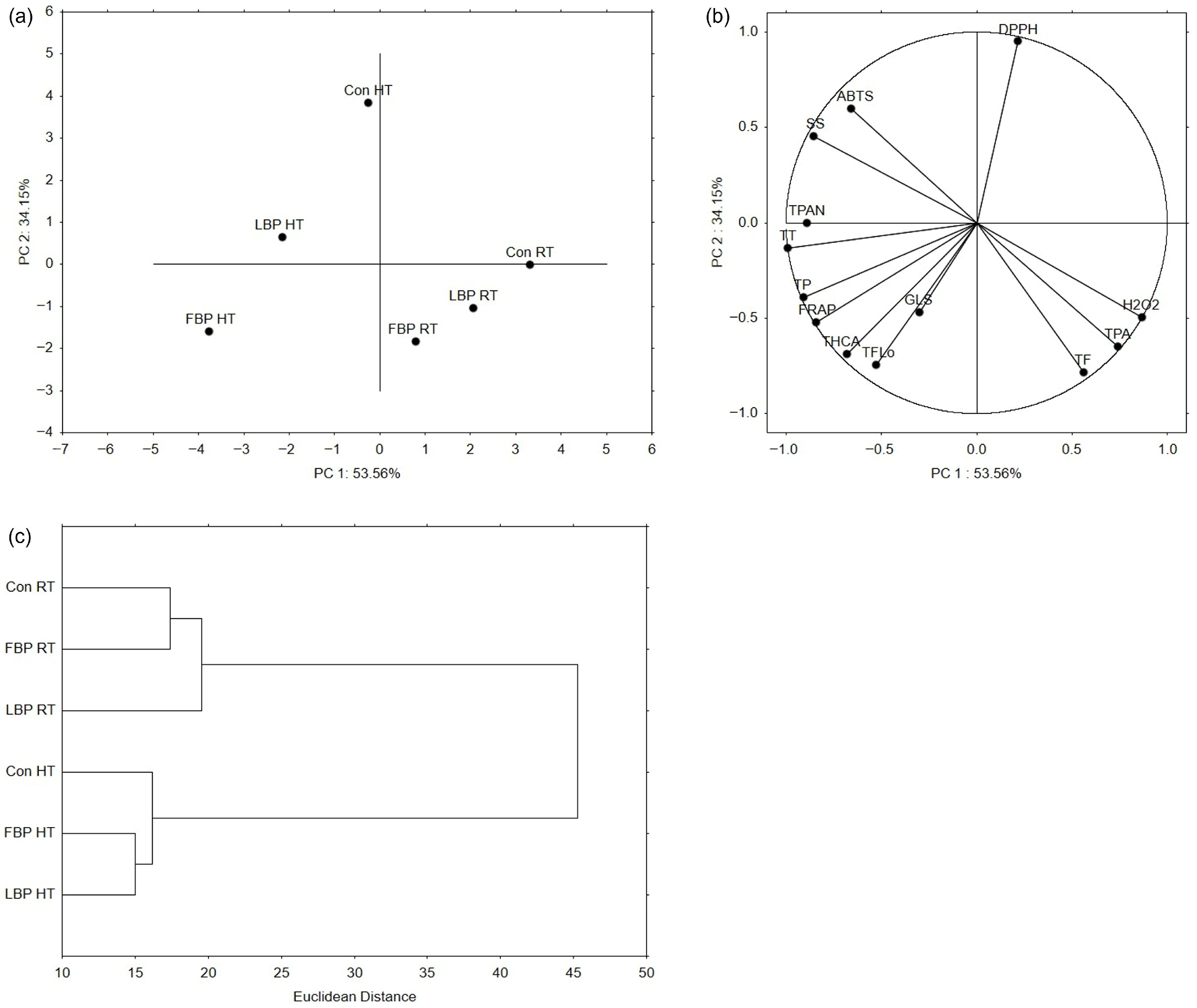
On the PCA plot, it is evident that broccoli microgreens grown under RT formed one cluster, while plants grown on HT formed a second cluster (Figure 5a). The amount of total flavonoids, phenolic acids, and H2O2 contributed the most to the separation of RT samples (Figure 5b). The amount of total phenolics and antioxidant capacity measured by FRAP contributed the most to the separation of microgreens grown on HT and irrigated with fresh banana peel. Under both RT and HT, plants irrigated with lyophilized banana peel extract were more similar to control plants than those treated with fresh banana peel extract. PCA also revealed that banana peel increased biochemical diversity in broccoli microgreens grown under HT. Based on the analyzed variables, the first two PCs explained 87.71% of the total variance.
The dendrogram resulting from hierarchical clustering indicated separation of broccoli microgreens grown under different temperatures into two separate clusters as well (Figure 5c). However, these results show that plants treated with fresh banana peel were more similar to control plants than those treated with lyophilized banana peel, under RT conditions. Under HT, treated samples were more similar to one another and separated from control samples. The results also indicated that microgreens grown under HT were more similar to each other (Euclidean distance around 16) than those grown under RT (Euclidean distance approximately 20).
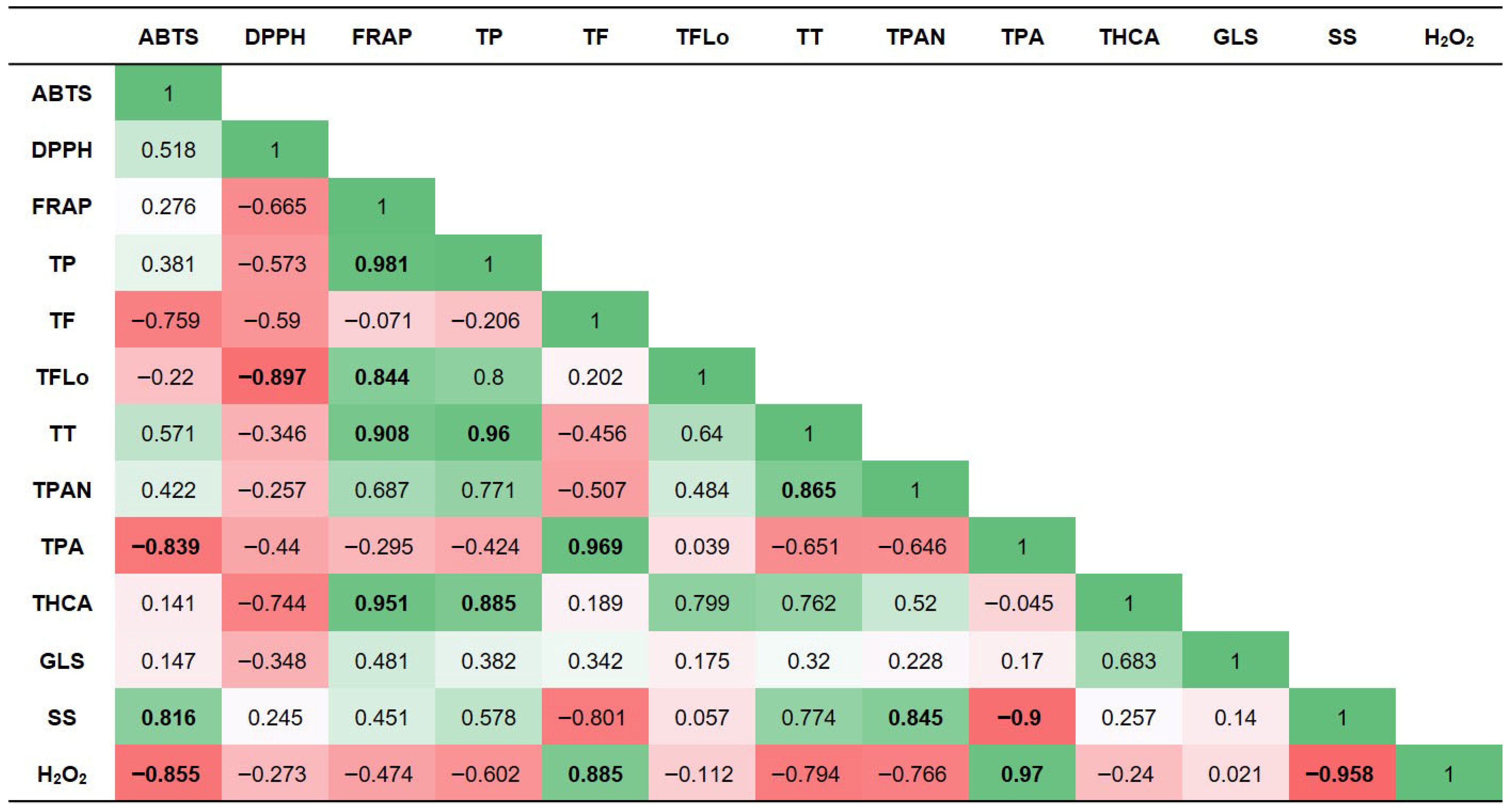
Pearson’s correlation coefficients between measured variables in broccoli microgreens grown at RT and HT irrigated with water, fresh banana peel extract, or lyophilized banana peel extract are shown in Figure 6. According to Evans [65], antioxidant capacity determined by FRAP assay was very strongly positively correlated to concentration of total phenolics (r = 0.981), flavonols (r = 0.844), tannins (r = 0.908), and hydroxycinnamic acids (r = 0.951). Unlike ABTS and DPPH assay, which measure specific radical scavenging capacity, FRAP assay records total reducing potential and this is the probable reason why it showed strong positive correlations with aforementioned phenolics. In addition, sequential proton-loss electron transfer (SPLET) is the main reaction mechanism in the FRAP system [87], and phenolics are rich in hydroxyl (-OH) groups attached to aromatic rings and are prone to the SPLET mechanism, where the proton loss from the -OH group facilitates electron transfer to Fe3+ in FRAP. Therefore, such a positive correlation was expected. Total phenolics were very strongly positively correlated to the amount of total tannins (r = 0.96) and hydroxycinnamic acids (r = 0.885). A very strong positive correlation was observed between total flavonoids and phenolic acids (r = 0.969), as well as between total tannins and proanthocyanidins (r = 0.865). This suggests a highly coordinated regulation of their biosynthesis. Soluble sugars were strongly positively correlated to antioxidant potential measured by ABTS (r = 0.816) and the concentration of total proanthocyanidins (r = 0.845), and negatively to phenolic acids (r = −0.9). H2O2 was strongly negatively correlated with antioxidant capacity determined by ABTS (r = −0.855), total tannins (r = −0.794), proanthocyanidins (r = −0.766), and soluble sugars (r = −0.958), which suggests that accumulation of tannins, proanthocyanidins, and sugars is associated with lower oxidative stress.
While more advanced analytical techniques (e.g., LC-MS/MS) could provide detailed information on individual metabolites in samples, the current study provides a robust overview of overall trends. Future studies should aim to complement these findings with targeted analyses of banana peel (donor) and broccoli (acceptor) to further elucidate the contributions of specific compounds.

4. Conclusions

Plants interact with each other using their phytochemicals via soil and air. In such a system, the plant donor acts as a source of phytochemicals and the plant acceptor as a sink. We have already shown that brassicaceous plants can be reinforced by the bioactive compounds from other species via interspecies transfer of metabolites. With that in mind, in this study, we aimed to test the potential of banana peel extracts to reinforce broccoli plants grown under high temperature stress by applying extracts to the soil. Banana peel extracts affected broccoli phytochemistry in a temperature-dependent way. At RT, both extracts reduced glucosinolates, while at high temperature they were increased. Soluble sugars in broccoli grown under RT can be decreased with lyophilized peel treatment. Under HT, fresh peel strongly boosted phenolics and antioxidant capacity (FRAP), and both extracts elevated glucosinolates. PCA revealed greater biochemical diversity of broccoli at HT, with flavonoids and glucosinolates particularly responsive to the temperature–extract interaction (two-way ANOVA). These findings suggest that global warming may markedly alter biostimulant efficacy and should be considered in their development. They also demonstrate that unused plant residues can be transformed into valuable biostimulants, contributing both to waste reduction and to the principles of the circular economy.

Author Contributions

Conceptualization, I.Š.; methodology, I.Š., M.F.; validation, I.Š.; formal analysis, I.Š., M.F.; investigation, I.Š., M.F.; resources, I.Š.; data curation, I.Š.; writing—original draft preparation, I.Š., M.F.; writing—review and editing, I.Š., M.F.; visualization, I.Š., M.F.; supervision, I.Š.; project administration, I.Š.; funding acquisition, I.Š. All authors have read and agreed to the published version of the manuscript.

Funding

This research was funded by the Croatian Science Foundation research project “Indirect effect of global warming on mammals physiological parameters via high temperature-stressed plant diet (TEMPHYS)”, grant number IP-2020-02-7585 (I.Š.), and DOK-NPOO-2023-10-2396 (I.Š.).

Data Availability Statement

The data that support the findings of this study are available from the corresponding author I.Š., upon request.

Acknowledgments

The authors wish to thank Barbara Novotni (University of Zagreb) for technical assistance.

Conflicts of Interest

The authors declare no conflicts of interest.

Abbreviations

The following abbreviations are used in this manuscript:
RTRoom temperature
HTHigh temperature
dwDry weight
SinESinigrin equivalents
GAEGallic acid equivalents
QEQuercetin equivalents
CAECaffeic acid equivalents
CatECatechin equivalents
SucESucrose equivalents
DMRTDuncan’s multiple range test
PCAPrincipal component analysis
HCHierarchical clustering
ConControl
FBPFresh banana peel
LBPLyophilized banana peel
GLSTotal intact glucosinolates
SSSoluble sugars
TFTotal flavonoids
TFLoTotal flavonols
THCATotal hydroxycinnamic acids
TPTotal phenolics
TPATotal phenolic acids
TPANTotal proanthocyanidins
TTTotal tannins

References

  1. FAO; IFAD; UNICEF; WFP; WHO. The State of Food Security and Nutrition in the World 2020; FAO: Rome, Italy; IFAD: Rome, Italy; UNICEF: Geneva, Switzerland; WFP: Niamey, Niger; WHO: Geneva, Switzerland, 2020; ISBN 978-92-5-132901-6. [Google Scholar]
  2. Vågsholm, I.; Arzoomand, N.S.; Boqvist, S. Food Security, Safety, and Sustainability—Getting the Trade-Offs Right. Front. Sustain. Food Syst. 2020, 4, 16. [Google Scholar] [CrossRef]
  3. Timsina, J. Can Organic Sources of Nutrients Increase Crop Yields to Meet Global Food Demand? Agronomy 2018, 8, 214. [Google Scholar] [CrossRef]
  4. Khanyile, N.; Dlamini, N.; Masenya, A.; Madlala, N.C.; Shezi, S. Preparation of Biofertilizers from Banana Peels: Their Impact on Soil and Crop Enhancement. Agriculture 2024, 14, 1894. [Google Scholar] [CrossRef]
  5. Chun, J.-H.; Kim, S.; Arasu, M.V.; Al-Dhabi, N.A.; Chung, D.Y.; Kim, S.-J. Combined Effect of Nitrogen, Phosphorus and Potassium Fertilizers on the Contents of Glucosinolates in Rocket Salad (Eruca sativa Mill.). Saudi J. Biol. Sci. 2017, 24, 436–443. [Google Scholar] [CrossRef]
  6. Dahunsi, S.O.; Oranusi, S.; Efeovbokhan, V.E.; Adesulu-Dahunsi, A.T.; Ogunwole, J.O. Crop Performance and Soil Fertility Improvement Using Organic Fertilizer Produced from Valorization of Carica papaya Fruit Peel. Sci. Rep. 2021, 11, 4696. [Google Scholar] [CrossRef]
  7. Chen, J.; Lü, S.; Zhang, Z.; Zhao, X.; Li, X.; Ning, P.; Liu, M. Environmentally Friendly Fertilizers: A Review of Materials Used and Their Effects on the Environment. Sci. Total Environ. 2018, 613–614, 829–839. [Google Scholar] [CrossRef]
  8. Gundala, R.R.; Singh, A. What Motivates Consumers to Buy Organic Foods? Results of an Empirical Study in the United States. PLoS ONE 2021, 16, e0257288. [Google Scholar] [CrossRef]
  9. Mashamaite, C.V.; Ngcobo, B.L.; Manyevere, A.; Bertling, I.; Fawole, O.A. Assessing the Usefulness of Moringa oleifera Leaf Extract as a Biostimulant to Supplement Synthetic Fertilizers: A Review. Plants 2022, 11, 2214. [Google Scholar] [CrossRef]
  10. Du Jardin, P. Plant Biostimulants: Definition, Concept, Main Categories and Regulation. Sci. Hortic. 2015, 196, 3–14. [Google Scholar] [CrossRef]
  11. Šola, I.; Vujčić Bok, V.; Pinterić, M.; Auer, S.; Ludwig-Müller, J.; Rusak, G. Improving the Phytochemical Profile and Bioactivity of Chinese Cabbage Sprouts by Interspecific Transfer of Metabolites. Food Res. Int. 2020, 137, 109726. [Google Scholar] [CrossRef]
  12. Nowak, M.; Wittke, C.; Lederer, I.; Klier, B.; Kleinwächter, M.; Selmar, D. Interspecific Transfer of Pyrrolizidine Alkaloids: An Unconsidered Source of Contaminations of Phytopharmaceuticals and Plant Derived Commodities. Food Chem. 2016, 213, 163–168. [Google Scholar] [CrossRef] [PubMed]
  13. Selmar, D.; Engelhardt, U.H.; Hänsel, S.; Thräne, C.; Nowak, M.; Kleinwächter, M. Nicotine Uptake by Peppermint Plants as a Possible Source of Nicotine in Plant-Derived Products. Agron. Sustain. Dev. 2015, 35, 1185–1190. [Google Scholar] [CrossRef]
  14. Selmar, D.; Radwan, A.; Hijazin, T.; Abouzeid, S.; Yahyazadeh, M.; Lewerenz, L.; Kleinwächter, M.; Nowak, M. Horizontal Natural Product Transfer: Intriguing Insights into a Newly Discovered Phenomenon. J. Agric. Food Chem. 2019, 67, 8740–8745. [Google Scholar] [CrossRef] [PubMed]
  15. Yahyazadeh, M.; Nowak, M.; Kima, H.; Selmar, D. Horizontal Natural Product Transfer: A Potential Source of Alkaloidal Contaminants in Phytopharmaceuticals. Phytomedicine 2017, 34, 21–25. [Google Scholar] [CrossRef] [PubMed]
  16. Hijazin, T.; Radwan, A.; Abouzeid, S.; Dräger, G.; Selmar, D. Uptake and Modification of Umbelliferone by Various Seedlings. Phytochemistry 2019, 157, 194–199. [Google Scholar] [CrossRef]
  17. Zhang, L.; Dai, Y.; Yue, L.; Chen, G.; Yuan, L.; Zhang, S.; Li, F.; Zhang, H.; Li, G.; Zhu, S.; et al. Heat Stress Response in Chinese Cabbage (Brassica rapa L.) Revealed by Transcriptome and Physiological Analysis. PeerJ 2022, 10, e13427. [Google Scholar] [CrossRef]
  18. Šola, I.; Gmižić, D.; Pinterić, M.; Tot, A.; Ludwig-Müller, J. Adjustments of the Phytochemical Profile of Broccoli to Low and High Growing Temperatures: Implications for the Bioactivity of Its Extracts. Int. J. Mol. Sci. 2024, 25, 3677. [Google Scholar] [CrossRef]
  19. Gmižić, D.; Pinterić, M.; Lazarus, M.; Šola, I. High Growing Temperature Changes Nutritional Value of Broccoli (Brassica oleracea L. convar. botrytis (L.) Alef. var. cymosa Duch.) Seedlings. Foods 2023, 12, 582. [Google Scholar] [CrossRef]
  20. Lamessa, K. Performance Evaluation of Banana Varieties, through Farmer’s Participatory Selection. Int. J. Fruit Sci. 2021, 21, 768–778. [Google Scholar] [CrossRef]
  21. Panigrahi, N.; Thompson, A.J.; Zubelzu, S.; Knox, J.W. Identifying Opportunities to Improve Management of Water Stress in Banana Production. Sci. Hortic. 2021, 276, 109735. [Google Scholar] [CrossRef]
  22. El-Awadi, M.E.; Sadak, M.S.; Dawood, M.G. Comparative Effect of Potassium and Banana Peel in Alleviating the Deleterious Effect of Water Deficit on Soybean Plants. J. Mater. Environ. Sci. 2021, 12, 929–943. [Google Scholar]
  23. Gomes, S.; Vieira, B.; Barbosa, C.; Pinheiro, R. Evaluation of Mature Banana Peel Flour on Physical, Chemical, and Texture Properties of a Gluten-free Rissol. Food Process. Preserv. 2022, 46, e14441. [Google Scholar] [CrossRef]
  24. Ogunlade, I.; Akinmade, A.O.; Ogunlade, A.O.; Popoola, O.K. Comparative Study of Chemical Composition and Evaluation of the In-Vitro Antioxidant Capacity of Unripe and Ripe Banana Species (Musa sapientum) Biowastes. J. Agric. Sci. Food Technol. 2021, 7, 61–66. [Google Scholar] [CrossRef]
  25. Vu, H.T.; Scarlett, C.J.; Vuong, Q.V. Phenolic Compounds within Banana Peel and Their Potential Uses: A Review. J. Func. Foods 2018, 40, 238–248. [Google Scholar] [CrossRef]
  26. El Barnossi, A.; Moussaid, F.Z.; Saghrouchni, H.; Zoubi, B.; Iraqi Housseini, A.I. Tangerine, Pomegranate, and Banana Peels: A Promising Environmentally Friendly Bioorganic Fertilizers for Seed Germination and Cultivation of Pisum sativum L. Waste Biomass Valor. 2022, 13, 3611–3627. [Google Scholar] [CrossRef]
  27. Wazir, A.; Gul, Z.; Hussain, M. Comparative Study of Various Organic Fertilizers Effect on Growth and Yield of Two Economically Important Crops, Potato and Pea. Agric. Sci. 2018, 9, 703–717. [Google Scholar] [CrossRef]
  28. Dayarathna, S.G.A.R.M.; Karunarathna, B. Effect of Different Fruit Peel Powders as Natural Fertilizers on Growth of Okra (Abelmoschus esculentus L.). J. Agric. Sci. 2021, 16, 67–79. [Google Scholar] [CrossRef]
  29. Hussein, H.S.; Shaarawy, H.H.; Hussien, N.H.; Hawash, S.I. Preparation of Nano-Fertilizer Blend from Banana Peels. Bull. Natl. Res. Cent. 2019, 43, 26. [Google Scholar] [CrossRef]
  30. Sakpere, A.M.A.; Bankole, M.; Oyekola, O.B.; Akinyemi, O.S.; Akosile, O.R.; Adegboye, O.A.; Akinropo, M.S.; Obisesan, I.A. Effect of Different Moringa oleifera Extracts and Fruit Peels on the Growth of Solanum scabrum. Int. J. Bio. Chem. Sci. 2018, 12, 1543. [Google Scholar] [CrossRef]
  31. Seth, T.; Mishra, G.P.; Chattopadhyay, A.; Deb Roy, P.; Devi, M.; Sahu, A.; Sarangi, S.K.; Mhatre, C.S.; Lyngdoh, Y.A.; Chandra, V.; et al. Microgreens: Functional Food for Nutrition and Dietary Diversification. Plants 2025, 14, 526. [Google Scholar] [CrossRef]
  32. Ebert, A.W. Sprouts and Microgreens—Novel Food Sources for Healthy Diets. Plants 2022, 11, 571. [Google Scholar] [CrossRef] [PubMed]
  33. Arya, K.S.; Kutty, M.S.; Pradeepkumar, T. Microgreens of Tropical Edible-Seed Species, an Economical Source of Phytonutrients—Insights into Nutrient Content, Growth Environment and Shelf Life. Future Foods 2023, 8, 100262. [Google Scholar] [CrossRef]
  34. Paraschivu, M.; Cotuna, O.; Sărățeanu, V.; Durău, C.C.; Păunescu, R.A. Microgreens—Current Status, Global Market Trends and Forward Statements. Sci. Pap. Ser. Manag. Econ. Eng. Agric. Rural Dev. 2021, 21, 633–639. [Google Scholar]
  35. Wu, M.; Northen, T.R.; Ding, Y. Stressing the Importance of Plant Specialized Metabolites: Omics-Based Approaches for Discovering Specialized Metabolism in Plant Stress Responses. Front. Plant Sci. 2023, 14, 1272363. [Google Scholar] [CrossRef]
  36. Deepika; Maurya, P.K. Health Benefits of Quercetin in Age-Related Diseases. Molecules 2022, 27, 2498. [Google Scholar] [CrossRef]
  37. Radovich, T.J.K.; Kleinhenz, M.D.; Streeter, J.G. Irrigation Timing Relative to Head Development Influences Yield Components, Sugar Levels, and Glucosinolate Concentrations in Cabbage. J. Am. Soc. Hortic. Sci. 2005, 130, 943–949. [Google Scholar] [CrossRef]
  38. Velasco, P.; Cartea, M.E.; González, C.; Vilar, M.; Ordás, A. Factors Affecting the Glucosinolate Content of Kale (Brassica oleracea acephala Group). J. Agric. Food Chem. 2007, 55, 955–962. [Google Scholar] [CrossRef]
  39. Qasim, M.; Ashraf, M.; Ashraf, M.Y.; Rehman, S.U.; Rha, E.S. Salt-induced changes in two canola cultivars differing in salt tolerance. Biol. Plant. 2003, 46, 629–632. [Google Scholar] [CrossRef]
  40. Chowdhury, P. Glucosinolates and Its Role in Mitigating Abiotic and Biotic Stress in Brassicaceae. In Plant Stress Physiology—Perspectives in Agriculture; IntechOpen: London, UK, 2022. [Google Scholar]
  41. Ben Ammar, H.; Arena, D.; Treccarichi, S.; Di Bella, M.C.; Marghali, S.; Ficcadenti, N.; Lo Scalzo, R.; Branca, F. The Effect of Water Stress on the Glucosinolate Content and Profile: A Comparative Study on Roots and Leaves of Brassica oleracea L. Crops. Agronomy 2023, 13, 579. [Google Scholar] [CrossRef]
  42. Shawon, R.A.; Kang, B.S.; Lee, S.G.; Kim, S.K.; Ju Lee, H.; Katrich, E.; Gorinstein, S.; Ku, Y.G. Influence of Drought Stress on Bioactive Compounds, Antioxidant Enzymes and Glucosinolate Contents of Chinese Cabbage (Brassica rapa). Food Chem. 2020, 308, 125657. [Google Scholar] [CrossRef]
  43. Maina, S.; Ryu, D.H.; Cho, J.Y.; Jung, D.S.; Park, J.-E.; Nho, C.W.; Bakari, G.; Misinzo, G.; Jung, J.H.; Yang, S.-H.; et al. Exposure to Salinity and Light Spectra Regulates Glucosinolates, Phenolics, and Antioxidant Capacity of Brassica carinata L. Microgreens. Antioxidants 2021, 10, 1183. [Google Scholar] [CrossRef] [PubMed]
  44. Khokon, M.A.R.; Jahan, M.S.; Rahman, T.; Hossain, M.A.; Muroyama, D.; Minami, I.; Munemasa, S.; Mori, I.C.; Nakamura, Y.; Murata, Y. Allyl Isothiocyanate (AITC) Induces Stomatal Closure in Arabidopsis. Plant Cell Environ. 2011, 34, 1900–1906. [Google Scholar] [CrossRef] [PubMed]
  45. Giamoustaris, A.; Mithen, R. The Effect of Modifying the Glucosinolate Content of Leaves of Oilseed Rape (Brassica napus ssp. oleifera) on Its Interaction with Specialist and Generalist Pests. Ann. Appl. Biol. 1995, 126, 347–363. [Google Scholar] [CrossRef]
  46. Siemens, D.H.; Mitchell-Olds, T. Glucosinolates and Herbivory by Specialists (Coleoptera: Chrysomelidae, Lepidoptera: Plutellidae): Consequences of Concentration and Induced Resistance. Environ. Entomol. 1996, 25, 1344–1353. [Google Scholar] [CrossRef]
  47. Baldelli, S.; Lombardo, M.; D’Amato, A.; Karav, S.; Tripodi, G.; Aiello, G. Glucosinolates in Human Health: Metabolic Pathways, Bioavailability, and Potential in Chronic Disease Prevention. Foods 2025, 14, 912. [Google Scholar] [CrossRef]
  48. Armah, C.N.; Derdemezis, C.; Traka, M.H.; Dainty, J.R.; Doleman, J.F.; Saha, S.; Leung, W.; Potter, J.F.; Lovegrove, J.A.; Mithen, R.F. Diet Rich in High Glucoraphanin Broccoli Reduces Plasma LDL Cholesterol: Evidence from Randomised Controlled Trials. Mol. Nutr. Food Res. 2015, 59, 918–926. [Google Scholar] [CrossRef]
  49. Šola, I.; Gmižić, D.; Miškec, K.; Ludwig-Müller, J. Impact of Water Stress on Metabolic Intermediates and Regulators in Broccoli Sprouts, and Cellular Defense Potential of Their Extracts. Int. J. Mol. Sci. 2025, 26, 632. [Google Scholar] [CrossRef]
  50. Šola, I.; Gmižić, D. Structural Variations of Broccoli Polyphenolics and Their Antioxidant Capacity as a Function of Growing Temperature. Plants 2025, 14, 1186. [Google Scholar] [CrossRef]
  51. Mawlong, I.; Sujith Kumar, M.S.; Gurung, B.; Singh, K.H.; Singh, D. A Simple Spectrophotometric Method for Estimating Total Glucosinolates in Mustard De-Oiled Cake. Int. J. Food Prop. 2017, 20, 3274–3281. [Google Scholar] [CrossRef]
  52. Folin, O.; Ciocalteu, V. On tyrosine and tryptophane determinations in proteins. J. Biol. Chem 1927, 73, 627–650. [Google Scholar]
  53. Singleton, V.L.; Rossi, J.A. Colorimetry of Total Phenolics with Phosphomolybdic-Phosphotungstic Acid Reagents. Am. J. Enol. Vitic. 1965, 16, 144–158. [Google Scholar] [CrossRef]
  54. Zhishen, J.; Mengcheng, T.; Jianming, W. The Determination of Flavonoid Contents in Mulberry and their Scavenging Effects on Superoxide Radicals. Food Chem. 1999, 64, 555–559.34. [Google Scholar] [CrossRef]
  55. Howard, L.R.; Clark, J.R.; Brownmiller, C. Antioxidant Capacity and Phenolic Content in Blueberries as Affected by Genotype and Growing Season. J. Sci. Food Agric. 2003, 83, 1238–1247. [Google Scholar] [CrossRef]
  56. Galvão, M.A.M.; Arruda, A.O.D.; Bezerra, I.C.F.; Ferreira, M.R.A.; Soares, L.A.L. Evaluation of the Folin-Ciocalteu Method and Quantification of Total Tannins in Stem Barks and Pods from Libidibia ferrea (Mart. Ex Tul) L. P. Queiroz. Braz. Arch. Biol. Technol. 2018, 61, e18170586. [Google Scholar] [CrossRef]
  57. Weidner, S.; Karolak, M.; Karamać, M.; Amarowicz, R. Phenolic Compounds and Properties of Antioxidants in Grapevine Roots (Vitis vinifera L.) under Drought Stress Followed by Recovery. Acta Soc. Bot. Pol. 2011, 78, 97–103. [Google Scholar] [CrossRef]
  58. Gawlik-Dziki, U. Dietary Spices as a Natural Effectors of Lipoxygenase, Xanthine Oxidase, Peroxidase and Antioxidant Agents. LWT Food Sci. Technol. 2012, 47, 138–146. [Google Scholar] [CrossRef]
  59. DuBois, M.; Gilles, K.A.; Hamilton, J.K.; Rebers, P.A.; Smith, F. Colorimetric Method for Determination of Sugars and Related Substances. Anal. Chem. 1956, 28, 350–356. [Google Scholar] [CrossRef]
  60. Junglee, S.; Urban, L.; Sallanon, H.; Lopez-Lauri, F. Optimized Assay for Hydrogen Peroxide Determination in Plant Tissue Using Potassium Iodide. Am. J. Anal. Chem. 2014, 5, 730–736. [Google Scholar] [CrossRef]
  61. Re, R.; Pellegrini, N.; Proteggente, A.; Pannala, A.; Yang, M.; Rice-Evans, C. Antioxidant Activity Applying an Improved ABTS Radical Cation Decolorization Assay. Free Radic. Biol. Med. 1999, 26, 1231–1237. [Google Scholar] [CrossRef]
  62. Germanò, M.P.; De Pasquale, R.; D’Angelo, V.; Catania, S.; Silvari, V.; Costa, C. Evaluation of Extracts and Isolated Fraction from Capparis spinosa L. Buds as an Antioxidant Source. J. Agric. Food Chem. 2002, 50, 1168–1171. [Google Scholar] [CrossRef]
  63. Benzie, I.F.; Strain, J.J. Ferric Reducing/Antioxidant Power Assay: Direct Measure of Total Antioxidant Activity of Biological Fluids and Modified Version for Simultaneous Measurement of Total Antioxidant Power and Ascorbic Acid Concentration. In Methods in Enzymology; Academic Press: Cambridge, MA, USA, 1999. [Google Scholar]
  64. Šola, I.; Vujčić Bok, V.; Dujmović, M.; Rusak, G. Developmentally-Related Changes in Phenolic and L-Ascorbic Acid Content and Antioxidant Capacity of Chinese Cabbage Sprouts. J. Food Sci. Technol. 2020, 57, 702–712. [Google Scholar] [CrossRef]
  65. Evans, J.D. Straightforward Statistics for the Behavioral Sciences; Brooks/Cole Publishing: Pacific Grove, CA, USA, 1996. [Google Scholar]
  66. Ullah, M.; Batool, M.; El-Badri, A.M.; Ikram, M.; Zheng, L.; Khalid, B.; El Khalek Abd El Mola Mohamed, I.A.; Chang, L.; Wang, B.; Kuai, J.; et al. A Comprehensive Report on Glucosinolate Involvement in Abiotic Stress Responses in Brassicaceae Family. Hortic. Plant J. 2025; S2468014125000998, in press. [Google Scholar] [CrossRef]
  67. Karamzadeh, F.; Arzani, A.; Saeidi, G. Contribution of Phenolic Compounds and Hormones in Antioxidant Defense Responses of Wild and Cultivated Barley Genotypes under Drought and Heat Stress. Sci. Rep. 2025, 15, 27032. [Google Scholar] [CrossRef] [PubMed]
  68. Kumar, K.; Debnath, P.; Singh, S.; Kumar, N. An Overview of Plant Phenolics and Their Involvement in Abiotic Stress Tolerance. Stresses 2023, 3, 570–585. [Google Scholar] [CrossRef]
  69. Zuzunaga-Rosas, J.; Boscaiu, M.; Vicente, O. Agroindustrial By-Products as a Source of Biostimulants Enhancing Responses to Abiotic Stress of Horticultural Crops. Int. J. Mol. Sci. 2024, 25, 3525. [Google Scholar] [CrossRef]
  70. Sariñana-Aldaco, O.; Rodríguez-Jasso, R.M.; Benavides-Mendoza, A.; Robledo-Olivo, A.; Preciado-Rangel, P.; Juárez-Maldonado, A.; González-Morales, S. Brown Algae Extracts Increase the Tolerance of Tomato Plants to High Temperatures by Improving Morphological, Physiological, Metabolomic, and Transcriptional Parameters. Plants 2025, 14, 2996. [Google Scholar] [CrossRef]
  71. Anbarasu, M.; Chandrasekaran, M.; Bhaskaran, M.; Rajkumar, S.; Vijayakumar, R.; Sampathkumar, B. Bio Stimulant Potential of Different Banana Peel Aqueous Extracts on Black Gram (Vigna mungo). Agric. Sci. Dig. 2025, D-6358, 1–7. [Google Scholar] [CrossRef]
  72. Jalal, R.S.; Bafeel, S.O.; Moftah, A.E. Effect of Salicylic Acid on Growth, Photosynthetic Pigments and Essential Oil Components of Shara (Plectranthus tenuiflorus) Plants Grown under Drought Stress Conditions. Int. Res. J. Agric. Sci. Soil Sci. 2012, 2, 252–260. [Google Scholar]
  73. El-Gohary, A.E.; Amer, H.M.; Salama, A.B.; Wahba, H.E.; Khalid, K.A. Growth and Chemical Profile of Clary Sage (Salvia sclarea L.) in Response to Algae and Banana Peel Extracts. Bull. Natl. Res. Cent. 2020, 44, 190. [Google Scholar] [CrossRef]
  74. Zuzunaga-Rosas, J.; González-Orenga, S.; Tofei, A.M.; Boscaiu, M.; Moreno-Ramón, H.; Ibáñez-Asensio, S.; Vicente, O. Effect of a Biostimulant Based on Polyphenols and Glycine Betaine on Tomato Plants’ Responses to Salt Stress. Agronomy 2022, 12, 2142. [Google Scholar] [CrossRef]
  75. Frioni, T.; Sabbatini, P.; Tombesi, S.; Norrie, J.; Poni, S.; Gatti, M.; Palliotti, A. Effects of a Biostimulant Derived from the Brown Seaweed Ascophyllum nodosum on Ripening Dynamics and Fruit Quality of Grapevines. Sci. Hortic. 2018, 232, 97–106. [Google Scholar] [CrossRef]
  76. Rouphael, Y.; Colla, G.; Giordano, M.; El-Nakhel, C.; Kyriacou, M.C.; De Pascale, S. Foliar Applications of a Legume-Derived Protein Hydrolysate Elicit Dose-Dependent Increases of Growth, Leaf Mineral Composition, Yield and Fruit Quality in Two Greenhouse Tomato Cultivars. Sci. Hortic. 2017, 226, 353–360. [Google Scholar] [CrossRef]
  77. Gmižić, D.; Šola, I. Developmental and Temperature-Driven Variations in Metabolic Profile and Antioxidant Capacity of Broccoli (Brassica oleracea var. cymosa). Plants 2025, 14, 1825. [Google Scholar] [CrossRef] [PubMed]
  78. Carmody, N.; Goñi, O.; Łangowski, Ł.; O’Connell, S. Ascophyllum nodosum Extract Biostimulant Processing and Its Impact on Enhancing Heat Stress Tolerance During Tomato Fruit Set. Front. Plant Sci. 2020, 11, 807. [Google Scholar] [CrossRef]
  79. Chauhan, J.; Srivastava, J.P.; Singhal, R.K.; Soufan, W.; Dadarwal, B.K.; Mishra, U.N.; Anuragi, H.; Rahman, M.A.; Sakran, M.I.; Brestic, M.; et al. Alterations of Oxidative Stress Indicators, Antioxidant Enzymes, Soluble Sugars, and Amino Acids in Mustard [Brassica juncea (L.) Czern and Coss.] in Response to Varying Sowing Time, and Field Temperature. Front. Plant Sci. 2022, 13, 875009. [Google Scholar] [CrossRef]
  80. Sung, D.-Y.; Kaplan, F.; Lee, K.-J.; Guy, C.L. Acquired Tolerance to Temperature Extremes. Trends Plant Sci. 2003, 8, 179–187. [Google Scholar] [CrossRef]
  81. Foyer, C.H.; Ruban, A.V.; Noctor, G. Viewing Oxidative Stress through the Lens of Oxidative Signalling Rather than Damage. Biochem. J. 2017, 474, 877–883. [Google Scholar] [CrossRef]
  82. Hasanuzzaman, M.; Parvin, K.; Bardhan, K.; Nahar, K.; Anee, T.I.; Masud, A.A.C.; Fotopoulos, V. Biostimulants for the Regulation of Reactive Oxygen Species Metabolism in Plants under Abiotic Stress. Cells 2021, 10, 2537. [Google Scholar] [CrossRef]
  83. Huang, D.; Ou, B.; Prior, R.L. The Chemistry behind Antioxidant Capacity Assays. J. Agric. Food Chem. 2005, 53, 1841–1856. [Google Scholar] [CrossRef]
  84. Prior, R.L.; Wu, X.; Schaich, K. Standardized Methods for the Determination of Antioxidant Capacity and Phenolics in Foods and Dietary Supplements. J. Agric. Food Chem. 2005, 53, 4290–4302. [Google Scholar] [CrossRef]
  85. Lee, H.J.; Lee, J.H.; Lee, S.G.; An, S.; Lee, H.S.; Choi, C.K.; Kim, S.K. Foliar Application of Biostimulants Affects Physiological Responses and Improves Heat Stress Tolerance in Kimchi Cabbage. Hortic. Environ. Biotechnol. 2019, 60, 841–851. [Google Scholar] [CrossRef]
  86. Arshad, N.; Iqbal, M.S. Improving Morphological and Biochemical Characters, Yield Attributes and Aphid Mortality in Wheat (Triticum aestivum L.) by Biostimulants. Appl. Ecol. Environ. Res. 2022, 20, 5103–5123. [Google Scholar] [CrossRef]
  87. Chen, J.; Yang, J.; Ma, L.; Li, J.; Shahzad, N.; Kim, C.K. Structure-Antioxidant Activity Relationship of Methoxy, Phenolic Hydroxyl, and Carboxylic Acid Groups of Phenolic Acids. Sci. Rep. 2020, 10, 2611. [Google Scholar] [CrossRef]
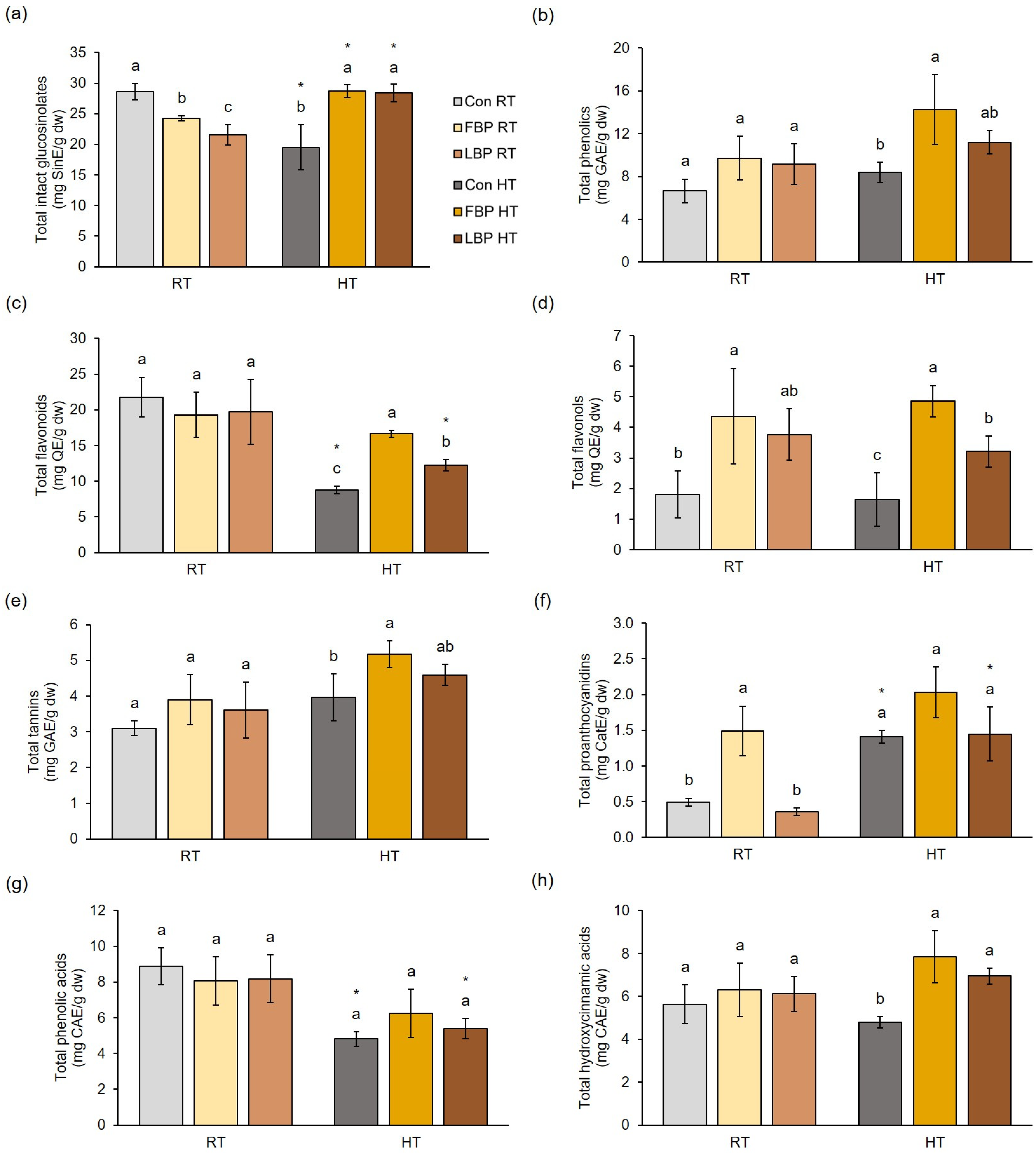
Figure 1. Effects of banana peel extracts and high growth temperature on specialized metabolites in broccoli microgreens. The concentration of total (a) intact glucosinolates, (b) phenolics, (c) flavonoids, (d) flavonols, (e) tannins, (f) proanthocyanidins, (g) phenolic acids and (h) hydroxycinnamic acids was determined in broccoli microgreens grown at room (RT) and high (HT) temperature irrigated with water (Con), fresh banana peel extract (FBP) or lyophilized banana peel extract (LBP). Values represent mean ± standard deviation of three biological replicates. Different letters indicate a significant difference among plants grown at the same temperature (one-way ANOVA, Duncan’s test, p ≤ 0.05). An asterisk (*) indicates a significant difference between the same treatment group grown at RT and HT (Student’s t-test, p ≤ 0.05). SinE = sinigrin equivalent; GAE = gallic acid equivalent; dw = dry weight; QE = quercetin equivalent; CatE = catechin equivalent; CAE = caffeic acid equivalent.
Applsci 16 02303 g001
Figure 2. Effects of banana peel extracts and high growth temperature on the amount of soluble sugars in broccoli microgreens. Values represent mean ± standard deviation of three biological replicates. Different letters indicate a significant difference among plants grown at the same temperature (one-way ANOVA, Duncan’s test, p ≤ 0.05). An asterisk (*) indicates a significant difference between the same treatment group grown at RT and HT (Student’s t-test, p ≤ 0.05). RT = room temperature; HT = high temperature; Con = irrigation with water; FBP = irrigation with fresh banana peel extract; LBP = irrigation with lyophilized banana peel extract; SucE = sucrose equivalent; dw = dry weight.
Applsci 16 02303 g002
Figure 3. Effects of banana peel extracts and high growth temperature on hydrogen peroxide level in broccoli microgreens. Values represent mean ± standard deviation of three biological replicates. The same letter indicates that there is no significant difference among plants grown at the same temperature (one-way ANOVA, Duncan’s test, p ≤ 0.05). An asterisk (*) indicates a significant difference between the same treatment group grown at RT and HT (Student’s t-test, p ≤ 0.05). RT = room temperature; HT = high temperature; Con = irrigation with water; FBP = irrigation with fresh banana peel extract; LBP = irrigation with lyophilized banana peel extract; dw = dry weight.
Applsci 16 02303 g003
Figure 4. The heatmap showing a visual overview of relative antioxidant capacities and metabolite levels across treatments. Color intensity reflects percentage of radical inhibition or Fe3+ reduction in case of antioxidant capacity, and the amount of different metabolites. Green indicates relatively higher values and red indicates relatively lower values of the measured variables. TP = total phenolics; TF = total flavonoids; TFLo = total flavonols; TT = total tannins; TPAN = total proanthocyanidins; TPA = total phenolic acids; THCA = total hydroxycinnamic acids; GLS = total intact glucosinolates; SS = soluble sugars.
Applsci 16 02303 g004
Figure 5. Sample clustering analyses of broccoli microgreens grown at room (RT) and high (HT) temperature irrigated with water (Con), fresh banana peel extract (FBP), or lyophilized banana peel extract (LBP). Principal component analysis shows (a) the relationship between samples based on the analyzed variables, whose grouping is shown in (b) part of the figure. (c) Hierarchical clustering of samples expressed as Euclidean distance. GLS = total intact glucosinolates; SS = soluble sugars; TF = total flavonoids; TFlo = total flavonols; THCA = total hydroxycinnamic acids; TP = total phenolics; TPA = total phenolic acids; TPAN = total proanthocyanidins; TT = total tannins.
Applsci 16 02303 g005
Figure 6. Pearson’s correlation coefficients between measured variables in broccoli microgreens grown at room and high temperature irrigated with water, fresh banana peel extract, or lyophilized banana peel extract. Values indicating very high correlation are shown in bold. TP = total phenolics; TF = total flavonoids; TFlo = total flavonols; TT = total tannins; TPAN = total proanthocyanidins; TPA = total phenolic acids; THCA = total hydroxycinnamic acids; GLS = total intact glucosinolates; SS = soluble sugars.
Applsci 16 02303 g006
Table 1. Effects of banana peel extracts and high growth temperature on antioxidant capacity of broccoli microgreens.
RT HT
Con FBP LBP Con FBP LBP
ABTS (% inhibition)39.47 ± 9.05 a33.24 ± 9.27 a38.08 ± 9.39 a46.34 ± 4.77 a45.45 ± 4.41 a46.48 ± 3.13 a
DPPH (% inhibition)58.51 ± 6.49 a49.82 ± 8.22 a53.77 ± 6.52 a63.91 ± 1.99 a50.19 ± 9.32 b57.50 ± 5.38 ab
FRAP (% reduction)63.98 ± 6.94 a67.03 ± 5.19 a66.45 ± 5.91 a64.49 ± 3.47 b71.06 ± 1.93 a 68.64 ± 2.48 ab
Values represent mean ± standard deviation of three biological replicates. Different letters indicate a significant difference among plants grown at the same temperature (one-way ANOVA, Duncan’s test, p ≤ 0.05). RT = room temperature: HT = high temperature; Con = irrigation with water; FBP = irrigation with fresh banana peel extract; LBP = irrigation with lyophilized banana peel extract.
Table 2. Two-way ANOVA showing the effect of the main factors (growth temperature and banana peel extract) and their interaction on different groups of phytochemicals and antioxidant activity of broccoli microgreens.
Parameter Source of Variation SS F p
Total phenolicstemperature34.533 **9.4905 **0.009526 **
banana peel extract60.102 **8.2587 **0.005552 **
temp × extract6.9610.95660.411658
Total flavonoidstemperature266.003 ***40.3723 ***0.000036 ***
banana peel extract23.2341.76310.213149
temp × extract80.653 *6.1205 *0.014716 *
Total flavonolstemperature0.02430.02900.867685
banana peel extract25.2935 ***15.0902 ***0.000530 ***
temp × extract0.84070.50150.617749
Total tanninstemperature4.8459 **16.1181 **0.001716 **
banana peel extract3.0546 *5.0801 *0.025215 *
temp × extract0.13180.21920.806334
Total proanthocyanidinstemperature3.22565 ***47.8737 ***0.000016 ***
banana peel extract2.78992 ***20.7034 ***0.000129 ***
temp × extract0.238131.76710.212497
Total phenolic acidstemperature37.5453 ***32.2614 ***0.000102 ***
banana peel extract0.46050.19780.823123
temp × extract3.90611.67820.227695
Total hydroxycinnamic acidstemperature1.20101.54350.237824
banana peel extract11.0098 **7.0747 **0.009339 **
temp × extract4.49312.88720.094692
Total intact glucosinolatestemperature2.620.7280.410181
banana peel extract17.922.4910.124501
temp × extract221.98 ***30.864 ***0.000019 ***
Total soluble sugarstemperature15268.6 ***103.3988 ***0.000000 ***
banana peel extract1147.43.88500.050010
temp × extract180.00.60950.559633
Hydrogen peroxidetemperature1489.66 ***49.3926 *0.000014 ***
banana peel extract9.250.15330.859551
temp × extract37.960.62930.549685
ABTStemperature377.47 *7.3526 *0.018900 *
banana peel extract43.400.42270.664678
temp × extract22.760.22170.804386
DPPHtemperature45.150.9960.337978
banana peel extract376.97 *4.158 *0.042460 *
temp × extract19.710.2170.807678
FRAPtemperature22.641.0290.330492
banana peel extract72.571.6490.232997
temp × extract9.310.2120.812245
Asterisk indicates significance levels: * p ≤ 0.05, ** p ≤ 0.01, *** p ≤ 0.001.
Disclaimer/Publisher’s Note: The statements, opinions and data contained in all publications are solely those of the individual author(s) and contributor(s) and not of MDPI and/or the editor(s). MDPI and/or the editor(s) disclaim responsibility for any injury to people or property resulting from any ideas, methods, instructions or products referred to in the content.