
Chestnut and Grapevine By-Products: Bioactivity, Biotransformation, and Nutraceutical Applications



Abstract
1. Introduction
Literature Search Strategy, Scope, and Limitations
2. Chemical Composition and Bioactive Profiles
2.1. Phenolic Composition of Chestnut By-Products
2.2. Phenolic Composition of Grapevine By-Products
2.3. Other Bioactives—Vitamin E, Fibers, and Minor Components
2.4. Analytical Methods—LC–MS, HPLC, and Folin–Ciocalteu, Among Others
3. Bioaccessibility and Biotransformation
3.1. Static and Dynamic In Vitro Gastrointestinal Digestion Models
3.2. In Vivo Metabolism and Biological Effects of Grape and Chestnut Polyphenols
3.3. Metabolic Pathways of Grape and Chestnut-Derived Phenolic Compounds
4. Biological Activities and Functional Effects of Chestnut and Grapevine By-Products
4.1. Antioxidant Activity—Mechanistic Insights (ROS Scavenging, Enzyme Modulation)
4.1.1. ROS-Scavenging Activity: General Mechanisms and Process Overview
4.1.2. ROS-Scavenging Activity by Chestnut and Grapevine By-Products
4.2. Anti-Inflammatory and Metabolic Effects—Molecular Targets (NF-κB, Cytokines, Glucose/Lipid Metabolism)
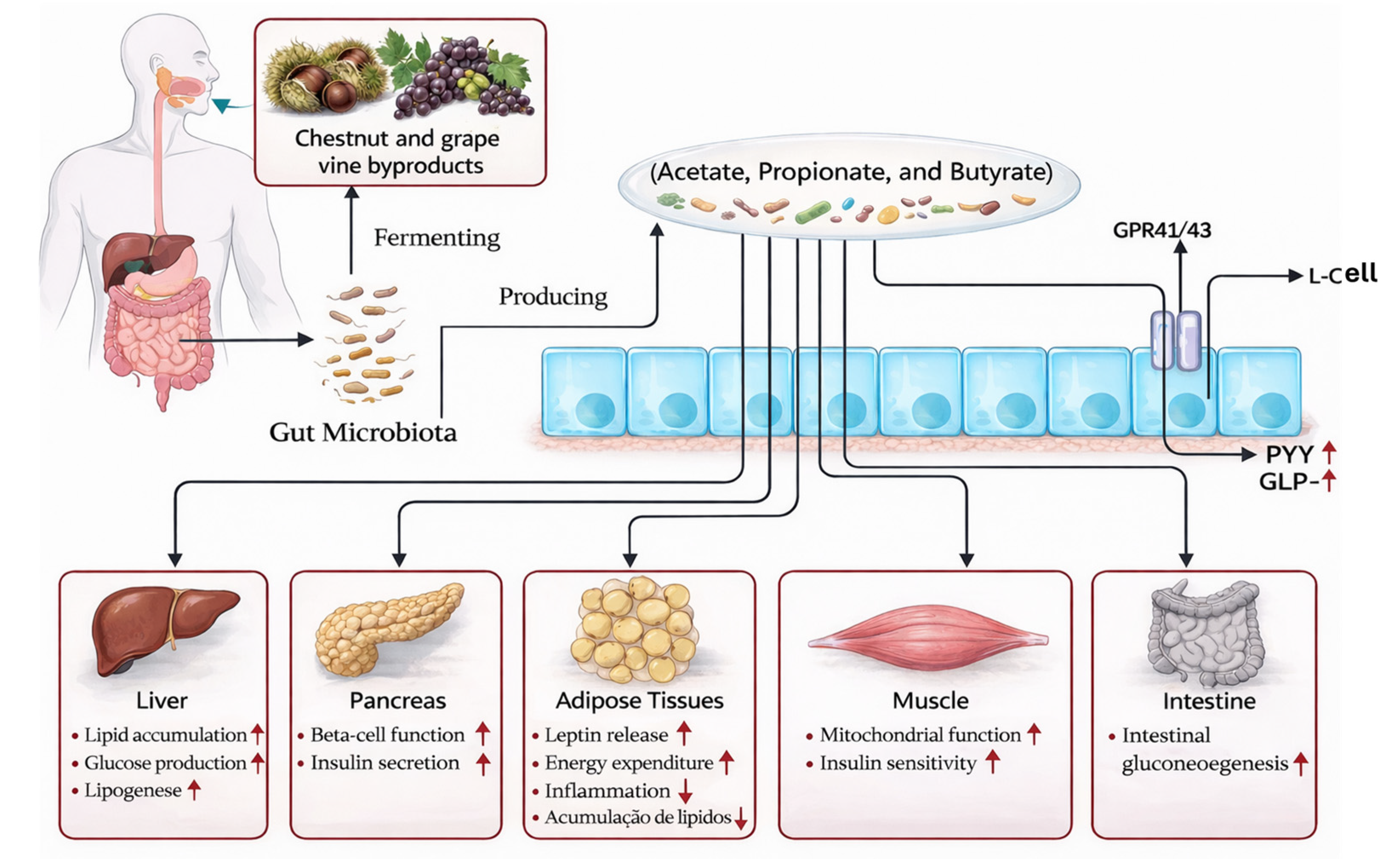
4.3. Gut Health and Microbiota Modulation—Prebiotic Effects and Short-Chain Fatty Acid (SCFA) Production

| Byproduct | Main SCFA Effects | Model | References | |
|---|---|---|---|---|
| Chestnut | NSPCK polysaccharides | ↑ Acetate, propionate, butyrate | Human fecal fermentation | [216] |
| Chestnut tannic acid | ↑ Acetate, propionate, isobutyrate, valerate, hexanoate; ↑ total SCFA | Piglets | [218] | |
| Chestnut tannin food extracts | “Booster” of total SCFA; ↑ acetate especially | Human fecal fermentation | [219] | |
| Grapevine | Pinot noir pomace soluble DF | ↑ Total SCFA, especially propionate (~53% of total SCFA); also acetate, butyrate | In vitro fecal fermentation | [213] |
| Pinot noir pomace insoluble DF | ↑ Total SCFA enriches microbiota diversity | In vitro fecal fermentation | [213] | |
| Enzymatic GP extract (XOS, fiber) | Fermented by Lactobacillus/Bifidobacterium; SCFA and lactic acid production are associated with a pH drop | In vitro fermentation | [226,228] | |
| Grape seed/skin extracts | ↑ SCFA-producing genera (Ruminococcus, Lachnospiraceae NK4A136; Faecalibaculum—butyrate/lactate producer) in rats | In vivo | [229] |
5. Applications in Food and Nutraceuticals
5.1. Functional Food Development—Incorporation in Bakery, Snacks, and Beverages
5.2. Nutraceutical Formulations—Extracts, Encapsulation, and Delivery Systems
5.3. Natural Preservatives and Colorants—Use in Food Preservation and Shelf-Life Extension
5.4. Safety and Regulatory Considerations—Toxicological Data and European/FAO Guidelines
6. Sustainability and Circular Bioeconomy Perspective
6.1. Waste Valorization—Integration into Sustainable Food Systems
6.2. Life Cycle and Environmental Benefits—Reduction in Agricultural Waste
6.3. Economic and Societal Impacts—Potential for Rural Development and Eco-Innovation
7. Conclusions
Author Contributions
Funding
Data Availability Statement
Acknowledgments
Conflicts of Interest
References
- Benincasa, C.; Santoro, I.; Nardi, M.; Cassano, A.; Sindona, G. Eco-friendly extraction and characterisation of nutraceuticals from olive leaves. Molecules 2019, 24, 3481. [Google Scholar] [CrossRef]
- Vilela, A.; Pinto, T. Grape Infusions: Between Nutraceutical and Green Chemistry. Sustain. Chem. 2021, 2, 441–466. [Google Scholar] [CrossRef]
- Silva, A.M.; Costa, P.C.; Delerue-Matos, C.; Rodrigues, F. Assessment of a formulation containing a Castanea sativa shells extract on skin face parameters: In vivo evaluation. Processes 2022, 10, 2230. [Google Scholar] [CrossRef]
- Donner, M.; Verniquet, A.; Broeze, J.; Kayser, K.; De Vries, H. Critical success and risk factors for circular business models valorising agricultural waste and by-products. Resour. Conserv. Recycl. 2021, 165, 105236. [Google Scholar] [CrossRef]
- Jaouhari, Y.; Travaglia, F.; Giovannelli, L.; Picco, A.; Oz, E.; Oz, F.; Bordiga, M. From industrial food waste to bioactive ingredients: A review on the sustainable management and transformation of plant-derived food waste. Foods 2023, 12, 2183. [Google Scholar] [CrossRef] [PubMed]
- Silva, S.B.; Freitas, O.M.; Vieira, E.F.; Gomes, A.; Carreiras, A.R.; Moreira, D.C.; Esfandiari, P.; Silva, J.F.; Delerue-Matos, C.; Domingues, V.F. Eco-friendly biocomposites from chestnut waste: Production, optimization, characterization, and application. Polymers 2025, 17, 616. [Google Scholar] [CrossRef]
- Fernandes, F.; Delerue-Matos, C.; Grosso, C. Unveiling the potential of agrifood by-products: A comprehensive review of phytochemicals, bioactivities and industrial applications. Waste Biomass Valor. 2025, 16, 2715–2748. [Google Scholar] [CrossRef]
- Kirchherr, J.; Yang, N.-H.N.; Schulze-Spüntrup, F.; Heerink, M.J.; Hartley, K. Conceptualizing the circular economy (revisited): An analysis of 221 definitions. Resour. Conserv. Recycl. 2023, 194, 107001. [Google Scholar] [CrossRef]
- Calzolari, T.; Genovese, A.; Brint, A. Circular economy indicators for supply chains: A systematic literature review. Environ. Sustain. Indic. 2022, 13, 100160. [Google Scholar] [CrossRef]
- Esposito, T.; Celano, R.; Pane, C.; Piccinelli, A.L.; Sansone, F.; Picerno, P.; Zaccardelli, M.; Aquino, R.P.; Mencherini, T. Chestnut (Castanea sativa Miller.) burs extracts and functional compounds: UHPLC-UV-HRMS profiling, antioxidant activity, and inhibitory effects on phytopathogenic fungi. Molecules 2019, 24, 302. [Google Scholar] [CrossRef]
- Hu, M.; Yang, X.; Chang, X. Bioactive phenolic components and potential health effects of chestnut shell: A review. J. Food Biochem. 2021, 45, e13696. [Google Scholar] [CrossRef] [PubMed]
- Vilela, A.; Cruz, I.; Oliveira, I.; Pinto, A.; Pinto, T. Sensory and nutraceutical properties of infusions prepared with grape pomace and edible-coated dried–minced grapes. Coatings 2022, 12, 443. [Google Scholar] [CrossRef]
- Silva, V.; Falco, V.; Dias, M.I.; Barros, L.; Silva, A.; Capita, R.; Alonso-Calleja, C.; Amaral, J.S.; Igrejas, G.; Ferreira, I.C.F.R.; et al. Evaluation of the phenolic profile of Castanea sativa Mill. by-products and their antioxidant and antimicrobial activity against multiresistant bacteria. Antioxidants 2020, 9, 87. [Google Scholar] [CrossRef] [PubMed]
- Ferreira, J.; Tkacz, K.; Turkiewicz, I.P.; Santos, I.; Camoesas e Silva, M.; Lima, A.; Sousa, I. Exploring the bioactive properties and therapeutic benefits of pear pomace. Antioxidants 2024, 13, 784. [Google Scholar] [CrossRef]
- Sagar, N.A.; Pareek, S.; Sharma, S.; Yahia, E.M.; Lobo, M.G. Fruit and vegetable waste: Bioactive compounds, their extraction, and possible utilization. Compr. Rev. Food Sci. Food Saf. 2018, 17, 512–531. [Google Scholar] [CrossRef]
- Pinto, T.; Pinto, A.; Vilela, A. Edible coatings and films for preparation of grapevine by-product infusions and in freshly processed products. Coatings 2023, 13, 1350. [Google Scholar] [CrossRef]
- Gonçalves, B.; Pinto, T.; Aires, A.; Morais, M.C.; Bacelar, E.; Anjos, R.; Ferreira-Cardoso, J.; Oliveira, I.; Vilela, A.; Cosme, F. Composition of nuts and their potential health benefits—An overview. Foods 2023, 12, 942. [Google Scholar] [CrossRef]
- Vicente-Zurdo, D.; Gómez-Mejía, E.; Morante-Zarcero, S.; Rosales-Conrado, N.; Sierra, I. Analytical strategies for green extraction, characterization, and bioactive evaluation of polyphenols, tocopherols, carotenoids, and fatty acids in agri-food bio-residues. Molecules 2025, 30, 1326. [Google Scholar] [CrossRef]
- Echegaray, N.; Gómez, B.; Barba, F.J.; Franco, D.; Estévez, M.; Carballo, J.; Marszałek, K.; Lorenzo, J.M. Chestnuts and by-products as source of natural antioxidants in meat and meat products: A review. Trends Food Sci. Technol. 2018, 82, 110–121. [Google Scholar] [CrossRef]
- Santos, M.J.; Pinto, T.; Vilela, A. Sweet Chestnut (Castanea sativa Mill.) Nutritional and Phenolic Composition Interactions with Chestnut Flavor Physiology. Foods 2022, 11, 4052. [Google Scholar] [CrossRef]
- Pinto, D.; Rodrigues, F.; Braga, N.; Santos, J.; Pimentel, F.B.; Palmeira-De-Oliveira, A.; Oliveira, M.B.P.P. The Castanea sativa bur as a new potential ingredient for nutraceutical and cosmetic outcomes: Preliminary studies. Food Funct. 2017, 8, 201–208. [Google Scholar] [CrossRef] [PubMed]
- Mota, M.; Pinto, T.; Vilela, A.; Marques, T.; Borges, A.; Caço, J.; Ferreira-Cardoso, J.; Raimundo, F.; Gomes-Laranjo, J. Irrigation positively affects the chestnut’s quality: The chemical composition, fruit size and sensory attributes. Sci. Hortic. 2018, 238, 177–186. [Google Scholar] [CrossRef]
- Suna, S.; Avşar, B.; Koçer, S.; Çopur, Ö.U. Effects of different pretreatments on the physicochemical characteristics and quality criteria of chestnut (Castanea sativa Mill.) pickle: A new value-added product. J. Food Process. Preserv. 2021, 45, e15669. [Google Scholar] [CrossRef]
- Ciucure, C.T.; Geana, E.I.; Sandru, C.; Tita, O.; Botu, M. Phytochemical and nutritional profile composition in fruits of different sweet chestnut (Castanea sativa Mill.) cultivars grown in Romania. Separations 2022, 9, 66. [Google Scholar] [CrossRef]
- Ilyas, T.; Chowdhary, P.; Chaurasia, D.; Gnansounou, E.; Pandey, A.; Chaturvedi, P. Sustainable green processing of grape pomace for the production of value-added products: An overview. Environ. Technol. Innov. 2021, 23, 101592. [Google Scholar] [CrossRef]
- Ferreira, S.M.; Santos, L. A potential valorization strategy of wine industry by-products and their application in cosmetics—Case study: Grape pomace and grapeseed. Molecules 2022, 27, 969. [Google Scholar] [CrossRef]
- Maphosa, Y.; Jideani, V.A. Dietary fiber extraction for human nutrition—A review. Food Rev. Int. 2016, 32, 98–115. [Google Scholar] [CrossRef]
- Jurevičiūtė, I.; Keršienė, M.; Bašinskienė, L.; Leskauskaitė, D.; Jasutienė, I. Characterization of berry pomace powders as dietary fiber-rich food ingredients with functional properties. Foods 2022, 11, 716. [Google Scholar] [CrossRef]
- Caponio, G.R.; Noviello, M.; Calabrese, F.M.; Gambacorta, G.; Giannelli, G.; De Angelis, M. Effects of in vitro digestion and storage on the phenolic content and antioxidant capacity of a red grape pomace. Int. J. Food Sci. Nutr. 2017, 68, 188–200. [Google Scholar]
- Pinto, D.; López-Yerena, A.; Lamuela-Raventós, R.M.; Vallverdú-Queralt, A.; Delerue-Matos, C.; Rodrigues, F. Predicting the effects of in-vitro digestion on the bioactivity and bioaccessibility of antioxidant compounds extracted from chestnut shells by supercritical fluid extraction: A metabolomic approach. Food Chem. 2024, 435, 137581. [Google Scholar] [CrossRef]
- Elejalde, E.; Villarán, M.C.; Esquivel, A.; Alonso, R.M. Bioaccessibility and antioxidant capacity of grape seed and grape skin phenolic compounds after simulated in vitro gastrointestinal digestion. Plant Foods Hum. Nutr. 2024, 79, 432–439. [Google Scholar] [CrossRef] [PubMed]
- Santos, I.B.; de Bem, G.F.; Cordeiro, V.S.C.; da Costa, C.; de Carvalho, L.; da Rocha, A.P.M.; da Costa, G.; Ognibene, D.T.; de Moura, R.S.; Resende, A.C. Supplementation with Vitis vinifera L. skin extract improves insulin resistance and prevents hepatic lipid accumulation and steatosis in high-fat diet-fed mice. Nutr. Res. 2017, 43, 69–81. [Google Scholar] [CrossRef] [PubMed]
- Vella, F.; Laratta, B.; Cara, F.; Morana, A. Recovery of Bioactive Molecules from Chestnut (Castanea sativa Mill.) By-Products through Extraction by Different Solvents. Nat. Prod. Res. 2018, 32, 1022–1032. [Google Scholar] [CrossRef] [PubMed]
- Pinto, D.; Vieira, E.F.; Peixoto, A.F.; Freire, C.; Freitas, V.; Costa, P.; Delerue-Matos, C.; Rodrigues, F. Optimizing the Extraction of Phenolic Antioxidants from Chestnut Shells by Subcritical Water Extraction Using Response Surface Methodology. Food Chem. 2021, 334, 127521. [Google Scholar] [CrossRef]
- Vázquez, G.; Fontenla, E.; Santos, J.; Freire, M.S.; González-Álvarez, J.; Antorrena, G. Antioxidant Activity and Phenolic Content of Chestnut (Castanea sativa) Shell and Eucalyptus (Eucalyptus globulus) Bark Extracts. Ind. Crops Prod. 2008, 28, 279–285. [Google Scholar] [CrossRef]
- Costa-Trigo, I.; Otero-Penedo, P.; Outeiriño, D.; Paz, A.; Domínguez, J.M. Valorization of Chestnut (Castanea sativa) Residues: Characterization of Different Materials and Optimization of the Acid-Hydrolysis of Chestnut Burrs for the Elaboration of Culture Broths. Waste Manag. 2019, 87, 472–484. [Google Scholar] [CrossRef]
- Amato, D.; Squillaci, G.; Giudicianni, P.; Morana, A.; Ragucci, R.; La Cara, F. Valorization of Agroindustrial Waste from Chestnut Production. Chem. Eng. Trans. 2021, 87, 445–450. [Google Scholar] [CrossRef]
- Aschemann-Witzel, J.; Stangherlin, I.D.C. Upcycled By-Product Use in Agri-Food Systems from a Consumer Perspective: A Review of What We Know, and What Is Missing. Technol. Forecast. Soc. Change 2021, 168, 120749. [Google Scholar] [CrossRef]
- Squillaci, G.; Apone, F.; Sena, L.M.; Carola, A.; Tito, A.; Bimonte, M.; De Lucia, A.; Colucci, G.; La Cara, F.; Morana, A. Chestnut (Castanea sativa Mill.) Industrial Wastes as a Valued Bioresource for the Production of Active Ingredients. Process Biochem. 2018, 64, 228–236. [Google Scholar] [CrossRef]
- Vasconcelos, M.C.B.M.; Bennett, R.N.; Rosa, E.A.S.; Ferreira-Cardoso, J.V. Composition of European chestnut (Castanea sativa Mill.) and association with health effects: Fresh and processed products. J. Sci. Food Agric. 2010, 90, 1578–1589. [Google Scholar] [CrossRef]
- Cacciola, N.A.; Squillaci, G.; D’Apolito, M.; Petillo, O.; Veraldi, F.; La Cara, F.; Peluso, G.; Margarucci, S.; Morana, A. Castanea sativa Mill. Shells Aqueous Extract Exhibits Anticancer Properties Inducing Cytotoxic and Pro-Apoptotic Effects. Molecules 2019, 24, 3401. [Google Scholar] [CrossRef]
- Pinto, D.; Silva, A.M.; Freitas, V.; Vallverdú-Queralt, A.; Delerue-Matos, C.; Rodrigues, F. Microwave-Assisted Extraction as a Green Technology Approach to Recover Polyphenols from Castanea sativa Shells. ACS Food Sci. Technol. 2021, 1, 229–241. [Google Scholar] [CrossRef]
- Pinto, D.; Cádiz-Gurrea, M.L.; Vallverdú-Queralt, A.; Delerue-Matos, C.; Rodrigues, F. Castanea sativa Shells: A Review on Phytochemical Composition, Bioactivity and Waste Management Approaches for Industrial Valorization. Food Res. Int. 2021, 144, 110364. [Google Scholar] [CrossRef] [PubMed]
- Rodrigues, F.; Santos, J.; Pimentel, F.B.; Braga, N.; Palmeira-de-Oliveira, A.; Oliveira, M.B.P. Promising New Applications of Castanea sativa Shell: Nutritional Composition, Antioxidant Activity, Amino Acids, and Vitamin E Profile. Food Funct. 2015, 6, 2854–2860. [Google Scholar] [CrossRef] [PubMed]
- Morana, A.; Squillaci, G.; Paixão, S.M.; Alves, L.; La Cara, F.; Moura, P. Development of an Energy Biorefinery Model for Chestnut (Castanea sativa Mill.) Shells. Energies 2017, 10, 1504. [Google Scholar] [CrossRef]
- Gullón, B.; Eibes, G.; Dávila, I.; Moreira, M.T.; Labidi, J.; Gullón, P. Hydrothermal Treatment of Chestnut Shells (Castanea sativa) to Produce Oligosaccharides and Antioxidant Compounds. Carbohydr. Polym. 2018, 192, 75–83. [Google Scholar] [CrossRef]
- Yang, C.; Han, Y.; Tian, X.; Sajid, M.; Mehmood, S.; Wang, H.; Li, H. Phenolic composition of grape pomace and its metabolism. Crit. Rev. Food Sci. Nutr. 2024, 64, 4865–4881. [Google Scholar] [CrossRef]
- Ruberto, G.; Renda, A.; Daquino, C.; Amico, V.; Spatafora, C.; Tringali, C.; De Tommasi, N. Polyphenol constituents and antioxidant activity of grape pomace extracts from five Sicilian red grape cultivars. Food Chem. 2007, 100, 203–210. [Google Scholar] [CrossRef]
- Kammerer, D.; Claus, A.; Carle, R.; Schieber, A. Polyphenol screening of pomace from red and white grape varieties (Vitis vinifera L.) by HPLC-DAD-MS/MS. J. Agric. Food Chem. 2004, 52, 4360–4367. [Google Scholar] [CrossRef]
- Schieber, A.; Stintzing, F.C.; Carle, R. By-products of plant food processing as a source of functional compounds: Recent developments. Trends Food Sci. Technol. 2001, 12, 401–413. [Google Scholar] [CrossRef]
- Ky, I.; Lorrain, B.; Kolbas, N.; Crozier, A.; Teissedre, P.-L. Wine by-products: Phenolic characterization and antioxidant activity evaluation of grapes and grape pomaces from six different French grape varieties. Molecules 2014, 19, 482–506. [Google Scholar] [CrossRef] [PubMed]
- Makris, D.P.; Boskou, G.; Andrikopoulos, N.K. Polyphenolic content and in vitro antioxidant characteristics of wine industry and other agri-food solid waste extracts. J. Food Compos. Anal. 2007, 20, 125–132. [Google Scholar] [CrossRef]
- Mazza, G.; Francis, F.J. Anthocyanins in grapes and grape products. Crit. Rev. Food Sci. Nutr. 1995, 35, 341–371. [Google Scholar] [CrossRef] [PubMed]
- Mazza, G.; Miniati, E. Grapes. In Anthocyanins in Fruits, Vegetables, and Grains; Mazza, G., Miniati, E., Eds.; CRC Press: Boca Raton, FL, USA, 1993; pp. 149–199. [Google Scholar]
- Rockenbach, I.I.; Gonzaga, L.V.; Rizelio, V.M.; Gonçalves, A.E.S.S.; Genovese, M.I.; Fett, R. Phenolic compounds and antioxidant activity of seed and skin extracts of red grape (Vitis vinifera and Vitis labrusca) pomace from Brazilian winemaking. Food Res. Int. 2011, 44, 897–901. [Google Scholar] [CrossRef]
- Bavaresco, L. Role of viticultural factors on stilbene concentrations of grapes and wine. Drugs Exp. Clin. Res. 2003, 29, 181–187. [Google Scholar]
- Godevac, D.; Tešević, V.; Vujisić, L.; Vajs, V.; Milosavljević, S.; Vajs, V. Polyphenolic Compounds in Seeds from Some Grape Cultivars Grown in Serbia. J. Serb. Chem. Soc. 2010, 75, 1641–1652. [Google Scholar] [CrossRef]
- Milinčić, D.D.; Stanisavljević, N.S.; Kostić, A.Ž.; Soković Bajić, S.; Kojić, M.O.; Gašić, U.M.; Barać, M.B.; Stanojević, S.P.; Tešić, Ž.L.; Pešić, M.B. Phenolic compounds and biopotential of grape pomace extracts from Prokupac red grape variety. LWT 2021, 138, 110739. [Google Scholar] [CrossRef]
- Di Lecce, G.; Arranz, S.; Jáuregui, O.; Tresserra-Rimbau, A.; Quifer-Rada, P.; Lamuela-Raventós, R.M. Phenolic profiling of the skin, pulp and seeds of Albariño grapes using hybrid quadrupole time-of-flight and triple-quadrupole mass spectrometry. Food Chem. 2014, 145, 874–882. [Google Scholar] [CrossRef]
- Pantelić, M.M.; Dabić Zagorac, D.Č.; Davidović, S.M.; Todić, S.R.; Bešlić, Z.S.; Gašić, U.M.; Tešić, Ž.L.; Natić, M.M. Identification and quantification of phenolic compounds in berry skin, pulp, and seeds in 13 grapevine varieties grown in Serbia. Food Chem. 2016, 211, 243–252. [Google Scholar] [CrossRef]
- Souquet, J.-M.; Cheynier, V.; Brossaud, F.; Moutounet, M. Polymeric proanthocyanidins from grape skins. Phytochemistry 1996, 43, 509–512. [Google Scholar] [CrossRef]
- Anastasiadi, M.; Pratsinis, H.; Kletsas, D.; Skaltsounis, A.-L.; Haroutounian, S.A. Grape stem extracts: Polyphenolic content and assessment of their in vitro antioxidant properties. LWT-Food Sci. Technol. 2012, 48, 316–322. [Google Scholar] [CrossRef]
- Hayasaka, Y.; Waters, E.J.; Cheynier, V.; Herderich, M.J.; Vidal, S. Characterization of proanthocyanidins in grape seeds using electrospray mass spectrometry. Rapid Commun. Mass Spectrom. 2003, 17, 9–16. [Google Scholar] [CrossRef] [PubMed]
- Garrido, J.; Borges, F. Wine and grape polyphenols—A chemical perspective. Food Res. Int. 2013, 54, 1844–1858. [Google Scholar] [CrossRef]
- Lingua, M.; Fabani, M.; Wunderlin, D.; Baroni, V. In vivo antioxidant activity of grape, pomace and wine from three red varieties grown in Argentina: Its relationship to phenolic profile. J. Funct. Foods 2016, 20, 332–345. [Google Scholar] [CrossRef]
- Pintać, D.; Majkić, T.; Torović, L.; Orčić, D.; Beara, I.; Simin, N.; Mimica–Dukić, N.; Lesjak, M. Solvent selection for efficient extraction of bioactive compounds from grape pomace. Ind. Crops Prod. 2018, 111, 379–390. [Google Scholar] [CrossRef]
- Jara-Palacios, M.J.; Hernanz, D.; González-Manzano, S.; Santos-Buelga, C.; Escudero-Gilete, M.L.; Heredia, F.J. Detailed phenolic composition of white grape by-products by RRLC/MS and measurement of the antioxidant activity. Talanta 2014, 125, 51–57. [Google Scholar] [CrossRef]
- Ćurko, N.; Kovačević Ganić, K.; Gracin, L.; Đapić, M.; Jourdes, M.; Teissedre, P.-L. Characterization of seed and skin polyphenolic extracts of two red grape cultivars grown in Croatia and their sensory perception in a wine model medium. Food Chem. 2014, 145, 15–22. [Google Scholar] [CrossRef]
- Delić, K.; Milinčić, D.D.; Pešić, M.B.; Lević, S.; Nedović, V.A.; Gancel, A.-L.; Jourdes, M.; Teissedre, P.-L. Grape, wine and pomace anthocyanins: Winemaking biochemical transformations, application and potential benefits. OENO One 2024, 58, 8039. [Google Scholar] [CrossRef]
- Alonso, A.; Guillén, D.; Barroso, C.; Puertas, B.; García, A. Determination of Antioxidant Activity of Wine Byproducts and Its Correlation with Polyphenolic Content. J. Agric. Food Chem. 2002, 50, 5832–5836. [Google Scholar] [CrossRef]
- Teixeira, A.; Baenas, N.; Domínguez-Perles, R.; Barros, A.; Rosa, E.; Moreno, D.A.; García-Viguera, C. Natural bioactive compounds from winery by-products as health promoters: A review. Int. J. Mol. Sci. 2014, 15, 15638–15678. [Google Scholar] [CrossRef]
- Bosso, A.; Cassino, C.; Motta, S.; Panero, L.; Tsolakis, C.; Guaita, M. Polyphenolic Composition and In Vitro Antioxidant Activity of Red Grape Seeds as Byproducts of Short and Medium-Long Fermentative Macerations. Foods 2020, 9, 1451. [Google Scholar] [CrossRef] [PubMed]
- Barreira, J.C.; Ferreira, I.C.F.R.; Oliveira, M.B.P.P.; Pereira, J.A. Antioxidant Potential of Chestnut (Castanea sativa L.) and Almond (Prunus dulcis L.) By-Products. Food Sci. Technol. Int. 2010, 16, 209–216. [Google Scholar] [CrossRef] [PubMed]
- Vasconcelos, M.C.B.M.; Bennett, R.N.; Quideau, S.; Jacquet, R.; Rosa, E.A.; Ferreira-Cardoso, J.V. Evaluating the Potential of Chestnut (Castanea sativa Mill.) Fruit Pericarp and Integument as a Source of Tocopherols, Pigments, and Polyphenols. Ind. Crops Prod. 2010, 31, 301–311. [Google Scholar] [CrossRef]
- Constantin, O.E.; Stoica, F.; Rațu, R.N.; Stănciuc, N.; Bahrim, G.E.; Râpeanu, G. Bioactive Components, Applications, Extractions, and Health Benefits of Winery By-Products from a Circular Bioeconomy Perspective: A Review. Antioxidants 2024, 13, 100. [Google Scholar] [CrossRef]
- Bhutani, M.; Gaur, S.S.; Shams, R.; Dash, K.K.; Shaikh, A.M.; Kovács, B. Valorization of grape by-products: Insights into sustainable industrial and nutraceutical applications. Future Foods 2025, 12, 100710. [Google Scholar] [CrossRef]
- Gomes-Laranjo, J.; Silva, A.; Martins-Gomes, C.; Marques, T.; Coutinho, T.; Teixeira, A.; Vilela, A.; Gonçalves, C. Bioactive Compounds in Chestnut (Castanea sativa Mill.): Composition, Health-Promoting Properties, and Technological Applications. Appl. Sci. 2025, 15, 13069. [Google Scholar] [CrossRef]
- Palacios, J.; Gonçalves, S.; Hernanz, D.; Heredia, F.J.; Romano, A. Effects of in vitro Gastrointestinal Digestion on Phenolic Compounds and Antioxidant Activity of Different White Winemaking By-Products Extracts. Food Res. Int. 2018, 109, 330–340. [Google Scholar] [CrossRef]
- Pinto, D.; Ferreira, A.; Lozano-Castellón, J.; Laveriano Santos, E.; Lamuela-Raventós, R.M.; Vallverdú-Queralt, A.; Delerue-Matos, C.; Rodrigues, F. Exploring the Impact of In Vitro Gastrointestinal Digestion in the Bioaccessibility of Phenolic-Rich Chestnut Shells: A Preliminary Study. Separations 2023, 10, 471. [Google Scholar] [CrossRef]
- Rizvi, S.; Raza, S.T.; Ahmed, F.; Ahmad, A.; Abbas, S.; Mahdi, F. The Role of Vitamin E in Human Health and Some Diseases. Sultan Qaboos Univ. Med. J. 2014, 14, e157–e165. [Google Scholar] [CrossRef]
- Ungurianu, A.; Zanfirescu, A.; Nițulescu, G.; Margină, D. Vitamin E beyond Its Antioxidant Label. Antioxidants 2021, 10, 634. [Google Scholar] [CrossRef]
- Pinto, D.; Braga, N.; Silva, A.M.; Costa, P.; Delerue-Matos, C.; Rodrigues, F. Chestnut. In Valorization of Fruit Processing By-Products; Galanakis, C.M., Ed.; Academic Press: Cambridge, MA, USA, 2020; pp. 127–144. [Google Scholar] [CrossRef]
- Robichon, C.; Villeneuve, P.; Bohuon, P.; Baréa, B.; Barouh, N.; Courtois, F.; Fine, F.; Durand, E. Unveiling Synergistic Antioxidant Combinations for α-Tocopherol in Emulsions: A Spectrophotometric-Mathematical Approach. Curr. Res. Food Sci. 2025, 11, 101134. [Google Scholar] [CrossRef]
- Mohamed, H.B.; Duba, K.S.; Fiori, L.; Abdelgawed, H.; Tlili, I.; Tounekti, T.; Zrig, A. Bioactive Compounds and Antioxidant Activities of Different Grape (Vitis vinifera L.) Seed Oils Extracted by Supercritical CO2 and Organic Solvent. LWT 2016, 74, 557–562. [Google Scholar] [CrossRef]
- Kamal-Eldin, A.; Frank, J.; Razdan, A.; Tengblad, S.; Basu, S.; Vessby, B. Effects of Dietary Phenolic Compounds on Tocopherol, Cholesterol, and Fatty Acids in Rats. Lipids 2000, 35, 427–435. [Google Scholar] [CrossRef] [PubMed]
- Barouh, N.; Bourlieu-Lacanal, C.; Figueroa-Espinoza, M.C.; Durand, E.; Villeneuve, P. Tocopherols as Antioxidants in Lipid-Based Systems: The Combination of Chemical and Physicochemical Interactions Determines Their Efficiency. Compr. Rev. Food Sci. Food Saf. 2022, 21, 642–688. [Google Scholar] [CrossRef] [PubMed]
- Altanam, S.Y.; Darwish, N.; Bakillah, A. Exploring the Interplay of Antioxidants, Inflammation, and Oxidative Stress: Mechanisms, Therapeutic Potential, and Clinical Implications. Diseases 2025, 13, 309. [Google Scholar] [CrossRef]
- Maurelli, L.; Ionata, E.; La Cara, F.; Morana, A. Chestnut shell as unexploited source of fermentable sugars: Effect of different pretreatment methods on enzymatic saccharification. Appl. Biochem. Biotechnol. 2013, 170, 1104–1118. [Google Scholar] [CrossRef]
- Cruz-Lopes, L.; Domingos, I.; Ferreira, J.; Esteves, B. Chemical composition and study on liquefaction optimization of chestnut shells. Open Agric. 2020, 5, 905–911. [Google Scholar] [CrossRef]
- Alinovi, M.; Rinaldi, M.; Paciulli, M.; Littardi, P.; Chiavaro, E. Chestnut peels and wheat bran at different water level influence the physical properties of pan bread. Eur. Food Res. Technol. 2022, 248, 1227–1237. [Google Scholar] [CrossRef]
- Núñez-Gómez, V.; González-Barrio, R.; Periago, M.J. Interaction between Dietary Fibre and Bioactive Compounds in Plant By-Products: Impact on Bioaccessibility and Bioavailability. Antioxidants 2023, 12, 976. [Google Scholar] [CrossRef]
- Rocchetti, G.; Perez Gregorio, R.; Lorenzo, J.M.; Barba, F.J.; García Oliveira, P.; Prieto, M.A.; Simal-Gandara, J.; Mosele, J.I.; Motilva, M.-J.; Tomas, M.; et al. Functional implications of bound phenolic compounds and phenolics–food interaction: A review. Compr. Rev. Food Sci. Food Saf. 2022, 21, 4569–4601. [Google Scholar] [CrossRef]
- Jin, Q.; Neilson, A.P.; Stewart, A.C.; O’Keefe, S.F.; Kim, Y.-T.; McGuire, M.; Wilder, G.; Huang, H. Integrated approach for the valorization of red grape pomace: Production of oil, polyphenols, and acetone–butanol–ethanol. ACS Sustain. Chem. Eng. 2018, 6, 16279–16286. [Google Scholar] [CrossRef]
- Caponio, G.R.; Minervini, F.; Tamma, G.; Gambacorta, G.; De Angelis, M. Promising Application of Grape Pomace and Its Agri-Food Valorization: Source of Bioactive Molecules with Beneficial Effects. Sustainability 2023, 15, 9075. [Google Scholar] [CrossRef]
- Dinu, L.D.; Vamanu, E. Gut Microbiota Modulators Based on Polyphenols Extracted from Winery By-Products and Their Applications in the Nutraceutical Industry. Life 2024, 14, 414. [Google Scholar] [CrossRef] [PubMed]
- Li, Y.; Chen, X.; Wang, G.; Xu, L.; Liu, Y.; Yuan, C.; Li, J. The release patterns and potential prebiotic characteristics of soluble and insoluble dietary fiber-bound polyphenols from Pinot Noir grape pomace during in vitro digestion and fermentation. Food Chem. X 2025, 29, 102694. [Google Scholar] [CrossRef] [PubMed]
- Rosa, E.; Morais, M.C.; Oliveira, I.; Gonçalves, B.; Silva, A.P. Uses and Health Benefits of Chestnuts. In Advances in Food and Nutrition Research; Academic Press: Cambridge, MA, USA, 2019; Volume 87, pp. 425–464. [Google Scholar] [CrossRef]
- Kurćubić, V.S.; Stanišić, N.; Stajić, S.B.; Dmitrić, M.; Živković, S.; Kurćubić, L.V.; Živković, V.; Jakovljević, V.; Mašković, P.Z.; Mašković, J. Valorizing Grape Pomace: A Review of Applications, Nutritional Benefits, and Potential in Functional Food Development. Foods 2024, 13, 4169. [Google Scholar] [CrossRef]
- Ali, K.; Maltese, F.; Choi, Y.H.; Verpoorte, R. Metabolic Constituents of Grapevine and Grape-Derived Products. Phytochem. Rev. 2010, 9, 357–378. [Google Scholar] [CrossRef]
- Meleti, E.; Kossyva, V.; Maisoglou, I.; Vrontaki, M.; Manouras, V.; Tzereme, A.; Alexandraki, M.; Koureas, M.; Malissiova, E.; Manouras, A. The Nutritional Benefits and Sustainable By-Product Utilization of Chestnuts: A Comprehensive Review. Agriculture 2024, 14, 2262. [Google Scholar] [CrossRef]
- Sorice, A.; Siano, F.; Capone, F.; Guerriero, E.; Picariello, G.; Budillon, A.; Ciliberto, G.; Paolucci, M.; Costantini, S.; Volpe, M.G. Potential Anticancer Effects of Polyphenols from Chestnut Shell Extracts: Modulation of Cell Growth, and Cytokinomic and Metabolomic Profiles. Molecules 2016, 21, 1411. [Google Scholar] [CrossRef]
- Li, Z.; Cheng, C.; Zhang, L.; Xue, J.; Sun, Q.; Wang, H.; Cui, R.; Liu, R.; Song, L. Extraction of pigments from chestnut (Castanea mollissima) shells using green deep eutectic solvents: Optimization, HPLC-MS identification, stability, and antioxidant activities. Food Chem. 2025, 488, 144916. [Google Scholar] [CrossRef]
- Chen, X.; Song, H.; Zhou, S.; Yuan, C.; Li, J. Exploring separation patterns and mechanisms of proanthocyanidins in grape seeds and pomace with diverse molecular weights, compositions, and structures. Food Chem. X 2023, 20, 101008. [Google Scholar] [CrossRef]
- Zalidis, A.P.; Kalogiouri, N.P.; Mourtzinos, I.; Sarris, D.; Gkatzionis, K. A novel liquid chromatographic time-of-flight tandem mass spectrometric method for the determination of secondary metabolites in functional flours produced from grape seed and olive stone waste. Molecules 2025, 30, 1527. [Google Scholar] [CrossRef]
- Richard-Dazeur, C.; Jacolot, P.; Niquet-Léridon, C.; Goethals, L.; Barbezier, N.; Anton, P.M. HPLC-DAD optimization of quantification of vescalagin, gallic and ellagic acid in chestnut tannins. Heliyon 2023, 9, e18993. [Google Scholar] [CrossRef] [PubMed]
- Cekić, B.; Marković, J.; Maksimović, V.; Ružić-Muslić, D.; Maksimović, N.; Ćosić, I.; Zeljić Stojiljković, K. Characterization of chestnut tannins: Bioactive compounds and their impact on lamb health. Life 2024, 14, 1556. [Google Scholar] [CrossRef] [PubMed]
- Lopes, J.D.C.; Madureira, J.; Margaça, F.M.A.; Cabo Verde, S. Grape pomace: A review of its bioactive phenolic compounds, health benefits, and applications. Molecules 2025, 30, 362. [Google Scholar] [CrossRef] [PubMed]
- Padilla-González, G.F.; Grosskopf, E.; Sadgrove, N.J.; Simmonds, M.S.J. Chemical diversity of flavan-3-ols in grape seeds: Modulating factors and quality requirements. Plants 2022, 11, 809. [Google Scholar] [CrossRef]
- Cortés-Herrera, C.; Artavia, G.; Leiva, A.; Granados-Chinchilla, F. Liquid chromatography analysis of common nutritional components in feed and food. Foods 2018, 8, 1. [Google Scholar] [CrossRef]
- Pinto, D.; López-Yerena, A.; Almeida, A.; Sarmento, B.; Lamuela-Raventós, R.M.; Vallverdú-Queralt, A.; Delerue-Matos, C.; Rodrigues, F. Metabolomic insights into phenolics-rich chestnut shells extract. Food Res. Int. 2023, 170, 112963. [Google Scholar] [CrossRef]
- Pozzoli, C.; Martinelli, G.; Fumagalli, M.; Di Lorenzo, C.; Maranta, N.; Colombo, L.; Piazza, S.; Dell’Agli, M.; Sangiovanni, E. Castanea sativa Mill. by-products: Anti-inflammatory effects in human intestinal epithelial cells. Molecules 2024, 29, 3951. [Google Scholar] [CrossRef]
- Paun, N.; Botoran, O.R.; Niculescu, V.-C. Total phenolic, anthocyanins HPLC-DAD-MS determination and antioxidant capacity in black grape skins and blackberries: A comparative study. Appl. Sci. 2022, 12, 936. [Google Scholar] [CrossRef]
- Wang, L.; Yamashita, Y.; Saito, A.; Ashida, H. An analysis method for flavan-3-ols using high-performance liquid chromatography coupled with a fluorescence detector. J. Food Drug Anal. 2017, 25, 478–487. [Google Scholar] [CrossRef]
- Blackford, M.; Comby, M.; Dienes-Nagy, A.; Zeng, L.; Cléroux, M.; Lorenzini, F.; Bourdin, G.; Bach, B. Characterization of stem extracts of various grape varieties obtained after maceration under simulated alcoholic fermentation. OENO One 2022, 56, 343–356. [Google Scholar] [CrossRef]
- Vlase, L.; Kiss, B.; Leucuta, S.E.; Gocan, S. A rapid method for determination of resveratrol in wines by HPLC-MS. J. Liq. Chromatogr. Relat. Technol. 2009, 32, 2105–2121. [Google Scholar] [CrossRef]
- Colombo, R.C.; Roberto, S.R.; Cruz, M.A.; Carvalho, D.U.; Yamamoto, L.Y.; Nixdorf, S.L.; Pérez-Navarro, J.; Gómez-Alonso, S.; Shahab, M.; Ahmed, S.; et al. Characterization of the phenolic ripening development of ‘BRS Vitoria’ seedless table grapes using HPLC–DAD–ESI-MS/MS. J. Food Compos. Anal. 2021, 95, 103693. [Google Scholar] [CrossRef]
- Contreras, M.d.M.; Feriani, A.; Gómez-Cruz, I.; Hfaiedh, N.; Harrath, A.H.; Romero, I.; Castro, E.; Tlili, N. Grapevine Shoot Extract Rich in Trans-Resveratrol and Trans-ε-Viniferin: Evaluation of Their Potential Use for Cardiac Health. Foods 2023, 12, 4351. [Google Scholar] [CrossRef]
- Galiñanes, C.; Freire, M.S.; González-Álvarez, J. Antioxidant activity of phenolic extracts from chestnut fruit and forest industries residues. Eur. J. Wood Prod. 2015, 73, 651–659. [Google Scholar] [CrossRef]
- Fuchs, C.; Bakuradze, T.; Steinke, R.; Grewal, R.; Eckert, G.P.; Richling, E. Polyphenolic composition of extracts from winery by-products and effects on cellular cytotoxicity and mitochondrial functions in HepG2 cells. J. Funct. Foods 2020, 70, 103988. [Google Scholar] [CrossRef]
- Hawrył, A.; Hawrył, M.; Hajnos-Stolarz, A.; Abramek, J.; Bogucka-Kocka, A.; Komsta, Ł. HPLC fingerprint analysis with the antioxidant and cytotoxic activities of selected lichens combined with chemometric calculations. Molecules 2020, 25, 4301. [Google Scholar] [CrossRef]
- Vidal-Casanella, O.; Moreno-Merchan, J.; Granados, M.; Nuñez, O.; Saurina, J.; Sentellas, S. Total polyphenol content in food samples and nutraceuticals: Antioxidant indices versus high-performance liquid chromatography. Antioxidants 2022, 11, 324. [Google Scholar] [CrossRef]
- Dias, R.; Oliveira, H.; Fernandes, I.; Simal-Gandara, J.; Perez-Gregorio, R. Recent advances in extracting phenolic compounds from food and their use in disease prevention and as cosmetics. Crit. Rev. Food Sci. Nutr. 2021, 61, 1130–1151. [Google Scholar] [CrossRef]
- Rodrigues, D.B.; Marques, M.C.; Hacke, A.; Loubet Filho, P.S.; Baú Betim Cazarin, C.; Barros Mariutti, L.R. Trust your gut: Bioavailability and bioaccessibility of dietary compounds. Curr. Res. Food Sci. 2022, 5, 228–233. [Google Scholar] [CrossRef]
- Lorenzo, J.M.; Estévez, M.; Barba, F.J.; Thirumdas, R.; Franco, D.; Munekata, P.E.S. Polyphenols: Bioaccessibility and bioavailability of bioactive components. In Innovative Thermal and Non-Thermal Processing, Bioaccessibility and Bioavailability of Nutrients and Bioactive Compounds; Barba, F.J., Saraiva, J.M.A., Cravotto, G., Lorenzo, J.M., Eds.; Woodhead Publishing: Sawston, UK, 2019; pp. 309–332. [Google Scholar]
- Han, F.; Yang, P.; Wang, H.; Fernandes, I.; Mateus, N.; Liu, Y. Digestion and absorption of red grape and wine anthocyanins through the gastrointestinal tract. Trends Food Sci. Technol. 2019, 83, 211–224. [Google Scholar] [CrossRef]
- Braga, A.R.C.; Murador, D.C.; de Souza Mesquita, L.M.; de Rosso, V.V. Bioavailability of anthocyanins: Gaps in knowledge, challenges and future research. J. Food Compos. Anal. 2018, 68, 31–40. [Google Scholar] [CrossRef]
- Unusan, N. Proanthocyanidins in grape seeds: An updated review of their health benefits and potential uses in the food industry. J. Funct. Foods 2020, 67, 103861. [Google Scholar] [CrossRef]
- Troilo, M.; Difonzo, G.; Paradiso, V.M.; Summo, C.; Caponio, F. Bioactive compounds from vine shoots, grape stalks, and wine lees: Their potential use in agro-food chains. Foods 2021, 10, 342. [Google Scholar] [CrossRef]
- Cerulli, A.; Napolitano, A.; Hošek, J.; Masullo, M.; Pizza, C.; Piacente, S. Antioxidant and in vitro preliminary anti-inflammatory activity of Castanea sativa burs, leaves, and chestnuts extracts and their metabolite profiles. Antioxidants 2021, 10, 278. [Google Scholar] [CrossRef]
- Pinto, D.; Moreira, M.M.; Vallverdú-Queralt, A.; Delerue-Matos, C.; Rodrigues, F. Insights into the digestion of chestnut (Castanea sativa) shells bioactive extracts—Ultrasound vs. microwave-assisted extraction. Int. J. Food Sci. Technol. 2024, 59, 5128–5142. [Google Scholar] [CrossRef]
- Żurek, N.; Pawłowska, A.M.; Pycia, K.; Potocki, L.; Kapusta, I.T. Quantitative and qualitative determination of polyphenolic compounds in Castanea sativa leaves and evaluation of their biological activities. Appl. Sci. 2024, 14, 3859. [Google Scholar] [CrossRef]
- Zafra-Rojas, Q.Y.; González-Martínez, B.E.; del Socorro Cruz-Cansino, N.; López-Cabanillas, M.; Suárez-Jacobo, Á.; Cervantes-Elizarrarás, A.; Ramírez-Moreno, E. Effect of ultrasound on in vitro bioaccessibility of phenolic compounds and antioxidant capacity of blackberry (Rubus fruticosus) residues cv. Tupy. Plant Foods Hum. Nutr. 2020, 75, 608–613. [Google Scholar] [CrossRef]
- Miyahira, R.F.; de Lima, P.F.; Fabiano, G.A.; Oliveira, J.L.; Ponte, L.G.S.; Cunha, D.T.; Bezerra, R.M.N.; Antunes, A.E.C. Changes in phenolic compound and antioxidant activity of germinated broccoli, wheat, and lentils during simulated gastrointestinal digestion. Plant Foods Hum. Nutr. 2022, 77, 233–240. [Google Scholar] [CrossRef]
- Lucas-González, R.; Viuda-Martos, M.; Pérez-Alvarez, J.A.; Fernández-López, J. In vitro digestion models suitable for foods: Opportunities for new fields of application and challenges. Food Res. Int. 2018, 107, 423–436. [Google Scholar] [CrossRef]
- Brodkorb, A.; Egger, L.; Alminger, M.; Alvito, P.; Assunção, R.; Ballance, S.; Bohn, T.; Bourlieu-Lacanal, C.; Boutrou, R.; Carrière, F.; et al. INFOGEST static in vitro simulation of gastrointestinal food digestion. Nat. Protoc. 2019, 14, 991–1014. [Google Scholar] [CrossRef]
- Colombo, R.; Ferron, L.; Frosi, I.; Papetti, A. Advances in static in vitro digestion models after the COST action Infogest consensus protocol. Food Funct. 2021, 12, 7619–7636. [Google Scholar] [CrossRef]
- Dupont, D.; Alric, M.; Blanquet-Diot, S.; Bornhorst, G.; Cueva, C.; Deglaire, A.; Denis, S.; Ferrua, M.; Havenaar, R.; Lelieveld, J.; et al. Can dynamic in vitro digestion systems mimic the physiological reality? Crit. Rev. Food Sci. Nutr. 2019, 59, 1546–1562. [Google Scholar] [CrossRef] [PubMed]
- Mulet-Cabero, A.-I.; Egger, L.; Portmann, R.; Ménard, O.; Marze, S.; Minekus, M.; Le Feunteun, S.; Sarkar, A.; Grundy, M.M.-L.; Carrière, F.; et al. A standardised semi-dynamic in vitro digestion method suitable for food—An international consensus. Food Funct. 2020, 11, 1702–1720. [Google Scholar] [CrossRef] [PubMed]
- Minekus, M.; Marteau, P.; Havenaar, R.; Veld, J.H.H.I.T. A multicompartmental dynamic computer-controlled model simulating the stomach and small intestine. Altern. Lab. Anim. 1995, 23, 197–209. [Google Scholar] [CrossRef]
- Molly, K.; Vande Woestyne, M.; Verstraete, W. Development of a 5-step multi-chamber reactor as a simulation of the human intestinal microbial ecosystem. Appl. Microbiol. Biotechnol. 1993, 39, 254–258. [Google Scholar] [CrossRef]
- Cueva, C.; Gil-Sánchez, I.; Tamargo, A.; Miralles, B.; Crespo, J.; Bartolomé, B.; Moreno-Arribas, M.V. Gastrointestinal digestion of food-use silver nanoparticles in the dynamic SIMulator of the GastroIntestinal tract (simgi®). Impact on human gut microbiota. Food Chem. Toxicol. 2019, 132, 110657. [Google Scholar] [CrossRef]
- Fleschhut, J.; Kratzer, F.; Rechkemmer, G.; Kulling, S.E. Stability and biotransformation of various dietary anthocyanins in vitro. Eur. J. Nutr. 2006, 45, 7–18. [Google Scholar] [CrossRef]
- Prasain, J.K.; Peng, N.; Dai, Y.; Moore, R.; Arabshahi, A.; Wilson, L.; Barnes, S.; Wyss, J.M.; Kim, H.; Watts, R.L. Liquid chromatography–tandem mass spectrometry identification of proanthocyanidins in rat plasma after oral administration of grape seed extract. Phytomedicine 2009, 16, 233–243. [Google Scholar] [CrossRef]
- Castello, F.; Costabile, G.; Bresciani, L.; Tassotti, M.; Naviglio, D.; Luongo, D.; Ciciola, P.; Vitale, M.; Vetrani, C.; Galaverna, G.; et al. Bioavailability and pharmacokinetic profile of grape pomace phenolic compounds in humans. Arch. Biochem. Biophys. 2018, 646, 1–9. [Google Scholar] [CrossRef]
- Maryam, A.; Hosein, H. Grapes (Vitis vinifera) as a potential candidate for the therapy of the metabolic syndrome. Phytother. Res. 2016, 30, 540–556. [Google Scholar] [CrossRef]
- Sivaprakasapillai, B.; Edirisinghe, I.; Randolph, J.; Steinberg, F.; Kappagoda, T. Effect of grape seed extract on blood pressure in subjects with the metabolic syndrome. Metabolism 2009, 58, 1743–1746. [Google Scholar] [CrossRef] [PubMed]
- Downing, L.E.; Edgar, D.; Ellison, P.A.; Ricketts, M.L. Mechanistic insight into nuclear receptor-mediated regulation of bile acid metabolism and lipid homeostasis by grape seed procyanidin extract (GSPE). Cell Biochem. Funct. 2017, 35, 12–32. [Google Scholar] [CrossRef] [PubMed]
- Griffin, L.E.; Witrick, K.A.; Klotz, C.; Dorenkott, M.R.; Goodrich, K.M.; Fundaro, G.; McMillan, R.P.; Hulver, M.W.; Ponder, M.A.; Neilson, A.P. Alterations to metabolically active bacteria in the mucosa of the small intestine predict anti-obesity and anti-diabetic activities of grape seed extract in mice. Food Funct. 2017, 8, 3510–3522. [Google Scholar] [CrossRef]
- Pinto, D.; Almeida, A.; López-Yerena, A.; Pinto, S.; Sarmento, B.; Lamuela-Raventós, R.M.; Vallverdú-Queralt, A.; Delerue-Matos, C.; Rodrigues, F. Appraisal of a new potential antioxidants-rich nutraceutical ingredient from chestnut shells through in-vivo assays—A targeted metabolomic approach in phenolic compounds. Food Chem. 2023, 404, 134546. [Google Scholar] [CrossRef]
- Pinto, D.; Cádiz-Gurrea, M.d.l.L.; Sut, S.; Ferreira, A.S.; Leyva-Jimenez, F.J.; Dall’Acqua, S.; Segura-Carretero, A.; Delerue-Matos, C.; Rodrigues, F. Valorisation of underexploited Castanea sativa shells bioactive compounds recovered by supercritical fluid extraction with CO2: A response surface methodology approach. J. CO2 Util. 2020, 40, 101194. [Google Scholar] [CrossRef]
- Walle, T.; Browning, A.M.; Steed, L.L.; Reed, S.G.; Walle, U.K. Flavonoid glucosides are hydrolyzed and thus activated in the oral cavity in humans. J. Nutr. 2005, 135, 48–52. [Google Scholar] [CrossRef]
- Scalbert, A.; Morand, C.; Manach, C.; Rémésy, C. Absorption and metabolism of polyphenols in the gut and impact on health. Biomed. Pharmacother. 2002, 56, 276–282. [Google Scholar] [CrossRef]
- Németh, K.; Plumb, G.W.; Berrin, J.-G.; Juge, N.; Jacob, R.; Naim, H.Y.; Williamson, G.; Swallow, D.M.; Kroon, P.A. Deglycosylation by small intestinal epithelial cell β-glucosidases is a critical step in the absorption and metabolism of dietary flavonoid glycosides in humans. Eur. J. Nutr. 2003, 42, 29–42. [Google Scholar] [CrossRef]
- Gee, J.M.; DuPont, M.S.; Day, A.J.; Plumb, G.W.; Williamson, G.; Johnson, I.T. Intestinal transport of quercetin glycosides in rats involves both deglycosylation and interaction with the hexose transport pathway. J. Nutr. 2000, 130, 2765–2771. [Google Scholar] [CrossRef]
- Donovan, J.L.; Manach, C.; Faulks, R.M.; Kroon, P.A. Absorption and metabolism of dietary plant secondary metabolites. In Plant Secondary Metabolites: Occurrence, Structure and Role in the Human Diet; Crozier, A., Clifford, M.N., Ashihara, H., Eds.; Wiley: Hoboken, NJ, USA, 2006; pp. 303–351. [Google Scholar]
- Williamson, G.; Clifford, M.N. Colonic metabolites of berry polyphenols: The missing link to biological activity? Br. J. Nutr. 2010, 104, S48–S66. [Google Scholar] [CrossRef] [PubMed]
- Pimpão, R.C.; Ventura, M.R.; Ferreira, R.B.; Williamson, G.; Santos, C.N. Phenolic sulfates as new and highly abundant metabolites in human plasma after ingestion of a mixed berry fruit purée. Br. J. Nutr. 2015, 113, 454–463. [Google Scholar] [CrossRef] [PubMed]
- Jena, A.B.; Samal, R.R.; Bhol, N.K.; Duttaroy, A.K. Cellular red-ox system in health and disease: The latest update. Biomed. Pharmacother. 2023, 162, 114606. [Google Scholar] [CrossRef] [PubMed]
- Dvořák, P.; Krasylenko, Y.; Zeiner, A.; Šamaj, J.; Takáč, T. Signaling toward reactive oxygen species-scavenging enzymes in plants. Front. Plant Sci. 2021, 11, 618835. [Google Scholar] [CrossRef]
- Jomová, K.; Alomar, S.Y.; Alwasel, S.H.; Nepovimova, E.; Kuča, K.; Valko, M. Several lines of antioxidant defense against oxidative stress. Arch. Toxicol. 2024, 98, 1323–1367. [Google Scholar] [CrossRef]
- Mansoor, S.; Wani, O.A.; Lone, J.K.; Manhas, S.; Kour, N.; Alam, P.; Ahmad, A.; Ahmad, P. Reactive oxygen species in plants: From source to sink. Antioxidants 2022, 11, 225. [Google Scholar] [CrossRef]
- Hasanuzzaman, M.; Bhuyan, M.H.M.B.; Parvin, K.; Bhuiyan, T.F.; Anee, T.I.; Nahar, K.; Hossen, M.S.; Zulfiqar, F.; Alam, M.M.; Fujita, M. Regulation of ROS metabolism in plants under environmental stress: A review of recent experimental evidence. Int. J. Mol. Sci. 2020, 21, 8695. [Google Scholar] [CrossRef]
- García-Caparrós, P.; De Filippis, L.; Gul, A.; Hasanuzzaman, M.; Ozturk, M.; Altay, V.; Lao, M. Oxidative stress and antioxidant metabolism under adverse environmental conditions: A review. Bot. Rev. 2021, 87, 421–466. [Google Scholar] [CrossRef]
- Wang, Y.; Ji, D.; Chen, T.; Li, B.; Zhang, Z.; Qin, G.; Tian, S. Production, signaling, and scavenging mechanisms of reactive oxygen species in fruit–pathogen interactions. Int. J. Mol. Sci. 2019, 20, 2994. [Google Scholar] [CrossRef]
- He, J.; Dong, L.; Luo, L.; Wang, K. Redox regulation of autophagy in cancer: Mechanism, prevention and therapy. Life 2023, 13, 98. [Google Scholar] [CrossRef]
- Wang, P.; Liu, W.; Han, C.; Wang, S.; Bai, M.; Song, C. Reactive Oxygen Species: Multidimensional Regulators of Plant Adaptation to Abiotic Stress and Development. J. Integr. Plant Biol. 2023, 66, 330–367. [Google Scholar] [CrossRef]
- Mhamdi, A.; Van Breusegem, F. Reactive Oxygen Species in Plant Development. Development 2018, 145, dev164376. [Google Scholar] [CrossRef] [PubMed]
- Sachdev, S.; Ansari, M.W.; Ansari, M.I.; Fujita, M.; Hasanuzzaman, M. Abiotic Stress and Reactive Oxygen Species: Generation, Signaling, and Defense Mechanisms. Antioxidants 2021, 10, 277. [Google Scholar] [CrossRef] [PubMed]
- Apel, K.; Hirt, H. Reactive Oxygen Species: Metabolism, Oxidative Stress, and Signal Transduction. Annu. Rev. Plant Biol. 2004, 55, 373–399. [Google Scholar] [CrossRef] [PubMed]
- Mittler, R.; Zandalinas, S.I.; Fichman, Y.; Van Breusegem, F. Reactive Oxygen Species Signalling in Plant Stress Responses. Nat. Rev. Mol. Cell Biol. 2022, 23, 663–679. [Google Scholar] [CrossRef]
- Castro, B.; Citterico, M.; Kimura, S.; Stevens, D.M.; Wrzaczek, M.; Coaker, G. Stress-Induced Reactive Oxygen Species Compartmentalization, Perception and Signalling. Nat. Plants 2021, 7, 403–412. [Google Scholar] [CrossRef]
- Chapman, J.M.; Muhlemann, J.K.; Gayomba, S.R.; Muday, G.K. RBOH-dependent ROS synthesis and ROS scavenging by plant specialized metabolites to modulate plant development and stress responses. Chem. Res. Toxicol. 2019, 32, 370–396. [Google Scholar] [CrossRef]
- Sudawan, B.; Chang, C.S.; Chao, H.F.; Ku, M.S.; Yen, Y.F. Hydrogen Cyanamide Breaks Grapevine Bud Dormancy in the Summer through Transient Activation of Gene Expression and Accumulation of Reactive Oxygen and Nitrogen Species. BMC Plant Biol. 2016, 16, 202. [Google Scholar] [CrossRef]
- Pilati, S.; Brazzale, D.; Guella, G.; Milli, A.; Ruberti, C.; Biasioli, F.; Zottini, M.; Moser, C. The Onset of Grapevine Berry Ripening Is Characterized by ROS Accumulation and Lipoxygenase-Mediated Membrane Peroxidation in the Skin. BMC Plant Biol. 2014, 14, 87. [Google Scholar] [CrossRef]
- Lu, X.; Chen, G.; Li, L.; Zhang, C.; Yan, H.; Bao, J.; Nai, G.; Wang, W.; Chen, B.; Sun, S.; et al. Integrated Transcriptome and Metabolome Analysis Reveals Antioxidant Machinery in Grapevine Exposed to Salt and Alkali Stress. Physiol. Plant. 2023, 175, e13950. [Google Scholar] [CrossRef]
- Ali, Z.; Sun, Y.; Zheng, Z.; Zheng, Y.; Liu, Y. VvHY5 and VvBEE1 Antagonistically Control Resveratrol Biosynthesis to Mitigate High Light-Induced Damage in Grapevine. J. Integr. Plant Biol. 2025, 67, 993–1008. [Google Scholar] [CrossRef] [PubMed]
- Wang, Y.; Zhang, Y.; Huang, W.; Xu, Z.; Zhang, M.; Zhang, X.; Wang, C.; Liu, F. Effect of Energy Level on Reactive Oxygen Species Metabolism during Shade-Drying of Thompson Seedless Grapes and Its Relation to Browning. J. Plant Physiol. 2024, 304, 154403. [Google Scholar] [CrossRef] [PubMed]
- Demirtas, I.; Atalar, M.N.; Bingol, Z.; Köktürk, M.; Ozhan, G.; Abdelsalam, A.; Arslan, Ş.; Gülçin, İ. Evaluation of in vivo and in vitro toxicity of chestnut (Castanea mollissima): Developmental toxicity, cytotoxicity, antioxidant activity and phytochemical composition. Food Sci. Nutr. 2025, 13, e70387. [Google Scholar] [CrossRef] [PubMed]
- Barletta, R.; Trezza, A.; Bernini, A.; Millucci, L.; Geminiani, M.; Santucci, A. Antioxidant Bio-Compounds from Chestnut Waste: A Value-Adding and Food Sustainability Strategy. Foods 2024, 14, 42. [Google Scholar] [CrossRef]
- Zhu, L.; Hu, W.; Murtaza, A.; Iqbal, A.; Kong, M.; Zhang, J.; Li, J.; Xu, X.; Pan, S. Browning inhibition in fresh-cut Chinese water chestnut under high-pressure CO2 treatment. Food Chem. 2023, 427, 136586. [Google Scholar] [CrossRef]
- Zhu, L.; Hu, W.; Murtaza, A.; Iqbal, A.; Li, J.; Zhang, J.; Kong, M.; Xu, X.; Pan, S. Eugenol treatment delays flesh browning of fresh-cut water chestnut. Food Chem. X 2022, 14, 100307. [Google Scholar] [CrossRef]
- Pang, L.; Jiang, Y.; Chen, L.; Shao, C.; Li, L.; Wang, X.; Li, X.; Pan, Y. Sodium nitroprusside and controlled atmosphere maintain chestnut postharvest quality. Foods 2024, 13, 706. [Google Scholar] [CrossRef]
- Dou, Y.; Chang, C.; Wang, J.; Cai, Z.; Zhang, W.; Du, H.; Gan, Z.; Wan, C.; Chen, J.; Zhu, L. Hydrogen sulfide inhibits enzymatic browning of fresh-cut Chinese water chestnuts. Front. Nutr. 2021, 8, 652984. [Google Scholar] [CrossRef]
- Huchzermeyer, B.; Menghani, E.; Khardia, P.; Shilu, A. Metabolic pathway of natural antioxidants, antioxidant enzymes and ROS providence. Antioxidants 2022, 11, 761. [Google Scholar] [CrossRef]
- Rao, M.; Duan, M.; Ikram, M.; Zheng, B. ROS regulation and antioxidant responses in plants under air pollution. Antioxidants 2025, 14, 907. [Google Scholar] [CrossRef]
- Fimognari, L.; Dölker, R.; Kaselyte, G.; Jensen, C.; Akhtar, S.; Grosskinsky, D.; Roitsch, T. Simple semi-high throughput determination of activity signatures of key antioxidant enzymes for physiological phenotyping. Plant Methods 2020, 16, 83. [Google Scholar] [CrossRef] [PubMed]
- Ahmad, P.; Jaleel, C.A.; Salem, M.A.; Nabi, G.; Sharma, S. Roles of enzymatic and nonenzymatic antioxidants in plants during abiotic stress. Crit. Rev. Biotechnol. 2010, 30, 161–175. [Google Scholar] [CrossRef] [PubMed]
- Rao, M.; Duan, M.; Zhou, C.; Jiao, J.; Cheng, P.; Yang, L.; Wei, W.; Shen, Q.; Ji, P.; Yang, Y.; et al. Antioxidant defense system in plants under abiotic stress. Horticulturae 2025, 11, 477. [Google Scholar] [CrossRef]
- Oseahumen Omoike, G.; Omenebelle George, B.; Onyinye Ugwu, E.; Okpoghono, J. Changes in the antioxidant properties of Ocimum africanum leaves aqueous extract from the southeastern region of Nigeria after in vitro gastrointestinal digestion. Int. J. Food Prop. 2022, 25, 2000–2008. [Google Scholar] [CrossRef]
- Li, C.X.; Wang, F.R.; Zhang, B.; Deng, Z.Y.; Li, H.Y. Stability and antioxidant activity of phenolic compounds during in vitro digestion. J. Food Sci. 2023, 88, 696–716. [Google Scholar] [CrossRef]
- Caponio, G.R.; Noviello, M.; Calabrese, F.M.; Gambacorta, G.; Giannelli, G.; De Angelis, M. Effects of Grape Pomace Polyphenols and In Vitro Gastrointestinal Digestion on Antimicrobial Activity: Recovery of Bioactive Compounds. Antioxidants 2022, 11, 567. [Google Scholar] [CrossRef]
- Mao, H.; Zhao, X.; Sun, S.C. NF-κB in inflammation and cancer. Cell. Mol. Immunol. 2025, 22, 811–839. [Google Scholar] [CrossRef]
- Piazza, S.; Martinelli, G.; Fumagalli, M.; Pozzoli, C.; Maranta, N.; Giavarini, F.; Colombo, L.; Nicotra, G.; Vicentini, S.; Genova, F.; et al. Ellagitannins from Castanea sativa leaves impair H. pylori viability. Nutrients 2023, 15, 1504. [Google Scholar] [CrossRef]
- Kim, C.S.; Kim, J.Y.; Kim, J.; Jeong, J.H.; Lim, J.Y.; Ko, J.W.; Kim, T.W. Inner shell of chestnut suppresses inflammatory responses in an allergic asthma mouse model. Nutrients 2022, 14, 2067. [Google Scholar] [CrossRef]
- Peng, F.; Yin, H.; Du, B.; Niu, K.; Yang, Y.; Wang, S. Anti-inflammatory effect of flavonoids from chestnut flowers. J. Ethnopharmacol. 2022, 296, 115086. [Google Scholar] [CrossRef]
- Fariña, E.; Daghero, H.; Bollati-Fogolín, M.; Boido, E.; Cantero, J.; Moncada-Basualto, M.; Olea-Azar, C.; Polticelli, F.; Paulino, M. Antioxidant capacity and NF-κB-mediated anti-inflammatory activity of six red Uruguayan grape pomaces. Molecules 2023, 28, 3909. [Google Scholar] [CrossRef]
- Harbeoui, H.; Hichami, A.; Wannes, W.A.; Lemput, J.; Tounsi, M.S.; Khan, N.A. Anti-inflammatory effect of grape (Vitis vinifera L.) seed extract through downregulation of NF-κB and MAPK pathways. S. Afr. J. Bot. 2019, 125, 1–8. [Google Scholar] [CrossRef]
- Chu, H.; Tang, Q.; Huang, H.; Hao, W.; Wei, X. Grape-seed proanthocyanidins inhibit the lipopolysaccharide-induced inflammatory mediator expression by suppressing MAPK and NF-κB pathways. Environ. Toxicol. Pharmacol. 2016, 41, 159–166. [Google Scholar] [CrossRef] [PubMed]
- Zhang, L.; Chen, J.; Liao, H.; Li, C.; Chen, M. Anti-inflammatory effect of lipophilic grape seed proanthocyanidin. J. Funct. Foods 2020, 75, 104217. [Google Scholar] [CrossRef]
- Bak, M.J.; Truong, V.L.; Kang, H.S.; Jun, M.; Jeong, W.S. Anti-inflammatory effect of procyanidins from wild grape (Vitis amurensis) seeds in LPS-induced RAW 264.7 cells. Oxid. Med. Cell. Longev. 2013, 2013, 409321. [Google Scholar] [CrossRef]
- Chu, L.; Zhang, S.; Wu, W.; Gong, Y.; Chen, Z.; Wen, Y.; Wang, Y.; Wang, L. Grape seed proanthocyanidin extract alleviates inflammation in experimental colitis mice by inhibiting NF-κB signaling pathway. Environ. Toxicol. 2024, 39, 2572–2582. [Google Scholar] [CrossRef]
- Pop, R.M.; Boarescu, P.M.; Bocsan, C.I.; Gherman, M.; Chedea, V.S.; Jianu, E.; Roșian, Ș.; Boarescu, I.; Ranga, F.; Tomoiagǎ, L.; et al. Anti-inflammatory and antioxidant effects of white grape pomace polyphenols. Int. J. Mol. Sci. 2025, 26, 2035. [Google Scholar] [CrossRef]
- Sochorová, L.; Prusova, B.; Cebova, M.; Juríková, T.; Mlček, J.; Adámková, A.; Nedomová, Š.; Baroň, M.; Sochor, J. Health effects of grape seed and skin extracts. Molecules 2020, 25, 5311. [Google Scholar] [CrossRef]
- Cianciosi, D.; Forbes-Hernández, T.Y.; Álvarez-Suarez, J.M.; Ansary, J.; Quinzi, D.; Amici, A.; Navarro-Hortal, M.; Esteban-Muñoz, A.; Quiles, J.L.; Battino, M.; et al. Anti-inflammatory activities of Italian chestnut and eucalyptus honeys on murine RAW 264.7 macrophages. J. Funct. Foods 2021, 81, 104752. [Google Scholar] [CrossRef]
- Kim, B.H.; Kim, J.H.; Choi, B.W.; Kim, H.J. Anti-inflammatory effects of water chestnut extract on cytokine responses via NF-κB signaling. Biomol. Ther. 2015, 23, 90–97. [Google Scholar] [CrossRef]
- Park, Y.; Lee, H.; Shin, D.; Hwang, H.; Yang, H.; Kim, M.; Kim, M.; Bae, J.; Kim, J. Chestnut inner shell by-product promotes anti-obesity via AMPK/ACC signaling. Heliyon 2025, 11, e42586. [Google Scholar] [CrossRef] [PubMed]
- Liu, S.; Jiang, W.; Liu, C.; Guo, S.; Wang, H.; Chang, X. Chinese chestnut shell polyphenol extract regulates JAK2/STAT3 to alleviate obesity. Food Funct. 2023, 14, 7859–7871. [Google Scholar] [CrossRef]
- Youn, U.J.; Shon, M.S.; Kim, G.S.; Katagiri, R.; Harata, K.; Ishida, Y.; Lee, S.E. Antioxidant and anti-adipogenic activities of chestnut by-products. Food Sci. Biotechnol. 2016, 25, 1169–1174. [Google Scholar] [CrossRef] [PubMed]
- Kang, H.; Bashir, K.; Kim, K.; Shin, S.; Choi, M.; Hong, E.; Choi, S.; Kim, J.; Choi, J.; Ku, S. Evaluation of dose-dependent obesity and diabetes-related complications of water chestnut extracts. Medicina 2022, 58, 189. [Google Scholar] [CrossRef]
- Ganci, D.; Bellistrì, F.; Mauro, M.; Chiarelli, R.; Longo, F.; Indelicato, S.; Laudicina, V.; Arizza, V.; Vazzana, M.; Luparello, C. Valorization of winemaking by-products: White and red grape seed oils improve glucose consumption and uptake in vitro. Molecules 2025, 30, 1933. [Google Scholar] [CrossRef]
- Guisantes-Batán, E.; Mazuecos, L.; Rubio, B.; Pereira-Caro, G.; Moreno-Rojas, J.M.; Andrés, A.; Gómez-Alonso, S.; Gallardo, N. Grape seed extract supplementation modulates hepatic lipid metabolism in rats: Implication of PPARβ/δ. Food Funct. 2022, 13, 10016–10027. [Google Scholar] [CrossRef]
- Abo-Atya, D.; Ghareeb, D.; Aldahmash, B.; Khalifa, S.; El-Seedi, H.; Shawky, E.; Ghallab, D. Metabolomic and chemometric profiling of crimson grapes during drying and its impact on antidiabetic activity. NPJ Sci. Food 2025, 9, 509. [Google Scholar] [CrossRef]
- Li, W.; Wang, N.; Xu, T.; Du, Q.; Yang, R.; Ai, M.; Han, X.; Wang, W. Ultrasound-assisted polysaccharide extraction from grape skin and assessment of hypoglycemic activity. Foods 2025, 14, 1801. [Google Scholar] [CrossRef]
- Kubyshkin, A.; Shevandova, A.; Petrenko, V.; Fomochkina, I.; Sorokina, L.; Kucherenko, A.; Gordienko, A.; Khimich, N.; Zyablitskaya, E.; Makalish, T.; et al. Anti-inflammatory and antidiabetic effects of grape-derived stilbene concentrate. J. Diabetes Metab. Disord. 2020, 19, 1205–1214. [Google Scholar] [CrossRef]
- Yang, C.; Tian, X.; Han, Y.; Shi, X.; Wang, H.; Li, H. Dunkelfelder grape seed and peel extracts reduce fat deposition. Foods 2023, 12, 3251. [Google Scholar] [CrossRef]
- Peng, F.; Yu, Z.; Niu, K.; Du, B.; Wang, S.; Yang, Y. In vivo absorption, in vitro digestion, and fecal fermentation properties of non-starch polysaccharides from Chinese chestnut kernels and their effects on human gut microbiota. Food Chem. X 2024, 24, 101829. [Google Scholar] [CrossRef] [PubMed]
- Chen, Y.; Fang, H.; Wang, L.; Yu, W.; Sang, Y.; Wang, X. Chestnut nonstarch polysaccharides enhance intestinal barrier integrity and modulate gut microbiota to ameliorate DSS-induced colitis in mice. J. Agric. Food Chem. 2025; in press. [Google Scholar] [CrossRef] [PubMed]
- Zhang, J.; Zhang, Y.; Wang, Y.; Li, Y.; Liu, D.; Xie, H.; Wang, Y.; Chang, M.; Guo, L.; Miao, Z. Effects of dietary supplementation of chestnut tannic acid on growth performance, gut morphology, and microbiota of weaned piglets. Metabolites 2025, 15, 477. [Google Scholar] [CrossRef] [PubMed]
- Molino, S.; Lerma-Aguilera, A.; Jiménez-Hernández, N.; Gosalbes, M.J.; Rufián-Henares, J.Á.; Francino, M.P. Enrichment of food with tannin extracts promotes healthy changes in the human gut microbiota. Front. Microbiol. 2021, 12, 625782. [Google Scholar] [CrossRef]
- Xie, C.; Li, J.; Fang, Y.; Dang, Z.; Yang, F. Proanthocyanins and anthocyanins in Castanea mollissima shell extracts: Biotransformation in a simulated gastrointestinal model and interaction with gut microbiota in vitro. J. Sci. Food Agric. 2023, 103, 6245–6256. [Google Scholar] [CrossRef]
- Zhang, D.; Jian, Y.; Zhang, Y.; Li, Y.; Gu, L.; Sun, H.; Liu, M.; Zhou, H.; Wang, Y.; Xu, Z. Short-chain fatty acids in diseases. Cell Commun. Signal. 2023, 21, 219. [Google Scholar] [CrossRef]
- Xie, Z.; Chen, F.; Li, P.; Xiao, Y.; Ruan, Z. Tracking the gastrointestinal fate and prebiotic effect of ellagic acid-rich fruit by-products: A comprehensive evaluation. Food Chem. 2025, 484, 144290. [Google Scholar] [CrossRef]
- Liu, M.; Lu, Y.; Xue, G.; Han, L.; Jia, H.; Wang, Z.; Zhang, J.; Liu, P.; Yang, C.; Zhou, Y. Role of short-chain fatty acids in host physiology. Anim. Models Exp. Med. 2024, 7, 641–652. [Google Scholar] [CrossRef]
- Du, Y.; He, C.; An, Y.; Huang, Y.; Zhang, H.; Fu, W.; Wang, M.; Shan, Z.; Xie, J.; Yang, Y.; et al. The role of short-chain fatty acids in inflammation and body health. Int. J. Mol. Sci. 2024, 25, 7379. [Google Scholar] [CrossRef]
- Yoo, S.; Jung, S.; Kwak, K.; Kim, J. The role of prebiotics in modulating gut microbiota: Implications for human health. Int. J. Mol. Sci. 2024, 25, 4834. [Google Scholar] [CrossRef]
- Sinrod, A.; Shah, I.; Surek, E.; Barile, D. Uncovering the promising role of grape pomace as a modulator of the gut microbiome: An in-depth review. Heliyon 2023, 9, e20499. [Google Scholar] [CrossRef]
- Pistol, G.C.; Marin, D.E.; Dragomir, C.; Țăranu, I. Synbiotic combination of prebiotic grape pomace extract and probiotic Lactobacillus sp. reduces intestinal inflammatory markers in LPS-treated Caco-2 cells. Br. J. Nutr. 2019, 121, 291–305. [Google Scholar] [CrossRef] [PubMed]
- Costa, J.R.; Amorim, M.; Vilas-Boas, A.A.; Tonon, R.V.; Cabral, L.M.; Pastrana, L.; Pintado, M.M. Impact of in vitro gastrointestinal digestion on the chemical composition, bioactive properties, and cytotoxicity of Vitis vinifera L. cv. Syrah grape pomace extract. Food Funct. 2019, 10, 1856–1869. [Google Scholar] [CrossRef] [PubMed]
- Mokrani, M.; Charradi, K.; Limam, F.; Aouani, E.; Urdaci, M.C. Grape seed and skin extract as a potential prebiotic with anti-obesity effects through gut microbiota modulation. Gut Pathog. 2022, 14, 50. [Google Scholar] [CrossRef] [PubMed]
- Lu, F.; Liu, F.; Zhou, Q.; Hu, X.; Zhang, Y. Effects of grape pomace and seed polyphenol extracts on gut microbiota recovery after antibiotic treatment in high-fat diet-fed mice. Food Sci. Nutr. 2019, 7, 2897–2906. [Google Scholar] [CrossRef]
- Manca, M.; Casula, E.; Marongiu, F.; Bacchetta, G.; Sarais, G.; Zaru, M.; Escribano-Ferrer, E.; Peris, J.; Usach, I.; Fais, S.; et al. From waste to health: Sustainable exploitation of grape pomace seed extract to manufacture antioxidant, regenerative and prebiotic nanovesicles within a circular economy. Sci. Rep. 2020, 10, 11918. [Google Scholar] [CrossRef]
- de Freitas, V.; Mateus, N.; Soares, S. Polyphenols as modulators of gut microbiota: Implications in human health. J. Agric. Food Chem. 2017, 65, 8887–8897. [Google Scholar] [CrossRef]
- Cueva, C.; Silva, M.; Pinillos, I.; Bartolomé, B.; Moreno-Arribas, M.V. Interplay between Dietary Polyphenols and Oral and Gut Microbiota in the Development of Colorectal Cancer. Nutrients 2020, 12, 625. [Google Scholar] [CrossRef]
- Fernandes, I.; Pérez-Gregorio, R.; Soares, S.; Mateus, N.; de Freitas, V. Wine flavonoids in health and disease prevention. Molecules 2017, 22, 292. [Google Scholar] [CrossRef]
- Mazhar, M.; Zhu, Y.; Qin, L. The interplay of dietary fibers and intestinal microbiota affects type 2 diabetes by generating short-chain fatty acids. Foods 2023, 12, 1023. [Google Scholar] [CrossRef]
- Rodrigues, D.B.; Veríssimo, L.; Finimundy, T.; Rodrigues, J.; Oliveira, I.; Gonçalves, J.; Fernandes, I.P.; Barros, L.; Heleno, S.A.; Calhelha, R.C. Chemical and Bioactive Screening of Green Polyphenol-Rich Extracts from Chestnut By-Products: An Approach to Guide the Sustainable Production of High-Added Value Ingredients. Foods 2023, 12, 2596. [Google Scholar] [CrossRef] [PubMed]
- Kalli, E.; Lappa, I.; Bouchagier, P.; Tarantilis, P.A.; Skotti, E. Novel application and industrial exploitation of winery by-products. Bioresour. Bioprocess. 2018, 5, 46. [Google Scholar] [CrossRef]
- Walia, A.; Guleria, S.; Mehta, P.; Chauhan, A.; Parkash, J. Microbial xylanases and their industrial application in pulp and paper biobleaching: A review. 3 Biotech 2017, 7, 11. [Google Scholar] [CrossRef] [PubMed]
- Cascone, G.; Oliviero, M.; Sorrentino, L.; Crescente, G.; Boscaino, F.; Sorrentino, A.; Volpe, M.G.; Moccia, S. Mild approach for the formulation of chestnut flour-enriched snacks: Influence of processing parameters on the preservation of bioactive compounds of raw materials. Foods 2024, 13, 2651. [Google Scholar] [CrossRef]
- Jain, P.K.; Parashar, A.K.; Shrivastava, V. Exploring the health benefits and antioxidant properties of bioactive polyphenols: A review. Discov. Food 2025, 5, 367. [Google Scholar] [CrossRef]
- Kalita, P.; Chakrabarti, S.; Bhattacharjee, B.; Paul, S.; Dutta, P.P.; Pachuau, L. Improving delivery, bioavailability, and bioactivity of polyphenolic compounds through encapsulation: Recent progress. Food Chem. 2025, 490, 145087. [Google Scholar] [CrossRef]
- Gil-Martínez, L.; de la Torre-Ramírez, J.M.; Martínez-López, S.; Ayuso-García, L.M.; Dellapina, G.; Poli, G.; Verardo, V.; Gómez-Caravaca, A.M. Green extraction of phenolic compounds from artichoke by-products: Pilot-scale comparison of ultrasound, microwave, and combined methods with pectinase pre-treatment. Antioxidants 2025, 14, 423. [Google Scholar] [CrossRef]
- Lu, W.; Kelly, A.L.; Miao, S. Emulsion-based encapsulation and delivery systems for polyphenols. Trends Food Sci. Technol. 2016, 47, 1–9. [Google Scholar] [CrossRef]
- Garavand, F.; Jalai-Jivan, M.; Assadpour, E.; Jafari, S.M. Encapsulation of phenolic compounds within nano/microemulsion systems: A review. Food Chem. 2021, 364, 130376. [Google Scholar] [CrossRef]
- Zhao, X.; Ai, Y.; Hu, Y.; Wang, Y.; Zhao, L.; Yang, D.; Chen, F.; Wu, X.; Li, Y.; Liao, X. Masking the perceived astringency of proanthocyanidins in beverages using oxidized starch hydrogel microencapsulation. Foods 2020, 9, 756. [Google Scholar] [CrossRef]
- Ferreira, A.S.; Silva, A.M.; Laveriano-Santos, E.P.; Lozano-Castellón, J.; Lamuela-Raventós, R.M.; Švarc-Gajić, J.; Delerue-Matos, C.; Estevinho, B.N.; Costa, P.C.; Rodrigues, F. Development and characterization of spray-drying microparticles loaded with chestnut shell extract: Insights for oral mucositis therapy. Powder Technol. 2024, 446, 120182. [Google Scholar] [CrossRef]
- Neves, A.R.; Martins, S.; Segundo, M.A.; Reis, S. Nanoscale delivery of resveratrol towards enhancement of supplements and nutraceuticals. Nutrients 2016, 8, 131. [Google Scholar] [CrossRef] [PubMed]
- Martinović, J.; Ambrus, R.; Planinić, M.; Šelo, G.; Klarić, A.-M.; Perković, G.; Bucić-Kojić, A. Microencapsulation of grape pomace extracts with alginate-based coatings by freeze-drying: Release kinetics and in vitro bioaccessibility. Gels 2024, 10, 353. [Google Scholar] [CrossRef] [PubMed]
- Subramanian, P. Lipid-based nanocarrier systems for effective nutraceutical delivery. Molecules 2021, 26, 5510. [Google Scholar] [CrossRef] [PubMed]
- Takma, D.K.; Bozkurt, S.; Koç, M.; Korel, F.; Nadeem, H.S. Characterization and encapsulation efficiency of zein nanoparticles loaded with chestnut fruit shell extracts. Food Hydrocoll. Health 2023, 4, 100151. [Google Scholar] [CrossRef]
- Sagdic, O.; Ozturk, I.; Yilmaz, M.T.; Yetim, H. Effect of grape pomace extracts obtained from different grape varieties on microbial quality of beef patty. J. Food Sci. 2011, 76, M515–M521. [Google Scholar] [CrossRef]
- Oliveira, D.A.; Salvador, A.A.; Smânia, A., Jr.; Smânia, E.F., Jr.; Maraschin, M.; Ferreira, S.R.S. Antimicrobial activity and composition profile of grape (Vitis vinifera) pomace extracts obtained by supercritical fluids. J. Biotechnol. 2013, 164, 423–432. [Google Scholar] [CrossRef]
- Ciríaco, M.; Patarata, L.; Moura-Alves, M.; Nunes, F.; Saraiva, C. Antimicrobial properties of chestnut shell extract as an eco-friendly approach for food preservation. Biol. Life Sci. Forum 2023, 26, 123. [Google Scholar] [CrossRef]
- Grosu, A.C.; Diguță, F.C.; Pristavu, M.-C.; Popa, A.; Badea, F.; Drăgoi Cudalbeanu, M.; Orțan, A.; Dopcea, I.; Băbeanu, N. Exploring the phytochemical profiles and antioxidant and antimicrobial activities of the hydroethanolic grape pomace extracts from two Romanian indigenous varieties. Fermentation 2024, 10, 470. [Google Scholar] [CrossRef]
- Qiu, Z.; Niu, W.; Wang, S.; Yu, F.; Yu, Y.; Fan, J.; Zheng, L.; Wang, Y.; Xiao, Z.; Xie, Y. Multifunctional composite film based on biodegradable grape skin and polyvinyl alcohol. Cellulose 2021, 28, 6467–6479. [Google Scholar] [CrossRef]
- Mkhari, T.; Adeyemi, J.O.; Fawole, O.A. Recent advances in the fabrication of intelligent packaging for food preservation: A review. Processes 2025, 13, 539. [Google Scholar] [CrossRef]
- Trentin, J.; Mussagy, C.U.; Arantes, M.S.T.; Pedro, A.C.; Mafra, M.R.; Farias, F.O. Antioxidant ready-to-use grape pomace extracts recovered with natural eutectic mixtures for formulation of color-rich gummies. Foods 2024, 13, 2840. [Google Scholar] [CrossRef] [PubMed]
- Căta, A.; Țolea, N.S.; Lazăr, A.E.; Ienașcu, I.M.C.; Pop, R. Recent advances in sustainable anthocyanin applications in food preservation and monitoring: A review. Sustainability 2025, 17, 10104. [Google Scholar] [CrossRef]
- Yao, Z.Y.; Qi, J.H. Comparison of antioxidant activities of melanin fractions from chestnut shell. Molecules 2016, 21, 487. [Google Scholar] [CrossRef] [PubMed]
- Lyu, W.; Rodriguez, D.; Ferruzzi, M.G.; Pasinetti, G.M.; Murrough, J.W.; Simon, J.E.; Wang, Q. Chemical, manufacturing, and standardization controls of grape polyphenol dietary supplements in support of a clinical study: Mass uniformity, polyphenol dosage, and profiles. Front. Nutr. 2021, 8, 780226. [Google Scholar] [CrossRef]
- Lluís, L.; Muñoz, M.; Nogués, M.R.; Sánchez-Martos, V.; Romeu, M.; Giralt, M.; Valls, J.; Solà, R. Toxicology evaluation of a procyanidin-rich extract from grape skins and seeds. Food Chem. Toxicol. 2011, 49, 1450–1454. [Google Scholar] [CrossRef]
- Szpicer, A.; Bińkowska, W.; Stelmasiak, A.; Wojtasik-Kalinowska, I.; Czajkowska, A.; Mierzejewska, S.; Domiszewski, Z.; Rydzkowski, T.; Piepiórka-Stepuk, J.; Półtorak, A. Innovative microencapsulation techniques of bioactive compounds: Impact on physicochemical and sensory properties of food products and industrial applications. Appl. Sci. 2025, 15, 11908. [Google Scholar] [CrossRef]
- Iuga, M.; Mironeasa, S. Potential of Grape Byproducts as Functional Ingredients in Baked Goods and Pasta. Compr. Rev. Food Sci. Food Saf. 2020, 19, 2473–2505. [Google Scholar] [CrossRef]
- Areti, H.A.; Muleta, M.D.; Abo, L.D.; Hamda, A.S.; Adugna, A.A.; Edae, I.T.; Daba, B.J.; Gudeta, R.L. Innovative Uses of Agricultural By-Products in the Food and Beverage Sector: A Review. Food Chem. Adv. 2024, 5, 100838. [Google Scholar] [CrossRef]
- Reggi, S.; Frazzini, S.; Pedrazzi, S.; Ghidoli, M.; Torresani, M.; Puglia, M.; Morselli, N.; Guagliano, M.; Cristiani, C.; Pilu, R.; et al. Metabolomic Insights into the Potential of Chestnut Biochar as a Functional Feed Ingredient. Appl. Sci. 2025, 15, 1084. [Google Scholar] [CrossRef]
- Aglietti, C.; Cappelli, A.; Andreani, A. From Chestnut Tree (Castanea sativa) to Flour and Foods: A Systematic Review of the Main Criticalities and Control Strategies towards the Relaunch of the Chestnut Production Chain. Sustainability 2022, 14, 12181. [Google Scholar] [CrossRef]
- Ezeorba, T.P.C.; Okeke, E.S.; Mayel, M.H.; Nwuche, C.O.; Ezike, T.C. Recent Advances in Biotechnological Valorization of Agro-Food Wastes (AFW): Optimizing Integrated Approaches for Sustainable Biorefinery and Circular Bioeconomy. Bioresour. Technol. Rep. 2024, 26, 101823. [Google Scholar] [CrossRef]
- Galante, M.; Brassesco, M.E.; Maragoni Santos, C.; Beres, C.; Fai, A.E.C.; Cabezudo, I. Grape Pomace as a Natural Source of Antimicrobial Agents for Food Preservation. Front. Nutr. 2025, 12, 1650450. [Google Scholar] [CrossRef] [PubMed]
- Alazaiza, M.Y.D.; Bin Mokaizh, A.A.; Nour, A.H.; Alzghoul, T.M.; Baarimah, A.O. Green Extraction of Natural Products: A Bibliometric Review of Global Research Trends, Technological Advances, and Environmental Implications. Results Eng. 2025, 29, 108913. [Google Scholar] [CrossRef]
- Díaz-de-Cerio, E.; Trigueros, E. Evaluating the Sustainability of Emerging Extraction Technologies for Valorization of Food Waste: Microwave, Ultrasound, Enzyme-Assisted, and Supercritical Fluid Extraction. Agriculture 2025, 15, 2100. [Google Scholar] [CrossRef]
- Lameirão, F.; Pinto, D.; Vieira, E.F.; Peixoto, A.F.; Freire, C.; Sut, S.; Dall’Acqua, S.; Costa, P.; Delerue-Matos, C.; Rodrigues, F. Green-Sustainable Recovery of Phenolic and Antioxidant Compounds from Industrial Chestnut Shells Using Ultrasound-Assisted Extraction: Optimization and Evaluation of Biological Activities In Vitro. Antioxidants 2020, 9, 267. [Google Scholar] [CrossRef]
- Aimone, C.; Capaldi, G.; Chaji, S.; Calcio Gaudino, E.; Anceschi, A.; Patrucco, A.; Bonetta, S.; Macrì, M.; Grillo, G.; Cravotto, G. Green Extraction and Fractionation of Chestnut Wood Waste: A Sustainable Pathway to Biopolymers and Antimicrobial Solutions. ChemSusChem 2025, 18, e202500498. [Google Scholar] [CrossRef]
- Pop, O.L.; Suharoschi, R.; Socaci, S.A.; Berger Ceresino, E.; Weber, A.; Gruber-Traub, C.; Vodnar, D.C.; Fărcaș, A.C.; Johansson, E. Polyphenols-Ensured Accessibility from Food to the Human Metabolism by Chemical and Biotechnological Treatments. Antioxidants 2023, 12, 865. [Google Scholar] [CrossRef]
- Zmuncilă, A.; Pop, C.R.; Fărcaș, A.C.; Man, S.M.; Chiș, M.S.; Lițoiu, A.; Păucean, A. Bioprocessing of Grape Pomace for Value Added Ingredients with Utilization in Baked Products. Foods 2026, 15, 50. [Google Scholar] [CrossRef]
- Pal, P.; Singh, A.K.; Srivastava, R.K.; Rathore, S.S.; Sahoo, U.K.; Subudhi, S.; Sarangi, P.K.; Prus, P. Circular Bioeconomy in Action: Transforming Food Wastes into Renewable Food Resources. Foods 2024, 13, 3007. [Google Scholar] [CrossRef]
- Edwards, C.A.; Havlik, J.; Cong, W.; Mullen, W.; Preston, T.; Morrison, D.J.; Combet, E. Polyphenols and Health: Interactions between Fibre, Plant Polyphenols and the Gut Microbiota. Nutr. Bull. 2017, 42, 356–360. [Google Scholar] [CrossRef]
- Fernandes, A.; Mateus, N.; de Freitas, V. Polyphenol-Dietary Fiber Conjugates from Fruits and Vegetables: Nature and Biological Fate in a Food and Nutrition Perspective. Foods 2023, 12, 1052. [Google Scholar] [CrossRef] [PubMed]
- Galford, G.L.; Peña, O.; Sullivan, A.K.; Nash, J.; Gurwick, N.; Pirolli, G.; Richards, M.; White, J.; Wollenberg, E. Agricultural Development Addresses Food Loss and Waste While Reducing Greenhouse Gas Emissions. Sci. Total Environ. 2020, 699, 134318. [Google Scholar] [CrossRef] [PubMed]
- Crippa, M.; Solazzo, E.; Guizzardi, D.; Monforti-Ferrario, F.; Tubiello, F.N.; Leip, A.J.N.F. Food Systems Are Responsible for a Third of Global Anthropogenic GHG Emissions. Nat. Food 2021, 2, 198–209. [Google Scholar] [CrossRef]
- Carpentieri, S.; Ghanem, A.; Khwaldia, K.; Silva, A.S.; Ferrari, G. Life Cycle Assessment of Agro-Industrial Residues Valorization Processes to Obtain Phenolic-Rich Extracts. Front. Sustain. Food Syst. 2025, 9, 1693181. [Google Scholar] [CrossRef]
- Marques, C.; Güneş, S.; Vilela, A.; Gomes, R. Life-Cycle Assessment in Agri-Food Systems and the Wine Industry—A Circular Economy Perspective. Foods 2025, 14, 1553. [Google Scholar] [CrossRef]
- Jolliet, O. Integrating Dietary Impacts in Food Life Cycle Assessment. Front. Nutr. 2022, 9, 898180. [Google Scholar] [CrossRef]
- Martinez, G.; Rebecchi, S.; Decorti, D.; Domingos, J.; Natolino, A.; Del Rio, D.; Bertin, L.; Porto, C.; Fava, F. Towards Multi-Purpose Biorefinery Platforms for the Valorisation of Red Grape Pomace: Production of Polyphenols, Volatile Fatty Acids, Polyhydroxyalkanoates and Biogas. Green Chem. 2016, 18, 261–270. [Google Scholar] [CrossRef]
- Guardianelli, L.M.; Salinas, M.V.; Puppo, M.C.; Hidalgo, A.; Pasini, G. Nutritional and Antioxidant Valorization of Grape Pomace from Argentinian Vino De La Costa and Italian Cabernet Wines. Foods 2025, 14, 2386. [Google Scholar] [CrossRef]
- Farru, G.; Cappai, G.; Carucci, A.; De Gioannis, G.; Asunis, F.; Milia, S.; Muntoni, A.; Perra, M.; Serpe, A. A Cascade Biorefinery for Grape Marc: Recovery of Materials and Energy through Thermochemical and Biochemical Processes. Sci. Total Environ. 2022, 846, 157464. [Google Scholar] [CrossRef]
- Salgado, M.; Tabasso, S.; Calcio Gaudino, E.; Moreno, A.; Mariatti, F.; Cravotto, G. An Innovative, Green Cascade Protocol for Grape Stalk Valorization with Process Intensification Technologies. Appl. Sci. 2022, 12, 7417. [Google Scholar] [CrossRef]
- Castro, L.E.N.; Barroso, T.L.C.T.; Ferreira, V.C.; Forster Carneiro, T. Characterization of Benitaka Grape Pomace (Vitis vinifera L.): An Analysis of Its Properties for Future Biorefinery Applications. Waste 2025, 3, 4. [Google Scholar] [CrossRef]
- Conidi, C.; Donato, L.; Algieri, C.; Cassano, A. Valorisation of Chestnut Processing By-Products: A Membrane-Assisted Green Strategy for Purifying Valuable Compounds from Shells. J. Clean. Prod. 2022, 378, 134564. [Google Scholar] [CrossRef]
- Vella, F.; De Masi, L.; Calandrelli, R.; Morana, A.; Laratta, B. Valorization of the Agro-Forestry Wastes from Italian Chestnut Cultivars for the Recovery of Bioactive Compounds. Eur. Food Res. Technol. 2019, 245, 2679–2686. [Google Scholar] [CrossRef]
- Silva, S.; Freitas, O.; Vieira, E.; Delerue-Matos, C.; Domingues, V. A Comprehensive Review on Valorization of Chestnut Processing Wastes into Bio-Based Composites and Bioplastics. Polym. Compos. 2025, 46, 7838–7857. [Google Scholar] [CrossRef]
- Freitas, T.R.; Santos, J.A.; Silva, A.P.; Fraga, H. Influence of Climate Change on Chestnut Trees: A Review. Plants 2021, 10, 1463. [Google Scholar] [CrossRef]
- Casson, A.; Ortuani, B.; Giovenzana, V.; Brancadoro, L.; Corsi, S.; Gharsallah, O.; Guidetti, R.; Facchi, A. A Multidisciplinary Approach to Assess Environmental and Economic Impact of Conventional and Innovative Vineyards Management Systems in Northern Italy. Sci. Total Environ. 2022, 828, 156181. [Google Scholar] [CrossRef]
- Fu, W.; Qin, D.; Cui, H.; Wu, S.; Wang, R.; Song, Y.; Xie, Q.; Ji, X.; Rao, H.; Wang, S. Chestnut Protein as Functional Ingredients in Gluten-Free Products: Evaluation of Nutritional Properties in Native and Fermented Forms. Food Biosci. 2024, 62, 105316. [Google Scholar] [CrossRef]
- Sabra, A.; Netticadan, T.; Wijekoon, C. Grape Bioactive Molecules and the Potential Health Benefits in Reducing the Risk of Heart Diseases. Food Chem. X 2021, 12, 100149. [Google Scholar] [CrossRef]
- Romani, A.; Campo, M.; Lagioia, G.; Scarnicci, M.; Paiano, A. A Sustainable Approach to the Re-Use of Biomass: Synergy between Circular Agroindustry and Biorefinery Models. In Industrial Symbiosis for the Circular Economy; Springer International Publishing: Cham, Switzerland, 2020. [Google Scholar] [CrossRef]
- Capaldi, G.; Binello, A.; Aimone, C.; Mantegna, S.; Grillo, G.; Cravotto, G. New Trends in Extraction-Process Intensification: Hybrid and Sequential Green Technologies. Ind. Crops Prod. 2024, 209, 117906. [Google Scholar] [CrossRef]
- Siankwilimba, E.; Hoque, M.E.; Gapsari, F.; Harmayanti, A.; Gunawan, P.; Hang’ombe, B.M. Exploring Agricultural Circular Economy Models in Emerging Bioecosystems: Opportunities and Challenges. Sustain. Futures 2025, 9, 100723. [Google Scholar] [CrossRef]
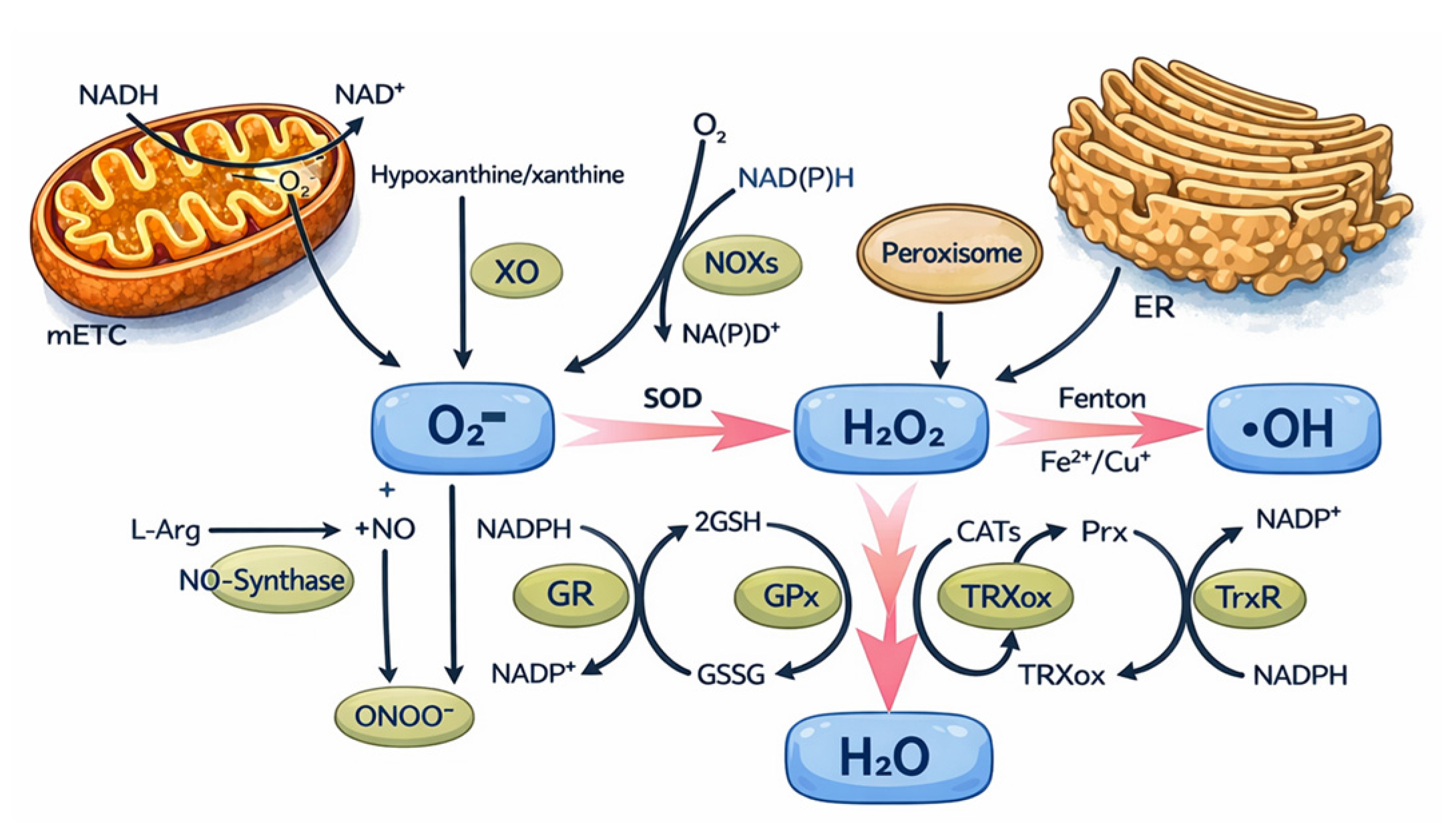

| Biomolecules | Phenolic Compounds | |||||
|---|---|---|---|---|---|---|
| Total Polyphenols (μg GAE/mL) | Proteins (μg BSAE/mL) | Reducing Sugars (μg GE/mL) | Non-Tannin Polyphenols (μg GAE/mL) | Total Tannins (μg GAE/mL) | Hydrolysable Tannins (μg GAE/mL) | Condensed Tannins (μg GAE/mL) |
| 2385.27 | 813.00 | 6009.45 | 632.19 | 1753.08 | 59.86 | 1693.22 |
| (26%) * | (9%) * | (65%) * | (26%) ** | (3%) ** | (71%) ** | |
| Component | Content Reported | References |
|---|---|---|
| Klason lignin | 31.9% (shells) | [35] |
| 41.7% (shells) | [45] | |
| 44.6% (shells) | [46] | |
| 44.3% (shells) | [36] | |
| 37.5% (leaves) | [36] | |
| 22.6% (burs) | [36] | |
| Acid-soluble lignin | 3.7% (shells) | [46] |
| Cellulose/Glucan (as glucose) | 19.2% cellulose (shells) | [35] |
| 20.6% glucan (shells) | [46] | |
| 28.4% glucose (shells) | [45] | |
| 14.9% glucan (shells) | [36] | |
| 16.5% glucan (leaves) | [36] | |
| 34.4% glucan (burs) | [36] | |
| Xylan (as xylose) | 10.5% (shells) | [46] |
| 7.9% (shells) | [45] | |
| 10.4% (shells) | [36] | |
| 11.7% (leaves) | [36] | |
| 21.4%(burs) | [36] | |
| Rabinan | 3.0% (shells) | [46] |
| Uronic acids | 6.0% (shells) | [46] |
| Total sugars | 33.8% (shells) | [35] |
| Total monosaccharides | 32.7% (shells) | [45] |
| Glucose (monosaccharide) | 19.2% (shells) | [45] |
| Xylose (monosaccharide) | 6.5% (shells) | [45] |
| Galactose | Detected (shells) | [35] |
| 2.8% (shells) | [45] | |
| Arabinan | 2.91% (shells) | [36] |
| 2.97% (leaves) | ||
| 3% (burs) | ||
| Arabinose | Detected (shells) | [35] |
| 2.2% (shells) | [45] | |
| Mannose | Detected (shells) | [35] |
| Cellobiose | 0.3% (shells) | [45] |
| Essential amino acids (predominant) | Arginine: 355–721 mg/100 g; Leucine: 159–246 mg/100 g (shells) | [44] |
| Non-essential amino acids (predominant) | Glutamic acid: 268–484 mg/100 g; Aspartic acid: 268–484 mg/100 g (shells) | [44] |
| Other amino acids | Tyrosine, threonine, phenylalanine (shells) | [44] |
| Phenolic Class | Pomace Fraction (Skins/Seeds) | References |
|---|---|---|
| Anthocyanins | Mainly skins (red grapes) | [50] |
| Flavan-3-ols (Catechin and epicatechin) | Mainly seeds; also skins | [50,55] |
| Proanthocyanidins | Seeds > skins | [51,55] |
| Flavonols | Skins | [50] |
| Phenolic acids | Skins and seeds | [52] |
| Stilbenes | Mainly skins | [50,56] |
| By-Product | Metabolite Class | Representative Compounds | Detection Method | Objective | References |
|---|---|---|---|---|---|
| Chestnut shells & burs | Hydrolysable tannins | Ellagic acid, Castalagin, Vescalagin | HPLC–UV/HPLC–DAD | Quantification of tannin content for functional applications | [105,111] |
| Chestnut leaves, buds, shells, and stems | Flavonoids, phenolic acids | Quercetin, Kaempferol, Gallic acid | HPLC–DAD | Used for antioxidant and nutraceutical studies | [13,111] |
| Grape pomace (skins) | Anthocyanins | Malvidin-3-O-glucoside, Delphinidin-3-O-glucoside | HPLC–DAD/HPLC–MS | Profiled for colorant and antioxidant potential | [112] |
| Grape seeds | Flavan-3-ols, Proanthocyanidins | Catechin, Epicatechin, Procyanidin B1 | HPLC–Fluorescence/HPLC–MS | Monitored for functional food and nutraceutical applications | [113,114] |
| Grape stems | Stilbenes, Phenolic acids | Resveratrol, Piceid, Caftaric acid | HPLC–UV/HPLC–MS | Studied for antimicrobial and cardiometabolic bioactivity | [115,116] |
| Grape shoots | Stilbenes, Phenolic acids | Trans-resveratrol, ε-viniferin | HPLC–quadrupole time-of-flight (QTOF)–mass spectrometry (MS) | Potential Use for Cardiac Health | [117] |
| Target/Pathway | By-Products Effects | References | |
|---|---|---|---|
| Chestnut | NF-κB (p65, transcription) | Inhibition/phosphorylation reduction | [111,129,193,194,195,204] |
| iNOS/NO, COX-2, PGE2 | Downregulated, less NO and prostaglandins | [129,194,195,204] | |
| Cytokines/chemokines | ↓ TNF-α, IL-6, IL-1β, IL-4/5/13, IL-8, CXCL-10, MCP-1 | [111,193,194,195,204,205] | |
| Grapevine | NF-κB (IκBα, p65) | Inhibited phosphorylation, nuclear translocation | [196,197,198,199,200,201,202,203] |
| iNOS/COX-2, NO, PGE2 | Downregulated; reduced NO and prostaglandins | [197,198,199,200,201,202,203] | |
| Cytokines (TNF-α, IL-6, IL-1β, IL-8) | Strongly decreased in serum/tissues/cells | [196,197,198,199,200,201,202,203] |
Disclaimer/Publisher’s Note: The statements, opinions and data contained in all publications are solely those of the individual author(s) and contributor(s) and not of MDPI and/or the editor(s). MDPI and/or the editor(s) disclaim responsibility for any injury to people or property resulting from any ideas, methods, instructions or products referred to in the content. |
© 2026 by the authors. Licensee MDPI, Basel, Switzerland. This article is an open access article distributed under the terms and conditions of the Creative Commons Attribution (CC BY) license.
Share and Cite
Pinto, T.; Gonçalves, B.; Aires, A.; Cosme, F.; Vilela, A. Chestnut and Grapevine By-Products: Bioactivity, Biotransformation, and Nutraceutical Applications. Appl. Sci. 2026, 16, 2052. https://doi.org/10.3390/app16042052
Pinto T, Gonçalves B, Aires A, Cosme F, Vilela A. Chestnut and Grapevine By-Products: Bioactivity, Biotransformation, and Nutraceutical Applications. Applied Sciences. 2026; 16(4):2052. https://doi.org/10.3390/app16042052
Chicago/Turabian StylePinto, Teresa, Berta Gonçalves, Alfredo Aires, Fernanda Cosme, and Alice Vilela. 2026. "Chestnut and Grapevine By-Products: Bioactivity, Biotransformation, and Nutraceutical Applications" Applied Sciences 16, no. 4: 2052. https://doi.org/10.3390/app16042052
APA StylePinto, T., Gonçalves, B., Aires, A., Cosme, F., & Vilela, A. (2026). Chestnut and Grapevine By-Products: Bioactivity, Biotransformation, and Nutraceutical Applications. Applied Sciences, 16(4), 2052. https://doi.org/10.3390/app16042052