1. Introduction
Conservation, documentation and restoration are all essential for preserving the historical and architectural integrity of cultural heritage sites. Accurate, objective and repeatable documentation is required for the conservation of architectural heritage, to meet both the immediate diagnostic needs and long-term monitoring requirements. The gradual deterioration of historical monuments is attributable to a number of factors: climatic factors (climatic variations, humidity, UV radiation, growth of biological vegetation, etc.), geological (earthquakes, subsidence and compaction of the soil etc.), geomorphological (landslides, soil erosion, etc.), but also by human actions (urban and industrial pollution, inappropriate interventions, traffic, vandalism, etc.). These factors affect the structural integrity, architectural appearance and historic value and can cause partial or total degradation, leading to the loss of the historic monument [
1,
2,
3].
Due to technological developments, modern documentation methods such as photogrammetry and point clouds resulting from the processing of data acquired with various laser scanning techniques have become essential tools used in the assessment and documentation of the state of preservation of historical monuments. These methods allow a detailed and accurate analysis of degradation and thus help in the development of restoration and conservation strategies [
1,
3,
4].
Currently, 3D models of historical monuments created by various scanning techniques can be used in various practical applications such as tourism visualization and promotion, tourism evaluation and analysis, virtual restoration, and digital twin implementation in cultural heritage conservation [
1,
5,
6,
7,
8,
9,
10,
11].
In recent years, the rapid expansion of inexpensive, consumer-grade 3D imaging systems has introduced new possibilities and uncertainties in the documentation of cultural heritage. Although professional-grade technologies, such as terrestrial laser scanning and drone photogrammetry, offer well-documented geometric reliability, the effectiveness of consumer-grade systems (e.g., Matterport cameras) for diagnostic purposes is still being debated. These systems are widely used for visualization and virtual tours. However, their integration with topographic data for degradation analysis has not yet been adequately evaluated. This creates an important research gap regarding how different levels of accuracy can coexist in a single diagnostic workflow and what type of degradation information can be reliably extracted from such heterogeneous datasets [
12,
13,
14].
LiDAR and UAV technology are non-invasive monitoring tools used to check cultural heritage sites around the world. They can influence planning procedures for restoration projects and change the way historical monuments are documented and offer low-cost 3D modeling and evaluation of the heritage assets. The data obtained are complete and accurate [
15,
16,
17,
18,
19,
20,
21]. These advanced technologies are changing the way historic monuments are monitored. They allow us to check areas that we could not before and to monitor them more often [
21,
22,
23,
24]. The chance of obtaining high quality data without causing any damage to the historical monument is great news for protecting our cultural heritage [
21,
23].
The use of photogrammetric or LiDAR scanning techniques to document historic monuments has been the focus of many studies. However, not many of these studies have put data from ground (LiDAR), aerial (UAV) and interior 3D camera sources together in a single, flexible and repeatable way to analyze degradation. Also, there are no simple ways to allow people who are not experts to use these technologies to conserve historic buildings [
1,
25,
26].
Recent studies have emphasized the important role of remote sensing and geographic information systems (GISs) in mapping risk and assessing vulnerability at cultural heritage sites. These approaches enable proactive monitoring, allowing stakeholders to anticipate and mitigate threats related to environmental conditions, structural instability and urban pressures. Integrating 3D survey data into spatial databases and GIS platforms enables the creation of comprehensive risk models and scenario-based conservation plans. Additionally, digital tools such as BIM/HBIM and semantic classification channels can contribute to long-term heritage resilience strategies [
27,
28,
29].
Recently, terrestrial laser scanning (TLS), unmanned aerial vehicle (UAV) photogrammetry, and virtual reality (VR) applications have begun to play a vital role in the mapping, recording, preservation, and promotion of cultural heritage [
2]. The development of geomatics techniques allows data obtained from multiple sources to be applied and integrated for the documentation of cultural heritage sites. Several studies have confirmed the importance of this integration in cultural heritage conservation [
3,
30,
31,
32,
33,
34,
35].
Another insufficiently explored topic is the geometric and diagnostic continuity between exterior topographic data and interior 3D reconstructions. Most existing multisensor studies focus on either facades or roofs, treating interior spaces separately or modeling them with different accuracy standards. The integration of consumer-grade indoor scanning and topographic outdoor data raises methodological questions about the consistency of alignments, the coherence of scales, and the transferability of geometric indicators (e.g., roughness, curvature, and flatness) between environments with different acquisition principles. It is essential to address this continuity when developing digital twin operational frameworks that reflect the monument as a single volumetric entity rather than as fragmented survey components [
36,
37,
38].
New approaches have also been proposed in the field of the semantic segmentation of 3D models. These approaches allow heritage components such as walls, roofs, ornaments and vaults to be classified as targeted restoration strategies [
39,
40]. These enhanced models form the basis for implementing intelligent digital twins that can be updated continuously and used for the predictive modeling of degradation processes [
41,
42].
In recent years, there has been a growing interest in integrating AI-assisted analysis into 3D point cloud data streams in order to automatically identify structural anomalies, surface degradation or vegetation intrusions [
43,
44]. The application of deep learning algorithms to point clouds and photogrammetric textures improves detection efficiency and reduces the subjectivity of manual inspections [
45]. Furthermore, machine learning-based diagnostic tools are being tested in European pilot projects focused on preventive conservation and the automatic monitoring of vulnerable architectural elements [
46,
47].
New developments have emphasized the importance of enriching 3D heritage data semantically. This involves supplementing raw geometric models with semantic labels and object classes to improve information retrieval, interoperability, and automated analysis. The integration of deep learning methods with point cloud and image data has demonstrated significant potential for generating semantic models of historical building information (HBIM). This enables the improved classification of architectural components and material properties in historical structures [
43,
44]. These enriched models support geometric documentation and lay the groundwork for automated condition assessment and predictive maintenance workflows.
In parallel, the application of AI-assisted inspection and machine learning techniques has begun to transform heritage diagnostics by enabling the direct detection and classification of degradation patterns from 3D point clouds and images. Recent frameworks use convolutional neural networks and point-based deep learning architectures to segment structural elements and identify anomalies such as cracks or surface detachments. This reduces operator bias and increases reproducibility [
45,
46,
47]. These methods aim to support human experts by highlighting problem regions that may require additional manual validation.
Another emerging trend in heritage documentation is the integration of 3D topographic data into geographic information systems (GISs) and heritage-based building information modeling (HBIM) workflows to enable comprehensive risk assessment and long-term management. Linking geometric data with spatial context, environmental exposure variables and historical records enables GIS-based analyses to produce risk maps highlighting vulnerability to natural hazards, urban development pressures, and climate-induced threats [
39,
40]. This integration demonstrates the importance of spatial databases in supporting scenario-based conservation planning and decision-making by stakeholders.
Recent trends in research emphasize the need to transform the results of 3D studies into useful information for conservation practice decision-making. This involves correlating geometric indicators with degradation mechanisms, integrating datasets into geographic information system (GIS)-based risk platforms, and developing condition assessment frameworks that can function under real operational conditions. In this context, evaluating the performance of heterogeneous datasets in both modeling and diagnostic interpretation is a crucial step toward scalable, resource-adaptive heritage monitoring strategies [
48,
49,
50].
Furthermore, the concept of the digital twin has become increasingly popular in cultural heritage research, offering a dynamic and interactive representation of built assets that combine geometry, semantics, and temporal monitoring data. Digital twins allow for the continuous tracking of changes over time and can incorporate predictive models of degradation processes. This allows conservation practitioners to simulate future scenarios and plan interventions accordingly [
41,
42].
In this context, the study aligns with current research trends. It proposes a multi-source documentation workflow that supports 3D modeling and contributes to risk assessment by detecting degradation and employing digital preservation strategies.
The case study of the historical monument Casa Rusănescu, in Romania, proposes an integrated and optimized workflow for data acquisition, data processing, and degradation analysis of historical monuments using multi-source tools such as LiDAR, UAV, and 3D camera. The methodology has been simplified in the way that it can be applied, under real conditions, easily and quickly, to other historical monuments in the process of degradation and in need of immediate restoration.
Despite significant progress in documenting 3D heritage, a methodological gap remains in the operational integration of heterogeneous datasets obtained with different levels of accuracy. While existing studies often focus on topographic-level technologies or consumer-oriented visualization systems, they rarely evaluate how these datasets can work together in a single diagnostic workflow. Furthermore, the practical implications of combining SLAM-based interior reconstructions with exterior metric measurements for degradation analysis are not well-documented in real working conditions.
Although many studies have combined TLS and UAV data for heritage documentation, few have critically examined how datasets with different levels of accuracy, such as topographic-grade laser scanning and consumer-grade SLAM-based interior reconstruction, can be integrated into a unified diagnostic workflow. The reliability, limitations, and functional roles of these heterogeneous datasets in assessing degradation are not well-documented, especially considering the typical operational constraints of urban heritage environments.
This study aims to develop and test an integrated, multi-source workflow for 3D documentation that ensures geometric continuity while maintaining diagnostic interpretability. This study focuses on evaluating the combination of TLS, UAV photogrammetry, and consumer interior scanning to support surface degradation detection and digital twin construction.
The specific objectives of the study are:
Acquire and integrate exterior and interior 3D datasets using complementary sensing technologies.;
To analyze geometric indicators derived from scalar field processing for degradation mapping;
Assess the role of consumer-facing interior data in a survey-type benchmarking framework;
Assess the feasibility of incorporating AI-assisted screening as a consistency check into the diagnostic workflow.
Contributions
The present study makes the following original contributions to the field of built heritage conservation:
Generated a comprehensive 3D model of the historical monument that involves integrating three distinct workflows: TLS (RIEGL VZ-400i), UAV photogrammetry (DJI Matrice 4E), and interior scanning (Matterport Pro2 3D camera).
Demonstrated the applicability of the method in dense urban contexts by applying it to a historic 19th-century building where the exterior and interior were integrated into a complex point cloud;
Used scalar field analysis to detect and map surface degradation, including cracks, delamination, and material loss;
The methodology is characterized by its reproducibility and simplicity, features that make it accessible;
The methodology employed is characterized by using standardized parameters and commercially available equipment, therefore, this configuration is considered well-suited to the local institution’s needs;
The Twinspect AI-assisted cross-validation step was introduced to independently confirm the degradation indicators. These indicators were first identified in UAV imagery and then mapped onto the 3D model created using point cloud analysis;
The proposed solution offers a comprehensive approach for creating a cultural digital twin. It has the potential to be integrated into preventive conservation strategies and documented restoration planning;
The study explicitly assesses the integration of professional- and consumer-grade 3D data into a single diagnostic workflow and highlights the complementary roles of these types of data and their operational limitations;
The research demonstrates how indoor SLAM-based data can be used to achieve spatial continuity without serving as the primary metric of reference, thereby clarifying its role in heritage documentation;
The paper presents a geometric diagnostic framework that considers roughness, curvature, flatness, linearity, and surface variation together rather than independently;
The study presents the practical calculations and processing constraints required for documenting heritage from multiple sources. This contributes operational knowledge that is rarely detailed in similar studies.
This study’s novelty lies not in introducing new detection technologies, but in operationally integrating heterogeneous data sources into a diagnostic framework. The proposed workflow explicitly addresses geometric continuity between indoor and outdoor datasets, metric positioning of consumer-grade indoor scanning relative to topographic data, and complementary interaction between geometry-derived indicators and AI-assisted, image-based screening. This methodological consolidation enables the practical implementation of a digital twin in real urban environments as opposed to controlled experimental settings.
2. Materials and Methods
This section outlines the history of Casa Rusănescu, a historic monument in Craiova, Romania, which was the subject of this case study. This section describes the procedural framework used in this study. The quantitative results obtained from these steps are presented in a separate Results section. It also describes the methodology, which was based on multiple sources, that was developed for its documentation and diagnostic assessment.
This workflow integrates terrestrial laser scanning (TLS), unmanned aerial vehicle (UAV) photogrammetry, and an indoor 3D camera. Rigorous preprocessing, alignment, data fusion, and geometric deviation analysis are conducted. The workflow has a sensor-independent structure. This means that the sequence of operations can be reproduced using equivalent technologies. This approach has been developed to optimize functionality in dense urban heritage sites with constrained accessibility, variable lighting, architectural intricacy, and occlusions caused by surrounding structures.
The method consists of the following main components:
The acquisition of 3D data from multiple sources;
The preprocessing of datasets;
The cleaning of datasets;
Georeferencing;
Alignment from multiple sources;
Merging of external and internal point clouds;
Analysis of geometric deviations;
Analysis of scalar fields;
The interpretation of degradation indicators;
The validation of data consistency.
These components form a sequential diagnostic flow. Each step prepares the dataset for the next level of analysis rather than functioning independently.
This methodological project aims to maximize geometric resolution and ensure the diagnostic interpretability of the resulting 3D representation.
2.1. Study Area
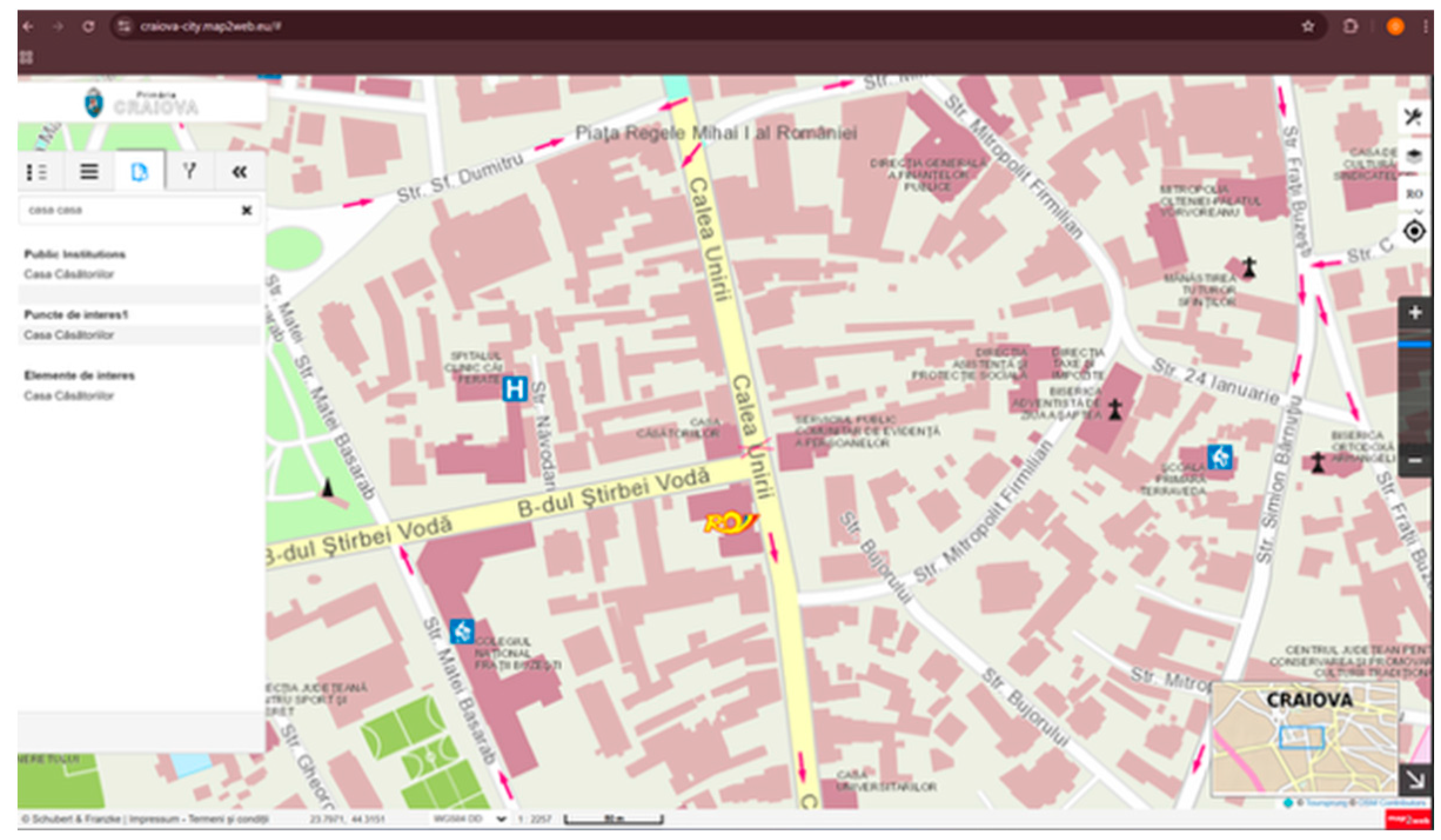
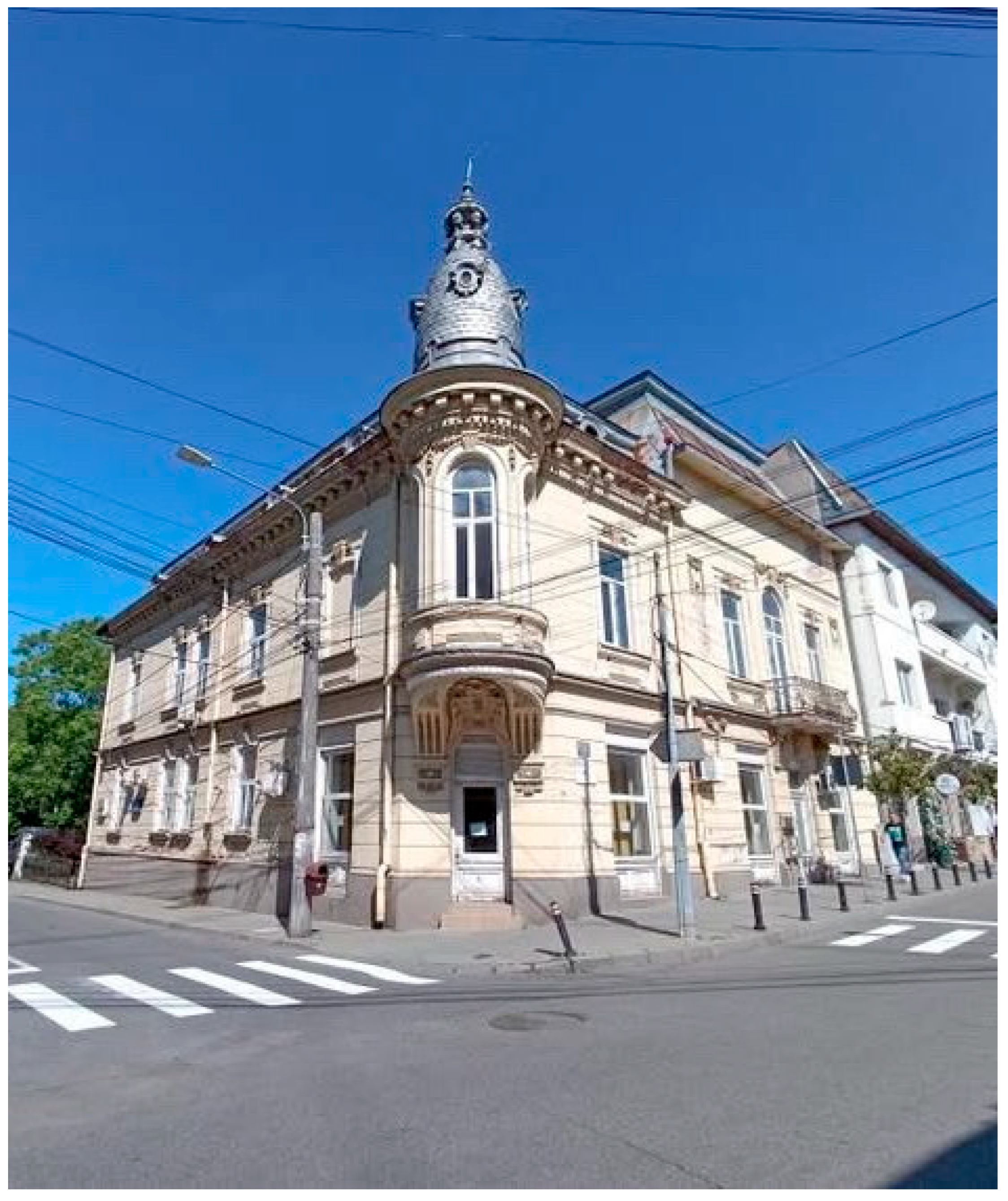
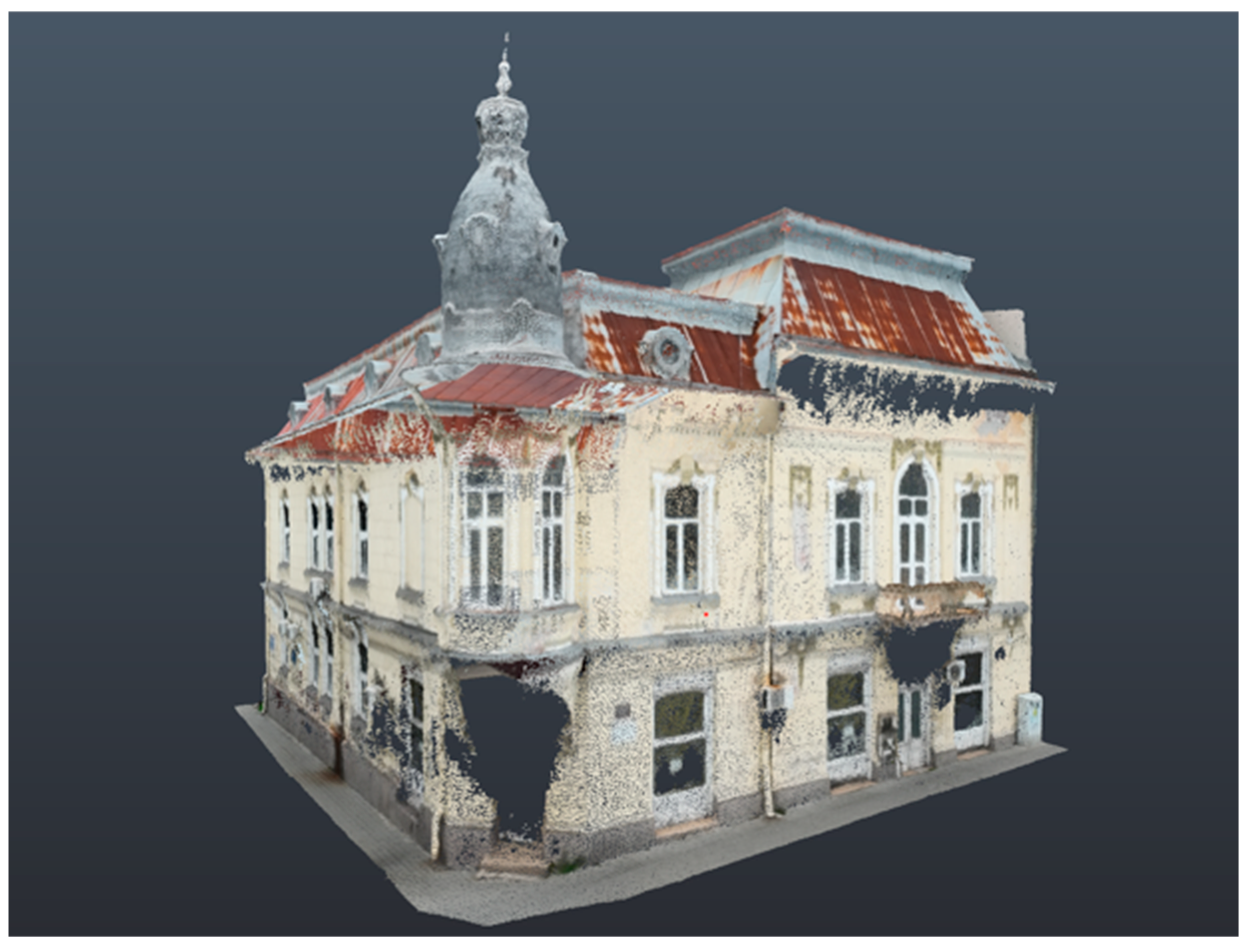
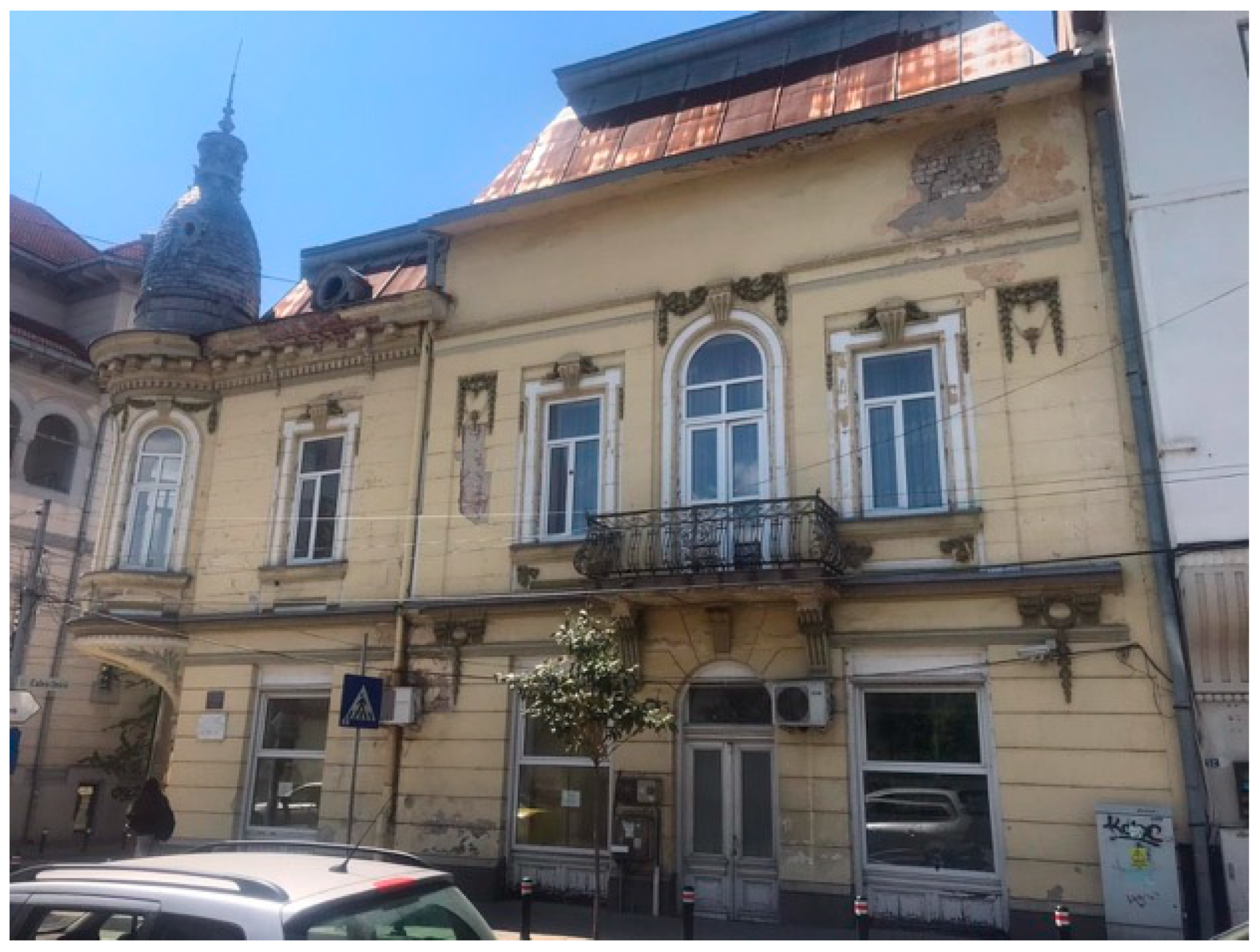
Casa Rusănescu is a category B historical monument located in Romania, Craiova, Știrbei Vodă Boulevard, no. 2 (
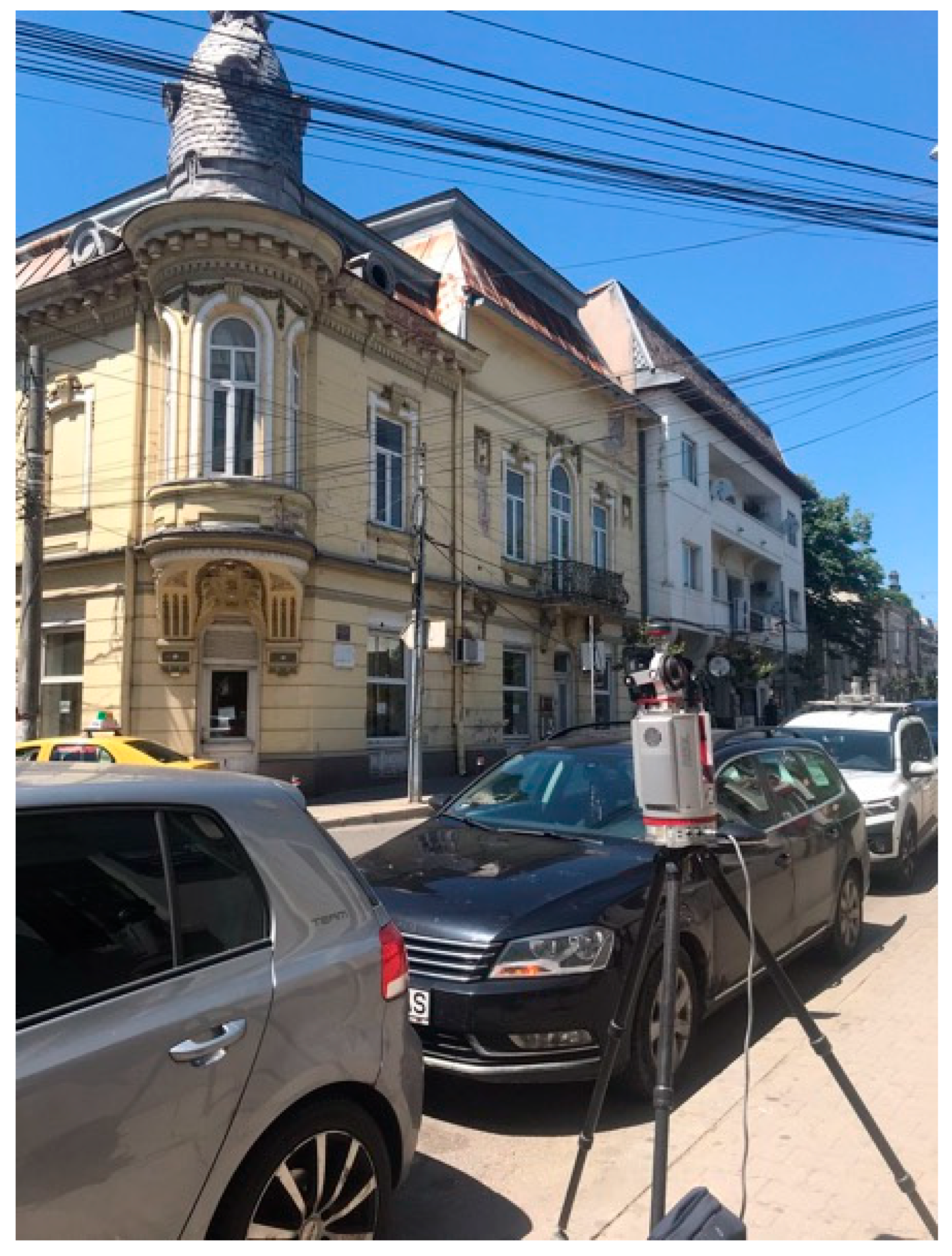
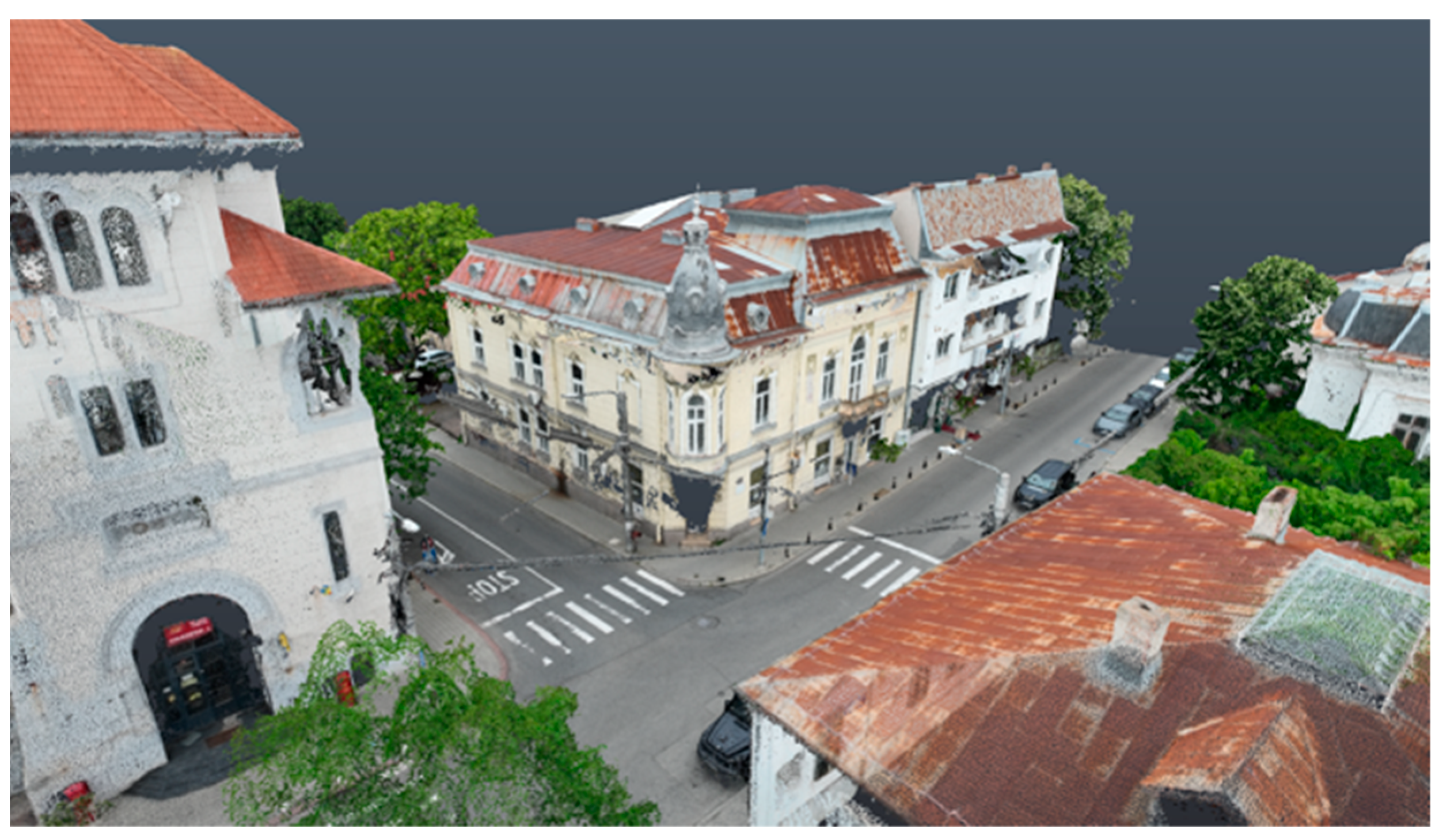
Figure 1). It is placed at the center of the Municipality of Craiova at the intersection of Știrbei Vodă Boulevard and Calea Unirii (
Figure 2). According to the existing data, it was built at the end of the 19th century between 1870–1900, by the nobleman Ștefan D. Rusănescu and was used between 1915–1916 as a meeting place for the great politicians and patriots of that time. This information is confirmed by the plaque at the entrance to the building: ‘In this house of the Ștefan D. Rusănescu family, in the years 1915–1916, meetings of great politicians and patriots were held in the service of the making of Greater Romania’ [
51,
52,
53,
54,
55].
The historical monument Casa Rusănescu is inventoried on the List of historical monuments of Dolj county at position 321 under LMI code: DJ-II-m-B-08126. This list is published in the Official Gazette of Romania, Part I, no. 113 bis/15.II.2016. The building has richly ornamented facades, decorative plasterwork, stucco, cornices, pilasters, balconies, and carved wooden elements, as well as stained glass windows. To ensure the accurate restoration of these features, precise documentation is essential. The building is currently used by the Civil Status and Guardianship Authority in Craiova [
51,
52,
54,
55].
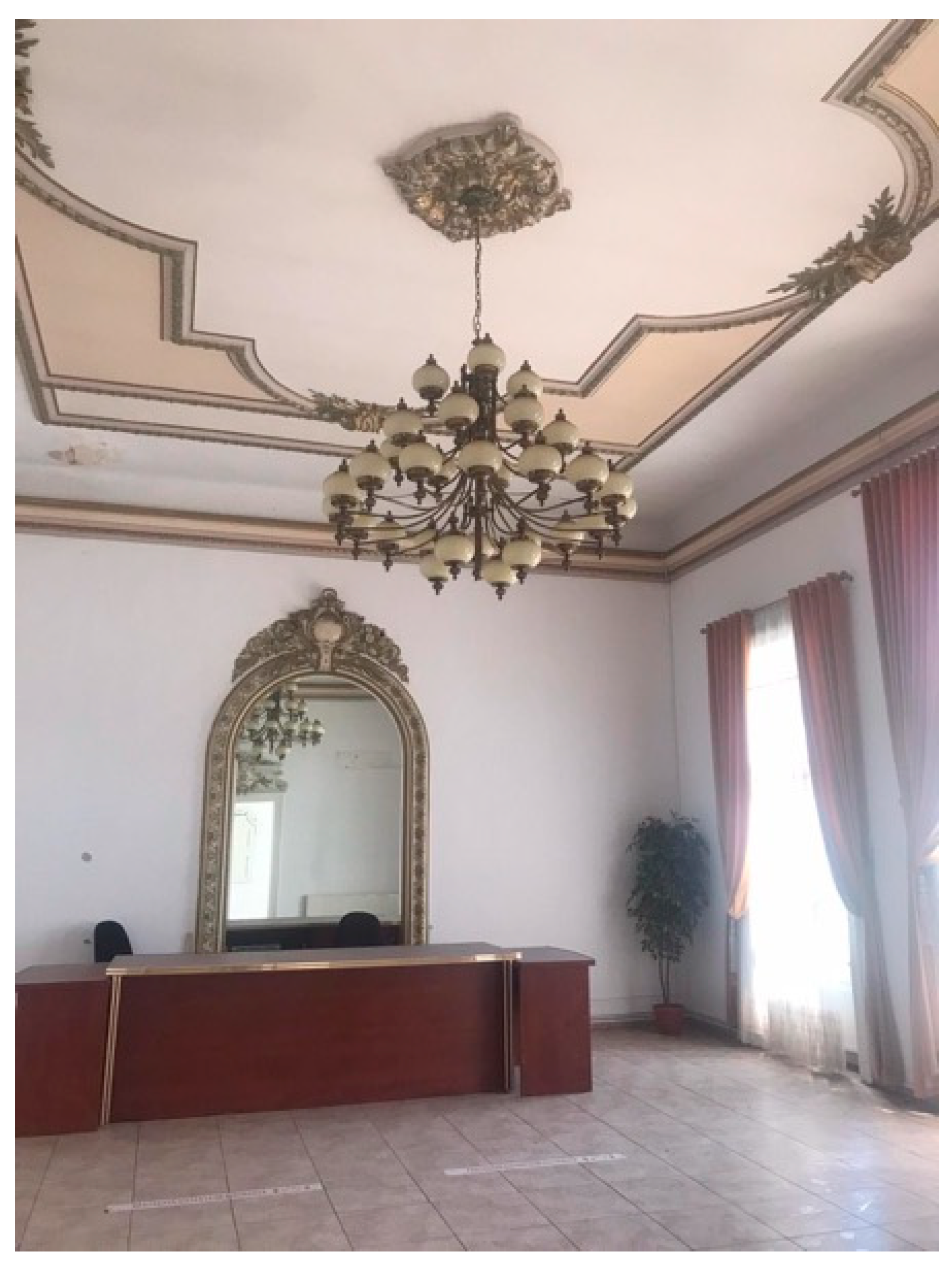
According to the City Hall of Craiova’s website, the historic monument Casa Rusănescu was restored in 1999. The interior finishes, including the paintings, stucco with gold leaf, ceilings, mirrors, and stained-glass skylight, were redone. In 2005, a small-scale renovation was carried out to establish the offices necessary for the Community Public Service of Personal Records in Craiova [
51,
52,
54,
55].
According to the Regional Program South-West Oltenia (2021–2027), the historical monument Casa Rusănescu will be renovated in 2026 and converted into a museum [
57,
58,
59,
60].
2.2. Overview of the Integrated Workflow
The proposed workflow was developed to maximize geometric completeness and diagnostic relevance. The workflow emphasizes the usefulness of 3D data diagnostics and does not emphasize purely geometric resolution. Its primary function is to accurately capture and integrate exterior facades, interior volumes, roof structures, and high-level architectural details into a single, coherent 3D model.
The workflow (
Figure 3) includes the following stages:
The use of TLS to acquire precise measurements of the façade geometry;
The use of UAV photogrammetry for capturing inaccessible upper facades, roofs, cornices, balconies, and architectural ornaments;
The use of a 3D camera for interior scanning to acquire data about interior spaces and volumetric continuity;
The cleaning and preprocessing stage uses specialized software programs such as RiSCAN PRO (v2.0), Agisoft Metashape Professional (v2.3.0), Autodesk ReCap Pro (v2025) and Matterport Cloud;
The alignment of sensors was achieved by using RTK ground control points (GCPs), visual matches, and ICP refinement in CloudCompare;
When joint control was unavailable, alignment relied on geometric correspondences and ICP stabilization.
The analysis of geometric deviations that include roughness, curvature, flatness, linearity, surface density, and distances between point clouds;
Diagnostic documentation is required to identify cracks, detachments, areas of defacement, material loss and surface irregularities.
This methodology is optimized for restoration projects that require pre- and post-intervention monitoring, and is replicable, scalable, and adaptable.
2.3. 3D Data Acquisition
The acquisition of 3D data for the historic monument Casa Rusănescu was carried out in three stages because the equipment used is owned by three commercial companies in the cities of Craiova, Calafat, and Bucharest, Romania. The specialized equipment was necessary due to the complexity of the building and its central location, as historic monument Casa Rusănescu is placed in a crowded and intensely trafficked area of Craiova, Dolj county, Romania.
The agreement for the 3D scanning of the historical monument with a TLS RIEGL VZ-400i (RIEGL Laser Measurement Systems GmbH, Horn, Austria), Matterport Pro2 3D camera (Matterport, Inc., Sunnyvale, CA, USA), and UAV DJI Matrice 4E (DJI -Da-Jiang Innovations Science and Technology Co., Ltd., Shenzhen, China), was obtained from the Craiova City Hall—Patrimony Department, and the agreement for the flight with the UAV DJI Matrice 4E drone was obtained by its owner from the Romanian Civil Aviation Authority.
The survey was conducted without any physical contact with the monument to ensure non-invasive documentation.
Data acquisition complied with local safety regulations and did not impact public access or traffic flow in the area.
2.3.1. Terrestrial Laser Scanning (TLS)—RIEGL VZ-400i (RIEGL Laser Measurement Systems GmbH, Horn, Austria)
We scanned the exterior of Casa Rusănescu using a RIEGL VZ-400i TLS. To capture all façades, architectural details, recessed elements, pilasters, cornices, and the building’s volume, we placed twelve scanning stations around the monument. The distribution of stations ensured that there was sufficient overlap between scans, enabling robust registration and minimizing occluded façade areas.
During the TLS measurements, an additional imaging device in the form of an external Nikon DSLR camera was mounted on the scanning TLS. This enabled high-resolution photographs to be taken independently of the laser measurements. A total of 60 images were captured to document the textures of the façades, architectural ornaments, and local surface conditions. These photographs supported visual interpretation and complemented the diagnostic analysis of the 3D model.
Due to its millimeter accuracy and ability to capture sharp edges and decorative surfaces, TLS was chosen as the main source of geometric precision for the facades. The TLS data were used as a geometric reference frame when integrating multiple sources.
The scanning campaign took place on 15 May 2025 in optimal conditions (
Figure 4).
2.3.2. Indoor Scanning—Matterport Pro2 3D Camera (Matterport, Inc., Sunnyvale, California, USA)
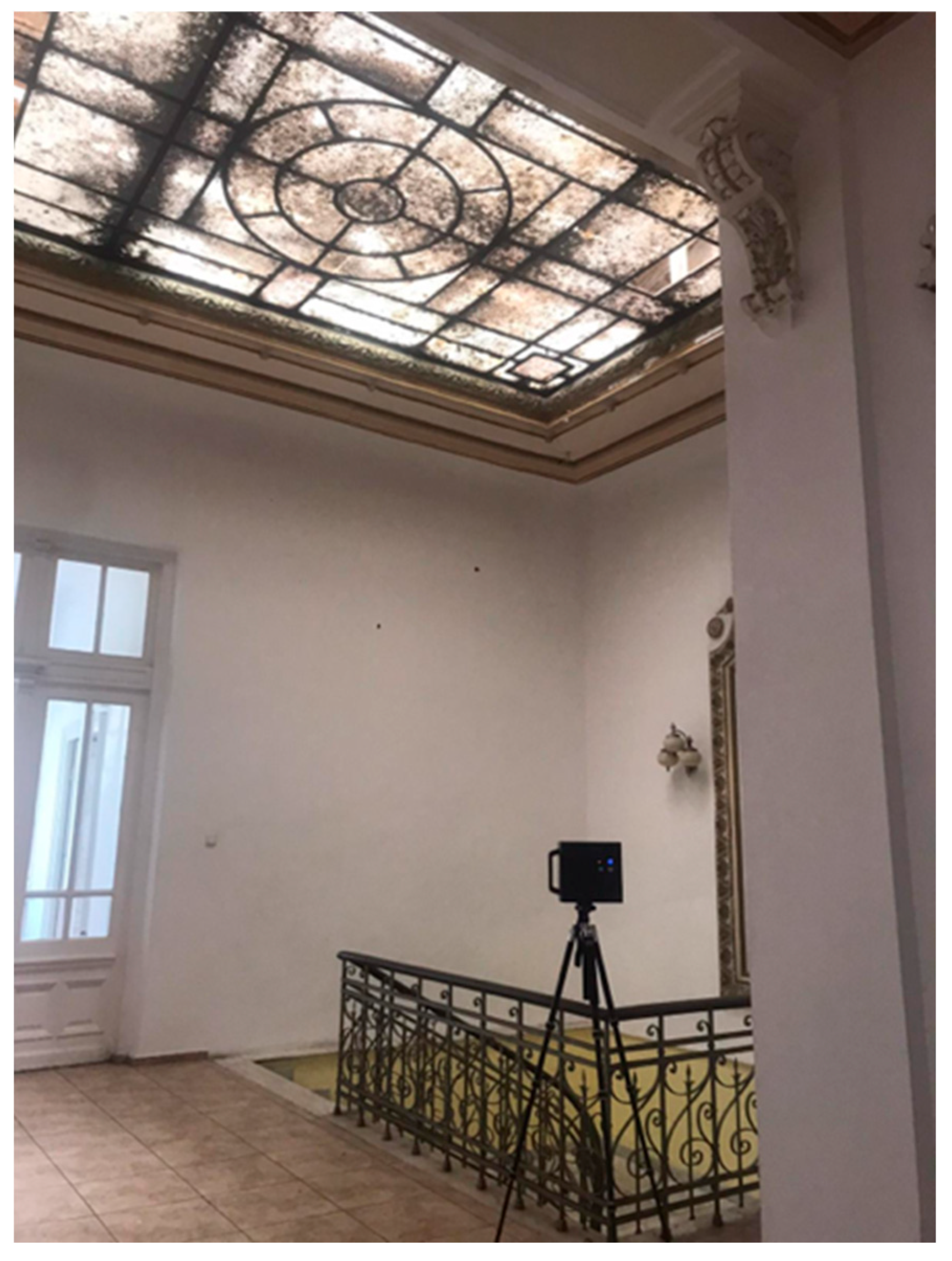
On 29 April 2025, the interior was scanned using a Matterport Pro2 3D camera. To document the entire layout, including corridors, staircases, lobbies, and offices, 90 interior scans and six exterior panoramic scans were recorded. Due to strong sunlight, the exterior panoramic scans were taken in 360° mode.
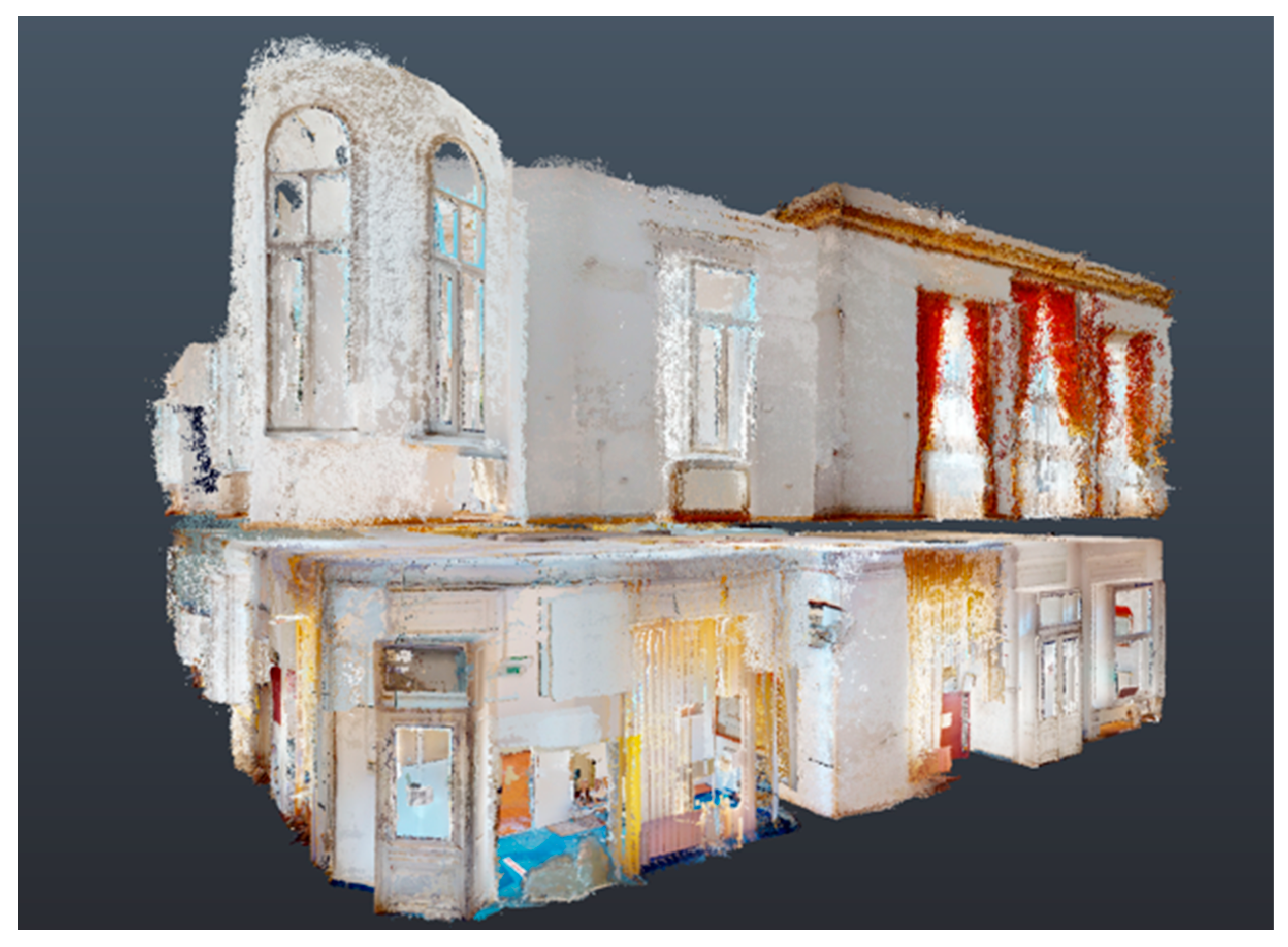
Matterport provided a detailed interior point cloud consisting of approximately 363 million points. They also provided panoramic images and the option to export in OBJ, mesh, and point-cloud formats (
Figure 5).
The point cloud geometry was optimized through an internal SLAM-based reconstruction process so it did not refer to an external measurement control system.
At the time of the data acquisition, limitations were encountered. Six offices were closed and sealed because they contained original documents specific to the Public Community Public Service of the Personal Register of Craiova. In these rooms, the access was restricted, and the 3D registrations could not be performed. In the three other rooms (two hallways and a bathroom), lighting was nonexistent due to the lack of windows and faulty electrical installation. Artificial lighting was tested using external light sources, but the scanner still reported insufficient lighting conditions and displayed a warning message. However, the scans were still recorded, since the system allows data acquisition in low-light conditions.
Despite these limitations, the Matterport dataset successfully recreated interior geometries and linked common architectural features, such as door frames and window outlines, in space. Although the resulting point cloud was generated by a household device, it provided sufficient topological and visual continuity to support subsequent integration with exterior TLS and UAV scans in later stages of the multi-source workflow. The dataset was mainly used to establish spatial continuity and volumetric context, rather than for metric references in deformation or deviation analyses.
2.3.3. UAV Photogrammetry—DJI Matrice 4E (DJI -Da-Jiang Innovations Science and Technology Co., Ltd., Shenzhen, China)
On 24 May 2025, an acquisition mission was carried out using a UAV to capture images of the roof structure, upper facades, chimneys, skylights, and other inaccessible architectural elements.
The flight produced 114 aerial images (nadir and oblique), which were processed into a dense point cloud. The images were acquired with sufficient overlap between the nadir and oblique images to ensure stable photogrammetric reconstruction.
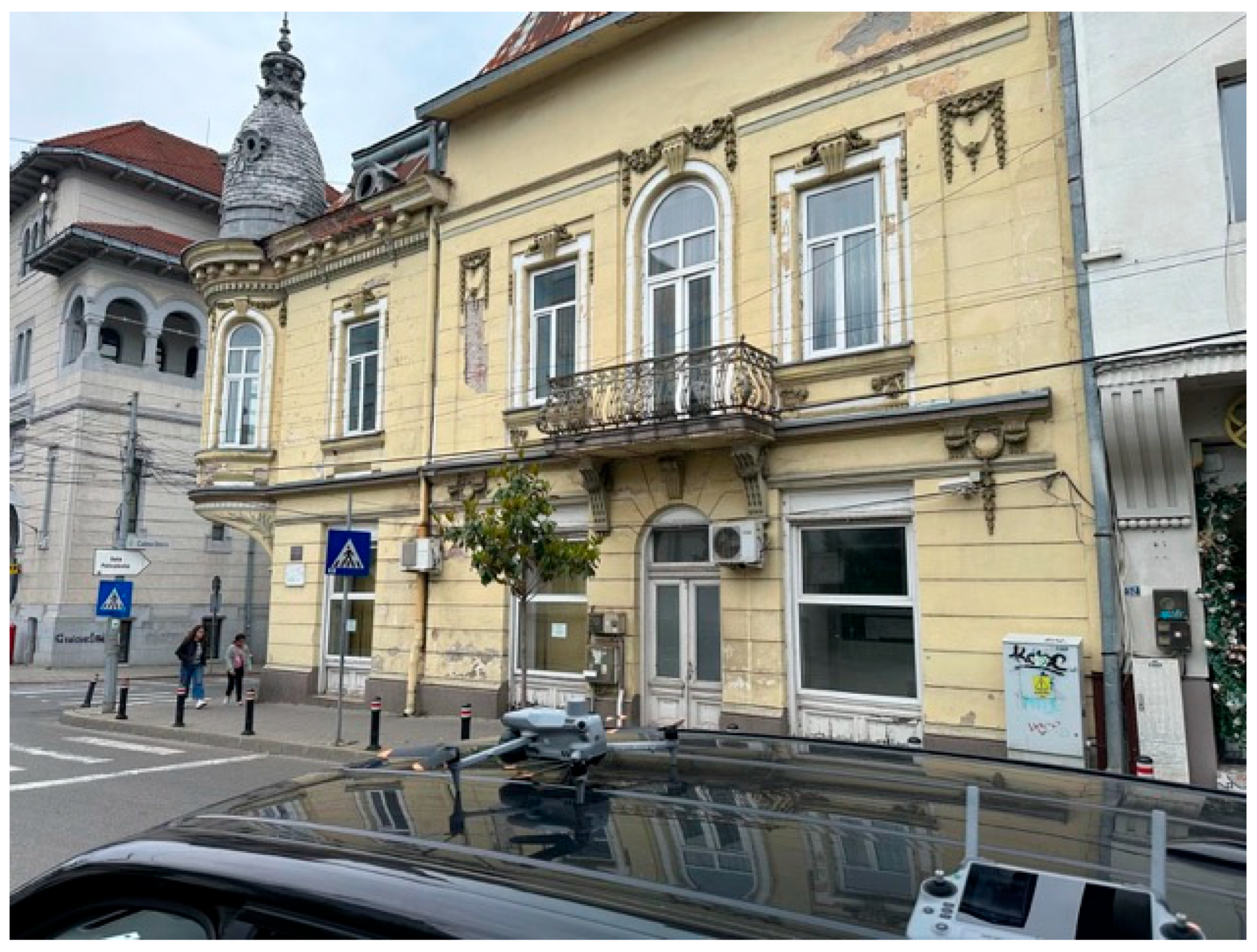
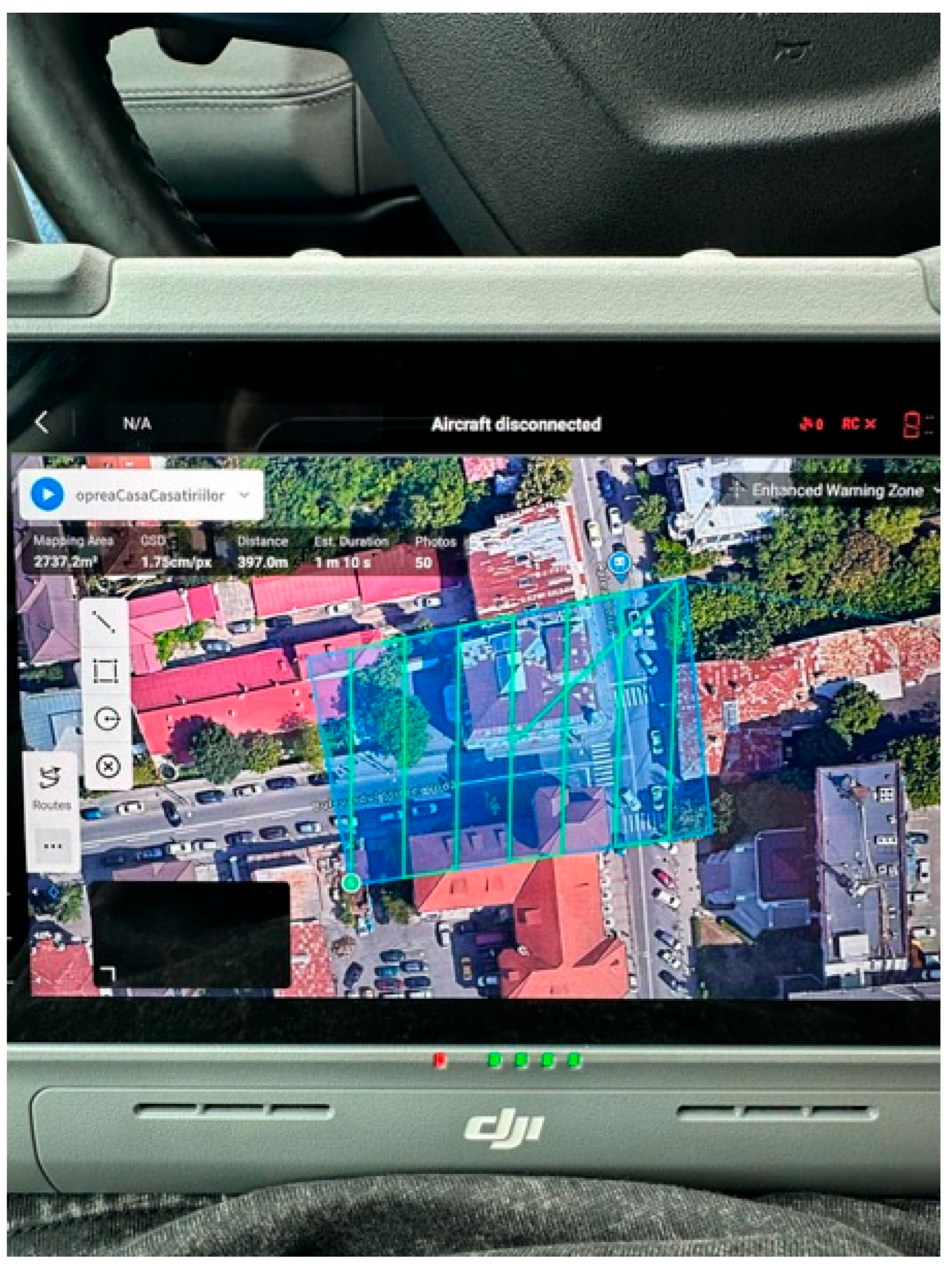
Due to the monument’s location at a busy urban intersection with pedestrian traffic, power lines, and other obstacles, the UAV campaign was carried out early in the morning on a nonworking day (
Figure 6 and
Figure 7). The meteorological conditions under which the data were acquired were optimal, as the temperature at the time of the drone flight did not exceed 20 °C and the sky was slightly cloudy. Stable lighting and light wind conditions minimized motion blur and shadow contrast, which improved the image matching reliability.
2.4. Data Processing
2.4.1. TLS Data Preprocessing
The raw TLS scans were processed in RiSCAN PRO (v2.0) for initial registration and then exported to a unified coordinate system. After merging, the point cloud was imported into Autodesk ReCap Pro (v2025) for extensive cleaning with the Clip Inside/Outside tools.
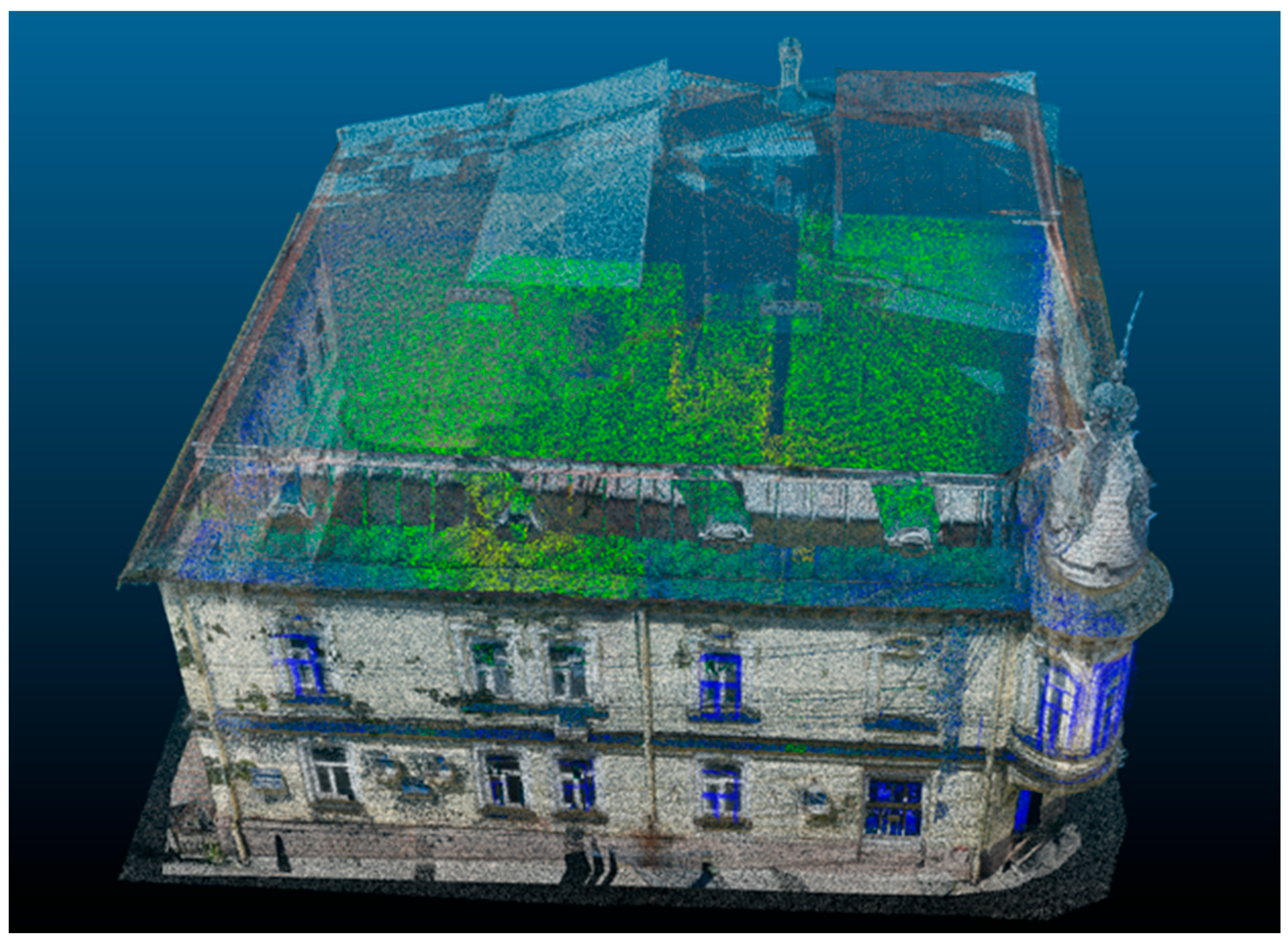
Raw TLS point count: 232,884,847 (
Figure 8).
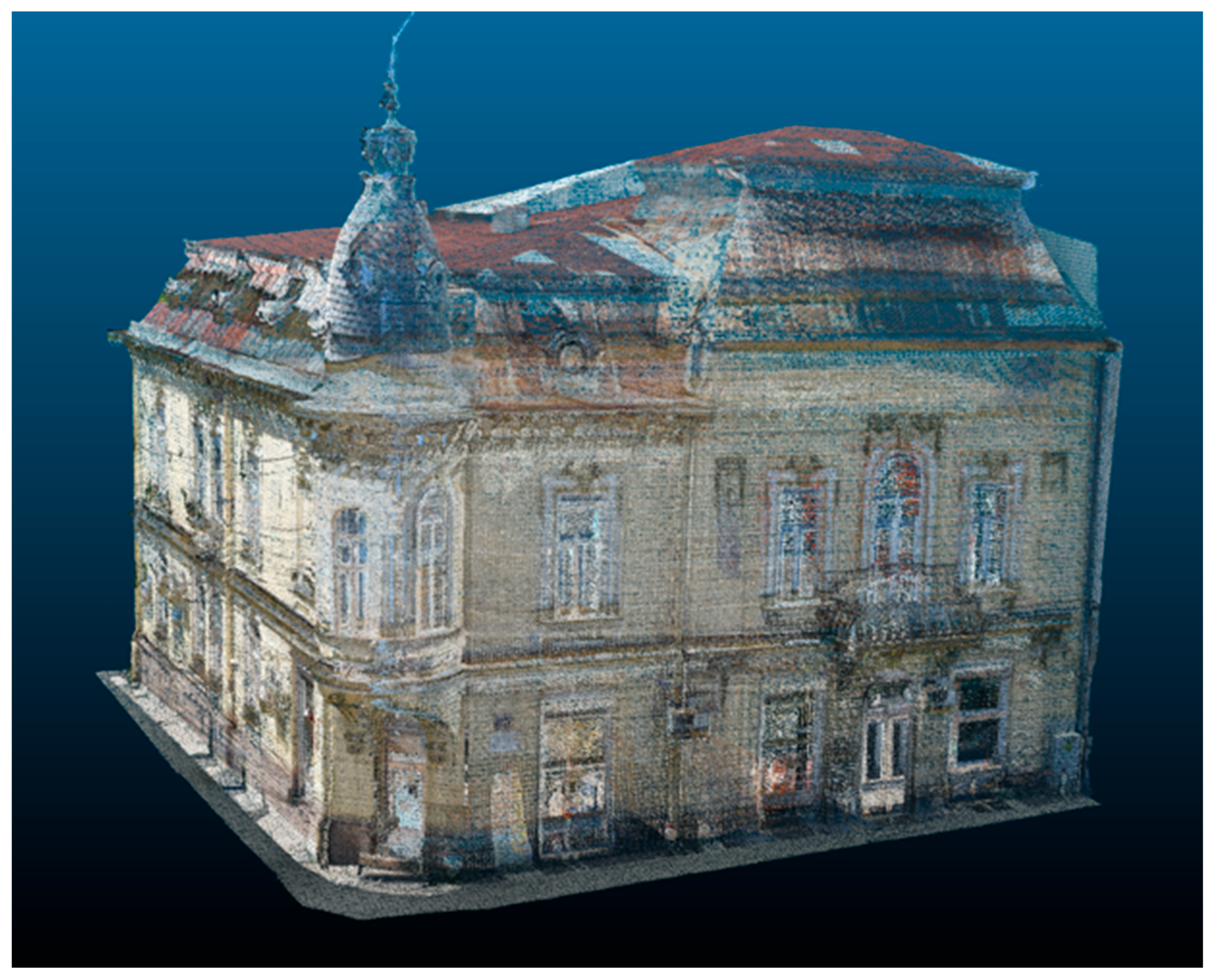
Cleaned TLS point cloud: 28,331,786 points (
Figure 9).
The cleaning process removed vegetation, vehicles, pedestrians, street furniture, and reflections from windows and metallic surfaces. Only non-structural or transitory objects were removed during cleaning operations, and the original architectural surfaces were preserved to maintain the integrity of the diagnosis.
2.4.2. Matterport Data Preprocessing
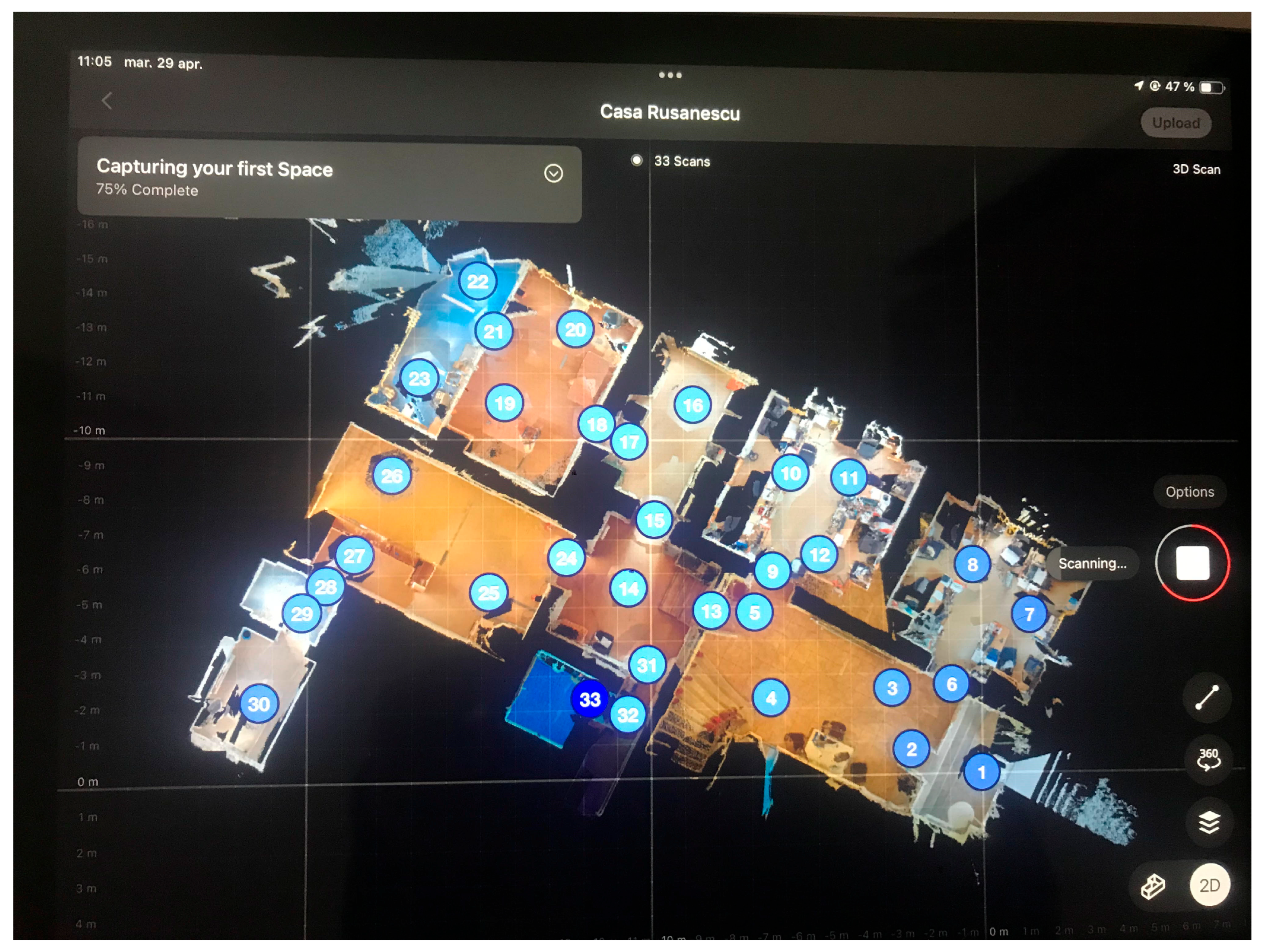
The recordings made with the Matterport Pro2 3D camera were automatically downloaded to Matterport Cloud via an iPad 7 tablet (
Figure 10), and the information was viewed in the My.matterport.com application. The reconstruction process is proprietary and automated. There is no access to internal calibration or SLAM adjustment parameters.
The Matterport data were downloaded from the Matterport Cloud platform.
After exporting the data, the point cloud containing 363,205,031 points was cleaned in Autodesk ReCap Pro (v2025) to remove glass reflections, noisy scans, and ceiling distortions. Only artifacts introduced by reflective or dimly lit surfaces were removed. The original interior geometries were preserved.
Cleaning the Matterport point cloud was challenging due to the extremely high density of points. The viewing process was slow, the image navigation was delayed, and it became difficult to perform accurate zooming operations.
After cleaning, the point cloud contained 205,238,282 points. It was then exported for subsequent alignment with the TLS and UAV scans (
Figure 11).
2.4.3. UAV Photogrammetry Preprocessing
The aerial images were imported into Agisoft Metashape Professional (v2.3.0) and processed as follows:
The process of image alignment;
The process of identifying the connection point detection;
The generation of a sparse point cloud;
The generation of a dense point cloud;
The export to Autodesk Recap Pro for cleaning.
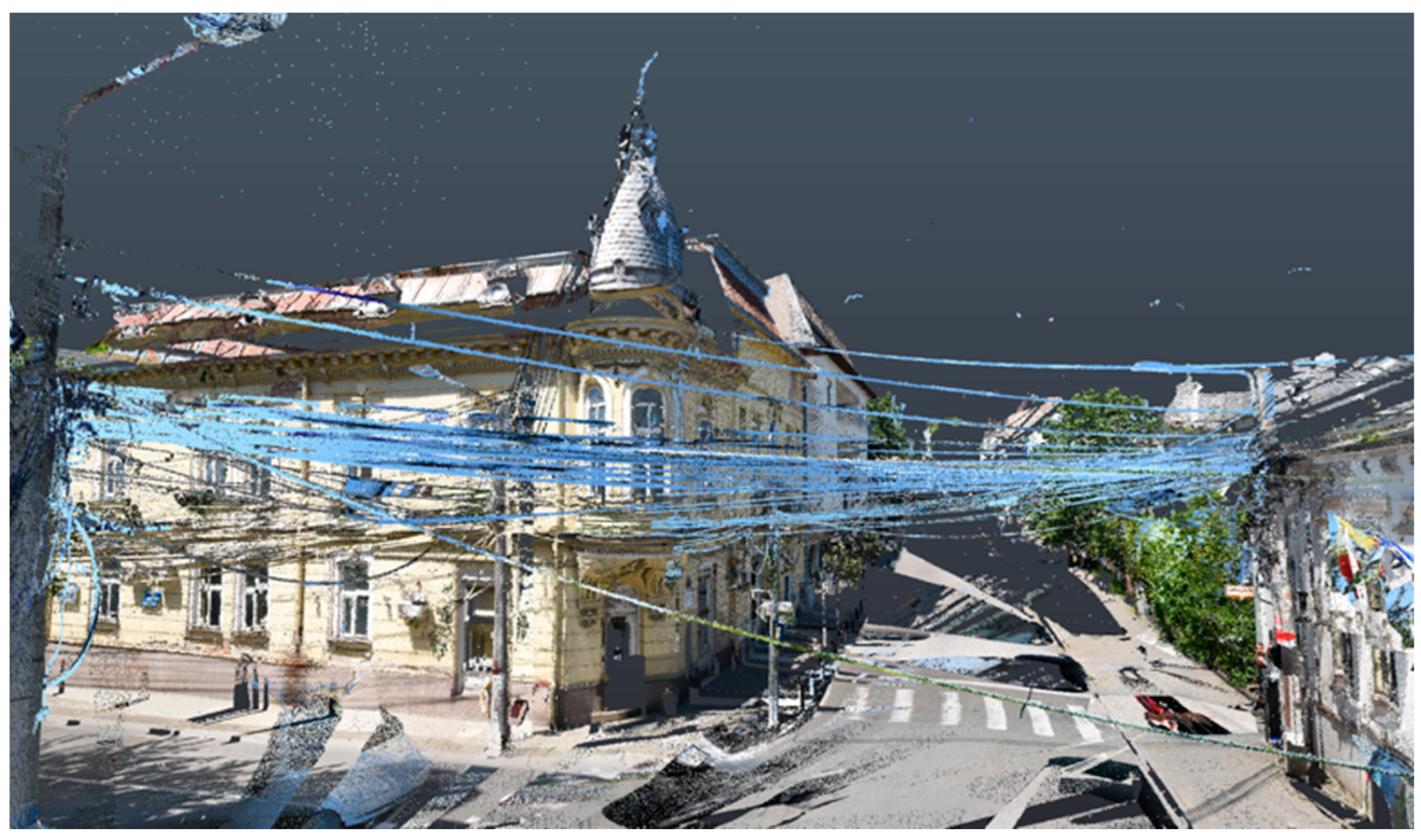
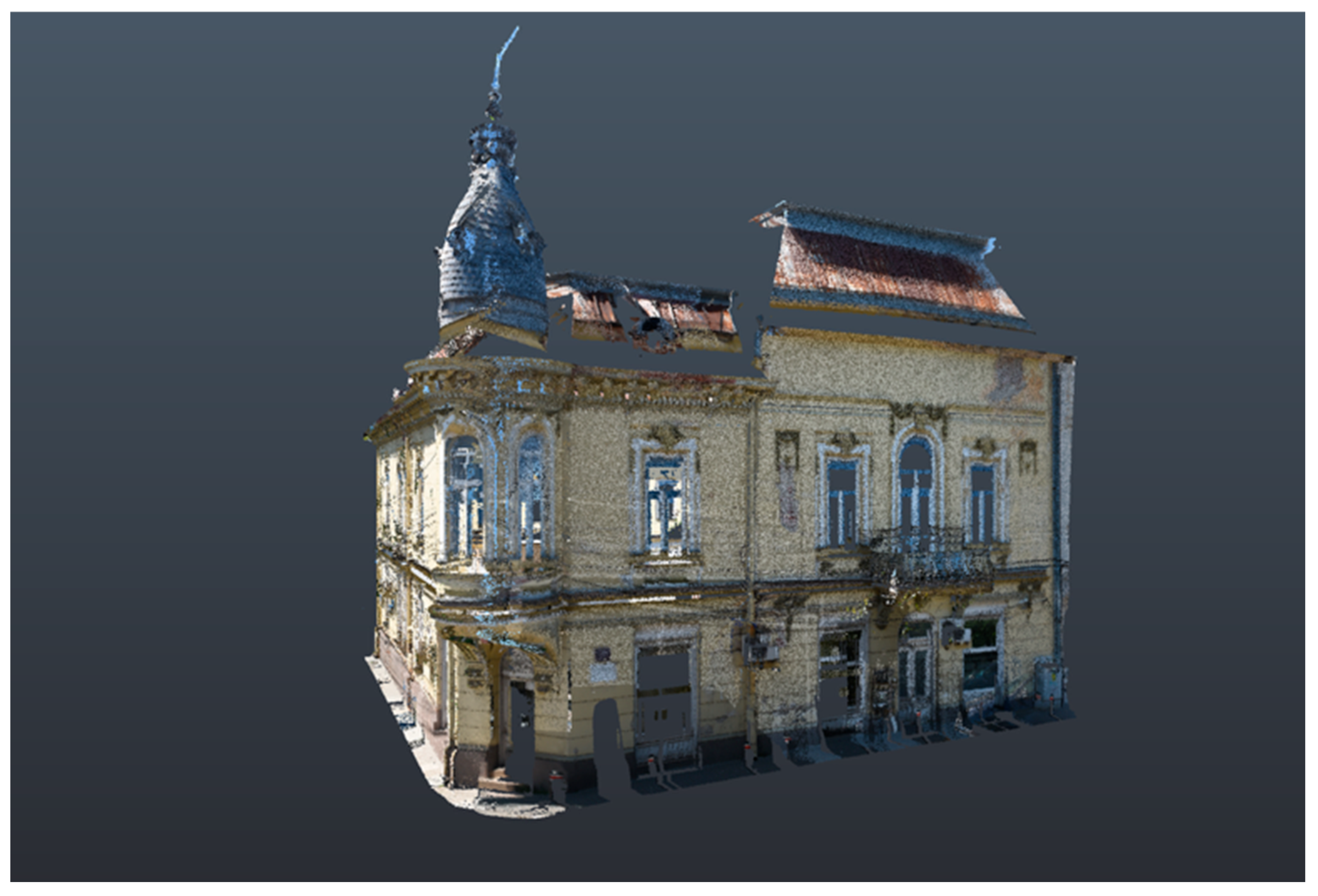
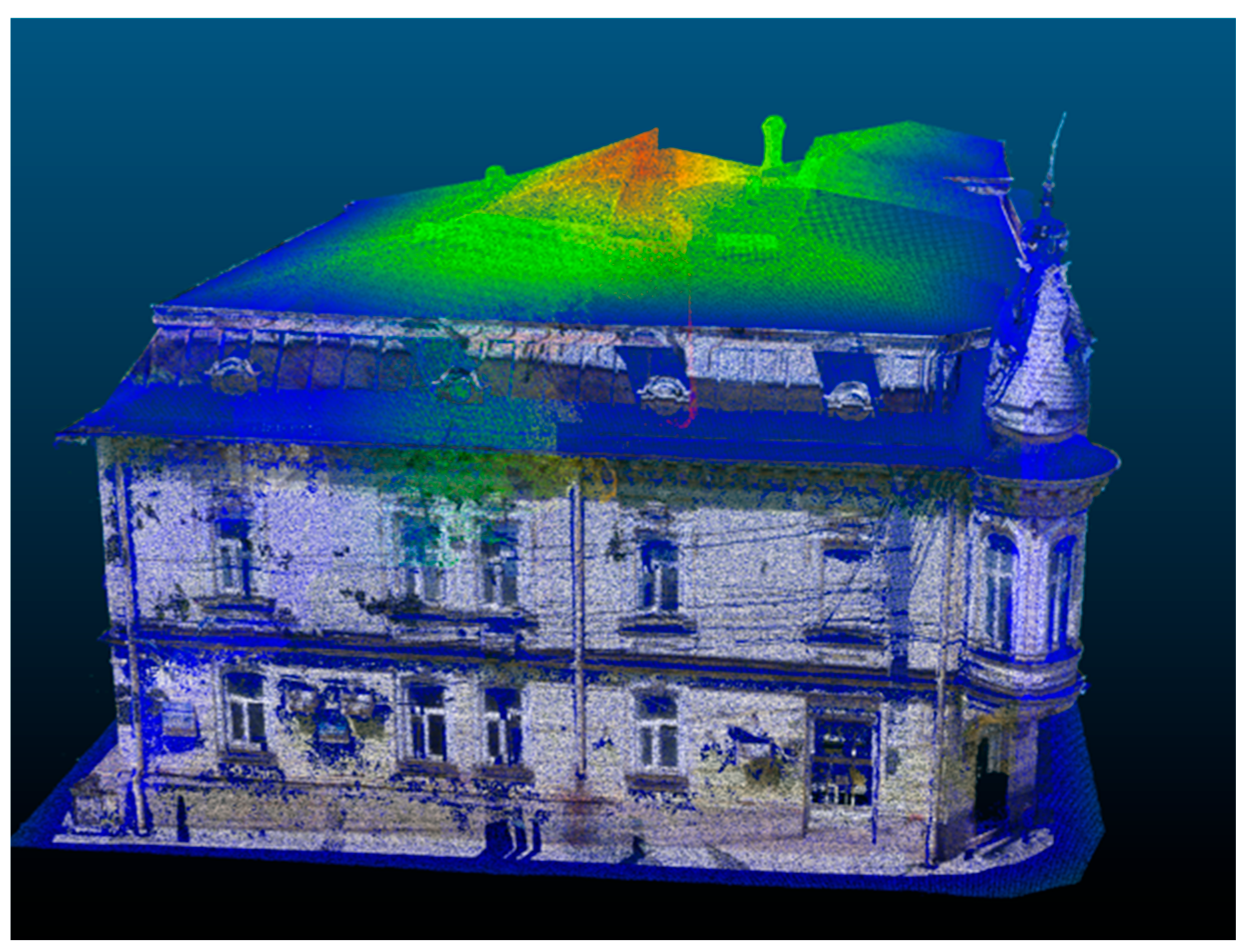
Agisoft Metashape Professional (v2.3.0) produced a raw dense point cloud of 18,033,132 points (
Figure 12). This point cloud was then cleaned down to 1,466,564 points (
Figure 13). The cleaning process removed background elements, sky artifacts, and poorly reconstructed points in areas with low texture or occlusion while preserving the building’s geometry.
2.5. Registration Accuracy and Multi-Source Alignment
The three datasets (TLS, UAV and Matterport) were aligned using a hierarchical approach.
The TLS and UAV datasets were aligned to the same absolute coordinate system using three ground control points (GCPs) measured with RTK technology and located around the monument. These ground control points (GCPs) only established the external reference frame for the topographic level datasets (TLS and UAV). The Matterport dataset was not directly georeferenced, but was aligned to the TLS-UAV reference model via geometric registration.
Both the UAV and TLS datasets had already been georeferenced using RTK control points. Manual alignment or ICP registration was not necessary. The purpose of the comparison was to ensure consistency, and not to re-register. We evaluated their geometric agreement by performing a cloud-to-cloud (C2C) distance analysis in CloudCompare (v2.13.2).
The results showed a good correspondence between the two-point clouds:
These values represent the relative geometric agreement between datasets and do not represent the absolute accuracy of the measurements.
Most deviations occurred in shaded areas and along vertical façades because the density of UAV points was lower. This indicates a strong geometric agreement suitable for façade-level diagnostic analysis (
Figure 14). The observed deviations were a result of differences in sampling density and viewing geometry between the aerial photogrammetry and terrestrial laser scanning.
Overall, the UAV model aligned with the TLS reference geometry and can be integrated into the multi-source workflow.
Since the Matterport dataset is not georeferenced, manual alignment and ICP registration were necessary. The following was used for alignment:
Architectural correspondences (door frames, windowsills and alignment of wall planes);
Manual tie point selection;
Final ICP refinement.
Since there were no ground control points or common measurement targets available for the three datasets, alignment was based solely on geometric matches and ICP optimization.
There was sufficient overlap between the datasets for stable registration, especially in transition areas such as door openings, façade–interior junctions, and window frames. These areas provided stable geometric regions for ICP convergence.
The ICP convergence criterion was met when successive iterations produced negligible residual reduction, indicating stable geometric correspondence between the datasets.
After alignment, we evaluated their geometric agreement by performing a cloud-to-cloud (C2C) distance analysis in CloudCompare (v2.13.2).
The results showed a good correspondence between the two-point clouds:
Most deviations occurred in shaded areas and along vertical façades because the density of UAV points was lower (
Figure 15).
The reported distances represent a registration match rather than absolute geodetic accuracy because alignment was limited by relative geometry rather than an external reference.
Iterative closest point (ICP) registration was chosen because it is widely used for the fine alignment of heterogeneous point clouds with partial overlap and different sampling densities. Cloud-to-cloud distance calculation (C2C) was chosen over cloud-to-grid comparison because C2C avoids surface reconstruction errors and reflects geometric discrepancies between acquisition systems directly.
When the TLS–UAV dataset was integrated with the Matterport indoor model for comparison, an average distance of 0.079 m was observed, while the standard deviation remained low at 0.009 m. This suggests that the difference is due to a systematic deviation inherent to the Matterport acquisition method rather than random geometric distortion.
The average deviation of about 8 cm aligns with the previously reported geometric behavior of household SLAM systems. In these systems, cumulative scale and position errors accumulate over long trajectories. These deviations are systematic and depend on the scene, particularly in environments with poor texture or few features.
The Matterport dataset was not used for metric deformation analysis; its role was limited to volumetric continuity and spatial context. Topographic-quality TLS and UAV data served as the metric reference for all deviation-based diagnostics. The observed registration discrepancy reflects the intrinsic behavior of SLAM-based systems and does not affect the reliability of exterior geometric analyses.
The deviation pattern is not random; rather, it is structurally induced by the SLAM-based acquisition principle of the Matterport system. In this system, position estimation is based on tracking visual features rather than measuring distances at the topographical level. This results in cumulative deviation, particularly on long indoor routes and in areas with weak geometric constraints.
The differences in sampling density among the TLS, UAV photogrammetry, and Matterport datasets influenced the patterns of local deviation, especially along the vertical facades and shaded surfaces.
Despite having a higher average deviation, the Matterport dataset demonstrated high internal consistency. It was therefore deemed suitable for volumetric integration and interior–exterior continuity within the digital twin, but not for use as a primary metric reference.
These findings are crucial for digital twin construction because they demonstrate that while low-cost systems can ensure geometric continuity between interior and exterior datasets, they require anchoring to topographic references for metric reliability.
Therefore, the Matterport dataset should be considered as a secondary metric layer within multi-source heritage documentation workflows, but not a coherent geometric layer.
This comparison was not intended to replace topographic-level data; rather, it aimed to evaluate the feasibility of incorporating a consumer-grade indoor dataset into a multi-source digital twin workflow.
2.6. Fusion and 3D Mesh Reconstruction
For the realization of the 3D mesh of the historical monument Casa Rusănescu, it was necessary to align the three-point clouds previously obtained based on the 3D recordings and data processing acquired with the RIEGL VZ-400i TLS, Matterport Pro2 3D camera, and the UAV DJI Matrice 4E. The alignment was performed using CloudCompare software using registration by correspondence points (ICP), with the TLS and UAV point cloud as a reference and Matterport aligned to it, resulting in a compact 3D model in which all the details of the building from the interior, exterior, facades, and roof were visible. The final integrated point cloud had a density of 235,036,632 (
Figure 16). This integrated cloud represents a fusion layer; this is intended for geometric completeness and not for homogeneous metric accuracy.
The alignment followed a hierarchical strategy. TLS provided the geometric reference frame. UAV photogrammetry contributed to the roof and upper façade coverage. Matterport ensured the interior continuity.
Due to the extremely high-density and the hardware limitations, the point cloud resulting from the Matterport Pro2 3D camera was excluded from the mesh generation process. This process focused exclusively on the exterior geometry (TLS + UAV) of the building. The exclusion was methodological rather than qualitative. The Matterport dataset was kept for interior volumetric continuity, but was not used for surface reconstruction because of an imbalance in density relative to the TLS-UAV data.
The integration of the TLS and UAV datasets resulted in a combined point cloud. This cloud had 29,798,350 points.
Steps applied:
These measures were selected to preserve the microgeometry of the façade while preventing smoothing that could hide signs of surface deterioration.
The result is a detailed, triangulated mesh of the exterior facades that is suitable for diagnostic visualization and conservation models.
Step 1: Normal computation
To preserve the details of the facades, no noise filters were applied, but the Compute Normals function was applied (neighborhood radius = 0.03 m, k = 6 neighbors).
The resulting point cloud was used as the basis for generating the mesh of the Casa Rusănescu historical monument.
The parameters chosen for the neighborhood balance the local geometric details. They also balance the stability of normal orientation on irregular historical surfaces.
Step 2: Poisson Surface Reconstruction
The mesh model was created by applying the Poisson Surface Reconstruction algorithm in CloudCompare (v2.13.2) (octree depth = 10, samples per node = 1.5, point weight = 2.0, boundary = Neumann, threads = 32). This produced a triangulated model that accurately reproduced the geometry of the historical monument Casa Rusănescu. This 3D mesh is suitable for visualization, analysis, and documentation.
Poisson reconstruction was chosen over Delaunay triangulation because Poisson reconstruction produces watertight surfaces that are ideal for subsequent deviation and roughness analyses.
Step 3: Removal of unwanted mesh fragments
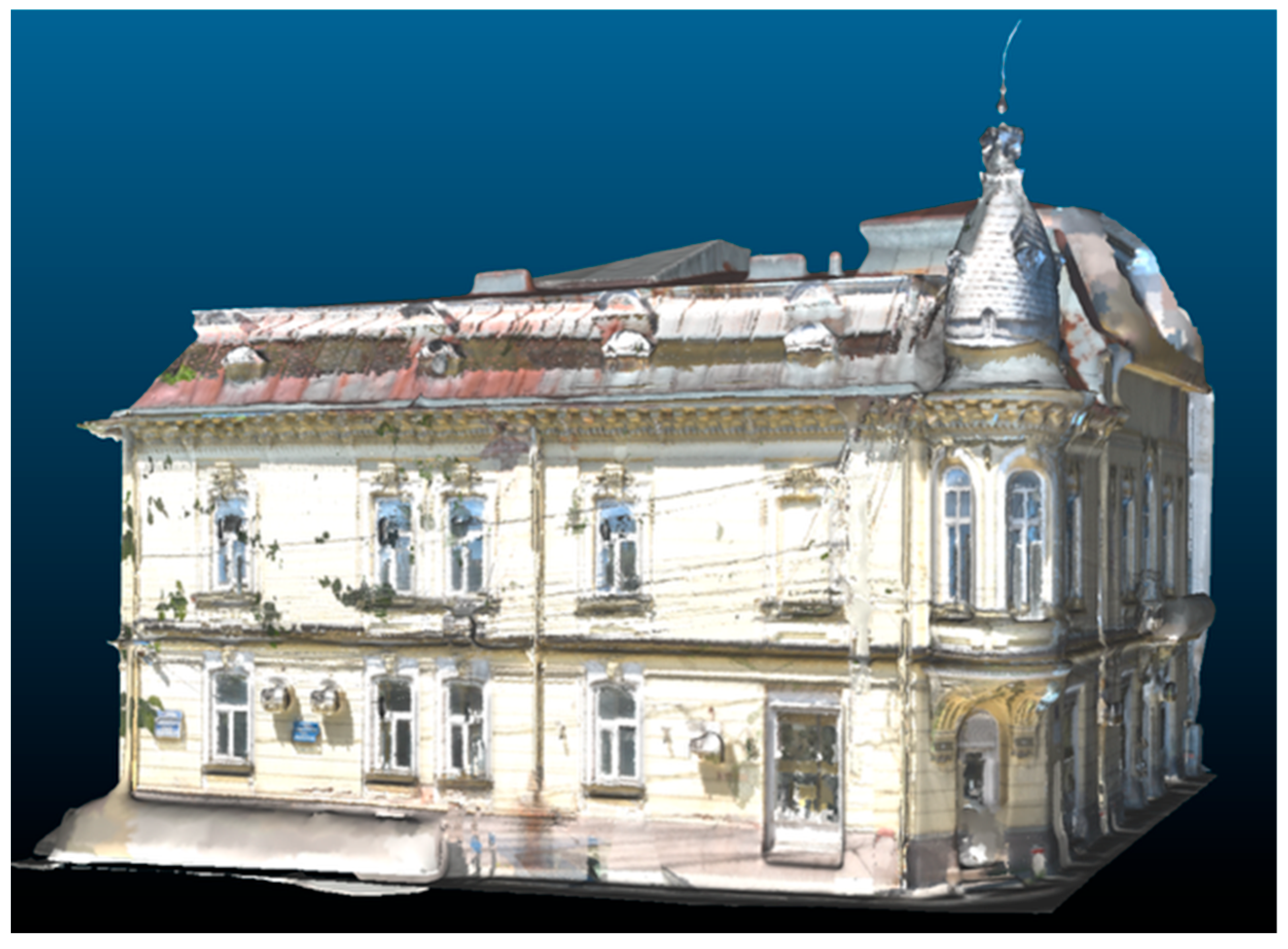
The 3D mesh was cleaned by removing unwanted elements. The result was the final 3D mesh. This was the basis for creating the 3D model of the building (
Figure 17).
The 3D model of the building was not completely rebuilt, as this was not thought to be useful for the damage analyses presented in this study.
The network was intentionally limited to surfaces that were relevant for mapping degradation, since a complete HBIM-style reconstruction was beyond the scope of this study, which was oriented toward diagnostics.
The cleaning operations removed scan artifacts and disconnected triangles while preserving the original surface morphology.
2.7. Processing Parameters and Computational Performance
TLS: Processed in RiSCAN PRO (v2.0). Default preprocessing pipeline used for filtering, registration and export to LAS. The default settings refer to the workflow recommended by the manufacturer. These settings ensure the reproducibility of the TLS preprocessing stage by preventing manual modification of parameters. After cleaning the point cloud in Autodesk ReCap Pro, it was exported to E57.
UAV: Processed in Agisoft Metashape Professional (v2.3.0).
These settings represent the most stable configuration possible with the available hardware, without creating reconstruction artifacts.
After cleaning the point cloud in Autodesk ReCap Pro (v2025), it was exported to E57.
Matterport: Processed on-site at my.matterport.com and exported as OBJ + JPG with the mesh and point cloud. The Matterport export preserves the internally optimized geometry based on SLAM, without any external resizing, After cleaning the point cloud in Autodesk ReCap Pro (v2025), it was exported to E57.
For point cloud registration, we used CloudCompare software:
The ICP parameters were chosen to prioritize stable convergence in heterogeneous point densities, rather than minimizing residuals at an artificial threshold.
Analysis of geometric characteristics:
These rays were chosen to capture surface irregularities on the scale of the façade deterioration features while avoiding the influence of broader structural geometry.
We chose these values based on the size of the façade elements and the distance between points in the TLS scan.
Mesh reconstruction:
The method we used was Poisson Surface Reconstruction;
The octree depth was set to 10, the solver divide was set to 8, and the samples per node were set to 1.5;
The values were changed to find a balance between how detailed the mesh is and how much memory it uses.
This configuration was chosen to avoid excessive smoothing, which could hide small-scale degradation patterns.
Processing was carried out on a Lenovo Think Book laptop equipped with a 16-inch screen. The laptop was equipped with an Intel Core i9-14900HX processor with 24 cores, a base frequency of 2.2 GHz, and a maximum turbo frequency of 5.8 GHz. It also had 32 GB of DDR5 RAM, an NVIDIA GeForce RTX 4060 GPU with 8 GB of VRAM, and a 1 TB NV Me SSD [
46].
This configuration provided sufficient performance for handling large, multi-source point clouds. However, the GPU’s memory and the system’s RAM capacity limited processing of very dense datasets, especially the Matterport interior point cloud at maximum resolution. Hardware specifications are reported to provide context for computational constraints and the reproducibility of processing performance.
Aligning the point clouds (TLS + UAV → Matterport) using ICP in CloudCompare (v2.13.2) took approximately 100 min and consumed up to 19 GB of RAM.
The Compute Normals function applied to the final point cloud took approximately four hours and consumed up to 30 GB of RAM.
The roughness, surface density, mean curvature, planarity and the linearity functions applied to the final point cloud took approximately three hours and consumed up to 26 GB of RAM.
Network reconstruction using Poisson Surface Reconstruction took two hours and used a maximum of 28 GB of RAM.
Processing times are only estimates and depend on the density of the dataset and how system resources are allocated.
Table 1 summarizes the data acquisition campaigns conducted at Casa Rusănescu using three complementary sensor platforms.
The TLS and UAV datasets were processed using specialized photogrammetry and LiDAR software. The interior scans were exported directly from the Matterport platform. High-density point clouds and multi-scale resolution were combined, which enabled a detailed analysis. The analysis focused on the structure and surfaces. The combination of TLS, topographic-grade UAVs, and consumer-grade interior scanning reflects a multi-resolution data strategy rather than uniform acquisition accuracy.
2.8. AI-Assisted Validation of Degradation Indicators (Twinspect)
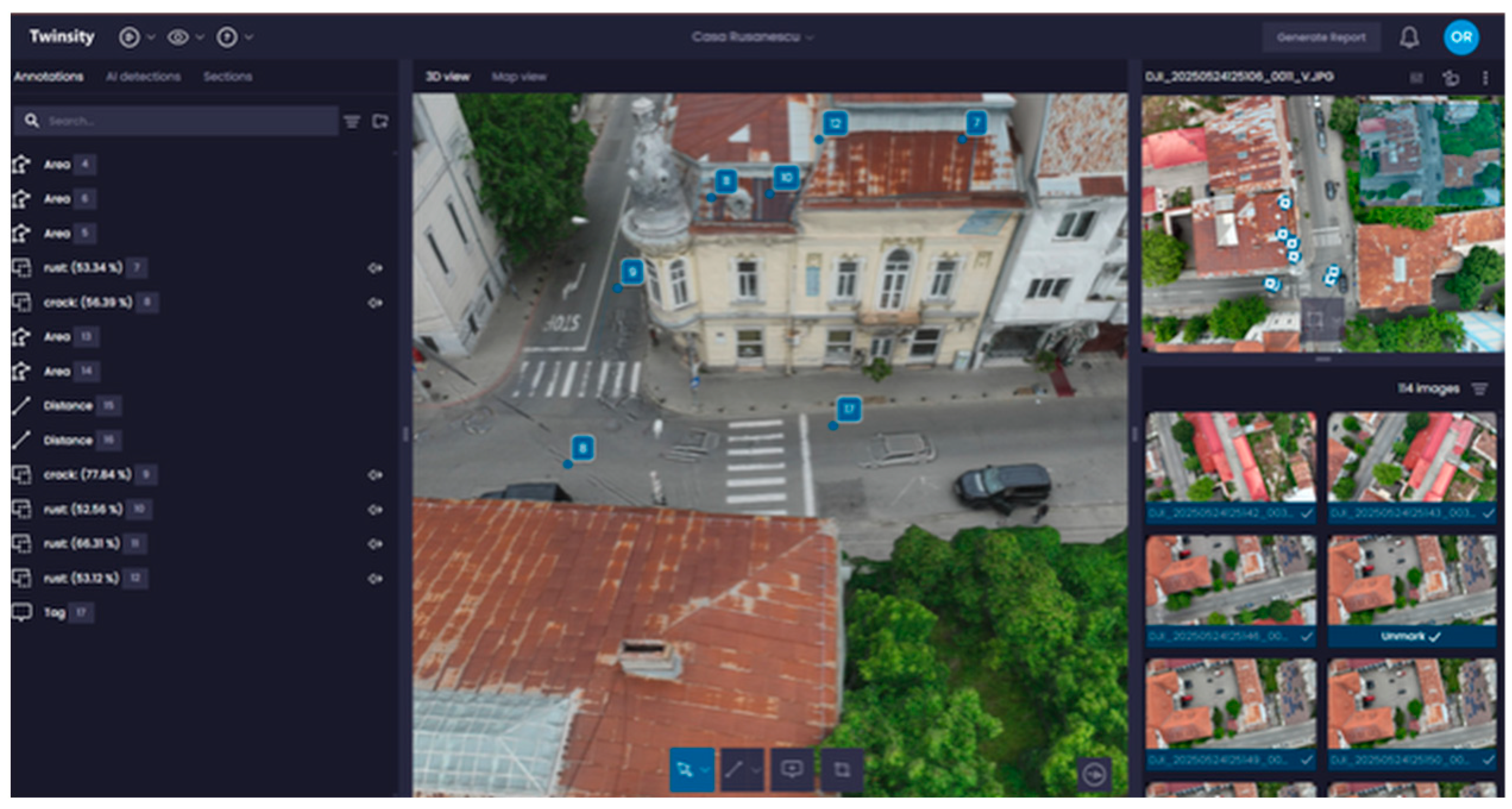
To finalize the geometry-based diagnostic workflow, an AI-assisted validation step was carried out using the Twinspect platform. This step does not automatically diagnose damage; rather, it checks for consistency between independent detection paradigms (geometry-based vs. image-based). The aim of this step was to independently verify whether the areas highlighted by the scalar field analyses (roughness, curvature, flatness, linearity, and surface variation) corresponded to the damage patterns visually observable on the monument’s surfaces. Twinspect was used as an external screening tool, and its results were compared with the areas of anomaly identified through point cloud analysis and photographic documentation captured on site. The AI system did not load any geometric data; validation was based solely on the visual information projected onto the 3D surface.
The AI-assisted analysis was conducted using exclusive use of calibrated UAV images. Using calibrated images obtained with UAVs ensures that detections are spatially consistent when projected onto the 3D model.
The Twinspect platform uses image-based detection to project identified degradation patterns onto a textured 3D model [
61]. An AI-assisted inspection was performed at a building level, using the same images and projecting the detections onto an exterior textured 3D mesh. For this study, the following community AI classes were enabled: cracks, corrosion, and efflorescence. These categories correspond to surface damage phenomena that can be detected by texture variations, rather than structural or subsurface defects.
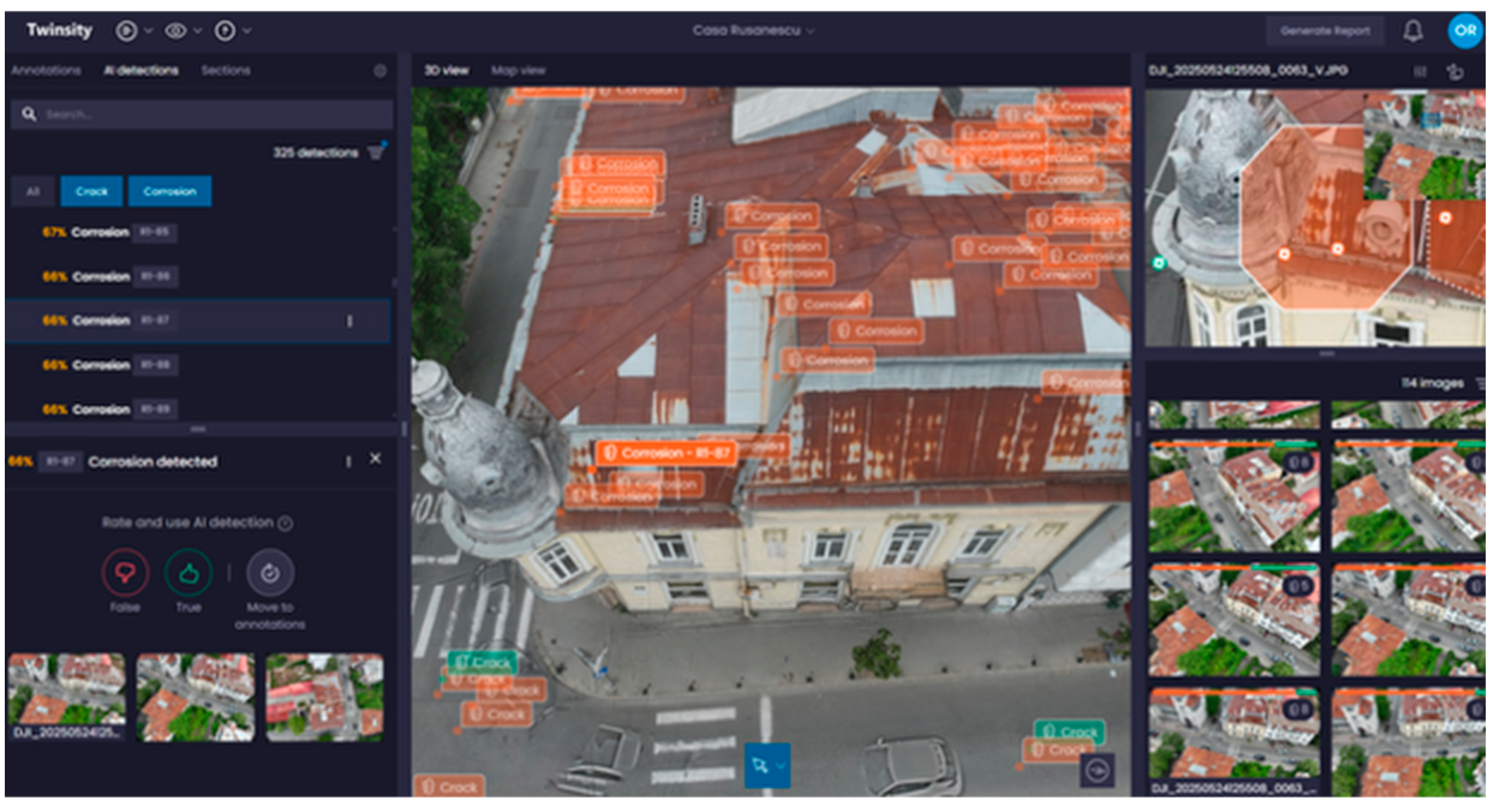
No custom AI models were trained, and the analysis was limited to the predefined community models available on the platform. AI-assisted inspection was used as a complementary validation step rather than replacing geometry-based diagnostic analyses derived from point cloud processing (
Figure 18).
The AI results were treated as indicative overlays and interpreted alongside indicators derived from geometry and field observations.
3. Results
The 3D representation of Casa Rusănescu is the result of acquiring, aligning, merging, and diagnosing data from multiple sources. The integrated point cloud had 235,036,632 points. This allowed us to see and measure the building’s design, materials, and signs of early damage. These results describe the representation of geometric and surface conditions. The Discussion section addresses the interpretation of degradation mechanisms.
The combination of TLS, UAV, and 3D camera technologies made it possible to create an extremely detailed, spatially continuous 3D representation of the historical monument. Each sensor contributed complementary information:
TLS accurately captured the geometry of the façade and architectural ornaments.
UAV photogrammetry ensured complete coverage of the roof and upper façade details.
Matterport ensured the volumetric continuity of the interior spaces.
The complementarity of sensors is spatial, not hierarchical. This means that each sensor covers areas where others have limitations.
The combined model successfully reconstructed the following:
All main façades and architectural elements;
Recessed decorative components (e.g., cornices, pilasters and moldings);
Balconies, window frames and structural edges;
Roof geometry (including chimneys, slopes, gutters, and skylights);
Interior circulation spaces, including staircases and hallways.
There were minor areas where the coverage was not complete in the following places:
Narrow spaces near the left façade, where movement restrictions limited TLS placement;
Window recesses where the laser signal produced poor returns;
Roof edges were partially obstructed by adjacent vegetation or angular incidence during UAV flight;
Poor lighting conditions and closed doors reduced visibility and point cloud density in shaded corners and behind obstacles.
These gaps are due to acquisition constraints rather than processing artifacts. Despite some limitations, this dataset is superior to any single-sensor dataset. The advantage of the integrated dataset is its spatial completeness, not increased accuracy per point.
The following section presents the identification of different types of degradations. By analyzing the final 3D point cloud generated with the RIEGL VZ-400i TLS, Matterport Pro2 3D camera, and UAV DJI Matice 4E drone, both exterior and interior deteriorations of the building could be identified. These included cracks (horizontal, vertical, diagonal etc.), exfoliation, damp areas, material losses (chips, voids etc.), and mechanical break-ins (dents, break-ins etc.). The high resolution and clarity of the 3D recordings allowed these types of deterioration to be easily detected visually.
A comprehensive set of scalar field analyses was performed using CloudCompare to identify degradation patterns.
These analyses included:
The evaluation of surface roughness, which is instrumental in the identification of micro-irregularities, cracks, plaster detachments, and erosion zones.
The surface density, which is evaluated to ascertain the completeness of the data. This process also reveals areas that are occluded or undercoated.
The mean curvature, which is a metric that is employed to detect edges, ornamented details and deformed areas.
The planarity of a surface, defined as the absence of any distortion or material loss.
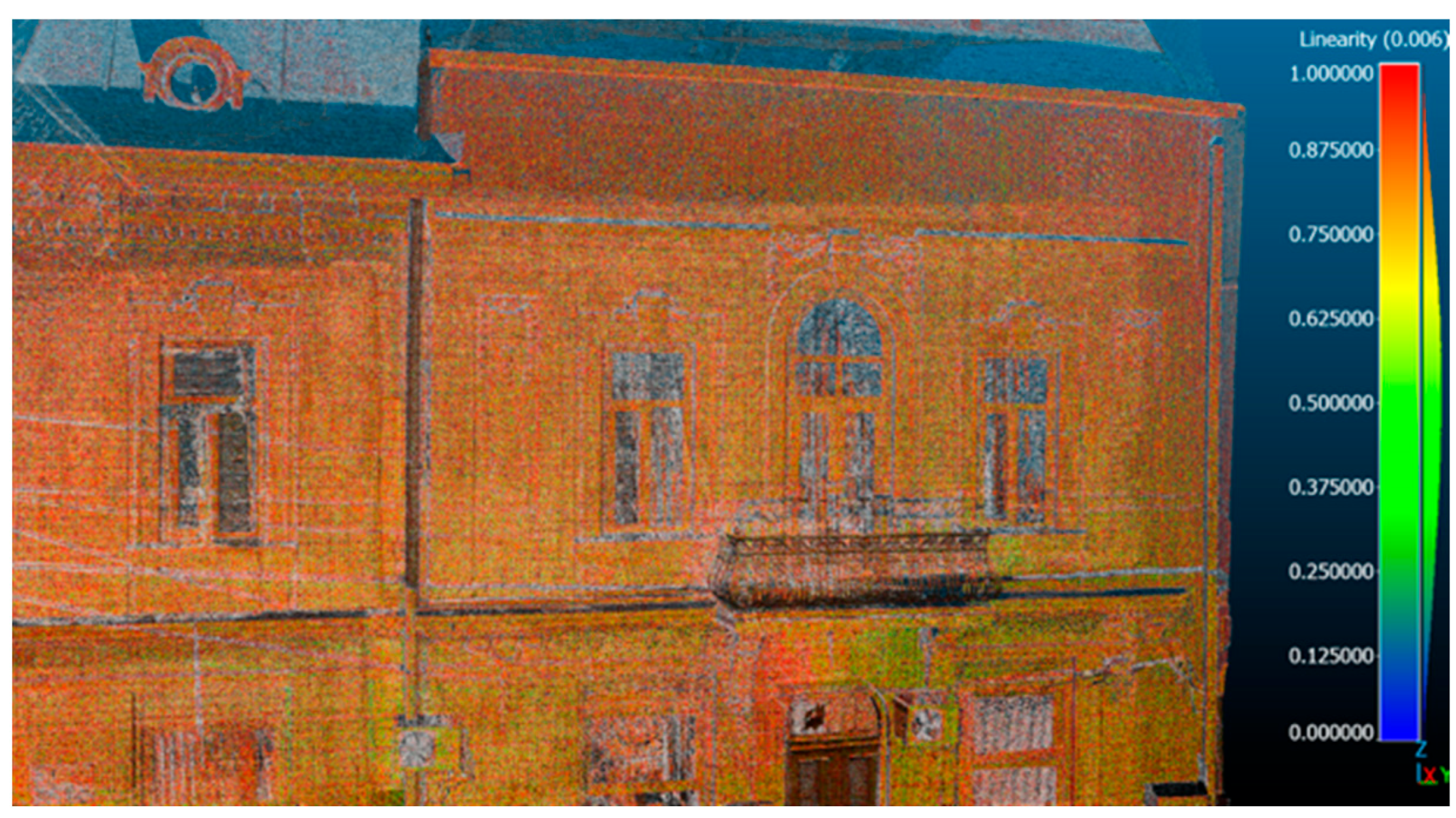
Linearity, which is a process that can detect deviations from the structural lines of a façade, as well as potential deformations.
Surface variation, which is indicative of irregularities associated with substrate degradation.
These observations refer to visible surface manifestations in the point cloud and images. They do not imply a structural assessment. Instead, these analyses provide a multi-indicator diagnostic framework to identify early-stage degradation.
To ensure consistency of the results, for exterior data, we used a neighborhood radius of 0.006 m for the exterior data and 0.001 m for the interior data. We also used a color scale that went from blue to green too yellow and to red, with 256 steps, to show the results.
We applied multiple deviation metrics to the point cloud to detect irregularities associated with degradation processes. Representations of scalar fields, including roughness, curvature, planarity, linearity, and surfaces variations enabled the identification of localized anomalies.
Each indicator highlights different geometric expressions of surface alteration. Their interpretation was based on combined analyses rather than single-parameter thresholds. Consistency of parameters across datasets ensures the comparability of scalar field results between sensors. These representations serve as diagnostic maps rather than direct measurements of material loss.
A facade of the building was selected that showed various types of deterioration and was highlighted in all the applied analyses. The selected façade serves as a representative test area to illustrate the behavior of the indicator, rather than as the only degraded area. The diagnosis was interpreted based on the combined reading of several indicators rather than single-parameter thresholds.
3.1. Surface Roughness
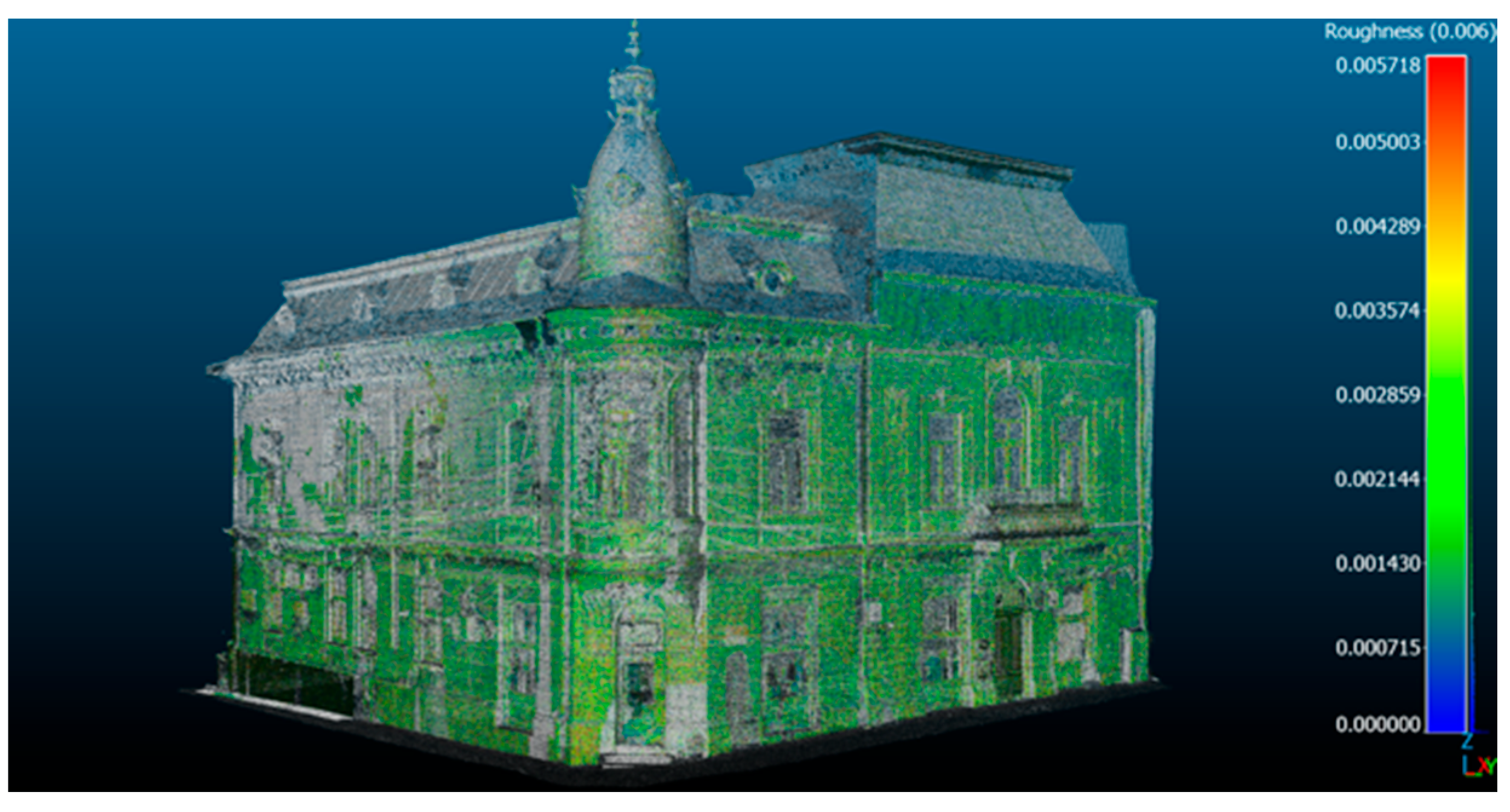
A roughness-based analysis of the point cloud revealed micro-variations in surface texture and indicated cracks, exfoliation, and plaster detachment. Roughness indicates geometric irregularity, but does not directly measure material loss depth. The yellow to red areas on the map show are localized increases in surface roughness, which are associated with cracks, loss of material, and surface deterioration. The blue areas show where the plaster is smooth and relatively undamaged (
Figure 19).
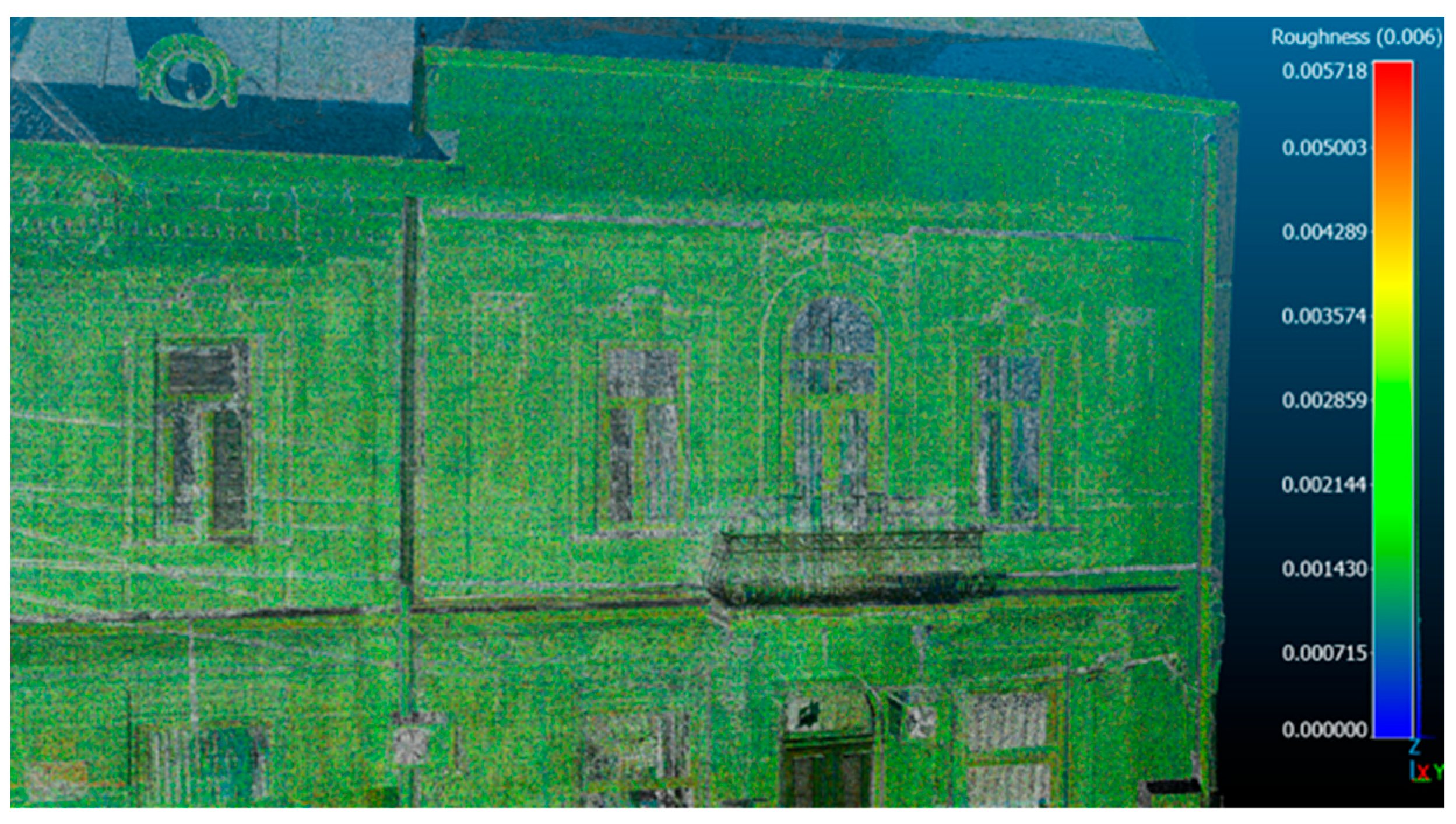
Figure 20 shows the roughness map of the eastern façade. It highlights surface irregularities in shades of green and yellow. These indicate a moderate level of roughness across the wall and slightly higher values around architectural features. These interpretations are based on surface texture patterns and should be considered indicative rather than definitive diagnoses. The texture suggests minor surface wear and tear and superficial flaking, and potential moisture-related degradation near the base. The color distribution confirms the presence of micro-deformation. These are typical of aged plaster and sporadic maintenance interventions.
Overall, analysis of the façade’s roughness revealed minor to moderate surface degradation. This degradation is more likely to be the result of natural erosion and aging processes than structural damage. The absence of high-intensity roughness confirms that the monument is not in a critical condition at present, and that this technique is suitable for non-destructive diagnosis and comparative monitoring over time. This observation is related to surface condition indicators and does not replace structural assessment from an engineering perspective.
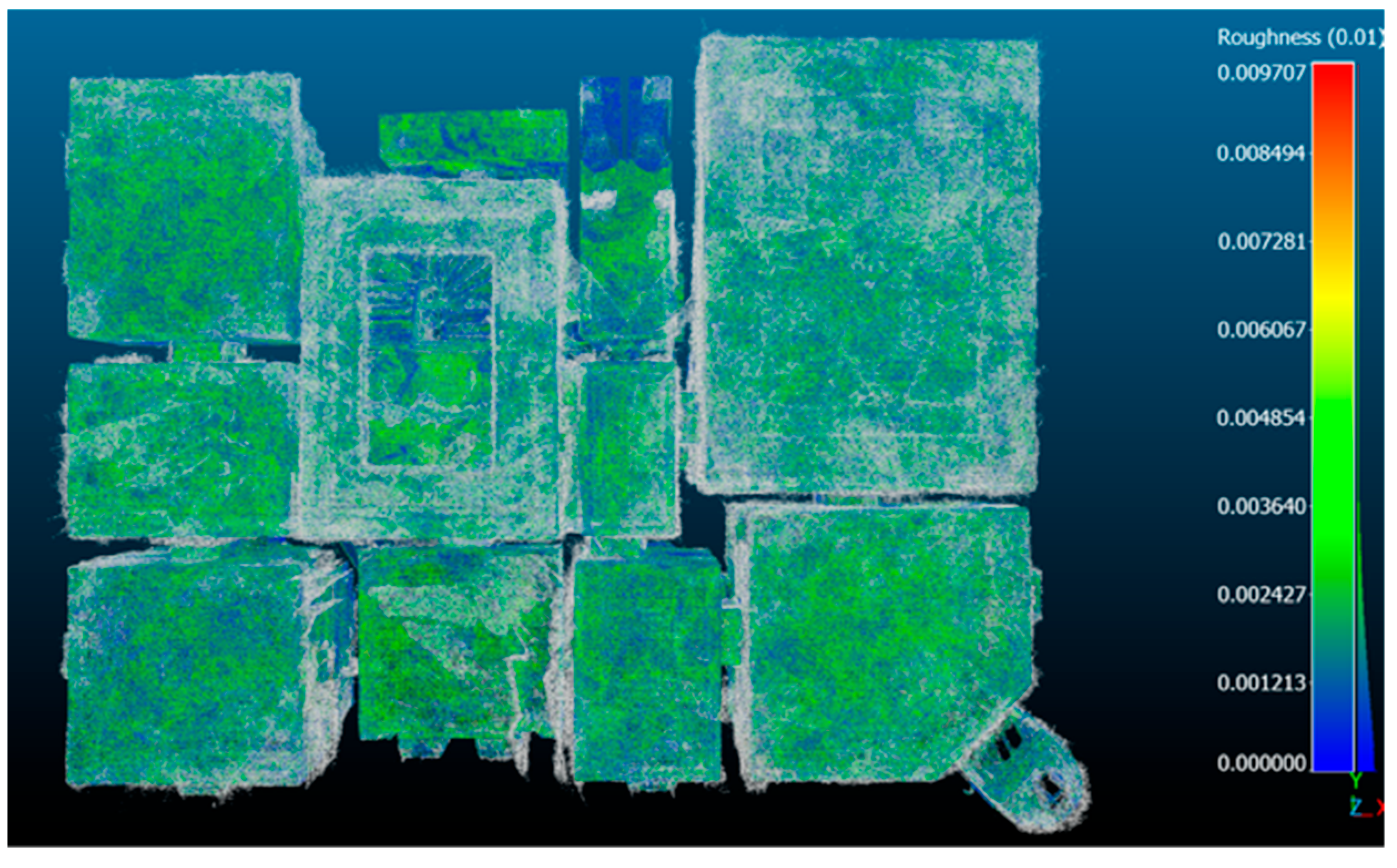
We also conducted a roughness-based analysis on the interior point cloud that was acquired using the Matterport 3D camera. The resulting map shows that most interior wall surfaces had low to moderate roughness values, predominantly displayed in shades of blue and green. This indicates generally smooth finishes and good surface preservation.
Slightly higher roughness values (shown in green to yellow) were visible around wall edges, corners, and door and window frames. They were also present in areas affected by scanning noise or occlusions, which are typical of indoor environments. These variations were primarily due to differences in surface texture, minor material irregularities or acquisition artifacts, rather than structural defects.
There were no extensive areas with consistently high roughness values (red), suggesting an absence of significant cracks, material loss, or severe plaster detachment in interior spaces. The rough analysis confirms the homogeneous and stable condition of interior surfaces overall and demonstrates the suitability of Matterport point clouds for the non-invasive qualitative diagnosis of interior surfaces (
Figure 21).
Observations:
The base area displayed elevated levels of roughness, primarily in yellow-green tones. These levels are indicative of rising damp, but they are also indicative of abrasion. The rising damp and abrasions are the result of pedestrian traffic and environmental factors.
A multitude of plastered surfaces exhibited uneven microtopography, which is presumably due to factors such as minor spalling, natural aging, or prior repair interventions.
Localized elevations in surface roughness are indicative of incipient material degradation. These elevations occurred in proximity to the upper cornices because they are exposed to rainfall and temperature variation.
The roughness observed on the interior walls highlighted slightly uneven finishes in older rooms and minor material loss around door frames. However, these did not indicate structural damage or advanced deterioration.
The observations represent spatial correlations between roughness patterns and visual characteristics and do not represent direct characterization of the material.
3.2. Surface Density
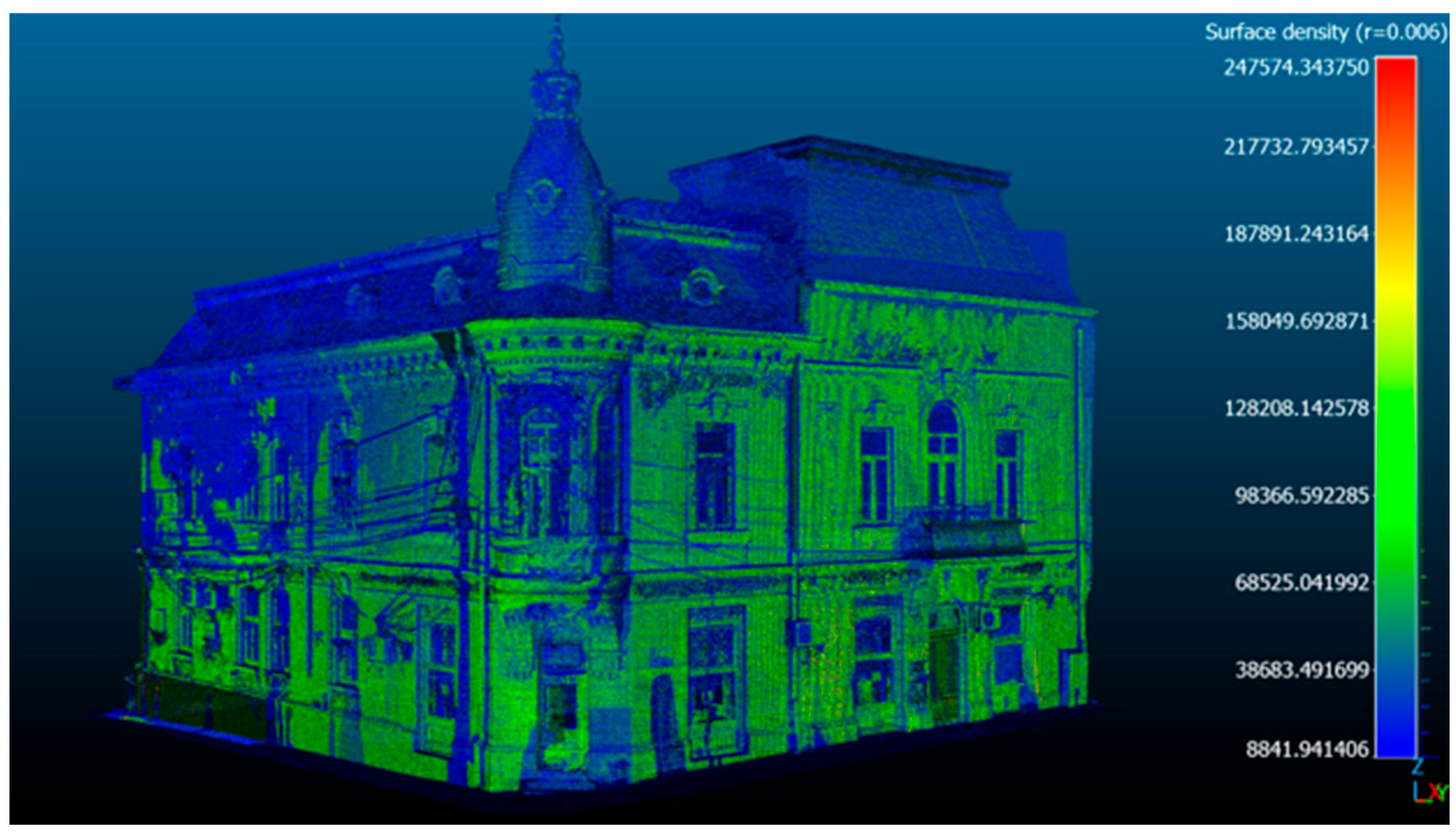
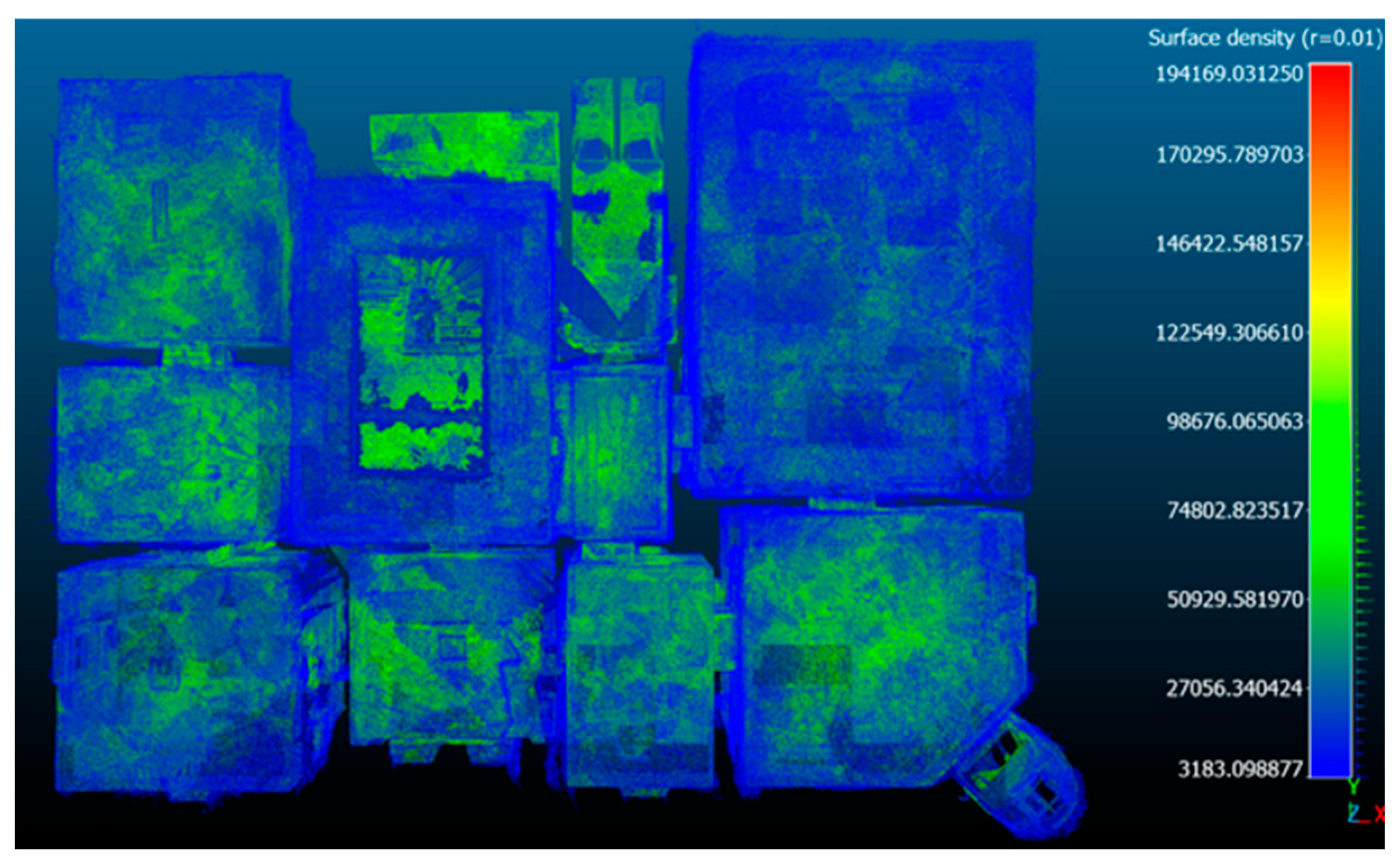
A surface density analysis was performed to evaluate coverage uniformity and acquisition quality. Surface density reflects the sampling distribution and acquisition geometry and does not reflect the physical state of the surface. The resulting map highlights areas of relatively high (yellow-green) and low (blue) point density. This allows areas where the point cloud is less dense or potentially affected by occlusions and acquisition geometry to be identified. This step is important because it provides an indicator of the quality and reliability of the 3D representation and subsequent surface analysis (
Figure 22).
Areas of low density are primarily found around architectural niches, window frames, and decorative elements. Visual field limitations and scanning angles influenced data acquisition in these areas, but no data loss or acquisition errors were indicated. Overall, the density distribution provided sufficiently homogeneous coverage of the façade for diagnostic and documentation purposes. The reliability of the geometric analysis is supported by the homogeneity of the coating, but uniform preservation of the material is not implied.
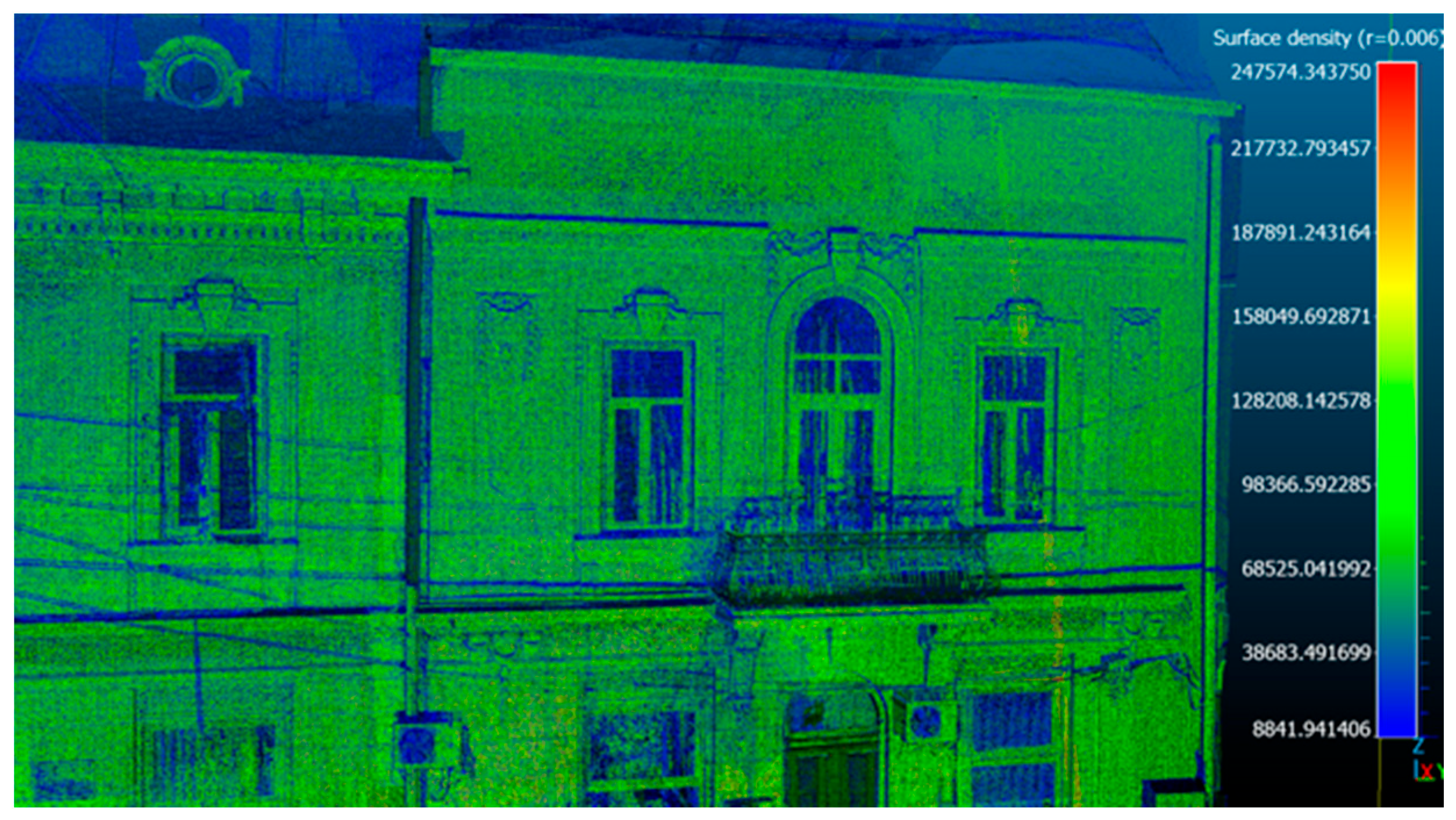
The view of eastern façade highlights the uneven distribution of density between the architectural elements. Higher density was evident on window frames, balcony edges and decorative cornices. In contrast, shaded or recessed areas exhibited sparser coverage due to partial occlusion and unfavorable scanning geometry. This localized analysis corroborates the broader conclusion that data integrity is affected by surface orientation and sensor perspective (
Figure 23).
A surface density analysis was performed on the interior point cloud obtained using the Matterport 3D camera. The results revealed a generally uniform density, with most areas falling within the green-blue range, which indicates a moderate to low concentration of points. Moderate densities (in shades of green) were observed near the walls and in the central areas, where the scanner had better visibility and coverage.
Areas of lower density (shown in blue) were mainly found in corners or shaded areas and were attributed to occlusion, reflective surfaces, or insufficient scan overlap.
This distribution is typical of indoor scans performed using structured light systems, where the quality of the point cloud is influenced by surface accessibility and ambient lighting conditions (
Figure 24).
Observations:
The areas of the façade that were near the TLS scanner exhibited the highest density.
The upper architectural elements, which were primarily captured by the UAV, exhibited a slightly lower point density.
The Matterport 3D camera generally produced high point density and uniform coverage of interior areas.
Density variations are indicators related to the acquisition process and should not be interpreted as evidence of degradation.
3.3. Mean Curvature
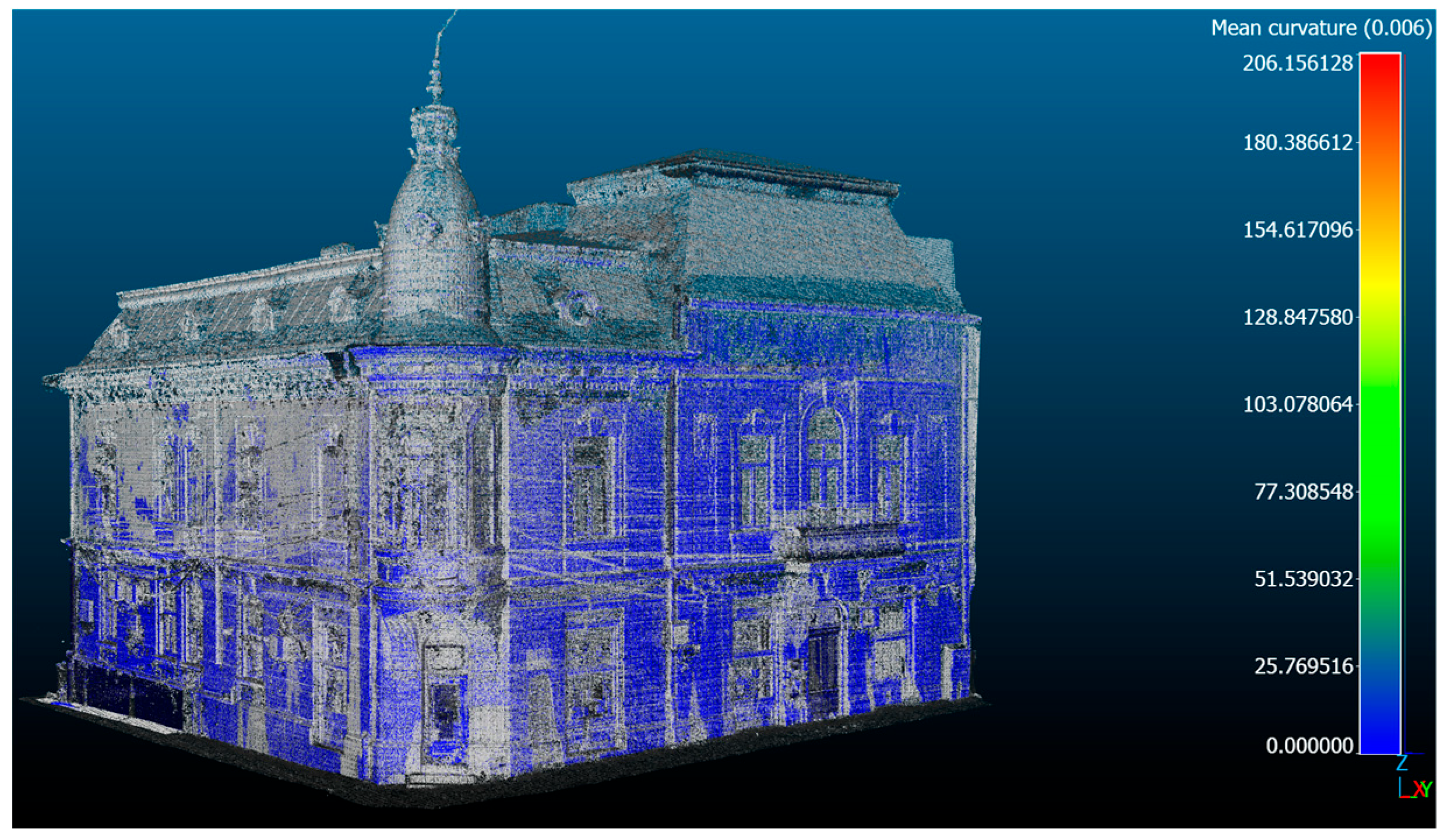
We used CloudCompare to also analyze the point cloud’s mean curvature. The average curvature represents local geometric variations, but does not directly quantify deformation magnitude. The mean curvature reveals local geometric changes, edges, and potential zones of deformation. The resulting scalar field highlights zones of high curvature (red), which correspond to sharp edges, cracks or ornamented details, as well as zones of low curvature (blue), which correspond to flat regions. This information is useful because it helps us identify areas that are at risk of becoming damaged. It also helps us plan the restoration process (
Figure 25). These indications are geometric in nature and should be interpreted as indicators of surface conditions rather than as structural assessments.
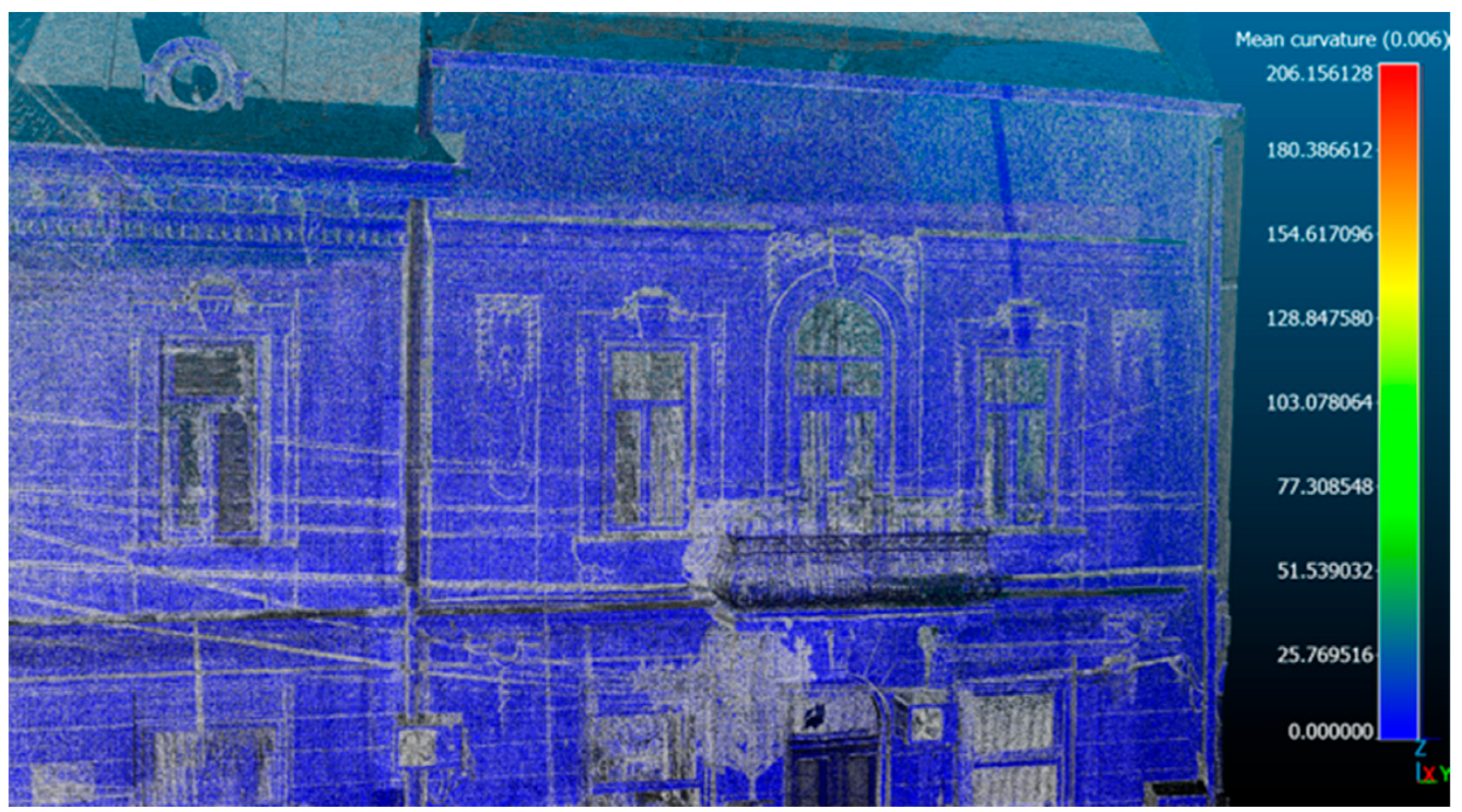
The curvature map of the eastern façade shows that most areas are structurally stable. This observation concerns the geometric regularity of surfaces, not technical stability. However, slight deviations were visible in a few areas, near the upper decorative elements and under the main cornice, although no significant patterns of deformation or displacement were evident. The accentuated curvature around architectural junctions or joints indicates areas that should be monitored for potential future detachment or structural weakness (
Figure 26).
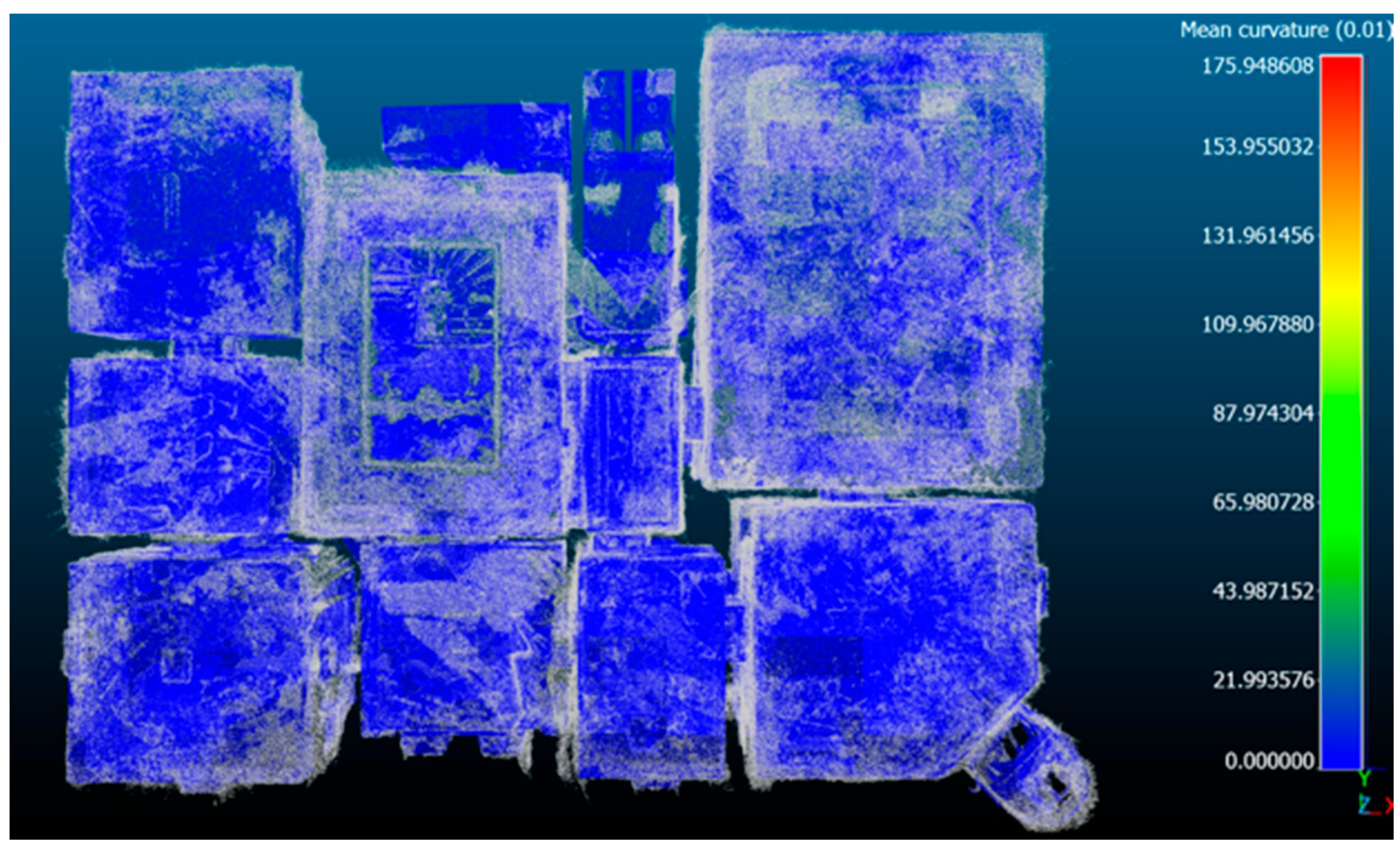
A curvature analysis was performed on the interior point cloud to detect any geometric discontinuities. Most surfaces exhibited low curvature values (shades of blue), indicating that the walls and ceilings were flat or slightly curved. High curvature values (shown in yellow and red) were rare and only occurred along a few sharp architectural details, such as window frames and corners. This suggests that most interior surfaces are regular and well-preserved (
Figure 27).
Observations:
The presence of sharp edges on decorative cornices and moldings was noted.
Curvature anomalies were observed in areas exhibiting minor plaster loss.
There were not significant deformation or displacement patterns visible.
High curvature values were concentrated around door and window frames on interior walls. This confirms the geometric integrity of these architectural details.
Most interior surfaces showed low curvature, indicating flat or slightly curved geometry, which is consistent with the planned room layout and finishes.
Curvature-based observations describe geometric continuity. They also describe edge definition. However, they do not describe material integrity.
3.4. Planarity
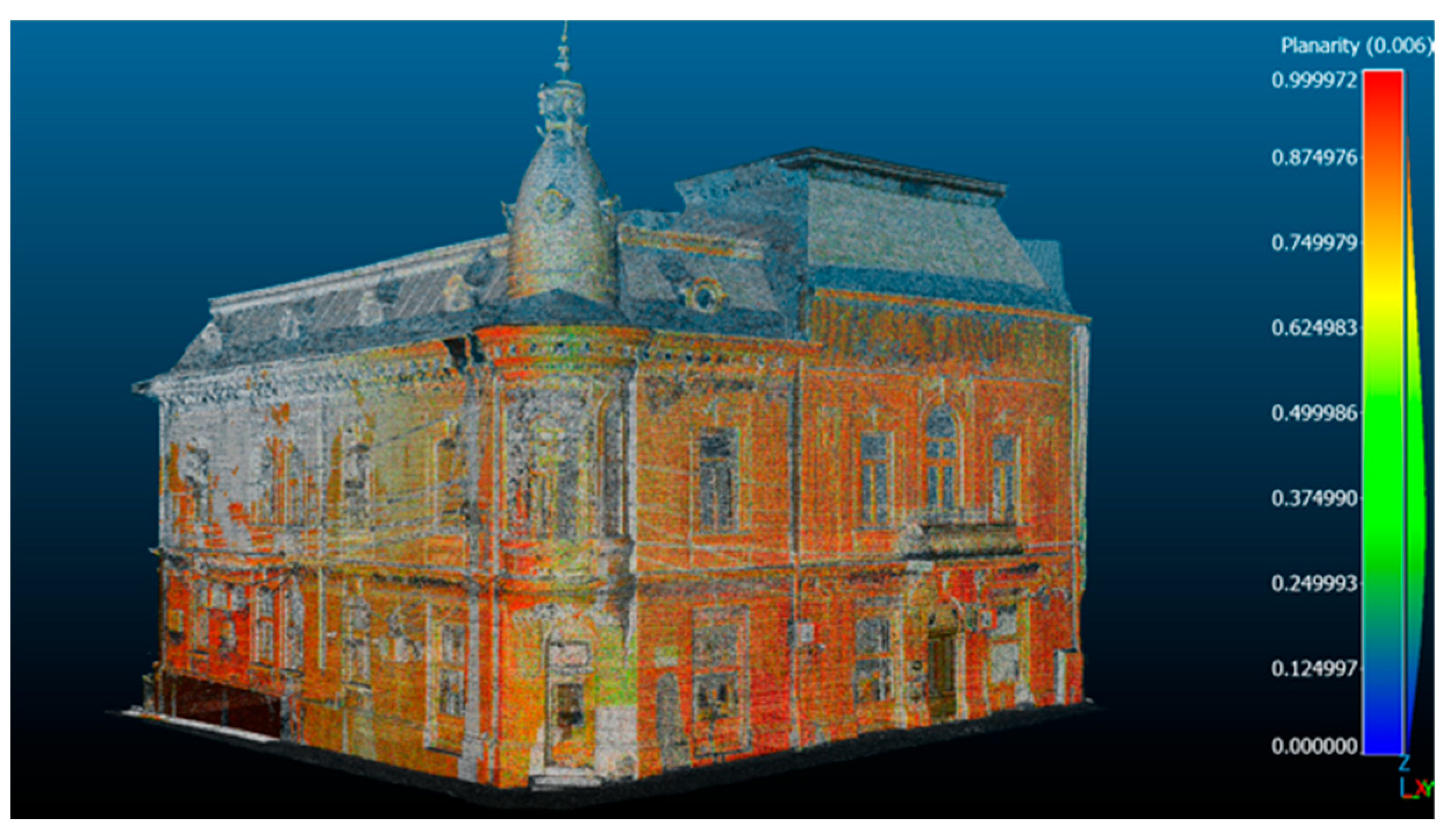
The planarity scalar field was used to evaluate the flatness of the building’s surfaces. Planarity indicates geometric flatness, but does not directly measure structural deformation. High values in red show that the flat areas, like walls, are still in good shape. Low flatness values (shown in shades of green and blue) suggest surface irregularities, local deformations, or the presence of architectural details. This measurement is important for identifying damaged surfaces or minor structural problems (
Figure 28). These indications are related to surface geometry and should be viewed as diagnostic clues rather than technical assessments.
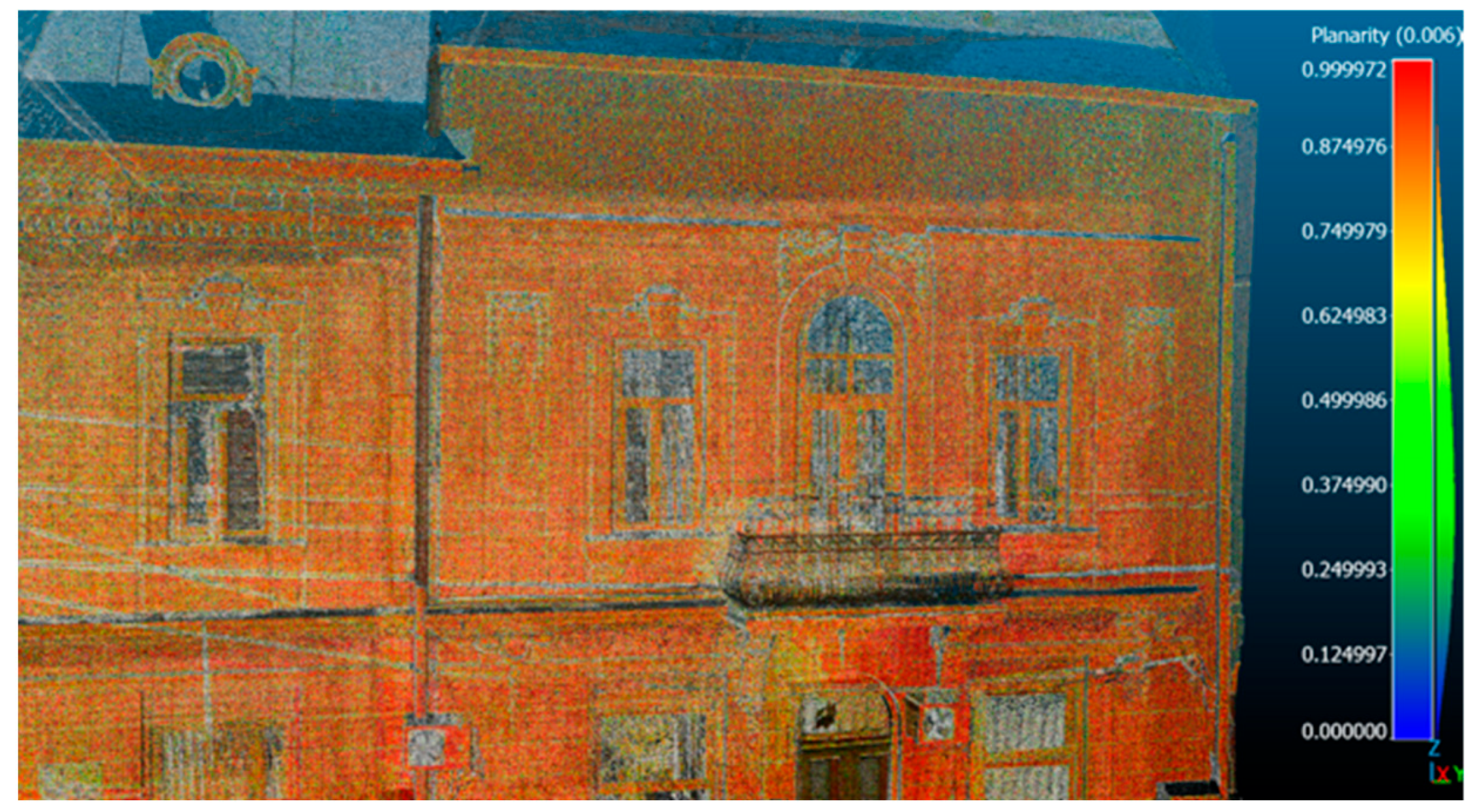
The planarity map of the eastern façade indicates a high degree of flatness on the wall surfaces indicated by the red and orange colors. This suggests that the façade has not changed significantly over time. However, moderate reductions in flatness (shades of green and yellow) could be seen around the balcony slab and its supporting elements, near the windows, and at the base of the façade (
Figure 29).
Overall, the flatness analysis confirms that the eastern façade is structurally stable. This refers to the geometric regularity of the measured surfaces and not their load-bearing performance. Surface irregularities are mainly related to architectural details, natural aging, and localized deterioration of materials rather than critical structural issues. These results demonstrate the effectiveness of flatness-based indicators for the non-invasive assessment of façade condition and long-term monitoring within a digital twin system.
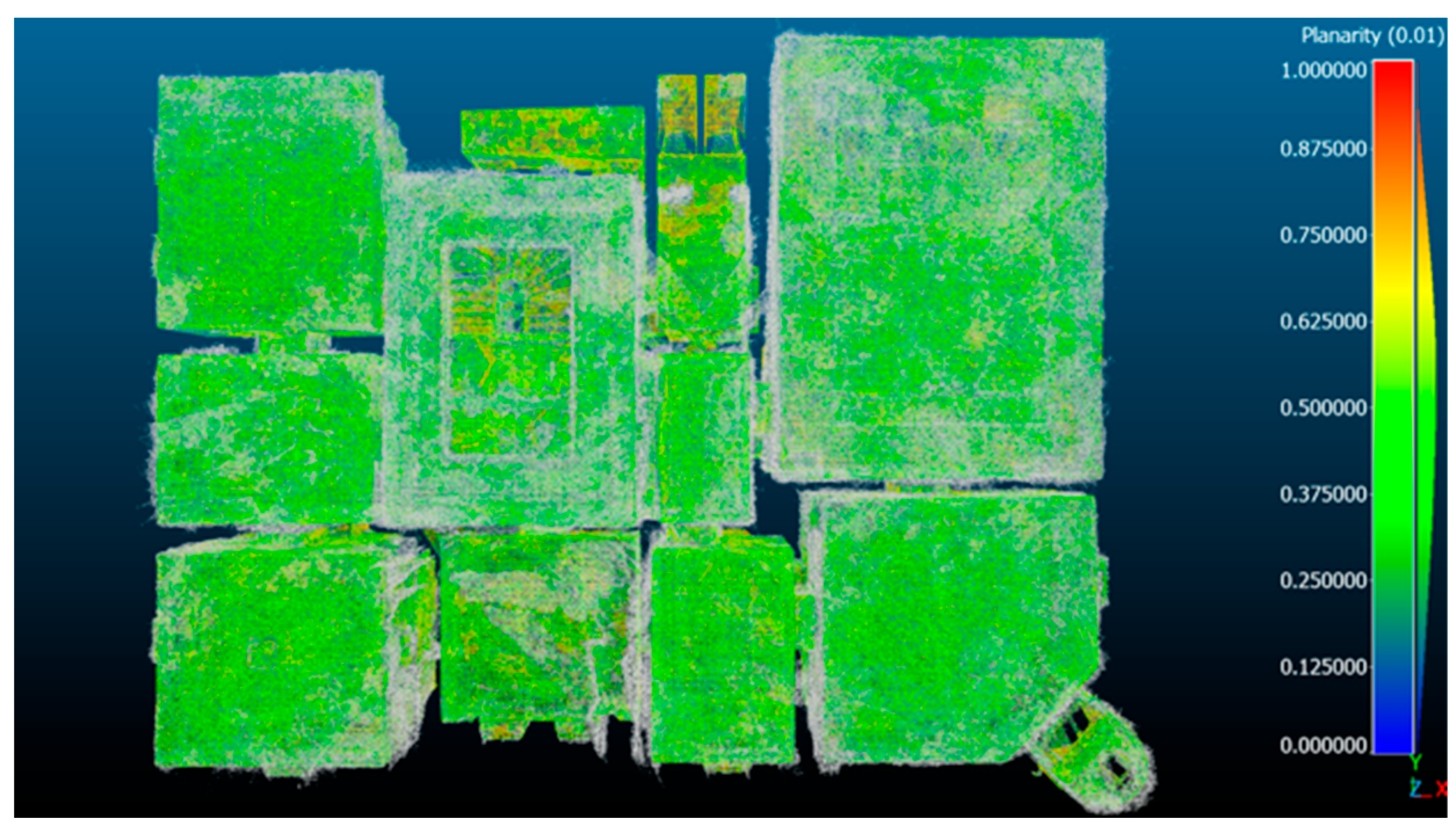
The planarity of the interior point cloud was analyzed to evaluate the flatness of the wall and ceiling surfaces. Most interior areas showed medium to high values of flatness (ranging from green to yellow), indicating generally flat and well-aligned surfaces. Lower values (blue) appeared in isolated areas, such as corners or areas that were obstructed during scanning, suggesting minor surface irregularities or occlusion artifacts. There was no evidence of extensive material or structural deformation in the dataset (
Figure 30).
These observations are limited to the geometry of the surface that was captured by the point cloud.
3.5. Linearity
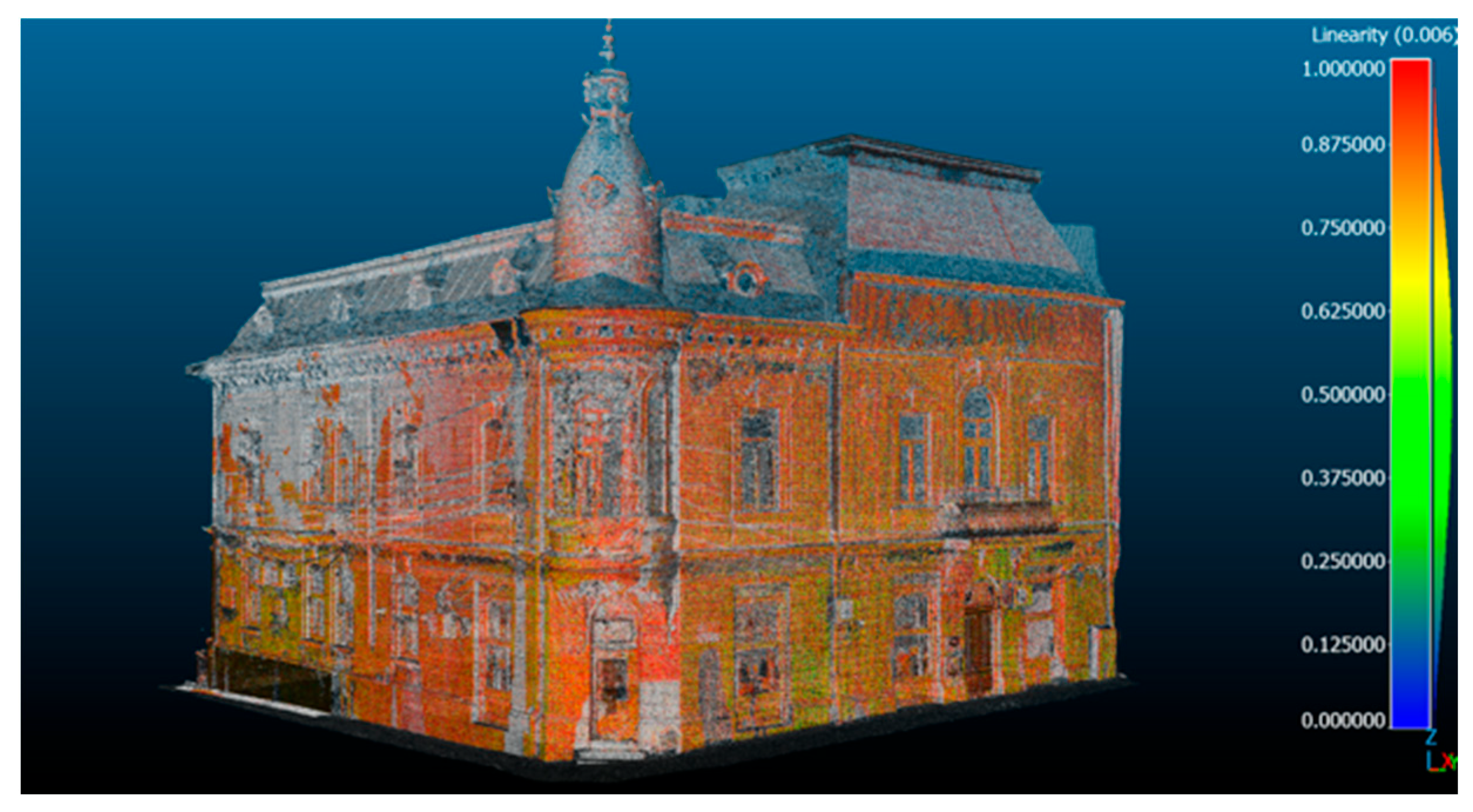
The linearity scalar field was used to detected minor deviations along decorative pilasters, window frame vertical lines, and long façade horizontal elements. Linearity is a geometric property that describes the continuity of edges. It does not quantify the accuracy of structural alignment.
High linearity values (shown in red) indicate well-defined edges and structural lines, while low values (shown in green) indicate irregular or noisy areas. This analysis helps to identify parts of the façade, like window frames, cornices and edges and can also show areas where the structural lines are distorted. This may suggest potential deformations or material loss. These deviations are small and likely not structural but associated with material aging (
Figure 31). These indications refer to geometric patterns on the surface and should not be interpreted as assessments of structural deformation.
The linear scalar field on the eastern façade revealed a well-preserved geometric structure characterized by high values distributed along the main vertical and horizontal architectural features. The decorative pilasters, window frames and cornice lines were clearly defined with sharp transitions and minimal geometric distortion. This indicates a high degree of preservation in terms of the regularity of the form. Slightly lower linearity values were observed in the lower part of the façade near the base and around the main entrance, where the irregularities of the plaster surface were more evident. These localized variations are more likely to be caused by older repair work, exposure to moisture, or erosion of the material’s surface than by structural deformation (
Figure 32). Despite these discrepancies, the linear consistency of the eastern façade suggests that the architectural alignments have remained intact, indicating that this area is representative of the building’s overall geometric stability. This statement reflects the geometric regularity of the measured surfaces, and not technical stability.
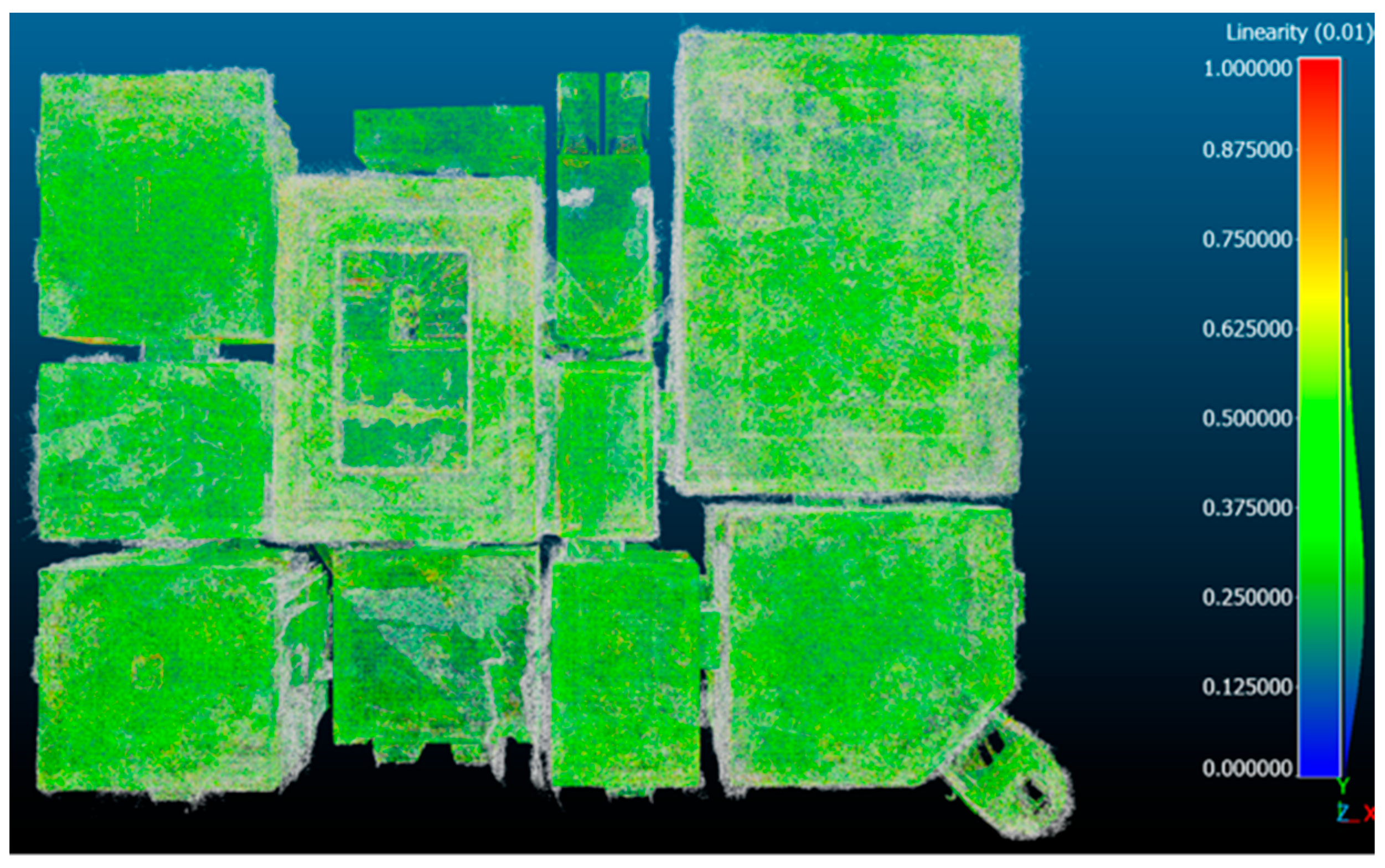
The linearity of the interior point cloud was analyzed to evaluate the preservation of straight edges and continuous architectural lines. The results show that most walls exhibited moderate to high linearity values (ranging from green to yellow). This indicates good geometric consistency overall. Higher linearity values (orange to red) were visible along door and window frames, structural corners and ceiling–wall transitions, which confirmed the presence of intact linear features. Areas with lower linearity values (shades of blue and green) were limited and typically corresponded to surface wear, minor plaster defects, or texture noise caused by light reflection or occlusions (
Figure 33).
Observations:
High linearity values were consistently observed on the exterior model along window frames, cornices, balconies and vertical pilasters. These confirm that the building’s architectural lines are well-preserved.
Minor reductions in linearity could be seen at the base of the walls, where the straight edges were slightly distorted by material wear and surface irregularities.
On the eastern façade, the high level of linearity along the window alignments and horizontal decorative bands indicates that the geometry is well-preserved.
Localized decreases in linearity were caused by imperfections in the plaster and variations in its texture and do not indicate major structural deformation.
Interior spaces generally had high linearity along door frames, wall intersections and ceiling edges. These reflect good geometric consistency in interior design.
Local reductions in interior linearity were usually caused by uneven plaster finishes, minor surface defects or background noise in areas with limited visibility rather than by structural distortions.
Overall, the geometric analysis confirms that the monument’s structural morphology is stable. The conclusions are limited to the geometric representation derived from the 3D topographic data.
The eastern façade, in particular, exhibited high geometric fidelity, with only minor surface irregularities indicating potential non-structural deterioration caused by atmospheric exposure or localized material fatigue. The consistent representation of linear and planar elements provides a solid foundation for diagnostic documentation and further digital twin modeling. These results validate the efficiency of the integrated scanning workflow and provide valuable information for future conservation strategies and structural assessments.
3.6. Surface Variation
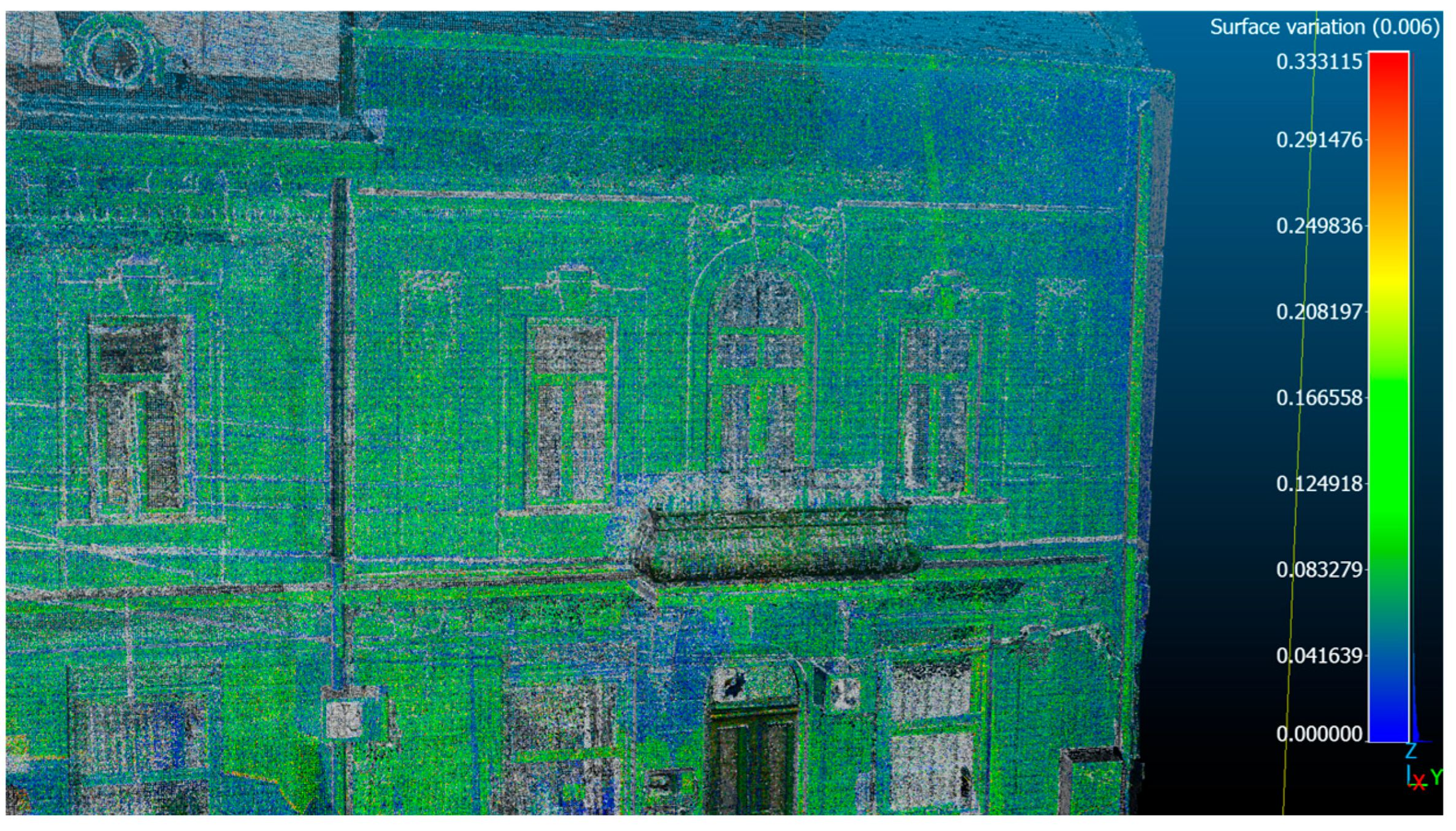
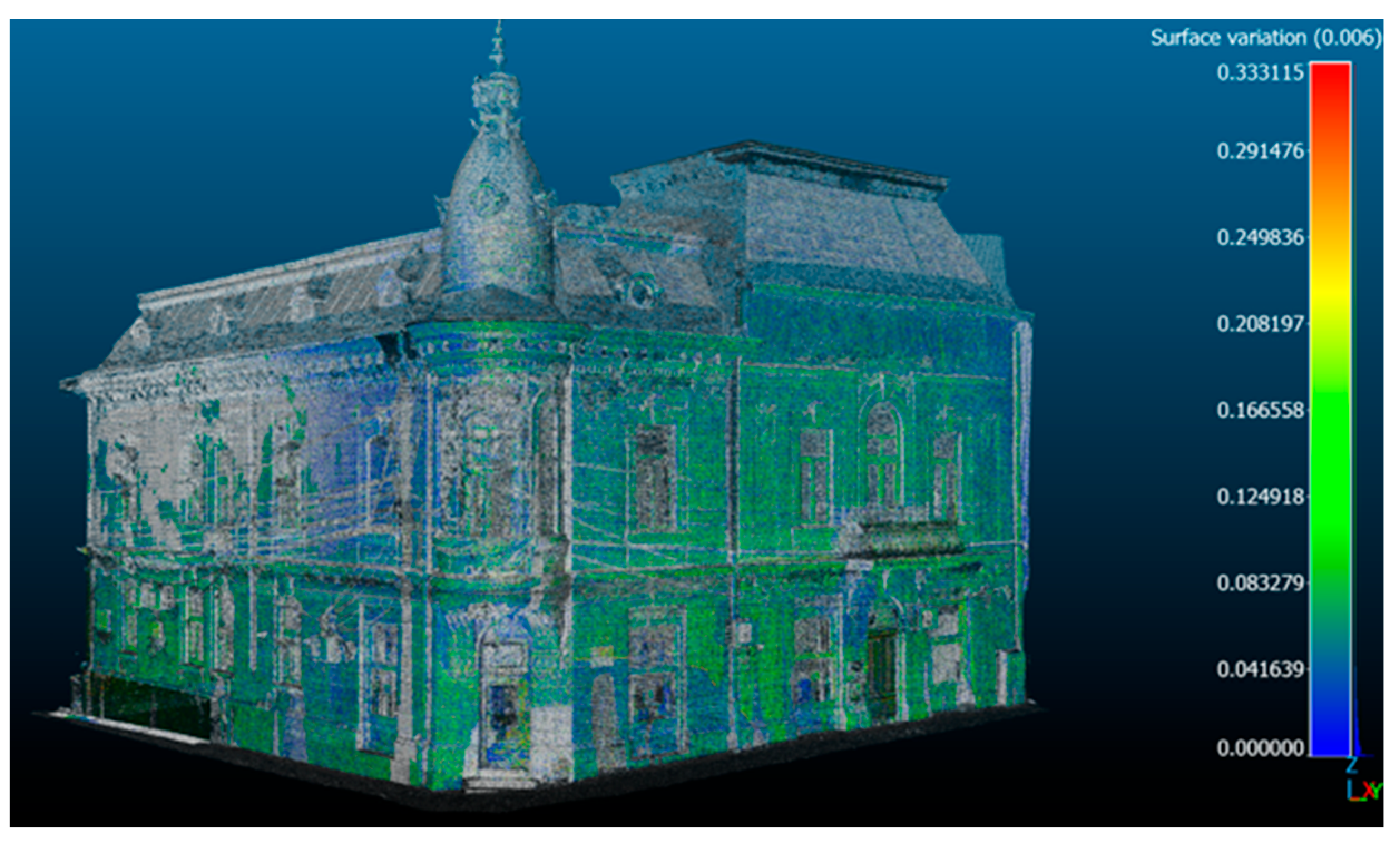
The surface variation scalar field was used to evaluate local irregularities in building surfaces, revealing small-scale deviations relating to surface texture, the aging of materials, and architectural detailing. Surface variation reflects the geometric irregularity on a local scale and does not directly quantify material loss or structural change.
Low values (shown in blue) indicate flat areas, such as walls or flat architectural elements, while high values (shown in yellow to red) indicate irregularities, noise, or damage. This helps find problems outside of a building (
Figure 34). These indicators should be viewed as clues to the condition of the surface, and not as definitive diagnoses of deterioration.
On the exterior model, the surface variation map showed predominantly low to moderate values, suggesting that most façade surfaces remain relatively uniform. Slightly elevated surface variation was observed around architectural details such as cornices, window frames, balcony edges, and sculpted elements, where geometric complexity naturally increases. These variations are primarily associated with decorative morphology and minor surface aging, rather than with significant material loss or erosion.
On the eastern façade, the surface variation pattern was homogeneous, with moderate values distributed across the plastered wall surfaces. Localized increases in surface variation were mainly visible around window surrounds, decorative moldings, and the balcony area, reflecting surface texture changes and minor plaster irregularities. No extensive zones of high surface variation indicative of advanced deterioration were observed (
Figure 35). This observation refers to the geometric behavior of the surface. The surface is captured in the point cloud.
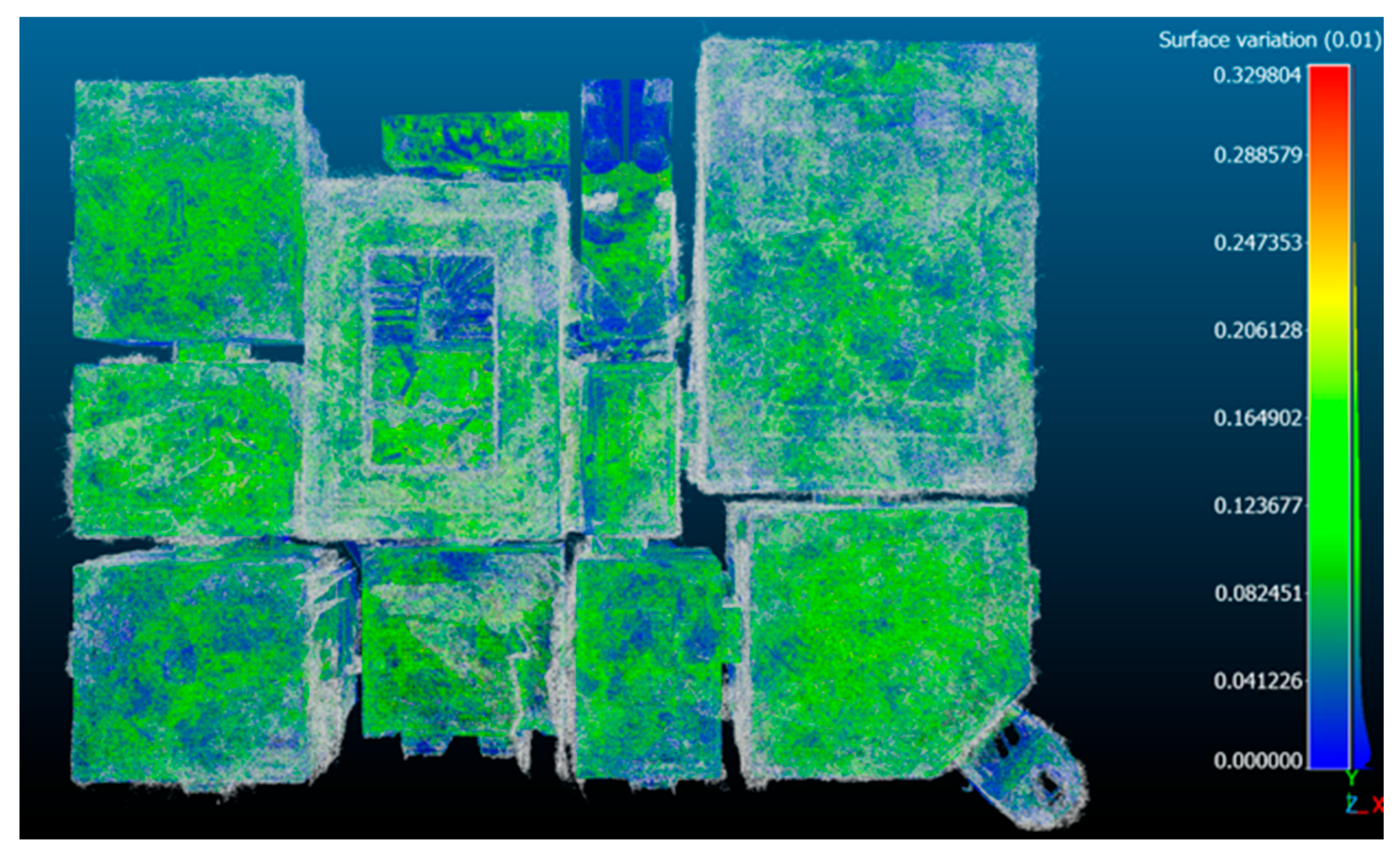
This analysis quantifies local irregularities in surfaces by calculating the variation in normal vectors within a defined area. Higher values (shown in yellow and red) indicate textured or uneven surfaces, whereas lower values (shown in shades of blue) correspond to uniform, flat regions (
Figure 36).
Observations:
On the exterior, the surface variation values were generally low to moderate. These indicate good surface continuity and limited material degradation.
Higher surface variation values were mainly found in decorative architectural elements. These elements were found in decorative architectural elements and façade details.
On the eastern façade, the surface remains relatively uniform, with localized increases associated with variations in the plaster texture and ornamental features.
The detected surface irregularities were minor. These are consistent with natural aging processes and do not indicate structural damage or advanced material loss. A structural assessment requires engineering investigations that go beyond geometric indicators.
In terms of interior spaces, surface variation values were predominantly low to moderate, reflecting generally smooth plastered walls and good preservation.
Higher values were mainly observed around door frames, corners and decorative elements, as well as in areas affected by minor surface wear or previous maintenance interventions.
Irregularities in interior surfaces remain limited, suggesting no significant structural deformation or serious material deterioration.
Overall, the surface variation analysis confirms that the building surfaces are in a stable state of conservation, with only minor and localized irregularities related to architectural detailing and material aging. This supports the use of this indicator for non-invasive surface assessment and long-term monitoring. Although surface variation analysis supports qualitative surface evaluation, it does not replace material or structural evaluation.
3.7. Ground-Truth Validation of Degradation Indicators
To ensure that the geometric anomalies detected through roughness, curvature and cloud-to-cloud distance analyses corresponded to real physical deterioration, a ground-truth validation survey was conducted. The purpose of this validation was to confirm the presence and characteristics of the degradations identified in the digital model. The validation process focused more on visual correspondence and surface condition than on the quantitative measurement of the material.
The building was inspected in representative areas of the façade where the automatic analysis had indicated the presence of potential cracks, surface irregularities, or plaster detachment. For inspection, we used 60 high-resolution images captured with the Nikon DSLR camera that was mounted on the RIEGL VZ-400i TLS.
This approach confirmed the micro-cracks, surface roughness, minor plaster detachments, and localized material losses that had been digitally identified (
Figure 37 and
Figure 38).
Based on photographic evidence and micro-photogrammetry, the digital identification of deterioration was confirmed to be actual physical damage. Confirmation refers to visible changes on the surface without implying an evaluation of the material’s structural depth or properties.
The validation process showed the following:
A robust correlation has been identified between digital anomalies and actual defects;
TLS roughness maps can show uneven plaster and micro-cracks;
Curvature maps correlate with wear on decorative elements;
UAV-derived roof anomalies were slight depressions in the material.
The correlation is interpretive and based on the spatial coincidence of geometric indicators and photographic evidence. These results show that the 3D representation made from different sources is a good way to record the diagnosis and can be used as a reference before restoration.
After the data had been validated, an additional cross-validation step was performed using the Twinspect platform with the help of AI.
3.8. AI-Assisted Cross-Validation of Detected Anomalies (Twinspect)
The Twinspect results were compared with the areas of anomaly derived from the point cloud’s scalar fields, as well as with the Nikon DSLR photographic dataset. AI-based detections showed a high degree of spatial correspondence with roughness and curvature hotspots on roof surfaces where corrosion-related degradation was visually apparent. This correspondence indicates visual consistency, and does not show quantitative validation of the degree of degradation. However, no AI detections were recorded on the side facades, despite the presence of geometric anomalies identified by roughness and surface variation analyses. This behavior reflects the specificity of image-based AI models and their sensitivity to material-dependent visual signatures rather than an absence of surface degradation. Minor discrepancies were observed in areas affected by deep shadows, reflective surfaces, and poor image quality, which impacted the performance of image-based detection (
Figure 39).
The application of combined deviation metrics to the merged TLS–UAV–Matterport dataset led to the successful identification of localized surface irregularities, minor geometric discontinuities, and subtle patterns of degradation on the interior and exterior of the monument. The identification of micro-cracks, plaster detachment, and minor surface deformations was facilitated by the measurement of roughness, curvature, flatness, linearity, and surface variation. Such indicators are indicative of early-stage deterioration.
Cloud-to-cloud distance analysis revealed excellent geometric consistency between the sensors, with typical deviations of ±1.5 cm. These deviations reflect geometric alignment between the sensors and do not indicate structural deformation. Visual inspection confirmed that the structural lines, façade planes, and roof geometry were consistent across all data sources.
The deviation analyses and validation procedures demonstrate that the integrated 3D dataset provides an accurate and reliable assessment of the current condition of the Casa Rusănescu. The dataset can also be used as a pre-restoration baseline. This baseline will be used for future monitoring and conservation planning.
The findings of this study suggest that Casa Rusănescu is stable. This statement refers to observations of the surface condition based on geometric indicators and visual inspection, and not a structural engineering assessment. There is no evidence of significant structural deformation or advanced material degradation. This conclusion is supported by an analysis of deviation indicators and on-site validation. The detected anomalies are considered minor and localized. The primary observed defects are minor fissures, slight plaster detachment, surface roughness, and limited weathering on decorative elements. These types of damage are consistent with the building’s natural aging process and previous renovations. Currently, there is no compromise to the building’s structural integrity. However, without monitoring, micro-defects, particularly along the plinth, window edges and cornices, could worsen over time. It is imperative to emphasize the significance of undertaking regular 3D documentation and maintenance procedures.
Geometric indicators derived from scalar field analysis express surface conditions associated with known material degradation processes. For example, increased roughness values may indicate plaster exfoliation, moisture-induced surface alteration, or granular disintegration. Local reductions in flatness may indicate previous repair layers or minor surface detachments, rather than structural deformation. Curvature anomalies around decorative elements are consistent with material loss at edges exposed to weathering. These interpretations link geometric patterns to plausible deterioration mechanisms, but they remain limited to surface manifestations observable in the point cloud.
4. Discussion
The combination of TLS, UAV photogrammetry, and 3D camera interior scanning was effective in generating comprehensive, diagnostic 3D documentation for diagnostic purposes of Casa Rusănescu. This approach captured the historic monument’s full geometric complexity, enabling multi-scale analysis of architectural elements, façade conditions, interior volumes, and roof structures.
This section discusses the strengths and limitations of the multi-source workflow, as well as the implications of geometric deviation analyses. Additionally, it contextualizes the methodology within broader frameworks, such as heritage conservation and digital twin development.
The discussion focuses on operational integration rather than on demonstrating the superiority of individual detection technologies. The results demonstrate how datasets with different levels of geometric accuracy can be integrated into a single diagnostic framework, addressing the methodological gap identified in the introduction. Unlike studies that treat exterior survey data and interior reconstructions separately, this workflow evaluates the two in terms of their geometric continuity and diagnostic utility.
This approach primarily contributes at the methodological level by clarifying how to combine heterogeneous datasets without confusing visualization quality with metric reliability. Therefore, the emphasis is on workflow design, parameter transparency, and practical constraints rather than on benchmarks of absolute accuracy.
4.1. Advantages of the Multi-Source Approach
4.1.1. Complementarity of Sensors
Each sensor had unique advantages that compensated for the limitations of the others. The concept of complementarity is more closely associated with the extent of spatial coverage and the ease of data utilization than it is with direct performance comparisons between sensors. Their combined use enabled the generation of a complete and coherent 3D model for heritage documentation, and was adapted as follows:
TLS ensured high geometric accuracy, precise capture of vertical façades, and clear reconstruction of decorative motifs, structural lines and architectural edges.
UAV photogrammetry enabled complete visibility of roofs and upper façades, access to elevated or obstructed details that TLS could not observe, and robust texturing and mesoscale geometric continuity.
The Matterport 3D camera offered detailed information about the interior of a building and accurately recreated the building’s layout and interior finishes.
Rather than showcasing new capabilities, this study concentrated on effectively applying and integrating well-established techniques into a unified workflow designed for the documentation and diagnostic needs of built heritage. The practical implementation of these techniques confirmed their complementary nature, resulting in improved geometric consistency and precise alignment between the exterior and interior datasets.
These components are essential for implementing a digital twin; their role is to ensure geometric continuity and interpretability of the diagnosis in a multi-resolution setting rather than ensure uniform measurement accuracy.
4.1.2. Robust Spatial Coherence
The RMSE values between the datasets confirm that the alignment process produced a suitable integrated model for deviation-based interpretation. These RMSE values describe geometric agreement between datasets and should not be interpreted as measurements of absolute accuracy or structural displacement. This is crucial for heritage diagnostics.
4.1.3. Diagnostic Enhancement
The multi-sensor fusion improved:
The identification of minor irregularities in the façade using roughness and flatness indicators;
The identification of anomalies on decorative elements;
The analysis of roof deformations using UAV-based geometry;
The interpretation of interior–exterior continuity for structural assessment.
These improvements are more related to geometric surface diagnosis and spatial context enhancement than to direct structural assessment.
These integrated diagnostics exceed the capabilities of any individual sense of modality. The improvement refers to integrative interpretation and coverage and does not refer to greater measurement accuracy on the sensor.
4.2. Interpretation of Geometric Deviation Indicators
Deviation analyses were applied to the combined dataset, which included roughness, curvature, flatness, linearity, and surface variation analyses. This provided a detailed picture of the monument’s physical condition. These indicators describe the surface’s geometric behavior and support diagnosis interpretation, but they do not directly quantify material properties or structural performance.
4.2.1. Roughness and Surface Texture
Rough values correlated with known vulnerable areas:
The plinth showed greater roughness due to moisture, weathering and mechanical abrasion;
The upper cornices showed micro-regularities consistent with exposure to rain and temperature gradients;
Interior roughness indicated areas of deterioration due to wear and tear or previous repairs.
These correlations are based on spatial coincidence between roughness patterns and visual characteristics, and not on the direct testing of materials.
The observed patterns are indicative of early-stage degradation. However, they do not suggest structural instability. The assessment was based on surface condition indicators derived from geometric data.
4.2.2. Curvature and Planarity Deviations
The curvature metrics are accurately highlighted:
The façade is distinguished by its intricate detailing and also has reliefs;
It is evident that there is a correlation between minor areas of deformation and minor settlement effects, both indicators of subsidence;
The presence of discontinuities was also observed. These discontinuities were in the vicinity of decorative elements.
These interpretations are based on the surface’s geometric behavior and should be considered indicative, and not geotechnical assessments.
Planarity maps revealed the following:
Plaster detachments are present on the façade surfaces;
The presence of uneven wall surfaces indicates that the wall had been previously restored;
There was a slight unevenness in the entrance area, possibly because it had been renovated several times.
Although planarity deviations suggest surface irregularities, they do not directly measure the depth of detachment or material properties. These observations are consistent with known architectural interventions and visual inspections. Consistency refers to visual and geometric correspondence rather than structural diagnosis.
4.2.3. Linear and Surface Variation Patterns
Linearity analysis revealed only minor deviations in the windows, pilasters, and horizontal structural lines. This suggests that the primary geometry has remained stable.
Surface variation maps revealed irregularities in the decorative plaster and transitions in the façade. The term “stability” refers more to the geometric continuity of measured surfaces than to structural performance.
These findings provide measurable evidence for restoration planning. While these indicators support the interpretation of surface conditions, they do not replace material testing or structural evaluations.
4.2.4. AI-Assisted Cross-Validation of Geometric Anomalies
The results of the AI-assisted inspection were used to validate the geometric deviation indicators derived from the point cloud analysis. This validation reflects the spatial consistency of the detection approaches rather than a quantitative evaluation of the AI system’s performance. Image-based detections showed clear spatial correspondence with areas of roof surfaces exhibiting high roughness and curvature values, where corrosion-induced degradation was visually evident.
In contrast, no AI detections were identified on the side facades, despite the presence of geometric anomalies ascertained through roughness and surface variation analyses. This reflects the sensitivity of AI models to materials, indicating their dependence on visual texture and contrast rather than suggesting an absence of surface degradation.
These findings confirm that geometry-based indicators are highly effective in identifying subtle patterns of early-stage degradation. The effectiveness of the process is determined by the ability to detect surface condition patterns within the dataset, not by the exhaustive identification of damage. Meanwhile, AI-assisted image analysis is a useful tool for validating visible types of damage.
Integrating AI-assisted inspection into the proposed diagnostic workflow emphasizes the complementary nature of geometry- and image-based approaches. Scalar fields derived from the point cloud, such as roughness, flatness and curvature, are sensitive to subtle geometric irregularities and surface deformations. In contrast, AI-based detection primarily relies on material-dependent visual signatures captured in calibrated images. Consequently, AI-assisted validation confirmed the presence of corrosion damage on the metal roof surfaces, where geometric anomalies and a strong visual contrast were evident.
Furthermore, comparing UAV datasets of different quality levels showed that AI performance depends strongly on image resolution, coverage density, and lighting conditions. Higher-quality UAV images resulted in a greater number of features bei+ng detected, whereas low-resolution datasets limited the applicability of AI-based inspections. These findings confirm that AI-assisted tools should be used to support screening processes and must be combined with expert geometric analysis to ensure reliable heritage diagnosis.
AI-assisted results are only indicative and require expert interpretation in conjunction with geometric analysis.
In this study, AI-assisted inspection functioned more as a complementary screening layer than an independent diagnostic tool. It helped identify visually detectable damage patterns and assisted with semantic annotation. However, its results depend on image quality, lighting conditions, and material-specific visual contrast. Therefore, AI-based detections are considered indicative overlays that require confirmation through geometry-based analysis and expert evaluation.
4.3. Challenges and Limitations
Although the workflow was efficient, it encountered several limitations that are typical of urban heritage documentation.
4.3.1. Access Restrictions
The dense urban environment and administrative constraints limited data collection:
Narrow side spaces restricted the distribution of TLS position;
Matterport access was not possible in six sealed rooms;
Pedestrian traffic and obstacles in the surrounding area also limited the maneuverability of the UAV.
These factors required adaptive planning and limited the range of available capture angles. Although these constraints affected the geometry and coverage of the acquisition, they did not compromise the overall diagnostic continuity of the integrated model.
4.3.2. Sensor-Specific Constraints
The sensors in question are subject to the following specific constraints:
It has been observed that the Matterport Pro2 3D camera encounters difficulties when confronted with highly reflective surfaces, poorly lit environments, and intense sunlight;
It has also been observed that the accuracy of UAV photogrammetry diminishes when mapping steep vertical walls;
It has also been observed that issues related to the line-of-sight of the TLS protocol result in occlusion areas behind recessed facade elements.
Despite these limitations, multi-source fusion demonstrated a capacity to mitigate most of these deficiencies. Although merging mitigates coverage gaps and interpretation limitations, it does not eliminate the intrinsic measurement constraints of individual sensors.
4.3.3. Data Volume and Computational Load
The combined point cloud of 235,036,632 points required:
A large amount of memory (up to 32 GB of RAM);
A substantial processing time;
A meticulous administration of intermediate files;
A separate treatment of interior and exterior networks.
This is possible with a high-performance workstation, but it also shows the challenges of creating a digital twin that uses multiple sensors. These requirements depend on the dataset’s density and the hardware configuration. Therefore, they should be interpreted as case-specific rather than as universal constraints.
4.3.4. Limitations of AI-Assisted Inspection
The AI-assisted inspection component introduced several additional constraints related to the image-based nature of detection models:
The performance of AI algorithms is heavily dependent on the quality, resolution, and viewing geometry of UAV images.
It was found that effectiveness is reduced on vertical façade surfaces where unfavorable acquisition angles, shadow effects, and limited visual contrast restrict the detectability of degradation patterns.
It was also found that the number of AI detections is influenced by image density and lighting conditions and therefore should not be interpreted as a direct indicator of the severity of damage.
Consequently, AI-assisted inspection was used exclusively as a complementary validation tool that required expert interpretation alongside geometry-based analyses.
Manual annotation within the Twinspect platform has proven useful as a tool for expertise-based validation and semantic enrichment. It confirms the location and typology of visually observable degradation identified through geometry-based analyses. It also supports digital twin-oriented documentation and monitoring while not replacing quantitative diagnostic methods. Although AI-assisted inspection supports visual screening and semantic labelling, it is not an autonomous diagnostic system.
4.3.5. Limitation Related to Degradation Assessment
While the proposed multisensory workflow facilitates detailed geometric documentation and the identification of surface anomalies, this study did not seek to provide a definitive assessment of the structural severity of the observed degradation. Interpretation of roughness, curvature, flatness and surface variation patterns is limited to their geometric expression within the point cloud. A comprehensive evaluation of the causes, progression, and structural implications of these forms of deterioration requires the combined expertise of civil and structural engineering specialists. This interdisciplinary input is essential for distinguishing between superficial material deterioration and potential structural issues and for making informed decisions about restoration and conservation.
4.4. Comparison with Related Studies
The results are in line with international research that shows the value of using TLS-UAV workflows for heritage monitoring. The comparison is conceptual and methodological. It focuses on workflow structure and data integration rather than a direct evaluation of comparative performance. A third modality was introduced in this study: interior scanning with the Matterport Pro2 3D camera. This builds on the approaches that were previously mentioned. Compared to previous studies that focused on facades or exterior geometry, this work makes the following contributions:
The concept of full exterior-interior integration;
The application of a scalar diagnostic field at building-scale resolution;
Thorough validation of sensor consistency;
A dataset prepared for implementation in digital twin workflows;
The integration of AI-assisted as an additional validation method.
The novelty lies in the operational integration of different types of data into a diagnostic framework, rather than in the introduction of a new detection technology.
The fusion methodology and diagnostic interpretation are in line with the concepts of contemporary HBIM, multi-temporal documentation, and risk assessment.
4.5. Implications for Restoration and Digital Twin Development
The final integrated model serves as an extremely accurate reference for the following:
The pre-restoration assessment;
The mapping of the materials’ condition;
The structural behavior of the subject is assessed;
The subsequent periodic scanning;
The semantic enrichment for HBIM;
The long-term monitoring of digital twins;
The utilization of virtual reality (VR) and augmented reality (AR) for the purpose of visualizing public heritage;
The integration of AI-assisted inspection results as a supplementary decision-support layer.
The model’s reference role focuses more on geometric documentation and tracking surface conditions than on structural engineering assessments.
As restoration is scheduled for 2026, the dataset will provide an essential geometric reference base that will enable the following:
The comparison of pre- and post-intervention conditions;
The detection of potential long-term deformation trends;
The incorporation of temporal environmental data.
Therefore, this methodology enables immediate conservation decisions to be made and supports the future management of digital heritage. These decisions concern documentation-based planning and monitoring rather than the design of direct structural interventions.
This workflow can be expanded to include spatial layers related to risk, such as areas at risk of seismic activity, indicators of urban pressure, and indices of climate vulnerability, to support a comprehensive, GIS-based risk assessment strategy.
Integrating data from multiple sources improves the robustness of diagnostics, enabling the multi-scale interpretation of degradation patterns. Topographic-quality exterior data capture the microgeometry of the façade and structural edges. UAV data ensure the continuity of the roof and upper façade at the mesoscopic scale. SLAM-based interior reconstruction ensures volumetric consistency. This layered approach enhances the interpretability of building components while maintaining awareness of sensor-specific limitations.
5. Conclusions
This case study demonstrates the effectiveness and reproducibility of using a combination of LiDAR (TLS), UAV (drone) photogrammetry, and 3D cameras to document the deterioration of historical monuments. Accuracy refers to the geometric documentation and interpretation of the surface conditions obtained from 3D topographic data. The Casa Rusănescu study identified and classified various types of deterioration, thereby confirming the method’s applicability prior to restoration work.
This study presents a complete, step-by-step process for documenting, analyzing, and diagnosing the historic Casa Rusănescu monument. This methodology integrates terrestrial laser scanning (TLS), unmanned aerial vehicle (UAV) photogrammetry, and 3D camera scanning. These techniques, used together, achieve a level of geometric completeness and diagnostic accuracy that is unattainable using single sensor approaches alone. This is about the ability and range of integrative diagnosis, and not about perfect measurement accuracy.
In addition, a complementary validation step in the form of an AI-assisted, image-based inspection layer was integrated. This supports the interpretation of geometry-derived degradation indicators and visually confirms expressive damage patterns.
Furthermore, the methodology can be expanded to include risk assessment applications by incorporating the generated 3D models into geographic information systems (GISs). These systems can then be used to map and quantify structural vulnerabilities. Although these analyses provide a spatial context for risk modeling, they do not replace technical assessments.
This approach facilitates the transition from documentation to preventive conservation. It facilitates the early identification of at-risk areas and supports informed decision-making in heritage management. Supported decisions are related to documentation-based planning and monitoring, which are essential for effective decision-making.
A supplementary assessment by civil or structural engineering experts is required, as geometric indicators alone cannot fully characterize the behavior of materials, load-bearing capacity, or hidden structural conditions.
After the renovation works, it is necessary to create and integrate the 3D model of the historical monument Casa Rusănescu in virtual reality for both tourist promotion and monitoring its behavior over time.
As a further stage of the research, pre- and post-restoration models will be compared and integrated into a digital twin system for monitoring purposes, and then a hologram of the historical monument Casa Rusănescu will be created. Holograms are a higher level of promotion and a new, clearer, and more precise method to obtain information about the state and history of this historical monument, especially for its conservation [
54].
The present paper demonstrates that the integration of multi-source 3D scanning methods is an effective solution for the realization of a cultural digital twin and supports informed interventions on historic buildings and the long-term conservation of urban historic monuments.
Key Conclusions
The integrated point cloud offers comprehensive coverage of exterior façades, interior spaces, and roof structures, ensuring consistent geometric interpretation.
The multi-sensor alignment achieved a high level of geometric accuracy, thereby ensuring the reliability of diagnostic analyses.
Scalar field analyses revealed localized anomalies, including plaster detachment, micro-cracks, uneven surfaces, biological deposits, and small areas of deformation.
No major structural deformations were detected. This confirms that the building is in relatively good condition. There is only superficial damage. This statement refers to the geometric behavior of the surface, as observed in the dataset.
This methodology can be scaled up and transferred to other historical monuments facing accessibility issues or requiring comprehensive volumetric documentation.
The dataset provides a solid basis for the development of digital twins and for temporal monitoring after the 2026 restoration.
AI-assisted, image-based inspection has proven to be an effective complementary validation tool for confirming selected degradation patterns identified through point cloud-based geometric analysis.
A final structural assessment requires the input of civil and structural engineers, since geometric diagnosis alone cannot fully evaluate structural behavior.
In conclusion, this study demonstrates the practicality of multi-source 3D scanning for heritage preservation. It facilitates technical assessments and long-term digital management. This support relates to geometric diagnosis and monitoring frameworks.
Future applications include threshold-based temporal monitoring, integration into geographic information system (GIS)-based risk assessment platforms, and the development of multi-temporal digital twins capable of tracking progressive surface changes. This workflow supports condition index mapping, change detection studies, and preventive maintenance strategies in areas where complete survey coverage is not possible due to resource constraints.