1. Introduction
Construction is a sector that produces a high environmental impact: it consumes about 50% of natural resources, produces 35% of total waste, and contributes up to 12% of greenhouse gas emissions [
1]. In recent years, the construction sector has undergone profound transformations related to the ecological transition and the need for decarbonization. The European Union, through the Green Deal and the New European Bauhaus, has promoted a development model based on sustainability, inclusion, and environmental quality. The EU Directive 2024/1275 [
2] introduced the “renovation passport” for the existing building stock, and the Soil Monitoring Law [
3] defines soil as “a vital resource, limited and deemed non-renewable and irreplaceable on a human time scale. It is fundamental for the economy, the environment and society in general”, identifying the ways in which environmental health should be monitored, with targets set for 2025. These guidelines confirm the need for no-net-land-taking actions aimed at promoting circularity in construction, starting from the redevelopment of built heritage up to the choice of materials/components that are included in circular economies.
The sustainability of the intervention on built heritage is measured on the basis of the effects it produces on the territory, the starting and ending point of the project, and on which, in a binary relationship, the building produces effects [
4]. From a methodological point of view, the analysis of the current and potential resources (tangible and intangible) of the territory constitutes one of the information bases necessary to address the sustainability of the intervention [
5,
6,
7]. The project has become the beginning of a circular process in which the supply of materials takes place in a local dimension.
The literature (
Table 1) shows growing attention to the study of the supply chains present in the territory, territorial clusters in which there is geographical proximity between raw material and at least a part of the processes related to its transformation [
8,
9,
10]. For example, the Alliance for European Flax-Linen & Hemp study [
11] mapped the European flax and hemp supply chain (from production to processing); the FITNESs project (Natural Textile Fibers for Sustainable Building) comprises an experimental hemp and sheep’s wool insulation panel [
12]. Digitalization makes supply chain mapping more accurate, dynamic, and interoperable. Structured and standard databases (IFC) allow us to associate physical components with data on the supplier, material traceability, and processes; this transforms a static map into a queryable information model [
13]. The knowledge of the natural fiber supply chains is a driving force of the local economy thanks to the possibility of use in multiple sectors: textile, automotive, construction, packaging, agriculture, technology, energy, biomedical, etc. [
14,
15]. In construction, the bio-based approach is integrated with new heritage conservation strategies, thanks to the high mechanical, physical, and thermo-hygrometric properties of the materials/components derived from natural fibers and, at the same time, their sustainability [
16,
17]. Among natural fibers, sheep’s wool is a potentially key resource for the development of sustainable supply chains [
18,
19,
20].
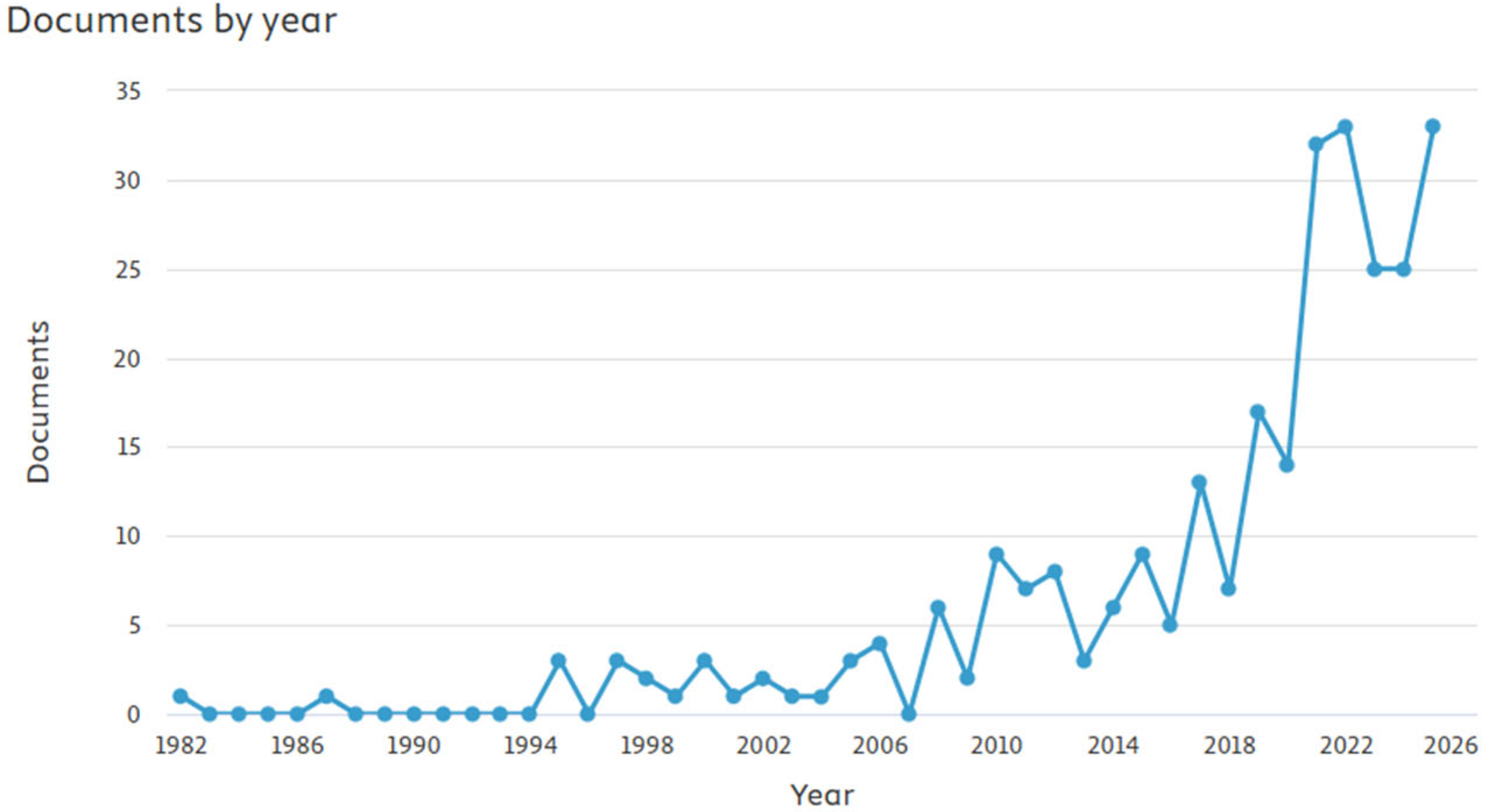
The literature (
Figure 1) confirms that since 2019 the scientific interest in the use of sheep’s wool in the construction sector has increased; it highlights multiple uses of sheep’s wool for its thermo-hygrometric, acoustic, and fire resistance properties. The most recent studies underline the importance of sheep’s wool not only as an insulating material but also as a multifunctional resource: sound-absorbing, moisture-regulating, and potentially active in the purification of indoor air.
The introduction of sheep’s wool in the face of an improvement in thermo-acoustic properties, however, often generates a reduction in mechanical properties due to the need for a greater quantity of water for the processing of the mixture [
20,
21]. Among these, integration with gypsum boards [
22] or bricks [
23] is particularly interesting as the use of fibers to increase the properties of the material avoids the use of chemical additives, making the process more environmentally friendly. The presence of sheep’s wool fibers in a cementitious compound can also facilitate the self-repair of the material [
24]. The advanced composites sector is also exploring the use of wool in combination with other natural materials, such as banana or hemp fibers, to create structural components with improved performance [
25].
In the redevelopment of building heritage, moreover, the thermal and hygroscopic properties of wool are exploited to achieve high performance levels and, at the same time, control humidity and safeguard the breathability of the masonry. Sheep’s wool can be used not only to increase the insulation of masonry but also for plaster and natural finishes. The addition of wool fibers to lime or clay-based slurries increases ductility, reduces shrinkage cracking, and can improve surface adhesion [
26]. Both the study by Demicaran et al. [
27] and the research of Pederneiras et al. [
28] confirm the interest in the use of sheep’s wool-based components for applications in historic masonry for which natural materials are preferable.
Sheep’s wool is an animal by-product. When it is not suitable for use in the textile sector, it is classified as waste according to Regulation (EC) 1069/2009 [
29]. Its management, however, is often characterized by conflicting interpretations by veterinary advisors and competent authorities, also due to the translation of the regulation into 27 languages and the consequent ambiguity in the definition of the correct treatment, recovery, and disposal procedures. This regulatory uncertainty, combined with high disposal costs, leads many farmers to resort to on-site combustion as an elimination practice, with significant negative impacts on soil, air quality, and the surrounding environment.
In this context, the use of sheep’s wool takes on a strategic role: it makes it possible to transform a problematic material to be managed into a value-added resource, promoting a circular economy model applied to livestock and textile supply chains. Incorporating this waste into new production cycles avoids waste, reduces pressure on landfills, and reduces emissions associated with uncontrolled disposal practices.
The aim of this research is to define the field of action in the construction sector of the Italian National Observatory for the Sustainable Production of Native Wool (FiLA) that makes it possible to systematically map the wool supply chain in a defined area (Italian territory), to identify and connect the stakeholders involved, and to systematize and disseminate the know-how and good practices related to its transformation in all sectors. FiLA is configured as an action-oriented knowledge infrastructure, whose primary role is the identification, analysis, and dissemination of good practices for the enhancement of wool to respond to various strategic needs, such as the need to build a structured repository of knowledge that overcomes the current fragmentation of information on the wool supply chain, facilitating access to relevant data for all actors involved.
2. Methods
The method adopted by the FiLA Observatory follows an integrated approach combining multiple research strategies to create a comprehensive mapping of the wool supply chain with specific attention to heritage building applications (
Table 2).
The research design integrates desk research and systematic stakeholder mapping, a systematic literature review oriented toward construction and heritage conservation applications, the development of an interactive digital platform, and validation through territorial pilot projects. Research activities were structured with particular attention to identifying sustainable processes applicable to the construction sector and cultural heritage conservation.
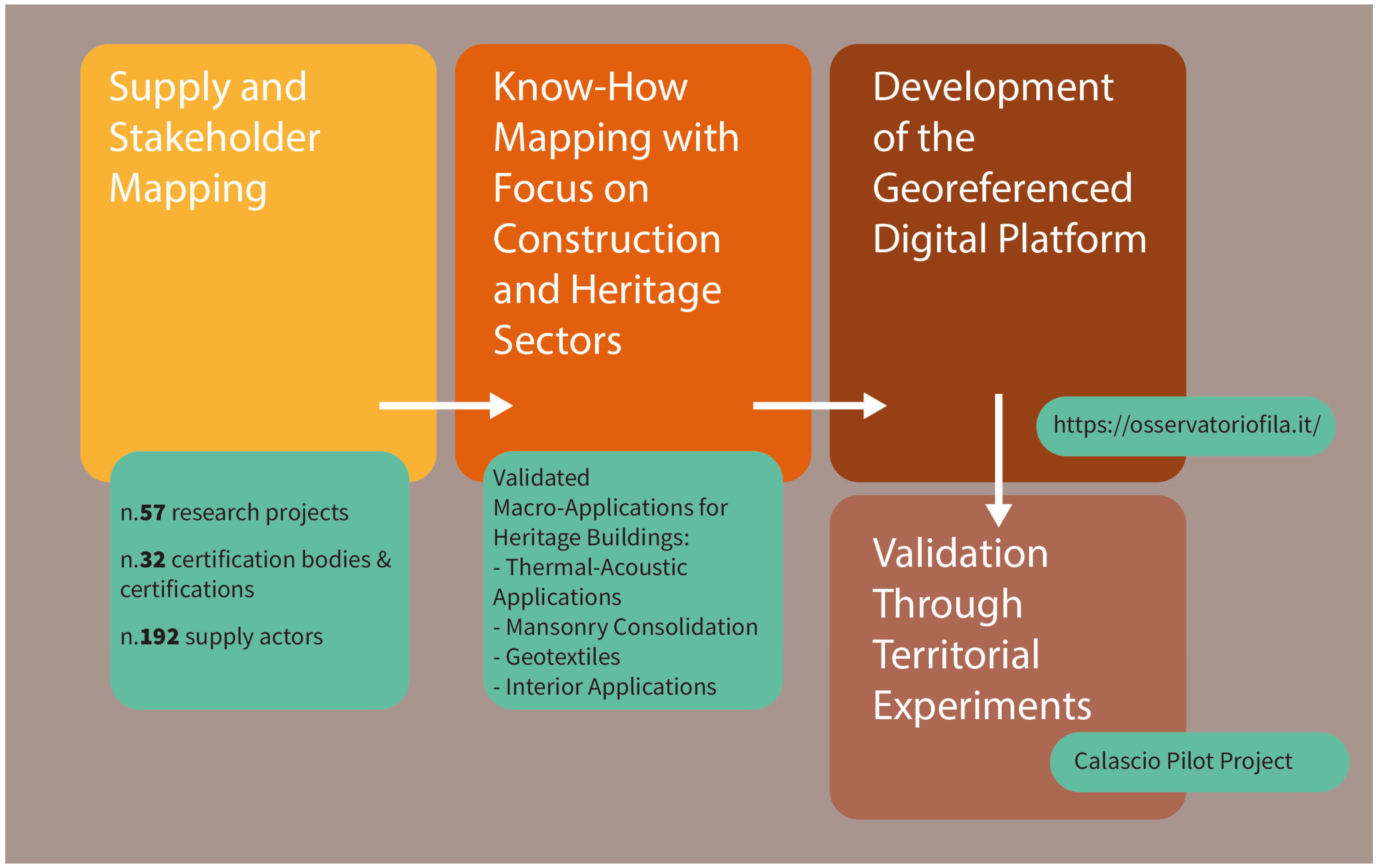
This research employed standardized protocols with explicit inclusion/exclusion criteria for data collection, utilized multiple cross-referenced institutional databases to ensure data reliability, implemented transparent documentation of methodology and findings, and established reproducibility through detailed procedural documentation (
Figure 2). Quality assurance included data validation procedures and stakeholder verification interviews to ensure methodological rigor and replicability across different territorial contexts.
2.1. Supply Chain and Stakeholder Mapping
The mapping of supply chain actors was conducted through multi-source desk research utilizing institutional databases including ISTAT (Italian National Institute of Statistics), Chamber of Commerce Registries, trade associations, business networks, and Research Institutions. The collected data was organized according to a classification system comprising twelve thematic clusters covering both traditional supply chain phases such as raw material preparation, primary material production, and product development, as well as complementary activities including traceability systems, machinery manufacturing, non-traditional uses, certification, and training.
For the construction sector, particular attention was devoted to identifying producers of insulation materials including panels, batts, and felts, as well as bio-construction companies currently utilizing or potentially capable of incorporating wool into their products.
The selection criteria for construction-relevant actors included the following: (1) current or demonstrated capacity for natural fiber processing, (2) production of building materials with thermal or acoustic properties, (3) experience in built heritage, (4) certification or testing capabilities relevant to construction standards, and (5) geographic proximity to significant wool production areas. The mapping also encompassed research laboratories active in the development of natural insulation materials and restoration materials, certification bodies for construction materials, restoration firms sensitive to the use of natural materials, and heritage protection agencies including superintendencies that may influence future regulatory developments. This approach aligns with methodologies employed in recent Italian valorization initiatives that emphasize the importance of cooperation and networking among breeders, local government administrations, and research centers for sustainable supply chain development [
30].
Each identified actor was geographically localized to create an interactive national map highlighting the density distribution of supply chain operators, territorial clusters with specific competencies in the construction sector, infrastructural gaps such as the absence of washing centers or carding facilities, and proximity relationships between livestock farms and potential users in the construction sector. This georeferencing approach builds upon methodologies developed for establishing wool-collecting centers based on livestock population databases and geographic information systems, which have proven effective in identifying suitable areas for specialized treatment facilities including green building material production [
31].
2.2. Know-How Mapping with Focus on Construction and Heritage Sectors
A systematic literature review was conducted with a primary focus on sustainable processes and innovative applications of wool. Specific inclusion criteria for the construction and heritage sectors encompassed studies on thermal, acoustic, and hygroscopic properties of wool, applications in thermal and acoustic insulation of buildings, biocomposites for construction materials, geotextiles for consolidation and drainage, compatibility with historical materials including mortars, masonry, and wood, low-environmental-impact treatments and processes, fire resistance and durability, and reversibility of interventions, which represents a fundamental principle in restoration practice. For each selected publication, data was extracted and cataloged regarding physical and technical properties of wool relevant to construction applications.
Analysis of the literature enabled identification and cataloging of four macro-application categories validated for heritage contexts: thermal–acoustic applications, masonry consolidation, geotextiles, and interior applications. Each category was assigned a TRL (Technology Readiness Level) value on a scale from 1 to 9, which allows the level of development of components using sheep’s wool in that specific field to be identified.
Although the primary focus remained on construction and heritage sectors, the mapping identified eleven industrial sectors utilizing wool innovatively (wool industry, biomedical, pharmaceutical/cosmetics, agriculture, environmental engineering, textiles, tourism, construction, furniture, fashion, wellness). This cross-sectoral perspective was proven to be relevant because integrated valorization of the supply chain enables by-products and waste from one processing operation to supply other sectors; knowledge sharing allows the distribution of technologies developed for one sector.
For each identified technical solution, specific criteria derived from restoration theory and practice were applied to assess suitability for heritage applications. Physical and chemical compatibility was evaluated through compatibility with historic materials including stone, brick, wood, and mortars, absence of harmful chemical reactions, similarity of hygroscopic behavior, and compatible thermal expansion coefficients. Reversibility was assessed based on the possibility of removing the intervention without permanent damage, installation techniques that do not irreversibly alter original surfaces, and preference for mechanical systems over permanent adhesives.
Recognizability criteria required distinction between historic material and contemporary intervention and transparency regarding materials used through identity cards and certifications. Minimal intervention principles prioritized effectiveness with reduced thicknesses to respect volumetric constraints and solutions not requiring significant structural alterations.
Durability and maintainability were evaluated through stable performance over time, ease of routine maintenance, and resistance under critical conditions including humidity and thermal fluctuations. Environmental sustainability was assessed through favorable life cycle assessment when available [
32], local or short supply chains, biodegradability at end of life, and absence of toxic or persistent substances.
Regulatory compliance encompassed respect for construction material regulations including CE marking and relevant national standards, compatibility with heritage protection agency constraints, and compliance with fire safety regulations for public buildings.
2.3. Development of the Georeferenced Digital Platform
The platform is a dynamic networking tool rather than a static archive, incorporating an optimized query system with filters for thematic clusters covering twelve categories, geographic location search enabling identification of local suppliers, search by specific technological competency, and sector-specific filtering allowing selection of construction and heritage relevant actors.
2.4. Validation Through Territorial Experiments
A pilot projects at local and regional scales will test technical feasibility of identified solutions, economic sustainability of local micro-supply chains, networking capacity of the platform in connecting heterogeneous actors, and replicability of the model in other territorial contexts.
3. Results
3.1. FiLA Mapping
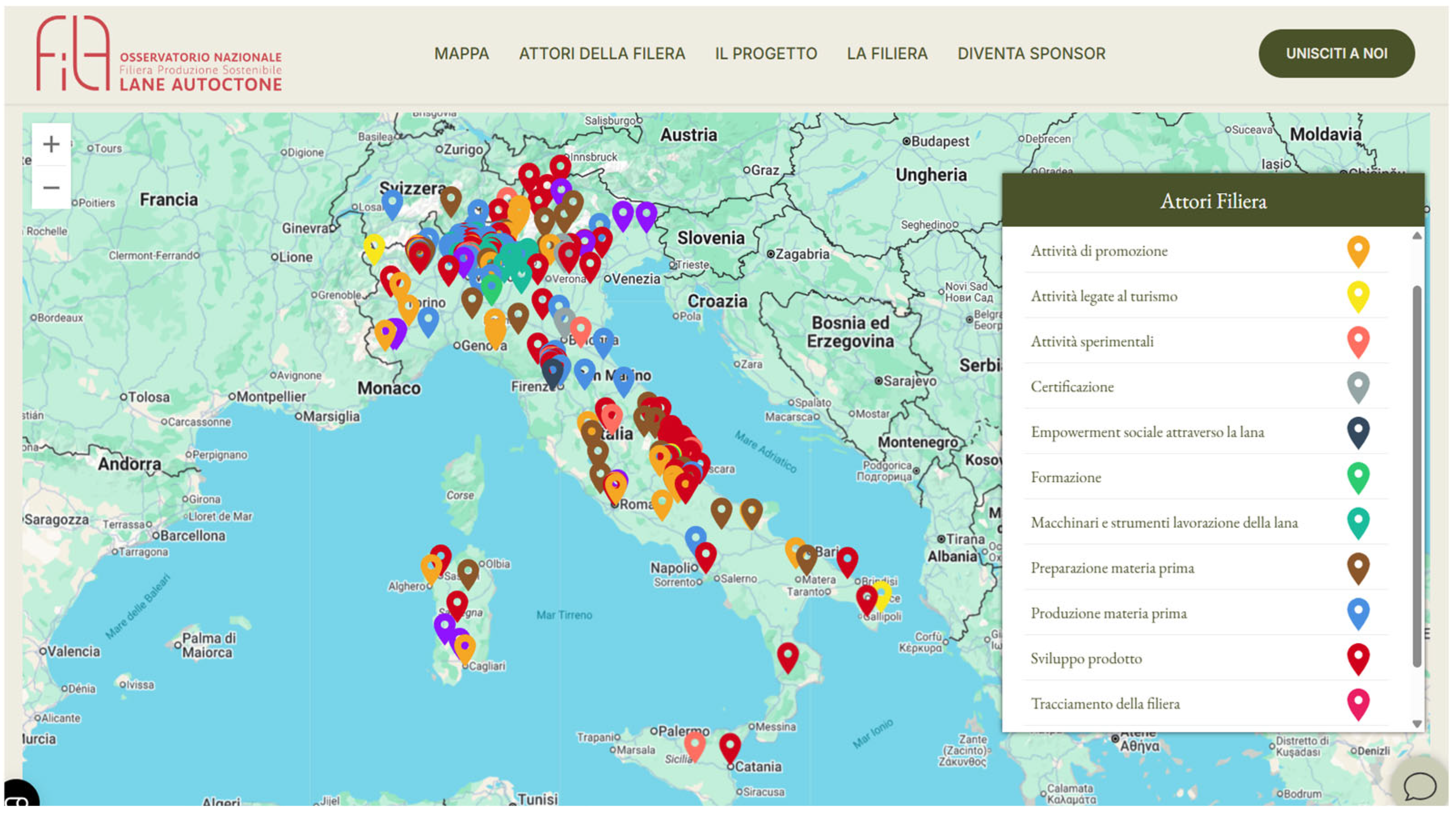
The mapping encompassed more than 200 supply chain actors including 169 domestic and 31 international entities. The analysis identified 108,061 sheep farms in Italy, of which only 251 declared wool production as a business objective.
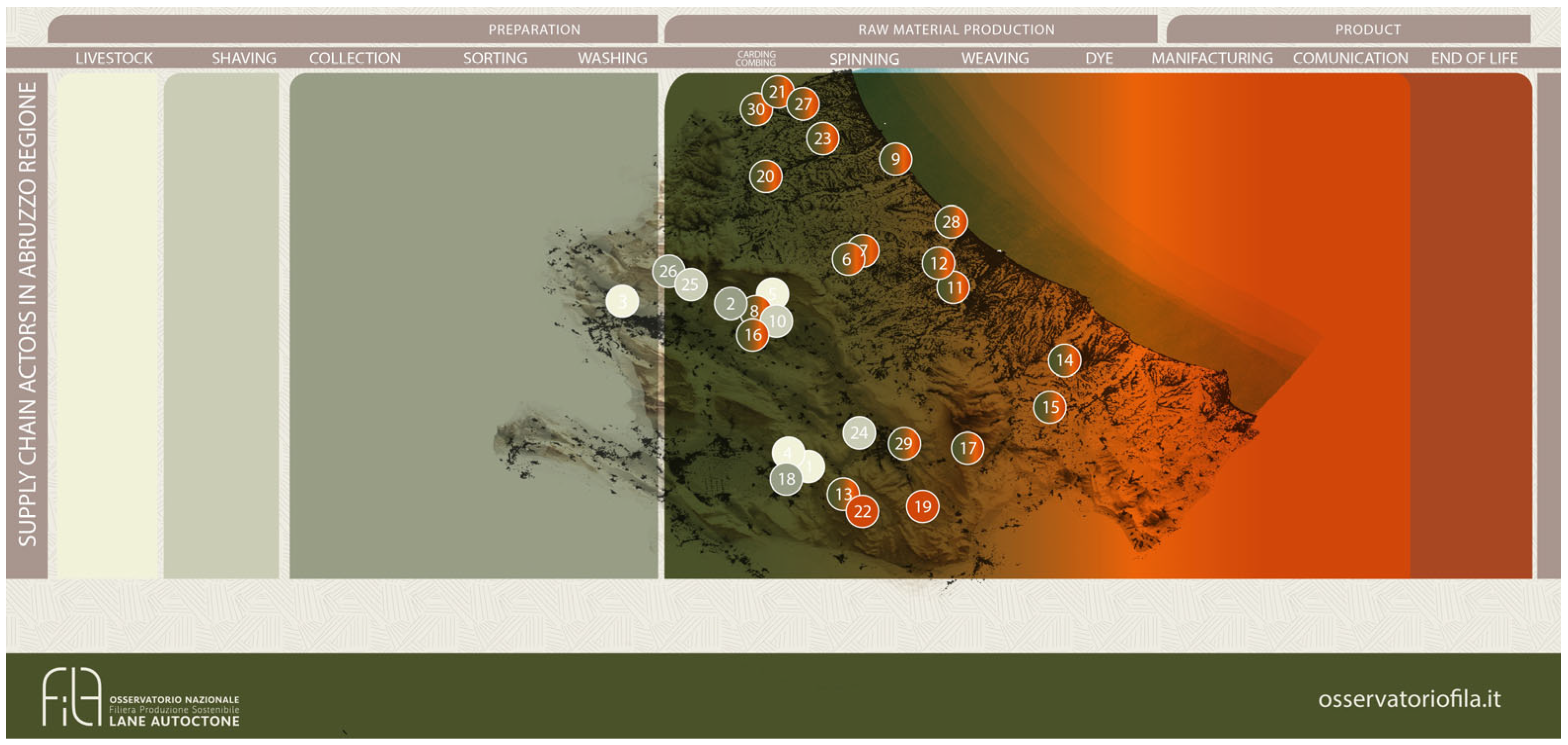
Users can navigate in the FiLA platform (
Figure 3) by zooming in and out to explore different regions and identify clusters of actors involved in farming, processing, and manufacturing wool-based products, including construction materials. The territorial distribution revealed a concentration in pastoral areas, with Sardinia accounting for approximately fifty percent of production, followed by significant presence in Sicily and Piedmont, while scientific and technological competencies were found distributed throughout the national territory including Lombardy, Abruzzo, Calabria, and Puglia.
3.2. Properties of Sheep’s Wool and Production Processes
Sheep’s wool fibers have thermal conductivity values between 0.0324 and 0.0438 W/(m·K) and thermal resistance values between 2.5 and 2.6 m
2K/W, comparable to that of common insulation materials, but have the advantage of more than 35% wt/wt moisture absorption compared to conventional insulation materials, preventing condensation, regulating humidity, improving air quality, and also reducing formaldehyde concentration [
26,
27,
28,
29,
30,
31,
32,
34,
35]. The attention to sheep’s wool as a natural insulator is also confirmed by the review of the literature on bio-based insulation materials carried out by Cosentino et al. [
36], which highlights “the second most cited material in the literature was sheep’s wool… having a thermal conductivity of 0.0318 W/m
3 for a density of 30 kg/m
3”. These thermal performance characteristics have been validated in hybrid biocomposites incorporating wool waste, demonstrating thermal conductivity values between 0.058 and 0.083 W/mK, which are competitive with conventional insulation materials [
37,
38].
The moisture-absorbing capacity of wool does not compromise thermal conductivity even when it is partially wet, making it stable as an insulator even with moisture charges [
39]. These hygroscopic properties make wool particularly suitable for heritage applications where breathability and moisture regulation are critical for preserving historic fabric.
The use of sheep’s wool as a thermal insulator, due to its ability to retain particles and volatile compounds, can bring additional benefits given its “sink effect” on VOCs, improving air quality [
40]. Sheep’s wool fibers, thanks to their hollow structure, can also achieve sound absorption coefficients greater than 0.7 in the frequency range from 800 to 3150 Hz, making them a good material for making acoustic insulation [
35,
36,
37,
38,
39,
40,
41,
42], demonstrating applicability in converted historic spaces such as auditoriums and conference halls. Recent studies on sheep’s wool–soy protein biocomposites have achieved sound absorption coefficients exceeding 0.9 for frequencies above 1000 Hz, performance comparable to conventional synthetic materials currently used in the building industry [
25].
Due to the high nitrogen and sulfur content in keratin (approx. 25% N and 3–4% S), sheep’s wool is naturally flame-retardant and self-extinguishing [
25]. Fire resistance was assessed through self-extinguishing behavior attributed to approximately twenty-five percent nitrogen content [
35], European fire classification (Euroclass), absence or reduction of toxic fumes, and comparison with chemical flame retardant treatments that could potentially be avoided. Wool–polypropylene composites have demonstrated the highest flame retardancy classification of V0 while maintaining thermal stability until 250 °C with minimal weight loss [
37].
Durability and maintenance considerations included resistance to aging, biological attacks from mold and insects along with natural preventive treatments, maintainability over time, and behavior under high-humidity conditions typical of historic buildings.
The analysis of production processes distinguished between mechanical and chemical processing methods, including mechanical carding and felting, patented processes for partial keratin dissolution that confer rigidity while maintaining flexibility, thermo-compression systems without chemical binders, and dramatic reduction in the use of aggressive chemical substances. Recent advances in sustainable wool processing have demonstrated the feasibility of developing bio-based composite panels using mechanical assembly techniques that avoid chemical adhesives, thereby enhancing compatibility with heritage conservation principles [
43].
Natural and compatible binders were identified including wastepaper pulp, natural rubber, starches and biopolymers, and materials demonstrating physical and chemical compatibility with historic mortars such as lime and cocciopesto. Hybrid biocomposites incorporating wool fibers with biodegradable matrices have shown promising results in achieving structural performance while maintaining environmental sustainability (Hamouda et al., 2019) [
44]. Durability treatments emphasizing low environmental impact for biological resistance, avoidance of persistent biocides, and compatibility with conservative restoration principles were cataloged.
Table 2.
Physical and technical properties of wool for heritage building applications.
Table 2.
Physical and technical properties of wool for heritage building applications.
| Property Category | Parameter | Value Range | Test Conditions | Reference | Relevance for Heritage |
|---|
| Thermal Insulation | Thermal conductivity (λ) | 0.032–0.083 W/(m·K) | Guarded hot-box method; mean temperature 10–13 °C | Allafi et al., 2022 [35]; Guna et al., 2021 [22] | Effective insulation with minimal thickness |
| Thermal stability | Up to 250 °C | Thermogravimetric analysis (TGA); heating rate 10 °C/min in nitrogen atmosphere | Guna et al., 2021 [22] | Suitable for various climatic conditions |
| Moisture Management | Moisture absorption | >35% of own weight | Gravimetric method; Conditioning at 23 ± 2 °C, 50 ± 5% RH for 72 h | Allafi et al., 2022 [35] | Critical for breathable historic walls |
| Vapor permeability | High (low μ factor) | Cup method or permeability testing | - | Compatible with traditional masonry |
| Acoustic Performance | Sound absorption coefficient (800–3150 Hz) | >0.7 | Impedance tube method | Allafi et al., 2022 [35] | Effective for converted historic spaces |
| Sound absorption coefficient (>1000 Hz) | >0.9 | Impedance tube method | Urdanpilleta et al., 2022 [25] | Comparable to synthetic materials |
| Fire Resistance | Nitrogen content | ~25% | Elemental analysis; Standard chemical analysis methods | Allafi et al., 2022 [35] | Self-extinguishing behavior |
| Fire classification | V0 (highest) | UL-94 Vertical Burning Test | Guna et al., 2021 [22] | Meets public building requirements |
| Weight loss at 250 °C | 1.2% | TGA method; 10 °C/min heating rate; Nitrogen atmosphere | Guna et al., 2021 [22] | Excellent thermal stability |
| Durability | Water absorption (24 h) | 34% (w/w) | Immersion test; 24 h water exposure | Guna et al., 2021 [22] | Lower than gypsum board (84%) |
| Dimensional stability | High | n.a. | - | Maintains performance over time |
3.3. Validated Applications for Heritage Buildings
Thermal and acoustic insulation applications included rigid and semi-rigid panels for internal walls, batts for pitched roof assemblies, felts for wall cavities, and integrated systems with compatible supports such as gypsum board, fiber-reinforced gypsum, and wood. Research has demonstrated that wool-based insulation materials can be effectively utilized for both thermal and sound insulation in building applications, with properties particularly suited to retrofitting historic structures [
45]. Particular attention was devoted to reduced thicknesses relevant for historic buildings with volumetric constraints, reversibility of intervention allowing removal without damage to original masonry, and breathability ensuring compatibility with historic masonry lacking vapor barriers.
Biorestoration and masonry consolidation applications encompassed wool fibers as reinforcement for mortars, breathable fiber-reinforced plasters for crack control, applications in stone masonry, brick, and rammed earth construction, and compatibility with historic binders including lime and natural hydraulic lime. Geotextile applications for consolidation, drainage, and purification included wool felts for temporary slope stabilization in historic gardens and terraces, biodegradable biomats for erosion control in archeological areas and courtyards, natural filters for stormwater collection systems, and adsorption of heavy metals from runoff water from copper or lead roofs.
Interior design applications for converted historic spaces comprised decorative sound-absorbing panels for auditoriums and conference halls, natural fire-resistant coverings meeting regulatory compliance for public buildings, and natural padding for furnishings in museums, libraries, and archives.
Cross-sector analysis identified innovative uses for the construction industry. Among these, keratin extracted from wool for advanced applications in bioelectronics and smart materials or bioadhesives are noteworthy, opening up new prospects for the integration of sensory functionality into building elements.
Relevant intersections for heritage buildings included agricultural sector applications such as biodegradable mulch for historic gardens and soil amendments for green area maintenance, environmental engineering applications including water purification and phytoremediation for contaminated site reclamation in disused industrial areas undergoing conversion, and biomedical and pharmaceutical applications that, while not directly linked to construction, enhance the economic value of wool through valorization of by-products including lanolin and keratin, thereby rendering sustainable local micro-supply chains that also serve the construction sector. This integrated approach to wool waste valorization has been recognized as essential for achieving economic viability while addressing environmental challenges [
25,
32,
34,
35,
36,
37,
38,
39,
40,
41,
42,
43].
Table 3 illustrates the possible macro application for building heritage and of the related TRL Technology Readiness Level.
3.4. FiLA Digital Platform
The FiLA platform
https://osservatoriofila.it/ URL (accessed on 17 December 2025) includes the description of the supply chain, mapping of the actors, and their identification. The integrated database encompasses a repository of actors with detailed profiles including competencies, certifications, location, and validated applications and a repository of certifications listing agencies, standards, and application fields. Through thematic filters, it is possible to select specific categories such as livestock farming, wool washing, carding, yarn and felt production, construction material manufacturers, machinery suppliers, certification bodies, and research institutions. The portal also allows targeted searches by location, sector, or technological expertise, supporting the identification of actors relevant to construction and heritage conservation. By clicking on individual map points, users can access detailed information sheets describing technical characteristics, environmental performance, certifications, and existing applications.
Networking functionality specifically designed for the heritage sector enables identification of local wool and derivative product suppliers, visualization of gaps in the local supply chain such as absence of washing or carding facilities, suggestion of cross-sectoral connections among restoration firms, insulation producers, and research laboratories, and facilitation of temporary consortia for pilot projects. This approach supports the development of circular economy models within the construction sector, as demonstrated by recent initiatives exploring industrial symbiosis between waste producers and material manufacturers [
46].
3.5. Abruzzo Pilot Project
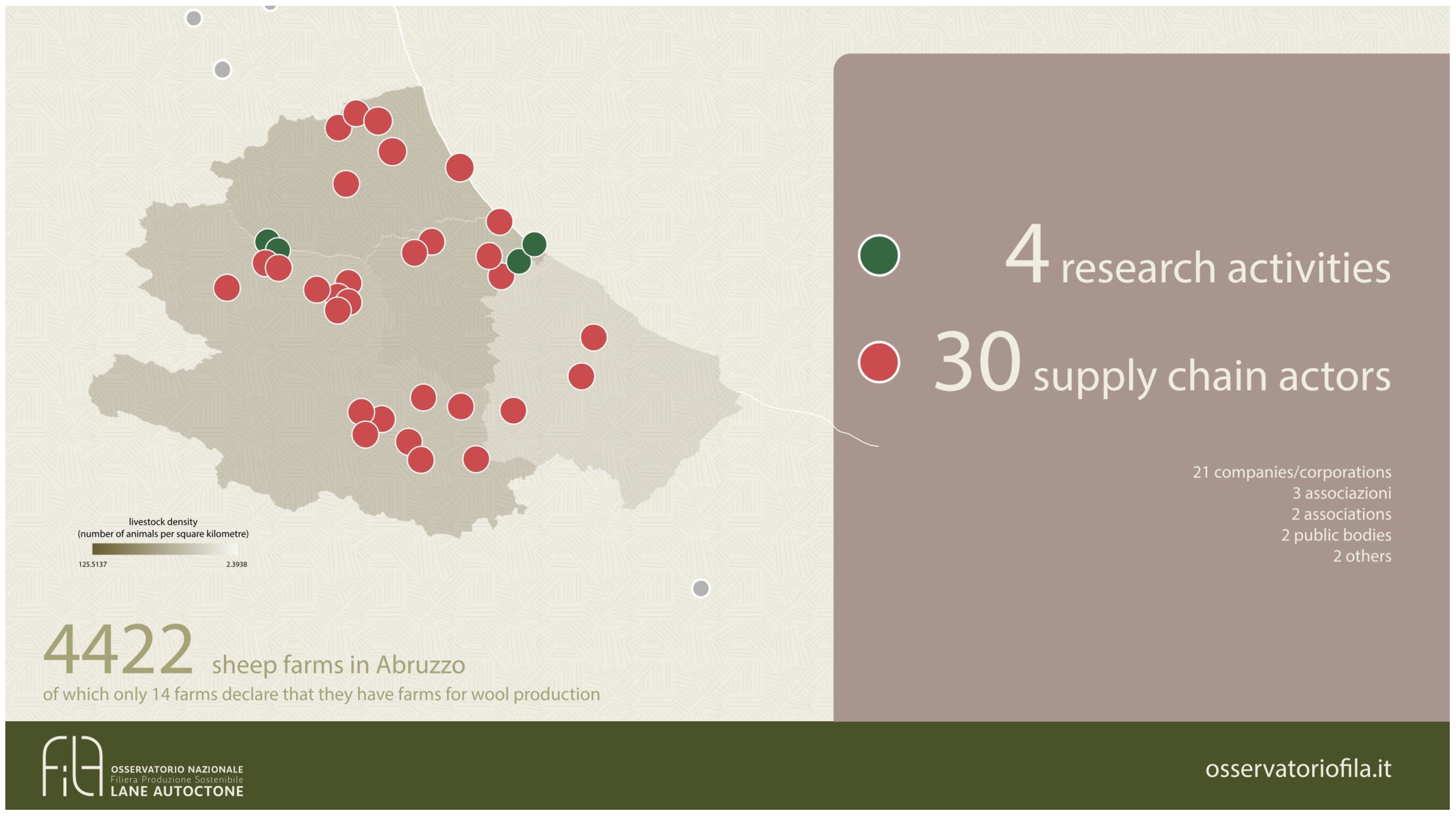
The pilot project phase of this study exemplifies FiLA’s territorial validation approach by addressing critical supply chain gaps in the Abruzzo region through heritage-integrated wool valorization. The regional context presents paradigmatic fragmentation: 4422 sheep farms are concentrated in mountain pastoral areas, while processing infrastructure remains absent or distant, creating economic and environmental inefficiencies that prevent local wool valorization.
In the Abruzzo region, the municipality of Calascio (AQ) was chosen as the area for experimentation because it has historical ties to the wool industry. The municipal administration, with the help of Cultural PRNN National funding, is launching a process to revitalize wool with the aim of developing its industry in a structured way.
Considering that there are activities related to the industry in the surrounding area (
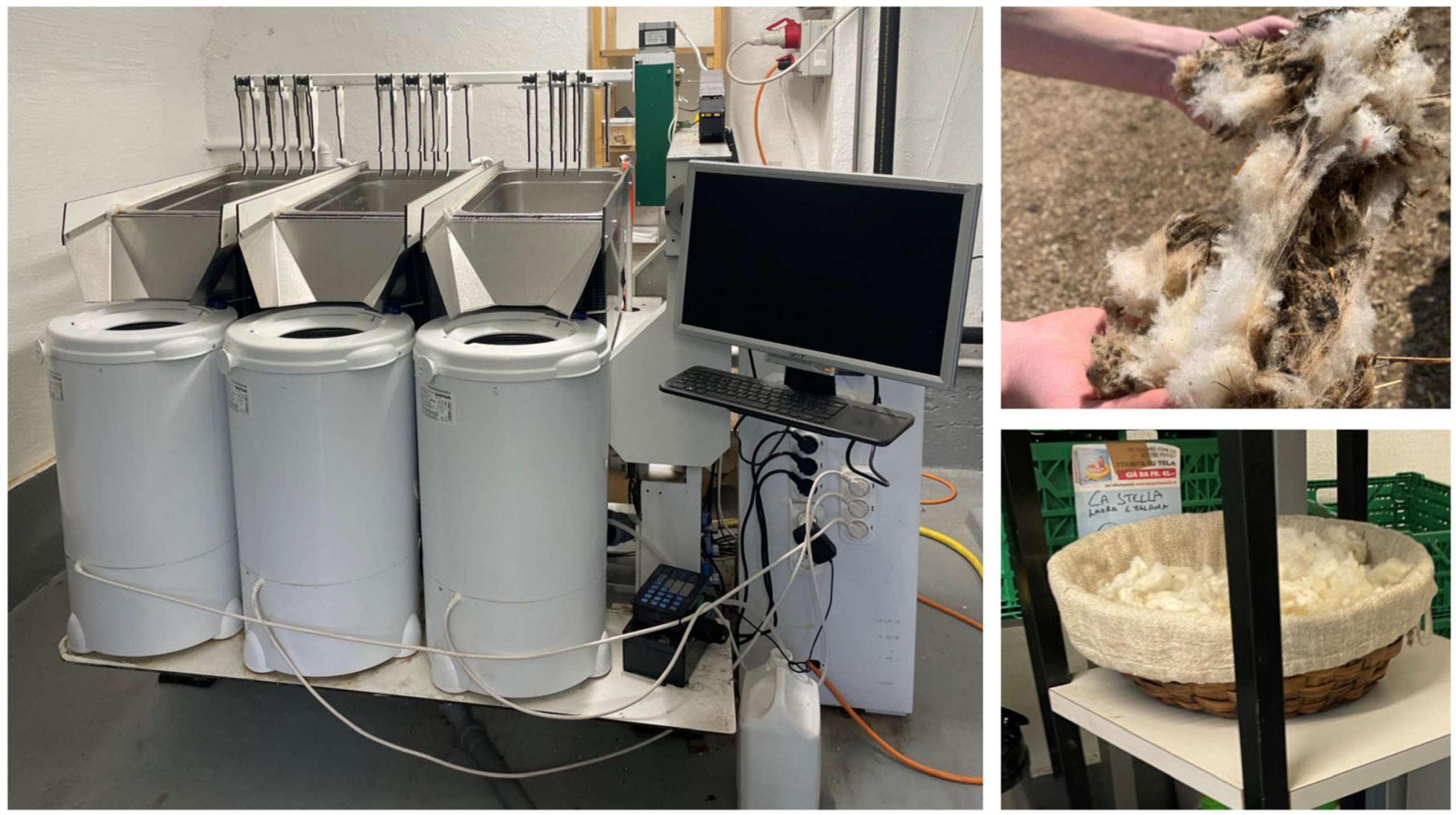
Figure 4), such as the largest storage facility for raw wool about 8 km away and the Aquilana textile brand about 5 km away, the municipal administration is developing activities to prepare for its development, including a school for sheep farming, a school for weaving, and cultural awareness festivals. This situation represents an ideal starting point for assessing the impact that the transfer of know-how can have. Calascio is located within Gran Sasso e Monti della Laga National Park at 1200 m altitude and embodies challenges of depopulated Italian mountain communities (now less of 150 inhabitants) while possessing valuable assets, including historical connections to transhumance routes and wool trade heritage. The project addresses the critical missing phase—sustainable wool washing—by adapting technology from the Verzasca Valley experimental plant (Swiss Canton Ticino) (
Figure 5) [
19].
This facility demonstrated feasibility of low-impact, locally managed processing using ultrasonic washing at low temperatures without chemical detergents, processing 6000 kg annually at 4–6 kg/h with water discharge compatible with domestic systems and enabling lanolin recovery for pharmaceutical applications.
The Calascio adaptation implements an integrated valorization strategy specifically designed for heritage applications by distinguishing wool fractions after sorting. High-quality wool meeting textile standards proceeds through washing for local artisan producers, while lower-grade wool unsuitable for textiles—currently representing disposal costs—is directed toward two heritage conservation pathways without washing, thereby avoiding unnecessary water and energy consumption.
For the Abruzzo pilot experimentation, a feasibility project has been developed, leading to the definition of the following subsequent phases, which are currently under development (
Figure 6). First, unwashed residual wool will be used to produce experimental insulation panels for the restoration of historic buildings in collaboration with a local enterprise in the province of Chieti and the Ud’A laboratory. The testing will evaluate the thermal and acoustic performance of the panels manufactured using mechanical assembly without synthetic binders. Particular attention will be given to the panels’ compatibility with historic materials, reversibility, and breathability requirements.
Second, in collaboration with the University of Florence Department of Agriculture, unwashed wool-based biodegradable mulch will be tested for multiple heritage landscape applications. Testing sites include water retention and weed suppression trials in depaving NBS solution. The protocol specifically evaluates whether lower processing costs and potential performance benefits of retained lanolin justify preferential use of unwashed material for landscape applications, potentially creating higher economic value for low-grade wool fractions while reserving higher-quality wool for textile markets.
The project design emphasizes replicability through modular washing capacity (10,000 kg annually), standardized equipment and training protocols, territorial adaptability for diverse renewable energy integration, and flexible product mix adjustment to match local heritage conservation priorities. The FiLA platform enables knowledge transfer by documenting technical specifications, economic models, regulatory pathways, and performance testing results, facilitating identification of comparable contexts and peer-to-peer learning among emerging initiatives. If successfully implemented, Calascio would demonstrate sustainable reconstruction of complete local value chains integrating heritage conservation objectives.
4. Discussion
FiLA is based on a systemic approach that integrates literature analysis, mapping of existing supply chains, and participatory stakeholder involvement. Through the creation of an interactive digital platform, experiences were geolocated, connecting the different players in the supply chain and facilitating the sharing of knowledge according to open data principles. This participatory methodology, which actively involves producers, processors and end users, ensures that the good practices identified actually respond to the needs of the sector. Collaborative networks have been the basis for the development of pilot projects and for the experimentation of circular business models. The dissemination of knowledge and the capacity-building of the players in the supply chain have made it possible to overcome resistance to change and to promote the adoption of innovative practices. FiLA, therefore, complements existing work on bio-based materials such as hemp, flax or wood-fiber insulation and is aligned with emerging material passport or resource atlas platforms. It, through the identification of the Italian sheep’s wool supply chains, makes it possible to know and evaluate the qualitative and quantitative availability of this resource and the cross-sectoral sharing of know-how, which can be applied to the development of innovative materials for construction. The identification of the currently existing supply chain allows us to promote further future supply chains and expand the areas of application in the territory through the sharing of both information and operational knowledge. In the construction sector, the production of building components using sheep’s wool is a sustainable process, both in that it transforms waste into new materials, increasing its duration through new life cycles, and that it is a renewable, bio-degradable, eco-friendly, and recyclable material.
The knowledge, management, and control of the entire production process of the components that use sheep’s wool, from procurement to the end of life, therefore makes it possible to assess the levels of sustainability and, with respect to them, to evaluate the environmental, economic, and social convenience in triggering new circular supply chains in the territory, defining the necessary economic and training investment.
The sustainable redevelopment of built heritage requires knowledge of the territory and its resources and the use in the design of materials/components derived from local supply chains. Knowledge of these supply chains is therefore indispensable.
FiLA represents a virtuous example of knowledge of the wool supply chain in Italy. If for each geographical area there were an observatory of available resources, similar to the one developed in FiLA for wool, designers and construction companies through their choices could promote the effective sustainable development of the territory in which they operate. In addition, the network of information and knowledge facilitates technological innovation in the wool sector, improving its competitiveness with synthetic materials that benefit from decades of industrial research. In the production process, the greatest limitation is the sorting and washing phases. The pilot project in Calascio demonstrates that it is possible to overcome these limits through the use of good practices, which, although borrowed from other sectors or territories, remain respectful of the culture of the territory. The limitations deriving from a discontinuous supply chain have been solved by networking and innovation. The territorial impact has brought added value from a technical point of view with the development of a new washing plant, logistics by optimizing flows between stakeholders, and strategic influence by promoting the creation of new circular economies, consistent with local needs [
19]. Further innovations concern the development of components based entirely on natural materials including sheep’s wool, such as to overcome the limit of the current irreversibility of polymeric and cementitious composite materials, which do not allow further cycles of the material and have a negative impact on the sustainability of the process [
20].
Legislation and certification represent a significant barrier in the valorization of waste wool, as it is classified as special waste with consequent management obligations and additional costs for farms. Furthermore, the absence of specific technical standards for its use, despite the general references of the European legislation on by-products [
29], makes it difficult to classify wool as a resource destined for new production cycles, hindering its recognition as a by-product. The presence of a structured network makes it possible to systematize the players in the supply chain and to identify shared policies, capable of responding to the actual needs of the territory. This also makes it possible to enhance niche realities and to create a favorable context for the development of common operating standards, acting as a driving force for small and medium-sized enterprises operating in the wool processing and enhancement sector.
Currently, the expansion of the construction chain based on sheep’s wool is supported by Environmental Product Declarations (EPDs) and European Technical Assessment (ETA) certifications, which attest to the suitability of wool panels to meet European standards [
47,
48]. These certifications are based on LCA (Life Cycle Assessment) analyses that require a timely collection of data on the flow of the material and production processes, the accuracy of which affects the reliability and precision of the result.
The main limitation of this work is the intrinsically dynamic nature of the wool supply chain, which requires continuous updating of actors, processes, and applications to remain representative and useful over time. Without regular data revisions, the observatory risks becoming partial or outdated. A second limitation is the absence of a fully structured tracking system for the life of wool-based materials, from farm to end of life. The lack of systematic information on installation, service life, reuse, and disposal reduces data depth and limits the potential for new construction and heritage applications. For this reason, it is necessary to plan for the future development of material identity cards for products in the supply chain.
Future Development
FiLA could focus on implementing a comprehensive material identity card system for product-by-product supply chain tracking. This advancement would represent a significant step toward full traceability and transparency in wool-based materials for heritage applications and in the reliability of LCA-based certifications [
49].
The proposed identity card template would provide comprehensive material documentation structured across six key dimensions:
Raw material information would ensure complete traceability from farm to final product, documenting wool origin, breed characteristics, shearing practices, and initial processing locations [
50].
Production process documentation would include detailed environmental impact data for each transformation stage, quantifying water consumption, energy inputs, chemical usage, and carbon footprint [
51].
Technical characteristics would encompass standardized performance data including thermal conductivity measurements, acoustic absorption coefficients across frequency ranges, fire resistance classifications, and long-term durability projections under various environmental conditions.
Supply chain and sustainability metrics, mapping all actors involved in the production chain, calculating transportation distances between each stage, providing comprehensive life cycle assessment results, and cataloging relevant certifications including organic, environmental, and quality standards.
Validated applications would document real-world implementations with photographic evidence, performance monitoring data, bibliographic references to supporting research, and case studies from heritage projects.
Heritage compatibility assessment would evaluate reversibility potential through standardized protocols, chemical and physical compatibility with historic materials including stone, brick, lime mortars, and traditional plasters, and compliance with regulatory constraints imposed by heritage protection agencies at national and regional levels.
This product-specific documentation system would be designed as an integrated digital tool accessible through multiple interfaces. The identity cards would be consultable directly through the georeferenced map interface, allowing users to identify materials available in their geographic area while simultaneously accessing complete technical documentation.
A particularly innovative feature would be the integration capability with building information modeling platforms increasingly adopted for historic building management and restoration planning. This would allow heritage professionals to incorporate wool-based materials directly into digital building models with complete technical specifications, enabling informed decision-making during design phases and facilitating long-term maintenance planning [
52]. Furthermore, the system would be designed to link seamlessly with existing restoration material databases maintained by heritage protection agencies, regional superintendencies, and specialized research institutions [
53], creating a networked knowledge infrastructure that transcends individual projects.
FiLA has created the information infrastructure necessary for wool-based materials to compete fairly with conventional products in procurement processes for heritage conservation projects, where comprehensive technical documentation is typically mandatory.
5. Conclusions
The enhancement of sheep’s wool, promoted by the FiLA Observatory under construction, responds simultaneously to several challenges: the need to reduce the environmental footprint of the construction sector, the urgency of finding alternative outlets for a by-product often considered waste, and the opportunity to develop local supply chains that generate economic, environmental, and social value.
FiLA makes it possible to optimize and enhance wool treatment and purification processes to reduce costs and environmental impacts, define standardized protocols that facilitate its integration into contemporary construction systems, and enhance the performance of composites through hybridization with other natural fibers. The inherent flexibility of wool also allows for a wide range of applications—from thermal and acoustic insulation to structural biocomposites—making it possible to adapt the material to different contexts and scales of intervention.
Exploring innovative business models shared among stakeholders, encouraging cooperation between breeders, companies, and research centers, and supporting the creation of production districts at different scales, from the local level to interregional systems, defines FiLA as as driver of circular economy. The proposed approach lends itself to being modulated: it can generate significant impacts both in small rural contexts and in broader production networks, with diversified repercussions for communities, businesses, and professionals.
This methodological framework is highly transferable to other global contexts, particularly in major wool-producing regions such as South America, Central Asia, and New Zealand, where large volumes of coarse wool often lack market value. The FiLA model of digital mapping, stakeholder networking, and cross-sectoral knowledge sharing can be adapted to local infrastructural conditions fostering similar local circular economies while respecting specific territorial identities and production capacities.
An adaptation of the regulatory framework, based on the FiLA information and knowledge network, makes it possible to consolidate trust between operators, stimulate investments, and make the method replicable in other related supply chains (e.g., those of hemp, flax or residual agricultural fibers) with which it is possible to activate synergies and technological integrations.
The integration of wool in the redevelopment of built heritage therefore represents a strategic opportunity, both to expand the application possibilities of the material and to support policies for the sustainable regeneration of territories. Sheep’s wool represents a paradigmatic example of by-product circular material: a waste material that, thanks to technological innovation and territorial management, can be transformed into a resource, reducing environmental impacts and generating widespread economic value.
Author Contributions
Conceptualization, D.R.; methodology, L.M. and S.D.G.; validation, L.M. and S.D.G.; investigation, L.M. and S.D.G.; data curation, L.M. and S.D.G.; writing—original draft preparation, paragraphs 1, 4, and 5, S.D.G. and paragraphs 2 and 3, L.M.; writing—review and editing, L.M. and S.D.G.; supervision, L.M., S.D.G. and D.R. All authors have read and agreed to the published version of the manuscript.
Funding
This research was funded by the Italian Ministry of University and Research (MUR) under the National Recovery and Resilience Plan (PNRR), Extended Partnership MICS (Made in Italy Circolare e Sostenibile)—Spoke 2, project “FiLA” Italian National Observatory for the Sustainable Production of Italian Wool, coordinator Rossana Gaddi.
Institutional Review Board Statement
Not applicable.
Informed Consent Statement
Not applicable.
Data Availability Statement
The data used and/or analyzed during the current study are available from the corresponding author on reasonable request.
Acknowledgments
This research is part of the FiLA Observatory project, which is part of the MICS Extended Partnership. The authors gratefully acknowledge the FiLA research team at the University G. d’Annunzio of Chieti-Pescara’s Department of Architecture for their collaborative contribution to this study. The methodological framework and technological process analysis presented in
Section 2 were developed by the Technology and Sustainable Processes Research Group, which is coordinated by Luciana Mastrolonardo. Rossana Gaddi coordinated the supply chain mapping and design-driven innovation strategies with the Communication Design and Territorial Enhancement research group. The Figures were developed in the research project, with special thanks to Valentina Ciuffreda. The
Figure 3 is from osservatoriofila.it (team Communication—Rossana Gaddi—and Data Visualization—Raffaella Massacesi—for the Osservatorio FiLA project).
Conflicts of Interest
The authors declare no conflicts of interest. The funders had no role in the design of the study; in the collection, analyses, or interpretation of data; in the writing of the manuscript; or in the decision to publish the results.
References
- EEA Report. 2024. Available online: https://www.eea.europa.eu/en/analysis/publications/addressing-the-environmental-and-climate-footprint-of-buildings (accessed on 1 September 2025).
- EU Directive 2024/1275 of the European Parliament and of the Council of 24 April 2024 on the Energy Performance of Buildings. Available online: https://eur-lex.europa.eu/eli/dir/2024/1275/oj (accessed on 18 September 2025).
- Soil Monitoring Law. Available online: https://www.europarl.europa.eu/doceo/document/TA-10-2025-0251_EN.html (accessed on 18 September 2025).
- De Gregorio, S.; De Vita, M.; De Berardinis, P.; Palmero, L.; Risdonne, A. Designing the sustainable adaptive reuse of industrial heritage to enhance the local context. Sustainability 2020, 12, 9059. [Google Scholar] [CrossRef]
- O’Brien, W.J.; Formoso, C.T.; Ruben, V.; London, K. Construction Supply Chain Management Handbook; CRC Press: Boca Raton, FL, USA, 2008. [Google Scholar]
- Durgam, H.K.R.; Ramani, P.V. Green construction supply chain: Reviewing advancements, obstacles, and possibilities. Clean. Logist. Supply Chain. 2025, 17, 100259. [Google Scholar] [CrossRef]
- Josa, I.; Borrion, A. Key indicators to assess construction supply chains from an environmental perspective: Taxonomy and critical insights. Sustain. Futures 2025, 10, 100824. [Google Scholar] [CrossRef]
- Superuse Studios. Available online: https://www.superuse-studios.com/ (accessed on 14 September 2025).
- Bourdin, S.; Galliano, D.; Gonçalves, A. Circularities in territories: Opportunities & challenges. Eur. Plan. Stud. 2022, 30, 1183–1191. [Google Scholar]
- Chembessi, C.; Bourdin, S.; Torre, A. Towards a territorialisation of the circular economy: The proximity of stakeholders and resources matters. Camb. J. Reg. Econ. Soc. 2024, 17, 605–622. [Google Scholar] [CrossRef]
- Alliance for European Flax. Available online: https://allianceflaxlinenhemp.eu/en (accessed on 8 September 2025).
- Pennacchio, R.; Savio, L.; Bosia, D.; Thiebat, F.; Piccablotto, G.; Patrucco, A.; Fantucci, S. Fitness: Sheep-wool and hemp sustainable insulation panels. Energy Procedia 2017, 111, 287–297. [Google Scholar] [CrossRef]
- Yevu, S.K.; Ann, T.W.; Darko, A. Digitalization of construction supply chain and procurement in the built environment: Emerging technologies and opportunities for sustainable processes. J. Clean. Prod. 2021, 322, 129093. [Google Scholar] [CrossRef]
- Elfaleh, I.; Abbassi, F.; Habibi, M.; Ahmad, F.; Guedri, M.; Nasri, M.; Garnier, C. A comprehensive review of natural fibers and their composites: An eco-friendly alternative to conventional materials. Results Eng. 2023, 19, 101271. [Google Scholar] [CrossRef]
- Ghalme, S.; Hayat, M.; Harne, M. A Comprehensive Review of Natural Fibers: Bio-Based Constituents for Advancing Sustainable Materials Technology. J. Renew. Mater. 2025, 13, 273–295. [Google Scholar] [CrossRef]
- Siouta, L.; Apostolopoulou, M.; Bakolas, A. Natural fibers in composite materials for sustainable building: A state-of-the-art review on treated hemp fibers and hurds in mortars. Sustainability 2024, 16, 10368. [Google Scholar] [CrossRef]
- Majumder, A.; Stochino, F.; Frattolillo, A.; Valdes, M.; Gatto, G.; Martinelli, E. Sustainable Retrofitting Solutions: Evaluating the Performance of Jute Fiber Nets and Composite Mortar in Natural Fiber Textile Reinforced Mortars. Sustainability 2024, 16, 1175. [Google Scholar] [CrossRef]
- Montagna, G.; Pucci, E. Wool, “Rifiutocreatura” in Evolution: Valorization and Regeneration of Italian Native Wool and Post-Consumer Waste. Fash. Highlight 2025, SI1, 220–229. [Google Scholar] [CrossRef]
- Gaddi, R.; Mastrolonardo, L. Micro-reti locali per la transizione verde della filiera della lana: Local micro-net-works for green transition of the wool supply chain. AGATHÓN 2024, 15, 344–353. [Google Scholar] [CrossRef]
- Midolo, G.; Del Zoppo, M.; Porto, S.M.; Valenti, F. Recycling of wasted wool fibers from sheep shearing for green building components: A review. Case Stud. Constr. Mater. 2024, 21, e03623. [Google Scholar] [CrossRef]
- Jóźwiak-Niedźwiedzka, D.; Fantilli, A.P. Wool-reinforced cement based composites. Materials 2020, 13, 3590. [Google Scholar] [CrossRef]
- Guna, V.; Yadav, C.; Maithri, B.R.; Ilangovan, M.; Touchaleaume, F.; Saulnier, B.; Grohens, Y.; Reddy, N. Wool and Coir Fiber Reinforced Gypsum Ceiling Tiles with Enhanced Stability and Acoustic and Thermal Resistance. J. Build. Eng. 2021, 41, 102433. [Google Scholar] [CrossRef]
- Rivera-Gómez, C.; Galán-Marín, C.; López-Cabeza, V.P.; Diz-Mellado, E. Sample Key Features Affecting Mechanical, Acoustic and Thermal Properties of a Natural-Stabilised Earthen Material. Constr. Build. Mater. 2021, 271, 121569. [Google Scholar] [CrossRef]
- Singha, K.; Maity, S.; Pandit, P. Applications of wool composites for construction. In Wool Fiber Reinforced Polymer Composites; Woodhead Publishing: Oxford, UK, 2022; pp. 407–423. [Google Scholar]
- Urdanpilleta, M.; Leceta, I.; Guerrero, P.; de la Caba, K. Sustainable Sheep Wool/Soy Protein Biocomposites for Sound Absorption. Polymers 2022, 14, 5231. [Google Scholar] [CrossRef] [PubMed]
- Parlato, M.C.; Porto, S.M. Organized framework of main possible applications of sheep wool fibers in building components. Sustainability 2020, 12, 761. [Google Scholar] [CrossRef]
- Demircan, R.K.; Işık, M.A.M.; Benli, A.; Genç, G.; Beyhan, F.; Kaplan, G. Eco-efficient lime/pumice mortars with sheep wool for heritage restoration: Life cycle and energy savings. Renew. Sustain. Energy Rev. 2025, 215, 115624. [Google Scholar] [CrossRef]
- Maia Pederneiras, C.; Veiga, R.; de Brito, J. Rendering mortars reinforced with natural sheep’s wool fibers. Materials 2019, 12, 3648. [Google Scholar] [CrossRef] [PubMed]
- EU. Regulation (EC) No 1069/2009 of the European Parliament and of the Council of 21 October 2009 Laying down Health Rules as Regards Animal by-Products and Derived Products Not Intended for Human Consumption and Repealing Regulation (EC) No 1774/2002 (Animal by-Products Regulation); EU: Brussels, Belgium, 2009. [Google Scholar]
- Vagnoni, E.; Carrino, C.; Dibenedetto, N.; Pieragostini, E.; Consenti, B. The enhancement of native sheep’s wool: Three case studies from some Italian regions. Small Rumin. Res. 2016, 135, 85–89. [Google Scholar] [CrossRef]
- Ganci, M.; Biondi, L.; Parlato, M.C.M.; Porto, S.M.C. Methodology for the Localization of Wool Collecting Centers: The Case Study of Sicily. Sustainability 2022, 14, 10378. [Google Scholar] [CrossRef]
- Ozek, H.Z. Sustainability, biodegradability and life cycle analysis of wool. In The Wool Handbook; Elsevier: Amsterdam, The Netherlands, 2023; pp. 401–440. [Google Scholar] [CrossRef]
- FiLA. Available online: https://osservatoriofila.it/ (accessed on 1 April 2025).
- Vėjelis, S.; Vaitkus, S.; Skulskis, V.; Kremensas, A.; Kairytė, A. Performance Evaluation of Thermal Insulation Materials from Sheep’s Wool and Hemp Fibres. Materials 2024, 17, 3339. [Google Scholar] [CrossRef]
- Allafi, F.; Hossain, M.S.; Lalung, J.; Shaah, M.; Salehabadi, A.; Ahmad, M.I.; Shadi, A. Advancements in Applications of Natural Wool Fiber: Review. J. Nat. Fibers 2022, 19, 497–512. [Google Scholar] [CrossRef]
- Cosentino, L.; Fernandes, J.; Mateus, R. A review of natural bio-based insulation materials. Energies 2023, 16, 4676. [Google Scholar] [CrossRef]
- Guna, V.; Ilangovan, M.; Vighnesh, H.; Sreehari, B.; Abhijith, S.; Sachin, H.; Mohan, C.; Reddy, N. Engineering Sustainable Waste Wool Biocomposites with High Flame Resistance and Noise Insulation for Green Building and Automotive Applications. J. Nat. Fibers 2021, 18, 1871–1881. [Google Scholar] [CrossRef]
- Hassanin, A.H.; Candan, Z.; Demirkir, C.; Hamouda, T. Thermal insulation properties of hybrid textile reinforced biocomposites from food packaging waste. J. Ind. Text. 2018, 47, 1024–1037. [Google Scholar] [CrossRef]
- Porubská, M.; Koóšová, K.; Braniša, J. The Application of Sheep Wool in the Building Industry and in the Removal of Pollutants from the Environment. Processes 2024, 12, 963. [Google Scholar] [CrossRef]
- Hegyi, A.; Bulacu, C.; Szilagyi, H.; Lăzărescu, A.V.; Meiţă, V.; Vizureanu, P.; Sandu, M. Improving indoor air quality by using sheep wool thermal insulation. Materials 2021, 14, 2443. [Google Scholar] [CrossRef]
- Beheshti, M.H.; Firoozi, A.; Jafarizaveh, M.; Tabrizi, A. Acoustical and thermal characterization of insulating materials made from wool and sugarcane bagasse. J. Nat. Fibers 2023, 20, 2237675. [Google Scholar] [CrossRef]
- Borlea, S.I.; Tiuc, A.-E.; Nemeş, O.; Vermeşan, H.; Vasile, O. Innovative use of sheep wool for obtaining materials with improved sound-absorbing properties. Materials 2020, 13, 694. [Google Scholar] [CrossRef]
- Rajabinejad, H.; Bucişcanu, I.-I.; Maier, S.S. Current approaches for raw wool waste management and unconventional valorization: A review. Environ. Eng. Manag. J. 2019, 18, 1439–1456. [Google Scholar] [CrossRef]
- Hamouda, T.; Hassanin, A.H.; Saba, N.; Demirelli, M.; Kilic, A.; Candan, Z.; Jawaid, M. Evaluation of Mechanical and Physical Properties of Hybrid Composites from Food Packaging and Textiles Wastes. J. Polym. Environ. 2019, 27, 489–497. [Google Scholar] [CrossRef]
- Sun, Y.; Li, B.; Zhang, Y.; Dou, H.; Fan, W.; Wang, S. The progress and prospect for sustainable development of waste wool resources. Text. Res. J. 2023, 93, 468–485. [Google Scholar] [CrossRef]
- Andersen, B.H.; Komkova, A. Circular Economic Modelling: Barriers and opportunities in turning circular within the construction sector. E3S Web Conf. 2022, 349, 01009. [Google Scholar] [CrossRef]
- EN 13501-1; Fire Classification of Construction Products and Building Elements—Part 1: Classification Using Data from Reaction to Fire Tests. CEN: Brussels, Belgium, 2021.
- EN ISO 354; Acoustics—Measurement of Sound Absorption in a Reverberation Room. ISO Central Secretariat: Geneva, Switzerland, 2003.
- UK Green Building Council (UKGBC). EPDs and Materials Passports in Circular Construction. Guidance Document. 2025. Available online: https://ukgbc.org/news/epds-and-materials-passports-in-circular-construction/ (accessed on 15 November 2025).
- Axfoundation. The Fiber Traceability Initiative: Digital Wool Value Chain Traceability Using GS1 Standards and QR Codes. Project Report. 2025. Available online: https://www.axfoundation.se/en/projects/the-fiber-traceability-initiative-en/ (accessed on 20 November 2025).
- European Union. Construction Products Regulation (CPR) 2024/1305: Digital Product Passport Requirements for Construction Materials; EU: Brussels, Belgium, 2024. [Google Scholar]
- Jebbor, I.; Benmamoun, Z.; Hachimi, H. Leveraging Digital Twins and Metaverse Technologies for Sustainable Circular Operations: A Comprehensive Literature Review. Circ. Econ. Sustain. 2025, 5, 5795–5848. [Google Scholar] [CrossRef]
- Correia, M.J.; Santos Silva, A. DB-HERITAGE Building Materials Data Aggregation in ARIADNE—Challenges and opportunities. Internet Archaeol. 2023, 64. [Google Scholar] [CrossRef]
| Disclaimer/Publisher’s Note: The statements, opinions and data contained in all publications are solely those of the individual author(s) and contributor(s) and not of MDPI and/or the editor(s). MDPI and/or the editor(s) disclaim responsibility for any injury to people or property resulting from any ideas, methods, instructions or products referred to in the content. |