1. Introduction
Small-scale interventions in architectural heritage can generate profound and lasting transformations. Even minimal actions—when guided by careful analysis, cultural sensitivity, and technical precision—can redefine how a historic space is experienced and preserved. These targeted works often address critical vulnerabilities, enhance structural stability, or restore lost spatial clarity. Despite their modest appearance, they can carry a significant impact, improving both functionality and heritage value. Moreover, such interventions frequently act as catalysts for broader revitalization, inspiring renewed community engagement and responsible reuse. In this sense, small interventions do not imply small effects; rather, they demonstrate how thoughtful, well-executed actions can produce meaningful change and contribute to the long-term sustainability of built heritage.
Every day, hundreds of people pass through the Church of San Juan del Hospital. Many are regular visitors: they come to attend one of the three daily Eucharistic celebrations, to go to confession with a priest, to spend some time in prayer, or to make an inquiry at the office. Others are occasional visitors who look for the church following a guidebook or a recommendation, are sightseeing, are beginning the Way of St. James to Santiago de Compostela (Spain) [
1], or simply discover it while walking through the center of Valencia. Among the latter, many are struck by how hidden the church is and, more specifically, by the discreetness of its entrance.
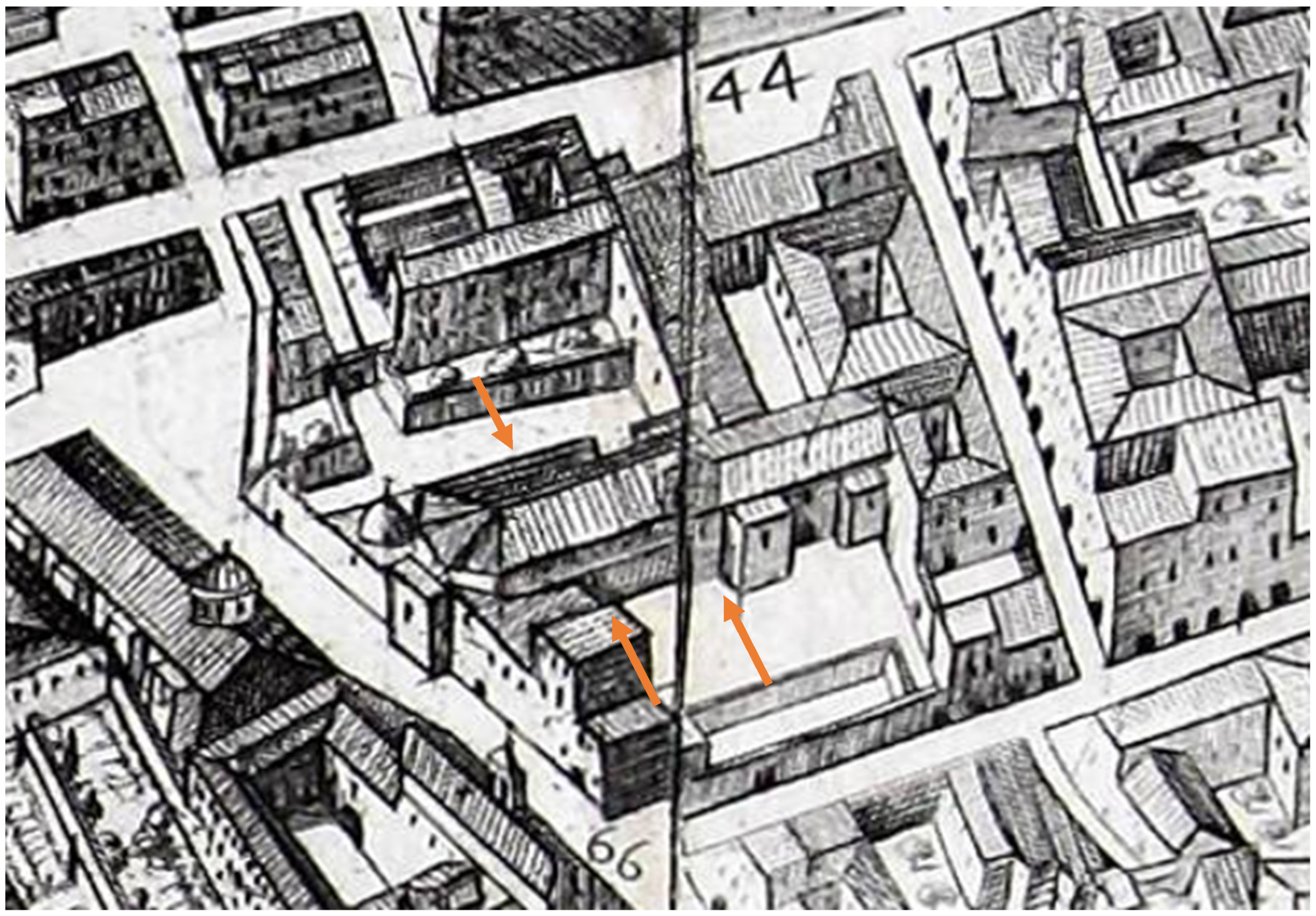
In the 13th century, the church had two portals near the apse, one opening onto the north courtyard and the other onto the south courtyard, facing the cemetery. These are the ones that survive today, with large wooden doors, although visitors usually find them closed. In the 14th century, with the extension of the church’s length, a new side portal was built to provide access from the north courtyard, near the end of the nave. This third portal appears in the well-known 1704 map of Valencia by Father Tosca (
Figure 1), shown between two side chapels. The schematic drawing also depicts the Royal Chapel of Saint Barbara and the area of the medieval cemetery.
However, shortly after Father Tosca documented the San Juan del Hospital complex, the Gothic church underwent a Neoclassical remodeling of its interior. In the early decades of the 18th century, a side chapel was built in front of the third portal, causing it to disappear [
2]. That chapel—later renovated around 1970—corresponds to the current Chapel of Saint Josemaría.
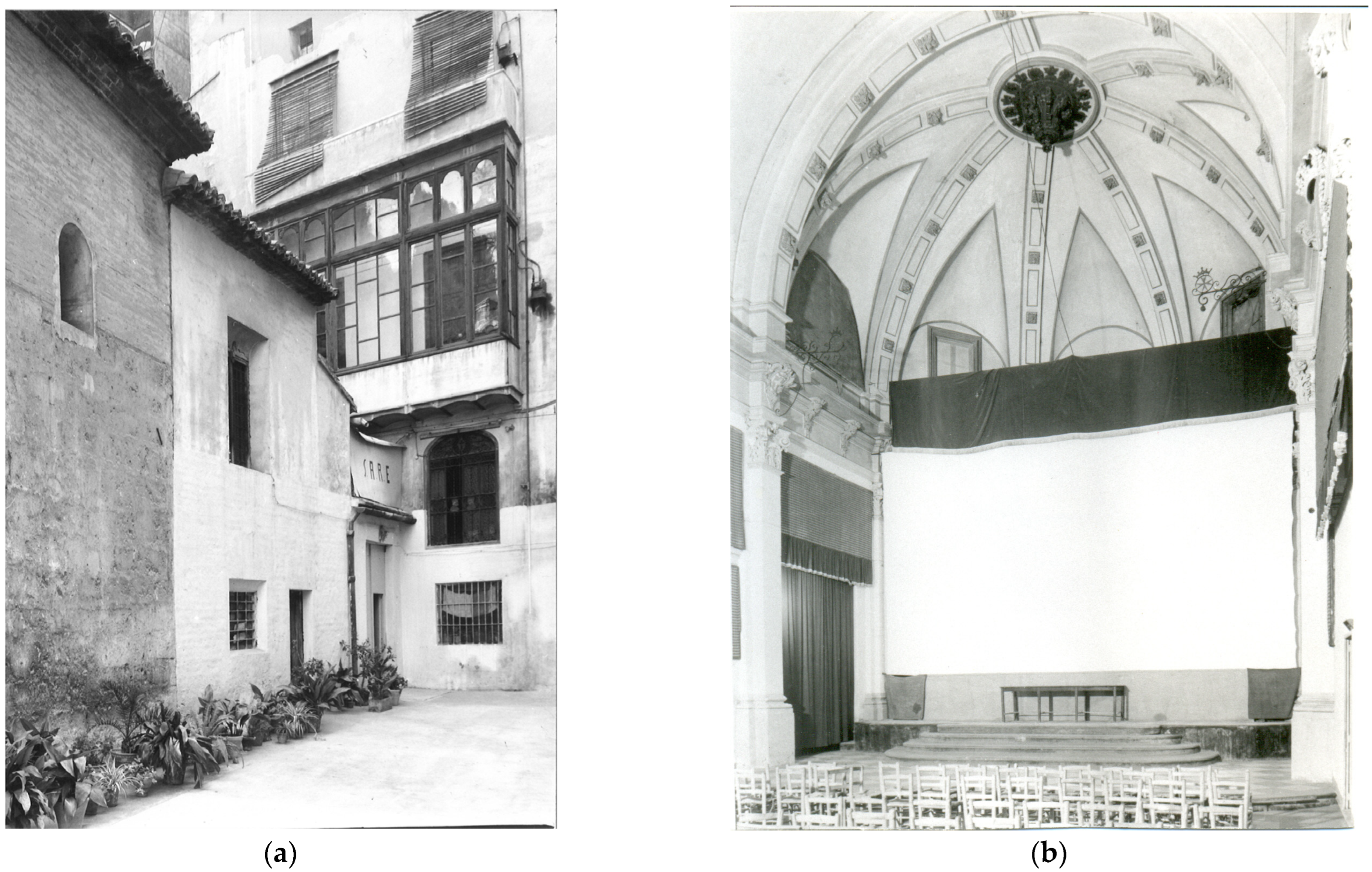
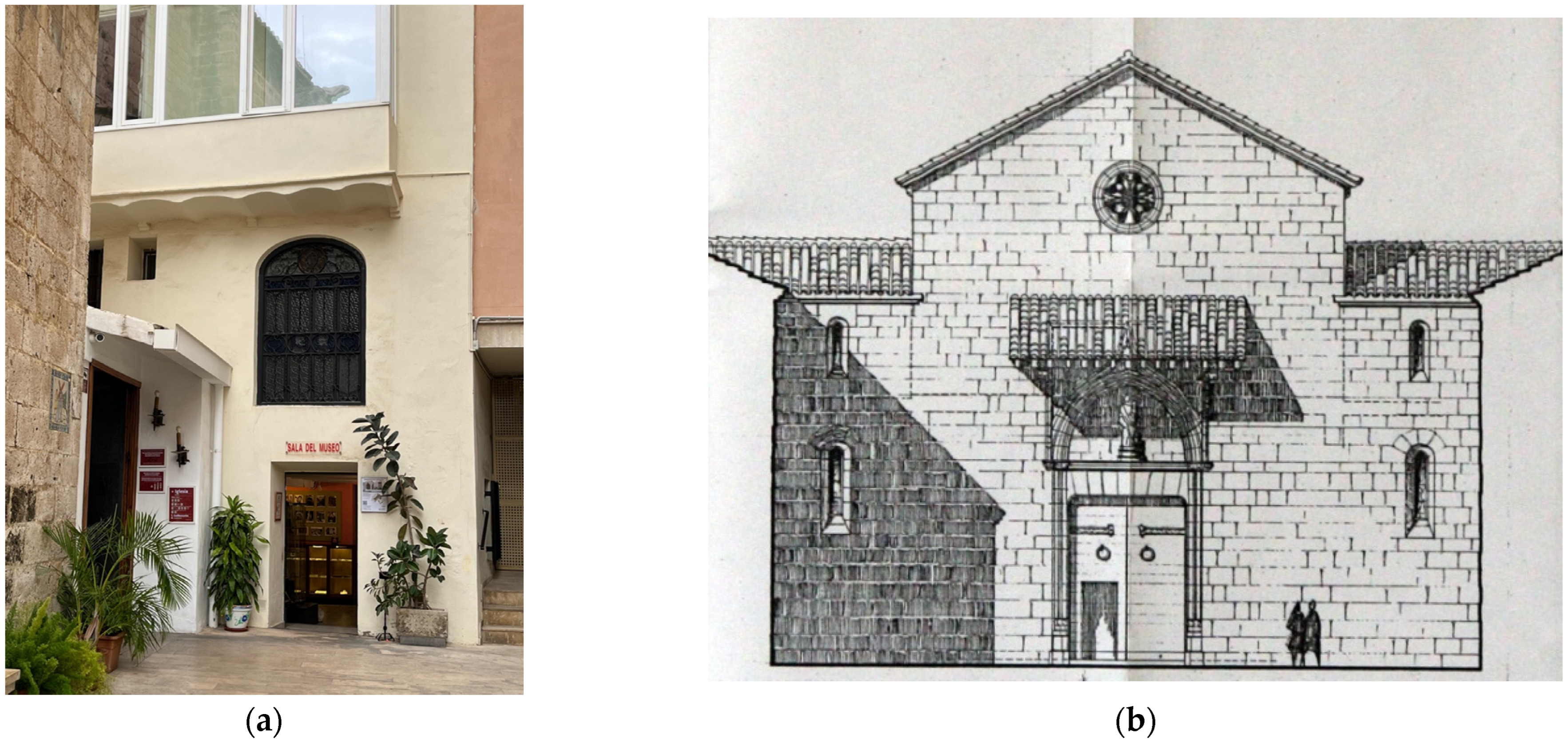
With the nave’s doorway gone, a new side entrance was created at the foot of the church. The former atrium street, which had connected the north courtyard with the medieval cemetery, was repurposed. The street was roofed over, fitted with a door, and transformed into the church’s regular entrance. Photographs from the 1960s, when the nave was used as a cinema, show the sign SARE above this entrance (
Figure 2).
When the restoration of the complex began in 1967 [
3], the entire entrance area was remodeled, though it continued to function as the church’s access point. A provisional roof was installed while different long-term options were being considered, and an eave was added above the doorway. For years, priority was given to other works, such as the restoration of the mural paintings, the refurbishment of the confessional chapel, the construction of the Neo-Mudejar chapel and the offices, the renovation of the classrooms and the social center, the removal of architectural barriers, and the restoration of the south courtyard.
Preventive maintenance plays a critical role in architecture because it allows for the early detection of structural and design flaws before they become costly failures. Regular inspections can uncover issues such as cracks, corrosion, or water infiltration that would otherwise remain hidden and evolve into serious pathologies. Inspections allow us to detect early signs of deterioration, which helps in avoiding major structural failures and ensures long-term safety [
4]. By proactively identifying these architectural problems, maintenance not only preserves the value of the building [
5] but also extends its useful life and reduces long-term repair costs. In short, preventive maintenance is a safeguard—both economically and structurally—for any edifice.
Preventive maintenance in a historic monument must be grounded in a master or management plan, which serves as a strategic document to guide both preservation and architectural interventions. A well-formulated plan defines priorities for maintenance and restoration by basing decisions on a deep understanding of the site’s material, historical, and structural conditions. According to Lin et al., “interventions are essential for the management of built heritage because they extend the lifespan of buildings and enable them to be enjoyed by multiple generations.” [
6]. Moreover, such a plan ensures consistency; a master plan “establishes conservation standards and priorities … and provides for the development and periodic revision of components subject to the policy.” [
7]. In addition, international guidelines emphasize how a management plan involves not only documentation but also long-term strategic decision-making [
8]. By integrating maintenance schedules, budgeting, and intervention logic, the plan director helps safeguard heritage value while enabling informed architectural work—whether restorative, adaptive, or preventive.
Thanks to the master plan (Plan Director) for the Church of San Juan del Hospital [
9], a comprehensive HBIM-based digital model has been developed, enabling what is essentially a digital twin of the monument. This digital replica integrates data and sensor input to support continuous preventive maintenance, ensuring that deterioration is monitored and addressed proactively. The HBIM repository improves the efficiency of facility management and maintenance planning for large heritage buildings [
10]. Furthermore, research shows that this model has been used to simulate the building’s behavior and guide decision-making for conservation strategies, demonstrating that the plan director doesn’t just prescribe interventions—it makes long-term, data-driven preservation a reality [
11].
From that point, it was determined that it was time to carry out an intervention appropriate to the heritage significance of this monument, the first church in the city of Valencia after its conquest in 1238 [
12]. The project focused on restoring and improving the main entrance, ensuring that any work respected the historical and architectural value of the building [
13]. This intervention aimed not only to preserve the church’s structural integrity but also to enhance its accessibility and visual impact, aligning with the conservation principles established in the management plan.
2. The Existing Problems
As reflected in the previous points, one of the problems the church presented was that, after the 20th-century interventions, it remained unfinished and also had an indecorous appearance. Before undertaking any intervention or study, it is essential to define a study methodology that ensures all relevant aspects are addressed and prevents biased conclusions that could compromise the quality of the results. The methodology is essentially based on the analysis of the problems faced and their historical evolution, including their specific characteristics. This requires addressing the study of urban development in order to understand the constructive evolution of the church. In addition, sociological and architectural analyses are also undertaken, identifying strengths and weaknesses—similar to an architectural SWOT analysis—together with environmental and sustainability-related issues.
2.1. The Structural and Constructive Disposition of the Roof and Entrance
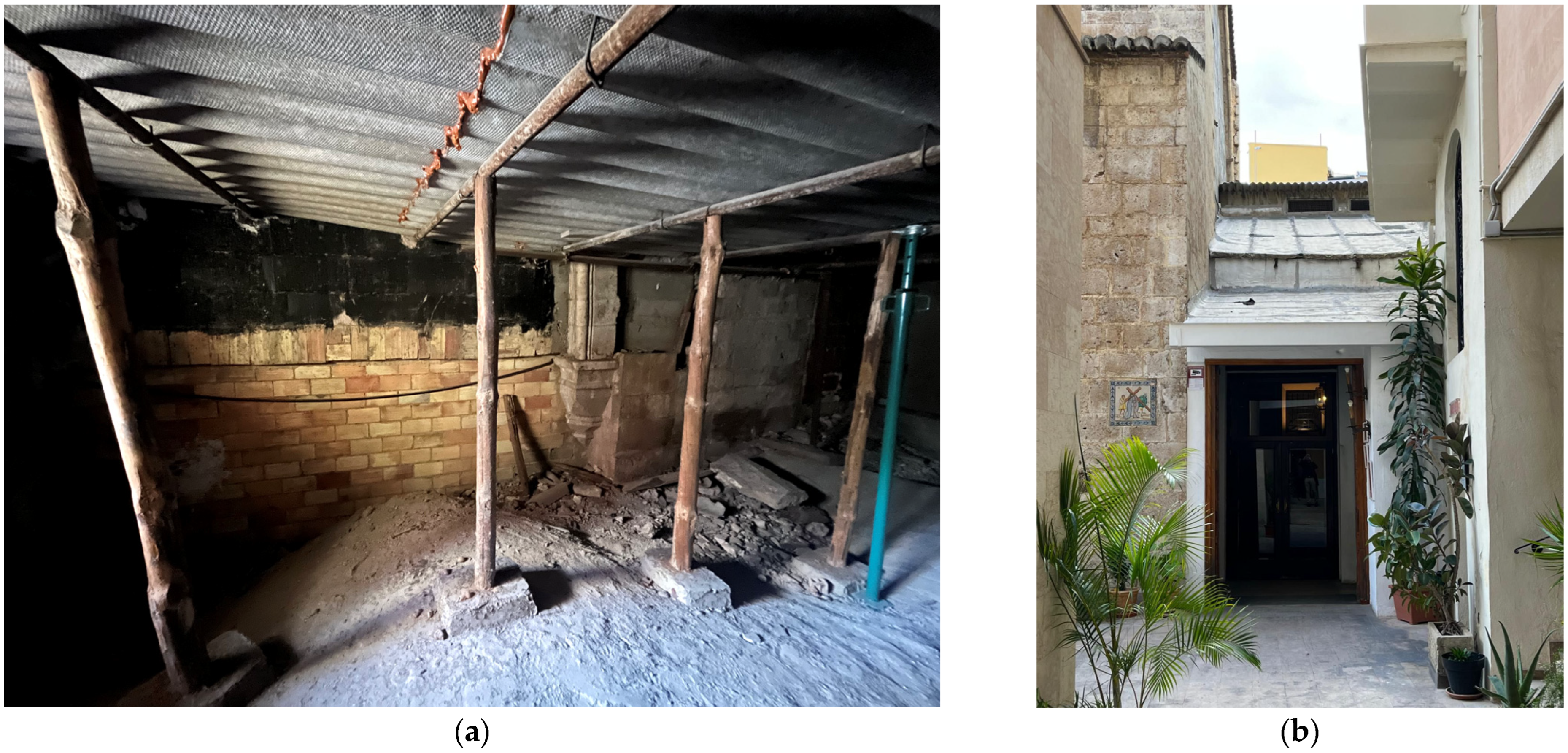
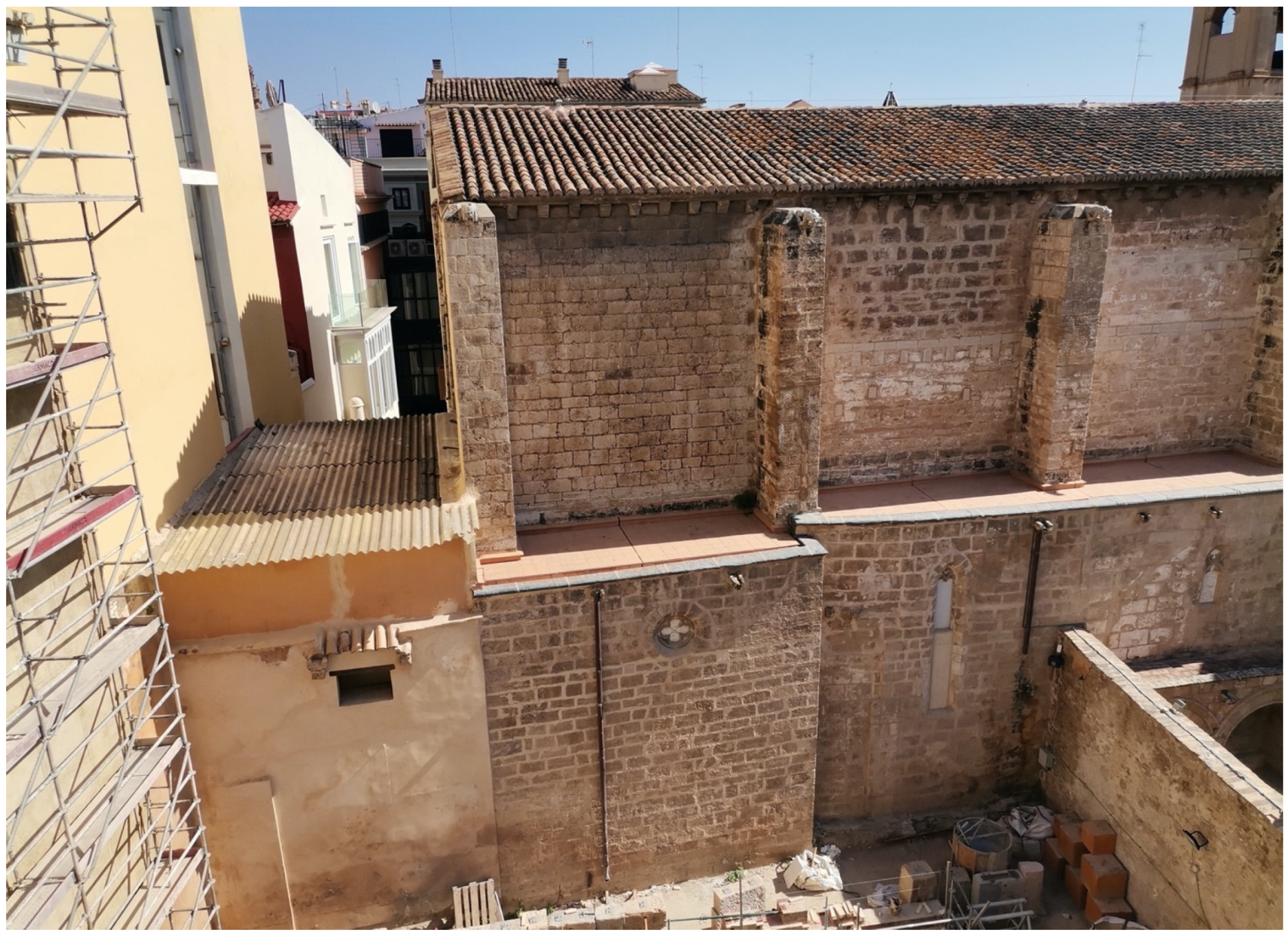
The roof overstructure consisted of wooden logs resting directly on a small base in the ribbed vaults (stone ribs and infill with tile vaulting) built in the 20th century, with a system of rafters supported on these logs using 6 cm-diameter circular tubular metal profiles, and covered with fiber-cement sheets. It was used for HVAC installations and functioned as a lost space for storage. The ‘entrance façade’ consisted of the exposed view of the pitched roof, featuring an eave with a metal gutter and a reused wooden door (
Figure 3). The structural condition of both the logs and metal profiles was generally stable, although minor signs of corrosion and wood decay were observed near points of water infiltration. The fiber-cement sheets showed localized cracking, indicating the need for careful maintenance. The spatial configuration allowed for easy inspection of mechanical installations, yet restricted full accessibility for restoration work. The wooden door, despite being reused, preserved its original iron hardware, contributing to the overall historic character of the entrance. Finally, the combination of materials and construction techniques reflected a pragmatic approach typical of early 20th-century interventions on historic vaults.
Additionally, it presented an indecorous appearance for a monument, particularly for visitors to the Hortensia Herrero Art Center (
Figure 4). The fiber-cement sheets used in the roof pose environmental and health concerns, as they may release harmful dust particles containing asbestos or silica if deteriorated or improperly handled [
14]. Additionally, the roof slopes facing the north façade were finished with aluminum asphalt sheeting, typical of the waterproofing repairs carried out on roofs during the 1970s. The aluminum asphalt sheeting provides basic waterproofing and UV resistance but is prone to cracking, aging, and poor adhesion over time, which can lead to leaks and increased maintenance needs [
15]. The wood had received no fire-retardant treatment and had not been treated against xylophagous organisms. It is assumed that no structural analysis was performed, as the roof consisted of simple wooden poles and circular tubular profiles of 6 cm in diameter, which fall outside any standard structural typology. The assembly appeared temporary, despite having been in place for 50 years [
16].
2.2. The Urban Problem
The physical environment is urbanized and contains all the elements characteristic of an urban setting. These are not altered by the present intervention. This impressive church, built prior to the Cathedral, stands on the site of the former Roman circus, making it the oldest area of Valencia [
17].
The houses donated by King James I to the Order of Saint John of the Hospital [
18] were located on what is now Trinquete de Caballeros Street. However, the urban layout at the time of the conquest of Valencia—when the Hospitallers began the construction of their hospital complex—was not the same as it is today, since new streets were later opened that cut across the Order’s properties, while others were closed or converted into alleys.
Orellana [
19], when describing the street of Sanct Joan del Espital, assigns it various names throughout the years, considering it to be the stretch that begins at the Plaza de la Congregación and ends at the church door commonly called that of the Mare de Déu del Miracle, continuing until it joins Trinquete de Caballeros Street. One of these names is ‘Carrer del fosar de Sanct Joan del Hospital,’ as it appears in the itinerary of the proclamation of 21 April 1539, for the procession to be held in honor of Saint Vincent Ferrer. Later, because the Sacristy of the said church faced this street, it also came to be known as ‘Carrer del Sagrari de Sant Joan del Espital,’ according to a provision issued by the Almotacén on 28 June 1704.
Historical cartography and documentary sources reveal that several streets that once surrounded the medieval complex of San Juan del Hospital have since disappeared due to successive urban transformations. Among them were the streets known as
de la Sabatería and
de Cristòfol Soler [
20], which ran parallel to the present-day Calle del Mar and formed part of the boundary of the Jewish quarter established under King James I. Another lost street, identified by Gascó Pascual as
calle del Atrio, housed the Tamarit baths and connected directly with the enclave of the Hospitaller complex. Likewise, the current Calle del Milagro did not yet exist, and only a small cul-de-sac provided access from the earlier street network [
21]. A further street, today preserved only as a sequence of interior courtyards, led to the courtyard containing the Chapel of Santa Bárbara and was historically known as
del Cristo de las Penas, recalling the Holy Thursday procession that passed through it (
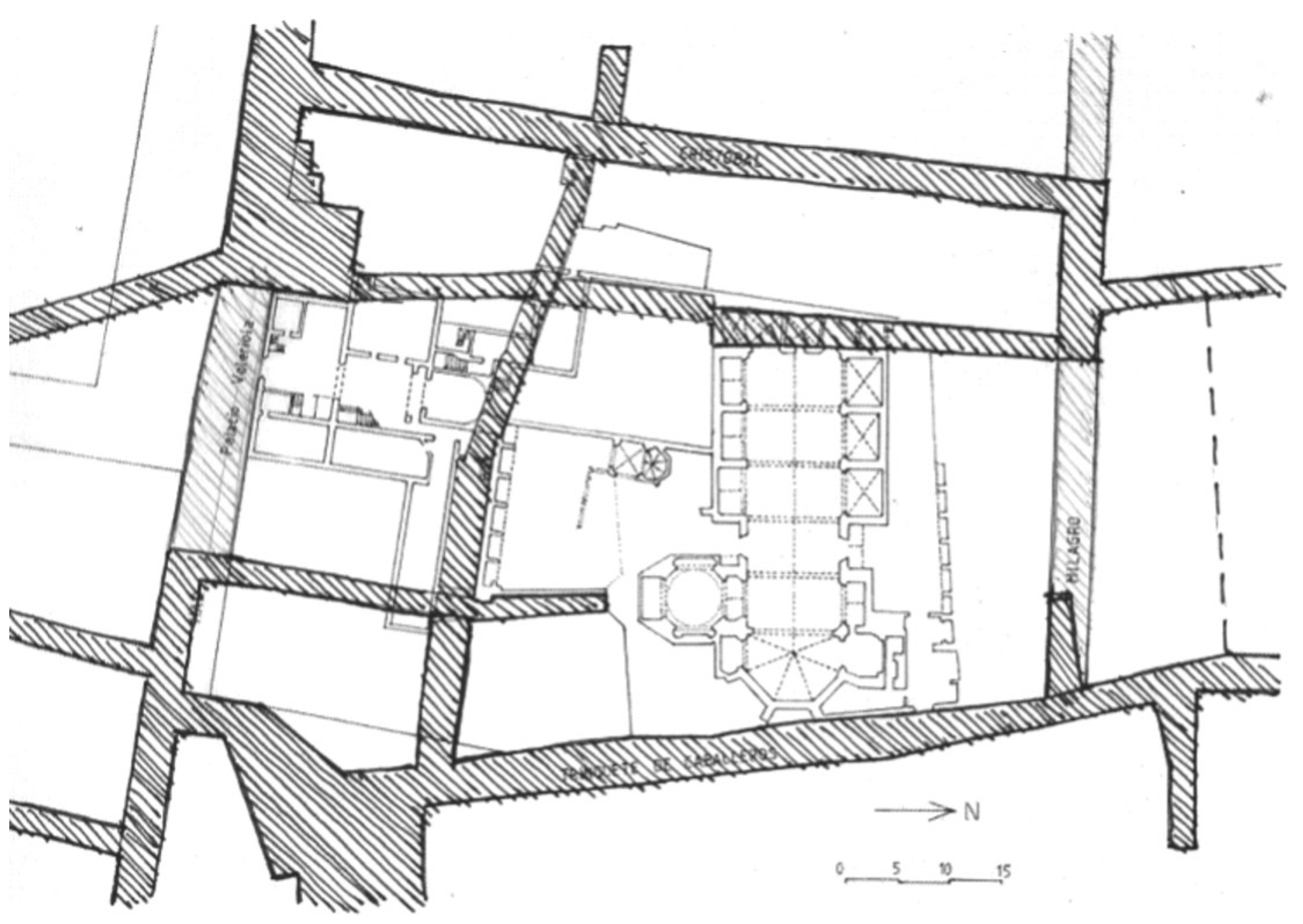
Figure 5). The parcel maps and the 1704 plan by Padre Tosca still reveal the imprint of these vanished streets, offering valuable evidence of the medieval urban fabric surrounding San Juan del Hospital (
Figure 6) [
22].
2.3. The Problem of Entrance
The problem of the church’s entrance had remained unresolved for centuries, and the works carried out in the 1970s only intensified the issue due to the poorly conceived, aesthetically deficient solution and the use of low-quality materials. Although the Romanesque portals of the second bay have endured to the present day, the location of the entrance to Valencia’s first church—which would logically have been on the west elevation—remains an unresolved issue. This elevation incorporates the remains of the former atrium, now functioning as the students’ chapel and as a passage space connecting the courtyard with the nave of the church and the chapel area used for confessionals. Built onto these remains of the former atrium stand the rear façades of two buildings facing San Cristóbal Street No. 8, where the chapel of the confessionals is located, and No. 10, which houses the museum room, office, and archival library. The roofs over this former atrium were constructed with ribbed vaults on the interior, while externally they were covered with corrugated fibrocement panels patched with asphalt fabric protected by an aluminium sheet. These panels were supported by wooden logs and planks and iron props—an improvised and precarious solution executed in the early 1970s.
As a result of urban development and the street pattern inherited from the historic alleyways, the entrance to the complex had been preserved at the foot of the church, as would be typical for this type of building. However, this entrance was not positioned on the main axis—as would normally be expected—but instead sat at the corner of the north façade, where an alley intersects with the north courtyard. Consequently, the entrance becomes visible only when approaching from the north courtyard, appearing on one’s left, corresponding to the current alley that leads toward Milagro Street. This created a problem of entrance focalization, further aggravated by the poor material quality of the existing door and its awkward visibility from the alleyway. In the 1970s, Ramiro Moya and Pons-Sorolla drafted a project to create a new plaza at the foot of the church and relocate the main entrance along the central axis of the nave (
Figure 6) [
23]. This problem of focalization is further intensified because the back of the north courtyard corresponds to the rear façade of building no. 10, whose main architectural feature is an enclosed lookout with a glazed front belonging to the principal floor. This lookout is displaced from the central axis of the courtyard, and it is flanked by two continuous balconies, while openings of different proportions complete the mezzanine level and the lower floor that provides access to the San Juan del Hospital Museum.
2.4. The Environmental Problems of the Church
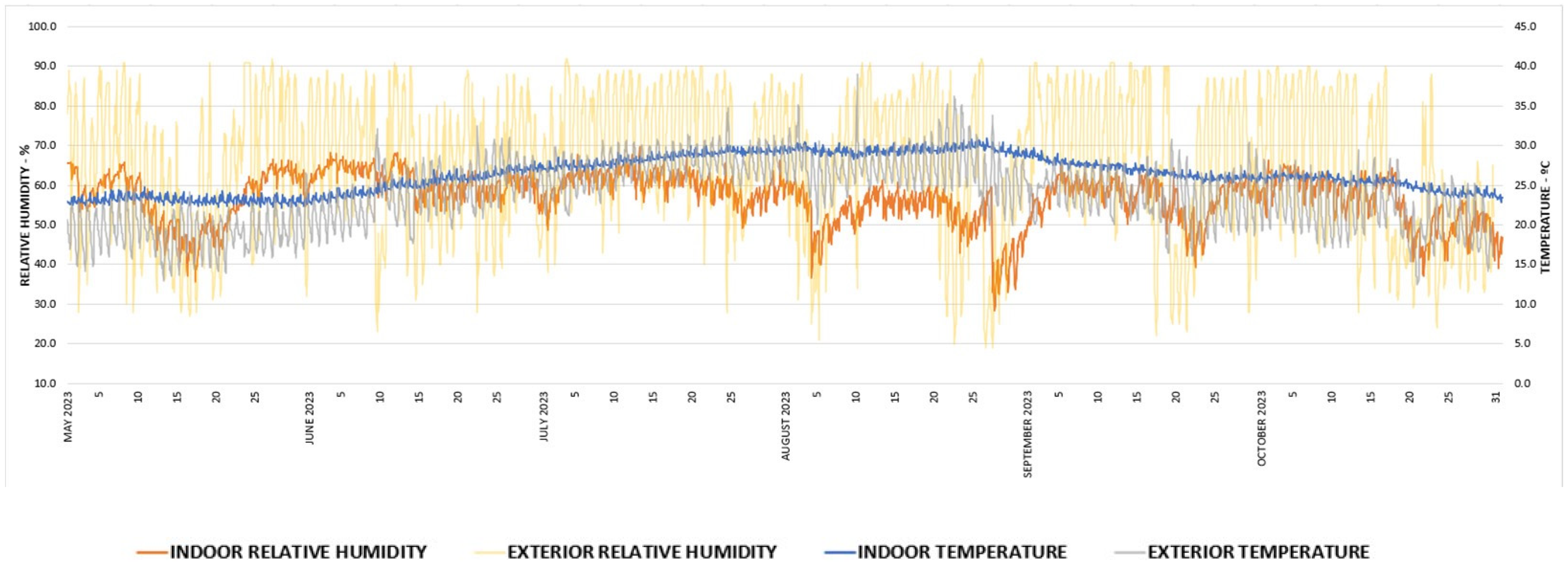
In the study developed by Galiano-Garrigós et al. [
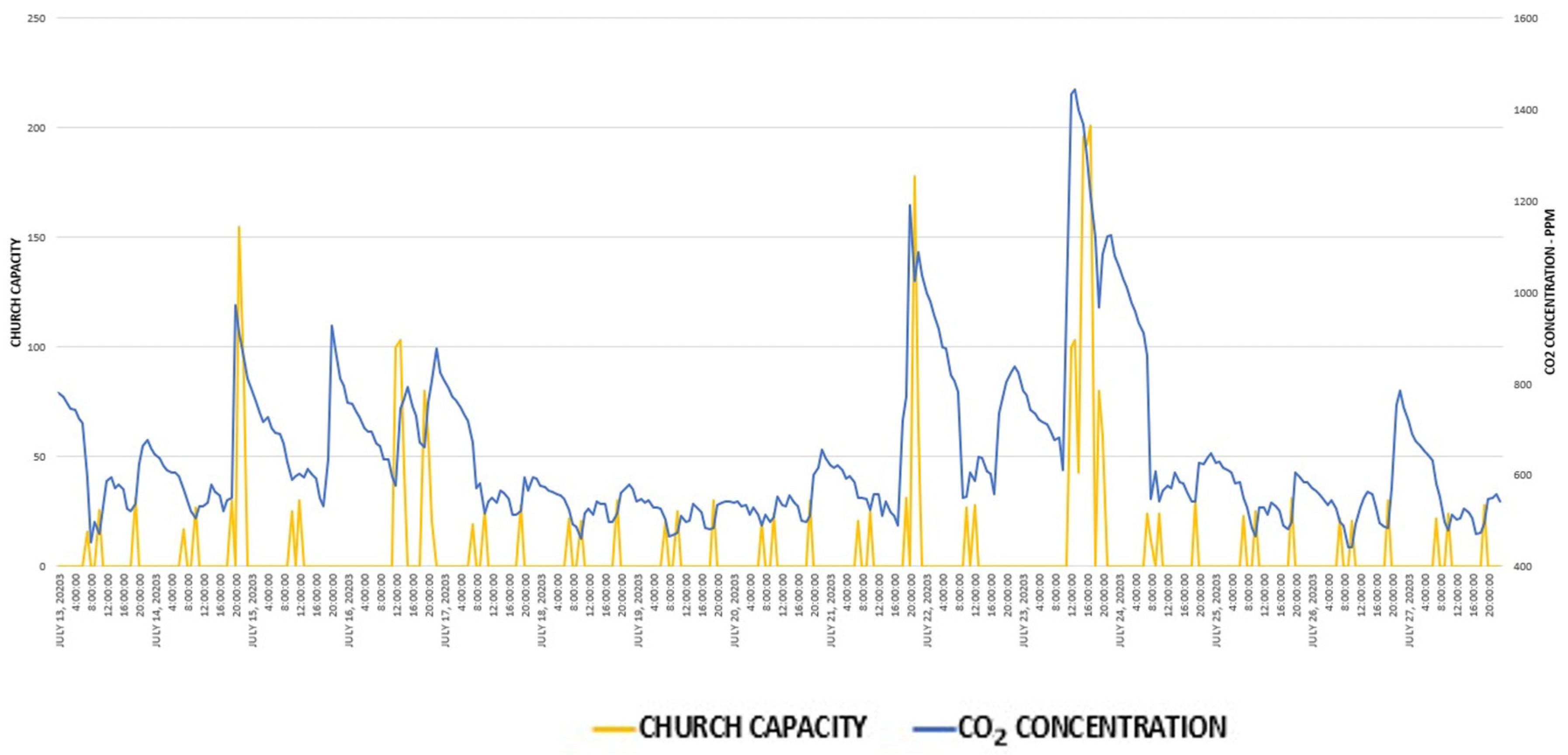
24] in the research project titled “Analysis and development of HBIM integration in GIS for the creation of a tourism planning protocol for the cultural heritage of a destination (HBIMSIG-TURISMO)” granted by the Ministry of Science and Innovation of the Government of Spain (PID2020-119088RB-I00), measuring CO
2, relative humidity, and temperature both inside and outside, the main thermal conditions (
Figure 7), it highlighted the following conclusions as the most notable environmental problems:
- −
The study identifies a conflict between high visitor numbers and heritage conservation, as cultural tourism can accelerate the deterioration of protected assets, such as paintings or frescoes.
- −
During summer months, internal temperatures range from 23 °C to 30 °C, exceeding outdoor conditions.
- −
Relative humidity inside the church ranges between 50% and 70%, with insufficient natural ventilation.
- −
CO2 accumulation is significant during visitor peaks, reaching nearly 1500 ppm, which is harmful to both artifacts and occupant health.
- −
After events with many attendees, it can take up to 20 h for CO2 levels to return to baseline.
- −
Internal conditions do not recover quickly because the building cannot dissipate visitor-generated CO
2 as fast as it is accumulated (
Figure 8).
- −
These temperature, humidity, and CO2 levels exceed recommended thresholds for heritage conservation, risking paintings and coatings.
- −
The lack of adequate ventilation is worsened by a scarcity of operable openings, preventing effective air renewal.
Digital twin simulations suggest limiting visitor capacity or installing mechanical HVAC systems to improve environmental quality [
25]. However, introducing mechanical ventilation and dehumidification could conflict with the architectural and heritage values due to visual intrusion and energy consumption [
26]. High relative humidity promotes the growth of fungi and microorganisms that damage stone and mortar in churches, causing efflorescence and loss of cohesion. Excess CO
2, combined with moisture, leads to carbonation and chemical alterations in limestone and fresco plaster. In fresco paintings, excessive humidity causes paint layer detachment and salt formation, altering the original colors. Gothic wooden panels and more contemporary canvases experience warping, mold growth, and weakening of wood or textile fibers. These factors threaten both the structural stability and the aesthetic integrity of cultural heritage objects. It is important to note that, although the methodology is consistent with previous studies, the presented data—internal temperature variations of 23–30 °C, relative humidity of 50–70%, and persistent CO
2 accumulation—derive from the monitoring campaign conducted as part of this project and constitute an original empirical contribution to understanding the building’s microclimatic behavior.
2.5. Intervention Criteria
Although the issues that needed to be addressed were varied, perhaps the greatest challenge was the prevailing fear of intervention, driven by an overly conservative approach. At the same time, the existing entrance was not befitting one of the most vibrant buildings in Valencia—‘vibrant’ because of both the large number of people who attend religious services and those who visit for cultural and touristic reasons.
These precedents should be sought according to three clearly differentiated parameters, which will provide us with a comprehensive view of the model:
- (a)
Precedents that determine the spatial layout of the architectural ensemble [
27].
- (b)
Precedents that determine the construction systems and decorative elements characteristic of a specific architectural style in each case [
28].
- (c)
Precedents established according to the criteria of state architecture typical of the Kingdom of Aragon [
29].
If we base ourselves on the constructive and organizational–spatial typologies of convents and hospitals of the period, we can look for references in those architectural ensembles built in the 12th and 13th centuries within the domain of the Crown of Aragon, both in Spain and France. That is, buildings constructed in the Romanesque and Cistercian styles, marking a transitional period between Romanesque and Gothic, which is where the Valencian hospital complex should be included, given the dates of its construction and the influences it may have received [
30].
Just as the Templars followed the rule of Saint Bernard, the Hospitaller Order adhered to the canons established by the Augustinian rule, which implies a high intellectual level among its clerics, as established by the norms of Saint Augustine. Architecturally speaking, in both cases, a parallel can be drawn with the Cistercian order, since, within the austere spirit that surrounds their way of life, they look to the past in their artistic manifestations, using architectural elements that are almost devoid of decoration, bold, and severe [
31].
The official creation of the Cistercian order, a “reform” of the Benedictine rule, took place in 1119 [
32]. From the beginning, Cistercian architecture followed a common program and was inspired by a particular religious spirit, deliberately opposed in its humility and severity to Cluniac architecture. The Cistercians had a strong influence on the architecture of the Hospitallers (as well as other monastic orders), such as the use of the barrel vault with pointed transverse arches, which is part of the Romanesque tradition, and which we find in the main church of the San Juan Hospital complex (also in the main church of the Poblet Monastery, as well as in most temples built in monasteries of eastern Spain and southeastern France). Likewise, the ribbed vault was used to define unique spaces, as can be seen in the Jaime I chapel of San Juan del Hospital or in the chapter houses of other monasteries (Poblet, Santes Creus, Benifasá…) [
33]. Later, this element was also adopted by the monarchy, as demonstrated by the chapels in the palaces of the kings of Mallorca and Perpignan.
2.6. Convergence of Key Challenges
The limited visibility of the building’s main entrance leads to inefficient management of visitor flow, as it hampers orientation and causes localized crowding in certain areas. This concentration not only affects the visitor experience but also increases pressure on heritage elements, raising CO2 accumulation, relative humidity, and other environmental factors that accelerate material degradation. Therefore, both issues are closely interconnected: the poor visibility of the entrance indirectly contributes to alterations of the interior microclimate and the deterioration of cultural heritage.
3. Obtained Result
3.1. The Complexity of the Construction Phase
The intervention to be carried out was possibly the most complex and sensitive action on the historic ensemble of San Juan, as it involved work on the unfinished western façade. The project needed to address four issues:
- (1)
The completion of the church nave’s façade.
- (2)
The structure and roofing of the remains of the former atrium.
- (3)
Access to the church from the western side via the north courtyard.
- (4)
It was considered that the west side of the north courtyard presented a composition that was not suitable for a monumental ensemble, as it consisted of disparate elements that distracted attention without unity, order, or intentionality. It appeared as a set of construction elements arranged haphazardly. This issue was regarded as one of the important aspects to be addressed in the project.
To tackle it, three possible solutions were proposed:
- (1)
Carry out an intervention that would focus attention on the lower level of the building, so as to neutralize the dispersion of elements and enhance access to the church.
- (2)
Install a suspended lattice screen between the corners of the church and the building on the north side of the courtyard facing Virgen del Milagro Street.
- (3)
Do not intervene; in this way, negative criticism could be avoided, as well as the risk of not obtaining heritage authorization or a permit from the Administration.
This project has taken on a public character, having received financial grants from the Directorate General of Cultural Heritage (Generalitat Valenciana) and the Diputación de Valencia, in addition to contributions from the project itself and benefactors.
3.2. The Architectural Design
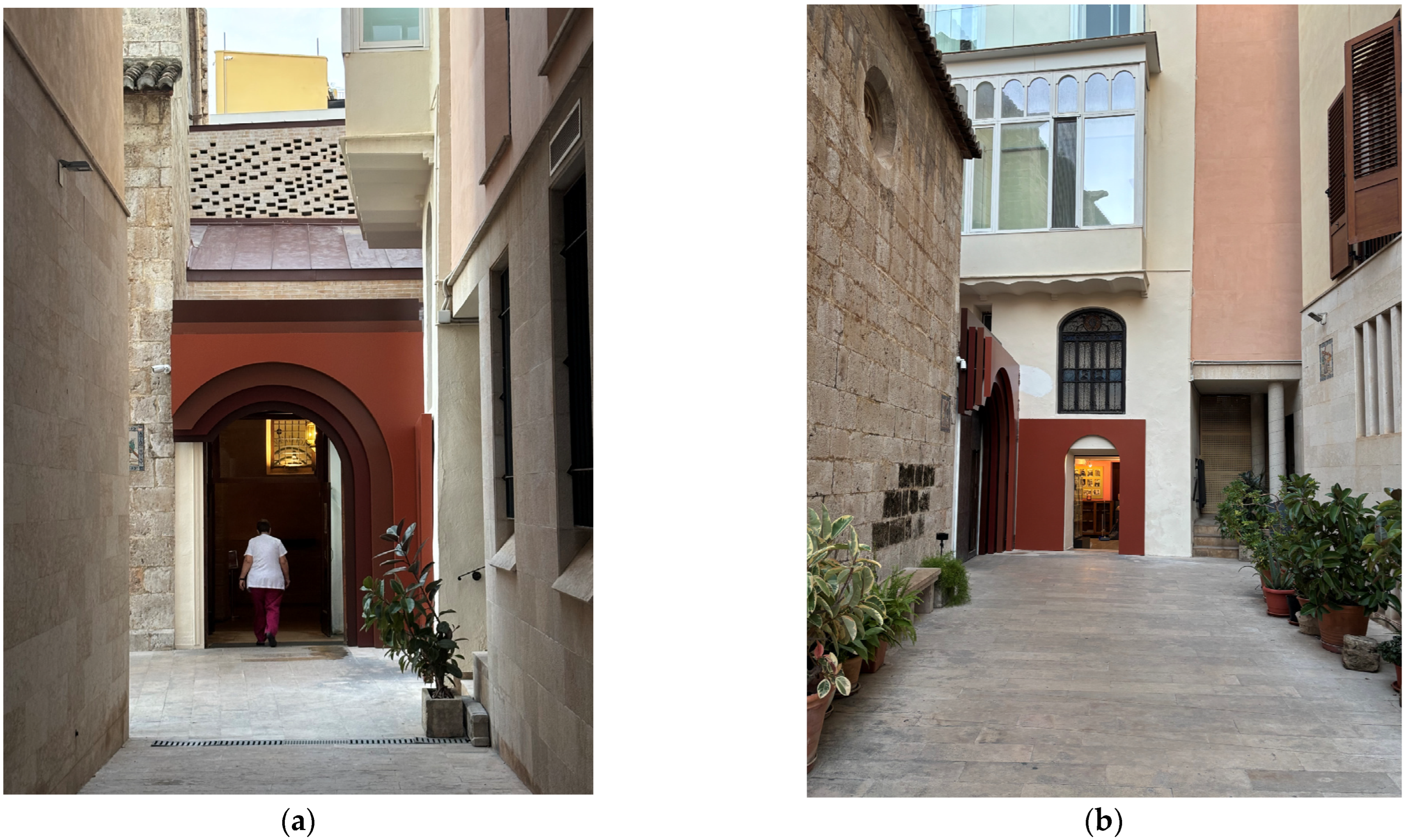
Given all the previous constraints, it was challenging to establish a solution that could address all the issues posed. However, based on the simplicity of Cistercian architecture, which underlies the originality of the Church of San Juan del Hospital, it was decided that the new portal should offer a contemporary interpretation of a Romanesque portal with archivolts, adapted to the contemporary context of architectural restoration in the 21st century, both in form and material.
Furthermore, this portal solution (
Figure 9) had to integrate access to both the church and the museum, each with different dimensions and forming a 90° angle. Accordingly, a smaller order was applied to the museum entrance and a larger order to the church entrance, ensuring the most appropriate proportionality between the two. The partial removal of the jamb and the staggering of the archivolts help to focus viewers’ attention toward that corner.
Moreover, this solution evokes a section of ribbed vaults, where the vault ribs require flying buttresses or supports. Reducing the dimension of the left jamb adds dynamism, better directs the visual path toward the church entrance, and prevents tripping or wear on the jamb.
In the planned and executed intervention, it is considered that the solution proposed in the project is the most appropriate, with three aspects to highlight:
- (1)
It is a reversible solution [
34]. At any time, the panels forming the portal can be dismantled.
- (2)
It follows the principles of heritage intervention by avoiding false historic reconstructions [
35]. Moreover, the brick and metal panels, along with their finishes, blend perfectly with the historic stone, and the chosen colors correspond to the traditional image of San Juan del Hospital.
- (3)
The façade of the upper section is exposed brick with a tone that harmonizes with the stone and features perforations, so that air conditioning and ventilation installations are not visible from the outside. Creating a storage and/or equipment space will facilitate ventilation of the western façade and help reduce CO2 levels inside the church.
Furthermore, thanks to the size of the panels and their transport, each panel spans the full width of the designed façade, without introducing new proportions or shapes. This focuses attention on the lower part of the western front, effectively addressing the issue of compositional dispersion.
3.3. Sustainable Materials for a New Doorway
The materials and techniques used are contemporary, but sustainability criteria were followed, as well as a structural system compatible with the medieval ribbed vault solution to reduce CO
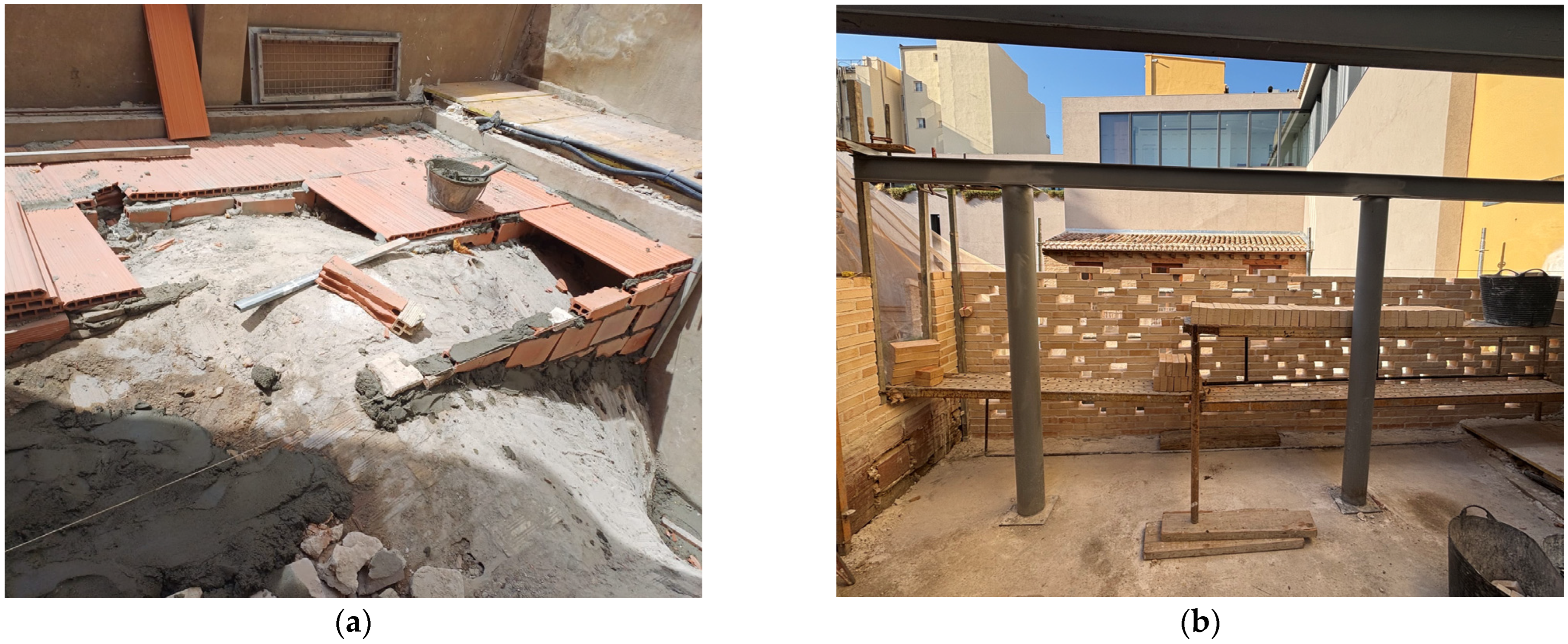
2 in the intervention. Over the ribbed vaults, small partition walls were installed with a layer of concrete, creating a resilient framework [
36] to support the circular pillars that bear the roof (
Figure 10). The roof features panels of recycled wood, topped with a reddish zinc sheet to match the color of the church roof, which is made of ceramic tiles, and to harmonize with the tones of the new portal. The zinc sheet serves as the waterproofing system itself. Traditional fixation methods are used, placing the sheets over a wooden board and securing them with nails. The overlapping arrangement of the sheets ensures complete watertightness.
The façades are built with handmade ceramic bricks, and for the new portal, aluminum was chosen due to its greater durability against atmospheric corrosion, better transportation logistics, and ease of assembly.
The use of ceramic brick in façade construction offers significant advantages in the context of CO
2 reduction strategies within the built environment [
37]. Ceramic brick is characterized by a long service life, high thermal mass, and excellent durability, which together reduce operational energy demands by stabilizing indoor temperatures and decreasing reliance on mechanical conditioning systems. Moreover, brick’s modularity and dry-assembly potential facilitate selective disassembly, reuse, and recycling, thereby reducing the carbon footprint associated with demolition and waste management [
38]. When produced using efficient kilns, renewable energy sources, or low-carbon clay blends, ceramic bricks achieve substantially lower embodied emissions compared to many contemporary façade materials. Their low maintenance requirements further decrease lifecycle emissions by limiting the need for high-impact repair processes or material replacement. Additionally, brick façades can integrate ventilated cavity systems, improving hygrothermal behaviour and enabling passive performance enhancements. In heritage or sensitive urban contexts, ceramic brick provides a material with high compatibility, reversibility, and visual continuity, reducing the need for energy-intensive cladding alternatives. Overall, the strategic use of ceramic brick—particularly when sourced locally and manufactured under low-carbon protocols—represents an effective approach to reducing both embodied and operational CO
2 within architectural envelope design [
39].
The incorporation of aluminium as the new entrance structure of a historic church presents a contemporary and sustainable approach that aligns with current decarbonization objectives in architectural practice [
40]. Aluminium offers a high strength-to-weight ratio, enabling slender structural profiles and reducing the total quantity of material required, which directly lowers embodied carbon [
41]. One of the most relevant advantages is its capacity for recycling: recycled aluminium requires up to 95% less energy to produce than primary aluminium, making it one of the materials with the lowest embodied CO
2 when sourced from certified secondary streams. When used in façade or entrance systems, aluminium provides a long service life, excellent corrosion resistance, and minimal maintenance requirements, all of which reduce lifecycle emissions compared to materials that deteriorate more rapidly or require periodic replacement. Additionally, aluminium components can be manufactured with high precision, improving airtightness and thermal performance, thereby contributing indirectly to the reduction in operational energy demand. Compared with alternatives such as steel or certain composite panels, aluminium exhibits a more favourable carbon balance when recycled content is maximized and when its lightweight nature reduces transportation emissions [
42]. In the context of heritage intervention, aluminium is advantageous because it is fully reversible, non-invasive, and visually discrete, allowing contemporary additions without compromising the historical fabric. Overall, when properly specified and responsibly sourced, aluminium can be considered a more sustainable solution than many traditional materials, offering both environmental benefits and technical compatibility for architectural refurbishment in heritage sites.
4. Conclusions
- −
Comprehensive and Heritage-Sensitive Solution
The planned and executed intervention effectively addressed the identified challenges: the completion of the nave’s façade, the coverage of the remains of the former atrium, access from the north courtyard, and the coherent composition of the west side of the courtyard. All of this was achieved while respecting the historical integrity and following heritage intervention principles without introducing false historic elements.
- −
Reversibility and Sustainability
The adopted solution is reversible, allowing the panels forming the portal to be dismantled at any time. Sustainability criteria were applied in both materials and techniques, incorporating a structural system compatible with the original ribbed vault to minimize CO2 emissions during the intervention.
- −
Aesthetic and Functional Integration
The design of the new portal offers a contemporary interpretation of a Romanesque portal that harmonizes with the historical aesthetics of the building, emphasizing the entrances to both the museum and the church with an appropriately proportional order. Materials such as aluminum, ceramic brick, and recycled wood ensure durability, color coherence, and respect for the historic image of the ensemble.
- −
Attention to Composition and Visual Experience
The arrangement of construction elements, the size of the panels, and the staggered archivolts focus attention on the lower section of the western front, resolving compositional dispersion and guiding visitors’ visual experience toward the main entrance.
- −
Innovation and Functionality
The intervention combines contemporary innovation with functional solutions: integration of discreet ventilation and climate-control systems, creation of storage and service spaces, and use of corrosion-resistant materials, optimizing both the conservation of the heritage and the building’s functionality.
Discreetly integrated ventilation systems and visitor flow control strategies can play a crucial role in preserving the microclimatic stability of heritage sites. Ventilation solutions designed to blend seamlessly with the architectural context minimize visual and structural impact while improving air exchange and reducing humidity and pollutant accumulation. Simultaneously, carefully planned visitor flow management—through timed entry, guided routes, or occupancy limits—helps mitigate localized environmental stress, limiting temperature and CO2 fluctuations caused by crowds. Together, these approaches provide a balanced strategy for safeguarding both the building’s integrity and the visitor experience.