Article

Normative Data of Neuromuscular Function in Upper Limb and Its Correlation with Superficial Fascia and Body Mass Composition


by
Oriol Casasayas-Cos
1,2,†,
Noé Labata-Lezaun
2,3,†,
Luis Llurda-Almuzara
2,3,
Sara Ortiz-Miguel
2,4,
Johke Smit
5,
Carlos López-de-Celis
2,3,6,* and
Albert Pérez-Bellmunt
2,7
1
Faculty of Medicine and Health Sciences, Universitat Internacional de Catalunya, 08195 Barcelona, Spain
2
Actium Functional Anatomy Research Group, 08195 Sant Cugat del Vallès, Spain
3
Department of Physiotherapy, Universidad de Vitoria-Gasteiz (EUNEIZ), 01013 Vitoria-Gasteiz, Spain
4
Unit of Human Anatomy and Embryology, Department of Surgery and Medical-Surgical Specialities, Faculty of Medicine and Health Sciences (Clinic Campus), University of Barcelona, 08007 Barcelona, Spain
5
PhASRec, Faculty of Health Sciences, North-West University (NWU), Potchefstroom 2520, South Africa
6
Study Group on Pathology of the Locomotor System in Primary Care (GEPALAP), Institut Universitari d’Investigació en Atenció Primària (IDIAP Jordi Gol), 08007 Barcelona, Spain
7
Unit of Human Anatomy and Embryology, Department of Morphological Sciences, Faculty of Medicine, Universitat Autònoma de Barcelona, 08193 Bellaterra, Spain
*
Author to whom correspondence should be addressed.
These authors contributed equally to this work.
Appl. Sci. 2026, 16(3), 1544; https://doi.org/10.3390/app16031544
Submission received: 7 December 2025 / Revised: 18 January 2026 / Accepted: 29 January 2026 / Published: 3 February 2026
(This article belongs to the Special Issue Exercise Physiology and Biomechanics in Human Health: 2nd Edition)

Abstract

Background/Objectives: Neuromuscular functions (NMFs) encompass biomechanical and viscoelastic properties that are essential for coordinated movement and muscular control. While NMFs have been extensively investigated in the lower limb, normative data for the upper extremity remain limited, particularly regarding the interaction between neuromuscular properties, superficial fascia, and body composition. As body composition and fascial characteristics may influence neuromuscular behavior and the interpretation of mechanical measurements, this study aimed to establish reference values for upper limb NMF, analyze dominance-related differences, and investigate the relationship between superficial fascia thickness and body mass composition. Methods: A descriptive, non-experimental study was conducted involving 61 healthy adults (122 upper limbs). Assessments included body composition (bioimpedance), superficial fascia thickness (skinfolds), viscoelastic properties (MyotonPro), and isometric strength (handheld dynamometry). Standardized protocols were applied for all measurements. Comparisons were performed between sexes and between dominant and non-dominant limbs. Correlation analyses explored associations between NMF, adiposity, and fascia parameters. Results: Dominant limbs showed slightly greater strength; however, these differences were not statistically significant. Viscoelastic properties were largely symmetrical between limbs, with minimal dominance-related differences. Clear sex differences were observed: men demonstrated greater strength, lean mass, and increased stiffness, whereas women presented higher skinfold thickness and lower muscle tone. Weak correlations were identified between stiffness, relaxation, and strength, as well as between adiposity and superficial fascia thickness. Greater adipose thickness was associated with lower stiffness values in the triceps (rho= −0304; iC95% 0.041/0.528; p = 0.017). Conclusions: Upper limb neuromuscular properties exhibit high bilateral symmetry, with limb dominance influencing strength. Sex and body composition significantly modulate both viscoelastic and functional parameters. These findings provide normative reference values and highlight the relevance of considering body composition and fascial characteristics when assessing neuromuscular function in clinical and sports contexts.

1. Introduction

Neuromuscular functions (NMFs), also referred to as neuromuscular properties, are a group of biomechanical and viscoelastic characteristics reflecting the complex interaction between the nervous system and skeletal muscles that enables coordinated movement, force production, and overall muscular control [1,2]. These functions are essential to multiple aspects of human physiology, including locomotion, posture maintenance, and fine motor skills.
Initial research on NMF primarily focused on muscle strength and symmetry. However, over time, the scope expanded to include additional muscle tissue responses, such as tone, muscle recruitment, motor evoked potentials, stiffness, and elasticity. These factors collectively influence muscle performance during movement tasks, rehabilitation, and training [3,4,5]. The broad range of concepts encompassed by NMF has led to the development of numerous invasive and non-invasive assessment tools and instruments. Advanced diagnostic technologies, including electromyography, magnetic resonance imaging, ultrasound, and tensiomyography, are now widely utilized in clinical medicine and sports science. However, the high cost and lengthy processing times associated with some of these methods have prompted the need for the development of faster and more affordable alternatives, such as myometry, which measures specific mechanical and viscoelastic properties of muscle tissue [6].
Until recently, several neuromuscular function (NMF) parameters were primarily interpreted in relation to the contractile components of the musculoskeletal system or to global anthropometric characteristics [7,8,9,10]. However, accumulating anatomical and histological evidence indicates that fascial tissues are biologically active structures, and that the presence and regional density of myofibroblasts contribute to tissue stiffness not only under pathological conditions but also as part of normal tissue homeostasis [11]. In this context, stiffness is increasingly understood as the result of the combined mechanical and biological interaction among muscle, fascia, and adipose tissue [6,12].
Fibroblasts and fasciacytes constitute the principal cellular components of fascia and play a central role in neuromuscular function. Fibroblasts regulate extracellular matrix turnover and remodeling, thereby contributing to muscle integrity and efficient force transmission. Fasciacytes, in contrast, are specialized cells responsible for producing a hyaluronan-rich matrix that facilitates interlayer sliding within fascial tissues. Importantly, both the structural organization of fascia and the distribution of its cellular populations have been shown to vary across anatomical regions, reflecting differences in mechanical demands and functional loading. Previous studies have demonstrated regional heterogeneity in fascial thickness, composition, and myofibroblast density, suggesting that fascial tissues of the upper and lower limbs may present distinct baseline mechanical and viscoelastic properties [13,14,15,16].
Viscoelastic parameters, including stiffness, elasticity, and damping characteristics of biological tissues, are critical for optimizing musculoskeletal performance and enhancing rehabilitation programs [3,13,14]. These properties regulate the ability of muscles, tendons, and ligaments to store and dissipate mechanical energy, thereby directly influencing movement efficiency, injury prevention, and recovery processes. Therefore, the primary objectives of this study are to establish reference values for neuromuscular response parameters and to investigate potential differences between the dominant and non-dominant upper extremities. Additionally, this research aims to explore the relationship between neuromuscular response parameters, fascial properties, and body mass index. A deeper understanding of these viscoelastic characteristics could be essential in advancing diagnostic approaches and therapeutic strategies. Integrating this knowledge into clinical practice may enhance diagnostic accuracy, optimize rehabilitation protocols, accelerate recovery, and minimize the risk of recurrent injuries, ultimately supporting long-term musculoskeletal health [15].

2. Materials and Methods

2.1. Study Design

This study employed a non-experimental, descriptive design. In total, 122 upper extremities from 61 healthy adult volunteers were analyzed (detailed sample characteristics are provided in Table 1). Participants were included if they: provided signed informed consent and adhered to the measurement procedures. Exclusion criteria included a history of upper limb injury within the past year, being classified as overweight, inability to understand the information provided, or failure to comply with the study protocol.

2.2. Sample

The sample size was calculated using the GRANMO software (version 8.0). The estimation was based on a population proportion, assuming an expected prevalence of 20% (p = 0.2) of significant functional asymmetry in healthy individuals, while accounting for natural biological variability (approximately 10–15%) and a margin of error of 5%. The final sample size was 117 limbs, corresponding to a minimum of 59 participants.

2.3. Ethical

The study was approved by the local institutional review board (UIC—CBAS201916) and conducted in accordance with the ethical principles for medical research involving human subjects as outlined in the Declaration of Helsinki.

2.4. Measurements and Procedure

The measurements were completed in a single session. After recording socio-demographic information, an experienced researcher sequentially assessed the following variables: body height, body composition, mechanical and viscoelastic properties, skinfold thickness, and muscular strength.
Strict protocols from previous studies [10,16,17] were followed to ensure optimal sample collection. Participants received reminders 48 and 24 h before their scheduled session and were instructed to adhere to the following guidelines: (1) refrain from high-intensity physical exercise the day before measurements; (2) rest/sleep a minimum of 6 h the night before data collection; (3) avoid consuming energy drinks or coffee the day before; (4) refrain from eating at least 2 h before measurements; and (5) visit the bathroom 30 min before measurements. All measurements were conducted at the same time of the day and under identical environmental conditions (temperature: 21–23 °C, humidity: 40–50%).

2.4.1. Body Height and Body Composition

Body height was measured barefoot to the nearest 0.1 cm using a stadiometer. Body composition was assessed with a medically approved and calibrated electrical bioimpedance monitor (Tanita 780 S MA, Tokyo, Japan) and was used by a certified and experienced researcher. All measurements were conducted by the same researcher, following protocols described in previous studies [10].

2.4.2. Viscoelastic Properties

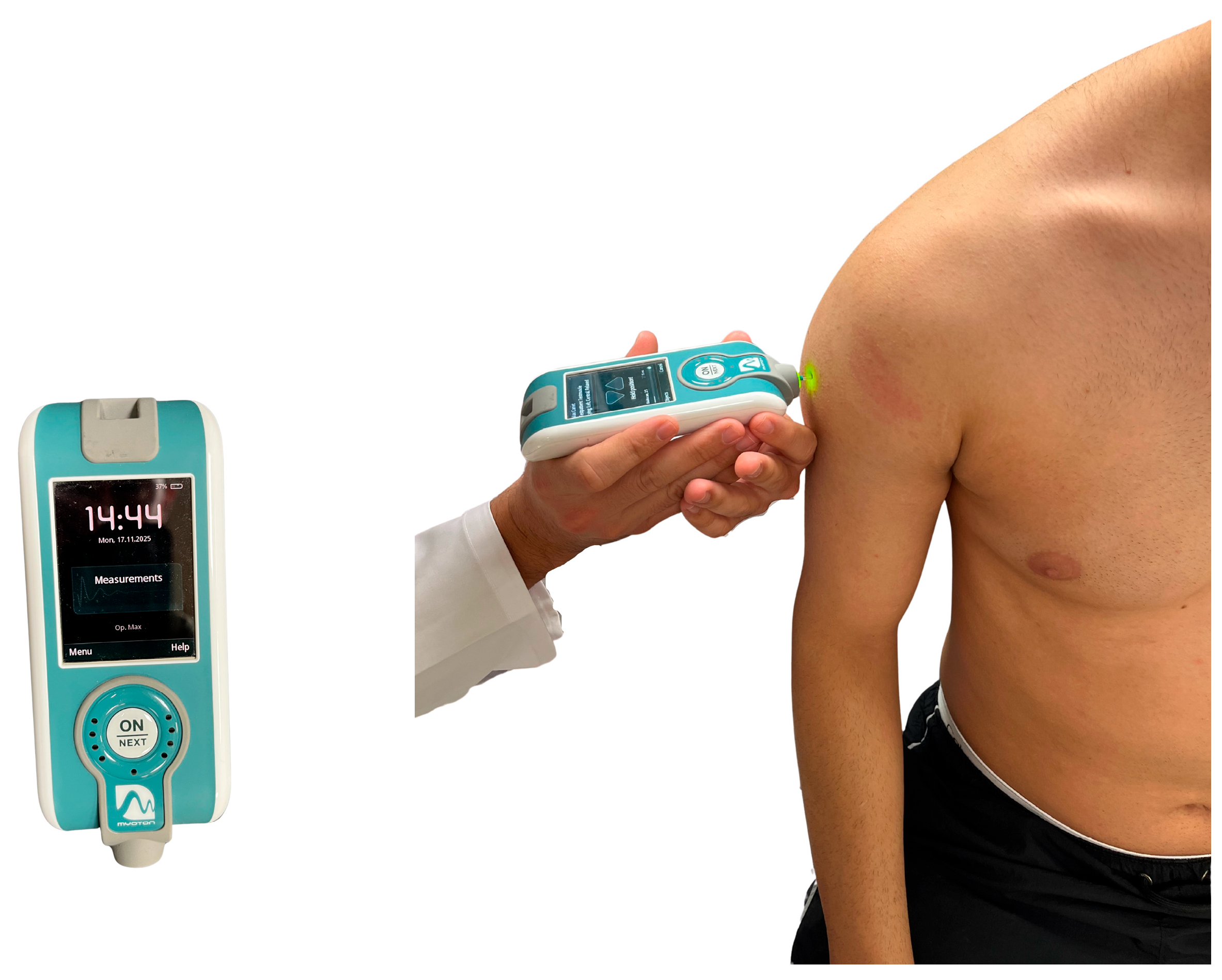
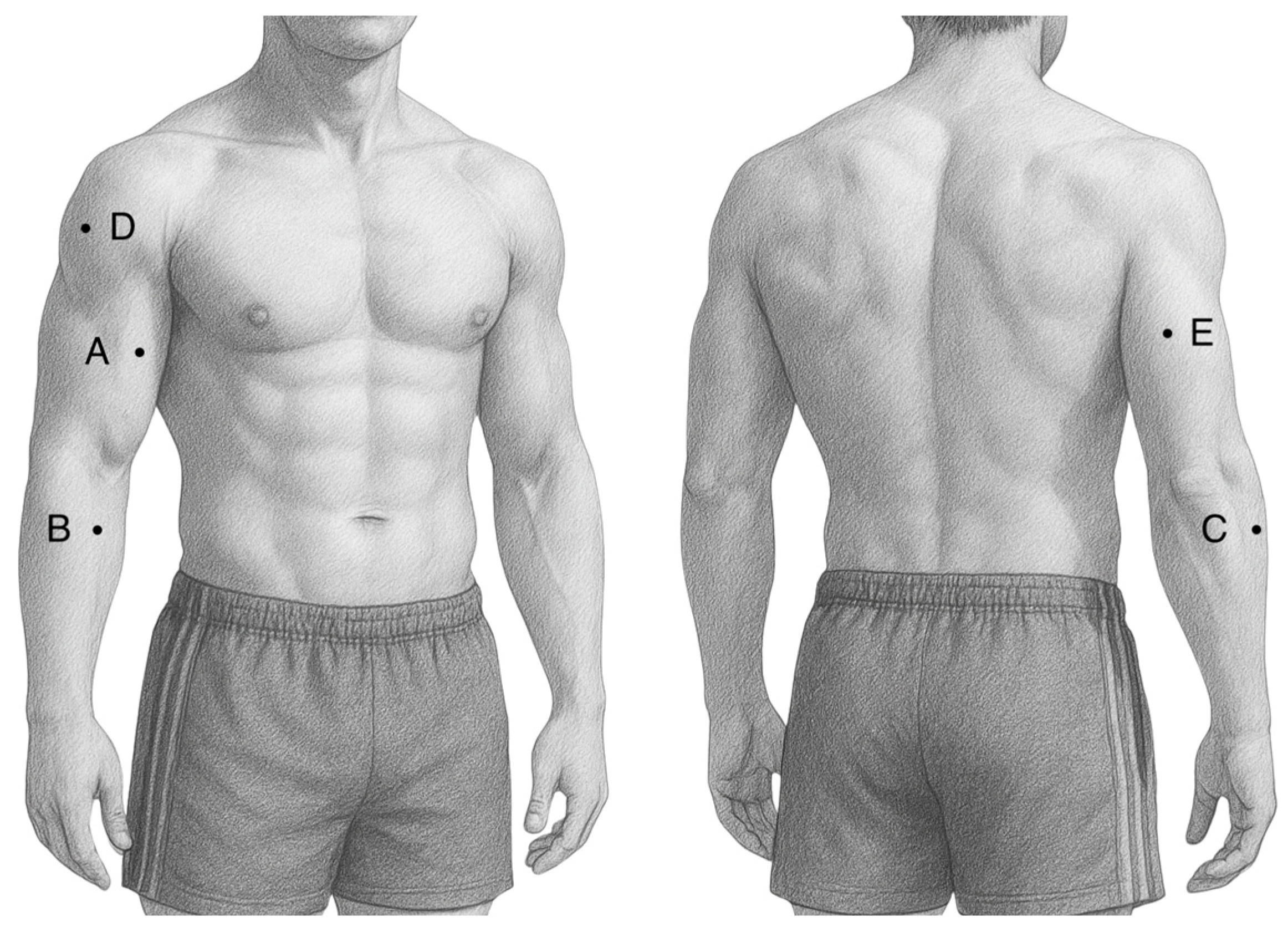
The MyotonPro device (mytonPro, Myoton Ltd.s., Tallinn, Estonia) (Figure 1) is a portable instrument that measures the deformation properties of natural damped oscillations produced due to a short (15 ms) mechanical tap to the surface of the skin [17,18,19]. It has demonstrated good reliability for lower limb muscles feasibility and reliability [20,21] in a healthy and pathological population. Three individual measurements with a recording interval of 1 s were performed to analyze five viscoelastic parameters. Three of these parameters correspond to the biomechanical stiffness (frequency, stiffness, and elasticity), while the remaining two represent viscoelastic stiffness (relaxation time and creep) [22]. Measurements were obtained by placing the probe at the end, perpendicular to the skin surface at five points on the upper limbs of both extremities (Figure 2). The measurement methods, protocol and anatomical localization of the sensors were standardized for all subjects at rest in the middle of the muscle belly.

2.4.3. Superficial Fascial and Subcutaneous Tissue

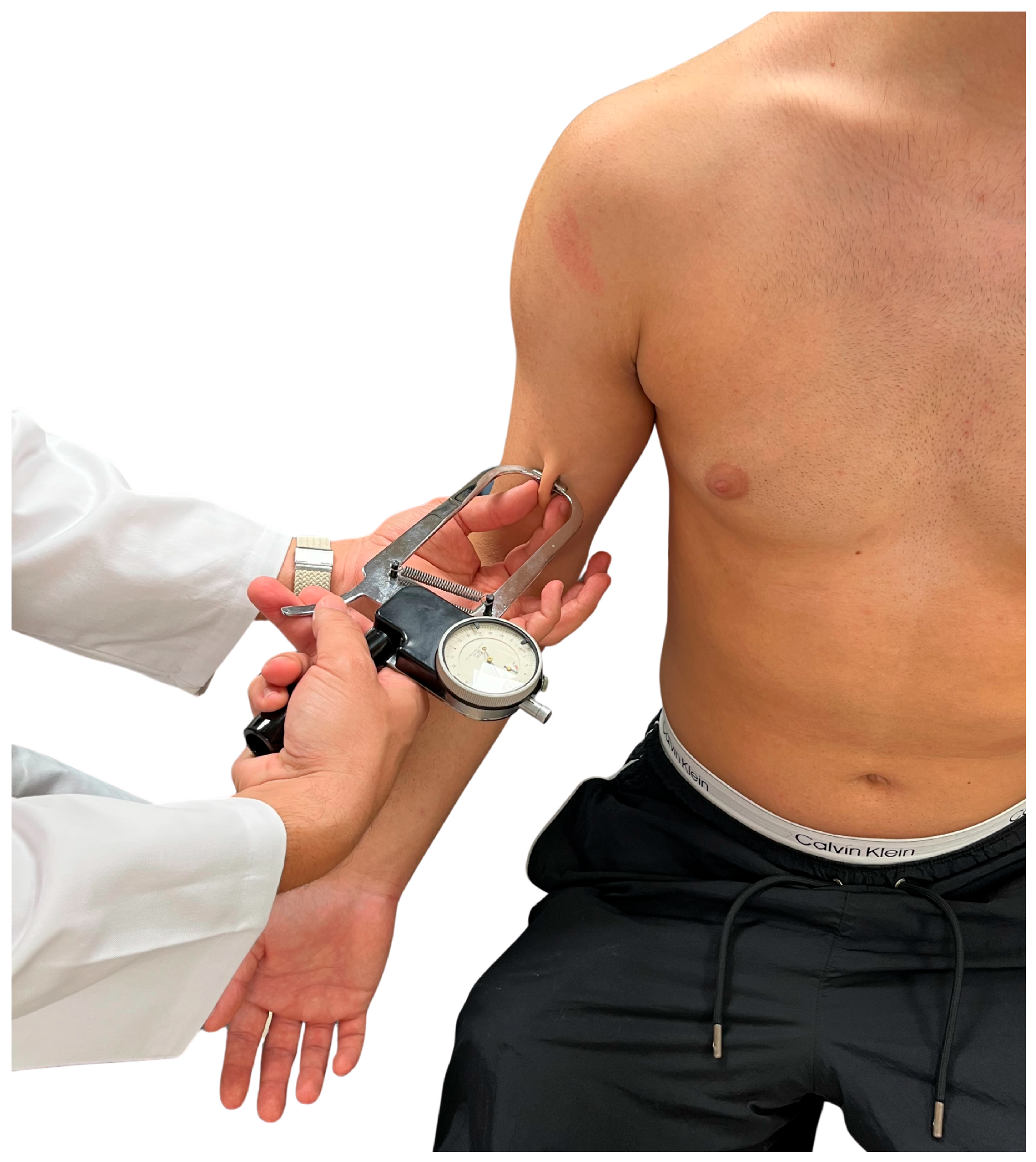
The superficial fascia and subcutaneous tissue were assessed using skinfold thickness measurements (Figure 3). Skinfold assessment is a reliable, inexpensive, simple, non-invasive method for estimating body fat across age groups, as it quantifies the thickness of subcutaneous adipose tissue (superficial fascia) at various body sites. In the present study, superficial fascial tissue was assessed indirectly through skinfold thickness measurements, which provide an estimate of the thickness of the superficial fascial compartment and its associated subcutaneous adipose tissue. Recent studies suggest that the skinfold technique remains valid and is recommended due to its simplicity, good reliability, and the speed with which it can be implemented and evaluated [23]. The Harpenden skinfold calipers (Flexbar Machine Corp, Islandia, NY, United States of America) were used. It was among the earliest instruments developed for assessing subcutaneous fat thickness and remains one of the most frequently cited tools in scientific literature [24]. The caliper includes a dial gauge that provides readings with a precision of 0.2 mm and allows measurements up to 80 mm, even though its original design included a 40 mm aperture. The device’s structure is primarily stainless steel, reinforced with polymeric components for durability and improved handling. According to the manufacturer, new units exert a constant pressure of 10 g/mm2. When used according to standardized procedures by a trained anthropometrist, the Harpenden caliper has shown the strongest agreement with other comparable instruments [24]. The procedure for measuring skinfold thickness involved firmly pinching the skinfold between the thumb and forefinger and slightly pulling it away from the underlying tissues before applying the calipers. All measurements were taken following the indications and recommendations of previous studies [25].

2.4.4. Muscular Strength

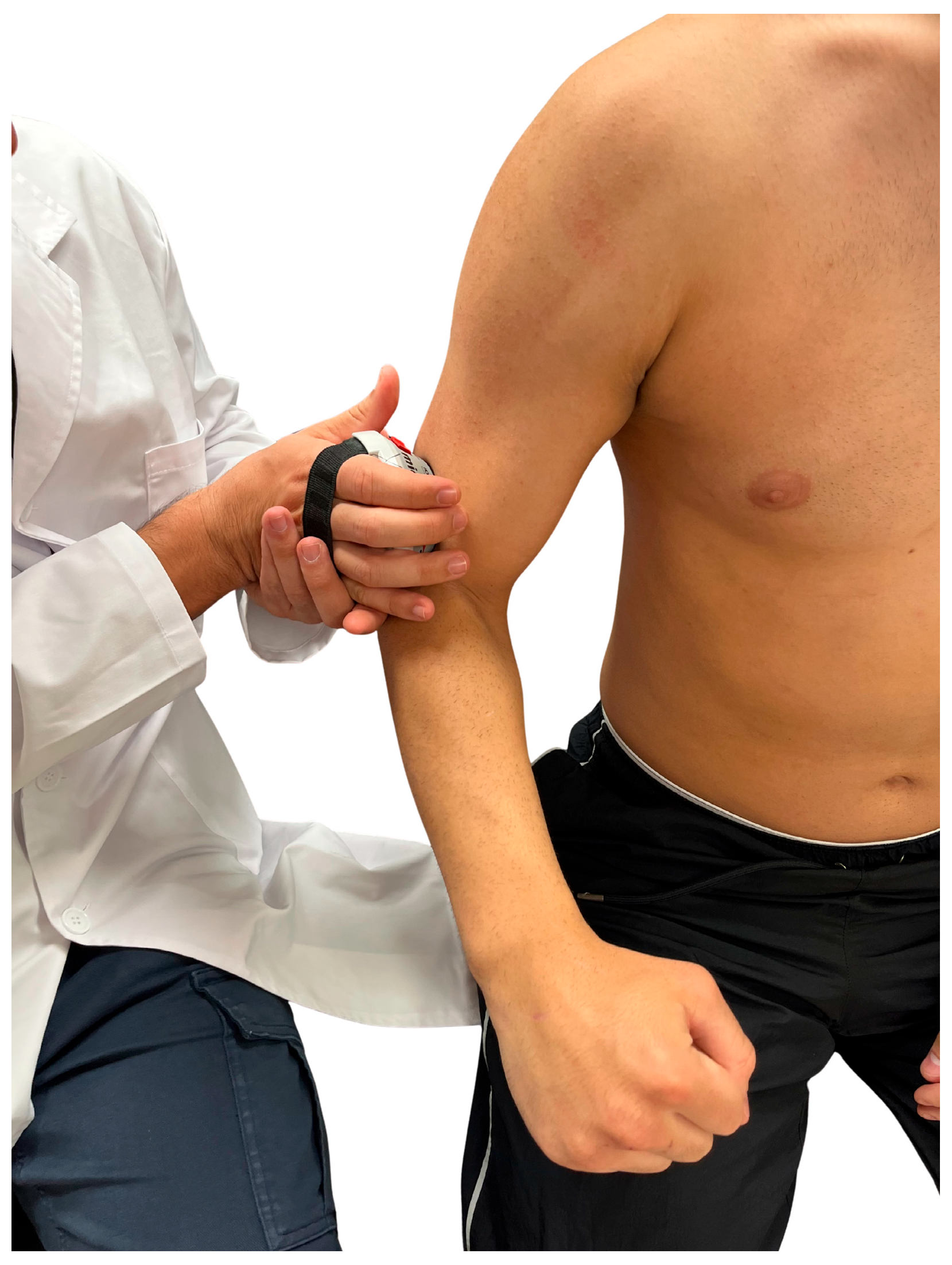
Isometric muscle strength was assessed using a manual dynamometer (MicroFET2, Hoggan Scientific, Salt Lake City, UT, USA), a device validated in previous studies [26,27]. All measurements were performed in three trials per muscle and data were expressed in Newtons. For all assessments, the volunteer was seated with the forearm resting on the thigh (Figure 4). To measure biceps brachii strength, the volunteer was requested to perform elbow flexion with the forearm in supination while the dynamometer was positioned at the level of the forearm. For flexor carpi radialis isometric strength evaluation, the volunteer performed flexion with radial deviation of the hand, and the dynamometer was placed on the palmar aspect of the hand. To test the isometric strength of the extensor carpi radialis longus, the volunteer’s forearm was placed in pronation and extension with hand abduction. The dynamometer was placed on the dorsal side of the hand. The dynamometer was moved to the forearm, and an elbow extension was requested to evaluate the triceps brachii. Finally, middle deltoid strength was tested by positioning the dynamometer laterally on the forearm while the volunteer performed shoulder abduction.

2.4.5. Correlation Analysis

Following data collection, a correlation analysis was performed, focusing on the myometric variables stiffness and relaxation. These parameters were selected because they are among the most commonly reported myometric outcomes in the literature [12] and have demonstrated the strongest associations with muscle strength, superficial fascial characteristics, and body fat percentage (BMI) [12,28]. Among the upper-limb regions initially assessed, the biceps brachii and triceps brachii muscles were selected due to their central biomechanical role as the primary flexor and extensor of the arm and their well-defined agonist-antagonist interaction within a single-joint system. This configuration provides a stable and comparable fascial context for analysis. From both a clinical and functional perspective, these muscles are particularly relevant, as changes in tissue stiffness or composition are known to translate into clear and clinically meaningful effects on motor performance, force transmission, and musculoskeletal pathology [29,30].

2.5. Statistical Analysis

Statistical analyses were performed using SPSS v.20 (IBM Corp., Armonk, NY, USA). Descriptive statistics were calculated for all variables, with quantitative data expressed as mean and standard deviation and qualitative data reported as frequencies. The normality of quantitative variables was assessed using the Kolmogorov–Smirnov test with Lilliefors correction, with a threshold of p > 0.05 to assume normal distribution. Comparative analyses were conducted according to sex and limb dominance. Sex-based comparisons were performed using either the independent samples t-test or the Mann–Whitney U test, depending on data distribution. Comparisons between dominant and non-dominant sides were performed using the paired sample t-test or the Wilcoxon signed-rank test, as appropriate. The level of statistical significance was set at p < 0.05.
Correlation analyses were performed for the variables of interest. Correlation coefficients were interpreted according to the following thresholds: 0.00–0.10, negligible; 0.10–0.39, weak; 0.40–0.69, moderate; 0.70–0.89, strong; and 0.90–1.00, very strong correlations, in line with established guidelines [31].

3. Results

A total of 61 participants were included in the study, comprising 39 men (63.9%) and 22 women (36.1%). The mean age of the participants was 27.5 years with a standard deviation of 10.8 years. Anthropometric measurements indicated a mean height of 172.4 cm, and the mean weight was 69.2 kg, resulting in a body mass index (BMI) of 23.3 kg/m2. Detailed sample characteristics, divided by sex, are presented in Table 1 and Table S1.
Body composition analysis of the upper extremities revealed lower impedance values on the dominant side (340.1 ± 57.0) compared to the non-dominant side (347.8 ± 62.9) (p < 0.001) (Table 2 and Table A1). However, no significant differences were found between extremities in percentage of fat mass, fat mass, lean mass or muscle mass (p > 0.05). When discriminating by sex (Table S1), men exhibited significantly lower impedance (p < 0.001), a lower percentage of fat mass (p < 0.001) and a higher lean mass (p < 0.001) in both extremities compared to women.
When assessing superficial fascia using skinfold thickness measurements (Table 3), no significant differences were found between the dominant and non-dominant sides for the flexor radialis ulnaris, deltoid, or triceps skinfolds (p > 0.05). However, the extensor radialis skinfold was significantly greater on the non-dominant side (p = 0.000), while the biceps fold was greater on the dominant side (p = 0.032). When differences were analyzed by sex (Table A2), women presented higher values across all skinfold measurements compared to men, both on the dominant and non-dominant sides (p < 0.05).
Analysis of upper limb muscle strength (Table 4 and Table A3), considering both limb dominance and sex, revealed a general trend towards greater strength on the dominant side, although these differences did not reach statistical significance in all cases (p > 0.05). When discriminating by sex, more pronounced differences were observed, with men consistently exhibiting greater strength in all movements tested (elbow and wrist flexion, elbow and wrist extension, and arm abduction) compared to women, both on the dominant and non-dominant limbs. A significant difference was specifically found in dominant side wrist extension strength between men and women (p = 0.028), suggesting a possible sex-specific pattern in this movement. Despite the trend towards greater strength on the dominant side, the differences were not statistically significant when analyzing both sexes together (p > 0.05), indicating that sex may be a more influential factor in upper limb muscle strength within the population studied.
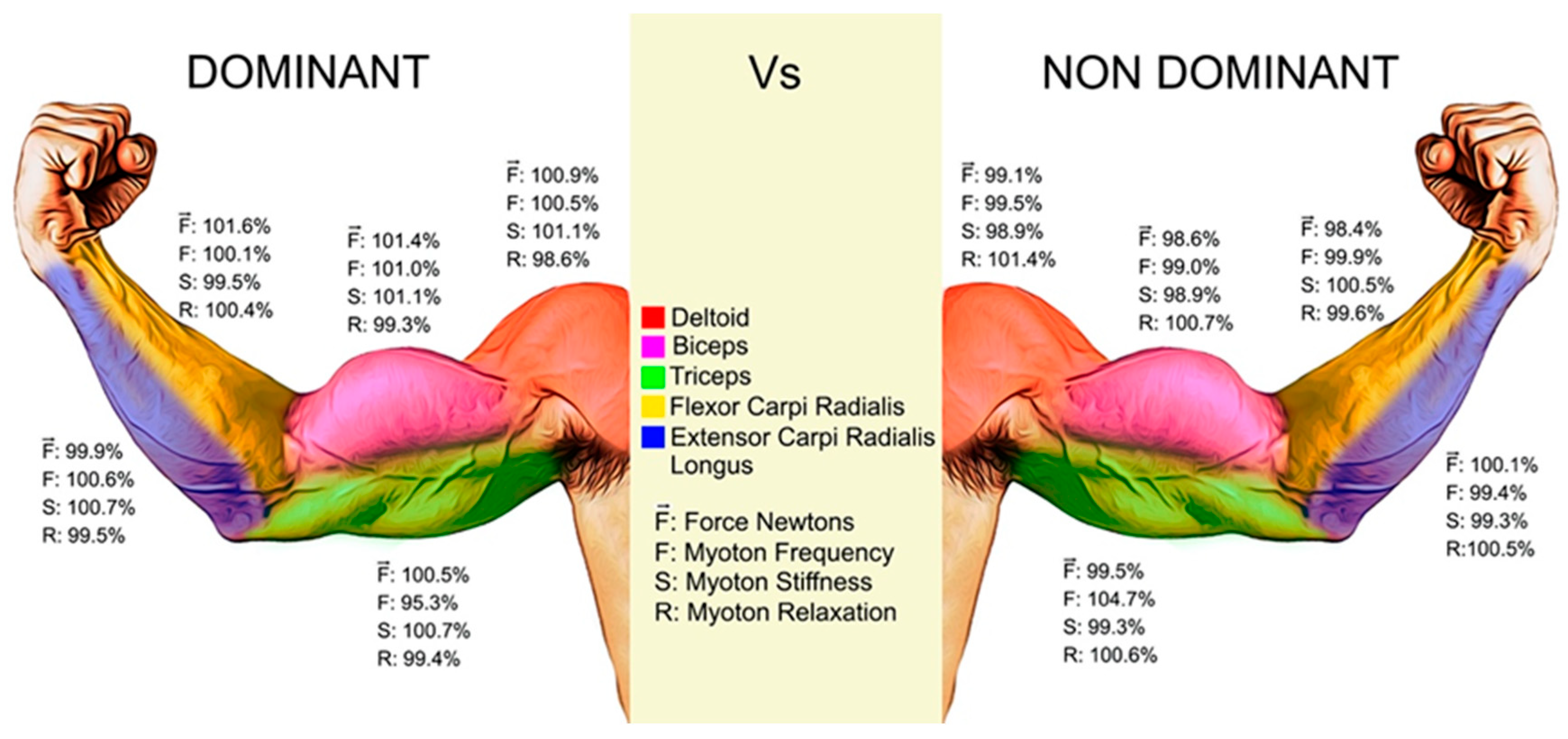
Normative data for the myometric parameters are presented in Table 5 (Figure 5). Analysis by dominance (Table A4) revealed no significant differences between the dominant and non-dominant sides for frequency, stiffness, elasticity, relaxation, or creep in most of the muscles evaluated (p > 0.05). However, two exceptions were identified: the radial extensor muscle showed greater elasticity on the non-dominant side (p = 0.002), while the deltoid showed lower relaxation and creep values on the non-dominant side (p < 0.05). When considering sex, significant differences were found across several myometric parameters, with men exhibiting higher frequency values in the deltoid and triceps muscles (p < 0.05), as well as differences in stiffness and other parameters in some specific muscles (p < 0.05) (Table A4).
Correlation analyses revealed predominantly negligible associations among the variables analyzed. Weak positive correlations were observed between certain viscoelastic parameters, specifically stiffness and relaxation, and muscle strength, body fat percentage (as reflected by BMI), and the superficial fascia thickness. In addition, a weak-to-moderate positive correlation was found between triceps relaxation and both body fat percentage and triceps muscle strength. Higher adipose thickness was associated with lower triceps stiffness values (Table 6).

4. Discussion

The results of this study provide normative data on upper limb neuromuscular function and reveal subtle but important differences associated with limb dominance, sex, and tissue composition. Consistent with classic literature on handgrip strength, we found that the dominant limb tends to be stronger than the non-dominant limb. Recent studies have confirmed that the dominant limb is typically capable of generating approximately 10–12% greater force than the contralateral limb [32]. These findings are further supported by a recent systematic review and meta-analysis (Foley et al., 2025), which synthesized data from 87 studies and demonstrated that the dominant limb is, on average, approximately 11.6% stronger than the non-dominant limb, with reported differences ranging from 2% to ~20% depending on the muscle group and the task evaluated [32].
The results of the present study, which showed greater strength values on the dominant side, align with these findings, supporting the notion that functional laterality is associated with measurable muscular adaptations. From a clinical perspective, strength asymmetries of ≥10% may indicate weakness related to injury or neurological dysfunction [33,34] or may predispose individuals to pathology during sports practice [35,36], while smaller differences fall within normal variability.
In athletic populations, strength asymmetries may be more pronounced, particularly in sports that rely predominantly on one upper limb (e.g., tennis players, throwers). These sport-specific adaptations are considered normal and even beneficial for performance. In unilateral sports, structural changes such as hypertrophy and increased bone density in the dominant limb, accompanied by disproportionate strength gains on that side, have been documented [37,38]. However, although some degree of asymmetry is expected and inevitable, there is no conclusive evidence that moderate bilateral asymmetries impair athletic performance or increase the risk of injury by themselves [39]. This suggests that training programs should focus on correcting only large functionally limiting imbalances, while small lateral differences should not be overcorrected, as they may reflect the demands of the sport itself.
With respect to viscoelastic and neuromechanical properties, our results indicate minimal differences between the dominant and non-dominant limbs in healthy subjects, which is consistent with previous studies. The lower impedance values observed in the dominant upper limb may reflect functional and physiological adaptations associated with habitual use, such as differences in tissue hydration and electrical conductivity. In contrast, fat mass and lean mass are algorithm-based estimates representing gross tissue quantities and are therefore expected to remain largely symmetrical in a healthy, homogeneous population, which may account for the absence of significant side-to-side differences in these parameters. The Labata-Lezaun study reported no differences in stiffness between the dominant and non-dominant gastrocnemius muscles [12]. In a recent article analyzing the viscoelastic and contractile properties of lower limbs, found that these parameters are similar between the dominant and non-dominant limb [17,40]. Although Ramazanoğlu et al. observed differences between the right and left sides, these disparities disappeared when the viscoelasticity parameters data were analyzed according to dominance rather than laterality [41]. The data from this research, as well as previous articles, suggest that in both trained individuals (whether specific asymmetric or symmetric) and untrained individuals, the mechanical properties of muscle and connective tissue (tone, elasticity, stiffness) remain fairly balanced bilaterally. Unlike strength (which depends more on neuromuscular factors of use), resting muscle stiffness appears to be a more symmetrical attribute, possibly determined by intrinsic tissue structure. However, in scenarios of intense unilateral use, viscoelastic disparities can arise.
The results of this study also confirm sex-related differences. Men exhibited greater upper limb muscle strength and higher lean mass, while women presented higher values of subcutaneous adipose tissue, as reflected by skinfold measurements. In addition, sex-related differences were observed in viscoelasticity properties, with male muscles showing greater stiffness and tone at rest compared to female muscles. These findings are supported by biomechanical evidence; for example, Lee et al. (2021) found significantly higher passive muscle stiffness in men than in women across most muscle groups when assessed using the MyotonPRO device [42]. Such differences may be attributed to the larger muscle cross-sectional area and connective tissue content in men [43,44], factors that increase resistance to deformation [45]. In the present study, these sex-related differences in stiffness may partly explain the higher myometric indices observed in men. From a clinical perspective, these findings suggest that normative values should be stratified by sex, as what constitutes “normal” in terms of elasticity or muscle tone will differ between male and female populations as suggested form previous authors [42]. These results also reinforce the possibility that training strategies could be tailored to the sex of athletes. Thus, women (generally with less muscle stiffness) may benefit from maximal strength or power-based training to improve joint stability, while men (generally with greater muscle tone) could benefit from flexibility or myofascial release exercises to optimize range of motion and prevent excessive stiffness.
An interesting and novel outcome of this study is the exploration of the correlations between superficial adipose tissue, neuromuscular function, and viscoelastic properties. In the present study, we evaluated subcutaneous adipose tissue thickness using skinfolds, primarily in the triceps brachii region, and its relationship with muscle strength and local myofascial stiffness. Our findings showed that greater skinfold thickness (greater superficial adiposity) is associated with decreased measured muscle stiffness. This aligns with recent evidence showing that the presence of a thicker adipose tissue was correlated with lower stiffness values (moderate to strong negative correlation) [46]. Together, these findings suggest that the superficial fat layer absorbs a portion of the percussion energy and attenuates the transmission of the mechanical wave to the muscle. Consequently, measurements obtained in individuals with a higher subcutaneous fat thickness may underestimate true muscle tone or stiffness. It should be acknowledged, however, that the mechanical influence of the superficial fascia on neuromuscular function is not determined solely by adipose tissue thickness. As superficial fascia was assessed indirectly via skinfold thickness measurements, the present findings mainly reflect the combined effects of subcutaneous adipose tissue and superficial fascial composition, rather than the isolated mechanical behavior of the fascial layer itself.
The present results, obtained in healthy young adults, did not show a strong correlation between skinfold thickness and muscle strength. This finding is consistent with a previous study in young populations, where no significant associations were found between skinfold sum and measurements such as grip or trunk strength [47]. However, it contrasts with the results of other research that found that a higher percentage of body fat is causally associated with lower grip strength [48]. Younger cohorts, such as the one examined here, tend to be more homogeneous, with a low percentage of fat and little variability to demonstrate correlations. In contrast, studies involving older or more heterogeneous or older populations (such as Phynto et al.), the negative influence of fat on muscle function does appear.
The superficial fascial tissue, which includes the subcutaneous adipose tissue, plays a significant role in upper limb mechanics [49,50]. The superficial fascia of the arm acts as a network that connects the skin to the deep muscle fascia, allowing gliding between the two and transmitting low-magnitude mechanical forces [51]. Alterations in this layer, either excess or reduction, could influence muscle mobility and performance [52,53]. The correlations observed in the present study between skinfolds and viscoelasticity suggest that the muscle-fascia-fat interaction is complex. On the one hand, superficial fascia with a high level of adipocytes can increase the system’s compliance (absorbing forces), but on the other hand, excess fat can limit normal fascial mobility. Functionally, this could manifest as a slight decrease in the capacity for explosive contraction or stretch reflexes, since a very compliant soft tissue absorbs part of the force that should be transmitted quickly.
Overall, the present findings are relevant to clinical practice in both rehabilitation and sports medicine. The availability of normative reference values for upper limb neuromuscular properties, including strength and viscoelastic parameters, stratified by sex and limb dominance, provides a useful framework for clinical interpretation. In rehabilitation settings, such reference values may support clinicians in identifying and monitoring neuromuscular alterations over time.
From a training and performance perspective, the present results indicate that upper limb neuromuscular properties are largely symmetrical in healthy young adults, with only modest strength differences associated with limb dominance. This suggests that small bilateral differences fall within the range of normal variability rather than reflecting clinically meaningful imbalances. Accordingly, corrective interventions may be more appropriately directed toward pronounced or functionally limiting asymmetries. In athletes participating in symmetrical sports, maintaining bilateral balance may be desirable, whereas in unilateral sports, moderate asymmetries may represent task-specific adaptations and should be interpreted in relation to the functional demands of the sport.
The observed associations between superficial fat, viscoelastic properties, and neuromuscular measurements further underline the importance of considering body composition and fascial characteristics when interpreting mechanical assessments.

5. Conclusions

This research shows that lateral dominance mainly affects strength, while viscoelastic properties remain mostly symmetrical between limbs. Clear sex differences were evident: men presented greater strength and higher stiffness, while women showed higher elasticity but lower absolute strength. Body composition, particularly superficial fat, also influences neuromuscular function, as higher adiposity relates to lower strength and reduced stiffness values. Clinically, these findings support the need for comprehensive assessments that consider strength, myofascial properties, and body composition to guide rehabilitation. In sports, monitoring asymmetries and balancing training could optimize performance while reducing injury risk.
This study has several limitations that should be acknowledged when interpreting the findings. First, although the sample size was sufficient to address the primary objectives, a larger number of participants would have strengthened the robustness of the analyzes and improved the generalizability of the results to broader populations. In addition, the specific demographic characteristics, particularly sex and age, may further limit extrapolation to other clinical or functional contexts. Secondly, despite the use of validated instruments and standardized protocols, the potential influence of unmeasured confounding variables cannot be entirely excluded. Furthermore, the superficial fascia was assessed indirectly through skinfold thickness measurements, which do not allow the adipose tissue component to be isolated from other superficial fascial structures. Finally, the absence of longitudinal follow-up prevents the assessment of temporal changes and adaptive responses; these aspects should be addressed in future studies using larger and more heterogeneous samples.

Supplementary Materials

The following supporting information can be downloaded at: https://www.mdpi.com/article/10.3390/app16031544/s1. Table S1: Anthropometric characteristics, body height and body composition of the sample by sex.

Author Contributions

Conceptualization, O.C.-C., N.L.-L., C.L.-d.-C., and A.P.-B.; methodology, O.C.-C., N.L.-L., L.L.-A., J.S., and A.P.-B.; validation, O.C.-C., N.L.-L., L.L.-A., and C.L.-d.-C.; formal analysis C.L.-d.-C.; investigation, O.C.-C., N.L.-L., L.L.-A., S.O.-M. and A.P.-B.; resources, A.P.-B.; data curation, O.C.-C., N.L.-L., L.L.-A. and S.O.-M.; writing—original draft preparation, C.L.-d.-C.; O.C.-C., S.O.-M. and A.P.-B.; writing—review and editing, O.C.-C., J.S., C.L.-d.-C., and A.P.-B.; visualization, J.S.; supervision, C.L.-d.-C. and A.P.-B.; project administration, A.P.-B.; funding acquisition, A.P.-B. All authors have read and agreed to the published version of the manuscript.

Funding

This research received no external funding.

Institutional Review Board Statement

The study was conducted in accordance with the Declaration of Helsinki and approved by the Ethics Committee from Universitat Internacional de Catalunya (CBAS201914B).

Informed Consent Statement

Informed consent was obtained from all subjects involved in the study. Written informed consent has been obtained from the patients to publish this paper.

Data Availability Statement

The data presented in this study are available on request from the corresponding author.

Conflicts of Interest

The authors declare no conflicts of interest.

Appendix A

Table A1. Descriptive statistics of upper limb body height and composition according to dominance and sex.
DominantNon-Dominant
Women
n = 22
Men
n = 39
Women
n = 22
Men
n = 39
Mean ± SDMean ± SDpMean ± SDMean ± SDp
Upper limb impedance394.5 ± 35.5309.4 ± 41.80.000 u406.3 ± 40.2314.7 ± 47.40.000 t
Percentage of fat mass in upper extremity (%)23.1 ± 8.712.9 ± 6.70.000 u23.6 ± 9.013.4 ± 7.10.000 t
Upper Extremity Fat Mass0.8 ± 0.70.6 ± 0.30.086 u0.7 ± 0.40.6 ± 0.30.190 u
Lean Mass Upper Extremity2.5 ± 1.43.8 ± 0.70.000 u2.2 ± 0.53.8 ± 0.70.000 u
Upper Extremity Muscle Mass2.1 ± 0.43.5 ± 0.70.000 t2.1 ± 0.53.6 ± 0.70.000 u
Abbreviations: n: number, SD: standard deviation, %: percentage, BMI: body mass index, t: Student’s t-test, u: Mann–Whitney U test.
Table A2. Descriptive statistics of the superficial fascia and subcutaneous tissue by dominance.
DominantNon-Dominant
Women
n = 22
Men
n = 39
Women
n = 22
Men
n = 39
Mean ± SDMean ± SDpMean ± SDMean ± SDp
Flexor Radialis Ulnar superficial fascia5.5 ± 1.94.1 ± 1.10.003 u5.5 ± 2.04.2 ± 1.10.002 t
Extensor Radialis superficial fascia7.3 ± 2.45.9 ± 1.70.019 u8.2 ± 2.46.2 ± 2.10.000 u
Biceps brachii superficial fascia6.8 ± 2.35.1 ± 1.60.002 u6.6 ± 2.44.9 ± 1.70.001 t
Deltoid lateral fibers superficial fascia17.5 ± 5.913.6 ± 5.60.012 t17.3 ± 5.513.5 ± 5.30.009 t
Triceps brachii superficial fascia14.6 ± 4.29.7 ± 3.80.000 t14.8 ± 4.19.8 ± 3.20.000 t
Abbreviations: n: number, SD: standard deviation, t: Student’s t-test, u: Mann–Whitney U test.
Table A3. Strength descriptors according to dominance.
DominantNon-Dominant
Women
n = 22
Men
n = 39
Women
n = 22
Men
n = 39
Mean ± SDMean ± SDpMean ± SDMean ± SDp
Flexion of elbow34.77 ± 5.3249.17 ± 12.860.286 t34.18 ± 5.6747.67 ± 12.340.108 t
Flexion of wrist16.78 ± 3.2621.15 ± 5.300.238 t15.98 ± 3.0320.61 ± 5.170.429 t
Extension of wrist13.12 ± 3.4918.38 ± 5.770.028 t14.22 ± 2.8517.80 ± 3.880.794 w
Extension of elbow22.83 ± 3.8432.34 ± 8.460.295 t23.33 ± 4.0931.57 ±8.190.198 t
Abduction arm25.76 ± 4.0834.40 ± 7.330.070 t24.93 ± 4.4234.02 ± 7.800.625 t
Abbreviations: n: number, SD: standard deviation, t: Student’s t-test, w: Wilcoxon test.
Table A4. Descriptive statistics of myometry according to dominance and sex.
DominantNon-Dominant
Women
n = 22
Men
n = 39
Women
n = 22
Men
n = 39
Mean ± SDMean ± SDpMean ± SDMean ± SDp
Deltoides
  Frequency13.8 ± 1.215.0 ± 1.40.001 u13.8 ± 1.614.8 ± 1.20.007 t
  Stiffness247.8 ± 23.0257.7 ± 33.60.222 t244.4 ± 33.2250.8 ± 32.70.465 t
  Elasticity1.2 ± 0.31.0 ± 0.20.039 t1.2 ± 0.21.1 ± 0.20.053 u
  Relaxation22.2 ± 2.220.8 ± 2.70.032 t22.7 ± 2.721.4 ± 2.40.053 t
  Creep1.4 ± 0.11.3 ± 0.20.031 t1.4 ± 0.21.3 ± 0.10.034 t
Biceps
  Frequency13.9 ± 1.513.8 ± 1.60.810 t13.6 ± 1.313.6 ± 1.60.986 t
  Stiffness235.0 ± 32.5224.6 ± 31.60.228 t225.4 ± 27.2222.1 ± 28.50.668 t
  Elasticity1.4 ± 0.21.3 ± 0.30.097 t1.3 ± 0.21.3 ± 0.30.675 t
  Relaxation21.8 ± 3.422.1 ± 3.20.783 t22.1 ± 3.122.4 ± 3.00.745 t
  Creep1.3 ± 0.21.3 ± 0.20.994 t1.3 ± 0.21.3 ± 0.20.915 t
Flexor Radial Cubital
  Frequency15.6 ± 1.817.4 ± 2.40.003 t15.7 ± 1.617.3 ± 2.30.005 t
  Stiffness275.6 ± 48.5317.8 ± 74.20.020 t287.1 ± 46.5316.0 ± 67.20.079 t
  Elasticity1.0 ± 0.10.9 ± 0.10.004 t1.0 ± 0.10.9 ± 0.20.081 t
  Relaxation17.5 ± 3.115.9 ± 3.20.062 t17.0 ± 2.715.9 ± 3.30.053 u
  Creep1.0 ± 0.20.9 ± 0.20.055 u1.0 ± 0.10.9 ± 0.20.060 u
Extensor Radial
  Frequency15.7 ± 1.416.6 ± 1.50.029 t15.4 ± 1.016.4 ± 1.40.002 t
  Stiffness272.3 ± 35.6285.8 ± 38.60.183 t266.2 ± 24.0283.2 ± 37.40.060 t
  Elasticity1.0 ± 0.11.0 ± 0.20.511 t1.1 ± 0.11.0 ± 0.10.010 t
  Relaxation18.9 ± 2.217.7 ± 2.20.037 t19.2 ± 1.517.9 ± 2.00.010 t
  Creep1.1 ± 0.11.1 ± 010.021 t1.2 ± 0.11.1 ± 0.10.003 t
Triceps CL
  Frequency10.9 ± 1.012.5 ± 1.10.000 t14.8 ± 18.212.2 ± 1.00.000 u
  Stiffness180.1 ± 22.2203.0 ±17.00.000 t179.9 ± 17.4199.1 ± 2.80.001 t
  Elasticity1.4 ± 0.31.4 ± 0.30.501 t1.5 ± 0.31.4 ± 0.30.283 t
  Relaxation30.6 ± 3.026.8 ± 2.70.000 t31.0 ± 2.227.2 ± 2.70.000 t
  Creep1.8 ± 0.21.6 ± 0.20.000 t1.8 ± 0.21.6 ± 0.20.000 u
Abbreviations: n: number, SD: standard deviation, t: Student’s t-test, u: Mann–Whitney U test.

References

  1. Sánchez-Ureña, B.; Rojas-Valverde, D.; Gutiérrez-Vargas, R. Effectiveness of Two Cold Water Immersion Protocols on Neuromuscular Function Recovery: A Tensiomyography Study. Front. Physiol. 2018, 9, 766. [Google Scholar] [CrossRef]
  2. Pérez Bellmunt, A.; Llurda-Almuzara, L.; Simon, M.; Navarro, R.; Casasayas Cos, O.; López-de-Celis, C.; Seijas, R.; Alavarez, P. Neuromuscular response what is it and how to measure it? Phys. Med. Rehabil. J. 2019, 2, 118. [Google Scholar]
  3. Albin, S.R.; Koppenhaver, S.L.; Bailey, B.; Blommel, H.; Fenter, B.; Lowrimore, C.; Smith, A.C.; McPoil, T.G. The effect of manual therapy on gastrocnemius muscle stiffness in healthy individuals. Foot 2019, 38, 70–75. [Google Scholar] [CrossRef] [PubMed]
  4. Albin, S.R.; Koppenhaver, S.L.; Marcus, R.; Dibble, L.; Cornwall, M.; Fritz, J.M. Short-term Effects of Manual Therapy in Patients After Surgical Fixation of Ankle and/or Hindfoot Fracture: A Randomized Clinical Trial. J. Orthop. Sports Phys. Ther. 2019, 49, 310–319. [Google Scholar] [CrossRef] [PubMed]
  5. Matuszczyk, F.; Trybulski, R.; Gałęziok, K.; Olaniszyn, G.; Terbalyan, A.; Wilk, M. Effect of 10-Week Plyometric Training on Anaerobic Performance and Biomechanical Properties of the Muscles in Football Players: Randomized Controlled Trial. Appl. Sci. 2025, 15, 1451. [Google Scholar] [CrossRef]
  6. Nguyen, A.P.; Detrembleur, C.; Fisette, P.; Selves, C.; Mahaudens, P. MyotonPro Is a Valid Device for Assessing Wrist Biomechanical Stiffness in Healthy Young Adults. Front. Sports Act. Living 2022, 4, 797975. [Google Scholar] [CrossRef]
  7. Jarocka, E.; Marusiak, J.; Kumorek, M.; Jaskólska, A.; Jaskólski, A. Muscle stiffness at different force levels measured with two myotonometric devices. Physiol. Meas. 2012, 33, 65–78. [Google Scholar] [CrossRef]
  8. Jaric, S. Role of body size in the relation between muscle strength and movement performance. Exerc. Sport Sci. Rev. 2003, 31, 8–12. [Google Scholar] [CrossRef]
  9. Torres-Luque, G.; Calahorro-Cañada, F.; Lara-Sánchez, A.J.; Garatachea, N.; Nikolaidis, P.T. Body composition using bioelectrical impedance analysis in elite young soccer players: The effects of age and playing position. Sport Sci. Health 2015, 11, 203–210. [Google Scholar] [CrossRef]
  10. Torres-Luque, G.; Hernandez-Garcia, R.; Garatachea, N.; Nikolaidis, P.T. Anthropometric characteristics and neuromuscular function in young judo athletes by sex, age and weight category. Sport Sci. Health 2015, 11, 117–124. [Google Scholar] [CrossRef]
  11. Schleip, R.; Klingler, W. Active contractile properties of fascia. Clin. Anat. 2019, 32, 891–895. [Google Scholar] [CrossRef] [PubMed]
  12. Labata-Lezaun, N.; López-de-Celis, C.; Llurda-Almuzara, L.; González-Rueda, V.; Cadellans-Arróniz, A.; Pérez-Bellmunt, A. Correlation between maximal radial muscle displacement and stiffness in gastrocnemius muscle. Physiol. Meas. 2020, 41, 125013. [Google Scholar] [CrossRef] [PubMed]
  13. McGowen, J.M.; Hoppes, C.W.; Forsse, J.S.; Albin, S.R.; Abt, J.; Koppenhaver, S.L. The Utility of Myotonometry in Musculoskeletal Rehabilitation and Human Performance Programming. J. Athl. Train. 2023, 58, 305–318. [Google Scholar] [CrossRef] [PubMed]
  14. Chuang, L.; Wu, C.; Lin, K. Reliability, validity, and responsiveness of myotonometric measurement of muscle tone, elasticity, and stiffness in patients with stroke. Arch. Phys. Med. Rehabil. 2012, 93, 532–540. [Google Scholar] [CrossRef]
  15. Bilston, L.E.; Tan, K. Measurement of passive skeletal muscle mechanical properties in vivo: Recent progress, clinical applications, and remaining challenges. Ann. Biomed. Eng. 2015, 43, 261–273. [Google Scholar] [CrossRef]
  16. Alvarez-Diaz, P.; Alentorn-Geli, E.; Llobet, F.; Granados, N.; Steinbacher, G.; Cugat, R. Return to play after all-inside meniscal repair in competitive football players: A minimum 5-year follow-up. Knee Surg. Sports Traumatol. Arthrosc. 2016, 24, 1997–2001. [Google Scholar] [CrossRef]
  17. Llurda-Almuzara, L.; Pérez-Bellmunt, A.; López-de-Celis, C.; Aiguadé, R.; Seijas, R.; Casasayas-Cos, O.; Labata-Lezaun, N.; Alvarez, P. Normative data and correlation between dynamic knee valgus and neuromuscular response among healthy active males: A cross-sectional study. Sci. Rep. 2020, 10, 17206. [Google Scholar] [CrossRef]
  18. Davidson, M.J.; Bryant, A.L.; Bower, W.F.; Frawley, H.C. Myotonometry Reliably Measures Muscle Stiffness in the Thenar and Perineal Muscles. Physiother. Can. 2017, 69, 104–112. [Google Scholar] [CrossRef]
  19. Pruyn, E.C.; Watsford, M.L.; Murphy, A.J. Validity and reliability of three methods of stiffness assessment. J. Sport Health Sci. 2016, 5, 476–483. [Google Scholar] [CrossRef]
  20. Bravo-Sánchez, A.; Abián, P.; Jimenez, F.; Abián-Vicén, J. Structural and mechanical properties of the Achilles tendon in senior badminton players: Operated vs. non-injured tendons. Clin. Biomech. 2021, 85, 105366. [Google Scholar] [CrossRef]
  21. Dellalana, L.E.; Chen, F.; Vain, A.; Gandelman, J.S.; Põldemaa, M.; Chen, H.; Tkaczyk, E.R. Reproducibility of the durometer and myoton devices for skin stiffness measurement in healthy subjects. Ski. Res. Technol. 2019, 25, 289–293. [Google Scholar] [CrossRef] [PubMed]
  22. Schneider, S.; Peipsi, A.; Stokes, M.; Knicker, A.; Abeln, V. Feasibility of monitoring muscle health in microgravity environments using Myoton technology. Med. Biol. Eng. Comput. 2015, 53, 57–66. [Google Scholar] [CrossRef] [PubMed]
  23. Kasper, A.M.; Langan-Evans, C.; Hudson, J.F.; Brownlee, T.E.; Harper, L.D.; Naughton, R.J.; Morton, J.P.; Close, G.L. Come Back Skinfolds, All Is Forgiven: A Narrative Review of the Efficacy of Common Body Composition Methods in Applied Sports Practice. Nutrients 2021, 13, 1075. [Google Scholar] [CrossRef] [PubMed]
  24. Boughman, J.K.; Masters, M.A.; Morgan, C.A.; Ruden, T.M.; Rochelle, S.G. Assessing the Validity of Bioelectrical Impedance and Skinfold Calipers for Measuring Body Composition in NOLS Backcountry Hikers. Wilderness Environ. Med. 2019, 30, 369–377. [Google Scholar] [CrossRef]
  25. Cintra-Andrade, J.H.; Ripka, W.L.; Heymsfield, S.B. Skinfold calipers: Which instrument to use? J. Nutr. Sci. 2023, 12, e82. [Google Scholar] [CrossRef]
  26. Mentiplay, B.F.; Perraton, L.G.; Bower, K.J.; Adair, B.; Pua, Y.; Williams, G.P.; McGaw, R.; Clark, R.A. Assessment of Lower Limb Muscle Strength and Power Using Hand-Held and Fixed Dynamometry: A Reliability and Validity Study. PLoS ONE 2015, 10, e0140822. [Google Scholar] [CrossRef]
  27. Schaubert, K.L.; Bohannon, R.W. Reliability and validity of three strength measures obtained from community-dwelling elderly persons. J. Strength. Cond. Res. 2005, 19, 717–720. [Google Scholar] [CrossRef]
  28. Wilke, J.; Macchi, V.; De Caro, R.; Stecco, C. Fascia thickness, aging and flexibility: Is there an association? J. Anat. 2019, 234, 43–49. [Google Scholar] [CrossRef]
  29. Hilton, T.N.; Tuttle, L.J.; Bohnert, K.L.; Mueller, M.J.; Sinacore, D.R. Excessive adipose tissue infiltration in skeletal muscle in individuals with obesity, diabetes mellitus, and peripheral neuropathy: Association with performance and function. Phys. Ther. 2008, 88, 1336–1344. [Google Scholar] [CrossRef]
  30. Romano, A.; Staber, D.; Grimm, A.; Kronlage, C.; Marquetand, J. Limitations of Muscle Ultrasound Shear Wave Elastography for Clinical Routine-Positioning and Muscle Selection. Sensors 2021, 21, 8490. [Google Scholar] [CrossRef]
  31. Schober, P.; Boer, C.; Schwarte, L.A. Correlation Coefficients: Appropriate Use and Interpretation. Anesth. Analg. 2018, 126, 1763–1768. [Google Scholar] [CrossRef] [PubMed]
  32. Foley, R.C.A.; Callaghan, D.H.; Forman, G.N.; Graham, J.D.; Holmes, M.W.R.; La Delfa, N.J. A comprehensive scoping review and meta-analysis of upper limb strength asymmetry. Sci. Rep. 2025, 15, 4636. [Google Scholar] [CrossRef] [PubMed]
  33. Maenza, C.; Good, D.C.; Winstein, C.J.; Wagstaff, D.A.; Sainburg, R.L. Functional Deficits in the Less-Impaired Arm of Stroke Survivors Depend on Hemisphere of Damage and Extent of Paretic Arm Impairment. Neurorehabil. Neural Repair. 2020, 34, 39–50. [Google Scholar] [CrossRef] [PubMed]
  34. Drijkoningen, D.; Caeyenberghs, K.; Vander Linden, C.; Van Herpe, K.; Duysens, J.; Swinnen, S.P. Associations between Muscle Strength Asymmetry and Impairments in Gait and Posture in Young Brain-Injured Patients. J. Neurotrauma 2015, 32, 1324–1332. [Google Scholar] [CrossRef]
  35. Wang, P.; Qin, Z.; Zhang, M. Association between pre-season lower limb interlimb asymmetry and non-contact lower limb injuries in elite male volleyball players. Sci. Rep. 2025, 15, 14481. [Google Scholar] [CrossRef]
  36. Philipp, N.M.; Crawford, D.A.; Garver, M.J.; Davis, D.W.; Hair, J.N. Interlimb Asymmetry Thresholds that Negatively Affect Change of Direction Performance in Collegiate American Football Players. Int. J. Exerc. Sci. 2021, 14, 606–612. [Google Scholar] [CrossRef]
  37. Haapasalo, H.; Kannus, P.; Sievänen, H.; Pasanen, M.; Uusi-Rasi, K.; Heinonen, A.; Oja, P.; Vuori, I. Effect of long-term unilateral activity on bone mineral density of female junior tennis players. J. Bone Min. Miner. Res. 1998, 13, 310–319. [Google Scholar] [CrossRef]
  38. Haapasalo, H.; Kontulainen, S.; Sievänen, H.; Kannus, P.; Järvinen, M.; Vuori, I. Exercise-induced bone gain is due to enlargement in bone size without a change in volumetric bone density: A peripheral quantitative computed tomography study of the upper arms of male tennis players. Bone 2000, 27, 351–357. [Google Scholar] [CrossRef]
  39. Afonso, J.; Peña, J.; Sá, M.; Virgile, A.; García-de-Alcaraz, A.; Bishop, C. Why Sports Should Embrace Bilateral Asymmetry: A Narrative Review. Symmetry 2022, 14, 1993. [Google Scholar] [CrossRef]
  40. Alvarez-Diaz, P.; Alentorn-Geli, E.; Ramon, S.; Marin, M.; Steinbacher, G.; Rius, M.; Seijas, R.; Ballester, J.; Cugat, R. Comparison of tensiomyographic neuromuscular characteristics between muscles of the dominant and non-dominant lower extremity in male soccer players. Knee Surg. Sports Traumatol. Arthrosc. 2016, 24, 2259–2263. [Google Scholar] [CrossRef]
  41. Ramazanoğlu, E.; Usgu, S.; Yakut, Y. Assessment of the mechanical characteristics of the lower extremity muscleswith myotonometric measurements in healthy individuals. Physiother. Q. 2020, 28, 1–12. [Google Scholar] [CrossRef]
  42. Lee, Y.; Kim, M.; Lee, H. The Measurement of Stiffness for Major Muscles with Shear Wave Elastography and Myoton: A Quantitative Analysis Study. Diagnostics 2021, 11, 524. [Google Scholar] [CrossRef] [PubMed]
  43. Yagi, M.; Taniguchi, M.; Tateuchi, H.; Hirono, T.; Fukumoto, Y.; Yamagata, M.; Nakai, R.; Yamada, Y.; Kimura, M.; Ichihashi, N. Age- and sex-related differences of muscle cross-sectional area in iliocapsularis: A cross-sectional study. BMC Geriatr. 2022, 22, 435. [Google Scholar] [CrossRef]
  44. McMahon, G.; Cook, J. Female Tendons are from Venus and Male Tendons are from Mars, But Does it Matter for Tendon Health? Sports Med. 2024, 54, 2467–2474. [Google Scholar] [CrossRef]
  45. Docking, S.I.; Cook, J. How do tendons adapt? Going beyond tissue responses to understand positive adaptation and pathology development: A narrative review. J. Musculoskelet. Neuronal Interact. 2019, 19, 300–310. [Google Scholar]
  46. Ley, C.D.; Valdes, E.M.; Murtagh, C.F.; Power, J.; Nobes, L.; Drust, B. MyotonPRO Is Not Comparable to Shear Wave Elastography in the Measurement of Rectus Femoris Muscle Stiffness due to Interference of Subcutaneous Adipose Tissue. Scand. J. Med. Sci. Sports 2025, 35, e70095. [Google Scholar] [CrossRef]
  47. Dixit, S.; Gular, K.; Gautam, A.P.; Reddy, R.S.; Ahmad, I.; Tedla, J.S.; Taneja, V. Association between Handgrip Strength, Skinfold Thickness, and Trunk Strength among University Students. Diagnostics 2023, 13, 904. [Google Scholar] [CrossRef]
  48. Pinto Pereira, S.M.; Garfield, V.; Farmaki, A.; Tomlinson, D.J.; Norris, T.; Fatemifar, G.; Denaxas, S.; Finan, C.; Cooper, R. Adiposity and grip strength: A Mendelian randomisation study in UK Biobank. BMC Med. 2022, 20, 201. [Google Scholar] [CrossRef]
  49. Lancerotto, L.; Stecco, C.; Macchi, V.; Porzionato, A.; Stecco, A.; De Caro, R. Layers of the abdominal wall: Anatomical investigation of subcutaneous tissue and superficial fascia. Surg. Radiol. Anat. 2011, 33, 835–842. [Google Scholar] [CrossRef]
  50. Ishida, T.; Takeuchi, K.; Hayashi, S.; Kawata, S.; Hatayama, N.; Qu, N.; Shibata, M.; Itoh, M. Anatomical structure of the subcutaneous tissue on the anterior surface of human thigh. Okajimas Folia Anat. Jpn. 2015, 92, 1–6. [Google Scholar] [CrossRef]
  51. Stecco, A.; Macchi, V.; Stecco, C.; Porzionato, A.; Ann Day, J.; Delmas, V.; De Caro, R. Anatomical study of myofascial continuity in the anterior region of the upper limb. J. Bodyw. Mov. Ther. 2009, 13, 53–62. [Google Scholar] [CrossRef]
  52. Su, X.; Lyu, Y.; Wang, W.; Zhang, Y.; Li, D.; Wei, S.; Du, C.; Geng, B.; Sztalryd, C.; Xu, G. Fascia Origin of Adipose Cells. Stem Cells 2016, 34, 1407–1419. [Google Scholar] [CrossRef]
  53. Fede, C.; Clair, C.; Pirri, C.; Petrelli, L.; Zhao, X.; Sun, Y.; Macchi, V.; Stecco, C. The Human Superficial Fascia: A Narrative Review. Int. J. Mol. Sci. 2025, 26, 1289. [Google Scholar] [CrossRef]
Figure 1. Myoton Pro device. Procedure for performing myometry measurements.
Applsci 16 01544 g001
Figure 2. Diagram illustrating the anatomical locations used for the measurements. Point A was positioned over the biceps brachialis at the midpoint of the muscle belly, midway between the acromion and the elbow crease, with the arm resting in a supinated position on the participant’s thigh. Point B was located over the flexor carpi radialis muscle, between the medial epicondyle of the humerus and the anterior wrist crease, at 35% of the distance distal from the medial epicondyle. Point C was located over the extensor carpi radialis longus muscle, between the lateral epicondyle of the humerus and radial styloid process, at 35% of the distance distal from the lateral epicondyle. Point D was positioned over the intermediate or acromial part of the deltoid muscle at the midpoint between the acromion and deltoid tuberosity. Point E was positioned over the triceps brachii at the midpoint of the muscle belly, midway between the olecranon and the acromion, with the upper arm hanging vertically.
Applsci 16 01544 g002
Figure 3. Measurement of the superficial fascia (subcutaneous adipose tissue) using a skinfold assessment technique. The caliper is positioned perpendicularly to the skin surface, gently lifting a double layer of skin and underlying fat, excluding the muscle tissue, to estimate the thickness of the subcutaneous layer. This method provides an indirect yet reliable measure of the superficial fascial compartment’s composition and variability across different body regions.
Applsci 16 01544 g003
Figure 4. Assessment of muscle strength using a handheld dynamometer. The device is positioned perpendicular to the segment being tested, while the participant performs a maximal voluntary isometric contraction under standardized conditions. This method enables the quantification of force output, providing objective data on the contractile capacity of the evaluated muscle group.
Applsci 16 01544 g004
Figure 5. Comparative summary of the main neuromuscular and viscoelastic parameters between dominant and non-dominant upper limbs.
Applsci 16 01544 g005
Table 1. Anthropometric characteristics, body height and body composition of the study sample.
The Whole Sample n = 61
Mean ± SD or n (%)
age27.5 ± 10.8
Sex
 Women22 (36.1%)
 Men39 (63.9%)
height172.4 ± 8.7
weight69.2 ± 11.8
BMI23.3 ± 2.9
Dominance
 Right55 (90.2%)
 Left6 (9.8%)
Hours of physical activity/Day0.9 ± 0.8
Abbreviations: n: number, SD: standard deviation, %: percentage, BMI: body mass index.
Table 2. Analysis of the body composition of the upper limbs (A) Descriptive statistics for body height and body composition by sex. (B) Descriptive statistics of upper limb body composition according to dominance.
(A)
Total sample
n = 61
Women
n = 22
Men
n = 39
Mean ± SDMean ± SDMean ± SDp
Fat Mass (%)19.2 ± 8.125.8 ± 6.915.5 ± 6.30.000 t
Fat Mass14.2 ± 8.516.1 ± 6.513.2 ± 9.40.018 u
Lean mass56.0 ± 11.144.7 ± 4.562.3 ± 8.20.000 t
Water41.0 ± 8.132.7 ± 3.345.7 ± 6.00.000 t
Visceral fat2.8 ± 2.92.3 ± 2.03.1 ± 3.20.356 u
(B)
DominantNon-Dominant
Mean ± SDMean ± SDp
Upper limb impedance340.1 ± 57.0347.8 ± 62.90.000 u
Percentage of fat mass in upper extremity (%)16.6 ± 8.917.1 ± 9.20.077 t
Upper Extremity Fat Mass0.7 ± 0.50.6 ± 0.30.259 u
Lean Mass Upper Extremity3.3 ± 1.23.2 ± 1.00.141 u
Upper Extremity Muscle Mass3.0 ± 0.93.0 ± 1.00.493 u
Abbreviations: n: number, SD: standard deviation, %: percentage, BMI: body mass index, t: Student’s t-test, u: Mann–Whitney U test.
Table 3. Descriptive statistics of superficial fascia and subcutaneous tissue by dominance.
DominantNon-Dominant
Mean ± SDMean ± SDp
Flexor Radialis Ulnar superficial fascia4.6 ± 1.64.7 ± 1.60.735 w
Extensor Radialis superficial fascia6.4 ± 2.16.9 ± 2.40.000 w
Biceps brachii superficial fascia5.7 ± 2.15.5 ± 2.10.032 t
Deltoid lateral fibers superficial fascia15.0 ± 5.914.9 ± 5.60.611 t
Triceps brachii superficial fascia11.5 ± 4.611.6 ± 4.30.635 t
Abbreviations: n: number, SD: standard deviation, t: Student’s t-test, w: Wilcoxon test.
Table 4. Strength descriptors according to dominance.
DominantNon-Dominant
Mean ± SDMean ± SDp
Flexion of elbow43.89 ± 12.7642.72 ± 12.250.059 w
Flexion of wrist19.54 ± 5.0918.91 ± 5.010.197 t
Extension of wrist16.45 ± 5.6416.49 ± 3.920.120 w
Extension of elbow28.85 ± 8.4628.55 ± 8.010.469 w
Abduction arm31.23 ± 7.5730.68 ± 8.040.076 w
Abbreviations: n: number, SD: standard deviation, t: Student’s t-test, w: Wilcoxon test.
Table 5. Descriptive statistics of myometry.
No Differentiation by Dominance (n = 122)Dominant
(n = 61)
Non-Dominant
(n = 61)
Mean ± SDMean ± SDMean ± SDp
Deltoides
   Frequency14.5 ± 1.414.6 ± 1.514.4 ± 1.40.115 w
   Stiffness251.3 ± 31.6254.1 ± 30.4248.5 ± 32.70.075 t
   Elasticity1.1 ± 0.21.1 ± 0.21.1 ± 0.20.048 w
   Relaxation21.6 ± 2.621.3 ± 2.621.9 ± 2.60.040 t
   Creep1.3 ± 0.21.3 ± 0.21.3 ± 0.20.047 t
Biceps
   Frequency13.7 ± 1.513.9 ±1.513.6 ± 1.50.077 t
   Stiffness225.8 ± 30.0228.3 ± 32.0223.3 ± 27.90.068 t
   Elasticity1.3 ± 0.31.3 ± 0.31.3 ± 0.30.419 t
   Relaxation22.1 ± 3.122.0 ± 3.222.3 ± 3.00.218 w
   Creep1.3 ± 0.21.3 ± 0.21.3 ± 0.20.430 w
Flexor Radial Cubital
   Frequency16.8 ± 2.316.8 ± 2.316.8 ± 2.20.927 t
   Stiffness304.1 ± 65.1302.6 ± 68.8305.6 ± 61.70.653 t
   Elasticity1.0 ± 0.20.9 ± 0.11.0 ± 0.20.097 t
   Relaxation16.1 ± 1.416.5 ± 3.316.3 ± 3.10.459 w
   Creep1.0 ± 0.21.0 ± 0.21.0 ± 0.20.434 w
Extensor Radial
   Frequency16.1 ± 1.416.2 ± 1.516.0 ± 1.30.108 t
   Stiffness279.0 ± 35.9281.0 ± 37.8277.0 ± 34.00.261 t
   Elasticity1.0 ± 0.21.0 ± 0.11.0 ± 0.20.002 t
   Relaxation18.2 ± 2.118.1 ± 2.318.3 ± 1.90.339 t
   Creep1.1 ± 0.11.1 ± 0.11.1 ± 0.10.414 t
Triceps CL
   Frequency12.5 ± 7.711.9 ± 1.313.1 ± 10.80.412 t
   Stiffness193.5 ± 22.3194.8 ± 21.9192.2 ± 22.90.255 t
   Elasticity1.4 ± 0.31.4 ± 0.31.5 ± 0.30.195 t
   Relaxation28.4 ± 3.228.2 ± 3.328.6 ± 3.10.213 t
   Creep1.7 ± 0.21.7 ± 0.21.7 ± 0.20.337 t
Abbreviations: n: number. SD: standard deviation. t: Student’s t-test. w: Wilcoxon test.
Table 6. Correlation analyses.
Biceps BrachialisTriceps
StiffnessRelaxationStiffnessRelaxation
Percentage fat (n = 61)
   r or rhorho = 0.053r = 0.093r = −0.304r = 0.480
   95% CI−0.216; 0.315−0.178; 0.3510.041; 0.5280.245; 0.662
   p-value0.6840.4780.0170.001
Superficial fascia (n = 122)
   r or rhorho = 0.216rho =−0.086r = −0.273r = 0.360
   95% CI0.029; 0.388−0.270; 0.104−0.430; −0.1000.195; 0.505
   p-value0.0170.3450.0020.001
Muscle strength (n = 122)
   r or rhorho = 0.038rho = −0.016rho = 0.369rho = −0.592
   95% CI−0.153; 0.226−0.205; 0.1740.193; 0.522−0.793; −0.543
   p-value0.6800.8590.0010.001
Abbreviations: r, Pearson rank correlation coefficient; rho, Spearman’s rank correlation coefficient; 95% CI, 95% Confidence interval.
Disclaimer/Publisher’s Note: The statements, opinions and data contained in all publications are solely those of the individual author(s) and contributor(s) and not of MDPI and/or the editor(s). MDPI and/or the editor(s) disclaim responsibility for any injury to people or property resulting from any ideas, methods, instructions or products referred to in the content.