Article

Rhizopus oryzae Hydrolases from Solid-State Fermentation: A Gateway to Food Waste Valorization

by
Agata Fabiszewska
*,
Karina Jasińska
*,
Katarzyna Wierzchowska
and
Jolanta Małajowicz
Department of Chemistry, Institute of Food Sciences, Warsaw University of Life Sciences (WULS-SGGW), 159c Nowoursynowska St., 02-776 Warsaw, Poland
*
Authors to whom correspondence should be addressed.
Appl. Sci. 2026, 16(3), 1225; https://doi.org/10.3390/app16031225
Submission received: 19 December 2025 / Revised: 22 January 2026 / Accepted: 23 January 2026 / Published: 25 January 2026

Abstract

Moulds of the Rhizopus oryzae species exhibit high biotechnological potential due to their significant metabolic activity, which is influenced by cultivation conditions. The study aimed to evaluate the ability of R. oryzae DSM 2199 to synthesize extracellular lipolytic and proteolytic enzymes in solid-state fermentation (SSF) using rapeseed cake as a substrate. The effectiveness of the SSF method in stimulating the synthesis of hydrolytic enzymes by R. oryzae was confirmed. The effect of an additional carbon and nitrogen source with three different dilution variants of the solid substrate on lipase and protease activity was analyzed. No significant correlation was found between enzyme activity and the applied diluents. The extracellular enzyme solution obtained from R. oryzae in SSF was lyophilized. The freeze-dried raw preparation exhibited high lipolytic activity (111.59 U/g) compared to its low proteolytic activity (0.013 U/g). Demonstrated hydrolytic activity made the biocatalyst useful for the hydrolysis and esterification reactions.

1. Introduction

Filamentous fungi comprise a large group of eukaryotic organisms that can grow in diverse environments, including biological waste, soil, and plant or algal biomass. One of the key morphological features of Rhizopus oryzae is its branched mycelium, which consists of three types of hyphae: stolons, rhizoids (typically grouped in clusters of 3–5), and usually unbranched, straight sporangiophores with diameters ranging from 4 to 8 µm [1]. The taxonomic classification of the Rhizopus species, developed by Schipper, initially divided it into three species: R. microsporus, R. stolonifer, and R. arrhizus (now known as R. oryzae). In 2007, researchers revised this classification and expanded the genus to comprise ten distinct species [2].
R. oryzae is widely distributed across tropical and subtropical regions. It has been isolated from soil, decaying vegetation, fruits, vegetables, and seeds [3]. The species is considered both a primary and secondary colonizer due to its rapid growth, facilitated by the ability to utilize simple sugars. Moreover, it can grow on substrates containing various carbon sources such as glycerol, ethanol, lactic acid, glucose, mannose, fructose, sucrose, xylose, cellobiose, fatty acids, and oils [4]. Fungi of the Rhizopus species are traditionally used in Asia for the production of fermented foods, including koji, tempeh, peka, ragi, and loog-pang [5].
Filamentous fungi used in the food industry originate either from natural environments or are the result of selective breeding. The designation of R. oryzae as a GRAS (Generally Recognized as Safe) organism was made possible due to the absence of genes necessary for mycotoxin production, as well as the lack of mycotoxin synthesis under fermentation conditions using rice as a substrate [6]. The mould R. oryzae stands out among other GRAS-classified filamentous fungi due to its high metabolic activity, which has led to its commercial exploration for the production of enzymes and other compounds whose synthesis can be stimulated during cultivation. From cultures of R. oryzae, it is possible to isolate glucoamylases, which are utilized in the food industry for the production of simple sugars from starch, following its hydrolysis [7].
R. oryzae produces lipases, which are enzymes that hydrolyze triglycerides into fatty acids and can catalyze the esterification of fats and oils. This capability classifies the fungus as lipolytic. Fungi from the Rhizopus species are known natural producers of lipolytic enzymes, with over thirty different lipases identified within this group [8]. Numerous distinct types of lipases have been identified and characterized in moulds from the Rhizopus species, some of which have been commercialized by companies such as Amano, Sigma, and Biocatalysts [9].
Biocatalysis, mediated by enzymes, has emerged as an environmentally friendly technology that can reduce the generation of toxic byproducts in industrial processes compared to conventional chemical synthesis [10]. Solvent-stable lipases are essential biocatalysts in non-aqueous media, capable of catalyzing various reactions, including hydrolysis, esterification, interesterification, acidolysis, alcoholysis, and aminolysis [11]. Currently, lipolytic enzymes are considered highly attractive due to their broad catalytic versatility and significant biotechnological potential [12].
The production of enzymes with industrial relevance is primarily accomplished through Solid-State Fermentation (SSF). Initially, Submerged Fermentation (SmF) was used; however, SSF is now recognized as more efficient and economically viable. In fact, studies have shown that the production costs of lipases using SSF are approximately one-third lower than those associated with SmF-based enzyme production. Cost efficiency is further enhanced through the immobilization of lipases on solid supports, which allows for their reuse across multiple production cycles. This immobilization can also enhance the activity and stability of lipases, although it remains a costly process [13].
A cost-effective alternative involves producing low-cost biocatalysts using agro-industrial by-products from the food industry as substrates, followed by drying the fermented solid material. This approach reduces the number of steps required for enzyme immobilization compared to submerged fermentation. The use of GRAS (Generally Recognized as Safe) microorganisms enables the direct application of these enzymatic preparations in food production [14,15].
The Food and Agriculture Organization (FAO) of the United Nations estimates that around 1.6 billion tons of food waste are generated each year [16] globally. Among the main contributors to organic waste are wastewater and food waste from municipal sources. Currently, most food waste is disposed of through incineration or landfilling, while resource recovery methods like composting and anaerobic digestion are still underutilized. Since a large portion of food waste comprises putrescible organic materials, it poses significant environmental risks by releasing greenhouse gases, such as methane, and contaminating soil and groundwater during conventional disposal processes [17]. Additionally, waste from the agricultural industry is a rich source of nutrients and can be used as a growth medium for lipase-producing microorganisms [18].
In the present study, an attempt was made to determine the optimal conditions for producing extracellular lipolytic and proteolytic enzymes by a tested R. oryzae strain, by enriching the solid substrate with additional sources of carbon and nitrogen to obtain a lyophilized preparation of extracellular hydrolases. The cultivation was carried out using the Solid-State Fermentation (SSF) method, with rapeseed oil cake, an industrial by-product, used as the solid substrate.

2. Materials and Methods

2.1. Yeast Strains and Culture Conditions

The study was conducted using the fungal strain R. oryzae DSM 2199, obtained from the German Collection of Microorganisms and Cell Cultures (DSMZ), and stored at 4 °C in potato agar.
Solid-state fermentation (SSF) was used in the experimental procedure. The following factors were examined in these cultures: time and type of rapeseed-cake diluent. The cultivation was carried out in 250 mL Erlenmeyer flasks containing 10 g of rapeseed cake as the substrate, moistened with 20 mL of distilled water as performed by Mukhtar et al. [19]. The fermentation flasks were sterilized in a SUN II class B 23 L autoclave (MIMARI, Wrocław, Poland), cooled to room temperature, and inoculated with 1 mL of a spore suspension serving as the inoculum (1.2 × 10⁶ CFU/mL). Additionally, 10 mL of a sterile solution of one of the three tested diluents was added (distilled water, R1 and R2, Table 1).
The spore suspension was prepared in accordance with ISO 16869:2008 standard [20]. Flasks with potato agar medium were prepared and cultured for 96–120 h until spores were produced, which was observed as the appearance of black elements of mycelium thallus. Then, saline solution and glass beads were poured into the flasks. The whole mixture was shaken for 60 min, and the spore solution was used for inoculation, with the number of spores assessed by the plating method.
Following incubation at 30 °C in an IKA KS 4000 ic control incubator (Staufen, Germany), without shaking, for 72, 96, and 120 h, respectively, 100 mL of phosphate buffer (pH 7), prepared from 1 M K2HPO4 and 1 M KH2PO4, was added to each flask. The flasks were then placed in a shaker at 30 °C for 1 h at 140 rpm. The supernatant was collected after sedimentation and subsequently analyzed for enzyme activity. All experiments were conducted in parallel and repeated in triplicate. The composition of diluents was developed based on the work of Mukhtar et al. [19] and is presented in Table 1.

2.2. Rapeseed Cake

Rapeseed cake, obtained from a company producing cold-pressed oils located in the Lower Silesian Voivodeship (“Oleje z Doliny”, Moszyce, Poland), was used as a component of the cultivation medium. The dry matter content of the rapeseed cake was determined using a Radwag MAC 50/NH moisture analyzer (Radwag, Radom, Poland) at a temperature of 105 °C.
Oil was extracted from the rapeseed cake using a Soxhlet apparatus with n-hexane as the solvent. A total of twelve solvent cycles were performed during the extraction process. After extraction, the solvent was evaporated using a Büchi Rotavapor R-200 vacuum rotary evaporator (Büchi Labortechnik AG, Flawil, Switzerland). The extracted oil was then analyzed using gas chromatography as described in Section 2.3. All experiments were conducted in triplicate.

2.3. Determination of the Fatty Acid Composition of Rapeseed Oil

The fatty acid composition of the oil extracted from rapeseed press cake was determined using gas chromatography with a capillary column (“fused silica” type) and a flame ionization detector (Agilent Technologies 7820A, Santa Clara, CA, USA). Fatty acids were derivatized to their methyl esters using sodium methoxide, 14% BF3 in methanol, and helium as the carrier gas. The obtained results were compared with a standard mixture of fatty acids [21].
The analytical parameters used were as follows: column temperature program—120 °C (held for 1.0 min), increased at a rate of 12 °C/min to 300 °C (held for 30 min); carrier gas (helium) flow rate—1.0 mL/min; injector temperature—280 °C; detector temperature—300 °C; injection volume—2 μL.

2.4. Lipolytic Activity Assay

Lipolytic activity was determined by a titrimetric method using a supernatant obtained after mould cultivation on a solid medium. The method was adapted from Mukhtar et al. [19] and was based on measuring the amount of fatty acids released from acylglycerols present in olive oil during the action of the enzyme. The amount of fatty acids was determined by titration with a standardized sodium hydroxide solution using phenolphthalein as an indicator. Lipase activity per 1 mL of supernatant was calculated using the following formula:
Activity [U/mL] = [(A − B) × C × 1000]/D
where:
  • A—volume (mL) of 0.1 M NaOH used for the titration of the test sample,
  • B—volume (mL) of 0.1 M NaOH used for the titration of the blank,
  • C—molar concentration of the NaOH solution used for titration,
  • D—volume (mL) of enzyme solution used (supernatant),
  • U—one unit (U) is defined as the amount of enzyme that releases 1 µmol of fatty acids from acylglycerols in olive oil per hour under the assay conditions.
For the assay, 4 mL of enzyme solution in phosphate buffer, 5 mL of distilled water, 2 mL of Tris-HCl, and 6 mL of olive oil were placed in a ground-glass Erlenmeyer flask. The flasks were sealed and incubated in an IKA KS 4000 ic control shaker incubator (IKA, Königswinter, Germany) at 37 °C for 30 min at 140 rpm. After incubation, the reaction was stopped by adding 6 mL of ethanol. Then, four drops of phenolphthalein were added. The sample was titrated with 0.1 M NaOH solution until a stable pink coloration appeared. In the blank sample, no enzyme solution was added [19]. Each measurement was performed in duplicate.

2.5. Determination of Protein Content Using the Lowry Method

To determine the protein concentration in the supernatant, the spectrophotometric Lowry method was used. The process is based on the reaction between peptide bonds and aromatic amino acids with Folin–Ciocalteu’s phenol reagent. As a result of the reaction, a coloured complex is formed, the absorbance of which is proportional to the protein concentration in the solution [22]. A standard calibration curve was used to determine protein concentration.
For the measurement, the supernatant solution was diluted tenfold with deionized water. A control sample was prepared by replacing the protein solution and water with 1 mL of deionized water. In the next step of the assay, 5 mL of copper reagent was added. This reagent consisted of a 2% Na2CO3 solution, 0.1 M NaOH, 1% CuSO4 solution, and 2% sodium-potassium tartrate solution, mixed in a volumetric ratio of 100:1:1. After 10 min, 0.5 mL of Folin–Ciocalteu reagent was added. After 30 min, the color intensity of the solution was measured at a wavelength of 740 nm using a UV/VIS spectrophotometer, model UV-1601. Protein content was calculated using the formula on the basis of standard cure prepared with bovine serum albumin (Sigma Aldrich, Saint Luis, MO, USA):
P r o t e i n   c o n t e n t   m g m L = A B b a × C
where:
  • A—absorbance of the test sample,
  • B—absorbance of the blank sample,
  • C—dilution factor of the sample,
  • a—1.9218, the slope of the standard curve equation,
  • b—0.1067, the y-intercept of the standard curve equation.

2.6. Determination of Extracellular Proteolytic Activity of Moulds of the Species R. oryzae

Proteolytic activity in the obtained supernatant was determined using azocasein (Sigma) as a substrate, as described by Jankiewicz et al. [23]. The reaction mixture consisted of 0.1 mL of supernatant derived from the mould culture and 0.1 mL of a 1% azocasein solution in 100 mM Tris-HCl buffer. In the case of the blank sample, 0.1 mL of supernatant was replaced with 0.1 mL of phosphate buffer (pH 7.7). The reaction was carried out at 37 °C for 30 min, after which enzymatic activity was stopped by the addition of 0.1 µL of 10% trichloroacetic acid. Subsequently, the sample was incubated in a freezer at −20 °C for 20 min. After incubation, the sample was centrifuged using an Eppendorf centrifuge (Eppendorf, Warszawa, Poland) at 14,500 rpm for 10 min. Next, 2.260 mL of 1 M NaOH was added, and the absorbance of the sample was measured at a wavelength of 440 nm against the control sample [23]. Activity was calculated using the Formula (2):
A c t i v i t y   U m L =   ( A B ) C   × D
where:
  • A—absorbance of the test sample,
  • B—absorbance of the blank sample,
  • C—duration of the assay [min],
  • D—volume of the sample [mL].

2.7. Enzyme Freeze-Drying

To obtain the freeze-dried product, the extracellular enzyme solution obtained after mould cultivation was poured onto Petri dishes and frozen at −40 °C, followed by lyophilization using a Christ Gamma 1–16 freeze dryer [22]. The pressure in the lyophilizer chamber was maintained at 63 Pa. The material was placed on shelves at a temperature of 10 °C, which provided the necessary heat for sublimation through contact. The resulting powders were tightly sealed and stored in vacuum desiccators. Subsequently, the preparation was analyzed for dry matter content, moisture, and lipase and protease activities, as described in the previous sections. For the assays, the supernatant was reconstituted by preparing a solution of the lyophilized material in water at a concentration of approximately 0.02 g/mL. The obtained activity was then recalculated per 1 g of lyophilizate.

2.8. Statistical Analysis

Statistical analyses of the results were performed using STATISTICA 13.1 software (TIBCO, Palo Alto, CA, USA). The standard deviation was used as the estimator of statistical error. To test the hypothesis of normality of data distribution, the Shapiro–Wilk test was applied. The hypothesis of homogeneity of variances was evaluated using the Brown–Forsythe test. One-way analysis of variance (ANOVA) was conducted to verify the hypothesis of equality of group means, followed by Tukey’s HSD test (p < 0.05) to identify homogeneous groups. The confidence level for the obtained results was set at 95%.

3. Results

3.1. Characteristics of Rapeseed Cake Used in the Cultivation of R. oryzae Mould

The rapeseed cake was characterized in terms of dry matter, moisture, and fat content. The results were presented in Table 2. The analysed rapeseed cake contained an average of 93.31 ± 0.08% dry matter, 6.69 ± 0.08% moisture and 14.27 ± 0.04% fat.
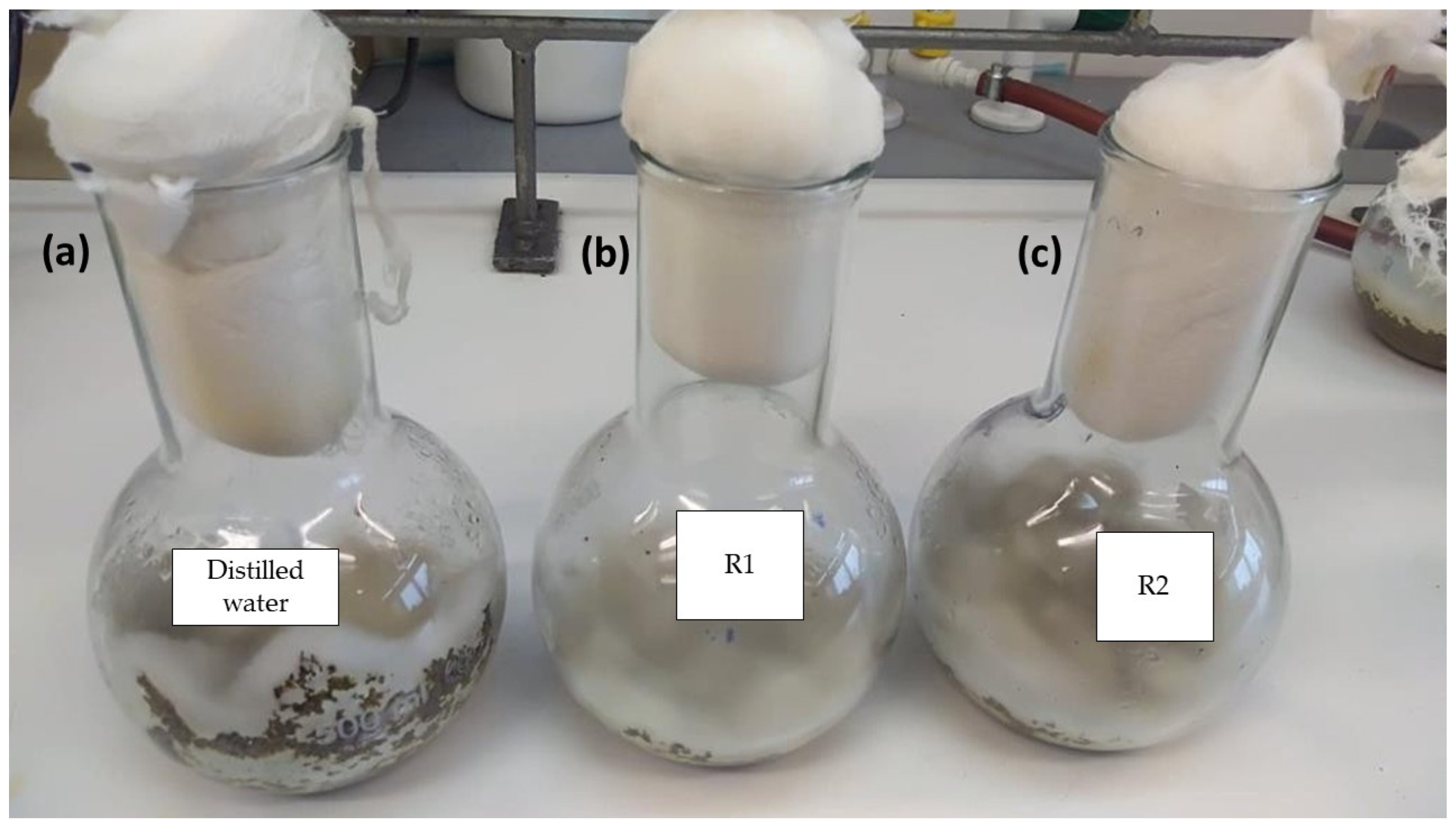
The study primarily examined the fatty acid composition of oil in rapeseed cake. As shown in Table 3, oleic acid is the most abundant fatty acid in rapeseed cake oil, making up 67.4% of the total composition. The second most prevalent fatty acid is linoleic acid, which accounts for 16.8%, followed by linolenic acid at 5.8%, palmitic acid at 5.5%, eicosenoic acid at 1.3%, stearic acid at 0.9%, erucic acid at 0.8%, palmitoleic acid at 0.6%, behenic acid at 0.5%, and arachidic acid at 0.4%. When comparing the fatty acid composition of oil found in rapeseed cakes to the standards for rapeseed oil derived from press cakes, as outlined in the Codex Alimentarius, it is clear that the oil in the cakes has a favorable fatty acid profile. This quality makes it a valuable carbon source for moulds of the R. oryzae species. Additionally, the low level of erucic acid (0.8%) alleviates concerns regarding potential toxic effects on humans and animals [24]. During the solid-state fermentation (SSF) method of cultivation, significant mycelial growth was observed on the rapeseed cakes across all variations of R. oryzae (Figure 1).

3.2. The Effect of Incubation Time and the Diluent Used in a Solid Culture Medium on the Activity of Lipolytic Enzymes of R. oryzae Mould

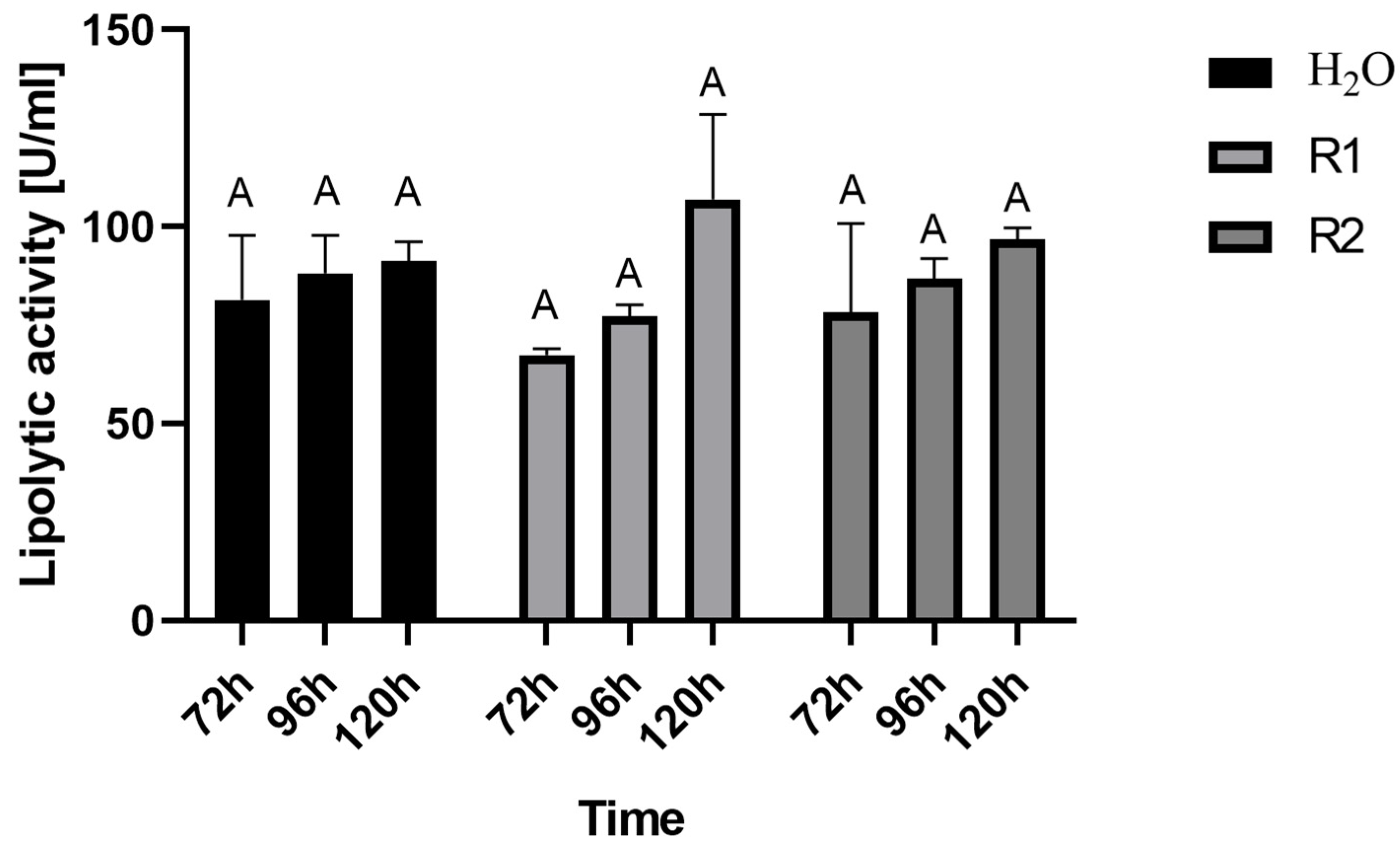
This section describes the characteristics of the filamentous fungal strain tested in various cultures. The cultivation was conducted on a solid substrate using the solid-state fermentation (SSF) method. The solid cultivation medium, which consisted of crushed rapeseed cake, was supplemented with one of three diluents that varied in composition: H2O, R1, or R2. The activity of extracellular enzymes, specifically lipases, was measured in the resulting supernatant after 3, 4, and 5 days of cultivation. The results are illustrated in Figure 2.
The conducted study on the lipolytic activity of the R. oryzae strain in a solid rapeseed cake-based medium, depending on the applied diluent, showed that the highest enzyme activity was observed in the R1 diluent after 120 h of cultivation, reaching 106.92 ± 21.67 U/mL. The lowest lipolytic activity was recorded in the same R1 diluent variant, but after 24 h, with a value of 67.38 ± 1.68 U/mL. At the same time, statistical analysis did not reveal any significant differences in the activity of extracellular lipolytic enzymes depending on the diluent used. In the analysis of the three different diluent variants, a clear increase in lipase activity was observed as the cultivation time of R. oryzae was extended. Lipase production reached its peak at 120 h post-inoculation across all three diluent variants. Among the diluents—H2O, R1, and R2—R2 demonstrated the greatest effectiveness in promoting high extracellular lipase activity in R. oryzae. This diluent had the highest concentration of easily metabolizable glucose, which facilitates early microbial growth and subsequently enhances enzyme production. Notably, a glucose concentration of 0.15 g/L did not inhibit the enzymatic activity of the lipases detected, while still supporting vigorous fungal growth. Moreover, R2 included both organic and inorganic nitrogen sources, as well as mineral salts.
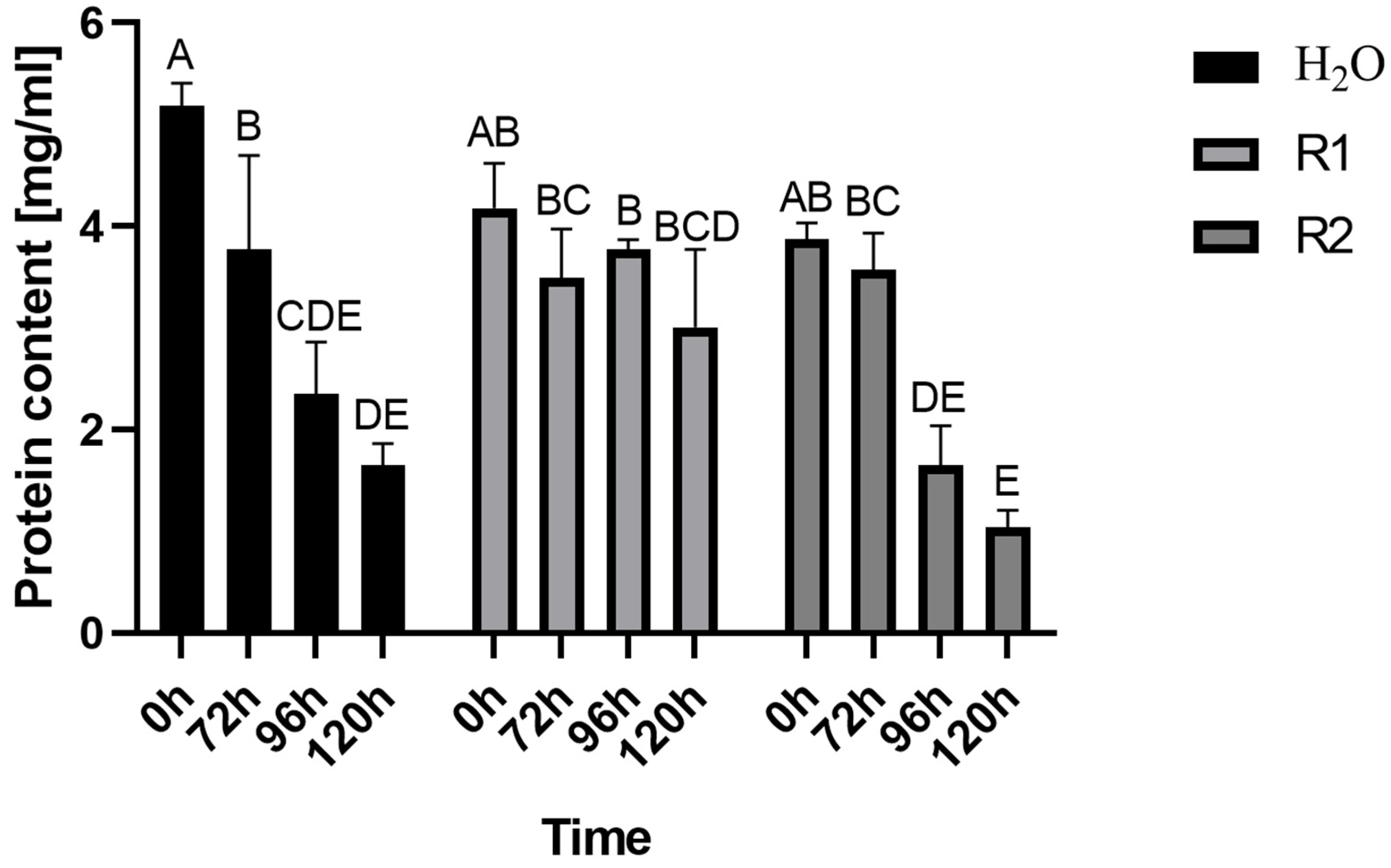
To determine the specific lipolytic activity of extracellular enzymes, which is defined as the number of enzyme units per 1 mg of protein, we measured the protein content in the supernatant obtained from mould cultivation on a solid substrate (Figure 3). Specific activity is a valuable metric for expressing enzyme activity, as it is determined in conjunction with the protein content of a supernatant that contains various enzymes. During the cultivation of R. oryzae, we observed that the protein content consistently decreased as the cultivation time increased, regardless of the diluent variant used. The highest protein content was recorded immediately after the introduction of the inoculum, at the start of cultivation. In samples where H2O was used as the diluent, the protein content was 5.189 ± 0.216 mg/mL. In the R1 diluent variant, protein content reached 4.177 ± 0.442 mg/mL, while the R2 diluent variant yielded an average protein content of 3.872 ± 0.159 mg/mL. The results obtained from cultivations using R1 and R2 diluents were generally similar, and statistical analysis did not reveal significant differences between them. In contrast, water, as a diluent, showed statistically significant differences compared to the other two, characterized by lower protein content, aside from the initial measurement, throughout the subsequent time points. By the final day of cultivation, the lowest protein contents were recorded: 1.648 ± 0.213 mg/mL in the H2O variant, 3.006 ± 0.765 mg/mL in the R1 variant, and 1.104 ± 0.169 mg/mL in the R2 variant.
The most pronounced daily decrease in protein content occurred in the R2 diluent between 72 and 96 h of cultivation, where the protein concentration in the supernatant was reduced by more than half. When comparing protein content with lipolytic activity, a general trend emerges: protein content decreases as lipolytic activity increases. This suggests that as more protein becomes available, it is more intensively utilized by the mould for growth, leading to a decline in the protein content of the supernatant. An exception to this trend was observed in the R1 diluent variant between 72 and 96 h of cultivation. During this interval, protein content increased slightly from 3.49 mg/mL to 3.77 mg/mL, while lipolytic activity also increased from 67.38 U/mL to 77.32 U/mL. Between 96 and 120 h, the protein concentration decreased according to the trend but not statistically significantly (Figure 2 and Figure 3).
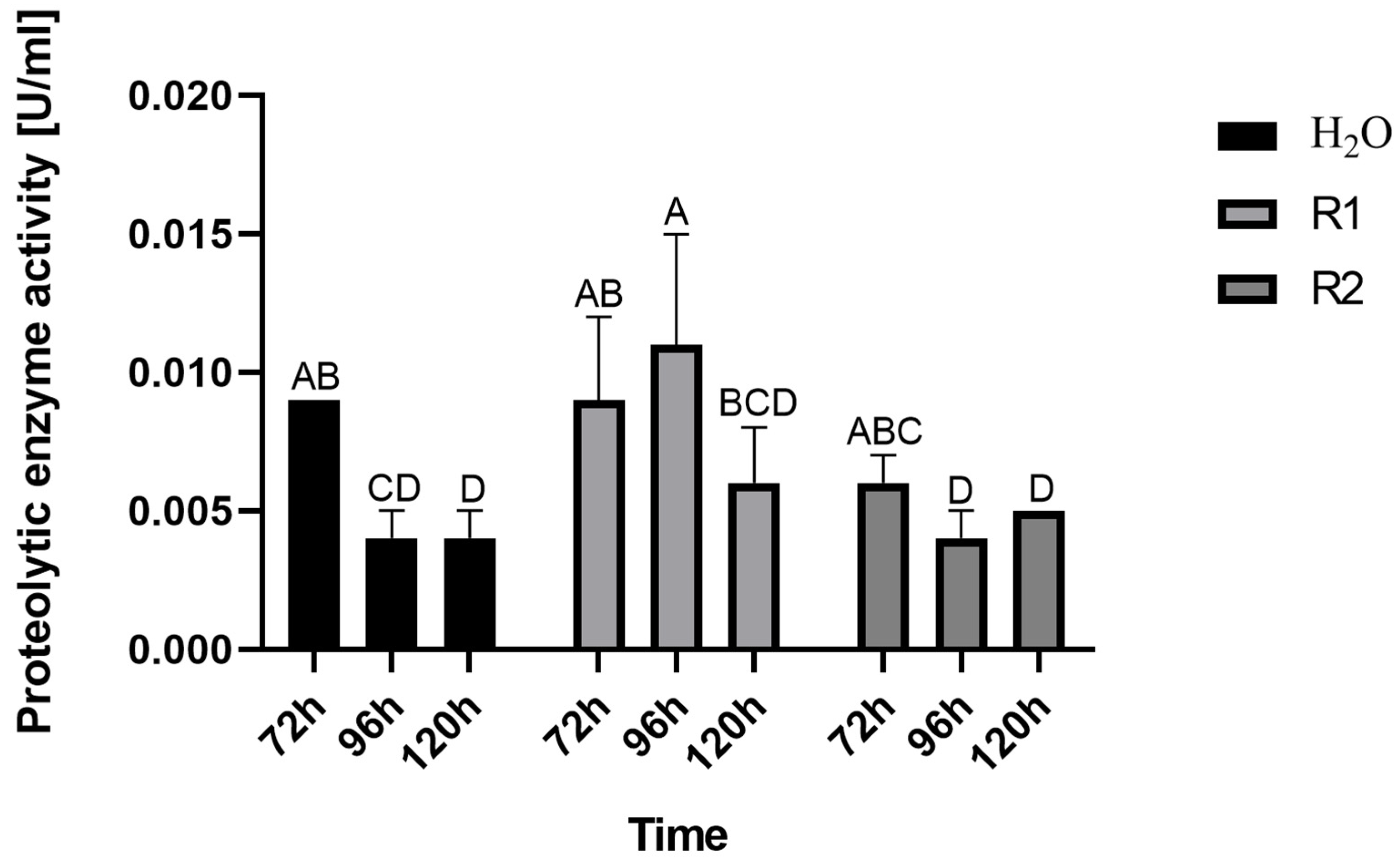
To further compare the efficiency of proteases after 72, 96, and 120 h of cultivation, the activity of proteins in supernatants obtained from R. oryzae cultures, grown on rapeseed cake and diluted with water R1 or R2, was evaluated. The results are presented in Figure 4.
When evaluating the activity of proteolytic enzymes, it was found that the most favourable results were achieved with diluent R1, which contained peptone, sodium chloride, and yeast extract. This diluent supported the highest protease activity, reaching 0.011 ± 0.0029 U/mL after 96 h of cultivation. The obtained results showed statistically significant differences (Figure 4). In contrast, the lowest proteolytic activity, which did not differ significantly, was recorded at 0.004 U/mL after both 96 and 120 h of cultivation with H2O and R2 as diluents. Measurements taken at 72 h indicated quite similar activity levels for H2O, R1 and R2, both reaching an average of 0.009 U/mL. The relatively high standard deviation observed in relation to R1 diluent was a direct consequence of the solid-state fermentation system employed, which is inherently heterogeneous due to variability in substrate structure, moisture distribution, and local nutrient availability within the rapeseed cake matrix. Such microenvironmental differences are known to cause biological variability in fungal growth and enzyme secretion.

3.3. Freeze-Drying of Extracellular Enzyme Solution Derived from R. oryzae Mould Cultures

The supernatant obtained after 120 h of R. oryzae cultivation using the SSF (solid-state fermentation) method on a solid substrate supplemented with diluent R2 was subjected to lyophilization to produce enzyme preparations with lipolytic and proteolytic activity.
Before the lyophilization process, the supernatant was also analyzed (Table 4). Moisture content measurements showed the highest moisture percentage before concentration (97.63 ± 0.10%), followed by a slight decrease after the concentration process (94.02 ± 0.20%). The lyophilized product exhibited the lowest moisture content (6.54 ± 0.24%). Tukey’s test confirmed the statistical significance of the differences between the analyzed samples. The significant reduction in water content in the preparation may enable its application in catalysis in organic solvents and facilitate storage.
The percentage of dry matter in the supernatant increased by 3.61% as a result of partial water evaporation during concentration. The highest dry matter content was observed in the lyophilizate (93.46 ± 0.2%), which represents an increase in dry matter content compared to the supernatant before concentration (by 91.09%) and after concentration (by 94.54%). Tukey’s test confirmed the statistical significance of the differences between the tested samples. The reduced moisture content was correlated with a higher proportion of solid content.
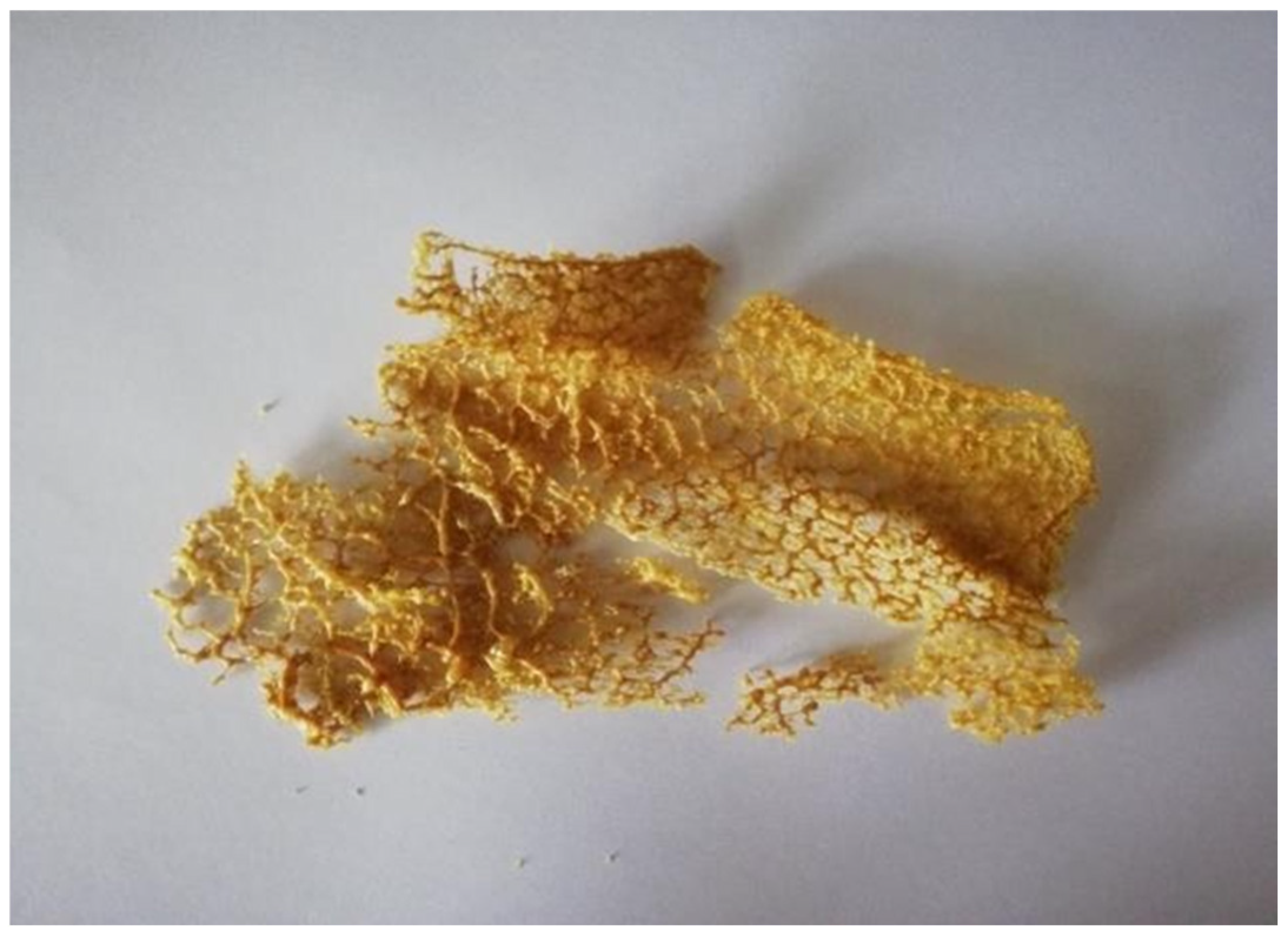
The highest lipolytic enzyme activity (Table 5) was observed in the concentrated supernatant, measuring 114.71 ± 2.91 U/mL, while the lowest activity was found in the non-concentrated supernatant, which had a value of 96.79 ± 2.91 U/mL. The lyophilization process resulted in a statistically significant decrease in enzyme activity, yielding 111.59 ± 1.91 U/g compared to the non-concentrated supernatant. However, high activity was still noted when comparing the lyophilized supernatant to the concentrated supernatant. This suggests that lyophilization had only a minor effect on the properties of the extracellular lipolytic enzymes. Additionally, proteolytic activity was low in both the non-concentrated supernatant (0.004 ± 0.001 U/mL) and the concentrated supernatant (0.013 ± 0.001 U/mL). Lyophilization resulted in a proteolytic activity of 0.010 ± 0.001 U/g. The lyophilizate formed an amorphous yellowish powder with a net-like structure and a large surface area (Figure 5).
Following lyophilization, 16.217 g of lyophilizate was obtained from 800 mL of raw supernatant, which had been prepared from R. oryzae culture using a total of 80 g of rapeseed press cake. This gives a final yield of 0.203 g of enzyme preparation per 1 g of rapeseed press cake. It is worth noting that the obtained preparation was characterized by high lipolytic enzyme activity and could potentially be used in biocatalytic processes.

4. Discussion

The considerable variation in the chemical composition of rapeseed cake, and thus its nutritional value, results from the use of different technologies for oil extraction from rapeseed in various oil mills. The high amount of crude protein is considered to be desirable in the cake used for animal feed, whereas crude fiber content that is difficult to digest is desired to be low. Rapeseed cake is B vitamin-rich (B1, B2, B6), contains approximately 20% of carbohydrates, and its protein content varies from 33 to 39%. The protein and amino acid content of rapeseed cake is equal to that of soybean cake [26]. The rapeseed cake used in this study is not only a rich source of nitrogen, carbon, and minerals, but is also cost-effective and readily available in large quantities.
The relatively high fat content in the rapeseed cake used in the study can result from the degree of seed pressing [27]. According to studies conducted by Ibarruri and Hernandez [28], the fermentation of agro-industrial residues (such as pear waste, pear–apple waste mixtures, orange waste, orange peel, potato peel, olive cake, and spent coffee grounds) using R. oryzae transforms low-nutrient residues into products with enhanced nutritional value, enabling their reuse in the agri-food industry. As a result of the fermentation process, the researchers obtained mycelium enriched in proteins and lipids in the final products.
According to fatty acid content in oil from rapeseed cake, similar conclusions were reached by Ibarruri and Hernandez [28]. For example, after 72 h of fermentation, a significant increase in linolenic acid (C18:3) content and a significant decrease in erucic acid (C22:1) were observed compared to unfermented fruit wastes [28]. Nevertheless, compliance with the Codex Alimentarius [25] requirements enables the use of rapeseed cake for food production.
When analyzing each of the three variants of thinners used, an increase in lipolytic enzyme activity can be observed, along with an extension of the incubation period of the R. oryzae mould culture. This finding does not align with the results obtained by Mukhtar et al. [19], who observed the highest activity of R. oryzae after 72 h, and longer cultivation times led to reduced enzyme production. However, the data presented in Figure 4 support the conclusion obtained by the author of this study for the tested strain. The data on protease activity most likely indicate the absence of enzyme proteolysis by proteases, which, based on the data, had their lowest activity at the time and were not produced during the same growth phase. Overall, protease activity remained low and did not interfere with lipase activity. This correlation is confirmed by Kornacki et al. [29], who studied the production of extracellular lipases and proteases by P. roqueforti and P. candidum strains. They reported that the lower the pH value, the lower the biosynthesis of lipases and the higher the synthesis of proteases. This is attributed to the gradual depletion of nutrients required for fungal growth and lipase production, as well as the accumulation of metabolic by-products, enzyme proteolysis during the stationary phase, and the onset of the cell death phase [19].
It is well known that lipase production is influenced by the carbon and nitrogen sources [30]. The carbon source is typically added to the culture medium in excess relative to the nitrogen source. This strategy is aimed at achieving, following the biomass growth phase, the second stage of the process–metabolite synthesis. This is confirmed by the presence of ammonium sulphate in the R2 diluent, which was absent in the other two diluents. Although this did not result in statistically significant differences, it may have contributed to the increased activity of the studied enzymatic proteins.
Sodium and calcium chlorides and other salts act as important factors in the production of extracellular lipases. In their study, Dong et al. [31] identified the impact of NaCl as significant. High concentrations of NaCl inhibited fungal growth and lactic acid production. They concluded that 12 g/dm3 NaCl could completely suppress the growth of R. oryzae AS 3.254, thereby inhibiting the organism’s ability to produce lactic acid and other metabolites. In the present experiment, the NaCl concentration did not exceed this threshold. One possible reason for not achieving the desired effects in the R2 diluent could be the inhibitory effect of certain salts formed due to uncontrolled pH changes in the medium [32]. In the study conducted by Kornacki et al. [29], a significant pH increase (to above 9) was caused by ammonia release from ammonium lactate, which was utilized by the fungi. The metal ions applied in the experiment had varying effects on protease activity, though most were found to inhibit enzymatic function. The relationship between serine protease and metal ions was studied by Jankiewicz et al. [33], who reported that divalent ions such as Zn2+, Mo2+, Ni2+, Cd2+, and Co2+ suppressed enzyme activity, while Ca2+ and Mg2+ ions activated it. Moreover, calcium ions were found to positively influence the stabilization of enzymatic activity [33]. Although the R2 diluent contained Ca2+ ions, no higher proteolytic activity was observed compared to the H2O diluent, which lacked these ions. On average, the activity difference between these two cultivation variants was approximately 0.001 U/mL.
In the present study, it can clearly be stated that the proteolytic activity was significantly lower compared to findings from other authors. This may be attributed to the lack of optimal cultivation conditions for protease production. The R. oryzae culture was conducted at 30 °C. According to Hsiao et al. [11], asparaginyl proteases from the genus Rhizopus appear to be stable at temperatures below 40 °C and susceptible to inactivation at higher temperatures. Therefore, the temperature applied in the experiment did not appear to have a detrimental effect on protease production. In addition to temperature and incubation time, protease production is strongly influenced by extracellular pH, which affects numerous metabolic and enzymatic processes, as well as the transport of various compounds across cell membranes, ultimately impacting cell growth and metabolite production. Researchers have determined that the optimal pH for R. oryzae MTCC 3690 is 5.5, while for Aspergillus niger BCRC 32720 and R. microsporus, it is as low as 2.5, values at which the highest proteolytic activity was recorded. In most cases, higher protease activity in fungi can be achieved under lower pH conditions during microbial cultivation. Therefore, the use of pH 7 in this study likely limited the proteolytic activity observed in the post-culture supernatants. It is important to note that the proteolytic capabilities of a fungus depend not only on the species but also on the specific strain used [11].
From a process optimization perspective, the obtained results indicate several parameters that could be further optimized to enhance lipase and protease production under SSF conditions. One of the key factors is the heterogeneity of rapeseed cake, which affects moisture distribution, oxygen transfer, and nutrient availability. Future optimization could include standardization of particle size and controlled adjustment of initial moisture content to reduce microenvironmental variability within the solid matrix. Additionally, targeted modulation of the carbon-to-nitrogen ratio, for example, through controlled supplementation with defined nitrogen sources, may improve synchronization between fungal growth and enzyme synthesis. pH control during cultivation, although technically challenging in SSF, could also be explored, as the present results suggest that neutral pH limited protease production while favoring lipolytic activity. Finally, optimization of incubation time based on enzyme production kinetics may allow harvesting at peak activity, minimizing variability and improving process efficiency.
From an industrial perspective, scale-up of SSF processes remains challenging due to limitations in heat dissipation, oxygen transfer, and process control. However, SSF using filamentous fungi has been successfully scaled up in tray, packed-bed, and rotating drum bioreactors, particularly when low-cost agro-industrial residues are used as substrates [34]. Therefore, with appropriate reactor design and process optimization, the proposed approach has realistic potential for further development beyond laboratory scale.
In this case, the conducted experiments confirmed that the lyophilization process itself did not lead to significant enzyme deactivation. The growing industrial demand for enzymatic preparations necessitates their improvement. For more efficient use, lyophilization (freeze-drying at low temperatures) can be employed to enhance the durability and stability of enzyme preparations. However, this is neither a simple nor highly reproducible process, due to the sensitivity of proteins, including enzymes, to temperature [35].
In conclusion, the activity of lyophilized enzymatic preparations obtained from R. oryzae culture is closely linked to the parameters of the lyophilization process. Improperly selected parameters may significantly prolong the drying time and adversely affect the quality of the enzymatic preparation. Key factors include the target product temperature and rapid attainment and maintenance of that temperature throughout the drying phase [36]. In industrial practice, the use of free lipases is limited, primarily due to their high cost, instability, and irreversibility of action.

5. Conclusions

This study confirmed the biocatalytic capabilities of the R. oryzae DSM 2199 mould strain cultured by the solid-state fermentation (SSF) method on a solid substrate, utilizing waste products from the agricultural industry, specifically rapeseed cakes. The strain showed stable growth on the solid substrate and consistent synthesis of lipases, with cultivation time identified as the key factor influencing enzymatic activity, with an optimal cultivation time of 120 h.
In contrast, proteolytic activity remained low under the applied conditions, indicating a selective production profile favoring lipases over proteases. Lyophilization of the post-culture supernatant yielded a stable lipolytic preparation with high activity (111.59 U/g), confirming the suitability of the obtained biocatalyst for further biotechnological applications. It should be noted that modifications to the carbon and nitrogen sources in the composition of the applied diluents did not yield satisfactory results to intensify the activity of the enzymatic preparations.
Overall, the results highlight the potential of SSF on rapeseed cake as a sustainable strategy for lipase production. Further optimization of cultivation parameters and medium composition may enhance process efficiency and support future scale-up and industrial implementation. In light of the anticipated continued dynamic growth in demand for enzymatic preparations, further improvement of the tested method for obtaining enzyme preparations is deemed necessary. It is suggested that one can attempt to increase yield through additional modifications to the composition.

Author Contributions

Conceptualization, A.F.; methodology, A.F.; formal analysis, A.F. and K.J.; investigation, A.F., K.J., K.W. and J.M.; resources, A.F. and J.M.; data curation, A.F.; writing—original draft preparation, A.F. and K.J.; writing—review and editing, A.F.; visualization, K.J.; supervision, A.F. All authors have read and agreed to the published version of the manuscript.

Funding

This research received no external funding.

Institutional Review Board Statement

Not applicable.

Informed Consent Statement

Not applicable.

Data Availability Statement

The original contributions presented in the study are included in the article; further inquiries can be directed to the corresponding authors.

Acknowledgments

We sincerely acknowledge Agnieszka Pyza for her contribution to the original engineering project on which this study is partially based, and Bartłomiej Zieniuk for his assistance during the experimental phase, including support in data collection and initial statistical analyses.

Conflicts of Interest

The authors declare no conflicts of interest.

References

  1. Thongchul, N.; Yang, S.-T. Controlling Filamentous Fungal Morphology by Immobilization on a Rotating Fibrous Matrix to Enhance Oxygen Transfer and L(+)-Lactic Acid Production by Rhizopus oryzae. In Fermentation Biotechnology; ACS Symposium Series; American Chemical Society: Washington, DC, USA, 2003; pp. 36–51. [Google Scholar]
  2. Gryganskyi, A.P.; Golan, J.; Dolatabadi, S.; Mondo, S.; Robb, S.; Idnurm, A.; Muszewska, A.; Steczkiewicz, K.; Masonjones, S.; Liao, H.-L.; et al. Phylogenetic and Phylogenomic Definition of Rhizopus Species. G3 Genes Genomes Genet. 2018, 8, 2007–2018. [Google Scholar] [CrossRef]
  3. Battaglia, E.; Benoit, I.; van den Brink, J.; Wiebenga, A.; Coutinho, P.M.; Henrissat, B.; de Vries, R.P. Carbohydrate-Active Enzymes from the Zygomycete Fungus Rhizopus oryzae: A Highly Specialized Approach to Carbohydrate Degradation Depicted at Genome Level. BMC Genom. 2011, 12, 38. [Google Scholar] [CrossRef]
  4. Meussen, B.J.; de Graaff, L.H.; Sanders, J.P.M.; Weusthuis, R.A. Metabolic Engineering of Rhizopus oryzae for the Production of Platform Chemicals. Appl. Microbiol. Biotechnol. 2012, 94, 875–886. [Google Scholar] [CrossRef]
  5. Londoño-Hernández, L.; Ramírez-Toro, C.; Ruiz, H.A.; Ascacio-Valdés, J.A.; Aguilar-Gonzalez, M.A.; Rodríguez-Herrera, R.; Aguilar, C.N. Rhizopus oryzae—Ancient Microbial Resource with Importance in Modern Food Industry. Int. J. Food Microbiol. 2017, 257, 110–127. [Google Scholar] [CrossRef]
  6. Wakai, S.; Arazoe, T.; Ogino, C.; Kondo, A. Future Insights in Fungal Metabolic Engineering. Bioresour. Technol. 2017, 245, 1314–1326. [Google Scholar] [CrossRef]
  7. Denardi-Souza, T.; Massarolo, K.C.; Tralamazza, S.M.; Badiale-Furlong, E. Monitoring of Fungal Biomass Changed by Rhizopus oryzae in Relation to Amino Acid and Essential Fatty Acids Profile in Soybean Meal, Wheat and Rice. CyTA-J. Food 2018, 16, 156–164. [Google Scholar] [CrossRef]
  8. Pitt, J.; Hocking, A. The Ecology of Fungal Food Spoilage. In Fungi and Food Spoilage; Springer: New York, NY, USA, 2009; pp. 3–9. [Google Scholar]
  9. Yu, X.-W.; Xu, Y.; Xiao, R. Lipases from the genus Rhizopus: Characteristics, Expression, Protein Engineering and Application. Prog. Lipid Res. 2016, 64, 57–68. [Google Scholar] [CrossRef] [PubMed]
  10. Liu, Y.; Shao, X.; Kong, D.; Li, G.; Li, Q. Immobilization of Thermophilic Lipase in Inorganic Hybrid Nanoflower through Biomimetic Mineralization. Colloids Surf. B Biointerfaces 2021, 197, 111450. [Google Scholar] [CrossRef] [PubMed]
  11. Hsiao, N.-W.; Chen, Y.; Kuan, Y.-C.; Lee, Y.-C.; Lee, S.-K.; Chan, H.-H.; Kao, C.-H. Purification and Characterization of an Aspartic Protease from the Rhizopus oryzae Protease Extract, Peptidase R. Electron. J. Biotechnol. 2014, 17, 89–94. [Google Scholar] [CrossRef]
  12. Gaonkar, S.K.; Furtado, I.J. Valorization of Low-Cost Agro-Wastes Residues for the Maximum Production of Protease and Lipase Haloextremozymes by Haloferax lucentensis GUBF-2 MG076078. Process Biochem. 2021, 101, 72–88. [Google Scholar] [CrossRef]
  13. Bamidele, M.O.; Bamikale, M.B.; Cárdenas-Hernández, E.; Bamidele, M.A.; Castillo-Olvera, G.; Sandoval-Cortes, J.; Aguilar, C.N. Bioengineering in Solid-State Fermentation for next Sustainable Food Bioprocessing. Next Sustain. 2025, 6, 100105. [Google Scholar] [CrossRef]
  14. Castilho, L.R.; Polato, C.M.S.; Baruque, E.A.; Sant’Anna, G.L., Jr.; Freire, D.M.G. Economic Analysis of Lipase Production by Penicillium Restrictum in Solid-State and Submerged Fermentations. Biochem. Eng. J. 2000, 4, 239–247. [Google Scholar] [CrossRef]
  15. Todo Bom, M.A.; Botton, V.; Altheia, F.M.; Thomas, J.C.; Piovan, L.; Córdova, J.; Mitchell, D.A.; Krieger, N. Fermented Solids That Contain Lipases Produced by Rhizopus Microsporus Have an S-Enantiopreference in the Resolution of Secondary Alcohols. Biochem. Eng. J. 2021, 165, 107817. [Google Scholar] [CrossRef]
  16. Gustavsson, J.; Cederberg, C.; Sonesson, U.; Van Otterdijk, R.; Meybeck, A. Global Food Losses and Food Waste—Extent, Causes and Prevention; FAO: Rome, Italy, 2011. [Google Scholar]
  17. Iqbal, A.; Ekama, G.A.; Zan, F.; Liu, X.; Chui, H.-K.; Chen, G.-H. Potential for Co-Disposal and Treatment of Food Waste with Sewage: A Plant-Wide Steady-State Model Evaluation. Water Res. 2020, 184, 116175. [Google Scholar] [CrossRef]
  18. Fan, T.; Liu, X.; Zhao, R.; Zhang, Y.; Liu, H.; Wang, Z.; Wang, F.; Nie, K.; Deng, L. Hydrolysis of Food Waste by Hot Water Extraction and Subsequent Rhizopus Fermentation to Fumaric Acid. J. Environ. Manag. 2020, 270, 110954. [Google Scholar] [CrossRef] [PubMed]
  19. Mukhtar, H.; Khursheed, S.; Ikram-ul-Haq; Mumtaz, M.W.; Rashid, U.; Al-Resayes, S.I. Optimization of Lipase Biosynthesis from Rhizopus oryzae for Biodiesel Production Using Multiple Oils. Chem. Eng. Technol. 2016, 39, 1707–1715. [Google Scholar] [CrossRef]
  20. ISO 16869:2008; Plastics—Assessment of the Effectiveness of Fungistatic Compounds in Plastics Formulations. International Organization for Standardization: Geneva, Switzerland, 2008.
  21. Fabiszewska, A.U.; Zieniuk, B.; Kozłowska, M.; Mazurczak-Zieniuk, P.M.; Wołoszynowska, M.; Misiukiewicz-Stępień, P.; Nowak, D. Studies on Upgradation of Waste Fish Oil to Lipid-Rich Yeast Biomass in Yarrowia lipolytica Batch Cultures. Foods 2021, 10, 436. [Google Scholar] [CrossRef]
  22. Jasińska, K.; Zieniuk, B.; Jankiewicz, U.; Fabiszewska, A. Bio-Based Materials versus Synthetic Polymers as a Support in Lipase Immobilization: Impact on Versatile Enzyme Activity. Catalysts 2023, 13, 395. [Google Scholar] [CrossRef]
  23. Jankiewicz, U.; Russel, S.; Bagińska, E.; Hilszczańska, D. Aktywność metaboliczna grzybni trufli letniej. Woda-Sr.-Obsz. Wiej. 2015, 1, 49–67. (In Polish) [Google Scholar]
  24. Durakli Velioglu, S.; Temiz, H.T.; Ercioglu, E.; Velioglu, H.M.; Topcu, A.; Boyaci, I.H. Use of Raman Spectroscopy for Determining Erucic Acid Content in Canola Oil. Food Chem. 2017, 221, 87–90. [Google Scholar] [CrossRef] [PubMed]
  25. Codex Alimentarius FAO/WHO. Codex standard for named vegetable oils. Codex Stan 210 1999, 2021, 1–13. [Google Scholar]
  26. Çulcuoğlu, E.; Ünay, E.; Karaosmanoğlu, F. Rapeseed Cake as a Biomass Source. Energy Sources 2002, 24, 329–336. [Google Scholar] [CrossRef]
  27. Kalembasa, S.; Adamiak, E.A. Określenie składu chemicznego makuchu rzepakowego. Acta Agraphysica 2010, 15, 323–332. (In Polish) [Google Scholar]
  28. Ibarruri, J.; Hernández, I. Rhizopus oryzae as Fermentation Agent in Food Derived Sub-Products. Waste Biomass Valorization 2018, 9, 2107–2115. [Google Scholar] [CrossRef]
  29. Kornacki, K.; Stepaniak, L.; Adamiec, I.; Grabska, J.; Wrona, K. Production of lipases and proteases by moulds of Penicillium roqueforti and Penicillium candidum under selected conditions of surface and submerged cultivation. Acta Aliment. Pol. 1980, 6, 281–288. (In Polish) [Google Scholar]
  30. Lopes, V.R.O.; Farias, M.A.; Belo, I.M.P.; Coelho, M.A.Z. Nitrogen sources on TPOMW valorization through solid-state fermentation performed by Yarrowia lipolytica. Braz. J. Chem. Eng. 2016, 33, 261–270. [Google Scholar] [CrossRef]
  31. Huang, L.P.; Dong, T.; Chen, J.W.; Li, N. Biotechnological Production of Lactic Acid Integrated with Fishmeal Wastewater Treatment by Rhizopus oryzae. Bioprocess Biosyst. Eng. 2007, 30, 135–140. [Google Scholar] [CrossRef]
  32. Benabda, O.; M’hir, S.; Kasmi, M.; Mnif, W.; Hamdi, M. Optimization of Protease and Amylase Production by Rhizopus oryzae Cultivated on Bread Waste Using Solid-State Fermentation. J. Chem. 2019, 2019, 3738181. [Google Scholar] [CrossRef]
  33. Jankiewicz, U.; Koblak, S.; Wierzchowski, P.; Russel, S. Charakterystyka biochemiczna proteazy syntetyzowanej przez Streptomyces rimosus. Woda-Sr.-Obsz. Wiej. 2018, 18, 5–14. (In Polish) [Google Scholar]
  34. Kumar, V.; Ahluwalia, V.; Saran, S.; Kumar, J.; Patel, A.K.; Singhania, R.R. Recent Developments on Solid-State Fermentation for Production of Microbial Secondary Metabolites: Challenges and Solutions. Bioresour. Technol. 2021, 323, 124566. [Google Scholar] [CrossRef]
  35. Juckers, A.; Knerr, P.; Harms, F.; Strube, J. Effect of the Freezing Step on Primary Drying Experiments and Simulation of Lyophilization Processes. Processes 2023, 11, 1404. [Google Scholar] [CrossRef]
  36. Jakubczyk, E.; Nowak, D. Process Parameters as Tools to Intensify the Freeze-Drying Process and Modify the Sorption Properties of the Obtained Freeze-Dried Products. Processes 2024, 12, 1932. [Google Scholar] [CrossRef]
Figure 1. Cultivation of R. oryzae mould using the SSF method and different diluents: (a)—distilled water; (b)—R1; and (c)—R2.
Applsci 16 01225 g001
Figure 2. Extracellular lipolytic enzyme activity after cultivation of R. oryzae mould, depending on the diluent used, after three (after 72 h), four (after 96 h), and five (after 120 h) days of cultivation, respectively. Capital letters were used to designate homogeneous groups for samples taken after 72, 96, and 120 h of cultivation, which were separated based on Tukey’s test (p > 0.05).
Applsci 16 01225 g002
Figure 3. Protein content in the supernatant after cultivation of R. oryzae, depending on the diluent used, respectively, before cultivation (0 h), after three (72 h), four (96 h), and five days of cultivation (120 h). Capital letters denote homogeneous groups for samples taken after 0, 72, 96 and 120 h of cultivation, identified on the basis of Tukey’s test (p < 0.05).
Applsci 16 01225 g003
Figure 4. Proteolytic enzyme activity in R. oryzae mould cultures, depending on the diluent used, after three (after 72 h), four (after 96 h), and five (after 120 h) days of cultivation. Capital letters were used to designate homogeneous groups for samples taken after 72, 96, and 120 h of cultivation, which were separated based on Tukey’s test (p < 0.05).
Applsci 16 01225 g004
Figure 5. Freeze-dried supernatant from a culture of R. oryzae mould in powder form.
Applsci 16 01225 g005
Table 1. Composition of diluents used in mould SSF cultures.
SymbolCompositionConcentration [g/L]
R1peptone2.0
NaCl0.5
yeast extract0.5
R2glucose0.15
KH2PO40.03
MgSO4·7H2O0.0045
NaH2PO40.1800
CaCl20.0037
(NH4)2SO40.0340
Table 2. Dry matter, moisture and fat content in rapeseed cake.
Dry Matter [%]Moisture Content [%]Fat Content [%]
93.31 ± 0.08%6.69 ± 0.08%14.27 ± 0.04%
Table 3. Fatty acid composition of rapeseed oil [% of total fatty acids] and comparison with Codex Alimentarius [25] standards for rapeseed oil. ND—not detected.
Fatty AcidOil Extracted from Rapeseed PomaceRapeseed Oil [Codex Alimentarius]Low-Erucic Rapeseed Oil [Codex
Alimentarius]
C12:0 Lauric acidNDNDND
C14:0 Myristic acidNDND–0.2ND–0.2
C16:0 Palmitic acid5.51.5–6.02.5–7.0
C16:1 Palmitooleic acid0.6ND–3.0ND–0.6
C17:0 Margaric acidNDND–0.1ND–0.3
C17:1 Heptadecenoic acidNDND–0.1ND–0.3
C18:0 Stearic acid0.90.5–3.10.8–3.0
C18:1 Oleic acid67.48.0–60.051.0–70.0
C18:2 Linoleic acid16.811.0–23.01.0–30.0
C18:3 Linolenic acid5.85.0–13.05.0–14.0
C20:0 Arachidic acid0.4ND–3.00.2–1.2
C20:1 Eicosenoic acid1.33.0–15.00.1–4.3
C22:0 Behenic acid0.5ND–2.0ND–0.6
C22:1 Erucic acid0.8>2.0–60.0ND–2.0
C24:0 Lignoceric acidNDND–2.0ND–0.3
C24:1 Tetracosenoic acidNDND–3.0ND–0.4
Table 4. Characteristics of raw supernatant and freeze-dried preparation of extracellular enzymes derived from R. oryzae mould cultures. Different letters (A–C) indicate statistical differences within the parameter under investigation.
Supernatant After CultivationLyophilized Product
Before ConcentrationAfter Concentration
Moisture content [%]97.63 ± 0.10 A94.02 ± 0.20 B6.54 ± 0.24 C
Dry matter [%]2.37 ± 0.10 A5.98 ± 0.20 B93.46 ± 0.24 C
Table 5. Characteristics of raw supernatant and freeze-dried preparation of extracellular enzymes derived from R. oryzae mould cultures in terms of enzymatic activity. Capital letters were used to designate homogeneous groups based on Tukey’s test for samples collected after 72, 96, and 120 h of cultivation (p < 0.05). For the supernatant, the activity was given per mL, and for the lyophilizate, per g of lyophilized preparation.
Enzyme ActivityLipolytic
[U/mL]
Proteolytic [U/mL]Lipolytic
[U/g]
Proteolytic
[U/g]
Supernatant after
cultivation
Before
concentration
96.79 ± 2.91 A0.004 ± 0.001 A--
After
concentration
114.71 ± 2.91 B0.013 ± 0.001 B--
Lyophilized product--111.59 ± 1.910.010 ± 0.001
Disclaimer/Publisher’s Note: The statements, opinions and data contained in all publications are solely those of the individual author(s) and contributor(s) and not of MDPI and/or the editor(s). MDPI and/or the editor(s) disclaim responsibility for any injury to people or property resulting from any ideas, methods, instructions or products referred to in the content.