Article

Experimental Study on Strain Evolution of Grouted Rock Mass with Inclined Fractures Using Digital Image Correlation

1
School of Civil Engineering, Architecture and Environment, Hubei University of Technology, Wuhan 430068, China
2
Institute of Rock and Soil Mechanics, Chinese Academy of Sciences, Wuhan 430064, China
*
Author to whom correspondence should be addressed.
Appl. Sci. 2026, 16(3), 1224; https://doi.org/10.3390/app16031224
Submission received: 17 December 2025 / Revised: 19 January 2026 / Accepted: 21 January 2026 / Published: 25 January 2026

Abstract

To address the depletion of shallow coal resources, mining activities have progressed to greater depths, where rock masses contain numerous fractures due to complex geological conditions, making grouting reinforcement essential for ensuring stability. Using digital image correlation, this study investigated the strain evolution characteristics of grouted fractured specimens of three rock types—mudstone, coal–rock, and sandstone—under uniaxial compression. Analysis of the strain evolution process focused on two typical fracture inclinations of 0° and 60°, while examination of the peak strain characteristics covered five inclinations, namely 0°, 15°, 30°, 45°, and 60°. The findings indicate that the mechanical response varies systematically with lithology and fracture inclination. The post-peak curves differ significantly among rock types: coal–rock shows a gentle descent, mudstone exhibits a rapid strength drop but higher residual strength, and sandstone is characterized by “serrated” fluctuations. The failure mode transitions from tensile splitting at a horizontal inclination of 0° to shear failure at inclinations of 15°, 30°, 45°, and 60°. Strain nephograms corresponding to the peak stress point D reveal sharp, band-shaped zones of strain localization. The maximum principal strain exhibits a non-monotonic trend, first increasing and then decreasing with increasing inclination angle. For grouted coal–rock and sandstone, the peak values of 47.47 and 45.00 occur at α = 45°. In contrast, grouted mudstone reaches a maximum value of 26.80 at α = 30°, indicating its lower susceptibility to damage. The study systematically clarifies the strain evolution behavior of grouted fractured rock masses, providing a theoretical basis for evaluating the effectiveness of reinforcement and predicting failure mechanisms. Crucially, the findings highlight mudstone’s role as a high-integrity medium and the particular vulnerability of horizontal fractures, offering direct guidance for the targeted grouting design in stratified rock formations.

1. Introduction

As a crucial component of China’s energy structure, coal resources are facing increasingly depleted shallow reserves due to rapid socio-economic development and growing energy demands [1,2,3,4]. As a result, mining operations are gradually extending into deeper regions, which are often characterized by complex geological conditions [5,6].
Under long-term geological tectonic movements, such as compression and shearing, soft rock strata develop significant fractures and abundant structural planes, greatly reducing the integrity and mechanical performance of the rock mass [7,8,9]. When subjected to mining-induced disturbances, these fractured rock masses are prone to stress concentration and heterogeneous deformation, leading to substantial displacement of surrounding rock, local collapse, or even roof fall, as well as instability and failure of support structures [10,11]. These phenomena pose a serious threat to the long-term stability and safe operation of coal mine roadways [12]. Therefore, in-depth research on the deformation and failure mechanisms of highly fractured rock masses under mining disturbances is of major theoretical and practical significance for ensuring the safe and efficient exploitation of deep mineral resources.
Extensive research on the mechanical behavior of fractured rock masses indicates that geometric parameters of fractures [13], such as dip angle, length, and density, along with mechanical parameters [14], such as internal friction angle and cohesion, are the key factors governing rock mass strength, deformation, and failure modes. Grout injection has been widely applied to effectively enhance the mechanical properties of fractured rock masses. Previous research has primarily focused on evaluating the improvement of macroscopic mechanical parameters through grouting, alongside investigating the diffusion patterns and consolidation mechanisms of grout within fractures [15]. Strain evolution is pivotal for elucidating the accumulation of deformation damage and failure processes within rock masses. Conventional methods employ resistive strain gauges [16] or LVDT [17] measurement. While these approaches are well-established, they yield only discrete point or global average strain information, which proves inadequate for capturing full-field, non-uniform deformation localization phenomena.
To overcome the limitations of conventional point-based measurement techniques, Digital Image Correlation has gained widespread application in rock mechanics for monitoring the progressive evolution of damage. Leveraging advantages such as real-time measurement, non-contact operation, and full-field assessment, Digital Image Correlation (DIC) has evolved into a powerful tool [18,19]. It has found extensive application in geotechnical engineering and materials science [20]. In the field of fracture grouting reinforcement, DIC enables real-time monitoring of strain evolution during grouting processes, effectively revealing the influence of grouting on strain distribution and crack propagation behavior in rock masses [21]. Ji Weiwei et al. [12] investigated critical characteristics, process zone length, and crack opening displacement during different types of rock failure using digital image acquisition and correlation analysis on specimen surfaces. Li Wei and Yuan Qiang et al. [22] investigated the failure mechanism and energy evolution process of sandstone under uniaxial compression, conducting a multi-faceted analysis incorporating DIC technology. Jia-Le Li and Gao-Feng Zhao [23] pioneered innovative developments in the application of DIC technology for measuring discontinuous deformations in small-scale rocks. Wu Qiuhong et al. [24], employing Crack Propagation Gauge (CPG) and DIC techniques, found that thermo-mechanical cycling reduced the Mode I fracture toughness, maximum fracture process zone length, and crack propagation rate index of granite, with fracture surfaces becoming increasingly irregular as the number of cycles increased.
Although existing studies have explored the mechanical behaviour of rock masses post-grouting [25,26], most findings focus on single lithologies or limited joint inclinations. Systematic investigations into the full-field, non-uniform strain evolution from deformation to failure in grouted rock masses under diverse lithologies and the full range of joint inclinations remain insufficient. Traditional deformation monitoring methods often struggle to accurately capture local strain characteristics within jointed rock masses. DIC technology provides a novel approach to elucidating the strain evolution mechanisms within jointed rock masses after grouting. This study employs DIC to conduct full-field deformation observations of grouted reinforcements under uniaxial compression across mudstone, coal-bearing rock, and sandstone formations. With a primary focus on two typical joint inclinations of 0° and 60° for analyzing full-field stress–strain evolution, and an extended examination of strain variations at stress peaks for five inclinations, namely 0°, 15°, 30°, 45°, and 60°, this work systematically elucidates how fracture inclination governs the mechanical behavior and fracture propagation patterns in grout-reinforced bodies. This study aims to elucidate, at the microscale, the intrinsic relationship between the strain distribution characteristics during fracture grouting and the macroscopic evolution of fractures.

2. Experimental Preparation and Test Protocol

2.1. Determination of Rock Mass Joint Parameters

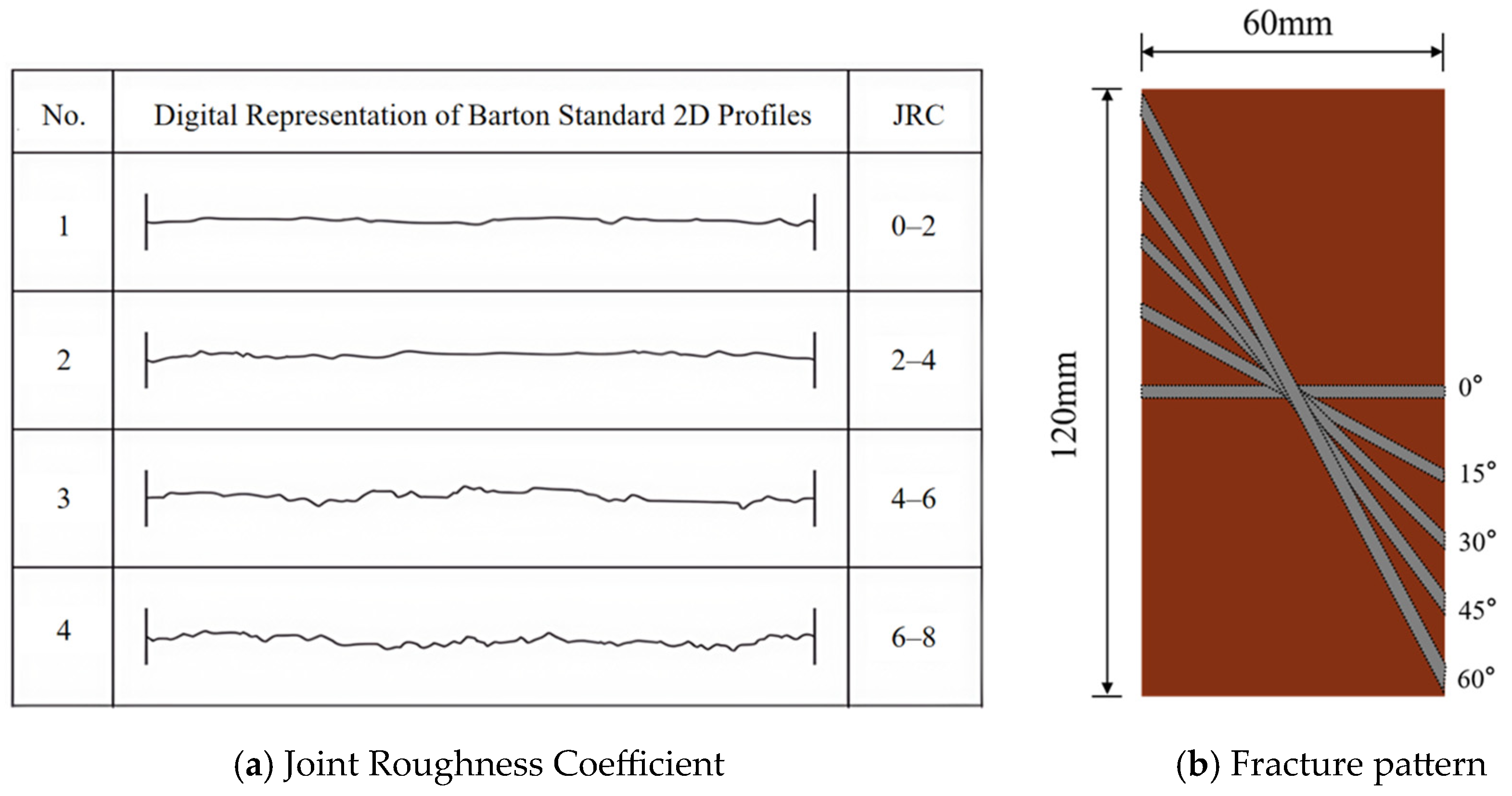
The specimen configuration and dimensions for this study were determined with reference to existing specimen designs used for investigating the mechanical properties of jointed rock [27], as well as standard rock testing protocols. Taking into account practical considerations such as grouting equipment for fractures, sample preparation complexity, and the installation requirements of monitoring instruments, rectangular specimens measuring 60 mm × 60 mm × 120 mm were adopted in this study, rather than the conventional cylindrical specimens with dimensions of 50 mm × 100 mm [28]. This design helps reduce uncertainties associated with complex fracture morphology. The fracture width was set to t = 10 mm, with fracture angles α of 0°, 15°, 30°, 45°, and 60°. As shown in Figure 1, the Joint Roughness Coefficient (JRC), proposed by Barton et al. [29,30], provides a quantitative measure of the roughness of rock joint surfaces. Previous research has shown that smooth fractures reduce mechanical interlocking and weaken the adhesive bond between grout and rock, thereby increasing the risk of interfacial debonding [31]. To improve bonding performance and better simulate real engineering fractures, this study focuses on rough fracture interfaces with JRC values between 2 and 4, selected based on Barton’s two-dimensional profile criteria.
In practical engineering, rock mass fractures exhibit complex and random distributions. Under real geological conditions, dual, multiple, and irregular fracture sets are commonly encountered [32]. After grout reinforcement, the diffusion pattern may result from multiple interacting mechanisms, leading to diverse forms of the reinforced mass [33]. This study focuses on the fracture dip angle as a key variable and investigates its influence on the mechanical properties and failure mechanisms of grout-reinforced fractures. To highlight the dominant effect of fracture orientation, other geometric parameters (such as length, spacing, and width) were kept constant to minimise experimental variability.

2.2. Sample Selection

The bedrock samples were selected in accordance with the composite stratigraphic column of the working face in Pansan Mine, Huainan Mining Area, Anhui Province, as shown in Table 1.
Sandstone, coal-bearing rock, and mudstone were chosen as the experimental materials. To minimize sample variability, all bedrock specimens were collected as oriented cores from adjacent locations within the same stratum and along a consistent orientation. Moreover, to avoid potential mechanical differences among rocks with similar lithological descriptions but from different horizons, sampling for each lithology was strictly restricted to a single target bed only, rather than combining materials from different horizons. This design avoids cross-horizon equivalence assumptions and ensures that the tested specimens are comparable within each lithology.
The specimen fabrication procedure was conducted as follows:
(1) Specimen Preparation: The parent rock was cut into rectangular standard specimens. Prefabricated fissures were created, after which the specimens were secured within the mould and connected to grouting pipes.
(2) Grouting Reinforcement: Grout was injected through a filter screen under a pressure of 2 MPa, which was maintained for 30 s. The pipes were subsequently flushed to prevent blockage.
(3) Curing Treatment: Demoulding was performed after 24 h of static rest. The specimens were then cured in a cool, dry environment for 3 days. Excess grout was removed, and curing continued for an additional 7 days.
(4) Speckled Spraying: A matt white paint base layer was applied to the specimen surface. After 5 min, speckles were evenly sprayed to achieve a random distribution with consistent particle size, targeting an approximate 50% black and 50% white area ratio.

2.3. Experimental Setup and Principle

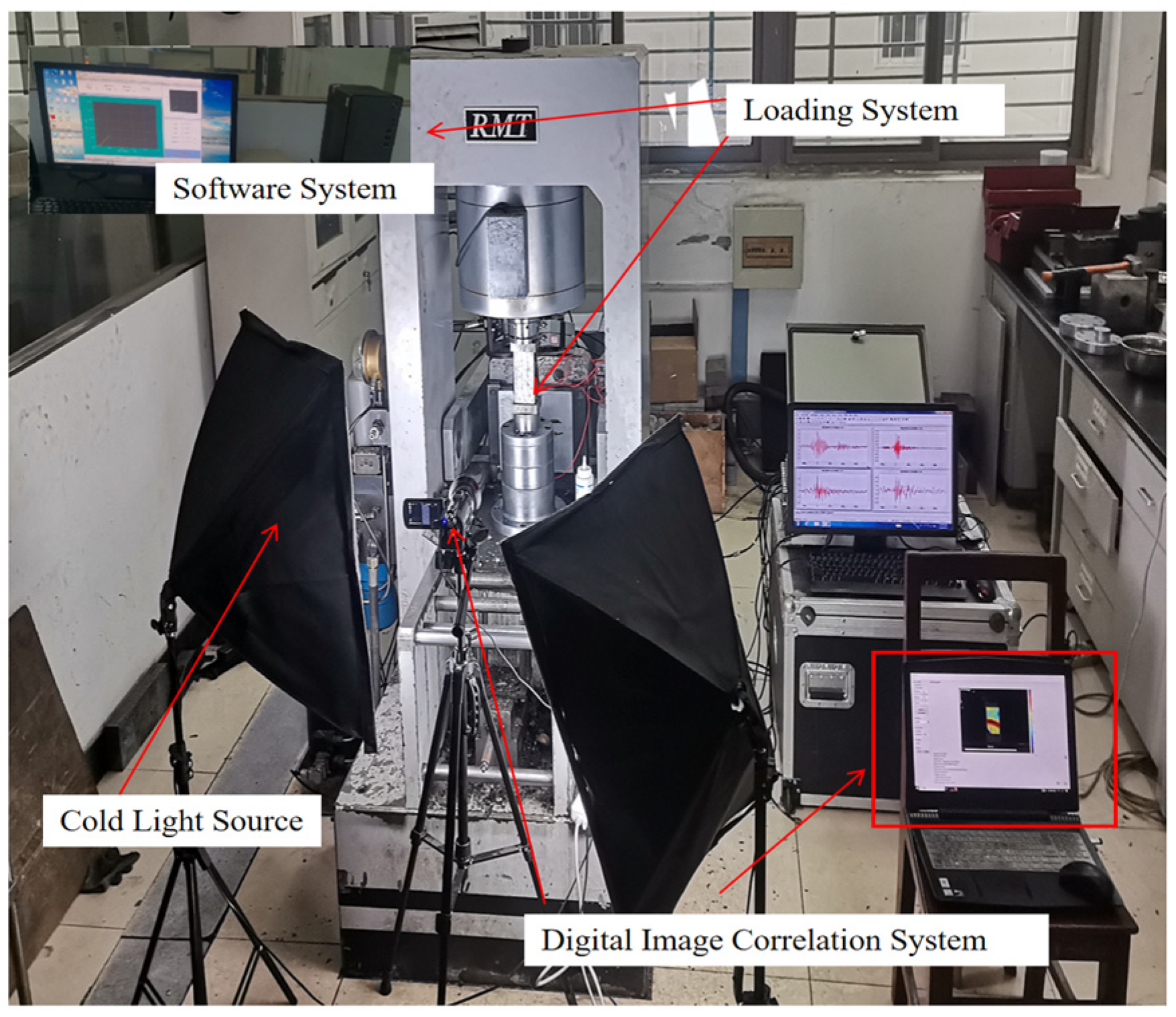
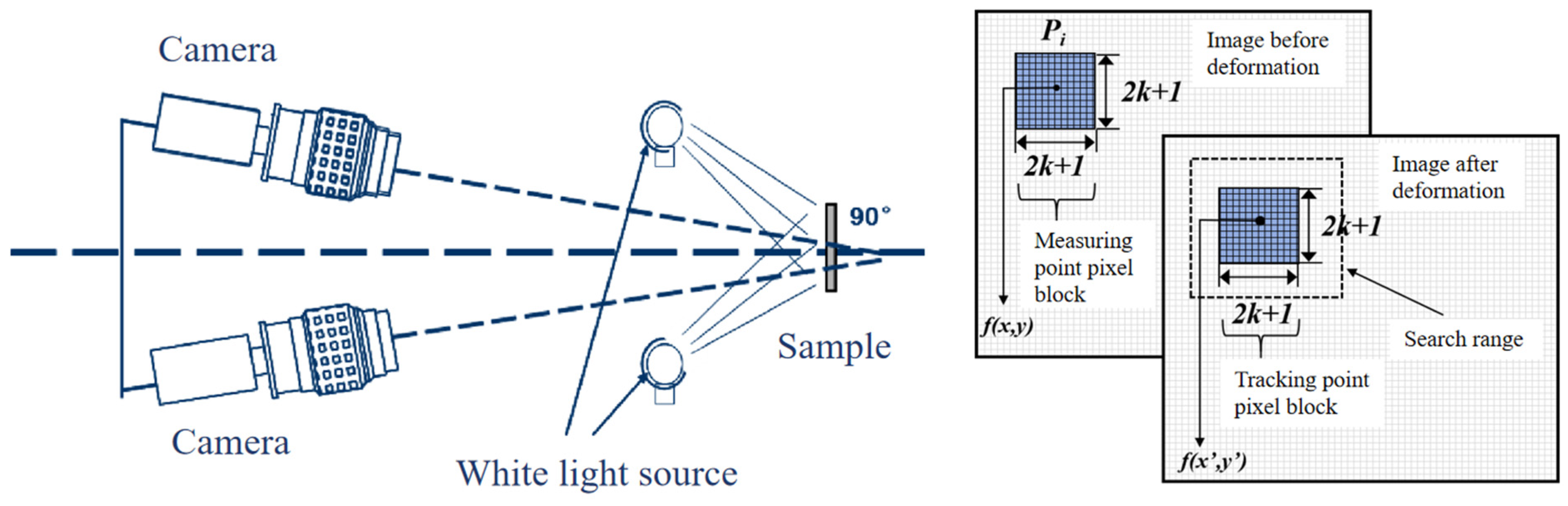
To investigate the strength and deformation characteristics of grouted rock mass specimens with varying fracture geometries, uniaxial compression tests were performed using Digital Image Correlation (DIC) technology. Uniaxial compression tests are widely used to evaluate the mechanical response of grouted fractured rock(-like) materials, including strength, deformation characteristics, and failure behavior [34]. The loading and monitoring system is illustrated in Figure 2
The DIC system consisted of a computer, a high-speed camera, and a cold light source. The high-speed camera provided a maximum resolution of 28 megapixels (6120 × 4592) and a maximum frame rate of 60 Hz. A polarizing filter was attached to the camera lens to prevent overexposure, while the cold light source was used to control the brightness on the specimen surface. Before testing, the camera’s position and angle were carefully adjusted. After calibrating the field of view, the camera’s brightness and focus were fine-tuned, and acquisition parameters, such as the capture rate, were configured via the computer software. Image recording was synchronized with the loading process and terminated once loading was complete. The tests were conducted under displacement control at a constant rate of 0.002 mm/s, with specimen dimensions specified accordingly.
DIC is a non-contact full-field measurement technique based on tracking the grayscale pattern of a random speckle field on the specimen surface. During loading, a sequence of speckle images is recorded; the displacement field is obtained by correlating subsets between the reference and deformed images, and the strain field is subsequently calculated from spatial gradients of the displacement field. The schematic workflow of the DIC measurement principle is shown in Figure 3.

2.4. Data Acquisition and Data Processing

During the uniaxial compression tests, the load–displacement data and speckle images were recorded synchronously. The stress–strain curve was obtained from the continuously logged mechanical data, while the speckle-image sequence was captured throughout the loading process.
A commercial digital image correlation system (Correlated Solutions) was employed, utilizing high-speed cameras to visualize surface deformation of the specimen under uniaxial compression conditions. The images were processed using VIC-2D to compute displacement and strain fields. The maximum principal strain, ε1, was used to characterize strain localization and crack evolution, employing the Lagrangian strain formulation with contour isolines overlaid on the ε1 maps. Characteristic points A–E were identified on the stress–strain curve, and the corresponding ε1 maps were extracted from the VIC-2D results for further analysis.

3. Results and Analysis

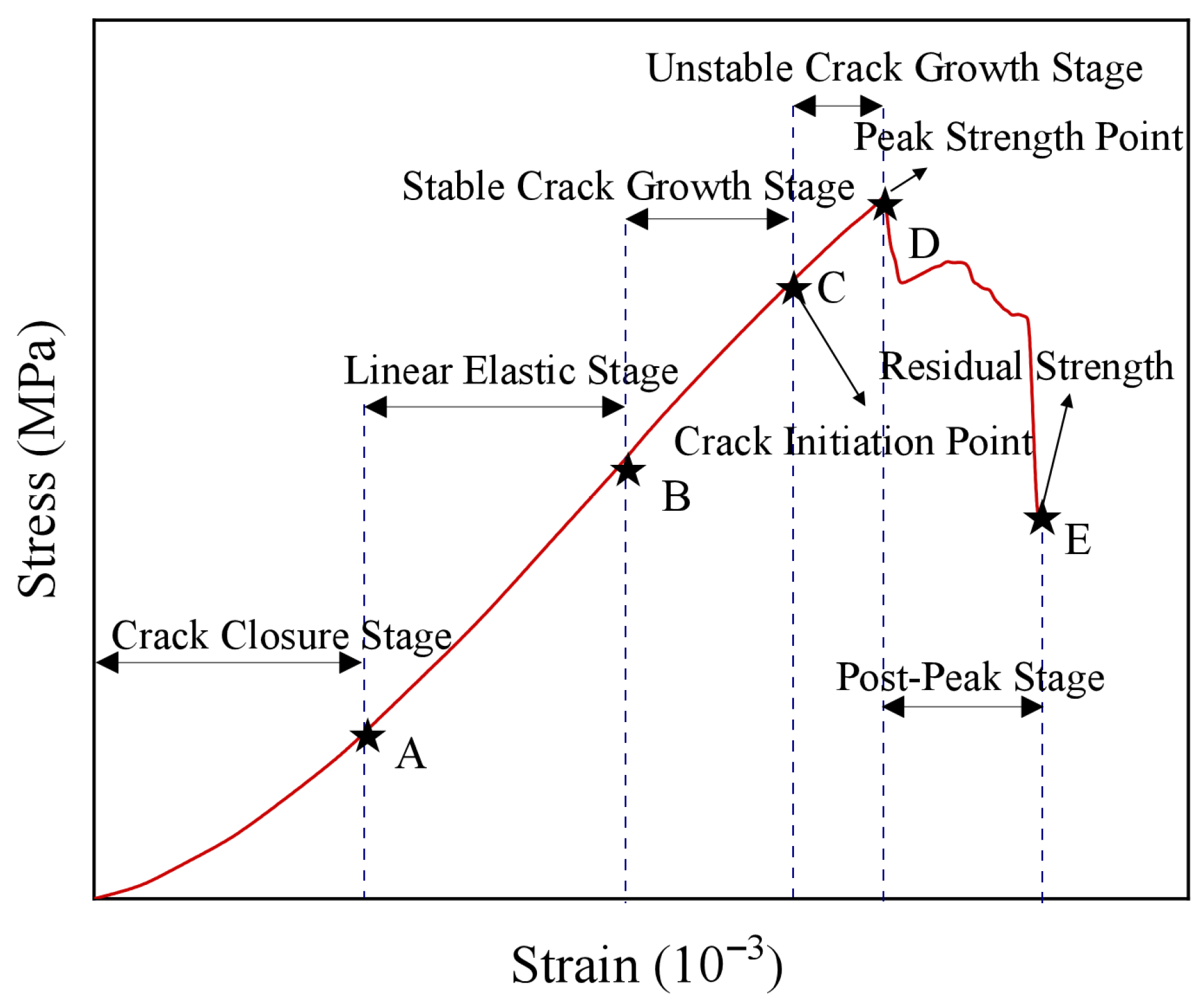
As shown in Figure 4, the stress–strain curve under uniaxial compression can be divided into five distinct stages:
The compressive strength results for grout-reinforced fracture specimens of coal rock, mudstone, and sandstone are summarized in Table 2, Table 3, and Table 4, respectively.
In the curve, point B marks the transition from elastic to plastic deformation, with the corresponding stress defined as the yield strength. Point D represents the peak strength, and point E indicates the residual strength after the peak. Two parallel tests were conducted (n = 2).
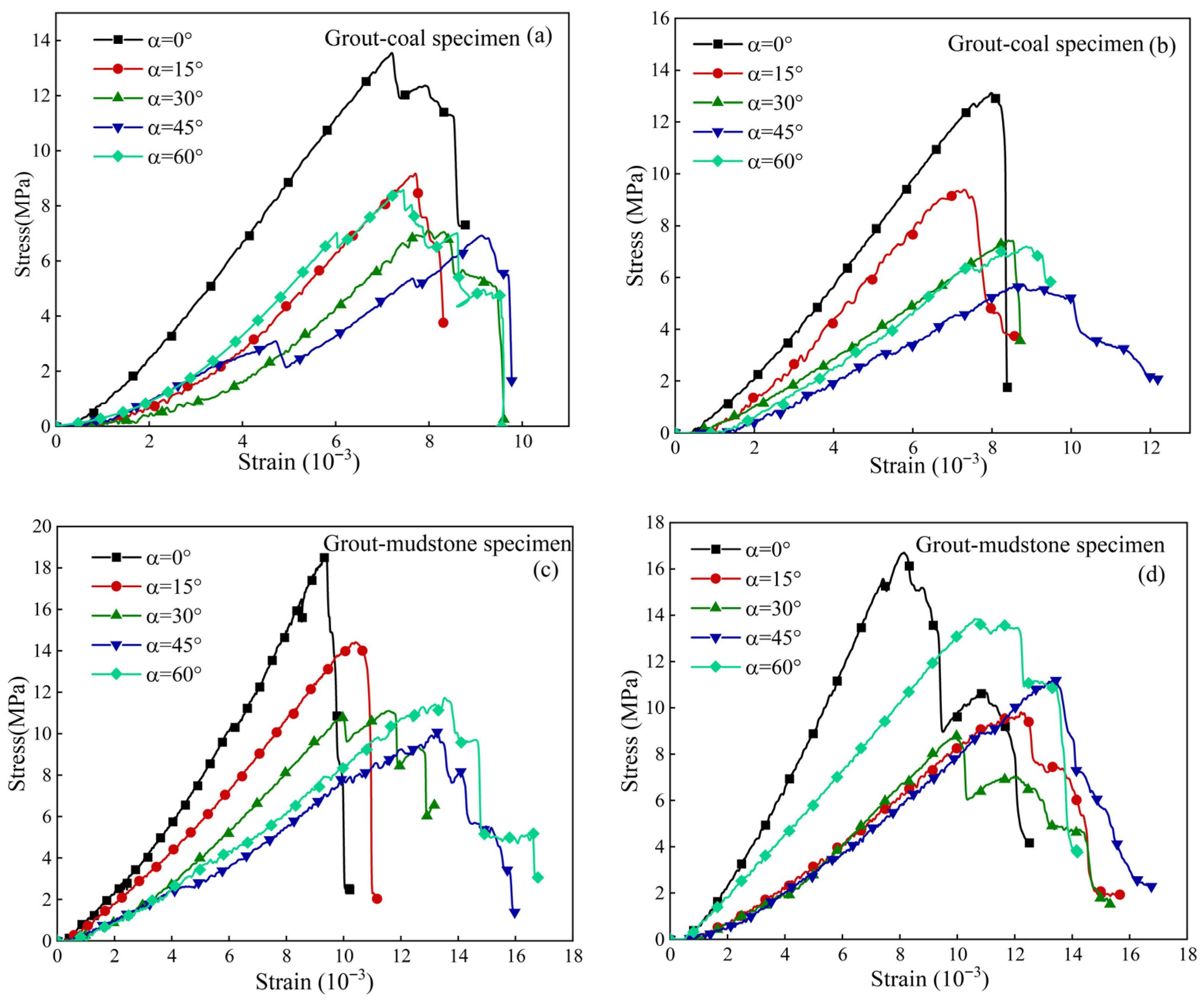
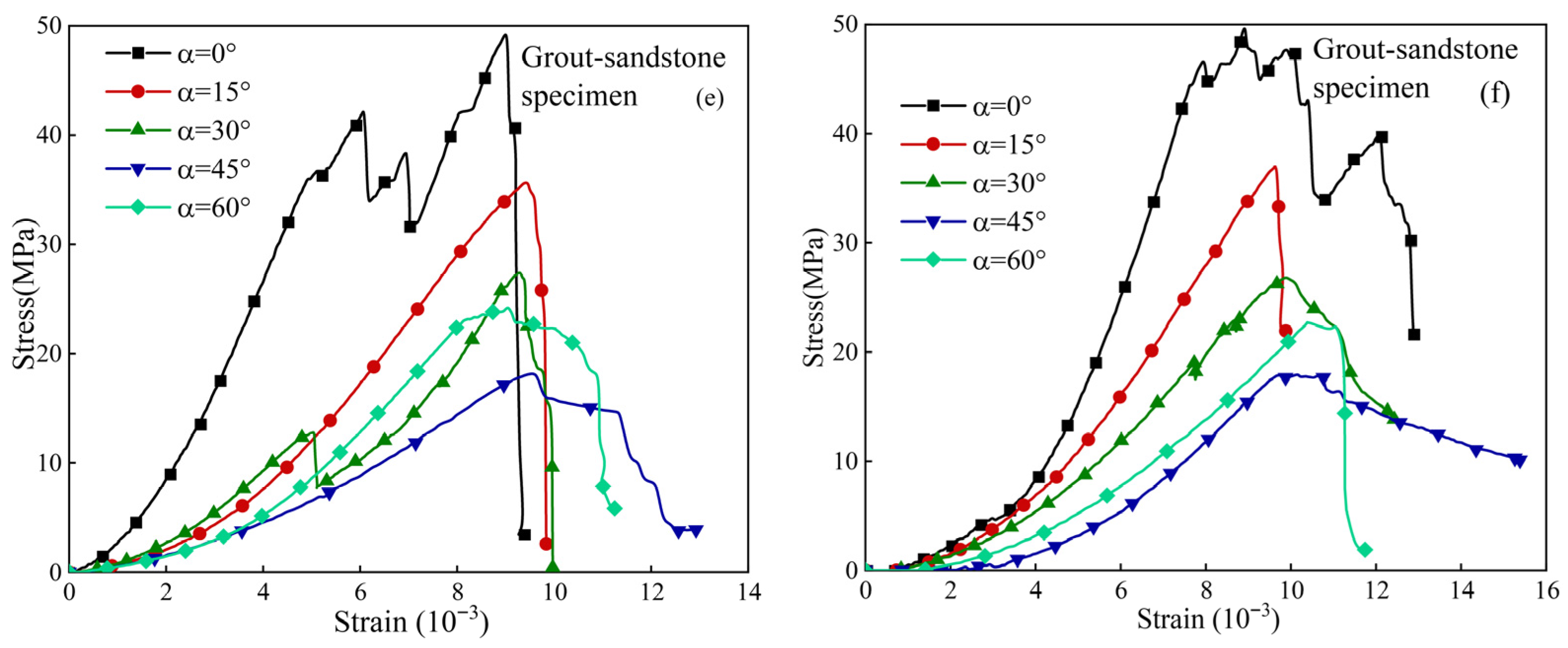
Figure 5 presents the stress–strain curves for three inclination groups of grouted rock joint specimens under uniaxial compression, with two replicate curves plotted for each group (n = 2). These curves reflect the deformation behavior of the specimens throughout the loading process. In the initial stage, all specimens experienced compaction, followed by a slight upward curvature of the stress–strain curve, indicating the transition to the elastic deformation stage and exhibiting a concave-upward shape. With continued loading, the specimens transitioned smoothly from elastic deformation to stable crack propagation. During this stage, the curve approximated a straight line, and the elastic modulus was determined from the linear segment.
In the later stage of loading, the curve began to decline significantly, indicating the onset of unstable crack propagation until the ultimate load was reached. At this point, the curve dropped sharply, entering the post-peak stage. This phase was characterized by rapid crack propagation and coalescence, leading to the formation of macroscopic fracture surfaces. Although the bearing capacity decreased substantially, the specimens retained partial load-carrying ability, demonstrating residual strength.
It is noteworthy that pronounced fluctuations occurred in certain curves during loading, especially in the grouted sandstone specimen with α = 0°. These fluctuations persisted from the unstable crack growth stage into the post-peak stage. This “serrated” pattern reflects differences in strength and internal structure between the grout and sandstone, resulting in different mechanical responses under stress. After the fracture of the grout, the sandstone continued to sustain additional loads, contributing to the fluctuations in the curve and indicating a reduced overall stability of the specimen.

Analysis of DIC Strain Evolution Process

Compared to horizontal and vertical displacement fields obtained through Digital Image Correlation (DIC), principal strain evolution maps more clearly reveal the development and connectivity of cracks during specimen failure [35]. To investigate the fracture evolution mechanism in grouted specimens under uniaxial compression, this study analyzed the concentration zones of the major principal strain ε1 and crack propagation states at five characteristic points. These points were identified from the five deformation stages on the uniaxial stress–strain curve, and the ε1 fields at the selected points were obtained from DIC images processed in VIC-2D as described in the Methodology section. Point A was taken at the end of the compaction stage, point B at the yield point marking the end of the linear elastic stage, point C at the transition from stable to unstable crack growth, point D at the peak stress, and point E at the residual stage after peak. The Lagrangian strain formulation was used, and isocontour lines were added to the ε1 maps to better visualize strain localization and crack propagation within the specimen. The analysis was based on DIC strain measurements, the VIC-2D image processing system, and the five typical deformation stages of the uniaxial stress–strain curve. In image processing, the Lagrange strain type was selected, and isocontour lines were superimposed on the principal strain contour maps to provide a more intuitive characterization of the crack propagation distribution within the specimen.
This section focuses on two representative grouted rock fracture specimens with inclination angles of α = 0° and α = 60°, corresponding to horizontal fractures and steeply inclined fractures, respectively. Comparing these two extreme cases provides valuable insight into the influence of fracture dip angle on the mechanical behavior of grout-reinforced specimens.
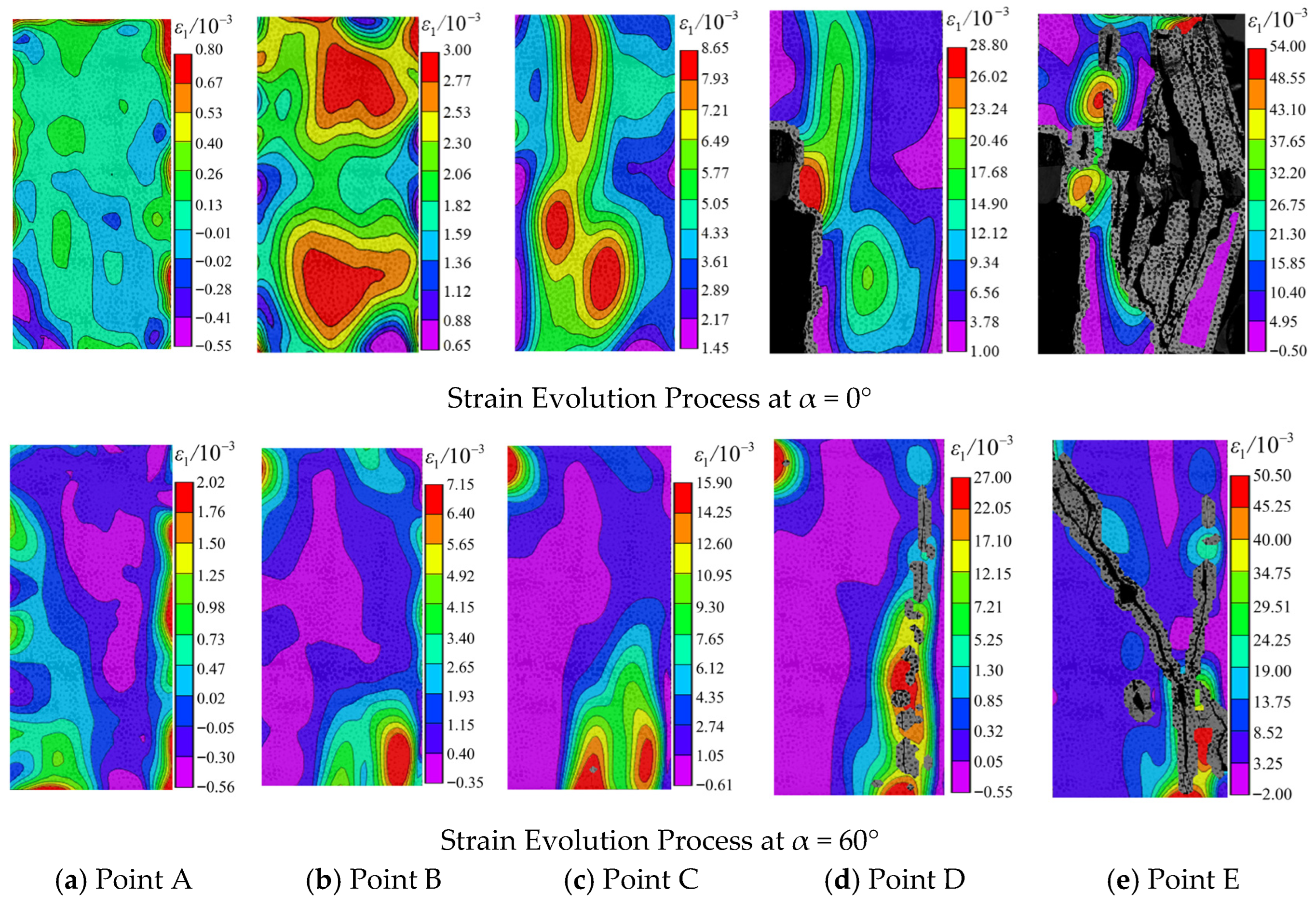
Figure 6 shows the major principal strain contour maps at five characteristic points for grouted coal–rock specimens with α = 0° and α = 60°. As axial stress increases, the surface strain field evolves continuously. For α = 0°, at point A (compaction stage), the strain distribution is relatively uniform, with a maximum principal strain of 0.80 (The order of magnitude is 10−3, and the following descriptions all pertain to this order of magnitude.) occurring near the peripheral cross-section. At point B (elastic stage), strain concentration zones appear in the upper and lower blocks, reaching a maximum of 3.00, indicating stable deformation. At point C (stable crack growth stage), a pronounced strain concentration of 7.20 emerges in the lower left region, where initial cracking occurs. At point D (peak stress), spalling is observed on the specimen surface, and the maximum strain reaches 28.80 in the central region. At point E (residual stage), strain concentration in the central zone leads to splitting tensile failure through the grout material.
For α = 60°, at point A, the maximum principal strain is 2.02 at the peripheral end faces. By point C, a spike-like strain concentration zone forms at the specimen base with a maximum strain of 7.15. This zone migrates upward with continued loading, and a macroscopic crack develops at point D, where the strain reaches 27.0. At point E, the crack propagates vertically, and the specimen undergoes shear failure along the grout–rock interface, with a maximum strain of 50.50, indicating a combined tensile-shear failure mode.
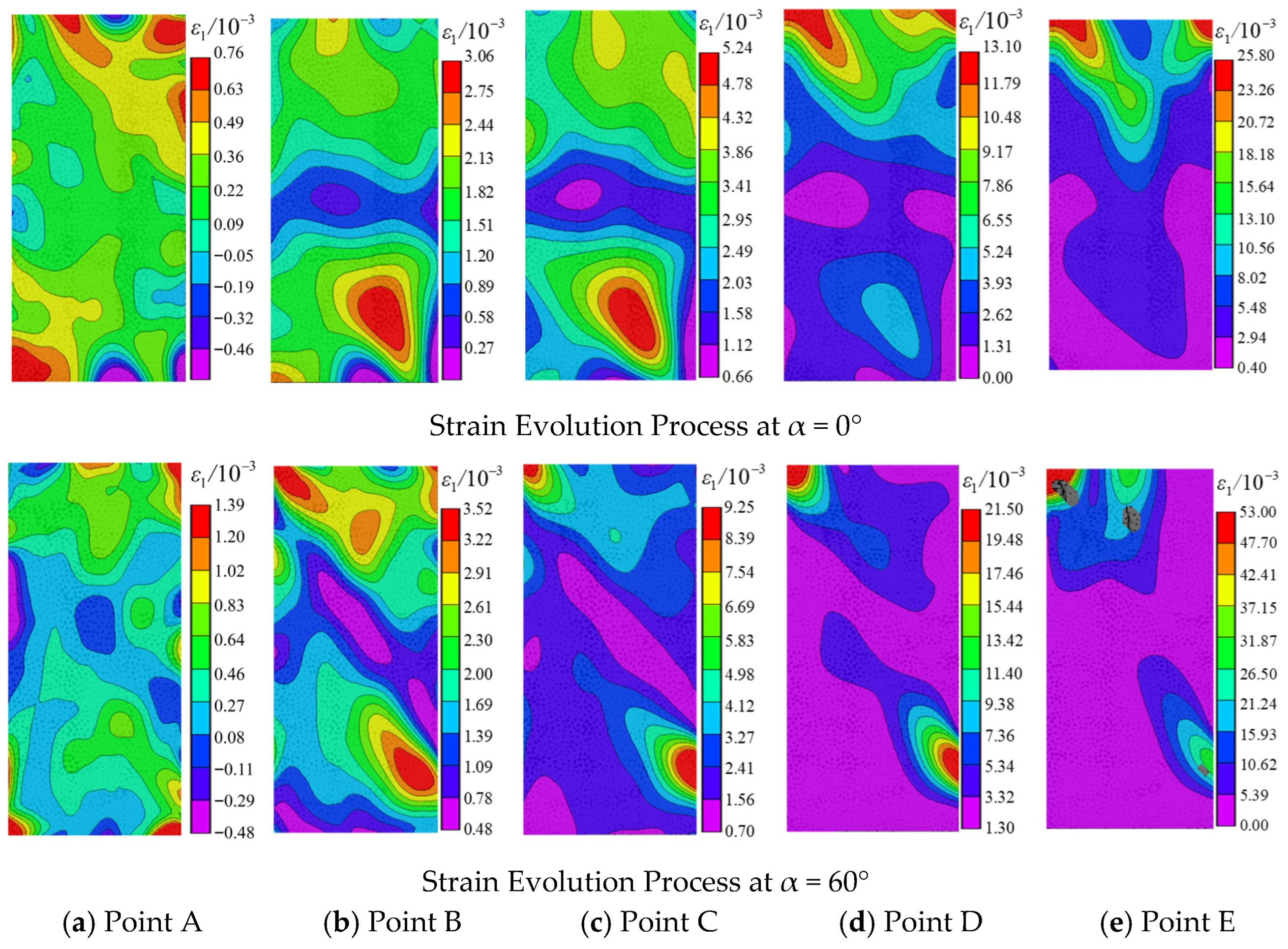
Figure 7 illustrates the evolution of the maximum principal strain field for grouted mudstone specimens with fracture inclinations of 0 degrees and 60 degrees. Unless otherwise stated, the values reported below correspond to the maximum principal strain ε1 obtained from DIC and are expressed in units of ×10−3. For the specimen with α equal to 0 degrees, strain localization is first observed at point A in the lower-left and upper-right corners, where the maximum ε1 is 0.76. During the elastic stage, the upper and lower mudstone blocks exhibit consistently higher strain than the hardened grout infill, indicating a pronounced strain mismatch. As loading proceeds to the peak stress point D, the localization band in the upper part of the specimen intensifies and the maximum ε1 increases to 13.10. After failure at point E, the localization band progressively extends toward the hardened grout layer, implying that the fracture process zone propagates into the grout, while the visible surface damage remains relatively limited. For the specimen with α equal to 60 degrees, the maximum ε1 at point A is 1.39 and is mainly distributed near the specimen boundaries. At point B in the elastic stage, distinct strain concentration develops above and below the hardened grout layer, leading to a clear strain mismatch with a maximum difference of 3.04. With further loading, this mismatch continues to grow and reaches a maximum of 53.00 immediately prior to macroscopic failure, after which the specimen fails predominantly by shear along the grout–rock interface.
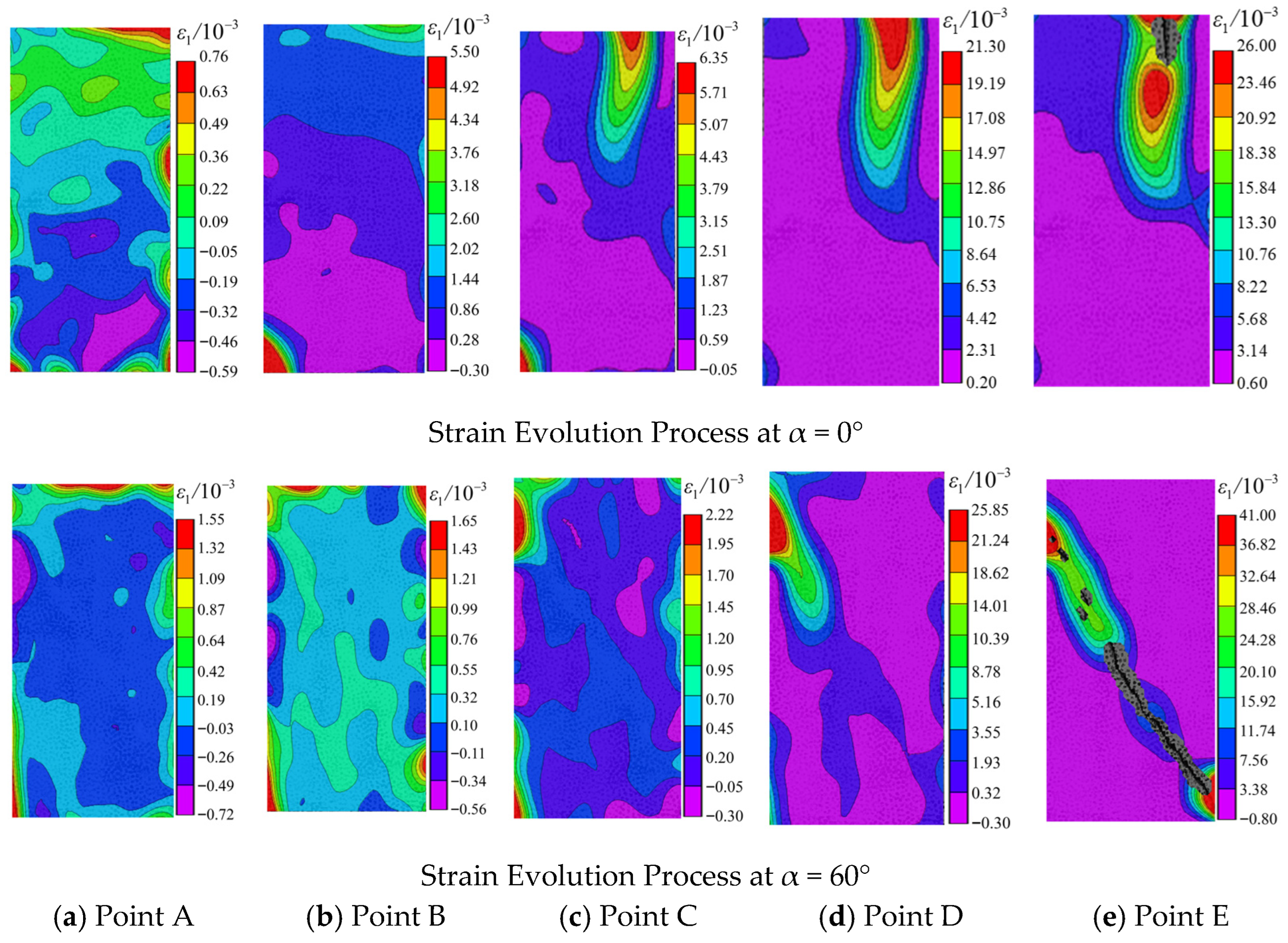
Figure 8 shows strain evolution in grouted sandstone specimens. For α = 0°, the strain is uniformly distributed at point A, with maximum values at the end faces. By point B, the lower-left strain zone expands. At point C, a vertical strain band, with a principal strain of 6.35, forms in the upper right, indicating crack initiation. At point D, this zone expands toward the grout, resulting in a strong strain gradient between the upper and lower parts. After failure, the maximum strain reaches 26.60, resulting in a cleavage-type tensile failure.
For α = 60°, the strain is uniform at point A. At point B, the strain increases by 0.73 along the interface. At point C, a concentration zone forms in the grout 2.22. By point D, this zone expands along the fracture plane, and the specimen fails by shear at the interface, with a maximum strain of 41.0.
In summary, the analysis of deformation stages in grouted rock fracture specimens under two typical inclination angles reveals that initial crack initiation occurs predominantly in the pre-peak stage, whereas rapid crack propagation and penetration take place mainly during the post-peak stage. The strain difference between characteristic points E and D further indicates that crack development was relatively slow during the non-stable growth phase, with accelerated expansion occurring primarily after the peak stress. Among the specimens, the grouted coal–rock fracture specimen exhibited a significantly higher degree of failure compared to the mudstone and sandstone specimens. This can be attributed to the more brittle structural composition of the coal–rock matrix, which contributes to a greater extent of damage under loading 3.2 Strain Characteristics at Different Fracture Inclinations.
Based on the strain evolution analysis at five loading stages for various grouted fracture specimens in Section Analysis of DIC Strain Evolution Process, and considering space limitations, the following section provides a detailed examination of the strain evolution characteristics in grouted rock fracture specimens under different fracture inclination angles. Selecting point D on the stress–strain curve, which represents the peak stress, allows for a clearer representation of the strain distribution at specimen failure. Therefore, the subsequent analysis focuses specifically on the strain behavior of grouted rock fracture specimens at the D-point under varying fracture inclinations.

4. Discussion

4.1. Grouted Coal–Rock Fracture Reinforcement

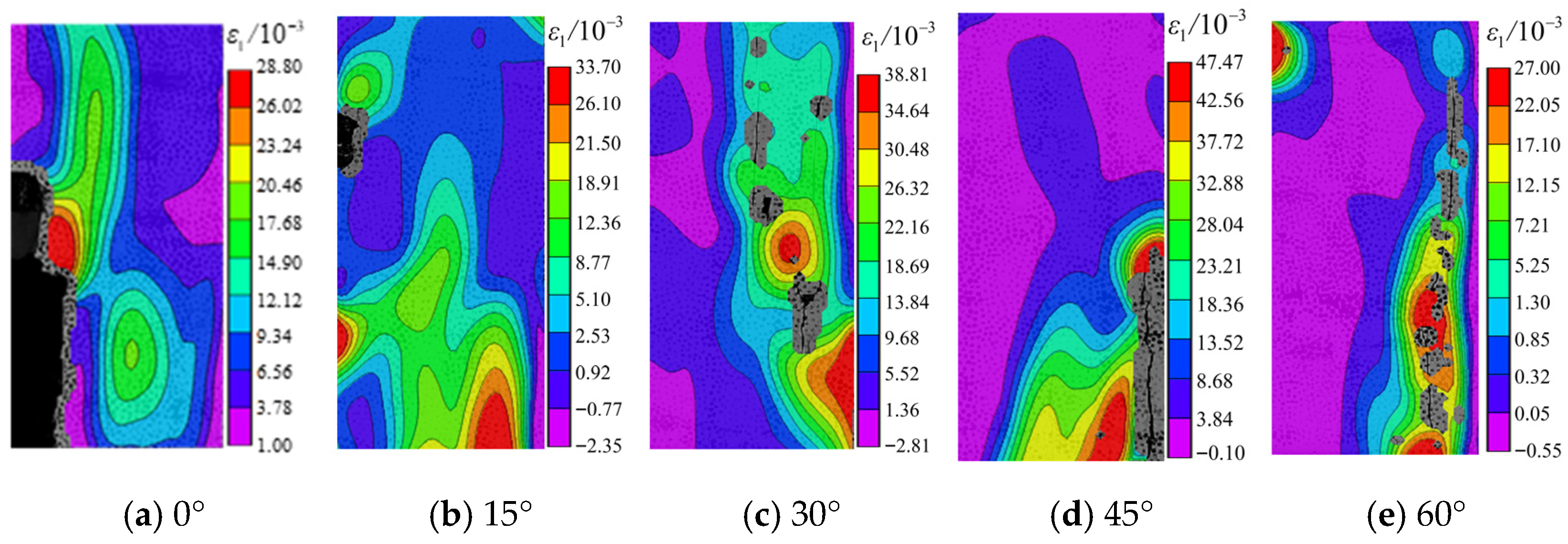
Figure 9 presents the major principal strain contour plots at the peak point (Point D) for grout–coal–rock fracture reinforcement specimens with different fracture inclination angles. It can be observed that the strain concentration zones in specimens with varying fracture inclinations exhibit “sharp strip-like” morphologies within the coal–rock matrix, subsequently propagating toward the hardened grout layer.
At a fracture inclination angle of α = 0°, spalling occurred due to regional strain differences developed in earlier stages, resulting in the maximum principal strain appearing near the mid-height of the specimen. As the fracture inclination angle increases, the maximum strain value initially increases, followed by a decrease. At α = 15°, the strain concentration zone extends nearly through the entire specimen from bottom to top, with a maximum principal strain of 33.70. At α = 30° and α = 45°, the strain concentration morphology is similar to that at α = 15°, with the maximum principal strain increasing to 38.8 and 47.47, respectively. However, at α = 60°, the maximum principal strain decreases to 27.00.

4.2. Grouted Mudstone Fracture Reinforcement

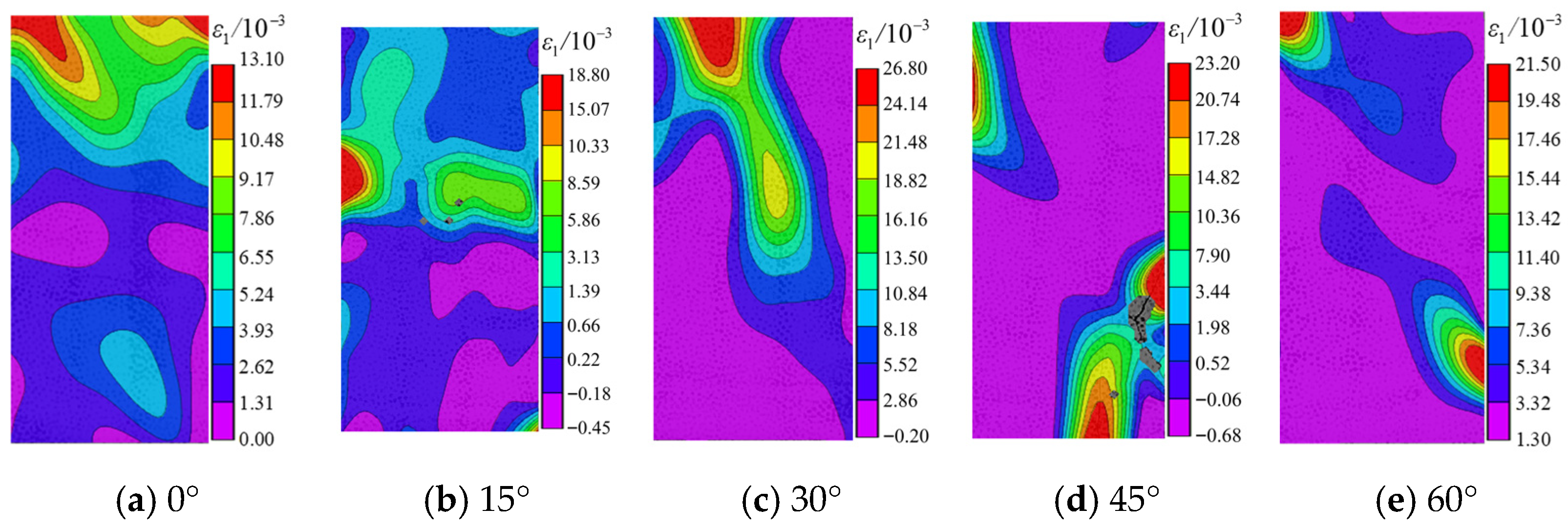
Figure 10 presents the major principal strain contour plots at the peak point (Point D) for grout–coalbed fracture grouting reinforcement specimens under different fracture inclination angles. It can be observed that the strain concentration zones exhibit a “sharp-bar-like” morphology across all inclination angles.
When the fracture inclination angle ranges from 0° to 30°, the strain concentration zones are primarily located within the mudstone matrix. For angles between 30° and 60°, the strain concentration zones mainly develop near the hardened grout layer. The maximum principal strain exhibits an initial increasing trend, followed by a decreasing trend, with increasing fracture inclination.
At α = 0°, the strain concentration zone peaks with a downward-inclined shape, reaching a maximum principal strain of 13.10. When α = 15°, the strain concentration zone shifts to a nearly horizontal extension within the upper mudstone, and the maximum principal strain increases to 18.80. At α = 30°, the strain distribution resembles that at α = 0°, but the maximum principal strain further increases to 26.80.
At α = 45°, the strain concentration zone appears in both the lower mudstone and the hardened grout. The zone within the mudstone develops vertically upward, while that in the grout propagates along the fracture direction, with the maximum strain decreasing to 23.20. At α = 60°, the strain concentration zone is located at the grout–rock interface and propagates along this boundary, eventually traversing the entire specimen. The maximum principal strain decreases to 21.50.

4.3. Grouted Sandstone Fracture Reinforcement

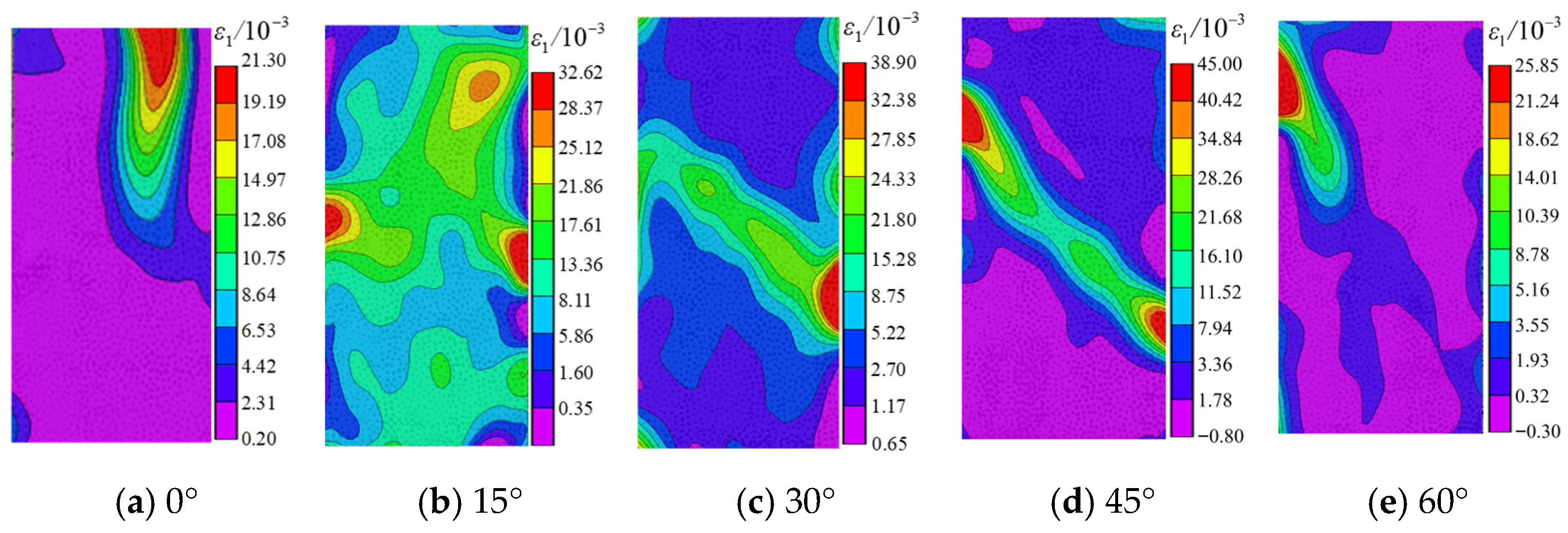
Figure 11 presents the major principal strain contour plots at the peak point (Point D) for grout–sandstone fracture grouting reinforcement specimens under different fracture dip angles. It can be observed that the strain concentration zones exhibit “sharp strip-like” patterns across all dip angles. Additionally, as the fracture dip angle increases, the maximum principal strain shows a trend of first increasing and then decreasing.
At α = 0°, the strain concentration zone is located in the upper sandstone region, developing vertically downward, with a maximum principal strain of 21.30. At α = 15°, the strain concentration zone becomes more widely distributed, appearing in both the sandstone and the hardened grout, with the maximum principal strain increasing to 32.62. At α = 30° and α = 45°, the strain concentration zones are confined to the hardened grout section, with maximum principal strains increasing to 38.90 and 45.00, respectively. At α = 60°, while the strain concentration zone is similarly located within the hardened grout as at α = 30°, its dominant propagation path exhibits an approximately mirror-symmetric relationship with that at α = 30° about the vertical centerline of the strain contour plots, with the maximum principal strain decreasing to 25.85.
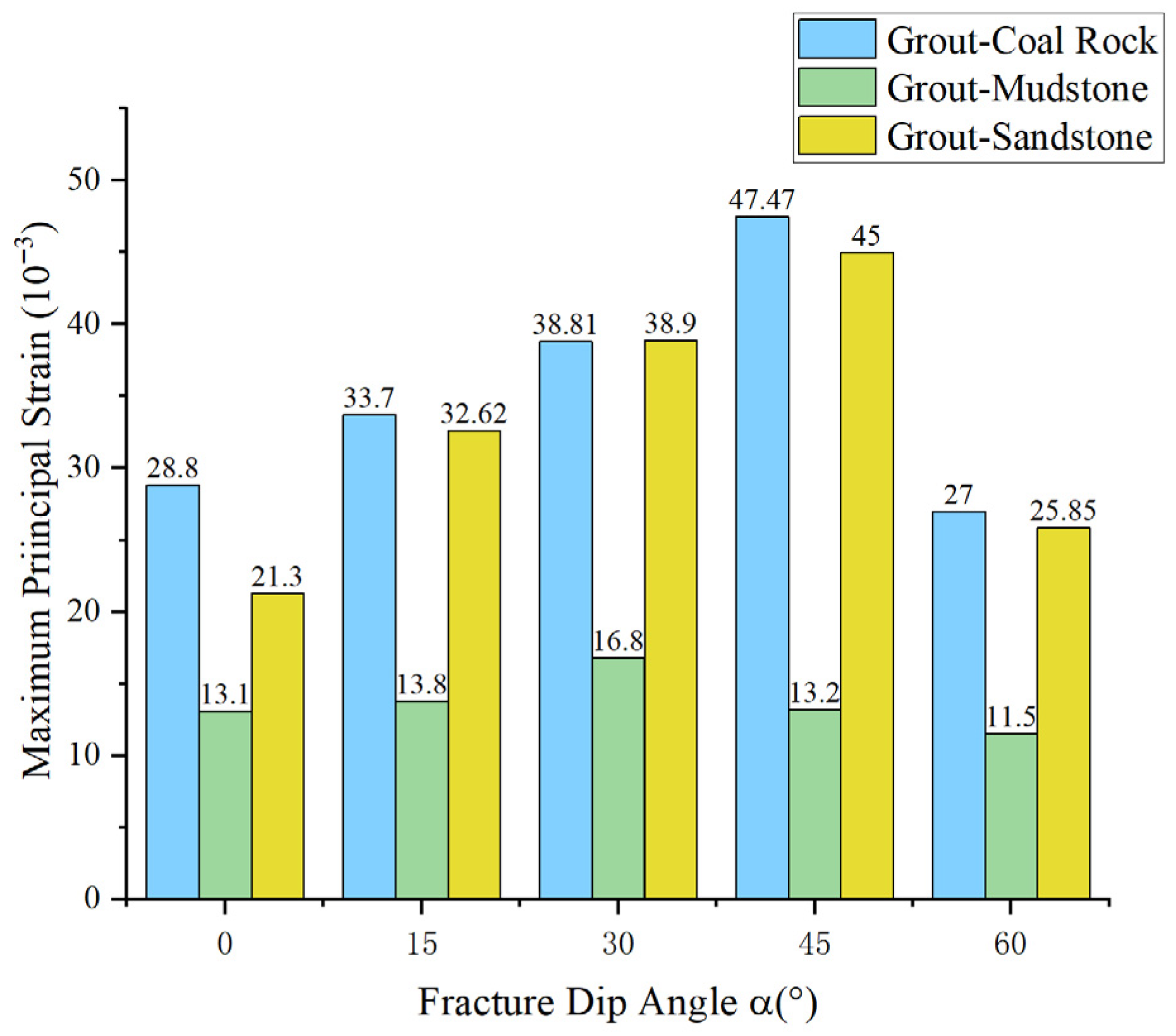
To more intuitively analyze the characteristics of the maximum principal strain in grouted rock fracture specimens under varying influencing factors, the relationship between the maximum principal strain and fracture dip angle at characteristic point D is summarized in Figure 12. The maximum principal strain of all grouted rock specimens exhibits a pattern of initial increase followed by a decrease with increasing fracture dip angle. For grout–coal and grout–sandstone specimens, the maximum principal strain peaks at α = 45°, reaching 47.47 and 45.00, respectively. In contrast, the grout–mudstone specimen reaches its maximum principal strain of 26.80 at α = 30°. Notably, the maximum principal strain values for the grout–mudstone specimen are significantly lower than those of the other two types, indicating relatively minor surface damage in these specimens.
Intact (unfractured) rock specimens were not tested as a control group due to limited remaining material availability. Therefore, the grouting effect cannot be directly quantified relative to an intact baseline within the same lithology and specimen geometry. The present conclusions are based on comparative results among different fracture inclinations and lithologies for grouted fractured specimens, and intact controls will be included in future work.

5. Conclusions

This study systematically investigated the mechanical behavior and failure mechanisms of grouted rock fractures with varying inclinations through integrated stress–strain analysis and DIC-based full-field strain monitoring. The results demonstrate that both rock type and fracture inclination critically govern the deformation response, crack evolution, and ultimate failure mode. The main conclusions are as follows:
  • Macroscopic Mechanical Response: All specimens underwent initial compaction, elastic deformation, and stable crack propagation. Post-peak behavior varied distinctly: coal–rock showed gradual strength degradation, mudstone exhibited a sharper strength drop yet higher residual capacity, and horizontally fractured sandstone displayed “serrated” fluctuations, reflecting significant material mismatch effects.
  • Strain Evolution Process: For 0° and 60° fractures, crack initiation occurred mainly before peak stress, while rapid propagation and coalescence developed post-peak. The maximum principal strain first increased and then decreased with rising inclination, with grout–mudstone specimens consistently showing the lowest values.
  • Failure Modes: Failure shifted from tensile splitting in horizontal fractures (α = 0°) to interfacial shear in steeply inclined ones (α = 60°). Coal–rock specimens endured the most severe damage, whereas sandstone developed distinctive “sharp-edged” strain localization zones.
  • Peak-Stress Strain Field: At peak stress (Point D), strain localized in sharp, strip-like zones across all inclinations. The maximum principal strain peaked at 45° for grout–coal and grout–sandstone, and at 30° for grout–mudstone. The significantly lower strain and damage in grout–mudstone highlight its superior integrity.
  • Practical Implication: These insights suggest a targeted grouting strategy for layered rock masses: reinforcement should prioritize weak interfaces (e.g., coal–rock) and horizontal fractures, which are most susceptible to severe damage, while leveraging the superior post-failure integrity of mudstone layers to enhance overall system stability.
  • Overall Perspective: This study demonstrates that the interplay between lithology and fracture geometry dictates the failure mechanics of grouted rock masses. The identification of mudstone as a high-integrity component and horizontal fractures as critical failure paths provides key criteria for optimizing grouting design. Future work should extend these findings to true-triaxial stress conditions and cyclic loading scenarios to better simulate in-situ engineering environments.

Author Contributions

Conceptualization, Q.A. and S.H.; methodology, L.Z. and S.H.; validation, Q.A. and L.Z.; formal analysis, Y.F.; investigation, L.Z.; resources, Y.F.; data curation, L.Z. and Q.A.; writing—original draft, Q.A.; writing—review and editing, S.H.; visualization, Y.F. and S.H.; supervision, L.Z. and Y.F.; project administration, S.H. and Q.A.; funding acquisition, S.H. and L.Z. All authors have read and agreed to the published version of the manuscript.

Funding

1. National Natural Science Foundation of China Youth Program, “Study on the Dynamic Response Mechanism of Slope Soil Moisture under Combined Effects of Vegetation and Rainfall” (52108315 and 2022.01-2025.12). 2. Hubei Provincial Natural Science Foundation Youth Project, “Time-Varying Reliability Analysis of Rainfall Infiltration Slopes Based on Correlated Random Fields” (2021CFB286 and 2022.01-2025.12).

Data Availability Statement

The original contributions presented in this study are included in the article. Further inquiries can be directed to the corresponding authors.

Acknowledgments

We wish to thank the anonymous referees for their careful reading and for providing insightful comments to improve the initial version of this paper.

Conflicts of Interest

The authors declare no conflicts of interest.

References

  1. Chen, W.; Xu, R. Clean coal technology development in China. Energy Policy 2010, 38, 2123–2130. [Google Scholar] [CrossRef]
  2. Zhang, B.; Qu, X.; Meng, J.; Sun, X. Identifying primary energy requirements in structural path analysis: A case study of China 2012. Appl. Energy 2017, 191, 425–435. [Google Scholar] [CrossRef]
  3. Zhang, B.; Guan, S.; Wu, X.; Zhao, X. Tracing natural resource uses via China’s supply chains. J. Clean. Prod. 2018, 196, 880–888. [Google Scholar] [CrossRef]
  4. He, X.; Song, L. Status and future tasks of coal mining safety in China. Saf. Sci. 2012, 50, 894–898. [Google Scholar] [CrossRef]
  5. Zhang, Y.; Zhang, W.; Wang, K.; Xie, K.; Song, K.; Wang, Y. Hydromechanical properties and engineering applications of weakly cemented soft rock in Jurassic strata. ACS Omega 2023, 8, 16373–16383. [Google Scholar] [CrossRef] [PubMed]
  6. Caa, M.; Cyran, K.; Jakóbczyk, J. The challenges of open-pit mining in the vicinity of the salt dome (Bechatów lignite deposit, Poland). Energies 2020, 13, 1913. [Google Scholar]
  7. Koukouvelas, I.; Litoseliti, A.; Nikolakopoulos, K.; Zygouri, V. Earthquake triggered rock falls and their role in the development of a rock slope: The case of Skolis Mountain, Greece. Eng. Geol. 2015, 191, 71–85. [Google Scholar] [CrossRef]
  8. Deng, Y.; Chen, C.; Xia, K.; Pang, H.; Sun, C.; Yang, K.; Zheng, X. Investigation on the distribution characteristics of ground cracks in the Chengchao Iron Mine, China. Environ. Earth Sci. 2019, 78, 284. [Google Scholar] [CrossRef]
  9. Xing, Y.; Wang, H.; Zhang, L.; Chen, P.; Yu, W.; Guo, C.; Shi, H. Fracture properties and their impacts on performance in carbonate reservoir, central block B on the right bank of Amu Darya. Lithosphere 2022, 2022, 5335113. [Google Scholar] [CrossRef]
  10. Wang, F.; Xu, J.; Xie, J.; Li, Z.; Guo, J. Mechanisms influencing the lateral roof roadway deformation by mining-induced fault population activation: A case study. Int. J. Oil Gas Coal Technol. 2016, 11, 411. [Google Scholar] [CrossRef]
  11. Gao, M.; Zhou, X.; Wang, X.; Xie, J.; Wang, C.; Zhang, Q.; Lv, H.; Guo, C. Mechanical behavior of coal under true triaxial loading test connecting the effect of excavation- and mining-induced disturbances. Geomech. Geophys. Geo-Energy Geo-Resour. 2023, 9, 34. [Google Scholar] [CrossRef]
  12. Ji, W.; Pan, P.; Miao, S.; Su, F.S.; Du, M.P. Research on fracture characteristics of two types of rocks based on digital image correlation method. Rock Soil Mech. 2016, 37, 2299–2305. [Google Scholar]
  13. Wu, N.; Liang, Z.; Tao, Y.; Ai, T.; Li, G. Sensitivity analysis of fracture geometry parameters on the mechanical behavior of rock mass with an embedded three-dimensional fracture network. Appl. Sci. 2022, 12, 9284. [Google Scholar] [CrossRef]
  14. Wang, Q.; Xu, M.; Zhang, Y.; Cen, X.; Chang, X. Mechanical parameters of deep-buried coal goaf rock mass based on optimized GSI quantitative analysis. Adv. Civ. Eng. 2021, 2021, 9935860. [Google Scholar] [CrossRef]
  15. Xuan, D.; Zhang, M.; Li, J.; Dong, Z.; Alimu, A.; Xu, J. Experimental study on the diffusion radius of modified slurry used in longwall overburden isolated grouting. Geofluids 2023, 2023, 7195779. [Google Scholar] [CrossRef]
  16. Shi, L.; Zhang, X.; Sharifzadeh, M.; Qi, Z.; Li, Y.; Xu, Q. Experimental study on the relationship between local deformation and macro-crack evolution of granite under conventional triaxial compression. Eur. J. Environ. Civ. Eng. 2022, 27, 2210–2227. [Google Scholar] [CrossRef]
  17. Pour, A.F.; Gholampour, A.; Ozbakkaloglu, T. Strain localization analysis using digital image correlation for PVA fiber-reinforced concrete-filled FRP tubes under compressive loading. Compos. Struct. 2022, 300, 116128. [Google Scholar] [CrossRef]
  18. Cinar, A.F.; Barhli, S.M.; Hollis, D.; Flansbjer, M.; Tomlinson, R.; Marrow, T.; Mostafavi, M. An autonomous surface discontinuity detection and quantification method by digital image correlation and phase congruency. Opt. Lasers Eng. 2017, 96, 94–106. [Google Scholar] [CrossRef]
  19. Gu, G. A comparative study of random speckle pattern simulation models in digital image correlation. Opt.-Int. J. Light Electron Opt. 2015, 126, 3713–3716. [Google Scholar] [CrossRef]
  20. Iskander, M.; Sadek, S.; Liu, J. Soil structure interaction in transparent synthetic soils using digital image correlation. In Proceedings of the TRB 2003 Session on Recent Advances in Modeling Techniques in Geomechanics (Committee A2K05), Colombia, DC, USA, 12–16 January 2003. [Google Scholar]
  21. Wang, X.; Jin, Z.; Liu, J.; Chen, F.; Feng, P.; Tang, J. Research on internal monitoring of reinforced concrete under accelerated corrosion, using xct and dic technology. Constr. Build. Mater. 2021, 266, 121018. [Google Scholar] [CrossRef]
  22. Wei, L.; Yuan, Q.; Ren, Y.; Jiang, D.; Zhang, D.; Liu, Y.; Zou, Y.; Ren, S. Analysis of failure mechanics and energy evolution of sandstone under uniaxial loading based on DIC technology. Front. Earth Sci. 2022, 10, 814292. [Google Scholar] [CrossRef]
  23. Li, J.L.; Zhao, G.F. Further development of digital image correlation (dic) to measure the discontinuous deformation of rock on small-scale tests. Rock Mech. Rock Eng. 2023, 56, 1163–1183. [Google Scholar] [CrossRef]
  24. Wu, Q.; Xia, Y.; Zhao, Y.; Wen, L.; Wang, S.; Feng, J. Mode-I fracture characteristics of granite after thermal-cold cycles based on DIC and CPG technology. J. China Coal Soc. 2024, 49, 3102–3117. [Google Scholar]
  25. Lu, H.F.; Liu, Q.S.; Zhang, Q.Z. Mechanical behavior of grouted rock joints. ACI Mater. J. 2022, 119, 137–148. [Google Scholar] [CrossRef]
  26. Lu, H.F.; Zhang, Q.Z. Investigations on shear properties of soft rock joints under grouting. Rock Mech. Rock Eng. 2021, 54, 1875–1883. [Google Scholar] [CrossRef]
  27. Meng, Q.; Wang, H.; Xu, W.; Chen, Y.-L. Numerical homogenization study on the effects of columnar jointed structure on the mechanical properties of rock mass. Int. J. Rock Mech. Min. Sci. 2019, 124, 104127. [Google Scholar] [CrossRef]
  28. Zuo, J.; Yu, X. Spatial localization algorithm and application of acoustic emission sources during rock fracture. Chin. J. Rock Mech. Eng. 2025, 44, 1089–1109. [Google Scholar] [CrossRef]
  29. Ficker, T. Fractal properties of joint roughness coefficients. Int. J. Rock Mech. Min. Sci. 2017, 94, 27–31. [Google Scholar] [CrossRef]
  30. Zheng, B.; Qi, S. A new index to describe joint roughness coefficient (jrc) under cyclic shear. Eng. Geol. 2016, 212, 72–85. [Google Scholar] [CrossRef]
  31. Ahmadi, M.; Taleghani, A.D.; Sayers, C.M. The effects of roughness and offset on fracture compliance ratio. Geophys. J. Int. 2016, 205, 441–450. [Google Scholar] [CrossRef]
  32. Khan, M.; Xueqiu, H.; Dazhao, S.; Xianghui, T.; Li, Z.; Yarong, X.; Aslam, K.S. Extracting and predicting rock mechanical behavior based on microseismic spatio-temporal response in an ultra-thick coal seam mine. Rock Mech. Rock Eng. 2023, 56, 3725–3754. [Google Scholar] [CrossRef]
  33. Guo, H.; Sun, Y.; Zhao, X.; Sun, C.; Zhou, R. Experimental study on grout diffusion patterns and reinforcement effect of sand stratum based on laboratory tests. AIP Adv. 2025, 15, 065225. [Google Scholar] [CrossRef]
  34. Ma, W.Q.; Wang, T.X.; Ma, Z.Y. Experimental investigation on uniaxial compressive responses of grouted rock-like material. Geotech. Geol. Eng. 2020, 38, 1234–1245. [Google Scholar] [CrossRef]
  35. Vanniamparambil, P.A.; Bolhassani, M.; Carmi, R.; Khan, F.; Bartoli, I.; Moon, F.L.; Hamid, A.; Kontsos, A. A data fusion approach for progressive damage quantification in reinforced concrete masonry walls. Smart Mater. Struct. 2013, 23, 5007. [Google Scholar] [CrossRef]
Figure 1. Geometric parameters of the fractures.
Applsci 16 01224 g001
Figure 2. Test Loading and Measurement System.
Applsci 16 01224 g002
Figure 3. Schematic of the DIC measurement principle.
Applsci 16 01224 g003
Figure 4. Typical uniaxial stress–strain curve.
Applsci 16 01224 g004
Figure 5. Stress–strain curves: Group 1 (a,c,e); Group 2 (b,d,f).
Applsci 16 01224 g005aApplsci 16 01224 g005b
Figure 6. Strain nephograms of characteristic points in grouted coal–rock fractures.
Applsci 16 01224 g006
Figure 7. Strain nephograms of characteristic points in grouted mudstone fracture.
Applsci 16 01224 g007
Figure 8. Strain distribution contours at monitoring points in grout-reinforced sandstone fracture zones.
Applsci 16 01224 g008
Figure 9. Strain nephogram of grouted coal–rock fracture specimen.
Applsci 16 01224 g009
Figure 10. Strain nephogram of grouted mudstone fracture specimen.
Applsci 16 01224 g010
Figure 11. Strain distribution characteristics of grouted sandstone fracture specimens.
Applsci 16 01224 g011
Figure 12. Relationship between fracture dip angle and maximum principal strain.
Applsci 16 01224 g012
Table 1. Comprehensive Stratigraphic Column.
LithologyThickness (m)Remarks
Medium-grained Sandstone4.10Quartz-rich, massive
Sandy Mudstone5.08Sandy-clay interlayer, well-bedded
Fine Sandstone6.47Fine-grained, quartz-dominated, laminated
Coal Seam5.02Powdery, semi-bright coal
Mudstone4.51Argillaceous, thinly bedded
Fine Sandstone2.96Fine-grained, quartz-rich
Siltstone6.26Silty, homogeneous, horizontal lamination
Sandy Mudstone3.72Heterogeneous, interbedded
Table 2. Summary of Compressive Strength Results for Grout-Reinforced Coal Rock Fracture Specimens (MPa).
Fracture Dip Angle α15°30°45°60°
Group 113.579.27.136.428.54
Group 212.979.847.415.697.59
Table 3. Summary of Compressive Strength Results for Grout-Reinforced Mudstone Fracture Specimens (MPa).
Fracture Dip Angle α15°30°45°60°
Group 118.4814.3811.069.9711.71
Group 216.7311.38.7811.1813.58
Table 4. Summary of Compressive Strength Results for Grout-Reinforced Sandstone Fracture Specimens (MPa).
Fracture Dip Angle α15°30°45°60°
Group 149.1835.5927.4318.1624.12
Group 248.6137.0526.7117.7223.31
Disclaimer/Publisher’s Note: The statements, opinions and data contained in all publications are solely those of the individual author(s) and contributor(s) and not of MDPI and/or the editor(s). MDPI and/or the editor(s) disclaim responsibility for any injury to people or property resulting from any ideas, methods, instructions or products referred to in the content.