


Abstract
Interventions on Heritage Buildings (HBs) involve significant challenges due to their tangible (embodied in the material, architectural, physical and technical integrity of the cultural asset), and intangible values (linked to socio-historical–cultural and collective identity, memory, customs and symbols meanings), which must be preserved while also adapting to current sustainability and circular economy goals. However, current conservation and management practices often lack systematic tools to trace, assess, and organise material and component information, hindering the implementation of circular strategies. In line with the European Union’s objectives for climate neutrality and resource efficiency and sufficiency, Material and Product Passports (MPPs) have emerged as digital tools that enhance data traceability, interoperability and transparency throughout a building’s lifecycle. This paper examines the potential of MPPs to support circular management of HBs by analysing the structure of MPPs and outlining the information flows generated by rehabilitation, maintenance and adaptive reuse strategies. A mixed methods approach, combining literature review and data structure analysis, is adopted to identify how the different categories of data produced during maintenance, rehabilitation and adaptive reuse processes can be integrated into MPP modules. The research highlights the conceptual opportunities of MPPs to document and interlink historical, cultural, and technical data, thereby improving decision-making and transparency across intervention stages. The analysis suggests that adapting MPPs to the specificities of historic contexts, such as authenticity preservation, reversibility, and contextual sensitivity, can foster innovative, sustainable, and circular practices in the conservation and management of HBs.
1. Introduction
Working on historic architectural heritage means dealing with a variety of issues arising from its dual nature: on the one hand, the material, structural and performance characteristics that define the building; on the other, the cultural significance, historical layers and identity attributes that have accumulated over time. It is precisely this interaction between the physical and cultural dimensions that makes such interventions particularly complex and requires approaches able to integrate conservation, functional and cognitive requirements [1]. Such interdependent attributes require conservation strategies capable of balancing preservation imperatives with the evolving functional, environmental and regulatory demands of the built environment. In this sense, the conservation and management of HBs are no longer isolated preservation tasks but rather integral components of sustainable development, directly aligned with the European Union’s strategies for climate neutrality, resource efficiency, and sufficiency [2].
However, current conservation practices often rely on fragmented documentation systems and static inventories that fail to provide an integrated understanding of material performance, provenance, and transformation throughout the building lifecycle [1]. This lack of systematic, interoperable, and traceable data hampers the implementation of circular strategies, such as reuse, selective replacement, and reversible design, because decision-makers lack access to comprehensive information about the materials and components already embedded in heritage structures [3]. Consequently, interventions tend to remain reactive rather than preventive, and opportunities for material retention, adaptive reuse, and low-impact renovation are frequently missed.
In parallel, the construction sector is undergoing a profound transition towards digitalisation and circularity. Within this paradigm shift, Material and Product Passports (MPPs) have emerged as structured digital datasets that store, organise, and communicate information about materials, components, and products throughout a building’s lifecycle [4]. Initially conceived to promote transparency in new construction, MPPs encapsulate technical, environmental, and logistical attributes, including composition, embodied energy, maintenance history, and end-of-life potential, and make them accessible to multiple stakeholders through interoperable platforms [5]. When integrated into Building Information Modelling (BIM) or Historic BIM environments, these passports can evolve into dynamic repositories that support traceability, facilitate data exchange, and enable evidence-based decision-making for sustainable asset management.
The application of MPPs in heritage contexts introduces additional dimensions of complexity and opportunity. Beyond technical performance, heritage conservation demands documentation of cultural significance, authenticity, and the reversibility of interventions, qualitative aspects that traditional MPPs frameworks rarely capture [3]. Adapting the passport structure to encompass these attributes can transform it into a holistic instrument that bridges conservation ethics with circular economy principles. By documenting both physical materials and their intangible meanings, MPPs can strengthen accountability, enhance multidisciplinary collaboration, and ensure that each intervention contributes not only to material sustainability but also to cultural continuity [6].
Despite growing interest in digital tools for heritage management, the implementation of MPPs within this domain is still in its early stages.
Against this background, this paper makes the following scientific contributions:
- It proposes a heritage-oriented reinterpretation of Material and Product Passports, addressing the specific material, cultural, and temporal characteristics of historic buildings;
- It maps the information flows generated by maintenance, rehabilitation, and adaptive reuse interventions (B2–B5) and aligns them with MPP modular structures;
- It explores how qualitative cultural and heritage values can be systematically associated with materials and components within MPPs, alongside technical and environmental data;
- It clarifies the complementary role of Material and Product Passports with respect to the EU Digital Product Passport, highlighting their relevance for building-level circular management.
- It discusses the limitations and governance challenges of implementing MPPs in HBIM-supported workflows, outlining directions for future research and real-world validation.
Most existing studies and pilot projects address contemporary buildings, offering limited insight into the methodological adjustments required for heritage applications [7]. Key barriers include the absence of standardised data models integrating historical and qualitative information, uncertainties surrounding data governance and long-term stewardship, and the need for clear workflows that define stakeholder roles in updating and validating information over time [8]. These gaps highlight the need for a structured framework capable of adapting material and product passports to the specific technical, cultural and temporal characteristics of heritage buildings (HBs).
Accordingly, this paper explores the potential of MPPs to support circular management of HBs, focusing on how digital documentation can enable circular material flows and inform sustainable decision-making within planned maintenance, rehabilitation, and adaptive reuse strategies [4]. The methodological approach combines a comprehensive literature review with an analysis of data structures to define a framework adaptable to heritage contexts [5]. By mapping typical lifecycle interventions and identifying entry points for MPPs integration, the study aims to reveal how these tools can improve information continuity, support preventive conservation, and foster innovation at the intersection of heritage preservation and circular economy.
2. State of the Art in Material and Product Passports
2.1. Current Developments and Standards
The concept of Material and Product Passports (MPPs) has evolved in recent years as part of the European transition toward a circular economy in the built environment. MPPs are structured digital datasets that compile information on the composition, performance, environmental impact, and potential reuse or recycling of construction materials and products. Unlike traditional documentation such as product datasheets or Environmental Product Declarations (EPDs), MPPs aim to maintain a dynamic, traceable record of each component throughout the building’s life cycle.
From a regulatory standpoint, the development of MPPs is closely aligned with European initiatives such as the EU Circular Economy Action Plan, the Construction Products Regulation, and the forthcoming Ecodesign for Sustainable Products Regulation, which introduces the concept of Digital Product Passport (DPP) [9,10], establishing a standardised approach to collecting and sharing data on material properties, embodied carbon, durability, repairability, and end-of-life potential. It is important to clarify that the DPP, introduced by the Ecodesign for Sustainable Products Regulation (Regulation (EU) 2024/1781), is a mandatory, product-level instrument aimed at standardising sustainability information for goods placed on the EU market. By contrast, the MPPs, discussed in this paper, are voluntary, building-oriented data structures that contextualise materials and components within a specific asset, integrating location, historical information, maintenance records and heritage values. MPPs therefore complement, rather than overlap with, the regulatory DPP framework, providing a dedicated approach for organising and managing data throughout the life cycle of HBs. While DPPs focus on product-level information, MPPs extend this approach to the building level, linking each product to its physical context, maintenance record, and potential for future reuse.
Recent research projects such as BAMB (Buildings As Material Banks), H2020 CIRCuIT, and ICEBERG have played pivotal roles in defining MPP data models and in exploring their integration with digital tools such as BIM and Material Cadastres. These initiatives highlight the importance of interoperability, particularly through open data formats such as IFC, COBie, and ISO 19650 [11], and emphasise the need for standardised metadata to ensure that information remains usable throughout the life cycles of buildings and infrastructure.
However, even if the current regulatory frameworks and technical standards are fundamental references for data harmonisation, product performance assessment and interoperability in the construction sector, their direct applicability to cultural heritage is still limited. In same case, the technological elements of HBs are unique, irreproducible and layered over time, and in most cases do not have codified performance parameters, traceable production processes or standardised technical documentation. These artefacts are often made of heterogeneous materials, handcrafted components, interventions carried out over time without adequate recording, and traditional construction techniques that do not fall within contemporary regulatory models or do not meet the prescribed information requirements. This results in a set of methodological issues concerning, on the one hand, the production or reconstruction of missing technical data and, on the other, the interpretation of performance requirements for non-standardised materials and the integration of qualitative cultural values that exceed the scope of product regulations. These limitations highlight the need for adapted or complementary information structures—such as MPP specifically geared towards cultural heritage—capable of ensuring consistent, contextualised and operationally useful representation in the conservation and circular management processes of HBs.
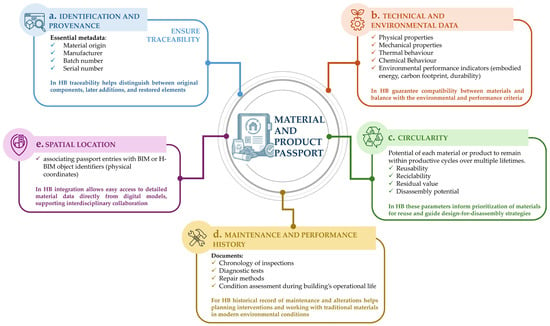
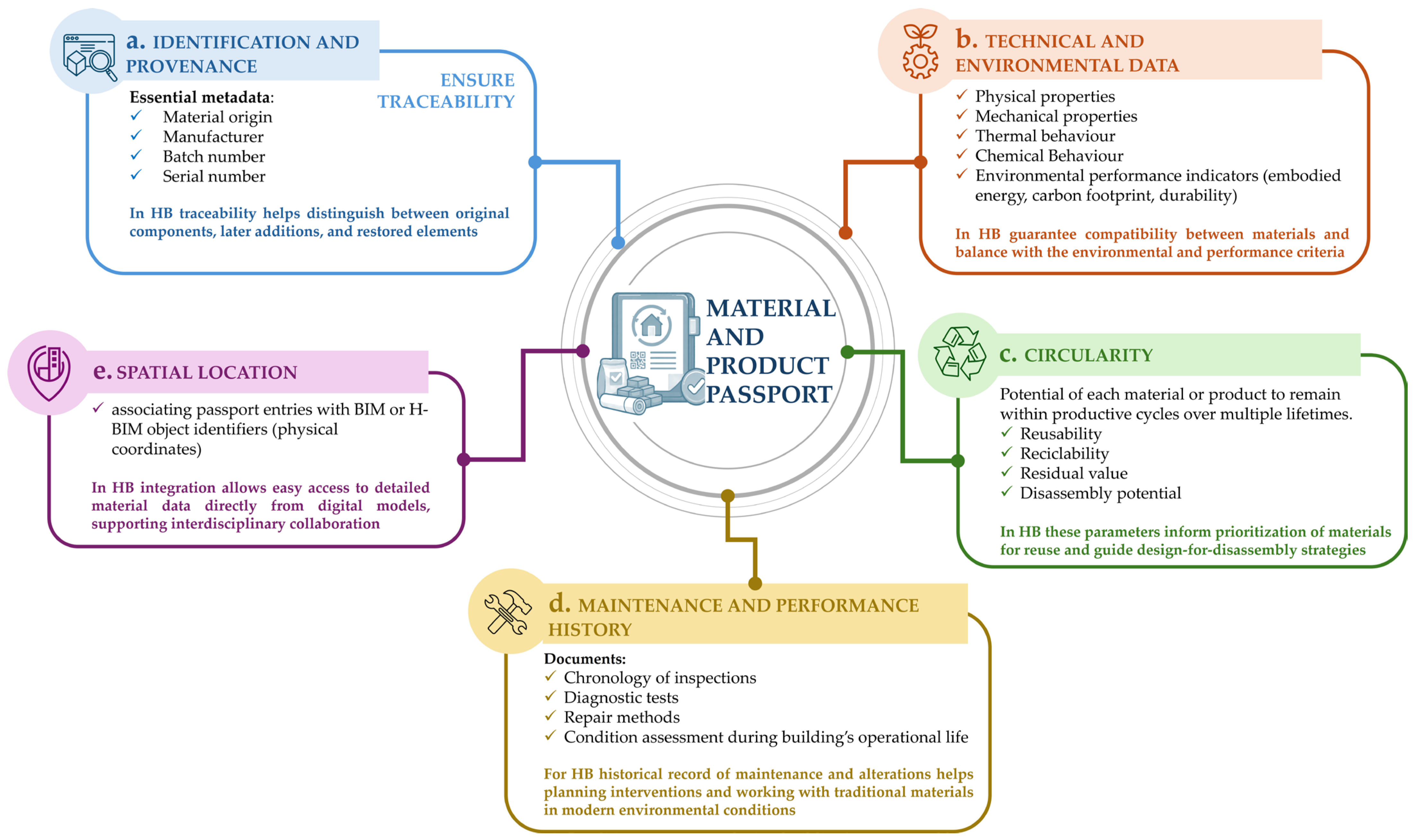
Instead, MPPs are generally organised into a series of interrelated modules that collectively describe the physical, environmental, and operational characteristics of materials and products throughout their life cycles. At the foundation of every passport lies the identification and provenance module, which provides essential metadata, including the material’s origin, manufacturer, batch number, and serial number [7]. This information ensures full traceability, allowing each element within a building to be uniquely recognised and linked to its source. In the context of HBs, when possible, such traceability is particularly valuable, as it helps distinguish between original components, later additions, and restored elements, thereby supporting the documentation of authenticity and material evolution over time [7].
The second key component of an MPP concerns the technical and environmental data associated with each product or material. This includes the physical and mechanical properties (such as compressive strength, density, and elasticity), thermal and chemical behaviour, and environmental performance indicators such as embodied energy, carbon footprint, and durability [12]. References to EPDs or Life Cycle Assessment (LCA) results are often incorporated to provide quantitative measures of environmental impact [13]. This data layer supports informed decision-making during maintenance and rehabilitation, particularly in heritage contexts where the compatibility of repair materials must be carefully balanced with environmental and performance criteria [12].
A third module focuses on circularity indicators, which reflect the potential of each material or product to remain within productive cycles over multiple lifetimes. Indicators commonly included in this category are reusability, recyclability, residual value, and disassembly potential. In practical terms, these parameters inform the prioritisation of materials for reuse, guide design-for-disassembly strategies, and enable the quantification of circular value within heritage rehabilitation projects. For instance, knowing whether a façade element or timber beam can be safely removed and reused in a future intervention without compromising structural integrity is crucial for extending the life cycle of existing assets.
The fourth module of an MPPs relates to maintenance and performance history. This section documents the chronology of inspections, diagnostic tests, repair methods, and condition assessments conducted during the building’s operational life. By integrating such data, MPPs function as living documents that evolve with each intervention, allowing the accumulation of technical knowledge about the asset’s performance. For HBs, this continuity of information is fundamental: it provides a historical record of how the structure has been maintained and altered, enabling more accurate planning of future interventions and helping conservators evaluate the long-term behaviour of traditional materials under modern environmental conditions.
Finally, MPPs include a spatial location module that situates each material or product within the building or infrastructure. This spatial link is typically achieved by associating passport entries with specific BIM or H-BIM object identifiers, as well as physical coordinates within the asset [14]. The integration of MPPs with BIM/HBIM environments allows users to visualise and access detailed material data directly from digital models, supporting interdisciplinary collaboration among architects, engineers, and conservation specialists [15]. Despite significant progress in conceptualising and developing MPPs, several challenges persist. Among the most pressing are the need to ensure long-term data stewardship and to establish clear responsibilities for updating and validating passport information over time [16]. The dynamic nature of built assets means data must be periodically reviewed and verified to remain reliable, which requires governance structures that define ownership, access rights, and data maintenance protocols (Figure 1).
Figure 1.
Summary of MPP module structure.
Additionally, confidentiality concerns often arise, particularly when MPPs contain proprietary or commercially sensitive information related to material composition or supplier identity [17].
Beyond these technical and administrative issues, one of the most critical gaps lies in the limited inclusion of qualitative attributes, such as heritage value, cultural significance, and authenticity, in existing passport frameworks. Traditional MPP structures are primarily designed for contemporary construction and focus on quantifiable physical and environmental parameters [7].
However, HBs demand a broader understanding that encompasses intangible dimensions linked to historical importance and conservation ethics. Incorporating these attributes would make MPPs not only technical tools for managing materials but also instruments capable of documenting and preserving the cultural identity embedded in the built environment.
Although DPPs and MPPs are complementary tools, their scope, data structure and operational use differ substantially (Table 1).
Table 1.
Comparison between Digital Product Passports (DPPs) and Material and Product Passports (MPPs) in the context of the built environment and HB.
In the context of HB, MPPs expand product-level information by placing it in spatial, historical and cultural contexts that are not addressed by DPPs. In summary, DPPs can provide standardised product-level data, which MPPs integrate and contextualise to the various technical and structural parts of the building, providing technological, temporal and heritage-related information to support circular decision-making at the asset level.
2.2. Applications in the Construction Sector
The implementation of MPPs within the construction sector has progressively evolved from conceptual frameworks and pilot studies to more structured applications in design, construction, maintenance, and end-of-life management [12]. Most existing initiatives have focused on new or large-scale refurbishment projects. However, their relevance extends to the entire built environment, including heritage assets, where information continuity and material traceability are key to long-term preservation.
In the design and construction phase, MPPs are primarily employed as planning and documentation tools to enhance material transparency and traceability. By integrating information on the origin, properties, and potential reuse of materials, these passports support the specification of sustainable products, facilitate comparisons based on environmental and circular performance, and encourage design-for-disassembly strategies [9]. Including such information in BIM environments enables stakeholders to anticipate how materials and components can be separated, reused, or recycled at the end of their service life. Several European pilot projects, such as BAMB [18] and CIRCuIT [19], have demonstrated that using MPPs during the design stage can significantly reduce material waste and facilitate a smoother transition to circular business models.
During the operation and maintenance phase, MPPs function as dynamic data repositories that evolve alongside the building. Their continuous updates allow facility managers and owners to make informed decisions about repair, replacement, and maintenance planning [1]. By linking MPP data with real-time monitoring systems, such as sensors or digital twins, it becomes possible to track performance indicators, identify early signs of degradation, and optimise maintenance schedules [13]. This feature is particularly beneficial for HBs, which require regular inspection and preventive conservation strategies to mitigate deterioration while maintaining authenticity. For example, when previous interventions and materials are documented through MPPs, it becomes easier to select compatible repair techniques or assess the long-term performance of traditional materials exposed to changing environmental conditions.
In the renovation, adaptive reuse, and end-of-life stages, MPPs facilitate selective deconstruction, material recovery, and the retention of circular value [20]. When a building reaches the point of partial or complete renovation, the detailed inventory of components stored in MPPs provides an essential basis for pre-demolition audits and material recovery planning. Components such as structural steel, timber beams, or façade panels can be identified for reuse, while information on hazardous substances ensures safe removal and compliance with environmental regulations [8]. In heritage contexts, this capability is invaluable: it enables practitioners to distinguish between elements that must be preserved for their historical or architectural value and those that may be adaptively reused, replaced, or recycled without compromising the building’s authenticity [2].
The use of MPPs also supports decision-making and policy alignment. At an institutional level, the information aggregated through passports can feed into material cadastres, urban mining databases, or national sustainability indicators, contributing to broader goals of resource efficiency and climate neutrality [5]. At the project level, MPPs can be integrated into heritage management plans to ensure that interventions respect conservation principles and comply with contemporary sustainability frameworks [2]. This dual function, technical and cultural, positions MPPs as a bridge between conservation practice and circular-economy policy.
However, the practical application of MPPs in the construction sector still faces notable barriers. These include the lack of standardised data formats and interoperability among digital tools, the need for skilled personnel to maintain passport data, and the absence of clear legal frameworks governing data ownership and confidentiality [9]. In the specific case of HBs, additional challenges arise from the diversity of materials, the heterogeneity of historical documentation, and the sensitivity associated with cultural information [8]. Therefore, adapting MPPs for heritage applications requires not only technical adjustments but also methodological frameworks capable of capturing both tangible and intangible attributes of heritage value.
There are several limitations to existing data standards applied to HB. The performance of non-standard materials, often lacking codified parameters, requires alternative analyses with performance ranges, proxy values, reliability levels, and explicit metadata on uncertainty. Craft construction techniques, which cannot be automatically reduced to standardised schemes, require descriptive data fields supported by links to historical archive sources and even the use of specialist technical terms. Intangible values, including cultural identity, authenticity, uniqueness, irreproducibility, historical memory, and technological footprint, require qualitative indicators linked to specific elements of the building rather than generic attributes. Furthermore, the complex chronology of interventions typical of cultural heritage requires data management/transformation mechanisms based on events that document actors, times, motivations, and degrees of reversibility. To fill these gaps, we propose the adoption of modules dedicated to the extension of heritage within MPP frameworks, enabling the systematic integration of authenticity, reversibility, and contextual knowledge into circular decision support processes.
Overall, MPPs have demonstrated significant potential to transform how construction materials are documented, maintained, and reused, supporting the transition toward a circular, more sustainable built environment. Their application to HBs represents a logical and necessary next step, where the combination of material transparency, lifecycle knowledge, and digital traceability can substantially improve conservation decision-making and extend the useful life of culturally significant structures.
3. Operational Approaches in Heritage Building Conservation
3.1. Description of Intervention Types (Rehabilitation, Adaptive Reuse, Maintenance)
According to Article 1 of UNESCO’s 1972 Convention Concerning the Protection of the World Cultural and Natural Heritage, HBs are included as Cultural Heritage, as single monuments or groups of buildings, “for their outstanding universal value from the point of view of history, art, or science” [21]. This makes HBs part of Cultural Legacy, defined by the Council of Europe’s 2005 Convention on the Value of Cultural Legacy for Society (FARO) as “a set of resources inherited from the past that populations identify, regardless of who owns them, as a reflection and expression of their values, beliefs, knowledge, and traditions, which are constantly evolving. It includes all aspects of the environment that are the result of interaction over time between people and places” [22]. Consequently, HBs have an intrinsic complexity due to the relationship between tangible values (embodied in the mate-rial, architectural, physical, and technical integrity of the cultural asset) and intangible values (linked to socio-historical–cultural and collective identity, memory, customs, and symbolic meanings) [23], which generates countless levels of difficulty that must be addressed when designing interventions aimed at conservation and enhancement. It is important to state that the HBs need interventions such as rehabilitation, adaptive reuse and maintenance to survive, through the transformation into safe, comfortable, functional, and liveable spaces [24]. These interventions produce a series of historical, cultural, and technical data flows that are not adequately managed and integrated but are fundamental for the implementation of circularity-oriented practices throughout the life cycle. While for other buildings, life cycle assessment is carried out assuming a limited useful life (usually around 50 years), the same approach cannot be applied to HB, as they carry tangible and intangible values that must be passed on to future generations in their entirety. For HBs, the conventional notion of “end of life” does not apply, unless it is deliberately linked to a change in use. This would imply the continuity of the HB as a container structure, but a change in its function, using the persistence of a specific function as a measure of its life cycle, especially if it has changed from its original function.
This often occurs in adaptive reuse, which involves the grafting of a new function into a historic building in order to give it a new life, often becoming a catalyst for change at various urban levels. This type of intervention presents countless complexities on several levels [25,26]:
- Architectural level: preservation of the historic character of the building, harmonising with the contemporary elements necessary to perform the chosen function.
- Structural level: the building must comply with contemporary safety requirements for users.
- Socio-cultural level: the design and chosen function must be coherent with the historical and cultural value of the historic building and the socio-cultural characteristics of its users, in order to generate a bond that can guarantee long-term benefits.
- Historical and cultural level: conservation and enhancement of historical and cultural values through the introduction of the new function according to the following principles: minimal impact, compatibility of the new significance with the values conveyed by the existing structure in a sustainable manner.
- Environmental level: the influence that the HB and its new function have on the surrounding environment in terms of accessibility, environmental quality, and the local context in which it is located.
The rehabilitation work involves the conservation of the original architectural structure through careful evaluation aimed at selecting actions that are compatible with historical and material authenticity [27]. According to the Venice Charter, rehabilitation work should be distinguishable from the original fabric and should not falsify the historical record. Any new work must be clearly identifiable and should not detract from the building’s cultural value. Rehabilitation is often reserved for buildings or elements of exceptional significance, where the aim is to recover lost features or correct inappropriate past interventions, always with a focus on minimal intervention and maximum retention of original material. Maintenance interventions involve non-destructive actions aimed at preventing deterioration and preserving parts of the building, which should be carried out cyclically or daily. Maintenance is increasingly recognised as a fundamental element of historic building conservation, essential for prolonging their life and preventing deterioration [28]. Methodological approaches to maintenance prioritise regular monitoring, preventive maintenance, and the integration of planning into broader conservation strategies to generate also knowledge about the HB [29]. Maintenance-focused conservation models advocate the integration of maintenance as a primary intervention, rather than relying solely on rehabilitation or periodic repair.
The complexity of HB requires integrated approaches to managing the information generated by different types of potentially feasible interventions, which take into account their interdisciplinary nature and generate new modes of dialogue between the various stakeholders involved during the different phases of the interventions, in order to increase the quality level of the design solutions with a view to optimising the building’s life cycle and implementing circularity dynamics.
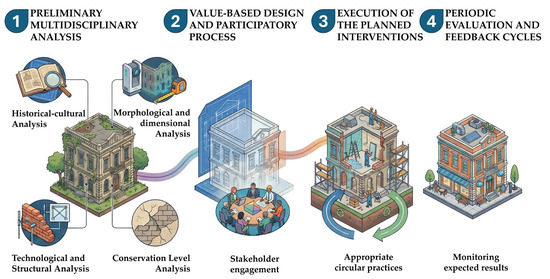
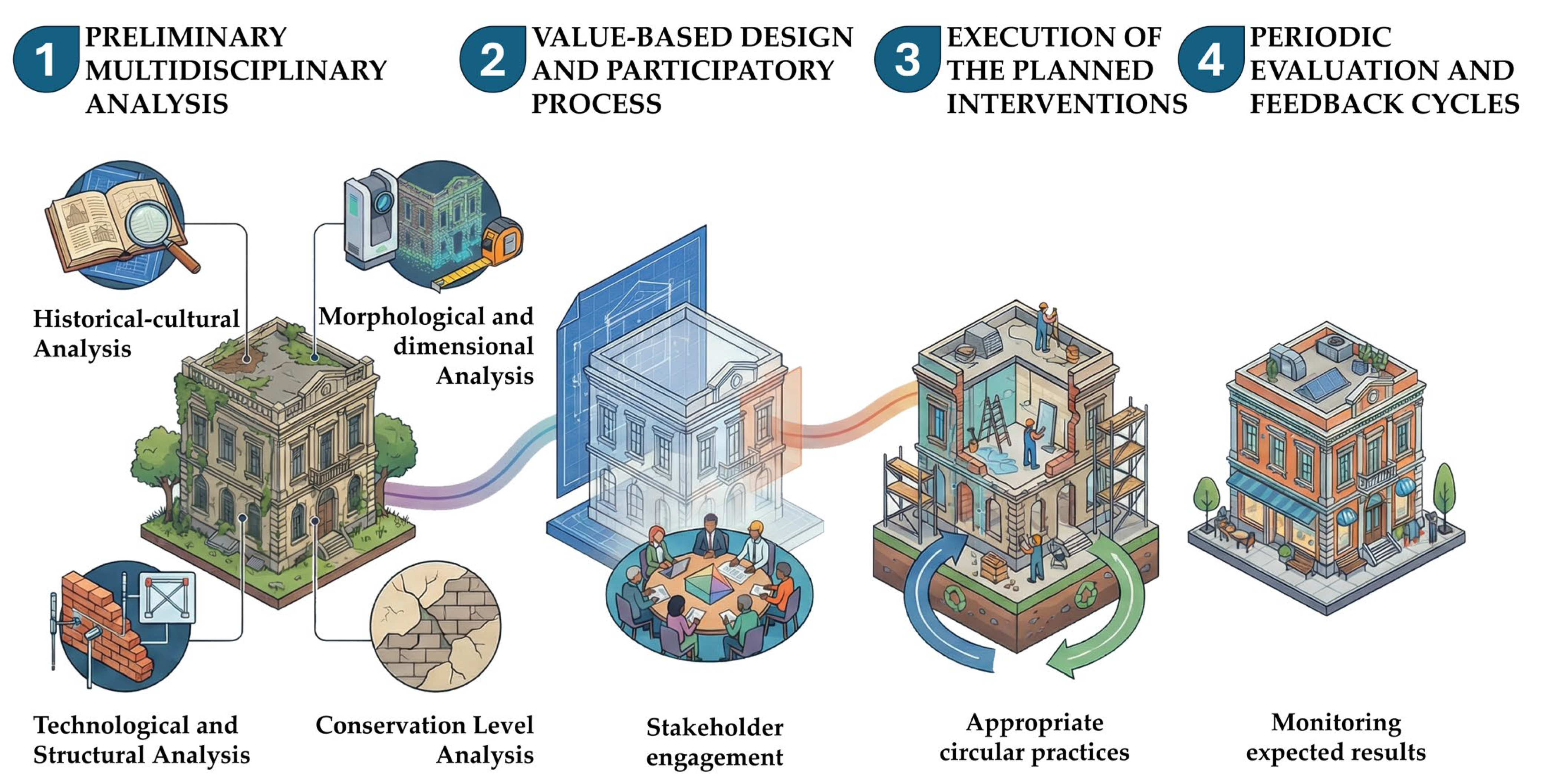
To do this, it is necessary to identify the key methodological principles of rehabilitation, adaptive reuse, and maintenance interventions in order to identify common information flows that can be channelled into MPPs to facilitate their management. Despite the distinct objectives of each type of intervention, their methodologies converge in several key areas: preliminary multidisciplinary analysis, value-based design and participatory process, execution of interventions, periodic evaluation and feedback cycles.
- Preliminary Multidisciplinary Analysis
As HBs are extremely complex in nature, the methodological approach requires a rigorous and comprehensive preliminary study of the artefact [30].
- Historical–cultural analysis: collection of information from old documents, archival research, iconography, regarding the building and its environmental context;
- Morphological and dimensional analysis: collection of information through surveying to determine geometric and dimensional characteristics;
- Technological analysis: collection of information regarding the construction system, material composition, performance, and technological qualities of the environment.
- Structural analysis: collection of information regarding the condition of structural elements to determine their level of safety;
- Analysis of the level of conservation: collection of information to outline the cracking pattern and the various degradation dynamics present.
The collection of this information is essenial not only for planning interventions, but also for ensuring that any changes are reversible and that the historical integrity of the building is maintained [31].
- 2.
- Value-Based Design and Participatory Process
The information collected must be processed to ensure the design of interventions that integrate the cultural, historical, architectural, technological, and social values identified through preliminary analysis [32]. This is particularly important in adaptive reuse interventions, where new uses compatible with the overall value of the building must be identified and defined. In rehabilitation and maintenance interventions, on the other hand, the identified values must be respected and preserved without compromising their integrity.
At this stage, the active involvement of stakeholders can be fundamental in ensuring a multidisciplinary approach to design, drawing on various professionals (architects, engineers, conservators) but also on future users (users and the local community). This ensures that the connection with the building is strengthened and that the interventions are accepted, laying the foundations for the success of the intervention and generating a sense of shared responsibility for the management of the HB [33].
- 3.
- Execution of the Planned Interventions
The execution of the interventions generates material flows in the input and output of various kinds (mainly waste). The collection of this data in real time is of fundamental importance in order to implement appropriate circular practices.
- 4.
- Periodic Evaluation and Feedback Cycles
Periodic post-intervention evaluation is essential to monitor the performance of the building after rehabilitation, adaptive reuse, or maintenance, ensuring that the interventions achieve the expected results and that any emerging problems are promptly addressed [34].
When performed correctly, the interventions described above, and summarised in Figure 2, have a certain level of sustainability linked to the extension of the useful life of a building or its reuse.
Figure 2.
Summary of the key methodological stages for rehabilitation, adaptive reuse and maintenance interventions in HBs. Figure elaborated by the authors; drawings made with NotebookLM and modified by the authors.
The greater difficulty lies in implementing circularity practices with a view to carbon neutrality. Rehabilitation, adaptive reuse, and maintenance have their own environmental impact, which should be measured and evaluated through life cycle assessment, resource efficiency, and circular economy strategies to minimise waste, reduce embodied energy and carbon, and promote the reuse of materials [3]. To do this, it is necessary to introduce new information management practices focused on data storage, availability, and quality.
3.2. Lifecycle Boundaries (B2–B5)
Life Cycle Assessment (LCA) is a methodology for evaluating the environmental impacts of buildings throughout their entire lifespan, from material extraction to end-of-life disposal or to the circular practices’ implementation. The European standard EN 15978:2011 [35] defines the calculation method dividing the life cycle of a building in different sages: (A1–A3) Product stage; (A4–A5) Construction stage; (B1–B7) Use stage; (C1–C4) End of Life stage; (D) Beyond the building Life Cycle which includes the circular economy stages [36].
In the (B) Stage, in which upstream/downstream processes belonging to other modules are activated, can include rehabilitation, adaptive reuse and maintenance interventions: (B2) maintenance, (B3) repair, (B4) replacement, and (B5) refurbishment.
Maintenance (B2) refers to the routine activities required to keep a HB in good working order and to prevent deterioration. In HBs, maintenance is not only about preserving functionality but also about safeguarding historical authenticity and material integrity. The environmental impacts of maintenance are often underestimated, yet they can be significant over the long service life typical of heritage structures. Maintenance activities may include cleaning, minor repairs, painting, and servicing of building systems [37]. The frequency and type of maintenance are influenced by the building’s materials, age, exposure to environmental conditions, and the standards set for heritage conservation. LCA studies highlight that maintenance can contribute to embodied carbon and resource use, especially when traditional materials or specialised craftsmanship are required. The durability of maintenance interventions is crucial, as more durable solutions can reduce the frequency of interventions and thus lower cumulative environmental impacts. However, the lack of policy and standardised procedures for incorporating embodied carbon into maintenance decisions remains a challenge, underscoring the need for more robust frameworks and regulatory support [38].
Repair (B3) involves the rehabilitation of building components that have failed or deteriorated beyond what routine maintenance can address. In HBs, repairs must be carefully planned to respect the original materials and construction techniques, often requiring tailored solutions. The environmental impact of repairs depends on the extent of intervention, the materials used, and the methods employed. LCA methodologies for repair must account for the embodied energy and emissions associated with the production and transport of repair materials, as well as the potential for waste generation and recycling of removed components [38]. The choice between in-kind repair (using similar materials and techniques) and modern alternatives can significantly affect the environmental profile of the intervention [37].
Replacement (B4) refers to the substitution of building components that have reached the end of their service life and can no longer be maintained or repaired effectively. In HBs, replacement is a sensitive issue, as it may involve the loss of original fabric and historical value. The environmental impacts of replacement are typically higher than those of maintenance or repair, due to the need for new materials, manufacturing, transportation, and installation processes. The selection of replacement materials and technologies is critical; using durable, low-impact, and compatible materials can mitigate environmental impacts [14].
Refurbishment (B5) encompasses major interventions aimed at upgrading, modernising, or significantly altering a building to improve its performance, extend its service life, or adapt it to new uses. Because of these characteristics, this stage can be associated with the Adaptive Reuse practice. Refurbishment is often treated as the beginning of a new life cycle for the building or its components, which complicates the allocation of environmental impacts between the pre- and post-refurbishment periods. According to EN 15978, refurbishment should be assessed as a distinct module, including the production and transport of new components, construction activities, waste management, and the end-of-life treatment of replaced elements. Methodological advances now allow for the division of environmental impacts between life cycles, ensuring that the residual value of reused or recycled materials is properly accounted for. Refurbishment can offer significant environmental benefits by reducing the need for new construction and preserving embodied energy, but these benefits depend on the scale and nature of the intervention, the materials used, and the efficiency of the refurbishment process [37].
The assessment of stages B2, B3, B4, and B5 in HBs is complicated by several factors, including the diversity of building types, materials, and conservation practices [39]. The time dimension is particularly important, as the long service lives of HBs mean that maintenance, repair, replacement, and refurbishment activities may occur multiple times, each with cumulative environmental impacts. Dynamic LCA models that incorporate temporal and spatial variations are emerging as valuable tools for capturing these complexities. Furthermore, integrating embodied carbon considerations into policy and decision-making processes is essential to promoting sustainable heritage conservation. Data quality and availability remain persistent challenges in LCA studies [14]. The application of MPP to the design methodologies of rehabilitation, adaptive reuse, and maintenance interventions has the potential to improve the availability and quality of data that can support the LCA of HB, fostering innovative, sustainable, and circular practices in the conservation and management of its value.
4. Integrating Material and Product Passports in Heritage Contexts
4.1. Information Flow Mapping, Potential Applications and Benefits
The preliminary analysis of the state of the art of MPPs, as summarised in Figure 1, and the definition of methodological frameworks for rehabilitation, adaptive reuse, and maintenance interventions in the context of HBs (Figure 2) provided a clear picture for carrying out the identification of possible entry points for MPPs in the methodological frameworks. To do this, it is useful to first map the information flows generated during the interventions, also based on the LCA method. Before doing so, it is necessary to make an important consideration about the lifecycle boundaries within which the rehabilitation, adaptive reuse, and maintenance interventions were limited.
Within the methodological framework defined by EN 15978, modules B2, B3, B4 and B5 describe the activities that affect the use phase of the building—maintenance, repair, replacement and renovation/refurbishment, respectively—without, however, incorporating the overall impacts associated with the materials or processes required to carry out these interventions. They carried out on a cultural asset activate upstream and downstream processes that fall within other modules of the life cycle. While these activities belong to the B modules, their execution activates a series of upstream and downstream processes that are accounted for in other life-cycle stages: the production of new materials (A1–A3), their transport and site activities (A4–A5), as well as the removal, treatment or potential recovery of discarded components (C1–C4, D). This distinction is particularly relevant in HBs, where frequent, localised and highly specialised interventions require non-standard materials and craft-based techniques that entail differentiated impacts along the whole supply chain. Recognising how B2–B5 interventions trigger additional processes is therefore essential for accurately mapping information flows and for integrating them into MPPs in a way that reflects both the complexity and the continuity of heritage conservation practices [40]. The correct attribution of impacts to the respective modules makes it possible to avoid methodological overlaps and to understand more accurately the environmental contribution of conservation activities.
The types of flows generated by rehabilitation, adaptive reuse, and maintenance interventions are tangible and intangible, concerning:
- Material flows: in heritage contexts these include traditional materials, modern materials, as new materials entering the system (inflows) and as materials leaving the system (outflows) [13].
- Energy flows: these are connected to the energy associated with the production, transportation of the materials and products, on site construction, and all the operational and embodied flows from the other stages of the life cycle.
- Environmental flows: embodied and operational emissions related to materials and product production, transportation, realisation, end of life/waste-related, etc.
- Historical–cultural flows: information related to the intangible values connected to the HB and its parts [41].
- Stakeholders’ data flows: information about all the stakeholders involved during the intervention (architect, engineer, construction company, materials suppliers, etc.)
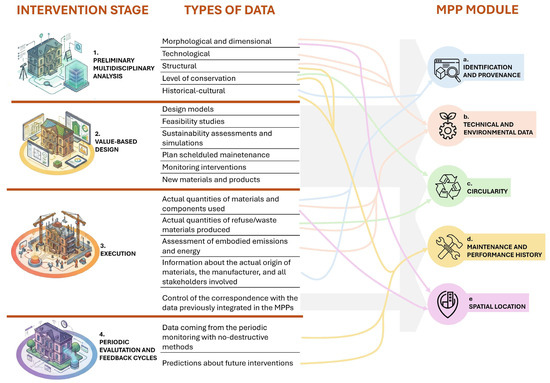
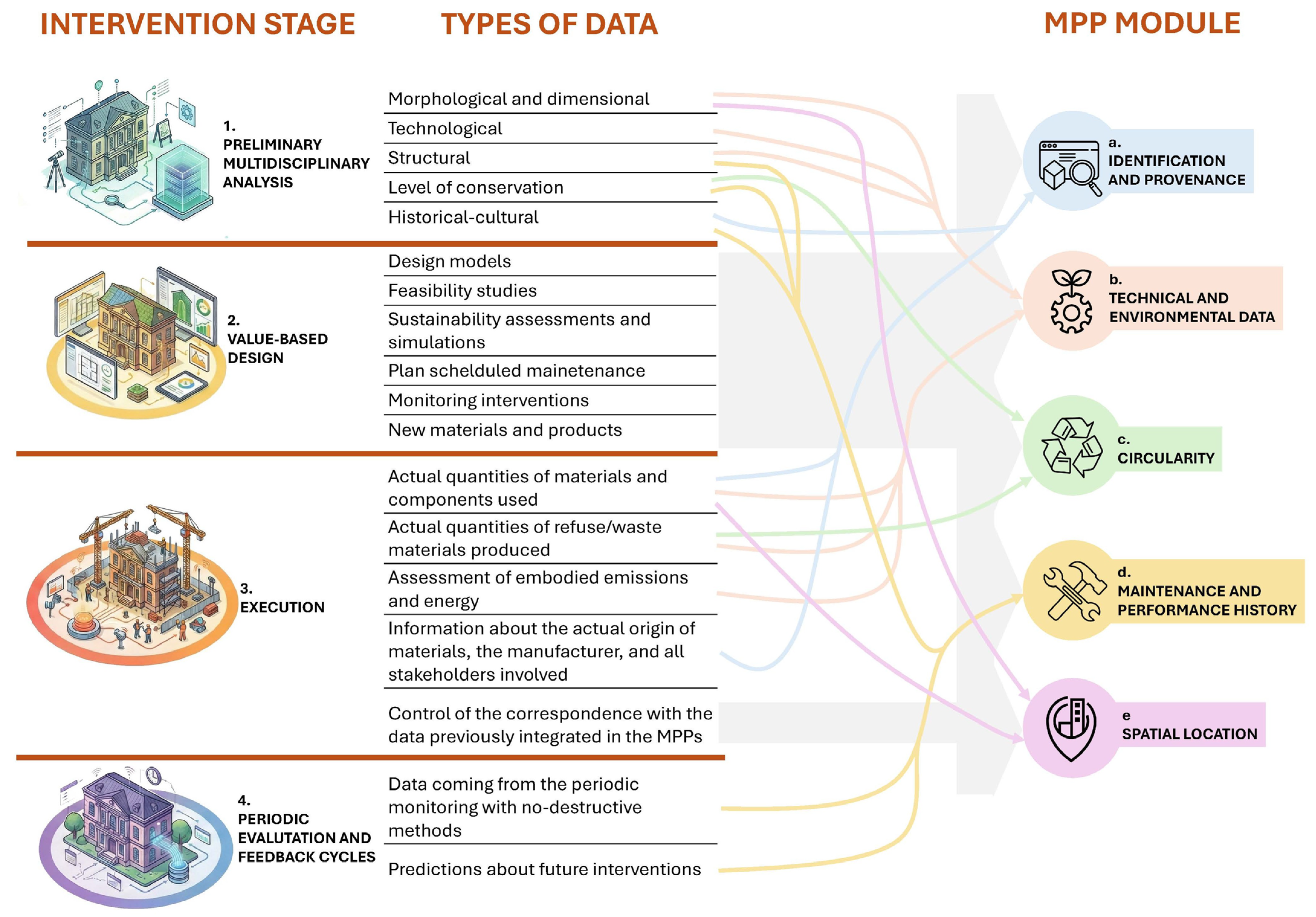
These heterogeneous flows generate complex, interdisciplinary, and interconnected information packages that require adequate management and integration so that they are not lost during the building’s life cycle [42] and so that the intrinsic values embodied in the HB are effectively preserved. The application of MPPs can bring concrete benefits from this point of view as tools for structured data management oriented towards storage, organisation, and communication [4]. In order to identify the entry points of MPPs in the methodological framework, it is necessary to understand which information flows are generated during each phase of intervention and into which MPP modules they can be channelled. The analysis is summarised in Figure 3.
Figure 3.
Identification of the types of data generated during each intervention stage and how they are channelled in each module of the MPP. Figure elaborated by the authors. The graphics of the “Intervention stage” were produced with NotebookLM free version.
- Preliminary Multidisciplinary Analysis
By its very nature, this phase involves gathering information on all aspects of the HB as it currently stands, generating a large amount of data to be used during the decision-making and design phases. The implementation of MPPs during the collection of this information can ensure that it is gathered systematically in order to define a complete picture of the HB and store it for future interventions, which would benefit from it.
The various pieces of information associated with the different materials and components could be channelled into the different MPP modules as follows:
- Morphological and dimensional data (module b. and e.): the survey can support the count of the material and components and of their dimensions, quantities and location in the building, useful also to implement H-BIM.
- Technological data (module b.): the data about materials and components composition, performance and other technical characteristics obtainable from non-destructive analysis or from the study of existing documentation can be structured and stored in the MPPs.
- Structural data (module b. and d.—in case of diagnostic tests): the data about the structural elements are fundamental to be stored to guarantee the safety of the structure and a clear past picture for future evaluations.
- Level of conservation data (module c. and d.): the data about the conditions of the existing materials and components are important to be stored to have a record of the state-of-the-art conservation condition, to evaluate which are the materials and components that need to be removed and define a possible future circular path.
- Historical–cultural data: module a. and d.—the data about the origin of the original materials can be stored in module a. while the data about past historical interventions can be stored in module d. to create a chronological evolution of the building.
This structured organisation of the data collected improves the systematic knowledge of the state of the art of the building, recording all the possible information. However, the collection and structuring of data regarding intangible historical and socio-cultural values remains critical, as there is no adequate management method that can adequately represent this knowledge. For instance, intangible cultural values could be operationalised through qualitative descriptors linked to individual MPP entries, such as significance levels (high–medium–low), typological value categories, or conservation priority tags, each associated with explanatory metadata, archival references and validation responsibility, allowing qualitative assessments to be systematically integrated alongside technical and environmental data. The definition and introduction of qualitative indicators can support a holistic understanding of heritage, where the cultural evidence present in materials and construction techniques is documented alongside their technical properties [43]. But there are many challenges in standardising the documentation of non-physical attributes through meaningful links to specific materials and building elements [44].
- 2.
- Value-Based Design
The data generated during this phase concerns the processing of information collected during the previous phase, with a view to planning interventions. The data origins from the exchange between stakeholders of design models, feasibility studies, sustainability assessments, and simulations, in order to make the appropriate design choices and plan scheduled maintenance and monitoring interventions. Feedback loops ensure that both heritage values and functional requirements are addressed [45]. The use of MPPs during this phase supports decision-making, allowing for potentially more sustainable and informed design choices that are oriented towards the best modality to preserve and enhance the intangible values embodied by the HB. In addition, during this phase, data about the new materials and products that will be incorporated into the building system during construction phase, can be collected in order to compile their MPPs in all the modules, which can then serve as a digital dataset in which to store all the information for future interventions.
- 3.
- Execution
The data generated during this phase concerns the implementation of the intervention; therefore, it relates to the construction site and the stakeholders involved [46]. The integration of MPPs allows the record of the following data:
- Actual quantities of materials and components used to carry out the intervention—modules a., b., e.
- The actual quantities of refuse/waste materials produced during the implementation of the interventions and their methods of disposal or possible orientation towards a circular supply chain—modules b. and c.
- Assessment of embodied emissions and energy due to transport and the use of machinery for carrying out the work—module b.
- Information about the actual origin of materials, the manufacturer, and all stakeholders involved—module a.
- Real verification of the correspondence between the data integrated in the MPPs during the project phase and the data related the actual implementation of the interventions—all modules.
During this phase, data from EPDs or other environmental and product declarations can be collected and integrated into the MPPs to be included in module b. The validation of project data with executive data provides a true picture of the work carried out, with tangible data collected in real time.
- 4.
- Periodic Evaluation and Feedback Cycles
The data generated during this phase concerns the periodic monitoring of the structure using non-destructive methods. This data can be associated with module d. of the MPP, and, through a chronological record of the inspection results, it is also possible to make predictions about future interventions.
4.2. Case-Based Reasoning or Conceptual Examples
To illustrate how MPPs can be effectively integrated into heritage conservation workflows, this section presents three conceptual examples that demonstrate their potential in planned maintenance, adaptive reuse, and targeted rehabilitation. These scenarios highlight how MPPs can support data traceability, transparency, and decision-making across different life cycle stages defined by EN 15978 (modules B2–B5), while preserving the cultural and historical values of heritage assets [47].
The first conceptual case illustrates how MPPs could support planned maintenance of an 18th-century masonry town hall exposed to moisture-related degradation. The local authority aimed to extend the service life of the lime-rendered façades while maintaining historical authenticity. The MPP framework was structured around four key modules: identification and provenance; technical and environmental data; maintenance and performance history; and spatial location linked to a H.BIM [15]. Archival documentation provided information on the original materials and repair techniques, while non-destructive tests, such as infrared thermography and moisture mapping, were used to assess current conditions. These datasets were uploaded to the MPP, allowing conservators and engineers to visualise deterioration patterns directly within the HBIM environment [2]. Maintenance cycles were then parameterized by exposure class and environmental condition, while embodied carbon associated with recurrent limewash applications was recorded under module B2. Small-scale repairs were classified as B3 activities and logged in the MPP as individual interventions, creating a continuous and auditable record of the façade’s conservation history [2]. Over time, this approach would enable more accurate forecasting of maintenance needs, reduce unplanned interventions, and improve the environmental performance of routine conservation actions.
The second example addresses the adaptive reuse of a 1930s tram depot, converted into a public library, which represents a typical refurbishment process under module B5. The goal was to retain the industrial character of the steel-truss structure while maximising material reuse and minimising embodied impacts. Before the intervention, an MPP database was created for all structural and envelope components, including trusses, purlins, and brick infills, with metadata on provenance, material composition, and potential reusability. Integration with the HBIM model enabled comparison of alternative design options by assessing both the environmental impact and heritage value implications [2]. During construction, selective replacement (B4) was carried out only for elements that exceeded corrosion limits [9]. At the same time, dismantled brick units with adequate mechanical integrity were catalogued as reusable materials, and each received its own passport entry. The final MPP dataset documented a 60% by-mass reuse of masonry and an 85% retention of primary steel elements, significantly reducing the project’s embodied carbon compared to a full reconstruction baseline [15]. At handover, the same MPP served as an operational management tool, linking maintenance protocols, cleaning guidelines, and performance indicators for both historic and new components. This case demonstrates how MPPs can foster measurable circularity outcomes while preserving architectural and cultural identity.
A third conceptual example considers the targeted rehabilitation of timber roof trusses in a medieval monastic refectory, primarily aligned with module B3 (repair) and, to a limited extent, B4 (replacement). The objective was to address insect damage while ensuring maximum retention and reversibility [8]. The MPP for each truss included information on dendrochronological analysis, species identification, resist graph profiles, moisture content, and previous treatment records. Within the passport, each member was assigned a significance level reflecting its historical and aesthetic value, enabling the design team to prioritise minimal intervention techniques. Repairs were executed using scarf joints with compatible timber species and reversible borate treatments, both of which were recorded with full process metadata (concentration, dwell time, and retreatment interval). Replacement was considered only when section loss exceeded structural thresholds or when biological activity persisted after two treatment cycles [13]. All removed fragments were catalogued with provenance data and georeferenced photographs, ensuring their future traceability. This case exemplifies how MPPs can serve not only as technical documentation tools but also as repositories of tacit conservation knowledge, capturing the reasoning and ethical principles behind each intervention.
Across these examples, the integration of MPPs proved instrumental in transforming static records into dynamic, interoperable datasets that evolve throughout the asset’s life cycle. The ability to link physical interventions with environmental indicators and conservation values enables more transparent, evidence-based decision-making. Moreover, by embedding cultural significance and reversibility criteria into the passport structure, MPPs can reconcile the principles of heritage preservation with the objectives of the circular economy [13]. In doing so, they provide a scalable, replicable framework for the sustainable, adaptive management of historic buildings.
5. Conclusions
A critical analysis of the potential of MPP and its reinterpretation according to the specific characteristics of HB highlighted how these digital tools can provide potentially decisive support for the evolution towards more sustainable, transparent and circular management practices. The research made it possible to outline the information structure of these tools, map the material, energy, environmental and cultural flows produced by the main maintenance, redevelopment and adaptive reuse interventions, and identify the points where these flows can be intercepted and organised within the MPP modules. This conceptual reconstruction indicates how passports could serve as tools for preserving information continuity, avoiding knowledge loss, and strengthening decision-making consistency throughout the entire life cycle of the asset. The integration of MPPs into the operational processes of cultural heritage conservation appears particularly promising for three aspects that emerged from the work: the possibility of documenting the technical and maintenance history of the artefact in a structured manner; the ability to connect technical data and cultural attributes, allowing for a more informed approach to the compatibility and reversibility of interventions; and the opportunity to support circular economy strategies through more accurate traceability of materials, also with a view to future selective dismantling, reuse, and reduction of environmental impacts. The conceptual cases proposed illustrate, in a non-applicative form, how these potentials can be translated into operational scenarios useful for improving maintenance planning, adaptive reuse and specialist interventions on valuable components.
However, several limitations remain that are directly related to the proposed MPP framework. The limited integration of qualitative cultural attributes affects in particular the identification and maintenance-history modules, reducing their capacity to support value-based design decisions during rehabilitation and adaptive reuse processes. Similarly, uncertainties related to data governance and long-term data stewardship challenge the reliability and continuity of performance and intervention records across maintenance (B2), repair (B3), and refurbishment (B5) phases, especially when MPPs are integrated within HBIM environments involving multiple stakeholders. In addition, the absence of fully interoperable digital tools tailored to heritage-specific requirements limits the seamless exchange of information between MPP modules and existing HBIM workflows, potentially hindering the practical implementation of circular strategies such as selective replacement and reuse. Furthermore, the analysis carried out shows that the passport information system still needs to be assessed using LCA methodologies capable of recognising the cyclical nature of interventions (modules B2–B5) and the intrinsic environmental value of building conservation. In this perspective, the proposed heritage-oriented MPP framework is aligned with emerging EU regulatory trajectories, as it complements the DPP by enabling building-level aggregation, contextualization, and long-term traceability of product data. By extending DPP information to include cultural significance, maintenance history, and reuse potential, MPPs can support future EU requirements on circularity, data transparency, and sustainable renovation. This approach is particularly relevant in the context of the European Green Deal and the Renovation Wave, where data-driven strategies are expected to play a key role in reducing embodied carbon and enhancing resource efficiency in the existing built environment. Against this background, research developments are moving towards real-world testing, the definition of specific information schemes for cultural heritage, and integration with predictive models based on digital twins and sensors. Developing operational prototypes, validated on site and interacting with emerging regulatory and technological tools, is a necessary step in transforming MPPs from a promising concept into truly effective digital infrastructure for the circular and conscious management of built heritage.
Author Contributions
Conceptualization, A.V., L.B., R.G.A. and G.C.C.P.; methodology, A.V., L.B., R.G.A. and G.C.C.P.; formal analysis, R.G.A. and G.C.C.P.; investigation, R.G.A. and G.C.C.P.; resources, A.V. and L.B.; data curation, R.G.A., G.C.C.P., A.V. and L.B.; writing—original draft preparation, G.C.C.P. and R.G.A.; writing—review and editing, R.G.A.; G.C.C.P., A.V. and L.B.; supervision, A.V. and L.B.; project administration, A.V. and L.B.; funding acquisition, A.V. All authors have read and agreed to the published version of the manuscript.
Funding
This research received no external funding.
Institutional Review Board Statement
Not applicable.
Informed Consent Statement
Not applicable.
Data Availability Statement
The original contributions presented in the study are included in the article, further inquiries can be directed to the corresponding author.
Acknowledgments
The authors of this article would like to thank the European Union and COST (European Cooperation in Science and Technology) for supporting the COST Action CircularB CA21103 www.circularb.eu (accessed on 10 November 2025) and CYTED Network ECoEICo—Circular Economy as a Strategy for a More Sustainable Construction Industry. The research topics refer to SITdA’s ‘Cultural Heritage’ Cluster. https://www.sitda.net/index.php/cluster-e-ricerca-2/cluster-2/patrimonio-architettonico/ (accessed on 10 November 2025).
Conflicts of Interest
The authors declare no conflicts of interest.
Abbreviations
The following abbreviations are used in this manuscript:
| HB(s) | Heritage Building(s) |
| MPP(s) | Material and Product Passport(s) |
| BIM | Building Information Modelling |
| H-BIM | Historic Building Information Modelling |
| EPD(s) | Environmental Product Declaration(s) |
| EU | European Union |
| DPP | Digital Product Passport |
| BAMB | Building As Material Banks |
| LCA | Life Cycle Assessment |
References
- Kebede, R.; Moscati, A.; Tan, H.; Johansson, P. A modular ontology modeling approach to developing digital product passports to promote circular economy in the built environment. Sustain. Prod. Consum. 2024, 48, 248–268. [Google Scholar] [CrossRef] [Scilit]
- Mazza, A.; Bernardo, G.; Guida, A. Building Heritage Material Passports (BHMPs): Digitalisation of Made in Italy’s heritage techniques for more resilient communities. In Proceedings of the Eurographics Workshop on Graphics and Cultural Heritage, Darmstadt, Germany, 16–18 September 2024. [Google Scholar] [CrossRef]
- Foster, G. Circular economy strategies for adaptive reuse of cultural heritage buildings to reduce environmental impacts. Resour. Conserv. Recycl. 2020, 152, 104507. [Google Scholar] [CrossRef] [Scilit]
- Senarathne, H.N.Y.; Weerasinghe, N.P.; Zhang, G. Developing a standardized materials passport framework to unlock the full circular potential in the construction industry. Sustainability 2025, 17, 6337. [Google Scholar] [CrossRef] [Scilit]
- Costa, A.R.; Hoolahan, R.; Charef, R. Eight recommendations to adopt materials passports and accelerate material reuse in construction: Insights from academia and practice. NPJ Mater. Sustain. 2025, 3, 33. [Google Scholar] [CrossRef] [Scilit]
- Leindecker, G.; Askar, R.; Güngör, B.; Blázquez, T.; Turbina, N.; Gómez-Gil, M.; Karanafti, A.; Bragança, L.; De Wolf, C. Material and building passports as supportive tools for enhancing circularity in buildings. In Circular Economy Design and Management in the Built Environment; Bragança, L., Griffiths, P., Askar, R., Salles, A., Ungureanu, V., Tsikaloudaki, K., Bajare, D., Zsembinszki, G., Cvetkovska, M., Eds.; Springer Nature: New York, NY, USA, 2025; pp. 507–543. [Google Scholar] [CrossRef] [Scilit]
- Munaro, M.R.; Tavares, S.F. Materials passport review: Challenges and opportunities toward a circular economy building sector. Built Environ. Proj. Asset Management 2021, 11, 767–782. [Google Scholar] [CrossRef] [Scilit]
- Van Capelleveen, G.; Vegter, D.; Olthaar, M.; Van Hillegersberg, J. The anatomy of a passport for the circular economy: A conceptual definition, vision and structured literature review. Resour. Conserv. Recycl. Adv. 2023, 17, 200131. [Google Scholar] [CrossRef] [Scilit]
- European Commission. EU’s Digital Product Passport: Advancing Transparency and Sustainability. 2025. Available online: https://data.europa.eu/en/news-events/news/eus-digital-product-passport-advancing-transparency-and-sustainability (accessed on 13 November 2025).
- European Commission. New EU Rules on the Safety and Sustainability of Construction Products Mark a New Step for the Sector’s Competitiveness. 2025. Available online: https://single-market-economy.ec.europa.eu/news/new-eu-rules-safety-and-sustainability-construction-products-mark-new-step-sectors-competitiveness-2025-01-07_en (accessed on 13 November 2025).
- ISO 19650; Organization and Digitization of Information About Buildings and Civil Engineering Works, Including Building Information Modelling (BIM)—Information Management Using Building Information Modelling. International Organization for Standardization: Geneva, Switzerland, 2018.
- Sigma Technology. Digital Product Passport in Construction: Are You Ready? 2025. Available online: https://sigmatechnology.com/articles/navigating-the-eus-digital-product-passport-for-construction/ (accessed on 13 November 2025).
- Mazzetto, S. Comparative life cycle assessment of traditional and modern materials in heritage building restoration: A case study from Ushaiger Village. Sustainability 2024, 17, 25. [Google Scholar] [CrossRef] [Scilit]
- Fnais, A.; Rezgui, Y.; Petri, I.; Beach, T.; Yeung, J.; Ghoroghi, A.; Kubicki, S. The application of life cycle assessment in buildings: Challenges and directions for future research. Int. J. Life Cycle Assessment 2022, 27, 627–654. [Google Scholar] [CrossRef] [Scilit]
- Atta, I.; Bakhoum, E.S.; Marzouk, M.M. Digitizing material passport for sustainable construction projects using BIM. J. Build. Eng. 2021, 43, 103233. [Google Scholar] [CrossRef] [Scilit]
- Gravagnuolo, A.; Angrisano, M.; Nativo, M. Evaluation of environmental impacts of historic buildings conservation through life cycle assessment in a circular economy perspective. Aestimum 2020, 241–272. [Google Scholar] [CrossRef] [Scilit]
- Göswein, V.; Carvalho, S.; Cerqueira, C.; Lorena, A. Circular material passports for buildings: Providing a robust methodology for promoting circular buildings. IOP Conf. Ser. Earth Environ. Sci. 2022, 1122, 012049. [Google Scholar] [CrossRef] [Scilit]
- BAMB Consortium. Buildings as Material Banks (BAMB). 2025. Available online: https://www.bamb2020.eu/ (accessed on 30 March 2025).
- CIRCuIT Project. Circular Economy Built Environment. 2025. Available online: https://www.circuitproject.eu/ (accessed on 13 November 2025).
- Awuzie, B.O.; Ngowi, A.B.; Aghimien, D.O. Towards built environment decarbonisation: A review of the role of artificial intelligence in improving energy and materials’ circularity performance. Energy Build. 2024, 319, 114491. [Google Scholar] [CrossRef] [Scilit]
- UNESCO. Convention Concerning the Protection of the World Cultural and Natural Heritage. 1972. Available online: https://www.refworld.org/legal/agreements/unesco/1972/en/35057 (accessed on 9 November 2025).
- Council of Europe. Framework Convention on the Value of Cultural Heritage for Society (Faro Convention); Council of Europe Treaty Series No. 199; Council of Europe: Strasbourg, France, 2005. [Google Scholar]
- Tejedor, B.; Lucchi, E.; Bienvenido Huertas, J.; Nardi, I. Non-destructive techniques for the diagnosis of heritage buildings: Traditional procedures and future perspectives. Energy Build. 2022, 263, 112029. [Google Scholar] [CrossRef] [Scilit]
- Gallo, P. Historical character vs. performance adaptability: Case study of the church Autostrada del Sole. TECHNE—J. Technol. Archit. Environ. 2020, 20, 184–194. [Google Scholar] [CrossRef] [Scilit]
- Arfa, F.; Zijlstra, H.; Lubelli, B.; Quist, W. Adaptive reuse of heritage buildings: From a literature review to a model of practice. The Historic Environment: Policy Pract. 2022, 13, 148–170. [Google Scholar] [CrossRef] [Scilit]
- Savoie, É.; Sapinski, J.; Laroche, A. Key factors for revitalising heritage buildings through adaptive reuse. Build. Cities 2025, 6, 103–120. [Google Scholar] [CrossRef] [Scilit]
- Nieto-Julián, E.; Robador, M.; Moyano, J.; Bruno, S. Semantic HBIM for heritage conservation: A methodology for mapping deterioration and structural deformation in historic envelopes. Buildings 2025, 15, 1990. [Google Scholar] [CrossRef] [Scilit]
- Talamo, C. Tools and procedures for a maintenance-oriented design for buildings of worship. TECHNE—J. Technol. Archit. Environ. 2013, 6, 117–124. [Google Scholar] [CrossRef] [Scilit]
- Gasparoli, P. Planned preventive maintenance in the preservation of historic heritage sites as a first form of valorisation. TECHNE—J. Technol. Archit. Environ. 2012, 3, 148–157. [Google Scholar] [CrossRef] [Scilit]
- Violano, A.; Maio, A. Material culture and technological innovation for heritage regeneration and maintenance: The case of the canopied vault of the Saints Peter and Paul Cathedral in Sessa Aurunca (CE). In Proceedings of the XXXVIII Conference Scienza e Beni Culturali, Bressanone, Italy, 27–30 June 2023; pp. 369–380. [Google Scholar]
- Rebec, K.; Deanovič, B.; Oostwegel, L. Old buildings need new ideas: Holistic integration of conservation-restoration process data using heritage building information modelling. J. Cult. Herit. 2022, 5, 30–42. [Google Scholar] [CrossRef] [Scilit]
- Miran, F.; Husein, H. Introducing a conceptual model for assessing the present state of preservation in heritage buildings: Utilizing building adaptation as an approach. Buildings 2023, 13, 859. [Google Scholar] [CrossRef] [Scilit]
- Gravagnuolo, A.; Angrisano, M.; Bosone, M.; Buglione, F.; De Toro, P.; Girard, F. Participatory evaluation of cultural heritage adaptive reuse interventions in the circular economy perspective: A case study of historic buildings in Salerno (Italy). J. Urban Manag. 2024, 13, 107–139. [Google Scholar] [CrossRef] [Scilit]
- Mohamed, B.; Marzouk, M. Post-adaptive reuse evaluation of heritage buildings using multi-criteria decision-making techniques. J. Build. Eng. 2024, 99, 111485. [Google Scholar] [CrossRef] [Scilit]
- EN 15978:2011; Sustainability of Construction Works—Assessment of Environmental Performance of Buildings—Calculation Method. Comite Europeen de Normalisation: Brussels, Belgium, 2011.
- Fahlstedt, O.; Rasmussen, F.; Temeljotov-Salaj, A.; Huang, L.; Bohne, R. Building renovations and life cycle assessment: A scoping literature review. Renew. Sustain. Energy Rev. 2024, 203, 114774. [Google Scholar] [CrossRef] [Scilit]
- Obrecht, T.; Jordan, S.; Legat, A.; Saade, M.; Passer, A. An LCA methodology for assessing the environmental impacts of building components before and after refurbishment. J. Clean. Prod. 2021, 327, 129527. [Google Scholar] [CrossRef] [Scilit]
- Mahmad, M.; Suratkon, A.; Ismail, S. Embodied carbon consideration for maintenance and repair appraisal in heritage buildings: A review. IOP Conf. Ser. Earth Environ. Sci. 2024, 1347, 012024. [Google Scholar] [CrossRef] [Scilit]
- Opher, T.; Duhamel, M.; Posen, I.; Panesar, D.; Brugmann, R.; Roy, A.; Zizzo, R.; Sequeira, L.; MacLean, H. Life cycle GHG assessment of a building restoration: Case study of a heritage industrial building in Toronto, Canada. J. Clean. Prod. 2021, 279, 123819. [Google Scholar] [CrossRef] [Scilit]
- Zimmermann, R.K.; Kanafani, K.; Rasmussen, F.N.; Andersen, C.; Birgisdóttir, H. LCA framework to evaluate circular economy strategies in existing buildings. IOP Conf. Ser. Earth Environ. Sci. 2020, 588, 042044. [Google Scholar] [CrossRef] [Scilit]
- Rao, Z.; Wang, G. Smart data-enabled conservation and knowledge generation for architectural heritage systems. Buildings 2025, 15, 2122. [Google Scholar] [CrossRef] [Scilit]
- Giovanardi, M.; Konstantinou, T.; Pollo, R.; Klein, T. Internet of things for building façade traceability: A theoretical framework to enable circular economy through life-cycle information flows. J. Clean. Prod. 2023, 382, 135261. [Google Scholar] [CrossRef] [Scilit]
- Hou, Y.; Kenderdine, S.; Picca, D.; Egloff, M.; Adamou, A. Digitizing intangible cultural heritage embodied: State of the art. J. Comput. Cult. Herit. 2022, 15, 1–20. [Google Scholar] [CrossRef] [Scilit]
- Gonçalves, J.; Mateus, R.; Silvestre, J.; Roders, P.; Bragança, L. Building passport for the sustainable conservation of built heritage. J. Cult. Herit. Manag. Sustain. Dev. 2022, 15, 168–180. [Google Scholar] [CrossRef] [Scilit]
- De Oliveira, G.; Biancardo, S.; Tibaut, A. Optimizing H-BIM workflow for interventions on historical building elements. Sustainability 2022, 14, 9703. [Google Scholar] [CrossRef] [Scilit]
- Kanafani, K.; Magnes, J.; Lindhard, S.; Balouktsi, M. Carbon emissions during the building construction phase: A comprehensive case study of construction sites in Denmark. Sustainability 2023, 15, 10992. [Google Scholar] [CrossRef] [Scilit]
- PN326-BRE-EN-15978-Methodology; BRE: Bracknell, UK, 2018.

Disclaimer/Publisher’s Note: The statements, opinions and data contained in all publications are solely those of the individual author(s) and contributor(s) and not of MDPI and/or the editor(s). MDPI and/or the editor(s) disclaim responsibility for any injury to people or property resulting from any ideas, methods, instructions or products referred to in the content. |
© 2026 by the authors. Licensee MDPI, Basel, Switzerland. This article is an open access article distributed under the terms and conditions of the Creative Commons Attribution (CC BY) license.