1. Introduction
Human behavior analysis studies the causes and patterns of human actions, and it has been applied across various domains, including marketing, healthcare, education, and training. Performing behavioral analysis in real-world environments is frequently costly and involves spatial constraints, which makes conducting research efficiently challenging [
1,
2]. Virtual reality (VR) has emerged as an alternative to overcome these limitations because it allows researchers to easily simulate and control real-world environments through computer graphics. As a result, VR has been actively employed in human behavior research [
3,
4]. In particular, in the marketing and advertising field, VR provides virtual simulation environments that are similar to the physical consumption contexts, thereby facilitating the effective analysis of different consumer behavior patterns, e.g., decision-making processes and purchase likelihood. In addition, VR enables the implementation of diverse shopping environments, which allows consumer behavior to be analyzed repeatedly at lower cost [
5].
In the advertising and marketing context, visual attention has been shown to be an effective measure to analyze advertising effectiveness, exhibiting a positive correlation with ad preference and purchase likelihood [
6,
7,
8]. Conventionally, methods to assess advertising effectiveness depended on various self-report measures, e.g., interviews and questionnaires; however, these approaches may yield inaccurate information due to memory distortions and subjective user opinions. In addition, such data are collected retrospectively; thus, they cannot capture visual attention in real-time [
9,
10]. To address these limitations, neuromarketing has been increasingly employed to understand user behavior in advertising contexts. Neuromarketing utilizes physiological signals to analyze the users’ attention, emotions, motivations, and memory [
11,
12,
13]. Among the various neuromarketing techniques, eye-tracking technology provides direct information about the user’s visual attention. Eye-tracking data serve as an objective indicator of the user’s interest and facilitate real-time analysis of visual attention, thereby addressing the shortcomings of conventional methods to assess advertising effectiveness [
14,
15,
16,
17]. However, existing research on advertising effectiveness using eye-tracking has been largely confined to static retail environments or online banners, leaving limited understanding of how advertising impact varies in complex and dynamic settings such as real-world road environments.
According to the theory of visual attention, when multiple visual stimuli are synchronously presented, the human brain selectively focuses on only a limited subset of information due to its capacity constraints. From this perspective, the placement of advertisements influences both users’ visual attention and advertising effectiveness [
18,
19]. In addition, road traffic conditions significantly affect users’ visual attention to billboards. When users are highly focused on traffic conditions, their cognitive load increases, which can reduce visual attention to advertisements. In contrast, when users are stationary, lower cognitive load may result in increased visual attention to advertisements [
20]. In other words, although visual attention varies across traffic contexts—such as riding versus being stationary—and can critically influence advertising effectiveness even at identical physical locations, integrated analyses of these factors remain limited.
To address this gap, this study integrates VR and eye-tracking to examine how advertisement placement under dynamic road traffic conditions influences users’ advertising effectiveness. Here, visual attention and advertising recall were selected as evaluation metrics to assess the advertising effectiveness, where visual attention was measured via eye tracking and advertising recall was assessed using survey methods. In addition, an eye-tracking data measurement system was developed to analyze the real-time effects of advertisement placement on the users’ visual attention within a VR environment. Based on this system, experiments were conducted to evaluate the users’ visual attention and advertising recall across different advertisement placement configurations. The experimental eye-tracking data and advertising recall results provide insights into the influence of advertisement placement on advertising effectiveness.
2. Related Work
VR can generate virtual environments that closely resemble real-world settings using three-dimensional (3D) graphics and provide diverse visual and auditory stimuli. As a result, VR offers users a sense of immersion and presence while creating a controllable experimental environment, thereby making it a valuable tool for human behavior research [
21,
22]. In behavioral research, VR has been applied across various domains, including education, training, psychology, cognitive science, and marketing. In particular, VR has been utilized in marketing research to analyze consumer behavior because VR environments can closely replicate real-world consumption settings, thereby enabling effective analysis of consumer responses to products and advertisements at a level that is comparable to reality. In addition, diverse consumption scenarios and environmental variables can be implemented in 3D graphics, which reduces costs and facilitates efficient research through repeated experimentation [
23,
24,
25].
Visual attention is the process of focusing on specific elements among various visual stimuli, and it influences human cognitive activities and decision-making processes. Higher visual attention to a product is associated with increased advertising effectiveness, preference, and purchase likelihood; thus, visual attention is an important tool to evaluate interest in advertisements and products in the marketing domain [
6,
7,
8]. In addition, visual attention is correlated with advertising recall, where users who pay greater visual attention to a brand tend to exhibit higher advertising recall than those with lower attention. Advertising recall facilitates purchase decisions; thus, enhancing recall can have a significant impact on advertising effectiveness [
16]. Therefore, studies seeking to analyze advertising effectiveness should consider both visual attention and advertising recall.
Conventional survey methods (e.g., those involving questionnaires and interviews) face challenges in objectively analyzing advertising effectiveness due to the users’ subjective perceptions and memory distortions. To complement these conventional approaches, neuromarketing techniques have been increasingly employed. Neuromarketing is a field that analyzes human behavior in advertising and marketing using physiological signals, e.g., brain activity, eye movements, and heart rate, thereby allowing insights into aspects of human cognition that operate unconsciously [
26,
27]. A large portion of decision-making occurs at an unconscious level; thus, studies leveraging neuromarketing to analyze consumer behavior and decisions are important. Among the neuromarketing methods, eye-tracking technology provides information about which products capture users’ interest; thus, it is closely related to visual attention [
12,
28,
29,
30]. In eye-tracking data, the fixation indicator measures how long a user gazes at a given area of interest (AOI), which reflects their attention and visual focus on that region. Fixations can be quantified in terms of duration and count, where the fixation duration represents the time the users’ gaze remained on an AOI, and the fixation count indicates how frequently the AOI was viewed. Accordingly, fixation duration measures the amount of time visual attention is allocated to a specific Area of Interest (AOI). In addition, fixation count reflects the frequency of visual engagement and the overall level of interest in the AOI [
31]. Consequently, research utilizing eye-tracking techniques to analyze advertising effectiveness and user behavior has been conducted. For example, Peker et al. used eye-tracking technology to examine the impact of content elements in online banner advertisements, e.g., brand logos, product images, and discount messages, on visual attention. Here, several eye-tracking metrics, including the fixation count, the time to first fixation, and the total visit duration, were used to assess the users’ visual attention. The results demonstrated that product images received the highest fixation count and visit duration, whereas brand logos received the lowest, which suggests that product images are the primary elements that capture visual attention in online banner ads [
10]. Simonetti et al. employed eye-tracking technology to analyze how the cognitive of different user tasks affects visual attention and advertising effectiveness on online banner ads. Here, different evaluation metrics, e.g., first fixation, fixation count, and revisit count, were used to evaluate visual attention and advertising effectiveness. The findings showed that visual attention to advertisements was reduced during tasks requiring high cognitive load, and it increased when the tasks were less demanding and cognitive load was reduced [
27]. In addition, Banytė et al. employed eye-tracking technology to investigate the effects of multiple visual stimuli in advertisements on visual attention. Here, the gaze duration and frequency metrics were employed to measure visual attention, and significant correlations between these metrics and visual attention were observed [
32].
When exposed to large amounts of visual information, the human brain can only process a limited subset of the information, which is referred to as selective attention. According to the principles of selective attention, human visual attention is not evenly distributed across all visual elements, and the degree of attention can vary depending on the location of the target [
28,
33]. Thus, advertisement placement plays a critical role in the effectiveness of advertising. Advertisement placement refers to the strategic positioning of ads to maximize their exposure to consumers, including the height of roadside advertisements and the distance between the road and the ad. These factors can directly influence ad success, brand awareness, and sales. As user attention is limited, it is necessary to select advertisement locations strategically to enhance advertising effectiveness [
19]. In addition, road traffic conditions can significantly influence visual attention to advertisements. When driving, the high cognitive load associated with monitoring traffic makes it difficult for attention to be distributed widely, resulting in the driver’s gaze being focused on specific areas. For example, on highways with smooth traffic flow, when users are stopped by a traffic signal and do not need to concentrate on driving, they are more likely to pay attention to advertisements. Conversely, when traffic is congested or driving requires heightened attention, visual attention to advertisements may decrease [
20]. Thus, it is necessary to analyze how road traffic conditions and advertisement placement influence visual attention and advertising effectiveness, and related studies have been conducted. Siddiqui et al. investigated the effects of the location, size, and content of outdoor advertisements on brand awareness. Here, brand awareness was assessed through surveys, and correlation analyses were performed to investigate the relationships between brand awareness and various outdoor advertising elements. The results demonstrated that advertisement location, size, and content influenced brand awareness significantly [
19]. In addition, Spieß et al. employed eye-tracking technology to analyze the effects of various factors related to outdoor advertisement placement on advertising effectiveness, where the first fixation, gaze duration, and fixation count metrics were considered to measure the users’ visual attention associated with advertising effectiveness. Among the placement factors, occlusion conditions and environmental complexity were found to have the most important impact, whereas other factors, such as the linear distance to the advertisements and the number of competing advertisements, had minimal influence. The findings suggest that visual attention is reduced when advertisements are obscured by other objects or people and when the surrounding environment is complex [
34]. Young et al. investigated the effects of driving conditions on drivers’ visual attention to outdoor advertisements. Here, the driving conditions were categorized based on the cognitive demands of the traffic situation, i.e., situations that required focused attention on driving versus situations that did not. The results demonstrated that when traffic was light, when driving in low-speed zones, or when vehicles were stopped, the drivers could allocate attention to outdoor advertisements because less attention was required for driving. Conversely, as traffic density and driving demands increased, the attention to advertisements decreased. These findings indicate that drivers can consciously adjust their visual attention between outdoor advertisements and driving tasks [
20]. Taken together, these findings suggest that dynamic elements of road traffic influence not only the intensity of cognitive load but also the prioritization of attentional allocation. Increased traffic flow heightens the visual complexity of the road environment, requiring users to disperse and reallocate their limited cognitive resources. Accordingly, dynamic traffic conditions, in conjunction with static advertisement placement, represent a critical factor influencing advertising effectiveness.
However, prior studies exhibit two primary limitations. First, most research has focused on online banners or static retail environments, with limited attention to how dynamic variables, such as real-world road conditions, influence advertising effectiveness in real-time. Second, although selective attention theory posits that attentional resources are allocated selectively due to limited cognitive capacity, integrated analyses examining how dynamic road contexts—such as riding versus being stationary—specifically affect advertising impact remain scarce. While Young et al. (2017) investigated the influence of road traffic situations on advertising attention based on driving demand, their study did not incorporate a quantitative analysis integrated with actual advertisement placement strategies [
20].
Accordingly, this study developed an integrated VR and eye-tracking system to measure users’ visual attention in real-time. This approach enhances the objectivity of advertising effectiveness evaluation by quantifying subconscious gaze responses through physiological signals, thereby reducing recall errors and subjective biases inherent in traditional assessment methods. A key contribution of this research lies in its use of VR to implement diverse road traffic conditions—variables that are difficult to control in real-world environments—as virtual scenarios, enabling objective observation of gaze behavior. Based on this framework, the study analyzed how different advertisement placement types influence visual attention and advertising effectiveness under dynamic road traffic conditions.
3. Methodology
3.1. Experimental Design
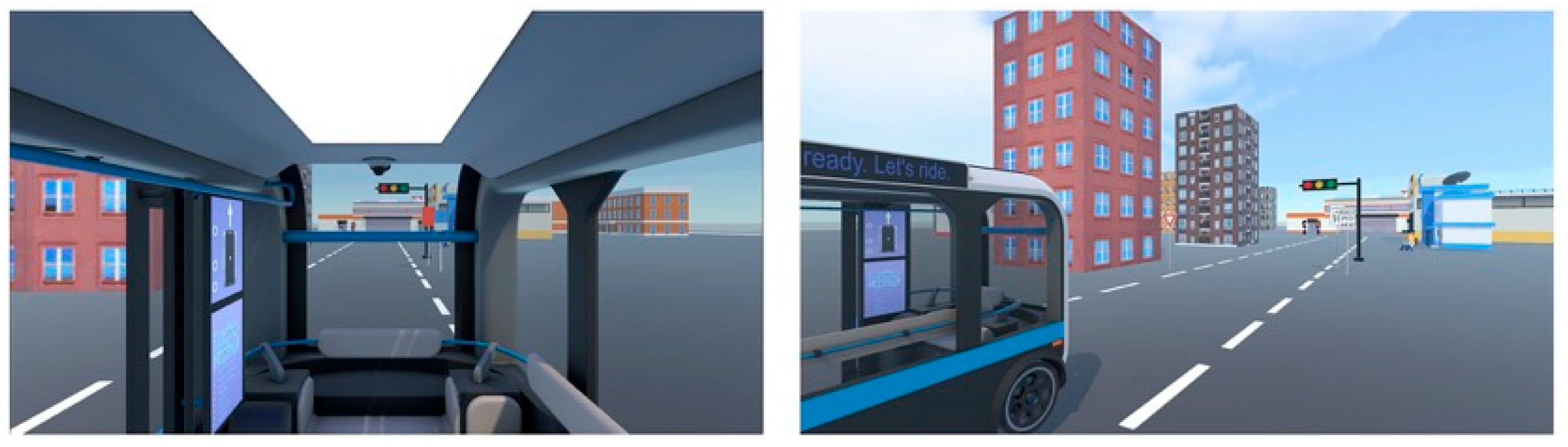
In this study, an experiment was performed to analyze the effects of advertisement placement under varying road traffic conditions on advertising effectiveness. The indicators used to evaluate the advertising effectiveness included visual attention and advertising recall, where visual attention was measured using eye-tracking data, and advertising recall was assessed through a post-experiment questionnaire. The experimental environment consisted of a VR riding simulation developed using Unity (2022.3.10f1) and the SteamVR SDK (version 2.7.3, SDK 1.14.15). As illustrated in
Figure 1, participants experienced a three-minute bus ride through an urban environment. To ensure rigorous control of experimental variables, the vehicle’s route and riding speed were fixed within the Unity system. The camera was attached to the vehicle object so that all participants experienced a uniform perspective and speed, ensuring identical exposure times to all four advertisements. In addition, the simulation duration was limited to three minutes to minimize the potential effects of cybersickness, such as visual fatigue. Because cybersickness typically emerges after approximately ten minutes of VR exposure and may impair cognitive performance, the duration was set well below this threshold to preserve experimental validity [
35].
As shown in
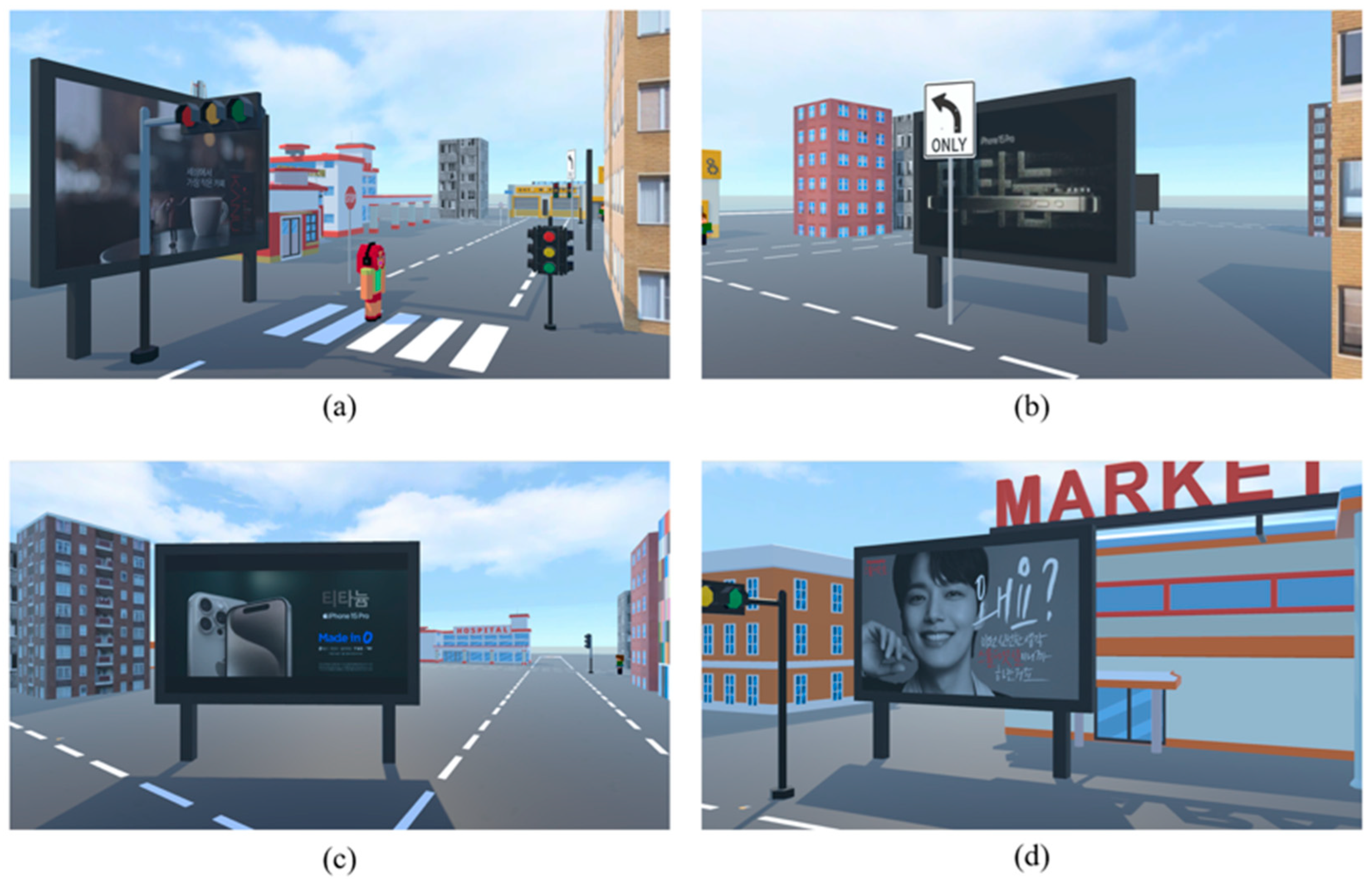
Figure 2, the advertisement placement under varying road traffic conditions was designed with four placement configurations.
Figure 2a shows a placement configuration positioned with a traffic signal during a stop (Ad_1). Here, the traffic situation is not complex, and the advertisement is partially occluded by the traffic signal.
Figure 2b shows a placement configuration positioned alongside a traffic sign while riding, where the advertisement is obstructed by the traffic sign (Ad_2).
Figure 2c shows a placement configuration positioned at a corner while riding, where the advertisement enters the driver’s field of view as the vehicle navigates the turn (Ad_3). Finally,
Figure 2d shows a placement configuration positioned in front of a building during a stop, where no objects are obstructing the advertisement (Ad_4). The content scenarios based on these advertisement placement types ensured the validity of the VR application by replicating dynamic road traffic conditions that are difficult to control or implement in real-world environments.
To minimize potential order effects of the four advertisement types, the presentation sequence was randomized for each trial. Additionally, to reduce the influence of specific visual attributes on visual attention, the advertisements were selected to have a similar color, brightness, and contrast. Advertising size and the distance between the user and the advertisements were held constant across all four types to prevent these factors from confounding the results. Finally, except for the occlusion conditions intentionally designed for Ad_1 and Ad_2 (e.g., traffic lights and road signs), the environment was configured to ensure that no external objects or visual stimuli obstructed the advertisements in the remaining conditions.
3.2. Experimental Procedure
The participants were recruited through the university’s social networking platform, and a total of 15 individuals participated in the experiment. The experiment involved the collection of eye-tracking data; thus, participants with no ocular discomfort or eye-related conditions were selected. Participants either had normal vision, wore glasses or contact lenses, or had undergone vision correction surgery. According to the policy of the Institute for Bioethics Policy in the author’s home country, research that does not involve invasive procedures such as drug administration or blood collection, and that uses only non-invasive contact or observation devices without causing physiological changes, is exempt from institutional review board (IRB) review. As this study employed non-invasive eye-tracking techniques solely for the purpose of recording gaze data, an application for IRB review was not submitted in advance. However, all participants were asked to sign an informed consent form prior to the experiment, and appropriate measures were taken to ensure that they could withdraw from the experiment at any time if discomfort occurred.
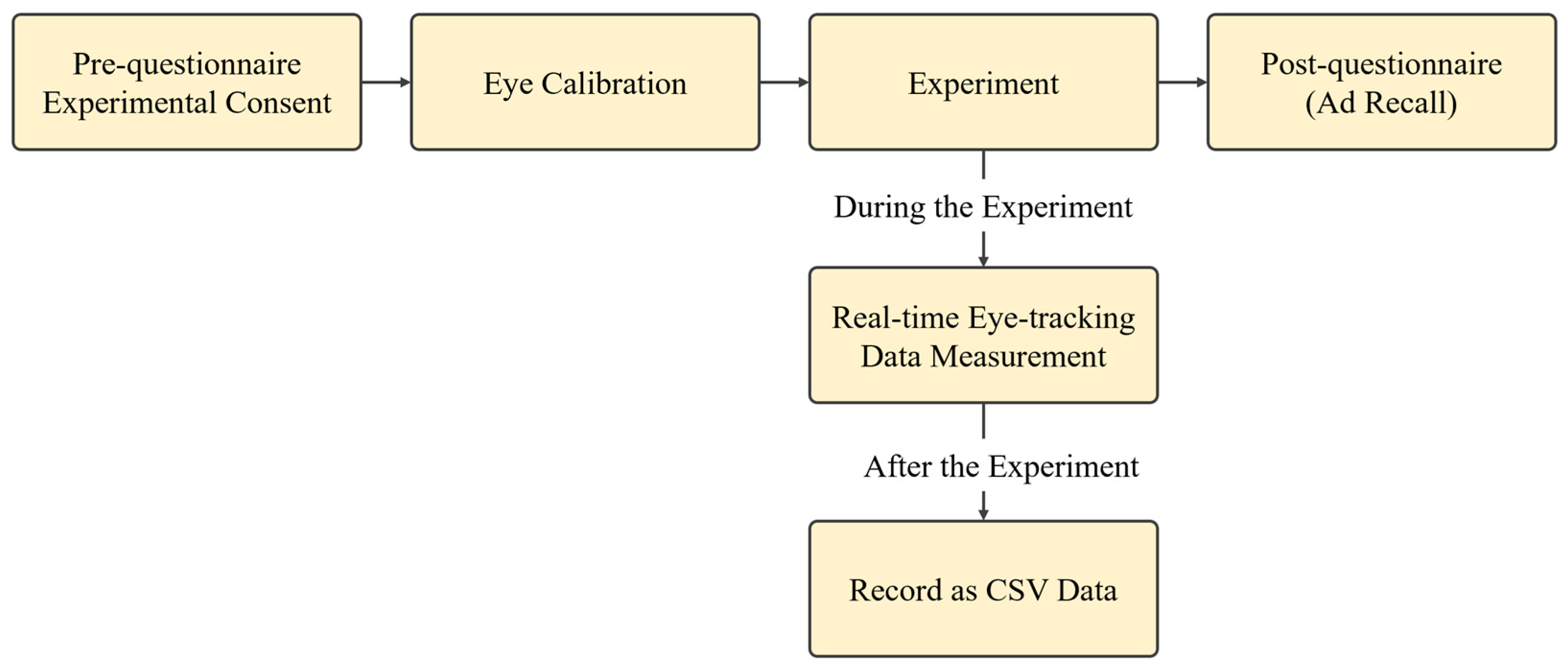
The experimental procedure is illustrated in
Figure 3. First, the participants completed a pre-experiment survey and an informed consent form. The survey collected demographic information, prior VR experience, and vision correction status. Participants were then briefed on the overall experimental procedure and the use of the HMD, and were explicitly informed of their right to terminate the experiment immediately if they experienced dizziness or fatigue. To prevent bias in the content scenario, the specific objective of measuring advertising effectiveness was not disclosed; instead, the study was presented as a general road riding simulation. Prior to the simulation, a five-point eye calibration was performed using the Vive Pro Eye system (version 1.3.3.0) to reduce the influence of individual ocular differences and enhance data reliability. The experiment proceeded only after successful calibration was verified, ensuring consistent conditions across participants. During the experiment, eye-tracking data were collected in real-time and saved as CSV files. After the session, participants completed a questionnaire assessing advertisement recall across the four placement types.
The experimental equipment included the HTC VIVE Pro Eye HMD device (HTC Corporation, Taoyuan, Taiwan), which has been widely used in previous studies involving eye tracking and human behavior analysis. The eye-tracking accuracy of the HTC VIVE Pro Eye is 0.5° to 1.1° within a 20° field of view, with a gaze data output frequency and a trackable field of view of 120 Hz and 110°, respectively [
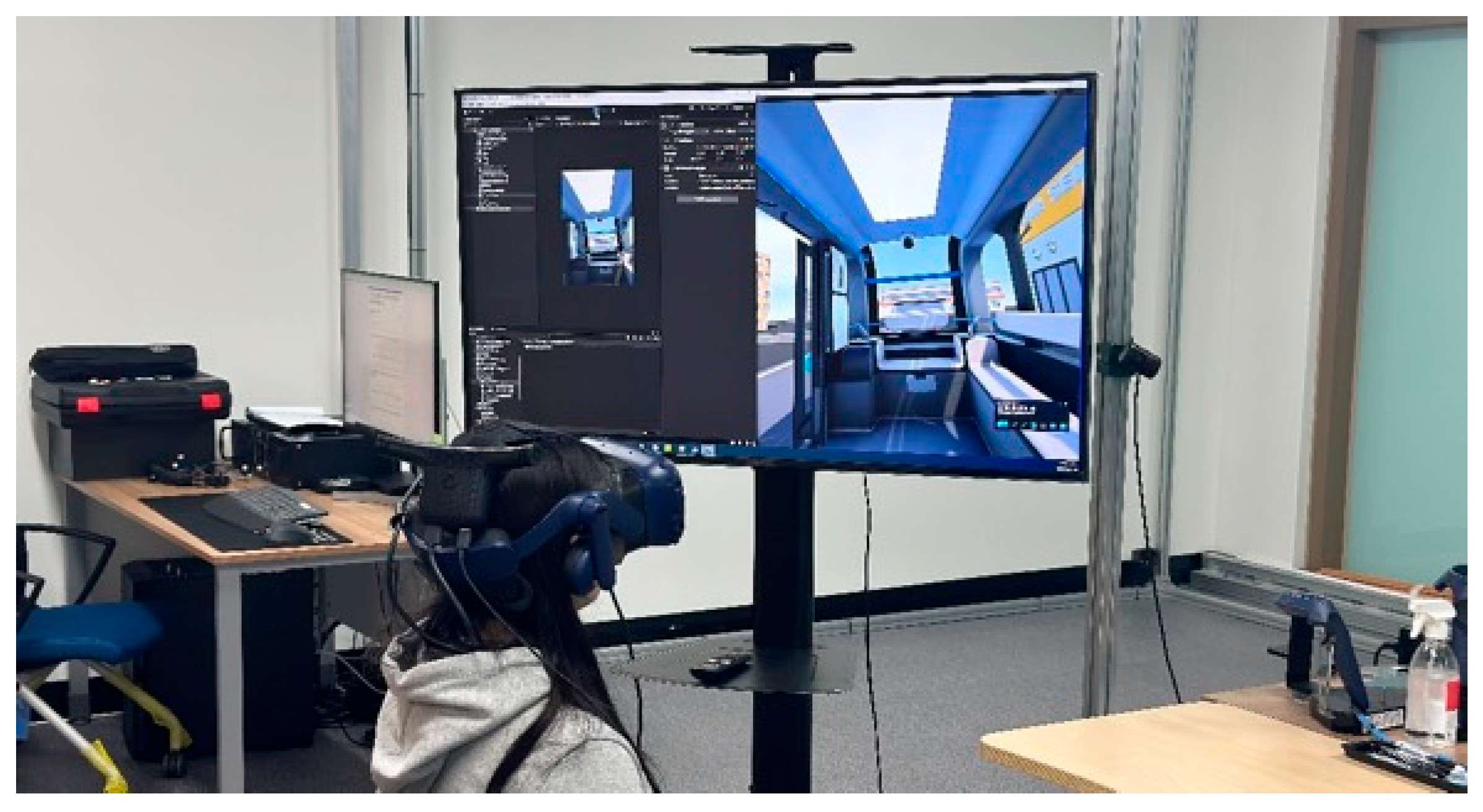
36]. As shown in
Figure 4, the experimental setup involved the installation of four base stations, with the HMD-wearing participant positioned centrally to enhance the positional tracking accuracy. In addition, the experimenter was positioned beside the participant to control the experiment.
Based on previous studies, the measurement of advertising effectiveness was classified into visual attention and advertising recall [
6,
7,
8,
16]. To measure visual attention in real-time, an eye-tracking data measurement system was developed using the Tobii XR SDK (version 3.0.1) and integrated into the VR riding simulation. The eye-tracking metrics employed to evaluate visual attention included fixation duration and fixation count. A fixation indicates where a participant’s gaze remains, and both fixation duration and fixation count serve as effective indicators of visual attention. Note that higher values in these metrics correspond to greater visual attention allocated to a specific area. Other eye-tracking metrics, such as scan paths or time to first fixation (TTFF), can provide insights into visual search strategies and gaze transition patterns. However, because the focus of this study was on quantifying the overall amount of attentional resources allocated to advertisements, the analysis was limited to fixation duration and count.
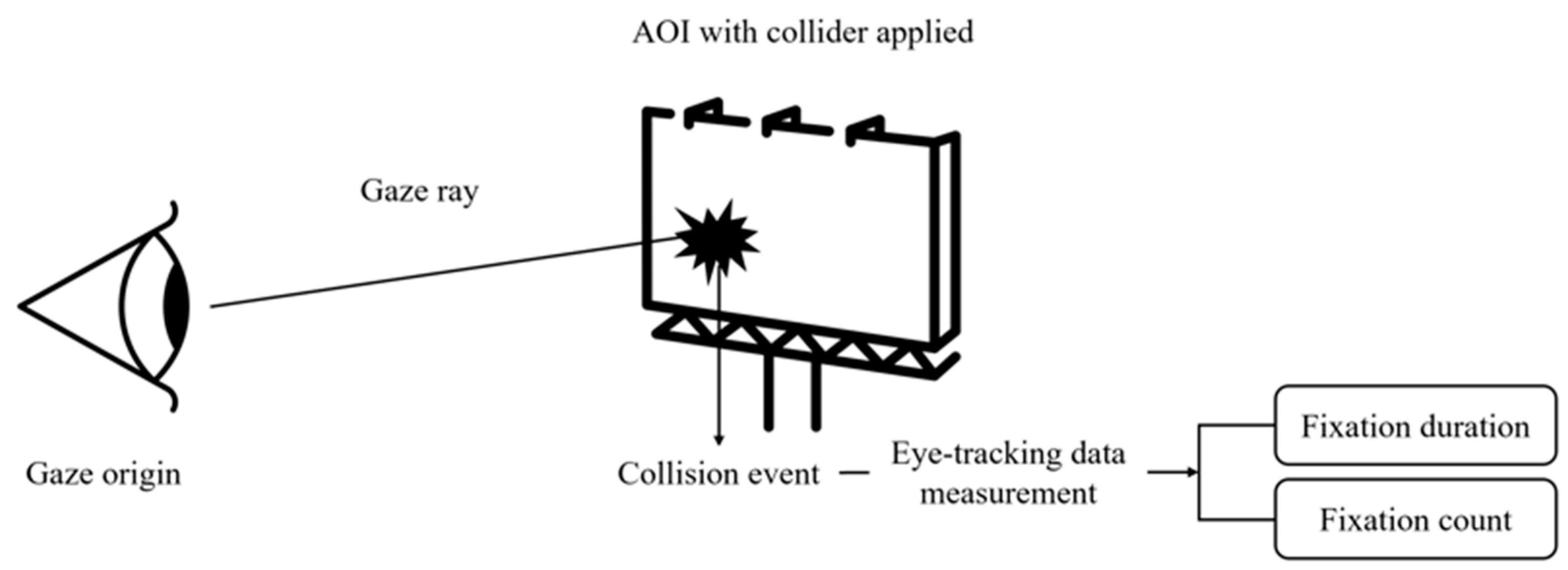
Four advertisements were defined as AOIs according to the placement configurations. As shown in
Figure 5, the eye-tracking data measurement procedure was designed so that a ray was projected from the participant’s gaze origin, and the eye-tracking data were recorded when a collision occurred between the ray and an AOI. Here, to detect collisions between the gaze ray and the AOIs, colliders were added to each AOI. The recorded eye-tracking data were categorized into fixation duration and fixation count. The fixation duration was measured from the moment the gaze ray first collided with the AOI until the collision ended, and the fixation count was increased by one each time a collision ended. The real-time eye-tracking data were saved as CSV files for post-experiment analysis, enabling the evaluation of the participants’ visual attention.
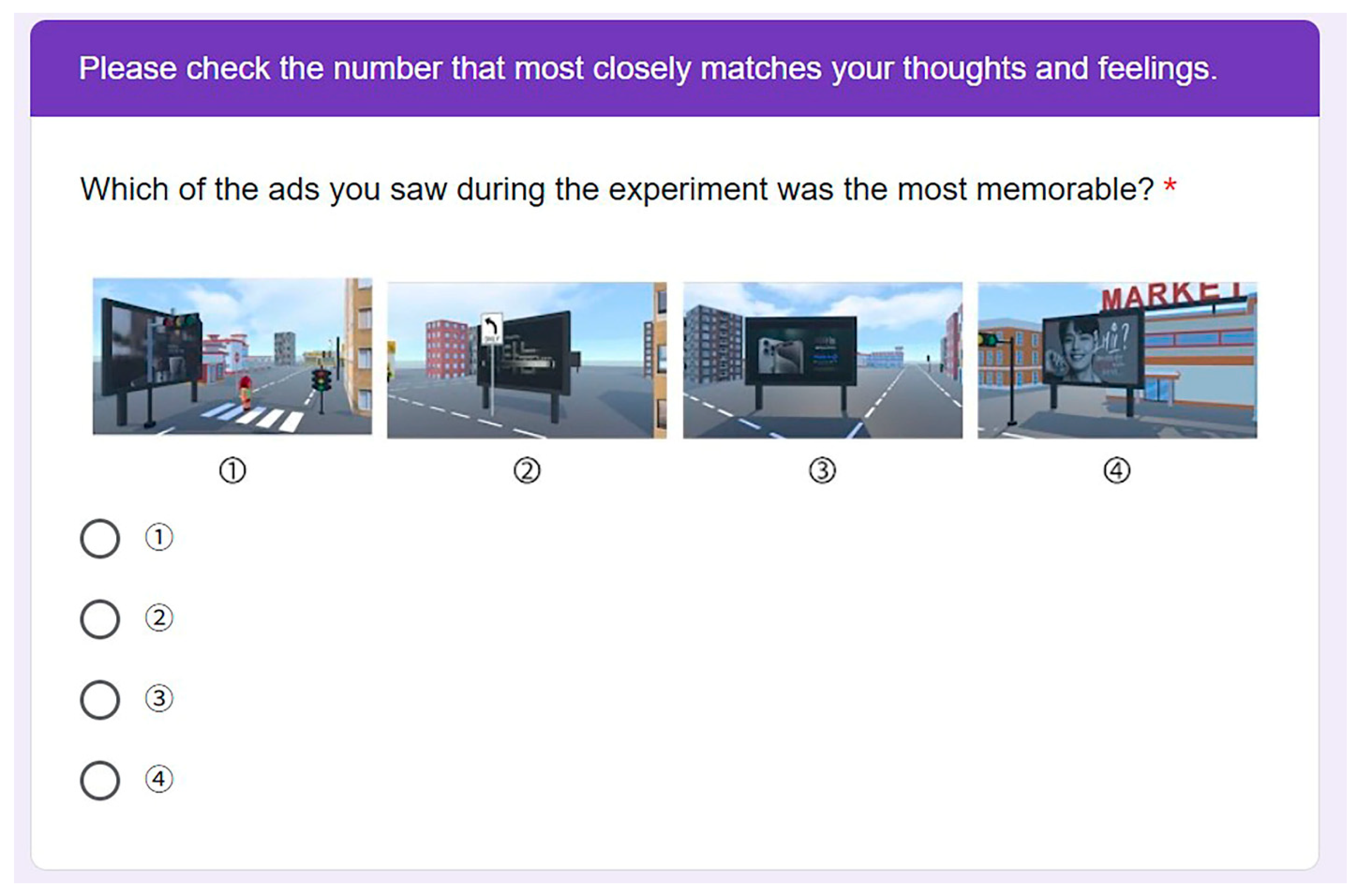
In addition, a post-experiment questionnaire was administered to the participants to measure advertising recall. Here, advertising recall indicates how well the participants remembered the advertisements they were exposed to during the experiment and serves as an indicator of advertising effectiveness. As shown in
Figure 6, after the experiment, the participants completed an online questionnaire, where they selected the advertisement with the highest recall among the four placement configurations, which allowed for a quantitative comparison of recall effectiveness across the four advertisement placement configurations.
In summary, this study employed a multidimensional approach by combining eye-tracking metrics with surveys to evaluate advertising effectiveness. While fixation duration and fixation count were used to quantify visual attention, the advertisement recall test served as a complementary measure to determine whether visual attention translated into memory formation. This integrated analysis enhances the reliability of the findings and enables a more nuanced interpretation of advertising impact.
3.3. Experimental Results
A one-way analysis of variance (ANOVA) was performed to determine whether there were significant differences in the mean eye-tracking data among the four advertisement placement configurations. As shown in
Table 1, the ANOVA results for fixation duration revealed statistically significant differences at the 0.05 significance level (F = 4.137,
p = 0.01), where F denotes the test statistic of the analysis of variance. Among the four advertisement placement configurations, Ad_4 exhibited the longest mean fixation duration, followed by Ad_1, Ad_3, and Ad_2. In addition, post hoc comparisons using the Scheffé test indicated a significant mean difference between Ad_4 and Ad_1.
As shown in
Table 2, the ANOVA results for fixation count revealed statistically significant differences at the 0.001 significance level (F = 8.243,
p < 0.001). Among the four advertisement placement configurations, Ad_4 exhibited the highest fixation count, followed by Ad_1, Ad_2, and Ad_3. Post hoc comparisons using the Scheffé test indicated a significant mean difference between Ad_4 and Ad_1.
Integrating the ANOVA results for fixation duration and fixation count, both eye-tracking metrics showed the highest mean values for the advertisement placement configuration in front of the building during a stop (i.e., Ad_4), followed by the configuration with the traffic signal during a stop (i.e., Ad_1). These findings indicate that the participants, acting as passengers, tended to view advertisements longer and more frequently when the vehicle was stationary, whereas advertisements received less attention while the vehicle was moving. This suggests that visual attention to advertisements is higher during stops than during movement, supporting previous research indicating that visual attention decreases as the surrounding traffic environment becomes increasingly dynamic and complex [
20]. In addition, the higher mean values for Ad_4 compared with Ad_1 align with previously reported findings showing that visual attention is reduced when advertisements are obscured by other objects or when the surrounding environment is visually complex [
33]. These results demonstrate that advertisement placement configuration and positional factors, influenced by road traffic conditions, significantly affect visual attention.
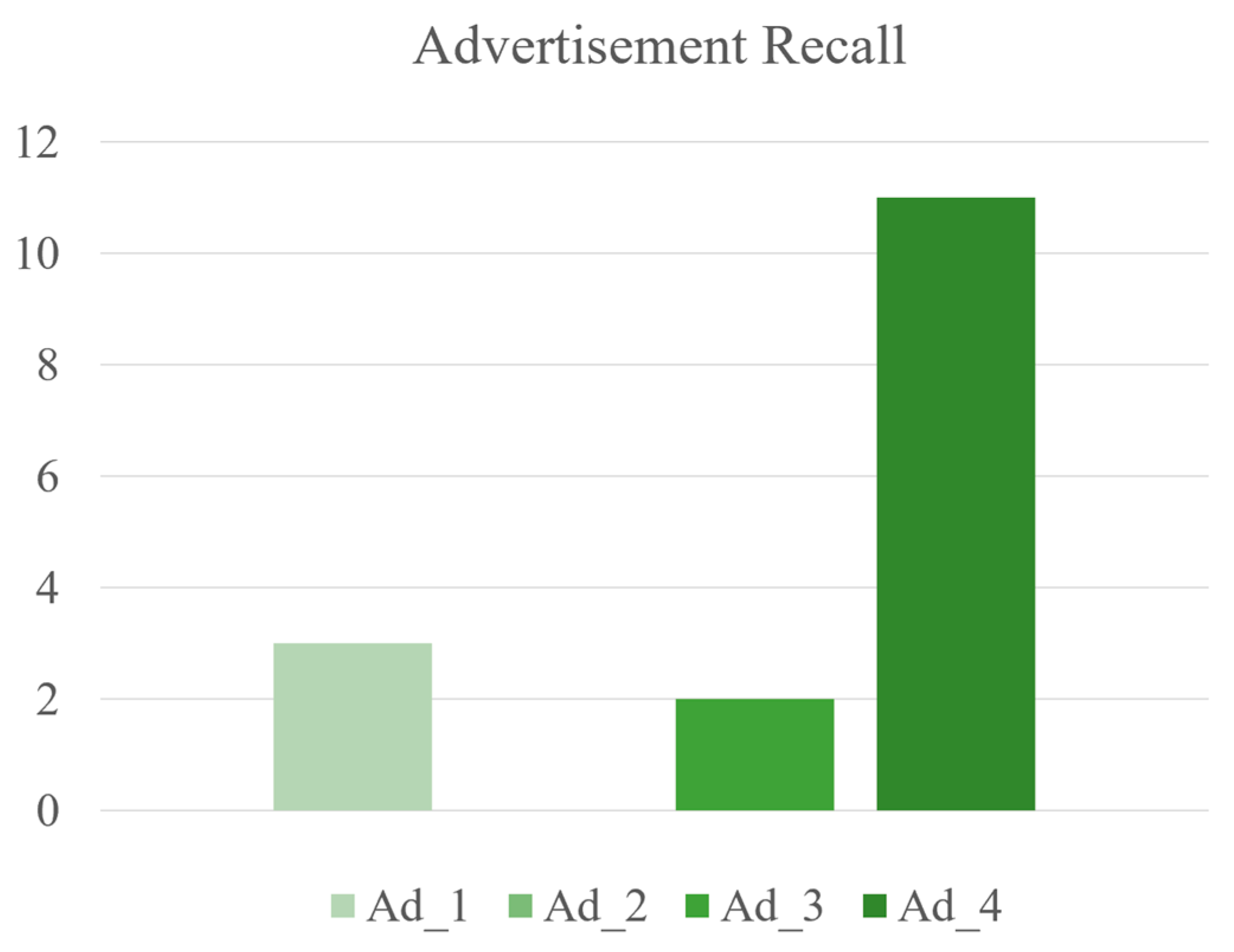
Across the four advertisement placement configurations, advertising recall was analyzed based on the questionnaire results. As shown in
Figure 7, the recall distribution was as follows: Ad_4 (11 participants), Ad_1 (3 participants), Ad_3 (1 participant), and Ad_2 (0 participants). These results indicate that the advertisements placed in front of buildings during stops achieved the highest recall, whereas those placed during active moving received very low recall. Integrating the results of the eye-tracking analysis with the advertising recall results, the advertisement placement configuration with the highest visual attention, i.e., Ad_4, which was placed in front of a building during a stop, also exhibited the highest recall. Note that these findings are consistent with those of a previous study that demonstrated that higher visual attention is associated with greater advertising recall [
16].
Summarizing the experimental results, participants exhibited higher levels of visual attention toward advertisements when the vehicle was stationary than when it was in motion. From the perspective of selective attention theory, this indicates that during riding, substantial cognitive resources are allocated to monitoring road traffic conditions, thereby limiting the attention available for advertisements. When the vehicle is stationary, the cognitive load associated with traffic processing decreases, allowing attentional resources to be reallocated to advertisements. In addition, visual attention significantly declined when advertisements were occluded by external objects such as traffic signs or signals, suggesting that increased environmental complexity leads to visual distraction and reduced focus on target stimuli. Notably, the Ad_4 type, which attracted the highest level of visual attention, also produced the highest advertisement recall. This result indicates that enhanced attentional focus facilitates cognitive retention, thereby improving memory performance.
4. Discussion and Conclusions
VR technology provides a 3D graphical environment that closely simulates real-world consumer settings, thereby making it a valuable tool to analyze consumer behavior patterns in marketing research. In this context, visual attention is widely used to evaluate the effectiveness of advertising. Conventional methods to assess advertising effectiveness have primarily relied on self-report measures, which are limited in terms of objectivity and do not facilitate real-time analysis of visual attention. Neuromarketing approaches have been employed to address these limitations. For example, eye-tracking technology enables the direct analysis of visual attention by providing information about the users’ eye movements, and eye-tracking data serve as an objective indicator of user interest and attention, thereby complementing conventional advertising effectiveness measures. According to visual attention theory, the human cognitive capacity is limited, and individuals can focus on only specific information when exposed to multiple visual stimuli. Accordingly, the selection of advertisement placement influences visual attention, and strategically positioning advertisements according to road traffic conditions is an important consideration.
Thus, in this study, we investigated the effects of different advertisement placement configurations under different road traffic conditions on advertising effectiveness by examining users’ visual attention and advertising recall. Here, visual attention was measured using eye-tracking data, and the advertising recall was evaluated in surveys. The advertisement placement configurations according to the road traffic conditions included placement with a traffic light while stationary, placement obscured by a road sign while riding, placement at a corner while riding, and placement in front of a building while stationary. To measure the impact of the advertisement placement configuration on visual attention in real-time in a VR environment, an eye-tracking-based visual attention measurement system was developed. Then, an experiment was conducted using the developed system to analyze the effects of the advertisement placement configurations on advertising effectiveness.
One-way ANOVA was performed to investigate the mean differences in the eye-tracking data according to advertisement placement configurations, and the advertising recall for each placement configuration was analyzed based on survey results. The results for fixation duration exhibited the highest mean value for the advertisements placed in front of a building while stationary, followed by placement near a traffic light while stationary, placement at a corner while riding, and placement obscured by a road sign while riding. In terms of the fixation count, the highest mean was also observed for advertisements placed in front of a building while stationary, followed by placement near a traffic light while stationary, placement obscured by a road sign while riding, and placement at a corner while riding.
The experimental results indicate that visual attention toward advertisements is significantly higher when the vehicle is stationary than when it is in motion. From the perspective of selective attention theory, this can be interpreted as the result of cognitive resource redistribution: while riding, users must allocate substantial cognitive resources to monitoring road traffic conditions, thereby reducing the attention available for advertisements. Conversely, when the vehicle is stationary, the cognitive load associated with the traffic environment decreases, allowing attentional resources to be reallocated toward advertisements. Furthermore, visual attention was found to decline when advertisements were occluded by other objects or when the surrounding environment was visually complex. This suggests that high peripheral visual complexity introduces competing stimuli that interfere with selective attention, leading to distractions and reduced focus on advertisements. Consistent with the eye-tracking data, advertisement recall was highest for the placement in front of buildings (Ad_4). This finding indicates that cognitive effort concentrated on advertisements through selective attention enhances memory retention, supporting a positive relationship between visual attention and advertising effectiveness.
In addition, this study is significant in that it examines the impact of dynamic road traffic conditions on advertising effectiveness, extending prior VR-based marketing research that has largely focused on static in-store scenarios or online environments. By investigating how visual attention dynamically responds to real-time environmental changes, such as traffic flow, this research broadens the scope of advertising effectiveness measurement. Furthermore, the findings provide meaningful practical implications for the advertising industry. Moving beyond a driver-centered perspective, the scenarios in this study focus on the “consumer on the move”, who receives information within road environments. Accordingly, this research may serve as a foundational framework for evaluating advertising receptivity and effectiveness in future mobility contexts, including passengers in autonomous vehicles, public transportation users, and tourists.
The eye-tracking-based visual attention measurement system developed in this study was integrated with a VR environment, enabling real-time assessment of visual attention and allowing for potential application across various fields, including education, training, and healthcare. However, this study evaluated advertising effectiveness using only visual attention and advertising recall. Accordingly, future research will incorporate additional multidimensional evaluation metrics, such as purchase intention and brand awareness. To further refine the assessment of visual attention, future studies will employ a broader range of eye-tracking metrics, including time to first fixation (TTFF), saccadic velocity, and smooth pursuit, to support more multidimensional and fine-grained analyses of user behavior. Beyond eye-tracking, multimodal biometric data—such as heart rate (HR), heart rate variability (HRV), electrodermal activity (EDA), and electroencephalography (EEG)—will be integrated to evaluate not only visual attention but also emotional states, thereby enabling a more comprehensive assessment of advertising effectiveness. Finally, as this study was limited by a relatively small sample size of 15 participants, future work will aim to include a larger sample to enhance the generalizability and robustness of the findings.