Enhancing Food Safety, Quality and Sustainability Through Biopesticide Production Under the Concept of Process Intensification

 ,
,  and
and 
Abstract
1. Introduction
2. Synthetic Pesticides
3. Biopesticides
4. Agro-Industrial Waste for Biofungicide Production
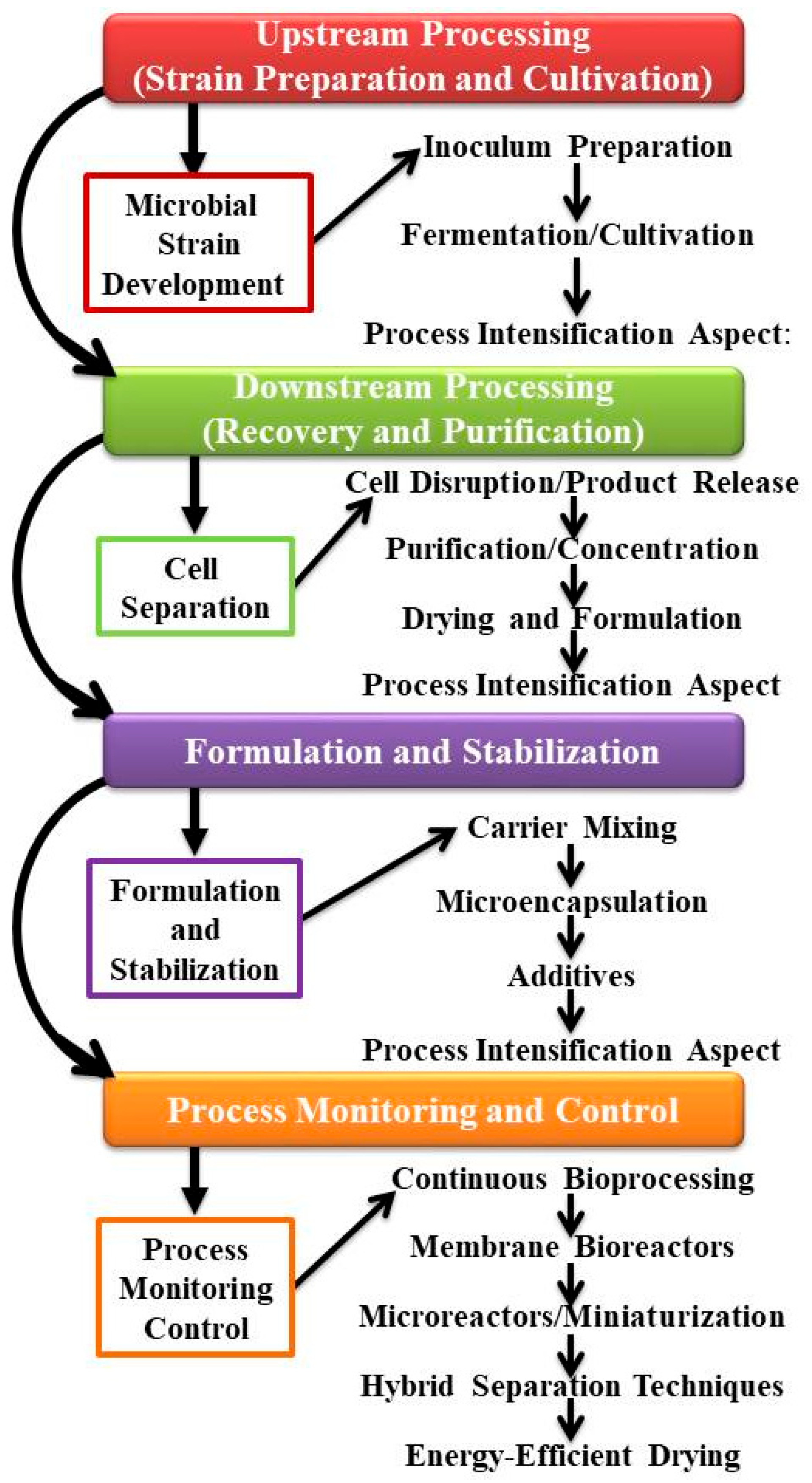
5. Process Intensification
6. Advantages of Process Intensification in Biopesticides Production
7. Patents and the Biopesticide Market
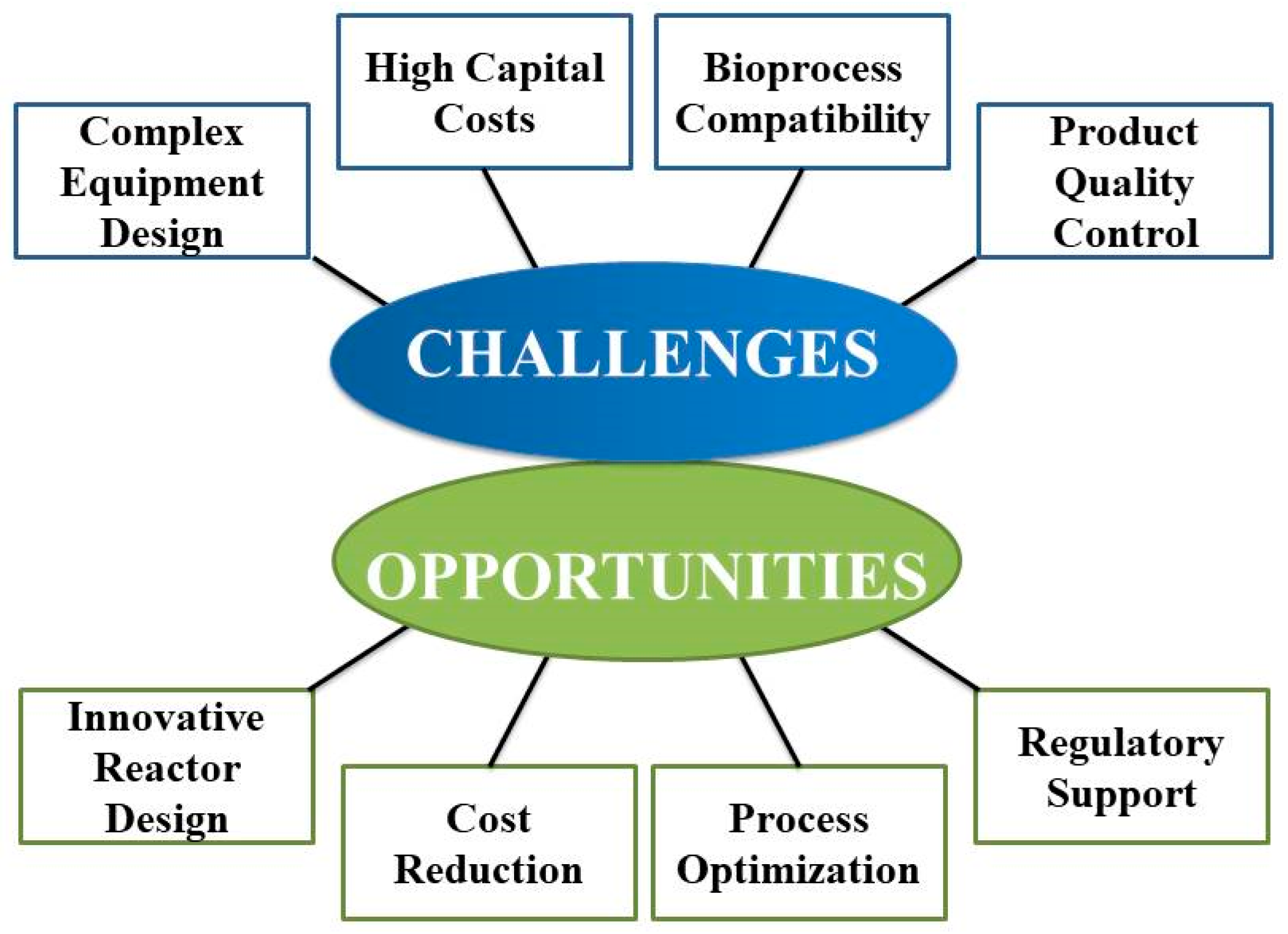
8. Looking Ahead: The Possible Future and Research Possibilities
9. Concluding Remarks
Author Contributions
Funding
Data Availability Statement
Acknowledgments
Conflicts of Interest
References
- Bhat, R.A.; Beigh, B.A.; Mir, S.A.; Dar, S.A.; Dervash, M.A.; Rashid, A.; Lone, R. Biopesticide techniques to remediate pesticides in polluted ecosystems. In Research Anthology on Emerging Techniques in Environmental Remediation; IGI Global Scientific Publishing: Hershey, PA, USA, 2022; pp. 336–356. [Google Scholar]
- Kumar, L.R.; Ndao, A.; Valéro, J.; Tyagi, R.D. Production of Bacillus thuringiensis based biopesticide formulation using starch industry wastewater (SIW) as substrate: A techno-economic evaluation. Bioresour. Technol. 2019, 294, 122144. [Google Scholar] [CrossRef]
- Jimenez-Lopez, C.; Fraga-Corral, M.; Carpena, M.; García-Oliveira, P.; Echave, J.; Pereira, A.G.; Lourenço-Lopes, C.; Prieto, M.A.; Simal-Gandara, J. Agriculture waste valorisation as a source of antioxidant phenolic compounds within a circular and sustainable bioeconomy. Food Funct. 2020, 11, 4853–4877. [Google Scholar] [CrossRef]
- Lengai, G.M.; Muthomi, J.W. Biopesticides and their role in sustainable agricultural production. J. Biosci. Med. 2018, 6, 7–41. [Google Scholar] [CrossRef]
- Lindsey, A.P.J.; Murugan, S.; Renitta, R.E. Microbial disease management in agriculture: Current status and future prospects. Biocatal. Agric. Biotechnol. 2020, 23, 101468. [Google Scholar] [CrossRef]
- Sala, A.; Barrena, R.; Artola, A.; Sánchez, A. Current developments in the production of fungal biological control agents by solid-state fermentation using organic solid waste. Crit. Rev. Environ. Sci. Technol. 2019, 49, 655–694. [Google Scholar] [CrossRef]
- Costa, J.A.V.; Freitas, B.C.B.; Cruz, C.G.; Silveira, J.; Morais, M.G. Potential of microalgae as biopesticides to contribute to sustainable agriculture and environmental development. J. Environ. Sci. Health Part B 2019, 54, 366–375. [Google Scholar] [CrossRef] [PubMed]
- Verma, D.K.; Guzmán, K.N.R.; Mohapatra, B.; Talukdar, D.; Chávez-González, M.L.; Kumar, V.; Srivastava, S.; Singh, V.; Yulianto, R.; Malar, S.E.; et al. Recent Trends in Plant-and Microbe-Based Biopesticide for Sustainable Crop Production and Environmental Security. In Recent Developments in Microbial Technologies; Environmental and Microbial Biotechnology; Prasad, R., Kumar, V., Singh, J., Upadhyaya, C.P., Eds.; Springer: Singapore, 2021. [Google Scholar] [CrossRef]
- Abbey, L.; Abbey, J.; Leke-Aladekoba, A.; Iheshiulo, E.M.A.; Ijenyo, M. Biopesticides and biofertilizers: Types, production, benefits, and utilization. In Byproducts from Agriculture and Fisheries: Adding Value for Food, Feed, Pharma, and Fuels; John Wiley & Sons Ltd.: Hoboken, NJ, USA, 2019; pp. 479–500. [Google Scholar] [CrossRef]
- Jallouli, W.; Driss, F.; Fillaudeau, L.; Rouis, S. Review on biopesticide production by Bacillus thuringiensis subsp. kurstaki since 1990: Focus on bioprocess parameters. Process Biochem. 2020, 98, 224–232. [Google Scholar] [CrossRef]
- Thakur, N.; Kaur, S.; Tomar, P.; Thakur, S.; Yadav, A.N. Microbial biopesticides: Current status and advancement for sustainable agriculture and environment. In New and Future Developments in Microbial Biotechnology and Bioengineering; Elsevier: Amsterdam, The Netherlands, 2020; pp. 243–282. [Google Scholar] [CrossRef]
- Azenzem, R. Pesticide and Biopesticide Use Trends in Morocco. Outlooks Pest Manag. 2025, 36, 143–151. [Google Scholar] [CrossRef]
- Narandžić, T.; Šarac, V.; Rodić, V.; Vukelić, N.; Lukač-Bulatović, M.; Bijelić, S.; Ljubojević, M. Exploring the Known and Mapping Future Directions in Biopesticides Research: A Bibliometric Analysis. Horticulturae 2025, 11, 97. [Google Scholar] [CrossRef]
- Fusar Poli, E.; Fontefrancesco, M.F. Trends in the implementation of biopesticides in the Euro-Mediterranean region: A narrative literary review. Sustain. Earth Rev. 2024, 7, 14. [Google Scholar] [CrossRef]
- Marrone, P.G. Status of the biopesticide market and prospects for new bioherbicides. Pest Manag. Sci. 2024, 80, 81–86. [Google Scholar] [CrossRef]
- Balasubramanian, S.; Tyagi, R.D. Biopesticide production from solid wastes. In Current Developments in Biotechnology and Bioengineering; Elsevier: Amsterdam, The Netherlands, 2017; pp. 43–58. [Google Scholar] [CrossRef]
- Sala, A.; Artola, A.; Sánchez, A.; Barrena, R. Rice husk as a source for fungal biopesticide production by solid-state fermentation using B. bassiana and T. harzianum. Bioresour. Technol. 2020, 296, 122322. [Google Scholar] [CrossRef]
- Ndao, A.; Kumar, L.R.; Tyagi, R.D.; Valéro, J. Biopesticide and formulation processes based on starch industrial wastewater fortified with soybean medium. J. Environ. Sci. Health Part B 2020, 55, 115–126. [Google Scholar] [CrossRef]
- Shields, M.W.; Johnson, A.C.; Pandey, S.; Cullen, R.; González-Chang, M.; Wratten, S.D.; Gurr, G.M. History, current situation and challenges for conservation biological control. Biol. Control 2019, 131, 25–35. [Google Scholar] [CrossRef]
- Ramírez-Guzmán, N.; Chávez-González, M.; Sepúlveda-Torre, L.; Torres-León, C.; Cintra, A.; Angulo-López, J.; Martínez-Hernández, J.L.; Aguilar, C.N. Significant advances in biopesticide production: Strategies for high-density bio-inoculant cultivation. In Microbial Services in Restoration Ecology; Elsevier: Amsterdam, The Netherlands, 2020; pp. 1–11. [Google Scholar] [CrossRef]
- Rodríguez-González, L.V.; Martínez-Medina, G.A.; Torres-Leon, C.; Chávez-González, M.L.; Lafuente-Rincón, D.F.; Rodriguez-González, J.; Flores-Loyola, E.; Aguilar, C.N.; Ramírez-Guzmán, N. Agroindustrial residues exploration to maximize metabolites production in fungal biocontrol co-culture. Mex. J. Biotechnol. 2025, 10, 64–88. [Google Scholar] [CrossRef]
- Pimentel, D.; Peshin, R. Integrated Pest Management: Pesticide Problems Vol. 3; Springer Science & Business Media: Dordrecht, The Netherlands, 2014. [Google Scholar] [CrossRef]
- Heimpel, G.E.; Cock, M.J. Shifting paradigms in the history of classical biological control. BioControl 2018, 63, 27–37. [Google Scholar] [CrossRef]
- Kaur, R.; Mavi, G.K.; Raghav, S.; Khan, I. Pesticides classification and its impact on environment. Int. J. Curr. Microbiol. Appl. Sci. 2019, 8, 1889–1897. [Google Scholar] [CrossRef]
- Watson, D. Pesticides and agriculture: Profit, politics and policy (Burleigh Dodds series in agricultural science). J. Environ. Sci. Health Part B 2018, 54, 875. [Google Scholar] [CrossRef]
- Hassaan, M.A.; El Nemr, A. Pesticides pollution: Classifications, human health impact, extraction and treatment techniques. Egypt. J. Aquat. Res. 2020, 46, 207–220. [Google Scholar] [CrossRef]
- Ali, M.A.; Abdellah, I.M.; Eletmany, M.R. Towards sustainable management of insect pests: Protecting food security through ecological intensification. Int. J. Chem. Biochem. Sci. 2023, 24, 386–394. [Google Scholar]
- Junaid, M.D.; Gokce, A.F. Global agricultural losses and their causes. Bull. Biol. Allied Sci. Res. 2024, 2024, 66. [Google Scholar] [CrossRef]
- Verma, P.; Singh, D.; Pathania, I.P.; Aggarwal, K. Strategies to improve agriculture sustainability, soil fertility and enhancement of farmers income for the economic development. In Soil Fertility Management for Sustainable Development; Springer: Singapore, 2019; pp. 43–70. [Google Scholar] [CrossRef]
- Khan, B.A.; Nadeem, M.A.; Nawaz, H.; Amin, M.M.; Abbasi, G.H.; Nadeem, M.; Ali, M.; Ameen, M.; Javaid, M.M.; Maqbool, R.; et al. Pesticides: Impacts on agriculture productivity, environment, and management strategies. In Emerging Contaminants and Plants: Interactions, Adaptations and Remediation Technologies; Springer International Publishing: Cham, Switzerland, 2023; pp. 109–134. [Google Scholar] [CrossRef]
- Uqab, B.; Mudasir, S.; Nazir, R. Review on bioremediation of pesticides. J. Bioremed. Biodegr. 2016, 7, 343. [Google Scholar] [CrossRef]
- Gammoh, S.; Alu’datt, M.H.; Tranchant, C.C.; Al-U’datt, D.A.G.; Alhamad, M.N.; Rababah, T.; Kubow, S.; Haddadin, M.S.; Ammari, Z.; Maghaydah, S.; et al. Modification of the functional and bioactive properties of camel milk casein and whey proteins by ultrasonication and fermentation with Lactobacillus delbrueckii subsp. lactis. LWT 2020, 129, 109501. [Google Scholar] [CrossRef]
- Wyckhuys, K.A.; Lu, Y.; Morales, H.; Vazquez, L.L.; Legaspi, J.C.; Eliopoulos, P.A.; Hernandez, L.M. Current status and potential of conservation biological control for agriculture in the developing world. Biol. Control 2013, 65, 152–167. [Google Scholar] [CrossRef]
- Vivas, J.M.S.; Silveira, S.F.D.; Santos, P.H.D.D.; Pinho, D.B.; Pereira, O.L. Selection of fungi with biocontrol potential against the black spot disease of papaya1. Pesqui. Agropecuária Trop. 2017, 47, 369–376. [Google Scholar] [CrossRef]
- Freire, C.; Koifman, S. Pesticides, depression and suicide: A systematic review of the epidemiological evidence. Int. J. Hyg. Environ. Health 2013, 216, 445–460. [Google Scholar] [CrossRef]
- Ramírez-Guzmán, K.N.; Torres-León, C.; Martínez-Terrazas, E.; De la Cruz-Quiroz, R.; Flores-Gallegos, A.C.; Rodríguez-Herrera, R.; Aguilar, C.N. Biocontrol as an efficient tool for food control and biosecurity. In Food Safety and Preservation; Academic Press: Cambridge, MA, USA, 2018; pp. 167–193. [Google Scholar] [CrossRef]
- Das, S.; Ray, M.K.; Panday, D.; Mishra, P.K. Role of biotechnology in creating sustainable agriculture. PLoS Sustain. Transform. 2023, 2, e0000069. [Google Scholar] [CrossRef]
- Donato, K.; Medori, M.C.; Stuppia, L.; Beccari, T.; Dundar, M.; Marks, R.S.; Michelini, S.; Borghetti, E.; Zuccato, C.; Seppilli, L.; et al. Unleashing the potential of biotechnology for sustainable development. Eur. Rev. Med. Pharmacol. Sci. 2023, 27, 100–113. [Google Scholar]
- Tripathy, S.; Verma, D.K.; Patel, A.R.; Singh, S.; Utama, G.L.; Niamah, A.K.; Chávez González, M.L.; Srivastav, P.P.; Aguilar, C.N. Management of Agri-Food Wastes via Novel Biotechnological Methods: Emerging Trends and Technological Advances. In Biotechnological Approaches for Sustainable Environment Management; Singh, S.P., Jadaun, J.S., Rai, A.K., Eds.; CRC Press: Boca Raton, FL, USA, 2025. [Google Scholar]
- Marrone, P.G. Biopesticide commercialization in North America: State of the art and future opportunities. In Development and Commercialization of Biopesticides; Academic Press: Cambridge, MA, USA, 2023; pp. 173–202. [Google Scholar] [CrossRef]
- Deka, B.; Baruah, C.; Babu, A. Entomopathogenic microorganisms: Their role in insect pest management. Egypt. J. Biol. Pest Control 2021, 31, 121. [Google Scholar] [CrossRef]
- Boro, M.; Sannyasi, S.; Chettri, D.; Verma, A.K. Microorganisms in biological control strategies to manage microbial plant pathogens: A review. Arch. Microbiol. 2022, 204, 666. [Google Scholar] [CrossRef]
- Villaverde, J.J.; Sandín España, P.; Sevilla-Morán, B.; López Goti, C.; Alonso Prados, J.L. Biopesticides from natural products Current development, legislative framework, and future trends. BioResources 2016, 11, 5618–5640. [Google Scholar] [CrossRef]
- Yadav, A.N.; Rastegari, A.A.; Yadav, N.; Kour, D. Advances in Plant Microbiome and Sustainable Agriculture; Springer: Singapore, 2020. [Google Scholar] [CrossRef]
- Damalas, C.A.; Koutroubas, S.D. Current status and recent developments in biopesticide use. Agriculture 2018, 8, 13. [Google Scholar] [CrossRef]
- Meghlaoui, Z.; Remini, H.; Remini-Sahraoui, Y.; Mellal, M.K.; Boudalia, S.; Brahimi, Y.; Negrichi, S.; Allam, A.; Medouni-Haroune, L.; Messaoudene, L.; et al. A Comprehensive Review of Pesticide Elimination Methods from Fruits and Vegetables Over the Past Two Decades: Optimizing Produce Safety for Sustainable Food Systems. Res. Innov. Food Sci. Technol. 2025, 14, 113–128. [Google Scholar] [CrossRef]
- Marrone, P.G. Pesticidal natural products–status and future potential. Pest Manag. Sci. 2019, 75, 2325–2340. [Google Scholar] [CrossRef] [PubMed]
- Chakraborty, N.; Mitra, R.; Pal, S.; Ganguly, R.; Acharya, K.; Minkina, T.; Sarkar, A.; Keswani, C. Biopesticide consumption in India: Insights into the current trends. Agriculture 2023, 13, 557. [Google Scholar] [CrossRef]
- Rosskopf, E.N.; Charudattan, R. Bioherbicides: An overview USDA-ARS, Foreign Disease-Weed Science Research Unit, USA. In Integrated Weed Management for Sustainable Agriculture; CRC Press: Boca Raton, FL, USA, 2018; pp. 389–422. [Google Scholar]
- Barwant, M.M.; Singh, B.; Sobin, F.; Sharma, S.; Kumari, R. Global Regulations and Standards for Fungal-Derived Products. In Fungal Biotechnology; CRC Press: Boca Raton, FL, USA, 2026; pp. 172–180. [Google Scholar]
- Hermann, L.; Hermann, R. Report on regulations governing AD and NRR in EU member states. Syst. Circ. Solut. Biowaste 2018, 15, 124. [Google Scholar]
- Alabrese, M.; Cristiani, E. Cultivating sustainability: Navigating the EU legal landscape in organic farming amidst climate change challenges. In EU Law on Sustainable and Climate Resilient Agriculture After the European Green Dea; Rurinnova Srls: Pula, Italy, 2023; Volume 1, pp. 57–75. [Google Scholar]
- Saritha, M.; Tollamadugu, N.P. The status of research and application of biofertilizers and biopesticides: Global scenario. In Recent Developments in Applied Microbiology and Biochemistry; Academic Press: Cambridge, MA, USA, 2019; pp. 195–207. [Google Scholar] [CrossRef]
- Sansinenea, E. Application of biofertilizers: Current worldwide status. In Biofertilizers; Woodhead Publishing: Cambridge, UK, 2021; pp. 183–190. [Google Scholar] [CrossRef]
- De la Cruz-Quiroz, R.; Roussos, S.; Rodríguez-Herrera, R.; Hernandez-Castillo, D.; Aguilar, C.N. Growth inhibition of Colletotrichum gloeosporioides and Phytophthora capsici by native Mexican Trichoderma strains. Karbala Int. J. Mod. Sci. 2018, 4, 237–243. [Google Scholar] [CrossRef]
- De-la-Cruz-Quiroz, R.; Roussos, S.; Tranier, M.T.; Rodríguez-Herrera, R.; Ramírez-Guzmán, N.; Aguilar, C.N. Fungal Spores Production by solid-state fermentation under hydric stress condition. Rev. Cient. Univ. Auton. Coahuila 2019, 11, 2–6. [Google Scholar]
- Guijarro, B.; Casals, C.; Teixidó, N.; Larena, I.; Melgarejo, P.; De Cal, A. Balance between resilient fruit surface microbial community and population of Monilinia spp. after biopesticide field applications of Penicillium frequentans. Int. J. Food Microbiol. 2020, 333, 108788. [Google Scholar] [CrossRef]
- De la Cruz Quiroz, R.; Roussos, S.; Hernández, D.; Rodríguez, R.; Castillo, F.; Aguilar, C.N. Challenges and opportunities of the bio-pesticides production by solid-state fermentation: Filamentous fungi as a model. Crit. Rev. Biotechnol. 2015, 35, 326–333. [Google Scholar] [CrossRef]
- Ayaz, M.; Li, C.H.; Ali, Q.; Zhao, W.; Chi, Y.K.; Shafiq, M.; Ali, F.; Yu, X.Y.; Yu, Q.; Zhao, J.T.; et al. Bacterial and fungal biocontrol agents for plant disease protection: Journey from lab to field, current status, challenges, and global perspectives. Molecules 2023, 28, 6735. [Google Scholar] [CrossRef]
- Droby, S.; Wisniewski, M.; Macarisin, D.; Wilson, C. Twenty years of postharvest biocontrol research: Is it time for a new paradigm? Postharvest Biol. Technol. 2009, 52, 137–145. [Google Scholar] [CrossRef]
- Mehra, M.K.; Avanthi, A. Challenges and safety regulations for employing fungi in environmental applications. In Bioprospecting of Multi-Tasking Fungi for a Sustainable Environment; Springer Nature: Singapore, 2024; Volume I, pp. 315–341. [Google Scholar] [CrossRef]
- Verma, D.K.; Mohan, M.; Asthir, B.; Chandra, S. Organic Agriculture: An Approach for Sustainable Food Production and Environmental Security. In Organic Farming and Management of Biotic Stresses; Biswas, S.K., Pal, S., Eds.; Biotech Books: New Delhi, India, 2014; Chapter 2; pp. 34–43. ISBN 978-81-7622-306-5. [Google Scholar]
- Carranza-Mendez, R.C.; Sepúlveda-Torre, C.L.; Ramos-González, R.; Verma, D.K.; Baranwal, D.; Aguilar, C.N.; Chávez-González, M.L. Agro-industrial wastes for production of single-cell protein (SCP). In Innovations in Fermentation and Phytopharmaceutical Technologies; Thatoi, H., Mohapatra, S., Das, S.K., Eds.; Elsevier Inc.: Amsterdam, The Netherlands, 2022; Chapter 17; pp. 381–396. [Google Scholar]
- Amaya-Chantaca, D.; Flores-Gallegos, A.C.; Iliná, A.; Aguilar, C.N.; Verma, D.K.; Baranwal, D.; Chávez-González, M.L. Wine waste as a potential source of bioactive compounds. In Innovations in Fermentation and Phytopharmaceutical Technologies; Thatoi, H., Mohapatra, S., Das, S.K., Eds.; Elsevier Inc.: Amsterdam, The Netherlands, 2022; Chapter 16; pp. 361–380. [Google Scholar]
- Bautista-Hernández, I.; Chávez-González, M.L.; Sánchez, A.S.; Ramírez Guzmán, K.N.; León, C.T.; Zárate, P.A.; Verma, D.K. Solid-State Fermentation as Strategy for Food Waste Transformation. In Food Waste Conversion; Series of Methods and Protocols in Food Science; Aguilar, C.N., Gómez-García, G.R., Kuddus, M., Eds.; Springer: New York, NY, USA, 2023; pp. 147–160. [Google Scholar]
- Utama, G.L.; Putri, S.L.; Balia, R.L.; Verma, D.K.; Patel, A.R. Electro-stimulation of tofu wastewater for the production of single cell protein from various microorganisms. Saudi J. Biol. Sci. 2023, 30, 103679. [Google Scholar] [CrossRef] [PubMed]
- Fernandez-Bayo, J.D.; Shea, E.A.; Parr, A.E.; Achmon, Y.; Stapleton, J.J.; VanderGheynst, J.S.; Hodson, A.K.; Simmons, C.W. Almond processing residues as a source of organic acid biopesticides during biosolarization. Waste Manag. 2020, 101, 74–82. [Google Scholar] [CrossRef]
- Melikoglu, M. Reutilisation of food wastes for generating fuels and value added products: A global review. Environ. Technol. Innov. 2020, 19, 101040. [Google Scholar] [CrossRef]
- Papanikolaou, S.; Aggelis, G. Microbial products from wastes and residues. FEMS Microbiol. Lett. 2020, 367, fnaa156. [Google Scholar] [CrossRef] [PubMed]
- Azmi, N.U.; Ghafar, N.S.A.; Yin, C.J.; Yakubu, S.; Adli, A.A.; Aziz, N.A.A.; Mustafa, M. Toxicity of Bacillus thuringiensis biopesticide produced in shrimp pond sludge as alternative culture medium against Bactrocera dorsalis (Hendel). Acta Biol. Malays. 2015, 4, 5–16. Available online: https://www.researchgate.net/profile/Muskhazli-Mustafa/publication/298942562_Toxicity_of_Bacillus_thuringiensis_Biopesticide_Produced_in_Shrimp_Pond_Sludge_as_Alternative_Culture_Medium_Against_Bactrocera_dorsalis_Hendel/links/58bf5965aca272bd2a3ad432/Toxicity-of-Bacillus-thuringiensis-Biopesticide-Produced-in-Shrimp-Pond-Sludge-as-Alternative-Culture-Medium-Against-Bactrocera-dorsalis-Hendel.pdf (accessed on 13 December 2025). [CrossRef]
- Gounina-Allouane, R.; Acheuk, F.; Sahir-Halouane, F. Efficient and cost-effective production of Bacillus thuringiensis subsp. aizawai spores and delta-endotoxins using agricultural raw materials and agro-industrial wastes under submerged fermentation. Bioresour. Technol. Rep. 2022, 18, 101001. [Google Scholar] [CrossRef]
- dos Santos, H.M.; Varize, C.d.S.; Valença, C.A.; Dossi, F.C.; de Aragão Batista, M.V.; Fernandes, R.P.; Severino, P.; Souto, E.B.; Dolabella, S.S.; Mendonça, M.d.C.; et al. Use of agro-industrial bio-waste for the growth and production of a previously isolated Bacillus thuringiensis strain. Beni-Suef Univ. J. Basic Appl. Sci. 2024, 13, 5. [Google Scholar] [CrossRef]
- Gangwar, P.; Trivedi, M.; Tiwari, R.K. Entomopathogenic bacteria. In Microbial Approaches for Insect Pest Management; Springer: Singapore, 2022; pp. 59–79. [Google Scholar] [CrossRef]
- Regev, A.; Keller, M.; Strizhov, N.; Sneh, B.; Prudovsky, E.; Chet, I.; Ginzberg, I.; Koncz-Kalman, Z.; Koncz, C.; Schell, J.; et al. Synergistic activity of a Bacillus thuringiensis delta-endotoxin and a bacterial endochitinase against Spodoptera littoralis larvae. Appl. Environ. Microbiol. 1996, 62, 3581–3586. [Google Scholar] [CrossRef]
- Valtierra-de-Luis, D.; Villanueva, M.; Berry, C.; Caballero, P. Potential for Bacillus thuringiensis and other bacterial toxins as biological control agents to combat dipteran pests of medical and agronomic importance. Toxins 2020, 12, 773. [Google Scholar] [CrossRef]
- Guerrero, M.G.G. Sporulation, structure assembly, and germination in the soil bacterium Bacillus thuringiensis: Survival and success in the environment and the insect host. Microbiol. Res. 2023, 14, 466–491. [Google Scholar] [CrossRef]
- Beltrán Pineda, M.E.; Castellanos-Rozo, J. Bacterial insecticides beyond Bacillus thuringiensis. Phytopathol. Res. 2025, 7, 19. [Google Scholar] [CrossRef]
- Ayed, H.B.; Azabou, M.C.; Hmidet, N.; Triki, M.A.; Nasri, M. Economic production and biocontrol efficiency of lipopeptide biosurfactants from Bacillus mojavenis A21. Biodegradation 2019, 30, 273–286. [Google Scholar] [CrossRef]
- Mejias, L.; Estrada, M.; Barrena, R.; Gea, T. A novel two-stage aeration strategy for Bacillus thuringiensis biopesticide production from biowaste digestate through solid-state fermentation. Biochem. Eng. J. 2020, 161, 107644. [Google Scholar] [CrossRef]
- Cerda, A.; Mejias, L.; Rodríguez, P.; Rodríguez, A.; Artola, A.; Font, X.; Gea, T.; Sánchez, A. Valorisation of digestate from biowaste through solid-state fermentation to obtain value added bioproducts: A first approach. Bioresour. Technol. 2019, 271, 409–416. [Google Scholar] [CrossRef]
- Hamrouni, R.; Molinet, J.; Dupuy, N.; Taieb, N.; Carboue, Q.; Masmoudi, A.; Roussos, S. The effect of aeration for 6-pentyl-alpha-pyrone, conidia and lytic enzymes production by Trichoderma asperellum strains grown in solid-state fermentation. Waste Biomass Valorization 2020, 11, 5711–5720. [Google Scholar] [CrossRef]
- Thambugala, K.M.; Daranagama, D.A.; Phillips, A.J.; Kannangara, S.D.; Promputtha, I. Fungi vs. fungi in biocontrol: An overview of fungal antagonists applied against fungal plant pathogens. Front. Cell. Infect. Microbiol. 2020, 10, 604923. [Google Scholar] [CrossRef] [PubMed]
- Guzmán-Guzmán, P.; Kumar, A.; de Los Santos-Villalobos, S.; Parra-Cota, F.I.; Orozco-Mosqueda, M.D.C.; Fadiji, A.E.; Hyder, S.; Babalola, O.O.; Santoyo, G. Trichoderma species: Our best fungal allies in the biocontrol of plant diseases—A review. Plants 2023, 12, 432. [Google Scholar] [CrossRef] [PubMed]
- Rodrigo, S.; García-Latorre, C.; Santamaria, O. Metabolites produced by fungi against fungal phytopathogens: Review, implementation and perspectives. Plants 2021, 11, 81. [Google Scholar] [CrossRef]
- Alves, V.; Zamith-Miranda, D.; Frases, S.; Nosanchuk, J.D. Fungal metabolomics: A comprehensive approach to understanding pathogenesis in humans and identifying potential therapeutics. J. Fungi 2025, 11, 93. [Google Scholar] [CrossRef]
- Ramírez-Guzmán, K.N.; Torres-León, C.; Martinez-Medina, G.A.; de la Rosa, O.; Hernández-Almanza, A.; Alvarez-Perez, O.B.; Araujo, R.; González, L.R.; Londoño, L.; Ventura, J.; et al. Traditional fermented beverages in Mexico. In Fermented Beverages; Woodhead Publishing: Cambridge, UK, 2019; pp. 605–635. [Google Scholar] [CrossRef]
- Zhang, C.; Khan, R.A.A.; Wei, H.; Wang, R.; Hou, J.; Liu, T. Rapid and mass production of biopesticide Trichoderma Brev T069 from cassava peels using newly established solid-state fermentation bioreactor system. J. Environ. Manag. 2022, 313, 114981. [Google Scholar] [CrossRef]
- Boodhoo, K.V.K.; Flickinger, M.C.; Woodley, J.M.; Emanuelsson, E.A.C. Bioprocess intensification: A route to efficient and sustainable biocatalytic transformations for the future. Chem. Eng. Process.-Process Intensif. 2022, 172, 108793. [Google Scholar] [CrossRef]
- Yadav, A.; Singh, N.K.; Sinha, R. Bioprocess strategies for intensification of microbial validamycin A production. Chem. Eng. Process.-Process Intensif. 2025, 219, 110582. [Google Scholar] [CrossRef]
- Ayilara, M.S.; Adeleke, B.S.; Akinola, S.A.; Fayose, C.A.; Adeyemi, U.T.; Gbadegesin, L.A.; Omole, R.K.; Johnson, R.M.; Uthman, Q.O.; Babalola, O.O. Biopesticides as a promising alternative to synthetic pesticides: A case for microbial pesticides, phytopesticides, and nanobiopesticides. Front. Microbiol. 2023, 14, 1040901. [Google Scholar] [CrossRef]
- Daraban, G.M.; Hlihor, R.M.; Suteu, D. Pesticides vs. biopesticides: From pest management to toxicity and impacts on the environment and human health. Toxics 2023, 11, 983. [Google Scholar] [CrossRef]
- Mawcha, K.T.; Malinga, L.; Muir, D.; Ge, J.; Ndolo, D. Recent advances in biopesticide research and development with a focus on microbials. F1000Research 2025, 13, 1071. [Google Scholar] [CrossRef]
- Dallastra, E.D.G.; Dias, A.C.P.; de Morais, P.B.; da Silva, J.F.M.; Casciatori, F.P.; Grajales, L.M. Development of a novel pilot-scale tray bioreactor for solid-state fermentation aiming at process intensification. Chem. Eng. Process.-Process Intensif. 2023, 193, 109526. [Google Scholar] [CrossRef]
- Muazu, S.A.; Cobelli, P.; Wangsomboondee, T. Optimization of Metarhizium koreanum MN031-Mt 46: Nutritional Supplementation to Improve Conidia and Cuticle-Degrading Enzyme Production by Solid-State Fermentation. J. Microbiol. Biotechnol. 2025, 35, e2412079. [Google Scholar] [CrossRef] [PubMed]
- Luna-Finkler, C.L.; Finkler, L. Bacillus sphaericus and Bacillus thuringiensis to Insect Control: Process Development of Small Scale Production to Pilot-Plant-Fermenters; INTECH Open Access Publisher: London, UK, 2012; pp. 613–626. [Google Scholar]
- Van der Wielen, L.A.; Mussatto, S.I.; van Breugel, J. Bioprocess intensification: Cases that (don’t) work. New Biotechnol. 2021, 61, 108–115. [Google Scholar] [CrossRef]
- Bhadange, Y.A.; Karn, A.; Saharan, V.K. Ultrasonically intensified extraction and emulsification of Azadirachtin and its bioactivity analysis for fenugreek crop growth. Chem. Eng. Process.-Process Intensif. 2024, 199, 109748. [Google Scholar] [CrossRef]
- Ramírez-Márquez, C.; Al-Thubaiti, M.M.; Martín, M.; El-Halwagi, M.M.; Ponce-Ortega, J.M. Processes intensification for sustainability: Prospects and opportunities. Ind. Eng. Chem. Res. 2023, 62, 2428–2443. [Google Scholar] [CrossRef]
- Hartmann, L.; Krieg, T.; Holtmann, D. Intensification of bioprocesses–definition, examples, challenges and future directions. Phys. Sci. Rev. 2024, 9, 3273–3287. [Google Scholar] [CrossRef]
- Adewole, J.K.; Yeneneh, A.M.; Khan, M.Y.; Uddin, M.J. Membrane engineering and process intensification. Front. Chem. Eng. 2024, 5, 1360708. [Google Scholar] [CrossRef]
- Fatimi, A. A patent data analysis of the innovation trends in biological control agent formulations. Recent Adv. Food Nutr. Agric. 2022, 13, 59–69. [Google Scholar] [CrossRef] [PubMed]
- USBM (United States Biopesticides Market). United States Biopesticides Market Valuation—2024–2031. 2024. Available online: https://www.verifiedmarketresearch.com/product/united-states-biopesticides-market/ (accessed on 29 October 2025).
- FBI (Fortune Business Insights). Biopesticides Market Size, Share & Industry Analysis, by Type (Bioinsecticide, Biofungicide, Bionematicide, and Others), by Source (Microbials and Biochemicals), by Mode of Application (Foliar Application, Seed Treatment, Soil Application, and Others), by Crop (Cereals, Oilseeds, Fruits & Vegetables, and Others), and Regional Forecast, 2025–2032. Report ID: FBI100073. 2025. Available online: https://www.fortunebusinessinsights.com/industry-reports/biopesticides-market-100073 (accessed on 29 October 2025).
- Globenewswire 2020. The Global Biopesticides Market. Available online: https://www.globenewswire.com/news-release/2020/07/06/2058101/0/en/The-Global-Biopesticides-Market-is-expected-to-grow-from-USD-3-373-06-Million-in-2019-to-USD-8-195-09-Million-by-the-end-of-2025-at-a-Compound-Annual-Growth-Rate-CAGR-of-15-94.html (accessed on 29 October 2025).
- Andermatt 2025. Insecticides. Available online: https://www.andermatt.com/solution/insecticides/ (accessed on 29 October 2025).
- Medina, K.; Umana, K. 2025. Meeting Global Crop Protection Challenges with Targeted Biologicals. Available online: https://news.agropages.com/News/NewsDetail---54932.htm (accessed on 29 October 2025).
- Marketreportanalytics 2024. Bacillus thuringiensis Market Report: Trends and Growth. Available online: https://www.marketreportanalytics.com/reports/bacillus-thuringiensis-117581 (accessed on 29 October 2025).
- Hellmich, R.L.; Albajes, R.; Bergvinson, D.; Prasifka, J.R.; Wang, Z.Y.; Weiss, M.J. The present and future role of insect-resistant genetically modified maize in IPM. In Integration of Insect-Resistant Genetically Modified Crops Within IPM Programs; Springer: Dordrecht, The Netherlands, 2008; pp. 119–158. [Google Scholar] [CrossRef]
- Raymond, B.; Federici, B.A. In defence of Bacillus thuringiensis, the safest and most successful microbial insecticide available to humanity—A response to EFSA. FEMS Microbiol. Ecol. 2017, 93, fix084. [Google Scholar] [CrossRef]
- Liang, J.; Sun, Y.; Yang, Y.; Wang, Z.; Wu, H.; Gu, T.; Zhang, R.; Sun, X.; Yao, B.; Tu, T.; et al. Agricultural biotechnology in China: Product development, commercialization, and perspectives. aBIOTECH 2025, 6, 284–310. [Google Scholar] [CrossRef]
- Lim, A. Green Thumbs Up: China Approves Five New Biopesticides to Drive Sustainable Agriculture. 2025. Available online: https://www.agtechnavigator.com/Article/2025/10/16/china-approves-five-new-biopesticides-to-drive-sustainable-agriculture/ (accessed on 29 October 2025).



| Microorganism | Agro-Industrial Waste/Substrate | Fermentation Type | Key Outcomes/Notes | References |
|---|---|---|---|---|
| B. mojavenis A21 | Agro-industrial bio-waste | Submerged fermentation | Lipopeptide biosurfactants with biocontrol efficiency | [78] |
| B. thuringiensis | Starch industry wastewater | Submerged fermentation | High spore yield; cost reduction; enhanced lethality vs. synthetic media | [2,18] |
| B. thuringiensis | Shrimp pond sludge | Submerged fermentation | Effective against Bactrocera dorsalis | [80] |
| B. thuringiensis | Cassava peels (via pilot-scale bioreactor) | Solid-state fermentation | Mass production of Trichoderma-like activity; process intensification | [82] |
| B. thuringiensis + biowaste digestate | Two-stage aeration strategy | Solid-state fermentation | Improved biopesticide yield and stability | [86] |
| B. thuringiensis subsp. aizawai | Agricultural raw materials and agro-industrial wastes | Submerged fermentation | Efficient, cost-effective spore and δ-endotoxin production | [81] |
| Bacillus spp. | Almond hulls | Solid-state fermentation (biosolarization) | Production of organic acids (lactic, acetic, formic, succinic); nematicidal activity | [67] |
| Beauveria bassiana | Rice husk | Solid-state fermentation | High conidial yield; biopesticide formulation | [17] |
| Metarhizium koreanum | Optimized solid waste (nutritional supplementation) | Solid-state fermentation | Enhanced conidia and cuticle-degrading enzyme production | [89,94] |
| T. asperellum | Various organic solid wastes | Solid-state fermentation | 6-pentyl-α-pyrone, conidia, lytic enzymes | [83] |
| T. harzianum | Rice husk | Solid-state fermentation | Antagonistic metabolites; high spore density | [17] |
| Advantage | Description | Mechanism/Examples | Quantitative Impact | References |
|---|---|---|---|---|
| Increased productivity | Higher biomass and metabolite yield per unit volume and time | High-cell-density bioreactors, continuous cultivation, AI-driven process control | >50% increase in volumetric productivity (e.g., B. thuringiensis spore yield in starch wastewater) | [2,88,97] |
| Reduced production costs | Lower substrate, energy, and capital expenditure | Valorization of agro-industrial waste (rice husk, starch wastewater), compact modular reactors | 35–59% reduction in production costs | [16,18,39] |
| Enhanced downstream processing | Improved recovery, purity, and processing speed | Membrane bioreactors, hybrid separation, in situ product extraction | Up to 70% reduction in downstream processing time; >90% recovery efficiency | [88,93,96] |
| Improved Product Quality and Stability | Higher purity, bioactivity, and shelf life | Nano/microencapsulation, spray-drying with stabilizers, real-time quality monitoring | Shelf life extended from 6 to >18 months; >95% spore viability after 12 months | [89,93,101] |
| Environmental benefits | Reduced ecological footprint and waste | Energy-efficient systems, zero-liquid discharge, full substrate valorization | 40–60% lower CO2 emissions; supports circular economy models | [39,87,92] |
| Shorter Development and Scale-up Time | Accelerated research and development and their commercialization | Digital twins, predictive modeling, modular intensified bioreactors | 30–50% reduction in process development and scale-up timeline | [88,97,100] |
Disclaimer/Publisher’s Note: The statements, opinions and data contained in all publications are solely those of the individual author(s) and contributor(s) and not of MDPI and/or the editor(s). MDPI and/or the editor(s) disclaim responsibility for any injury to people or property resulting from any ideas, methods, instructions or products referred to in the content. |
© 2026 by the authors. Licensee MDPI, Basel, Switzerland. This article is an open access article distributed under the terms and conditions of the Creative Commons Attribution (CC BY) license.
Share and Cite
Ramírez-Guzmán, N.; Chávez-González, M.L.; Hernández-Almanza, A.Y.; Verma, D.K.; Aguilar, C.N. Enhancing Food Safety, Quality and Sustainability Through Biopesticide Production Under the Concept of Process Intensification. Appl. Sci. 2026, 16, 644. https://doi.org/10.3390/app16020644
Ramírez-Guzmán N, Chávez-González ML, Hernández-Almanza AY, Verma DK, Aguilar CN. Enhancing Food Safety, Quality and Sustainability Through Biopesticide Production Under the Concept of Process Intensification. Applied Sciences. 2026; 16(2):644. https://doi.org/10.3390/app16020644
Chicago/Turabian StyleRamírez-Guzmán, Nathiely, Mónica L. Chávez-González, Ayerim Y. Hernández-Almanza, Deepak K. Verma, and Cristóbal N. Aguilar. 2026. "Enhancing Food Safety, Quality and Sustainability Through Biopesticide Production Under the Concept of Process Intensification" Applied Sciences 16, no. 2: 644. https://doi.org/10.3390/app16020644
APA StyleRamírez-Guzmán, N., Chávez-González, M. L., Hernández-Almanza, A. Y., Verma, D. K., & Aguilar, C. N. (2026). Enhancing Food Safety, Quality and Sustainability Through Biopesticide Production Under the Concept of Process Intensification. Applied Sciences, 16(2), 644. https://doi.org/10.3390/app16020644