Systematic Review

Effects of Unilateral Versus Bilateral Training on Physical Performance Outcomes in Team Sport Athletes: A Systematic Review and Meta-Analysis


1
College of Sciences, North China University of Technology, Beijing 100144, China
2
Strength and Conditioning Training College, Beijing Sport University, Beijing 100084, China
3
School of Education College, Beijing Sport University, Beijing 100084, China
4
Department of Physical Education, Xidian University, Xi’an 710071, China
*
Authors to whom correspondence should be addressed.
These authors contributed equally to this work.
Appl. Sci. 2026, 16(17), 8875; https://doi.org/10.3390/app16178875
Submission received: 7 July 2026 / Revised: 25 August 2026 / Accepted: 26 August 2026 / Published: 7 September 2026

Abstract

Objective: This systematic review and meta-analysis evaluated the comparative effects of unilateral versus bilateral training on physical performance outcomes relevant to team sport athletes. The review addresses strength, power, speed, agility, reactive strength, and core stability rather than direct match performance or sport-specific skill execution. Methods: Following the Preferred Reporting Items for Systematic Reviews and Meta-Analyses (PRISMA) guidelines, nine electronic databases were searched from inception through 10 August 2025, for randomized controlled trials directly comparing unilateral and bilateral training. Methodological quality was assessed using the Cochrane Risk of Bias 2.0 tool, and certainty of evidence was evaluated using the Grading of Recommendations Assessment, Development and Evaluation (GRADE) framework. Results: Twenty studies involving 539 unique participants were included. Compared with bilateral training, unilateral training showed potential advantages for agility (standardized mean difference [SMD] = −0.73), sprint performance (SMD = −0.30), and muscular strength (SMD = 0.29). However, effect magnitude and certainty varied across outcomes, and several analyses showed substantial heterogeneity or limited certainty. The primary vertical-jump estimate favored unilateral training (SMD = 0.38), but the association was no longer statistically significant after trim-and-fill adjustment. Moderator analyses were exploratory and should not be interpreted as confirming optimal training parameters. In the one-effect-per-sample sensitivity analysis, the vertical-jump and muscular-strength estimates were no longer statistically significant, whereas excluding the two acute crossover studies did not change any affected outcome conclusion. Conclusions: Unilateral training may be used as a complementary strategy for selected physical performance qualities relevant to team sport participation, particularly agility and sprint performance. These findings remain preliminary because of heterogeneity, potential publication bias, methodological limitations, and moderate-to-very-low GRADE certainty. The evidence does not justify replacing bilateral training or prescribing a specific unilateral program across sports.

1. Introduction

Team sports such as soccer, basketball, volleyball, and handball require repeated combinations of bilateral and unilateral actions, including jumping, acceleration, deceleration, changes in direction, and single-limb support [1]. These actions differ across sports and playing situations; therefore, the present review treats jump, strength, sprint, agility, reactive-strength, and core-stability tests as physical performance outcomes relevant to preparation, not as direct measures of match performance. Unilateral and bilateral training provide different loading configurations for developing these qualities, but their comparative effects remain uncertain. The bilateral deficit phenomenon, in which force produced during simultaneous bilateral exertion may be lower than the summed force produced by each limb separately, provides one possible rationale for comparing the two approaches [2,3], although it does not by itself establish transfer to sport performance.
Bilateral exercises permit high external loads and are commonly used to develop general strength [4,5,6,7,8], whereas unilateral exercises emphasize force production and control through one limb and may resemble the support patterns present in sprinting, braking, and directional changes [9,10,11]. This movement-pattern similarity may be relevant to program design, but it should not be interpreted as proof of superior sport-specific transfer. Existing findings are inconsistent across vertical and horizontal jumping, strength, agility, sprinting, and other physical performance outcomes [12,13,14,15,16]. A systematic comparison is therefore needed to clarify where differences have been observed and how confidently they can be interpreted.
Previous studies have reported mixed results. Bilateral training may favor outcomes closely related to high-load bilateral force production, whereas unilateral training may benefit selected tasks involving single-limb force production or control [4,5,17,18,19,20,21]. However, the exercise-to-outcome relationship is not uniform: a horizontal-jump test, for example, measures horizontal power but is not itself a typical competitive action in most team sports. Consequently, evidence should be interpreted in relation to the measured physical quality and the movement demands of each sport rather than generalized to overall athletic or match performance.
Recent reviews have compared unilateral and bilateral training, but uncertainty remains regarding several physical performance domains and the sources of between-study variability. The available trials differ in sport, competitive level, exercise selection, intervention duration, weekly frequency, training volume, loading strategy, progression, and comparator content. These differences may influence pooled effects and limit direct transfer across soccer, basketball, volleyball, handball, and other team sports. Core stability and reactive-strength outcomes have also received less synthesis than strength, sprint, and jump outcomes. An updated review can therefore summarize a broader outcome set while explicitly separating overall effects from exploratory moderator analyses. Systematic reviews and meta-analyses of randomized exercise trials have likewise been applied across clinical populations, including stroke and multiple sclerosis rehabilitation [22,23,24].
Accordingly, this systematic review and meta-analysis aimed to compare unilateral and bilateral training for physical performance outcomes relevant to team sport preparation: vertical jump, horizontal jump, reactive strength, muscular strength, agility, sprint performance, and core stability. A secondary, exploratory objective was to examine whether intervention duration, weekly frequency, training volume, intervention type, sex, or training status contributed to variability in observed effects. Because the included sports have different movement demands and the outcomes are physical tests, the review does not claim to measure direct competitive performance, tactical effectiveness, or sport-specific skill execution.

2. Materials and Methods

2.1. Registration

This investigation adhered to the guidelines of the Cochrane Handbook for Systematic Reviews of Interventions [25] and the Preferred Reporting Items for Systematic Reviews and Meta-Analyses (PRISMA 2020) statement [26]. The research protocol was registered on the PROSPERO platform (Registration No.: CRD420251229161).

2.2. Literature Search Strategy

A comprehensive search of nine electronic databases (Web of Science, MEDLINE, Embase, Cochrane Library, PubMed, SPORTDiscus, CNKI, Wanfang, and VIP) was conducted from database inception through August 10, 2025. The exact final search date was used consistently in the Abstract, Methods, PRISMA flow information [27], and Supplementary Table S1.
Search terms covered unilateral training, bilateral training, team sport athletes, and physical performance outcomes. Complete database-specific strategies, field tags, platform details, limits, and record counts are reported in Supplementary Table S1 to permit replication.
No language restrictions were applied. Reference lists of included studies and relevant systematic reviews were screened manually. No dedicated grey literature, dissertation, trial-registry, or preprint database was searched; however, dissertations or theses identified through the prespecified database searches or citation screening were eligible when they met all inclusion criteria.

2.3. Selection Criteria

The eligibility criteria were established according to the PICOS framework (Population, Intervention, Comparator, Outcomes, and Study design).

2.3.1. Population

Studies were eligible if they included athletes participating in organized team sports. Team sports were defined as sports characterized by interactions among multiple players during competition, where physical qualities such as strength, power, speed, agility, and neuromuscular control contribute to performance demands. Eligible populations included athletes from sports such as soccer, basketball, volleyball, handball, and other comparable team-based disciplines. Studies involving recreationally active individuals, non-athletes, or athletes participating exclusively in individual sports were excluded. The competitive level of participants was not restricted, and studies involving youth, collegiate, amateur, or elite team sport athletes were considered eligible when sufficient participant information was available.

2.3.2. Intervention

Eligible unilateral interventions used unilateral resistance, plyometric, or combined exercise as the primary training stimulus, with force production performed predominantly through one limb or one side of the body. Examples included single-leg squats, Bulgarian split squats, unilateral resistance exercises, and single-leg plyometric exercises. Combined training was classified separately when resistance and plyometric components were both present; classification was based on the content of the experimental program rather than the outcome tested.

2.3.3. Comparator

The comparator was bilateral resistance, plyometric, or combined training requiring simultaneous contribution of both limbs during force production. Examples included bilateral squats, bilateral resistance exercises, and bilateral plyometric exercises. Eligibility required a direct unilateral-versus-bilateral contrast. Intervention duration, weekly frequency, general training objectives, and background sport practice had to be sufficiently comparable to permit attribution of the contrast to training laterality.
Studies were excluded when unilateral and bilateral exercises were mixed within the same group without an independent between-group contrast, or when unequal additional cointerventions prevented attribution of effects to unilateral versus bilateral training. The exercise content, intensity, sets, repetitions or contacts, progression, recovery, and common sport training for each included comparison are reported in Supplementary Table S2B.

2.3.4. Outcomes

Eligible outcomes were physical performance tests relevant to team sport preparation: vertical jump, horizontal jump, reactive strength, muscular strength, agility, sprint performance, and core stability. These outcomes represent motor and conditioning qualities rather than direct competitive outcomes. Match performance, technical execution, tactical effectiveness, and team success were outside the scope of this review.

2.3.5. Study Design

Only randomized controlled trials (RCTs) were included. Studies were required to employ an appropriate random allocation procedure between unilateral and bilateral training conditions. Studies using non-random allocation methods, including convenience allocation, alternation allocation, or coach/instructor-assigned grouping, were excluded unless appropriate randomization procedures were clearly reported. Cluster randomized trials were eligible only when appropriate analytical methods accounting for cluster effects were applied.
Intervention timing was classified as longitudinal training or acute crossover conditioning. Eighteen studies evaluated multiweek training, whereas two studies [28,29] evaluated immediate performance responses after a single unilateral or bilateral conditioning exposure. The two acute studies were retained because they provided direct controlled comparisons of exercise laterality in team-sport athletes and reported outcomes within the same prespecified physical-performance domains. Their inclusion was intended to capture complementary evidence across different response time scales; acute responses were distinguished from longitudinal adaptations in the Results and Discussion and were not interpreted as evidence of chronic training adaptation.
The exclusion criteria were as follows: (1) studies not meeting the predefined PICOS criteria; (2) duplicate publications; (3) conference abstracts without sufficient methodological and outcome information; (4) studies without accessible full-text data; (5) studies lacking sufficient statistical information to calculate effect sizes; (6) review articles, meta-analyses, and observational studies; and (7) studies where unilateral and bilateral training effects could not be independently identified.

2.4. Data Extraction

Two researchers (L.C. and H.L.) independently extracted data from the included studies using a standardized data extraction form. The extracted information included study characteristics (first author, publication year, country, and study design), participant characteristics (sample size, sex, age, sport type, competitive level, and training status), intervention characteristics (training modality, exercise selection, unilateral or bilateral classification, intervention duration, weekly frequency, session volume, training intensity, and progression strategy), comparator characteristics, and outcome measures.
For each study, all eligible measurements were extracted and assigned to one of seven prespecified outcome domains: vertical jump, horizontal jump, reactive strength, muscular strength, agility, sprint performance, and core stability. Effects from different domains were analyzed separately. Within a domain, more than one effect estimate from the same study was retained when the source article reported distinct test variants, intervention contrasts, limbs, or assessment conditions as separate outcomes. These rows represent analytical effect estimates rather than additional participants; each individual was counted only once in the descriptive participant total. For descriptive participant accounting, participants in the 18 parallel-group trials were counted according to randomized arm, whereas participants in the two acute crossover studies were counted once at the study level because the same individuals completed both unilateral and bilateral conditions. Influence was examined through effect-level leave-one-out sensitivity analyses. Because the conventional inverse-variance models did not explicitly model correlations among multiple estimates from the same participant sample, precision and study weighting were interpreted cautiously and this residual dependence was treated as a methodological limitation.
Two reviewers independently performed data extraction. Any disagreements were resolved through discussion, and unresolved disagreements were adjudicated by a third reviewer (Z.Z.).

2.5. Methodological Quality Assessment

The methodological quality of included randomized controlled trials was assessed using the Cochrane Risk of Bias 2.0 tool [30]. The assessment evaluated five domains: bias arising from the randomization process, bias due to deviations from intended interventions, bias due to missing outcome data, bias in measurement of outcomes, and bias in selection of reported results [30].
Two reviewers independently assessed the risk of bias for each study. Any disagreements were resolved through discussion or consultation with a third reviewer (Z.Z.).
Studies were considered randomized only when an appropriate random allocation procedure was clearly reported. Trials using non-random allocation methods, such as convenience allocation or alternation allocation, were not classified as individually randomized controlled trials.

2.6. Statistical Analysis

Continuous outcomes were summarized as standardized mean differences (SMDs) with 95% confidence intervals (CIs). SMDs were calculated as Hedges’ g using the pooled within-study standard deviation and the small-sample correction, thereby reducing upward bias in trials with small samples [31].
Change-from-baseline values were used when available; otherwise, post-intervention values were used. Standard deviations were extracted directly or derived from standard errors, confidence intervals, or p-values in accordance with the Cochrane Handbook. The same calculation and coding rules were applied consistently within each outcome domain.
Effect directions were defined before pooling. In every forest plot, the Experimental column denotes unilateral training and the Control column denotes bilateral training. For outcomes in which higher values indicate better performance (vertical jump, horizontal jump, reactive strength, muscular strength, and performance-based core-stability scores), positive SMDs favor unilateral training and negative SMDs favor bilateral training. For outcomes in which lower values indicate better performance (sprint time, agility completion time, and time- or error-based core-stability measures), negative SMDs favor unilateral training and positive SMDs favor bilateral training. Signs were reversed where required by the original scale so that each effect was interpreted according to the prespecified favorable direction. These coding rules apply to all main and supplementary forest plots; the outcome-specific figure legends state which side of zero favors each training mode.
Statistical heterogeneity was assessed using the I2 statistic and Cochran’s Q test. The analyses displayed in the forest plots used a heterogeneity-contingent model rule: an inverse-variance fixed-effect model was used when I2 was ≤50%, and an inverse-variance random-effects model was used when I2 was >50%. Accordingly, fixed-effect models were used for horizontal jump (I2 = 48%) and sprint performance (I2 = 0%), whereas random-effects models were used for vertical jump (I2 = 68%), reactive strength (I2 = 59%), muscular strength (I2 = 56%), agility (I2 = 59%), and core stability (I2 = 75%). The same outcome-level rule was used for the corresponding subgroup analyses. Because I2 can be imprecise when few studies or effects are available, model-specific confidence intervals and heterogeneity estimates were interpreted cautiously.
Subgroup analyses examined intervention duration, weekly frequency, training volume, intervention type, sex, and training status as potential sources of heterogeneity. These comparisons were designated a priori as exploratory and hypothesis-generating because several categories contained few studies, multiple comparisons were performed, and studies differed in sport, intervention content, and outcome measurement. Statistical significance within a subgroup was not interpreted as evidence that the subgroup characteristic was a confirmed moderator.
Meta-regression was performed when sufficient studies were available. Funnel plots and Egger’s regression tests were calculated as small-study-effect diagnostics; in accordance with methodological guidance, formal interpretation was restricted to outcomes with at least 10 studies. Results for outcomes with fewer than 10 studies were reported only as exploratory and were not used to confirm the presence or absence of publication bias. Trim-and-fill analyses were treated as sensitivity analyses rather than corrected estimates of the true effect.
Statistical analyses were conducted using RevMan 5.4 (The Cochrane Collaboration, London, UK) and Stata 15.0 (StataCorp LLC, College Station, TX, USA), with statistical significance set at p < 0.05. Fixed-effect and random-effects models were applied according to the I2-based rule described above, and the model used for each pooled estimate is identified in the corresponding forest plot. Sensitivity assessment comprised effect-level leave-one-out analyses and, where applicable, publication-bias and trim-and-fill procedures; no unreported alternative-model estimate was used to support the conclusions.
To address statistical dependence and differences in intervention timing, two additional sensitivity analyses were conducted while retaining the outcome-specific fixed- or random-effects model used in the primary analysis. First, one representative effect estimate was retained for each participant sample within each outcome domain. When a sample reported multiple eligible tests, selection followed a fixed outcome-specific hierarchy defined before rerunning the sensitivity analysis: standard bilateral or primary test variants were prioritized where available, dominant- or strong-limb results were used as fallbacks, and the 10 m test was prioritized among duplicated sprint distances. Second, the analyses were repeated after excluding the two acute crossover studies [28,29]. The original analyses were retained, and sensitivity estimates were compared with the primary estimates for effect direction, statistical significance, and overall interpretation (Table S18).

2.7. Certainty of Evidence Assessment

The certainty of evidence for each outcome was evaluated using the Grading of Recommendations Assessment, Development and Evaluation (GRADE) framework [32].
The evaluation considered five domains: risk of bias, inconsistency, indirectness, imprecision, and publication bias [33]. Evidence certainty was independently assessed by two reviewers and categorized as high, moderate, low, or very low.
Downgrading decisions were based on methodological limitations of included studies, substantial heterogeneity, limited sample sizes, indirectness of evidence, and potential publication bias. The overall certainty of evidence was considered when interpreting the practical implications of unilateral versus bilateral training effects.

3. Results

3.1. Study Selection

The database search identified 2959 records. After duplicate removal, 2540 records remained; 66 full-text reports were assessed, and 20 studies [28,29,34,35,36,37,38,39,40,41,42,43,44,45,46,47,48,49,50,51] comparing unilateral and bilateral exercise or training conditions for physical performance qualities relevant to team sport preparation met the inclusion criteria. The selection process is shown in Figure 1; the final search was completed on 10 August 2025.

3.2. Characteristics of the Included Studies

The effect-level characteristics and outcome measures included in the primary meta-analysis are presented in Table S2, whereas the study-level characteristics and unique participant accounting are summarized in Table S19. The 20 included studies comprised 539 unique participants. Eighteen parallel-group trials included 508 participants assigned to unilateral (n = 255) or bilateral (n = 253) training interventions. The two acute crossover studies [28,29] included 31 participants (n = 12 and n = 19, respectively) who completed both unilateral and bilateral conditions. These crossover participants were counted once in the overall total and were not included in the parallel-group arm totals. Thus, participant numbers represent unique individuals within each study and were not repeatedly summed across different effect estimates or outcome analyses.
The interventions comprised resistance, plyometric, and combined exercise conditions. The 18 longitudinal interventions ranged from 6 to 10 weeks and were generally performed two to four sessions per week, whereas two studies used single-session acute crossover conditioning designs rather than multiweek training programs. Table S19 reports the study-level design and participant characteristics, Table S2 provides the effect-level outcome records underlying the primary meta-analysis, and Table S2B provides detailed program-level information, including unilateral and bilateral exercise selection, intensity, sets and repetitions or jump contacts, progression, recovery intervals, and common sport training or comparator conditions. Training status was categorized as Tier 1, Tier 2, or Tier 3, and four studies included exclusively female samples [34,37,43,47].
Physical performance was assessed using vertical jump, horizontal jump, reactive strength, muscular strength, agility, sprint performance, and core stability. Combined training was the most common intervention category (10 studies) [34,35,36,37,38,39,40,41,42,43], followed by plyometric training (6 studies) [28,44,45,46,47,48] and resistance training (4 studies) [29,49,50,51]. These categories describe program content and do not imply that the included tests measured direct match performance.
Of the 20 included studies, 18 examined longitudinal training interventions and two used acute crossover conditioning designs [28,29]. The acute studies directly compared unilateral and bilateral conditions and assessed immediate physical-performance responses [52]; their effect estimates were retained in the relevant outcome-domain syntheses. These estimates represent responses to a single conditioning exposure rather than training-induced adaptations and therefore should not be used alone to support long-term programming conclusions. The robustness of the findings was examined by restricting each participant sample to one effect estimate per outcome domain and by excluding the two acute crossover studies; the corresponding sensitivity results are reported in Table S18.

3.3. Certainty of Evidence

Table S17 outlines the results of the GRADE analyses. Following the GRADE evaluation, the certainty of the evidence for the outcomes was categorized as moderate, low, or very low.

3.4. Analysis of the Main Effects

3.4.1. Effects on Vertical Jump Performance

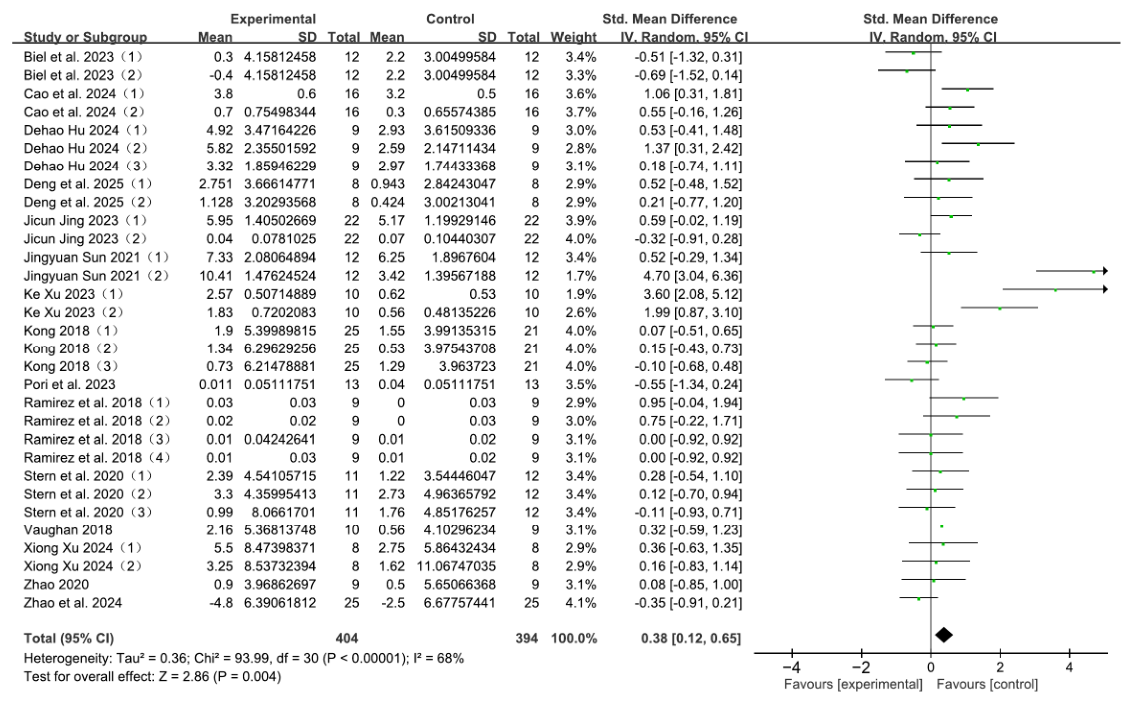
The primary meta-analysis indicated a significant positive effect of unilateral training on vertical jump performance compared with bilateral training (SMD = 0.38; 95% CI: 0.12 to 0.65; p = 0.004, Figure 2). However, substantial heterogeneity was observed (I2 = 68%). Furthermore, subsequent publication bias analysis suggested that this effect should be interpreted cautiously, as the trim-and-fill adjusted estimate was no longer statistically significant.

3.4.2. Effects on Horizontal Jump Performance

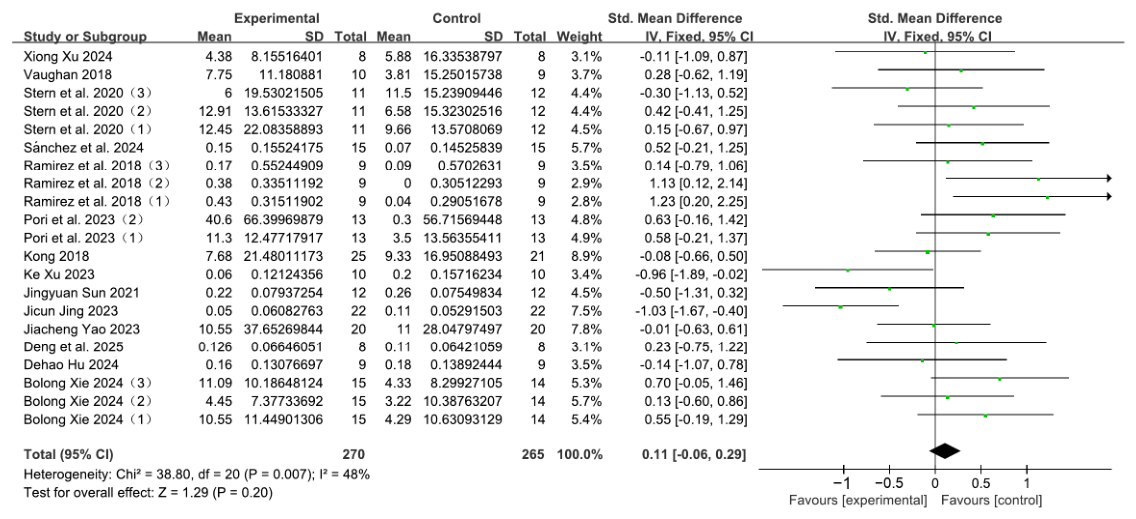
No statistically significant difference was observed for horizontal jump performance (SMD = 0.11; 95% CI: −0.06 to 0.29; p = 0.20). Moderate heterogeneity was present (I2 = 48%, p = 0.007; Figure 3). The overall estimate therefore does not support a clear advantage of either training modality.

3.4.3. Effects on Reactive Strength Performance

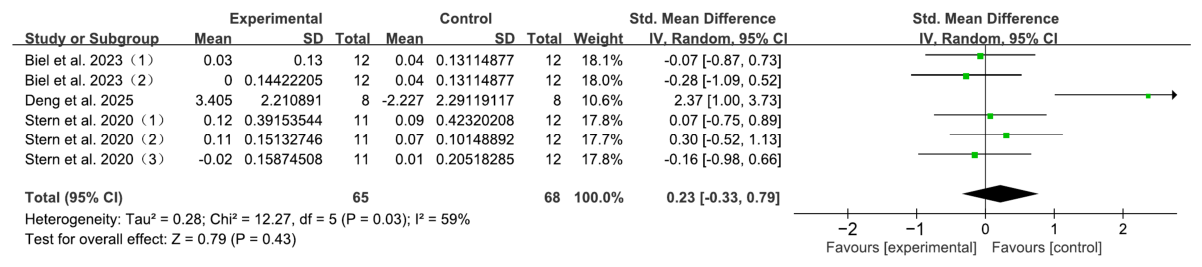
No statistically significant difference was observed for reactive strength performance (SMD = 0.23; 95% CI: −0.33 to 0.79; p = 0.43). Heterogeneity was substantial (I2 = 59%, p = 0.03; Figure 4). The wide confidence interval, limited number of studies, and heterogeneity preclude a conclusion that either modality is superior.

3.4.4. Effects on Muscular Strength Performance

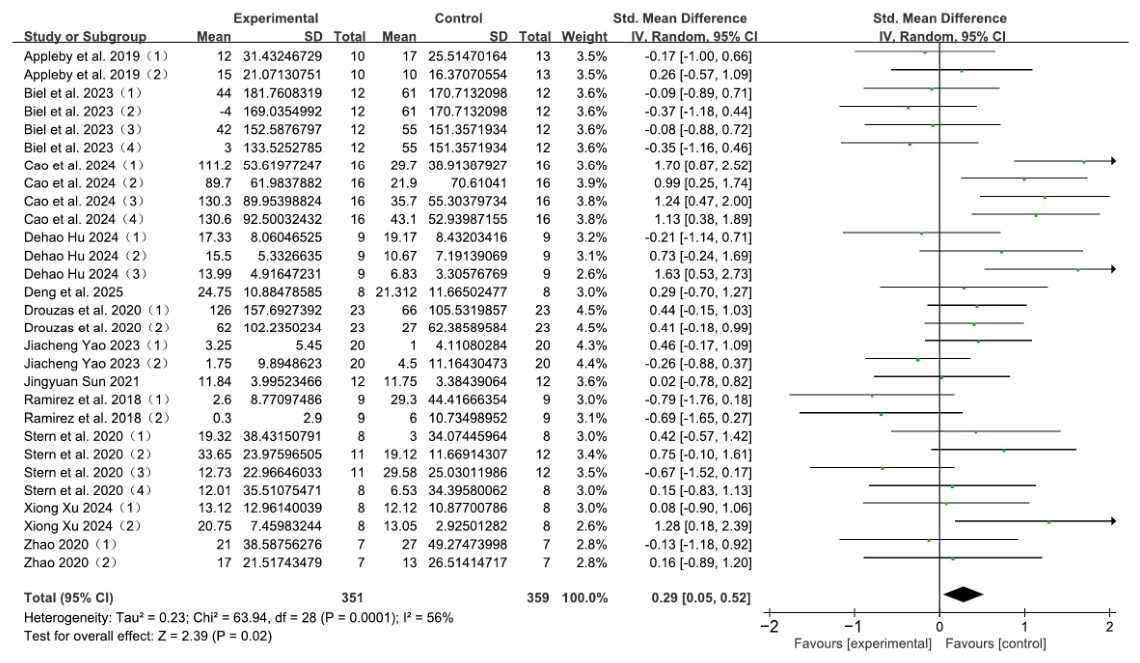
Unilateral training showed a small statistically significant advantage for muscular strength (SMD = 0.29; 95% CI: 0.05 to 0.52; p = 0.02). Heterogeneity was substantial (I2 = 56%, p = 0.0001; Figure 5), so the magnitude and generalizability of the estimate should be interpreted cautiously.

3.4.5. Effects on Agility Performance

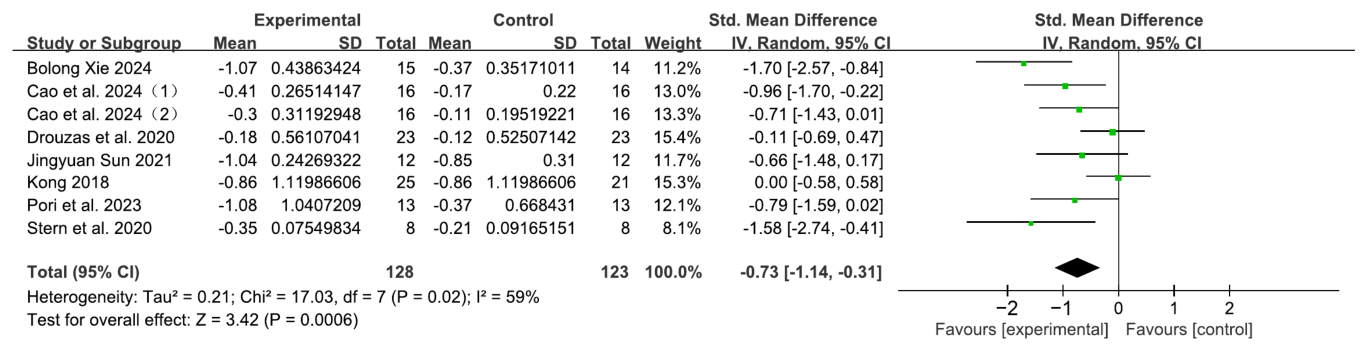
Unilateral training showed a statistically significant advantage for agility (SMD = −0.73; 95% CI: −1.14 to −0.31; p = 0.0006). Heterogeneity was substantial (I2 = 59%, p = 0.02; Figure 6); consequently, the estimate should be interpreted as a pooled physical-performance effect rather than a sport-independent prescription.

3.4.6. Effects on Sprint Performance

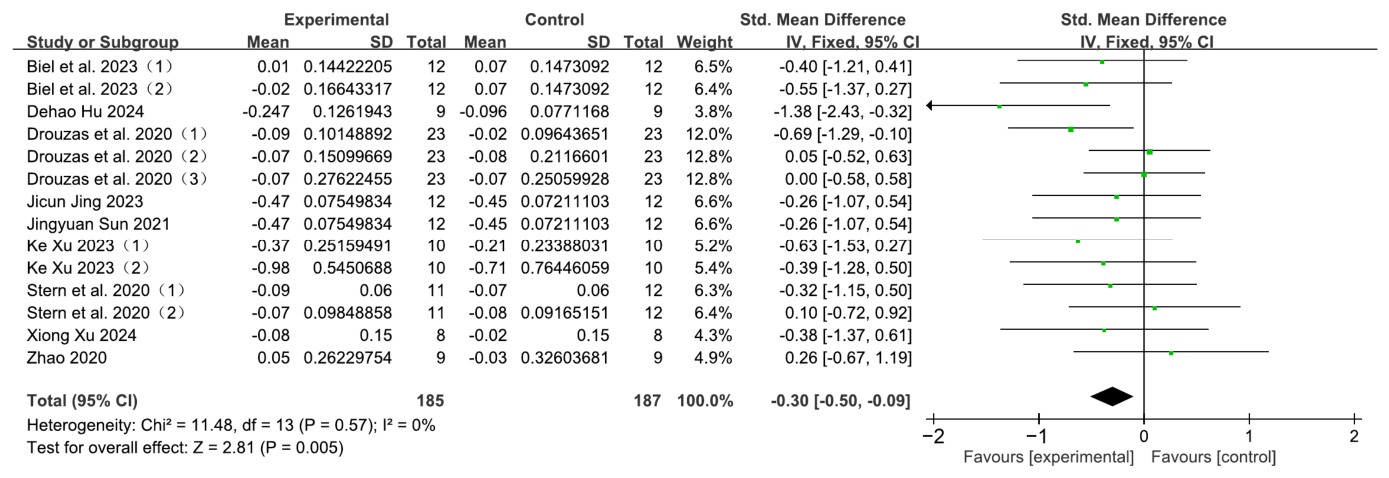
Unilateral training showed a small statistically significant advantage for sprint performance (SMD = −0.30; 95% CI: −0.50 to −0.09; p = 0.005). Heterogeneity was negligible (I2 = 0%, p = 0.57; Figure 7), although confidence remains limited by the number and characteristics of the available studies.

3.4.7. Effects on Core Stability Performance

No statistically significant difference was observed for core stability (SMD = −0.24; 95% CI: −0.86 to 0.38; p = 0.45). Heterogeneity was substantial (I2 = 75%, p = 0.007; Figure 8). The wide interval and between-study variability do not support superiority of either training modality.

3.5. Subgroup Analysis

Exploratory subgroup analyses were conducted to investigate potential sources of heterogeneity across different intervention characteristics and participant characteristics, including intervention duration, training frequency, training volume, intervention type, sex, and training status. Because several subgroup comparisons were based on a limited number of studies, these findings should be interpreted as hypothesis-generating rather than definitive evidence of moderation effects.

3.5.1. Subgroup Analysis of Intervention Duration

Exploratory subgroup analyses were conducted to investigate whether intervention duration contributed to variations in the effects of unilateral versus bilateral training on physical performance outcomes. For vertical jump performance, a significant difference was observed between intervention-duration subgroups (p = 0.002). Specifically, interventions lasting ≥8 weeks demonstrated a significant effect favoring unilateral training (SMD = 0.68; 95% CI: 0.32 to 1.05; p = 0.0002; I2 = 73%), whereas interventions lasting <8 weeks showed no significant difference between unilateral and bilateral training (SMD = −0.04; 95% CI: −0.31 to 0.23; p = 0.76; I2 = 0%).
For core stability performance, intervention duration was also associated with differences between subgroups (p = 0.0007). Shorter interventions (<8 weeks) demonstrated a significant effect favoring unilateral training (SMD = −1.14; 95% CI: −1.74 to −0.54; p = 0.0002), whereas longer interventions (≥8 weeks) did not show a significant difference (SMD = 0.07; 95% CI: −0.29 to 0.42; I2 = 0%).
Although these findings suggest that intervention duration may influence the observed effects of unilateral versus bilateral training on specific outcomes, the results should be interpreted cautiously. The subgroup analyses were based on a limited number of studies, and differences between duration categories may reflect variations in training characteristics, participant populations, or outcome measurements rather than duration alone (Figure S1).

3.5.2. Subgroup Analysis of Intervention Frequencies

Exploratory subgroup analyses were conducted to examine whether intervention frequency influenced the comparative effects of unilateral versus bilateral training. No statistically significant subgroup differences were observed for vertical jump, horizontal jump, muscular strength, agility, or sprint performance (all p > 0.05 for subgroup differences), indicating that the available evidence was insufficient to confirm intervention frequency as a moderator of training effects.
For agility performance, unilateral training demonstrated significant within-subgroup effects in both lower-frequency (<3 sessions/week) and higher-frequency (≥3 sessions/week) interventions. Specifically, significant improvements were observed in the <3 sessions/week subgroup (SMD = −0.60; 95% CI: −0.89 to −0.31; p < 0.001; I2 = 28%) and the ≥3 sessions/week subgroup (SMD = −1.16; 95% CI: −1.75 to −0.56; p < 0.001; I2 = 66%). However, the difference between frequency subgroups was not statistically significant.
Similarly, significant within-subgroup effects were observed for vertical jump, muscular strength, and sprint performance in specific frequency categories. For example, lower-frequency interventions (<3 sessions/week) showed significant effects for vertical jump (SMD = 0.39; 95% CI: 0.12 to 0.65; p = 0.005; I2 = 58%), muscular strength (SMD = 0.40; 95% CI: 0.10 to 0.70; p = 0.009; I2 = 62%), and sprint performance (SMD = −0.26; 95% CI: −0.51 to −0.02; p = 0.04; I2 = 27%). Nevertheless, subgroup comparisons did not demonstrate statistically significant differences between frequency categories.
Overall, these findings suggest that unilateral training effects were observed across different intervention frequencies; however, the current evidence does not support intervention frequency as a confirmed determinant of comparative training outcomes (Figure S2).

3.5.3. Subgroup Analysis of Training Volume

Due to the limited number of studies available for reactive strength outcomes, meta-regression analysis was not conducted. Instead, exploratory subgroup analysis was performed to examine whether session-based training volume was associated with differences in the comparative effects of unilateral versus bilateral training.
No statistically significant subgroup difference was observed between interventions with a session volume of <72 repetitions and ≥72 repetitions (p = 0.19). In the lower-volume subgroup (<72 repetitions/session), unilateral training did not demonstrate a significant advantage for reactive strength performance (SMD = −0.18; 95% CI: −0.74 to 0.39; p = 0.54; I2 = 0%). Similarly, interventions with higher session volume (≥72 repetitions/session) also showed no statistically significant difference between unilateral and bilateral training (SMD = 0.50; 95% CI: −0.35 to 1.36; p = 0.25; I2 = 71%).
These findings indicate that the available evidence does not support session-based training volume as a confirmed moderator of the effects of unilateral versus bilateral training on reactive strength performance. However, interpretation should remain cautious because the analysis was based on a limited number of studies, and differences in exercise selection, training intensity, and progression strategies may have contributed to the observed variability (Figure S3).

3.5.4. Subgroup Analysis of Intervention Type

Exploratory subgroup analyses examined whether intervention type contributed to variability in unilateral-versus-bilateral effects. Programs were classified as resistance, plyometric, or combined training according to their reported exercise content.
For horizontal jump performance, a significant subgroup difference was observed among intervention types (p = 0.03). Specifically, unilateral resistance training demonstrated a significant within-subgroup effect compared with bilateral training (SMD = 0.57; 95% CI: 0.13 to 1.02; p = 0.01; I2 = 0%), whereas other intervention categories did not demonstrate statistically significant effects. However, this finding should be interpreted cautiously because the number of studies included within each intervention category was limited.
For agility performance, differences between intervention types approached statistical significance (p = 0.05). Combined training demonstrated a larger observed effect (SMD = −1.27; 95% CI: −1.97 to −0.57; p = 0.0004; I2 = 40%) compared with plyometric training (SMD = −0.50; 95% CI: −0.86 to −0.15; p = 0.006; I2 = 17%). These findings suggest that intervention type may contribute to variability in agility outcomes; however, the current evidence does not allow definitive conclusions regarding the superiority of one training modality over another.
For other outcomes, including vertical jump, reactive strength, muscular strength, and sprint performance, no statistically significant subgroup differences were observed between intervention types (all p > 0.05 for subgroup differences). Although some intervention categories showed significant within-group effects, these findings should be interpreted as exploratory because they may be influenced by differences in exercise selection, training dose, participant characteristics, and the limited number of available studies. (Figure S4).

3.5.5. Subgroup Analysis of Gender

Exploratory subgroup analyses found no statistically significant between-sex differences for vertical jump, horizontal jump, or muscular strength (all p > 0.05). The evidence is therefore insufficient to identify sex as a moderator of comparative training response.
Within the male-only subgroup, effects were observed for vertical jump (SMD = 0.47; 95% CI: 0.13 to 0.80; p = 0.006; I2 = 74%) and muscular strength (SMD = 0.30; 95% CI: 0.04 to 0.56; p = 0.02; I2 = 59%). However, the between-sex tests were not significant (p = 0.12 and p = 0.54, respectively), so these within-subgroup findings do not establish a sex-specific benefit. No clear difference was observed for horizontal jump (Figure S5).

3.5.6. Subgroup Analysis of Training Status

Exploratory subgroup analyses were conducted to examine whether athlete training status influenced the comparative effects of unilateral versus bilateral training on physical performance outcomes. Participants were categorized into three levels according to their training status: Tier 1, Tier 2, and Tier 3.
For muscular strength performance, a significant subgroup difference was observed among different training-status categories (p = 0.03). Specifically, Tier 2 athletes demonstrated a significant advantage following unilateral training compared with bilateral training (SMD = 0.47; 95% CI: 0.15 to 0.79; p = 0.004; I2 = 63%). However, this finding should be interpreted cautiously because subgroup analyses were based on a limited number of studies, and differences between athlete categories may reflect variations in previous training exposure, sport background, or participant characteristics rather than training status alone (Figure S6).
For other outcomes, including vertical jump, sprint performance, and horizontal jump performance, training status did not demonstrate statistically significant subgroup differences (all p > 0.05 for subgroup differences). Although Tier 2 athletes showed significant within-subgroup effects for vertical jump performance (SMD = 0.39; 95% CI: 0.12 to 0.67; p = 0.005; I2 = 61%) and sprint performance (SMD = −0.34; 95% CI: −0.58 to −0.10; p = 0.006; I2 = 24%), these findings should be considered exploratory because subgroup comparisons were limited by the available evidence.
Overall, the current evidence does not support the identification of a specific athlete training-status category that consistently benefits more from unilateral training. Further studies with standardized classification criteria and larger samples are required to determine whether training status influences responses to unilateral versus bilateral training (Figure S6).

3.6. Meta-Regression

The meta-regression analysis indicated that training volume was not a significant moderator of vertical jump (p = 0.167; Table S3), horizontal jump (p = 0.545; Table S4), muscular strength (p = 0.610; Table S5), agility (p = 0.318; Table S6), or sprint performance (p = 0.616; Table S7). Given the limited number of studies available for each outcome, meta-regression findings should be interpreted cautiously.

3.7. Risk of Bias

Using RoB 2.0, 10 studies were judged to have low overall risk of bias, 8 had some concerns, and 2 were judged to have high overall risk [35,49]. Domain-level high-risk judgments were observed for the randomization process or deviations from intended interventions in a small number of studies. The complete study-level judgments are shown in Figure S9. These methodological concerns were considered in the GRADE assessment.

3.8. Publication Bias

Funnel plots are shown in Figure S7. Egger’s tests produced statistically significant small-study-effect signals for vertical jump, reactive strength, agility, and core stability (Tables S8, S10, S12 and S14). For reactive strength, agility, and core stability, the number of studies was below 10; these tests were therefore considered exploratory and cannot reliably confirm publication bias. For vertical jump (p < 0.001; Table S8), trim-and-fill imputed 10 potentially missing studies, and the adjusted pooled estimate was no longer statistically significant (SMD = −0.012; 95% CI: −0.311 to 0.287; p = 0.940; Table S15; Figure S7B). This sensitivity result substantially weakens confidence in the unadjusted vertical-jump finding.
For reactive strength (p = 0.002; Table S10) and agility (p = 0.010; Table S12), trim-and-fill did not impute missing studies, and the pooled estimates were unchanged. For core stability (p = 0.006; Table S14), one study was imputed and the adjusted estimate remained nonsignificant (SMD = −0.402; 95% CI: −0.975 to 0.170; p = 0.168; Table S16). Because each of these outcomes included fewer than 10 studies, absence of imputed studies was not interpreted as evidence that publication bias was absent.
Egger’s tests were not statistically significant for horizontal jump (p = 0.167; Table S9), muscular strength (p = 0.841; Table S11), or sprint performance (p = 0.364; Table S13; Figure S7). These results do not prove the absence of publication bias, particularly where study numbers were small, and were considered together with funnel-plot appearance, heterogeneity, risk of bias, and GRADE certainty.

3.9. Sensitivity Analysis

Sensitivity analyses were conducted for all included physical performance outcomes to examine the robustness of the pooled effect estimates. A leave-one-out approach was applied by sequentially removing individual effect estimates from each meta-analysis to evaluate whether any single reported estimate disproportionately influenced the overall results.
The pooled standardized mean differences and corresponding 95% confidence intervals remained generally consistent after removal of individual effect estimates across vertical jump, horizontal jump, reactive strength, muscular strength, agility, sprint performance, and core stability outcomes. These findings suggest that the primary meta-analytic estimates were not substantially influenced by any single reported effect; however, effect-level leave-one-out analysis does not eliminate correlation among estimates derived from the same participant sample.
Leave-one-out estimates were generally stable, but this does not remove other sources of uncertainty. Potential small-study effects, substantial heterogeneity for several outcomes, methodological limitations, and moderate-to-very-low GRADE certainty continue to limit confidence in some pooled findings (Figure S8).
When each participant sample was restricted to one effect estimate per outcome domain, the vertical-jump estimate was attenuated and was no longer statistically significant (15 studies, 15 estimates; SMD = 0.25; 95% CI: −0.04 to 0.55; p = 0.093; I2 = 50%). The muscular-strength estimate was also attenuated and became nonsignificant (12 studies, 12 estimates; SMD = 0.00; 95% CI: −0.28 to 0.28; p = 0.983; I2 = 29%). The statistical conclusions were unchanged for horizontal jump (SMD = −0.07; 95% CI: −0.27 to 0.14; p = 0.530), reactive strength (SMD = 0.66; 95% CI: −0.57 to 1.90; p = 0.293), agility (SMD = −0.75; 95% CI: −1.16 to −0.35; p < 0.001), sprint performance (SMD = −0.33; 95% CI: −0.60 to −0.07; p = 0.012), and core stability (SMD = −0.57; 95% CI: −1.70 to 0.56; p = 0.325) (Table S18).
After the two acute crossover studies [28,29] were excluded, the statistical conclusions remained unchanged for every affected outcome: vertical jump (SMD = 0.45; 95% CI: 0.18 to 0.72; p < 0.001), horizontal jump (SMD = 0.09; 95% CI: −0.09 to 0.27; p = 0.322), reactive strength (SMD = 0.50; 95% CI: −0.35 to 1.36; p = 0.248), muscular strength (SMD = 0.37; 95% CI: 0.11 to 0.63; p = 0.005), and sprint performance (SMD = −0.30; 95% CI: −0.52 to −0.09; p = 0.006). Agility and core stability were not affected because neither acute crossover study contributed to those outcome domains (Table S18).

4. Discussion

The evidence base encompassed two response time scales: most studies evaluated adaptations to multiweek training, whereas the two acute crossover studies [28,29] evaluated immediate responses in acute crossover designs. These acute studies were retained because they provided direct unilateral-versus-bilateral comparisons in team-sport athletes within the same physical-performance domains. Their inclusion was intended to preserve complementary evidence on exercise laterality, not to imply that an acute post-activation performance response is equivalent to chronic adaptation. Accordingly, PAPE was not used as a mechanistic explanation for the longitudinal findings, and long-term training implications should be derived principally from the longitudinal evidence.
Excluding both acute crossover studies did not change the direction or statistical significance of any affected pooled estimate, supporting the stability of the domain-level conclusions when inference was restricted to longitudinal training studies. This finding does not make acute responses equivalent to chronic adaptations; rather, it indicates that the two acute studies were not responsible for the primary statistical conclusions.

4.1. Vertical Jump Performance

Vertical jump is a test of lower-limb explosive power rather than direct competitive performance [53]. The primary meta-analysis favored unilateral training (SMD = 0.38; p = 0.004) [54,55]. A possible practical explanation is that unilateral exercises expose each limb to independent force-production and control demands [56,57]; however, the included studies did not directly measure neuromuscular mechanisms, and no causal mechanism can be confirmed from this review.
Substantial heterogeneity was present. The exploratory duration analysis showed a between-subgroup difference (p = 0.002), but duration was confounded with other study-level differences in sport, participants, exercise selection, dose, and outcome measurement. The result should therefore be treated as hypothesis-generating rather than as evidence for an optimal intervention duration [58].
Other moderator tests were not statistically significant. Patterns observed within intervention-type, sex, or training-status categories do not establish that those characteristics modify the effect because category sizes were small and multiple comparisons were performed [59,60,61,62,63,64,65,66,67]. In practice, exercise selection should reflect the athlete’s sport, training history, and movement demands; the subgroup results should not be converted into parameter-specific prescriptions.
Most importantly, the vertical-jump association was no longer statistically significant after trim-and-fill adjustment (p = 0.940). This indicates that small-study effects or publication bias may have inflated the primary estimate. Unilateral training may still be included for program variety or single-limb loading, but the current evidence does not establish superiority over bilateral training for vertical-jump development. Larger preregistered trials with transparent reporting are needed.
The one-effect-per-sample sensitivity analysis also rendered the vertical-jump estimate nonsignificant (SMD = 0.25; 95% CI: −0.04 to 0.55; p = 0.093). Thus, the vertical-jump finding was sensitive both to potential small-study effects and to the handling of multiple correlated estimates from the same participant sample, further limiting confidence in a unilateral-training advantage.

4.2. Horizontal Jump Performance

Horizontal jump performance is commonly used as an indicator of horizontal force production capacity and lower-limb explosive ability, which may contribute to acceleration and propulsion demands frequently observed in intermittent team sports [68]. However, unlike vertical jumping or sprinting actions, horizontal jump performance represents a specific physical performance assessment rather than a direct measure of sport-specific competitive performance.
The present meta-analysis demonstrated no statistically significant difference between unilateral and bilateral training for horizontal jump performance (SMD = 0.11; p = 0.20). This finding suggests that unilateral training does not consistently provide superior improvements in horizontal jump ability compared with bilateral training within the current evidence base. The absence of a significant overall effect may reflect differences in exercise selection, training characteristics, and the specific movement demands emphasized within individual interventions.
Exploratory subgroup analysis indicated that intervention type may contribute to variability in horizontal jump outcomes (p = 0.03). Specifically, unilateral resistance training demonstrated a significant within-subgroup effect (SMD = 0.57; 95% CI: 0.13 to 1.02; p = 0.01; I2 = 0%), whereas comparable advantages were not observed in other intervention categories. This finding suggests that resistance-based unilateral training may represent a potential approach for developing horizontal force-related qualities; however, the limited number of studies within each intervention category prevents definitive conclusions regarding the superiority of a specific training modality.
From a strength and conditioning perspective, improvements in horizontal jump performance likely depend on the interaction between force production capacity, movement coordination, and the ability to apply force effectively in the horizontal direction [69,70,71,72]. Therefore, simply introducing unilateral exercises may not automatically result in enhanced horizontal power transfer. Instead, the effectiveness of unilateral training may depend on whether exercise selection, loading characteristics, and movement execution appropriately match the targeted physical qualities [73,74].
Overall, the current evidence does not support unilateral training as universally superior to bilateral training for improving horizontal jump performance. Future research should further investigate how exercise selection, training intensity, and sport-specific movement demands influence the transfer of unilateral and bilateral training adaptations to horizontal force production abilities.

4.3. Reactive Strength Performance

Reactive strength represents the ability of the neuromuscular system to rapidly produce force during short-duration stretch–shortening cycle activities and is commonly assessed through measures such as reactive strength index or related jump-based tests [75]. This physical quality is relevant to many team sports because athletes frequently perform rapid acceleration, deceleration, and repeated explosive actions; however, it should be considered a physical performance characteristic rather than a direct indicator of competitive performance.
The present meta-analysis demonstrated no statistically significant difference between unilateral and bilateral training for reactive strength performance (SMD = 0.23; p = 0.43). This finding indicates that, based on the currently available evidence, unilateral training does not demonstrate a clear advantage over bilateral training for improving reactive strength. The observed effect should be interpreted cautiously because the analysis included a limited number of studies and showed moderate heterogeneity (I2 = 59%).
The lack of a significant difference may be related to the complex and specific requirements underlying reactive strength development. Reactive strength depends on multiple interacting factors, including rapid force production, efficient stretch–shortening cycle utilization, and the ability to tolerate and manage high-rate mechanical loading during explosive movements [75]. Therefore, differences between unilateral and bilateral exercise orientation alone may not be sufficient to produce substantial changes in reactive strength when other training characteristics, such as exercise selection, loading strategy, and movement velocity, vary across interventions.
Exploratory subgroup analysis indicated that session-based training volume did not significantly influence the comparative effects of unilateral versus bilateral training on reactive strength. Neither lower-volume (<72 repetitions/session) nor higher-volume (≥72 repetitions/session) interventions demonstrated significant advantages. These findings suggest that the optimal training parameters for reactive strength development cannot be determined solely on the basis of repetition volume, and future research should consider a broader range of programming variables, including exercise intensity, movement velocity, and progression strategies [76,77].
Overall, the current evidence does not support unilateral training as superior to bilateral training for enhancing reactive strength. Future studies with larger samples and more precisely controlled intervention designs are required to determine whether specific unilateral exercise characteristics may provide advantages for reactive strength development.

4.4. Muscular Strength Performance

Muscular strength represents a fundamental physical quality underlying many athletic movements, including acceleration, jumping, and forceful changes in direction in team sports. The present meta-analysis demonstrated a small but statistically significant advantage of unilateral training compared with bilateral training for muscular strength outcomes (SMD = 0.29; p = 0.02). These findings suggest that unilateral training may provide a useful stimulus for improving strength-related qualities; however, the magnitude of the observed effect was relatively small and should be interpreted considering the heterogeneity among included interventions.
One potential explanation for the observed advantage of unilateral training is that unilateral exercises allow each limb to contribute independently to force production, which may provide a distinct training stimulus compared with bilateral exercises [78,79]. Previous research has suggested that unilateral training may influence inter-limb strength characteristics through cross-education mechanisms [80,81]. However, the mechanisms responsible for the differences between unilateral and bilateral training cannot be confirmed in the present review because the included studies primarily assessed performance outcomes rather than direct neuromuscular adaptations [82].
Exploratory subgroup analysis indicated that training status may contribute to differences in observed muscular strength adaptations (p = 0.03). Specifically, Tier 2 athletes demonstrated a larger observed effect following unilateral training compared with bilateral training (SMD = 0.47; 95% CI: 0.15 to 0.79; p = 0.004; I2 = 63%). However, this finding should be interpreted cautiously because subgroup analyses were based on a limited number of studies and may reflect differences in training background, previous exercise exposure, or participant characteristics [83] rather than training status alone.
Other subgroup analyses, including intervention duration, frequency, intervention type, and sex [84,85,86], did not demonstrate statistically significant differences between categories. Although some intervention categories showed significant within-group effects, the current evidence is insufficient to identify a specific training condition or athlete profile that consistently maximizes strength adaptations.
In practice, unilateral exercises may complement bilateral strength work when coaches wish to load each limb independently or address movement patterns involving single-limb support. The small pooled effect, heterogeneity, and exploratory subgroup findings do not support replacing bilateral training or prescribing unilateral training universally across sports.
The one-effect-per-sample sensitivity estimate for muscular strength was close to zero and nonsignificant (SMD = 0.00; 95% CI: −0.28 to 0.28; p = 0.983). Therefore, the small advantage in the primary analysis was not robust to removal of within-sample multiplicity and should be interpreted as uncertain rather than as conclusive evidence of superiority.

4.5. Agility Performance

Agility is a critical physical performance quality in team sports because it involves rapid acceleration, deceleration, and changes in direction under dynamic movement conditions. The present meta-analysis demonstrated a significant advantage of unilateral training compared with bilateral training for agility performance (SMD = −0.73; p = 0.0006), representing one of the larger observed effects among the evaluated physical performance outcomes. These findings suggest that unilateral training may be a useful strategy for developing agility-related physical qualities; however, the interpretation should consider the heterogeneity among included interventions and the certainty of available evidence.
From a movement perspective, agility performance requires athletes to repeatedly generate and absorb force during single-leg support phases, particularly during braking and directional changes. The potential advantage of unilateral training may therefore be related to its greater emphasis on single-limb force production and control, which may provide a movement stimulus relevant to these physical demands [87,88]. However, the included studies primarily assessed performance outcomes, and the specific neuromuscular mechanisms underlying these adaptations remain unclear.
Exploratory subgroup analysis suggested that intervention type may contribute to variability in agility outcomes (p = 0.05). Combined training demonstrated a larger observed effect compared with plyometric training (combined training: SMD = −1.27; 95% CI: −1.97 to −0.57; p = 0.0004; I2 = 40%; plyometric training: SMD = −0.50; 95% CI: −0.86 to −0.15; p = 0.006; I2 = 17%) [89]. Nevertheless, this finding should be interpreted cautiously because subgroup comparisons were based on a limited number of studies, and differences may reflect variations in exercise selection, training volume, or intervention structure rather than training type alone.
Intervention duration and weekly frequency did not significantly explain the agility effect. Coaches may consider unilateral exercises within broader strength and conditioning programs that also address braking, acceleration, and multidirectional movement, but the available data do not identify an optimal frequency, duration, or exercise combination.

4.6. Sprint Performance

Sprint performance represents an important physical performance quality in team sports, where athletes frequently perform rapid accelerations and high-speed running actions during competition [90]. The present meta-analysis demonstrated a significant advantage of unilateral training compared with bilateral training for sprint performance (SMD = −0.30; p = 0.005). The absence of substantial heterogeneity among included studies (I2 = 0%) suggests relatively consistent effects across the available evidence; however, the magnitude of this effect was relatively small and should be interpreted considering the characteristics of the included interventions and participants.
From a movement perspective, sprinting involves repeated cycles of unilateral stance and propulsion, requiring effective force production and coordination from each limb independently. Therefore, unilateral training may provide a movement-specific stimulus by emphasizing single-limb force production and control, which may contribute to improvements in sprint-related physical qualities [90,91]. Previous research has also suggested that improvements in lower-body strength and power characteristics can positively influence sprint performance, supporting the potential relevance of strength-oriented training approaches for sprint development [92].
Exploratory subgroup analyses indicated that intervention duration, frequency, intervention type, and training status did not significantly modify the comparative effects of unilateral versus bilateral training on sprint performance. Although some subgroup categories demonstrated significant within-group effects, these findings should be interpreted cautiously because subgroup analyses were based on limited numbers of studies and may reflect differences in training design rather than specific effects of individual parameters.
Sprint adaptations may depend on exercise selection, load, recovery, and the athlete’s sport and training history [93,94,95]. These factors were not tested directly in the meta-analysis. Unilateral training can therefore be considered a complementary option for sprint-related physical preparation, not a universal replacement for bilateral work or a direct guarantee of improved match performance [96].

4.7. Core Stability Performance

Core stability is considered an important physical performance quality in team sports because it contributes to force transmission, postural control, and the maintenance of body position during dynamic movements. However, core stability represents a multifactorial capacity influenced by trunk control, exercise selection, and movement demands, rather than a single isolated physical attribute [97,98].
The present meta-analysis demonstrated no statistically significant difference between unilateral and bilateral training for core stability performance (SMD = −0.24; p = 0.45). In addition, substantial heterogeneity was observed among included studies (I2 = 75%), suggesting considerable variability in intervention characteristics and assessment methods. Therefore, the current evidence does not support the conclusion that unilateral training provides superior benefits compared with bilateral training for improving core stability.
Exploratory subgroup analysis indicated that intervention duration was associated with differences in observed effects (p = 0.0007). Shorter interventions (<8 weeks) demonstrated a significant effect favoring unilateral training (SMD = −1.14; 95% CI: −1.74 to −0.54; p = 0.0002), whereas longer interventions (≥8 weeks) did not show a significant difference (SMD = 0.07; 95% CI: −0.29 to 0.42; I2 = 0%). However, these findings should be interpreted cautiously because subgroup analyses were based on limited evidence and may reflect differences in intervention design, participant characteristics, or measurement approaches rather than intervention duration alone.
Previous research has suggested that core-related adaptations may depend on the specific characteristics of training tasks, including the magnitude and direction of external loading, movement complexity, and requirements for trunk stabilization [98,99]. Nevertheless, the present review did not directly assess trunk muscle activation or neuromuscular control strategies, and therefore the mechanisms underlying differences between unilateral and bilateral training remain unclear.
Unilateral exercises may be incorporated when trunk control during asymmetric loading is a program goal. However, the nonsignificant pooled estimate, wide confidence interval, and heterogeneity do not support superiority over bilateral training for core stability or a claim that interventions shorter than eight weeks are uniquely effective. Standardized outcome definitions and better controlled trials are needed.

4.8. Limitations

Several limitations should be considered when interpreting the findings of this systematic review and meta-analysis.
First, although all included studies were randomized controlled trials, blinding of participants and coaches was generally not feasible because of the nature of exercise interventions. Consequently, the possibility of performance-related bias cannot be completely excluded.
Second, the characteristics of the included interventions were relatively concentrated, with most studies involving intervention durations of 6–10 weeks and training frequencies of 2–4 sessions per week. The limited variation in intervention parameters restricted the ability to comprehensively evaluate dose–response relationships between training characteristics and performance adaptations.
Third, although the present review focused on athletes participating in team sports, these sports involve distinct movement demands and competitive characteristics. Soccer, basketball, volleyball, handball, and other team sports differ in their requirements for acceleration, deceleration, jumping, and directional changes. Due to the limited number of studies available within individual sports, sport-specific subgroup analyses were not feasible. Therefore, the pooled findings should be interpreted as representing physical performance qualities relevant to team sports rather than direct sport-specific performance outcomes.
Fourth, although unilateral and bilateral training were classified according to predefined criteria, differences in exercise selection, loading strategies, progression methods, and additional training components may have contributed to between-study heterogeneity. Future studies should provide more detailed descriptions of training interventions to allow more precise comparisons between training modalities.
Fifth, no dedicated grey literature, dissertation, trial-registry, or preprint database was searched. Although reference lists were screened and eligible theses identified through the prespecified sources were retained, unpublished or difficult-to-locate studies may have been missed, increasing susceptibility to dissemination and publication bias.
Sixth, several outcomes showed substantial heterogeneity and potential small-study effects. Subgroup analyses, leave-one-out analyses, and trim-and-fill procedures do not eliminate these uncertainties, and GRADE certainty ranged from moderate to very low. In addition, selecting fixed-effect or random-effects models according to an observed I2 threshold cannot fully resolve clinical heterogeneity and may yield model-dependent precision, particularly when few effects are available. Moderator findings should therefore be treated as exploratory, and pooled estimates should not be converted into parameter-specific prescriptions.
Seventh, some studies contributed more than one effect estimate within an outcome domain when distinct test variants, intervention contrasts, limbs, or assessment conditions were reported. Estimates derived from the same participant sample are correlated and are not equivalent to independent studies. The conventional pairwise inverse-variance models and effect-level leave-one-out analyses used here do not fully model this within-study dependence, which may underestimate uncertainty and give greater analytical weight to studies reporting more estimates. Accordingly, confidence intervals, heterogeneity, and moderator findings should be interpreted cautiously; future updates should examine multilevel meta-analysis or robust variance estimation. The one-effect-per-sample sensitivity analysis reduced this source of multiplicity, but it could not recover the unavailable covariance structure among outcomes; the loss of statistical significance for vertical jump and muscular strength demonstrates that these two findings were sensitive to the handling of dependent estimates.
Eighth, two included studies used acute crossover conditioning designs, whereas the remaining studies evaluated multiweek interventions. Retaining both response time scales in outcome-domain syntheses may increase clinical heterogeneity and does not imply that acute effects are equivalent to chronic adaptations. Because only two acute studies were available, a reliable design-stratified analysis was not feasible. Their contributions should therefore be interpreted as complementary immediate-response evidence and should not be used to support long-term training prescriptions. Nevertheless, excluding both acute crossover studies did not change any affected outcome conclusion, indicating that their inclusion did not drive the observed domain-level findings.
Finally, this review evaluated physical performance tests, including strength, jump, sprint, agility, reactive-strength, and core-stability outcomes. These qualities may support team sport preparation, but they do not measure match performance, technical execution, tactical effectiveness, or team success. Because sports differ in the prevalence and purpose of bilateral and unilateral actions, transfer to sport-specific performance requires direct investigation.

5. Conclusions

This review suggests that unilateral training may provide small-to-moderate benefits for selected physical performance outcomes relevant to team sport preparation, including agility, sprint performance, and muscular strength. Effect magnitude and certainty varied, and substantial heterogeneity was present for several outcomes. However, the muscular-strength effect was not statistically significant when only one estimate per participant sample was retained, so this outcome should not be considered robust.
The primary vertical-jump estimate favored unilateral training, but the association was no longer statistically significant after trim-and-fill adjustment, substantially reducing confidence in that conclusion. Findings for intervention duration, intervention type, sex, and training status are exploratory and do not identify confirmed moderators or optimal programming parameters. The vertical-jump estimate was also nonsignificant in the one-effect-per-sample sensitivity analysis, reinforcing the need for cautious interpretation.
Unilateral training may be used as a complementary component of strength and conditioning when its exercise demands suit the athlete’s sport, movement requirements, and training history. The current evidence does not support universal superiority over bilateral training, direct claims about match performance, or parameter-specific prescriptions. Larger, preregistered randomized trials with standardized interventions, sport-specific analyses, and transparent reporting are required.

Supplementary Materials

The following supporting information can be downloaded at https://www.mdpi.com/article/10.3390/app16178875/s1: The supporting information includes detailed search and intervention reporting, supplementary analyses, and consolidated figures. Figure S1–S9: exploratory subgroup analyses by intervention duration (S1), weekly training frequency (S2), training volume (S3), intervention type (S4), sex (S5), and training status (S6); publication-bias and trim-and-fill sensitivity analyses (S7); leave-one-out sensitivity analyses (S8); and study-level risk-of-bias judgments (S9). Table S1–S19: complete search strategies and reporting details (Table S1); effect-level characteristics and outcome measures included in the primary meta-analysis (Table S2); detailed intervention content, intensity, sets and repetitions or contacts, progression, recovery, and comparator conditions (Table S2B); meta-regression analyses (Table S3–S7); Egger’s tests (Table S8–S14); trim-and-fill sensitivity analyses (Table S15 and Table S16); GRADE certainty assessment (Table S17); sensitivity analyses addressing dependent effect estimates and acute crossover studies (Table S18); and study-level characteristics and unique participant accounting of the included studies (Table S19). PRISMA_2020_checklist.

Author Contributions

Conceptualization, D.H., Z.Z., C.Z., A.Z. and R.Z.; methodology, D.H. and Z.Z.; software, D.H.; validation, C.Z., Q.X., H.L., L.C. and Z.L.; formal analysis, D.H., Z.Z. and L.C.; investigation, Q.X., H.L. and Z.L.; resources, A.Z. and R.Z.; data curation, Q.X. and H.L.; writing—original draft preparation, D.H., Z.Z. and C.Z.; writing—review and editing, D.H., A.Z. and R.Z.; visualization, D.H. and Q.X.; supervision, A.Z. and R.Z.; project administration, A.Z. and R.Z. All authors have read and agreed to the published version of the manuscript.

Funding

This work was supported by the General Science and Technology Projects of the Beijing Municipal Education Commission (Grant No. KM202410009005) and The China Association of Higher Education (Grant No. 25TY0316).

Institutional Review Board Statement

Not applicable.

Informed Consent Statement

Not applicable.

Data Availability Statement

The datasets generated during and/or analysed during the current study are available from the corresponding author on reasonable request.

Conflicts of Interest

The authors declare that they have no competing interests. The authors declare that no generative AI was used for the creation of this manuscript.

References

  1. Makhlouf, I.; Chaouachi, A.; Chaouachi, M.; Ben Othman, A.; Granacher, U.; Behm, D.G. Combination of agility and plyometric training provides similar training benefits as combined balance and plyometric training in young soccer players. Front. Physiol. 2018, 9, 1611. [Google Scholar] [CrossRef] [Scilit] [PubMed]
  2. McCurdy, K.; O’Kelley, E.; Kutz, M.; Langford, G.; Ernest, J.; Torres, M. Comparison of lower extremity EMG between the 2-leg squat and modified single-leg squat in female athletes. J. Sport Rehabil. 2010, 19, 57–70. [Google Scholar] [CrossRef] [Scilit] [PubMed]
  3. Makaruk, H.; Winchester, J.B.; Sadowski, J.; Czaplicki, A.; Sacewicz, T. Effects of unilateral and bilateral plyometric training on power and jumping ability in women. J. Strength Cond. Res. 2011, 25, 3311–3318. [Google Scholar] [CrossRef] [Scilit] [PubMed]
  4. Stone, M.H.; Sanborn, K.; O’Bryant, H.S.; Hartman, M.; Stone, M.E.; Proulx, C.; Ward, B.; Hruby, J. Maximum strength-power-performance relationships in collegiate throwers. J. Strength Cond. Res. 2003, 17, 739–745. [Google Scholar] [CrossRef] [Scilit]
  5. Comfort, P.; Haigh, A.; Matthews, M.J. Are changes in maximal squat strength during preseason training reflected in changes in sprint performance in rugby league players? J. Strength Cond. Res. 2012, 26, 772–776. [Google Scholar] [CrossRef] [Scilit] [PubMed]
  6. Škarabot, J.; Brownstein, C.; Casolo, A.; Del Vecchio, A.; Ansdell, P. The knowns and unknowns of neural adaptations to resistance training. Eur. J. Appl. Physiol. 2021, 121, 675–685. [Google Scholar] [CrossRef] [Scilit] [PubMed]
  7. Capaday, C.; Ethier, C.; Darling Warren, G.; Van Vreeswijk, C. On the functional organization and operational principles of the motor cortex. Front. Neural Circuits 2013, 7, 66. [Google Scholar] [CrossRef] [Scilit] [PubMed]
  8. Gómez-Feria, J.; Martín-Rodríguez, J.F.; Mir, P. Corticospinal adaptations following resistance training and its relationship with strength: A systematic review and multivariate meta-analysis. Neurosci. Biobehav. Rev. 2023, 152, 105289. [Google Scholar] [CrossRef] [Scilit] [PubMed]
  9. Lecce, E.; Amoruso, P.; Del Vecchio, A.; Casolo, A.; Felici, F.; Farina, D.; Bazzucchi, I. Neural determinants of the increase in muscle strength and force steadiness of the untrained limb following a 4 week unilateral training. J. Physiol. 2025, 603, 3605–3630. [Google Scholar] [CrossRef] [Scilit] [PubMed]
  10. Andrushko, J.W.; Gould, L.A.; Farthing, J.P. Contralateral effects of unilateral training: Sparing of muscle strength and size after immobilization. Appl. Physiol. Nutr. Metab. 2018, 43, 1131–1139. [Google Scholar] [CrossRef] [Scilit] [PubMed]
  11. Pearce, A.J.; Hendy, A.; Bowen, W.A.; Kidgell, D.J. Corticospinal adaptations and strength maintenance in the immobilized arm following 3 weeks unilateral strength training. Scand. J. Med. Sci. Sports 2013, 23, 740–748. [Google Scholar] [CrossRef] [Scilit] [PubMed]
  12. Griffin, J.; Horan, S.; Keogh, J.; Andreatta, M.; Minahan, C. Time to be negative about acceleration: A spotlight on female football players. J. Strength Cond. Res. 2022, 36, 3264. [Google Scholar] [CrossRef] [Scilit] [PubMed]
  13. Bishop, C.; Turner, A.; Maloney, S.; Lake, J.; Loturco, I.; Bromley, T.; Read, P. Drop jump asymmetry is associated with reduced sprint and change-of-direction speed performance in adult female soccer players. Sports 2019, 7, 29. [Google Scholar] [CrossRef] [Scilit] [PubMed]
  14. Lin, J.; Shen, J.; Zhou, A.; Badicu, G.; Grosz, W.R. The effects of inter-limb asymmetry on change of direction performance: A systematic review. Symmetry 2022, 14, 2177. [Google Scholar] [CrossRef] [Scilit]
  15. Guan, Y.; Bredin, S.; Taunton, J.; Jiang, Q.; Wu, N.; Warburton, D. Association between inter-limb asymmetries in lower-limb functional performance and sport injury: A systematic review of prospective cohort studies. J. Clin. Med. 2022, 11, 360. [Google Scholar] [CrossRef] [Scilit] [PubMed]
  16. Ruiz-Pérez, I.; Raya-González, J.; López-Valenciano, A.; Robles-Palazón, F.J.; Ayala, F. Physical differences between injured and non-injured elite male and female futsal players. Appl. Sci. 2023, 13, 6503. [Google Scholar] [CrossRef] [Scilit]
  17. Núñez, F.J.; Santalla, A.; Carrasquila, I.; Asian, J.A.; Reina, J.I.; Suarez-Arrones, L.J. The effects of unilateral and bilateral eccentric overload training on hypertrophy, muscle power and COD performance, and its determinants, in team sport players. PLoS ONE 2018, 13, e0193841. [Google Scholar] [CrossRef] [Scilit] [PubMed]
  18. Seitz, L.; Reyes, A.; Tran, T.; Sáez de Villarreal, E.; Haff, G. Increases in lower-body strength transfer positively to sprint performance: A systematic review with meta-analysis. Sports Med. 2014, 44, 1693–1702. [Google Scholar] [CrossRef] [Scilit] [PubMed]
  19. Zhang, W.; Chen, X.; Xu, K.; Xie, H.; Li, D.; Ding, S.; Sun, J. Effect of unilateral training and bilateral training on physical performance: A meta-analysis. Front. Physiol. 2023, 14, 1128250. [Google Scholar] [CrossRef] [Scilit] [PubMed]
  20. McCurdy, K.; Conner, C. Unilateral support resistance training incorporating the hip and knee. Strength Cond. J. 2003, 25, 45. [Google Scholar] [CrossRef]
  21. Liu, Y.; Li, L.; Jiang, M.; Geng, J. Comparative effects of unilateral, bilateral, and hybrid combined resistance training on straight punch performance in adolescent boxers: A focus on dominant and non-dominant-side adaptations. Eur. J. Appl. Physiol. 2026, 126, 455–467. [Google Scholar] [CrossRef] [Scilit] [PubMed]
  22. Li, G.; Tao, X.; Lei, B.; Hou, X.; Yang, X.; Wang, L.; Zhang, S.; Lv, Y.; Wang, T.; Yu, L. Effects of exercise on post-stroke cognitive function: A systematic review and meta-analysis of randomized controlled trials. Top. Stroke Rehabil. 2024, 31, 645–666. [Google Scholar] [CrossRef] [Scilit] [PubMed]
  23. Du, L.; Xi, H.; Zhang, S.; Zhou, Y.; Tao, X.; Lv, Y.; Hou, X.; Yu, L. Effects of exercise in people with multiple sclerosis: A systematic review and meta-analysis. Front. Public Health 2024, 12, 1387658. [Google Scholar] [CrossRef] [Scilit] [PubMed]
  24. Zhou, Y.; Ren, H.; Hou, X.; Dong, X.; Zhang, S.; Lv, Y.; Li, C.; Yu, L. The effect of exercise on balance function in stroke patients: A systematic review and meta-analysis of randomized controlled trials. J. Neurol. 2024, 271, 4751–4768. [Google Scholar] [CrossRef] [Scilit] [PubMed]
  25. Higgins, J.P.T.; Thomas, J.; Chandler, J.; Cumpston, M.; Li, T.; Page, M.J.; Welch, V.A. (Eds.) Cochrane Handbook for Systematic Reviews of Interventions, 2nd ed.; John Wiley & Sons: Chichester, UK, 2019. [Google Scholar]
  26. Page, M.J.; McKenzie, J.E.; Bossuyt, P.M.; Boutron, I.; Hoffmann, T.C.; Mulrow, C.D.; Shamseer, L.; Tetzlaff, J.M.; Akl, E.A.; Brennan, S.E.; et al. Declaración PRISMA 2020: Una guía actualizada para la publicación de revisiones sistemáticas. Rev. Esp. Cardiol. 2021, 74, 790–799. [Google Scholar] [CrossRef]
  27. Moher, D.; Liberati, A.; Tetzlaff, J.; Altman, D.G. Preferred reporting items for systematic reviews and meta-analyses: The PRISMA statement. BMJ 2009, 339, b2535. [Google Scholar] [CrossRef] [PubMed]
  28. Biel, P.; Zubik, M.; Filip-Stachnik, A.; Ewertowska, P.; Krzysztofik, M. Acute effects of unilateral and bilateral conditioning activity on countermovement jump, linear speed, and muscle stiffness: A randomized crossover study. PLoS ONE 2023, 18, e0292999. [Google Scholar] [CrossRef] [Scilit] [PubMed]
  29. Sanchez-Sanchez, J.; Sanchez, M.; Pérez, L.; Ramirez-Campillo, R. Impacto de ejercicios bilaterales y unilaterales en la potenciación aguda del salto horizontal en futbolistas profesionales. MHSalud 2024, 21, 122–141. [Google Scholar] [CrossRef] [Scilit]
  30. Sterne, J.A.C.; Savović, J.; Page, M.J.; Elbers, R.G.; Blencowe, N.S.; Boutron, I.; Cates, C.J.; Cheng, H.-Y.; Corbett, M.S.; Eldridge, S.M.; et al. RoB 2: A revised tool for assessing risk of bias in randomised trials. BMJ 2019, 366, l4898. [Google Scholar] [CrossRef] [Scilit] [PubMed]
  31. Hedges, L.V.; Olkin, I. Statistical Methods for Meta-Analysis; Academic Press: Orlando, FL, USA, 1985. [Google Scholar]
  32. Guyatt, G.; Oxman, A.D.; Akl, E.A.; Kunz, R.; Vist, G.; Brozek, J.; Norris, S.; Falck-Ytter, Y.; Glasziou, P.; DeBeer, H.; et al. GRADE guidelines: 1. Introduction—GRADE evidence profiles and summary of findings tables. J. Clin. Epidemiol. 2011, 64, 383–394. [Google Scholar] [CrossRef] [Scilit] [PubMed]
  33. Zhang, Y.; Alonso-Coello, P.; Guyatt, G.H.; Yepes-Nuñez, J.J.; Akl, E.A.; Hazlewood, G.; Pardo-Hernandez, H.; Etxeandia-Ikobaltzeta, I.; Qaseem, A.; Williams, J.W.; et al. GRADE Guidelines: 19. Assessing the certainty of evidence in the importance of outcomes or values and preferences-risk of bias and indirectness. J. Clin. Epidemiol. 2019, 111, 94–104. [Google Scholar] [CrossRef] [Scilit] [PubMed]
  34. Deng, B.; Yan, R.; Sui, X.; Lin, G.; Ding, S.; Li, D.; Sun, J. Effects of unilateral and bilateral complex-contrast training on lower limb strength and jump performance in collegiate female volleyball players. PLoS ONE 2025, 20, e0327237. [Google Scholar] [CrossRef] [Scilit] [PubMed]
  35. Stern, D.; Turner, A.; Gonzalo-Skok, O.; Loturco, I.; Bishop, C. A comparison of bilateral vs. unilateral-biased strength and power training interventions on measures of physical performance in elite youth soccer players. J. Strength Cond. Res. 2020, 34, 2105–2111. [Google Scholar] [CrossRef] [Scilit] [PubMed]
  36. Ramirez-Campillo, R.; Sanchez-Sanchez, J.; Gonzalo-Skok, O.; Rodríguez-Fernandez, A.; Carretero, M.; Nakamura, F.Y. Specific changes in young soccer player’s fitness after traditional bilateral vs. unilateral combined strength and plyometric training. Front. Physiol. 2018, 9, 265. [Google Scholar] [CrossRef] [Scilit] [PubMed]
  37. Yao, J. Study on the Influence of Unilateral Limb Resistance Training on Core Stability of Aerobics Specialized Students. Master’s Thesis, Yangzhou University, Yangzhou, China, 2023. [Google Scholar]
  38. Xu, X. Experimental Study on the Effects of Unilateral and Bilateral Complex Training on Lower Limb Explosive Power of Male College Basketball Players. Master’s Thesis, Wuhan Sports University, Wuhan, China, 2024. [Google Scholar]
  39. Xie, B. Experimental Study on the Influence of Single-Leg Complex Training on the Functional Asymmetry of Lower Limbs in Male College Football Players. Master’s Thesis, Central China Normal University, Wuhan, China, 2024. [Google Scholar]
  40. Sun, J. Effects of Unilateral and Bilateral Complex Training on Explosive Power and Dynamic Balance of Male Korfball Players. Master’s Thesis, Zhengzhou University, Zhengzhou, China, 2021. [Google Scholar]
  41. Jing, J. Empirical Study on the Influence of Unilateral and Bilateral Complex Training on Lower Limb Explosive Power of Badminton Students. Master’s Thesis, Shandong Sport University, Jinan, China, 2023. [Google Scholar]
  42. Hu, D. Comparative Study on the Influence of Unilateral and Bilateral Variable Resistance Training on Lower Limb Explosive Power of Basketball Students. Master’s Thesis, Wuhan Sports University, Wuhan, China, 2024. [Google Scholar]
  43. Vaughan, M. Can a Unilateral Lower Body-Training Program Increase Lower Body Power Output More Than a Bilateral Lower Body Training Program? Merrimack College: North Andover, MA, USA, 2018. [Google Scholar]
  44. Zhao, Y.; Sun, M.; Wang, X.; Xu, Q. Unilateral plyometric jump training shows significantly more effective than bilateral training in improving both time to stabilization and peak landing force in single-leg lend and hold test: A randomized multi-arm study conducted among young male basketball players. J. Sports Sci. Med. 2024, 23, 647–655. [Google Scholar] [CrossRef] [Scilit] [PubMed]
  45. Cao, J.; Xun, S.; Zhang, R.; Zhang, Z. Effects of unilateral, bilateral and combined plyometric jump training on asymmetry of muscular strength and power, and change-of-direction in youth male basketball players. J. Sports Sci. Med. 2024, 23, 754–766. [Google Scholar] [CrossRef] [Scilit] [PubMed]
  46. Drouzas, V.; Katsikas, C.; Zafeiridis, A.; Jamurtas, A.Z.; Bogdanis, G.C. Unilateral plyometric training is superior to volume-matched bilateral training for improving strength, speed and power of lower limbs in preadolescent soccer athletes. J. Hum. Kinet. 2020, 74, 161–176. [Google Scholar] [CrossRef] [Scilit] [PubMed]
  47. Kong, T.Y. Effects of Unilateral and Bilateral Lower Body Plyometric Training on Jump Ability and Agility Performance of Young Female Volleyball Players. Master’s Thesis, Hong Kong Baptist University, Hong Kong, China, 2018. [Google Scholar]
  48. Xu, K. Experimental Study on the Influence of Unilateral and Bilateral Plyometric Training on Lower Limb Explosive Power of Badminton Students. Master’s Thesis, Shandong Sport University, Jinan, China, 2023. [Google Scholar]
  49. Pori, P.; Martinc, D.; Šibila, M.; Štirn, I. The comparison of the unilateral and bilateral resistance training in young handball players. Sport Sci. Health 2023, 19, 691–700. [Google Scholar] [CrossRef] [Scilit]
  50. Appleby, B.B.; Cormack, S.J.; Newton, R.U. Specificity and transfer of lower-body strength: Influence of bilateral or unilateral lower-body resistance training. J. Strength Cond. Res. 2019, 33, 318–326. [Google Scholar] [CrossRef] [Scilit] [PubMed]
  51. Zhao, X. Effects of Unilateral vs. Bilateral Resistance Training on Lower Body Muscle Strength and Sport-Specific Performance in Adolescent Rugby Union Players. Master’s Thesis, The University of Edinburgh, Edinburgh, UK, 2021. [Google Scholar] [CrossRef] [PubMed]
  52. Baiget, E.; Colomar, J.; Corbi, F. Joint-specific postactivation potentiation enhances serve velocity in young tennis players. J. Strength Cond. Res. 2023, 37, 840–847. [Google Scholar] [CrossRef] [Scilit] [PubMed]
  53. McLellan, C.P.; Lovell, D.I.; Gass, G.C. The role of rate of force development on vertical jump performance. J. Strength Cond. Res. 2011, 25, 379–385. [Google Scholar] [CrossRef] [Scilit] [PubMed]
  54. Buchheit, M.; Mendez-Villanueva, A.; Delhomel, G.; Brughelli, M.; Ahmaidi, S. Improving repeated sprint ability in young elite soccer players: Repeated shuttle sprints vs. explosive strength training. J. Strength Cond. Res. 2010, 24, 2715–2722. [Google Scholar] [CrossRef] [Scilit] [PubMed]
  55. Gonzalo-Skok, O.; Tous-Fajardo, J.; Suarez-Arrones, L.; Arjol-Serrano, J.L.; Casajús, J.A.; Mendez-Villanueva, A. Single-leg power output and between-limbs imbalances in team-sport players: Unilateral versus bilateral combined resistance training. Int. J. Sports Physiol. Perform. 2017, 12, 106–114. [Google Scholar] [CrossRef] [Scilit] [PubMed]
  56. Brown, T.N.; Palmieri-Smith, R.M.; McLean, S.G. Comparative adaptations of lower limb biomechanics during unilateral and bilateral landings after different neuromuscular-based ACL injury prevention protocols. J. Strength Cond. Res. 2014, 28, 2859–2871. [Google Scholar] [CrossRef] [Scilit] [PubMed]
  57. Fimland, M.S.; Helgerud, J.; Gruber, M.; Leivseth, G.; Hoff, J. Enhanced neural drive after maximal strength training in multiple sclerosis patients. Eur. J. Appl. Physiol. 2010, 110, 435–443. [Google Scholar] [CrossRef] [Scilit] [PubMed]
  58. Moeskops, S.; Oliver, J.L.; Read, P.J.; Haff, G.G.; Myer, G.D.; Lloyd, R.S. Effects of a 10-month neuromuscular training program on strength, power, speed, and vault performance in young female gymnasts. Med. Sci. Sports Exerc. 2022, 54, 861–871. [Google Scholar] [CrossRef] [Scilit] [PubMed]
  59. Wilson, J.M.; Duncan, N.M.; Marin, P.J.; Brown, L.E.; Loenneke, J.P.; Wilson, S.M.C.; Jo, E.; Lowery, R.P.; Ugrinowitsch, C. Meta-analysis of postactivation potentiation and power: Effects of conditioning activity, volume, gender, rest periods, and training status. J. Strength Cond. Res. 2013, 27, 854–859. [Google Scholar] [CrossRef] [Scilit] [PubMed]
  60. Selvanayagam, V.S.; Riek, S.; Carroll, T.J. Early neural responses to strength training. J. Appl. Physiol. 2011, 111, 367–375. [Google Scholar] [CrossRef] [Scilit] [PubMed]
  61. Pálinkás, G.; Béres, B.; Utczás, K.; Tróznai, Z.; Petridis, L. Large inter-individual variability in force-velocity profile changes in response to acute high-load resistance training. Physiol. Int. 2024, 111, 186–198. [Google Scholar] [CrossRef] [Scilit] [PubMed]
  62. Ramirez-Campillo, R.; Garcia-Pinillos, F.; Chaabene, H.; Moran, J.; Behm, D.G.; Granacher, U. Effects of plyometric jump training on electromyographic activity and its relationship to strength and jump performance in healthy trained and untrained populations: A systematic review of randomized controlled trials. J. Strength Cond. Res. 2021, 35, 2053–2065. [Google Scholar] [CrossRef] [Scilit] [PubMed]
  63. Refalo, M.C.; Nuckols, G.; Galpin, A.J.; Gallagher, I.J.; Hamilton, D.L.; Fyfe, J.J. Sex differences in absolute and relative changes in muscle size following resistance training in healthy adults: A systematic review with Bayesian meta-analysis. PeerJ 2025, 13, e19042. [Google Scholar] [CrossRef] [Scilit] [PubMed]
  64. Takeuchi, R.; Iwamoto, Y.; Kawakami, W.; Takeuchi, Y.; Miyoshi, F.; Ishii, Y.; Takahashi, M. Sex differences in factors of pelvis and lower-limb joint kinematics influencing dynamic knee valgus during single-leg squat. J. Back. Musculoskelet. Rehabil. 2024, 37, 205–211. [Google Scholar] [PubMed]
  65. Mausehund, L.; Skard, A.E.; Krosshaug, T. Muscle activation in unilateral barbell exercises: Implications for strength training and rehabilitation. J. Strength Cond. Res. 2019, 33, S85–S94. [Google Scholar] [CrossRef] [Scilit] [PubMed]
  66. Lockie, R.; Dawes, J.J.; Sakura, T.; Schram, B.; Orr, R.M. Relationships between physical fitness assessment measures and a workplace task-specific physical assessment among police officers: A retrospective cohort study. J. Strength Cond. Res. 2023, 37, 678–683. [Google Scholar] [CrossRef] [Scilit] [PubMed]
  67. Van Knobelsdorff, M.H.; Van Bergen, N.G.; Van der Kamp, J.; Seifert, L.; Orth, D. Action capability constrains visuo-motor complexity during planning and performance in on-sight climbing. Scand. J. Med. Sci. Sports 2020, 30, 2485–2497. [Google Scholar] [CrossRef] [Scilit] [PubMed]
  68. Koldenhoven, R.M.; Hart, J.; Abel, M.F.; Saliba, S.; Hertel, J. Running gait biomechanics in females with chronic ankle instability and ankle sprain copers. Sports Biomech. 2022, 21, 447–459. [Google Scholar] [CrossRef] [Scilit] [PubMed]
  69. Ellis, R.G.; Sumner, B.J.; Kram, R. Muscle contributions to propulsion and braking during walking and running: Insight from external force perturbations. Gait Posture 2014, 40, 594–599. [Google Scholar] [CrossRef] [Scilit] [PubMed]
  70. Akamatsu, T.; Shinya, M. Anticipatory postural adjustment for compensating forces and moments associated with isometric force production in an upper limb. J. Biomech. 2025, 192, 112961. [Google Scholar] [CrossRef] [Scilit] [PubMed]
  71. Andrews, M.H.; Gorman, A.D.; Crowther, R.H. Functional movement variability to maintain delivery speed in cricket fast bowling. Eur. J. Sport Sci. 2024, 24, 415–421. [Google Scholar] [CrossRef] [Scilit]
  72. Balshaw, T.G.; Massey, G.J.; Maden-Wilkinson, T.M.; Morales-Artacho, A.J.; McKeown, A.; Appleby, C.L.; Folland, J.P. Changes in agonist neural drive, hypertrophy and pre-training strength all contribute to the individual strength gains after resistance training. Eur. J. Appl. Physiol. 2017, 117, 631–640. [Google Scholar] [CrossRef] [Scilit] [PubMed]
  73. Sánchez-Sabaté, J.; Gutiérrez, H.; Marco-Contreras, L.A.; Younes-Egana, O.; Gonzalo-Skok, O.; Piedrafita, E. Influence of vertical-oriented vs. horizontal-oriented combined strength training in young basketball players. J. Strength Cond. Res. 2024, 38, 1280–1287. [Google Scholar] [CrossRef] [Scilit] [PubMed]
  74. Ramírez-Campillo, R.; Gallardo, F.; Henriquez-Olguín, C.; Meylan, C.M.P.; Martínez, C.; Álvarez, C.; Caniuqueo, A.; Cadore, E.L.; Izquierdo, M. Effect of vertical, horizontal, and combined plyometric training on explosive, balance, and endurance performance of young soccer players. J. Strength Cond. Res. 2015, 29, 1784–1795. [Google Scholar] [CrossRef] [Scilit] [PubMed]
  75. Schoenfeld, B.J.; Grgic, J.; Ogborn, D.; Krieger, J.W. Strength and hypertrophy adaptations between low- vs. high-load resistance training: A systematic review and meta-analysis. J. Strength Cond. Res. 2017, 31, 3508–3523. [Google Scholar] [CrossRef] [Scilit] [PubMed]
  76. Pickett, C.W.; Nosaka, K.; Zois, J.; Blazevich, A.J. Relationships between midthigh pull force development and 200-m race performance in highly trained kayakers. J. Strength Cond. Res. 2021, 35, 2853–2861. [Google Scholar] [CrossRef] [Scilit] [PubMed]
  77. Dallas, G.C.; Pappas, P.; Ntallas, C.G.; Paradisis, G.P.; Exell, T.A. The effect of four weeks of plyometric training on reactive strength index and leg stiffness is sport dependent. J. Sports Med. Phys. Fit. 2020, 60, 979–984. [Google Scholar] [CrossRef] [Scilit] [PubMed]
  78. Ramirez-Campillo, R.; Burgos, C.H.; Henríquez-Olguín, C.; Andrade, D.C.; Martínez, C.; Álvarez, C.; Castro-Sepúlveda, M.; Marques, M.C.; Izquierdo, M. Effect of unilateral, bilateral, and combined plyometric training on explosive and endurance performance of young soccer players. J. Strength Cond. Res. 2015, 29, 1317–1328. [Google Scholar] [CrossRef] [Scilit] [PubMed]
  79. Nijem, R.M.; Galpin, A.J. Unilateral versus bilateral exercise and the role of the bilateral force deficit. Strength Cond. J. 2014, 36, 113–118. [Google Scholar] [CrossRef] [Scilit]
  80. Lecce, E.; Conti, A.; Del Vecchio, A.; Felici, F.; Scotto di Palumbo, A.; Sacchetti, M.; Bazzucchi, I. Cross-education: Motor unit adaptations mediate the strength increase in non-trained muscles following 8 weeks of unilateral resistance training. Front. Physiol. 2025, 15, 1512309. [Google Scholar] [CrossRef] [Scilit] [PubMed]
  81. Callan, D.E.; Naito, E. Neural processes distinguishing elite from expert and novice athletes. Cogn. Behav. Neurol. 2014, 27, 183–188. [Google Scholar] [CrossRef] [Scilit] [PubMed]
  82. Suchomel, T.J.; Nimphius, S.; Bellon, C.R.; Stone, M.H. The importance of muscular strength: Training considerations. Sports Med. 2018, 48, 765–785. [Google Scholar] [CrossRef] [Scilit] [PubMed]
  83. Del Vecchio, A.; Enoka, R.M.; Farina, D. Specificity of early motor unit adaptations with resistive exercise training. J. Physiol. 2024, 602, 2679–2688. [Google Scholar] [CrossRef] [Scilit] [PubMed]
  84. Damas, F.; Barcelos, C.; Nóbrega, S.R.; Ugrinowitsch, C.; Lixandrão, M.E.; Santos, L.M.E.D.; Conceição, M.S.; Vechin, F.C.; Libardi, C.A. Individual muscle hypertrophy and strength responses to high vs. low resistance training frequencies. J. Strength Cond. Res. 2019, 33, 897–901. [Google Scholar] [CrossRef] [Scilit] [PubMed]
  85. McKendry, J.; Pérez-López, A.; McLeod, M.; Luo, D.; Dent, J.R.; Smeuninx, B.; Yu, J.; Taylor, A.E.; Philp, A.; Breen, L. Short inter-set rest blunts resistance exercise-induced increases in myofibrillar protein synthesis and intracellular signalling in young males. Exp. Physiol. 2016, 101, 866–882. [Google Scholar] [CrossRef] [Scilit] [PubMed]
  86. Fernandez, S. Gender differences in response to strength training: Hormonal and neuromuscular insights. Rev. Int. Med. Cienc. Act. Fis. Deporte 2024, 24, 329–344. [Google Scholar]
  87. Pamuk, Ö.; Makaracı, Y.; Ceylan, L.; Küçük, H.; Kızılet, T.; Ceylan, T.; Kaya, E. Associations between force-time related single-leg counter movement jump variables, agility, and linear sprint in competitive youth male basketball players. Children 2023, 10, 427. [Google Scholar] [CrossRef] [Scilit] [PubMed]
  88. Krzysztofik, M.; Wilk, M.; Pisz, A.; Kolinger, D.; Bichowska, M.; Zajac, A.; Stastny, P. Acute effects of high-load vs. plyometric conditioning activity on jumping performance and the muscle-tendon mechanical properties. J. Strength Cond. Res. 2023, 37, 1397–1403. [Google Scholar] [CrossRef] [Scilit] [PubMed]
  89. Liu, P.; Liu, Y.; Hao, X.; Cheng, N.; Kang, J.; Xiao, Z.; He, P.; Yan, J. The impact of an 8-week integrated neuromuscular training on strength, speed, and agility in military personnel: A randomized controlled trial. BMC Sports Sci. Med. Rehabil. 2025, 17, 127. [Google Scholar] [CrossRef] [Scilit] [PubMed]
  90. Duan, T.; He, Z.; Dai, J.; Xie, L.; Shi, Y.; Chen, L.; Song, J.; Li, G. Effects of unilateral and bilateral contrast training on the lower limb sports ability of college basketball players. Front. Physiol. 2024, 15, 1452751. [Google Scholar] [CrossRef] [Scilit] [PubMed]
  91. Büchel, D.; Gokeler, A.; Heuvelmans, P.; Baumeister, J. Increased cognitive demands affect agility performance in female athletes—Implications for testing and training of agility in team ball sports. Percept. Mot. Ski. 2022, 129, 1074–1088. [Google Scholar] [CrossRef] [Scilit] [PubMed]
  92. Sebesi, B.; Fésüs, Á.; Varga, M.; Atlasz, T.; Vadász, K.; Mayer, P.; Vass, L.; Meszler, B.; Balázs, B.; Váczi, M. The indirect role of gluteus medius muscle in knee joint stability during unilateral vertical jump and landing on unstable surface in young trained males. Appl. Sci. 2021, 11, 7421. [Google Scholar] [CrossRef] [Scilit]
  93. Werkhausen, A.; Albracht, K.; Cronin, N.J.; Paulsen, G.; Bojsen-Møller, J.; Seynnes, O.R. Effect of training-induced changes in Achilles tendon stiffness on muscle–tendon behavior during landing. Front. Physiol. 2018, 9, 794. [Google Scholar] [CrossRef] [Scilit] [PubMed]
  94. Ramírez-delaCruz, M.; Bravo-Sánchez, A.; Esteban-García, P.; Jiménez, F.; Abián-Vicén, J. Effects of plyometric training on lower body muscle architecture, tendon structure, stiffness and physical performance: A systematic review and meta-analysis. Sports Med. Open 2022, 8, 40. [Google Scholar] [CrossRef] [Scilit] [PubMed]
  95. Thomas, K.; Brownstein, C.G.; Dent, J.; Parker, P.; Goodall, S.; Howatson, G. Neuromuscular fatigue and recovery after heavy resistance, jump, and sprint training. Med. Sci. Sports Exerc. 2018, 50, 2526–2535. [Google Scholar] [CrossRef] [Scilit] [PubMed]
  96. Refalo, M.C.; Helms, E.R.; Hamilton, D.L.; Fyfe, J.J. Influence of resistance training proximity-to-failure, determined by repetitions-in-reserve, on neuromuscular fatigue in resistance-trained males and females. Sports Med. Open 2023, 9, 10. [Google Scholar] [CrossRef] [Scilit] [PubMed]
  97. Eliassen, W.; Saeterbakken, A.H.; Van Den Tillaar, R. Comparison of bilateral and unilateral squat exercises on barbell kinematics and muscle activation. Int. J. Sports Phys. Ther. 2018, 13, 871–881. [Google Scholar] [CrossRef] [Scilit]
  98. Nynes, A.; McGhie, D.; Aune, M.A.; Aune, T.K. Comparison of contralateral muscle excitation in proximal versus distal muscles in the upper extremities. Front. Hum. Neurosci. 2025, 19, 1718126. [Google Scholar] [CrossRef] [Scilit] [PubMed]
  99. Bustos Carvajal, J.S.; Arias Coronel, F. Exploring the role of the core in sports performance: A systematic review of the effects of core muscle training. Front. Sports Act. Living 2025, 7, 1630584. [Google Scholar] [CrossRef] [Scilit] [PubMed]
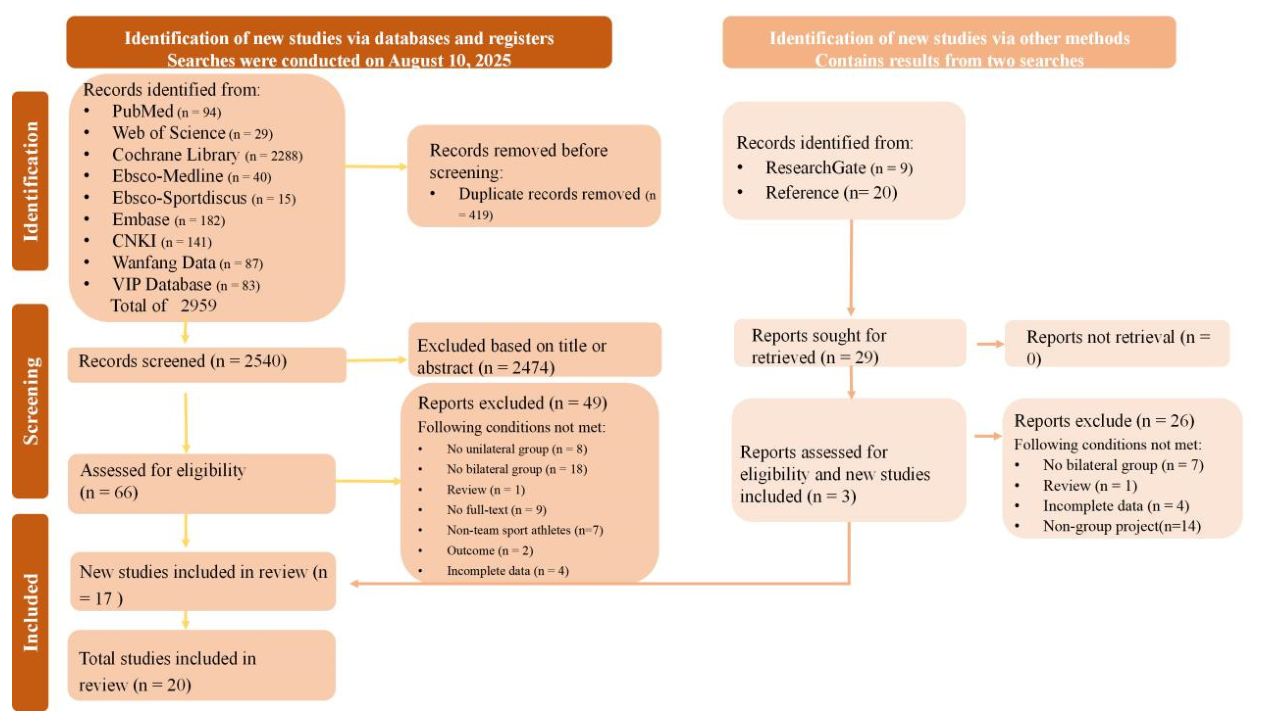
Figure 1. PRISMA flow diagram of study selection process. PRISMA 2020 flow diagram of study identification and selection. Final database search: 10 August 2025.
Applsci 16 08875 g001
Figure 2. Forest plot of the effect of unilateral vs. bilateral training on vertical jump performance (inverse-variance random-effects model). Experimental = unilateral training; Control = bilateral training. Direction of benefit: positive SMDs (standardized mean differences)/right of zero favor unilateral training, whereas negative SMDs/left of zero favor bilateral training. This outcome-specific direction statement should be used to interpret the generic software axis labels. The source studies included in this figure are cited in [28,34,35,36,38,40,41,42,43,44,45,47,48,49,51].
Applsci 16 08875 g002
Figure 3. Forest plot of the effect of unilateral vs. bilateral training on horizontal jump performance (inverse-variance fixed-effect model). Experimental = unilateral training; Control = bilateral training. Direction of benefit: positive SMDs/right of zero favor unilateral training, whereas negative SMDs/left of zero favor bilateral training. This outcome-specific direction statement should be used to interpret the generic software axis labels. The source studies included in this figure are cited in [29,34,35,36,37,38,39,40,41,42,43,47,48,49].
Applsci 16 08875 g003
Figure 4. Forest plot of the effect of unilateral vs. bilateral training on reactive strength performance (inverse-variance random-effects model). Experimental = unilateral training; Control = bilateral training. Direction of benefit: positive SMDs/right of zero favor unilateral training, whereas negative SMDs/left of zero favor bilateral training. This outcome-specific direction statement should be used to interpret the generic software axis labels. The source studies included in this figure are cited in [28,34,35].
Applsci 16 08875 g004
Figure 5. Forest plot of the effect of unilateral vs. bilateral training on muscular strength performance (inverse-variance random-effects model). Experimental = unilateral training; Control = bilateral training. Direction of benefit: positive SMDs/right of zero favor unilateral training, whereas negative SMDs/left of zero favor bilateral training. This outcome-specific direction statement should be used to interpret the generic software axis labels. The source studies included in this figure are cited in [28,34,35,36,37,38,40,42,45,46,50,51].
Applsci 16 08875 g005
Figure 6. Forest plot of the effect of unilateral vs. bilateral training on agility performance (inverse-variance random-effects model). Experimental = unilateral training; Control = bilateral training. Because lower completion times indicate better performance, negative SMDs/left of zero favor unilateral training and positive SMDs/right of zero favor bilateral training. The source studies included in this figure are cited in [35,39,40,45,46,47,49].
Applsci 16 08875 g006
Figure 7. Forest plot of the effect of unilateral vs. bilateral training on sprint performance (inverse-variance fixed-effect model). Experimental = unilateral training; Control = bilateral training. Because lower sprint times indicate better performance, negative SMDs/left of zero favor unilateral training and positive SMDs/right of zero favor bilateral training. The source studies included in this figure are cited in [28,35,38,40,41,42,46,48,51].
Applsci 16 08875 g007
Figure 8. Forest plot of the effect of unilateral vs. bilateral training on core stability performance (inverse-variance random-effects model). Experimental = unilateral training; Control = bilateral training. Core-stability instruments used different scoring directions; each estimate should therefore be interpreted using the prespecified rule in Section 2.6: positive values favor unilateral training for higher-is-better scores, whereas negative values favor unilateral training for lower-is-better times or errors. The source studies included in this figure are cited in [37,44].
Applsci 16 08875 g008
Disclaimer/Publisher’s Note: The statements, opinions and data contained in all publications are solely those of the individual author(s) and contributor(s) and not of MDPI and/or the editor(s). MDPI and/or the editor(s) disclaim responsibility for any injury to people or property resulting from any ideas, methods, instructions or products referred to in the content.