1. Introduction
Plastic pollution has become one of the most critical environmental issues of the 21st century, largely due to the persistence of non-biodegradable polymers such as polystyrene (PS) [
1,
2,
3]. As a thermoplastic polymer, PS is extensively used in packaging, insulation, and disposable consumer products because of its lightweight nature, transparency, and low production cost [
4,
5]. However, its chemical stability and resistance to degradation make it particularly problematic at the end of its lifecycle, contributing significantly to environmental pollution, especially in the form of microplastics [
6]. PS waste can persist in terrestrial and aquatic ecosystems for centuries, posing serious ecotoxicological risks to wildlife and natural habitats [
7].
Global plastic production has increased dramatically over the last decades, reaching approximately 413.8 million tonnes in 2023, according to Plastics Europe. Polystyrene, including general-purpose polystyrene (GPPS), high-impact polystyrene (HIPS), and expanded polystyrene (EPS), represents an important share of commodity plastics because of its widespread use in food packaging, disposable utensils, electronic appliances, and building insulation. Despite these extensive applications, post-consumer polystyrene remains one of the least recycled thermoplastics due to its low bulk density, contamination by food residues, and the high transportation and sorting costs associated with waste collection. Consequently, a considerable proportion of PS waste is still disposed of in landfills or leaks into terrestrial and marine environments, where it fragments into persistent microplastics. These challenges clearly demonstrate the urgent need for efficient recycling and upcycling strategies capable of converting waste polystyrene into value-added materials while supporting circular economy objectives [
8,
9,
10,
11].
Despite these continuously increasing production volumes, the global recycling rate of polystyrene remains alarmingly low. This is primarily due to its low density, the logistical challenges of collection, and the limited economic viability of conventional recycling methods [
8]. As a result, large volumes of PS waste accumulate in landfills and natural environments.
Recycling strategies for plastic waste are generally classified into three main categories: mechanical, chemical, and energy recovery (incineration) [
9]. Mechanical recycling, which consists of collecting, cleaning, grinding, and remelting plastics, is cost-effective and widely applied. However, it often produces materials with degraded mechanical and thermal properties compared to virgin polymers, due to repeated thermal and mechanical stresses [
10]. Chemical recycling, which includes processes such as pyrolysis, depolymerization, chemical and physical activation, and gasification, can regenerate valuable chemical feedstocks but is energy-intensive, costly, and requires complex purification steps in many cases [
11,
12,
13,
14,
15]. Energy recovery through incineration enables volume reduction and energy production, but it generates greenhouse gases and toxic by-products, limiting its sustainability [
16,
17,
18].
To overcome these drawbacks, solvent-based recycling has emerged as a promising alternative for PS valorization. This method involves dissolving polystyrene in an appropriate solvent, removing impurities, and re-precipitating or blending it with functional additives. Unlike conventional mechanical recycling, solvent-based approaches preserve polymer integrity, minimize thermal degradation, and allow the incorporation of reinforcements such as mineral fillers [
19]. In this study, we employ this approach using discarded PS cutlery as the raw material, thereby combining environmental remediation with the functionalization of recycled PS [
20].
In response to this challenge, recent research efforts have focused on developing advanced recycling and upcycling technologies aimed at converting PS waste into higher-value materials [
4].
Recycled polystyrene (rPS) composites have attracted increasing attention as a promising route for simultaneously reducing plastic waste and improving material performance. A wide variety of fillers has been investigated in rPS matrices, including mineral fillers such as calcium carbonate (CaCO
3), talc, silica, fly ash, and clay minerals, as well as bio-based fillers such as wood flour, natural fibers, eggshell powder, and biochar. Mineral fillers are generally incorporated to increase stiffness, dimensional stability, and thermal resistance, whereas bio-based fillers contribute to weight reduction, cost reduction, and improved sustainability [
7,
16,
21,
22].
Different processing techniques have been reported for the fabrication of recycled PS composites, including melt extrusion, compression molding, injection molding, and solvent-assisted methods. Melt processing is the most widely used industrial approach; however, repeated thermal processing may induce chain scission and deterioration of polymer properties. In contrast, solvent-based dissolution and casting techniques can preserve polymer integrity, facilitate impurity removal, and promote a more homogeneous dispersion of fine mineral particles within the recycled polymer matrix [
16,
20].
The final performance of rPS composites strongly depends on the quality of the polymer–filler interface. Weak interfacial adhesion often results in poor stress transfer, filler agglomeration, and limited reinforcement efficiency. For this reason, several studies have employed surface-modified CaCO
3 particles using stearic acid, oleic acid, silane coupling agents, or titanate treatments to improve compatibility with hydrophobic polymer matrices. These interfacial modifications have been shown to enhance filler dispersion, reduce particle aggregation, and improve the mechanical and thermal properties of the resulting composites [
22,
23].
To evaluate these effects, previous investigations have commonly combined scanning electron microscopy (SEM), X-ray diffraction (XRD), Fourier transform infrared spectroscopy (FTIR), differential scanning calorimetry (DSC), thermogravimetric analysis (TGA), and mechanical testing. These techniques provide complementary information on morphology, crystallinity, chemical interactions, thermal transitions, degradation behavior, and reinforcement efficiency. Reported improvements in rPS composites include increased thermal stability, higher Young’s modulus, improved dimensional stability, enhanced hydrophobicity, and better resistance to thermal degradation, although excessive filler loading may lead to particle agglomeration, increased brittleness, and deterioration of mechanical performance [
22,
23,
24].
Because of these combined advantages, recycled PS composites reinforced with low-cost mineral fillers are being considered for several applications, including packaging materials, thermal insulation panels, lightweight construction products, decorative components, and non-structural consumer goods. Nevertheless, achieving homogeneous filler dispersion while maintaining a favorable balance between thermal stability, processability, and interfacial compatibility remains a significant challenge, particularly when untreated natural mineral resources are employed [
16,
22,
23,
24].
Among the different categories of fillers investigated for recycled polystyrene, calcium carbonate remains one of the most attractive candidates because of its low cost, natural abundance, chemical stability, and ability to improve thermal and mechanical performance. Consequently, particular attention has been devoted to the development of rPS/CaCO
3 composites for sustainable material applications [
16]. Calcium carbonate (CaCO
3), in particular, stands out due to its abundance, affordability, and compatibility with polymer systems. Its inclusion not only improves thermal stability, rigidity, and whiteness but also reduces production costs [
21]. The incorporation of CaCO
3 as a filler in polymer matrices has been widely studied. For instance, Kurtz et al. studied the pyrolysis of polystyrene (PS) in the presence of various mineral fillers, including CaCO
3 [
7]. They demonstrated that high concentrations of CaCO
3 significantly altered the thermal decomposition profile, thereby enhancing the thermal stability of the composites. More specifically, using thermogravimetric analysis (TGA), they observed that incorporating up to 50% CaCO
3 into the PS matrix caused a marked shift in the decomposition temperature to higher values, indicating improved thermal resistance of the composite material.
Similarly, Olowofoyeku et al. demonstrated that PS/CaCO
3 composites modified with citric and oleic acids exhibited tunable hydrophobicity and photoluminescence, with enhanced porosity and surface properties [
22].
Ritonga et al. [
23] demonstrated that organo-precipitated CaCO
3 (O-PCC) enhanced the mechanical and thermal performance of LLDPE/CNR composites. In their work, a 5% concentration of O-PCC yielded optimal results, with a tensile strength of 17.17 MPa and a Young’s modulus of 252.68 MPa, representing increases of 26.2% and 28.1%, respectively, compared to unfilled blends.
Moreover, thermal analysis confirms that CaCO3 acts as a thermal stabilizer. Ritonga et al. reported a maximum degradation temperature of 481 °C for O-PCC composites, compared to 319 °C for unfilled blends.
Hayeemasae and Ismail [
24] explored the synergistic effects of combining CaCO
3 with eggshell powder (ESP) in R-PS matrices, demonstrating that CaCO
3 significantly enhances mechanical and thermal properties when compared to ESP alone. Their findings revealed that composites containing 20 wt% CaCO
3 exhibited the highest tensile strength, Young’s modulus, and impact resistance, attributed to the ultrafine particle size and superior dispersion of CaCO
3 within the polymer matrix. Thermogravimetric analysis (TGA) in their study further supported the thermal benefits of CaCO
3, with the composite containing 20 wt% CaCO
3 reaching a degradation temperature of 425.93 °C, higher than that of ESP-filled composites. This thermal resistance is consistent with our findings, where the addition of calcite delayed the onset of decomposition and increased the overall stability of the PS matrix.
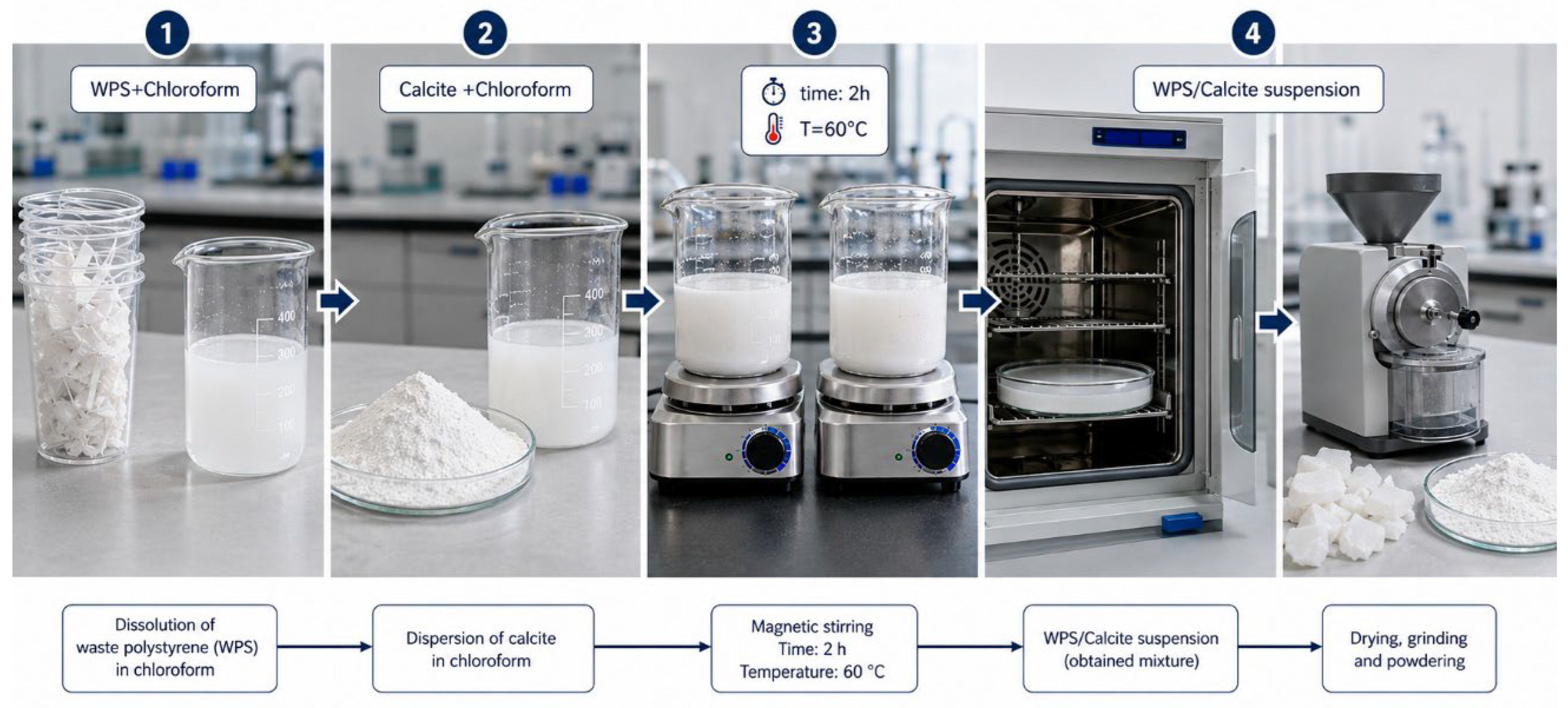
These innovations align with the principles of the circular economy, promoting the dual valorization of plastic waste and locally available mineral resources. In this study, we investigate the transformation of post-consumer polystyrene waste into functional composites by integrating natural calcite sourced from the Gabès region of Tunisia. The composites are synthesized via a solvent-based method using discarded PS cutlery, with the dual objective of reducing environmental impact and enhancing material performance.
To evaluate the structural and thermal behavior of the WPS/CaCO3 composites, we employ a suite of characterization techniques including X-ray diffraction (XRD), infrared spectroscopy (IR), differential scanning calorimetry (DSC), differential thermal analysis (DTA), and photoluminescence (PL).
A comparative overview of the most relevant studies on recycled PS/CaCO
3 composites is presented in
Table 1 to highlight the current research status and identify the remaining knowledge gaps addressed in this work.
As summarized in
Table 1, previous studies have mainly focused on improving the mechanical and thermal performance of recycled or virgin PS composites using commercial or surface-modified CaCO
3. However, limited attention has been devoted to untreated natural calcite, post-consumer waste polystyrene, and the investigation of photoluminescence behaviour, which constitute the main research gaps addressed in the present study.
Although CaCO3 is widely used as a filler in polymer composites, its potential as a multifunctional additive in recycled polystyrene remains largely unexplored. Beyond its filler role, natural calcite may act as a passive photostabilizer by providing physical UV shielding, thereby reducing photo-induced degradation while influencing the thermal behavior of the polymer matrix. Therefore, this study investigates the effect of natural calcite on the structural, morphological, and thermal properties of waste polystyrene (WPS) composites, highlighting their potential for sustainable plastic waste valorization.
Calcium carbonate has been extensively investigated as a reinforcing filler for polymer composites; most previous studies have focused on virgin polymers, commercial CaCO3, surface-modified fillers, or conventional melt-processing techniques. Comparatively fewer investigations have addressed the valorization of post-consumer waste polystyrene using untreated natural calcite through solvent-assisted recycling routes. Moreover, previous studies have mainly concentrated on mechanical and thermal properties, while the optical behaviour and photoluminescence response of recycled PS/CaCO3 composites remain largely unexplored.
The novelty of the present work therefore lies in the combined use of post-consumer waste polystyrene recovered from disposable cutlery and untreated natural calcite originating from the Gabès region of Tunisia as a sustainable mineral reinforcement. Unlike previously reported studies, the composites were prepared through a solution-casting process designed to preserve the integrity of the recycled polymer while promoting homogeneous filler dispersion. Furthermore, this study combines XRF, SEM/EDS, XRD, FTIR, photoluminescence, DSC and TGA analyses to establish correlations between filler dispersion, interfacial interactions, optical behaviour and thermal stability. To the best of our knowledge, the influence of untreated natural calcite on the photoluminescence behaviour of recycled polystyrene composites has not been previously reported. These findings provide new insights into the multifunctional role of natural calcite beyond its conventional use as an inexpensive mineral filler and contribute to the development of sustainable high-value materials within a circular economy framework.
3. Results and Discussion
3.1. Characterization of the Filler
3.1.1. X-Ray Fluorescence Result
The chemical composition of the filler (
Table 3) shows that the composition is exclusively calcium oxide (CaO).
The XRF analysis showed that CaO is the predominant oxide (55.957 wt%), confirming the high purity of the natural calcite used as a mineral filler. Minor amounts of SiO2 (0.251%), MgO (0.142%), and other oxides indicate negligible impurities. Since XRF results are expressed as oxide equivalents, the reported CaO corresponds to the calcium contained in CaCO3, whereas the remaining mass is mainly attributed to CO2, which is released during calcite decomposition and accounted for as the Loss on Ignition (LOI).
3.1.2. Particle Size Distribution of the Filler
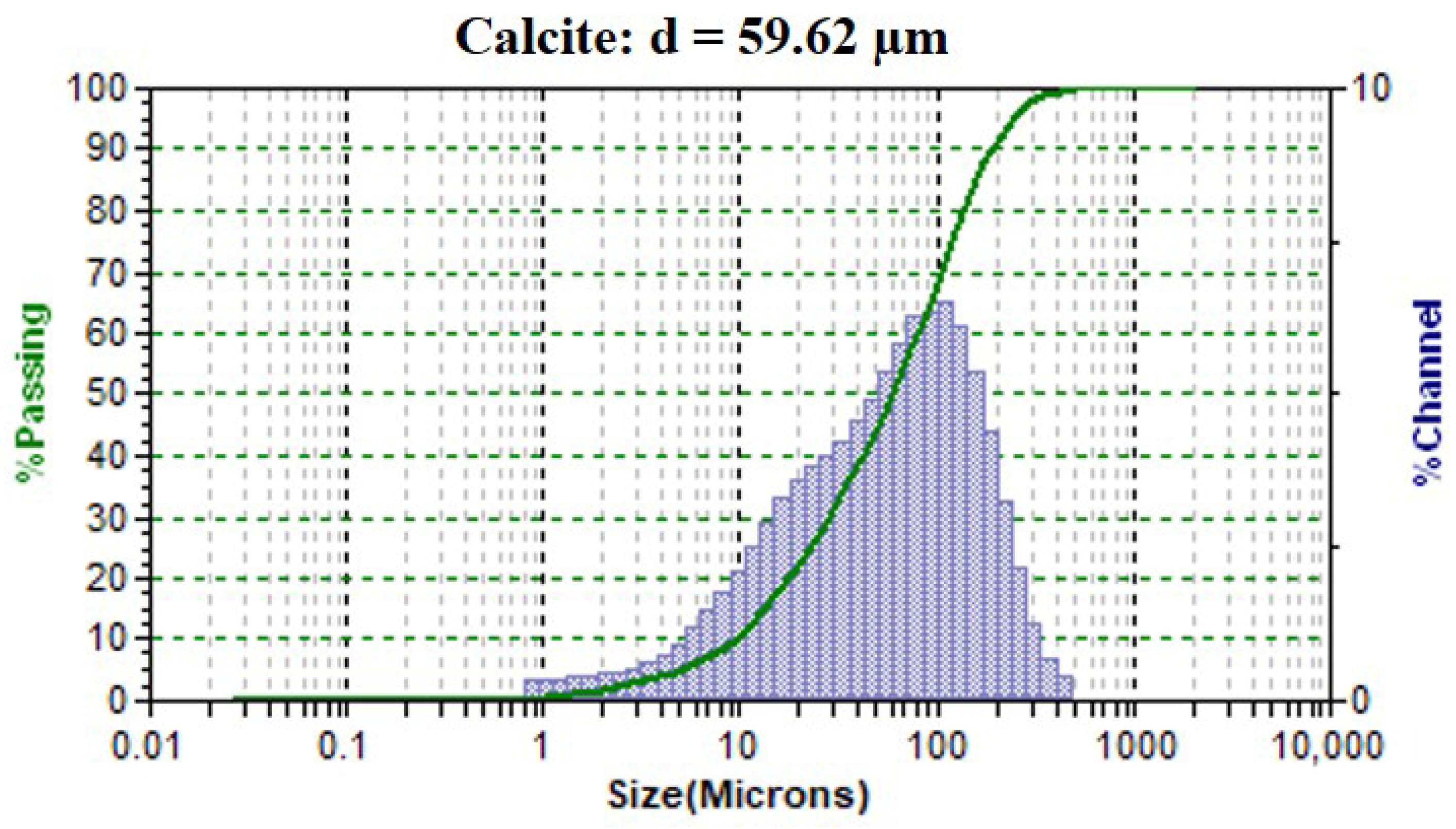
The particle size distribution (PSD) of the calcite (
Figure 2) exhibits a broad unimodal profile spanning from ~1 to 500 µm, centered around a median diameter of 59.62 µm. Such a particle size distribution is highly advantageous, as it facilitates the optimal dispersion of the inorganic filler throughout the polymer matrix. Consequently, this improves the macroscopic homogeneity of the composite and maximizes the interfacial contact area between the phases.
3.1.3. Thermogravimetric Result of the Filler
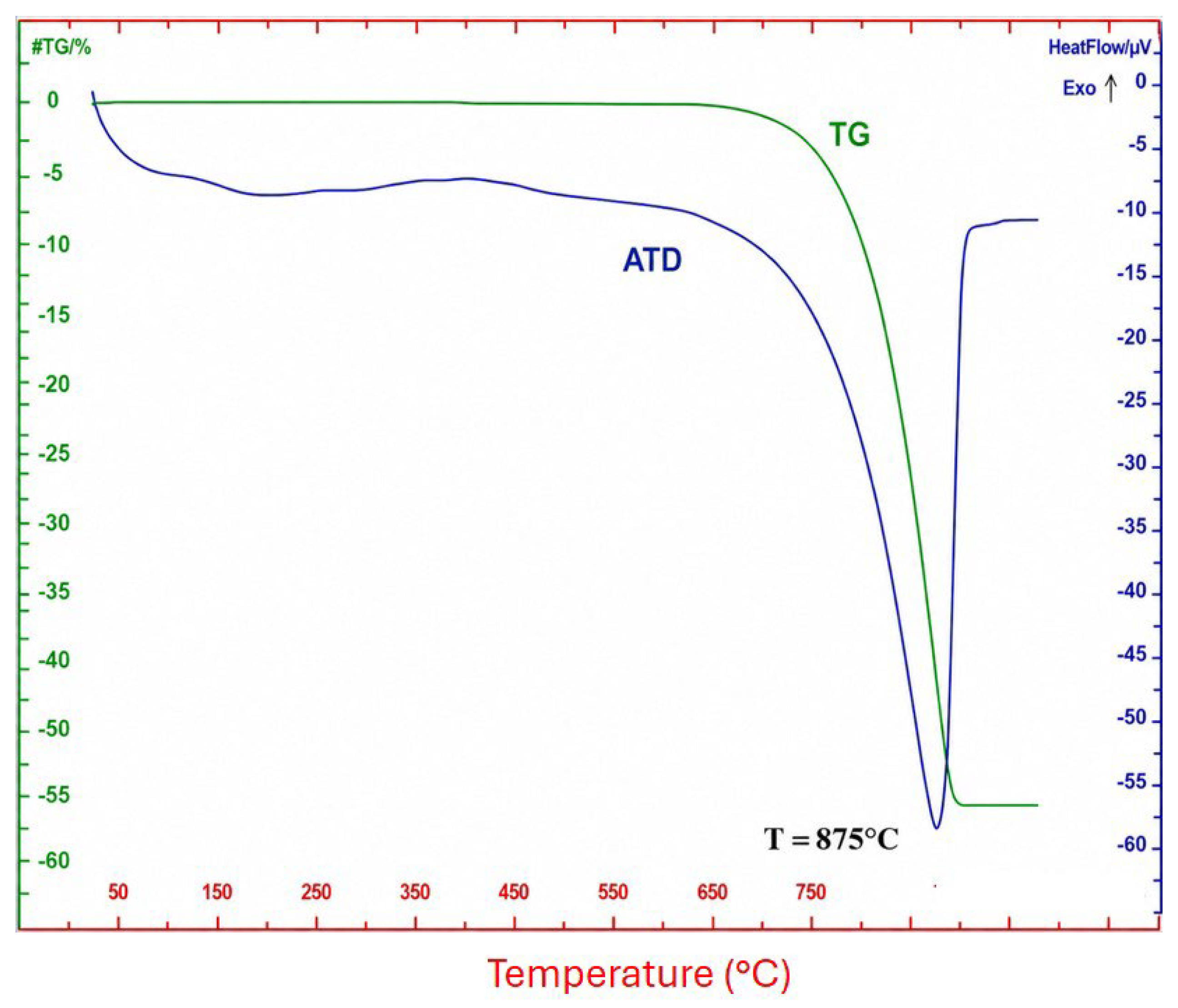
Figure 3 presents the thermogravimetric analysis (TGA) of the calcite sample. An endothermic peak appears at approximately 875 °C [
26]. This stage corresponds to the decomposition of calcium carbonate (CaCO
3) into calcium oxide (CaO) and carbon dioxide (CO
2), as described by Equation (2):
The mass loss observed within this temperature range aligns with the theoretical decomposition of CaCO3, thereby confirming both the thermal purity and the characteristic stability of the mineral filler.
3.2. Morphological and Structural Properties of WPS/Ca Composites
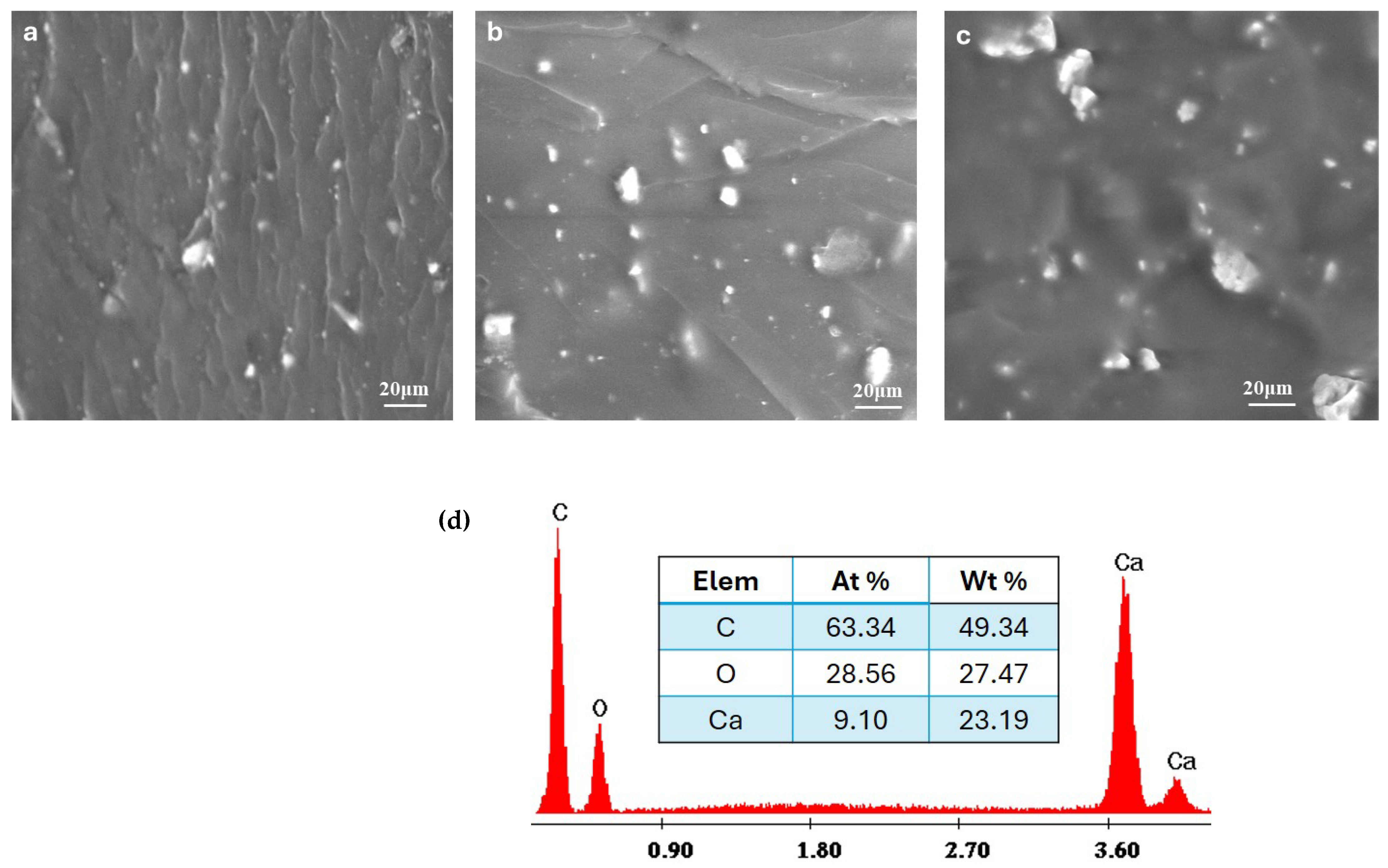
Scanning electron microscopy (
Figure 4) observations of WPS/calcite composites evidence pronounced morphological evolution at the surface as a function of filler content. At a low calcite loading of 2 wt% (
Figure 4a), the particles are uniformly dispersed within the polymer matrix, leading to a relatively smooth and homogeneous surface morphology. The filler appears well embedded, indicating good interfacial adhesion and effective stress transfer. Increasing the filler content to 6 wt% (
Figure 4b) results in a higher surface roughness and particle population, as expected. At the same time, the dispersion remains largely uniform, and no significant phase separation is detected.
In contrast, at 10 wt% calcite (
Figure 4c), the microstructure becomes noticeably heterogeneous, characterized by the presence of particle agglomerates. This morphological transition suggests that the matrix capacity to accommodate additional filler is exceeded, leading to filler–filler interactions dominating over matrix–filler interactions. Such agglomeration is likely to generate localized stress concentrations, which may adversely affect the thermal and mechanical performance of the composite [
19].
The EDS spectrum analysis showed that the majority of the particles were mainly composed of carbon and oxygen, confirming their predominantly polystyrene-based nature. Moreover, the persistent and pronounced calcium peak observed in the spectra indicates the successful incorporation of calcite as a filler within the WPS matrix.
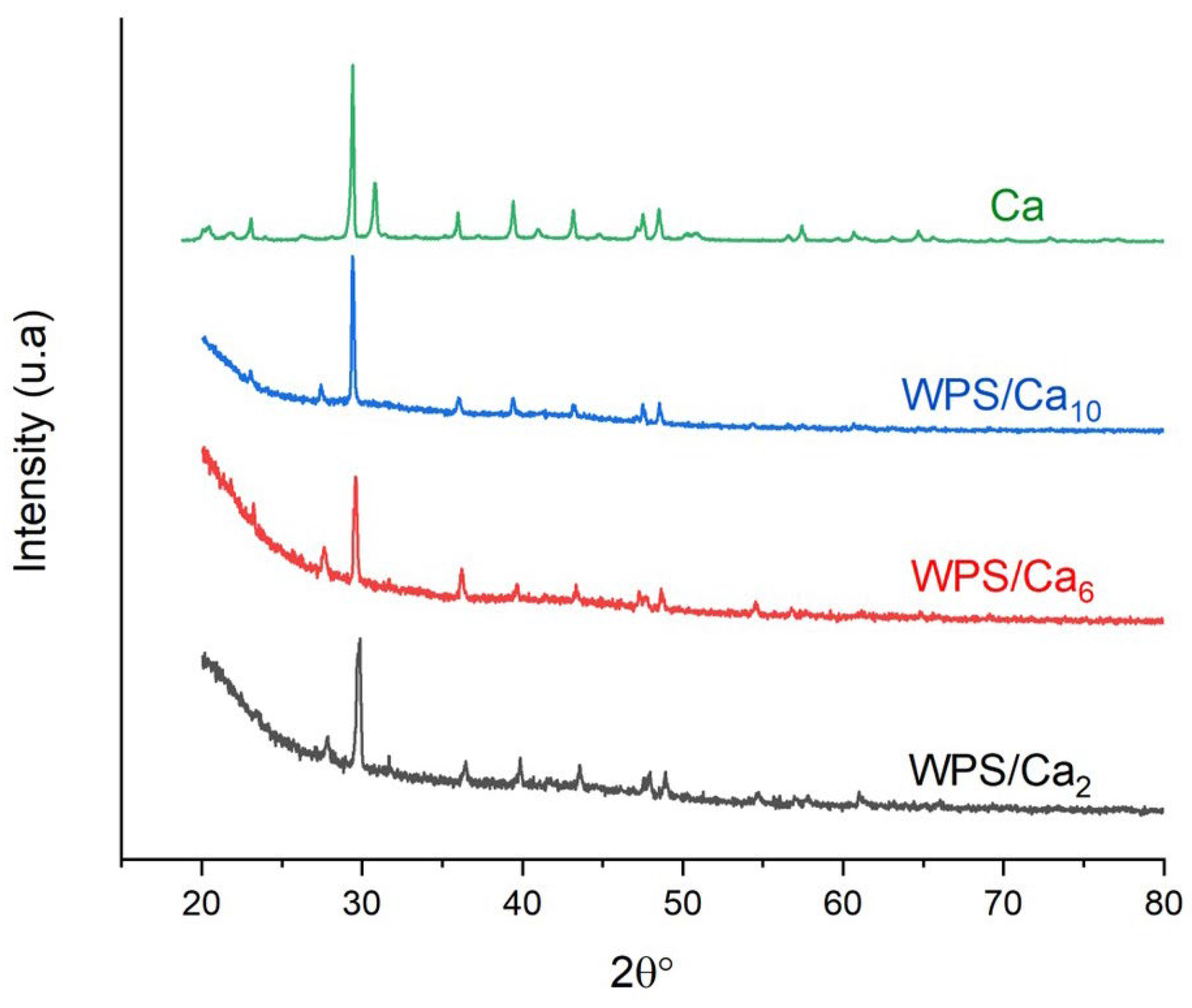
The XRD pattern of pure calcite exhibits the characteristic reflections of rhombohedral CaCO
3, with the dominant peak at 2θ ≈ 29.4° corresponding to the (104) plane, which serves as the primary reference for phase identification (
Figure 5). This same reflection is observed in all WPS/CaCO
3 composites (WPS/Ca
2, WPS/Ca
6, WPS/Ca
10), demonstrating that the calcite preserves its crystalline structure after incorporation into the polymer matrix, with no evidence of phase transformation, peak shifting, or the formation of new crystalline phases [
27]. The progressive increase in the intensity of the (104) peak as the filler loading increases reflects the growing crystalline contribution of calcite within the composite, consistent with previous findings reporting a proportional enhancement in CaCO
3 diffraction intensity with increasing filler content. The persistent amorphous halo of WPS in all diffractograms confirms the coexistence of the polymer and mineral phases, indicating that calcite acts as an inert filler without undergoing interfacial reactions or structural modifications during composite processing.
The crystallite size of calcite (
Table 4) decreases markedly from that of the pure mineral (~54 nm) to the low filler composite WPS/Ca
2 (~18 nm), a behavior resulting from the combined influence of mechanical shear during melt mixing, which induces partial fragmentation of the mineral crystallites, and the confinement imposed by the WPS matrix, which generates interfacial micro stresses responsible for additional peak broadening and a reduced apparent crystallite size according to the Scherrer relation [
28].
At higher filler loadings, the increased tendency of calcite particles to aggregate reduces the confinement imposed on individual crystallites, resulting in diffraction patterns that more closely resemble those of bulk calcite. This behavior reflects the well-established propensity of CaCO3 to form aggregates at elevated concentrations within polymer matrices.
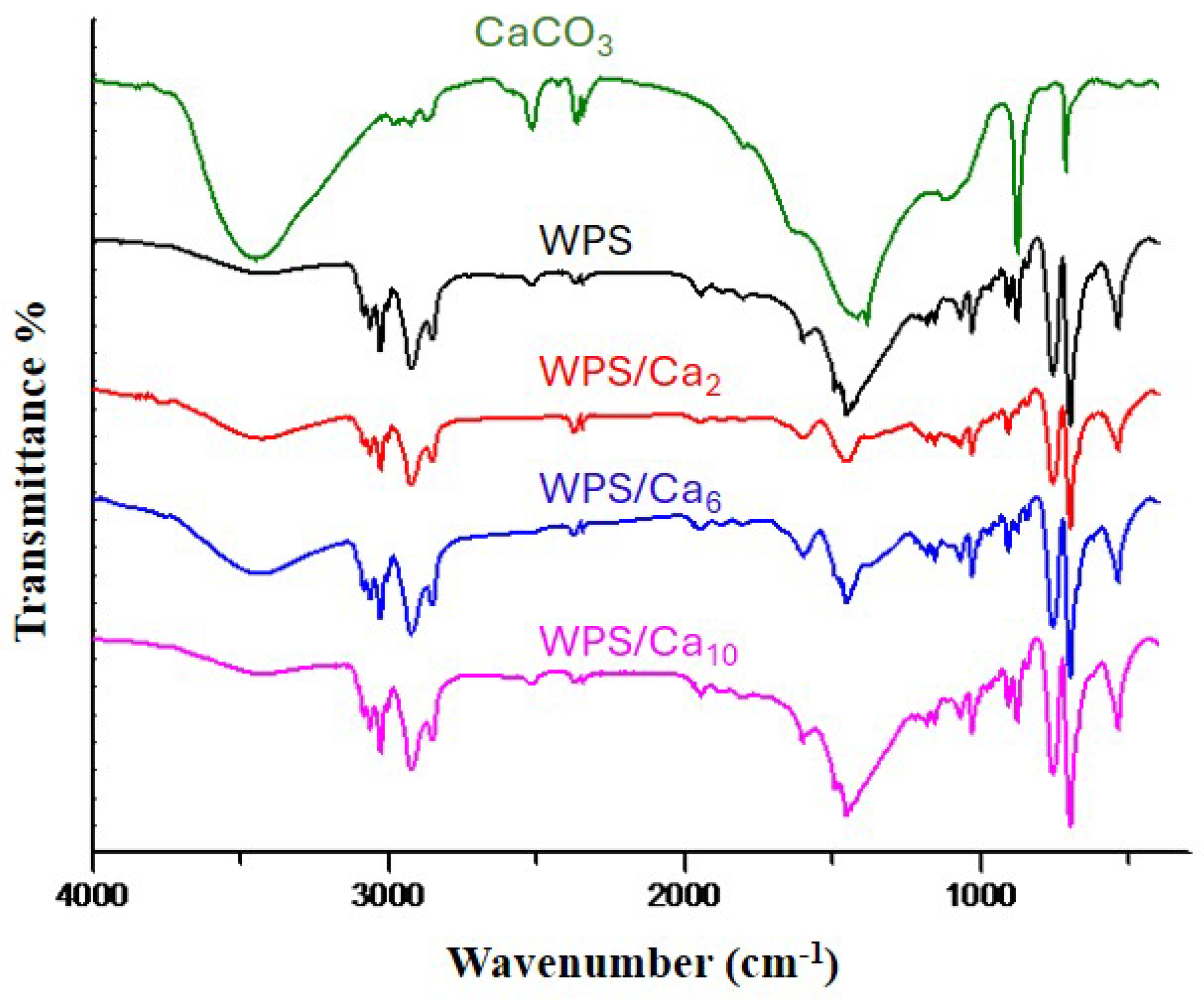
The FTIR ATR spectrum of waste polystyrene (WPS) exhibits strong and well-defined characteristic absorption bands, as summarized in
Table 5.
The FTIR spectra of the WPS/CaCO
3 composites (
Figure 6) display all the characteristic absorption bands of polystyrene, including the aromatic C–H stretching at 3028 cm
−1, the aliphatic C–H stretching at 2882 cm
−1, and the phenyl ring vibrations at 1610, 1446, 900, and 675 cm
−1, confirming that the polymer structure is preserved after incorporation of the mineral filler. The composites also exhibit the distinctive carbonate bands of calcite at 1426, 874, and 712 cm
−1, which appear slightly broadened due to overlap with the polymer signals, indicating the coexistence of both phases within the matrix [
29]. A minor shift in the carbonate stretching bands (ν C–O) toward higher wavenumbers, together with an increase in their intensity as the filler loading increases, suggests weak but detectable interactions between the polymer chains and the mineral particles. The characteristic vibrational bands of polystyrene also undergo slight shifts to higher frequencies, particularly for the aromatic C–H stretching and in-plane deformation modes. Additionally, the emergence of a weak band near 1803 cm
−1, possibly associated with carbonyl-related vibrations induced by the presence of calcite, supports the presence of subtle chemical interactions or physical adsorption phenomena between CaCO
3 and the WPS matrix [
30].
3.3. Photoluminescence Property of Composite WPS/CaCO3
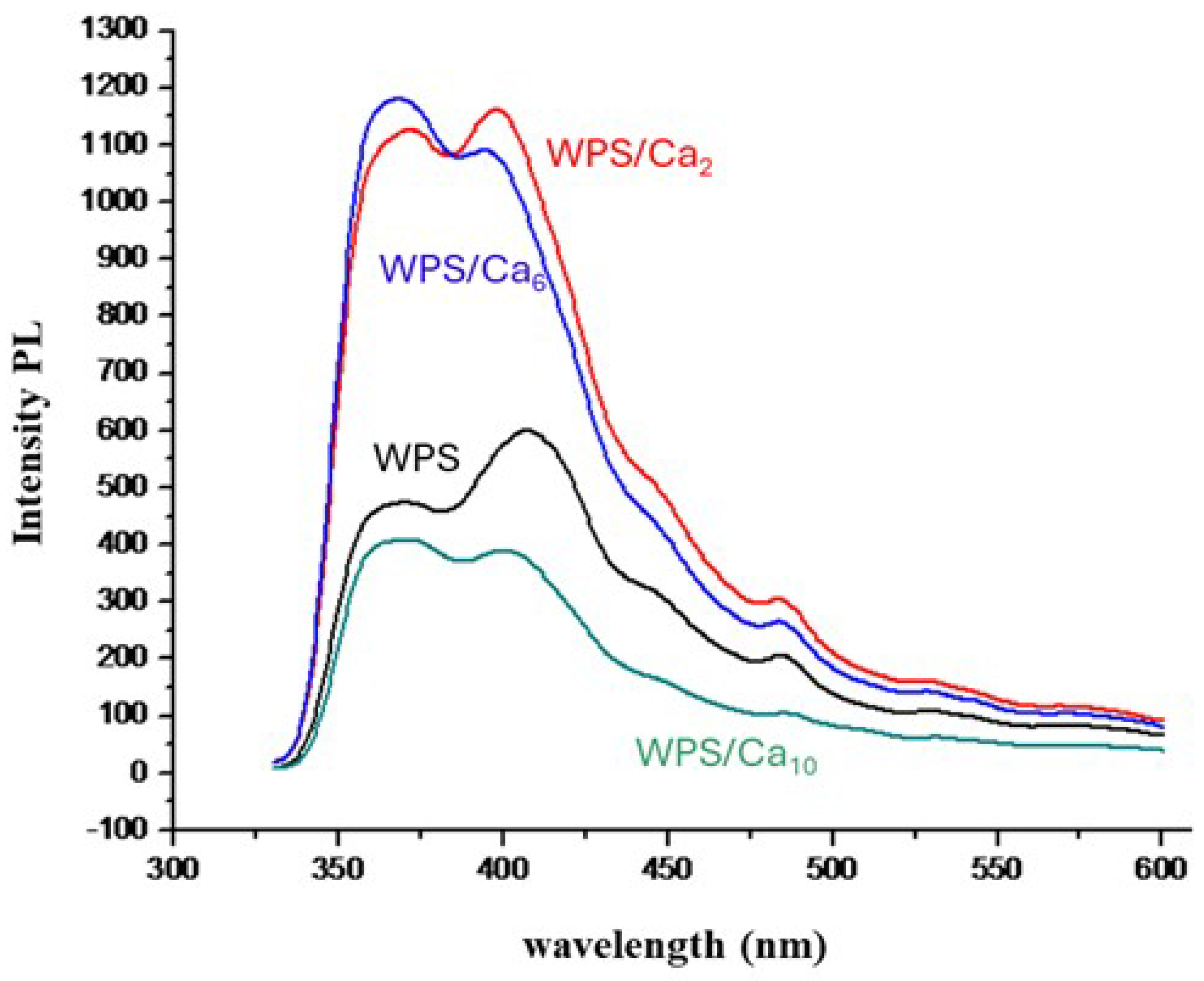
The photoluminescence (PL) spectra of pure WPS and WPS/CaCO
3 composites, recorded at room temperature, are presented in
Figure 7. All samples exhibit two distinct emission bands: The first emission band (monomer), centered at approximately ~370 nm (FM), is assigned to the intrinsic fluorescence (monomer emission) of isolated phenyl groups in the polystyrene chains. This band originates from π→π electronic transitions associated with the aromatic rings of the polymer. The second, broader and red-shifted band at ~406 nm corresponds to excimer emission (FE), attributed to π→π* and n→π*; excited-state interactions between adjacent phenyl groups that adopt a face-to-face ("sandwich") configuration following local rotation of the polymer segments. Because both emission bands are also observed in neat WPS, their origin is primarily associated with the polystyrene matrix rather than with the calcite filler. The excimer forms through a local rotation of polymer segments, enabling a face-to-face “sandwich” arrangement between adjacent phenyl groups, consistent with intramolecular interactions reported in earlier studies [
31,
32,
33].
Natural calcite is not expected to exhibit significant intrinsic photoluminescence in this spectral region. Although trace impurities or structural defects present in natural CaCO3 may contribute weak luminescence, their contribution is considered negligible compared with that of the polymer matrix. Therefore, the role of calcite is mainly indirect, influencing the emission behavior through modifications of polymer chain mobility, filler dispersion, and polymer–filler interfacial interactions rather than acting as an independent luminescent center.
The incorporation of calcite into the WPS matrix induces a significant and concentration-dependent modification of the PL intensity. At low to moderate filler loadings, WPS/Ca
2 and WPS/Ca
6 composites exhibit a pronounced enhancement in emission intensity, reaching values of approximately 1100–1200 a.u. compared to ~600 a.u. recorded for pure WPS (
Table 6). Photoluminescence measurements in WPS/CaCO
3 systems have previously shown that the optical response is sensitive to both filler concentration and surface modification state [
22], consistent with the role of well-dispersed CaCO
3 particles as optical scattering centers that increase the effective optical path length within the matrix. Furthermore, this intensity enhancement provides indirect but compelling evidence of a homogeneous dispersion of calcite particles within the polymer network and confirms the existence of effective interfacial interactions between the mineral filler and the WPS chains, in full agreement with the structural modifications observed in XRD and FTIR analyses. The increase in PL intensity observed at 2 and 6 wt% therefore reflects improved interfacial compatibility and restricted non-radiative relaxation pathways resulting from the homogeneous dispersion of calcite particles within the polymer matrix.
However, a reversal of this trend is observed at higher filler content, as WPS/Ca
10 displays a marked quenching of PL emission, with intensity dropping to ~400 a.u., significantly below that of pure WPS. This phenomenon is ascribed to concentration quenching, whereby the excessive presence of CaCO
3 particles promotes filler agglomeration, introducing structural heterogeneities that reduce the bonding strength between the matrix and the filler, and generating non-radiative recombination centers that compete with radiative emission pathways [
34]. Luminescence techniques are sensitive probes of defects in the CaCO
3 crystal structure, further supporting the interpretation that beyond an optimal loading, the dispersion quality deteriorates and locally compromises the filler–matrix interfacial compatibility [
35].
Overall, these results indicate that the observed emission bands originate predominantly from the polystyrene matrix, whereas the addition of calcite modulates their intensity through changes in morphology, interfacial interactions, and polymer chain dynamics, rather than through direct luminescent emission from the mineral filler itself.
Additionally, the presence of rigid inorganic particles locally restricts segmental mobility near the polymer–filler interface. This steric hindrance impedes the formation of the face-to-face conformation required for excimer emission, leading to lower excimer yield and reduced photochemical quenching efficiency, in agreement with Al-Ani et al. [
36]. In this context, CaCO
3 behaves as a passive photostabilizer by providing physical UV shielding rather than participating in energy transfer processes.
These results further confirm the homogeneous dispersion of calcite within the polymer matrix, consistent with the trends observed in XRD and FTIR spectra.
Taken together, the structural, morphological, and photoluminescence results reveal a clear concentration-dependent effect of CaCO3 incorporation into the WPS matrix. At low and intermediate filler contents (2 and 6 wt%), the relatively homogeneous dispersion of calcite particles observed by SEM is accompanied by an enhancement of the PL intensity, suggesting that a good filler dispersion favors effective polymer–filler interfacial interactions and modifies the local polymer chain environment. This behavior is consistent with the XRD and FTIR results, which confirm the incorporation of the calcite phase and reveal changes in the vibrational features of the polymer–filler system. In contrast, at 10 wt% CaCO3, the SEM observations reveal more pronounced particle agglomeration, which coincides with a marked decrease in PL intensity. This concentration-dependent transition suggests that excessive filler loading promotes filler–filler interactions and morphological heterogeneity, thereby reducing the efficiency of the polymer–filler interface and favoring non-radiative relaxation processes. The thermal results follow the same general trend, with increasing CaCO3 content progressively increasing the onset decomposition temperature and residual mass. Thus, the combined results indicate that CaCO3 content governs the balance between filler dispersion, structural/interfacial interactions, photoluminescence response, and thermal behavior. Intermediate CaCO3 contents (2–6 wt%) provide a favorable balance between dispersion and optical response, whereas the higher loading of 10 wt% promotes agglomeration and PL quenching, although it contributes to delaying the onset of thermal degradation.
3.4. Thermal Result
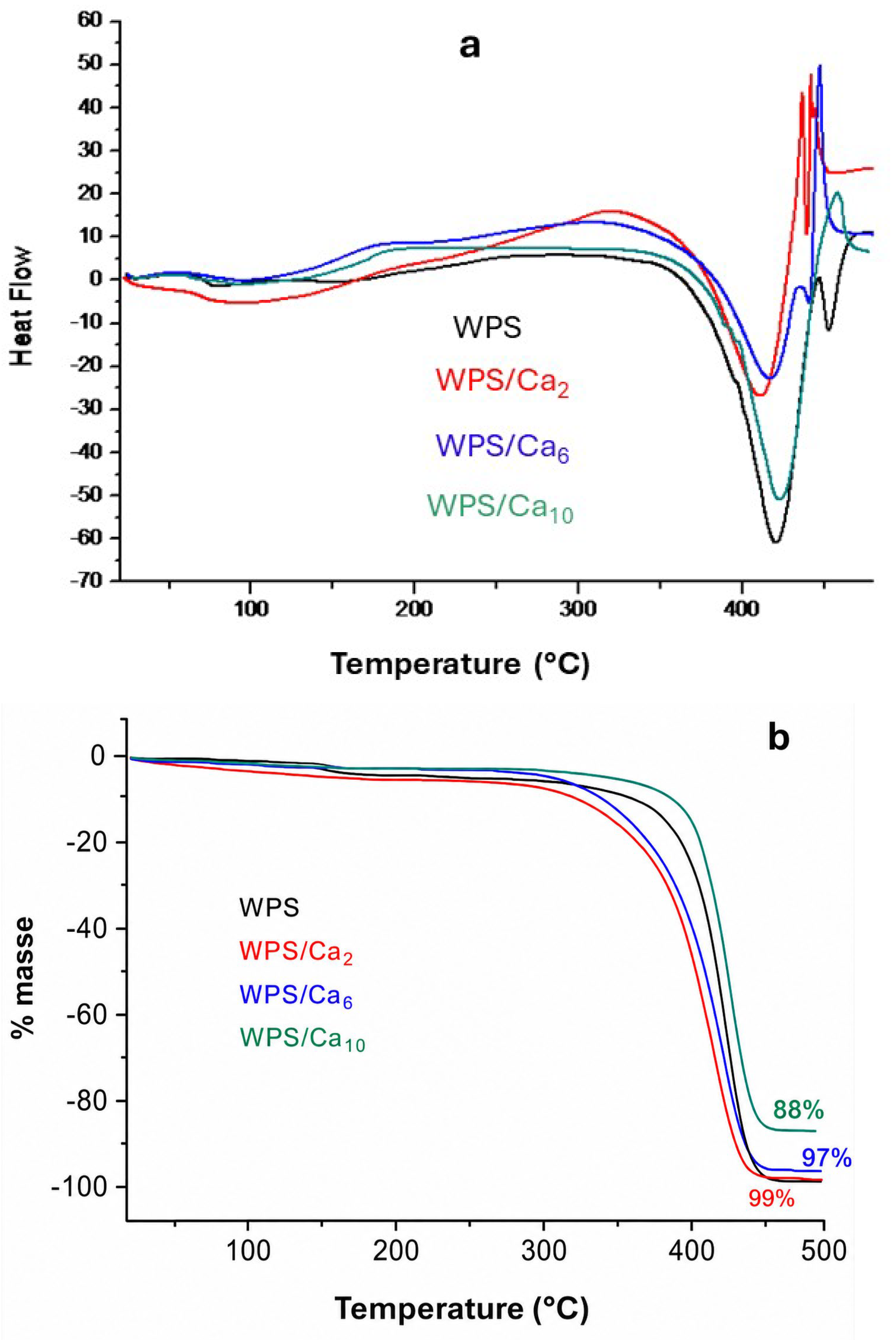
Thermal gravimetric analysis (TGA), coupled with differential thermal analysis (DTA) and differential scanning calorimetry (DSC), was employed to investigate the effect of calcite on the thermal stability of the WPS matrix. The corresponding thermograms are presented in
Figure 8 and
Figure 9, and the resulting characteristic parameters are summarized in
Table 7.
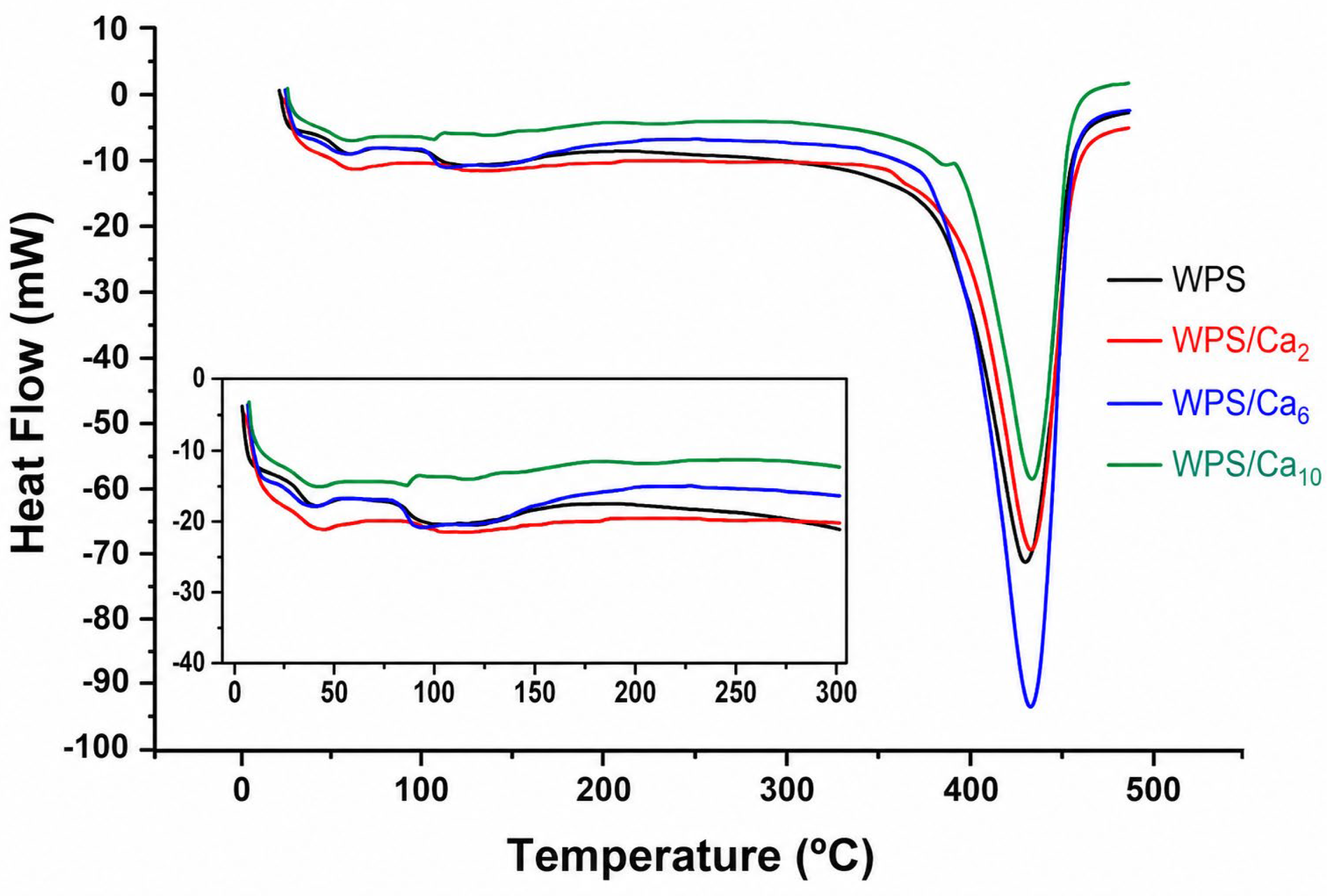
The pure WPS matrix exhibits a monokinetic degradation profile, characterized by near-complete mass loss (
Figure 8a), indicating total polymer pyrolysis. The onset decomposition temperature (Tonset) is 375 °C. The DTA thermogram (
Figure 8b) shows a distinct endothermic peak centered at 429 °C (693 K), corresponding to the maximum decomposition temperature (Td), with a decomposition enthalpy of −766 J/g. This single peak is typical of a mechanism dominated by the chain of the polystyrene.
The incorporation of CaCO3 significantly modifies the degradation kinetics. For filler loadings of 2 wt%, 6 wt%, and 10 wt%, Tonset shifts to 376 °C, 378 °C, and 385 °C, respectively. This shift towards higher temperatures, particularly pronounced at 10 wt% (+10 °C), reveals a stabilizing effect of the inorganic filler.
The evolution of the residual mass after pyrolysis (
Figure 8a) confirms this trend. While pure WPS leaves no residue, the composites exhibit increasing char contents: 1 wt% (WPS/Ca
2), 3 wt% (WPS/Ca
6), and 12 wt% (WPS/Ca
10). The non-additive nature of these residues suggests physico-chemical interactions at the polymer–filler interface or, according to some studies, the presence of trapped residual solvents that influence the initial stages of pyrolysis.
Overall, these results highlight a modest improvement in the thermal stability of WPS induced by calcite. This stabilization is attributed to strong interfacial interactions between the polymer chains and the mineral particles, acting as physical cross-linking points. They restrict chain mobility, hinder the diffusion of volatile degradation products, and thus delay the comprehensive decomposition process.
Although the increase in the maximum decomposition temperature (Td) is relatively limited (approximately 3 °C), its practical relevance should be considered together with the progressive increase in the onset decomposition temperature (Tonset) and the higher residual char content observed as the calcite loading increases. These combined results indicate that natural calcite does not fundamentally modify the thermal degradation mechanism of waste polystyrene but rather delays the initiation of degradation through a physical barrier effect and the restriction of polymer chain mobility at the polymer–filler interface. Consequently, the primary contribution of CaCO3 is a modest enhancement of thermal stability rather than a substantial increase in the ultimate decomposition temperature. Such behavior is consistent with that commonly reported for conventional mineral fillers, whose principal role is to retard thermal degradation and improve processing stability rather than dramatically increase the decomposition temperature.
Pure WPS exhibits a distinct glass transition (Tg) at approximately 60 °C, corresponding to the transition from the rigid glassy state to the amorphous rubbery state, a value consistent with reported data for polystyrene-based systems (
Figure 9).
As reported in the literature, the addition of rigid fillers such as CaCO
3 can modify the polymer Tg [
37]. In WPS/CaCO
3 composites, the presence of mineral particles restricts the cooperative movements of chain segments, particularly at the polymer–filler interface. This decrease in mobility, linked to the previously described interfacial interactions, results in a slight shift in Tg toward higher temperatures. This behavior confirms the existence of an interfacial structuring favorable to the thermomechanical stabilization of the composite [
38].





 ,
,