Article

Selective Removal of Aluminum and Impurity Metals from End-of-Life Photovoltaic Panels Using Hydrochloric Acid Pretreatment: Optimization Through Response Surface Methodology


by
Payam Ghorbanpour
,
Pietro Romano
*,
Hossein Shalchian
and
Nicolò Maria Ippolito
Department of Industrial and Information Engineering and Economics (DIIIE), Engineering Headquarters of Roio, University of L’Aquila, 67100 L’Aquila, Italy
*
Author to whom correspondence should be addressed.
Appl. Sci. 2026, 16(12), 5940; https://doi.org/10.3390/app16125940
Submission received: 11 May 2026 / Revised: 7 June 2026 / Accepted: 10 June 2026 / Published: 12 June 2026
(This article belongs to the Special Issue Resource Recovery and Utilization of Industrial Waste: 2nd Edition)

Abstract

The rapid growth of photovoltaic panels installations has led to a dramatic increase in the end-of-life (EoL) panels, creating an urgent need for efficient recycling strategies. In the present study, a pretreatment system consisting of hydrochloric acid was developed to remove impurity metals such as aluminum and iron from EoL PV panel powder prior to the precious metals leaching step. Response surface methodology (RSM) based on a central composite design (CCD) was employed to optimize the effects of main operational parameters, i.e., HCl concentration, leaching time, and solid-to-liquid (S/L) ratio on the dissolution of Al, Fe, Pb, Sn, and Cu. Thermodynamic analysis with the help of HSC Chemistry® 10 software, confirmed the feasibility of dissolution of the Al, Fe, Pb, Sn, and Cu in chloride media. Experimental results demonstrated that the dissolution rate of Al and Fe under optimal conditions were 86.05 and 91.77 percent, respectively. In all of the tests, copper dissolution remained negligible (<4%), and no silver was detected which confirms the selectivity of the pretreatment. The optimized conditions (1.5 M HCl, 198 min, 20% S/L) enabled effective impurity removal while preserving silver in the solid residue. This study highlights the importance of selective pretreatment in enhancing downstream silver recovery and provides a practical approach for the hydrometallurgical recycling of end-of-life PV waste.

1. Introduction

In recent decades, the rapid global deployment of photovoltaic (PV) panels has represented one of the greatest achievements of the energy transition. PV modules have enabled large-scale electricity generation with minimal emissions. Based on recent EU targets, by 2050, more than 50% of energy generation is expected to come from solar energy. The increased use of this technology presents a significant challenge: the management of end-of-life (EoL) modules. It is estimated that the amount of EoL PV modules will reach 60–80 million tons by 2050 [1,2,3,4]. Since 2012, EoL PV panels have been included within the scope of the Waste Electrical and Electronic Equipment (WEEE) Directive in the EU, which requires Member States to achieve a collection rate of 85% and a recycling rate of 80% [5]. PV panels can be classified into different categories, i.e., crystalline silicon (c-Si), cadmium telluride (CdTe), copper indium gallium selenide (CIGS), and emerging perovskite-based systems. Among them, crystalline silicon modules dominate the global market, accounting for more than 90% of annual photovoltaic production. In contrast, CdTe and CIGS technologies represent a relatively small fraction of the market. The composition of photovoltaic modules strongly depends on the technology employed. Crystalline silicon modules mainly contain glass, aluminum, silicon, silver, copper, lead, tin, and polymeric materials, whereas CdTe modules contain cadmium and tellurium and CIGS modules contain copper, indium, gallium, and selenium. Due to the fact that crystalline silicon modules represent the overwhelming majority of installed photovoltaic capacity and constitute the dominant future waste stream, the present study focuses on the recovery of valuable metals from crystalline silicon photovoltaic waste [6,7]. From a material point of view, although the majority of the EoL PV panel mass consists of glass (~70%) and aluminum frames (~13%), the PV cell layer contains a complex mixture of critical and potentially hazardous elements, i.e., silver, copper, aluminum, lead, tin, and iron [3,8]. Based on these elements, it is evident that this type of waste stream demands recycling strategies that are not only compliant with regulations but also capable of recovering valuable and precious materials in a technically efficient and environmentally friendly way. Since current regulatory frameworks, such as the EU WEEE Directive, primarily emphasize mass-based recovery targets, industrial recycling operations usually focus on recovering bulk materials, while the solar cell part is frequently discarded. This practice leads to the loss of critical materials and undermines the circular economy potential of PV recycling [9,10,11]. Among all materials which exist in the solar cell part of a PV panel, silver has attracted the most attention due to its high economic value and also strategic importance. Because the silver content in EoL PV modules is comparable to the primary silver sources, PV recycling sectors could have a significant share of the global silver supply chain [1,12,13].
Most recycling processes for secondary sources such as WEEE consist of three stages: Delamination, Leaching, and Extraction and Purification [14,15]. For the delamination step of EoL PV panels, various mechanical, thermal, and chemical processes are used to separate the solar cell from frames, glass, junction boxes, backsheet, EVA, and so on. Common delamination techniques include manual dismantling, hot-knife separation, thermal decomposition of EVA, solvent-assisted delamination, and mechanical crushing routes, depending on the panel design and desired recovery targets [16,17,18,19,20]. The aim of the leaching step is to dissolve the metals in acidic or alkaline media [14,21,22,23]. After leaching, extraction and purification processes are required to obtain the desired purity level of each metal. In order to maximize the selectivity and purity of metals, hydrometallurgical techniques such as Solvent Extraction (SX) [24,25], Ion Exchange [26], Precipitation [27], Electrowinning [28], Flotation [29], Membrane Technologies [30], and so on, are used.
Although most studies have focused on the optimization of silver and on silicon recovery, it is necessary to pay attention to removing larger quantities of base and impurity metals such as Al, Cu, Fe, Pb, Sn, and so on [15]. Among these metals, aluminum and iron play a particularly dominant role. Aluminum is extensively used as a back contact layer and is often present in multiple chemical forms after mechanical processing, including metallic aluminum and aluminum oxides. Due to its high chemical reactivity, aluminum strongly influences the behavior of hydrometallurgical systems and represents one of the most critical challenges in silver recovery. In many leaching systems that were used for EoL photovoltaic panels, besides silver, aluminum can dissolve. This causes the high concentrations of Al3+ ions in the pregnant leach solution (PLS) [29,31,32]. Considering the fact that the aluminum content of solar panels is much higher than silver, this higher concentration of aluminum ions in PLS could significantly interfere with downstream silver recovery processes like solvent extraction [14], membrane separation [33], and electrowinning [28], and may decrease the silver selectivity. Also, elevated concentrations of aluminum in PLS could promote the formation of gelatinous hydroxide precipitates during neutralization and complicate the solid–liquid separation [14,29]. Besides interfering in the downstream processes, aluminum and iron removal is necessary to prevent the galvanic replacement effect on the leaching of silver. Galvanic replacement occurs when a more electrochemically active metal is oxidized in the presence of a more noble metal ion, resulting in the deposition of that noble metal [34,35]. Table 1 shows the standard reduction potential of the main metals that are present in the solar cells [36,37,38].
The large positive differences between the reduction potential of silver ions with aluminum (+2.46 V) and iron (+1.24 V) demonstrate a strong thermodynamic driving force for reducing Ag+ ions to metallic Ag0 according to the reactions below [35,36,37,38,39,40,41]:
A l ( s ) A l a q 3 + + 3 e
F e ( s ) F e a q 2 + + 2 e
A g ( a q ) + + e A g ( s )
This phenomenon may lead to uncontrolled cementation of silver on aluminum or iron surfaces, decreasing silver recovery efficiency, altering leaching kinetics, and complicating the process. Therefore, effective pretreatment and selective removal of aluminum and iron prior to leaching of silver are essential to suppress galvanic replacement reactions, stabilize silver in solution, improve the overall selectivity, and decrease the cost of downstream processes.
Several hydrometallurgical routes have been investigated for the recovery of precious and base metals from EoL PV panel modules, with particular emphasis on silver, due to its high economic value. Nitric acid is one of the most widely investigated lixiviants because of its high dissolution efficiency toward silver [14,42]. Due to environmental problems of using nitric acid especially NOx production, alternative systems based on sulfuric acid combined with oxidizing agents such as hydrogen peroxide, ferric sulfate, and persulfate mixtures, with and without complexing agents (mostly thiourea), have also been investigated and demonstrated high silver recovery efficiencies [4,14,42,43]. Nevertheless, most studies have primarily focused on maximizing silver extraction rather than controlling the dissolution of impure metals which can improve the overall selectivity and also control the unwanted co-reactions during downstream processes. Recent investigations have highlighted that significant amounts of aluminum can be transferred to PLS during silver leaching, which may generate substantial challenges for purification steps, i.e., solvent extraction, precipitation, electrowinning, and so on. According to the considerably high amounts of aluminum compared with silver in photovoltaic cells, even moderate aluminum dissolution rate may result in high impurity concentrations orders of magnitude higher than silver which is the target metal [7]. From an industrial perspective, this issue will become more important due to the fact that future recycling facilities will need to process large quantities of EoL photovoltaic waste while maintaining high metal selectivity, minimizing reagent consumption, reducing wastewater generation, and simplifying downstream purification operations [6,44].
Despite the recognized importance of impurity control, studies specifically focused on the selective removal of aluminum and other impure metals from the photovoltaic cell powders prior to silver leaching remain relatively limited, particularly under ambient-temperature conditions. Therefore, the present work investigates hydrochloric acid pretreatment as a selective impurity removal stage under ambient conditions. Unlike conventional studies that focused directly on silver dissolution, this work aims to optimize and investigate the effect of operational parameters on the removal of aluminum, iron, lead, and tin while preserving silver in the solid residue, thereby creating a cleaner feedstock for subsequent silver recovery and contributing to the development of more industrially viable PV recycling flowsheet.
Hydrochloric acid was selected as the pretreatment reagent because of its economical and operational advantages. Compared with nitric acid, HCl is generally less expensive and does not generate NOx emissions. In contrast to sulfuric acid-based systems that often require oxidizing agents, hydrochloric acid can be applied without additional oxidants during the pretreatment stage, reducing reagent consumption and process complexity. In addition, the process can be conducted under ambient conditions, minimizing energy requirements [14,15,29,42].
Considering that silver forms insoluble AgCl in chloride media such as hydrochloric acid, while copper does not dissolve in HCl without using an oxidizing agent, hydrochloric acid could be considered as a particularly attractive option for selective impurity removal prior to the main leaching step [45,46,47]. However, the mass transfer rate and consequently dissolution yield of the metals in HCl pretreatment strongly depend on the operational parameters such as the concentration of acid, reaction time, pulp density, temperature, and so on. These variables do not act independently. Traditional experimental approaches based on changing one parameter at a time are not sufficient for investigating these interactions. In contrast, Response Surface Methodology (RSM) can systematically and statistically optimize multivariable systems. By using Central Composite Design (CCD), RSM enables the identification of optimal operating conditions while minimizing experimental effort and improving the process predictability [4,30].
In a previous study conducted by the present authors, a sustainable nitric acid-free system based on sulfuric acid as a leaching agent and ferric sulfate as an oxidizing agent was developed for silver recovery from end-of-life photovoltaic panels. Although that work demonstrated the feasibility of achieving high dissolution rates for silver (more than 85%) and copper (more than 96%), approximately 60 percent of aluminum was also dissolved which is a significant problem for downstream processes [4]. The present work was designed as a complementary pretreatment stage to the previous system, specifically addressing the aluminum interference problem identified therein.
Unlike conventional studies in the field of EoL PV panels recycling that focuses on maximizing silver recovery, the present study focus on the optimization of the removal of aluminum and other impure metals from end-of-life photovoltaic panel powder using hydrochloric acid leaching under ambient conditions as a critical pretreatment step. Since aluminum has the worst effect on the downstream processes, particular attention is given to aluminum dissolution. Response surface methodology is employed to optimize the key operational parameters, including (i) acid concentration, (ii) time, and (iii) pulp density with the aim of maximizing Al removal. By explicitly addressing aluminum removal as a pretreatment for efficient silver and copper leaching, this work seeks to contribute to the development of an industrially viable recycling process flowsheets for PV panel recycling.

2. Materials and Methods

The photovoltaic (PV) panel powder investigated in this study was supplied by an industrial first-stage recycling facility specializing in the preliminary dismantling of end-of-life PV modules using Solar 4.0 process [10,48]. At this stage, aluminum frames and bulk metallic components are recovered prior to further material processing. Glass separation was carried out using dedicated steel-based delamination tools, allowing the glass layer to be removed without introducing cross-contamination. The remaining laminate was subsequently shredded, followed by mechanical separation steps yielding discrete fractions of copper, polymeric materials, and a fine silicon-rich powder, which constituted the feed material for the present work. Since the end-of-life PV panel powders are not homogeneous, all of the samples were taken using automatic sample divider (PT 100, Retsch GmbH, Haan, Germany). The total metal content of the as-received powder was quantified through the complete digestion using aqua regia prepared in a volumetric ratio of 3:1 hydrochloric acid to nitric acid (both analytical grade, 37%, and 65%, respectively; Sigma-Aldrich, St. Louis, MO, USA). Following digestion, elemental concentrations were determined by inductively coupled plasma optical emission spectrometry (ICP-OES 5100, Agilent Technologies, Santa Clara, CA, USA). Particle size distribution analysis was performed using laser diffraction (Mastersizer 2000, Malvern Instruments, Malvern, UK), providing quantitative insight into the granulometric characteristics of the material. Microstructural features and elemental distribution of the feedstock and solid residue after leaching in optimized conditions were examined by scanning electron microscopy coupled with energy-dispersive X-ray spectroscopy (SEM–EDS, Gemini SEM 500, Carl Zeiss Microscopy GmbH, Oberkochen, Germany). In addition, the powders were analyzed by X-ray diffraction (XRD, D8 Advance, Bruker AXS GmbH, Karlsruhe, Germany) before and after leaching to assess the effectiveness of the pretreatment process.
All chemicals employed throughout the experimental studies were of analytical grade. Sulfuric acid and ferric sulfate hexahydrate were used as leaching reagents where applicable, with particular emphasis on silver dissolution behavior after leaching pre-treatment which was done to remove most of the aluminum and some other impurities.
The experimental matrix for the leaching studies was established using the response surface methodology (RSM) based on a central composite design (CCD). This design framework enabled systematic evaluation of both individual and interactive effects of three operational variables: hydrochloric acid concentration, leaching duration, and solid-to-liquid (S/L) ratio. The CCD consisted of three center points, eight factorial points, and six axial points, resulting in a total of 17 experimental runs. The selection of factor ranges was done by preliminary laboratory investigations and prior studies, ensuring that all conditions fell within practically relevant operating windows. The complete experimental design is summarized in Table 2. Statistical modeling, data analysis and optimization according to maximizing the removal efficiencies of impurity metals were performed using Design-Expert software (version 13).
Leaching experiments were conducted in an aqueous hydrochloric acid medium. Preliminary screening tests at room temperature (25 °C) demonstrated that effective removal of aluminum and iron impurities could be achieved without thermal assistance. Consequently, all experiments were performed at ambient temperature to focus on optimizing chemical and operational parameters while maintaining conditions favorable for the development of low-energy, room-temperature hydrometallurgical processes.
For each experiment, a predetermined mass of PV powder, corresponding to the target S/L ratio, was added to 25 mL of freshly prepared leaching solution in a glass reactor. The suspension was agitated at a constant rotational speed of 250 rpm and 25 °C for the specified contact time using a thermostatic shaking incubator (FS-50B, IKEME, Guangzhou IKEME Technology Co., Ltd., Guangzhou, Guangdong, China). Upon the completion of the leaching step, solid–liquid separation was carried out by vacuum filtration using 0.45 µm cellulose membranes.
The resulting pregnant leach solutions were analyzed in triplicate by ICP-OES. Leaching efficiencies were calculated based on the average metal concentration obtained from the three measurements to minimize random analytical error. To ensure accurate mass balance closure, the solid residues retained on the filter were thoroughly rinsed with a fixed volume of deionized water to recover dissolved metals entrained within the filter cake. The combined filtrate and wash solutions were collected, and the final solution volume was measured prior to efficiency calculations. Leaching efficiency ( η ) was determined as the ratio between the mass of the metal dissolved in the solution and the initial metal content of the solid feed, using the following equation:
η % = 100 · C M   ·   V f M M
where C M   is the metal concentration in the solution (mg/L), V f   is the final volume of the leachate, and M M   represents the initial mass (mg) of the target metal in the initial solid powder used in the leaching test.

3. Results

3.1. Characterization of Feedstock

The chemical composition of the feedstock is reported in Table 3. As shown in this table, Al is the most abundant impurity metal in the investigated powder, whereas silver is present at 0.36 wt.%.
Particle size distribution analysis of the feedstock, which is presented in Figure 1, shows that 80% of the particles are smaller than 105 µm. This relatively fine particle size distribution is expected to favor dissolution kinetics by providing a larger reactive surface area, which is consistent with the observed leaching efficiencies at moderate acid concentrations and reaction times.
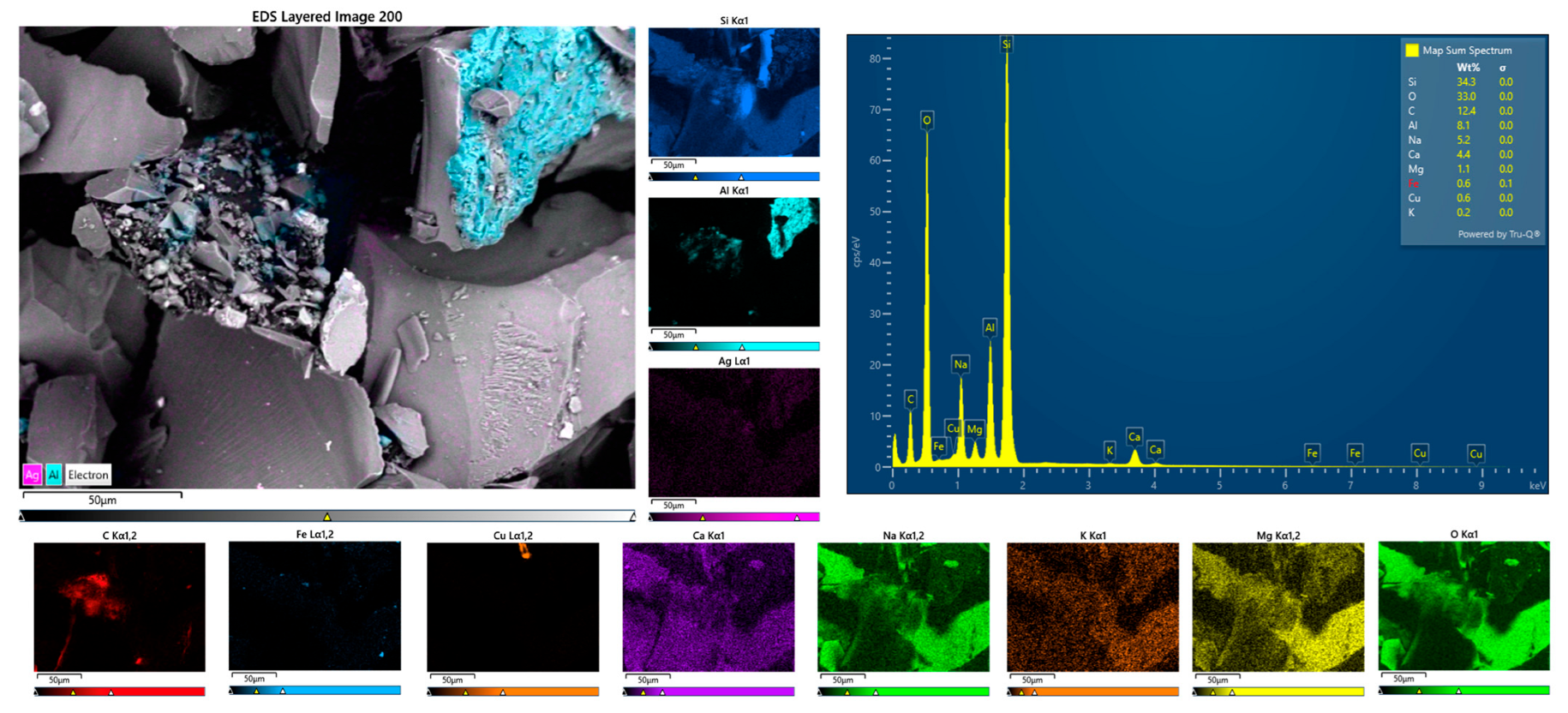
As illustrated in Figure 2, the feedstock is composed primarily of silicon-rich phases, with additional contributions from aluminum, silver, copper, iron, sodium, calcium, and magnesium. The observed morphology suggests that agglomerates of fine particles are embedded within or surrounded by larger silica-rich and metallic silicon particles. In particular, the presence of aluminum bearing phases supports the need for an impurity removal stage before silver leaching in order to minimize interference during downstream recovery and purification processes.

3.2. Dissolution Reactions in Hydrochloric Acid

A thermodynamic investigation of the Gibbs free energy for the dissolution reactions of various elements present in the PV powder in hydrochloric acid solution was conducted with HSC Chemistry® 10 (Metso Outotec, Pori, Finland), based on the following equations:
2 A g ( s ) + 2 H C l ( a q ) 2 A g C l ( s ) + H 2 ( g )
A l ( s ) + 3 H C l ( a q ) A l ( a q ) 3 + + 3 C l ( a q ) + 1.5 H 2 ( g )
C u ( s ) + 2 H C l ( a q ) C u ( a q ) + 2 + 2 C l ( a q ) + H 2 ( g )
F e ( s ) + 2 H C l ( a q ) F e ( a q ) + 2 + 2 C l ( a q ) + H 2 ( g )
F e ( s ) + 3 H C l ( a q ) F e ( a q ) + 3 + 3 C l ( a q ) + 1.5 H 2 ( g )
P b ( s ) + 2 H C l ( a q ) P b ( a q ) + 2 + 2 C l ( a q ) + H 2 ( g )
S n ( s ) + 2 H C l ( a q ) S n ( a q ) + 2 + 2 C l ( a q ) + H 2 ( g )
S n ( s ) + 4 H C l ( a q ) S n ( a q ) + 4 + 4 C l ( a q ) + 2 H 2 ( g )
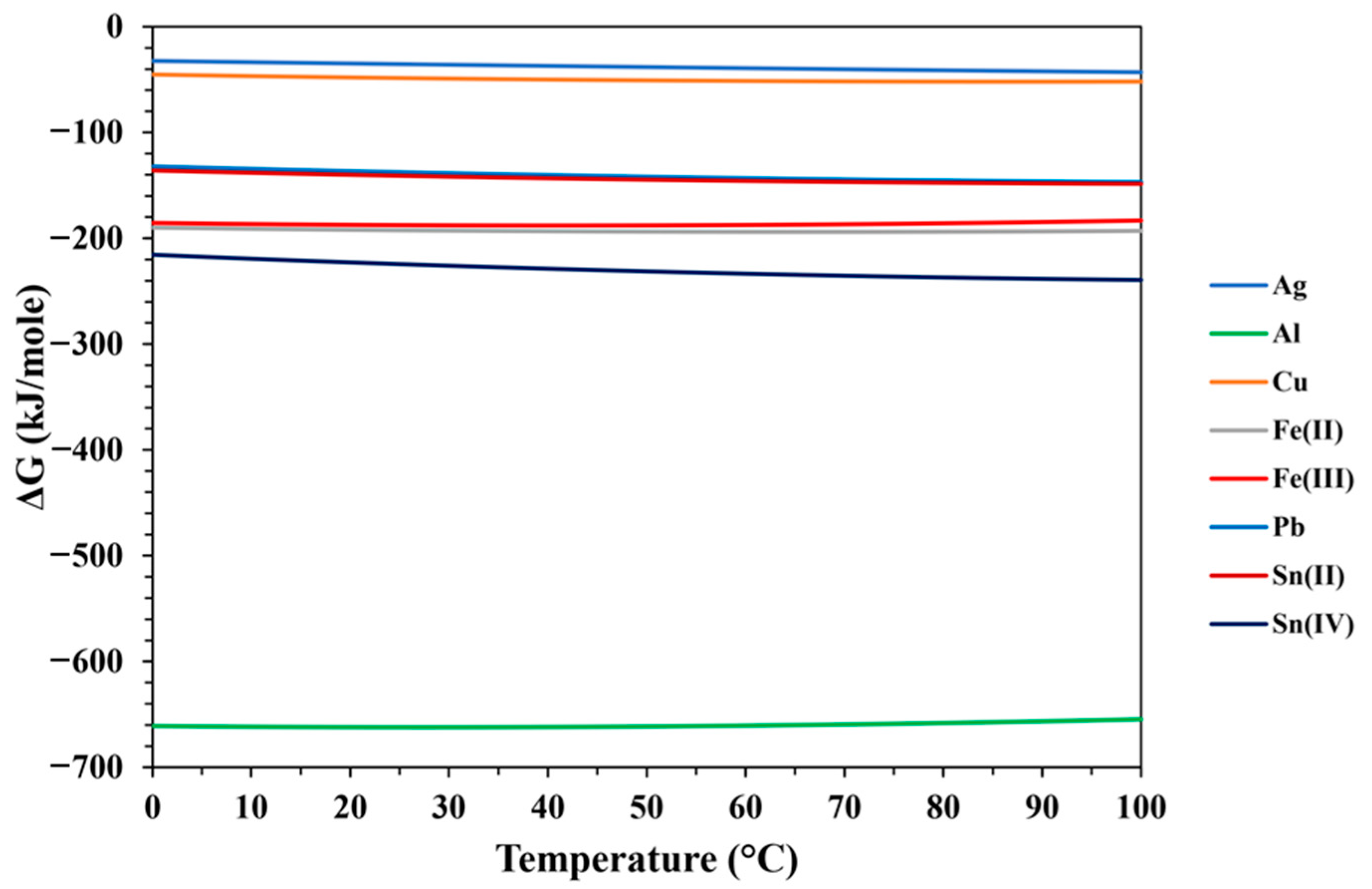
As shown in Figure 3, all of the aforementioned reactions have negative Gibbs free energy values over the investigated temperature range, indicating that the dissolution of the target impurities in hydrochloric acid is thermodynamically favorable. In addition, these results suggest that the pretreatment can proceed at an ambient temperature without external heating, which is advantageous from both economic and process integration perspectives. However, although thermodynamic analysis confirms reaction feasibility, the actual dissolution efficiencies depend on kinetic and mass transfer factors.
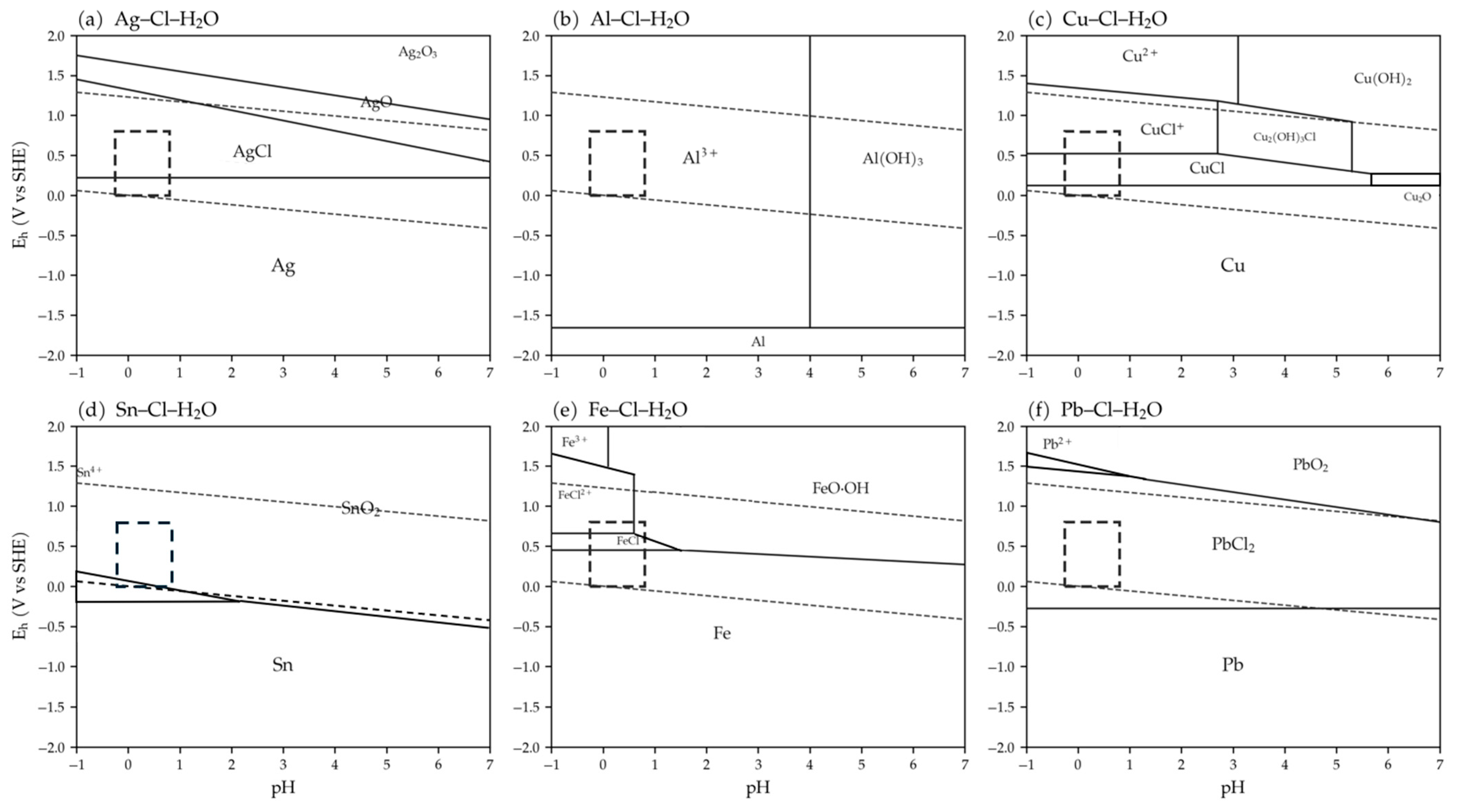
While the standard Gibbs free energy analysis confirms the spontaneity of the dissolution reactions, it does not account for the influence of solution pH and redox potential on the stability of the dissolved species. To complement the ΔG° calculations, potential–pH (Eh–pH, Pourbaix) diagrams of the M–Cl–H2O systems (M = Al, Fe, Pb, Sn, Cu) were constructed using HSC Chemistry® 10 at 25 °C, considering the chloride activity corresponding to the experimental HCl concentration range. The diagrams (Figure 4) confirm that, under the acidic and mildly reducing conditions of the pretreatment (low pH, no added oxidant), Al3+, Fe2+, Pb2+, and Sn2+ lie within their respective soluble (ionic or chloro-complex) stability domains, consistent with the observed dissolution of these impurities. In contrast, copper remains within the stability field of metallic Cu0 across the relevant pH–Eh region, since the Cu2+/Cu equilibrium potential (+0.34 V vs. SHE) is not exceeded in the absence of an oxidizing agent; this explains the negligible copper dissolution (<4%) and the selectivity of the process. Likewise, silver is predicted to remain in the solid phase as insoluble AgCl over the entire investigated pH range, which is in agreement with the absence of silver in the pregnant leach solutions. The Pourbaix analysis therefore provides a thermodynamic rationale for the selective behavior of the pretreatment, supporting the dissolution of Al, Fe, Pb, and Sn while retaining Cu and Ag in the solid residue.

3.3. Modeling

In order to investigate the dissolution of Al, Cu, Fe, Pb, and Sn, 17 experiments were designed by design expert software. The results of these experiments are presented in Table 4. The silver content of all of the pregnant leach solutions (PLSs) was analyzed by ICP-OES, and no silver was detected. In the context of this study, Al, Fe, Pb, Sn, and Cu are collectively referred to as impurity metals with respect to the silver recovery objective, acknowledging that several of these elements may independently hold economic or strategic value. As Table 4 illustrates, the copper dissolution rates were between 0.00 and 3.90 percent, which could be neglected for modeling. The negligible dissolution of copper (<4%) is consistent with the electrochemical behavior of Cu in non-oxidizing acidic media. In the absence of an oxidizing agent, the reduction potential of Cu2+/Cu (+0.34 V vs. SHE) prevents significant dissolution in dilute HCl, confirming the thermodynamic selectivity of the pretreatment system. Table 5 presented the models which regressed with design expert software, where C, T, and S/L, stand for HCl concentration (M), time (min.), and solid to liquid ratio (%), respectively.
To validate the statistical models, analysis of variance (ANOVA) was performed (Table 6, Table 7, Table 8 and Table 9). Following the criteria established in the literature [30,49,50,51], a model is considered statistically significant when: the p-value is less than 0.05, the coefficient of determination (R2) exceeds 0.80, the difference between Adjusted R2 and Predicted R2 is less than 0.20, and the Adequate Precision (signal-to-noise ratio) is greater than 4. As shown in Table 6, Table 7, Table 8 and Table 9, all four models satisfy these criteria and are therefore considered significant. It should be noted that for Al and Fe, the difference between Adjusted R2 and Predicted R2 approaches the 0.20 threshold (0.165 and 0.171, respectively), which may reflect some variability in the experimental data near the boundaries of the design space. Nevertheless, the Adequate Precision values for all models exceed 14, confirming that the models provide sufficient discrimination and can be used to navigate the design space reliably. Among the studied factors, acid concentration exhibited the strongest influence on Al and Sn removal, while leaching time played a particularly important role in Fe dissolution. Several significant interaction terms were also identified, including the T × S/L interaction for Al and Fe, the C × T interaction for Pb, and the C × S/L interaction for Sn, demonstrating that the effect of one operating parameter depends on the level of another. Furthermore, the presence of quadratic terms confirms the existence of non-linear relationships between the process variables and metal removal efficiencies, supporting the application of response surface methodology for process optimization.

3.4. Optimization

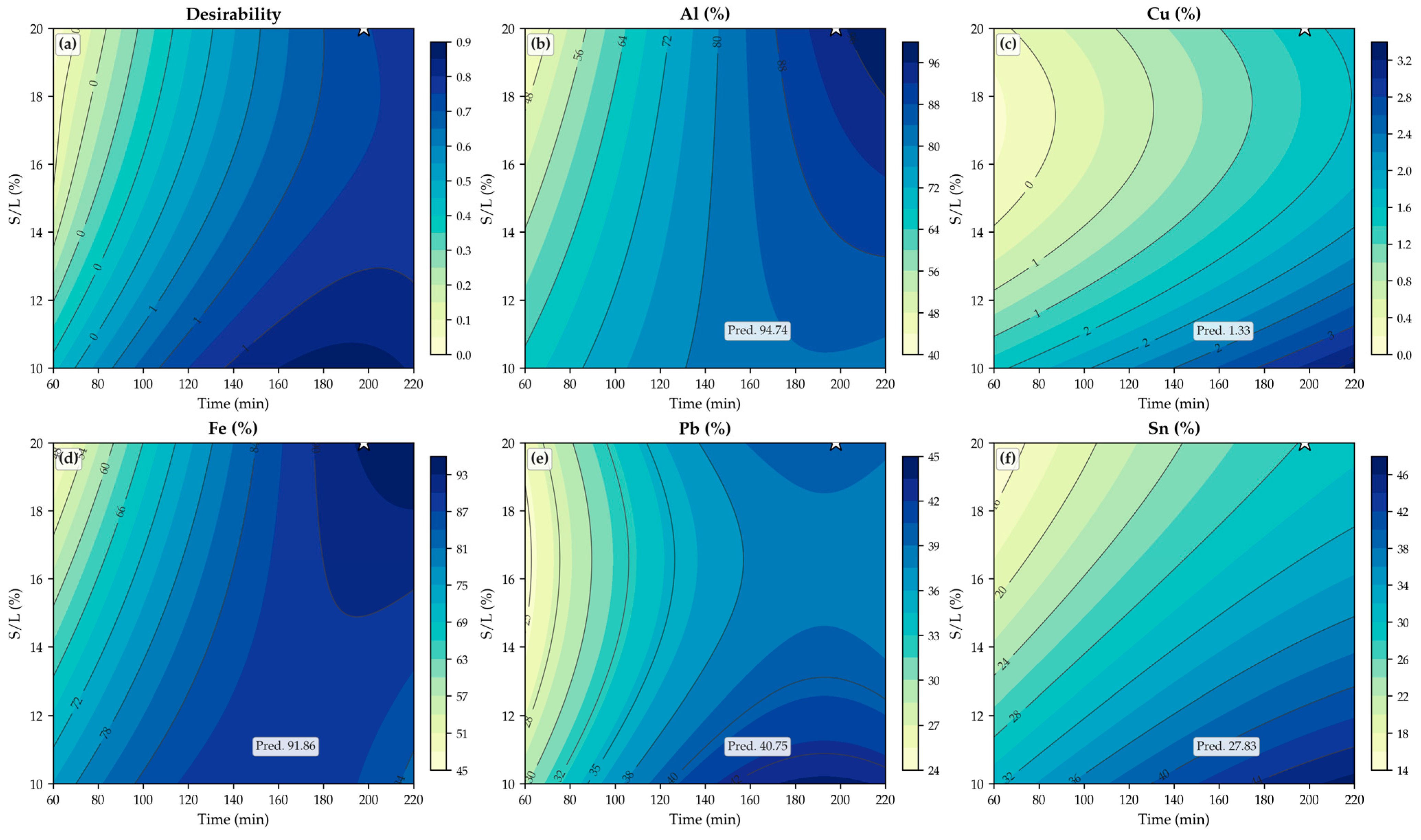
The main goal of optimization is to achieve the maximum Al, Fe, and Pb removal. Optimization was performed by the design expert software. The software suggested 1.5 M HCl, 198 min of leaching duration, and 20% S/L. Figure 5 shows the location of the optimized test on the two-dimensional contours of the variables with the predicted values based on the models.
The validation test was performed at the suggested optimized conditions, and the results are presented in Table 10. As it can be seen, the validation test results lie well in the 95% confidence interval for the low and high values of the predictions, for all elements. According to Table 10, under optimal condition the removal percentage of Al, Fe, Pb, and Sn, were 86.05, 91.77, 38.29, and 29.83%, respectively. These amounts proved that the suggested system works very well for the impurity removal of PV Panel powder prior to the main leaching step.

3.5. Characterization of the Solid Residue

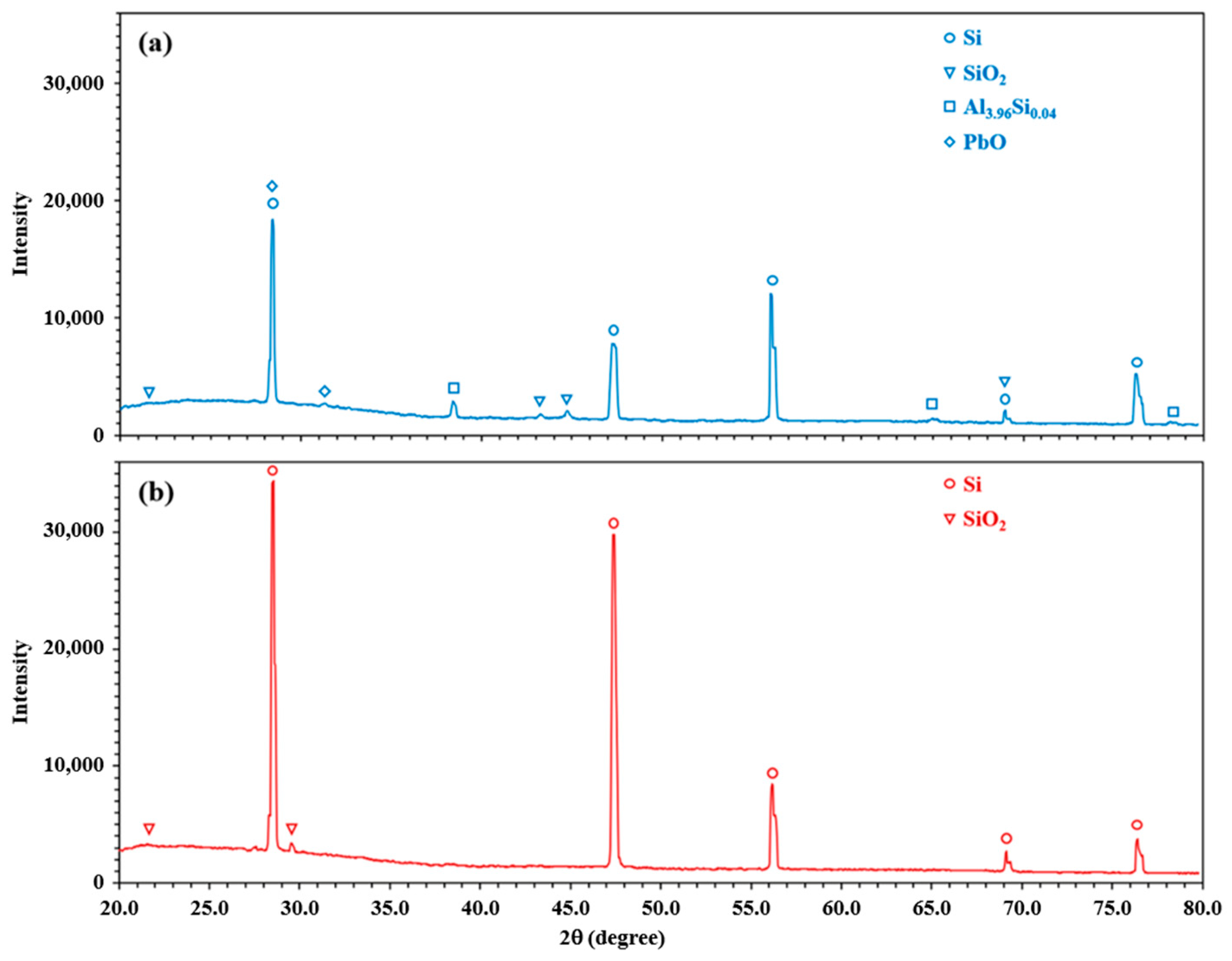
The XRD patterns of the feedstock and the solid residue obtained after pretreatment in optimal conditions (1.5 M HCl, 198 min, and 20% s/L) are presented in Figure 6. As Figure 6a illustrates, prior to leaching, the material was mainly composed of crystalline silicon with minor impurity bearing phases associated with aluminum and lead. After leaching (Figure 6b), silicon remained the dominant crystalline phase, while the intensity of diffraction peaks associated with Al containing phases decreased significantly which indicates their dissolution during the pretreatment process. These observations are consistent with the ICP-OES.
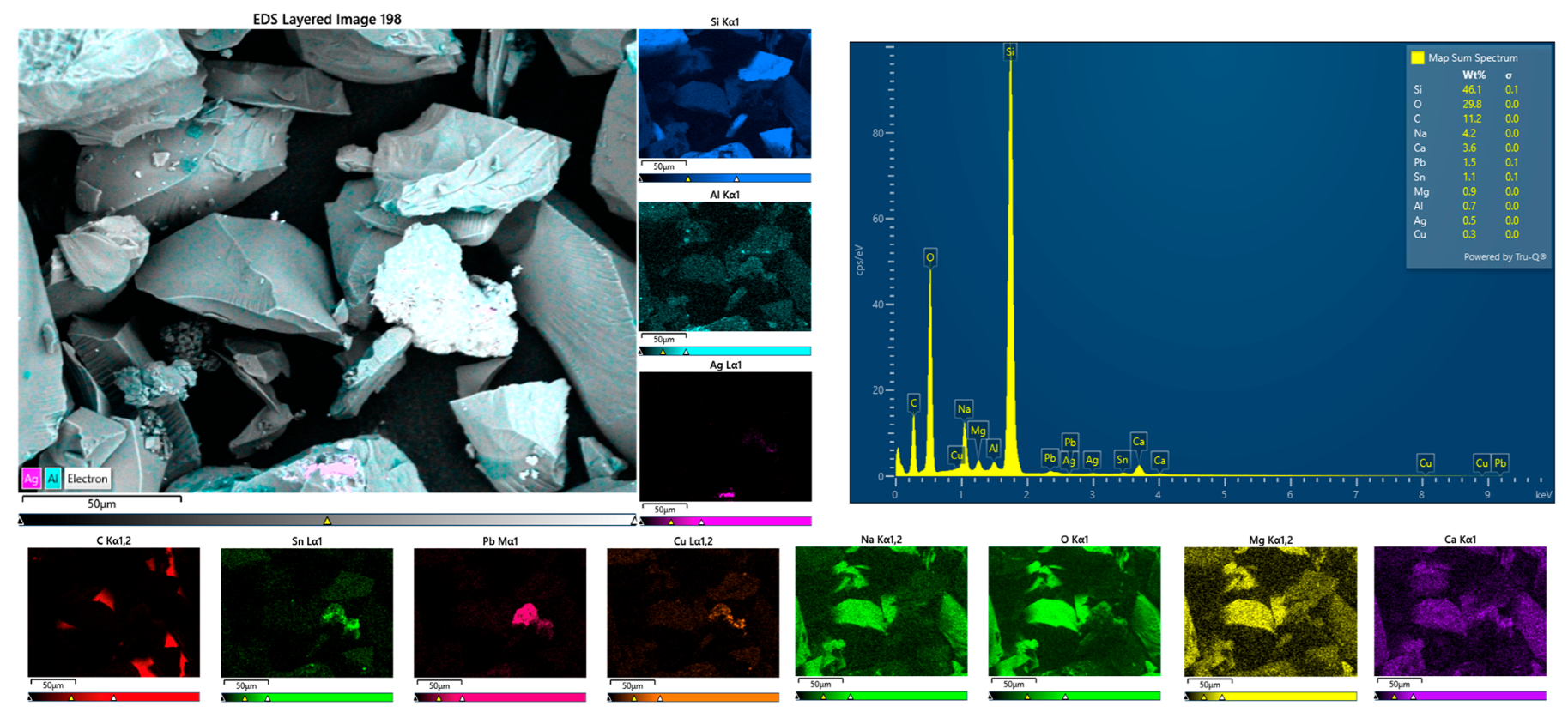
SEM/EDS characterization of the solid residue is shown in Figure 7. Compared with the feedstock, the solid residue exhibited a cleaner silicon rich surface with a reduced impurity rich regions. Elemental mapping demonstrated that the distribution and intensity of aluminum bearing regions dramatically decreased. Similar trends were observed for other impurity metals, confirming the significant efficiency of the pretreatment process. The findings of SEM/EDS results are in agreement with the leaching efficiencies obtained from ICP-OES analysis and XRD patterns.

3.6. Effect of the Operational Parameters

3.6.1. Aluminum

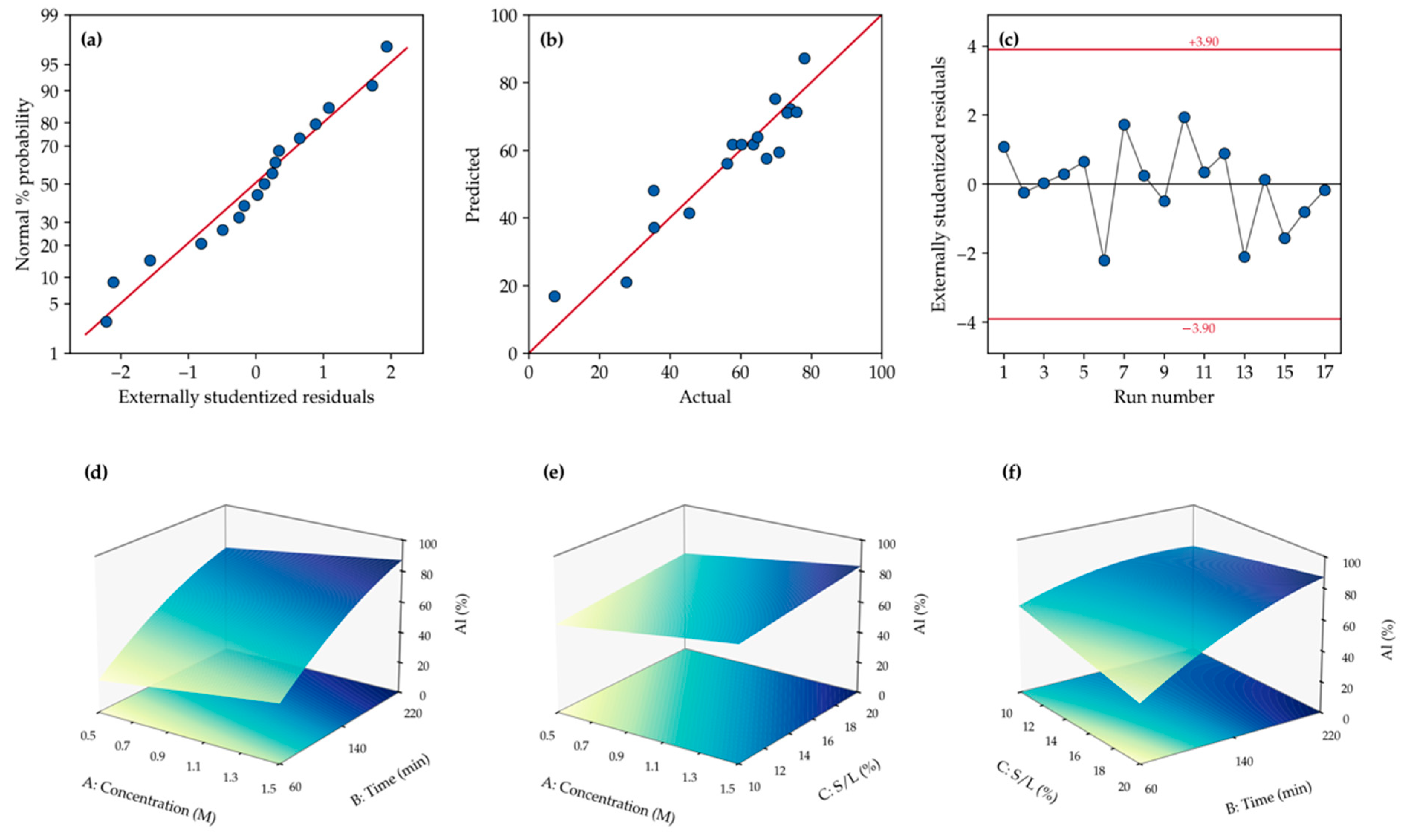
Figure 8 shows the effects of operational parameters on Al dissolution. The results clearly demonstrate that leaching time is the dominant parameter governing Al dissolution in HCl, followed by acid concentration. The S/L ratio shows a comparatively minor effect.
The results indicate that increasing time leads to a rapid increase in dissolution rate at the initial stages, followed by a gradual decline at extended durations. This behavior is reasonable based on the mechanism of Al dissolution in chloride media, where the reaction proceeds through proton reduction and the formation of Al3+, which forms soluble AlCl3. As the reaction progresses, depletion of metallic reactive phases and the possible formation of oxide-rich surface layers (Al2O3) may contribute to a reduction in the effective reactive surface area [31,32]. As the figure shows, at low reaction times, increasing S/L ratio decreased the dissolution efficiencies due to lower acid availability and mass transfer within the slurry. At extended leaching times, a slight increase in leaching efficiencies was observed, which may be attributed to increased particle attrition and surface renewal within the slurry. Prolonged agitation may increase the attrition, which could promote surface renewal and partial removal of passivation films that could contribute to the observed dissolution behavior [14,46]. It is evident from the results that the leaching efficiencies increased with increasing acid concentration.

3.6.2. Iron

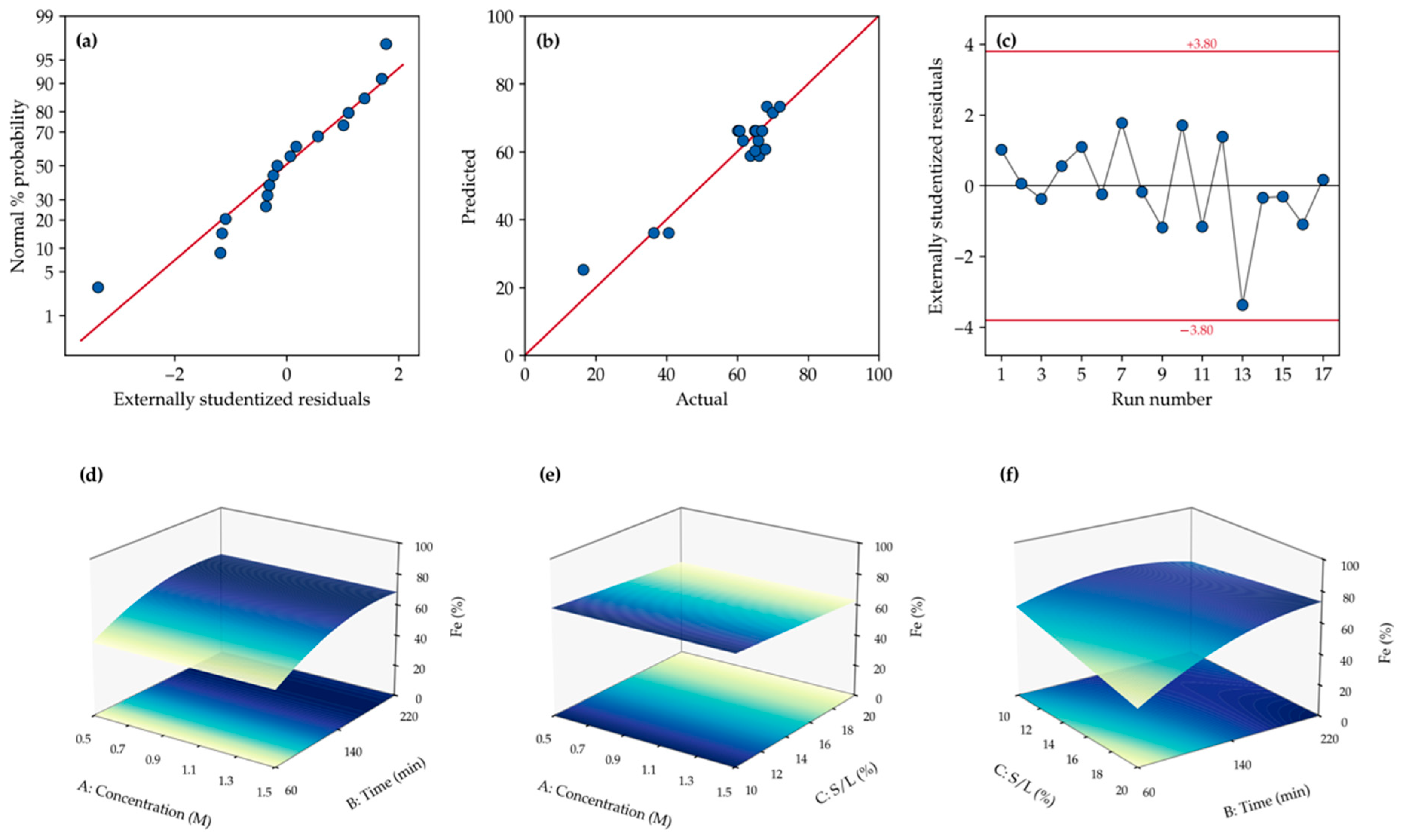
Figure 9 shows the effects of operational parameters on Fe dissolution. The results illustrate that iron dissolution is primarily governed by leaching time, while acid concentration in the range of 0.16–1.84 M shows no statistically significant effect on dissolution efficiency. This behavior differs notably from aluminum and may be associated with the relatively high reactivity of metallic iron toward proton reduction, even at low acid concentrations. In hydrochloric acid, iron dissolves through the formation of Fe2+ and Fe3+ ions, yielding soluble iron chloride species (FeCl2 and FeCl3) according to reactions (8) and (9). The thermodynamic analysis presented in Section 3.1 confirms that both reactions are spontaneous over the entire investigated temperature range.
The observed curvature in the response surfaces indicates that the dissolution rate progressively slows at extended leaching times. This behavior may be attributed to two concurrent phenomena: the depletion of readily accessible metallic iron fractions on the particle surface, and the onset of partial surface passivation, which reduces the effective reactive area available for further dissolution [14,32].
Similar to the aluminum case, increasing the solid-to-liquid ratio initially decreases dissolution efficiency due to reduced acid availability per unit mass of solid. However, at extended leaching times, a slight recovery in efficiency is observed, which may be attributed to increased interparticle attrition within the slurry, promoting surface renewal and exposing fresh reactive sites. The insensitivity of the iron dissolution to the acid concentration within the studied range suggests that the process is not limited by proton availability but rather by mass transfer and surface accessibility, which has practical implications for process design, as acid consumption can be minimized without significantly compromising iron removal performance.

3.6.3. Lead and Tin

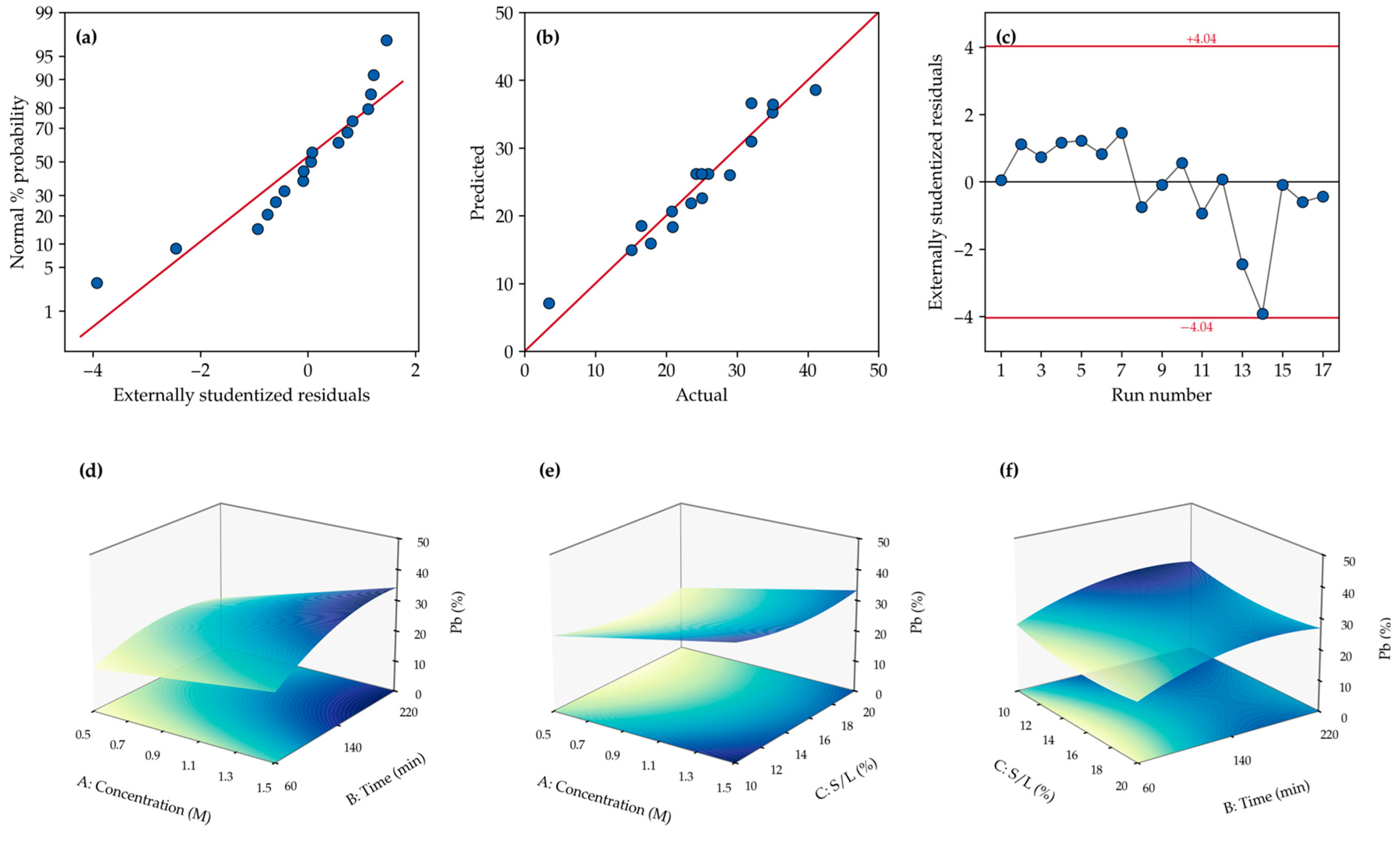
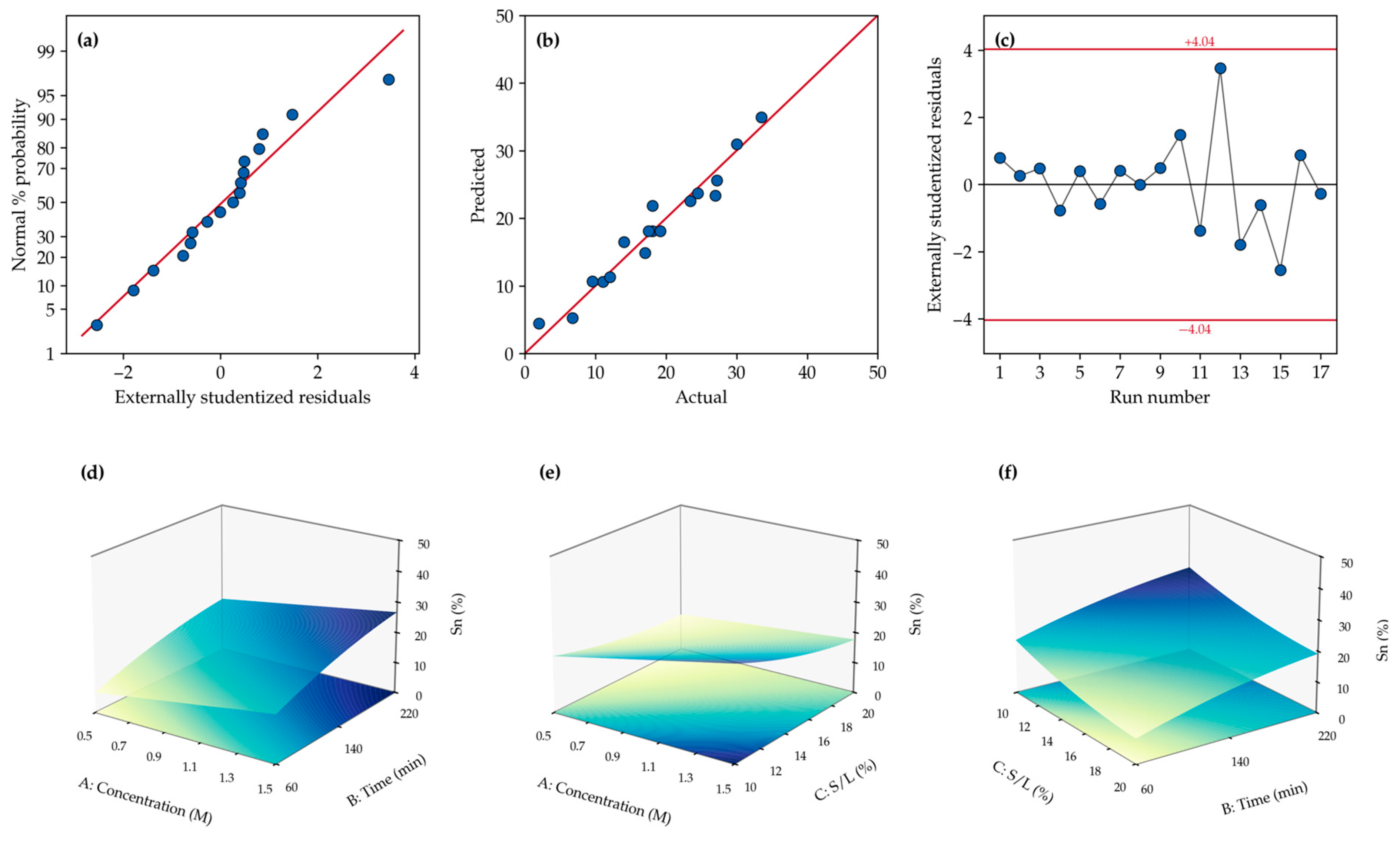
Figure 10 and Figure 11 show the effects of operational parameters on Pb and Sn dissolution, respectively. Both elements exhibit a positive response to increasing acid concentration and leaching time, though their behavior diverges with respect to the solid-to-liquid ratio, reflecting differences in their speciation and dissolution mechanisms in chloride media.
For lead, the dissolution in hydrochloric acid is facilitated by the formation of stable soluble chloride complexes, primarily PbCl+ and PbCl2, which enhance solubility and prevent the precipitation phenomena (such as insoluble PbSO4) that are commonly encountered in sulfate-based leaching systems [32,46,47].
This chloride complexation effect explains why HCl represents a particularly favorable medium for lead mobilization from PV panel matrices. The solid-to-liquid ratio does not show a statistically significant effect on lead removal, suggesting that, within the investigated range, acid availability is sufficient to sustain dissolution kinetics regardless of pulp density.
For tin, the dissolution behavior follows a similar trend with respect to acid concentration and time, with higher values of both parameters promoting greater Sn removal, which may be because of the formation of SnCl2 and SnCl4 species according to reactions described in (7) and (8). However, unlike lead, tin dissolution is negatively affected by increasing solid-to-liquid ratio. This can be explained by the reduced acid-to-solid contact and lower proton availability per unit mass of material at higher pulp densities, which limits the extent of the dissolution reaction [32,46,47]. This sensitivity to pulp density suggests that tin removal is more constrained by mass transfer limitations than lead, and this should be considered when designing the pretreatment process at larger scales.
Although lead and tin were partially dissolved, it can be seen that their removal efficiencies remained significantly lower than aluminum or iron. This behavior may be attributed to the different chemical nature of these elements within photovoltaic cells. Lead and tin are commonly present in soldering alloys and intermetallic phases, which generally exhibit lower reactivity than metallic aluminum or iron under acidic conditions. Furthermore, tin may undergo hydrolysis and partial oxidation, resulting in the formation of relatively stable oxide or oxyhydroxide species that hinder complete dissolution. Consequently, while hydrochloric acid effectively promotes the dissolution of Pb and Sn through chloride complexation, their overall removal remains more limited compared with the highly reactive Al or Fe [32,46,47]. It is worth noting that, despite the partial dissolution of Pb and Sn during the pretreatment stage, their removal from the solid matrix prior to silver leaching is beneficial, as both elements can interfere with downstream purification processes and reduce the overall selectivity of the recovery circuit.

4. Conclusions

In this study, a selective hydrochloric acid pretreatment process was optimized for the removal of impurity metals, i.e., aluminum and iron, from end-of-life PV panel powder. Response surface methodology (RSM) was used to model and optimize the main operational parameters, including acid concentration, leaching time, and pulp density to achieve maximum Al and Fe removal. Under optimized conditions, 1.5 M HCl, 198 min reaction time, and 20% S/L ratio, removal efficiencies of 86.05% Al, 91.77% Fe, 38.29% Pb, and 29.83% Sn were achieved, while copper dissolution remained negligible (below 4%) and no silver was detected in the leach solutions. These results confirm the high selectivity of the process and its effectiveness as a pretreatment step prior to the silver and copper leaching step. The findings demonstrate that targeted removal of aluminum and other impurity metals can significantly reduce interference in downstream silver recovery processes, including solvent extraction, membrane technologies, ion exchange, electrowinning, among others. By operating under ambient conditions without external heating, the proposed method offers a cost-effective and energy-efficient approach. The use of a real industrial feed with a well-characterized composition strengthens the practical relevance of the optimized conditions. Future research should focus on integrating the proposed hydrochloric acid pretreatment stage with subsequent silver recovery operations in order to evaluate the overall process performance at laboratory and pilot scales. Additional studies are also required to investigate the kinetics of the processes and model them at different temperatures. Other studies should investigate hydrochloric acid regeneration, chloride-containing effluent treatment, and techno-economic assessment of the proposed pretreatment stage under industrial operating conditions. All in all, this work provides a practical basis for the development of industrially viable hydrometallurgical flowsheets for sustainable WEEE recycling; the applicability of the proposed RSM framework to feeds of varying composition represents a natural direction for future work.

Author Contributions

Conceptualization, P.G., P.R. and H.S.; methodology, P.G., P.R. and N.M.I.; validation, H.S. and N.M.I.; formal analysis, P.G. and P.R.; investigation, P.G. and P.R.; data curation, P.G., P.R., H.S. and N.M.I.; writing—original draft preparation, P.G., P.R. and N.M.I.; writing—review and editing, H.S. and N.M.I.; supervision, N.M.I. All authors have read and agreed to the published version of the manuscript.

Funding

This research received no external funding.

Institutional Review Board Statement

Not applicable.

Informed Consent Statement

Not applicable.

Data Availability Statement

Data are contained within the article.

Acknowledgments

The authors would like to thank the University of L’Aquila for its precious support.

Conflicts of Interest

The authors declare no conflicts of interest.

References

  1. Rout, S.; Jana, P.; Borra, C.R.; Önal, M.A.R. Unlocking silver from end-of-life photovoltaic panels: A concise review. Renew. Sustain. Energy Rev. 2025, 210, 115205. [Google Scholar] [CrossRef]
  2. Irena, I. End-of-Life Management: Solar Photovoltaic Panels; International Renewable Energy Agency: Abu Dhabi, United Arab Emirates; International Energy Agency Photovoltaic Power Systems: Paris, France, 2016. [Google Scholar]
  3. Lee, J.; Duffy, N.; Allen, J. A Review of End-of-Life Silicon Solar Photovoltaic Modules and the Potential for Electrochemical Recycling. Adv. Energy Sustain. Res. 2025, 6, 2400254. [Google Scholar] [CrossRef]
  4. Ghorbanpour, P.; Romano, P.; Shalchian, H.; Vegliò, F.; Ippolito, N.M. Sustainable metal recovery from photovoltaic waste: A nitric acid-free leaching approach using sulfuric acid and ferric sulfate. Minerals 2025, 15, 806. [Google Scholar] [CrossRef]
  5. Bošnjaković, M.; Galović, M.; Kuprešak, J.; Bošnjaković, T. The end of life of PV systems: Is Europe ready for it? Sustainability 2023, 15, 16466. [Google Scholar] [CrossRef]
  6. Deng, R.; Chang, N.L.; Ouyang, Z.; Chong, C.M. A techno-economic review of silicon photovoltaic module recycling. Renew. Sustain. Energy Rev. 2019, 109, 532–550. [Google Scholar] [CrossRef]
  7. Vinayagamoorthi, R.; Bhargav, P.B.; Ahmed, N.; Balaji, C.; Aravinth, K.; Krishnan, A.; Govindaraj, R.; Ramasamy, P. Recycling of end of life photovoltaic solar panels and recovery of valuable components: A comprehensive review and experimental validation. J. Environ. Chem. Eng. 2024, 12, 111715. [Google Scholar] [CrossRef]
  8. Giuliano, S.; Romano, P.; Ippolito, N.M.; Vegliò, F.; Morodei, F. Hydro-PV: Environmentally Friendly Recovery of Solar Panels. In Proceedings of the SPE Europe Energy Conference and Exhibition, Vienna, Austria, 10–12 June 2025. [Google Scholar]
  9. Jadhav, N.B.; Gajare, O.; Zele, S.; Gogate, N.; Joshi, A. Current status and challenges in silver recovery from End-of-Life crystalline silicon solar photovoltaic panels. Sol. Energy 2024, 283, 113027. [Google Scholar] [CrossRef]
  10. Romano, P.; Lanzone, C.; Rahmati, S.; Ippolito, N.M.; Ferella, F.; Vegliò, F. A Kinetic Study of Silver Extraction from End-of-Life Photovoltaic Panels through Gold-REC1 Process. Sustainability 2024, 16, 7846. [Google Scholar] [CrossRef]
  11. Romano, P.; Ippolito, N.M.; Vegliò, F. Chemical Characterization of an ARDUINO® Board and Its Surface Mount Devices for the Evaluation of Their Intrinsic Economic Value. Processes 2023, 11, 1911. [Google Scholar] [CrossRef]
  12. Yang, Z.; Zhang, W.; Ai, J.; Yang, X.; Wang, D. Recovery of Silver from End-of-Life Silicon Solar Panels via an Oxidative-Coordination Synergistic Approach. Environ. Sci. Technol. 2026, 60, 4370–4381. [Google Scholar] [CrossRef]
  13. Yao, Z.; Cui, J.; Jiang, J.; Tong, J.; Kumar, A.; Romano, P.; Vegliò, F.; Kumar, S.; Liu, J.; Qi, W. End-of-life solar panels recycling: Focusing on the kinetic and thermodynamic compensation effects during back sheets pyrolysis. Process Saf. Environ. Prot. 2025, 195, 106838. [Google Scholar] [CrossRef]
  14. Han, Q.; Gao, Y.; Su, T.; Qin, J.; Wang, C.; Qu, Z.; Wang, X. Hydrometallurgy recovery of copper, aluminum and silver from spent solar panels. J. Environ. Chem. Eng. 2023, 11, 109236. [Google Scholar] [CrossRef]
  15. Kavousi, M.; Alamdari, E.K. A Comprehensive and Sustainable Recycling Process for Different Types of Blended End-of-Life Solar Panels: Leaching and Recovery of Valuable Base and Precious Metals and/or Elements. Metals 2023, 13, 1677. [Google Scholar] [CrossRef]
  16. Xu, Y.; Li, J.; Tan, Q.; Peters, A.L.; Yang, C. Global status of recycling waste solar panels: A review. Waste Manag. 2018, 75, 450–458. [Google Scholar] [CrossRef]
  17. Ghahremani, A.; Adams, S.D.; Norton, M.; Khoo, S.Y.; Kouzani, A.Z. Delamination Techniques of Waste Solar Panels: A Review. Clean Technol. 2024, 6, 280–298. [Google Scholar] [CrossRef]
  18. Fiandra, V.; Sannino, L.; Andreozzi, C. Photovoltaic waste as source of valuable materials: A new recovery mechanical approach. J. Clean. Prod. 2023, 385, 135702. [Google Scholar] [CrossRef]
  19. Wang, R.; Song, E.; Zhang, C.; Zhuang, X.; Ma, E.; Bai, J.; Yuan, W.; Wang, J. Pyrolysis-based separation mechanism for waste crystalline silicon photovoltaic modules by a two-stage heating treatment. RSC Adv. 2019, 9, 18115–18123. [Google Scholar] [CrossRef] [PubMed]
  20. Kim, Y.; Lee, J. Dissolution of ethylene vinyl acetate in crystalline silicon PV modules using ultrasonic irradiation and organic solvent. Sol. Energy Mater. Sol. Cells 2012, 98, 317–322. [Google Scholar] [CrossRef]
  21. Wang, O.; Ma, X. Innovating the recycling of silicon-based solar panels with an eco-friendly alkaline leaching process. Resour. Conserv. Recycl. 2024, 211, 107887. [Google Scholar] [CrossRef]
  22. Lin, Y.; Guo, J.; Lan, X.; Zheng, M.; Kaung, H.O.; Chen, H.; Chen, Y.; Zhu, S.; Yu, Y. A new route for separating impurities Al and recovering Cu/Ag from waste solar panels. J. Sustain. Metall. 2025, 11, 353–366. [Google Scholar]
  23. Romano, P.; Birloaga, I.; Vegliò, F. Recovery of Platinum and Palladium from Spent Automotive Catalysts: Study of a New Leaching System Using a Complete Factorial Design. Minerals 2023, 13, 479. [Google Scholar] [CrossRef]
  24. Cho, S.-Y.; Kim, T.-Y.; Sun, P.-P. Recovery of silver from leachate of silicon solar cells by solvent extraction with TOPO. Sep. Purif. Technol. 2019, 215, 516–520. [Google Scholar] [CrossRef]
  25. Zhang, C.; Jiang, J.; Ma, E.; Zhang, L.; Bai, J.; Wang, J.; Bu, Y.; Fan, G.; Wang, R. Recovery of silver from crystal silicon solar panels in Self-Synthesized choline Chloride-Urea solvents system. Waste Manag. 2022, 150, 280–289. [Google Scholar] [CrossRef]
  26. Qi, Z.; Wang, S.; Gao, D.; Bao, G.; Wu, Z. A novel ion exchange method for recover silver and aluminum from waste crystalline silicon photovoltaic modules. Sol. Energy 2025, 286, 113142. [Google Scholar] [CrossRef]
  27. Wongnaree, N.; Kritsarikun, W.; Ma-ud, N.; Kansomket, C.; Udomphol, T.; Khumkoa, S. Recovery of silver from solar panel waste: An experimental study. Mater. Sci. Forum 2020, 1009, 137–142. [Google Scholar] [CrossRef]
  28. Cho, S.; Kim, J.; Park, S.Y.; Lee, H.-S.; Kim, S.; Park, J. High-Efficiency Silver Recovery from End-of-Life Photovoltaic Modules via Hydrodynamically Optimized Electrowinning. ACS Omega 2025, 10, 44270–44279. [Google Scholar] [CrossRef] [PubMed]
  29. Saffarian, H.; Galvin, K.; Firouzi, M. A critical review of leaching pathways for silver recovery from EoL photovoltaic modules and prospects for flotation. In Mineral Processing and Extractive Metallurgy Review; Taylor & Francis Ltd.: London, UK, 2025; pp. 1–15. [Google Scholar]
  30. Ghorbanpour, P.; Jahanshahi, M. Silver extraction using emulsion liquid membrane system containing D2EHPA-TBP as synergistic carrier: Optimization through response surface methodology. Environ. Technol. 2023, 44, 407–415. [Google Scholar] [CrossRef] [PubMed]
  31. Abdo, D.M.; El-Shazly, A.N.; Medici, F. Recovery of Valuable Materials from End-of-Life Photovoltaic Solar Panels. Materials 2023, 16, 2840. [Google Scholar] [CrossRef]
  32. Kastanaki, E.; Lagoudakis, E.; Kalogerakis, G.; Giannis, A. Hydrothermal Leaching of Silver and Aluminum from Waste Monocrystalline and Polycrystalline Photovoltaic Panels. Appl. Sci. 2023, 13, 3602. [Google Scholar] [CrossRef]
  33. Yan, H.; Wu, C.; Wu, Y. Separation of alumina alkaline solution by electrodialysis: Membrane stack configuration optimization and repeated batch experiments. Sep. Purif. Technol. 2015, 139, 78–87. [Google Scholar] [CrossRef]
  34. Papaderakis, A.; Mintsouli, I.; Georgieva, J.; Sotiropoulos, S. Electrocatalysts Prepared by Galvanic Replacement. Catalysts 2017, 7, 80. [Google Scholar] [CrossRef]
  35. Ye, W.; Chen, Y.; Zhou, F.; Wang, C.; Li, Y. Fluoride-assisted galvanic replacement synthesis of Ag and Au dendrites on aluminum foil with enhanced SERS and catalytic activities. J. Mater. Chem. 2012, 22, 18327–18334. [Google Scholar] [CrossRef]
  36. Bard, A.J.; Parsons, R.; Jordan, J. Standard Potentials in Aqueous Solution; Marcel Dekker: New York, NY, USA, 1985. [Google Scholar]
  37. Vanýsek, P. Electrochemical Series. In CRC Handbook of Chemistry and Physics; CRC Press: Boca Raton, FL, USA, 2000; pp. 8-21–8-29. [Google Scholar]
  38. Haynes, W.M. CRC Handbook of Chemistry and Physics, 97th ed.; CRC Press: Boca Raton, FL, USA, 2016. [Google Scholar]
  39. Kuntyi, O.I.; Zozulya, H.I.; Dobrovets’ka, O.Y.; Kornii, S.A.; Reshetnyak, O.V. Deposition of Copper, Silver, and Nickel on Aluminum by Galvanic Replacement. Mater. Sci. 2018, 53, 488–494. [Google Scholar] [CrossRef]
  40. Bard, A.J.; Faulkner, L.R.; White, H.S. Electrochemical Methods: Fundamentals and Applications, 3rd ed.; John Wiley & Sons, Ltd.: Hoboken, NJ, USA, 2022. [Google Scholar]
  41. Zozulya, G.; Kuntyi, O.; Mnykh, R.; Kytsya, A.; Bazylyak, L. Synthesis of silver nanoparticles by sonogalvanic replacement on aluminium powder in sodium polyacrylate solutions. Ultrason. Sonochem. 2022, 84, 105951. [Google Scholar] [CrossRef]
  42. Russo, R.E.; Awais, M.; Fattobene, M.; Santoni, E.; Cavallera, R.; Zamponi, S.; Conti, P.; Berrettoni, M.; Giuli, G. Silver recovery from silicon solar cells waste by hydrometallurgical and electrochemical technique. Environ. Technol. Innov. 2024, 36, 103803. [Google Scholar] [CrossRef]
  43. Li, N.; Wang, Y.; Wang, A.; Wang, Y.; Yan, F.; Zhao, J.; Yan, B.; Chen, G. Efficient silver leaching from end-of-life photovoltaic panels via a catalyst-free peroxymonosulfate process. Resour. Conserv. Recycl. 2026, 229, 108863. [Google Scholar] [CrossRef]
  44. Tao, J.; Yu, S. Review on feasible recycling pathways and technologies of solar photovoltaic modules. Sol. Energy Mater. Sol. Cells 2015, 141, 108–124. [Google Scholar] [CrossRef]
  45. Matsubara, T.; Uddin, M.A.; Kato, Y.; Kawanishi, T.; Hayashi, Y. Chemical Treatment of Copper and Aluminum Derived from Waste Crystalline Silicon Solar Cell Modules by Mixed Acids of HNO3 and HCl. J. Sustain. Metall. 2018, 4, 378–387. [Google Scholar] [CrossRef]
  46. Chen, W.-S.; Chen, Y.-J.; Lee, C.-H.; Cheng, Y.-J.; Chen, Y.-A.; Liu, F.-W.; Wang, Y.-C.; Chueh, Y.-L. Recovery of Valuable Materials from the Waste Crystalline-Silicon Photovoltaic Cell and Ribbon. Processes 2021, 9, 712. [Google Scholar] [CrossRef]
  47. Yousef, S.; Tatariants, M.; Denafas, J.; Makarevicius, V.; Lukošiūtė, S.-I.; Kruopienė, J. Sustainable industrial technology for recovery of Al nanocrystals, Si micro-particles and Ag from solar cell wafer production waste. Sol. Energy Mater. Sol. Cells 2019, 191, 493–501. [Google Scholar] [CrossRef]
  48. Compton Industriale S.p.A. 2026. Available online: https://www.compton-industriale.it/index.html (accessed on 1 May 2026).
  49. Myers, R.H.; Montgomery, D.C.; Anderson-Cook, C.M. Response Surface Methodology: Process and Product Optimization Using Designed Experiments; John Wiley & Sons: Hoboken, NJ, USA, 2016. [Google Scholar]
  50. Liu, H.; Zhang, Y.-M.; Huang, J.; Liu, T.; Xue, N.-N.; Shi, Q.-H. Optimization of vanadium (IV) extraction from stone coal leaching solution by emulsion liquid membrane using response surface methodology. Chem. Eng. Res. Des. 2017, 123, 111–119. [Google Scholar] [CrossRef]
  51. Umar, M.; Aziz, H.A.; Yusoff, M.S. Assessing the chlorine disinfection of landfill leachate and optimization by response surface methodology (RSM). Desalination 2011, 274, 278–283. [Google Scholar] [CrossRef]
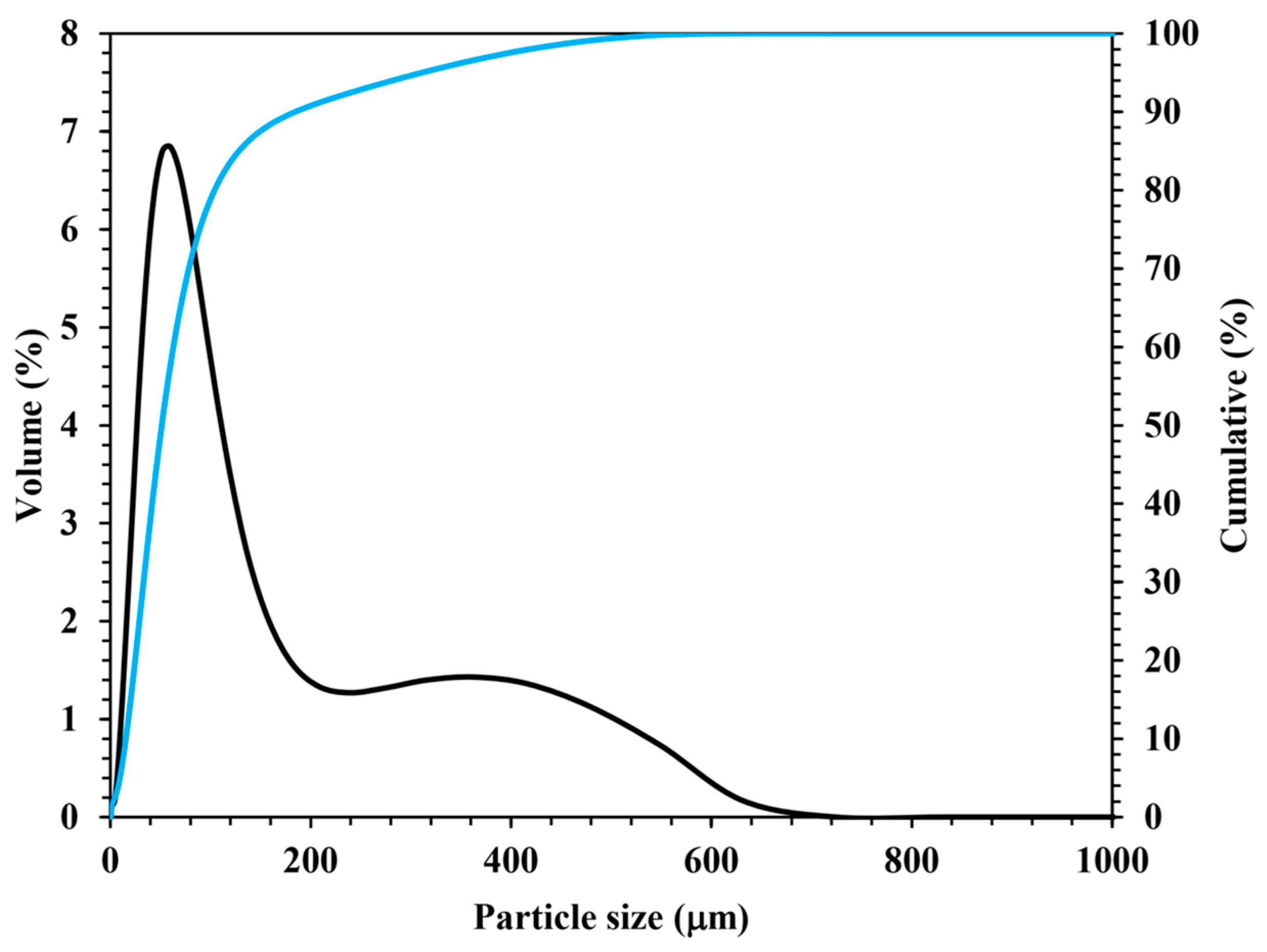
Figure 1. Particle size distribution of the feedstock.
Applsci 16 05940 g001
Figure 2. SEM/EDS of the feedstock.
Applsci 16 05940 g002
Figure 3. Standard Gibbs free energy (ΔG°) of the metal dissolution reactions in hydrochloric acid as a function of temperature, calculated using HSC Chemistry® 10. Calculations were performed at 1 atm assuming unit activity (standard state) for all reactants and products.
Applsci 16 05940 g003
Figure 4. Eh–pH (Pourbaix) diagrams of the Al, Fe, Pb, Sn, Cu, and Ag chloride–water systems calculated using HSC Chemistry® 10 at 25 °C. The dotted box indicates the approximate operating window of the HCl pretreatment.
Applsci 16 05940 g004
Figure 5. Contours for the optimized leaching conditions: (a) overall desirability function; (b) aluminum removal efficiency; (c) copper removal efficiency; (d) iron removal efficiency; (e) lead removal efficiency; (f) tin removal efficiency.
Applsci 16 05940 g005
Figure 6. XRD patterns of feedstock (a) and solid residue and (b) obtained after hydrochloric acid pretreatment under the optimized conditions (1.5 M HCl, 198 min, and 20% S/L).
Applsci 16 05940 g006
Figure 7. SEM/EDS analysis of the solid residue obtained after hydrochloric acid pretreatment under the optimized conditions (1.5 M HCl, 198 min, and 20% S/L).
Applsci 16 05940 g007
Figure 8. Statistical results for Al removal: (a) Normal probability plot of residuals, (b) predicted vs. actual values, (c) residual values vs. run, (d) 3D surface of the Al removal efficiency vs. HCl concentration and time, (e) 3D surface of the Al removal efficiency vs. HCl concentration and S/L ratio, and (f) 3D surface of the Al removal efficiency vs. time and S/L ratio.
Applsci 16 05940 g008
Figure 9. Statistical results for Fe removal: (a) normal probability plot of residuals, (b) predicted vs. actual values, (c) residual vs. run, (d) 3D surface of the Fe removal efficiency vs. HCl concentration and time, (e) 3D surface of the Fe removal efficiency vs. HCl concentration and S/L ratio, and (f) 3D surface of the Fe removal efficiency vs. time and S/L ratio.
Applsci 16 05940 g009
Figure 10. Statistical results for Pb removal: (a) normal probability plot of residuals, (b) predicted vs. actual values, (c) residual values vs. run, (d) 3D surface of the Pb removal efficiency vs. HCl concentration and time, (e) 3D surface of the Pb removal efficiency vs. HCl concentration and S/L ratio, and (f) 3D surface of the Pb removal efficiency vs. time and S/L ratio.
Applsci 16 05940 g010
Figure 11. Statistical results for Sn removal: (a) normal probability plot of residuals, (b) predicted vs. actual values, (c) residual values vs. run, (d) 3D surface of the Sn removal efficiency vs. HCl concentration and time, (e) 3D surface of the Sn removal efficiency vs. HCl concentration and S/L ratio, and (f) 3D surface of the Sn removal efficiency vs. time and S/L ratio.
Applsci 16 05940 g011
Table 1. Standard reduction potentials of the main metals which exist in the solar cell.
MetalStandard Reduction Potential Eh vs. SHE (V)
Al3+/Al−1.662
Fe2+/Fe−0.440
Ni2+/Ni−0.250
Sn2+/Sn−0.136
Pb2+/Pb−0.126
H+/H20.000
Sn4+/Sn2++0.151
Cu2+/Cu+0.340
Cu+/Cu+0.521
Fe3+/Fe2++0.771
Ag+/Ag+0.800
Table 2. Independent variables and their levels used in the experimental design.
VariablesX VariableVariable Levels
−α−10+1
HCl (M)A0.160.511.51.84
Time (min)B5.560140220274.5
Solid to liquid ratioC6.610152023.4
Table 3. Chemical composition of the PV powder used in this study.
ElementAgAlCuFePbSn
Wt. %0.361.140.290.240.280.48
Table 4. Experimental design and removal efficiency of impurity elements.
RunParametersRecovery Yields (%)
HCl
(M)
Time
(min)
S/L
(%)
AlCuFePbSn
10.5602027.650.1040.5315.076.71
21.5602035.530.3736.3225.0311.07
30.52201056.161.5361.6223.5023.45
41.52201074.063.8065.8841.0633.50
50.5601045.461.0763.6820.9012.05
60.161401535.400.2664.8917.789.54
71.5601067.341.3966.0928.9924.48
811401563.590.5365.2524.2018.09
911401557.750.7260.2025.9419.20
10114023.470.911.1267.9032.0017.00
110.52202073.191.1668.3016.4514.06
121274.51575.891.3765.0520.7827.00
1315.5157.280.0016.513.421.96
1411406.664.803.9069.9432.0030.00
151.52202078.021.4471.9335.0018.09
161.841401569.741.3660.6235.0427.20
1711401560.250.6167.0525.0017.50
Table 5. Models for predicting leaching efficiency of the elements (actual equations).
ResponseMathematical Model
Al (%) 55.2486 + (18.3915 × C) + (0.1630 × T) − (3.8232 × S/L) + (0.0251 × T × S/L) − (0.0011 × T2)
Fe (%) 95.7887 + (0.2352 × T) − (4.4722 × S/L) + (0.0261 × T × S/L) − (0.0016 × T2)
Pb (%) 35.1363 + (4.9122 × C) + (0.2116 × T) − (4.0745 × S/L) + (0.0647 × C × T) − (0.0008 × T2) + (0.1230 × S/L2)
Sn (%) 18.5005 + (25.7773 × C) + (0.1797 × T) − (3.0443 × S/L) − (0.9345 × C × S/L) − (0.0003 × T2) + (0.0903 × S/L2)
Table 6. Analysis of variance (ANOVA) for the removal efficiency of Al.
SourceSum of SquaresdfMean SquareF-Valuep-Value
Model7279.0551455.8117.37<0.0001Significant
A-Concentration1154.8511154.8513.780.0034
B-Time4631.6214631.6255.27<0.0001
C-S/L321320.38180.5492
BC807.821807.829.640.01
B2652.771652.777.790.0176
Residual921.841183.8
Lack of Fit899.51999.958.950.1045not significant
Pure Error22.33211.17
Cor Total8200.8916
Fit Statistics
Std. Dev.9.15R20.8876
Mean64.51Adjusted R20.8365
C.V. %14.19Predicted R20.6711
Adeq. Precision14.7177
Table 7. Analysis of variance (ANOVA) for the removal efficiency of Fe.
SourceSum of SquaresdfMean SquareF-Valuep-Value
Model4965.7241241.4326.02<0.0001Significant
B-Time2420.7412420.7450.74<0.0001
C-S/L226.111226.114.740.0502
BC874.041874.0418.320.0011
B21444.8311444.8330.280.0001
Residual572.541247.71
Lack of Fit531.661053.172.60.3095not significant
Pure Error40.88220.44
Cor Total5538.2516
Fit Statistics
Std. Dev.6.91R20.8966
Mean75.8Adjusted R20.8622
C.V. %9.11Predicted R20.6914
Adeq. Precision16.3753
Table 8. Analysis of variance (ANOVA) for the removal efficiency of Pb.
SourceSum of SquaresdfMean SquareF-Valuep-Value
Model1602.276267.0425.15<0.0001Significant
A-Concentration666.181666.1862.74<0.0001
B-Time293.131293.1327.610.0004
C-S/L50.42150.424.750.0543
AB53.56153.565.040.0485
B2307.691307.6928.980.0003
C2116.81116.8110.0078
Residual106.181010.62
Lack of Fit104.2813.0313.130.0727not significant
Pure Error1.9820.9919
Cor Total1708.4516
Fit Statistics
Std. Dev.3.26R20.9378
Mean28.46Adjusted R20.9006
C.V. %11.45Predicted R20.7435
Adeq. Precision17.2734
Table 9. Analysis of variance (ANOVA) for the removal efficiency of Sn.
SourceSum of SquaresdfMean SquareF-Valuep-Value
Model1972.176328.6932.92<0.0001Significant
A-Concentration472.161472.1647.29<0.0001
B-Time761.551761.5576.28<0.0001
C-S/L551.231551.2355.21<0.0001
AC43.66143.664.370.063
B248.1148.14.820.0529
C262.91162.916.30.0309
Residual99.83109.98
Lack of Fit97.2812.159.220.1015not significant
Pure Error2.6421.32
Cor Total207216
Fit Statistics
Std. Dev.3.16R20.9518
Mean24.25Adjusted R20.9229
C.V. %13.03Predicted R20.7988
Adeq. Precision19.9557
Table 10. Summary of results at the optimal leaching conditions.
Predicted Std DevSE Mean95% CI Low for Mean95% CI High for MeanObserved (%)
(Experimental Value)
Al94.749.155.1483.43106.04 *86.05
Cu1.330.310.200.881.791.24
Fe91.866.913.4084.4699.2691.77
Pb40.753.261.8336.6744.8338.29
Sn27.833.161.9423.5232.1529.83
* The upper confidence interval for Al exceeds 100% due to model extrapolation near the boundary of the experimental domain.
Disclaimer/Publisher’s Note: The statements, opinions and data contained in all publications are solely those of the individual author(s) and contributor(s) and not of MDPI and/or the editor(s). MDPI and/or the editor(s) disclaim responsibility for any injury to people or property resulting from any ideas, methods, instructions or products referred to in the content.