Article

Machine Learning-Based Forecasting of Indoor Microclimate Conditions for Heritage Conservation: A Case Study at the Archaeological Museum of Delphi

by
Efstathia Tringa
1,* and
Dimitris Kavroudakis
2
1
Independent Researcher, Fullerton, CA 92831, USA
2
Department of Geography, University of the Aegean, 81100 Mytilene, Greece
*
Author to whom correspondence should be addressed.
Appl. Sci. 2026, 16(12), 6092; https://doi.org/10.3390/app16126092
Submission received: 20 May 2026 / Revised: 8 June 2026 / Accepted: 12 June 2026 / Published: 16 June 2026
(This article belongs to the Special Issue Application of Digital Technology in Cultural Heritage)

Abstract

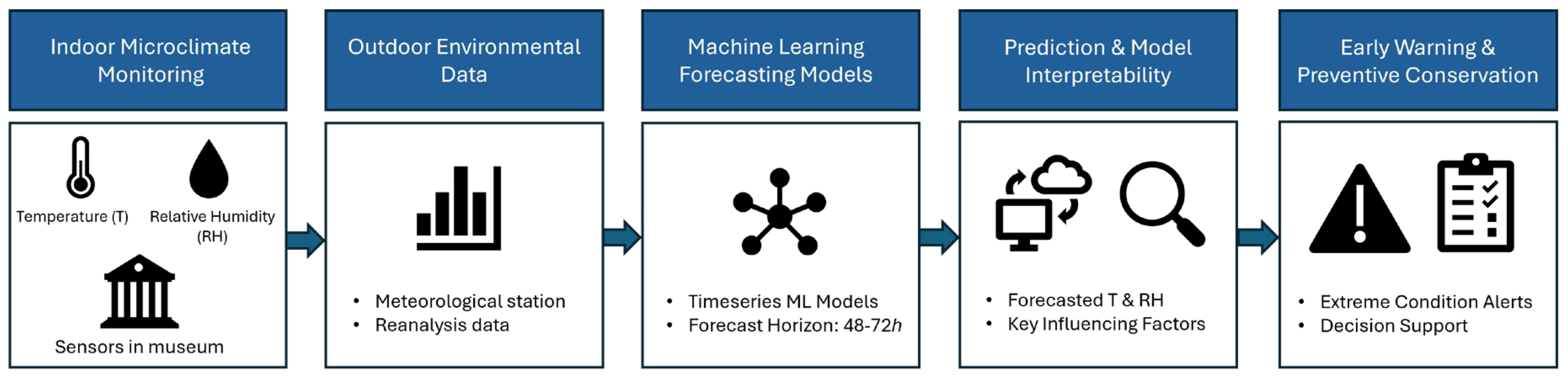
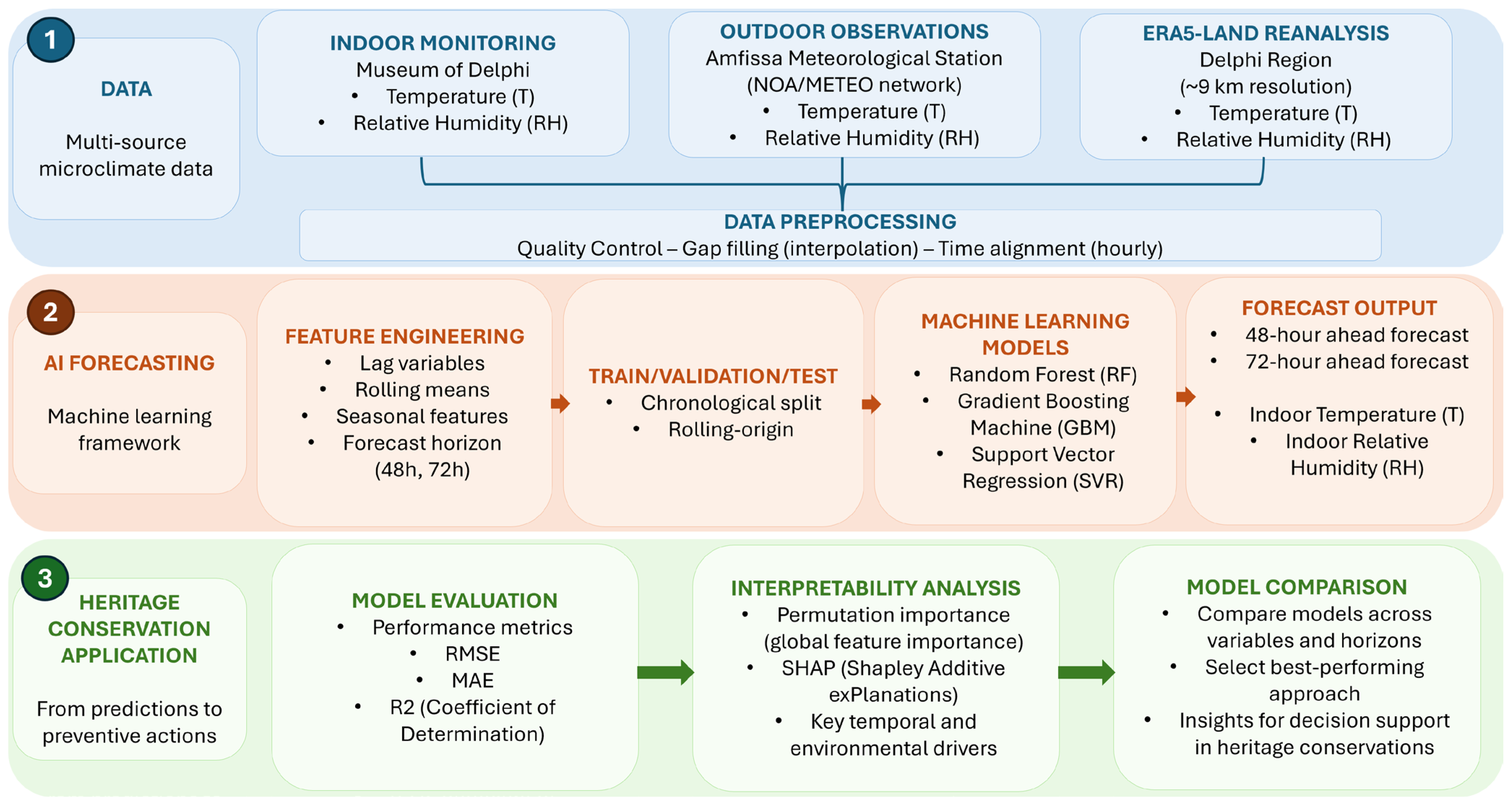
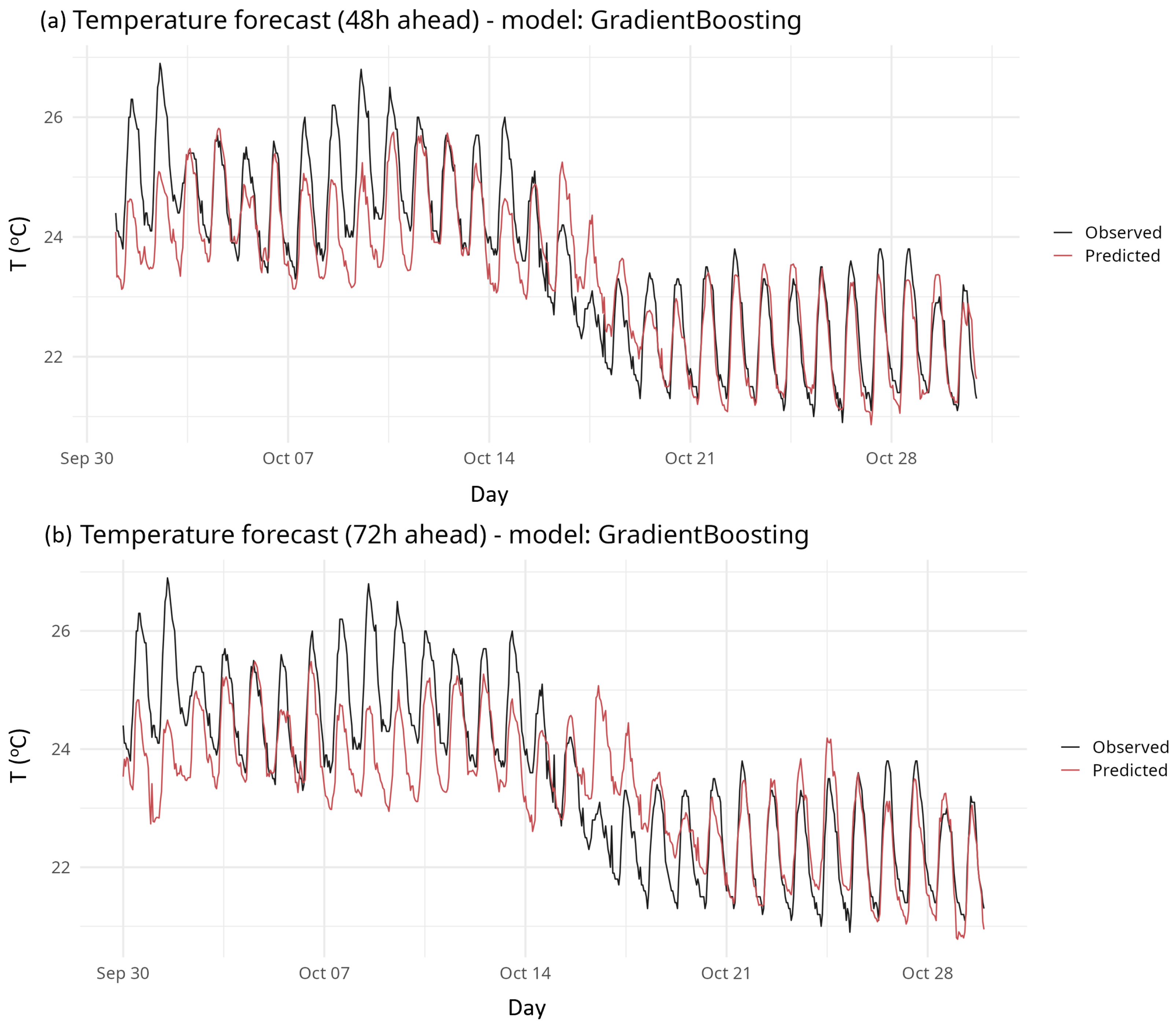
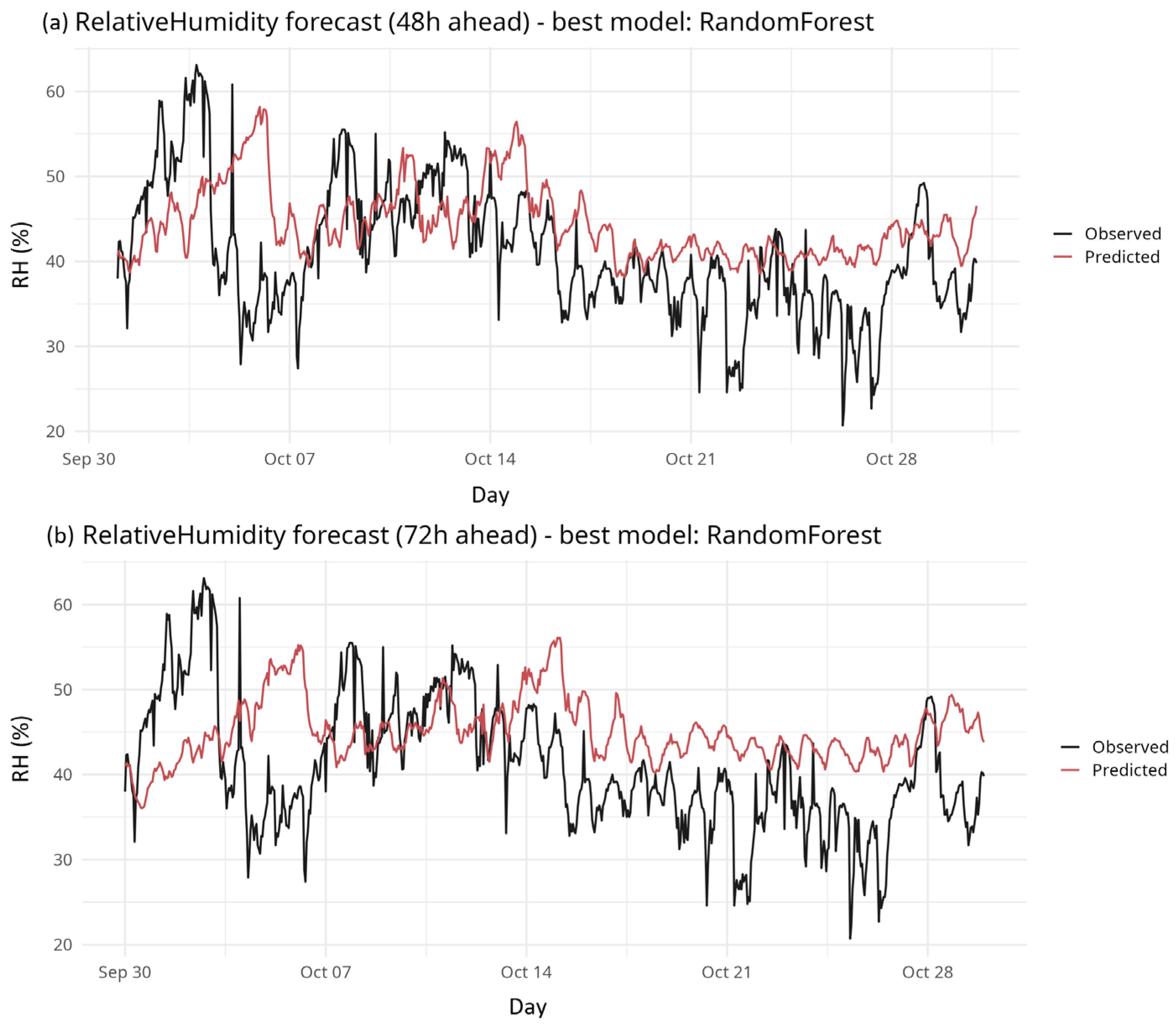
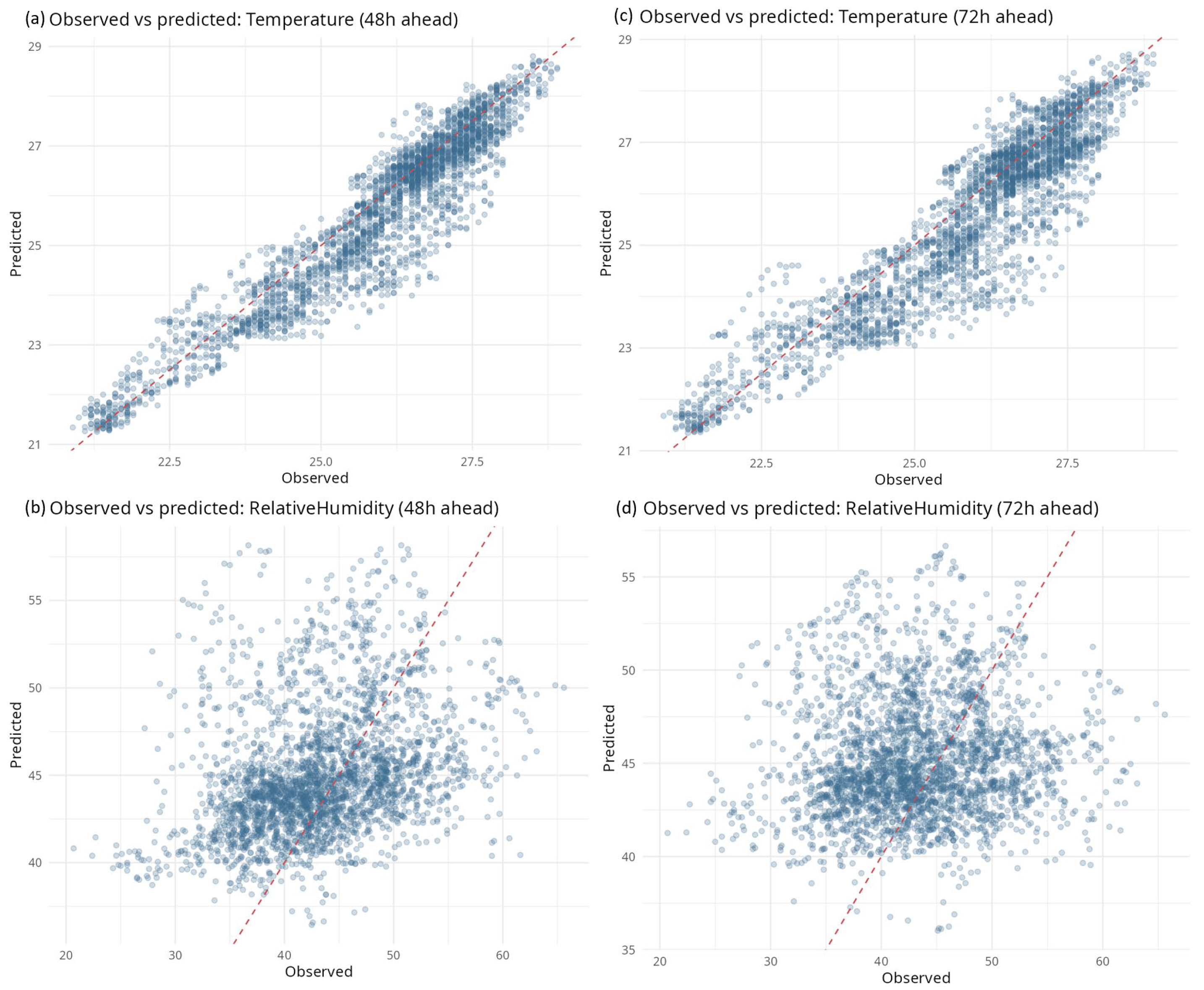
Indoor environmental conditions must remain stable to preserve the cultural heritage objects exhibited in museums. Fluctuations in temperature and relative humidity accelerate degradation, and for this reason, their control is essential. Based on this, in this study, a machine learning-based framework for indoor microclimate forecasting is developed and evaluated, with application to the Archaeological Museum of Delphi. The analysis was based on indoor hourly temperature and relative humidity data from August 2022 to October 2024, combined with outdoor observational and ERA5-Land reanalysis data. Random Forest, Gradient Boosting and Support Vector Regression models were developed for 48 and 72 h forecast horizons. The RMSE, MAE, and R2 methods were used to perform the model, while interpretability techniques, including Permutation Importance analysis and SHAP analysis, were also applied. The models successfully predicted indoor temperature with high accuracy, and the Gradient Boosting model demonstrated superior performance across all forecast horizons. Relative humidity proved to be more complex, with all models showing limited predictive skill. Overall, the findings highlight that temperature prediction depends on the building’s thermal inertia and historical values, while relative humidity is more sensitive to external and seasonal influences. Finally, this study demonstrates the potential of machine learning methods for forecasting microclimatic conditions in museum environments.
Keywords: random forest; gradient boosting machine; support vector regression; indoor environment; temperature; relative humidity; cultural heritage random forest; gradient boosting machine; support vector regression; indoor environment; temperature; relative humidity; cultural heritage