Article

Match-Play and Training Intensity in Academic Female Futsal Players

1
Faculty of Medicine and Health Sciences, University of Applied Sciences, 33-100 Tarnów, Poland
2
Department of Physiology and Biochemistry, University of Physical Culture, 31-571 Kraków, Poland
*
Authors to whom correspondence should be addressed.
Appl. Sci. 2026, 16(11), 5627; https://doi.org/10.3390/app16115627
Submission received: 1 May 2026 / Revised: 1 June 2026 / Accepted: 2 June 2026 / Published: 4 June 2026
(This article belongs to the Special Issue Effects of Physical Training on Exercise Performance—3rd Edition)

Featured Application

The observations regarding the intensity of women’s collegiate futsal play presented in this study have significant practical implications for coaches. Motor learning methods may be useful because they can approximate match load in terms of physiological load.

Abstract

Background: The aim of the study was to compare the effort intensity levels between various futsal training drills designed according to the non-linear pedagogy (NLP) approach and official female academic league matches. Methods: Nine female players representing a university futsal team participated in this study. The analysis involved four official league matches (OM), evaluated across both the first and second halves (H1 and H2), as well as eleven training drills. The drills were conducted using contemporary NLP methods and were classified as: CSD (drills without active opponents), STG (small tactical games with reduced complexity based on the constraints-led approach), and FG (drills based on the full futsal format). The recorded variables included the percentage of peak heart rate (%HRpeak) and average heart rate (HRavg) across five distinct intensity zones. To account for the repeated-measures design, data were aggregated and averaged for each participant within each drill category prior to the main analysis. Results: The overall pairwise comparisons regarding global activity-period intensity failed to reach statistical significance. Although differences in absolute mean values were observed between the training tasks and official match conditions, these variations were not statistically significant. Conclusions: The NLP approach in female academic futsal sessions elicited a comparable cumulative physiological load (expressed via HR metrics and time spent in different intensity zones) to match conditions. However, due to the small sample size and corresponding wide confidence intervals, this lack of significant differences must be interpreted cautiously as exploratory trends rather than definitive evidence of physiological equivalence. Future research with larger cohorts is warranted to evaluate the motor learning potential of these constraints.

1. Introduction

Futsal is an indoor, football-based discipline gaining popularity in recent years. The rise in its popularity has also been seen among women’s cohorts, especially in academic settings. Previous studies indicated that average intensity (expressed as percent of peak heart rate (%HRpeak)) of physical effort in futsal was above 80%HRpeak [1,2,3,4,5,6]. Regardless of gender, during a match, players spend more than 60% time in high intensity zones (>60% HRpeak) [1,4,7].
The main objective of a training process is to prepare the player for the competitive demands of a sport discipline in both strength and conditioning and tactical behavior (cognitive skills) aspects. When the training or drill objective is to prepare the player for the physiological demands of a match, coaches may use so-called small-sided conditioning games (SSCG). Research [8] has shown that the intensity of those drills is similar (or even higher depending on the format of SSCG) to competitive match demands. The level of intensity in SSCG is determined by the following factors: the size of the playing area, the number of players involved in SSCG, the presence of goalkeepers, the encouragement from coaches and, particularly for the needs of this research, the number of modifications of the games principles [8,9]. Previous studies in futsal cohorts were focused mainly on cardiovascular responses (e.g., HR values) while using constraints based on the change in the pitch size or number of players (e.g., games based on 3v3 formats) and their impact on heart rate [4,10,11]. Alternatively, researchers have typically searched for the best set of constraints (a game format) to reach an optimal level in terms of intensity (HR values). On the other hand, some studies focused solely on effects of using drills based on the motor learning methods (e.g., differential learning, [12]) on the level of futsal-specific skills without measuring physical effort [13,14]. In those studies, the learning effects were evaluated, without measurements of intensity. To the best of our best knowledge, there is only one study [15] that evaluated the level of the internal and external intensity effort during different futsal drills. This study analyzed six groups of training drills: (1) introductory technique-activation exercises; (2) analytical situations (games with/without opponents on pitch sizes 20 × 20 and 40 × 20); (3) mid-court (e.g., game formats 2v2, 3v3); (4) ¾ court (pitch dimensions 28 × 20, formats 2v2, 3v3, 4v4); (5) full court (pitch dimensions 40 × 20, 4v4 and 5v5 formats), and (6) superiorities and inferiorities (pitch dimensions 40 × 20, formats 2v1, 3v1 and 3v2). In terms of HR values, only introductory exercises were significantly lower compared to the rest of the drill categories (the other drills did not differ from each other). However, in Serrano et al. study [15] the game intensity was not evaluated. Can coaches assume that intensity will be similar to the real demands of the game? The previous research indicated that intensity of game-based training tasks should meet game demands or even exceed those demands.
In summary, the benefits of SSCGs are that they replicate the movement demands, physiological intensity, and technical requirements of competitive match-play, while simultaneously requiring players to make decisions under pressure and fatigue. Consequently, they can be effectively utilized to improve tactical awareness within a game context. Therefore, SSCGs are mainly designed (in terms of rules, pitch size, etc.) and studied [16,17] with the primary goal of achieving appropriate physiological intensity. If we reverse this paradigm (that is: searching for optimal set of constraints for physiological effects) and ask a following question: If the priority in session programming is the manipulation of game rules and principles according to motor learning theory to improve tactical skills, what physiological effects might occur? By prioritizing motor learning during programming training drills, coaches can achieve improvements in tactical awareness or individual skills in context both futsal [13] and soccer [18]. However, how players respond physiologically to such training regimens remains to be fully understood. Some research [19] has shown that intensity effort may be lower in comparison with SSCG with less complexity in terms of rules and principles. Furthermore, the question remains: are there significant differences in intensity between such learning-focused drills and actual match demands in female academic futsal?
From the practical perspective, particularly when the time available for the training sessions is constrained, the rational solution would be to combine the conditioning load of SSCGs with cognitive loads from tactical games prepared based on non-linear pedagogy (NLP) approach (e.g., constraints-led approach—CLA). Teaching-learning according to the NLP perspective is focused on the manipulation of relevant conditions (constraints) which encourages players to search for optimal solutions in a drill (game) [20]. The CLA serves as an operational tool of NLP, allowing for the creation of representative learning design that stimulates tactical and physiological responses [21]. Such an approach can enable a holistic development of players’ performance, in physiological and cognitive-perceptual terms (connected with tactical decision-making skills).
Moreover, there are no scientific studies regarding the influence of using motor learning methods on the physiological variables (e.g., heart rate, percent time spent in intensity zones) during training sessions and comparing their level to league match physiological load among female academic futsal cohorts. In this light, one of the goals of this study was to evaluate differences between futsal training conditions (using different drills) and match conditions (academic league match) in female academic futsal players.
The aim of this study was to compare the effort intensity (via HR values and time spent in different HR zones) of futsal drills in training conditions programmed according to the NLP approach with futsal match physiological load in the Polish academic league. The following questions were formed: (1) which types of the futsal drills will be different to the futsal game in terms of effort intensity? (2) whether the percent time spent in intensity zones in those drills differed from the futsal game demands?

2. Materials and Methods

2.1. Participants

Nine (n = 9) female futsal players (age = 23.8 ± 2.4 years, body height = 161 ± 7.0 cm, body mass = 56.5 ± 6.8 kg, competitive experience = 8.3 ± 2.5 years) representing a university futsal team participated in the study. All of the players were members of one team. Due to possible differences in the nature of training, no other team participated in the study. In recent years the team has systematically taken part in Polish National Academic Competitions in Futsal (regularly achieving the final eight of the competition; in addition, the team achieved second place in 2023, and third place in 2025). The participants were not only futsal players but also had experience in soccer training and competition. All players gave their written consent to participate in this study. They had the possibility to withdraw from the study at any time. This study was approved by the local Bioethics Committee (no. 6/0177/2019). Please confirm whether “n” is a variable and should therefore appear in italics. If so, please view the full text and revise all of them.

2.2. Measurements

Heart rate (HR) during the training sessions and games was monitored using the POLAR TEAM system (H10 sensors with dedicated software), which enables measurement of heart rate in real time. Such a device was used in earlier studies in female futsal [7]. Recent research [6] employing Principal Component Analysis (PCA) demonstrated that heart rate (HR) metrics are among the key performance indicators for professional female futsal players. Specifically, HR values exhibited high eigenvalues and cumulative variance percentages across the entire match, as well as during the first and second halves. Consistently, in our experimental approach, PCA serves as the methodological justification for isolating and selecting HR as a primary physiological variable to evaluate the training load and intensity induced by the NLP and CLA protocols. Consequently, HR monitoring represents a valuable tool for tracking and optimizing the training process in female futsal. Based on the study by Barbero-Alvarez et al. [1], the following HR-related parameters were monitored: %HRpeak—the percent value of heart rate during physical efforts in relation to the maximal value of heart rate during observed games (based on the formula: %HRpeak = ((HRpeak/HRavg) × 100); HRavg—the average heart rate recorded during training sessions and games (expressed in beats per minute—bpm). The HRpeak represents the maximal heart rate value recorded during futsal league games [1], expressed as an average across all matches. The calculation of HRpeak was deliberately based on the peak HR values obtained during actual matches instead of a standardized laboratory test. This approach enables a direct, ecologically valid comparison between real-world match-play and training drills. Furthermore, to validate this methodological choice, the players’ predicted maximum heart rates were calculated using the Tanaka equation. The estimated average HRpeak derived from the equation was 191.03 bpm, which was nearly identical to the empirical average HRpeak recorded during the matches (190.98 bpm). Given this exceptional alignment, we decided to use the match-obtained HRpeak values as a reliable and robust reference framework for this study.
The heart rate records were classified in five (5.) intensity zones: Z1 (<60% HRpeak), Z2 (60–70% HRpeak), Z3 (70–80% HRpeak), Z4 (80–90% HRpeak) and Z5 (90< HRpeak) [7]. Subsequently, on the basis of duration of the training drills and the games, the percentage of the time spent in different zones was calculated for each player, which made it possible to describe the distribution of intensity in each drill and each game independently of its duration time. A futsal match in the female academic league lasts 2 × 12 min (two halves of effective time of play). Each futsal drill was no shorter than 6 min.

2.3. Futsal Drills

In non-linear pedagogy, the learning process is guided by manipulating key constraints that act upon each individual. These constraints serve as behavioral information to regulate actions and function as control parameters [22]. Traditionally, constraints are classified into task, personal, and environmental categories. In the context of our study, the task constraints specifically included: the modification of performance areas, varying numbers of involved players, and altered game rules. Such an approach ensures the individuality of learning pathways and allows players to emerge with personalized solutions for a given task [22].
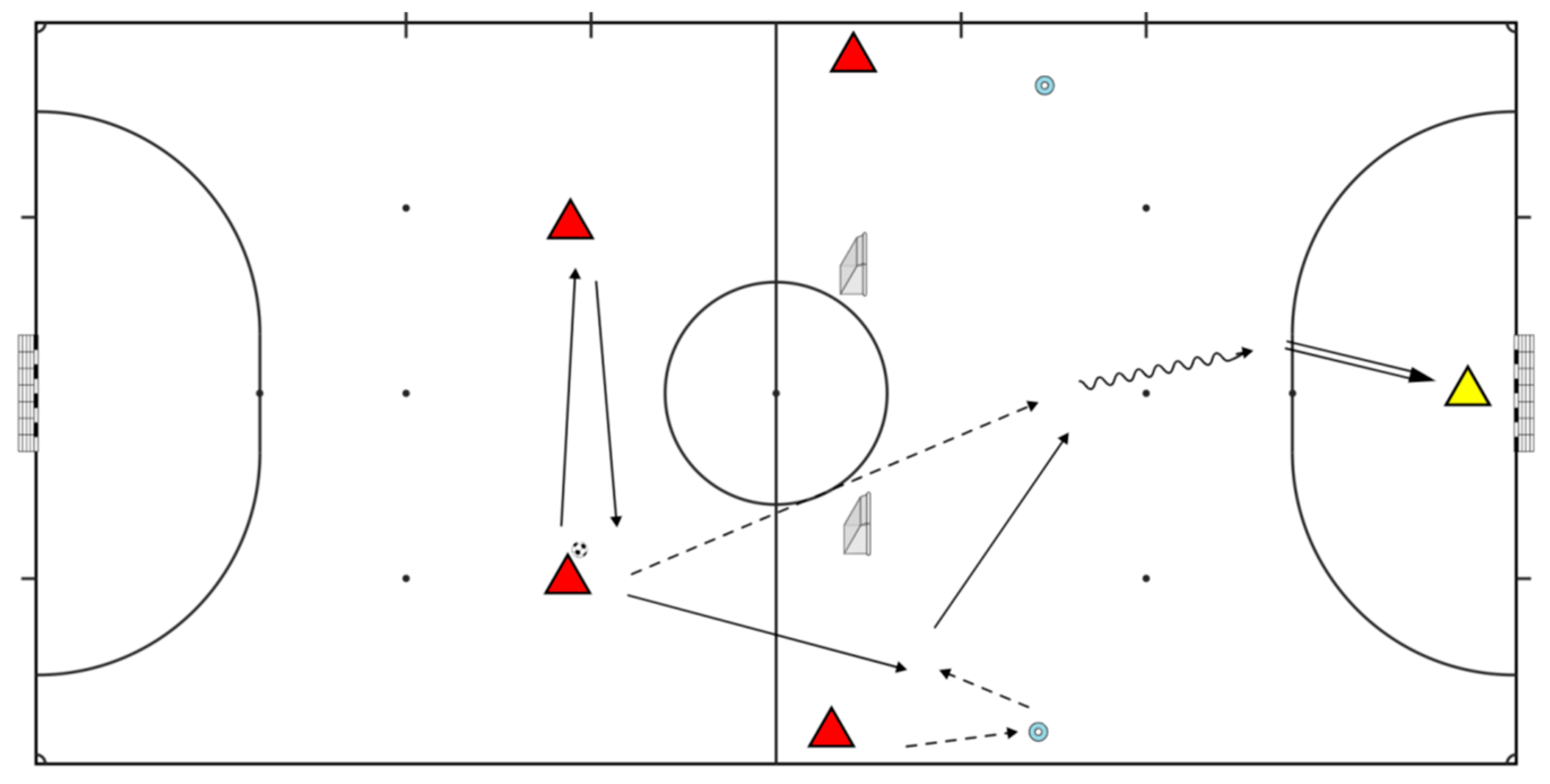
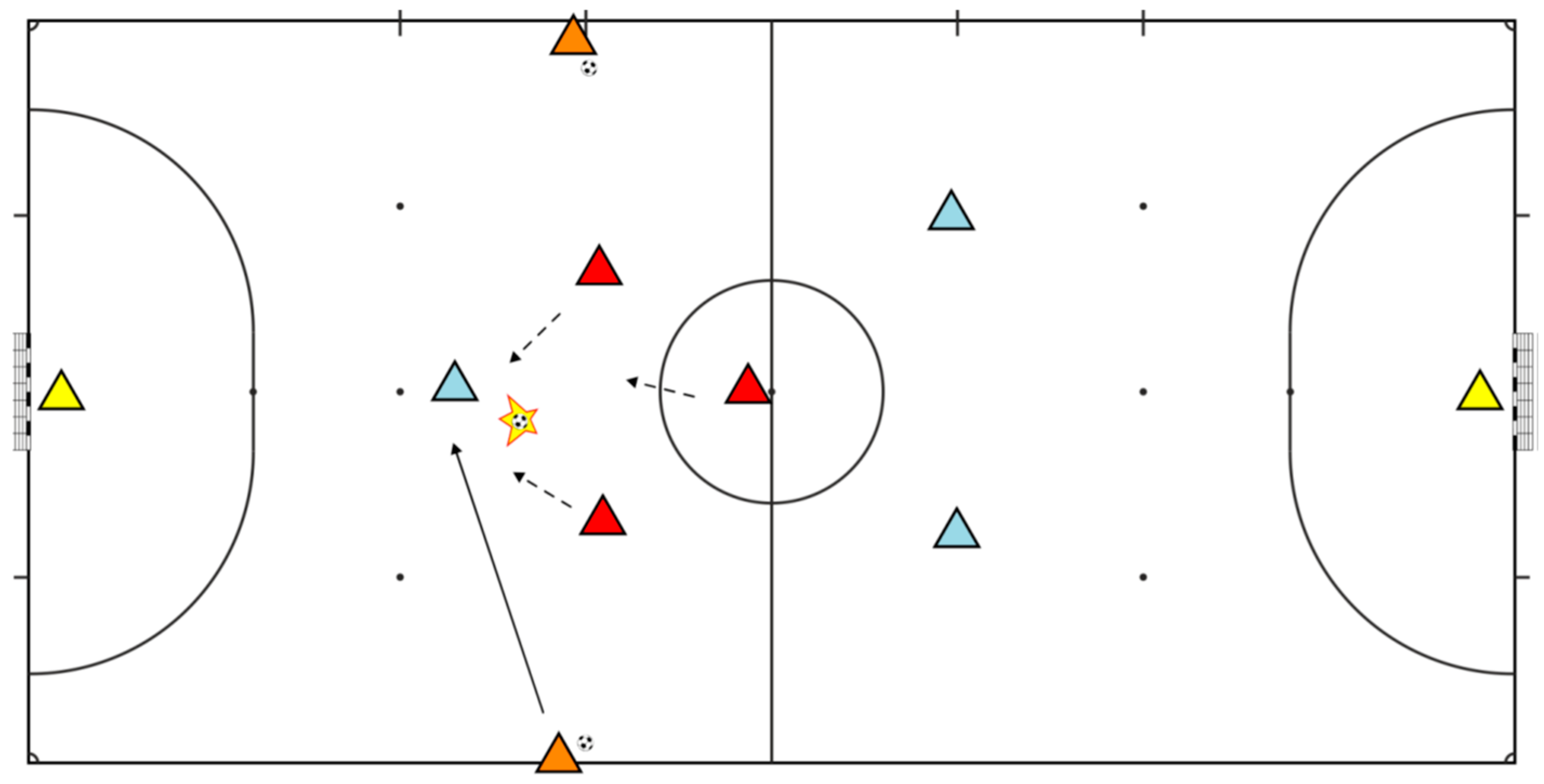
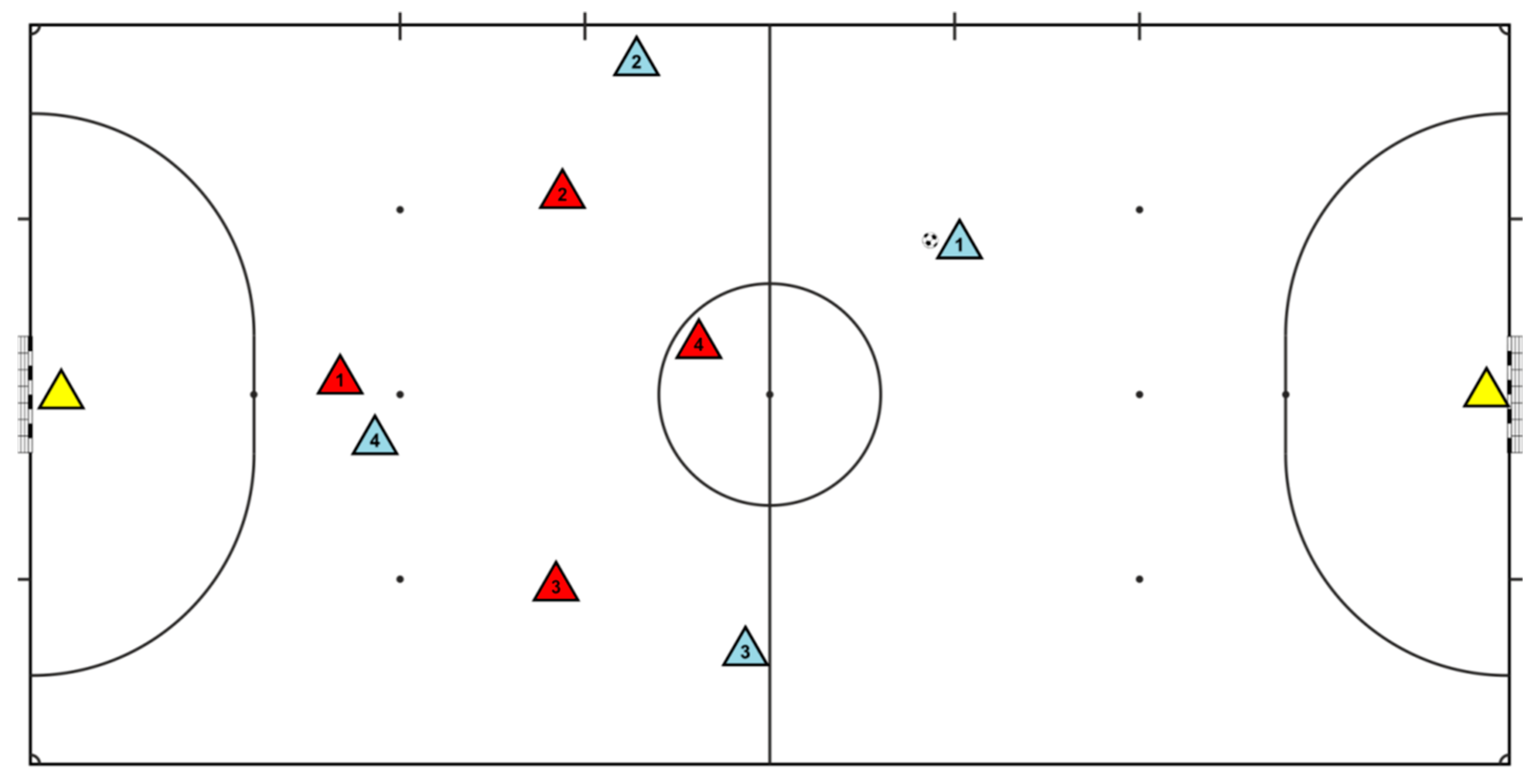
The futsal training intervention incorporated both traditional and non-linear pedagogical approaches, comprising three distinct types of drills: (1) five drills programmed using traditional methods of motor learning (repetition of the same futsal movement patterns on the pitch, without active opponents—quasi closed skill drill (CSD, Figure 1)) [12]; (2) three small tactical games (STG, Figure 2) with reduced and variable number of opponents (inferiorities/superiorities), with constrained (and variable) area of play, modified game principles, and variable number of constraints for players—all drills were programmed based on constraints-led approach methodology (CLA) [13,21,23]; (3) four futsal games (FG, Figure 3) in full format (GK + 4v4 + GK) at a modified area of play with manipulation of one tactical task [24] or information constraint [25]. The purpose of the prepared drills was to develop (improve) perceptual-cognitive functions (skills) of the players. Each experimental drill lasted 300 s (5 min), and all drills were performed once by each player. The primary purpose of this design was to assess the feasibility of replicating match conditions (specifically, the time spent in different intensity zones and overall intensity levels) during the training drills. The description of the used drills are presented in Table 1.

2.4. League Matches

The monitored matches were played as a part of a regional academic league. The competition consisted of two games with teams presenting a lower level of performance, and two games with teams presenting high proficiency (regularly achieving the final eight at national level of academic competition). All four games were monitored. In each game, the variables describing physical effort were monitored during the first and second half (H1 and H2), as well as the whole league official match (OM). For each player, the recording of heart rate was started at the beginning of each half and was stopped when the half ended. This method of measurement means that the analysis of the level and the structure of load in the match included also the time spent on the substitute bench. This solution does not allow the isolation of the exact proportions of the effort zones, but it allows the assessment of the overall load in the match (all motor activities, including rest). In addition, during training drills (particularly in CSD), some of the players were waiting for their repetition, so that the nature of their motor activities was similar to the nature of the match. The time spent on the court during the games was typical for futsal (changes were made in 3 to 4 min, or less, intervals). In this case, it must be acknowledged that the variables related to the match reflected the overall activity-period intensity, including rest. This approach evaluated the real-world, continuous physiological response of the players to the entire match micro-ecosystem, which encompasses active play, the stress experienced during time on the bench, and abrupt fluctuations in intensity. Such an approach differs from methodologies that record on-court time exclusively.

2.5. Statistical Analyses

Data from the training drills were averaged separately for CSD, STG, and FG. The recorded data were presented as mean (M) and standard deviation (SD). Due to the small sample size (n = 9), the Friedman ANOVA test was performed to analyze the differences between futsal drills and games regarding the time spent in particular heart rate zones, %HRpeak, and average HR. A p-value of <0.05 was used as the indicator of statistical significance. Post hoc analysis involved the Wilcoxon signed-rank test for matched pairs. To maintain control over the family-wise error rate, a Bonferroni correction was applied, adjusting the significance threshold to (α = 0.0033). Additionally, Cohen’s d effect size (ES) with 95% confidence intervals (95% CI; LL—lower limit, UL—upper limit) was calculated for more detailed comparisons. The magnitude of the ES was interpreted according to the thresholds proposed by Hopkins et al. [26], classified as follows: trivial (<0.20), small (0.20–0.59), moderate (0.60–1.19), large (1.20–1.99), very large (2.00–3.99), and extremely large (≥4.00).

3. Results

Table 2 presents the descriptive and statistical outcomes regarding time spent in each of HR zone (Z1 (%), Z2 (%), Z3 (%), Z4 (%), Z5 (%), absolute average heart rate values (HR (bpm) and average relative intensity of drill (game) (% HRpeak). All comparisons were statistically non-significant.
Table 3 presents the ES values for detailed comparisons between drills, as well as between drills and match intensity values. The data indicated that the time spent in Z3 (%) was higher during the drills compared to H1, H2, and OM; however, these differences were not statistically significant due to the small sample size.
For the CSD and STG drills, the data demonstrated less time spent in Z4 (%) (small to moderate effect) and Z5 (%) (moderate effect), alongside lower average HR (bpm) (moderate effect) and %HRpeak (moderate effect) compared to match conditions, though without statistical significance. Moreover, during CSD, the time spent in Z1 (%) and Z2 (%) was similar to H1, H2, and OM (trivial and small effects). In the STG drills, players spent less time in Z1 (%) (small effect) and more time in Z2 (%) (small to moderate effect) compared to match conditions.
The FG drills demonstrated greater similarity to H1, H2, and OM regarding Z4 (%) and Z5 (%) (trivial to small effects). However, larger differences were observed in comparison to OM regarding HR (bpm) (moderate effect) and %HRpeak (small to moderate effect, reflecting higher HR values). Comparisons between FG and H1, H2, and OM also revealed less time spent in Z1 (%) and Z2 (%) during these training conditions (large effect).
Direct comparisons between the drills indicated: (1) substantial similarity between CSD and STG (trivial to small effects), but marked differences between CSD and FG (specifically, more time spent in Z1 (%) and Z2 (%), less time spent in Z5 (%), and lower HR values during CSD); and (2) that players spent more time in Z1 (%) (moderate effect), Z2 (%) (large effect), and Z3 (%) (small effect), but less time in Z4 (%) (small effect) and Z5 (%) (moderate effect), alongside lower HR values (large effect) in STG compared to FG. The 95% CIs for the ES values were wide, indicating poor data precision; therefore, all results must be interpreted with caution.

4. Discussion

The aim of the conducted study was to compare the intensity and the percentage time spent in different intensity zones between training and game conditions among female academic futsal players. The results revealed: (1) no significant differences between official match and training conditions in terms of levels of physical intensity and percentage time spent in intensity zones—from a methodological perspective, these results were non-conclusive and should be interpreted as a trend; they also require further investigation with a larger sample; (2) there was a higher mean percentage of time spent in Z3% in training conditions compared to the official match conditions (CSD, STG, FG v H1, H2 and OM); (3) in the case of overall match activity, there was a higher percentage of time spent in Z5%, and higher %HRpeak in H1, H2, OM and FG compared to STG and CSD; (4) average intensity overall activity in academic futsal game was ≥80% HRpeak; (5) the players spent 60% of league game time in zones higher than 70% of HRpeak.
Our study revealed that the average %HRpeak during league games was 81%, while the average absolute HR values amounted to 154.6 beats per minute. Direct comparisons of %HRpeak and HR (bpm) values with previous literature are challenging, as prior studies reported higher (M = 91.9%) [10], somewhat similar (85% in the first half and 81% in the second half) [2], almost identical (80%) [5], or lower (74.4%) [3] values. In those studies, measurements were performed strictly on-court (during active play, excluding time spent on the bench), whereas our study recorded all activities, including bench-rest periods. This difference in methodological approach appears to be the primary reason for these inconsistencies. While it could be argued that our approach possesses a methodological limitation compared to traditional designs, our objective was to evaluate the futsal match holistically as a micro-ecosystem (reflecting overall activity). This approach offers distinct advantages, particularly from an ecological validity perspective. Nonetheless, due to the small sample size—which limited statistical power and resulted in highly variable individual responses, as suggested by the wide 95% CIs for the ES values—our findings should not be treated as definitive evidence. Instead, this holistic approach may stimulate new pathways for scientific exploration, serving as a novel, more ecologically valid framework for future research in female futsal.
Taking into account the time spent in HR zones during games played by the studied team, it could be stated that the participants spent more than 60% of playing time in the HR zones higher than 70% of HRpeak (Zones: 3, 4 and 5). Comparison of these results with data from Kassiano et al. [5] indicated that studied players spent less time in higher intensity zones than the players in the cited study [5], which was more than 90% of playing time. The data from Barbero-Alvarez et al. [1] study conducted among males has shown that the players spent about 99% of the game time in HR zones higher than 65%. The observed differences between our study and the research by Barbero-Alvarez et al. [1] could be a result of measurement procedures as suggested above.
The main objective of this study was to compare the internal load and its structure between training programmed according to NLP and official match conditions. Previous research has primarily investigated the effects on internal load by manipulating constraints such as the number of players during small-sided and conditioning games (e.g., 3v3 formats) or altering pitch sizes and drill durations across 1v1 to 4v4 game formats [4,27]. In summary, coaches can effectively manipulate specific constraints to elicit appropriate physiological responses. Conversely, training based on the NLP approach using the CLA method focuses on improving abilities related to decision-making and the execution of specific technical skills [13,18]. The core concept of this training is centered on the variability of movements and solutions when facing a motor problem, thereby enabling players to explore and, consequently, effectively exploit game situations. To achieve this level of variability and exploration, coaches manipulate task, organismic, and environmental constraints during training session design [21]. Furthermore, CLA has been shown to promote tactical creativity [24]. Taken together, understanding the physiological responses elicited during and after CLA-based training provides highly valuable insights for coaches, potentially aiding them in microcycle planning and offering a clearer understanding of how the CLA method impacts drill intensity.
The mean intensity level in FG was higher compared to the match conditions (H1, H2 and OM) (see Table 3), but results were not significant. Previous studies demonstrated that game-based drills in a full format (GK + 4v4 + GK) properly reflect futsal game loads [4,28], with a %HRmax around 80–85%. Comparing the intensity levels in our FG (Figure 3) session (where %HRpeak was 88%) and the time spent in specific intensity zones (particularly Z4% and Z5%) to match conditions suggests that this type of specific drill fulfilled the conditioning demands of the game and can be useful in the futsal learning process. Structurally, the FG drills retained the authentic format of an official futsal match; however, the applied pedagogical constraints were primarily informational (e.g., awarding bonus points for specific scoring actions) rather than structural, such as altering the performance area or changing player density. Moreover, our findings are in concordance with previous research demonstrating that appropriately modified game formats can elicit physical responses that match or even exceed official match intensity [8]. Although the observed differences were not statistically significant, the findings suggest that FG may be adequate for replicating futsal dynamics and physiological demands. However, the small sample size and wide confidence intervals preclude drawing definitive practical conclusions, highlighting the need for further scientific exploration.
The intensity (%HRpeak and HR) of the CSD (Figure 1) training task also did not significantly differ from the intensity levels observed during the official match, which initially suggests a similarity between them. However, ES values demonstrated a lower overall intensity, characterized by less time spent in Z5% and more time spent in Z2% and Z3% compared to match activity (H1, H2, OM) and FG. A similar trend was observed in the context of the STG drills, where players spent more time in Z1%, Z2%, and Z3%, but less time in Z4% and Z5%, resulting in a lower overall intensity. From a non-linear pedagogy perspective, the lower intensity observed during CSD can be attributed to the absence of active opponents and the strictly linear nature of these drills, where open exploration is restricted until the final phase against the goalkeeper. Conversely, the reduced intensity during STG (Figure 2) may stem from the specific structural and task constraints applied, such as smaller performance areas and complex game rules. This design likely increased the cognitive load, thereby slowing down physical execution. Previous research suggested that introducing more constraints can lead to a lower intensity level, as shown by Hill-Haas et al. [19], which is in accordance with our results. Collectively, these findings suggest that designing drills according to the NLP approach can provide a powerful stimulus for tactical skill development but simultaneously may fail to reflect competitive physiological demands. This trade-off has a direct impact on how coaches structure their training sessions: if coaches decide to prioritize motor learning, the physiological load may decrease; conversely, if the priority is to develop physiological systems, motor learning may become less effective. In this scenario, the FG drill could serve as a viable solution, but how to optimize FG (compared to our current concept) to simultaneously satisfy both cognitive and physiological demands should be the focus of future research. Alternatively, coaches can pragmatically combine both types of drills (learning-focused and conditioning-focused) within a single training session.

Limitations

The findings of our study are subject to several limitations that warrant consideration. The most significant limitation is the small sample size (n = 9), which constrained the statistical power and directly influenced the selection of statistical methods used for data analysis. The calculated ES values and their correspondingly wide confidence intervals further underscore that the sample size was too low to draw definitive conclusions. Additionally, utilizing match-recorded peak heart rate values (%HRpeak) rather than a standardized, isolated laboratory test could be interpreted as a methodological limitation; however, from an ecological perspective, this approach also offers distinct advantages. In real-world sports settings, coaches often aim to design training sessions that mimic actual competitive contexts. Consequently, information regarding match-elicited peak HR values—which inherently encompass emotional and psychological factors—may provide a more ecologically valid and valuable reference for practitioners than isolated tests. This methodological dilemma ultimately remains a practical choice for coaches to consider. Finally, the unequal distribution of the examined training protocols, with CSD drills heavily dominating the total number of evaluated sessions, represents a further limitation that may have impacted the outcomes of the statistical analysis.

5. Conclusions

In conclusion, the results demonstrated that the different categories of futsal training tasks did not statistically differ from official match conditions in terms of overall activity intensity among female academic futsal players. This suggests that coaches may utilize such training tasks as drills that replicate competitive match intensity in female academic futsal. However, the calculated ES values and their wide confidence intervals render these findings inconclusive. From a scientific perspective, this topic warrants further research, particularly with a larger sample size.
From a practical point of view, coaches must carefully consider the primary purpose of each training session, balancing physiological and cognitive goals. CSD drills could be effectively used as learning tools, especially when introducing a new motor problem or working with novice players, as they elicit a considerably lower physiological load compared to overall match intensity. STG drills can serve as a progression from CSD, introducing a higher perceptual load and slightly greater physiological demands, while remaining below competitive match thresholds. Finally, although FG drills successfully meet match-play demands, their specific motor learning potential remains to be fully understood, highlighting a critical area for future research exploration.

Author Contributions

Conceptualization, M.K., M.P., K.P., G.K. and E.B.; methodology, M.K., M.M. and M.P.; validation, M.M.; formal analysis, M.K. and M.P.; investigation, M.K., M.P. and M.M.; data curation, M.K., M.P. and M.M.; writing—original draft preparation, M.K., M.P., M.M. and A.P.; writing—review and editing, M.K., A.P. and M.P.; supervision, M.M. All authors have read and agreed to the published version of the manuscript.

Funding

This research received no external funding.

Institutional Review Board Statement

The study was conducted in accordance with the Declaration of Helsinki, and approved by the Bioethical Commission of the Regional Medical Chamber in Tarnow, Poland (opinion No. 06/0177/2019; date 3 December 2019).

Informed Consent Statement

Informed consent was obtained from all subjects involved in the study.

Data Availability Statement

The datasets analyzed during the study are available from the corresponding author (M.K.) upon reasonable request.

Conflicts of Interest

The authors declare no conflicts of interest. The funders had no role in the design of the study; in the collection, analyses or interpretation of data; in the writing of the manuscript; or in the decision to publish the results.

References

  1. Barbero-Alvarez, J.C.; Soto, V.M.; Barbero-Alvarez, V.; Granda-Vera, J. Match Analysis and Heart Rate of Futsal Players during Competition. J. Sports Sci. 2008, 26, 63–73. [Google Scholar] [CrossRef]
  2. Beato, M.; Coratella, G.; Schena, F.; Hulton, A.T. Evaluation of the External and Internal Workload in Female Futsal Players. Biol. Sport 2017, 3, 227–231. [Google Scholar] [CrossRef]
  3. Clemente, F.M.; Nikolaidis, P.T.; Bezerra, J.P.; Chen, Y.-S. Heart Rate Variations between Training Days and Types of Exercise in Men and Women Futsal and Soccer Players. Hum. Mov. Spec. Issues 2018, 2018, 1–7. [Google Scholar] [CrossRef]
  4. Duarte, R.; Batalha, N.; Folgado, H.; Sampaio, J. Effects of Exercise Duration and Number of Players in Heart Rate Responses and Technical Skills During Futsal Small-Sided Games. Open Sports Sci. J. 2009, 2, 37–41. [Google Scholar] [CrossRef]
  5. Kassiano, W.; Jesus, K.; Assumpção, C.; Lamboglia, C.; Mendes, A.; Barbosa, R.; Sabóia, W.; Simim, M.; Medeiros, A.I.A. Respostas Neuromusculares e Fisiológicas Durante o Jogo Em Atletas de Futsal Feminino. J. Phys. Educ. 2019, 30, 3061. [Google Scholar] [CrossRef]
  6. Oliva-Lozano, J.M.; Muyor, J.M.; Puche Ortuño, D.; Rico-González, M.; Pino-Ortega, J. Analysis of Key External and Internal Load Variables in Professional Female Futsal Players: A Longitudinal Study. Res. Sports Med. 2023, 31, 309–318. [Google Scholar] [CrossRef] [PubMed]
  7. Clemente, F.M.; Nikolaidis, P.T. Profile of 1-Month Training Load in Male and Female Football and Futsal Players. SpringerPlus 2016, 5, 694. [Google Scholar] [CrossRef] [PubMed]
  8. Hill-Haas, S.V.; Dawson, B.; Impellizzeri, F.M.; Coutts, A.J. Physiology of Small-Sided Games Training in Football: A Systematic Review. Sports Med. 2011, 41, 199–220. [Google Scholar] [CrossRef] [PubMed]
  9. Halouani, J.; Chtourou, H.; Dellal, A.; Chaouachi, A.; Chamari, K. Soccer Small-Sided Games in Young Players: Rule Modification to Induce Higher Physiological Responses. Biol. Sport 2017, 2, 163–168. [Google Scholar] [CrossRef]
  10. Costa, J.L.T.D.; Spineli, H.; Balikian Júnior, P.; Prado, E.S.; Araujo, G.G.D. Physiological and Technical Demands of the Small-Sided and Generic Games in Female Futsal Players. Mot. Rev. Educ. Física 2021, 27, e1021018120. [Google Scholar] [CrossRef]
  11. Hulka, K.; Weisser, R. The Influence of the Number of Players on Workload during Small-Sided Games among Elite Futsal Players. Montenegrin J. Sports Sci. Med. 2017, 6, 45–48. [Google Scholar]
  12. Schöllhorn, W.I.; Rizzi, N.; Slapšinskaitė-Dackevičienė, A.; Leite, N. Always Pay Attention to Which Model of Motor Learning You Are Using. Int. J. Environ. Res. Public Health 2022, 19, 711. [Google Scholar] [CrossRef]
  13. Pizarro, D.; Práxedes, A.; Travassos, B.; Moreno, A. Development of Defensive Actions in Small-Sided and Conditioned Games with Offensive Purposes in Futsal. Front. Psychol. 2020, 11, 591572. [Google Scholar] [CrossRef]
  14. Rigon, T.A.; Drezner, R.; Nogueira, F.F.; Yousefian, F.; Travassos, B.; Dantas, L.E.P.B.T. What to Look for in Setting Sports Training Tasks for Young Players? Analysis of the Numerical Configuration of Players and Court Size Constraints on Futsal Small-Sided Games Performance Difficulty Level and Player Participation. Int. J. Perform. Anal. Sport 2023, 23, 31–47. [Google Scholar] [CrossRef]
  15. Serrano, C.; Ferraz, A.; Ribeiro, J.N.; Ibañez, E.; Travassos, B. Unlocking the Training Process: How Different Training Tasks Shape the Physiology and Biomechanics of Professional Futsal Players. Front. Sports Act. Living 2025, 7, 1549026. [Google Scholar] [CrossRef]
  16. Bujalance-Moreno, P.; Latorre-Román, P.Á.; García-Pinillos, F. A Systematic Review on Small-Sided Games in Football Players: Acute and Chronic Adaptations. J. Sports Sci. 2019, 37, 921–949. [Google Scholar] [CrossRef]
  17. Sangnier, S.; Cotte, T.; Brachet, O.; Coquart, J.; Tourny, C. Planning Training Workload in Football Using Small-Sided Games’ Density. J. Strength Cond. Res. 2019, 33, 2801–2811. [Google Scholar] [CrossRef] [PubMed]
  18. Práxedes, A.; Del Villar, F.; Pizarro, D.; Moreno, A. The Impact of Nonlinear Pedagogy on Decision-Making and Execution in Youth Soccer Players According to Game Actions. J. Hum. Kinet. 2018, 62, 185–198. [Google Scholar] [CrossRef] [PubMed]
  19. Hill-Haas, S.V.; Coutts, A.J.; Dawson, B.T.; Rowsell, G.J. Time-Motion Characteristics and Physiological Responses of Small-Sided Games in Elite Youth Players: The Influence of Player Number and Rule Changes. J. Strength Cond. Res. 2010, 24, 2149–2156. [Google Scholar] [CrossRef]
  20. Passos, P.; Araújo, D.; Davids, K.; Shuttleworth, R. Manipulating Constraints to Train Decision Making in Rugby Union. Int. J. Sports Sci. Coach. 2008, 3, 125–140. [Google Scholar] [CrossRef]
  21. Renshaw, I.; Davids, K.; Newcombe, D.; Roberts, W. The Constraints-Led Approach: Principles for Sports Coaching and Practice Design. In Routledge Studies in Constraints-Based Methodologies in Sport, 1st ed.; Routledge: Abingdon, UK; New York, NY, USA, 2019; ISBN 978-1-315-10235-1. [Google Scholar]
  22. Chow, J.Y.; Davids, K.; Hristovski, R.; Araújo, D.; Passos, P. Nonlinear Pedagogy: Learning Design for Self-Organizing Neurobiological Systems. New Ideas Psychol. 2011, 29, 189–200. [Google Scholar] [CrossRef]
  23. Araújo, D.; Davids, K.; Hristovski, R. The Ecological Dynamics of Decision Making in Sport. Psychol. Sport Exerc. 2006, 7, 653–676. [Google Scholar] [CrossRef]
  24. Memmert, D. Teaching Tactical Creativity in Sport: Research and Practice. In Routledge Studies in Physical Education and Youth Sport; Routledge: London, UK; New York, NY, USA, 2015; ISBN 978-0-415-74590-1. [Google Scholar]
  25. Gray, R. How We Learn to Move: A Revolution in the Way We Coach & Practice Sports Skills; Rob Gray: Tempe, AZ, USA, 2021; ISBN 979-8-7513-3118-4. [Google Scholar]
  26. Hopkins, W.G.; Marshall, S.W.; Batterham, A.M.; Hanin, J. Progressive Statistics for Studies in Sports Medicine and Exercise Science. Med. Sci. Sports Exerc. 2009, 41, 3–12. [Google Scholar] [CrossRef]
  27. Berdejo-del-Fresno, D.; Moore, R.; Laupheimer, M.W. Changes in English Futsal Players after a 6-Week Period of Specific Small-Sided Games Training. Am. J. Sports Sci. Med. 2015, 3, 28–34. [Google Scholar] [CrossRef]
  28. Barth, J.; Ribeiro, Y.S.; Merseburger, L.; Vecchio, F.B.D. Comparison of Psychophysiological Responses in Game Simulation and Different Training Sessions in Female Futsal Athletes. J. Exerc. Physiol. Online 2016, 19, 10–16. [Google Scholar]
Figure 1. Diagram of CSD drill.
Applsci 16 05627 g001
Figure 2. Diagram of STG drill.
Applsci 16 05627 g002
Figure 3. Diagram of FG drill.
Applsci 16 05627 g003
Table 1. Example of training drills.
CSD drill
ContentsExplanation
Attack:
Generate one-two pass with movements towards the goal (2vGK)
Defense:
n/d
Organization: 4-0 formation in 2/3 court
Task aim: while passing, transition to attack by performing a one-two pass and moving into 2vGK situation
Variability: starting from different positions, time pressure, changing partner, and which duel scores more
STG drill
ContentsExplanation
Attack (blues):
Try to score after pass from neutral player → defend versus counter-attack

Defense (reds):
Intercept the first pass or win 1v3 in defense and transition to a counter-attack 3v2 (blues)
Organization: there were defined starting points for both teams, and two neutral players
Task aim: neutral pass to the blue pivot, the red team must defend the goal (in 3v1 in defense superiority) and transition to a counter-attack 3v2 (only two blues can defend on their own half). If pivot scores, then reds receive a pass from the second neutral player to exploit the transition phase
Variability: changing starting positions by players, pivot can change the starting position (e.g., closer to the neutral player), one blue can support the pivot in attacking phase (2v3), different starting areas (closer or farther to the goal)
FG
ContentsExplanation
Attack:
If designated players scores, then goal = 2
Defense:
Marking players who can score x2
Organization: 4v4 + GK’s game at full court
Task aim: exploration and exploiting possibilities with two players whose goals count double; e.g., in both teams, player 1 and 2 can score goal for x2
Variability: changing players who score is double counting, only one player with double counting, changing lineups, score from outside penalty area is double counting
Table 2. The outcomes describing intensity (HR) and structure of physical effort (time spent in intensity zones—Z).
Intensity VariablesDrillMean ± SdANOVA-Friedman (χ2/p-Value)Wilcoxon Test (Z-Value/p-Value)Bonferroni Post Hoc p-Value ThresholdBonferroni Post Hoc Interpretation
Z1 (%)CSD14.5 ± 18.6χ2 = 10.673/0.058
STG10.1 ± 8.0
FG1.8 ± 2.1
H115.2 ± 12.1
H214.2 ± 8.4
OM14.5 ± 7.0
Z2 (%)CSD18.9 ± 17.1χ2 = 9.122/0.104
STG27.2 ± 20.4
FG6.7 ± 5.8
H121.9 ± 4.6
H224.3 ± 16.7
OM23.5 ± 18.8
Z3 (%)CSD24.6 ± 12.9χ2 = 14.428/0.013CSD v. H1 (2.197/0.027) CSD v. OM (2.197/0.027)0.00330.0033 < 0.027 (non-significant)
STG27.3 ± 6.3
FG21.0 ± 19.8
H18.7 ± 1.7
H211.4 ± 4.1
OM10.2 ± 2.1
Z4 (%)CSD25.2 ± 18.7χ2 = 3.571/0.612
STG22.6 ± 13.5
FG34.8 ± 18.4
H129.0 ± 23.8
H226.6 ± 19.9
OM28.1 ± 22.3
Z5 (%)CSD11.8 ± 19.6χ2 = 6.921/0.226
STG9.4 ± 16.1
FG29.5 ± 33.8
H125.3 ± 15.6
H223.8 ± 17.8
OM24.1 ± 16.9
HR (bpm)CSD146.3 ± 20.1χ2 = 6.791/0.236
STG149.4 ± 12.6
FG167.9 ± 14.4
H1155.1 ± 8.5
H2154.2 ± 11.2
OM154.6 ± 11.0
HR%peakCSD76 ± 10χ2 = 5.942/0.311
STG78 ± 5
FG88 ± 6
H181 ± 6
H281 ± 6
OM81 ± 7
Note. Z%1–Z%5, heart rate intensity zones; CSD, closed skill drills; STG, small tactical games; FG, futsal games (full format); H1, first half of the official match; H2, second half of the official match; OM, official match overall activity; HR (bpm), heart rate in beats per minute; HR%peak, percentage of peak heart rate; SD, standard deviation; ANOVA-Friedman (χ2), Friedman non-parametric analysis of variance (Chi-squared statistic); p-value, statistical significance threshold; Z-value, Wilcoxon signed-rank test statistic; Bonferroni post hoc p-value threshold, adjusted significance alpha level calculated as original alpha (0.05) divided by the number of pair-wise comparisons (15 comparisons, alpha threshold = 0.0033); non-significant, results where the calculated p-value is greater than the adjusted Bonferroni threshold (p > 0.0033).
Table 3. The magnitude of ES values with 95% confidence interval between types of drills and official match values.
Intensity VariablesZ1 (%)Z2 (%)Z3 (%)Z4 (%)Z5 (%)HR (bpm)HR%peak
CSD v STGd = 0.34 [−0.59, 1.27]d = −0.47 [−1.41, 0.46]d = −0.33 [−1.26, 0.60]d = 0.27 [−0.66, 1.19]d = 0.07 [−0.85, 1.00]d = −0.21 [−1.13, 0.72]d = −0.21 [−1.13, 0.72]
CSD v FGd = 0.91 [−0.06, 1.89]d = 0.88 [−0.06, 1.85]d = 0.30 [−0.63, 1.22]d = 0.24 [−1.16, 0.69]d = −0.72 [−1.68, 0.23]d = −1.19 [−2.19, −0.18]d = −1.31 [−2.33, −0.29]
CSD v H1d = −0.05 [−0.97, 0.88]d = 0.36 [−0.57, 1.30]d = 1.68 [0.61, 2.76]d = −0.36 [−1.29, 0.57]d = −0.94 [−1.91, 0.04]d = −0.80 [−1.76, 0.16]d = −0.91 [−1.88, 0.06]
CSD v H2d = 0.03 [−0.90, 0.95]d = −0.04 [−0.97, 0.88]d = 1.48 [0.44, 2.53]d = −0.27 [−1.20, 0.66]d = −0.77 [−1.72, 0.19]d = −0.70 [−1.65, 0.26]d = −0.85 [−1.81, 0.12]
CSD v OMd = 0.01 [−0.92, 0.93]d = 0.12 [−0.80, 1.05]d = 1.58 [0.53, 2.64]d = −0.33 [−1.27, 0.60]d = −0.83 [−1.80, 0.13]d = −0.77 [−1.72, 0.19]d = −0.90 [−1.87, 0.07]
STG v FGd = 1.16 [0.16, 2.16]d = 1.29 [0.27, 2.30]d = 0.56 [−1.50, 0.38]d = −0.56 [−1.50, 0.38]d = −0.79 [−1.75, 0.17]d = −1.23 [−2.23, −0.22]d = −1.45 [−2.49, −0.41]
STG v H1d = −0.55 [−1.49, 0.39]d = 0.88 [−0.09, 1.84]d = 3.94 [2.36, 5.53]d = −0.62 [−1.57, 0.32]d = −1.10 [−2.09, −0.10]d = −0.78 [−1.73, 0.18]d = −0.96 [−1.93, 0.02]
STG v H2d = −0.52 [−1.46, 0.42]d = 0.51 [−0.43, 1.44]d = 3.32 [1.89, 4.74]d = −0.58 [−1.52, 0.37]d = −0.90 [−1.87, 0.07]d = −0.64 [−1.58, 0.31]d = −0.90 [−1.87, 0.07]
STG v OMd = −0.60 [−1.55, 0.34]d = 0.66 [0.29, 1.61]d = 3.71 [2,19, 5.24]d = −0.62 [−1.57, 0.32]d = −0.98 [−1.96, −0.002]d = −0.74 [−1.69, 0.22]d = −0.98 [−1.96, −0.004]
FG v H1d = −1.49 [−2.54, −0.45]d = −1.24 [−2.25, −0.24]d = 0.76 [−0.20, 1.71]d = −0.17 [−1.09, 0.76]d = 0.17 [−0.76, 1.09]d = 0.71 [−0.24, 1.66]d = 0.59 [−0.35, 1.54]
FG v H2d = −1.78 [−2.87, −0.69]d = −1.40 [−2.43, −0.37]d = 0.65 [−0.30, 1.59]d = −0.05 [−0.97, 0.88]d = 0.24 [−0.69, 1.17]d = 0.84 [−0.12, 1.81]d = 0.82 [−0.14, 1.78]
FG v OMd = −2.16 [−3.33, −1.00]d = −1.38 [−2.41, −0.35]d = 0.70 [−0.26, 1.65]d = −0.13 [−1.05, 0.80]d = 0.22 [−0.70, 1.15]d = 0.82 [−0.14, 1.78]d = 0.74 [−0.21, 1.70]
Note. 95% CI, 95% confidence interval; CSD, closed skill drills; d, Cohen’s d effect size coefficient; FG, futsal games; H1, first half of the official match; H2, second half of the official match; HR (bpm), heart rate in beats per minute; HR%peak, percentage of peak heart rate; OM, official match overall activity; STG, small tactical games; Z1 (%)–Z5 (%), heart rate intensity zones 1 to 5 expressed as a percentage of total time.
Disclaimer/Publisher’s Note: The statements, opinions and data contained in all publications are solely those of the individual author(s) and contributor(s) and not of MDPI and/or the editor(s). MDPI and/or the editor(s) disclaim responsibility for any injury to people or property resulting from any ideas, methods, instructions or products referred to in the content.