Review

The Role and Prospects of Composite Fibers in the Production of Hand Exoskeletons

1
Faculty of Computer Science, Kazimierz Wielki University, 85-064 Bydgoszcz, Poland
2
Faculty of Mechatronics, Kazimierz Wielki University, 85-064 Bydgoszcz, Poland
*
Author to whom correspondence should be addressed.
Appl. Sci. 2026, 16(11), 5365; https://doi.org/10.3390/app16115365
Submission received: 20 April 2026 / Revised: 16 May 2026 / Accepted: 23 May 2026 / Published: 27 May 2026
(This article belongs to the Special Issue Additive Manufacturing of Fiber Composite Structures)

Featured Application

Article examines the role and future prospects of composite fibers in the production of hand exoskeletons, focusing on their mechanical performance, design flexibility, and integration with emerging technologies.

Abstract

Composite materials, particularly polymers reinforced with carbon, glass, and aramid fibers, enable the development of lightweight yet mechanically robust structures that enhance user comfort and functional performance. Their high strength-to-weight ratio and fatigue resistance make them ideal for applications requiring repetitive movements in rehabilitation and assistive robotics. However, challenges remain related to cost-effective production, durability under complex loading conditions, and ergonomic fit to human anatomy. Recent advances in materials science and smart materials are expanding the possibilities of multifunctional composites with embedded sensors. Furthermore, machine learning methods are increasingly being used to optimize material selection and structural design. Future advances are expected to improve scalability, personalization, and system integration, positioning composite fibers as a key assistive technology in next-generation robotic systems.

1. Introduction

The origins of composite fibers in hand exoskeletons can be traced to advances in materials science and aerospace engineering, where lightweight and strong materials first found widespread use [1]. Early exoskeleton prototypes were based on metals, but scientists began exploring composites to reduce weight and improve ergonomics [2]. Initial stages involved simple fiber-reinforced polymers used for structural components such as frames and joint supports [3]. As knowledge deepened, designers began to adapt fiber orientation to the stress patterns of hand movements [4]. The next stage involved hybrid composites combining different fibers to balance stiffness, flexibility, and durability [5]. With the development of artificial intelligence (AI), computational tools began to aid in the optimization of composite systems and performance prediction [6]. AI-based simulations now enable rapid prototyping by modeling the behavior of materials during complex, repetitive movements [7]. More recent stages include the integration of intelligent composites with embedded sensors, providing feedback and real-time monitoring [8]. At the same time, additive manufacturing techniques have enabled the creation of more precise and customized composite structures for individual users [9]. This evolution reflects a shift from basic material substitution to highly optimized, intelligent, and user-specific composite solutions for hand exoskeletons.
The use of composite fibers is bringing innovation to hand exoskeletons, enabling a combination of high strength, low weight, and design flexibility that traditional materials cannot easily achieve [10]. This allows devices to better replicate the natural biomechanics of the hand while ensuring comfort during prolonged wear [11,12,13,14,15]. A key contribution is the ability to adjust fiber orientation and layering, optimizing performance for specific movements, such as grasping or pinching [16]. Composite materials also support more compact and aesthetically pleasing designs, which can improve user acceptance in both medical and industrial contexts [17]. The integration of AI further innovates, enabling data-driven optimization of structures and material layouts [15,16,18]. AI techniques can identify optimal composite configurations that would be difficult to achieve using conventional engineering methods alone [19]. Furthermore, intelligent composite systems with embedded sensors provide real-time feedback and adaptive support, increasing the precision, safety, and responsiveness of exoskeletons [20]. The combination of composites and AI is also accelerating innovation cycles through prototyping and simulation-based testing [21]. These advances represent a significant contribution to the development of more efficient, personalized, and intelligent hand exoskeleton technologies.
Composite fibers used in hand exoskeletons can be classified primarily by reinforcement type, including carbon fibers, glass fibers, and aramid fibers, each offering a different stiffness, strength, and weight ratio [22]. Carbon fiber composites offer the highest stiffness-to-weight ratio but are expensive and susceptible to brittle fracture, while glass fibers are cheaper but heavier and less stiff [23]. Aramid fibers (such as Kevlar) have excellent impact resistance and flexibility but are difficult to machine and reliably assemble into small, complex exoskeleton components [24]. The second classification is based on the matrix material, typically thermoset polymers (e.g., epoxies) compared to thermoplastics [25]. Thermosets offer better structural stability, while thermoplastics allow for recycling and faster processing. Composites can also be classified by architecture, including unidirectional fibers, fabrics, and multidirectional laminates, each of which influences load distribution and anisotropic behavior [26]. Hybrid composites combine multiple fiber or matrix types to tailor performance, but their design introduces complexity in predicting interface behavior and failure modes [27]. From a functional perspective, emerging categories include smart composites developed within Smart Materials, which integrate sensors or actuation but are still difficult to produce at scale [28]. AI-based classification approaches in machine learning (ML) attempt to group composite configurations by performance metrics, but they face challenges due to limited and inconsistent training data [15,16,29]. Another challenge is connecting material science classifications to real-world biomechanical requirements, as mismatches can lead to discomfort or inefficient force transfer [11,12,13,14,15]. Although composite fiber classifications provide a useful design framework, integrating these categories with AI-based optimization and practical manufacturing constraints remains a key, unresolved challenge in the development of hand exoskeletons.
Composite fibers (especially carbon and glass fiber-reinforced polymers) currently play a key structural role in hand exoskeletons due to their superior strength-to-weight ratio compared to metals [30]. They enable lightweight, portable frames that reduce user fatigue while maintaining the mechanical strength necessary to support finger and hand movements. Their high fatigue resistance allows exoskeletons to function reliably over multiple, repetitive motion cycles, essential for rehabilitation and assistive applications [31]. Composite fibers can be molded into complex, ergonomic shapes, enabling precise conformance to the anatomy of the human hand and improving comfort and control [32]. They also provide corrosion resistance and durability in environmental conditions, supporting long-term use in medical, industrial, and outdoor environments [33]. Currently, composites are widely used in high-performance or premium exoskeletons, often combined with actuators, sensors, and control systems in integrated wearable robotics. However, their relatively high cost and manufacturing complexity still limit their widespread use in low-cost devices [34]. In the future, advances in composite manufacturing (e.g., improved fiber forming and alignment techniques) are expected to reduce costs and enable mass production [35]. Future developments may also include hybrid composites and smart materials that integrate sensors or adaptive stiffness directly into the structure [35]. Composite fibers will likely remain a key technology enabling lighter, stronger, and more ergonomic hand exoskeletons, gaining importance as wearable robotics advances in healthcare and industry.
Among the research gaps observed in this area, there is still limited knowledge about long-term fatigue and microdamage of composite fibers subjected to repetitive, low-amplitude movements, typical of hand exoskeletons [36]. Existing materials science models do not fully capture how microcracks and delaminations evolve under combined mechanical and environmental stresses in wearable devices. Integrating composite materials with embedded sensors is a significant gap, as current approaches in smart materials remain experimentally limited and difficult to scale [35]. The interaction between soft biological tissues and stiff composite structures is not yet sufficiently understood, especially in terms of comfort, pressure distribution, and long-term usability. From a design perspective, biomechanics lacks comprehensive datasets linking human hand kinematics with optimal composite fiber architecture. In the field of AI, machine learning methods are underutilized to predict failure modes and optimize fiber orientation in complex, multi-load scenarios [15,16,37]. There is also a gap in connecting AI-based generative design with manufacturing constraints, which limits the practical application of optimized composite structures. Current datasets for training AI models are often small, non-standardized, or proprietary, hindering progress in data-driven materials optimization and design. Another unresolved issue is the lack of robust digital twins (DTs) that link the behavior of composite materials with real-time control systems in exoskeletons [38,39]. Combining materials science, biomechanics, and AI remains a key scientific challenge for developing composite fiber applications in next-generation hand exoskeletons.
Unlike existing reviews that separately discuss AI-based composite optimization or general exoskeleton technologies, this work focuses on the role of composite fibers in hand exoskeletal systems, emphasizing the relationship between material properties, biomechanical requirements, flexibility, and user comfort. We also introduce a structured classification framework that categorizes composite fibers according to their mechanical properties, manufacturing compatibility, and suitability for rehabilitation-oriented hand exoskeletons. Furthermore, the review integrates recent advances in smart composites, lightweight architectures, and new manufacturing strategies into a unified analytical perspective that has not been comprehensively addressed in the existing literature.

2. Materials and Methods

2.1. Dataset

The objective of our bibliometric analysis was to investigate the research landscape, knowledge base, and engineering practices related to the use of composite fibers in the development of hand exoskeletons. To accomplish this, bibliometric methods were applied to scientific publication databases to address the following research questions (RQs):
  • RQ1: What is the current state of research, and how extensively is it represented in the scientific literature?
  • RQ2: Which institutions, key authors, and collaboration networks are most prominent?
  • RQ3: What are the principal research areas and thematic focuses within the publications?
  • RQ4: To what extent do these efforts align with the Sustainable Development Goals (SDGs)?
This approach enabled us to identify key elements such as the current state of knowledge, the emergence and development of research themes, publication sources (including institutions, countries, and, where available, funding information), as well as the most influential authors and publications based on their relevance and impact. As a result, we established a comprehensive overview of ongoing research activities and industry trends within the field of digital transformation. The analysis and interpretation of the bibliometric data are expected to support current scientific and clinical discussions while providing a solid foundation for future research and technological innovation in this domain.

2.2. Methods

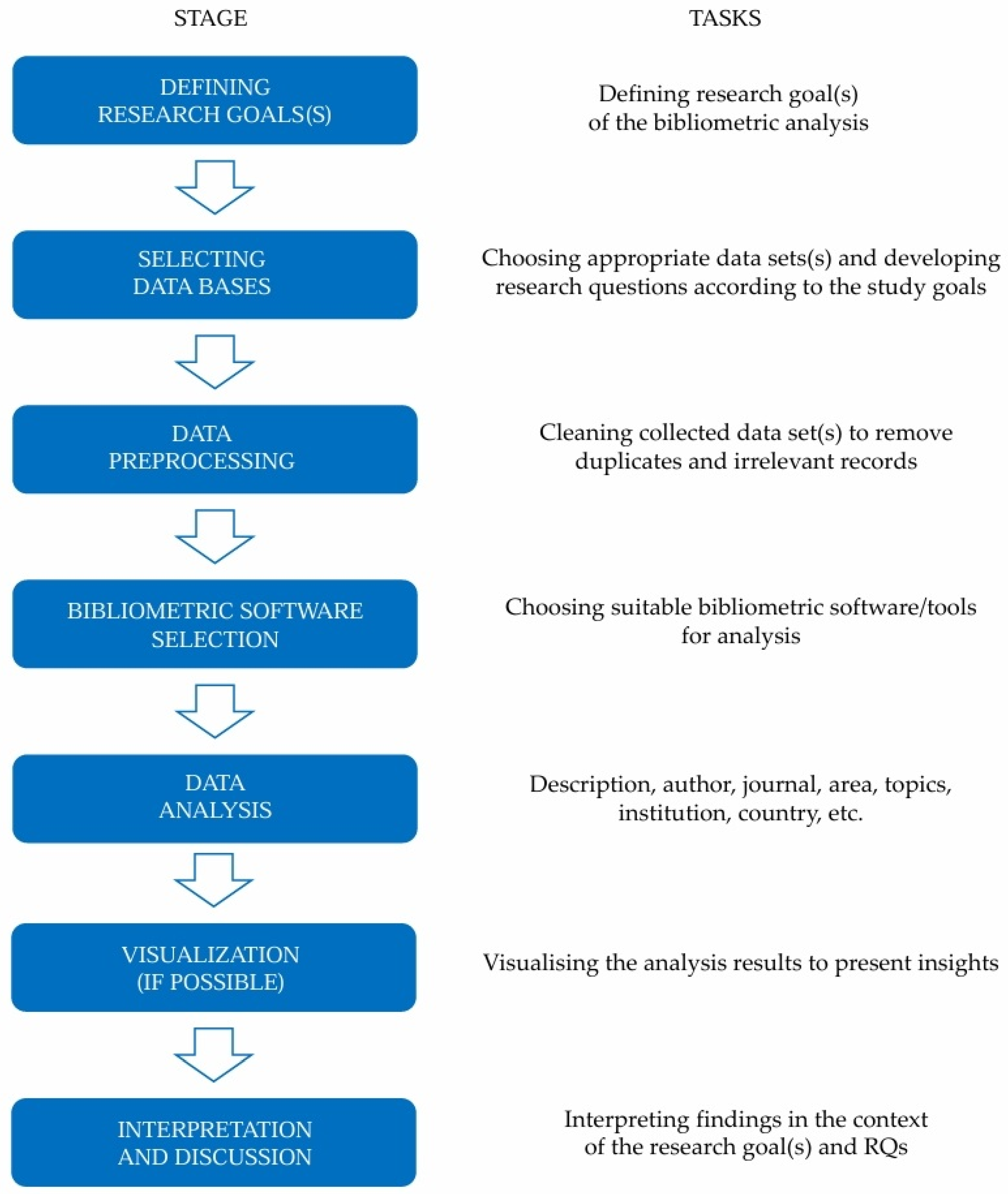
For this study, four major bibliographic databases were analyzed: Web of Science (WoS), Scopus, PubMed, and DBLP. These databases were selected because of their broad coverage and comprehensive citation information, which support an in-depth bibliometric analysis of the research domain (Figure 1). To ensure the relevance of the retrieved records, search filters were applied to include only English-language original research and review articles. Subsequently, each publication was manually evaluated according to the inclusion criteria to determine the final study sample.
The manual screening process involved three reviewers, who evaluated articles independently. Any disagreements were resolved through consensus, requiring agreement from at least two reviewers. Subsequently, key characteristics of the dataset were analyzed, including leading authors, research groups and institutions, countries of origin, thematic clusters, and emerging trends. This approach facilitated the mapping of the development of key terminology and major research contributions within the field.
Whenever possible, temporal patterns were also examined to track the evolution of research over time. In addition, publications were organized into thematic clusters, highlighting relationships between different research areas. This process enabled the identification of the most significant topics and subfields within the studied domain.
The study draws on selected components of the PRISMA 2020 guidelines for bibliographic reviews (the PRISMA 2020 Checklist is provided in the Supplementary Materials) [40]. The following elements were taken into account: rationale (item 3), objectives (item 4), eligibility criteria (item 5), information sources (item 6), search strategy (item 7), selection process (item 8), data collection process (item 9), synthesis methods (item 13a), presentation of results (item 20b), and discussion (item 23a).
The literature and examples included in this review were selected according to the PRISMA 2020 Statement for bibliographic reviews, with a checklist included in the Supplementary Materials. The rationale and objectives of the review were clearly defined to ensure that the selected studies were relevant to the scope and research questions of the analysis. Eligibility criteria were established before the search process began and included publication relevance, methodological quality, thematic coherence, and the availability of full-text sources. Information sources included major academic databases and reference lists, and a structured search strategy using predefined keywords and Boolean operators was used to identify relevant publications. The data selection and collection process was systematically conducted through screening, assessment of inclusion criteria, and extraction of key information from eligible studies. Finally, the synthesis methods, presentation of results, and discussion were organized to provide a clear summary of findings, highlight patterns in the literature, and address the implications and limitations of the reviewed studies.
The bibliometric analysis was performed using the analytical tools integrated within Web of Science (WoS), Scopus, PubMed, and DBLP. The adopted review methodology facilitated a more efficient classification of the literature across multiple dimensions, including concepts (keywords), research areas, authors or research groups, institutional affiliations, countries, document types, and publication sources.

2.3. Data Selection

In WoS, searches were carried out using the “Subject” field, encompassing titles, abstracts, keywords, and additional keywords. In Scopus, the searches targeted the title, abstract, and keyword fields, whereas in PubMed and DBLP, manual keyword-based search strategies were employed.
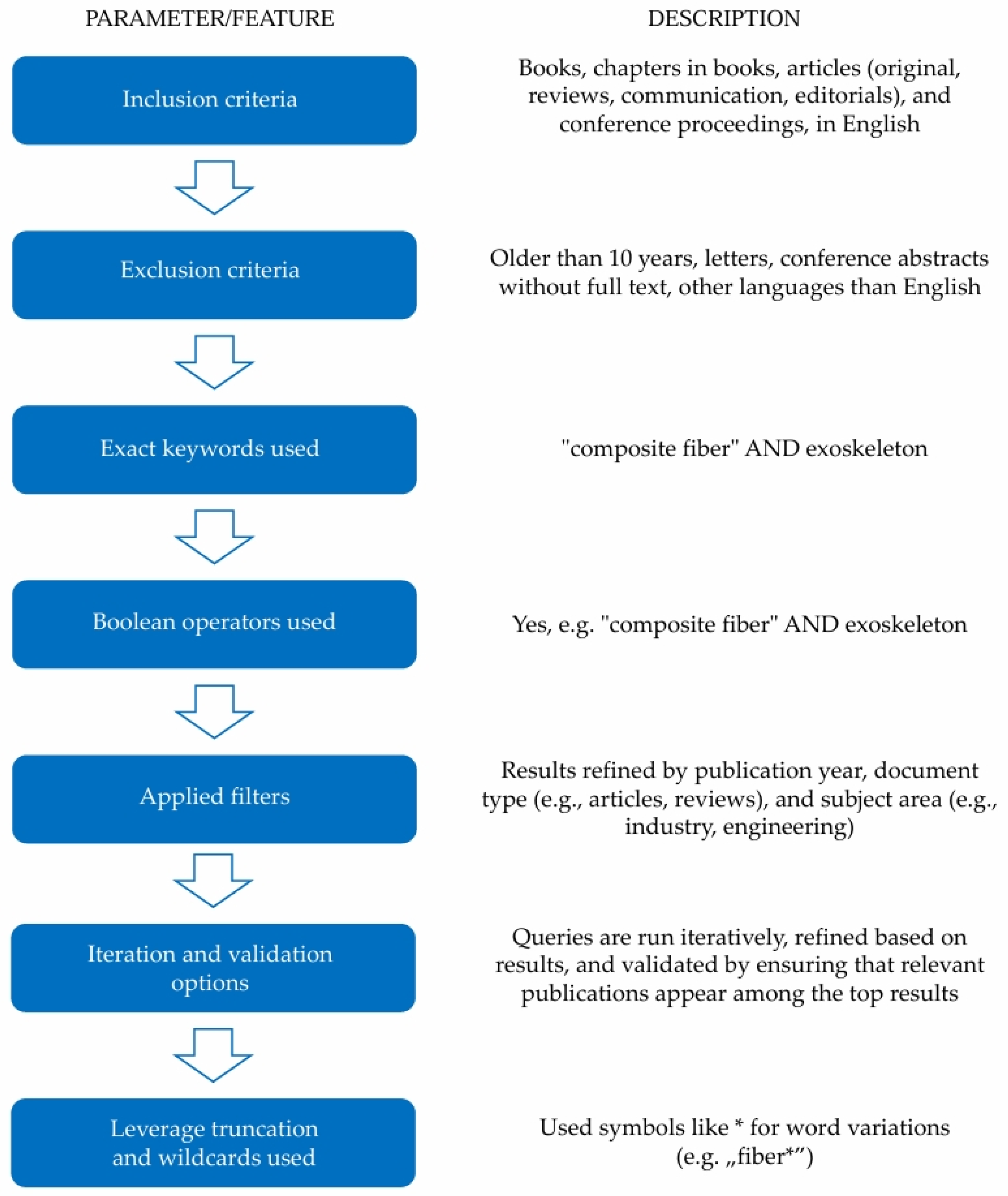
The databases were queried using an optimized combination of terms such as “composite fiber” AND exoskeleton (Figure 2).
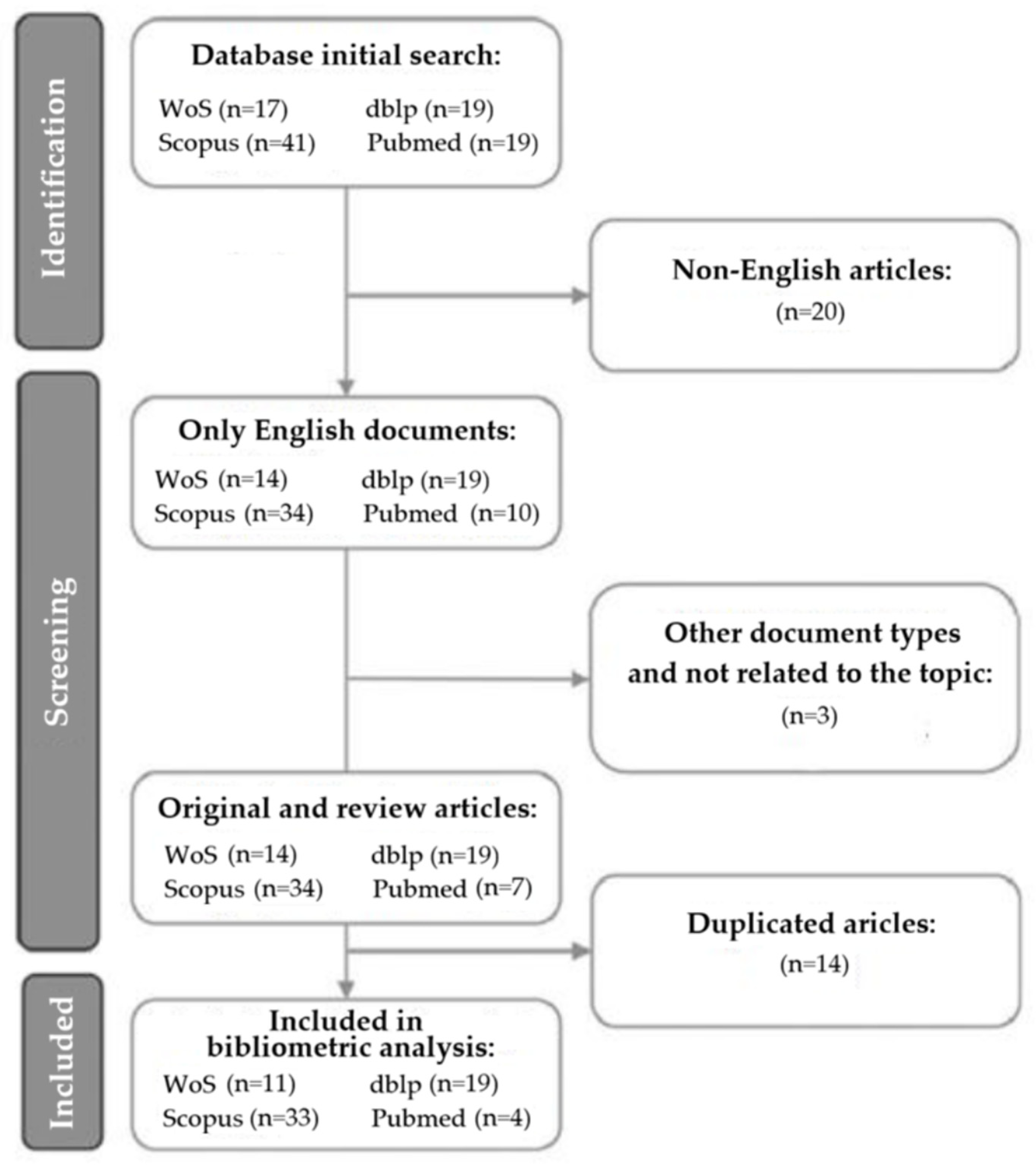
The selected publications underwent an additional manual screening process, during which irrelevant records and duplicate entries were removed, leading to the final sample size (Figure 3). Furthermore, a set of quality assessment methods was employed to ensure the reliability and validity of the studies included in the analysis.
The PRISMA 2020 flow diagram presents a transparent and systematic overview of the procedures used to identify, screen, evaluate, and ultimately include studies in the review, thereby supporting methodological rigor and reproducibility. The process starts with the identification stage, during which records are gathered from databases and additional sources, encompassing all potentially relevant publications prior to the removal of duplicate entries.
During the screening stage, titles and abstracts are examined according to predefined eligibility criteria, and studies clearly unrelated to topics such as wearable devices, machine learning, or digital transformation technologies are excluded. This is followed by the eligibility stage, in which full-text articles are thoroughly evaluated with respect to methodological quality, data collection and security aspects, and their relevance to fields such as additive manufacturing and 3D printing.
Finally, the inclusion stage presents the final number of studies retained after exclusions, forming the evidence base for synthesis and analysis. The PRISMA diagram enhances the transparency of the review process by clearly documenting both the volume of literature considered and the justification for each exclusion step, thereby strengthening the credibility and validity of the study’s conclusions.

3. Results

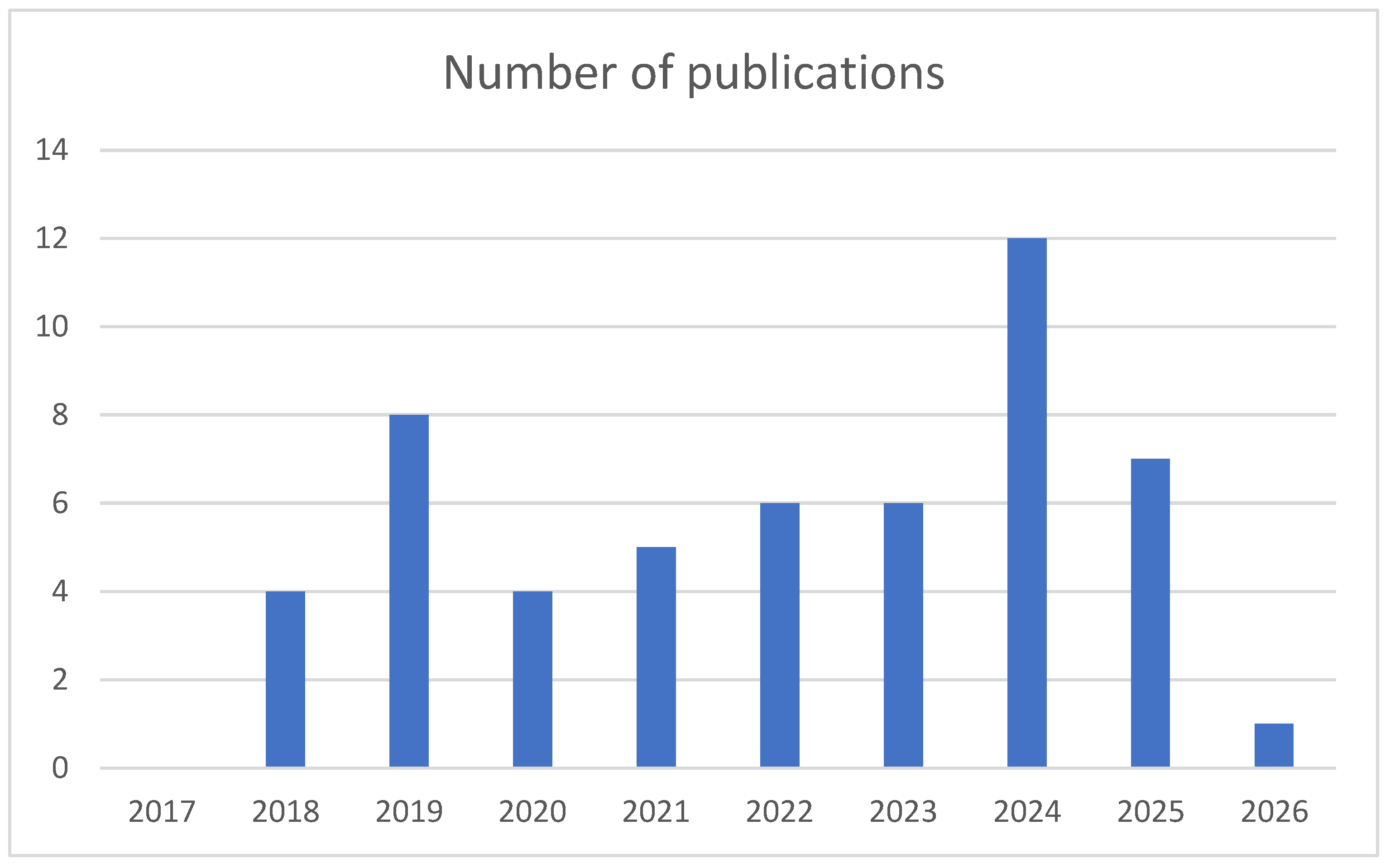
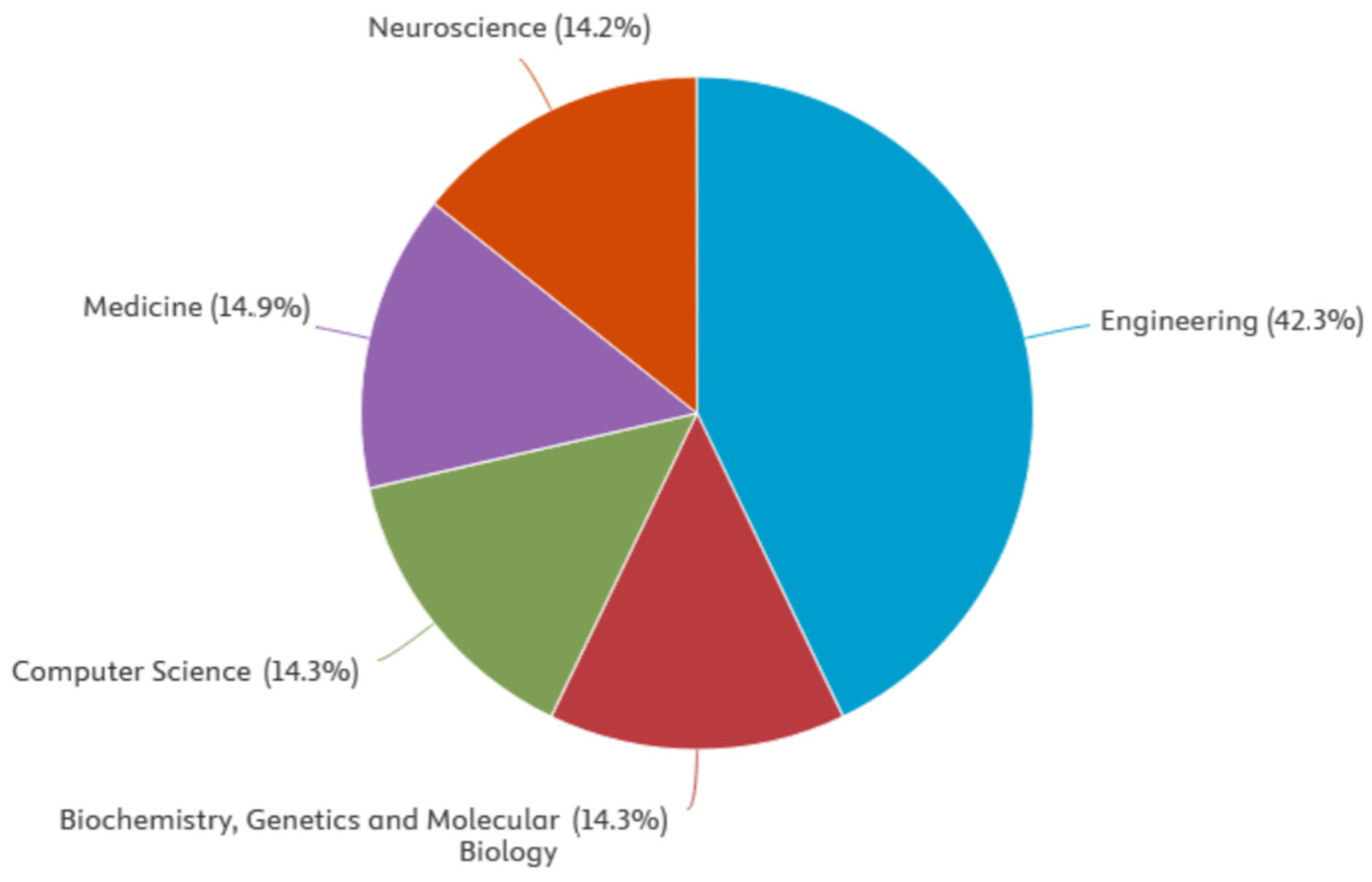
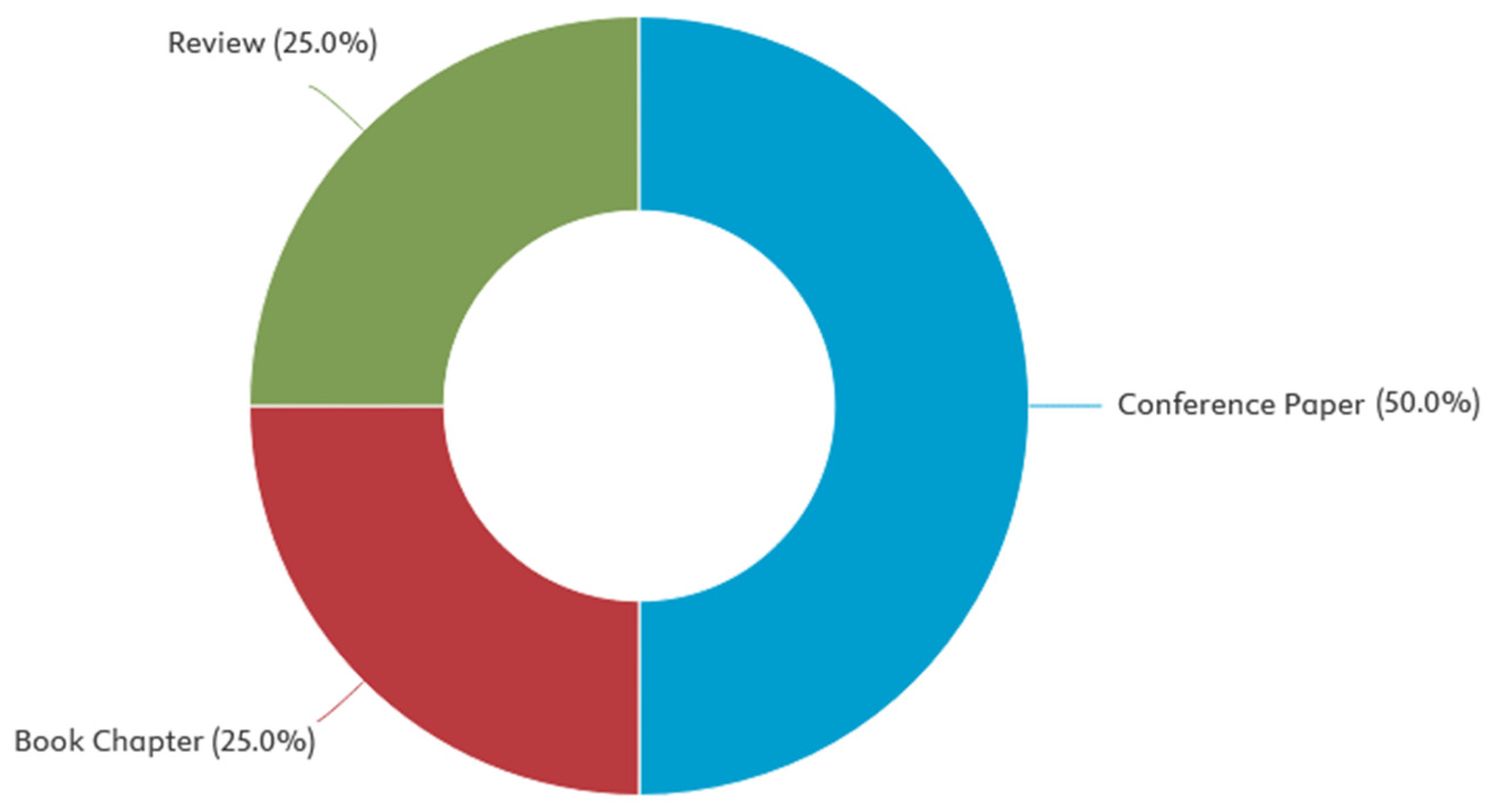
A general summary of the bibliographic analysis is provided in Table 1 and Figure 4, Figure 5 and Figure 6. The review covered 60 articles published between 2017 and 2026. Notable progress in use of fibers in exoskeletons has only recently been broadly applied to the digital transformation of additive manufacturing. Including earlier studies could introduce bias from outdated methods or technologies that no longer represent current capabilities or trends.
The bibliometric results imply that the dominance of conference papers points to a field that remains largely conceptual, with limited emphasis on industrial validation. The concentration of studies within engineering further suggests that the technology is still at an early stage of maturity. No single country, researcher, or institution stands out in terms of publication volume, indicating a fragmented research landscape. Nevertheless, the most commonly addressed Sustainable Development Goals (SDGs) highlight a strong health-oriented focus, particularly on innovation and industrial infrastructure, as well as good health and well-being.
Citation analysis of publications in the area of composite fibers in exoskeletons indicates a high level of research interest and the growing importance of this topic in biomedical and materials engineering. The average number of citations for the ten most frequently cited publications, 234, demonstrates the significant impact of key works on the development of this field and their widespread use in further research. The most frequently cited publication achieved 471 citations, confirming its fundamental importance for the development of composite fiber technology used in exoskeletons. At the same time, the presence of 58 publications cited at least 10 times indicates a relatively broad and active research base, not just the dominance of individual articles. The obtained data suggest that the field of composite fibers in exoskeletons is undergoing intensive development and has high application potential in the design of modern motion assistance systems.
Effective cancer therapy after surgical removal of the tumor depends on two key goals: eliminating residual tumor cells and promoting tissue regeneration. In a subsequent study, an implantable system integrating therapeutic and regenerative functions was developed. Tannic acid (TA)/Fe3+ nanoparticles with Fenton catalytic activity were enriched with the glutathione (GSH) inhibitor BSO (forming BTF), providing a therapeutic component supporting chemodynamic cancer treatment. Bioactive glass fibers (BG) containing vascular endothelial growth factor (VEGF) were used as a drug delivery matrix with tissue repair properties (BGV). Composite fibers (BGV@BTF) were fabricated by anchoring BTF nanoparticles onto the surface of BGV fibers. Under the acidic conditions of the tumor microenvironment, BTF nanoparticles are released from the fibers and taken up by cancer cells. By inhibiting GSH with BSO and promoting Fe3+ reduction with TA, nanoparticles induce increased oxidative stress, leading to cancer cell death. Simultaneously, both BG fibers and VEGF contribute to tissue regeneration and accelerate postoperative healing. This dual-function approach—simultaneously inhibiting tumor growth and promoting tissue repair—offers a promising strategy for cancer treatment and postoperative recovery [41]. Recent advances in additive manufacturing and composite materials enable their integration into synergistic approaches, which can benefit the biomedical field, particularly by supporting personalized, high-performance solutions in resource-constrained environments. This article highlights the advantages of using 3D-printed rapid molding devices, which enable direct lamination of composite fibers in an efficient and resource-efficient manner, for the custom production of joint splints. The rapid molding concept presented here supports a versatile lamination and curing process, including compatibility with autoclave systems. To demonstrate this approach, an ankle splint made of a carbon fiber/autoclave-cured epoxy composite was designed and manufactured for immobilization, support, or protection. Such devices can aid patients in recovery from joint injuries while advancing personalized healthcare through the use of high-performance materials. Their mechanical properties were assessed and compared with those of commercially available alternatives. Personalization plays a key role in improving ergonomics, comfort during rehabilitation, and visual appeal. The design and manufacturing strategies presented in this paper pave the way for affordable, user-centric biomedical devices and can contribute to decentralized production by enabling local communities to participate in the development of medical technologies [42]. An orthosis with a surface electromyography (sEMG) measurement system based on composite metal-polymer fibers was used to monitor the electrical activity of the forearm muscles during movement. This non-invasive and comfortable sEMG device was designed for long-term monitoring in the context of rehabilitation. Wavelet denoising and compression techniques were used to process the recorded biological signals. The study focused on comparing the performance of Haar and Daubechies wavelets using an implementation of the discrete wavelet transform (DWT) within a wavelet packet transform (WPT). A denoising method was introduced to identify inherent noise in the acquired signals, relying on a half-norm to characterize it. This half-norm allows for the reorganization of the wavelet basis, helping to distinguish coherent and incoherent signal components, where incoherent parts correspond to segments containing little or contradictory information. Essentially, the method identifies subspaces associated with low- or opposing-amplitude components in the wavelet domain. This approach can be generalized to low-frequency signal processing tasks and was developed using wavelet algorithms from the WaveLab 850 library at Stanford University [43].
The growing interest in ionic liquids (ILs) arises from their unique properties, including low vapor pressure, high thermal stability, and nonflammability, combined with excellent ionic conductivity and a wide electrochemical stability window. Today, ILs are recognized as a distinct class of chemical compounds that enable the development of advanced, multifunctional materials with applications across numerous fields. They can serve as solvents, salt electrolytes, or functional additives. By tailoring their physicochemical properties, IL-based electrolytes can be designed for various energy storage applications. This review aims to provide direction for future research on IL-based polymer nanocomposite electrolytes, particularly for use in sensors, high-performance systems, biomedicine, and environmental technologies. It also offers a comprehensive overview of IL-containing polymer composites, including the classification of different polymer matrices. Special emphasis is given to IL-based polymer nanocomposites and their diverse applications, such as electrochemical biosensors, energy-related materials, biomedical devices, actuators, environmental systems, and aerospace technologies. Finally, current challenges, future prospects, and concluding insights in this field are discussed [44]. The inclusion of broader technical examples was intended to demonstrate the interdisciplinary development of composite fiber technology and the potential for transferring advanced material concepts to biomedical and engineering applications. References to areas such as smart composites, ionic liquid-based materials, and signal analysis methods were included to illustrate emerging technological trends and methodologies that may influence the future design and optimization of rehabilitation-oriented hand exoskeletons. The purpose of these examples was therefore not to shift the focus of the “Results” section but to provide a broader scientific context for understanding the evolution and multifunctionality of composite materials.
Next article presents both experimental and simulation-based investigations into the material properties of customized wrist orthoses manufactured using additive manufacturing (AM), specifically the fused filament fabrication technique. The authors produced a set of standardized samples for three-point bending tests using acrylonitrile butadiene styrene (ABS) filament on a low-cost 3D printer, along with samples representing the orthosis and complete wrist orthoses. All samples were tested using a universal testing machine to determine their elastic modulus, with results compared against finite element method simulations conducted in the ABAQUS environment. This methodology enabled a comparison between the material properties of the full wrist–hand orthosis and those obtained from standardized bending samples. The findings reveal significant differences in Young’s modulus between standard specimens and the complete orthosis. In contrast, samples replicating the central part of the orthosis exhibited Young’s modulus values closely aligned with those measured for the full device [45]. User safety was a central consideration in developing the fiber-based hand exoskeleton. The control strategy incorporated pre-tensioning limits to keep forces within safe bounds, while the PID controller was carefully tuned to prevent sudden changes in length. An emergency stop feature in the motor driver enabled immediate shutdown in case of abnormal motion or unexpected resistance. Even under higher loads, no slippage or irregular strain was observed during testing. Future iterations will integrate real-time tension sensing and automatic shutdown features to enhance safety, particularly in clinical applications [46,47,48]. Although the studies mainly focused on mechanical validation and control accuracy, preliminary observations of the DC motors showed that they operated at approximately 30–40% of their maximum capacity during rehabilitation tasks. Based on these findings, a standard lithium-ion battery would be capable of supporting approximately 4–5 h of operation, which is sufficient for multiple home rehabilitation sessions before requiring recharging. Future research will involve comprehensive power profiling and the implementation of optimization strategies, including adaptive actuation duty cycles, to improve energy efficiency and prolong operating time [49,50,51,52]. A comparison between simulation and experimental results should be conducted to evaluate the accuracy and reliability of the exoskeleton system. The results demonstrated strong agreement, with torque profiles and position tracking errors remaining within a 5% deviation [53,54]. During abduction, flexion, and horizontal flexion movements, the current results confirm the validity of the dynamic model and the PID-based control approach [55,56]. The simulation reliably predicted system behavior, while experimental validation confirmed robustness under varying loads and real-world conditions, supporting the effectiveness of the design for upper-limb rehabilitation.
Across all tests, the exosuit demonstrated high repeatability, with position tracking deviations remaining below 5% for shoulder abduction, flexion, and horizontal flexion. It effectively supported loads between 500 g and 4000 g, while the measured torque values closely aligned with theoretical predictions (within 95% agreement). Its lightweight construction of approximately 2 kg enhanced portability and helped reduce user fatigue, in line with established principles of biomechanical load distribution [57,58,59,60]. From an engineering perspective, the Bowden cable transmission system effectively replicated tendon-like force transfer, enabling smooth and flexible movement assistance. Optimized force distribution and cable tension facilitated controlled motion without excessive resistance. However, a key limitation was slight misalignment at the anchor points under high loads, which led to minor inconsistencies in force transmission. Future work could address this issue through adaptive tensioning or dynamic realignment mechanisms to improve overall precision [61,62,63]. Current works contribute to the advancement of soft robotic exosuits by demonstrating that a well-designed exoskeleton system can effectively support natural movement while remaining lightweight and user-friendly. The insights gained provide a foundation for further refinement, with the goal of improving precision, comfort, and clinical applicability. Future studies will include clinical trials involving stroke patients over a four-week rehabilitation period, pending ethical approval, to evaluate safety and therapeutic effectiveness in the target population [64,65].
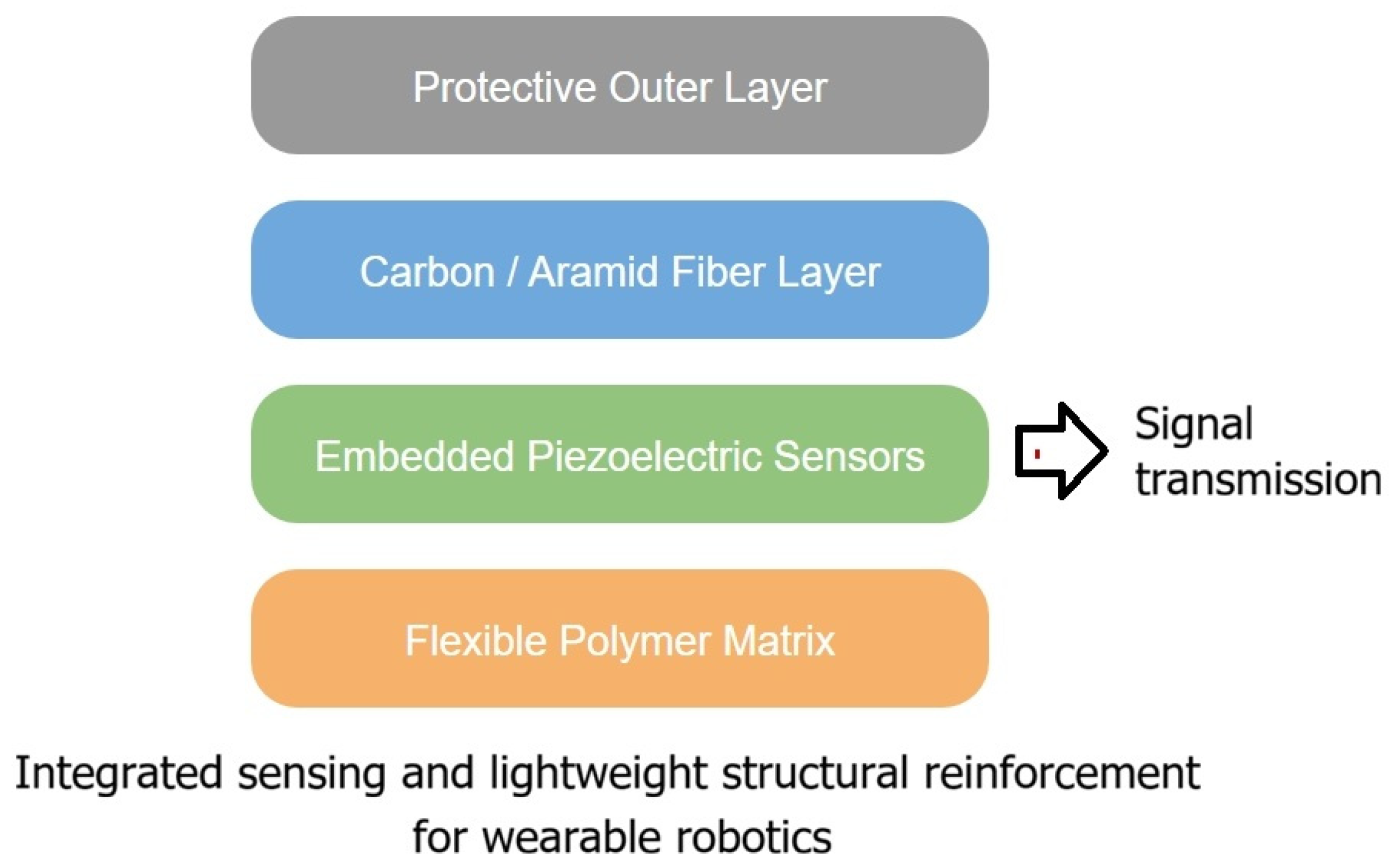
While the current design accommodates three shoulder degrees of freedom—abduction, flexion, and horizontal adduction—future iterations could expand functionality to include additional movements such as external rotation. This would require modifications to cable routing, anchor positioning, and actuator configuration to maintain accurate torque delivery and ensure user comfort. Further clinical studies will evaluate therapeutic outcomes, usability, and long-term performance. In addition, adaptive tension control based on sensor feedback, such as force or electromyographic signals, is planned to enable real-time adjustment of assistance levels [66,67,68,69,70]. Multifunctional composites with embedded sensors represent a significant advancement in the use of composite fibers for hand exoskeletons, enabling structures that combine mechanical support with real-time sensing capabilities [71]. By integrating strain gauges, fiber optic sensors, or piezoresistive elements directly into composite fibers, these materials can continuously monitor deformation, load distribution, and user movement without requiring external sensing hardware [72]. This integration enhances the compactness and wearability of exoskeleton systems, which is critical for maintaining user comfort and natural motion [73]. In addition, embedded sensors allow for precise feedback control, enabling adaptive assistance that responds dynamically to the user’s intention and level of effort. Composite fibers with sensing capabilities can also improve safety by detecting abnormal stresses, excessive tension, or potential system failures and triggering protective responses [74]. The use of smart materials, such as carbon nanotube-infused fibers or conductive polymers, further expands functionality by enabling self-sensing and even self-healing properties [75]. These composites can be engineered to maintain high strength-to-weight ratios while incorporating flexible electronics, making them ideal for lightweight and portable rehabilitation devices [76]. Another important possibility is the integration of electromyographic (EMG) signal detection within the composite structure, allowing the exoskeleton to interpret muscle activity directly and provide more intuitive assistance [77]. From a manufacturing perspective, advances in additive manufacturing and fiber weaving techniques enable precise placement of sensors within the composite matrix, improving reliability and repeatability [78]. Looking ahead, multifunctional composite fibers are expected to play a central role in next-generation hand exoskeletons by merging structural performance, sensing, and intelligent control into a single, efficient material system [79].
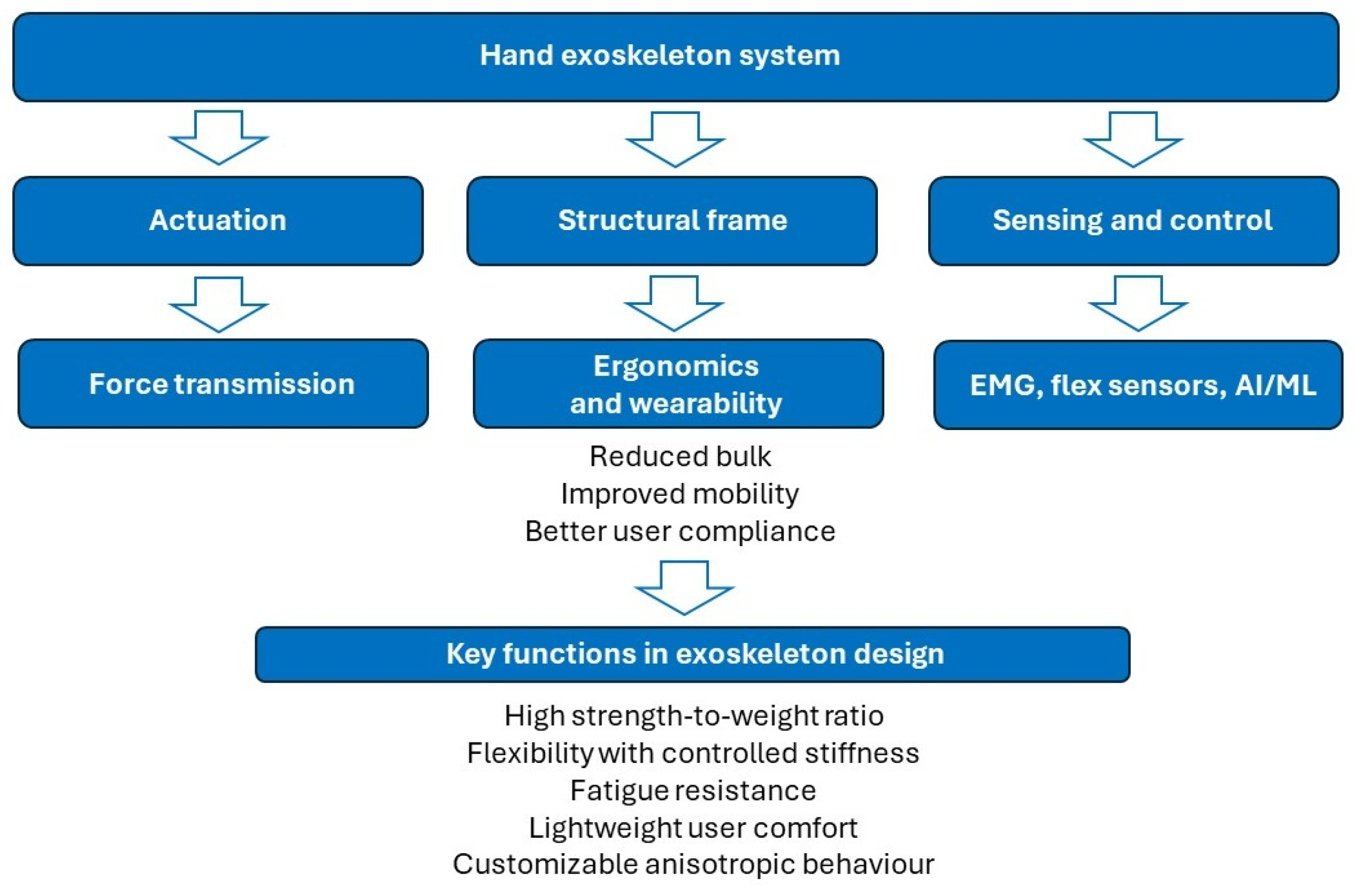
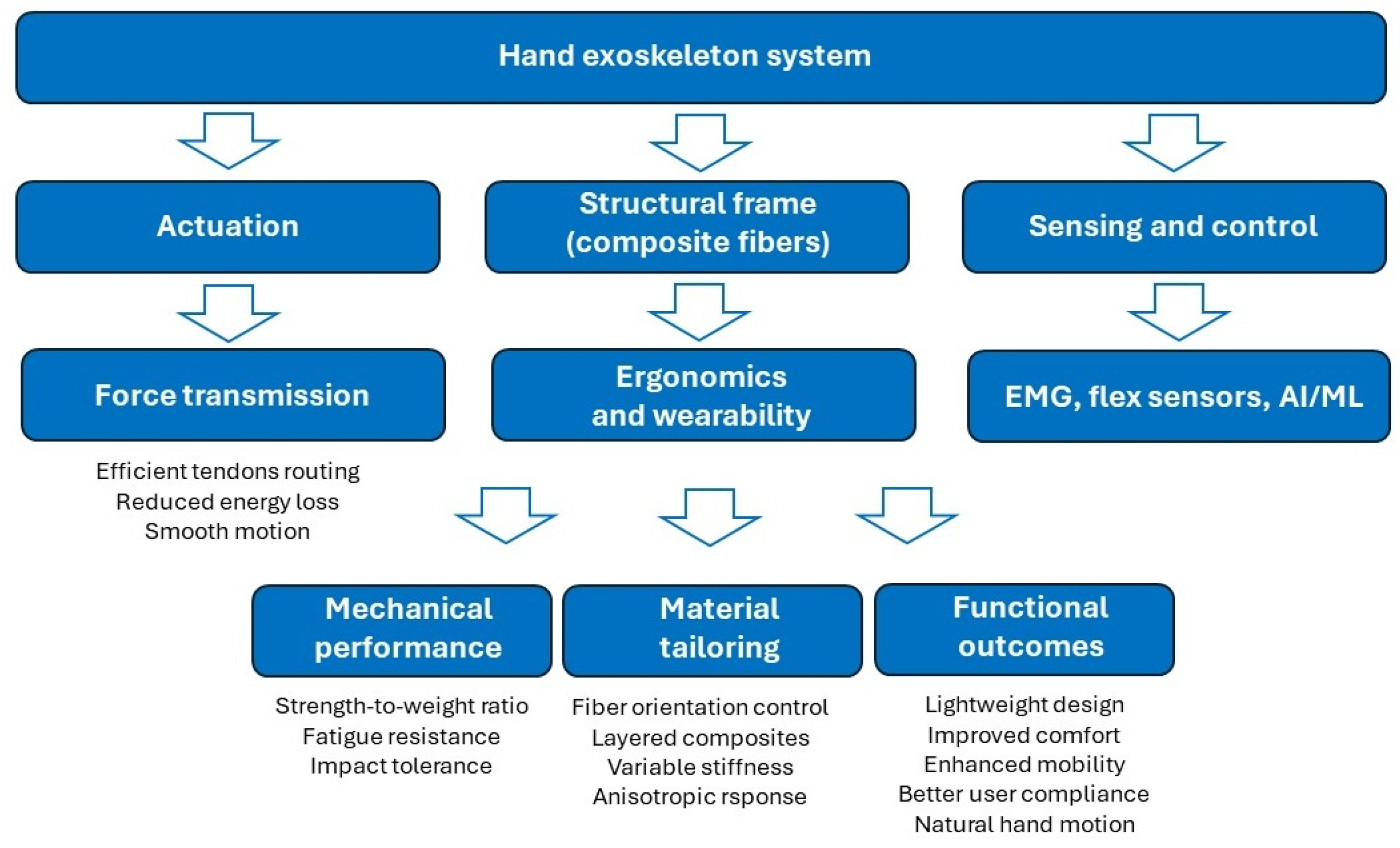
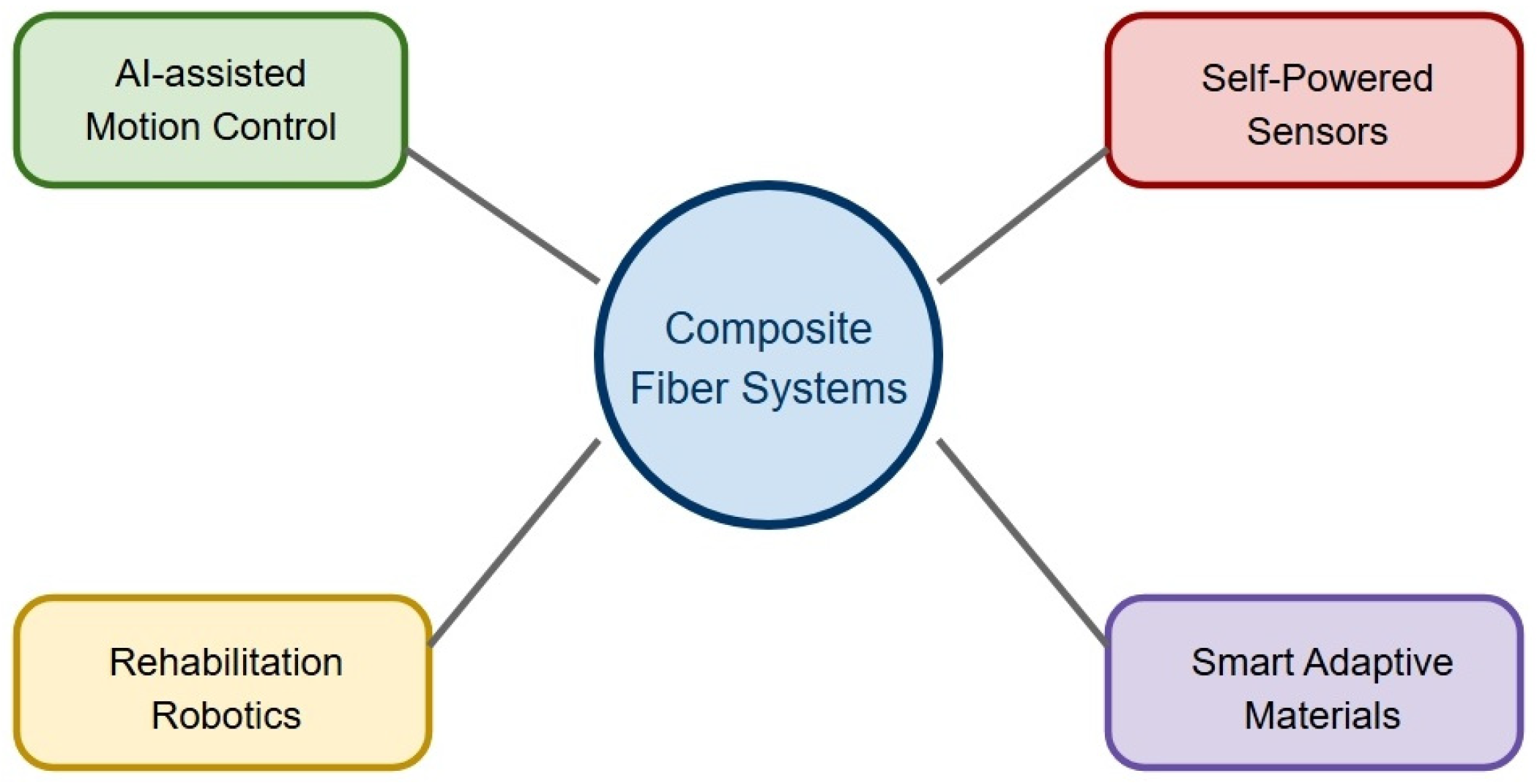
Machine learning methods offer powerful tools for optimizing material selection and structural design in composite fiber-based hand exoskeletons by identifying complex relationships between material properties, performance, and user requirements [80]. Supervised learning algorithms can be trained on experimental datasets to predict mechanical behavior, such as stiffness, strength, and fatigue life, enabling rapid screening of candidate composite materials [81]. In parallel, reinforcement learning can be applied to optimize structural configurations, including fiber orientation, layering sequences, and actuator placement, by iteratively improving performance through simulated interaction with virtual environments [82]. These approaches significantly enhance scalability by reducing reliance on time-consuming trial-and-error prototyping and enabling automated design workflows [83]. Machine learning also enables personalization by incorporating user-specific data, such as hand geometry, muscle strength, and movement patterns, to tailor composite structures for individual rehabilitation needs [84]. Advanced models can fuse multimodal sensor data embedded within the composite fibers, allowing real-time adaptation of assistance levels and improving human–robot interaction [85]. Generative design techniques, driven by machine learning, can produce novel composite architectures that balance lightweight construction with high mechanical performance and embedded functionality [86]. Furthermore, predictive maintenance models can analyze sensor data to anticipate material degradation or structural failure, increasing system reliability and lifespan [87]. Integration with digital twins allows continuous synchronization between physical exoskeletons and their virtual counterparts, enabling ongoing optimization of both materials and control strategies [88]. ML positions composite fibers as a foundational technology in next-generation hand exoskeletons by enabling intelligent, scalable, and highly integrated assistive systems [89,90]. Composite fibers (center) are the enabling material layer—they directly influence:
  • The structural frame (rigidity + lightweight support);
  • Force transmission (efficient tendon-driven systems);
  • Ergonomics (comfort and wearability).
Their properties (strength, flexibility, anisotropy) allow designers to balance assistive force vs. natural hand motion, which is critical in rehabilitation and augmentation devices (Figure 7 and Figure 8).
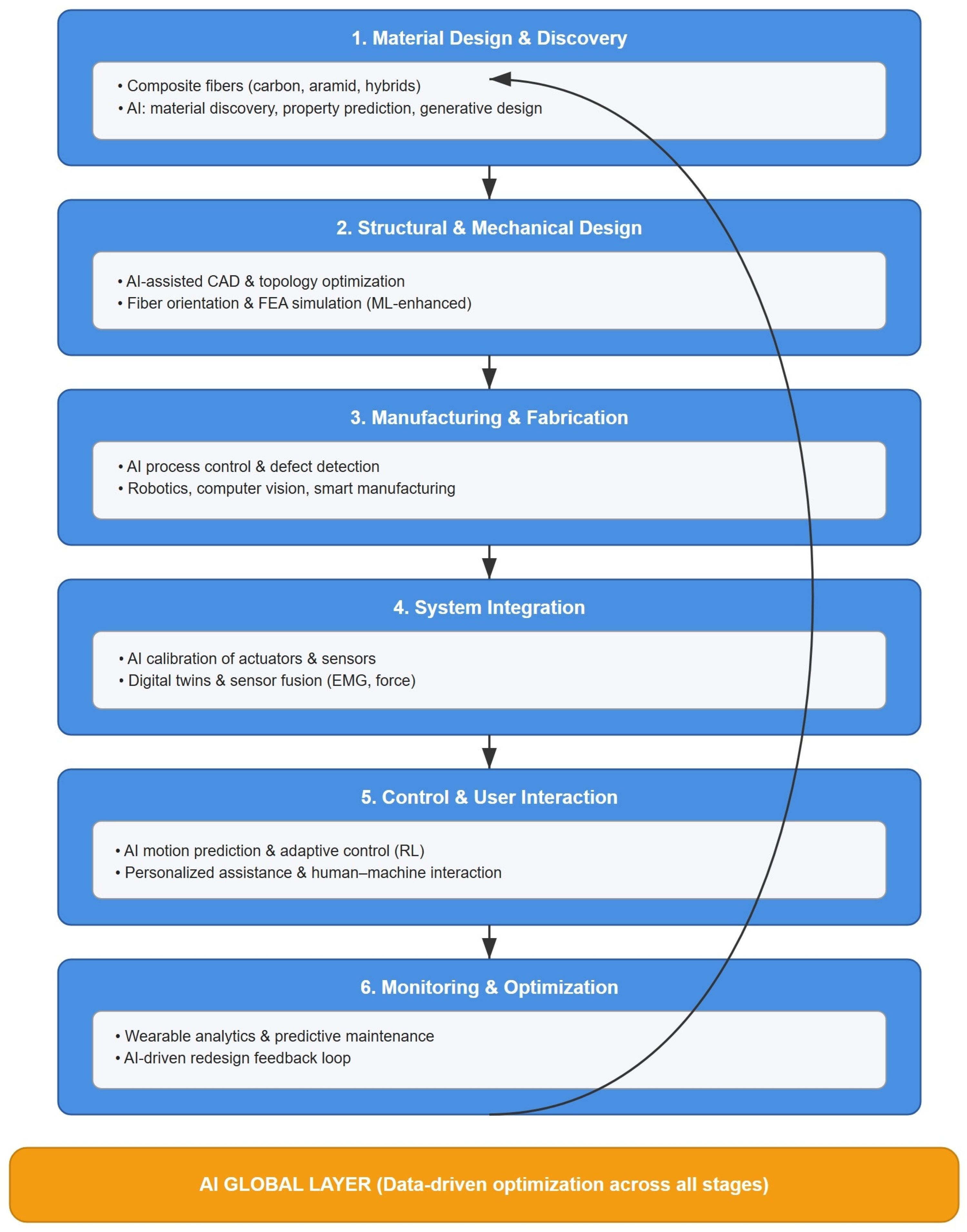
Figure 9 follows a top-down lifecycle pipeline from material discovery to real-world deployment. Composite fibers are the foundational element, introduced at Stage 1 and influencing every downstream stage. AI systems act as a horizontal layer, enhancing material innovation, structural optimization, manufacturing precision, intelligent control, and continuous improvement. Figure 9 emphasizes a shift from traditional linear design to closed-loop, AI-augmented lifecycle systems. Where composite fibers are no longer just materials, but part of a data-driven adaptive ecosystem enabling ultra-light, high-performance structures, personalized rehabilitation devices, and continuous performance evolution.
The proposed structured classification model categorizes composite fibers according to three main criteria: mechanical performance, manufacturing compatibility, and rehabilitation-oriented functionality in hand exoskeleton systems. From a mechanical perspective, fibers are grouped based on tensile strength, flexibility, stiffness-to-weight ratio, fatigue resistance, and durability under repetitive motion conditions typical of rehabilitation devices. In terms of manufacturing compatibility, the model evaluates the suitability of composite fibers for additive manufacturing, molding, laminating, and integration with soft robotic components and wearable sensor systems. The rehabilitation-oriented category evaluates each composite material’s ability to provide lightweight support, ergonomic adaptability, user comfort, biomechanical compatibility, and safe human–machine interaction during assisted hand movements. This multidimensional model enables a systematic comparison of conventional and advanced composite fibers, facilitating the selection of materials optimized for lightweight, efficient, and patient-oriented hand exoskeleton design.
Quantitative comparisons of composite fiber materials at the engineering level are essential to assessing their suitability for hand exoskeletal applications, where lightweight construction and resistance to repetitive motion are crucial. Carbon fiber-reinforced composites typically have a tensile strength ranging from 3500 to 6000 MPa and a modulus of elasticity ranging from 230 to 600 GPa, providing exceptional stiffness-to-weight ratios for exoskeleton components. Glass fiber composites typically have a lower tensile strength, around 2000 to 3500 MPa, with a modulus of elasticity ranging from 70 to 90 GPa, but offer improved impact resistance and lower production costs. Aramid fibers such as Kevlar have tensile strengths of approximately 3000–3600 MPa and elastic moduli of 60 to 130 GPa, while also exhibiting excellent fatigue resistance and vibration-damping properties, which are beneficial for portable rehabilitation systems. Ultra-high molecular weight polyethylene (UHMWPE) fibers can achieve tensile strengths exceeding 3000 MPa at relatively low density, making them attractive for flexible and soft exoskeleton designs despite their lower thermal stability. Fatigue life evaluations indicate that carbon fiber composites can maintain structural integrity beyond one million loading cycles at moderate stress amplitudes, whereas glass fiber systems often experience earlier matrix cracking and stiffness degradation under cyclic loading conditions. Such quantitative comparisons allow engineers to optimize composite fiber selection based on biomechanical loading, actuator integration requirements, patient comfort, durability, and long-term rehabilitation performance in hand exoskeletons (Table 2).
A comparison of existing approaches to the use of composite fibers in hand exoskeletal systems highlights differences in mechanical properties, flexibility, manufacturability, and rehabilitation effectiveness. The comparative analysis demonstrates that carbon fiber composites offer the highest stiffness-to-weight ratio and structural durability, while aramid and hybrid composites offer excellent flexibility and comfort for wearable rehabilitation devices. A comparison of conventional, rigid exoskeleton architectures with new, soft, robotic, and bioinspired designs highlights the growing importance of adaptive and lightweight composite structures. Based on the literature review, best practices were identified, including the use of hybrid composite systems, additive manufacturing techniques, ergonomic biomechanical optimization, and the integration of embedded sensor technologies for real-time rehabilitation monitoring. By prioritizing research results based on their technological maturity, clinical applicability, and potential for long-term implementation in patient-centered rehabilitation systems, special emphasis was placed on solutions that simultaneously improve fatigue resistance, movement precision, safety, and efficiency of human–machine interaction, while reducing device weight and energy consumption.

4. Discussion

Recent trends in composite material development indicate a shift from conventional load-bearing composites to multifunctional, intelligent materials capable of self-sensing, self-healing, adaptive deformation, and real-time structural monitoring. Current research increasingly focuses on additive manufacturing, 4D printing, nanocomposite reinforcement, AI-assisted material optimization, and the integration of embedded sensors, which significantly expand the functionality of composite systems compared to previous fiber-reinforced structures designed primarily for mechanical strength. Unlike traditional composites based primarily on carbon or glass fibers with static mechanical properties, modern solutions utilize shape memory polymers, conductive nanofillers, graphene-based reinforcements, and biobased intelligent materials, enabling adaptive and patient-specific biomedical applications. New technologies also emphasize sustainable and recyclable thermoplastic composites, lightweight hybrid architectures, and DTs-enabled manufacturing methods, which improve energy efficiency, manufacturing precision, and long-term reliability. These advancements are particularly relevant for rehabilitation-oriented hand exoskeletons, where modern composite systems offer improved biomechanical compatibility, lower structural mass, increased fatigue resistance, and intelligent interaction between the user and wearable robotic devices.
Composite fibers play a central role in hand exoskeleton design by providing high strength-to-weight ratios, enabling lightweight structures that do not hinder natural movement. Their flexibility allows them to mimic tendon-like behavior, making them well suited for actuation systems that support smooth and controlled motion. These materials also enhance user comfort and portability, which are critical for long-term rehabilitation and daily assistive use. Looking ahead, the integration of sensing elements and smart materials into composite fibers will enable real-time monitoring, adaptive assistance, and improved safety. As manufacturing techniques and material technologies advance, composite fibers are expected to drive more personalized, efficient, and scalable solutions in next-generation hand exoskeleton systems. Energy requirements, including the time between subsequent charges and the weight of the necessary batteries, should be key factors in assessing the cost-effectiveness of using a hand exoskeleton in terms of cost and clinical utility [91,92].

4.1. Limitations

Composite fibers are characterized by significant manufacturing complexity, requiring precise layering, curing, and quality control. Their anisotropic behavior makes it difficult to predict performance under multidirectional stresses typical of hand movements. High material and processing costs remain a major barrier to widespread adoption. Limited recyclability creates environmental and regulatory challenges at the end of a product’s lifecycle [93]. Repair and maintenance are more difficult compared to traditional materials, often requiring complete component replacement. Integrating sensors and electronics into composite structures can weaken them or complicate the manufacturing process. The variability of human hand anatomy makes it difficult to standardize composite designs without costly customization [94]. AI-based design tools, such as those using machine learning, rely heavily on large, high-quality datasets, which are often rare in this niche field. Predictive models can also struggle to accurately reflect long-term material fatigue and real-world conditions of use. These limitations highlight the need for advances in materials science, manufacturing, and data-driven modeling to fully realize the potential of composite fibers in hand exoskeletons [95].

4.2. Technological Implications

Composite fibers significantly improve the strength-to-weight ratio of hand exoskeletons, enabling the creation of devices that are both durable and lightweight. Their high stiffness improves force transfer efficiency, which is crucial for precise finger support and grip [96]. The flexibility of some composite materials allows designers to better mimic natural hand movements without sacrificing structural integrity. Advanced composites can be designed with directional properties, optimizing support along specific stress paths within the exoskeleton. This leads to improved ergonomics and reduced user fatigue during prolonged use [97]. Furthermore, corrosion resistance and environmental durability extend the life of exoskeleton components in various environments. The use of composite fibers also supports miniaturization, enabling the creation of thinner and less invasive designs [98]. Manufacturing processes such as layering and molding enable customization to individual user anatomical needs. However, the complexity of working with composites can increase production costs and require specialized manufacturing techniques. Composite fibers enable the creation of more efficient, comfortable, and effective hand exoskeletons while posing new challenges in design and manufacturing [99].

4.3. Economic Implications

Composite fibers can significantly increase the initial production costs of hand exoskeletons due to expensive raw materials and specialized manufacturing processes. However, their high strength-to-weight ratio reduces material consumption over time, partially offsetting these initial costs [100]. The durability of composite materials reduces maintenance and replacement costs, improving long-term cost-effectiveness. The lightweight structures enabled by composites can reduce shipping and handling costs throughout the supply chain. Their performance advantages can justify higher prices, allowing manufacturers to reach high-value medical or industrial markets [101]. At the same time, high production costs can limit availability and slow adoption in price-sensitive sectors. Investment in specialized equipment and a skilled workforce increases capital expenditures for manufacturers entering this market [102]. Economies of scale can gradually reduce unit costs with increasing production volume and process standardization. Furthermore, a longer product life cycle can improve return on investment for both manufacturers and end users. Thus, composite fibers represent a compromise between higher initial costs and potential long-term economic benefits [103].

4.4. Implications for Sustainability

Composite fibers can reduce overall material consumption in hand exoskeletons thanks to their high strength-to-weight ratio, which promotes lighter designs. Their durability extends product life, reducing replacement frequency and waste over time. However, many composite fibers are difficult to recycle, creating challenges in end-of-life disposal and achieving circular economy goals [104]. Manufacturing advanced composites can be energy-intensive, increasing the environmental impact of production. Lightweight exoskeletons made from composites can reduce emissions during transport through distribution networks. In practice, improved efficiency and ergonomics can indirectly support sustainability by reducing the energy demand of powered systems. Reliance on synthetic fibers derived from petrochemicals raises concerns about resource depletion and carbon emissions [105]. New biocomposites offer a more sustainable alternative, although they may not currently provide comparable performance in demanding applications. Repairability can be limited, as damaged composite parts are often more difficult to repair than metal components. Composite fibers offer a number of sustainability benefits, but also trade-offs that depend on material choice, design strategy, and life cycle management [106].

4.5. Social Implications

Composite fibers in hand exoskeletons can improve quality of life by enabling lighter and more comfortable assistive devices for people with disabilities. Their use could expand access to rehabilitation technologies that support recovery and independence after injury or illness [107]. However, higher production costs could limit availability, potentially widening the gap between those who have access to such devices and those who do not. In the workplace, advanced exoskeletons can reduce physical strain and the risk of injury for workers performing repetitive or demanding tasks. This could lead to improved occupational health outcomes and reduced absenteeism [108]. At the same time, increased reliance on assistive technologies can raise concerns about job loss or changing skill requirements. The personalization possibilities offered by composite materials can better meet the diverse needs of users, promoting inclusivity. Public perception of wearable assistive robots could change positively as devices become less bulky and more discreet. Unequal global access to advanced materials and manufacturing capabilities could exacerbate technological gaps between regions [109]. Composite fibers contribute to societal benefits in health and productivity while addressing issues of equity, access, and workforce transformation.

4.6. Ethical and Legal Implications

The use of composite fibers in hand exoskeletons raises ethical questions regarding equal access, as high costs can limit access for more affluent patients or institutions. Manufacturers must ensure that materials meet stringent safety and reliability standards to avoid harm, especially in medical or rehabilitation settings. The complexity of composite materials can complicate liability in the event of failure, making it difficult to determine responsibility between designers, material suppliers, and manufacturers [110]. Regulatory challenges also exist, as approval processes must consider new materials and their long-term performance in human-interactive devices. Ethical concerns regarding transparency arise, requiring companies to clearly communicate the risks, limitations, and expected lifespan of composite components. Intellectual property protection for advanced composite technologies can limit competition and hinder broader access. Data from testing and use must be handled responsibly, especially if exoskeletons incorporate sensors that track user movement or health indicators. Environmental regulations can impose obligations related to the disposal and recycling of composite materials, impacting legal compliance. There is also an ethical obligation to design with inclusivity in mind, ensuring that devices are tailored to diverse users rather than a narrow demographic. Composite fibers introduce legal and ethical issues related to safety, integrity, liability, and environmental responsibility [111].
Current European Union (EU) regulations provide an important regulatory framework for rehabilitation-based hand exoskeletons based on composite fibers, particularly through the EU Medical Devices Regulation (MDR 2017/745), which classifies wearable rehabilitation systems as medical devices requiring safety, performance, and clinical evaluation procedures. The increasing integration of AI, intelligent sensors, and adaptive control algorithms into exoskeleton technologies further places many advanced systems within the scope of the EU AI Act, under which they may be classified as high-risk medical AI systems, subject to transparency, human oversight, cybersecurity, and post-market monitoring obligations. However, despite these regulations (which are still being modified to better align with the market), significant legal gaps remain regarding the standardization of biomechanical safety assessments, long-term fatigue testing of composite materials, and certification procedures for soft, robotic, and hybrid exoskeleton architectures that combine flexible composite materials with adaptive AI-assisted control. Another unresolved issue is the division of liability when smart exoskeletons autonomously modify rehabilitation parameters based on patient data. This leads to uncertainty between manufacturer liability, software provider liability, and clinical oversight obligations. Furthermore, current regulations do not yet comprehensively address the ethical and data management challenges associated with continuous monitoring of patient movement, the collection of sensitive biomechanical information, and interoperability between AI-based rehabilitation platforms and healthcare infrastructure. Therefore, while the EU regulatory framework provides a solid foundation for ensuring the safety and reliability of medical exoskeleton technologies, further harmonized standards and more specialized regulations are still necessary to support the rapid development of smart rehabilitation systems based on composite materials and their safe implementation in clinical practice.

4.7. Key Directions for Further Research

Future research will focus on developing composite fibers with improved strength, flexibility, and fatigue resistance, specifically tailored to repetitive hand movements. There is a growing demand for recyclable or bio-based composites that reduce environmental impact without compromising performance. Advances in manufacturing techniques, such as automated fiber placement and 3D printing, will be explored to enable scalable and cost-effective production [112]. Researchers are also investigating smart composites equipped with sensors to monitor stress, strain, and device integrity in real time. Integrating AI will enable data-driven design optimization, allowing exoskeleton components to be tailored to the biomechanics of individual users. ML models can predict material behavior and failure modes, improving safety and reliability. AI-based control systems can also dynamically adjust exoskeleton operation based on user intentions and movement patterns. Another direction is to improve human–machine interfaces to ensure seamless interaction between composite structures and biological tissues. Interdisciplinary research combining materials science, robotics, and biomechanics will be essential to advancing this field [113]. Future research will aim to make hand exoskeletons based on composite materials more sustainable, intelligent, personalized, and widely accessible (Figure 10).
Flexible electronic and biomedical devices require materials with strong piezoelectric properties, making poly(L-lactic acid) (PLLA) a promising candidate due to its biodegradability, biocompatibility, and electroactive properties. Recent studies have shown that the piezoelectric response of PLLA nanofibers can be significantly improved through crystallographic optimization, hierarchical fiber design, and the use of needle-like hydroxyapatite (HAp), which enhances crystallinity and stress concentration effects. Composite PLLA-HAp fiber membranes with tailored topological structures have demonstrated significantly enhanced piezoelectric efficiency, achieving efficiency up to 14 times higher than pure PLLA fibers in bending mode and demonstrating great potential for monitoring physiological activity such as joint movement and heart rate. At the same time, advances in multifunctional actuator materials have led to the development of ITO@MXene/LCE core–shell composite fibers, which exhibit excellent response to thermal, optical, and electrical stimuli, along with high mechanical durability and stable long-term cycling performance. Together, these innovations provide new design strategies for next-generation intelligent biomedical systems, including self-powered sensors, tissue engineering scaffolds, soft robotics, and adaptive electronic devices (Figure 11) [114,115,116,117,118].

5. Conclusions

Composite fibers play a key role in the development of hand exoskeletons, enabling lightweight, durable, and ergonomic designs. Their use improves user performance and comfort, making assistive and industrial applications more practical and efficient. At the same time, challenges such as high cost, limited recyclability, and manufacturing complexity must be addressed. Integrating AI supports design optimization, material selection, and adaptive control, improving overall system performance. AI-based models can also improve reliability by predicting wear, failure, and specific user needs over time. The combination of advanced composites and intelligent systems offers significant potential, provided that economic, environmental, and technical barriers are carefully managed.
A comparative analysis of carbon fiber, glass, aramid, and hybrid composite materials demonstrates that optimal material selection depends on balancing tensile strength, stiffness, fatigue resistance, weight reduction, and user comfort requirements specific to rehabilitation applications. Bibliometric findings further demonstrate a growing research trend toward smart composites, integration with soft robotics, and additive manufacturing methods to improve adaptive human–machine interaction. The study also identifies significant research gaps, particularly in the areas of long-term fatigue assessment, standardized biomechanical testing, and clinical validation of wearable composite-based rehabilitation devices. This review provides a comprehensive engineering and materials framework that supports the future development of lightweight, durable, and patient-centric hand exoskeletal technologies.

Supplementary Materials

The following supporting information can be downloaded at: https://www.mdpi.com/article/10.3390/app16115365/s1, Partial PRISMA 2020 Checklist [40].

Author Contributions

Conceptualization, I.R., J.K., M.R. and D.M.; software, I.R., J.K., M.R. and D.M.; validation, I.R., J.K., M.R. and D.M.; formal analysis, I.R., J.K., M.R. and D.M.; investigation, I.R., J.K., M.R. and D.M.; resources, I.R., J.K., M.R. and D.M.; data curation, I.R., J.K., M.R. and D.M.; writing—original draft preparation, I.R., J.K., M.R. and D.M.; writing—review and editing I.R., J.K., M.R. and D.M.; visualization, J.K. and D.M.; supervision, I.R.; project administration, I.R.; funding acquisition, I.R. All authors have read and agreed to the published version of the manuscript.

Funding

The work presented in the paper has been financed under a grant to maintain the research potential of Kazimierz Wielki University.

Institutional Review Board Statement

Not applicable.

Informed Consent Statement

Not applicable.

Data Availability Statement

No new data were created.

Conflicts of Interest

The authors declare no conflicts of interest.

Abbreviations

The following abbreviations are used in this manuscript:
3DThree-dimensional
AIArtificial intelligence
DTDigital twin
HApHydroxyapatite
MDRMedical Devices Regulations
MLMachine learning
PLLAPoly(L-lactic acid)
RQResearch question
SDGSustainable development goal
UHMWPEUltra-high molecular weight polyethylene

References

  1. Ahluwalia, A.; De Maria, C.; Díaz Lantada, A. The Kahawa Declaration: A manifesto for the democratization of medical technology. Glob. Health Innov. 2018, 1, 1–4. [Google Scholar] [CrossRef]
  2. Rajak, D.K.; Pagar, D.D.; Menezes, P.L.; Linul, E. Fiber-Reinforced Polymer Composites: Manufacturing, Properties, and Applications. Polymers 2019, 11, 1667. [Google Scholar] [CrossRef]
  3. De, B.; Bera, M.; Bhattacharjee, D.; Ray, B.C.; Mukherjee, S. A comprehensive review on fiber-reinforced polymer composites: Raw materials to applications, recycling, and waste management. Prog. Mater. Sci. 2024, 146, 101326. [Google Scholar] [CrossRef]
  4. Kiratli, S. Compressive, hardness, and surface characterization of nanoclay-reinforced glass/epoxy laminates for structural applications. BMC Chem. 2026, 20, 67. [Google Scholar] [CrossRef]
  5. Karuppusamy, M.; Thirumalaisamy, R.; Palanisamy, S.; Nagamalai, S.; Massoud, E.E.S.; Ayrilmis, N. A review of machine learning applications in polymer composites: Advancements, challenges, and future prospects. J. Mater. Chem. A 2025, 13, 16290–16308. [Google Scholar] [CrossRef]
  6. Ravichandran, B.; Balasubramanian, M. Joining methods for Fiber Reinforced Polymer (FRP) composites—A critical review. Compos. Part A Appl. Sci. Manuf. 2024, 186, 108394. [Google Scholar] [CrossRef]
  7. Almushaikeh, A.M.; Alaswad, S.O.; Alsuhybani, M.S.; AlOtaibi, B.M.; Alarifi, I.M.; Alqahtani, N.B.; Alshammari, B.A. Manufacturing of carbon fiber reinforced thermoplastics and its recovery of carbon fiber: A review. Polym. Test. 2022, 122, 108029. [Google Scholar] [CrossRef]
  8. Khan, T.; Ali, M.; Riaz, Z.; Butt, H.; Al-Rub, R.K.A.; Dong, Y.; Umer, R. Recent developments in improving the fracture toughness of 3D-printed fiber-reinforced polymer composites. Compos. Part B Eng. 2024, 283, 111622. [Google Scholar] [CrossRef]
  9. Altun, F.; Bayar, A.; Hamzat, A.K.; Asmatulu, R.; Ali, Z.; Asmatulu, E. AI-driven innovations in 3D printing: Optimization, automation, and intelligent control. J. Manuf. Mater. Process. 2025, 9, 329. [Google Scholar] [CrossRef]
  10. Islam, M.H.; Afroj, S.; Uddin, M.A.; Andreeva, D.V.; Novoselov, K.S.; Karim, N. Graphene and CNT-based smart fiber-reinforced composites: A review. Adv. Funct. Mater. 2022, 32, 2205723. [Google Scholar] [CrossRef]
  11. Zuccon, G.; Lenzo, B.; Bottin, M.; Rosati, G. Rehabilitation robotics after stroke: A bibliometric literature review. Expert Rev. Med. Devices 2022, 19, 405–421. [Google Scholar] [PubMed]
  12. Majidi Fard Vatan, H.; Nefti-Meziani, S.; Davis, S.; Saffari, Z.; El-Hussieny, H. A review: A comprehensive review of soft and rigid wearable rehabilitation and assistive devices with a focus on the shoulder joint. J. Intell. Robot. Syst. 2021, 102, 9. [Google Scholar] [CrossRef]
  13. Pang, Z.; Wang, T.; Wang, Z.; Yu, J.; Sun, Z.; Liu, S. Design and analysis of a wearable upper limb rehabilitation robot with characteristics of tension mechanism. Appl. Sci. 2020, 10, 2101. [Google Scholar] [CrossRef]
  14. Hoang, T.T.; Sy, L.; Bussu, M.; Thai, M.T.; Low, H.; Phan, P.T.; Davies, J.; Nguyen, C.C.; Lovell, N.H.; Do, T.N. A wearable soft fabric sleeve for upper limb augmentation. Sensors 2021, 21, 7638. [Google Scholar] [CrossRef]
  15. Rojek, I.; Mikołajewski, D.; Dostatni, E.; Macko, M. AI-Optimized Technological Aspects of the Material Used in 3D Printing Processes for Selected Medical Applications. Materials 2020, 13, 5437. [Google Scholar] [CrossRef] [PubMed]
  16. Rojek, I.; Mikołajewski, D.; Kotlarz, P.; Tyburek, K.; Kopowski, J.; Dostatni, E. Traditional Artificial Neural Networks Versus Deep Learning in Optimization of Material Aspects of 3D Printing. Materials 2021, 14, 7625. [Google Scholar] [CrossRef]
  17. Mohammed, M.; Rahman, R.; Mohammed, A.M.; Adam, T.; Betar, B.O.; Osman, A.F.; Dahham, O.S. Surface treatment to improve water repellence and compatibility of natural fiber with polymer matrix: Recent advancement. Polym. Test. 2022, 115, 107707. [Google Scholar] [CrossRef]
  18. Diniță, A.; Ripeanu, R.G.; Ilincă, C.N.; Cursaru, D.; Matei, D.; Naim, R.I.; Portoacă, A.I. Advancements in fiber-reinforced polymer composites: A comprehensive analysis. Polymers 2023, 16, 2. [Google Scholar] [CrossRef]
  19. Rajeshkumar, G.; Seshadri, S.A.; Devnani, G.L.; Sanjay, M.R.; Siengchin, S.; Maran, J.P.; Anuf, A.R. Environment friendly, renewable and sustainable poly lactic acid (PLA) based natural fiber reinforced composites–A comprehensive review. J. Clean. Prod. 2021, 310, 127483. [Google Scholar]
  20. Ahmad, J.; Zhou, Z. Mechanical properties of natural as well as synthetic fiber reinforced concrete: A review. Constr. Build. Mater. 2022, 333, 127353. [Google Scholar] [CrossRef]
  21. Rajak, D.K.; Wagh, P.H.; Linul, E. Manufacturing technologies of carbon/glass fiber-reinforced polymer composites and their properties: A review. Polymers 2021, 13, 3721. [Google Scholar] [CrossRef]
  22. Rani, M.; Choudhary, P.; Krishnan, V.; Zafar, S. A review on recycling and reuse methods for carbon fiber/glass fiber composites waste from wind turbine blades. Compos. Part B Eng. 2021, 215, 108768. [Google Scholar] [CrossRef]
  23. Murad, M.S.; Hamzat, A.K.; Asmatulu, E.; Asmatulu, R. Flame-retardant fiber composites: Synergistic effects of additives on mechanical, thermal, chemical, and structural properties. Adv. Compos. Hybrid Mater. 2025, 8, 31. [Google Scholar] [CrossRef]
  24. Bhat, A.R.; Kumar, R.; Mural, P.K.S. Natural fiber reinforced polymer composites: A comprehensive review of Tribo-Mechanical properties. Tribol. Int. 2023, 189, 108978. [Google Scholar] [CrossRef]
  25. Ismail, S.O.; Akpan, E.; Dhakal, H.N. Review on natural plant fibres and their hybrid composites for structural applications: Recent trends and future perspectives. Compos. Part C Open Access 2022, 9, 100322. [Google Scholar] [CrossRef]
  26. Boey, J.Y.; Lee, C.K.; Tay, G.S. Factors affecting mechanical properties of reinforced bioplastics: A review. Polymers 2022, 14, 3737. [Google Scholar] [CrossRef]
  27. Jin, Z.; Han, Z.; Chang, C.; Sun, S.; Fu, H. Review of methods for enhancing interlaminar mechanical properties of fiber-reinforced thermoplastic composites: Interfacial modification, nano-filling and forming technology. Compos. Sci. Technol. 2022, 228, 109660. [Google Scholar] [CrossRef]
  28. Maiti, S.; Islam, M.R.; Uddin, M.A.; Afroj, S.; Eichhorn, S.J.; Karim, N. Sustainable fiber-reinforced composites: A review. Adv. Sustain. Syst. 2022, 6, 2200258. [Google Scholar]
  29. Oladele, I.O.; Omotosho, T.F.; Adediran, A.A. Polymer-based composites: An indispensable material for present and future applications. Int. J. Polym. Sci. 2020, 1, 8834518. [Google Scholar] [CrossRef]
  30. Ninduwezuor-Ehiobu, N.; Tula, O.A.; Daraojimba, C.; Ofonagoro, K.A.; Ogunjobi, O.A.; Gidiagba, J.O.; Banso, A.A. Exploring innovative material integration in modern manufacturing for advancing us competitiveness in sustainable global economy. Eng. Sci. Technol. J. 2023, 4, 140–168. [Google Scholar] [CrossRef]
  31. Rajak, D.K.; Wagh, P.H.; Linul, E. A review on synthetic fibers for polymer matrix composites: Performance, failure modes and applications. Materials 2022, 15, 4790. [Google Scholar] [CrossRef] [PubMed]
  32. Jagadeesh, P.; Puttegowda, M.; Thyavihalli Girijappa, Y.G.; Rangappa, S.M.; Siengchin, S. Effect of natural filler materials on fiber reinforced hybrid polymer composites: An Overview. J. Nat. Fibers 2022, 19, 4132–4147. [Google Scholar] [CrossRef]
  33. Liu, Y.; Chen, L.; Li, W.; Pu, J.; Wang, Z.; He, B.; Wei, L. Scalable production of functional fibers with nanoscale features for smart textiles. ACS Nano 2024, 18, 29394–29420. [Google Scholar] [CrossRef]
  34. Shelly, D.; Singhal, V.; Jaidka, S.; Banea, M.D.; Lee, S.Y.; Park, S.J. Mechanical performance of bio-based fiber reinforced polymer composites: A review. Polym. Compos. 2025, 46, S9–S43. [Google Scholar] [CrossRef]
  35. Hosseini, M.; Meattini, R.; San-Millan, A.; Palli, G.; Melchiorri, C.; Paik, J. A sEMG-driven soft exosuit based on twisted string actuators for elbow assistive applications. IEEE Robot. Autom. Lett. 2020, 5, 4094–4101. [Google Scholar] [CrossRef]
  36. Alshammari, B.A.; Alsuhybani, M.S.; Almushaikeh, A.M.; Alotaibi, B.M.; Alenad, A.M.; Alqahtani, N.B.; Alharbi, A.G. Comprehensive review of the properties and modifications of carbon fiber-reinforced thermoplastic composites. Polymers 2021, 13, 2474. [Google Scholar] [CrossRef]
  37. Bukvić, M.; Milojević, S.; Gajević, S.; Đorđević, M.; Stojanović, B. Production technologies and application of polymer composites in engineering: A review. Polymers 2025, 17, 2187. [Google Scholar] [CrossRef]
  38. Mikołajewska, E.; Masiak, J.; Mikołajewski, D. Applications of Artificial Intelligence-Based Patient Digital Twins in Decision Support in Rehabilitation and Physical Therapy. Electronics 2024, 13, 4994. [Google Scholar] [CrossRef]
  39. Łukaniszyn, M.; Majka, Ł.; Grochowicz, B.; Mikołajewski, D.; Kawala-Sterniuk, A. Digital Twins Generated by Artificial Intelligence in Personalized Healthcare. Appl. Sci. 2024, 14, 9404. [Google Scholar] [CrossRef]
  40. Page, M.J.; McKenzie, J.E.; Bossuyt, P.M.; Boutron, I.; Hoffmann, T.C.; Mulrow, C.D.; Shamseer, L.; Tetzlaff, J.M.; Akl, E.A.; Brennan, S.E.; et al. The PRISMA 2020 statement: An updated guideline for reporting systematic reviews. BMJ 2021, 372, n71. [Google Scholar] [CrossRef] [PubMed]
  41. Chen, J.; Wan, S.; Fu, Y.; Zhou, Y.; Li, X.; Wang, H. An implantable composite scaffold for amplified chemodynamic therapy and tissue regeneration. J. Mater. Chem. B 2023, 11, 3151–3163. [Google Scholar] [CrossRef]
  42. Munoz-Guijosa, J.; Martínez, R.; Cendrero, A.; Lantada, A. Rapid prototyping of personalized articular orthoses by lamination of composite fibers upon 3D-printed molds. Materials 2020, 13, 939. [Google Scholar] [CrossRef] [PubMed]
  43. Schimmack, M.; Hand, A.; Mercorelli, P.; Georgiadis, A. Using a seminorm for wavelet denoising of sEMG signals for monitoring during rehabilitation with embedded orthosis system. In Proceedings of the 2015 IEEE International Symposium on Medical Measurements and Applications (MeMeA), Turin, Italy, 7–9 May 2015; pp. 467–472. [Google Scholar] [CrossRef]
  44. Mishra, K.; Devi, N.; Siwal, S.S.; Zhang, Q.; Alsanie, W.F.; Scarpa, F.; Thakur, V.K. Ionic liquid-based polymer nanocomposites for sensors, energy, biomedicine, and environmental applications: Roadmap to the future. Adv. Sci. 2022, 9, 2202187. [Google Scholar] [CrossRef]
  45. Łukaszewski, K.; Wichniarek, R.; Górski, F. Determination of the elasticity modulus of additively manufactured wrist hand orthoses. Materials 2020, 13, 4379. [Google Scholar] [CrossRef]
  46. Parmar, H.; Khan, T.; Tucci, F.; Umer, R.; Carlone, P. Advanced robotics and additive manufacturing of composites: Towards a new era in Industry 4.0. Mater. Manuf. Process. 2022, 37, 483–517. [Google Scholar] [CrossRef]
  47. Sathish, M.; Radhika, N.; Venuvanka, N.; Rajeshkumar, L. A review on sustainable properties of plant fiber-reinforced polymer composites: Characteristics and properties. Polym. Int. 2024, 73, 887–943. [Google Scholar] [CrossRef]
  48. Hasan, K.F.; Horváth, P.G.; Alpár, T. Potential natural fiber polymeric nanobiocomposites: A review. Polymers 2020, 12, 1072. [Google Scholar] [CrossRef]
  49. Blok, L.G.; Longana, M.L.; Yu, H.; Woods, B.K.S. An investigation into 3D printing of fibre reinforced thermoplastic composites. Addit. Manuf. 2018, 22, 176–186. [Google Scholar] [CrossRef]
  50. Xiao, H.; Han, W.; Ming, Y.; Ding, Z.; Duan, Y. A sensitivity analysis-based parameter optimization framework for 3D printing of continuous carbon fiber/epoxy composites. Materials 2019, 12, 3961. [Google Scholar] [CrossRef] [PubMed]
  51. Jin, L.; Zhai, X.; Wang, K.; Zhang, K.; Wu, D.; Nazir, A.; Liao, W.H. Big data, machine learning, and digital twin assisted additive manufacturing: A review. Mater. Des. 2024, 244, 113086. [Google Scholar] [CrossRef]
  52. Struzziero, G.; Barbezat, M.; Skordos, A.A. Consolidation of continuous fibre reinforced composites in additive processes: A review. Addit. Manuf. 2021, 48, 102458. [Google Scholar] [CrossRef]
  53. Eckrich, M.; Arrabiyeh, P.A.; Dlugaj, A.M.; May, D. Structural topology optimization and path planning for composites manufactured by fiber placement technologies. Compos. Struct. 2022, 289, 115488. [Google Scholar] [CrossRef]
  54. Pheysey, J.; De Cola, F.; Martinez-Hergueta, F. Short fibre/unidirectional hybrid thermoplastic composites: Experimental characterisation and digital analysis. Compos. Part A Appl. Sci. Manuf. 2024, 181, 108121. [Google Scholar] [CrossRef]
  55. Martín, M.J.; Auñón, J.A.; Martín, F. Influence of infill pattern on mechanical behavior of polymeric and composites specimens manufactured using fused filament fabrication technology. Polymers 2021, 13, 2934. [Google Scholar] [CrossRef]
  56. Monticeli, F.M.; Neves, R.M.; Ornaghi, H.L., Jr.; Almeida, J.H.S., Jr. Prediction of bending properties for 3D-printed carbon fibre/epoxy composites with several processing parameters using ANN and statistical methods. Polymers 2022, 14, 3668. [Google Scholar] [CrossRef] [PubMed]
  57. Zhang, Y.; Shi, S.; Lu, Y.; Qin, R.; Zhang, X.; Xu, J.; Chen, B. A materials informatics framework based on reduced-order models for extracting structure–property linkages of additively manufactured continuous fiber-reinforced polymer composites. Polym. Compos. 2024, 45, 6914–6932. [Google Scholar] [CrossRef]
  58. Del Giudice, L.; Marelli, S.; Sudret, B.; Vassiliou, M.F. Global sensitivity analysis of 3D printed material with binder jet technology by using surrogate modeling and polynomial chaos expansion. Prog. Addit. Manuf. 2024, 9, 375–389. [Google Scholar] [CrossRef]
  59. Zhai, X.; Chen, F. A review of process optimization for additive manufacturing based on machine learning. Ann. Appl. Math. 2023, 39, 493–543. [Google Scholar] [CrossRef]
  60. Mesbah, M.; Zaman, S.; Herrera, N.E.; Mahmud, M.S.; Mollick, A.A.; Lopez, A.; Lin, Y. 3D Printing of Continuous Carbon Fiber Reinforced Composites with Cyanate Ester Interpenetrating Polymer Networks for Enhanced Thermo-Mechanical Properties. Polym. Compos. 2025, 47, 7170–7183. [Google Scholar] [CrossRef]
  61. Banaszewski, J.; Pabiszczak, M.; Pastusiak, T.; Buczkowska, A.; Kuczko, W.; Wichniarek, R.; Górski, F. 3D printed models in mandibular reconstruction with bony free flaps. J. Mater. Sci. Mater. Med. 2018, 29, 23. [Google Scholar] [CrossRef]
  62. Shilo, D.; Emodi, O.; Blanc, O.; Noy, D.; Rachmiel, A. Printing the Future—Updates in 3D Printing for Surgical Applications. Rambam Maimonides Med. J. 2018, 9, e0020. [Google Scholar] [CrossRef] [PubMed]
  63. Górski, F.; Wichniarek, R.; Kuczko, W.; Hamrol, A. Selection of Fused Deposition Modeling Process Parameters Using Finite Element Analysis and Genetic Algorithms. J. Mult.-Valued Log. Soft Comput. 2019, 32, 293–311. [Google Scholar]
  64. Górski, F.; Kuczko, W.; Weiss, W.; Wichniarek, R.; Zukowska, M. Prototyping of an Individualized Multi-Material Wrist Orthosis Using Fused Deposition Modelling. Adv. Sci. Technol. Res. J. 2019, 13, 39–47. [Google Scholar] [CrossRef]
  65. Torres-San-Miguel, C.R.; Urriolagoitia-Sosa, G.; Romero-Ángeles, B.; Martínez-Sáez, L.; Hernández-Gómez, J. Design and manufacture of a customised temporomandibular prosthesis. Rev. Int. Métodos Numéricos Cálculo Diseño Ing. 2019, 35, 22. [Google Scholar] [CrossRef]
  66. Lay, M.; Thajudin, N.L.N.; Hamid, Z.A.A.; Rusli, A.; Abdullah, M.K.; Shuib, R.K. Comparison of physical and mechanical properties of PLA, ABS and nylon 6 fabricated using fused deposition modeling and injection molding. Compos. Part B Eng. 2019, 176, 176. [Google Scholar] [CrossRef]
  67. Zaman, S.; Mahmud, M.S.; Mollick, A.A.; Lhaden, T.; Dantzler, J.; Arroyo, S.; Goona, N.K.; Mesbah, M.; Ahsan, M.A.; Lin, Y. Artificial intelligence in additive Manufacturing: Advances in smart materials, lattice optimization, and process intelligence. Int. J. Adv. Manuf. Technol. 2026, 1–55. [Google Scholar] [CrossRef]
  68. Van Lieshout, E.M.; Verhofstad, M.H.; Beens, L.M.; Van Bekkum, J.J.; Willemsen, F.; Janzing, H.M.; Van Vledder, M.G. Personalized 3D-printed forearm braces as an alternative for a traditional plaster cast or splint; A systematic review. Injury 2022, 53, S47–S52. [Google Scholar] [CrossRef]
  69. Górski, F.; Wichniarek, R.; Kuczko, W.; Żukowska, M. Study on properties of automatically designed 3d-printed customized prosthetic sockets. Materials 2021, 14, 5240. [Google Scholar] [CrossRef]
  70. Popescu, D.; Baciu, F.; Vlăsceanu, D.; Marinescu, R.; Lăptoiu, D. Investigations on the Fatigue behavior of 3D-printed and thermoformed polylactic acid wrist–hand orthoses. Polymers 2023, 15, 2737. [Google Scholar] [CrossRef]
  71. Vlăsceanu, D.; Popescu, D.; Baciu, F.; Stochioiu, C. Examining the flexural behavior of thermoformed 3D-printed wrist–hand orthoses: Role of material, infill density, and wear conditions. Polymers 2024, 16, 2359. [Google Scholar] [CrossRef]
  72. Trindade, D.; Habiba, R.; Fernandes, C.; Costa, A.A.; Silva, R.; Alves, N.; Moura, C. Material performance evaluation for customized orthoses: Compression, flexural, and tensile tests combined with finite element analysis. Polymers 2024, 16, 2553. [Google Scholar] [CrossRef]
  73. Bryła, J.; Martowicz, A. Study on the importance of a slicer selection for the 3d printing process parameters via the investigation of g-code readings. Machines 2021, 9, 163. [Google Scholar] [CrossRef]
  74. Zhou, M.; Sun, C.; Naghavi, S.A.; Wang, L.; Tamaddon, M.; Wang, J.; Liu, C. The design and manufacturing of a Patient-Specific wrist splint for rehabilitation of rheumatoid arthritis. Mater. Des. 2024, 238, 112704. [Google Scholar] [CrossRef]
  75. Mian, S.H.; Moiduddin, K.; Alkhalefah, H. Exploring orthosis designs for 3D printing applying the finite element approach: Study of different materials and loading conditions. J. Disabil. Res. 2023, 2, 85–97. [Google Scholar]
  76. Delbruel, V.; Banoune, A.; Tardif, N.; Duchet-Rumeau, J.; Elguedj, T.; Chevalier, J. Quantifying the effect of material stiffness and wall thickness on the mechanical properties of ankle–foot orthoses manufactured by material extrusion. Prog. Addit. Manuf. 2025, 10, 1447–1459. [Google Scholar] [CrossRef]
  77. Łukaszewski, K.; Raj, R.; Karwasz, A. Mechanical evaluation of PET-G 3D-printed wrist-hand orthosis: An integrated experimental and numerical approach. Materials 2023, 16, 6132. [Google Scholar] [CrossRef]
  78. Majdak, M.; Bogović, S.; Somogyi Škoc, M.; Rezić Meštrović, I. Assessment of the Mechanical Properties and Fragment Characteristics of a 3D-Printed Forearm Orthosis. Polymers 2024, 16, 3349. [Google Scholar] [CrossRef] [PubMed]
  79. Avanzini, A.; Baronio, G.; Signoroni, A. A Computational Model of Custom 3D Printed Hand Orthosis. Adv. Sci. Technol. 2024, 144, 153–162. [Google Scholar] [CrossRef]
  80. Turkoglu, T.; Kilinc, A.C. Optimization of process parameters for steel wire-reinforced polylactic acid composites produced by additive manufacturing. Polymers 2025, 17, 624. [Google Scholar] [CrossRef] [PubMed]
  81. Valero-Cuevas, F.J.; Hoffmann, H.; Kurse, M.U.; Kutch, J.J.; Theodorou, E.A. Computational models for neuromuscular function. IEEE Rev. Biomed. Eng. 2009, 2, 110–135. [Google Scholar] [CrossRef]
  82. Dong, W.; Bao, C.; Liu, R.; Li, S. Parameter design of continuous carbon fiber-reinforced phenolic resin composites via in situ-curing 3D printing technology. J. Reinf. Plast. Compos. 2025, 44, 650–660. [Google Scholar] [CrossRef]
  83. Zhang, J.; Zhou, Z.; Zhang, F.; Tan, Y.; Tu, Y.; Yang, B. Performance of 3D-printed continuous-carbon-fiber-reinforced plastics with pressure. Materials 2020, 13, 471. [Google Scholar] [CrossRef]
  84. Luo, H.; Tan, Y.; Zhang, F.; Zhang, J.; Tu, Y.; Cui, K. Selectively enhanced 3D printing process and performance analysis of continuous carbon fiber composite material. Materials 2019, 12, 3529. [Google Scholar] [CrossRef] [PubMed]
  85. Sun, Z.; Xiao, J.; Tao, L.; Wei, Y.; Wang, S.; Zhang, H.; Zhu, S.; Yu, M. Preparation of high-performance carbon fiber-reinforced epoxy composites by compression resin transfer molding. Materials 2019, 12, 13. [Google Scholar] [CrossRef] [PubMed]
  86. Fernández Zapico, G.; Ohtake, N.; Akasaka, H.; Munoz-Guijosa, J.M. Epoxy toughening through high pressure and shear rate preprocessing. Sci. Rep. 2019, 9, 17343. [Google Scholar] [CrossRef]
  87. Ahluwalia, A.; De Maria, C.; Madete, J.; Díaz Lantada, A.; Makobore, P.N.; Ravizza, A.; Di Pietro, L.; Mridha, M.; Munoz-Guijosa, J.M.; Chacón Tanarro, E.; et al. Biomedical Engineering Project Based Learning: Euro-African Design School Focused on Medical Devices. Int. J. Eng. Educ. 2018, 34, 1709–1722. [Google Scholar]
  88. Greif, L.; Röckel, F.; Kimmig, A.; Ovtcharova, J. A systematic review of current AI techniques used in the context of the SDGs. Int. J. Environ. Res. 2025, 19, 1. [Google Scholar] [CrossRef]
  89. Kantaros, A.; Zacharia, P.; Drosos, C.; Papoutsidakis, M.; Pallis, E.; Ganetsos, T. Smart infrastructure and additive manufacturing: Synergies, advantages, and limitations. Appl. Sci. 2025, 15, 3719. [Google Scholar] [CrossRef]
  90. Kantaros, A.; Drosos, C.; Papoutsidakis, M.; Pallis, E.; Ganetsos, T. The role of 3D printing in advancing automated manufacturing systems: Opportunities and challenges. Automation 2025, 6, 21. [Google Scholar] [CrossRef]
  91. Rojek, I.; Mikołajewski, D.; Galas, K.; Piszcz, A. Advanced Deep Learning Algorithms for Energy Optimization of Smart Cities. Energies 2025, 18, 407. [Google Scholar] [CrossRef]
  92. Rojek, I.; Mikołajewski, D.; Mroziński, A.; Macko, M.; Bednarek, T.; Tyburek, K. Internet of Things Applications for Energy Management in Buildings Using Artificial Intelligence—A Case Study. Energies 2025, 18, 1706. [Google Scholar] [CrossRef]
  93. Wang, J.W.; Cui, Z.R.; Maniruzzaman, M. Bioprinting: A focus on improving bioink printability and cell performance based on different process parameters. Int. J. Pharm. 2023, 640, 123020. [Google Scholar] [CrossRef]
  94. Antony Jose, S.; Evtimow, A.; Menezes, P.L. Advances in 3D Bioprinting: Materials, Processes, and Emerging Applications. Micromachines 2026, 17, 282. [Google Scholar] [CrossRef]
  95. Gašparovič, M.; Jungová, P.; Tomášik, J.; Mriňáková, B.; Hirjak, D.; Timková, S.; Danišovič, Ľ.; Janek, M.; Bača, Ľ.; Peciar, P.; et al. Evolving Strategies and Materials for Scaffold Development in Regenerative Dentistry. Appl. Sci. 2024, 14, 2270. [Google Scholar] [CrossRef]
  96. Varaprasad, K.; Jayaramudu, T. A review of smart alginate-based biomaterials: Innovations and challenges in tissue engineering and regenerative medicine. Int. J. Biol. Macromol. 2026, 337, 149518. [Google Scholar] [CrossRef]
  97. Zhang, K.; Fang, L.; Xu, C.; Zhou, W.; Deng, X.; Shan, C.; Zhang, Q.; Pan, L. Advanced 3D/4D Bioprinting of Flexible Conductive Materials for Regenerative Medicine: From Bioinspired Design to Intelligent Regeneration. Micro 2026, 6, 8. [Google Scholar] [CrossRef]
  98. Coltelli, M.A.; Kartalov, E.P. Effects of Air Gaps on the Output Force Density in COMSOL Simulations of Biomimetic Artificial Muscles. Appl. Sci. 2024, 14, 9715. [Google Scholar] [CrossRef]
  99. Vatan, H.; Theodoridis, T.; Wei, G.; Saffari, Z.; Holderbaum, W. The Design and Development of a Wearable Cable-Driven Shoulder Exosuit (CDSE) for Multi-DOF Upper Limb Assistance. Appl. Sci. 2025, 15, 10673. [Google Scholar] [CrossRef]
  100. Maican, C.A.; Pană, C.F.; Vrăjitoru, N.R.; Pătrașcu-Pană, D.M.; Rădulescu, V.M. Fault Detection and Diagnosis for Human-Centric Robotic Actuation in Healthcare: Methods, Failure Modes, and a Validation Framework. Actuators 2025, 14, 566. [Google Scholar] [CrossRef]
  101. Chen, H.; Yao, J.; Li, M.; Hu, H.; Yang, Z.; Tu, S.; Guo, Z. Design and Experimental Evaluation of a Shoulder Assistive Exoskeleton for Insulator Replacement. Sensors 2026, 26, 2313. [Google Scholar] [CrossRef] [PubMed]
  102. Lessard, S.; Pansodtee, P.; Robbins, A.; Trombadore, J.M.; Kurniawan, S.; Teodorescu, M. A Soft Exosuit for Flexible Upper-Extremity Rehabilitation. IEEE Trans. Neural Syst. Rehabil. Eng. 2018, 26, 1604–1617. [Google Scholar] [CrossRef] [PubMed]
  103. Gaponov, I.; Popov, D.; Lee, S.J. Auxilio: A portable cable-driven exosuit for upper extremity assistance. Int. J. Control Autom. Syst. 2017, 15, 73–84. [Google Scholar] [CrossRef]
  104. Samper-Escudero, J.L.; Coloma, S.; Olivares-Mendez, M.A.; Gonzalez, M.A.S.U.; Ferre, M. A Compact and Portable Exoskeleton for Shoulder and Elbow Assistance for Workers and Prospective Use in Space. IEEE Trans. Hum.-Mach. Syst. 2023, 53, 668–677. [Google Scholar] [CrossRef]
  105. Yan, H.; Wang, H.; Chen, P.; Niu, J.; Ning, Y.; Li, S.; Wang, X. Configuration design of an upper limb rehabilitation robot with a generalized shoulder joint. Appl. Sci. 2021, 11, 2080. [Google Scholar] [CrossRef]
  106. Grazi, L.; Trigili, E.; Caloi, N.; Ramella, G.; Giovacchini, F.; Vitiello, N.; Crea, S. Kinematics-based adaptive assistance of a semi-passive upper-limb exoskeleton for workers in static and dynamic tasks. IEEE Robot. Autom. Lett. 2022, 7, 8675–8682. [Google Scholar] [CrossRef]
  107. Grazi, L.; Trigili, E.; Proface, G.; Giovacchini, F.; Crea, S.; Vitiello, N. Design and experimental evaluation of a semi-passive upper-limb exoskeleton for workers with motorized tuning of assistance. IEEE Trans. Neural Syst. Rehabil. Eng. 2020, 28, 2276–2285. [Google Scholar] [CrossRef]
  108. Sierotowicz, M.; Brusamento, D.; Schirrmeister, B.; Connan, M.; Bornmann, J.; Gonzalez-Vargas, J.; Castellini, C. Unobtrusive, natural support control of an adaptive industrial exoskeleton using force myography. Front. Robot. AI 2022, 9, 919370. [Google Scholar] [CrossRef]
  109. Hyun, D.J.; Lim, H.; Park, S.; Nam, S. Singular wire-driven series elastic actuation with force control for a waist assistive exoskeleton, H-WEXv2. IEEE/ASME Trans. Mechatron. 2020, 25, 1026–1035. [Google Scholar] [CrossRef]
  110. Pacifico, I.; Scano, A.; Guanziroli, E.; Moise, M.; Morelli, L.; Chiavenna, A.; Romo, D.; Spada, S.; Colombina, G.; Molteni, F. An experimental evaluation of the proto-mate: A novel ergonomic upper-limb exoskeleton to reduce workers’ physical strain. IEEE Robot. Autom. Mag. 2020, 27, 54–65. [Google Scholar] [CrossRef]
  111. Sanjuan, J.; Castillo, A.D.; Padilla, M.A.; Quintero, M.C.; Gutierrez, E.; Sampayo, I.P.; Hernandez, J.R.; Rahman, M.H. Cable driven exoskeleton for upper-limb rehabilitation: A design review. Robot. Auton. Syst. 2020, 126, 103445. [Google Scholar] [CrossRef]
  112. Jorge, D.R.; Bermejo-Garcìa, J.; Jayakumar, A.; Romero-Sánchez, F.; Alonso, F.J. A synergy-based approach for the design of a lower-limb, cable-driven exosuit. J. Mech. Des. 2022, 144, 103302. [Google Scholar] [CrossRef]
  113. Bermejo-García, J.; Rodríguez Jorge, D.; Romero-Sánchez, F.; Jayakumar, A.; Alonso-Sánchez, F.J. Actuation Strategies for a Wearable Cable-Driven Exosuit Based on Synergies in Younger and Older Adults. Sensors 2022, 23, 261. [Google Scholar] [CrossRef] [PubMed]
  114. Li, L.; Yang, J.; Wang, Y.; Yu, Q.; Fan, Z.; Zhu, C.; Yin, M.; Hua, W.; Li, Z. Topologically Structured PLLA Fibers With Stress Concentration Effects for Health Monitoring. Adv. Sci. 2026, e75619. [Google Scholar] [CrossRef] [PubMed]
  115. Chen, K.; Wang, D.; Ling, L.; Yao, Z.; Wu, W.; Li, Z.; Liu, Y.; Wu, D.; Xu, W. Multi-stimulus responsive and durable liquid crystal elastomer fiber actuators for artificial muscles and reconfigurable circuits. J. Colloid Interface Sci. 2026, 719, 140641. [Google Scholar] [CrossRef]
  116. Lagerwall, J.P.F. Innovative Applications Enabled by the Versatile Structural Color of Cholesteric Liquid Crystals. Acc. Mater. Res. 2026, 7, 319–329. [Google Scholar] [CrossRef]
  117. Schönlein, R.; Bhattarai, P.; Raef, M.; Larrañaga, X.; Poudel, A.; Biggs, M.; Aguirresarobe, R.; Ugartemendia, J.M. Piezoelectric polylactic acid-based biomaterials: Fundamentals, challenges and opportunities in medical device design. Biomaterials 2026, 324, 123522. [Google Scholar] [CrossRef]
  118. Vukomanovic, M.; Žabčić, M.; Gazvoda, L.; Babić Radić, M.M.; Tomić, S.L. Contacting Layer Affects Properties of Piezoelectric Poly-L-Lactide Biomaterial. Polymers 2026, 18, 257. [Google Scholar] [CrossRef] [PubMed]
Figure 1. Bibliometric analysis methodology applied in this study (authors’ own approach).
Applsci 16 05365 g001
Figure 2. Detailed search strategy applied across all four databases.
Applsci 16 05365 g002
Figure 3. PRISMA flow diagram.
Applsci 16 05365 g003
Figure 4. Publications by year.
Applsci 16 05365 g004
Figure 5. Publications by area.
Applsci 16 05365 g005
Figure 6. Publications by type.
Applsci 16 05365 g006
Figure 7. Detailed role of composite fibers in hand exoskeleton systems.
Applsci 16 05365 g007
Figure 8. Functions performed by composite fibers in hand exoskeleton systems.
Applsci 16 05365 g008
Figure 9. AI-Driven lifecycle integration of composite fibers in hand exoskeleton development.
Applsci 16 05365 g009
Figure 10. Key directions of further research on composite fibers in hand exoskeletons.
Applsci 16 05365 g010
Figure 11. Proposal of the smart composite fiber architecture with embedded sensing for hand exoskeleton.
Applsci 16 05365 g011
Table 1. Summary of results of bibliographic analysis (WoS, Scopus, PubMed, dblp).
Parameter/FeatureValue
Leading types of publicationConference paper (50.00%), book chapter (25.00%), review (25.00%)
Leading areas of scienceEngineering (42.3%)
Leading countriesNone prevalent
Leading scientistsNone prevalent
Leading affiliationsNone prevalent
Leading funders (where information available)None prevalent
Sustainable development goals
(SDGs)
Industry Innovation and Infrastructure, Good Health and Wellbeing
Table 2. Summary of composite fibers features important for hand exoskeletons.
Composite 3.Tensile Strength [MPa]Elastic
Modulus [GPa]
Density [g/cm3]Fatigue
Resistance
Main
Advantages
Main
Limitations
Suitability for
Hand
Exoskeletons
Carbon Fiber Composite3500–6000230–6001.75–1.95Excellent (>106
cycles)
Very high stiffness-to-weight ratio,
lightweight, durable
Higher cost, brittle
fracture
behavior
Highly suitable for rigid lightweight structures and
load-bearing frames
Glass Fiber Composite2000–350070–902.4–2.6Moderate to goodLow cost, good
impact resistance, easy manufacturing
Higher weight, lower
stiffness
Suitable for cost-effective rehabilitation devices
Aramid Fiber (Kevlar) Composite3000–360060–1301.44ExcellentHigh toughness,
vibration damping, flexibility
Moisture sensitivity, difficult machiningSuitable for wearable and flexible exoskeleton elements
UHMWPE Fiber Composite3000–400080–1200.97Very highExtremely
lightweight, flexible, high energy
absorption
Lower
thermal
resistance, creep
behavior
Suitable for soft
robotic and adaptive exoskeleton systems
Basalt Fiber Composite2800–480085–952.6–2.8GoodGood thermal stability, corrosion resistance, eco-friendlyLower stiffness than carbon fiberSuitable for durable and environmentally resistant components
Natural Fiber Composite (Flax, Hemp)500–150020–701.2–1.5ModerateBiodegradable,
sustainable,
lightweight
Lower mechanical strength, moisture
sensitivity
Suitable for low-load, sustainable rehabilitation designs
Hybrid Composite Fibers2500–550080–3001.3–2.1ExcellentBalanced stiffness, flexibility, and fatigue performanceComplex manufacturing
optimization
Highly promising for advanced patient-specific exoskeletons
Graphene-Reinforced Nanocomposites4000–7000250–10001.5–2.0Potentially
excellent
Multifunctionality, electrical
conductivity, self-sensing capability
High production cost, scalability challengesEmerging solution for intelligent and smart exoskeleton systems
Disclaimer/Publisher’s Note: The statements, opinions and data contained in all publications are solely those of the individual author(s) and contributor(s) and not of MDPI and/or the editor(s). MDPI and/or the editor(s) disclaim responsibility for any injury to people or property resulting from any ideas, methods, instructions or products referred to in the content.