Review

Rail Pad Applications and Research Trends in the Railway Sector: A Systematic Bibliometric Review


1
Laboratory of Construction Engineering, University of Granada, C/Severo Ochoa s/n, 18071 Granada, Spain
2
LADICIM (Laboratory of Materials Science and Engineering), University of Cantabria, E.T.S de Ingenieros de Caminos, Canales y Puertos, Av. Los Castros 44, 39005 Santander, Spain
3
NanoMag Lab, Department of Applied Physics, Faculty of Science, University of Granada, Edificio I+D Josefina Castro, Av. de Madrid, 28, 18012 Granada, Spain
*
Author to whom correspondence should be addressed.
Appl. Sci. 2026, 16(11), 5323; https://doi.org/10.3390/app16115323
Submission received: 23 April 2026 / Revised: 15 May 2026 / Accepted: 20 May 2026 / Published: 26 May 2026

Abstract

The railway track system is a complex assembly of rails, sleepers, and fastenings designed to ensure operational stability and safety. Within this framework, rail pads play a critical role in load transfer, vibration attenuation, and noise control. This study provides a comprehensive bibliometric analysis of research on railway components published between 2015 and 2024, based on 288 documents retrieved from Scopus, Elicit, and Web of Science. Publication trends reveal a steady increase in research output over the study period, primarily driven by Spain and China. Keyword co-occurrence analysis yielded 51 keywords organized into seven thematic clusters, with the highest frequency terms being “rail pad”, “noise”, “dynamic property”, and “MTHDRP”. The analysis highlights a significant focus on materials such as TPEs, EPDM, and EVA, with static preload and stiffness identified as the most scrutinized performance factors. Findings indicate a clear thematic shift from traditional field testing toward advanced material science and sensor-integrated monitoring technologies. Ultimately, this review outlines future research trajectories emphasizing sustainability, smart sensor integration, and predictive maintenance. By synthesizing a decade of academic contributions, this study serves as a strategic roadmap for optimizing the long-term durability and efficiency of modern railway infrastructure.

1. Introduction

In the context of global sustainable development and low-emission mobility, the railway system has strengthened its position as one of the most efficient and environmentally friendly modes of transportation [1]. As the demand for reliable, high-capacity infrastructure grows, railways offer clear advantages in terms of energy efficiency, safety, and long-term economic sustainability [2]. As passenger and freight demand increase, investment in railway networks remains a strategic priority for governments and operators worldwide. However, ensuring the long-term performance and resilience of these networks requires a thorough understanding of their core physical infrastructure.
Among the various subsystems that make up railway infrastructure, the track superstructure (including rails, fastening systems, elastic resilience pads, sleepers, ballast and slab tracks) plays a critical role in load distribution, vibration reduction, and structural stability [3]. These components work together to support repeated dynamic loads while maintaining track geometry and ride quality [4,5]. Their design, interaction, and durability directly influence maintenance cycles as well as the safety and efficiency of railway operations [6]. Within this system, each element is essential; yet, the smallest components are often overlooked, despite their significant mechanical contributions.
One of the key components for maintaining track elasticity and durability and, therefore, passenger comfort is the rail pad. The rail pad forms part of the rail fastening system and is located between the rail and the sleeper or slab track, which are examples of such components. Their primary function is to absorb vertical loads and dampen high-frequency vibrations, thereby reducing mechanical stress on adjacent parts and extending the lifespan of the tracks. Traditionally made from elastomeric materials, such as rubber or EVA (ethylene-vinyl acetate), rail pads must strike a balance between stiffness, elasticity, and durability under various service conditions [7]. Beyond their passive role as shock absorbers, rail pads are increasingly viewed as candidates for innovation in smart infrastructure, integrating new materials, layered composites, and sensor technologies to improve monitoring and adapt to operational demands [8]. As highlighted in the review on sensors and technologies, these systems represent the next generation of tools for testing and monitoring railway lines. The study describes emerging technologies and sensing devices that monitor the structural condition of the track by measuring parameters such as deflections, deformations, stresses, and accelerations. Such capabilities are essential for early anomaly detection and the prevention of premature track degradation, thereby supporting more efficient, predictive maintenance strategies [9,10].
Over the past twenty years, extensive research has focused on the mechanical properties, long-term performance, and modeling of rail pads [11,12,13]. Studies have examined static and dynamic stiffness, fatigue life, thermal breakdown, and their impact on overall track stiffness [14]. However, several research gaps still exist. The complex behavior of rail pads under combined mechanical and environmental forces remains poorly understood, especially concerning long-term aging, viscoelastic properties, and microstructural deterioration [15,16]. Additionally, while smart materials and embedded sensors are being tested in other infrastructure sectors, their use in rail pads is still limited. These gaps underscore the importance of a multidisciplinary approach to designing and evaluating rail pads, thereby supporting the objectives of digitalization, predictive maintenance, and sustainable infrastructure.
The primary goal of this study is to conduct a thorough systematic review of railway infrastructure, focusing on the role and performance of rail pads within the track system. Section 1 provides an overview of key structural elements of the Railway Superstructure, including rails, sleepers, rail pads, and ballast. It explores their mechanical functions, material properties, and how they work together to maintain track performance and adapt over time. Building on this foundation, Section 2 emphasizes rail pads, highlighting their essential contribution to the system’s dynamic behavior and longevity. Rather than just summarizing previous research, this review offers new insights into how integrating advanced materials, sensing technologies, and data-driven monitoring can transform rail pads from passive components into active, intelligent parts of railway infrastructure. By linking advances in materials science with the digitalization of railway systems, the study aims to define the next generation of smart, sustainable, and self-monitoring track components. Ultimately, this review underscores the strategic importance of rail pads in ensuring the durability, safety, and sustainability of the railway superstructure and provides a structured framework to guide future research, innovation, and predictive maintenance strategies in railway engineering.
While previous review studies have addressed specific aspects of rail pad behavior, such as mechanical characterization or material properties in isolation, the present work offers a distinctive contribution by combining a systematic bibliometric mapping of the field with a structured thematic analysis covering materials, mechanical behavior, monitoring technologies, and research trends over the most recent and technologically active decade (2015–2024). Unlike existing reviews, this study draws on three complementary databases, identifies four distinct evolutionary stages in rail pad research, proposes a Technology Readiness Level (TRL) classification for sensor-integrated pad solutions, and explicitly distinguishes between materials commercially deployed in operational railway infrastructure and those studied exclusively in laboratory settings. Together, these contributions provide a more comprehensive, structured, and actionable overview of the current state of the art than previously available in the literature, serving as a strategic reference for both researchers and practitioners in the railway engineering field.
To achieve these objectives, a bibliometric analysis was conducted drawing on three complementary databases: Scopus, which served as the primary source with defined search filters yielding 288 documents; Elicit, an AI-powered platform used to identify emerging research trends and refine the search criteria; and Web of Science, consulted to ensure broader literature coverage. The search was restricted to articles published between 2015 and 2024, written in English, classified under the engineering subject area, and indexed as final publications in peer-reviewed journals. Conference papers, book chapters, and non-finalized documents were excluded from the analysis. Duplicate records across the three databases were managed through an AI-assisted deduplication process prior to the final document selection. Bibliometric mapping was subsequently performed using VOSviewer (version 1.6.20), enabling the visualization of co-authorship networks and keyword co-occurrence patterns. Using a full-counting method and requiring at least one occurrence per keyword, a co-occurrence network was developed, yielding 51 keywords organized into seven thematic clusters. The search was structured around five thematic categories (New Materials, Mechanical and Durability Tests, Monitoring and Auscultation, New Technologies, and Field Tests), which serve as the analytical framework for the results presented in the following section. The Boolean operator applied combined terms such as “New OR Materials OR Mechanical OR Durability OR Test OR Monitorization OR Sensors OR Rail Pad OR Railway OR Predictive OR Maintenance OR Machine Learning OR Recycling”, restricted to article title, abstract, and keywords. The search string was intentionally designed to maximize recall within a specialized field. An alternative structured query combining domain-specific terminology confirmed the robustness of the approach, yielding a comparable number of results.
Since the primary goal of this study was to analyze research on rail pads, a bibliometric network was created using VOSviewer software (version 1.6.20). This network, depicted in Figure 1, was designed to investigate the relationships among the leading authors in this field. Only authors with the highest number of citations were included in the analysis. It considers not only each author’s citation count but also the year their work was published, offering both a quantitative and a temporal view of how research in this area has developed. It was ensured that each author had at least 5 documents, and applying this criterion, it yielded 36 authors.
This co-authorship network revealed distinct small groups of interconnected links, formed based on citations.
Keywords are a crucial component of literature analysis, as they provide insights into specific scientific topics [17]. However, due to the diversity of terminology often used to describe the same concept, it becomes essential to standardize keywords to obtain more reliable and consistent results [18]. Hence, after the standardization, the co-occurrence of author keywords was carried out, representing the keywords that are commonly written next to the abstract [19].
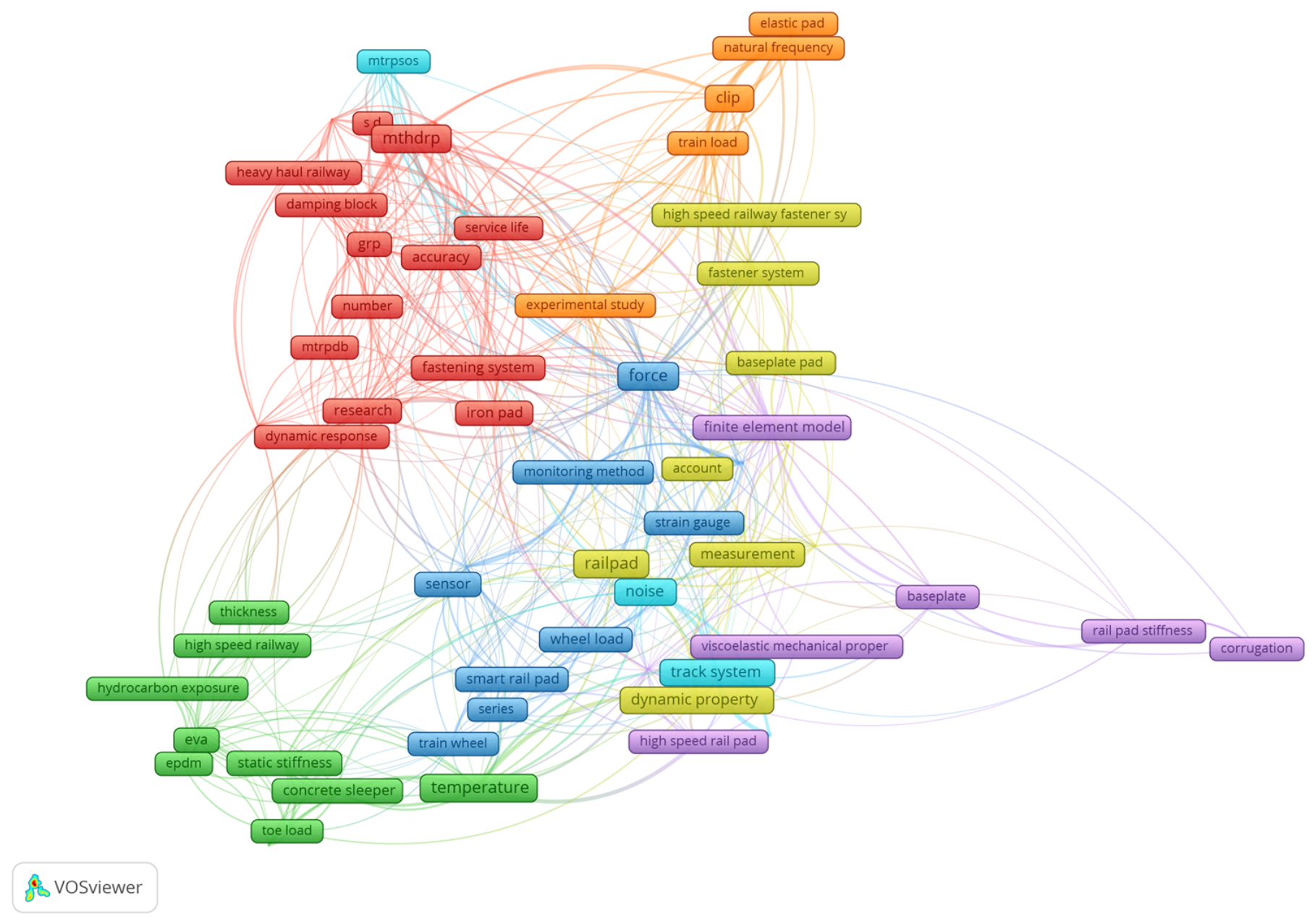
In addition, using a full-counting method (where each co-occurrence link has equal weight) and requiring at least one occurrence per keyword, a co-occurrence network was developed, yielding 51 keywords. Figure 2 presents the keyword network, which is visualized and classified into seven distinct clusters, each distinguished by a unique color. The distribution is as follows: Cluster 1 (red) with 17 keywords, Cluster 2 (green) with 12 keywords, Cluster 3 (blue) with 12 keywords, Cluster 4 (yellow) with 9 keywords, Cluster 5 (violet) with 8 keywords, Cluster 6 (light blue) with 7 keywords, and Cluster 7 (orange) with 5 keywords. In this case, the size of each shape represents the frequency of occurrence of the corresponding concept, with larger shapes indicating greater impact of that keyword within its respective research domain. It includes keywords such as “MTRPSOS” (mesh-type rail pad with second-order stiffness), “MTHDRP” (mesh-type high-damping rail pad), “GRP” (Grooved Rubber Pad), as well as several other abbreviations referring to the different materials used in the manufacturing of rail pads.
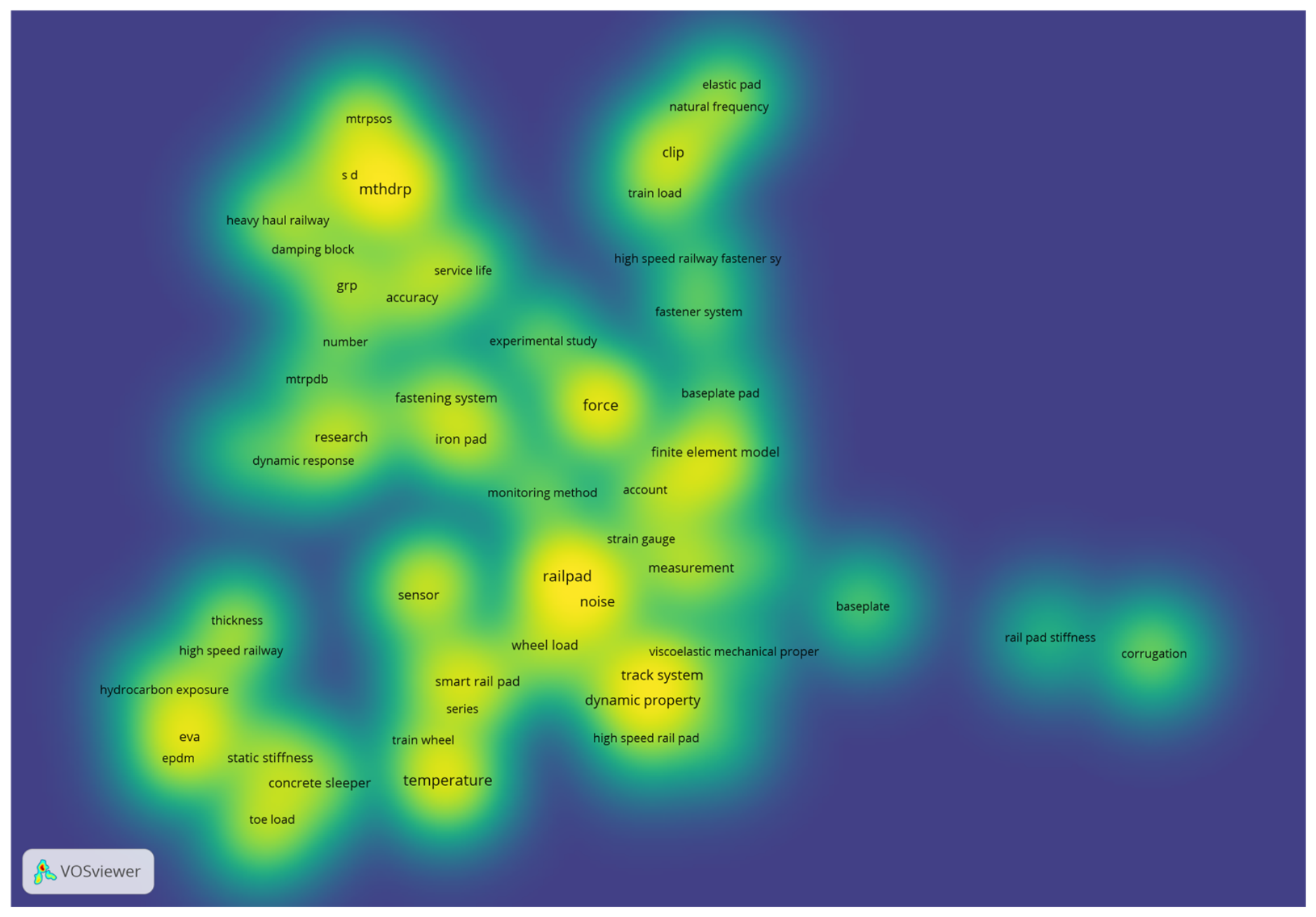
Subsequently, Figure 3 presents a density visualization similar to the network depicted in Figure 2. In this map, however, the color of each label represents the density of a given keyword, ranging from blue to green to yellow. Keywords displayed closer to yellow indicate a higher number of occurrences, thus providing an alternative way to represent and interpret a bibliometric map graphically [20]. In this case, no single keyword stands out above all others; however, there is a clear emphasis on the terms “rail pad,” “noise,” “dynamic property,” and “MTHDRP (Mesh Type High-Damping Rail Pad)”. The results suggest that future researchers should pay greater attention to keyword selection when addressing this topic, ensuring that the chosen terms are consistent and relevant to improve the accuracy and relevance of literature searches in this field.

2. Analysis of Results

2.1. Categories of the Study

This sub-section aims to describe the main categories into which the study was divided and organized to analyze the different thematic areas related to this type of track component.
  • New Materials
The section on new materials explores recent innovations in this area, covering advances in manufacturing railway components from these materials and in integrating new materials to modify and improve their physical properties.
  • Mechanical and durability tests
This examines how railway components perform under static and dynamic loads, focusing on long-term behavior, material degradation, and resistance to environmental and operational stresses.
  • Monitoring and auscultation
This section discusses methods and tools for in-service evaluation of railway components, rail pads, and fastener systems, including non-destructive techniques, sensors, and diagnostic approaches designed to ensure reliability and enable predictive maintenance.
  • New technologies
This highlights emerging approaches and innovations for tracking components, such as smart materials, sensor systems, and advanced manufacturing methods, that aim to improve both performance and monitoring capabilities.
  • Field Tests
The section on field tests explores how laboratory findings are validated under real-world conditions, highlighting the effects of traffic loads, environmental exposure, and track setups on the mechanical and functional performance.

2.2. Railway Superstructure Components

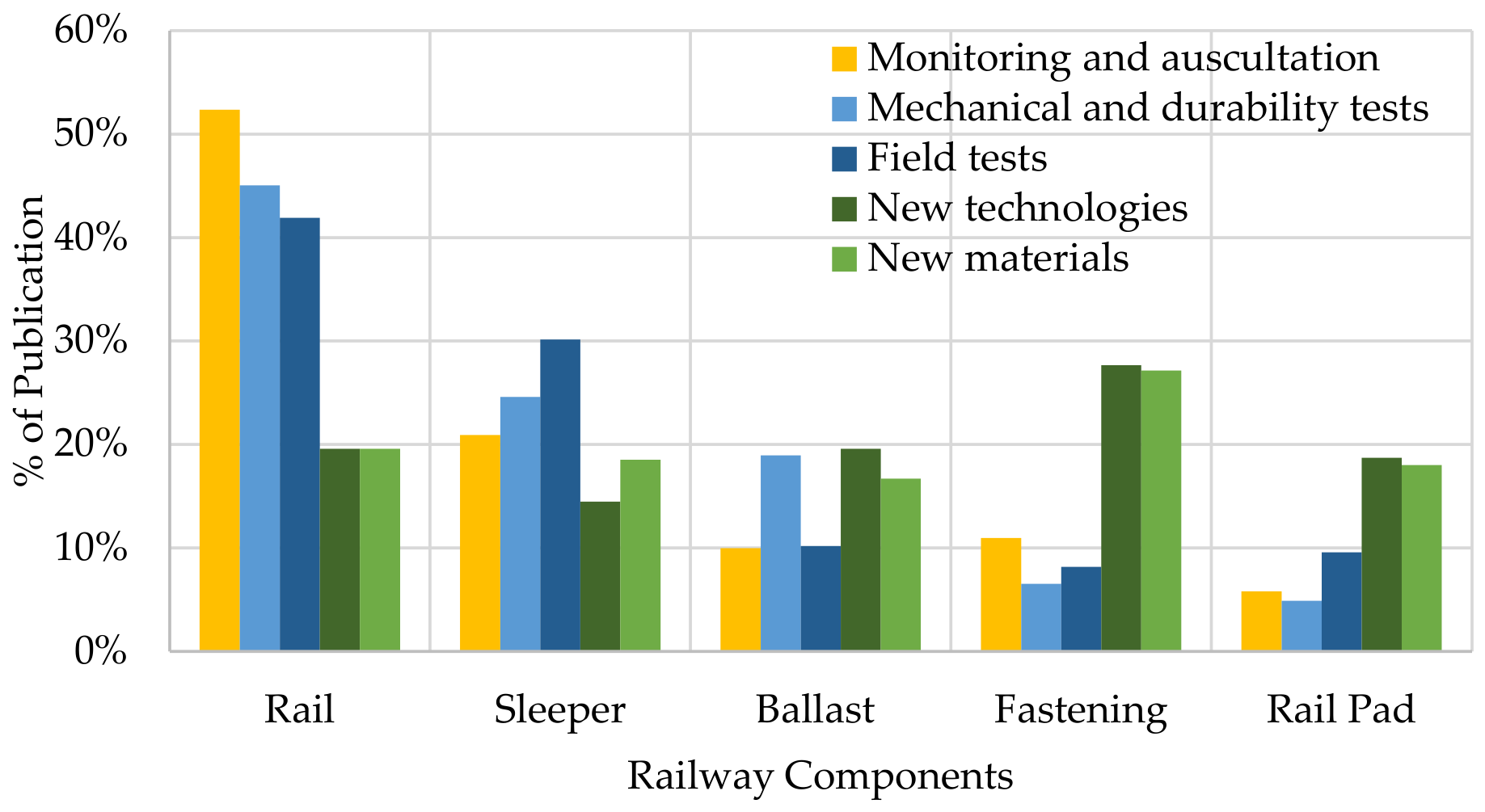
Figure 4 compares the research focus across key railway components based on the percentage of publications in different thematic areas. Consequently, the rail is the most extensively studied element, with over 50% of the work focusing on monitoring and auscultation, followed by mechanical and durability testing. This dominance reflects the long-standing priority of ensuring rail integrity, as it has a direct influence on safety and serviceability [21].
In contrast, sleepers and ballast exhibit a more balanced distribution of research, with roughly 20–30% of studies focusing on field testing and material behavior. These components have traditionally been the focus of extensive experimental and numerical modeling studies due to their role in load distribution and track stiffness [22].
Interestingly, fastening systems and rail pads (although critical for dynamic performance and vibration mitigation) remain comparatively underrepresented in the literature, with fewer than 20% of total publications. However, the proportion of studies focused on new materials and technologies in these categories is relatively higher than in other components, suggesting a recent shift in attention toward innovation rather than traditional testing. While in different areas “new technologies” account for around 20% of publications, in fastening systems this share increases to almost 30%, indicating a growing interest in innovative components and sensor integration.
This imbalance highlights a clear research gap: rail pads and fastening elements are essential interfaces within the track system, but have not received proportional research attention. Their mechanical and long-term behavior is still not as well understood as that of rails or sleepers, especially under high-speed and mixed-traffic conditions. Given the ongoing digitalization of railway superstructure, these components offer considerable innovation potential, particularly through the application of advanced materials, embedded sensing, and energy-harvesting technologies, enabling them to become active contributors to structural health monitoring.
To determine which aspect is fundamental to the research, Table 1 presents an in-depth analysis of the research intensity for each component in each field. The acronyms used throughout are as follows: NM refers to “New Materials”, M&D to “Mechanical and Durability”, M&A to “Monitoring and Auscultation”, NT to “New Technology”, and FT to “Field Test”. These abbreviations are used to streamline the nomenclature and improve clarity. Research into new materials has increased, especially deeper railway layers that require greater elasticity. Conversely, field testing decreases as the analysis moves through structural layers. The focus on new materials primarily targets sleepers, aiming to support the circular economy, promote sustainability, and enhance stress resistance. For example, Ferdous et al. [23] examined different material options for sleepers, identifying a balance between the use of sustainable solutions, such as recycled plastics, and prestressed concrete with embedded steel wires.
Similarly, rail pads have attracted increasing attention in recent years, particularly regarding their elastic properties. This emphasis is justified, given their significant influence on the overall elastic behavior of the track system. Sol-Sánchez et al. [24] analyzed the role of elastic components within the railway infrastructure, while more recently, Bai et al. [25,26,27,28] used finite element analysis to investigate structural modifications of rail pads aimed at improving their stiffness-related performance and, by extension, their impact on the mechanical response of the track.
Regarding the decline in the study and application of new technologies and materials at full scale, a key factor for improving experimental validation reliability, it can be argued that research has shifted toward finite element methods and advanced computational models. This transition has, in many cases, replaced the need for conducting traditional field trials. For example, Luo et al. [27] employed a numerical model to interpret acoustic measurements of mitigation strategies, while Park et al. [28] developed ABAQUS-based simulations. Similarly, Othman et al. [29] investigated the nonlinear behavior of rail pads using the ANSYS FEM software, among others. Collectively, these studies highlight a broader trend in which computational approaches are progressively displacing large-scale field testing as the dominant research methodology. The remaining aspects, including mechanical and durability testing, new technologies, and monitoring, exhibit minor variations, with none exceeding 5%. These areas remain stable over time, with fewer shifts in research compared to new materials and field testing. Similarly, ballast shows no significant variability, supporting the stability of these research areas.

2.3. Rail Pads

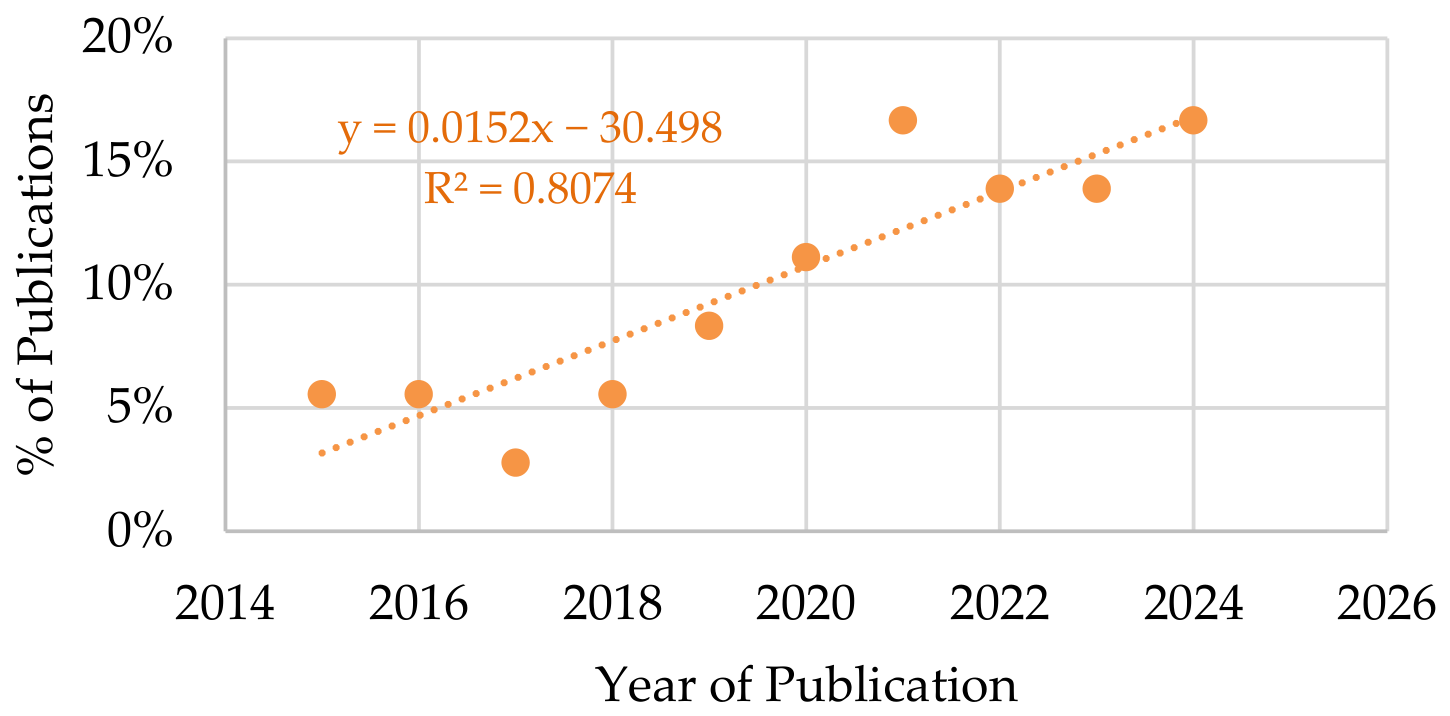
Based on the analysis of various railway components and the need for a deeper understanding of rail pads, Figure 5 illustrates the proportion of publications focused on rail pads relative to the total number of studies on railway components, as well as their evolution over the analyzed period. The time window between 2015 and 2024 was selected to capture the most relevant phase of contemporary railway research, characterized by significant methodological, regulatory, and technological shifts [30,31,32]. From 2015 onwards, the sector experienced a transition driven by the introduction of EU-level sustainability and digitalization strategies, the consolidation of advanced numerical modeling techniques, and the emergence of new materials and innovative components [32,33]. Analyzing publications up to 2024 ensures the inclusion of the most recent developments, particularly the surge in studies on vibration mitigation, predictive maintenance, and sensorised track components [34]. Consequently, the 2015–2024 window offers a coherent and representative framework for examining how research on rail pads has evolved under the influence of these technical and policy-driven milestones [35].
The figure shows a steady increase in the proportion of publications explicitly dedicated to rail pads relative to the total research output on railway components. The strength of the fitted regression (80% confidence) indicates that this trend is not incidental. Instead, it suggests that, from around 2019–2020 onwards, the research community has increasingly redirected its attention toward these elements, likely driven by emerging technological demands such as vibration control, predictive maintenance, and infrastructure digitalization, as well as by shifts in research and funding policies.
The intermediate variations in the curve can also be interpreted in light of these broader dynamics. The earlier period (2015–2018) reflects a phase in which rail pads received limited dedicated attention, followed by a noticeable rise coinciding with growing interest in noise and vibration mitigation and in the development of “intelligent” or sensor-enabled pads. Recent works on sensorised rail pads reinforce this shift [36,37].
Overall, the observed growth not only reinforces the relevance of the present study by demonstrating that the topic has gained tangible scientific traction but also aligns with the wider macrotendencies currently shaping railway engineering and infrastructure research [38,39].

2.3.1. Development of the Research Across Years

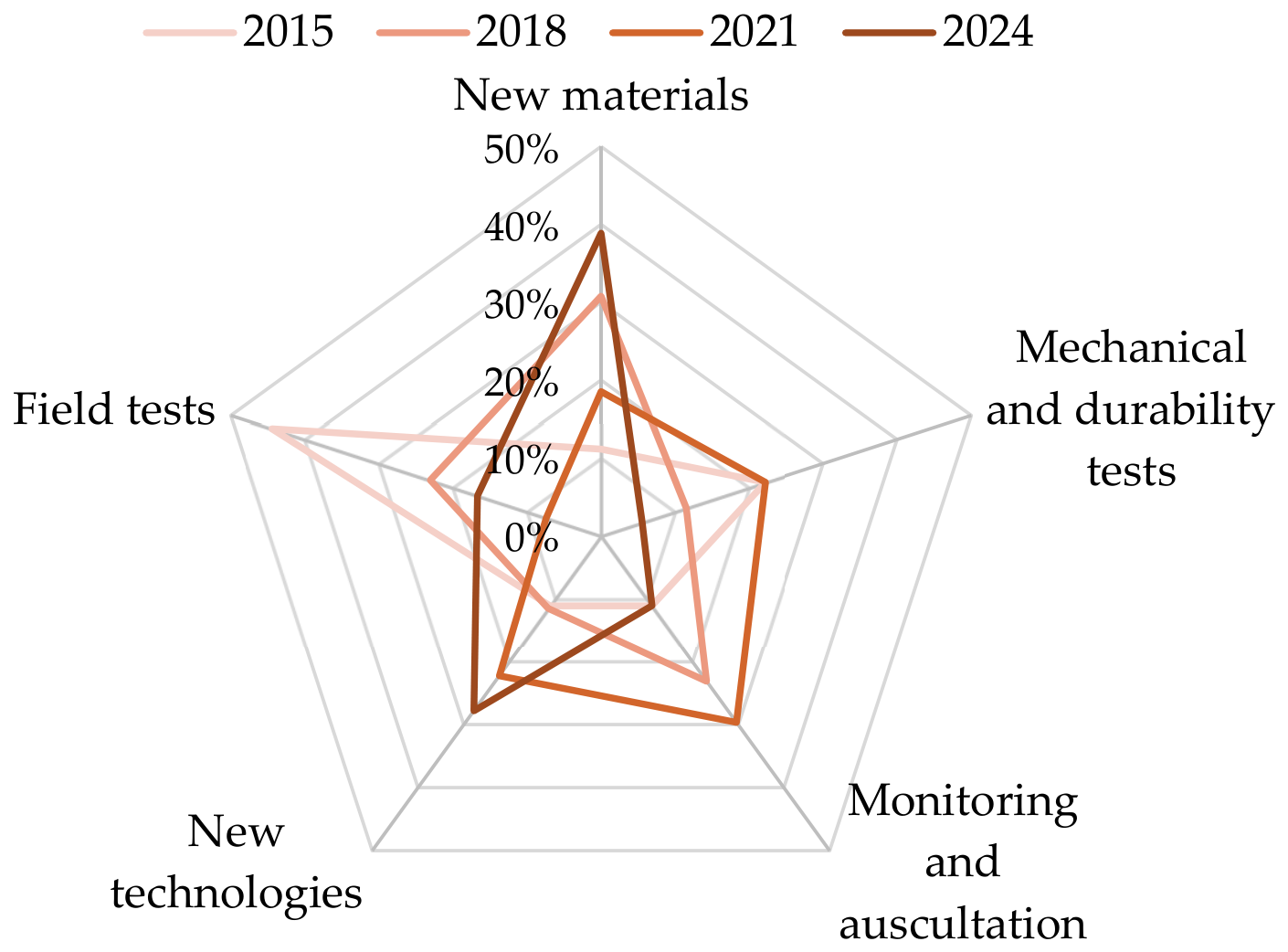
Figure 6 presents the percentage of publications for each study component for 2015, 2018, 2021, and 2024, selected as representative points to assess the evolution of the data. Each of these years features a specific publication that highlights an essential aspect of the examined rail pads. In 2015, research mainly concentrated on field testing. This focus later diminished, possibly due to modifications required to install new rail pads or inserts, as well as the need to monitor those locations for preventive maintenance of the infrastructure.
In 2018, research focused similarly on mechanical and durability testing, whereas in 2021, particular emphasis was placed on monitoring and inspection. By 2024, the primary focus shifted to studying new materials and technologies. In conclusion, it can be observed that research on rail pads has gradually moved away from field testing, emphasizing the understanding of their mechanical behavior and performance through monitoring and inspection. This may be because previous large-scale field trials did not produce immediate results, leading to a reduction in funding for such studies [39,40]. In contrast, small-scale monitoring and material testing trials tend to deliver faster outcomes; however, they often fail to assess system performance under real-world conditions. Therefore, it is essential to promote the transition of these new technologies and materials from laboratory testing to full-scale implementation, thereby validating their effectiveness and facilitating their market adoption, ultimately supporting the development and adoption of innovative solutions.
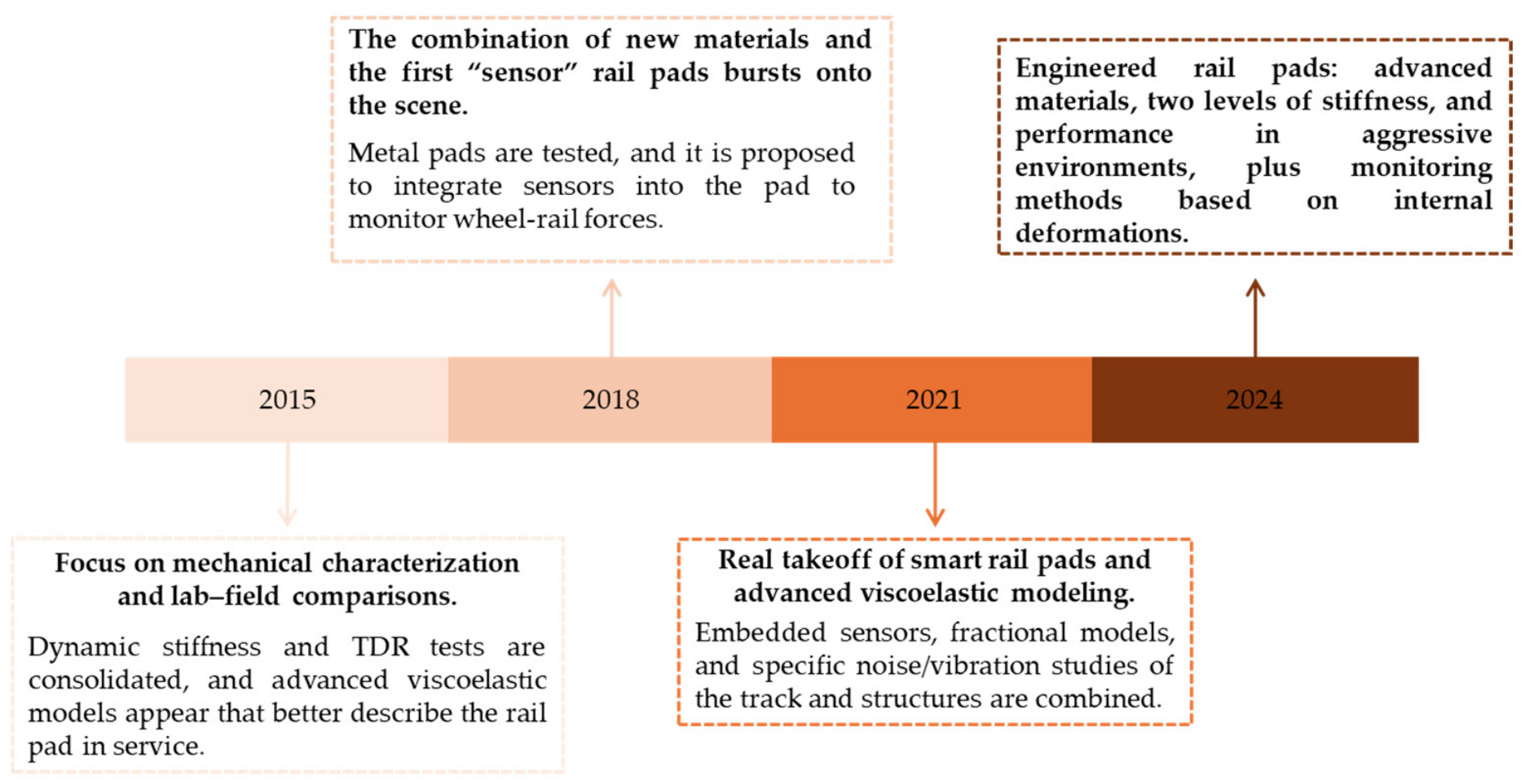
As shown in Figure 7, the period analyzed (2015–2024) was divided into distinct stages to reflect the inflection points observed in the evolution of rail pad research. These stages were not chosen arbitrarily: they correspond to clear shifts in focus identified across the literature, ranging from early mechanical characterization to the exploration of alternative and recycled materials, to the introduction of full-scale testing, and finally to the emergence of advanced modeling and sensor-enabled designs. The articles illustrated in the figure were selected because they exemplify the dominant research priorities and methodological approaches of each stage. In this sense, the figure does not merely display representative studies. Still, it highlights how the field has progressively reoriented itself in response to technological advances, policy-driven incentives, and broader trends in infrastructure materials.
In the earliest phase, most studies focused on understanding the fundamental mechanical behavior of rail pads and how aging affects dynamic performance, driven primarily by the need to establish reliable baseline indicators for standardization. Venghaus et al. [16], for instance, demonstrated that variations in the Track Decay Rate (TDR) on the Swiss network were primarily associated with pad degradation and the resulting loss of stiffness. These early contributions reflect a stage in which rail pads were still regarded as passive elastic components, and research emphasized characterization rather than design innovation.
A second stage emerges as the literature begins to explore alternative and recycled materials, driven by both technological curiosity and broader policy incentives encouraging circular economy solutions [41]. The growing regulatory pressure toward sustainability acted as a clear catalyst, redirecting research efforts toward material innovation. Sol-Sánchez et al. [24], in their review of elastic components, highlight how pad stiffness governs global vertical track stiffness and noise-vibration performance, reinforcing the importance of material composition and viscoelastic properties during this period. Studies such as Bai et al. [25], who investigated mesh-type pads exhibiting second-order stiffness behavior, exemplify the shift toward capturing nonlinear and frequency-dependent mechanical responses. Other contributions, such as Kaewunruen and Remennikov or Wei and colleagues [42,43,44], expanded the discussion by comparing polymeric, recycled, and composite formulations, reflecting a stage in which material optimization gained prominence over simple characterization.
From around 2021 onwards, a third stage can be identified, characterized by a growing effort to bridge laboratory findings with in-track or full-scale validation, largely motivated by the limitations of purely computational approaches and the increasing demand for empirical evidence under realistic operational conditions. Several authors began employing large-scale test rigs, long-term monitoring devices, and more advanced numerical-experimental calibration procedures. This transition signals methodological maturation: research now addresses not only what materials behave well in controlled settings, but also whether they maintain performance under realistic load histories, environmental conditions, and fastening-system interactions.
Finally, the most recent years (2023–2024) illustrate a fourth stage driven by technological integration and multifunctionality, aligned with global megatrends in digitalization, sustainability, and structural health monitoring [45,46,47]. Research by Bai et al., Kaewunruen, and others introduces sensor-enabled pads, hybrid materials, damping-enhanced designs, and numerical frameworks for intelligent monitoring and predictive maintenance [25,48]. These studies show that rail pads are increasingly conceived not merely as passive buffers but as potential enablers of system-level optimization.
Overall, this multi-stage progression reveals that the field does not evolve linearly but reacts to shifts in industrial priorities, funding programs, and regulatory frameworks. Identifying these stages is therefore essential: it helps contextualize the current state of the art, clarifies why certain topics dominate specific periods, and highlights strategic research gaps that future studies, including the present work, are well positioned to address.

2.3.2. Most Influential Factors

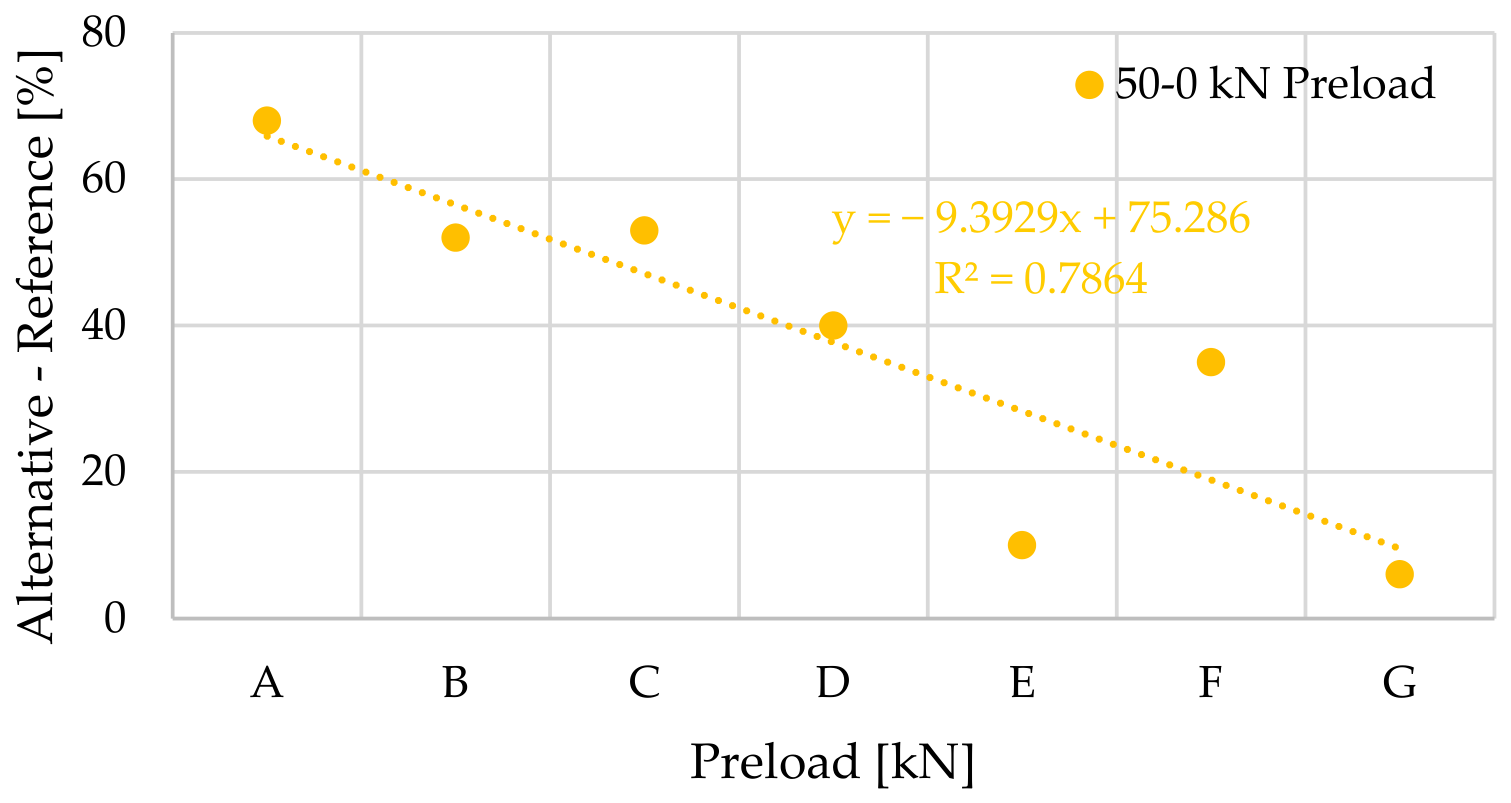
As previously discussed, several inflection points can be identified in the evolution of rail pad research, and one of the most significant advances concerns the understanding of their mechanical behavior. For this reason, Figure 8 was selected as a representative example, illustrating two parameters that are central to the mechanical performance of rail pads. In the studies by Carrascal et al., the influence of the pre-load applied during installation is examined, together with its implications when comparing two testing procedures currently defined in EN 13146-3 [49], the standard commonly used in Spain to assess impact attenuation.
The figure shows that increasing the applied preload results in a greater divergence between the two test methods. This difference arises because one method includes a static pre-load on the pad while the other does not, directly affecting the measured impact-attenuation capacity, one of the fundamental mechanical properties of rail pads. Quantitatively, the difference in impact attenuation between both methods—evaluated at the 50 kN preload condition versus the zero-preload condition—ranges from approximately 68% for pad type A (soft EPDM) down to 6% for pad type G (rubber with textile reinforcement), following a decreasing linear trend (y = −9.39x + 75.29, R2 = 0.79). This wide range confirms that the sensitivity to preload is strongly material-dependent, being particularly pronounced in low-stiffness pads. These results highlight not only the sensitivity of pad behavior to installation conditions, but also the limitations of existing standardized tests when dealing with components that exhibit pronounced nonlinearity.
Although this study dates back to 2021, it aligns with the broader temporal analysis, which shows that mechanical behavior has been a central research topic since at least 2015. The fact that such investigations have continued in recent years indicates that mechanical properties remain an open and evolving research frontier. Ongoing work aims to refine or redefine testing procedures to obtain performance indicators less affected by the inherent nonlinear response of these components, which depends strongly on material formulation and structural configuration.
In this context, the contributions of Bai et al. are particularly illustrative [8,50]. Their work on mesh-type rail pads with second-order stiffness behavior explores whether tailored stiffness profiles could mitigate the undesirable nonlinearities observed in conventional pads. Such studies exemplify the current stage of research, in which material design, structural configuration, and testing methodology are jointly reconsidered to improve the reliability, comparability, and practical relevance of mechanical performance assessments.
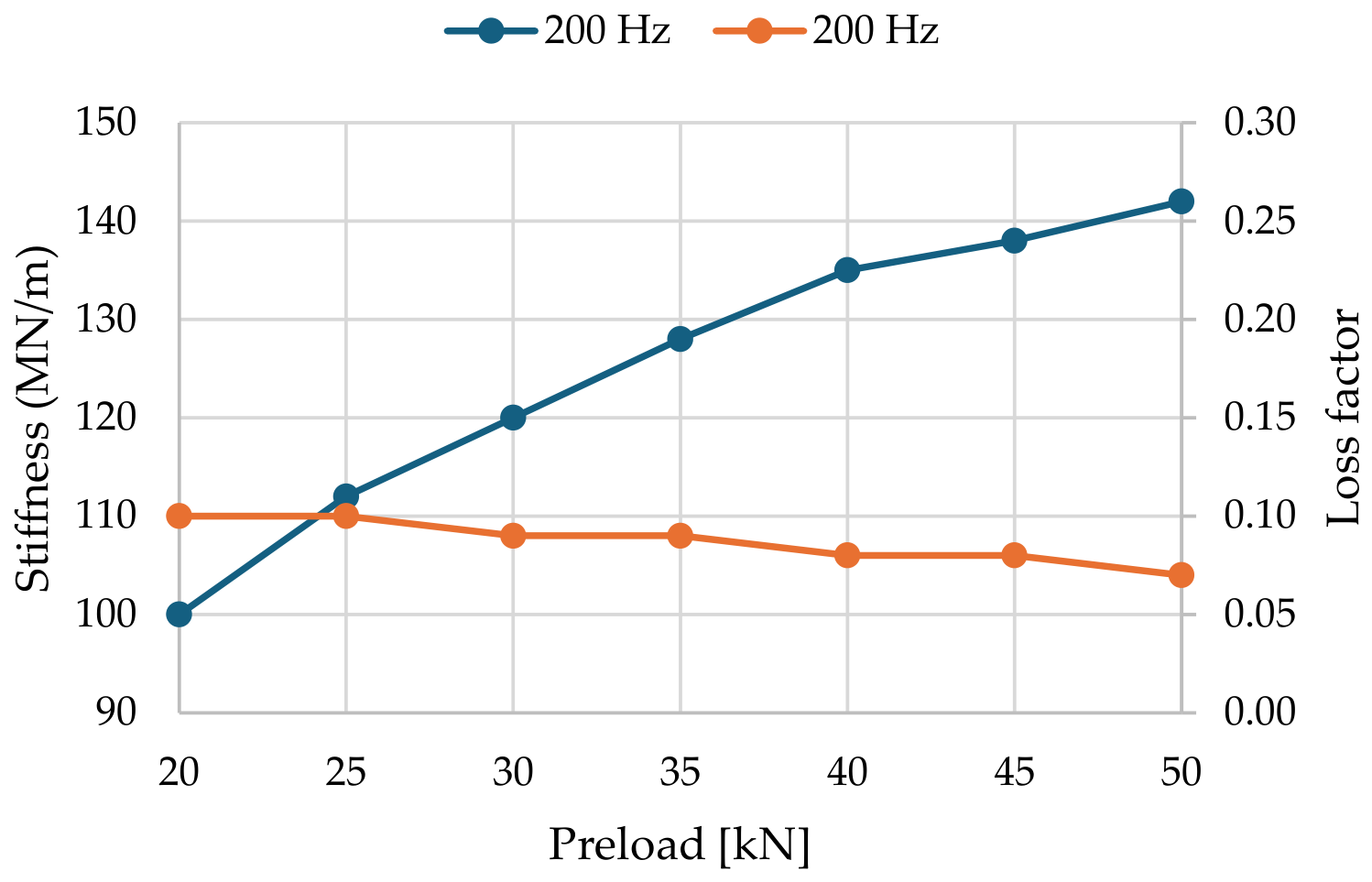
As shown in Figure 8, the static pre-load applied to the rail pad plays a decisive role in its ability to attenuate impact forces transmitted from the vehicle to the track. Building on this observation, Figure 9 was selected to demonstrate that pre-load not only affects impact attenuation but also directly modifies the pad’s mechanical properties, particularly stiffness and loss factor. Li et al. [51] provide a clear illustration of this behavior: as pre-load increases, stiffness rises markedly across all excitation frequencies, while the loss factor progressively decreases.
This combined response reveals several key insights. First, the increase in stiffness with both pre-load and frequency confirms the inherently nonlinear and viscoelastic nature of rail pad materials. These components do not behave as linear springs; their properties change under operational loads, meaning that in-track performance may differ significantly from laboratory tests conducted at lower loads or single frequencies. Second, the simultaneous reduction in the loss factor highlights a mechanical trade-off: while a stiffer pad may provide greater structural support, it also dissipates less energy, thereby reducing its vibration-damping capacity. The decreasing sensitivity of the loss factor at higher frequencies (200 Hz) indicates that the pad approaches a quasi-rigid state in this range, where dynamic deformation is minimal, and energy dissipation becomes less effective. Therefore, the results obtained at 200 Hz were selected as the primary engineering benchmark. This specific frequency is highly representative of the operational conditions in modern railway tracks, as it corresponds to the spectral range where rolling noise and high-frequency vibrations are most prevalent [14].
These patterns directly impact field performance. In real railway settings, rail pads endure substantial static loads from rail fastening systems and a wide range of excitation frequencies from passing trains. The trends here indicate that, under such conditions, conventional pads may experience a significant decrease in damping efficiency, particularly as loads accumulate over time due to settlement, wear, or improper installation torque. This affects noise and vibration control, ballast degradation, and the long-term durability of the track structure.
From a broader perspective, the results highlight an essential methodological issue: whether stiffness alone can serve as a reliable performance indicator. Since pre-load and frequency together influence stiffness and damping in different ways, relying solely on stiffness-based characterization risks missing key aspects of dynamic behavior. This highlights the need for testing procedures that can capture nonlinear responses and changes in the loss factor under realistic pre-load conditions, an area where recent studies are actively advancing through innovative pad geometries and second-order stiffness designs aimed at addressing these limitations [52,53].
When the excitation frequency increases from 60 Hz to 600 Hz, the dynamic stiffness at a standard 20 kN preload rises from 90 MN/m to 105 MN/m, representing a 16.6% stiffening effect due to the viscoelastic nature of the elastomer. Furthermore, the results indicate a consistent linear sensitivity to installation torque; regardless of the frequency, the transition from a 20 kN to a 50 kN preload results in a stiffness increase of 42% to 50%. This linear proportionality suggests that while the base stiffness is frequency-dependent, as established in the previous literature [54], the relative hardening effect induced by the preload remains stable. This finding provides critical engineering guidance for predicting track performance, as it allows for the decoupling of frequency-driven and load-driven stiffness increments during the design phase.
Ultimately, Figure 9 not only confirms the mechanical findings highlighted in Figure 8 but also expands on them by showing that pre-load affects the entire dynamic signature of the rail pad, not just its impact attenuation. Understanding these interconnected effects is crucial for designing stronger pads, improving laboratory standards, and ensuring that in-track performance meets the demands of modern rail systems.
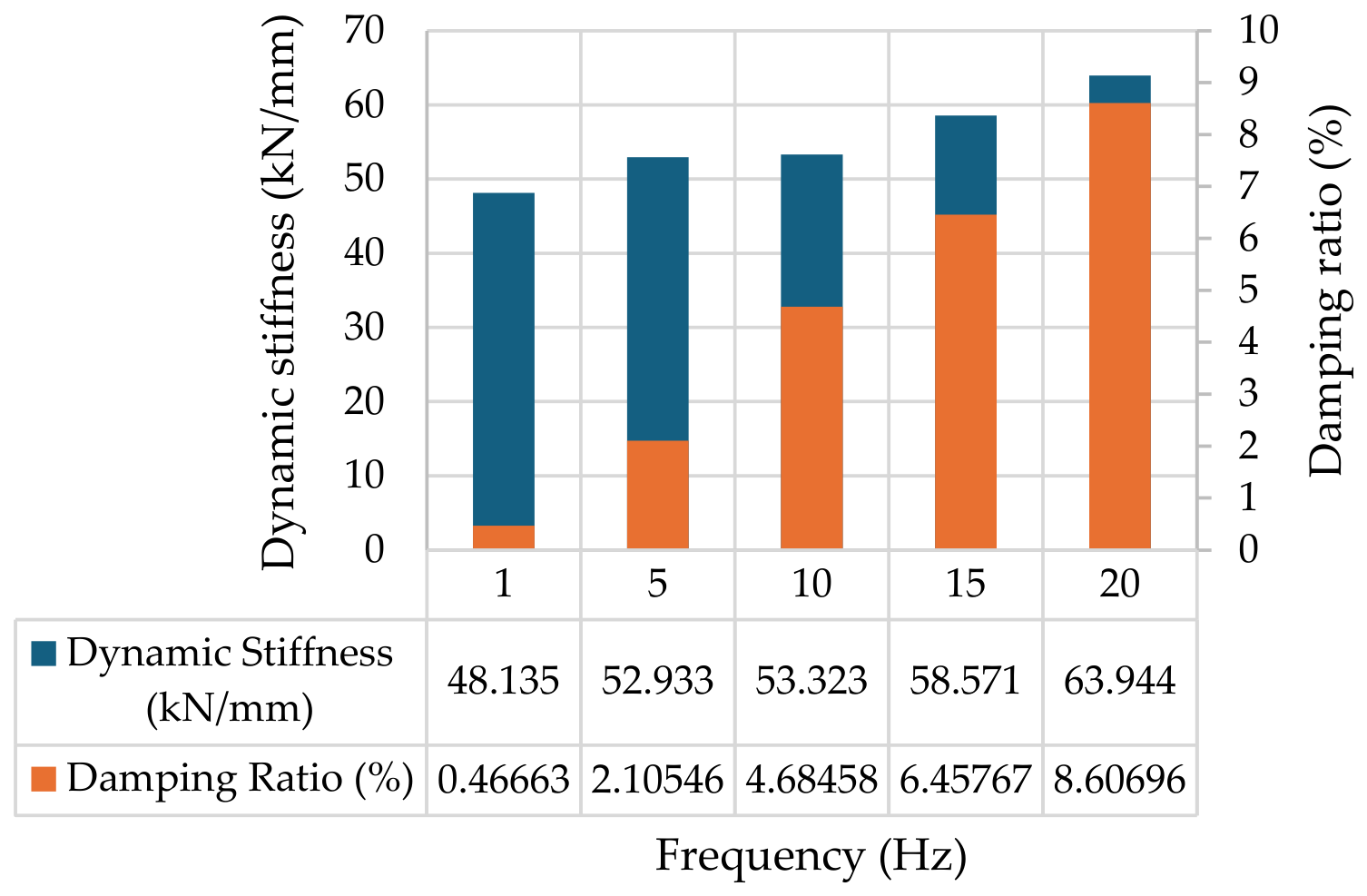
Building on the behavior described in Figure 8 and Figure 9, Figure 10 further illustrates how preload-dependent trends extend to frequency and material stiffness [55]. As frequency increases, both dynamic stiffness and damping ratio rise; however, the gap between them progressively narrows. This indicates that, at higher frequencies, the pad’s dynamic response becomes more balanced, with stiffness gains accompanied by proportionally smaller increases in damping, suggesting a transition toward a more stable viscoelastic regime [56,57]. The dynamic stiffness corresponding to the loading frequency of 1 Hz is reduced by 24.72% compared with 20 Hz, and the damping ratio corresponding to the loading frequency of 1 Hz is reduced by 94.58% compared with 20 Hz, indicating that the increase in the loading frequency can give full play to the damping performance of the rail pad [55].
From an industrial perspective, these findings highlight the importance of selecting rail pad materials that strike a suitable balance between stiffness and damping within the typical frequency range encountered during service. They also highlight the need to monitor preload levels during installation and field maintenance, as excessive compression can cause pads to operate in regimes where vibration mitigation becomes much less effective [57]. For future research, the observed trends suggest promising directions, including adaptive or hybrid materials, pad geometries designed to mitigate the divergence between stiffness and damping, and test procedures that can capture these nonlinear behaviors under realistic loading conditions.
Together, these insights confirm that rail pad performance cannot be judged only by stiffness or damping, and that an integrated approach is crucial for both design and long-term track optimization.

2.3.3. Materials

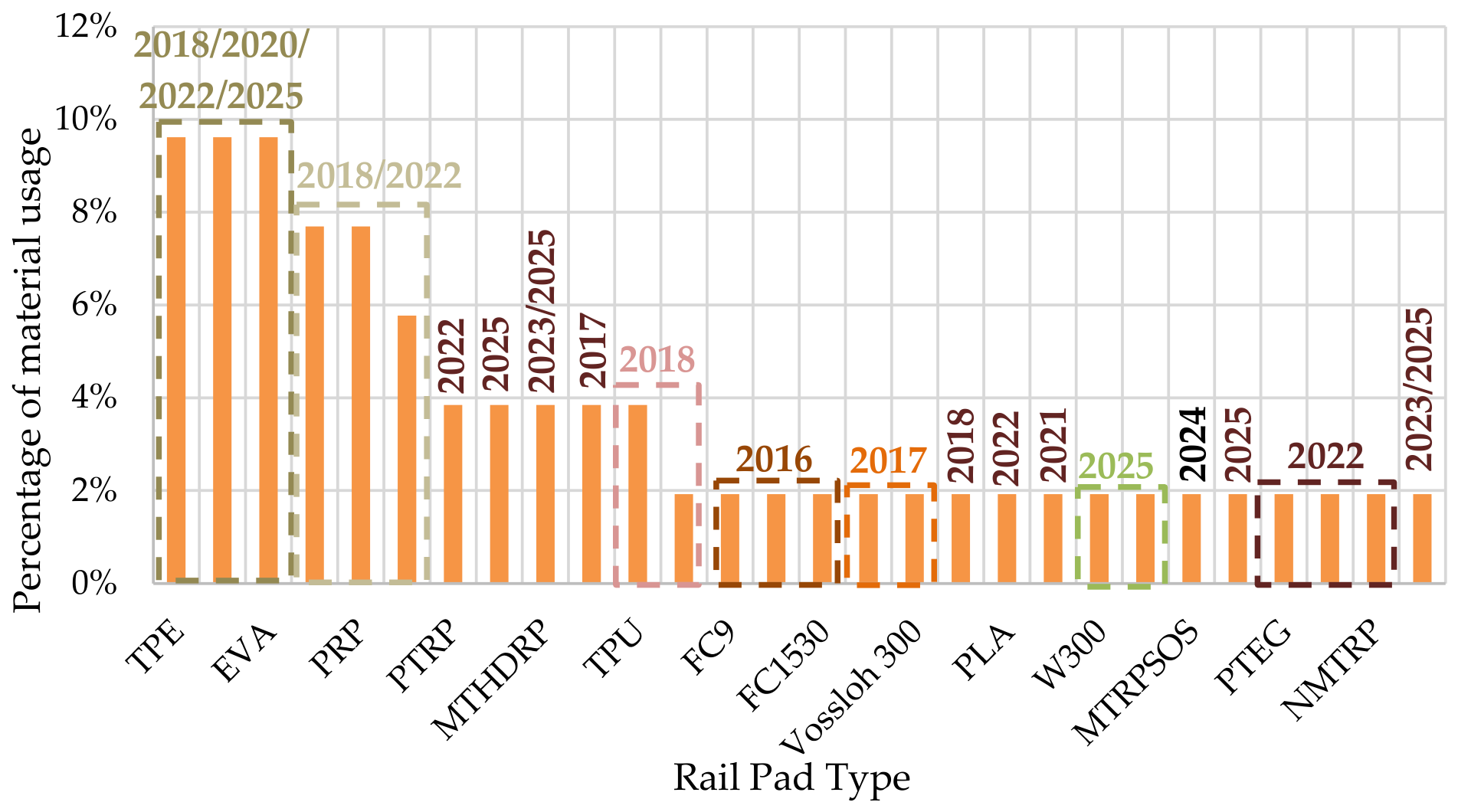
To provide a more detailed overview, an analysis of the materials used in the fabrication of rail pads was conducted, considering their use in mechanical testing and in studies explicitly focused on material design. This focus is essential, as highlighted before, as material properties are one of the primary factors governing rail pad performance, making a detailed examination of these materials fundamental for understanding their behavior within the track system [58,59]. To facilitate understanding of the descriptions and nomenclature in Figure 11, Table 2 provides a detailed explanation of the nomenclature and components used in the manufacture of rail pads. To further clarify the scope of each material’s application, Table 2 also includes a classification column distinguishing between materials that are commercially used in operational railway infrastructure (CU) and those that have only been investigated in experimental or laboratory settings (LO). This distinction is relevant given that several of the most frequently studied materials in the literature do not necessarily correspond to those most widely deployed in real track systems, reflecting a gap between academic research focus and industrial practice.
Figure 11 presents a ranked list of these materials in descending order, from the most frequently studied in scientific publications to the least. The figure also indicates the years during which these materials were investigated, reflecting the timeline of their research. It should be emphasized that this ranking reflects research frequency rather than actual use in track systems; several highly ranked materials are not the most common in real railway infrastructures but are instead those most frequently chosen in experimental and academic studies.
The material analysis reveals a clear concentration of research effort on a relatively small set of polymers. Thermoplastic elastomers (TPEs), EPDM, and EVA are the three most frequently investigated materials, each accounting for roughly 10% of all material occurrences in the reviewed studies, followed by HDPE and recycled polymer-based mixtures such as PRP and GRRP [60,61,62,63]. This ranking reflects the prevalence of research rather than actual market share: these materials are not necessarily the most widely implemented in operational track systems, but they are beautiful for experimental studies because they are commercially available, mechanically well characterized, and relatively easy to process into test specimens [64].
The strong presence of recycled and composite formulations (e.g., GRRP, PTRP, PRP) is consistent with the increasing regulatory and industrial pressure towards circular economy solutions [65]. Their prominence in the literature, therefore, appears to be driven not only by intrinsic mechanical performance but also by policy and funding-driven incentives to valorize waste streams and reduce the environmental footprint of track components. In contrast, several emerging materials (PLA, MRE, hybrid or bio-based compounds) appear only once or twice, indicating that they are still at an exploratory stage: they offer highly specialized functionalities (such as enhanced damping or smart, tunable behavior) but have not yet reached the level of maturity required for systematic comparison or large-scale implementation [50,55,66,67,68].
Overall, these patterns suggest that the current research portfolio is optimized for exploring innovation and sustainability, rather than for reproducing the exact distribution of materials found in everyday railway practice. This gap between research focus and installed base is significant because it implies that many of the most advanced findings are still confined to prototype-level or laboratory-scale materials and may require further validation before they can be translated into design guidelines or standards.

2.3.4. Integration of Technology for Monitoring

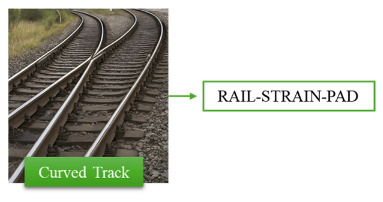
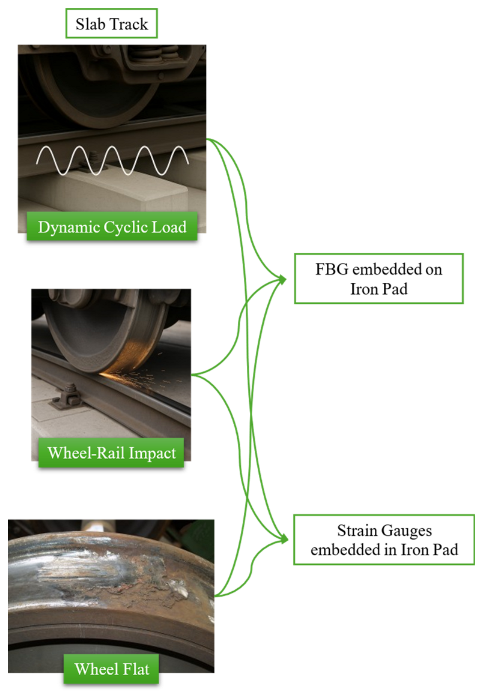
After reviewing the range of materials commonly used in rail pads, the study then focused on research efforts to endow these components with dual functionality. Table 3 illustrates not only the technological applications proposed for sensorized rail pads, but also the specific track sections and operational scenarios in which these solutions may be effectively employed. Intelligent rail pads, whether elastic or 3D-printed configurations embedding piezoelectric sensors, strain gauges, or other transducers, offer a versatile platform for monitoring a broad spectrum of track-train interaction phenomena [54,68,69]. These systems enable the quantification of cyclic and dynamic loads, the detection of wheel defects such as wheel flats, and the characterization of impact events at the wheel–rail interface. Metallic rail pads, typically deployed in slab-track environments, provide similar diagnostic capabilities while adapting to the specific mechanical and durability requirements of concrete-based systems [70,71]. Additionally, rail strain pads, although predominantly investigated in curved track sections due to their pronounced wear mechanisms, present an emerging opportunity for assessment in alternative track typologies, where their sensing potential may extend beyond the applications currently documented in the literature [72].
Table 4 outlines the main characteristics, benefits, and development progress of technology integration in rail pads. Initially, it is clear that monitoring systems have evolved from early fiber-optic solutions to compact, affordable piezoelectric technologies, and now toward hybrid “intelligent pads” that combine embedded sensors with predictive algorithms and digital twins. Among these technologies, piezoelectric-based solutions have shown the most significant progress and potential for scaling. They provide a robust, linear, and low-cost alternative to optical systems while offering adequate accuracy for real-time monitoring. Their ability to use sustainable materials, such as recycled HDPE or rubber, makes them particularly attractive for environmentally conscious infrastructure management.
Conversely, FBG sensors remain highly accurate and stable over time, but their fragility, high cost, and integration challenges limit widespread use. The most promising development, therefore, is the creation of hybrid smart pads that combine piezoelectric sensors, self-calibration features, and data-driven predictive models. These systems can not only detect immediate load and vibration events but also learn from accumulated data to forecast structural deterioration and enhance maintenance planning. Such methods support current global goals of sustainability, digital transformation, and predictive maintenance.
To provide a clearer picture of the maturity of these technologies, Table 4 includes a Technology Readiness Level (TRL) classification for each sensing solution. This scale, ranging from TRL 1–2 (concept stage) to TRL 9 (full industrial implementation), allows for a structured comparison of how close each technology is to real-world deployment. As can be observed, the most consolidated solutions—such as the RAIL-STRAIN-PAD and the PVDF-based sensor pad—have reached field testing stages (TRL 6–7), having been validated under real operational conditions [72,75]. In contrast, more recent developments such as 3D-printed rail pads and strain gauge-embedded iron pads remain at earlier stages (TRL 4–5), having demonstrated promising results in laboratory and prototype settings but not yet been deployed on operational railway lines [70,71,74]. This classification highlights that, despite the significant progress made in sensorized rail pad technologies over the past decade, the transition from laboratory validation to full industrial implementation remains a key challenge for the field, representing one of the most pressing research priorities for the coming years.

2.3.5. Geographic Distribution and Tendency

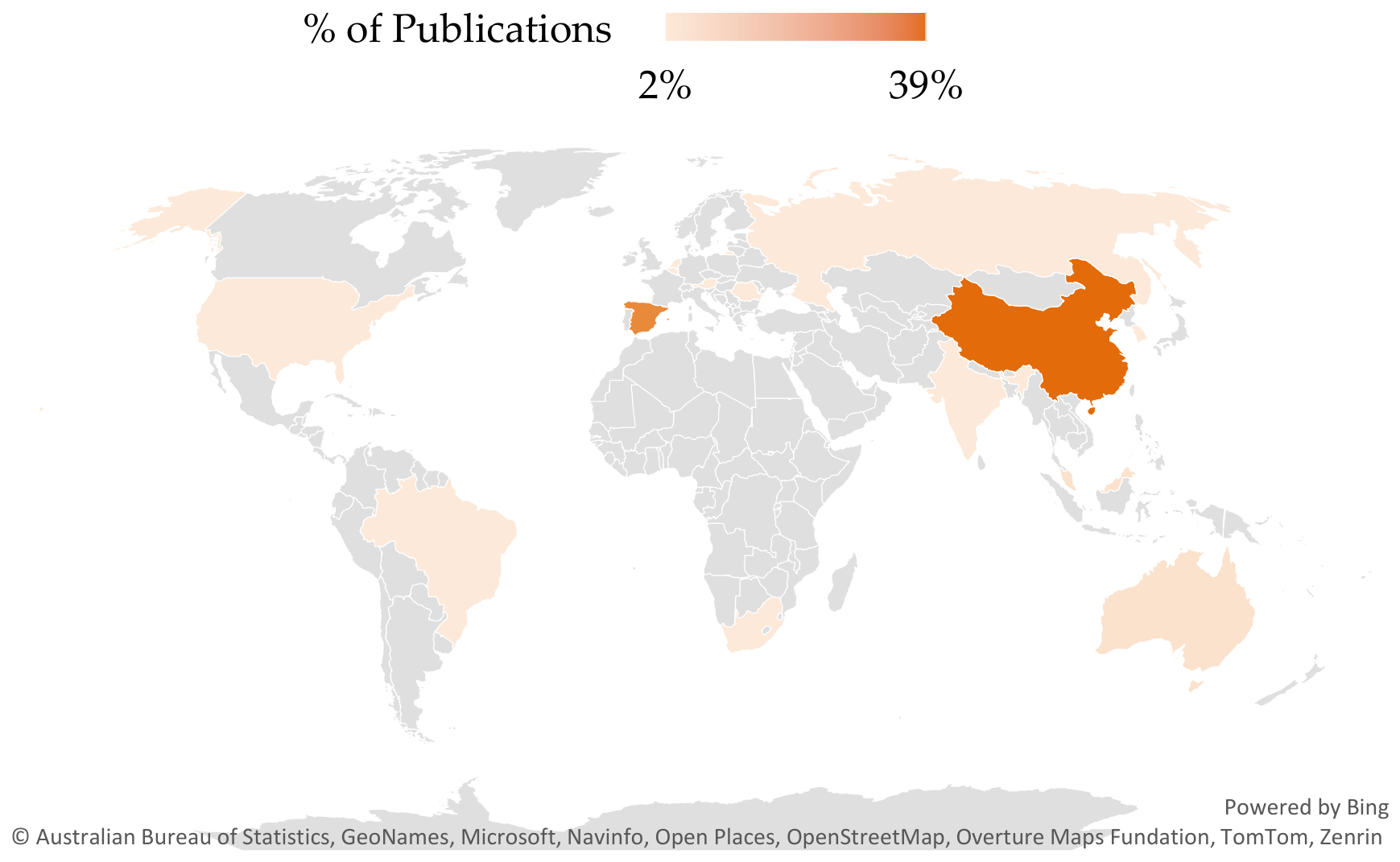
Following the analysis of temporal trends and the evolution of research topics, it is also essential to examine the geographical distribution of the studies. Thus, Figure 12 displays a world map created with color intensity indicating the relative percentage of publications on the topics. This information enables a broader analysis of the sectors in which this topic is currently most extensively studied and, subsequently, a more detailed examination of the components and testing of rail pads. This contributes to understanding that, during the study period mentioned earlier, the most productive countries in research related to this component are China and Spain.
It is well known that China has experienced significant growth in research output across many disciplines, especially in developing numerical models of rail pads to study their mechanical behavior and properties [76,77]. Along with Spain, China is one of the top contributors in this field. This trend can be partly attributed to the rapid growth of the railway sector in both countries, which has driven increased academic interest in this area [78,79]. From a geographical perspective, the identified rail pad publications are highly concentrated in a small group of countries.
From a geographical perspective, rail pad research is concentrated in a limited number of countries. China and Spain exhibit a strong research presence in terms of publication output, reflecting the increasing academic and industrial interest associated with the expansion and modernization of railway infrastructure in these countries. Meanwhile, countries such as the United Kingdom and Poland also show a significant contribution to the field, particularly regarding citation impact and specialized research activity. While Poland has the largest share of documents, the United Kingdom and Spain have the highest average citation rates (around 35 citations per article), indicating that a smaller but more visible body of work can exert disproportionate influence on the field.
This pattern suggests that countries with strong railway industries, established test facilities, and access to competitive research funding act as hubs for high-impact rail pad research. At the same time, the limited representation of other major railway markets hints at a geographical bias in the available evidence, which may affect the generalizability of current design recommendations and performance models. This imbalance points to a clear opportunity for future studies to broaden the empirical base beyond the dominant European and Asia-Pacific clusters.
Understanding where these investigations were conducted provides additional context regarding the operational environments, network characteristics, and regional research priorities. Moreover, the geographical spread of the literature offers insight into how different rail administrations address similar challenges. It highlights the regions driving innovation in rail pad technologies and track behavior studies.
Figure 12. Global distribution of countries by percentage of published documents [14,77].
Applsci 16 05323 g012

3. Discussion

This bibliometric review of research published between 2015 and 2024 offers a comprehensive overview of the evolution of scientific interest in rail pads within railway superstructure. The analysis shows a clear shift in research focus toward new materials and advanced technologies. Conversely, studies that concentrate on field tests have gradually declined as interest shifts from the rail to the rail pad itself. Despite this trend, rail pads remain the least studied component among rails, sleepers, ballast, and fastening systems, accounting for only around 20% of total publications compared to over 50% for rails, highlighting an ongoing and significant research gap in the literature. Geographically, Spain and China emerge as the top contributors to rail pad research, producing significantly more work in this area than other countries, although the United Kingdom and Spain achieve the highest average citation rates (around 35 citations per article), suggesting that publication volume alone does not determine scientific impact.
The review also highlights a shift in research themes, with earlier studies mainly concentrating on field performance. In contrast, recent research increasingly investigates material innovation and technological improvements, likely driven by the challenges of publishing field-test data for new components and the growing importance of sustainability and advanced material engineering. This thematic evolution can be structured into four distinct stages: an initial phase focused on mechanical characterization, followed by a material innovation stage driven by circular economy incentives, a third stage oriented toward laboratory-to-field validation, and a current phase defined by technological integration and sensor-enabled multifunctionality. Understanding this progression is essential for contextualizing current research priorities and identifying where future investment is most needed.
Among the most studied materials, thermoplastic elastomers (TPEs), ethylene-propylene-diene monomer (EPDM), and ethylene-vinyl acetate (EVA) each account for approximately 10% of the reviewed literature. However, a critical distinction must be drawn between materials that are commercially deployed in operational railway infrastructure and those that have only been investigated in experimental or laboratory settings. As reflected in Table 2, several of the most frequently studied materials (including recycled and bio-based compounds such as PLA or ELT) remain at prototype or laboratory scale, revealing a gap between academic research focus and industrial practice that deserves greater attention in future studies.
Throughout the research, static preload and stiffness are the parameters most consistently examined, especially regarding how stiffness varies under different operational and loading conditions. Quantitative evidence from the literature reinforces the importance of this relationship: as shown in the figures presented in Section 2.3.2, the divergence in impact attenuation between testing methods under a 50 kN preload versus zero preload ranges from approximately 68% for soft EPDM pads to as little as 6% for rubber pads with textile reinforcement, following a clear decreasing linear trend. This confirms that preload sensitivity is strongly material-dependent and that current standardized testing procedures may not adequately capture the nonlinear behavior of rail pads under realistic service conditions.
Regarding the integration of sensing technologies, the TRL classification introduced in Table 4 reveals that, despite notable progress over the past decade, most sensorised rail pad solutions remain below TRL 7, indicating that the transition from laboratory validation to full industrial implementation is still a key challenge. Only the earliest fiber-optic solutions have reached field testing stages, while more recent developments, such as 3D-printed pads and strain gauge-embedded iron pads, are still confined to laboratory or prototype environments. This maturity gap underscores the need for greater investment in full-scale validation and long-term field monitoring studies, which align with the future research directions outlined in the conclusions of this work.
Overall, these findings depict a research landscape increasingly focused on engineered materials, innovative design strategies, and intelligent monitoring solutions. However, they also reveal persistent structural imbalances between computational and experimental approaches, between laboratory findings and field validation, and between academic research priorities and industrial deployment realities that must be addressed to fully unlock the potential of rail pads as active, smart components of modern railway infrastructure.

4. Conclusions and Future Research

In general terms, the findings of this bibliometric analysis underscore the complexity of this scientific field, revealing multidisciplinary research alliances, a general overview of the field, and the research avenues pursued by scholars. The current study led to the following conclusions:
  • The scientific focus in railway infrastructure has gradually shifted from rails to rail pads, with growing emphasis on materials research and technological improvements.
  • Rails continue to dominate the literature (≈50% of publications), while rail pads account for only around 20%, representing a clear research gap relative to their mechanical importance within the track system.
  • Earlier studies concentrated on field performance, whereas recent work prioritizes innovative materials, modified compounds, and sensor-integrated (“smart”) pad technologies.
  • Spain and China stand out as the top contributors in rail pad research, producing a large share of recent scientific output in this area, though a geographical imbalance persists in the available evidence.
  • Traditional materials such as TPEs, EPDM, and EVA are frequently studied, each accounting for approximately 10% of the reviewed literature, but current trends focus on customizing and improving their fundamental mechanical properties rather than introducing entirely new compounds.
  • Static preload and stiffness are the most consistently analyzed parameters, due to their sensitivity to operational and environmental conditions, and their strong influence on vibration damping and noise control performance.
  • Limitations persist regarding nonlinear mechanical response, preload effects, and installation-related constraints, which complicate accurate characterization and reduce the comparability of experimental results across studies.
  • Computational methods, especially Finite Element Modeling, now dominate the literature, often taking precedence over large-scale experimental studies, raising questions about the real-world validity of current findings.
After conducting this study, several research gaps and strategic opportunities were identified for the future development of rail pad technologies and railway fastening systems. The following directions are considered particularly relevant:
  • Expand long-term experimental investigations of rail pads under realistic operational conditions, especially in high-speed and mixed-traffic railway lines, where preload evolution, cyclic loading, and environmental degradation may significantly alter mechanical performance.
  • Promote the development and validation of recycled and hybrid elastomeric materials capable of combining improved damping performance, durability, and environmental sustainability, supporting current circular economy objectives in railway infrastructure.
  • Increase research on smart and sensor-integrated rail pads, including piezoelectric, fiber-optic, and strain-based monitoring systems, to support real-time infrastructure monitoring, predictive maintenance strategies, and digital-twin applications.
  • Develop standardized testing methodologies capable of capturing the nonlinear and preload-dependent behavior of rail pads under variable frequencies and operational loading conditions, improving the comparability and reliability of experimental results.
  • Strengthen large-scale experimental validation and in-track implementation studies to complement the growing use of finite element modeling and machine-learning-based approaches.
  • Investigate the coupled behavior of fastening assemblies at the system level, considering the interaction between rail pads, clips, sleepers, and ballast under dynamic loading conditions.
  • Explore adaptive and multifunctional rail pad configurations, including energy-harvesting systems, damping-enhanced geometries, and additive-manufactured components designed for next-generation intelligent railway infrastructure.

Author Contributions

Conceptualization, M.D.S.-S. and S.D.; methodology, M.D.S.-S.; software, G.I.; validation, A.G., S.D. and J.C.; formal analysis, A.G.; investigation, A.G.; resources, S.D., J.C. and M.D.S.-S.; data curation, M.D.S.-S. and G.I.; writing—original draft preparation, A.G.; writing—review and editing, S.D. and J.C.; visualization, J.C. and G.I.; supervision, M.D.S.-S. and S.D.; project administration, M.D.S.-S. and S.D.; funding acquisition, M.D.S.-S. and S.D. All authors have read and agreed to the published version of the manuscript.

Funding

The present study has been conducted within the framework of a project with the acronym “InterActive Pads” and titled “Proof of Smart Pads for Monitoring Vehicle-Track Interaction” (PDC2022-133966-I00), funded by the Ministry of Science, Innovation and University of Spain (MICIU/AEI/10.13039/501100011033) and by the European Union Next Generation EU/PRTR. Project Support: This research was undertaken within the framework of the General Framework Agreement between the University of Granada and the University of Cantabria, aimed at advancing R&D&I activities in materials characterization.

Institutional Review Board Statement

Not applicable.

Informed Consent Statement

Not applicable.

Data Availability Statement

The data that support the findings of this study are available from the author upon reasonable request.

Conflicts of Interest

The authors declare no conflicts of interest.

References

  1. Mohammadi, A.; Amador-Jimenez, L.; Nasiri, F. Reliable, Effective, and Sustainable Urban Railways: A Model for Optimal Planning and Asset Management. J. Constr. Eng. Manag. 2020, 146, 04020057. [Google Scholar] [CrossRef]
  2. Soleimani-Chamkhorami, K.; Garmabaki, A.H.S.; Kasraei, A.; Famurewa, S.M.; Odelius, J.; Strandberg, G. Life Cycle Cost Assessment of Railways Infrastructure Asset under Climate Change Impacts. Transp. Res. D Transp. Environ. 2024, 127, 104072. [Google Scholar] [CrossRef]
  3. Weston, P.; Roberts, C.; Yeo, G.; Stewart, E. Perspectives on Railway Track Geometry Condition Monitoring from In-Service Railway Vehicles. Veh. Syst. Dyn. 2015, 53, 1063–1091. [Google Scholar] [CrossRef]
  4. Schmidt, S.; Shah, S.; Moaveni, M.; Landry, B.J.; Tutumluer, E.; Basye, C.; Li, D. Railway Ballast Permeability and Cleaning Considerations. Transp. Res. Rec. J. Transp. Res. Board 2017, 2607, 24–32. [Google Scholar] [CrossRef]
  5. Ebrahimi, A.; Tinjum, J.M.; Edil, T.B. Deformational Behavior of Fouled Railway Ballast. Can. Geotech. J. 2015, 52, 344–355. [Google Scholar] [CrossRef]
  6. Charoenwong, C.; Connolly, D.P.; Colaço, A.; Alves Costa, P.; Woodward, P.K.; Romero, A.; Galvín, P. Railway Slab vs Ballasted Track: A Comparison of Track Geometry Degradation. Constr. Build. Mater. 2023, 378, 131121. [Google Scholar] [CrossRef]
  7. Rivas, I.; Sainz-Aja, J.A.; Ferreño, D.; Carrascal, I.; Casado, J.; Diego, S. Influence of Aging Conditions on the Dynamic Stiffness of EPDM and EVA Rail Pads. Appl. Sci. 2025, 15, 4394. [Google Scholar] [CrossRef]
  8. Bai, Y.; He, Z.; Su, C.; Bao, N.; Wang, H.; Shi, G.; Wang, Y.; Yun, J.; Wang, Z. Research on Dynamic Characteristics of Novel Filled Damping Block Mesh-Type Rail Pads for Heavy Haul Railways. Constr. Build. Mater. 2022, 354, 129174. [Google Scholar] [CrossRef]
  9. Yan, D.; Li, K.; Zhu, Q.; Liu, Y. A Railway Accident Prevention Method Based on Reinforcement Learning—Active Preventive Strategy by Multi-Modal Data. Reliab. Eng. Syst. Saf. 2023, 234, 109136. [Google Scholar] [CrossRef]
  10. Macedo, R.; Benmansour, R.; Artiba, A.; Mladenović, N.; Urošević, D. Scheduling Preventive Railway Maintenance Activities with Resource Constraints. Electron. Notes Discret. Math. 2017, 58, 215–222. [Google Scholar] [CrossRef]
  11. Wei, K.; Yang, Q.; Dou, Y.; Wang, F.; Wang, P. Experimental Investigation into Temperature- and Frequency-Dependent Dynamic Properties of High-Speed Rail Pads. Constr. Build. Mater. 2017, 151, 848–858. [Google Scholar] [CrossRef]
  12. Niu, Z.-Y.; Gao, L.; Liu, L.-Y.; Qin, J.-L. Dynamic Analysis of Vibration Response of Track Structure Considering Rail Pads in Low-Temperature Condition. Structures 2024, 59, 105713. [Google Scholar] [CrossRef]
  13. Ferreño, D.; Sainz-Aja, J.A.; Carrascal, I.A.; Cuartas, M.; Pombo, J.; Casado, J.A.; Diego, S. Prediction of Mechanical Properties of Rail Pads under In-Service Conditions through Machine Learning Algorithms. Adv. Eng. Softw. 2021, 151, 102927. [Google Scholar] [CrossRef]
  14. Xu, J.; Wang, K.; Liang, X.; Gao, Y.; Liu, Z.; Chen, R.; Wang, P.; Xu, F.; Wei, K. Influence of Viscoelastic Mechanical Properties of Rail Pads on Wheel and Corrugated Rail Rolling Contact at High Speeds. Tribol. Int. 2020, 151, 106523. [Google Scholar] [CrossRef]
  15. Australia, C.; Kaewunruen, S.; Remennikov, A.M. Response and Prediction of Dynamic Characteristics of Worn Rail Pads Under Static Preloads; Engineers Australia: Gold Coast, Australia, 2007. [Google Scholar]
  16. Venghaus, H.; Toward, M.; Scossa-Romano, E. Characteristics of Rail Pads Tested at Laboratory and Under Track Conditions; European Acoustics Association: Maastricht, The Netherlands, 2015. [Google Scholar]
  17. Li, H.; An, H.; Wang, Y.; Huang, J.; Gao, X. Evolutionary Features of Academic Articles Co-Keyword Network and Keywords Co-Occurrence Network: Based on Two-Mode Affiliation Network. Phys. A Stat. Mech. Its Appl. 2016, 450, 657–669. [Google Scholar] [CrossRef]
  18. Su, H.-N.; Lee, P.-C. Mapping Knowledge Structure by Keyword Co-Occurrence: A First Look at Journal Papers in Technology Foresight. Scientometrics 2010, 85, 65–79. [Google Scholar] [CrossRef]
  19. Cancino, C.; Merigó, J.M.; Coronado, F.; Dessouky, Y.; Dessouky, M. Forty Years of Computers & Industrial Engineering: A Bibliometric Analysis. Comput. Ind. Eng. 2017, 113, 614–629. [Google Scholar] [CrossRef]
  20. van Eck, N.J.; Waltman, L. Software Survey: VOSviewer, a Computer Program for Bibliometric Mapping. Scientometrics 2010, 84, 523–538. [Google Scholar] [CrossRef] [PubMed]
  21. Li, C.; Liu, W.; Liang, R. Identification of Vertical Wheel-Rail Contact Force Based on an Analytical Model and Measurement and Its Application in Predicting Ground-Borne Vibration. Measurement 2021, 186, 110182. [Google Scholar] [CrossRef]
  22. Pons, J.J.; Villalba Sanchis, I.; Insa Franco, R.; Yepes, V. Life Cycle Assessment of a Railway Tracks Substructures: Comparison of Ballast and Ballastless Rail Tracks. Environ. Impact Assess. Rev. 2020, 85, 106444. [Google Scholar] [CrossRef]
  23. Ferdous, W.; Manalo, A.; Van Erp, G.; Aravinthan, T.; Kaewunruen, S.; Remennikov, A. Composite Railway Sleepers—Recent Developments, Challenges and Future Prospects. Compos. Struct. 2015, 134, 158–168. [Google Scholar] [CrossRef]
  24. Sol-Sánchez, M.; Moreno-Navarro, F.; Rubio-Gámez, M.C. The Use of Elastic Elements in Railway Tracks: A State of the Art Review. Constr. Build. Mater. 2015, 75, 293–305. [Google Scholar] [CrossRef]
  25. Bai, Y.; He, Z.; Bao, N.; Li, P. Study on the Structural Stability of the Rail Pad and Its Influence on the Dynamic Response of the Vehicle-Track Coupled System. Measurement 2023, 223, 113698. [Google Scholar] [CrossRef]
  26. Bai, Y.; He, Z.; Bao, N.; Li, P. A New Mesh-Type Rail Pad with Second-Order Stiffness. Compos. Struct. 2024, 329, 117763. [Google Scholar] [CrossRef]
  27. Luo, Y.K.; Song, L.Z.; Zhang, C.; Ni, Y.Q. Experimental Evaluation and Numerical Interpretation of Various Noise Mitigation Strategies for In-Service Elevated Suburban Rail. Measurement 2023, 219, 113276. [Google Scholar] [CrossRef]
  28. Park, D.W.; Choi, C.; Phan, T.M.; Minh Le, T.H. Mobilizing Railway Track Stability with Nonionic Cement Asphalt Mortar for Floating Sleeper Mitigation—2D/3D Numerical Investigation and Full-Scale Testing Verification. Case Stud. Constr. Mater. 2024, 20, e03088. [Google Scholar] [CrossRef]
  29. Othman, M.I.H.; Wahab, A.M.A.; Hadi, M.S.; Noor, N.M. Assessing the Nonlinear Static Stiffness of Rail Pad Using Finite Element Method. J. Vibroeng. 2022, 24, 921–935. [Google Scholar] [CrossRef]
  30. Binder, M.; Mezhuyev, V.; Tschandl, M. Predictive Maintenance for Railway Domain: A Systematic Literature Review. IEEE Eng. Manag. Rev. 2023, 51, 120–140. [Google Scholar] [CrossRef]
  31. Alabbasi, Y.; Hussein, M. Geomechanical Modelling of Railroad Ballast: A Review. Arch. Comput. Methods Eng. 2019, 28, 815–839. [Google Scholar] [CrossRef]
  32. Da Fonseca-Soares, D.; Galvinicio, J.D.; Eliziário, S.A.; Ramos-Ridao, A.F. A Bibliometric Analysis of the Trends and Characteristics of Railway Research. Sustainability 2022, 14, 13956. [Google Scholar] [CrossRef]
  33. Ruete, M. Challenges for European Rail: Getting Solutions on Track; Policy Paper 261; Jacques Delors Institute: Paris, France, 2021. [Google Scholar]
  34. Liu, W.Q.; Feng, Z.H.; Liu, R.B.; Zhang, J. The Influence of Preamplifiers on the Piezoelectric Sensor’s Dynamic Property. Rev. Sci. Instrum. 2007, 78, 125107. [Google Scholar] [CrossRef] [PubMed]
  35. European Rail Research Advisory Council (ERRAC). Rail 2030 Research & Innovation Priorities; ERRAC: Brussels, Belgium, 2019. [Google Scholar]
  36. Bondarenko, I.; Lukoševicius, V.; Keršys, R.; Neduzha, L. Innovative Trends in Railway Condition Monitoring. In Proceedings of the Transportation Research Procedia; Elsevier B.V.: Amsterdam, The Netherlands, 2024; Volume 77, pp. 10–17. [Google Scholar]
  37. Mazlan, A.K.; Wahab, A.M.A.; Anuar, M.A.; Makhtar, A.K. Nonlinear Static Stiffness of Rail Pads for Different Materials and Thicknesses Using Finite Element Method. J. Mech. Eng. 2022, 11, 49–64. [Google Scholar] [CrossRef]
  38. Guo, Y.; Xie, J.; Fan, Z.; Markine, V.; Connolly, D.P.; Jing, G. Railway Ballast Material Selection and Evaluation: A Review. Constr. Build. Mater. 2022, 344, 128218. [Google Scholar] [CrossRef]
  39. Kuang, Y.; Zuo, C.; Gu, X. Design, Modelling and Field Test of a Track-Borne Magnetic Field Energy Harvester for Electrified Railways. Appl. Energy 2025, 401, 126665. [Google Scholar] [CrossRef]
  40. Huang, S.; Qian, Y. Large-Scale Triaxial Testing of Geogrid-Stabilized Field-Sourced Fouled Ballast Under Simulated Progressive Rainfall Wetting and Cyclic Loading Conditions. Transp. Res. Rec. 2024, 2678, 102–113. [Google Scholar] [CrossRef]
  41. Juan, R.; Domínguez, C.; Robledo, N.; Paredes, B.; García-Muñoz, R.A. Incorporation of Recycled High-Density Polyethylene to Polyethylene Pipe Grade Resins to Increase Close-Loop Recycling and Underpin the Circular Economy. J. Clean. Prod. 2020, 276, 124081. [Google Scholar] [CrossRef]
  42. Remennikov, A.; Kaewunruen, S. Laboratory Measurements of Dynamic Properties of Rail Pads Under Laboratory Measurements of Dynamic Properties of Rail Pads Under Incremental Preload Incremental Preload; Australian Acoustical Society: Christchurch, New Zealand, 2006. [Google Scholar]
  43. Sung, D.; Hong, S. A Simple Method to Assess Replacement Period of Polyurethane Railpad in Urban Railway. Constr. Build. Mater. 2020, 248, 118607. [Google Scholar] [CrossRef]
  44. Sainz-Aja, J.A.; Carrascal, I.A.; Ferreño, D.; Casado, J.; Diego, S.; Pombo, J.; Rivas, I. Impact of Hydrocarbon Exposure on the Mechanical Properties of Rail Pads. Constr. Build. Mater. 2024, 419, 135561. [Google Scholar] [CrossRef]
  45. Peng, H.; Pang, F.; Li, Z.; Xiao, X.; Tang, S. Study on the Impact of a Metro Depot Cover Structure on the Existing Metro Structure and Additional Settlement of Tracks. Buildings 2023, 13, 1914. [Google Scholar] [CrossRef]
  46. Komarizadehasl, S.; Lozano, F.; Lozano-Galant, J.A.; Ramos, G.; Turmo, J. Low-Cost Wireless Structural Health Monitoring of Bridges. Sensors 2022, 22, 5725. [Google Scholar] [CrossRef]
  47. Su, D.; Sun, C.; Wang, L. Design and Evaluation of a Piezoelectric-Electromagnetic Energy Harvester with a Lever Structure. Mech. Syst. Signal Process. 2024, 220, 111642. [Google Scholar] [CrossRef]
  48. Kaewunruen, S.; Remennikov, A.M. An Alternative Rail Pad Tester for Measuring Dynamic Properties of Rail Pads under Large Preloads. Exp. Mech. 2008, 48, 55–64. [Google Scholar] [CrossRef]
  49. UNE-EN 13146-3; Railway Applications—Track—Test Methods for Fastening Systems—Part 3: Determination of Attenuation of Impact Loads. AENOR: Madrid, Spain, 2012.
  50. He, Z.; Bai, Y.; Su, C.; Bao, N.; Li, P.; Zhang, X.; Zhang, L.; Liu, Y. Structural Design of New Mesh-Type High-Damping Rail Pad and Comparative Experimental Study on the Mechanical Property with the Traditional Rail Pads. Structures 2023, 57, 105234. [Google Scholar] [CrossRef]
  51. Li, Q.; Dai, B.; Zhu, Z.; Thompson, D.J. Improved Indirect Measurement of the Dynamic Stiffness of a Rail Fastener and Its Dependence on Load and Frequency. Constr. Build. Mater. 2021, 304, 124588. [Google Scholar] [CrossRef]
  52. Soleimanmeigouni, I. Predictive Models for Railway Track Geometry Degradation. Ph.D. Thesis, Luleå University of Technology, Luleå, Sweden, 2018. [Google Scholar]
  53. Neuhold, J.; Vidovic, I.; Marschnig, S. Preparing Track Geometry Data for Automated Maintenance Planning. J. Transp. Eng. A Syst. 2020, 146, 04020032. [Google Scholar] [CrossRef]
  54. Guillén, A.; Guerrero-Bustamante, O.; Iglesias, G.R.; Moreno-Navarro, F.; Sol-Sánchez, M. Design of Sensorized Rail Pads for Real-Time Monitoring and Predictive Maintenance of Railway Infrastructure. Infrastructures 2025, 10, 45. [Google Scholar] [CrossRef]
  55. Bai, Y.; He, Z.; Bao, N.; Wang, H.; Zhang, P. Research on the Influence of Loading Frequency, Material Elasticity, and Geometric Parameters on Mechanical Characteristics of the New Mesh-Type High Damping Rail Pad for Fastening System. Structures 2023, 53, 421–431. [Google Scholar] [CrossRef]
  56. Zhu, S.; Cai, C.; Spanos, P.D. A Nonlinear and Fractional Derivative Viscoelastic Model for Rail Pads in the Dynamic Analysis of Coupled Vehicle–Slab Track Systems. J. Sound Vib. 2015, 335, 304–320. [Google Scholar] [CrossRef]
  57. Kołakowski, P.; Szelek, J.; Sekuła, K.; Świercz, A.; Mizerski, K.; Gutkiewicz, P. Structural Health Monitoring of a Railway Truss Bridge Using Vibration-Based and Ultrasonic Methods. Smart Mater. Struct. 2011, 20, 035016. [Google Scholar] [CrossRef]
  58. Sol-Sánchez, M.; Mattinzioli, T.; Castillo-Mingorance, J.M.; Moreno-Navarro, F.; Rubio-Gámez, M.C. GRIDMAT—A Sustainable Material Combining Mat and Geogrid Concept for B Railways. Sustainability 2022, 14, 11186. [Google Scholar] [CrossRef]
  59. Sol-Sánchez, M.; Moreno-Navarro, F.; Rubio-Gámez, M.C. Viability Analysis of Deconstructed Tires as Material for Rail Pads in High-Speed Railways. Mater. Des. 2014, 64, 407–414. [Google Scholar] [CrossRef]
  60. Kaewunruen, S.; Remennikov, A.M. Sensitivity Analysis of Free Vibration Characteristics of an in Situ Railway Concrete Sleeper to Variations of Rail Pad Parameters. J. Sound Vib. 2006, 298, 453–461. [Google Scholar] [CrossRef]
  61. Carrascal, I.A.; Casado, J.A.; Polanco, J.A.; Gutiérrez-Solana, F. Dynamic Behaviour of Railway Fastening Setting Pads. Eng. Fail. Anal. 2007, 14, 364–373. [Google Scholar] [CrossRef]
  62. Edilon Sedra. (n.d.). Available online: https://www.edilonsedra.com/es/ (accessed on 15 May 2026).
  63. Getzner Werstoffe. (n.d.). Available online: https://www.getzner.com/en-us/products (accessed on 15 May 2026).
  64. Sainz-Aja, J.A.; Carrascal, I.A.; Ferreño, D.; Pombo, J.; Casado, J.A.; Diego, S. Influence of the Operational Conditions on Static and Dynamic Stiffness of Rail Pads. Mech. Mater. 2020, 148, 103505. [Google Scholar] [CrossRef]
  65. Afolabi, J.A. Advancing the Circular Economy in Europe: The Role of Eco-Innovation, Economic Complexity, and Digitalization. Technol. Soc. 2025, 83, 103027. [Google Scholar] [CrossRef]
  66. Bai, Y.; He, Z.; Qu, S.; Wang, X.; Li, P.; Zhang, X.; Zhai, W. Rail Pad Damping Characteristics in Track Vibration Reduction Evaluated through Hammer Tests and Theoretical Analysis. Measurement 2025, 239, 115467. [Google Scholar] [CrossRef]
  67. He, Z.; Bai, Y.; Su, C.; Bao, N.; Wang, H.; Yun, J.; Wang, Y. Influence of Damping Characteristics of Mesh–Type High Damping Rail Pad on the Vehicle–Track Dynamic Performance and Rail Surface Roughness. Veh. Syst. Dyn. 2024, 62, 739–758. [Google Scholar] [CrossRef]
  68. Sol-Sánchez, M.; Castillo-Mingorance, J.M.; Moreno-Navarro, F.; Mattinzioli, T.; Rubio-Gámez, M.C. Piezoelectric-Sensored Sustainable Pads for Smart Railway Traffic and Track State Monitoring: Full-Scale Laboratory Tests. Constr. Build. Mater. 2021, 301, 124324. [Google Scholar] [CrossRef]
  69. Guillén, A.; Moreno-Navarro, F.; Sol-Sánchez, M.; Iglesias, G.R. Development and Validation of a Low-Cost External Signal Acquisition Device for Smart Rail Pads: A Comparative Performance Study. Sensors 2025, 25, 1933. [Google Scholar] [CrossRef]
  70. Lan, C.; Niu, X.; Zhu, W.; Yi, H.; Li, Z.; Yang, R. Experimental Study on Test of Wheel-Rail Impact Based on Iron Plate Strain of Fastener System. Constr. Build. Mater. 2024, 445, 137804. [Google Scholar] [CrossRef]
  71. Li, P.; Wang, M.; Yu, T.; Feng, N.; Lan, C.; Yang, K.; Li, S.; Zhang, H. A Monitoring Method of Rail Fastener Reaction Force Based on Iron Pad Strain. Constr. Build. Mater. 2024, 418, 135169. [Google Scholar] [CrossRef]
  72. Woschitz, H.; Woschitz, H. Development of a Rail-Strain-Pad Using FBG Sensors. Ph.D. Thesis, University of Innsbruck, Innsbruck, Austria, 2011. [Google Scholar]
  73. Sol-Sánchez, M.; Castillo-Mingorance, J.M.; Moreno-Navarro, F.; Rubio-Gámez, M.C. Smart Rail Pads for the Continuous Monitoring of Sensored Railway Tracks: Sensors Analysis. Autom. Constr. 2021, 132, 103950. [Google Scholar] [CrossRef]
  74. van Schalkwyk, M.H.; Gräbe, P.J. Condition Monitoring of Train Wheels Using a Cost-Effective Smart Rail Pad. Eng. Res. Express 2022, 4, 035045. [Google Scholar] [CrossRef]
  75. Zhang, S.L.; Koh, C.G.; Kuang, K.S.C. Proposed Rail Pad Sensor for Wheel-Rail Contact Force Monitoring. Smart Mater. Struct. 2018, 27, 115041. [Google Scholar] [CrossRef]
  76. Xu, J.; Butler, L.J.; Elshafie, M.Z.E.B. Experimental and Numerical Investigation of the Performance of Self-Sensing Concrete Sleepers. Struct. Health Monit. 2020, 19, 66–85. [Google Scholar] [CrossRef]
  77. Ngo, N.T.; Indraratna, B. Improved Performance of Rail Track Substructure Using Synthetic Inclusions: Experimental and Numerical Investigations. Int. J. Geosynth. Ground Eng. 2016, 2, 24. [Google Scholar] [CrossRef]
  78. Efficiency of the Spanish Sector in the Development of the High-Speed Railways Index; Ineco: Madrid, Spain, 2023.
  79. Mindur, M.; Mindur, L.; Sitarz, M.; Rosa, G. Development of High-Speed Rail in Spain from 2002 to 2022. SSRN 2025. [Google Scholar] [CrossRef]
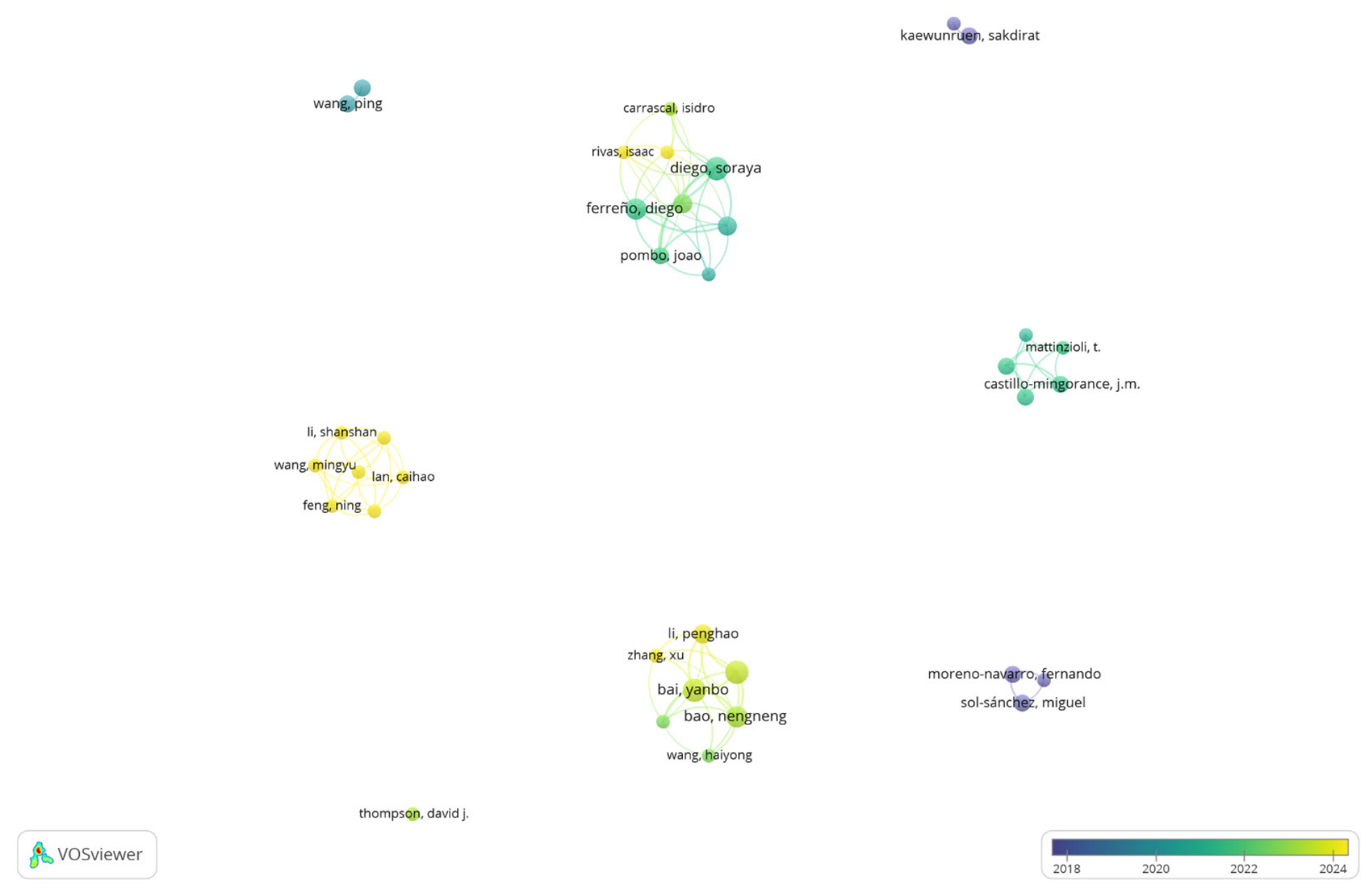
Figure 1. Co-authorship by authors with one document across the years.
Applsci 16 05323 g001
Figure 2. Co-occurrence of author keywords by network visualization.
Applsci 16 05323 g002
Figure 3. Co-occurrence of author keywords by density visualization.
Applsci 16 05323 g003
Figure 4. Percentage of Publications by Track Component, 2015–2024.
Applsci 16 05323 g004
Figure 5. Evolution of percentage in rail pad publications across the years.
Applsci 16 05323 g005
Figure 6. Development of studies on rail pads from 2015 to 2024.
Applsci 16 05323 g006
Figure 7. Inflection point in the research on rail pads.
Applsci 16 05323 g007
Figure 8. Impact attenuation according to the alternative method with variable pre-load minus impact attenuation according to the reference method, as a function of the pre-load value.
Applsci 16 05323 g008
Figure 9. Fitted stiffness and damping loss factor of the rail pad under various preloads and frequencies [51].
Applsci 16 05323 g009
Figure 10. Influence of the loading frequency in the Rail Pad behavior in the Dynamic Stiffness and Damping Ratio [55].
Applsci 16 05323 g010
Figure 11. Percentage of publications by rail pad material.
Applsci 16 05323 g011
Table 1. Assessment of intensity in the research of each component in each research field. The color scale indicates the level of presence in the literature: red represents components with the lowest number of publications found, while green represents those with the highest presence in existing research.
NMMandDMandANTFT
Rail3%−4%=−3%5%
Sleeper8%4%2%−3%−10%
Fastenings15%−1%−12%4%−8%
Rail Pads25%−5%−5%1%−16%
Ballast−5%−5%=1%10%
Table 2. Description of Rail Pad Nomenclature.
Rail Pad TypeDescriptionCountryCommercial Use (CU)/Laboratory Only (LO)
FC9metallic rail padNetherlandsCU
Orangehigh elasticity rail pad
FC1530As FC9 but with higher cork content
WJ-7High-speed railway lines, high elasticity rail padsChina
WJ-8Better than WJ-7, better performance against fatigue and vertical loads.
Vossloh 300Not so recommended in high-speed railway lines.
WJ2-AReplaced by WJ-7 and WJ-8.
NMTRPNovel mesh-type Rail PadLO
MTRPSOSMesh-type rail pad with second-order stiffness
W300W-type elastic fastening system (W-shaped clip)CU
MREMagnetorheological ElastomerLO
MTRPMesh-type rail pad
GRRPGrooved Rubber is widely used in rail transit vibration reduction because of its advantage of easy processing
PTRPPrismatic Thermoplastic Polyester Elastomer
MTHDRPMesh-type high-damping rail pad
MTRPDBMesh-type Rail Pad Double Base
ELTThermosetting End-of-life tire materialsSpain
PP/PEThermoplastic Polypropylene and Polyethylene
HytrelTPE (Thermoplastic Elastomer)CU
TPEmedium stiffness thermoplastic elastomer with oblong-shaped protrusions, 7 mm thickness and a hardness of 47 HS-D (PAE-2 rail pads)
EVAEthylene Vinyl Acetate is a thermoplastic elastomer, with a 6 mm thickness and a hardness of 46 HS-D (HM-SKL-1 fastening system)
HDPEThermoplastic High-Density Polyethylene
TPUThermoplastic PolyurethaneSouth Africa; Spain
PLAPolylactic Acid is a biodegradable, thermoplastic polymerSouth AfricaLO
PTEGThermoplastic Polyethylene Terephthalate modified with Glycol
EPDMEthylene Propylene Diene Monomer is a thermosetting elastomer, with a 7 mm thickness and a hardness of 21 HS-D (W14 HHR fastening system)Saudi Arabia
Table 3. Possible Applications [68,70,71,72,73,74,75].
Possible Problems or Defects in the Railway StructureRecommended SolutionsSystem Layout
To assess the structural behavior of the railway track in critical alignment zones, such as curved sections.RAIL-STRAIN-PADApplsci 16 05323 i001
In Ballasted Tracks to measure dynamic cyclic loading.InterActive PadApplsci 16 05323 i002
To measure defects on the wheel–rail contact as the wheel–rail impact.Rail Pad with PVDF Sensor
To measure defects on the wheel–rail contact as the wheel flat effect.3D-Printed Rail Pad
In Slab Tracks to measure dynamic cyclic loading.FBG optical sensors embedded in iron pad strainApplsci 16 05323 i003
To measure defects on the wheel–rail contact as the wheel–rail impact.
Strain Gauges embedded in iron pad strain
To measure defects on the wheel–rail contact as the wheel flat effect.
Table 4. Technology incorporation in Rail Pads.
Year of PublicationTechnologyEssential CharacteristicsAdaptable SensorsAdvantagesDegree of Development and ImplementationTechnology Readiness Level (TRL)
2011RAIL-STRAIN-PADElastic pad of polyurethane (150 × 160 × 7 mm) with multiple Fiber Bragg Grating (FBG) sensors embedded during manufacturing. Designed to measure large dynamic strains (>30,000 µε) under train passage.Fiber Bragg GratingHigh strain capacity; non-intrusive integration; immune to electromagnetic interference; enables direct in-pad measurement of vertical and horizontal loads.Early experimental field implementation. Tested in the lab and installed in the Alpine track (R = 290 m). Survived > 500,000 load cycles and field conditions. Served as a basis for further FBG-based rail pad studies.TRL 7—Field Testing
2018Rail Pad with PVDF SensorThin (≈0.7 mm) PVDF sensing film attached under pad surface in alternating strip layers; measures wheel–rail contact forces dynamically.PVDF sensorLightweight, flexible, low-cost, wide frequency bandwidth, linear output under dynamic loading. Non-intrusive installation avoids altering stiffness.Prototype validated at the lab and field level. High potential for industrial application due to simplicity and cost-effectiveness.TRL 6–7—Full-scale and Field Testing
2021InterActive PadOptimized pad design with piezoelectric sensors half-embedded at the extremities; integrated calibration and predictive modeling.Piezoelectric, Accelerometers, PiezoresistivesEnhanced durability, improved signal clarity, allows real-time load estimation and preventive maintenance algorithms.Cutting-edge research. Demonstrated high reliability and calibration precision; groundwork for future implementation in real railway networks.TRL 5–6—Full-scale testing
20223D-Printed Rail PadAccelerometers and strain gauges integrated into 3D-printed pads (PLA, PETG, TPU) for monitoring wheel defects and load distribution.Strain Gauges, AccelerometersCustomizable geometry, low fabrication cost, additive manufacturing flexibility, and acceptable measurement accuracy (error < 6%).Emerging technology. Early-stage validation in lab and limited field tests; promising for low-cost and modular SHM systems.TRL 4–5—Laboratory and Full-scale testing
2024FBG optical sensors embedded in iron pad strainFiber Bragg Grating sensors embedded or bonded to pads (polyurethane or iron). Measure strain and deformation due to wheel or fastener forces.Fiber Bragg Grating High sensitivity and accuracy; immune to electromagnetic interference; suitable for long-term SHM; capable of measuring large strains (>30,000 µε).Research for early field implementation. Proven in lab and limited field tests; mainly used in specialized monitoring; cost and integration complexity still limit large-scale deployment.TRL 5–6—Full-scale testing
2024Strain Gauges embedded in iron pad strainStrain Gauges embedded in iron pad strain to effectively monitor the wheel–rail impact.Strain GaugesHigh linearity (R2 > 0.99) and stable strain–force response; enables measurement in previously invalid test sections; non-intrusive installation on the iron plate preserves fastener stiffness; allows estimation of quasi-static impact force (P2) from rail-seat force; strong agreement with FE simulations (R2 ≈ 0.9–0.97).Prototype validated at the lab.
It has been successfully calibrated under static loading, tested through full wheel-drop experiments, and verified numerically, although it has not yet been deployed on operational railway lines. Thus, its maturity corresponds to an intermediate technological readiness level, approximately TRL 4–5.
TRL 4–5—Laboratory and Full-scale testing
Disclaimer/Publisher’s Note: The statements, opinions and data contained in all publications are solely those of the individual author(s) and contributor(s) and not of MDPI and/or the editor(s). MDPI and/or the editor(s) disclaim responsibility for any injury to people or property resulting from any ideas, methods, instructions or products referred to in the content.