Review

Benefits of Coupling Electric Vehicle Charging with Photovoltaic Electricity Production: A Global Overview


École Polytechnique Fédérale de Lausanne (EPFL), Photovoltaics and Thin-Film Electronics Laboratory (PV-Lab), Institute of Electrical and Micro Engineering (IEM), Rue de la Maladière 71b, CH-2002 Neuchatel, Switzerland
*
Authors to whom correspondence should be addressed.
Appl. Sci. 2026, 16(7), 3132; https://doi.org/10.3390/app16073132
Submission received: 12 February 2026 / Revised: 17 March 2026 / Accepted: 18 March 2026 / Published: 24 March 2026

Featured Application

This review aims to inform about the benefits and challenges of co-developing electric vehicle charging and photovoltaic generation, thereby supporting the design of projects, infrastructure development strategies and policy incentives that enhance economic viability, carbon reduction, and energy autonomy in diverse settings.

Abstract

The global energy transition aims to decarbonise both transportation and electricity generation to mitigate climate change and reduce reliance on fossil fuels. Electrification of private transportation, through the adoption of electric vehicles, presents a promising pathway to achieving the first objective. Concurrently, the rapid advancement and cost reduction of photovoltaic technology have positioned solar energy as a viable solution for renewable electricity production. This review synthesises recent modelling and empirical studies examining the synergies and challenges of coupling EV charging with photovoltaic electricity production. It explores the multifaceted benefits of this integration across various contexts: residential, workplace, highways, and public parking infrastructures. Additionally, the review delves into practical considerations essential for real-world implementation, such as political incentives, charging stations, and tariff structures. By offering an overview of the cost effectiveness and implementation challenges across the four corners of the world, in a diversity of climate, solar irradiance and mobility behaviours, the review bridges the gap identified in the previous reviews on the potential of coupling electric vehicle charging with photovoltaic electricity production.

1. Introduction

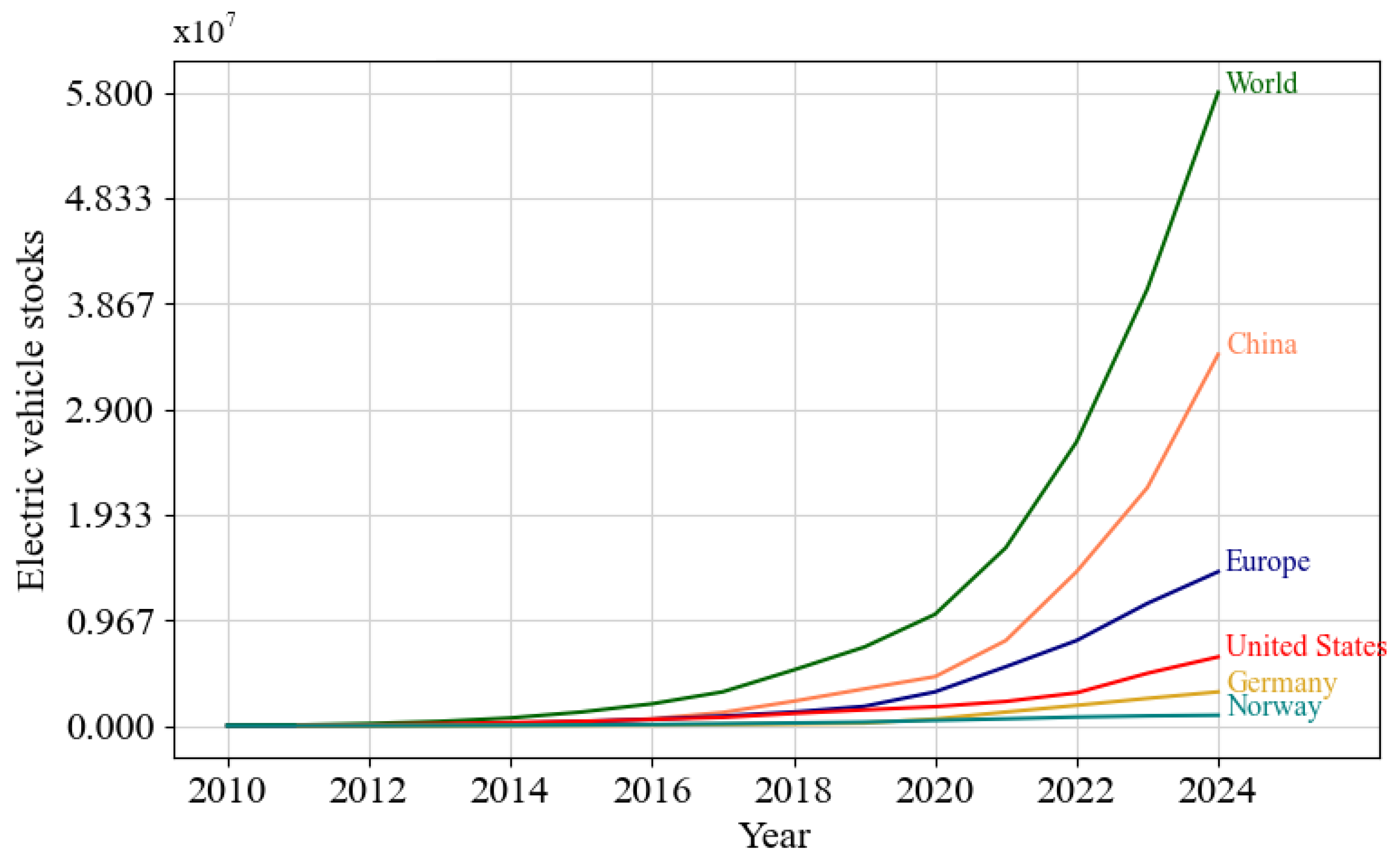
The need to decarbonise both transport and energy systems is a central challenge of the 21st century. Transport accounts for approximately one-quarter of global CO2 emissions, while the energy sector remains the largest source of greenhouse gases [1]. Electrification of transport, through the adoption of EVs, is widely recognised as a key strategy for reducing emissions in the mobility sector. Global EV sales, shown in Figure 1, have accelerated, driven by technological advancements, supportive policies, and growing consumer awareness of environmental issues. The global stocks of EVs has almost doubled between 2022 and 2024, primarily driven by the Chinese uptake. However, the widespread electrification of cars will increase electricity demand, necessitating a corresponding expansion of low-carbon electricity generation to avoid simply shifting emissions from tailpipes to power plants.
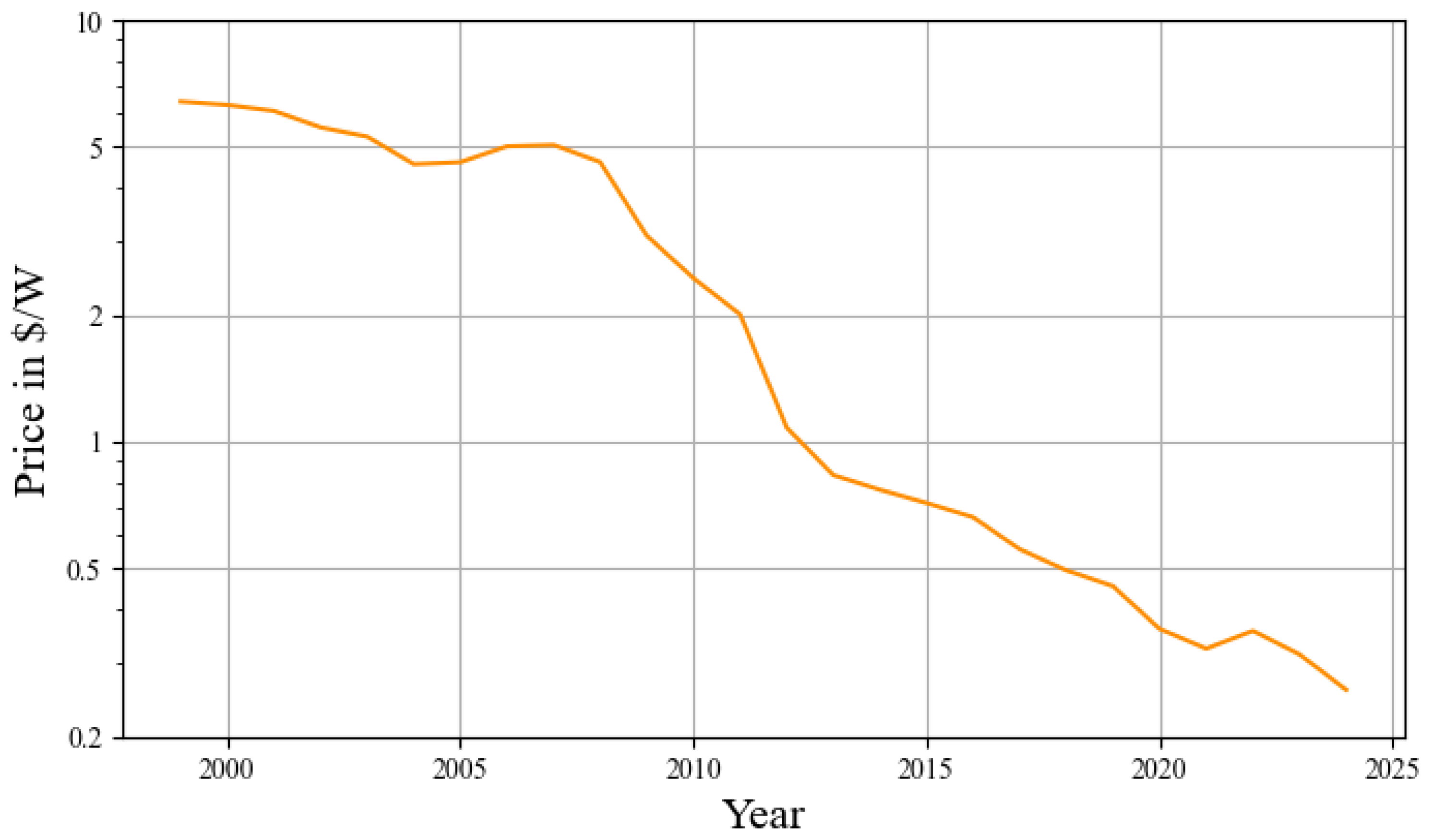
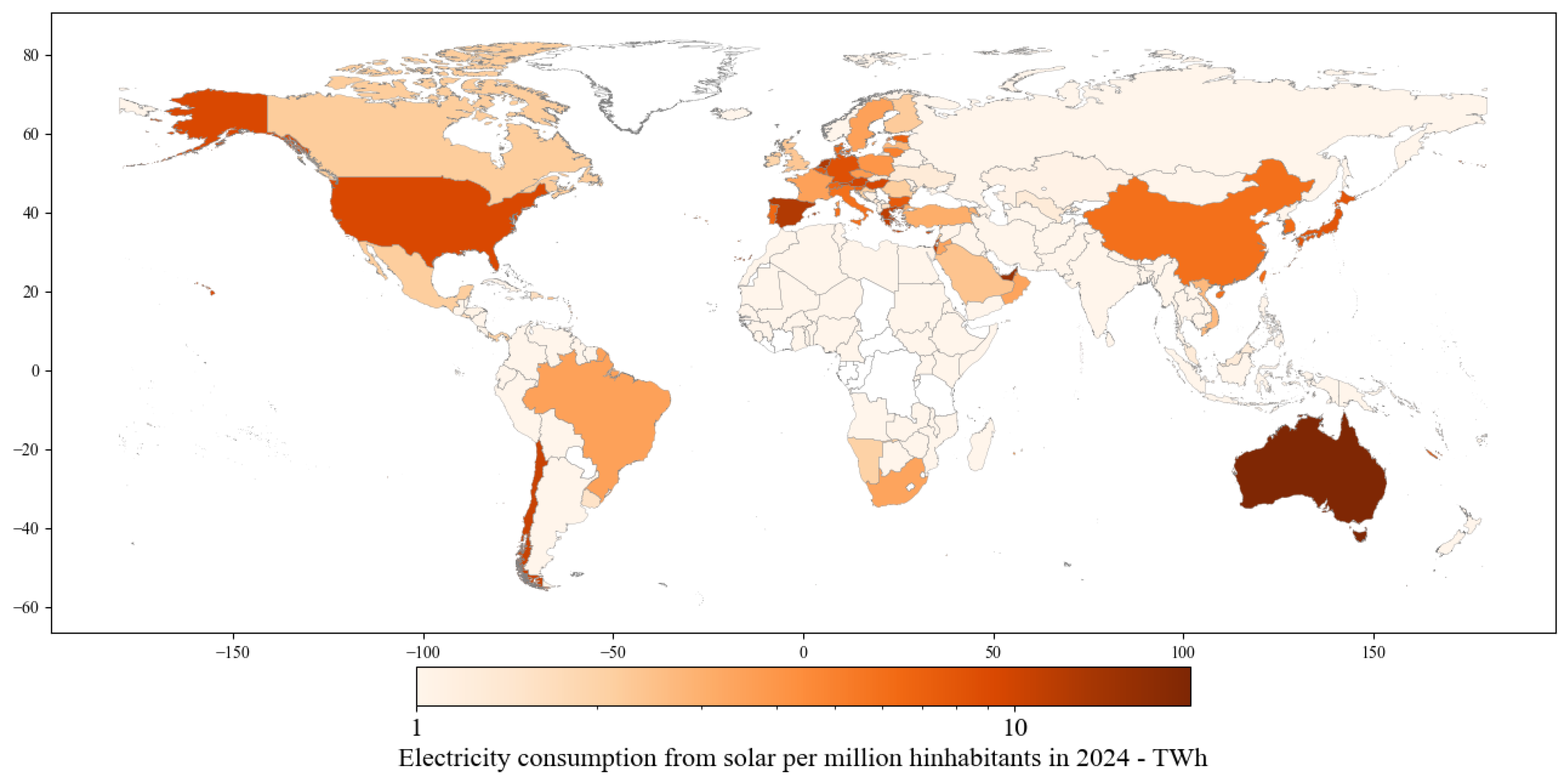
Among renewable energy technologies, PV solar power stands out for its scalability, rapid deployment potential, and cost reductions of an order of magnitude over the past two decades, as shown in Figure 2. PV installations also enable decentralised or even off-grid energy source, providing energy in regions with unreliable grid or poor energy access. Moreover, countries adopting EVs most rapidly, such as China, the USA and European countries, are also investing into PV power plants, and shows a higher solar energy consumption per habitant, as presented in Figure 3.
The parallel integration of EVs with PV production presents attractive synergies. EVs can directly use cheap, carbon-free electricity generated by PV systems, thereby reducing both operational costs and emissions. Furthermore, the coupling of EVs and PV can help absorb production peaks, mitigating the intermittency challenges inherent in solar power. Emerging vehicle-to-everything (V2X) technologies enable EVs to serve as mobile energy storage units, providing grid services and enhancing the overall stability and efficiency of renewable energy systems.
To the best of our knowledge, only three comprehensive review studies in the field of EV-PV synergies have been published since 2018. Previous reviews have explored the synergies between EV and PV. Hoarau et al., in 2018, emphasised the necessity of more robust economic assessments, deeper understanding of user participation behaviour, and clearer policy frameworks to fully realise the potential of EV-PV coupling [5]. Assad et al. [6], in 2020, further identified critical gaps in uncertainty analysis, PV-based EV charging stations, and dynamic pricing strategies, areas which this review addresses. Fachrizal et al., in 2020, highlighted the need for research on the practical feasibility of smart charging to maximise EV-PV synergies across diverse geographical locations, characterised by varying climates, solar irradiance, and mobility patterns [7]. Accordingly, this review synthesises studies from a wide range of regions to provide a comprehensive assessment of the coupling potential. Since the publication of the aforementioned studies, technology improvements and price reduction have been achieved, which is why this review intends to evaluate progress and update the state of the art. While the performance of different algorithmic approaches for EV-PV coupling have received considerable attention in recent years, they have been reviewed recently and fall outside the scope of the present study.
This literature review explores the economic, technical and environmental benefits of coupling EVs and PV production. It aims to synthesise global research on diverse EV-PV system configurations, ranging from off-grid to grid-connected setups, with and without local storage, across residential, workplace, public parking, and highway contexts. The contribution of the paper is to assess the opportunities of EV-PV coupling in term of flexibility, reduction in storage, and cost reduction, while also identifying key challenges such as geographic variations of the PV potential, time compatibility between EV charging and PV production periods and policy adaptations.
The review is organised in five sections. Section 2 presents the research criteria and methods. Section 3 focuses on the potential of using PV electricity as a source for EV charging at large scale, such as cities, regions or countries, on residential systems at building or neighbourhood scale, at work or universities and on pure charging systems on parking or highways. Section 4 intends to synthesise how EVs can be beneficial for PV electricity integration, through flexibility, V2X, reduction in storage requirement and off-grid systems. Section 5 gives examples of charging costs for various configurations of EV-PV systems in diverse geographical areas. Finally, Section 6 identifies the limitations to the coupling potential of EVs and PV and levers to mitigate them. This review concludes with Section 7, synthesising the outcomes of the previous sections.

2. Method

This review employed the Scopus database for literature search [8]. The search was conducted using the keywords “electric vehicles” and “photovoltaic” to identify relevant studies. The selection was refined to include only English-language papers. The focus was deliberately placed on studies that examined the potential benefits, such as economic viability, CO2 emission reductions, and energy self-sufficiency, as well as the practical challenges, including grid integration, regional variability in solar irradiance, and the alignment of EV charging with PV production. Papers that centred solely on algorithmic optimisation of energy management systems without addressing real-world applications or broader systemic implications were excluded. Moreover, studies on trucks, taxis, buses, or other hardware were considered out of scope, unless they were the only studies available in a specific region. If several papers focused on the same system, only the most recent results were taken into account. Only studies with clearly quantified benefits were selected. Special attention was taken to give a global overview, capturing insights from diverse geographical contexts, including urban and rural settings, developed and developing regions, and varying climatic conditions. The exact query used is available in Appendix A.
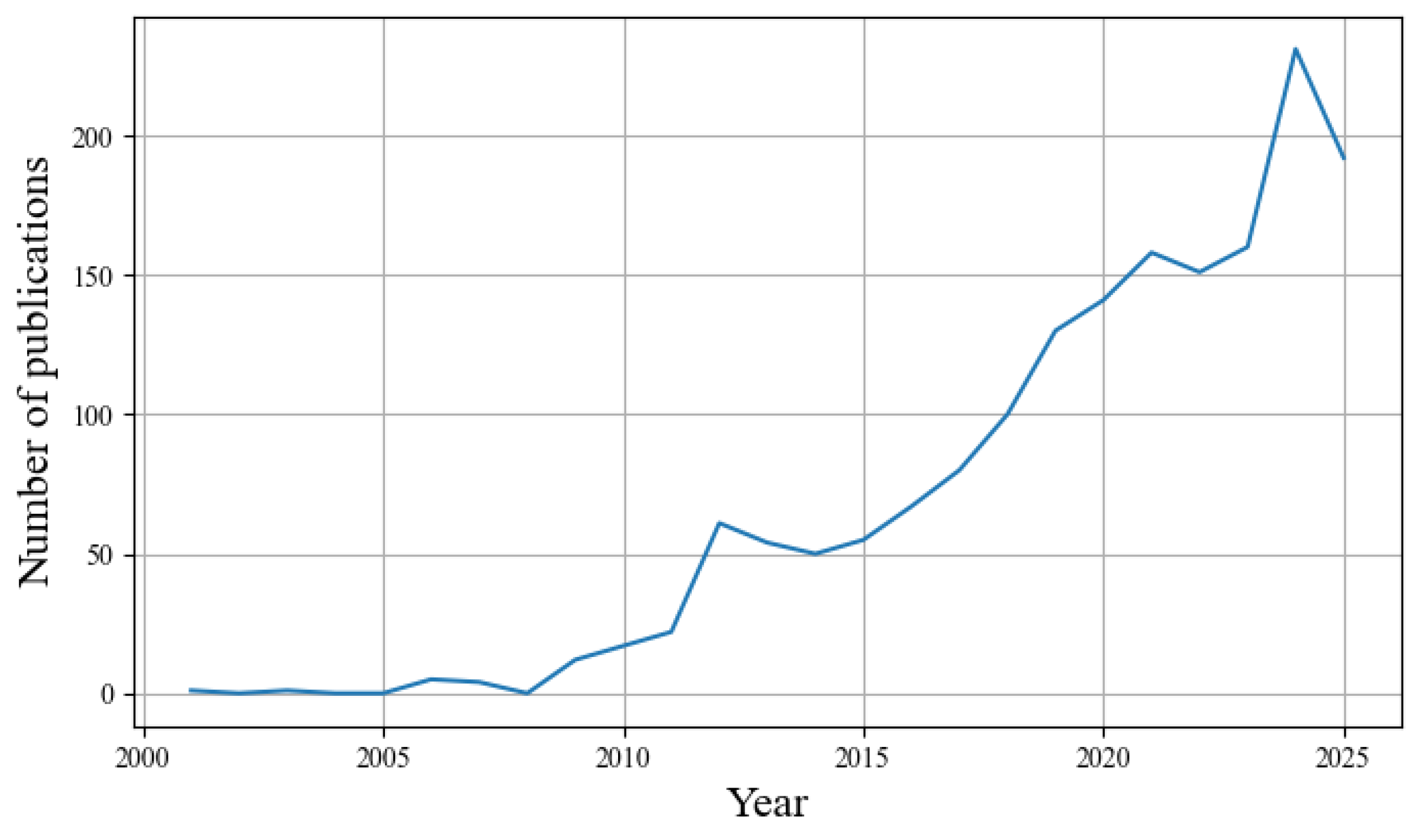
Figure 4 shows the evolution in number of documents published from 2000 to 2025. The graph shows a clear upward trend in the number of documents published over the years, with a significant increase beginning around 2012 and accelerating between 2020 and 2024. Considering the rapid technological advancements in EVs and evolving policy landscapes, only articles and conference papers published between 2020 and 2025 are studied in the rest of this review.
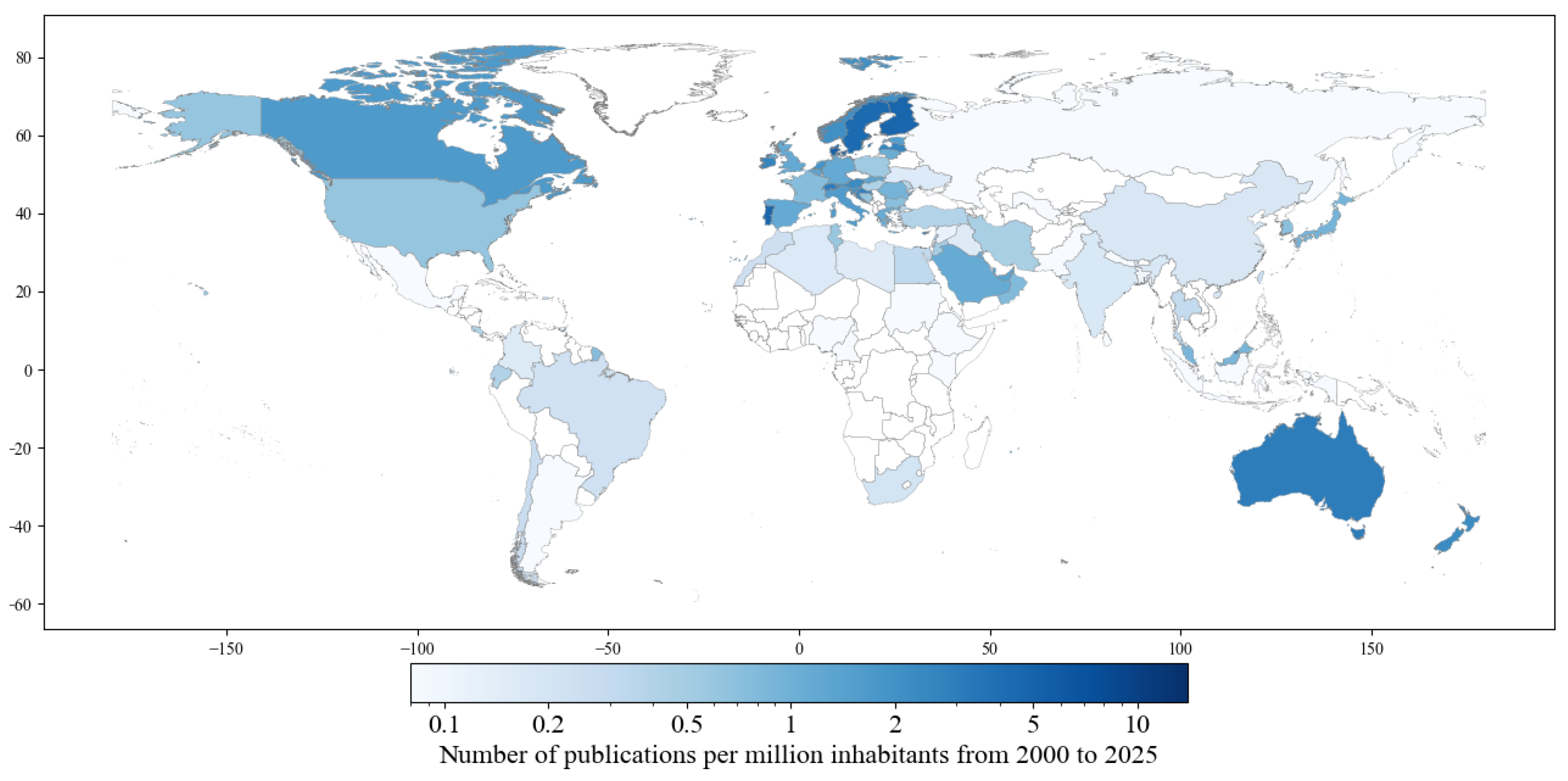
Figure 5 shows the number of publication resulting from the query for the period 2000–2025 by country. China, India and the USA are the countries where the highest numbers of articles were published. China and the USA are also the countries with the highest solar production in 2024 (as shown in Figure 3) and they both showed a rapid increase in the sale of EVs over the last years, especially in China, as shown in Figure 1. However, the higher share of publication per habitant is observed in Europe, North America, Japan, Australia and New Zealand. The aforementioned countries are also the most responsible for greenhouse gas emissions historically, which highlights their interest in decarbonation.

3. Using PV for EV Charging

3.1. Large-Scale Studies

Several studies have shown the feasibility of using rooftop or stand-alone PV systems to produce electricity for partially or totally covering EV charging needs. This section provides a worldwide analysis of the large-scale studies conducted about EV and PV coupling. In France, Deroubaix et al. [9] noted that beyond 50–60% roof coverage in Paris (city) or 20–30% in Île-de-France (suburban area of Paris), PV production regularly surpasses demand. Expanding the geographical scope, Arowolo and Perrez [10] analysed the coupling of EVs and rooftop PV in Paris, Lyon, and Marseille, France, revealing that 50% roof coverage with PV and 50% fleet electrification could meet up to 42% of total electricity demand while reducing CO2 emissions from electricity and vehicle use by up to 48%. A study by Bambara et al. [11] in Quebec examined the potential of newly built and retrofitted houses with PV systems and improved energy efficiency. The findings suggested that approximately 70% of the total electricity generated from house upgrades, amounting to 14.6 and 23.4 TWh per year, could be allocated to electrifying mobility. This capacity is sufficient to cover 83% and 100% of personal vehicles to EVs for rebuilt and retrofitted houses, respectively.
Jeannin et al. [12] studied Aalborg (Denmark), Bern (Switzerland), and Palermo (Italy), finding that covering just 10% of building footprints with PV could meet 53% to 61% of annual EV charging demand, while also cutting CO2 emissions from private cars by 17% to 28% by 2035 relative to conventional fuel-based fleets. In Johannesburg, South Africa, Giliomee et al. [13] showed that PV systems could reduce reliance of the grid and CO2 emissions of 58% for minibus taxi charging. On innovative PV deployment, Yu et al. [14] examined the Xiong’an New Area, where facade PV integration increased power generation by up to 67.60% compared to rooftop PV alone. Building-integrated PV-EV systems further reduced CO2 emissions by 41.91% in the short term, while also lowering electricity costs. Overall, the aforementioned studies show that a medium share of rooftop coverage (10–50%) can cover about half of the EV charging demand, and even the whole demand by adding storage. This need for storage also highlights the challenge of having the EV charging demand matching the PV production time-frame.

3.2. Time Compatibility in Residential Contexts

The most challenging configuration regarding the use of PV to recharge EVs is residential systems. When the EV is used to commute to work, it is not available at home during the day. In Switzerland, research by Martin et al. [15] analysed a dataset of plug-in and plug-out events from 78 Swiss EV owners, focusing on PV time compatibility. The study found that, without altering mobility patterns or plug-in behaviour, an average coverage of 56% of EV charging demand could be achieved through rooftop PV generation. Furthermore, the upper boundary of coverage, when incorporating additional home battery storage, reached an average of 90% and 99% respectively, all while maintaining unrestricted mobility for users. Hajhashemi et al. [16] explored the potential for solar-powered EV charging in Australian households with 100% PV access in both owned and rented detached or semi-detached houses, a 10 kWp PV capacity, and level 2 chargers. The study revealed that, on an average weekday, 32% of vehicle-owning households could fully meet their charging needs through solar energy, with an additional 21% of households not using their vehicles at all on some days. This figure increased to 48% on weekends. However, around 20% of households could not benefit from solar charging without greater flexibility in working hours. Notably, almost 40% of vehicle-owning households possessed more than one car with varying utilisation rates, indicating an opportunity to implement vehicle rotation strategies to maximise solar energy utilisation and reduce the need for evening charging outside of sunlight hours.
This unequal effect depending on charging behaviour is also visible on case-specific studies. Albaba et al. [17] studied a real-world case of a solar-powered EV charging system installed at a residential property in Dublin, Ireland. The system includes 6.96 kWp solar panels, a 5.3 kWh battery, and a smart EV charger. The results indicate that 67% of the household’s solar energy was self-consumed, leading to a 50% reduction in electricity costs (with even positive credit in summer) and 2 tonnes of CO2 emissions avoided per year. In contrast, a research conducted in Poland by Sendek Matysiak et al. [18] indicated that PV generation may be insufficient to meet the charging demands of EVs at home, even when the entirety of PV production is dedicated to EV charging. If the EV is not available at home, a solution is to transmit surplus energy from rooftop PV systems to nearby charging stations. In Bilbao, Spain, research by Javanmardi et al. [19] demonstrated that this can facilitate the charging of 16% more EVs, while enhancing the utilisation of locally generated renewable energy.

3.3. University Systems

Universities are a good environment for the implementation of PV-powered charging stations, as they have a large number of potential users, while also serving as research material and raising awareness on EV and PV. Several implementation of EV-PV systems at universities in South America demonstrated their technical feasibility and economic competitiveness, such as at Universidad Tecnológica de Pereira in Colombia [20]. At Federal University of Pará, Brazil [21,22], the PV system supplied the majority of the energy demand, 70% going to the laboratory building and 30% for the EV charging needs. At University of Cuenca, Ecuador [23], 98.2% of the energy required for charging was directly sourced from on-site PV generation. At Universidad Nacional de Rafaela in Argentina [24], the most economically viable configuration identified was a 100% renewable sourced EV charging station (CS). Belaid et al. [25] examined a university parking area in Morocco with 20 charging spaces, revealing that between 42% and 66% of the charging demand could be met by PV generation, depending on the power capacity of the selected chargers. This studies underscore the potential for PV-powered EV charging infrastructure to significantly offset grid electricity consumption in institutional settings.

3.4. Workplace PV-Powered EVCS

Workplace appears to be the best-suited location for installing PV-based charging systems, as EV users are likely to plug their vehicle during daytime periods. This strategy capitalises on the availability of solar energy during working hours, thereby maximising the use of renewable resources. Recent studies have highlighted the potential of integrating PV-powered EV charging infrastructures at workplaces to enhance sustainability of EV charging. Wang et al. [26] compared residential and workplace charging behaviours among Swiss commuters, revealing that workplace charging can substantially reduce the need for electricity imports and storage while promoting the integration of PV electricity. The same result was found by Bastida-Molina et al. [27] in the Canary Islands, and Jeannin et al. [28] in Copenhagen, who showed that charging EVs at work significantly increases the proportion of EV demand met by PV generation.
Dumoulin et al. [29] assessed the self-sufficiency potential of PV systems in Ethiopia, revealing that the average daily self-sufficiency exceeded 80% at workplaces for PV capacities of 1.5 kW per EV or higher. In Beijing, China, Fu et al. [30] implemented a workplace solar charging system to offer intermittent but free charging services for employees. The charging energy was sourced exclusively from rooftop PV installations without energy storage, successfully covering 96.1% of employees’ commuting travel demand. The study observed changes in user behaviour, including increased plug-in durations and a greater willingness among employees to arrive at and depart from work with a lower state of charge, reflecting adaptability in charging habits and reduction of range anxiety.

3.5. Charging Stations on Highways

Highways concentrate high charging demand but also have the advantage of having larger spaces for PV installation. Piras et al. [31] explored the utilisation of PV energy generated within highway infrastructures, including service areas, toll stations, car parks, and side sections, for EV charging. A case study centred on the A3 Napoli–Pompei–Salerno highway demonstrated that PV systems installed in these highway areas could satisfy a substantial portion of the energy requirements for electric mobility. Zhang et al. [32] investigated the integration of PV noise barriers with storage and charging stations in Guangzhou, China. The findings indicated that such systems could consume up to 58% of the generated PV energy for EV charging. Li et al. [33] focused on a highway rest area equipped with a 200 kWp PV system and 300 kWh of storage capacity. The study demonstrated that this configuration effectively minimised operating costs while simultaneously improving user satisfaction.
In Michigan, USA, Deng et al. [34] assessed the feasibility of integrating batteries and PV systems to support fast-charging infrastructures. The study revealed that such integration could reduce peak demand by up to 66% and decrease the LCOE by as much as 50%. However, the analysis also noted that the use of batteries, while economically advantageous, could potentially lead to an increase in carbon emissions, highlighting a trade-off between cost savings and environmental impact. PV systems can also be completed by other sources of energy. Nguyen et al. [35] demonstrated the feasibility of fully electrifying the highway network of Taiwan using a combination of PV systems, wind energy, and battery storage, demonstrating the potential to meet the energy demands of highway infrastructure. Kotarela et al. [36] conducted a techno-economic analysis of a fast-charging station located on the island of Zakynthos, Greece. The study demonstrated that the investment in the fast-charging infrastructure achieves a payback period within the first six years of operation, underscoring its economic viability.

3.6. Public Charging Stations

Almasri et al. [37] reviewed the literature on renewable-powered CS, showing the potential of PV-based systems for public CS. They highlighted the need of a PV production forecast to optimise the sizing and follow PV production schedules. The main challenge of PV-powered CS in cities is to find suitable space to install the required PV panel area. A first solution is to use surplus energy from public buildings. Pinto et al. [38] investigated the integration of PV systems and batteries in a public building in Brazil. The study determined that approximately 85% of the total energy required to charge the battery energy storage system would be derived from surplus PV energy, with the remaining 15% sourced from the utility grid. Alwesabi et al. [39] proposed covering gas stations with PV panels and integrating charging stations across New York State, USA. The analysis demonstrated that all gas stations in the state could collectively generate 522 GWh/year of solar energy, with payback periods ranging between 2.7 and 6.9 years. This transition would enable the avoidance of approximately 373,527 tons/year of carbon dioxide emissions. In Wuhan, China, Chen et al. [40] studied the potential of retrofitting traditional EVCS into PV-battery CS to improve green and low-carbon energy supply systems. The results show that the central urban districts have high retrofitting potential, particularly for the CS near hotels.
Sayed et al. [41] showed the feasibility of a PV–wind hybrid charging station situated in the South Bronx, New York, designed to meet a 100 kW demand. Meanwhile, in Iraqi cities, Alhayali et al. [42] optimised PV and battery systems to complement grid-connected charging stations in Mosul, Baghdad, and Basrah, achieving renewable energy fractions of 53%, 52.7%, and 52.7%, respectively. In Wuhan, Huang et al. [43] showed the feasibility of achieving 100% PV energy utilisation in EV charging stations.
In less densely populated area, like Qeshm Island, Iran, Naseri et al. [44] proved that 18% of the area is suitable for constructing solar-based EV-charged stations. In 2040, 74.96% of the required charging could be acquired through solar energy. A similar result was obtained in Khuzestan province [45] where PV can supply 90.55% of the required energy for charging stations that can be covered with solar energy. In practice, 70% of the cities in the region possess such potential. Da Paixão et al. [46] presented a case study in Osorio, South Brazil, featuring a carport equipped with a 9 kWp PV system, a 24 kW/30 kVA wind turbine, and a 100 kW/215 kWh battery energy storage system. This integrated renewable energy infrastructure was facilitating up to 175 recharges of 40 kWh each per month. Muyeed et al. [47] studied grid-tied PV-powered CS in five locations in Bengladesh, showing that the PV production could cover around 90% of the demand in the five locations and produce up to 171% of the demand, benefiting from the reinjection of electricity into the grid. The proposed systems could reduce charging costs by 30% compared to grid-only solutions.

3.7. Key Findings

This section showed a good potential of using PV electricity to cover a large share of EV charging needs at the city or country scale. In residential contests, the challenge resides in time complementarity of EV charging with PV production time-frames. For the same reason, universities and workplaces seems to be the optimal location for charging EV from PV. Highways present enough area available for PV to cover part of the charging needs of EVs. At public charging stations, PV electricity can cover from 50% to 90% of the charging demand and can benefit from the reinjection of the production surplus to the electric grid. Yet, EVs can also offer benefits for PV production by absorbing overproduction and providing storage through V2X.

4. How EVs Benefit PV

4.1. Flexibility and Grid Impacts

EV charging can offer flexibility in the electricity demand that can be beneficial to the PV production and enable to use more PV electricity. A review by Damianakis et al. [48] demonstrated that the integrated deployment of PV systems and EVs effectively mitigates grid impacts, reducing the necessity for additional infrastructure solutions. In Kyushu, Japan, Kanai et al. [49] found that renewable energy curtailment during daytime could be nearly eliminated when the EV penetration rate exceeds 20%. Steinbach and Blaschke [50] demonstrated that integrating PV, EV and home battery systems in Germany could yield substantial savings in grid reinforcement costs, up to €3.2 billion nationwide, with reductions ranging from 39% in rural areas to 51% in urban settings. In Switzerland, Parajeles Herrera et al. [51] highlighted that unidirectional EV charging flexibility during idle periods could boost Alpine PV integration by up to 500 GWh, particularly in winter, while reducing electricity costs by up to 6%.
In residential settings, Van der Kam et al. [52] examined PV self-sufficiency in households equipped with EVs, heat pumps, and home storage systems. The findings indicated that while EVs introduce a substantial load to household energy demand, smart charging strategies effectively mitigate this impact. By optimising charging schedules, smart charging significantly increases PV self-consumption. A study conducted by [53] in Italy examined the integration of EVs within a building equipped with a 20 kW PV system serving ten apartments and four EVs. The findings revealed that the EVs absorbed over 27% of the annual electrical overproduction, fulfilling 9.7% of the users’ energy demands. This integration effectively mitigated curtailment issues and significantly boosted renewable energy self-consumption within the residential complex. In Sweden, Fachrizal et al. [54] conducted an assessment of the combined hosting capacity of PV systems and EVs in residential low-voltage grids. The findings indicated that the implementation of smart charging strategies and PV curtailment substantially enhances the hosting capacity for both EVs and PV systems, with a positive correlation observed between the two technologies. Wanninayaka Mudiyanselage et al. [55] observed the same synergistic relationship between EV hosting capacity and PV penetration within a residential low-voltage network in Australia: an increase in EV hosting capacity enhances PV penetration, and vice versa.

4.2. Benefits of V2X

Bidirectional energy exchanges in V2X systems can take several forms, among which vehicle-to-home (V2H), where EV batteries can be discharged into homes, and vehicle-to-grid (V2G), where they are discharged into the electric grid. The commercialisation of V2X systems, more precisely, V2H systems, started in Japan in 2012, following the Fukushima disaster [56]. Since then, the integration of PV systems with EVs has emerged as a strategic approach to enhance energy resilience and decarbonisation efforts. In the Tokyo metropolitan area, Japan, Nadimi et al. [57] demonstrated that V2X technology significantly enhances solar self-consumption, increasing it from 6% to 26% by improving the temporal alignment between solar generation and EV charging demand. Without V2X, EV charging remains poorly synchronised with solar availability. Kobashi et al. [58] demonstrated that, in Kyoto, residential districts benefit significantly from PV+EV integration, achieving nearly double the cost savings in 2030 compared to PV-only systems. At national scale, Trang et al. [59] conducted a techno-economic assessment of rooftop PV integrated with EVs across all 1741 municipalities in Japan. The results revealed a 87% reduction in carbon emissions and a 33% cost reduction when combining PV with EVs. Chang et al. [60] analysed the decarbonisation potential of rooftop PV combined with EVs in five Korean cases (four cities and one province) from 2019 to 2030, revealing CO2 emission reductions of up to 86% and energy cost savings of up to 51%. In Bangkok, Thailand, Jittayasotorn et al. [61] projected that by 2030, a PV+EV system could achieve a 73% reduction in CO2 emissions from electricity and vehicle usage, while supplying 71% of the city’s electricity demand. This integrated system is also expected to reduce energy costs by 59%, based on estimated technology costs for 2030. Similarly, Dewi et al. [62] demonstrated that in Jakarta, Indonesia, combining rooftop PV systems with EVs as batteries could meet 75 to 76% of the city’s electricity demand with affordable, CO2-free electricity. This integration offers potential cost savings of 33–34% and a 76–77% reduction in CO2 emissions from both electricity generation and driving, significantly improving urban air quality.
Liu et al. [63] demonstrated in 2022 that, in Shenzhen, coupling EVs with PV systems at the city level could significantly improve PV self-consumption, from 78% in a PV-only system to 95% in a PV+EV configuration by 2030, while reducing citywide CO2 emissions by 42% (across electricity and mobility sectors) and generating net cost savings of 21%. Addressing grid impacts, Hao et al. [64] noted that while 30% fleet electrification could increase regional grid load by 20%, this could be mitigated to 15% through V2G technology. Bouaziz et al. [65] investigated the integration of a PV and battery system in a residential and commercial building in Tunisia. The findings demonstrated that V2G technology achieved a 79% reduction in grid adaptation. The real-world feasibility and cost-effectiveness of V2G systems have been demonstrated in France by Canaan et al. [66]. In Germany, V2X in energy communities has been shown to significantly contribute to the electricity autarky of residential quarters, thereby reducing reliance on grid electricity [67].
At the country level, Boström et al. [68] demonstrated the theoretical feasibility of a nationwide energy system in Spain, relying solely on PV production, using EVs for V2G services, with an area of 73 m2 of PV per inhabitant. Milstein et al. [69] showed that implementing V2G technology could render a 100% renewable energy system more economically attractive than the current PV and gas-based system in Israel. The disadvantage of V2X is to accelerate batteries ageing. The degradation process depends on the climate and management of the bidirectional charging. For now, practical studies remain limited and precise quantification of the capacity reduction from V2X is difficult due to a variety of battery technologies and their rapid evolution [70].

4.3. Reduction in Storage Requirements

In a study focused on residential energy systems, Syla et al. [71] demonstrated that V2G technology can reduce storage requirements by up to 37% in Switzerland. In Germany, Gnann et al. [72] concluded that the addition of battery storage systems is unlikely to be cost-effective in households with EVs, given the existing benefits of smart energy management. Azarbakhsh et al. [73] confirmed that the implementation of V2H functionality in grid-connected households with EVs can entirely eliminate the necessity for battery energy storage systems, while simultaneously reducing electricity costs by approximately 5% compared to households equipped with PV systems, BES, and EVs without V2H capability. Meanwhile, in Poland’s Lublin region, Malek et al. [74] found that wind and PV could achieve self-balance within a local EV charging system using minimal energy storage. At country scale, Parajeles Herrera et al. [51] demonstrated strong complementarity of PV-V2X with pumped hydro storage. The complementarity with wind has also been shown to be interesting [75,76,77].
In work context, Liu et al. [78] studied an office building in China that provided free, intermittent solar charging to 80 private EVs without the use of stationary batteries. The parking area was fully equipped with PV panels, resulting in a capacity of 5 kWp per parking space and chargers with a power output of 10 kW. The economic analysis revealed a payback period of 4.5 years, compared to 9.5 years if storage had been included.
Borchers et al. [67] focused on energy communities in Germany, highlighting the potential of vehicle-to-quarter systems, which diminish the need for home battery storage by assuming their functional role within the energy community. In this context, the electricity of the EV battery is shared with neighbours. In an energy community on a university campus in Palermo, Italy, Amico et al. [79] demonstrated that V2G integration reduces the requirement for local battery storage and lowers investment costs. This is particularly interesting in countries with low CO2 energy systems, such as Sweden, the lifecycle CO2 footprint of PV combined with storage can exceed that of grid electricity, primarily due to the environmental impact of battery production [80]. The same observation was concluded in France by Deroubaix et al. [9].

4.4. Off-Grid Systems and Energy Communities

PV+EV systems offer a low carbon and scalable solution for isolated areas and unreliable grid. A review by Irfan [81] emphasised the urgency of transitioning to renewable energy, EVs, and advanced energy management systems in energy communities in Australia to lower their carbon footprint. Indeed, the adoption of V2H technology has been shown to reduce diesel use by over 30%, while increasing the renewable energy share to 96.4% and achieving a 91.2% reduction in carbon monoxide emissions compared to the diesel baseline [82]. In the same principle, Nadimuthu et al. [83] demonstrated the feasibility of integrating V2G technology with renewable energy micro-grids for rural electrification in India. In Malaysia, Ismail et al. [84] found a stand-alone hybrid system comprising PV, battery, and hydrogen storage for EV charging in residential applications to be economically viable, with a payback period of 5.4 years. Moreover, the intra-community sharing of energy among members amplifies the economic benefits of combined EV and PV adoption, as shown within a community in Macedonia by Velkovski et al. [85].

4.5. Key Findings

This section highlighted the role of EVs to enable higher PV electricity penetration while limiting grid impacts and need for reinforcement. Particularly, smart charging and V2X can limit the impact of both a high share of EVs and a large PV capacity, at regional and household scale. EVs and PV together increase the energy autonomy of quarters and regions with limited static storage requirements. EV-PV systems are also appropriate for off-grid systems. Moreover, EV-PV systems are cost-saving and offer CO2 emissions cuts by 42% to 91%.

5. Levelised Cost of Electricity in Various Contexts

EVs are already cost-effective compared to ICEVs in many countries. Collett et al. [86] concluded that the operation of EVs is cheaper in all Sub-Saharan African countries except Liberia, compared to ICEVs. The difference is even higher when fossil fuels subsidies are removed. Moreover, PV-based charging can lower the charging costs. Gonela et al. [87] compared the total cost of energy and transportation for single family households in Texas. They showed that less expensive option for electricity and mobility together is owning an EV and a solar installation compared to owning an ICEVs and using only grid electricity. In Orlando, Florida, in 2024, research by Haggi and Fenton [88] revealed that using rooftop solar energy to charge an EV can yield monthly savings of up to $100 for residents compared to the cost of gasoline. The study noted that existing homes equipped with a 9.5 kW PV system and a 42.2 kWh battery are projected to achieve positive financial returns by 2029.
In an urban context, Arowolo and Perrez [10] showed that in Paris, Lyon, and Marseille, France, PV-powered charging achieves an LCOE of 0.04€/kWh, cheaper than the grid tariff (GT). Dorre et al. [89] found that the integration of PV systems is economically advantageous for EV charging stations in Germany when the GT exceeds 0.15 €/kWh. The economic potential is further amplified if charging occurs predominantly during daylight hours, aligning with peak PV generation periods.
In Brazil, Castro et al. [90] evaluated the annual cost associated with operating an electric car. They found it to be 76.49% lower when utilising electricity supplied by energy concessionaires, and 81.35% lower when powered by PV plants, compared to the operational costs of an ICEV. Costa et al. [91] confirmed this result on a PV-powered EV charging station along a highway in Brazil, demonstrating that the cost of refuelling EVs at the station was 72% lower than the equivalent cost for ICEV.
Additionally, smart charging and V2G can reduce costs for storage and grid reinforcement. In Germany, Gnann et al. [72] demonstrated that the deployment of smart energy management systems can yield annual savings of up to €900–€1200 for households equipped with heat pumps, PV systems, and EVs. In China, Yao et al. [92] estimated that V2X could reduce the cost of power system by 2% by 2030. Hao et al. [93] presented an optimisation framework for vehicle-grid-building-PV systems, demonstrating a 55% reduction in charging costs and an 11.6% decrease in carbon emissions compared to random charging strategies. This approach also achieved a PV utilisation rate of 95%. A study by Chen et al. [94], in China as well, highlighted that V2H technology significantly reduces the optimal PV installation capacity and the total electricity cost for households, thereby enhancing the overall efficiency and affordability of residential energy systems.
In a design of a 100% renewable energy system for the island of Mauritius, Edoo et al. [95] demonstrated the critical role of EV integration in enhancing system efficiency and affordability. Their findings revealed that implementing smart charging strategies for 25% of the EV fleet could reduce the required energy storage capacity by 16%, thereby lowering the LCOE to 0.114 $/kWh. Furthermore, the adoption of V2G technology, with an estimated 203 charge/discharge cycles per year, could further decrease the LCOE to 0.0949 $/kWh, a figure that includes financial incentives for EV owners participating in the V2G program.
Only stand-alone charging systems seem to result in slightly higher costs compared to GT. In Egypt, Mousa et al. [75] demonstrated that grid-tied configurations offer the most cost-effective solution compared to stand-alone systems, which would require substantial capital investment and oversized generation capacity, resulting in LCOEs 20 to 60 times higher. The same observation was shown by Terada et al. [96] in a residential micro-grid in Brazil, as it necessitates substantial investments in renewable infrastructure and storage capacity, which consequently results in an overall increase in total system cost. Minh et al. [97] analysed the technical and economic feasibility of PV-powered EV charging stations in Vietnam in 2021, highlighting that the cost of electricity is slightly above the grid price. Ali et al. showed that autonomous PV-battery fast CS are feasible in Egypt but still more expensive than natural gas ones: Ali et al., however, showed that including PV in CS in UAE has a positive economic impact [98].
Further technology improvements and cost reduction should make EV-PV cost-competitive in developing countries in the next decade. In a recent study, Noll et al. [99] showed that EVs powered by off-grid PV-based charging systems will be cost-effective across Africa well before 2040. Table 1 summarises the LCOE of EV-PV systems in various contexts.

Key Findings

In industrialised countries, EV + PV together are more cost-effective than the use of ICEVs and grid electricity. This section also highlights the lower operation costs of EVs, that should be further decreased by technology improvements.

6. Implementation Barrier and Success Criteria

6.1. Geographic Variations

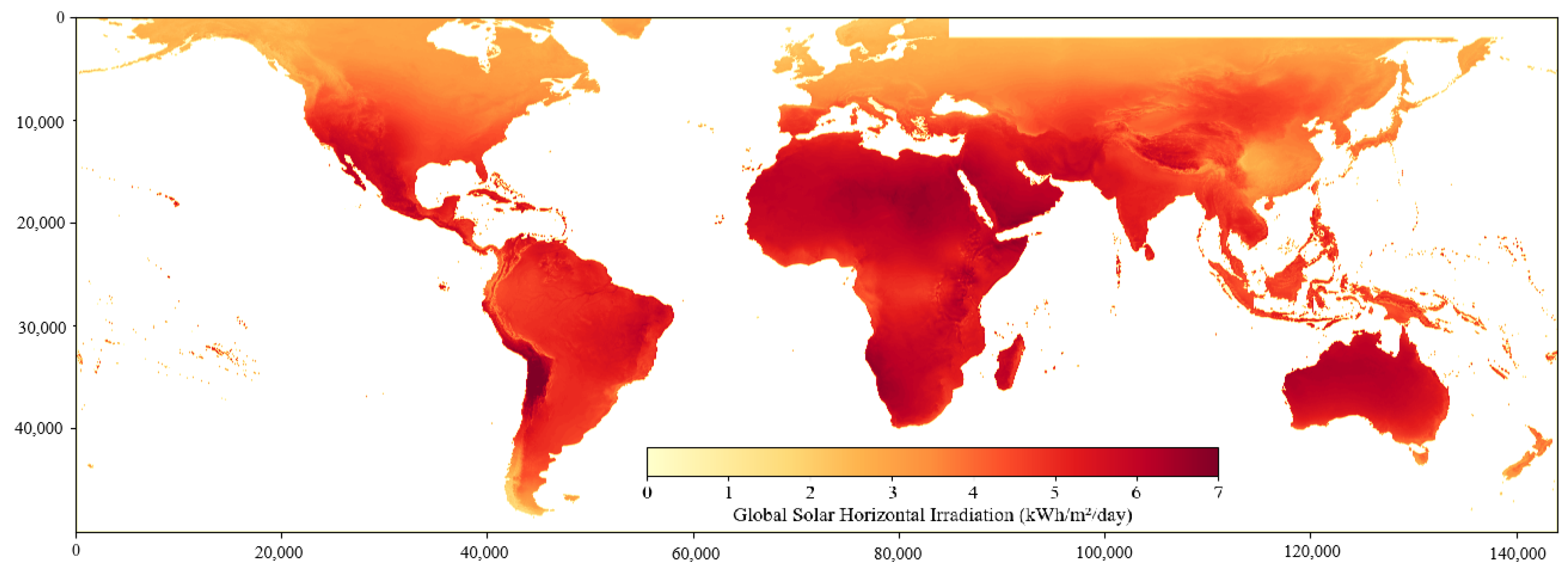
Figure 6 illustrates the geographic variations of PV power potential across the globe. Depending on the area, the potential yearly production depending on the installed capacity is almost divided by three. Consequently, for a given charging need, the suitable PV system will vary in size and price. Numerous studies compared the optimal PV system in different geographic locations, highlighting the necessity to design solutions adapted to local irradiance and mobility needs.
In urban environments, Rotas et al. [122] examined the use of residential solar PV for charging in Berlin and Los Angeles, revealing that it could decrease annual energy consumption, greenhouse gas emissions, and charging costs by 59% in Berlin and 98% in Los Angeles compared to reliance on the national grid. In a comparative study of workplace charging stations in Stockholm and Hawaii, Fachrizal et al. [123] determined the optimal PV system sizes for facilities with 40 EV charging ports. The analysis identified 50 kWp as the optimal PV capacity for Stockholm and 40 kWp for Hawaii, reflecting regional variations in solar resource availability. El Haroui et al. [124] conducted a comparative analysis of optimised V2G systems within a residential context integrated with PV installations across three regions: Morocco, France, and Tunisia. The study underscored how variations in solar irradiance levels and dynamic pricing profiles significantly influence the optimal scheduling of EV charging and V2G operations, as well as the associated energy costs.
Irradiance also varies within a country. Trang et al. [59], in their analysis over Japanese municipalities, highlighted that the decarbonisation potential varies significantly by region: southern municipalities exhibit higher potential than northern ones. Ozturk et al. [100] analysed the optimal deployment of PV charging stations across 12 Turkish cities. Their findings revealed that self-sufficiency levels could reach 65% in cities like İzmir and Gaziantep, where space and solar irradiation are abundant, but drop to 54% in high-demand, space-constrained areas such as Trabzon. In regions with high solar irradiation (>4.5 kWh/m2/day), local storage becomes economically viable below 150 $/kWh, with payback periods under 10 years.
Minh et al. [97], in Vietnam in 2021, emphasised that investment efficiency is highly dependent on solar irradiation levels and feed-in tariff prices, with regions like Ho Chi Minh City, characterised by high solar irradiation, being more favourable for such investments compared to areas with lower irradiation, such as Hanoi. Dejkam et al. [77] evaluated stand-alone EV charging stations powered by hybrid systems combining PV, wind turbine, and battery storage across four major German cities: Berlin, Munich, Hamburg, and Cologne. The findings indicated that hybrid PV/WT/battery configurations were the most cost-effective solutions for Berlin, Munich, and Hamburg. In Cologne, however, a WT/battery system proved more suitable due to favourable wind conditions and less irradiance.
On the top of irradiance, the urban density was shown to have an impact on the system design. Deroubaix et al. [9] noted that PV with EVs is more effective in suburban regions in France than in the city of Paris. The same effect was observed in Japan by Trang et al. [59], where densely populated urban areas like Tokyo’s special districts face limitations due to constrained rooftop space. Conversely, rural areas could meet up to 98% of their electricity demand through PV+EV systems, generating surplus electricity several times their consumption needs. Yang et al. [125] further demonstrated that V2G and smart charging strategies reduce peak-valley load differences up to a 70% reduction in midday load in low-demand cities like Lianyungang, China, though results remain more limited in metropolitan areas such as Shanghai. This regional disparity highlights the importance of tailored strategies to maximise the benefits of PV+EV integration in diverse geographic and urban landscapes.
Finally, different geographical areas will induce different mobility patterns in the EV owners. In Portugal, Maia et al. [126] assessed the sustainability of local PV-generated electricity compared to grid electricity for EV charging. The study concluded that local PV becomes a more sustainable option when the weekly travel distance exceeds 50 km. In Germany, Gann et al. [72] also observed that the savings are contingent on daily and annual mileage patterns.
In a nutshell, geographical variations are mainly driven by variations in irradiance and population density. Optimal system design for areas with higher irradiance will require less installed capacity, and less storage than areas with lower irradiance for the same charging demand. Consequently, systems in lower irradiance areas have a higher carbon footprint. Areas with lower population densities have more space available for PV panel installation and a higher average driven distance by cars, which are two factors improving the economic efficiency of EV-PV systems.

6.2. Success Criteria

As emphasised Di Natale et al. [127], V2G viability at large scale hinges on two critical conditions: a sufficient aggregated EV battery capacity and a significant expansion of renewable electricity production. The authors called for further research to identify the tipping points for V2G adoption, particularly the minimum number of participants required to maximise potential benefits without compromising individual battery longevity. Xavier et al. studied the economic viability of a PV-covered parking With EV CS in Uruguay [128], and also concluded on the importance of higher EV share to ensure the economic viability of PV-based CS.
Moreover, to maximise the potential of EV charging flexibility, feed-in and time-of-use tariffs have been shown important and efficient. Parajeles Herrera et al. [51] and Kumar et al. [129] emphasised the need for regionally and seasonally differentiated tariffs to guide charging behaviour of households with PV systems. Etxegarai et al. [130] investigated the application of time-of-use tariffs for EV charging, utilising real data from a PV collective self-consumption project in the Basque Country, Spain. Through simulations conducted over a six-month period, the study demonstrated that the implementation of the third time slot strategy resulted in a 13.1% increase in the self-consumption rate, achieving an average of 93.09%. Furthermore, this approach led to a 25% reduction in the cost of EV charging. Especially for EV owners living in apartments, as these households are likely to have vehicles parked at home during the day and are unlikely to have access to PV for direct charging, Hajhashemi et al. [16] showed benefits of midday tariff discounts in Victoria, Australia. Gschwendtner et al. [131] further highlighted the role of implementing affordable workplace charging on the top of time-of-use tariffs to successfully shift charging loads from peak evening hours to midday. In Estonia, Shabbir et al. [132] showed that feed-in tariffs exerting a substantial influence on the economic viability of rooftop PV systems for residential EV charging. However, the studies mostly focus on grid tariff and not feed-in tariffs of PVs or EVs through the use of V2G.
Kobashi et al. underscored the pivotal role of governance in accelerating the adoption of PV and EVs nationwide [56]. In several studies, taxes appeared to be an efficient tool to incentive PV-based charging. Doostkhah-Ahmadi et al. [133] analysed a household system in Iran comprising an EV, PV, and battery storage. The study emphasised the influence of carbon taxes on the installation of PV panels and the resulting return on investment or daily energy savings. Osawa et al. [134] conducted an evaluation in Japan focusing on residences with extended parking durations, assessing the cost parity between battery EVs combined with V2H systems and gasoline vehicles equipped with stationary batteries under varying carbon tax scenarios. The analysis determined that, by 2030, the carbon tax rates at which the total cost of ownership for EVs with V2H systems and EVs with both V2H systems and static batteries would equal that of ICEVs with static batteries are approximately 24,000 yen/t-CO2 (151 $/t-CO2) and 46,000 yen/t-CO2 (297 $/t-CO2), respectively. These projected tax rates significantly exceed Japan’s current “tax for global warming countermeasures” which stands at 289 yen/t-CO2 (1.87 $/t-CO2). Abdelhady et al. [135] showed that under current tariff structures, reliance on the utility grid was the most cost-effective option for residential EV charging for households in Oman. However, simulations of future tariff reforms and capital cost subsidies demonstrated a significant increase in the optimal PV system size and a reduction in costs, highlighting the critical role of tariff policy and capital cost in determining the feasibility of such systems.
Another responsibility of public institution is the expansion of the public charging infrastructure. Syla et al. [71] demonstrated that the expansion of public charging infrastructure was shown to decrease storage needs by up to 66% and lower system costs by 29% by 2050 in Switzerland. In the Tokyo metropolitan area, Japan, Nadimi et al. [57] revealed that, under V2X, EVs utilise solar energy for charging approximately four times more frequently, and underscored the necessity of supporting the installation of bidirectional chargers to fully realise these benefits. However, the capacity of the charger is not widely discussed as a parameter that would influence the system design.
Finally, technological progress is expected to have huge impact on the cost efficiency of EV-PV coupling. In Shenzhen, China, Liu et al. [101] identified technological progress as the primary determinant of the economic feasibility of integrated PV and EV systems. The LCOE was shown to decrease from 6.08 ¢/kWh to 2.81 ¢/kWh with rapid technological advancements, primarily driven by lower investment costs. Pinto et al. [38] investigated the integration of PV systems and batteries in a public building in Brazil. The study determined that approximately 85% of the total energy required to charge the battery energy storage system would be derived from surplus PV energy, with the remaining 15% sourced from the utility grid. While the current financial attractiveness of battery insertion remains limited, it is projected that the costs associated with batteries will decline in the coming years, potentially enhancing their economic feasibility.
From the criteria presented in this subsection, the following incentive policies could be designed to support the adoption and efficiency of EV-PV systems:
  • Dynamic and seasonal electricity prices, as well as carbon taxes, can increase the economic attractiveness of EV-PV coupling.
  • In high irradiance areas, policies could focus on dynamic pricing to foster higher self-consumption.
  • In lower irradiance areas and reliable power grids, policies could support the installation of storage systems to maximise the use of PV.
  • In dense urban areas, policies could support the deployment of public CS to increase the share of charging during the day.
  • In low-income communities, the deployment of public charging infrastructure reduces costs for users.

6.3. Other Contexts

Most of cited studies presented newly build systems, but Aşıkoğlu Metehan [136] demonstrated that retrofitting existing buildings to achieve plus-energy status (including EV charging) is economically viable in Turkey. Retrofitting buildings would further accelerate the access to EV-PV systems. In an other innovative approach, EV batteries that lost above 20% of capacity can be repurposed as static battery storage for PV [137], which would reduce the carbon footprint of the storage system by 50 to 90%. The solution would be cost-effective in Italy if new battery prices stayed above 150–200 €/kWh. Eissa et al. [138] also studied a stand-alone PV system with second-life batteries at Tennessee state park, USA, and found a lifecycle cost reduced by 32.16%, when compared to the baseline. This second life approach increases the economic efficiency of batteries and spares resources for battery fabrication. Alberizzi et al. [139] examined a battery swapping station in Italy, powered by a combination of PV and grid electricity, with the advantage of having batteries available during PV production periods. Shared autonomous EVs also show a great potential [140] to reduce peak-valley differences, and contribute to reducing the number of car per inhabitant, which further reduces the material use and carbon footprint of EV production. Finally, artificial intelligence can be used to better schedule or predict demand of EV charging and optimise the system design [141,142].

6.4. Key Findings

This section synthesised the key challenges and success criteria for implementing EV-PV systems. The design of these systems must be tailored to local contexts, accounting for geographic variations in solar irradiance and urban density. Access to public charging infrastructure, both at workplaces and in public spaces, emerges as a critical success factor. Additionally, tariffs and taxes influence the system cost, shaping the economic viability of such systems.

7. Conclusions

The rapid progression of EV and PV sales in the past five years, partially driven by the need of decarbonation of both transportation and energy systems, created a strong research interest in EV-PV coupling potentials. This review gathers studies in wide geographical contexts on the benefits and challenges of EV-PV coupling.
Coupling EV charging with PV electricity production shows both environmental and economical benefits. From an environmental standpoint, EV and PV together reduce the CO2 emissions of mobility and energy production by 42% to 91% in most studies reviewed. The environmental benefits can be further enhanced by innovative application, like car sharing or repurposing of car batteries into local storage for PV. From an economic standpoint, EV-PV coupling is already cost-effective compared to fossil fuel-based electricity generation and mobility in industrialised countries. The current LCOE of PV-powered charging and V2X is lower or equivalent to the grid tariffs in most of the studies reviewed. EV-PV is also a cost-effective solution for off-grid systems, or in case of an unreliable grid. It is competitive with diesel-based generators and ICEVs, has a good complementarity with wind and hydro, and can be complemented with a smaller diesel generator if needed. Further technology improvements and cost reduction should make EV-PV cost-competitive in developing countries in the next decade. Work, public, or university contexts have the higher coupling potential thanks to a better compatibility in PV production and plug-in time-frames. However, EV-PV coupling can already be efficient at local scale for households, building, and energy communities. The coupling potential at home is highly dependent on the availability of the EV during the day. The use of V2X at home can replace the use of local battery storage, becoming not economically interesting, which reduces the environmental impact of the systems. Grid-tied PV charging systems are more economically interesting because they also spare investment for local storage.
Practical considerations have to be taken into account in the design of EV-PV systems. The coupling potential shows high variations depending on local irradiance and driven distances by cars. Higher irradiance and higher daily driven distance lead to higher cost reduction. System design in lower irradiance more often requires storage. Rural and suburban areas show higher coupling potential, due to a greater available area for PV compared to the electricity needs. Thus, the installation of PV panels in those areas in priority would better capitalise on the available space and maximise the cost effectiveness of EV-PV coupling due to higher driven distance. Additionally, feed-in tariffs have a high impact on cost effectiveness. However, the optimal technical design and business model of EV-PV systems will differ in countries or regions with different grid reliability. As public and work charging shows higher time complementarity with PV production, the installation of chargers must be prioritised at these locations. Availability of smart chargers at work and public places and access to bidirectional chargers in residential areas are strong leviers that policymakers can incentive to maximise the benefits for EV-PV coupling. Flexibility in work schedule can also increase the concordance of PV production with EV plug-in times.
While a variety of studies quantify the economical benefits of EV-PV coupling, only few of them clearly quantify the environmental benefits and CO2 reductions. The environmental benefits should be better evaluated in the next studies to enable a global overview. Energy communities seem to be the optimal context, as the PV overproduction is shared with local EVs who can have different charging patterns, but they are not widely studied. Further studies should explore the EV-PV coupling potential in the case of local energy communities more in detail, with various tariff structures, and adapt the economical calculations to projection of costs and EV adoption. Additionally, further studies should quantify the required share of EVs and PV capacity installed to reach large-scale benefits.

Author Contributions

Conceptualisation, N.J.; methodology, N.J.; validation, J.D. and N.W.; data curation, N.J.; writing—original draft preparation, N.J.; writing—review and editing, J.D. and N.W.; supervision, J.D., N.W. and C.B.; project administration, N.W.; funding acquisition, N.W. All authors have read and agreed to the published version of the manuscript.

Funding

This work was supported by the project Open GIS for Energy Transition (OpenGIS4ET), in the framework of the joint programming initiative ERA-Net Smart Energy Systems’ focus initiative Digital Transformation for the Energy Transition, with support from the European Union’s Horizon 2020 research and innovation programme under grant agreement No 883973, financed for the Swiss partners, by the Swiss Federal Office for Energy and by the HORIZON OpenMod4Africa project (Grant number 101118123), with funding from the European Union and the State Secretariat for Education, Research and Innovation (SERI) for the Swiss partners.

Institutional Review Board Statement

Not applicable.

Informed Consent Statement

Not applicable.

Data Availability Statement

No new data were created or analyzed in this study. Data sharing is not applicable to this article.

Acknowledgments

During the preparation of this review, the authors used Mistral AI, V3 for the purposes of language improvement. The authors have reviewed and edited the output and take full responsibility for the content of this publication.

Conflicts of Interest

The authors declare no conflicts of interest.

Abbreviations

The following abbreviations are used in this manuscript:
EVElectric Vehicle
PVPhotovoltaic
V2XVehicle-to-everything
V2HVehicle-to-home
V2GVehicle-to-grid
GTGrid Tariff
CSCharging Station

Appendix A

The following Scopus query was used: (KEY (“electric vehicle*” photovoltaic) AND NOT TITLE-ABS-KEY (vipv) AND NOT TITLE-ABS-KEY (algorithm) AND NOT TITLE-ABS-KEY (“Solar Electric Vehicles”)) AND PUBYEAR > 2000 AND PUBYEAR < 2027 AND (LIMIT-TO (SRCTYPE, “j”) OR LIMIT-TO (SRCTYPE, “p”)) AND (LIMIT-TO (DOCTYPE, “ar”) OR LIMIT-TO (DOCTYPE, “cp”) OR LIMIT-TO (DOCTYPE, “re”)) AND (EXCLUDE (SUBJAREA, “PHYS”) OR EXCLUDE (SUBJAREA, “CHEM”) OR EXCLUDE (SUBJAREA, “CENG”) OR EXCLUDE (SUBJAREA, “MEDI”) OR EXCLUDE (SUBJAREA, “BIOC”) OR EXCLUDE (SUBJAREA, “AGRI”) OR EXCLUDE (SUBJAREA, “IMMU”) OR EXCLUDE (SUBJAREA, “PHAR”) OR EXCLUDE (SUBJAREA, “VETE”) OR EXCLUDE (SUBJAREA, “NURS”) OR EXCLUDE (SUBJAREA, “ARTS”)) AND (LIMIT-TO (LANGUAGE, “English”)) AND (EXCLUDE (EXACTKEYWORD, “Dc-dc Converters”) OR EXCLUDE (EXACTKEYWORD, “Perovskite”) OR EXCLUDE (EXACTKEYWORD, “Lithium-ion Batteries”) OR EXCLUDE (EXACTKEYWORD, “Boost Converter”) OR EXCLUDE (EXACTKEYWORD, “Photoelectrochemical Cells”) OR EXCLUDE (EXACTKEYWORD, “Perovskite Solar Cells”) OR EXCLUDE (EXACTKEYWORD, “Fuel Cell”) OR EXCLUDE (EXACTKEYWORD, “Thin Films”) OR EXCLUDE (EXACTKEYWORD, “Hydrogen Storage”) OR EXCLUDE (EXACTKEYWORD, “Hydrogen”) OR EXCLUDE (EXACTKEYWORD, “Voltage Regulators”) OR EXCLUDE (EXACTKEYWORD, “Land Vehicle Propulsion”) OR EXCLUDE (EXACTKEYWORD, “Energy Management System”) OR EXCLUDE (EXACTKEYWORD, “Battery Energy Storage System”) OR EXCLUDE (EXACTKEYWORD, “Algorithm”) OR EXCLUDE (EXACTKEYWORD, “Solar Cells”) OR EXCLUDE (EXACTKEYWORD, “Matlab R2025b”))

References

  1. European Environement Agency. Greenhouse Gas Emissions from Transport in Europe. 2021. Available online: https://www.eea.europa.eu/ims/greenhouse-gas-emissions-from-transport (accessed on 24 February 2026).
  2. Our World in Data. Share of New Cars Sold that are Electric. 2024. Available online: https://ourworldindata.org/grapher/electric-car-sales-share (accessed on 8 January 2026).
  3. Our World in Data. Solar Photovoltaic Module Price. 2024. Available online: https://ourworldindata.org/grapher/solar-pv-prices (accessed on 5 January 2026).
  4. Our World in Data. Electricity Generation from Solar Power. 2025. Available online: https://ourworldindata.org/grapher/solar-energy-consumption (accessed on 27 January 2026).
  5. Hoarau, Q.; Pérez, Y. Interactions between electric mobility and photovoltaic generation: A review. Renew. Sustain. Energy Rev. 2018, 94, 510–522. [Google Scholar] [CrossRef]
  6. Asaad, M.; Zamora, R.; Lie, T.T. Integration of Electric Vehicles in the Distribution Network: A Review of PV Based Electric Vehicle Modelling. Energies 2020, 13, 4541. [Google Scholar] [CrossRef]
  7. Fachrizal, R.; Munkhammar, J. Improved Photovoltaic Self-Consumption in Residential Buildings with Distributed and Centralized Smart Charging of Electric Vehicles. Energies 2020, 13, 1153. [Google Scholar] [CrossRef]
  8. Elsevier. Scopus. 2026. Available online: https://www.scopus.com/pages/home#basic (accessed on 24 February 2026).
  9. Deroubaix, P.; Kobashi, T.; Gurriaran, L.; Benkhelifa, F.; Ciais, P.; Tanaka, K. SolarEV City Concept for Paris. Appl. Energy 2023, 350, 121762. [Google Scholar] [CrossRef]
  10. Arowolo, W.; Perez, Y. Rapid decarbonisation of Paris, Lyon and Marseille’s power, transport and building sectors by coupling rooftop solar PV and electric vehicles. Energy Sustain. Dev. 2023, 74, 196–214. [Google Scholar] [CrossRef]
  11. Bambara, J.; Athienitis, A.K.; Eicker, U. Decarbonizing Local Mobility and Greenhouse Agriculture through Residential Building Energy Upgrades: A Case Study for Québec. Energies 2021, 14, 6820. [Google Scholar] [CrossRef]
  12. Jeannin, N.; Dumoulin, J.; Pena-Bello, A.; Wannier, D.; Ballif, C.; Wyrsch, N. A spatiotemporal analysis of photovoltaic electricity storage potential in electric vehicles. Int. J. Sustain. Energy Plan. Manag. 2025, 44, 91–106. [Google Scholar] [CrossRef]
  13. Giliomee, J.H.; Pretorius, B.G.; Füßl, L.; Thomas, B.; Booysen, M.J. Using Solar PV and Stationary Storage to Buffer the Impact of Electric Minibus Charging in Grid-Constrained Sub-Saharan Africa. Energies 2024, 17, 457. [Google Scholar] [CrossRef]
  14. Yu, Z.; Lu, Z.; Xin, W.; Pu, H.; Jiang, J.; Ye, B. Environmental and economic evaluation of urban building-integrated photovoltaic and electric vehicle system. J. Build. Eng. 2024, 95, 110205. [Google Scholar] [CrossRef]
  15. Martin, H.; Buffat, R.; Bucher, D.; Hamper, J.; Raubal, M. Using rooftop photovoltaic generation to cover individual electric vehicle demand—A detailed case study. Renew. Sustain. Energy Rev. 2022, 157, 111969. [Google Scholar] [CrossRef]
  16. Hajhashemi, E.; Sauri Lavieri, P.; Say, K. Examining the potential for residential solar charging to meet electric vehicles’ needs. Transp. Res. Part D Transp. Environ. 2025, 140, 104613. [Google Scholar] [CrossRef]
  17. Albaba, M.; Pierce, M.; Yeşilata, B. A Real-World Case Study of Solar Pv Integration for Ev Charging and Residential Energy Demand in Ireland. Sustainability 2025, 17, 9447. [Google Scholar] [CrossRef]
  18. Sendek-Matysiak, E. Evaluation of the Total Cost of Charging Electric Vehicles Through Dedicated Photovoltaic Installations. Transp. Probl. 2025, 20, 59–71. [Google Scholar] [CrossRef]
  19. Javanmardi, K.; Hernández, P.; Oregi, X. From rooftops to roads: Bilbao’s geospatial solar and EV fusion. Sustain. Cities Soc. 2024, 104, 105290. [Google Scholar] [CrossRef]
  20. Salazar, E.; Gómez, O. Design and Implementation of Photovoltaic Electric Vehicle Charging Stations: A Case Study at Universidad Tecnológica de Pereira. In Proceedings of the 22nd International Conference on Renewable Energies and Power Quality (ICREPQ’24), Bilbao, Spain, 26–28 June 2024; Volume 22, pp. 1–6. [Google Scholar] [CrossRef]
  21. Santana de Albuquerque, B.; Lisboa do Nascimento, A.; de Lima Tostes, M.; Holanda Bezerra, U.; Moura de Moura Carvalho, C.; Muñoz Tabora, J. Net-Zero and Multimodal Mobility Project Through PV-Battery-EV in the Amazon. Energies 2025, 18, 6014. [Google Scholar] [CrossRef]
  22. Borne, I.; Souza, S.; Carniatto Silva, E.; Soares, G.; Gimenez Ledesma, J.; Ando Junior, O. Sustainable Mobility: Analysis of the Implementation of Electric Bus in University Transportation. Energies 2025, 18, 2195. [Google Scholar] [CrossRef]
  23. Ochoa-Correa, D.; Sempértegui-Moscoso, E.; Villa-Ávila, E.; Arévalo, P.; Espinoza, J. PV Solar-Powered Electric Vehicles for Inter-Campus Student Transport and Low CO2 Emissions: A One-Year Case Study from the University of Cuenca, Ecuador. Sustainability 2025, 17, 7595. [Google Scholar] [CrossRef]
  24. Cecchini, J.P.; Venghi, L.E.; Silva, L.I.; Dellasanta, E.E.; Rodríguez, C.R. Design and evaluation of a standalone electric vehicles charging station for a university campus in Argentina. Int. J. Renew. Energy Dev. 2024, 13, 1078–1092. [Google Scholar] [CrossRef]
  25. Belaid, M.; El Beid, S.; Doubabi, S.; Hatim, A. Planning and Optimizing Charging Infrastructure and Scheduling in Smart Grids with PyPSA-LOPF: A Case Study at Cadi Ayyad University. World Electr. Veh. J. 2025, 16, 278. [Google Scholar] [CrossRef]
  26. Wang, Z.; Sasse, J.P.; Trutnevyte, E. Home or workplace charging? Spatio-temporal flexibility of electric vehicles within Swiss electricity system. Energy 2025, 320, 135452. [Google Scholar] [CrossRef]
  27. Bastida-Molina, P.; Rivera, Y.; Berna-Escriche, C.; Blanco, D.; Álvarez Piñeiro, L. Challenges and Opportunities in Electric Vehicle Charging: Harnessing Solar Photovoltaic Surpluses for Demand-Side Management. Machines 2024, 12, 144. [Google Scholar] [CrossRef]
  28. Jeannin, N.; Pena-Bello, A.; Dumoulin, J.; Wyrsch, N.; Ballif, C. Mapping the Potential of Electric Vehicles as Flexibility Asset for Solar Energy in Europe; EPFL: Lausanne, Switzherland, 2024. [Google Scholar]
  29. Dumoulin, J.; Habtu Gebremeskel, D.; Gashaw, K.; Graabak, I.; Jeannin, N.; Pena-Bello, A.; Ballif, C.; Wyrsch, N. An open modeling framework to support the electrification of private transport in African cities: A case study of Addis Ababa. Afr. Transp. Stud. 2025, 3, 100064. [Google Scholar] [CrossRef]
  30. Fu, Z.; Liu, X.; Zhang, J.; Zhang, T.; Liu, X.; Jiang, Y. Orderly solar charging of electric vehicles and its impact on charging behavior: A year-round field experiment. Appl. Energy 2025, 381, 125211. [Google Scholar] [CrossRef]
  31. Piras, G.; Orsini, G.; Muzi, F. Energy Transition of Road Infrastructures: Analysis of the Photovoltaic Potential on the A3 Napoli–Pompei–Salerno Highway. Energies 2025, 18, 3042. [Google Scholar] [CrossRef]
  32. Zhang, K.; Chen, M.; Zhu, R.; Zhang, F.; Zhong, T.; Lin, J.; You, L.; Lü, G.; Yan, J. Integrating photovoltaic noise barriers and electric vehicle charging stations for sustainable city transportation. Sustain. Cities Soc. 2024, 100, 104996. [Google Scholar] [CrossRef]
  33. Li, B.; Sun, H.; Lou, J.; Sun, K.; Zhang, Z.; Sun, Y. An Integration Scheme for Highway Rest Area Integrating the Distributed Photovoltaic Generation and Energy Storage. IEEE Trans. Ind. Appl. 2024, 60, 1083–1092. [Google Scholar] [CrossRef]
  34. Deng, C.; Mozafari, H.; Ghamami, M.; Anctil, A. Environmental and Economic Impact of PV-battery Storage System: Application to EV direct current fast charging. In Proceedings of the Conference Record of the IEEE Photovoltaic Specialists Conference, Montreal, QC, Canada, 8–13 June 2025; pp. 714–716. [Google Scholar] [CrossRef]
  35. Nguyen, V.C.; Wang, C.T.; Hsieh, Y. Electrification of Highway Transportation with Solar and Wind. Sustainability 2021, 13, 5456. [Google Scholar] [CrossRef]
  36. Kotarela, F.; Rigogiannis, N.; Glavinou, E.; Mpailis, F.; Kyritsis, A.; Papanikolaou, N. Techno-Economic and Environmental Assessment of a Photovoltaic-Based Fast-Charging Station for Public Utility Vehicles. Energies 2024, 17, 632. [Google Scholar] [CrossRef]
  37. Almasri, R.A.; Alharbi, T.; Alshitawi, M.S.; Alrumayh, O.; Ajib, S. Related Work and Motivation for Electric Vehicle Solar/Wind Charging Stations: A Review. World Electr. Veh. J. 2024, 15, 215. [Google Scholar] [CrossRef]
  38. Pinto, G.; Naspolini, H.; Rüther, R. The role and benefits of storage systems in distributed solar PV generation on public buildings in Brazil. Energy Sustain. Dev. 2024, 81, 101495. [Google Scholar] [CrossRef]
  39. Alwesabi, Y.; Mohammed, N. Self-sufficient solar power and electric vehicle penetration: A case study of New York State. Renew. Energy Focus 2023, 45, 133–140. [Google Scholar] [CrossRef]
  40. Chen, X.; Geng, X.; Xie, D.; Gou, Z. Photovoltaic-energy storage-integrated charging station retrofitting: A study in Wuhan city. Transp. Res. Part D Transp. Environ. 2024, 132, 104241. [Google Scholar] [CrossRef]
  41. Sayed, K.; Elsayed, M.; Mohamed, A. Feasibility and Economic Assessment of a PV-Wind Hybrid Charging Station in the Bronx, NY. IEEE Access 2025, 13, 61841–61861. [Google Scholar] [CrossRef]
  42. Alhayali, O.; Ataalla, A.; Alsultan, Q.; Shafeeq, A.; Aljanabi, S.; Jalil, M. Optimizing Hybrid Renewable Energy Systems for Electric Vehicle Charging Stations: A Feasibility Study in Iraqi Cities. J. Intell. Syst. Internet Things 2025, 17, 291–303. [Google Scholar] [CrossRef]
  43. Huang, W.; Wang, J.; Wang, J.; Zeng, H.; Zhou, M.; Cao, J. Assessment of the technical economic viability and carbon reduction potential of urban-scale photovoltaic generation for electric vehicle charging station. Renew. Sustain. Energy Rev. 2025, 210, 115190. [Google Scholar] [CrossRef]
  44. Naseri, A.; Roghani Araghi, A.; Razeghi, M.; Noorollahi, Y. Systematic site selection solar-powered electric vehicle charging stations: A novel approach to sustainable transportation. Energy Strategy Rev. 2024, 56, 101596. [Google Scholar] [CrossRef]
  45. Razeghi, M.; Roghani Araghi, A.; Naseri, A.; Yousefi, H. Strategic deployment of GIS-optimized solar charging stations for electric vehicles: A multi-criteria decision-making approach. Energy Convers. Manag. X 2024, 24, 100712. [Google Scholar] [CrossRef]
  46. Da Paixao, J.L.; Abaide, A.R.; Sausen, J.P.; Silva, L.N.; Da Silva, L.N.F. EV Fast Charging Microgrid on Highways: A Hierarchical Analysis for Choosing the Installation Site. In Proceedings of the 2021 56th International Universities Power Engineering Conference (UPEC), Middlesbrough, UK, 31 August–3 September 2021; pp. 1–6. [Google Scholar] [CrossRef]
  47. Muyeed, M.; Oeishee, M.; Mohsin, A. Cost-benefit and net zero impact analysis of PV-grid-battery systems for EV charging stations in Bangladesh. Energy Convers. Manag. X 2025, 28, 101256. [Google Scholar] [CrossRef]
  48. Damianakis, N.; Mouli, G.R.C.; Bauer, P.; Yu, Y. Assessing the grid impact of Electric Vehicles, Heat Pumps & PV generation in Dutch LV distribution grids. Appl. Energy 2023, 352, 121878. [Google Scholar] [CrossRef]
  49. Kanai, S.; Tamura, S. V2G Contribution to Reduction of Renewable Energy Curtailment by Valley-filling Approach. In Proceedings of the 2021 IEEE PES Innovative Smart Grid Technologies—Asia (ISGT Asia), Brisbane, Australia, 5–8 December 2021; pp. 1–5. [Google Scholar] [CrossRef]
  50. Steinbach, S.; Blaschke, M. Enabling electric mobility: Can photovoltaic and home battery systems significantly reduce grid reinforcement costs? Appl. Energy 2024, 375, 124101. [Google Scholar] [CrossRef]
  51. Parajeles Herrera, M.; Garrison, J.; Hug, G. The role of unidirectional charging flexibility in the planning and operation of the future Swiss electricity system. Appl. Energy 2026, 403, 127078. [Google Scholar] [CrossRef]
  52. van der Kam, M.; Pena-Bello, A.; Parra, D. PV for what? A PV self-sufficiency analysis of electric vehicles, heat pumps, and home storage. Energy 2025, 334, 137774. [Google Scholar] [CrossRef]
  53. Lombardi, G.; Cioccolanti, L.; Del Zotto, L.; Tomassetti, S.; Campana, P.E. The role of electric vehicles in hybrid solar-based small energy communities. Energy Convers. Manag. 2024, 321, 119074. [Google Scholar] [CrossRef]
  54. Fachrizal, R.; Ramadhani, U.H.; Munkhammar, J.; Widén, J. Combined PV–EV hosting capacity assessment for a residential LV distribution grid with smart EV charging and PV curtailment. Sustain. Energy Grids Netw. 2021, 26, 100445. [Google Scholar] [CrossRef]
  55. Wanninayaka Mudiyanselage, C.D.W.; Hasan, K.N.; Vahidnia, A.; Rahman, M.T. Probabilistic coupled EV-PV hosting capacity analysis in LV networks with spatio-temporal modelling and copula theory. IET Smart Grid 2024, 7, 917–928. [Google Scholar] [CrossRef]
  56. Kobashi, T.; Zusman, E.; Taniguchi, M.; Yarime, M. Facilitating a carbon neutral transition in Kyoto: Initiatives on rooftop photovoltaics integrated with electric vehicles. Technol. Soc. 2025, 80, 102774. [Google Scholar] [CrossRef]
  57. Nadimi, R.; Goto, M. Analyzing incentivized self-consumption and integration of rooftop solar and battery electric vehicles in residential energy systems. Renew. Energy 2026, 258, 124937. [Google Scholar] [CrossRef]
  58. Kobashi, T.; Xiao, J.; Zhang, T. Enabling maximum decarbonization from districts in Kyoto through rooftop PVs by integrating with EVs as battery. Sustain. Cities Soc. 2025, 131, 106717. [Google Scholar] [CrossRef]
  59. Trang, N.; Okada, K.; Sugiyama, Y.; Yoshida, T.; Hirano, Y.; Jittrapirom, P.; Nakaegawa, T.; Kobashi, T. On the decarbonization potentials of rooftop PVs integrated with EVs as battery for all the municipalities of Japan. Appl. Energy 2025, 393, 126067. [Google Scholar] [CrossRef]
  60. Chang, S.; Cho, J.; Heo, J.; Kang, J.; Kobashi, T. Energy infrastructure transitions with PV and EV combined systems using techno-economic analyses for decarbonization in cities. Appl. Energy 2022, 319, 119254. [Google Scholar] [CrossRef]
  61. Jittayasotorn, T.; Sadidah, M.; Yoshida, T.; Kobashi, T. On the Adoption of Rooftop Photovoltaics Integrated with Electric Vehicles toward Sustainable Bangkok City, Thailand. Energies 2023, 16, 3011. [Google Scholar] [CrossRef]
  62. Dewi, R.G.; Siagian, U.W.R.; Asmara, B.; Anggraini, S.D.; Ichihara, J.; Kobashi, T. Equitable, affordable, and deep decarbonization pathways for low-latitude developing cities by rooftop photovoltaics integrated with electric vehicles. Appl. Energy 2023, 332, 120507. [Google Scholar] [CrossRef]
  63. Liu, J.; Li, M.; Xue, L.; Kobashi, T. A framework to evaluate the energy-environment-economic impacts of developing rooftop photovoltaics integrated with electric vehicles at city level. Renew. Energy 2022, 200, 647–657. [Google Scholar] [CrossRef]
  64. Hao, F. Impact of electric vehicle charging demand on clean energy regional power grid control. Energy Inform. 2025, 8, 83. [Google Scholar] [CrossRef]
  65. Bouaziz, F.; Abdelkafi, A.; Masmoudi, A.; Krichen, L. Energy management for hybrid building with grid-connected shared DC parking equipped with PV-energy storage system. J. Build. Eng. 2025, 115, 114534. [Google Scholar] [CrossRef]
  66. Canaan, B.; Abdeslam, D. Maximizing Photovoltaic Self-Consumption through Smart EV Charging without Stationary Storage: A Real-World Case Study. In Proceedings of the IECON Proceedings Industrial Electronics Conference, Madrid, Spain, 14–17 October 2025. [Google Scholar] [CrossRef]
  67. Börchers, L.; Stötzer, F.; Becker, T.; Hanfeld, M.; Schwarz, J. A simulation-based study for estimating the V2G potentials for and effects on autarky in German energy communities and quarters. Energy 2025, 334, 137541. [Google Scholar] [CrossRef]
  68. Boström, T.; Babar, B.; Hansen, J.B.; Good, C. The pure PV-EV energy system – A conceptual study of a nationwide energy system based solely on photovoltaics and electric vehicles. Smart Energy 2021, 1, 100001. [Google Scholar] [CrossRef]
  69. Milstein, I.; Tishler, A.; Woo, C. Modeling the effects of photovoltaic technology, battery storage, and electric vehicles on Israel’s electricity market from 2030 to 2050. Util. Policy 2025, 95, 101933. [Google Scholar] [CrossRef]
  70. Adegbohun, F.; Von Jouanne, A.; Agamloh, E.; Yokochi, A. A Review of Bidirectional Charging Grid Support Applications and Battery Degradation Considerations. Energies 2024, 17, 1320. [Google Scholar] [CrossRef]
  71. Syla, A.; Parra, D.; Patel, M. Assessing flexibility from electric vehicles using an open-source energy system model: Trade-offs between smart charging, vehicle-to-grid and an extensive charging infrastructure. Energy 2025, 326, 136236. [Google Scholar] [CrossRef]
  72. Gnann, T.; Yu, S.; Stute, J.; Kühnbach, M. The value of smart charging at home and its impact on EV market shares—A German case study. Appl. Energy 2025, 380, 124997. [Google Scholar] [CrossRef]
  73. Azarbakhsh, G.; Mahmoudi, A.; Kahourzade, S.; Yazdani, A.; Mahmud, A. Optimal Sizing of Photovoltaic and Battery Energy Storage for Residential Houses in South Australia by Considering Vehicle-to-Home Operation. IET Renew. Power Gener. 2025, 19, e70053. [Google Scholar] [CrossRef]
  74. Małek, A.; Marciniak, A.; Bednarczyk, T. Probabilistic Analysis of Electricity Production from a Photovoltaic—Wind Energy Mix for Sustainable Transport Needs. Sustainability 2024, 16, 10164. [Google Scholar] [CrossRef]
  75. Mousa, M.M.; Saleh, S.M.; Samy, M.M.; Barakat, S. Optimizing grid-tied hybrid renewable systems for EV charging in Egypt: A techno-economic analysis. Results Eng. 2025, 27, 106103. [Google Scholar] [CrossRef]
  76. Mauludin, M.; Khairudin, M.; Asnawi, R.; Trisnoaji, Y.; Prasetyo, S.; Azizah, S.; Wiraguna, R. Assessing the Technological and Financial Feasibility of PV-Wind Hybrid Systems for EV Charging Stations on Indonesian Toll Roads. Int. J. Sustain. Dev. Plan. 2025, 20, 291–304. [Google Scholar] [CrossRef]
  77. Dejkam, R.; Madlener, R. Green mobility infrastructure: A techno-economic analysis of hybrid wind—solar PV charging stations for electric vehicles in Germany. Energy 2025, 334, 137450. [Google Scholar] [CrossRef]
  78. Liu, X.; Fu, Z.; Qiu, S.; Zhang, T.; Li, S.; Yang, Z.; Liu, X.; Jiang, Y. Charging private electric vehicles solely by photovoltaics: A battery-free direct-current microgrid with distributed charging strategy. Appl. Energy 2023, 341, 121058. [Google Scholar] [CrossRef]
  79. Amico, D.; Gallo, P.; Sciumè, G.; Vasile, A.; Zizzo, G. Smart Parking Optimal Design for Renewable Energy Communities Integration in Power System. In Proceedings of the 2025 IEEE International Conference on Environment and Electrical Engineering and 2025 IEEE Industrial and Commercial Power Systems Europe Eeeic I and Cps Europe 2025, Chania, Greece, 15–18 June 2025. [Google Scholar] [CrossRef]
  80. Fachrizal, R.; Lindberg, O.; Kinasih, A.D.S.; Muntean, A.; Widén, J.; Munkhammar, J. Residential building with rooftop solar PV system, battery storage and electric vehicle charging: Environmental impact and energy matching assessments for a multi-family house in a Swedish city. IET Conf. Proc. 2023, 2022, 565–572. [Google Scholar] [CrossRef]
  81. Irfan, M.; Deilami, S.; Huang, S.; Veettil, B.P. Rooftop Solar and Electric Vehicle Integration for Smart, Sustainable Homes: A Comprehensive Review. Energies 2023, 16, 7248. [Google Scholar] [CrossRef]
  82. Roy, T.K. Techno-economic assessment of Hybrid Renewable Energy Systems with advanced EMS and renewable energy-based EV charging with V2H integration for remote and grid-edge Australian communities. Energy Convers. Manag. 2026, 348, 120725. [Google Scholar] [CrossRef]
  83. Nadimuthu, L.P.R.; Victor, K.; Bajaj, M.; Tuka, M.B. Feasibility of renewable energy microgrids with vehicle-to-grid technology for smart villages: A case study from India. Results Eng. 2024, 24, 103474. [Google Scholar] [CrossRef]
  84. Ismail, N.; Jamahori, H.; Sepeeh, M. Standalone Hybrid Photovoltaic with Battery and Hydrogen Storage System for Electric Vehicle Charging in Residential Application. In Proceedings of the 7th International Conference on Energy Power and Environment ICEPE 2025, Meghalaya, India, 9–11 May 2025. [Google Scholar] [CrossRef]
  85. Velkovski, B.; Gjorgievski, V.Z.; Markovski, B.; Cundeva, S.; Markovska, N. A framework for shared EV charging in residential renewable energy communities. Renew. Energy 2024, 231, 120897. [Google Scholar] [CrossRef]
  86. Collett, K.A.; Hirmer, S.A.; Dalkmann, H.; Crozier, C.; Mulugetta, Y.; McCulloch, M.D. Can electric vehicles be good for Sub-Saharan Africa? Energy Strategy Rev. 2021, 38, 100722. [Google Scholar] [CrossRef]
  87. Gonela, V.; Srinivasan, R.; Osmani, A. A novel simulation and supervised machine learning-based prediction framework to predict the total transportation and energy costs for single-family households. Front. Energy Effic. 2024, 2, 1502854. [Google Scholar] [CrossRef]
  88. Haggi, H.; Fenton, J. Techno-Economic Assessment of Net-Zero Energy Buildings: Financial Projections and Incentives for Achieving Energy Decarbonization Goals. In Proceedings of the 2025 IEEE Texas Power and Energy Conference Tpec 2025, Station, TX, USA, 8–10 February 2025. [Google Scholar] [CrossRef]
  89. Dörre, E.; Klein, T.; Von Bonin, M. Finding Attractive Electric-Vehicle-Charging Locations with Photovoltaic System Integration. World Electr. Veh. J. 2024, 15, 97. [Google Scholar] [CrossRef]
  90. Castro, T.S.; Moura, C.H.S.; Silveira, J.L.; De Souza, T.M. Electric Vehicles Powered by Renewable Energy: Economic and Environmental Analysis from the Brazilian Perspective. Sustainability 2025, 17, 2847. [Google Scholar] [CrossRef]
  91. Costa, D.D.; Cobas, V.R.M. Electric Vehicles Charged with Solar-PV: A Brazilian Case Study for 2030. Vehicles 2023, 5, 1743–1759. [Google Scholar] [CrossRef]
  92. Yao, X.; Fan, Y.; Zhao, F.; Ma, S.C. Economic and climate benefits of vehicle-to-grid for low-carbon transitions of power systems: A case study of China’s 2030 renewable energy target. J. Clean. Prod. 2022, 330, 129833. [Google Scholar] [CrossRef]
  93. Hao, X.; Liu, P.; Pu, H.; Gong, F.; Tong, F.; Chen, Q.; Liu, L.; Chen, X. Mobility-aware EV charging and discharging management in V2B-PV systems: A reinforcement learning framework. Carbon Neutrality 2025, 4, 26. [Google Scholar] [CrossRef]
  94. Chen, J.; Qing, J.; Cai, Q. Impact of bi-directional electric vehicle and demand response on residential distributed PV capacity planning based on TOU pricing. J. Environ. Manag. 2024, 356, 120689. [Google Scholar] [CrossRef]
  95. Edoo, M.; Ah King, R.T. 100% renewable energy system for the island of Mauritius by 2050: A techno-economic study. Smart Energy 2025, 19, 100199. [Google Scholar] [CrossRef]
  96. Terada, L.Z.; Magalhães, M.M.; Cortez, J.C.; Soares, J.; Vale, Z.; Rider, M.J. Multi-objective optimization for microgrid sizing, electric vehicle scheduling and vehicle-to-grid integration. Sustain. Energy Grids Netw. 2025, 43, 101773. [Google Scholar] [CrossRef]
  97. Minh, P.V.; Le Quang, S.; Pham, M.H. Technical Economic Analysis of Photovoltaic-Powered Electric Vehicle Charging Stations under Different Solar Irradiation Conditions in Vietnam. Sustainability 2021, 13, 3528. [Google Scholar] [CrossRef]
  98. Ali, A.; Shaaban, M.F.; Abdelfatah, A. Optimal allocation of autonomous PV-powered fast charging stations for electrified transportation considering traffic dynamics. J. Energy Storage 2024, 99, 113323. [Google Scholar] [CrossRef]
  99. Noll, B.; Graff, D.; Schmidt, T.S.; Patt, A.; Bauer, C.; Agutu, C.; Asiimwe, P.K.; Diemuodeke, O.E.; Krygsman, S.; Nienkerke, I.; et al. Battery-electric passenger vehicles will be cost-effective across Africa well before 2040. Nat. Energy 2026, 11, 284–298. [Google Scholar] [CrossRef]
  100. Ozturk, Z.; Demirci, A.; Terkes, M.; Yumurtaci, R. Optimal planning of solar PV-based electric vehicle charging stations empowered by energy storage system: Feasibility and green charge potential. Renew. Energy 2025, 255, 123715. [Google Scholar] [CrossRef]
  101. Liu, J.; Zhang, M.; Hu, M.; Wu, J.; Ji, Y. Interactive multi-factor analysis for enhancing the economic viability of integrated rooftop PV and EV systems: A Shenzhen case study. J. Build. Eng. 2026, 118, 114976. [Google Scholar] [CrossRef]
  102. Sulthan, S.; Peng, A.; Norfauzi, M.; Revathi, B. Techno-Economic Feasibility and Environmental Assessment of a Grid-Connected PV System for EV Charging in Brunei Darussalam. In Proceedings of the 2025 5th International Conference on Innovative Research in Applied Science Engineering and Technology Iraset 2025, Fez, Morocco, 15–16 May 2025. [Google Scholar] [CrossRef]
  103. Aldaliee, A.A.; Mansor, N.N.; Mokhlis, H.; Ramasamy, A.K.; Awalin, L.J. Pareto-Based Optimization of PV and Battery in Home-PV-BES-EV System with Integrated Dynamic Energy Management Strategy. Sustainability 2025, 17, 7364. [Google Scholar] [CrossRef]
  104. Khan, S.; Sudhakar, K.; Yusof, M.H.B.; Azmi, W.; Ali, H.M. Roof integrated photovoltaic for electric vehicle charging towards net zero residential buildings in Australia. Energy Sustain. Dev. 2023, 73, 340–354. [Google Scholar] [CrossRef]
  105. Kassem, R.; El-Rifaie, A.; Youssef, A.; Abdelaziz, A.; Mohamed, S.; Saleeb, H. Design and optimal sizing of PV/grid-integrated EV charging stations at universities: A case study. Unconv. Resour. 2025, 8, 100213. [Google Scholar] [CrossRef]
  106. Rehman, S.; Mohammed, A.B.; Alhems, L.; Alsulaiman, F. Comparative study of regular and smart grids with PV for Electrification of an academic campus with EV charging. Environ. Sci. Pollut. Res. 2023, 30, 77593–77604. [Google Scholar] [CrossRef] [PubMed]
  107. Khan, F.; Mekhilef, S.; Ramachandaramurthy, V.; Ab Aziz, N.; Pal, N.; Yaseen, A.; Yadav, A.; Asim, M.; Alshammari, O. Design and development of grid independent integrated energy system for electric vehicle charging stations at different locations in Malaysia. Energy 2024, 302, 131686. [Google Scholar] [CrossRef]
  108. Robisson, B.; Ngo, V.L.; Marchadier, L.; Bouaziz, M.F.; Mignonac, A. PV Sizing for EV Workplace Charging Stations—An Empirical Study in France. Appl. Sci. 2023, 13, 10128. [Google Scholar] [CrossRef]
  109. Liu, X.; Zeng, C.; Yuan, Y.; Luo, J.; Lü, X.; Haghighat, F. Comprehensive assessment of an integrated energy system with EVs in a PV-equipped station-city complex. Renew. Energy 2025, 246, 122948. [Google Scholar] [CrossRef]
  110. Mourad, A. Analyzing the Fast-Charging Potential for Electric Vehicles with Local Photovoltaic Power Production in French Suburban Highway Network. Energies 2021, 14, 2428. [Google Scholar] [CrossRef]
  111. Karmakar, A.; Sadhu, P.; Das, S.; Bihari, S.; Khan, B.; Ali, A. Techno-economic analysis and optimized PV-powered EV charging facilities under various climate conditions in India. Discov. Sustain. 2025, 6, 285. [Google Scholar] [CrossRef]
  112. Xu, X.; Xu, X.; Li, S.; Zhang, X.; Xu, Z.; Ma, T.; Guo, W.; Xiong, Z. Simulation and optimization of hybrid renewable energy system to achieve a net-zero and flexible-interconnected service area for highways. Energy Sustain. Dev. 2025, 87, 101740. [Google Scholar] [CrossRef]
  113. Ukwuoma, C.; Cai, D.; Ukwuoma, C.; Otuka, C.; Ukwuoma, C.; Menikpura, S.; Bamisile, O.; Huang, Q. Solar photovoltaic hybrid energy modelling with fixed and TOU tariffs for decarbonization in unreliable grids. Sol. Energy 2025, 302, 114051. [Google Scholar] [CrossRef]
  114. Osman, M.; Lazaroiu, G.; Hamad, S.; Messaoud, H.; Mohammed, D.; Stoica, D. Analysis of Photovoltaic Systems with Battery Storage, Electric Vehicle Charging, and Smart Energy Management. Sustainability 2025, 17, 3887. [Google Scholar] [CrossRef]
  115. Adefarati, T.; Obikoya, G.D.; Sharma, G.; Onaolapo, A.K.; Akindeji, K.T. Design and feasibility analysis of grid-connected hybrid renewable energy system: Perspective of commercial buildings. Energy Syst. 2024, 15, 403–462. [Google Scholar] [CrossRef]
  116. Zorlu, A.; Ozcan, M. Techno-Economic and Environmental Assessment of a Solar-Powered Electric Vehicle Charging Station in Türkiye. Arab. J. Sci. Eng. 2025, 50, 10813–10836. [Google Scholar] [CrossRef]
  117. Benayad, M.; Rochd, A.; Elhamaoui, S.; Babour, N.; Benayad, F.; Houran, N.; Simou, M.R.; Maanan, M.; Rhinane, H. Optimizing electric vehicle charging infrastructure powered by photovoltaics: A geospatial and multi-criteria analysis for sustainable urban mobility. Results Eng. 2025, 27, 106456. [Google Scholar] [CrossRef]
  118. Elkholy, M.; Abd El-Raouf, A.; Farahat, M.; Lotfy, M. Design and Techno-Economic Feasibility Study of a Solar-Powered EV Charging Station in Egypt. Electricity 2025, 6, 50. [Google Scholar] [CrossRef]
  119. Ampah, J.D.; Afrane, S.; Agyekum, E.B.; Adun, H.; Yusuf, A.A.; Bamisile, O. Electric vehicles development in Sub-Saharan Africa: Performance assessment of standalone renewable energy systems for hydrogen refuelling and electricity charging stations (HRECS). J. Clean. Prod. 2022, 376, 134238. [Google Scholar] [CrossRef]
  120. Singh, C.; Deb, S.; Alam, M.S.; Rafat, Y. Analytical Strategy for Deployment of EV Fast-Charging Stations. In Proceedings of the 2020 5th IEEE International Conference on Recent Advances and Innovations in Engineering (ICRAIE), Jaipur, India, 1–3 December 2020; pp. 1–6. [Google Scholar] [CrossRef]
  121. Solargis; World Bank; International Finance Corporation (IFC); Energy Sector Management Assistance Program (ESMAP). Global Solar Atlas. 2025. Available online: https://www.google.com/url?sa=t&source=web&rct=j&opi=89978449&url=https://data360files.worldbank.org/data360-data/datasetmetadata/WB_SOLAR_ATLAS.pdf&ved=2ahUKEwisiMuClKmTAxXCnGoFHTJICvcQFnoECA4QAQ&usg=AOvVaw3kW_EYlbHXLPLE1RNkgh0m (accessed on 5 January 2026).
  122. Rotas, R.; Iliadis, P.; Nikolopoulos, N.; Tomboulides, A. Evaluating Synergies between Electric Vehicles and Photovoltaics: A Comparative Study of Urban Environments. World Electr. Veh. J. 2024, 15, 397. [Google Scholar] [CrossRef]
  123. Fachrizal, R.; Shepero, M.; Åberg, M.; Munkhammar, J. Optimal PV-EV sizing at solar powered workplace charging stations with smart charging schemes considering self-consumption and self-sufficiency balance. Appl. Energy 2022, 307, 118139. [Google Scholar] [CrossRef]
  124. El Harouri, K.; El Hani, S.; Naseri, N.; Aboudrar, I.; Daghouri, A. Optimizing electric vehicle charging in smart parking lots using particle swarm optimization: A comparative study in Morocco, France, and Tunisia. IFAC J. Syst. Control 2025, 34, 100338. [Google Scholar] [CrossRef]
  125. Yang, J.; Zhou, K. Assessing the potential of combined vehicle-to-grid and rooftop photovoltaics strategies for reshaping city-level power load profiles. Transp. Policy 2026, 178, 103952. [Google Scholar] [CrossRef]
  126. Maia, F.; Leitão, S.; Marques, M.C. Energy transition in Portugal: The harnessing of solar photovoltaics in electric mobility and its impact on the carbon footprint. J. Clean. Prod. 2024, 477, 143834. [Google Scholar] [CrossRef]
  127. Di Natale, L.; Funk, L.; Rüdisüli, M.; Svetozarevic, B.; Pareschi, G.; Heer, P.; Sansavini, G. The Potential of Vehicle-to-Grid to Support the Energy Transition: A Case Study on Switzerland. Energies 2021, 14, 4812. [Google Scholar] [CrossRef]
  128. Xavier, E.B.; Henriques Dias, B.; Quiros-Tortos, J.; Moreira Cesar Borba, B.S. Methodology to Economic Evaluation of an Electric Vehicle Parking Lot Equipped with PV and Storage. In Proceedings of the 2020 IEEE PES Transmission & Distribution Conference and Exhibition—Latin America (T&D LA), Montevideo, Uruguay, 28 September–2 October 2020; pp. 1–6. [Google Scholar] [CrossRef]
  129. Kumar, K.; Hashemi, H.; Chauhan, S.R.; Silva, E. Challenges and Opportunities of Smart Grid Integration with Renewable Energy and Electric Vehicles in the Middle East. In Proceedings of the 2024 6th International Conference on Smart Power & Internet Energy Systems (SPIES), Abu Dhabi, United Arab Emirates, 4–6 December 2024; pp. 274–279. [Google Scholar] [CrossRef]
  130. Etxegarai, G.; Camblong, H.; Ezeiza, A.; Lie, T. Design of Three Electric Vehicle Charging Tariff Systems to Improve Photovoltaic Self-Consumption. Energies 2024, 17, 1806. [Google Scholar] [CrossRef]
  131. Gschwendtner, C.; Knoeri, C.; Stephan, A. The role of behavioral heterogeneity in incentivizing the spatial-temporal flexibility of electric vehicle charging. Environ. Res. Energy 2025, 2, 035011. [Google Scholar] [CrossRef]
  132. Shabbir, N.; Kütt, L.; Daniel, K.; Astapov, V.; Raja, H.A.; Iqbal, M.N.; Husev, O. Feasibility Investigation for Residential Battery Sizing Considering EV Charging Demand. Sustainability 2022, 14, 1079. [Google Scholar] [CrossRef]
  133. Doostkhah-Ahmadi, H.; Momayezi, F.; Sabri-Laghaie, K. A two-stage stochastic programming approach for green smart homes: Optimal panel sizing and cost-efficient scheduling of photovoltaic systems, battery storage, and EV charging under carbon emission pricing. Energy Build. 2026, 350, 116529. [Google Scholar] [CrossRef]
  134. Osawa, J. Evaluation of Technological Configurations of Residential Energy Systems Considering Bidirectional Power Supply by Vehicles in Japan. Energies 2024, 17, 1574. [Google Scholar] [CrossRef]
  135. Abdelhady, S.; Al-Hinai, N.; Shaban, A. Optimal design and techno-economic feasibility of PV systems integrated with residential EV charging for Omani households. Renew. Energy 2026, 256, 124323. [Google Scholar] [CrossRef]
  136. Aşıkoğlu Metehan, A. The Techno-Economic Feasibility of Retrofitting Buildings in Turkey Within the NZEB Framework: A Case Study in Izmir. Sustainability 2025, 17, 8399. [Google Scholar] [CrossRef]
  137. Saez de Bikuña, K.; Pierobon, M.; Soldati, C.; Vale, M.; Picone, N. Repurposing of Electric Vehicle Batteries for Second Life Stationary Applications in Residential Photovoltaic Systems: An Environmental and Economic Sustainability Assessment. Int. J. Environ. Res. 2025, 19, 119. [Google Scholar] [CrossRef]
  138. Eissa, M.; Chen, P. Design and Cost Analysis for a Second-life Battery-integrated Photovoltaic Solar Container for Rural Electric Vehicle Charging. In Proceedings of the IFAC Papersonline, Waterford, Ireland, 29–31 May 2024; Volume 58, pp. 1085–1090. [Google Scholar] [CrossRef]
  139. Alberizzi, J.; Fatehi, M.; Renzi, M. Photovoltaic-integrated battery swapping stations: An optimization tool for operational scheduling. Energy Rep. 2025, 14, 4885–4900. [Google Scholar] [CrossRef]
  140. Tu, M.; Chu, X.; Shi, T.; Gruyer, D.; Li, Y. Potential of scheduling shared autonomous ride-hailing in intelligent photovoltaic microgrids. Transp. Res. Part D Transp. Environ. 2025, 145, 104822. [Google Scholar] [CrossRef]
  141. Chen, D.; Lin, X.; Qiao, Y. Perspectives for artificial intelligence in sustainable energy systems. Energy 2025, 318, 134711. [Google Scholar] [CrossRef]
  142. Mazzeo, D.; Herdem, M.S.; Matera, N.; Bonini, M.; Wen, J.Z.; Nathwani, J.; Oliveti, G. Artificial intelligence application for the performance prediction of a clean energy community. Energy 2021, 232, 120999. [Google Scholar] [CrossRef]
Figure 1. EV stocks each year between 2010 and 2024 [2].
Applsci 16 03132 g001
Figure 2. Evolution of the price of solar PV modules between 2000 and 2024 [3].
Applsci 16 03132 g002
Figure 3. Solar energy consumption by country, per inhabitant in 2024 [4].
Applsci 16 03132 g003
Figure 4. Number of documents matching the search criteria published by year between 2000 and November 2025 on Scopus [8].
Applsci 16 03132 g004
Figure 5. Number of documents matching the search criteria published by country per thousand inhabitant between 2000 and November 2025 on Scopus [8].
Applsci 16 03132 g005
Figure 6. Map of the global solar horizontal irradiance from Solargis [121], in kWh/m2/day.
Applsci 16 03132 g006
Table 1. Overview of LCOEs for diverse systems.
StudyPlaceLCOE & Payback PeriodCO2 Emissions ReductionsSystem Description
Arowolo and Perrez [10]Paris, Lyon, and Marseille, France0.04 €/kWh (0.05 $/kWh)up to 48% from electricity and vehicle useEVs and rooftop PV at city scale, 50% roof coverage and 50% fleet electrification, 42% of total electricity demand coverage
Minh et al. [97]Vietnam0.080 to 0.099 $/kWh (grid 0.077 $/kWh) PV-powered EV charging stations
Edoo et al. [95]Island of Mauritius0.114 $/kWh (smart charging) 0.0949 $/kWh (V2G) Full renewable energy system, smart charging or V2G strategies for 25% of the EV fleet, includes financial incentives for EV owners
Mousa et al. [75]Beni Suef, Egypt0.0040 $/kWhover 700 tonnes/year/siteGrid-tied EVCS, 330 kW wind turbine and 308–417 kW of PV capacity, more cost-effective solution than off-grid + storage
Alhayali et al. [42]Mosul, Baghdad, and Basrah, Iraq0.025 $/kWhREF of 53%, 52.7%, and 52.7%Optimised PV and battery systems to complement grid-connected charging stations
Ozturk et al. [100]12 Turkish cities0.00462 $/kWh (İzmir) to 0.0678 $/kWh (Istanbul), payback: under 10 years55% compared to grid-only scenariosPV-powered EVCS systems with local storage
Liu et al. [101]Shenzhen, China0.0608–0.0738 $/kWh to 0.0281–0.0320 $/kWh after tech. progress Integrated PV and EV system, LCOE decreased due to lower investment costs, V2G cost-effectiveness limited if PV self-consumption is already high
Ismail et al. [84]Malaysiapayback: 5.4 years Stand-alone hybrid system with PV, battery, and hydrogen storage in residential applications
Sulthan et al. [102]Brunei Darussalamannual saving of BND 720.00, 4.6 years payback13,185.625 kgCO2eq over lifetime10 kWp PV system, single EV in residential context
Aldaliee et al. [103]Riyadh, Saudi Arabia0.0554 $/kWh, slightly higher than GTREF 92.55%Grid-connected PV and battery energy storage system integrated with an EV in residential context
Roy et al. [82]Remote and off-grid Australian communities0.1756 $/kWh, payback: 7.12 years91.2% reduction, REF 96.40%V2H technology, reduced diesel use by over 30%
Khan et al. [104]Canberra, Australia0.074 AUD/kWh (0.05 $/kWh), EV charging cost of 0.95 AUD/100km (0.66 $/100 km) Payback period: 4.46 years160,198 kgCO2e saved over system lifespanBIPV system combined with residential EV charging
Kassem et al. [105]Egyptpayback: 5 to 10 years109.5 metric tons/yearAt university, 100 kW PV-grid-integrated EVCS for 10 EV charges per day at 30 kW per charge
Rehman et al. [106]Dhahran, Saudi Arabia0.0529 $/kWh (54% reduction compared to GT payback: 8.9 years Large-scale PV-powered EV charging facility (18 EVs, 578 kWh daily load); Annual savings: 0.75 million USD, IRR: 10%
Khan et al. [107]Kajang0.109 $/kWhrenewable energy fraction: 63.8%Grid-independent solar PV, storage, and natural gas-based EV charging station, 83% PV, 17% natural gas, socioeconomic impact: 2.91 jobs/year
Robisson et al. [108]Southern France (research centre)0.265 €/kWh (0.31 $/kWh) PV car park for 1000 vehicles, PV peak power: 1.28 MWp (smart charging) vs. 3.42 MWp (basic plug-and-charge)
Liu et al. [78]Chinafree charging, payback: 4.5 years (vs. 9.5 years with storage) Office building PV charging for 80 private EVs, 5 kWp/PV parking space, 10 kW chargers, distributed charging strategy, no stationary batteries or grid upgrades required
Liu et al. [109]Train station complex0.6480–0.6260 yuan/kWh (0.09 $/kWh)26.14%EV charging integrated with PV, 73.36% EV demand met by on-site PV at 100% roof coverage
Mourad et al. [110]Paris-Saclay, France0.07 €/kWh (0.08 $/kWh), payback: 6.65 years Fast-chargers along suburban highways, 20-year operational lifetime
Karmakar et al. [111]Metropolitan cities in India0.029 $/kW (vs. GT: 0.080 $/kWh), payback: 6.4 years (Chennai)–11.3 years (Delhi) Grid-tied PV highway charging stations, 70.6% demand met by PV for 90 EVs
Xu et al. [112]China0.19 vs. 0.13 yuan/kWh (0.03–0.02 $/kWh)self-sufficiency rate: 41.6%PV-powered charging system
Mauludin et al. [76]Indonesia0.15 $/kWh, payback: 4 years40% demand coverageHybrid PV and wind turbine EV charging system
Ukwuoma et al. [113]Abuja, Nigeria0.218 $/kWh61% during outagesSolar PV–battery–diesel hybrid system, PV: 19.6–93.9 kW, battery: 31.7–214 kWh; optimised for fixed/dynamic TOU tariffs, outage mitigation 4–12 h/day
Ukwuoma et al. [113]Kathmandu (Nepal), Niamey (Niger), Kampala (Uganda), La Paz (Bolivia)0.22–0.23 $/kWh Comparative LCOE analysis for PV–battery–diesel hybrid system
Dorre et al. [89]Germany0.15 €/kWh (0.18 $/kWh) PV integration for EV charging stations, economically advantageous when electricity purchase prices exceed 0.15 EUR/kWh, especially with daylight charging
Dejkam et al. [77]Berlin, Munich, Hamburg, Cologne (Germany)0.181 €/kWh (0.21 $/kWh) Stand-alone EV charging stations with hybrid PV/wind/battery systems; hybrid optimal in Berlin, Munich, Hamburg, WT/battery preferred in Cologne due to wind conditions
Osman et al. [114]Constanta, Romania 6239 kg/yearGrid-tied 9.6 kWp PV charging system with 68.8 kWh storage, 92.2% solar coverage of 1 MWh annual consumption
Adefarati et al. [115]Tuckson Mall, the United States0.0420 $/kWh, payback: 4.10 years, return on investment: 19.0% PV–EV–battery–grid system for a commercial building
Zorlu et al. [116]Kocaeli, Türkiyepayback: 1.762 years169.880 tons/yearSolar-powered EV charging station on a parking lot roof, 175 kWp PV power plant with a 120 kW DC charging station
Benayad et al. [117]Benguerir, Morocco 54.75 tonnes (−44.4% vs. ICEV) with 36 sites22 kW prototype CS, PV panels, a 2.34 MWh battery storage system, grid-tied
Elkholy et al. [118]Cairo, Egypt0.346 $/kWh, payback: 5.8 years 8 chargers of 150 kW and 40 chargers of 48 kW, 468 kW PV array, 29 kWh batteries, time-of-use tariffs. PV+batteries was more cost-effective that fossil fuel based generators
Ampah et al. [119]Ghana0.52 $/kWh, payback: 8 years Solar, wind, and biomass for 70 EVs, the feasibility of the proposed systems could improve with improvement in components’ efficiencies and lifetime, and reduction in unit costs
Singh et al. [120]India0.038 $/kWhrenewable fraction of 0.87Grid-tied solar–wind hybrid system to supply a small shopping complex in a university campus
Disclaimer/Publisher’s Note: The statements, opinions and data contained in all publications are solely those of the individual author(s) and contributor(s) and not of MDPI and/or the editor(s). MDPI and/or the editor(s) disclaim responsibility for any injury to people or property resulting from any ideas, methods, instructions or products referred to in the content.