Rail Pad Applications and Research Trends in the Railway Sector: A Systematic Bibliometric Review

 ,
,  , , and
Abstract
1. Introduction
2. Analysis of Results
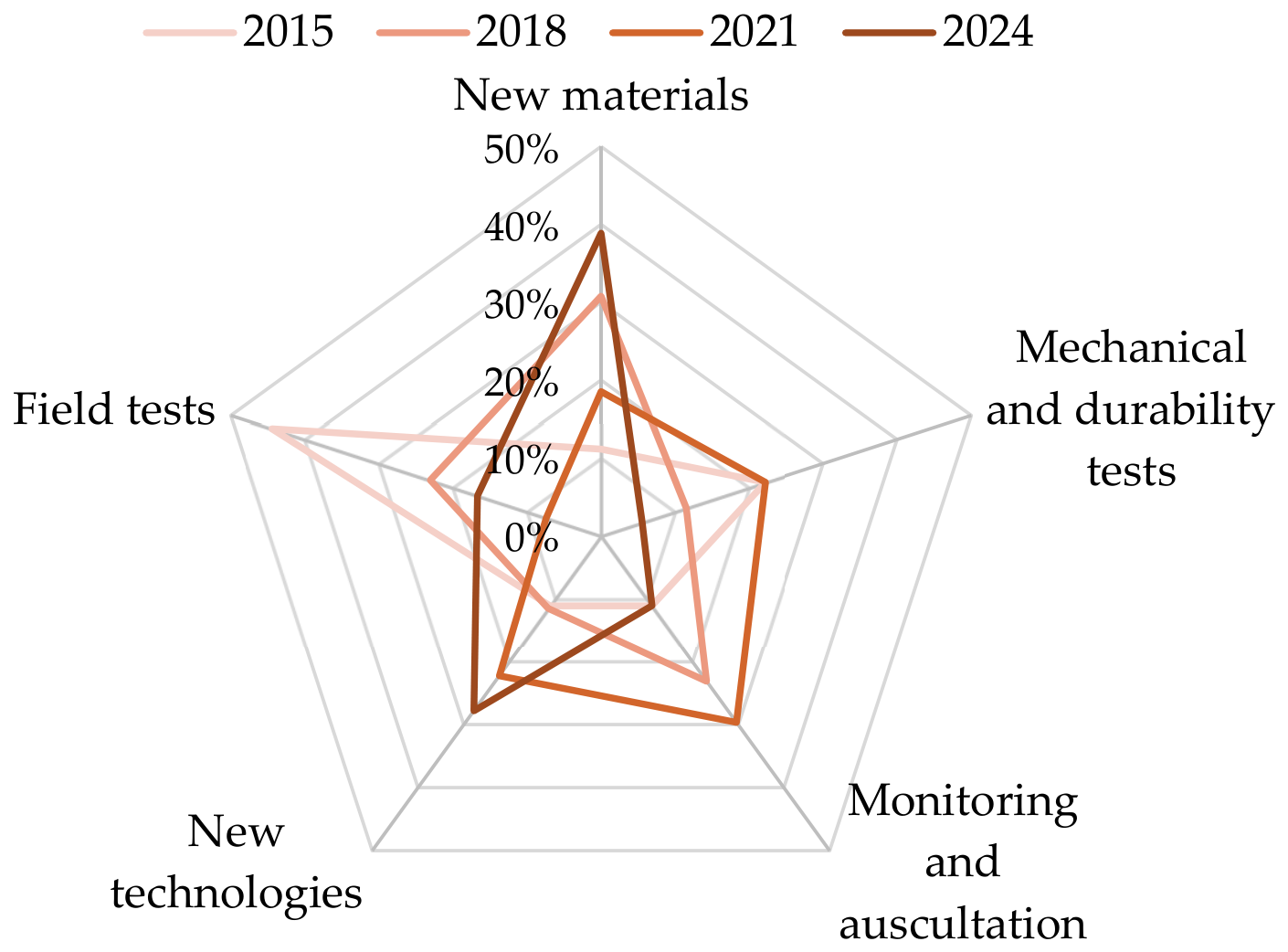
2.1. Categories of the Study
- New Materials
- Mechanical and durability tests
- Monitoring and auscultation
- New technologies
- Field Tests
2.2. Railway Superstructure Components
2.3. Rail Pads
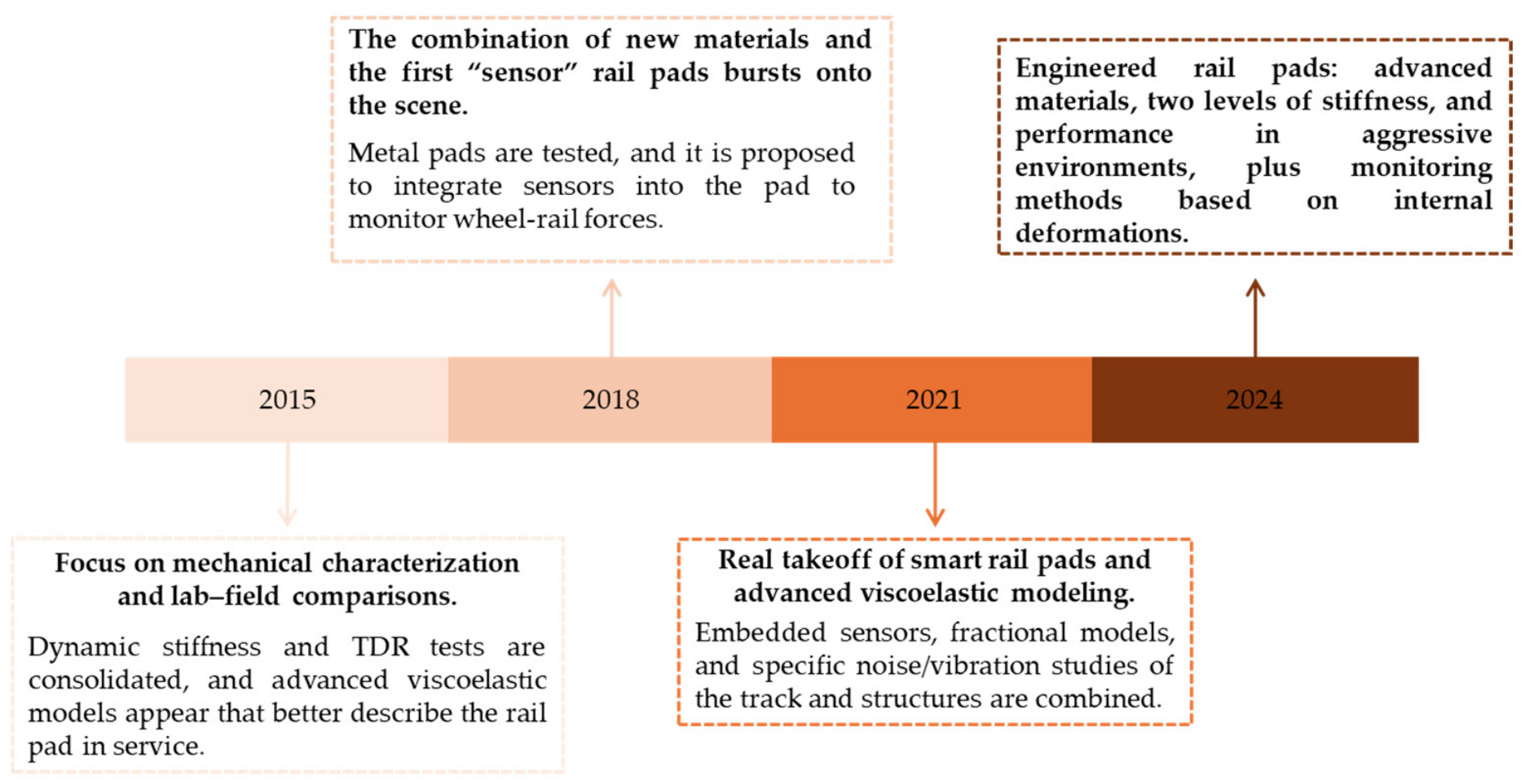
2.3.1. Development of the Research Across Years
2.3.2. Most Influential Factors
2.3.3. Materials
2.3.4. Integration of Technology for Monitoring
2.3.5. Geographic Distribution and Tendency

3. Discussion
4. Conclusions and Future Research
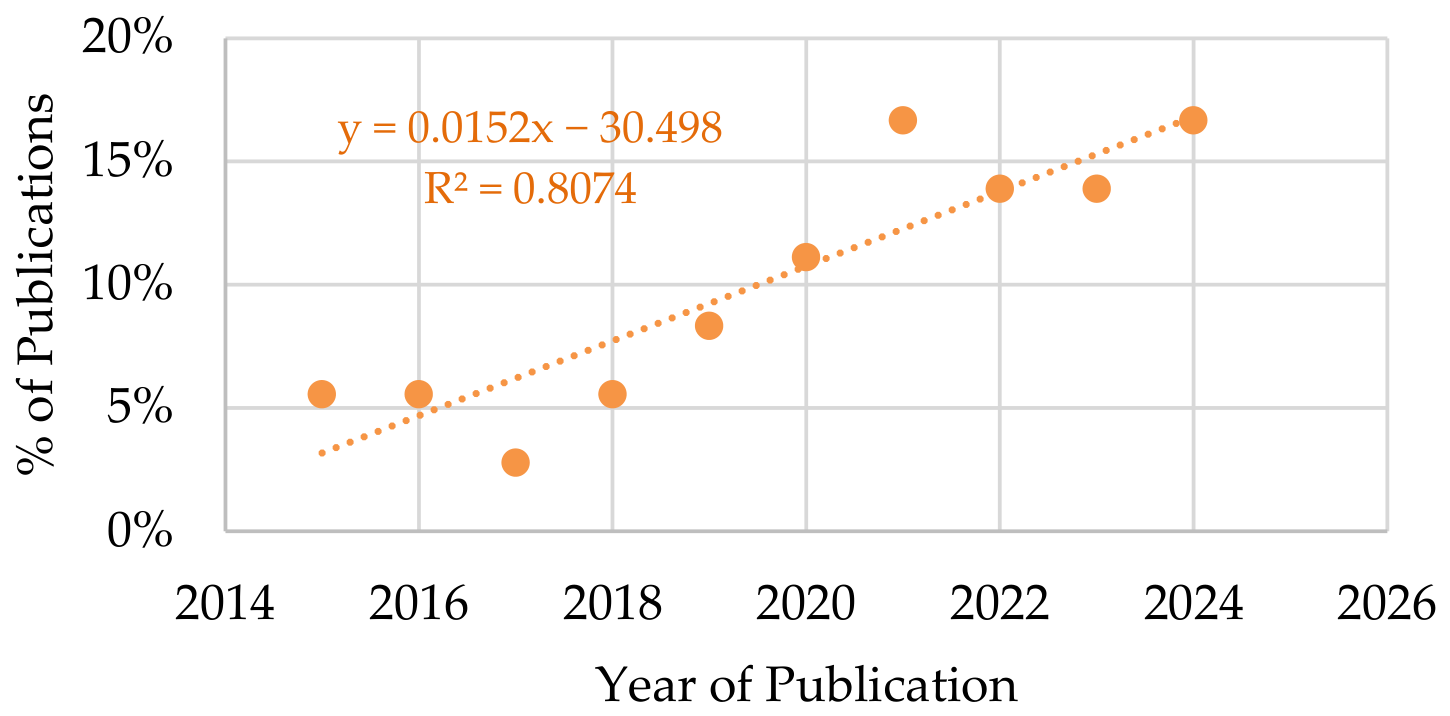
- The scientific focus in railway infrastructure has gradually shifted from rails to rail pads, with growing emphasis on materials research and technological improvements.
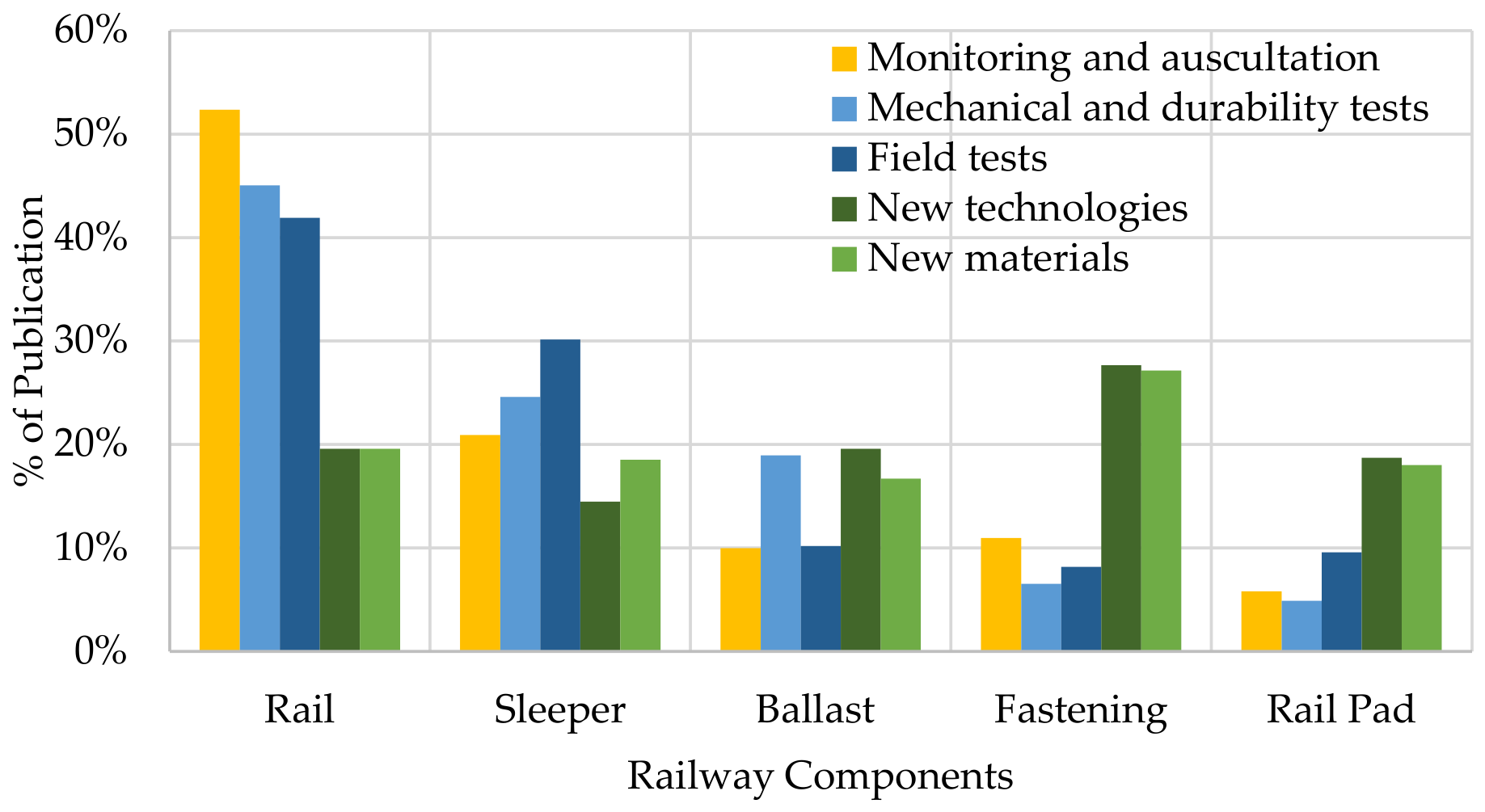
- Rails continue to dominate the literature (≈50% of publications), while rail pads account for only around 20%, representing a clear research gap relative to their mechanical importance within the track system.
- Earlier studies concentrated on field performance, whereas recent work prioritizes innovative materials, modified compounds, and sensor-integrated (“smart”) pad technologies.
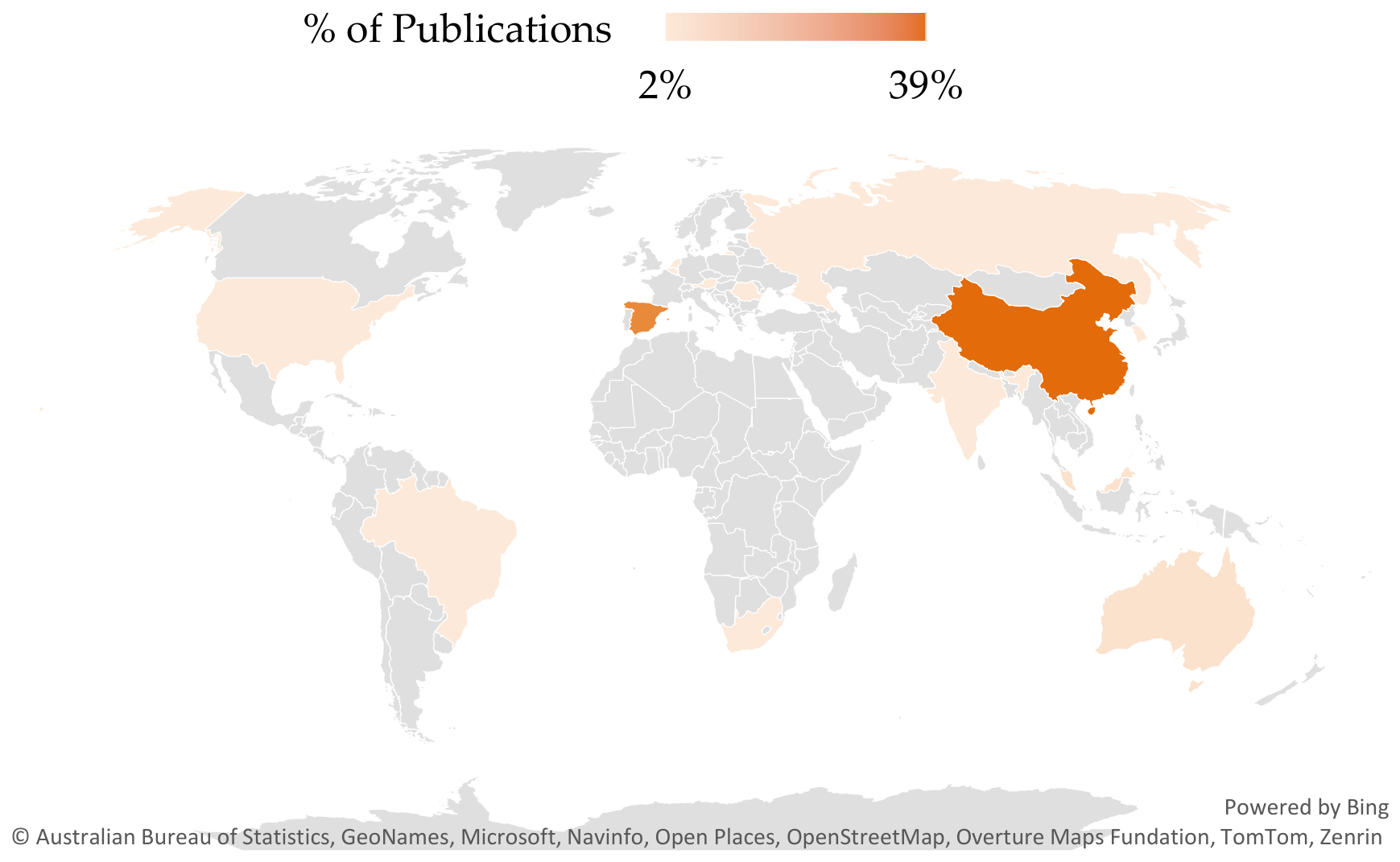
- Spain and China stand out as the top contributors in rail pad research, producing a large share of recent scientific output in this area, though a geographical imbalance persists in the available evidence.
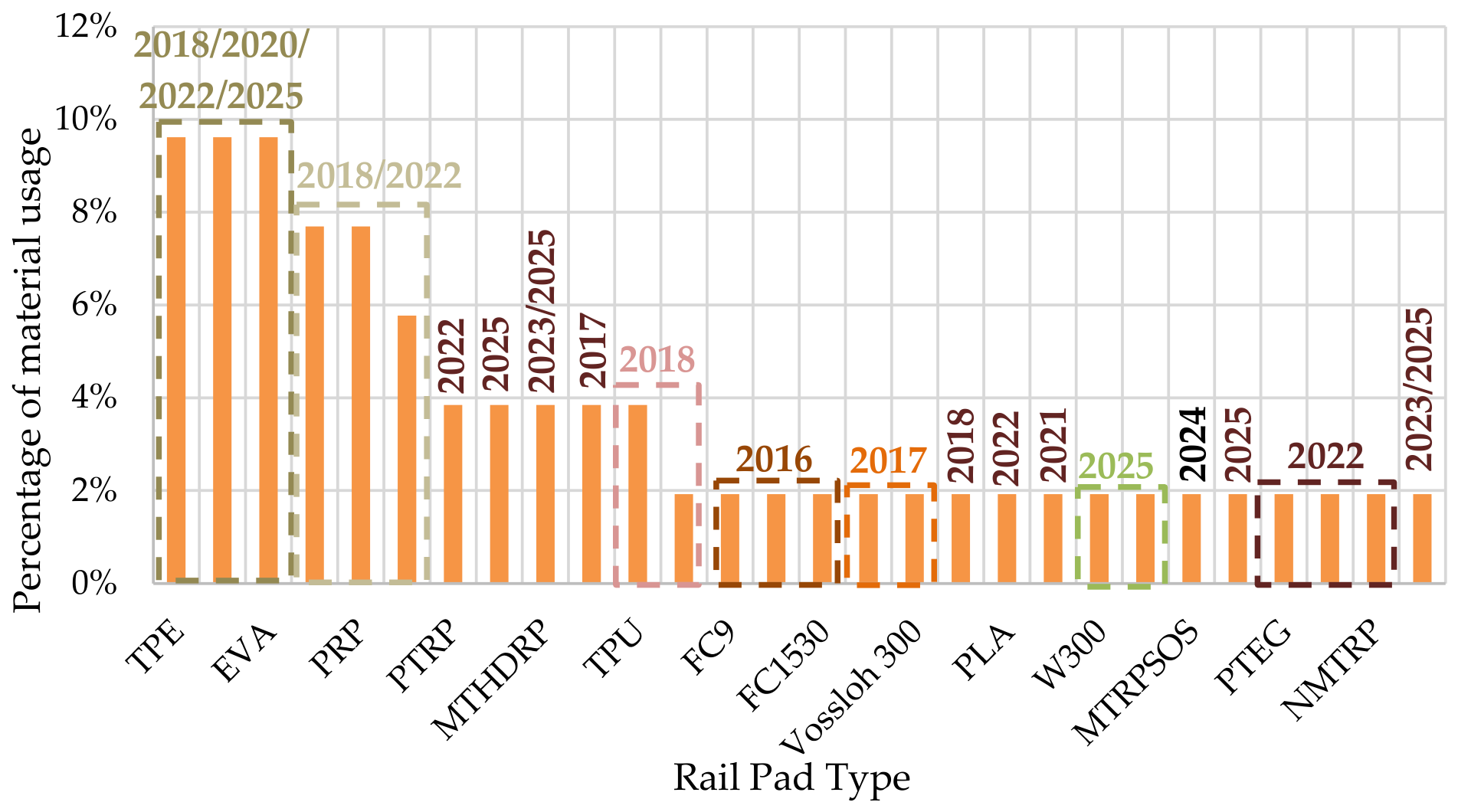
- Traditional materials such as TPEs, EPDM, and EVA are frequently studied, each accounting for approximately 10% of the reviewed literature, but current trends focus on customizing and improving their fundamental mechanical properties rather than introducing entirely new compounds.
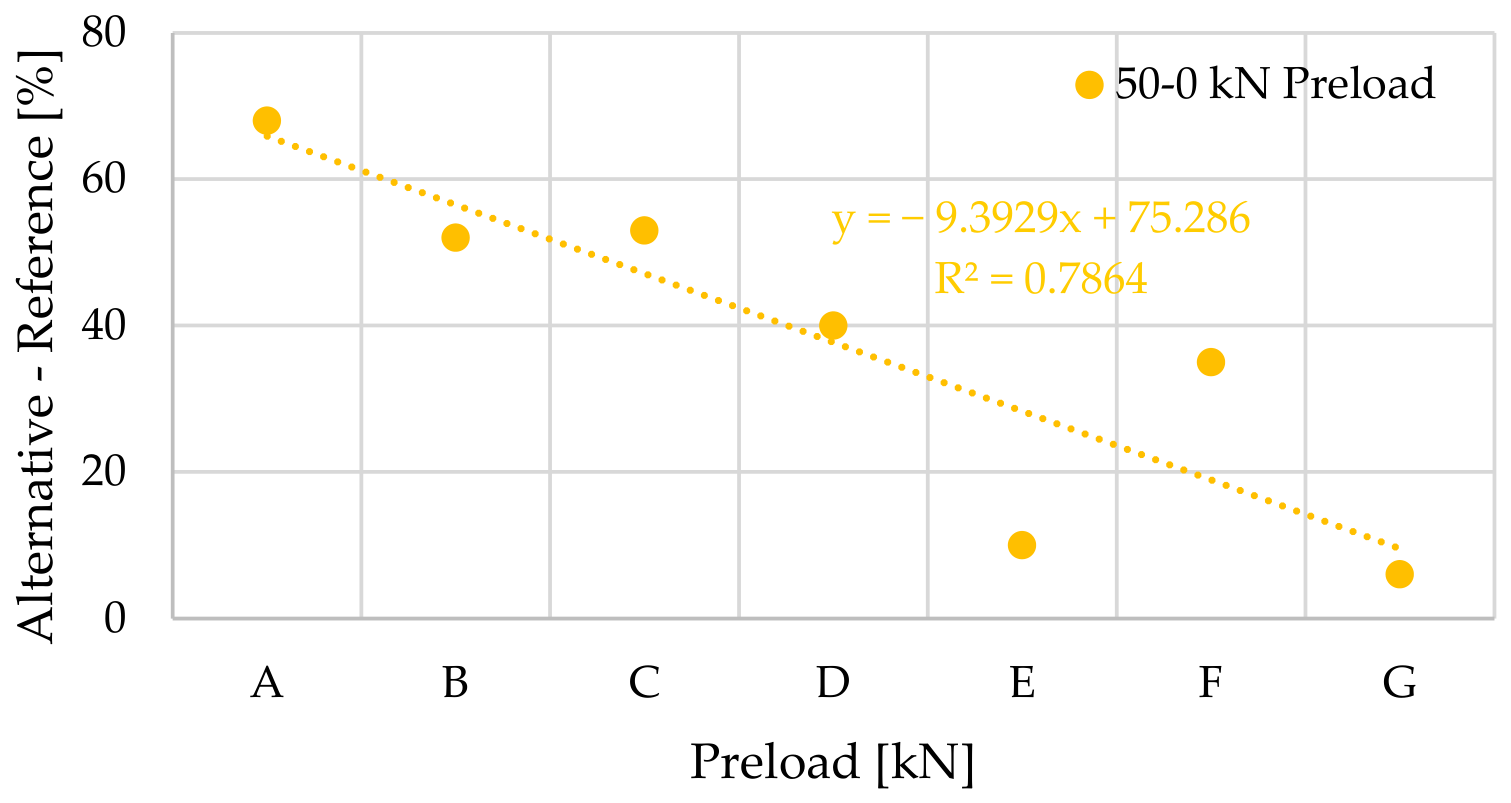
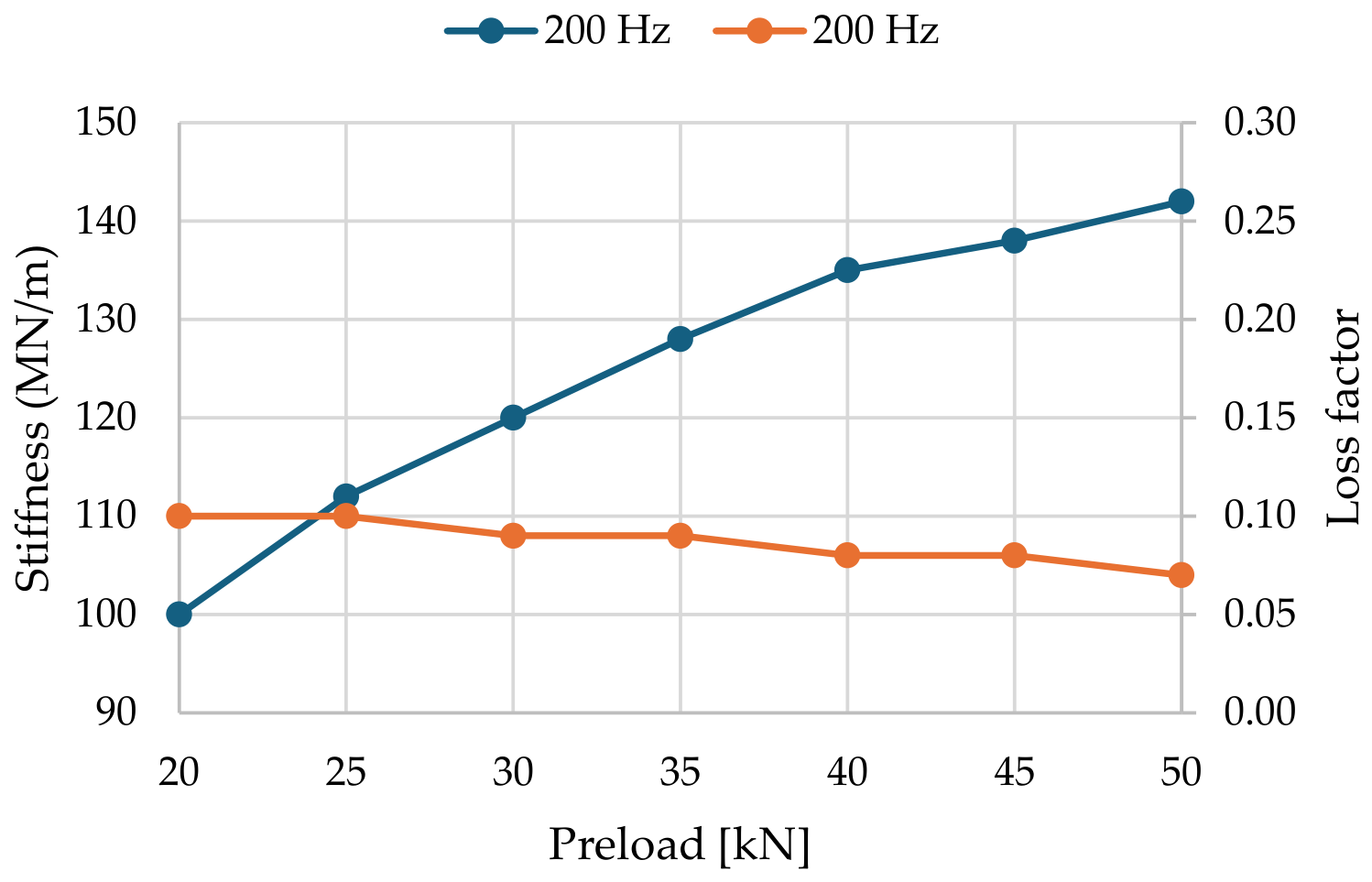
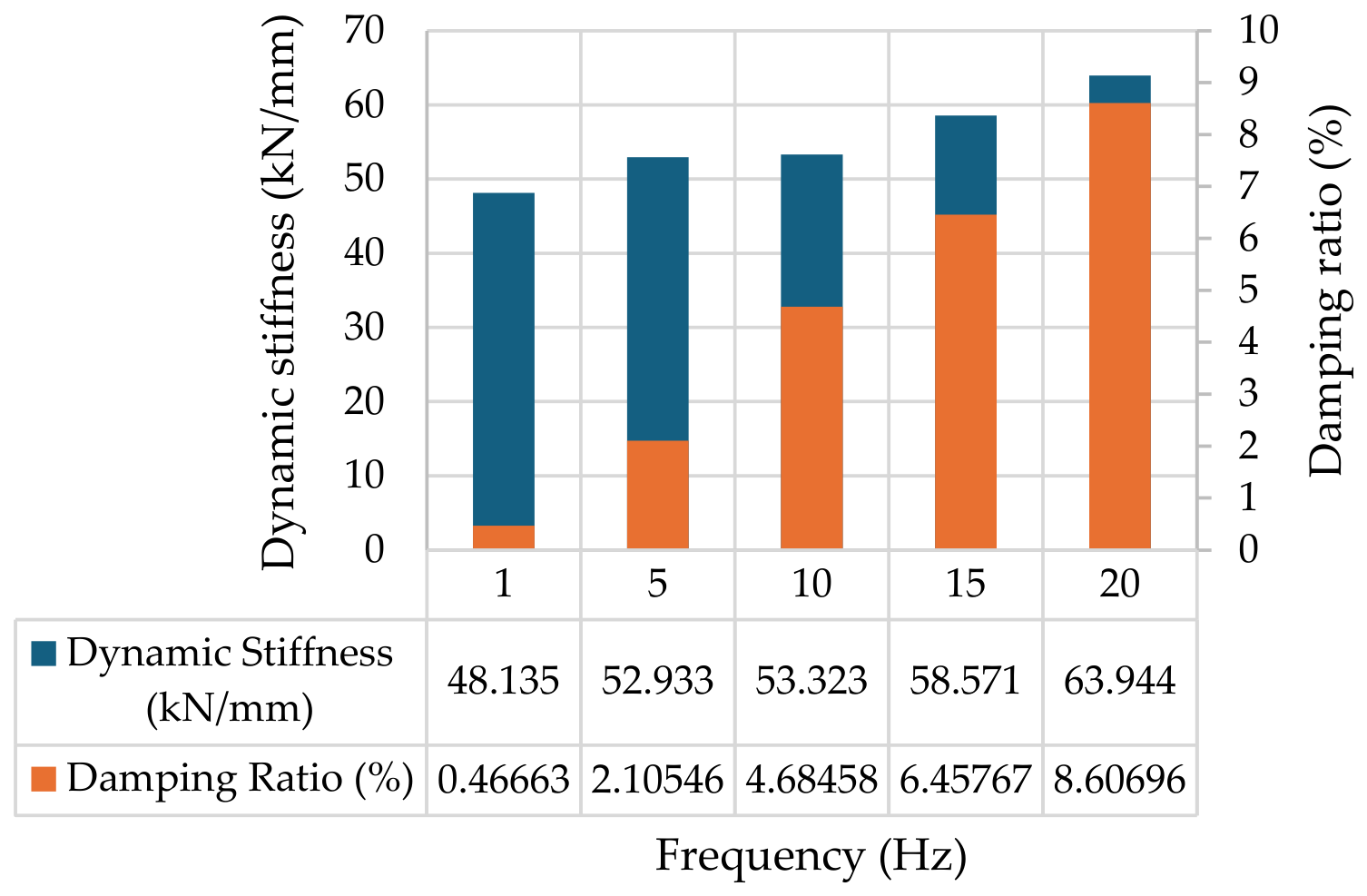
- Static preload and stiffness are the most consistently analyzed parameters, due to their sensitivity to operational and environmental conditions, and their strong influence on vibration damping and noise control performance.
- Limitations persist regarding nonlinear mechanical response, preload effects, and installation-related constraints, which complicate accurate characterization and reduce the comparability of experimental results across studies.
- Computational methods, especially Finite Element Modeling, now dominate the literature, often taking precedence over large-scale experimental studies, raising questions about the real-world validity of current findings.
- Expand long-term experimental investigations of rail pads under realistic operational conditions, especially in high-speed and mixed-traffic railway lines, where preload evolution, cyclic loading, and environmental degradation may significantly alter mechanical performance.
- Promote the development and validation of recycled and hybrid elastomeric materials capable of combining improved damping performance, durability, and environmental sustainability, supporting current circular economy objectives in railway infrastructure.
- Increase research on smart and sensor-integrated rail pads, including piezoelectric, fiber-optic, and strain-based monitoring systems, to support real-time infrastructure monitoring, predictive maintenance strategies, and digital-twin applications.
- Develop standardized testing methodologies capable of capturing the nonlinear and preload-dependent behavior of rail pads under variable frequencies and operational loading conditions, improving the comparability and reliability of experimental results.
- Strengthen large-scale experimental validation and in-track implementation studies to complement the growing use of finite element modeling and machine-learning-based approaches.
- Investigate the coupled behavior of fastening assemblies at the system level, considering the interaction between rail pads, clips, sleepers, and ballast under dynamic loading conditions.
- Explore adaptive and multifunctional rail pad configurations, including energy-harvesting systems, damping-enhanced geometries, and additive-manufactured components designed for next-generation intelligent railway infrastructure.
Author Contributions
Funding
Institutional Review Board Statement
Informed Consent Statement
Data Availability Statement
Conflicts of Interest
References
- Mohammadi, A.; Amador-Jimenez, L.; Nasiri, F. Reliable, Effective, and Sustainable Urban Railways: A Model for Optimal Planning and Asset Management. J. Constr. Eng. Manag. 2020, 146, 04020057. [Google Scholar] [CrossRef]
- Soleimani-Chamkhorami, K.; Garmabaki, A.H.S.; Kasraei, A.; Famurewa, S.M.; Odelius, J.; Strandberg, G. Life Cycle Cost Assessment of Railways Infrastructure Asset under Climate Change Impacts. Transp. Res. D Transp. Environ. 2024, 127, 104072. [Google Scholar] [CrossRef]
- Weston, P.; Roberts, C.; Yeo, G.; Stewart, E. Perspectives on Railway Track Geometry Condition Monitoring from In-Service Railway Vehicles. Veh. Syst. Dyn. 2015, 53, 1063–1091. [Google Scholar] [CrossRef]
- Schmidt, S.; Shah, S.; Moaveni, M.; Landry, B.J.; Tutumluer, E.; Basye, C.; Li, D. Railway Ballast Permeability and Cleaning Considerations. Transp. Res. Rec. J. Transp. Res. Board 2017, 2607, 24–32. [Google Scholar] [CrossRef]
- Ebrahimi, A.; Tinjum, J.M.; Edil, T.B. Deformational Behavior of Fouled Railway Ballast. Can. Geotech. J. 2015, 52, 344–355. [Google Scholar] [CrossRef]
- Charoenwong, C.; Connolly, D.P.; Colaço, A.; Alves Costa, P.; Woodward, P.K.; Romero, A.; Galvín, P. Railway Slab vs Ballasted Track: A Comparison of Track Geometry Degradation. Constr. Build. Mater. 2023, 378, 131121. [Google Scholar] [CrossRef]
- Rivas, I.; Sainz-Aja, J.A.; Ferreño, D.; Carrascal, I.; Casado, J.; Diego, S. Influence of Aging Conditions on the Dynamic Stiffness of EPDM and EVA Rail Pads. Appl. Sci. 2025, 15, 4394. [Google Scholar] [CrossRef]
- Bai, Y.; He, Z.; Su, C.; Bao, N.; Wang, H.; Shi, G.; Wang, Y.; Yun, J.; Wang, Z. Research on Dynamic Characteristics of Novel Filled Damping Block Mesh-Type Rail Pads for Heavy Haul Railways. Constr. Build. Mater. 2022, 354, 129174. [Google Scholar] [CrossRef]
- Yan, D.; Li, K.; Zhu, Q.; Liu, Y. A Railway Accident Prevention Method Based on Reinforcement Learning—Active Preventive Strategy by Multi-Modal Data. Reliab. Eng. Syst. Saf. 2023, 234, 109136. [Google Scholar] [CrossRef]
- Macedo, R.; Benmansour, R.; Artiba, A.; Mladenović, N.; Urošević, D. Scheduling Preventive Railway Maintenance Activities with Resource Constraints. Electron. Notes Discret. Math. 2017, 58, 215–222. [Google Scholar] [CrossRef]
- Wei, K.; Yang, Q.; Dou, Y.; Wang, F.; Wang, P. Experimental Investigation into Temperature- and Frequency-Dependent Dynamic Properties of High-Speed Rail Pads. Constr. Build. Mater. 2017, 151, 848–858. [Google Scholar] [CrossRef]
- Niu, Z.-Y.; Gao, L.; Liu, L.-Y.; Qin, J.-L. Dynamic Analysis of Vibration Response of Track Structure Considering Rail Pads in Low-Temperature Condition. Structures 2024, 59, 105713. [Google Scholar] [CrossRef]
- Ferreño, D.; Sainz-Aja, J.A.; Carrascal, I.A.; Cuartas, M.; Pombo, J.; Casado, J.A.; Diego, S. Prediction of Mechanical Properties of Rail Pads under In-Service Conditions through Machine Learning Algorithms. Adv. Eng. Softw. 2021, 151, 102927. [Google Scholar] [CrossRef]
- Xu, J.; Wang, K.; Liang, X.; Gao, Y.; Liu, Z.; Chen, R.; Wang, P.; Xu, F.; Wei, K. Influence of Viscoelastic Mechanical Properties of Rail Pads on Wheel and Corrugated Rail Rolling Contact at High Speeds. Tribol. Int. 2020, 151, 106523. [Google Scholar] [CrossRef]
- Australia, C.; Kaewunruen, S.; Remennikov, A.M. Response and Prediction of Dynamic Characteristics of Worn Rail Pads Under Static Preloads; Engineers Australia: Gold Coast, Australia, 2007. [Google Scholar]
- Venghaus, H.; Toward, M.; Scossa-Romano, E. Characteristics of Rail Pads Tested at Laboratory and Under Track Conditions; European Acoustics Association: Maastricht, The Netherlands, 2015. [Google Scholar]
- Li, H.; An, H.; Wang, Y.; Huang, J.; Gao, X. Evolutionary Features of Academic Articles Co-Keyword Network and Keywords Co-Occurrence Network: Based on Two-Mode Affiliation Network. Phys. A Stat. Mech. Its Appl. 2016, 450, 657–669. [Google Scholar] [CrossRef]
- Su, H.-N.; Lee, P.-C. Mapping Knowledge Structure by Keyword Co-Occurrence: A First Look at Journal Papers in Technology Foresight. Scientometrics 2010, 85, 65–79. [Google Scholar] [CrossRef]
- Cancino, C.; Merigó, J.M.; Coronado, F.; Dessouky, Y.; Dessouky, M. Forty Years of Computers & Industrial Engineering: A Bibliometric Analysis. Comput. Ind. Eng. 2017, 113, 614–629. [Google Scholar] [CrossRef]
- van Eck, N.J.; Waltman, L. Software Survey: VOSviewer, a Computer Program for Bibliometric Mapping. Scientometrics 2010, 84, 523–538. [Google Scholar] [CrossRef] [PubMed]
- Li, C.; Liu, W.; Liang, R. Identification of Vertical Wheel-Rail Contact Force Based on an Analytical Model and Measurement and Its Application in Predicting Ground-Borne Vibration. Measurement 2021, 186, 110182. [Google Scholar] [CrossRef]
- Pons, J.J.; Villalba Sanchis, I.; Insa Franco, R.; Yepes, V. Life Cycle Assessment of a Railway Tracks Substructures: Comparison of Ballast and Ballastless Rail Tracks. Environ. Impact Assess. Rev. 2020, 85, 106444. [Google Scholar] [CrossRef]
- Ferdous, W.; Manalo, A.; Van Erp, G.; Aravinthan, T.; Kaewunruen, S.; Remennikov, A. Composite Railway Sleepers—Recent Developments, Challenges and Future Prospects. Compos. Struct. 2015, 134, 158–168. [Google Scholar] [CrossRef]
- Sol-Sánchez, M.; Moreno-Navarro, F.; Rubio-Gámez, M.C. The Use of Elastic Elements in Railway Tracks: A State of the Art Review. Constr. Build. Mater. 2015, 75, 293–305. [Google Scholar] [CrossRef]
- Bai, Y.; He, Z.; Bao, N.; Li, P. Study on the Structural Stability of the Rail Pad and Its Influence on the Dynamic Response of the Vehicle-Track Coupled System. Measurement 2023, 223, 113698. [Google Scholar] [CrossRef]
- Bai, Y.; He, Z.; Bao, N.; Li, P. A New Mesh-Type Rail Pad with Second-Order Stiffness. Compos. Struct. 2024, 329, 117763. [Google Scholar] [CrossRef]
- Luo, Y.K.; Song, L.Z.; Zhang, C.; Ni, Y.Q. Experimental Evaluation and Numerical Interpretation of Various Noise Mitigation Strategies for In-Service Elevated Suburban Rail. Measurement 2023, 219, 113276. [Google Scholar] [CrossRef]
- Park, D.W.; Choi, C.; Phan, T.M.; Minh Le, T.H. Mobilizing Railway Track Stability with Nonionic Cement Asphalt Mortar for Floating Sleeper Mitigation—2D/3D Numerical Investigation and Full-Scale Testing Verification. Case Stud. Constr. Mater. 2024, 20, e03088. [Google Scholar] [CrossRef]
- Othman, M.I.H.; Wahab, A.M.A.; Hadi, M.S.; Noor, N.M. Assessing the Nonlinear Static Stiffness of Rail Pad Using Finite Element Method. J. Vibroeng. 2022, 24, 921–935. [Google Scholar] [CrossRef]
- Binder, M.; Mezhuyev, V.; Tschandl, M. Predictive Maintenance for Railway Domain: A Systematic Literature Review. IEEE Eng. Manag. Rev. 2023, 51, 120–140. [Google Scholar] [CrossRef]
- Alabbasi, Y.; Hussein, M. Geomechanical Modelling of Railroad Ballast: A Review. Arch. Comput. Methods Eng. 2019, 28, 815–839. [Google Scholar] [CrossRef]
- Da Fonseca-Soares, D.; Galvinicio, J.D.; Eliziário, S.A.; Ramos-Ridao, A.F. A Bibliometric Analysis of the Trends and Characteristics of Railway Research. Sustainability 2022, 14, 13956. [Google Scholar] [CrossRef]
- Ruete, M. Challenges for European Rail: Getting Solutions on Track; Policy Paper 261; Jacques Delors Institute: Paris, France, 2021. [Google Scholar]
- Liu, W.Q.; Feng, Z.H.; Liu, R.B.; Zhang, J. The Influence of Preamplifiers on the Piezoelectric Sensor’s Dynamic Property. Rev. Sci. Instrum. 2007, 78, 125107. [Google Scholar] [CrossRef] [PubMed]
- European Rail Research Advisory Council (ERRAC). Rail 2030 Research & Innovation Priorities; ERRAC: Brussels, Belgium, 2019. [Google Scholar]
- Bondarenko, I.; Lukoševicius, V.; Keršys, R.; Neduzha, L. Innovative Trends in Railway Condition Monitoring. In Proceedings of the Transportation Research Procedia; Elsevier B.V.: Amsterdam, The Netherlands, 2024; Volume 77, pp. 10–17. [Google Scholar]
- Mazlan, A.K.; Wahab, A.M.A.; Anuar, M.A.; Makhtar, A.K. Nonlinear Static Stiffness of Rail Pads for Different Materials and Thicknesses Using Finite Element Method. J. Mech. Eng. 2022, 11, 49–64. [Google Scholar] [CrossRef]
- Guo, Y.; Xie, J.; Fan, Z.; Markine, V.; Connolly, D.P.; Jing, G. Railway Ballast Material Selection and Evaluation: A Review. Constr. Build. Mater. 2022, 344, 128218. [Google Scholar] [CrossRef]
- Kuang, Y.; Zuo, C.; Gu, X. Design, Modelling and Field Test of a Track-Borne Magnetic Field Energy Harvester for Electrified Railways. Appl. Energy 2025, 401, 126665. [Google Scholar] [CrossRef]
- Huang, S.; Qian, Y. Large-Scale Triaxial Testing of Geogrid-Stabilized Field-Sourced Fouled Ballast Under Simulated Progressive Rainfall Wetting and Cyclic Loading Conditions. Transp. Res. Rec. 2024, 2678, 102–113. [Google Scholar] [CrossRef]
- Juan, R.; Domínguez, C.; Robledo, N.; Paredes, B.; García-Muñoz, R.A. Incorporation of Recycled High-Density Polyethylene to Polyethylene Pipe Grade Resins to Increase Close-Loop Recycling and Underpin the Circular Economy. J. Clean. Prod. 2020, 276, 124081. [Google Scholar] [CrossRef]
- Remennikov, A.; Kaewunruen, S. Laboratory Measurements of Dynamic Properties of Rail Pads Under Laboratory Measurements of Dynamic Properties of Rail Pads Under Incremental Preload Incremental Preload; Australian Acoustical Society: Christchurch, New Zealand, 2006. [Google Scholar]
- Sung, D.; Hong, S. A Simple Method to Assess Replacement Period of Polyurethane Railpad in Urban Railway. Constr. Build. Mater. 2020, 248, 118607. [Google Scholar] [CrossRef]
- Sainz-Aja, J.A.; Carrascal, I.A.; Ferreño, D.; Casado, J.; Diego, S.; Pombo, J.; Rivas, I. Impact of Hydrocarbon Exposure on the Mechanical Properties of Rail Pads. Constr. Build. Mater. 2024, 419, 135561. [Google Scholar] [CrossRef]
- Peng, H.; Pang, F.; Li, Z.; Xiao, X.; Tang, S. Study on the Impact of a Metro Depot Cover Structure on the Existing Metro Structure and Additional Settlement of Tracks. Buildings 2023, 13, 1914. [Google Scholar] [CrossRef]
- Komarizadehasl, S.; Lozano, F.; Lozano-Galant, J.A.; Ramos, G.; Turmo, J. Low-Cost Wireless Structural Health Monitoring of Bridges. Sensors 2022, 22, 5725. [Google Scholar] [CrossRef]
- Su, D.; Sun, C.; Wang, L. Design and Evaluation of a Piezoelectric-Electromagnetic Energy Harvester with a Lever Structure. Mech. Syst. Signal Process. 2024, 220, 111642. [Google Scholar] [CrossRef]
- Kaewunruen, S.; Remennikov, A.M. An Alternative Rail Pad Tester for Measuring Dynamic Properties of Rail Pads under Large Preloads. Exp. Mech. 2008, 48, 55–64. [Google Scholar] [CrossRef]
- UNE-EN 13146-3; Railway Applications—Track—Test Methods for Fastening Systems—Part 3: Determination of Attenuation of Impact Loads. AENOR: Madrid, Spain, 2012.
- He, Z.; Bai, Y.; Su, C.; Bao, N.; Li, P.; Zhang, X.; Zhang, L.; Liu, Y. Structural Design of New Mesh-Type High-Damping Rail Pad and Comparative Experimental Study on the Mechanical Property with the Traditional Rail Pads. Structures 2023, 57, 105234. [Google Scholar] [CrossRef]
- Li, Q.; Dai, B.; Zhu, Z.; Thompson, D.J. Improved Indirect Measurement of the Dynamic Stiffness of a Rail Fastener and Its Dependence on Load and Frequency. Constr. Build. Mater. 2021, 304, 124588. [Google Scholar] [CrossRef]
- Soleimanmeigouni, I. Predictive Models for Railway Track Geometry Degradation. Ph.D. Thesis, Luleå University of Technology, Luleå, Sweden, 2018. [Google Scholar]
- Neuhold, J.; Vidovic, I.; Marschnig, S. Preparing Track Geometry Data for Automated Maintenance Planning. J. Transp. Eng. A Syst. 2020, 146, 04020032. [Google Scholar] [CrossRef]
- Guillén, A.; Guerrero-Bustamante, O.; Iglesias, G.R.; Moreno-Navarro, F.; Sol-Sánchez, M. Design of Sensorized Rail Pads for Real-Time Monitoring and Predictive Maintenance of Railway Infrastructure. Infrastructures 2025, 10, 45. [Google Scholar] [CrossRef]
- Bai, Y.; He, Z.; Bao, N.; Wang, H.; Zhang, P. Research on the Influence of Loading Frequency, Material Elasticity, and Geometric Parameters on Mechanical Characteristics of the New Mesh-Type High Damping Rail Pad for Fastening System. Structures 2023, 53, 421–431. [Google Scholar] [CrossRef]
- Zhu, S.; Cai, C.; Spanos, P.D. A Nonlinear and Fractional Derivative Viscoelastic Model for Rail Pads in the Dynamic Analysis of Coupled Vehicle–Slab Track Systems. J. Sound Vib. 2015, 335, 304–320. [Google Scholar] [CrossRef]
- Kołakowski, P.; Szelek, J.; Sekuła, K.; Świercz, A.; Mizerski, K.; Gutkiewicz, P. Structural Health Monitoring of a Railway Truss Bridge Using Vibration-Based and Ultrasonic Methods. Smart Mater. Struct. 2011, 20, 035016. [Google Scholar] [CrossRef]
- Sol-Sánchez, M.; Mattinzioli, T.; Castillo-Mingorance, J.M.; Moreno-Navarro, F.; Rubio-Gámez, M.C. GRIDMAT—A Sustainable Material Combining Mat and Geogrid Concept for B Railways. Sustainability 2022, 14, 11186. [Google Scholar] [CrossRef]
- Sol-Sánchez, M.; Moreno-Navarro, F.; Rubio-Gámez, M.C. Viability Analysis of Deconstructed Tires as Material for Rail Pads in High-Speed Railways. Mater. Des. 2014, 64, 407–414. [Google Scholar] [CrossRef]
- Kaewunruen, S.; Remennikov, A.M. Sensitivity Analysis of Free Vibration Characteristics of an in Situ Railway Concrete Sleeper to Variations of Rail Pad Parameters. J. Sound Vib. 2006, 298, 453–461. [Google Scholar] [CrossRef]
- Carrascal, I.A.; Casado, J.A.; Polanco, J.A.; Gutiérrez-Solana, F. Dynamic Behaviour of Railway Fastening Setting Pads. Eng. Fail. Anal. 2007, 14, 364–373. [Google Scholar] [CrossRef]
- Edilon Sedra. (n.d.). Available online: https://www.edilonsedra.com/es/ (accessed on 15 May 2026).
- Getzner Werstoffe. (n.d.). Available online: https://www.getzner.com/en-us/products (accessed on 15 May 2026).
- Sainz-Aja, J.A.; Carrascal, I.A.; Ferreño, D.; Pombo, J.; Casado, J.A.; Diego, S. Influence of the Operational Conditions on Static and Dynamic Stiffness of Rail Pads. Mech. Mater. 2020, 148, 103505. [Google Scholar] [CrossRef]
- Afolabi, J.A. Advancing the Circular Economy in Europe: The Role of Eco-Innovation, Economic Complexity, and Digitalization. Technol. Soc. 2025, 83, 103027. [Google Scholar] [CrossRef]
- Bai, Y.; He, Z.; Qu, S.; Wang, X.; Li, P.; Zhang, X.; Zhai, W. Rail Pad Damping Characteristics in Track Vibration Reduction Evaluated through Hammer Tests and Theoretical Analysis. Measurement 2025, 239, 115467. [Google Scholar] [CrossRef]
- He, Z.; Bai, Y.; Su, C.; Bao, N.; Wang, H.; Yun, J.; Wang, Y. Influence of Damping Characteristics of Mesh–Type High Damping Rail Pad on the Vehicle–Track Dynamic Performance and Rail Surface Roughness. Veh. Syst. Dyn. 2024, 62, 739–758. [Google Scholar] [CrossRef]
- Sol-Sánchez, M.; Castillo-Mingorance, J.M.; Moreno-Navarro, F.; Mattinzioli, T.; Rubio-Gámez, M.C. Piezoelectric-Sensored Sustainable Pads for Smart Railway Traffic and Track State Monitoring: Full-Scale Laboratory Tests. Constr. Build. Mater. 2021, 301, 124324. [Google Scholar] [CrossRef]
- Guillén, A.; Moreno-Navarro, F.; Sol-Sánchez, M.; Iglesias, G.R. Development and Validation of a Low-Cost External Signal Acquisition Device for Smart Rail Pads: A Comparative Performance Study. Sensors 2025, 25, 1933. [Google Scholar] [CrossRef]
- Lan, C.; Niu, X.; Zhu, W.; Yi, H.; Li, Z.; Yang, R. Experimental Study on Test of Wheel-Rail Impact Based on Iron Plate Strain of Fastener System. Constr. Build. Mater. 2024, 445, 137804. [Google Scholar] [CrossRef]
- Li, P.; Wang, M.; Yu, T.; Feng, N.; Lan, C.; Yang, K.; Li, S.; Zhang, H. A Monitoring Method of Rail Fastener Reaction Force Based on Iron Pad Strain. Constr. Build. Mater. 2024, 418, 135169. [Google Scholar] [CrossRef]
- Woschitz, H.; Woschitz, H. Development of a Rail-Strain-Pad Using FBG Sensors. Ph.D. Thesis, University of Innsbruck, Innsbruck, Austria, 2011. [Google Scholar]
- Sol-Sánchez, M.; Castillo-Mingorance, J.M.; Moreno-Navarro, F.; Rubio-Gámez, M.C. Smart Rail Pads for the Continuous Monitoring of Sensored Railway Tracks: Sensors Analysis. Autom. Constr. 2021, 132, 103950. [Google Scholar] [CrossRef]
- van Schalkwyk, M.H.; Gräbe, P.J. Condition Monitoring of Train Wheels Using a Cost-Effective Smart Rail Pad. Eng. Res. Express 2022, 4, 035045. [Google Scholar] [CrossRef]
- Zhang, S.L.; Koh, C.G.; Kuang, K.S.C. Proposed Rail Pad Sensor for Wheel-Rail Contact Force Monitoring. Smart Mater. Struct. 2018, 27, 115041. [Google Scholar] [CrossRef]
- Xu, J.; Butler, L.J.; Elshafie, M.Z.E.B. Experimental and Numerical Investigation of the Performance of Self-Sensing Concrete Sleepers. Struct. Health Monit. 2020, 19, 66–85. [Google Scholar] [CrossRef]
- Ngo, N.T.; Indraratna, B. Improved Performance of Rail Track Substructure Using Synthetic Inclusions: Experimental and Numerical Investigations. Int. J. Geosynth. Ground Eng. 2016, 2, 24. [Google Scholar] [CrossRef]
- Efficiency of the Spanish Sector in the Development of the High-Speed Railways Index; Ineco: Madrid, Spain, 2023.
- Mindur, M.; Mindur, L.; Sitarz, M.; Rosa, G. Development of High-Speed Rail in Spain from 2002 to 2022. SSRN 2025. [Google Scholar] [CrossRef]



| NM | MandD | MandA | NT | FT | |
| Rail | 3% | −4% | = | −3% | 5% |
| Sleeper | 8% | 4% | 2% | −3% | −10% |
| Fastenings | 15% | −1% | −12% | 4% | −8% |
| Rail Pads | 25% | −5% | −5% | 1% | −16% |
| Ballast | −5% | −5% | = | 1% | 10% |
| Rail Pad Type | Description | Country | Commercial Use (CU)/Laboratory Only (LO) |
|---|---|---|---|
| FC9 | metallic rail pad | Netherlands | CU |
| Orange | high elasticity rail pad | ||
| FC1530 | As FC9 but with higher cork content | ||
| WJ-7 | High-speed railway lines, high elasticity rail pads | China | |
| WJ-8 | Better than WJ-7, better performance against fatigue and vertical loads. | ||
| Vossloh 300 | Not so recommended in high-speed railway lines. | ||
| WJ2-A | Replaced by WJ-7 and WJ-8. | ||
| NMTRP | Novel mesh-type Rail Pad | LO | |
| MTRPSOS | Mesh-type rail pad with second-order stiffness | ||
| W300 | W-type elastic fastening system (W-shaped clip) | CU | |
| MRE | Magnetorheological Elastomer | LO | |
| MTRP | Mesh-type rail pad | ||
| GRRP | Grooved Rubber is widely used in rail transit vibration reduction because of its advantage of easy processing | ||
| PTRP | Prismatic Thermoplastic Polyester Elastomer | ||
| MTHDRP | Mesh-type high-damping rail pad | ||
| MTRPDB | Mesh-type Rail Pad Double Base | ||
| ELT | Thermosetting End-of-life tire materials | Spain | |
| PP/PE | Thermoplastic Polypropylene and Polyethylene | ||
| Hytrel | TPE (Thermoplastic Elastomer) | CU | |
| TPE | medium stiffness thermoplastic elastomer with oblong-shaped protrusions, 7 mm thickness and a hardness of 47 HS-D (PAE-2 rail pads) | ||
| EVA | Ethylene Vinyl Acetate is a thermoplastic elastomer, with a 6 mm thickness and a hardness of 46 HS-D (HM-SKL-1 fastening system) | ||
| HDPE | Thermoplastic High-Density Polyethylene | ||
| TPU | Thermoplastic Polyurethane | South Africa; Spain | |
| PLA | Polylactic Acid is a biodegradable, thermoplastic polymer | South Africa | LO |
| PTEG | Thermoplastic Polyethylene Terephthalate modified with Glycol | ||
| EPDM | Ethylene Propylene Diene Monomer is a thermosetting elastomer, with a 7 mm thickness and a hardness of 21 HS-D (W14 HHR fastening system) | Saudi Arabia |
| Possible Problems or Defects in the Railway Structure | Recommended Solutions | System Layout |
|---|---|---|
| To assess the structural behavior of the railway track in critical alignment zones, such as curved sections. | RAIL-STRAIN-PAD | 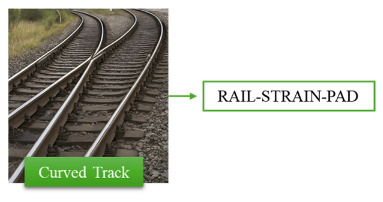 |
| In Ballasted Tracks to measure dynamic cyclic loading. | InterActive Pad |  |
| To measure defects on the wheel–rail contact as the wheel–rail impact. | Rail Pad with PVDF Sensor | |
| To measure defects on the wheel–rail contact as the wheel flat effect. | 3D-Printed Rail Pad | |
| In Slab Tracks to measure dynamic cyclic loading. | FBG optical sensors embedded in iron pad strain | 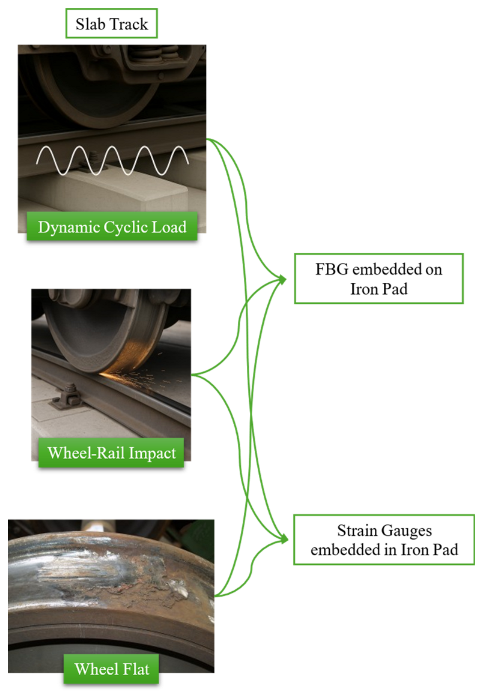 |
| To measure defects on the wheel–rail contact as the wheel–rail impact. | ||
| Strain Gauges embedded in iron pad strain | ||
| To measure defects on the wheel–rail contact as the wheel flat effect. |
| Year of Publication | Technology | Essential Characteristics | Adaptable Sensors | Advantages | Degree of Development and Implementation | Technology Readiness Level (TRL) |
|---|---|---|---|---|---|---|
| 2011 | RAIL-STRAIN-PAD | Elastic pad of polyurethane (150 × 160 × 7 mm) with multiple Fiber Bragg Grating (FBG) sensors embedded during manufacturing. Designed to measure large dynamic strains (>30,000 µε) under train passage. | Fiber Bragg Grating | High strain capacity; non-intrusive integration; immune to electromagnetic interference; enables direct in-pad measurement of vertical and horizontal loads. | Early experimental field implementation. Tested in the lab and installed in the Alpine track (R = 290 m). Survived > 500,000 load cycles and field conditions. Served as a basis for further FBG-based rail pad studies. | TRL 7—Field Testing |
| 2018 | Rail Pad with PVDF Sensor | Thin (≈0.7 mm) PVDF sensing film attached under pad surface in alternating strip layers; measures wheel–rail contact forces dynamically. | PVDF sensor | Lightweight, flexible, low-cost, wide frequency bandwidth, linear output under dynamic loading. Non-intrusive installation avoids altering stiffness. | Prototype validated at the lab and field level. High potential for industrial application due to simplicity and cost-effectiveness. | TRL 6–7—Full-scale and Field Testing |
| 2021 | InterActive Pad | Optimized pad design with piezoelectric sensors half-embedded at the extremities; integrated calibration and predictive modeling. | Piezoelectric, Accelerometers, Piezoresistives | Enhanced durability, improved signal clarity, allows real-time load estimation and preventive maintenance algorithms. | Cutting-edge research. Demonstrated high reliability and calibration precision; groundwork for future implementation in real railway networks. | TRL 5–6—Full-scale testing |
| 2022 | 3D-Printed Rail Pad | Accelerometers and strain gauges integrated into 3D-printed pads (PLA, PETG, TPU) for monitoring wheel defects and load distribution. | Strain Gauges, Accelerometers | Customizable geometry, low fabrication cost, additive manufacturing flexibility, and acceptable measurement accuracy (error < 6%). | Emerging technology. Early-stage validation in lab and limited field tests; promising for low-cost and modular SHM systems. | TRL 4–5—Laboratory and Full-scale testing |
| 2024 | FBG optical sensors embedded in iron pad strain | Fiber Bragg Grating sensors embedded or bonded to pads (polyurethane or iron). Measure strain and deformation due to wheel or fastener forces. | Fiber Bragg Grating | High sensitivity and accuracy; immune to electromagnetic interference; suitable for long-term SHM; capable of measuring large strains (>30,000 µε). | Research for early field implementation. Proven in lab and limited field tests; mainly used in specialized monitoring; cost and integration complexity still limit large-scale deployment. | TRL 5–6—Full-scale testing |
| 2024 | Strain Gauges embedded in iron pad strain | Strain Gauges embedded in iron pad strain to effectively monitor the wheel–rail impact. | Strain Gauges | High linearity (R2 > 0.99) and stable strain–force response; enables measurement in previously invalid test sections; non-intrusive installation on the iron plate preserves fastener stiffness; allows estimation of quasi-static impact force (P2) from rail-seat force; strong agreement with FE simulations (R2 ≈ 0.9–0.97). | Prototype validated at the lab. It has been successfully calibrated under static loading, tested through full wheel-drop experiments, and verified numerically, although it has not yet been deployed on operational railway lines. Thus, its maturity corresponds to an intermediate technological readiness level, approximately TRL 4–5. | TRL 4–5—Laboratory and Full-scale testing |
Disclaimer/Publisher’s Note: The statements, opinions and data contained in all publications are solely those of the individual author(s) and contributor(s) and not of MDPI and/or the editor(s). MDPI and/or the editor(s) disclaim responsibility for any injury to people or property resulting from any ideas, methods, instructions or products referred to in the content. |
© 2026 by the authors. Licensee MDPI, Basel, Switzerland. This article is an open access article distributed under the terms and conditions of the Creative Commons Attribution (CC BY) license.
Share and Cite
Guillén, A.; Diego, S.; Iglesias, G.; Casado, J.; Sol-Sánchez, M.D. Rail Pad Applications and Research Trends in the Railway Sector: A Systematic Bibliometric Review. Appl. Sci. 2026, 16, 5323. https://doi.org/10.3390/app16115323
Guillén A, Diego S, Iglesias G, Casado J, Sol-Sánchez MD. Rail Pad Applications and Research Trends in the Railway Sector: A Systematic Bibliometric Review. Applied Sciences. 2026; 16(11):5323. https://doi.org/10.3390/app16115323
Chicago/Turabian StyleGuillén, Amparo, Soraya Diego, Guillermo Iglesias, José Casado, and Miguel Del Sol-Sánchez. 2026. "Rail Pad Applications and Research Trends in the Railway Sector: A Systematic Bibliometric Review" Applied Sciences 16, no. 11: 5323. https://doi.org/10.3390/app16115323
APA StyleGuillén, A., Diego, S., Iglesias, G., Casado, J., & Sol-Sánchez, M. D. (2026). Rail Pad Applications and Research Trends in the Railway Sector: A Systematic Bibliometric Review. Applied Sciences, 16(11), 5323. https://doi.org/10.3390/app16115323