1. Introduction
The fact is that limited color vision or the complete absence of color vision results in problems in everyday life and professional life. The main effects relate to limiting access to education and professions [
1,
2]. People with color vision deficiencies have limited career choices, as certain professions (ex. pilots, train drivers, electricians, chemists, doctors, pharmacists, defense force, logisticians, and air traffic controllers) require accurate color discrimination [
3]. Accurate color recognition in many workplaces is required but it depends on the country [
3,
4,
5]. Colors are often used for coding information, individuals with color vision deficiencies (CVDs) have limited access to data or may incorrectly interpret them. Thus, CVDs, understood as the inability to discriminate between colors, hinder access to technologies and workplace environments [
6,
7,
8]. In 2017, A. and M. Chaparro [
9] proposed a classification of perceptual judgments based on color coding into the following four major areas: comparative, denotative, connotative, and esthetic. Work tasks involving such judgments may represent a limitation for individuals with CVDs.
The comparative area involves tasks in which the observer needs to judge whether or not two colors are identical in gradable or absolute terms, such as evaluating two samples of paint (the same or different?).
In denotative applications color is used to attract attention and sort or segregate objects. Examples of tasks in this area include visual searching, color-based segmentation, and reducing visual clutter. In the case of searching, color is an important cue facilitating the process. Segmentation consists of the segregation and grouping of colors, which organize the visual scene. This perceptual property is used, e.g., in designing Ishihara color plates. The application of colors can reduce visual chaos by imparting order to graphical illustrations. For instance, in maps colors represent different kinds of objects (e.g., roads, terrain types, etc.).
In the connotative area, colors are assigned specific meanings, such as signaling danger. Tasks in this area involve color-based object and status identification, magnitude determination, as well as the recognition of color-associated material properties.
Color is also widely used in culture and art (the esthetic area). It may be applied to convey mood or metaphors.
The aforementioned application areas are not directly associated with the physiology of vision; nevertheless, they are pertinent to occupations (workplaces) in which workers need to exercise color discrimination.
Irrespective of the underlying cause of CVD (other than genetics causes), the development of methods improving the quality of life of the affected individuals remains challenging [
10]. The most widespread direction of research involves the effects of red filters on color vision in defects of the red-green channel. Studies in this field are aimed at helping individuals with red color blindness known as protanopia, as well as at improving the comfort of individuals without CVDs. It has been reported that color filters (and especially red filters) can be used to enhance color discrimination in individuals with CVDs. For instance, Chromagen contact lenses [
11] have been widely used by persons taking professional driver’s tests. While there is some evidence that the lenses do enhance color discrimination, it has been noted that they cannot be recommended for correcting CVDs in professional environments. Color deficient individuals have successfully utilized X-Chroma, Chromagen, and other red filters to pass Ishihara tests substantially reducing error rates, down to zero in some instances. However, it should be noted that these superior results are attributable to improved contrast enhancing number recognition during the test (setting the numbers off against the background), but the lenses will never enable normal color perception. Color discrimination is not synonymous with color perception, and research indicates [
12] that CVD is irreversible, while color filters only change relative contrast of different wavelengths. Nevertheless, this issue requires further verification due to inconclusive evidence presented in the literature, which is probably attributable to the broad range of the underlying causes of CVDs and considerable variation in the degree of impairment. In addition to genetic factors, CVDs may be caused by trauma, illness (diabetes, glaucoma, macular degeneration, Alzheimer’s and Parkinson’s diseases, sclerosis multiplex, chronic alcoholism, leukemia, sickle-cell anemia), the side-effects of medications, and exposure to chemical substances [
13]. The affected individuals should be diagnosed on a case-by-case basis to enable an individualized process of CVD correction.
Research on color vision among individuals with autism and Asperger syndrome [
14] has contributed to knowledge about the use of color filters to improve vision quality. In 1994 [
15,
16] a system of tinted filters was developed to compensate for vision deficiencies. Ludlow et al. [
17] reported a considerable improvement in the reading rate in autistic children using “intuitive” colored overlays created by Professor Arnold Wilkins from the Visual Perception Unit, Essex University [
18]. One or more overlays could be used to obtain a balance of saturation and a wider hue range. Those findings were further corroborated by other research teams [
19,
20]. Colored filters modify luminance in ways that may help break camouflage in selected color vision tests [
21,
22], such as Ishihara pseudoisochromatic plates, revealing their structure, but they are not effective for other kinds of tests, such as the lantern test [
11].
Research on methods of assisting color deficient individuals has been conducted since the 1970s [
11]. Twenty years ago, Swarbrick and collaborators [
11] reported that ChromaGen contact lenses effectively improved color vision. Currently, there are several commercially available products designed to assist color vision. Recent approaches to supporting individuals with color vision deficiencies increasingly explore system-level and computational solutions that combine optical, electronic, and perceptual components [
23].
The aim of this article is to show the correlation between the use of color filters intended for people with protanopia and the spectrum of the light illuminating the observed object. This goal was achieved by verifying the effectiveness of the original system supporting color vision, consisting of colored filters and illumination setup.
The paper presents a quantitative analysis of the influence of color filters in changing lighting conditions on the ability to perform visual tasks. A simple application test was proposed to verify changes in color vision ability in a person with protanopia. In this way, the importance of observation conditions for color perception was emphasized, including the role of background and lighting, which modify visual impressions. The novelty of this work was that the experiment was intended to reflect the real conditions that a person carrying out electrical work may deal with. In a practice, the developed system can help people with color vision deficiency in professions where it is important to distinguish colors, for example, when working with electrical cables. The presented case study aims to highlight the need to develop appropriate assessment methodologies tailored individually to specific occupational groups and tasks performed in the workplace.
Furthermore, the assessment of the effectiveness of filters supporting color vision should be based on classic tests (Lantern tests, Ishihara plates) supplemented with test results specially developed for the requirements of each profession. Only this approach will allow more people with CVD to be included in the labor market.
2. Materials and Methods
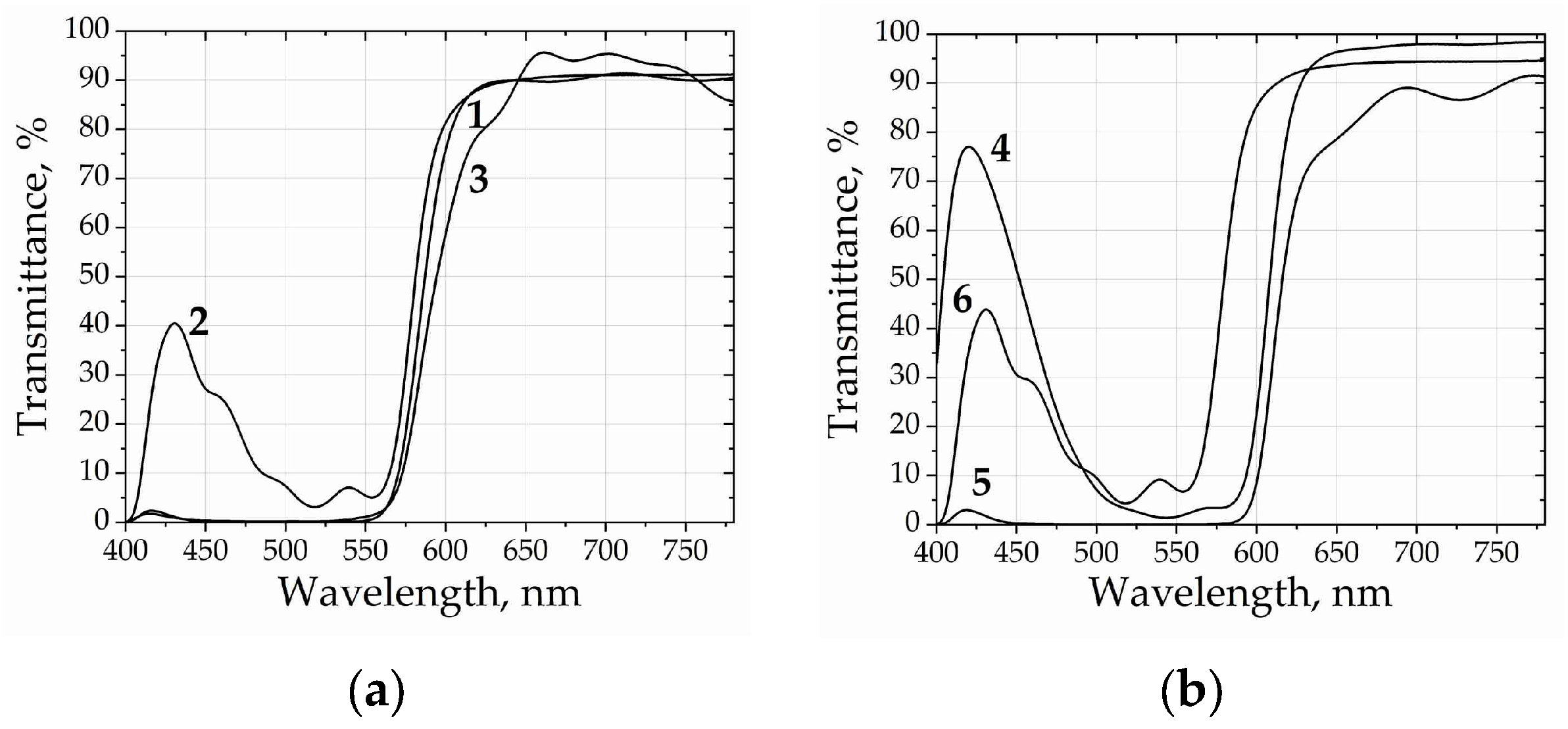
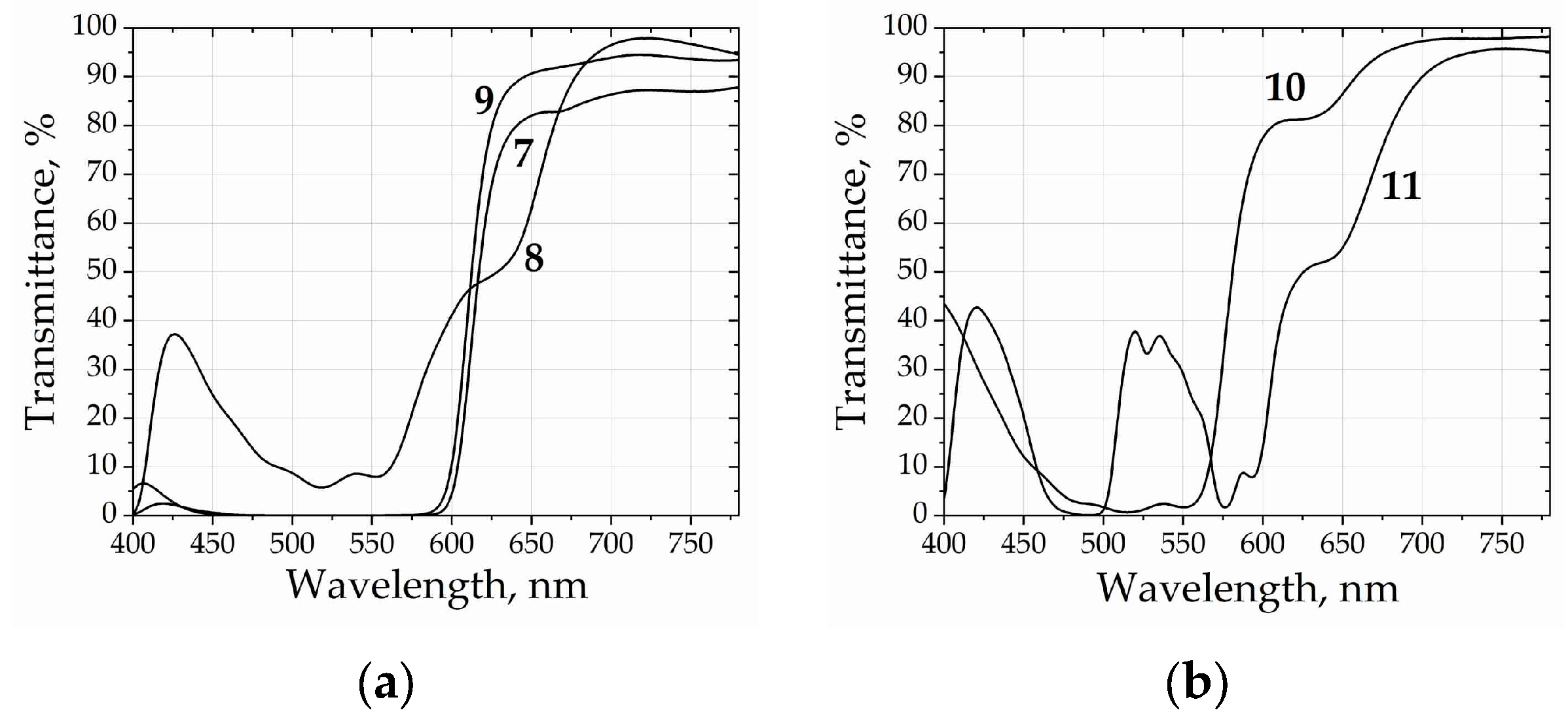
The study encompassed 11 models of glasses designed for color deficient individuals, which were examined in terms of luminous transmittance in the spectral range of 380–780 nm using a Cary 5000 spectrophotometer from Varian (Australia, currently Agilent Technologies Inc. Santa Clara, CA, USA) with software VINUV v3 and OriginPro (2022).
Figure 1 and
Figure 2 show the measured spectral characteristics.
The luminous transmittance of the studied glasses was characterized by means of luminous transmittance coefficients (for daylight and night vision), mean luminous transmittance coefficient for the range of 380–780 nm, transmittance coefficients and reduction quotients for red, yellow, green, and blue signal lights (both incandescent and LED lights).
The luminous transmittance coefficient designates the amount of light that passes through an optical filter, taking into account the spectral distribution of the illuminant and the spectral sensitivity distribution of the human eye, which is different for different wavelengths. This coefficient provides information about the attenuation of light passing through the optical filter and is calculated from the following formula [
24,
25]:
where:
τ(λ)—spectral transmittance coefficient,
S(λ)—spectral distribution of the illuminant (D 65 for daylight vision and A for night vision),
V(λ)—spectral sensitivity distribution of the human eye for daylight or night vision.
Mean luminous transmittance is the mean value calculated from luminous transmittance coefficients in the range of 380–780 nm, obtained from the formula:
where:
τ(λ)—spectral transmittance coefficient,
N—natural number corresponding to the range of the measurement step in measuring the spectral characteristics of transmittance (e.g., for a measurement step of 1 nm and for the wavelength range of 380–780 nm that number is N = (780 − 380) + 1 = 401).
Similarly to luminous transmittance, signal light transmittance coefficients describe the amount of light passing through an optical filter taking into account the spectral distribution of the illuminant and the spectral sensitivity distribution of the human eye, with the difference being that the latter coefficients are determined for the spectral distributions of specific colors (in this case red, yellow, green, and blue) of light emitted by incandescent illuminants and LED sources. The formula for signal light transmittance coefficients is given below [
24,
26]:
where:
τ(λ)—spectral transmittance coefficient,
V(λ)day—spectral sensitivity distribution of the human eye for day light vision,
E(λ)—spectral distribution of signal lights.
A signal light transmittance coefficient divided by the luminous transmittance coefficient gives the so-called reduction quotient for signal lights, according to the formula [
24,
26]:
Signal light transmittance coefficients are calculated for the relative spectral sensitivity of the human eye under daylight conditions, and so the luminous transmittance coefficient in the denominator was also determined for daylight vision, taking into account the spectral distribution of the D65 illuminant.
It is readily seen from Formula (4) that the reduction coefficient will be less than one when the amount of light in the entire spectral range (380–780 nm) passing through the optical filter is greater than the amount of light emitted by a signal light source. The reduction quotient for signal lights shows the proportion of signal light perceived by the human eye after passing through an optical filter as compared to the entire spectral range of light (380–780 nm). This means that for relatively high values of the reduction quotient, signal lights will be undistorted and easily perceived. The reduction quotient requirement presented in the standard EN ISO 16321-1:2022 [
25] defines the minimum values for all type of color filter. The coefficient should be no less than 0.8. The experimental setup and the methodological assumptions adopted in this study were based on a patented technical solution [
27] describing a system supporting color vision through the combined use of spectral filters and dedicated illumination conditions (Polish patent application P.442731). The present study constitutes a scientific verification of the functional assumptions of the patented system under application-oriented conditions.
3. Results
3.1. Luminous Transmittance and Signal Light Transmittance
Table 1 presents the results of luminous transmittance and signal light transmittance measurements for the studied glasses.
As can be seen from
Table 1, in the case of all studied glasses luminous transmittance coefficients when taking into account the weighting functions (spectral sensitivity distribution of the human eye and spectra distribution of illuminant) were higher for daylight vision. This is due to differences in spectral distributions of the illuminants and the spectral sensitivity of the human eye.
The greatest difference between daylight and night vision was found for glasses no. 1 and amounted to as much as 19.3%, while the lowest difference was found for glasses no. 11 at 4.05%. These results show that the use of the studied glasses under conditions of night vision substantially reduced the amount of light available for the eyes. The mean luminous transmittance coefficients ranged from 35.26% (the lowest value was recorded for glasses no. 7) to 54.24% (the highest value was recorded for glasses no. 4). It is worth noting that the mean luminous transmittance coefficient was much higher than daylight or night vision luminous transmittance coefficients for all studied glasses. A comparison of signal light transmittance coefficients also revealed some specific patterns. Irrespective of the type of illuminant, red signal light transmittance coefficients were significantly higher than luminous transmittance coefficients for all of the studied glasses. Differences in transmittance coefficients between red signal light emitted by incandescent and LED sources ranged from 0.72% for glasses no. 7 to 18.88% for glasses no. 9. In all cases, transmittance coefficients for red signal light emitted by an incandescent illuminant were greater than those for red signal light from a LED source. Yellow signal light transmittance coefficients were higher than luminous transmittance coefficients, except for glasses no. 11 used with a yellow LED. In the case of yellow color, transmittance coefficients also differed between incandescent and LED light sources. However, in contrast to red color, coefficients determined for the spectral distribution of yellow signal lights were not always greater for incandescent illuminants. Green signal light transmittance coefficients were substantially lower than luminous transmittance coefficients. In addition, in the case of all studied glasses, transmittance coefficients for green light emitted by an LED source were substantially lower than those for green light emitted by an incandescent source. For instance, the difference between these coefficients for glasses no. 7 was 0.53%. While in absolute terms this difference may be small, in relative terms this means a change from 58% for the incandescent light source to as little as 0.05% for the LED source. A similar pattern was found for blue signal light transmittance coefficients.
Reduction quotients for signal lights calculated according to Formula (4) are presented in
Table 2.
As can be seen from
Table 2, for all the studied glasses the red signal light reduction quotient was greater than one; this was also the case for yellow signal light except for glasses no. 11 (0.38 in the case of the LED illuminant). The reduction quotients obtained for green and blue signal lights were lower or much lower than one, except for glasses no. 11. In that case, the green signal light reduction quotient was 1.02 for the incandescent source and 0.76 for the LED source. Glasses no. 11 also exhibited a relatively high reduction quotient for blue signal light from the incandescent illuminant (0.84 compared to 0.34 for the LED source).
Analysis of the obtained results for luminous transmittance coefficients, signal light transmittance coefficients, and reduction quotients for signal lights show conclusively that none of the studied glasses distorted the perception of red and yellow colors. However, the relatively low reduction quotients for blue and green signal lights suggest that the use of the studied glasses may hinder or prevent blue-green discrimination.
3.2. Experiments Involving a Human Subject
The experiment simply reflected the real conditions when choosing a cable with a specific color. This study should be treated as a proof-of-concept or pilot investigation. A person with a color disability has to make a decision about the color of the wire. The experiment used typical electric wires in a wiring harness of different colors.
The subject (one of the co-authors) was a 57 year-old man with diagnosed red color vision deficiency (protanopia). The lack of recognition of the red color was found on the basis of an examination carried out with the use of Wilczek’s lamp and Ishihara pseudoisochromatic plates. The so-called Wilczek lantern (lantern test) is commonly employed in Polish occupational medicine for the assessment of signal color discrimination. The human subject was not diagnosed with cataracts, glaucoma, or other diseases that would interfere with the experiment as well as did not use corrective glasses.
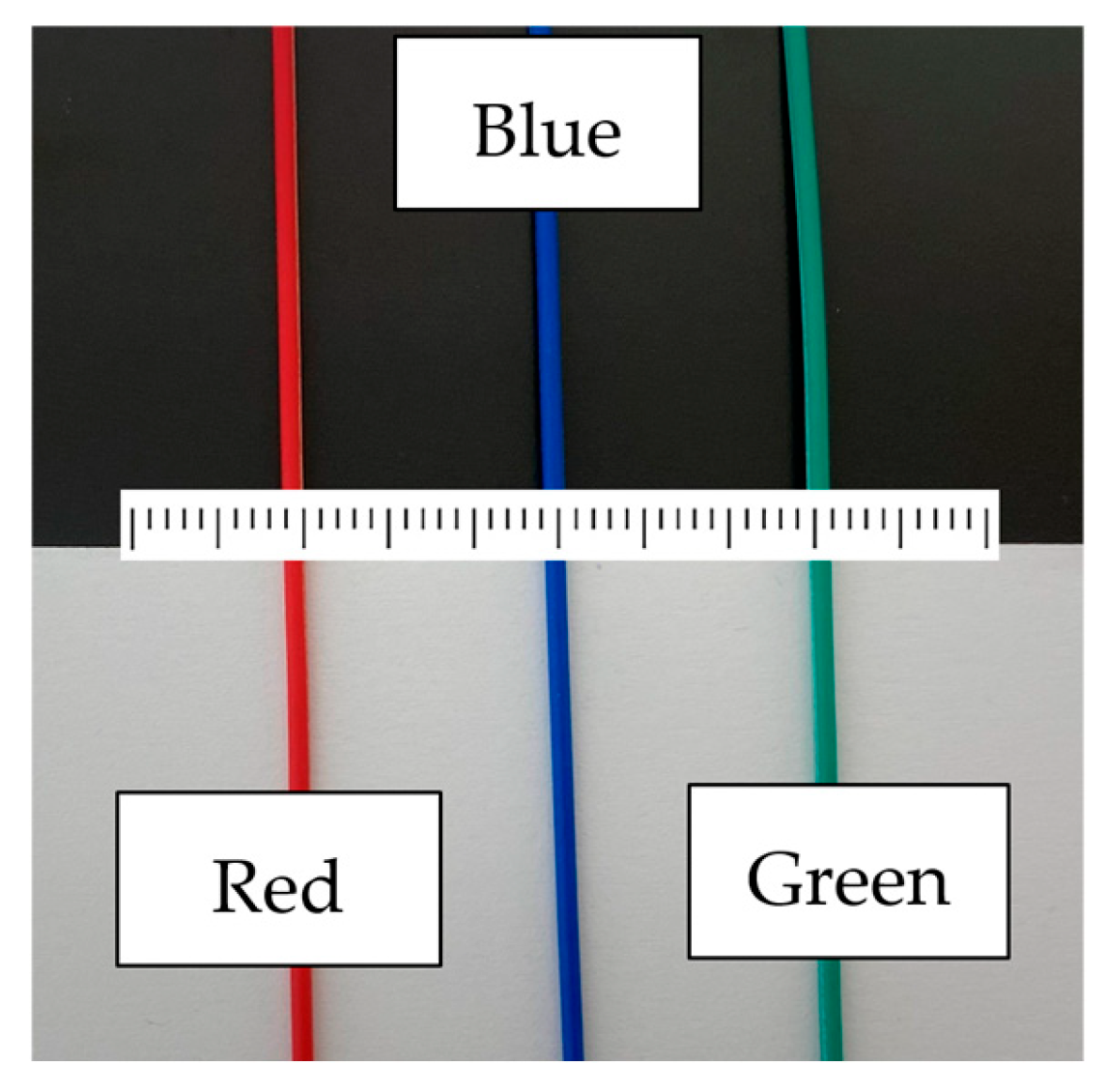
The subject observed an object consisting of three electrical wires (one green, one blue, and one red) arranged in parallel at a distance of approx. 15 mm from each other. The wires had a diameter of 2.0 mm and were placed against a white or black background. Placing the wires in relatively close proximity to each other was due to the assumption that during activities performed in professional practice, a person who should correctly distinguish the colors of the wires cannot separate them over a large distance. The human subject observed the object from a distance of about 30 cm. During each trial, the participant was asked to verbally report the perceived color of each wire within 15 s. The responses were recorded in a scorecard immediately after each observation. As the participant was not supposed to know the sequence of colored wires in advance, a test coordinator was appointed to arrange the wire setup and ensure the repeatability of test conditions, such as illumination intensity at the object, observation distance, and response time. For each combination of glasses, illumination condition, and background, the wire sequence was changed once per trial.
Figure 3 shows a sample arrangement of the test object.
The object, illuminated with the light setups described below, was observed by the human subject wearing glasses characterized in
Section 2. Consecutive observations involving changes of glasses and illumination setups were separated by intervals of at least 1 min. Two experiments were conducted. A response was considered correct if the reported color uniquely matched the actual color of the wire (e.g., R for a red wire). Responses indicating ambiguity (e.g., R/O) were treated as incorrect for the purpose of discrimination analysis, as they indicate insufficient categorical separation between colors.
The first experiment was to assess the color of the red and green wires by the human subject. In the second part, the participant’s task was to identify green and blue wires. In the study on discriminating between the colors of wires, the observed object was illuminated with white, blue, and green light. The illumination system consisted of a white LED light source whose spectral distribution was modified using blue and green filters. The proposed solution is designed to enable the replacement of colored filters, which modify the spectral distribution reaching the observer’s eye. The components such as power supply, light source, and replaceable filters are integrated into the glasses frame. A total of four illumination setups were tested:
Green and blue light sources were used due to the color of the filters used for the tests. Glass filters of 2.5 mm thick mass-dyed were used. The analysis of spectral characteristics of filters (see
Figure 1 and
Figure 2) shows that the dominant color of the filters is red. Looking through the red filter distorts the perception of green and blue.
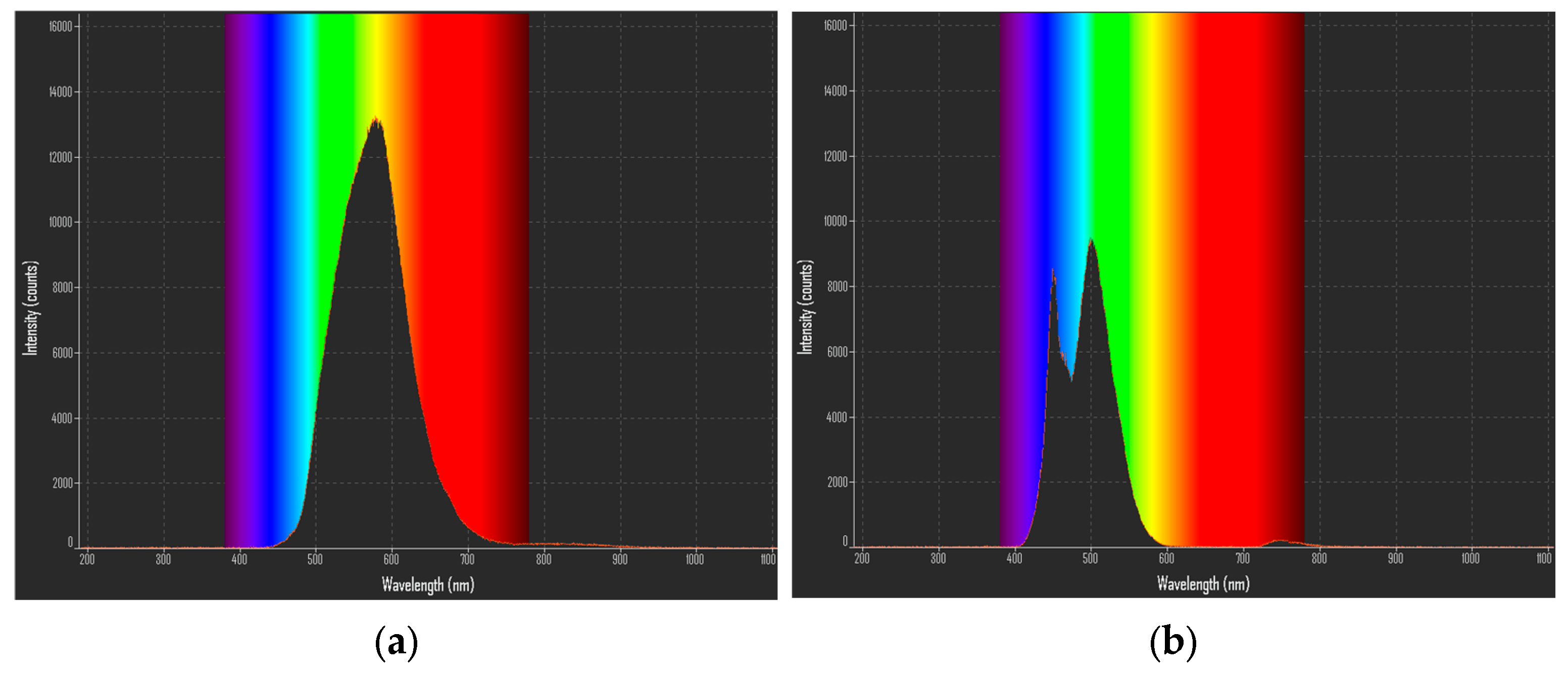
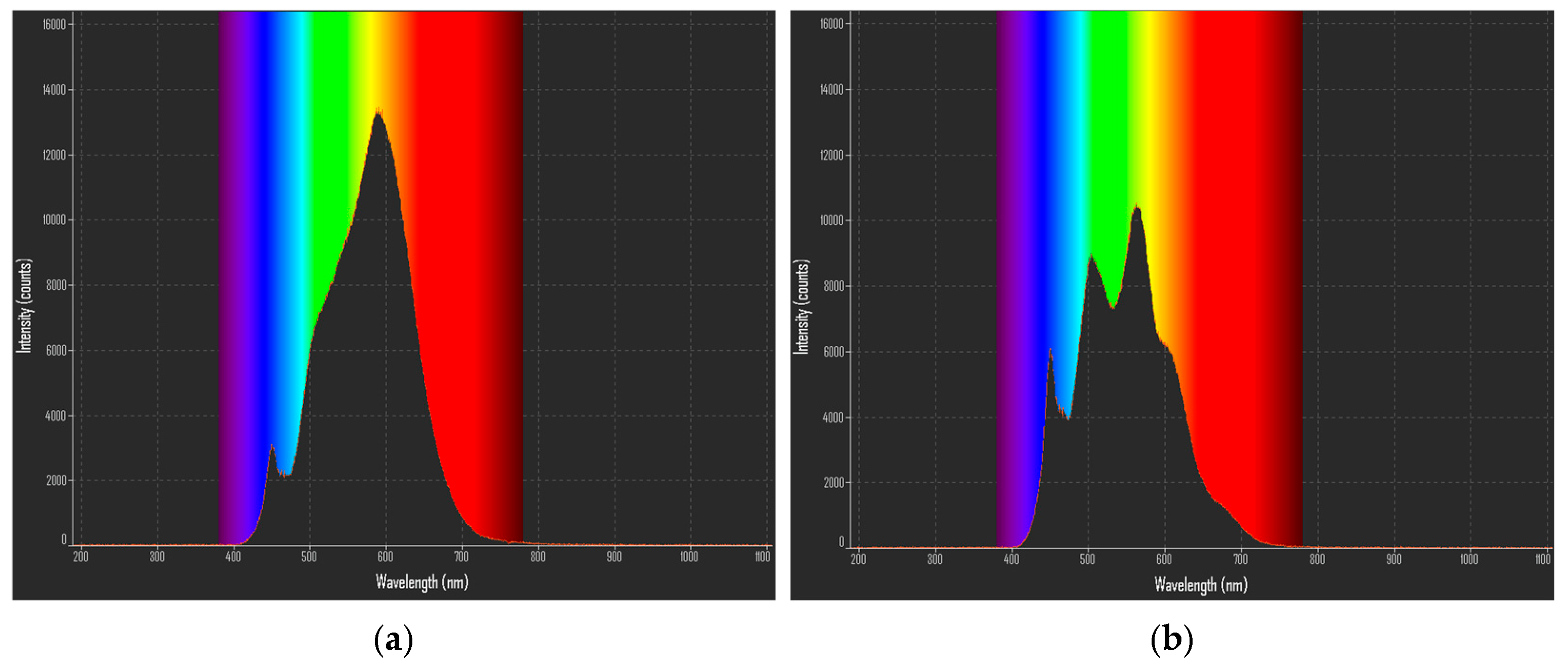
The spectral distributions of the illumination setups, measured with an Ocean Optics Inc. HR 2000+ (Dunedin, FL, USA) spectroradiometer, are presented in
Figure 4 and
Figure 5. A mean illuminance on the surface of the observed object for six measurement points ranged from 335 lx for setups with filters to 404 lx for setups with white LED light. Light intensity was measured using a calibrated L-100 (P.P.U.H. SONOPAN Sp. z o.o., Białystok, Poland) luxmeter.
Table 3 and
Table 4 present human perceptions of the observed object, i.e., the color recognition of red and green electrical wires by a subject wearing the studied glasses (no. 1–11) under all four illumination setups (N0, B1, G1, and B2). These are the results of the first experiment carried out.
Among the results, there were incorrect responses in which the wire color was not identified within the required time, as well as errors indicating reported perceptual ambiguity between two colors (marked with double notations G/B—green/blue and O/R—orange/red).
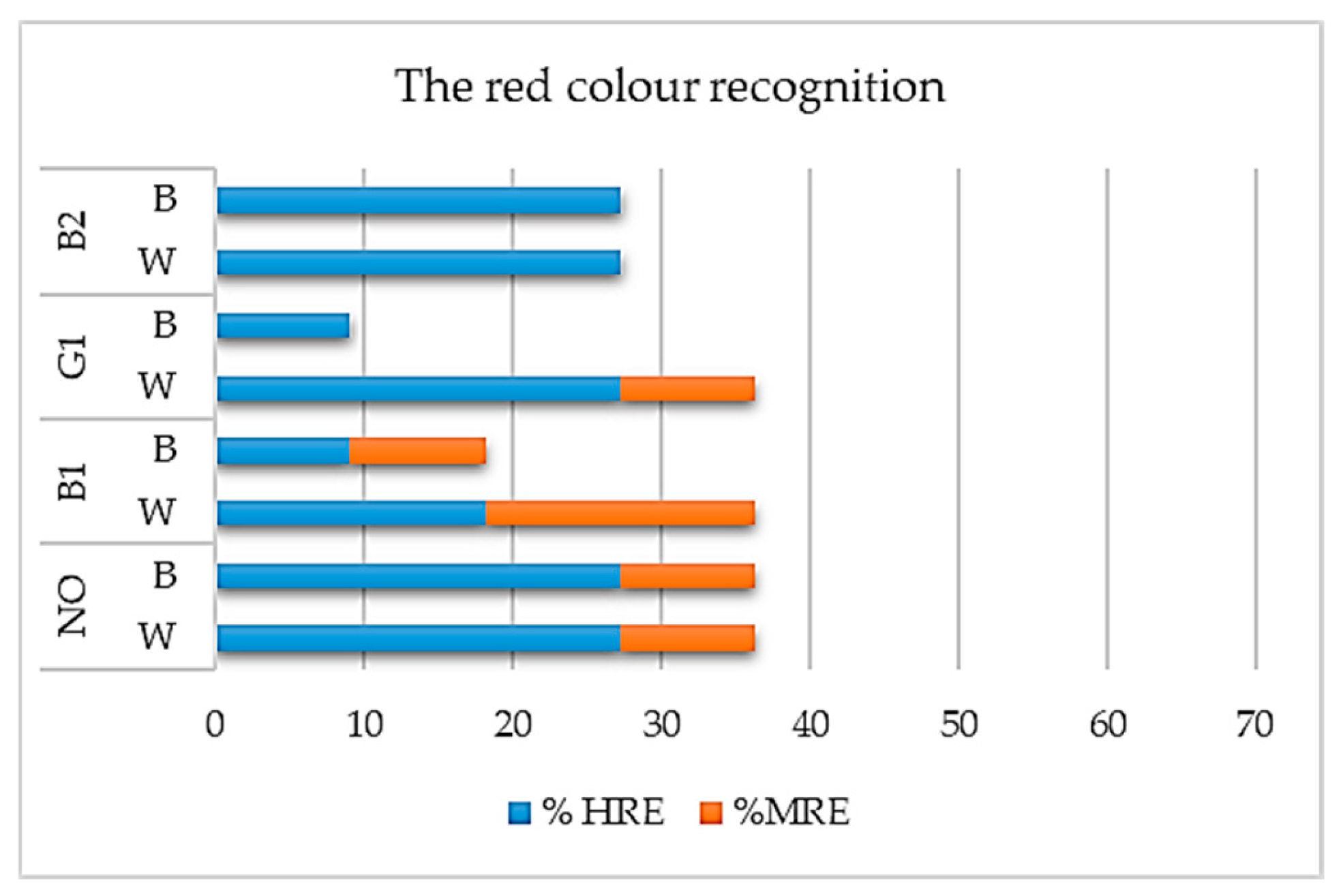
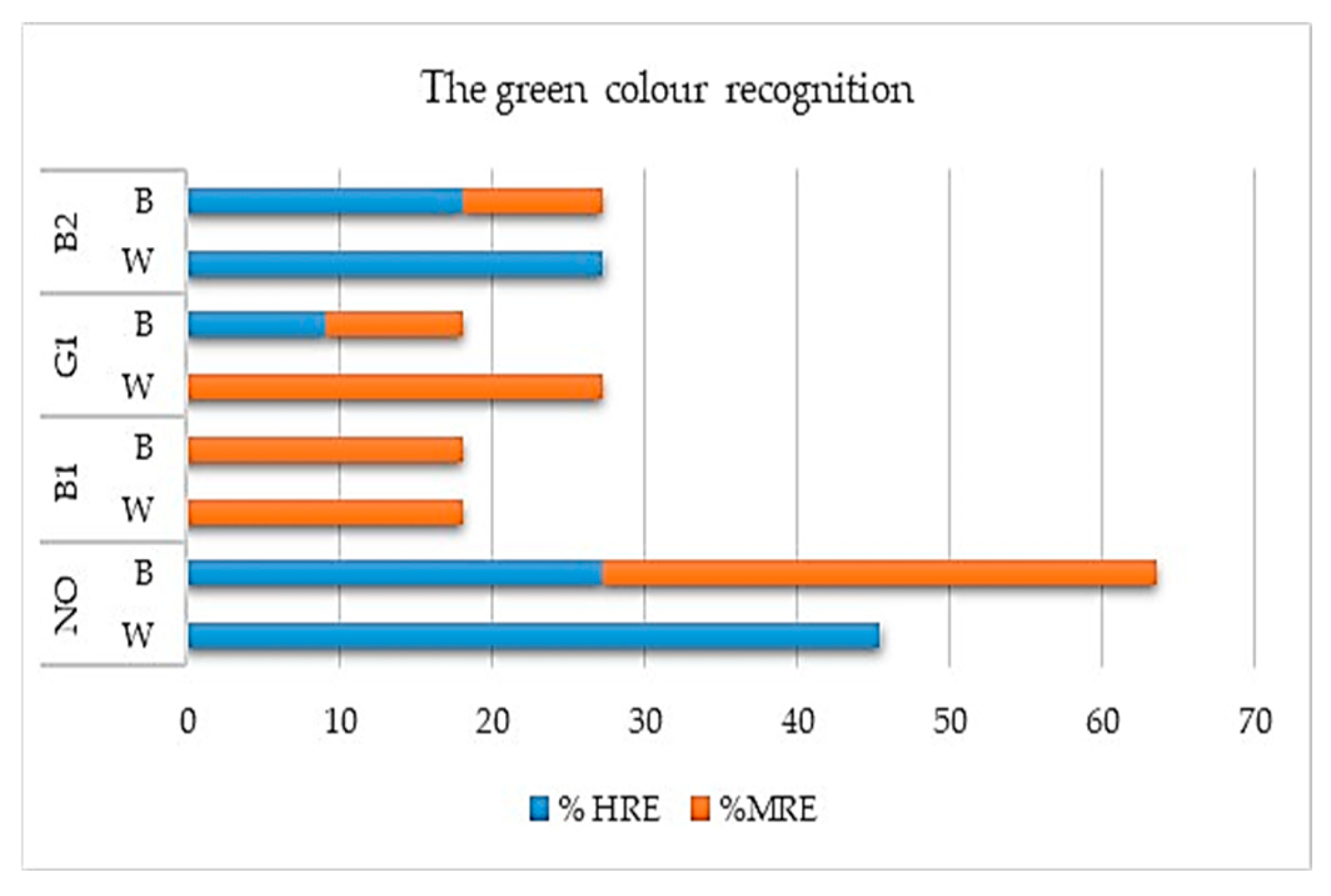
Quantitative indicators were introduced to ensure comprehensive analysis and to facilitate summarizing the results and formulating conclusions. Categories of errors made during the experiment were defined, and their percentage shares were determined, such as the percentage of high-risk errors (%HRE), i.e., incorrect wire color identification, and the percentage of medium-risk errors (%MRE), defined as cases in which the participant hesitated between an incorrect and a correct wire color (without making a final decision). The percentage distribution of the various types of errors obtained during the test evaluating the effectiveness of color vision–enhancing filters is presented in
Figure 6 and
Figure 7.
4. Discussion
The study presents the results of the color discrimination test for a subject viewing test objects (colored wires) under all four illumination conditions (N0, B1, G1, and B2) on black and white backgrounds while wearing the test glasses. As can be seen from
Table 3, red color when the observed object was illuminated with LED light (N0) was recognized by the human subject wearing any of the studied glasses. In four cases (glasses no. 5, 7, 9, and 10), the subject perceived orange or orange-red rather than pure red on both black and white backgrounds, which indicates that the filters used in those glasses caused a spectral shift to shorter wavelengths. This was found not only for red, but also for green (see
Table 4), which the subject mistook for blue both against a white background (glasses no. 1, 3, 5, 9) and a black background (glasses no. 1, 3, 4, 5, 7, 8, 9).
Table 3 and
Table 4 also show the results of observations of red and green colors when the object was illuminated with blue light (B1 and B2), and green light (G1). The predictable effect was that the green color was confused with the blue color when the object was illuminated LED light (N0). The number of errors consisting in confusing the green color with blue was significantly reduced when the observed object was illuminated with blue light (B1 and B2), and green light (G1). In most of the results obtained during this experiment, the human subject was not sure if he was seeing green or blue Green/Blue). Only in three cases was the green color uniquely identified as blue. From
Table 4 it can be seen that such a case occurred in the case of using glasses 5 and B2 illumination (on a white and black background) and for glasses 9 and B2 illumination (on a black background).
Experiments in which the subject wearing the studied glasses observed the colors of wires illuminated with different spectral distributions excluded the blue color. As can be seen from the above data, green was often mistaken for blue. According to presented data, the subject wearing glasses no. 1, 3, 5, 7, and 9 was not able to discriminate between blue and green wires illuminated with white LED light against a white background. When the wires were placed against a black background, the same problem with green color was found for glasses no. 1, 5, and 7. The application of blue and green illumination setups (B1, G1, and B2) enabled correct blue-green discrimination for all the studied glasses.
Analyzing the results of observations in
Table 3 and
Table 4, it can be seen that when the object is illuminated with white LED light (N0), the results of both experiments are identical. The observer confused the color green with blue when using the same glasses (glasses number: 1, 3, 5, 7, 9).
Comparing the spectrophotometric parameters with the perceptual outcomes reveals a consistent relationship between the signal light transmittance coefficients for green and blue signal light and the results of the discrimination task. Eyewear models characterized by the lowest Qg and Qb values (e.g., glasses no. 1, 3, 5, 7, and 9) correspond to conditions in which blue–green discrimination was not possible under white LED illumination, as indicated in
Table 3 and
Table 4. Conversely, glasses exhibiting comparatively higher Qg and Qb values (e.g., no. 2, 4, 6, 8, and 11) allowed unambiguous blue–green discrimination even under standard illumination conditions. This qualitative agreement between spectrophotometric attenuation of short- and mid-wavelength signal light and perceptual performance supports the internal consistency of the results.
The introduced evaluation indicators, such as the percentage of high-risk and medium-risk errors, allow for quantitative analysis of the observed phenomenon. Based on the percentage shares of HRE and MRE errors, it can be concluded that, during observation under lighting conditions involving filters B1, G1, and B2, the decisiveness of color recognition increased significantly.
As shown in
Figure 6, in the case of recognizing the color red, the highest error rate (HRE and MRE) occurred under white LED illumination, reaching 36.4% regardless of the background color. For example, the application of the B2 filter increased recognition, reducing the error rate to 27.3%. In contrast, the use of the G1 filter with a black background reduced the MRE (no-decision error) to zero and the HRE to 9.1%.
In the case of recognizing the color green (see
Figure 7), the highest proportion of errors was observed under white LED lighting with a black background, amounting to 63.6%. Upon the application the B1, G1, and G2 filters, the overall error rate (HRE and MRE) decreased significantly, falling within the range of 18.2% to 27.3%.
The main finding is that the discrimination between blue and green was impaired for several filter models under white LED illumination; however, the use of blue or green lighting ensured proper color recognition across all tested eyewear and background conditions.
The key finding is that blue-green color discrimination was impaired for several filter models under white LED illumination, whereas the application of blue or green illumination restored discrimination in all tested glasses and background conditions.
The presented results cannot be generalized and serve only to demonstrate the feasibility of the proposed system supporting individuals with CVD. Taking into account the limited scope of the work, in a further study, a larger and more diverse group of volunteers should participate in the experiment. Varying levels of visual ability will also be considered.
5. Conclusions
This study assessed the feasibility of an original system supporting color vision by integrating selective optical filters with a dedicated illumination setup. The proposed approach modifies the relative contrast of selected wavelength ranges through the combined use of spectral filtering and controlled lighting, thereby addressing individual color vision deficiencies in a more comprehensive and task-oriented manner.
The experimental results obtained in a practical recognition task indicate that illumination with blue or green light may partially compensate for the limitations of optical filters alone, thereby supporting improved discrimination of selected color combinations under experimental conditions in a subject with protanopia. These findings suggest that combining adaptive lighting with spectral filtering may have potential to enhance functional color perception and visual comfort in selected occupational tasks requiring reliable color recognition.
This pilot study highlights the limitations of standard color vision assessment methods in evaluating task-oriented color perception and supports the need for application-specific testing methodologies. However, the presented results are preliminary and limited by the small sample size. Further studies involving participants with different types and severities of color vision deficiencies are required, with particular attention to inter-individual variability, visual adaptation, fatigue, lighting conditions, and other real-world viewing factors.
The obtained results provide an initial experimental validation of the assumptions underlying the patented filter–illumination system and justify further applied research in collaboration with safety eyewear manufacturers. Future work should also include the identification of occupational tasks and professions in which such supportive optical solutions could be safely and effectively applied, preferably in cooperation with occupational medicine specialists.