1. Introduction
3D Gaussian splatting (3DGS) has been used for 3D reconstruction from images and videos and is applied in digital content production, digital twins, and virtual reality. Unlike conventional 3D reconstruction methods that require expensive equipment and complex processing, 3DGS generates high-resolution results from simple capture data. Recent studies on 3DGS have primarily focused on reconstruction accuracy, rendering quality, and computational performance [
1]. In contrast, limited attention has been given to user workflows and decision-making processes during reconstruction tasks [
2].
A 3DGS-based workflow consists of multiple stages: Data Acquisition, Project Setup, 3DGS Training, Result Inspection, Quality Refinement, and Output Utilization. At each stage, users interpret intermediate results and make decisions about subsequent actions. However, current production environments do not clearly define relationships between stages or criteria for task execution, which leads to repeated returns to earlier stages. In addition, prior user studies have relied on quantitative measures such as task completion time or the number of iterations [
3]. These measures do not fully explain how users structure tasks or make decisions during the workflow.
In expert-oriented environments such as 3DGS, understanding the overall workflow and decision structure is more important than focusing on individual features [
4]. However, systematic analysis of these aspects has not yet been sufficiently conducted. This study analyzes the 3DGS production process from the perspective of expert users and identifies recurring decision-making structures. Hierarchical task analysis (HTA) was applied to structure the workflow in terms of stages, decision points, and iterative patterns. Since 3DGS workflows are not linear and often involve returning to previous stages based on result interpretation, an approach that captures task relationships and decision flow is required. HTA supports this analysis by decomposing tasks into goals, sub-tasks, and decision structures [
5].
The analysis indicates that user workload is primarily concentrated in stages such as Result Inspection and Quality Refinement, where workflow complexity arises from repeated decision-making processes. Based on these findings, design requirements for 3DGS interfaces were derived to support user decision-making and enhance the understanding of workflow processes. Accordingly, a workflow-centered interface is proposed, consisting of four functional areas: Mode & Capture Setup, Progress Management, Error Review, and Editing Efficiency, reflecting the structure of real user workflows.
To validate the proposed approach, a user study with expert participants was conducted, and non-parametric statistical methods were applied to examine differences between the proposed and existing 3DGS interfaces. The contributions of this study are as follows. First, the 3DGS workflow is structured using HTA, and task stages and decision flows are analyzed. Second, recurring decision-making patterns and workflow-level challenges are identified from the perspective of expert users. Third, interface design directions are derived to support decision-making and workflow visibility, and their effectiveness is evaluated through a user study.
2. Related Work
2.1. 3D Reconstruction and the Development of 3DGS
3D Gaussian splatting (3DGS) has been used for 3D reconstruction from images and videos and is applied in digital content production, digital twins, and virtual reality [
6]. Unlike conventional 3D reconstruction methods that require expensive equipment and complex processing, 3DGS generates high-resolution results from simple capture data [
7]. Recent advances in 3D reconstruction have been driven by neural-based approaches such as neural radiance fields (NeRF) [
8]. These methods enable scene representation from multi-view images. Subsequent studies extended this approach to dynamic scenes [
9], and improvements in computational performance have been achieved through efficient neural representations [
10].
3DGS reconstructs 3D scenes from multiple images by representing the scene as a set of Gaussian primitives rather than a continuous function [
11]. Each point contains information such as position and color, which enables fast rendering. This approach provides advantages in computational efficiency and supports real-time processing. These methods have been applied in domains such as cultural heritage preservation and digital content production [
12].
However, existing studies have primarily focused on reconstruction accuracy, rendering quality, and computational performance. Although recent studies have explored workflow-oriented applications of 3DGS in immersive media environments [
13], limited attention has been given to how users interact with these systems in practice, particularly in terms of workflows and decision-making processes during reconstruction tasks. As 3DGS-based production workflows become increasingly complex, understanding user interaction and workflow structures has become increasingly important for supporting efficient content creation and system usability [
14].
Table 1 summarizes previous studies related to 3D reconstruction and 3DGS technologies. Existing studies have primarily focused on reconstruction accuracy, rendering quality, and computational efficiency. In contrast, the proposed study emphasizes workflow usability and decision support through an HTA-based interface design approach.
2.2. User Experience in Complex Task Environments
Research on user experience (UX) in technical systems has predominantly emphasized quantitative performance metrics such as task completion time [
15]. Subsequent studies expanded the evaluation metrics to encompass error rates and the number of iterations [
16]. However, these measures do not comprehensively account for how users make decisions under conditions of uncertainty or how errors occur during task execution [
17]. Cognitive processes influence human error and decision-making [
18], yet these processes are not fully encompassed by performance metrics alone. In complex task environments, users continuously interpret intermediate results and determine subsequent actions, thereby increasing cognitive load and decision-making complexity [
19]. These aspects have been analyzed in activity-centered studies and investigations of complex cognitive tasks [
20]. In visual interaction systems, decision-making processes exert a direct influence on user behavior [
21]. In 3DGS-based reconstruction tasks, users continuously evaluate results, adjust parameters, and determine whether to revisit earlier stages. These decisions are frequently made without explicit criteria and rely on user experience [
22]. This characteristic is more pronounced in expert-oriented environments, where usability challenges stem not only from interface elements but also from the structure of workflows. However, existing studies have predominantly concentrated on performance-based evaluation, with limited analysis at the workflow level regarding how users organize tasks and engage in repeated decision-making.
2.3. Workflow Analysis and HTA
Workflow-based analytical methods have been extensively employed in human–computer interaction to examine complex user behaviors [
23]. Hierarchical task analysis (HTA) systematically decomposes tasks into goals, subtasks, and detailed actions, thereby facilitating the analysis of task structures and their interrelationships [
24]. Hierarchical task analysis (HTA) has been employed as a systematic approach in numerous human–computer interaction (HCI) studies [
25]. In complex task environments, users do not adhere to a linear sequence of steps; rather, they continually interpret intermediate results and determine subsequent actions. These workflows are non-linear and entail continuous evaluation and modification, with decision points occurring throughout various stages. HTA facilitates the explicit representation of these decision points and iterative structures [
26]. It has also been utilized to analyze real-world task execution and recurring behavioral patterns [
27].
These characteristics are pertinent to 3D reconstruction tasks, which involve iterative evaluation and refinement. Specifically, 3DGS workflows entail iterative decision-making processes, wherein users revisit earlier stages based on intermediate outcomes. Therefore, an approach that simultaneously models task relationships and decision flow is necessary. Although hierarchical task analysis (HTA) has been employed in domains such as industrial operations, medical systems, and software usability evaluation, its application to 3D reconstruction workflows, particularly within 3DGS environments, remains limited. Furthermore, research investigating how expert users structure workflows and how iterative decision-making influences task efficiency remains limited.
2.4. Research Gap
Existing studies have advanced the performance of 3DGS; however, systematic analyses of workflows and decision-making processes in practical applications remain limited. Specifically, there is a limited understanding of how tasks are organized across stages, how decisions are made between these stages, and how these factors contribute to user burden and inefficiency. Existing approaches fail to adequately capture the cumulative nature of decision-making within reconstruction workflows. In 3DGS tasks, users iteratively analyze intermediate results and revise preceding steps. These iterative decision-making structures are fundamental to the workflow, yet they are not comprehensively elucidated by performance-based evaluations or feature-level analyses.
3. Methodology
3.1. 3DGS Workflow Analysis Method
This study employs a qualitative research methodology to analyze user workflows in 3DGS-based 3D reconstruction. To examine how users perform tasks and make decisions in real-world contexts, data were collected from ten expert users proficient in 3DGS tools through semi-structured interviews and shadowing observations. Each interview, which lasted approximately 40 to 60 min, concentrated on task objectives, execution processes, and stage-specific challenges, and was conducted in either real or simulated work environments.
All interviews were recorded, transcribed, and then analyzed using an iterative coding process. Coding was conducted in two rounds, during which the analytical framework was refined through the identification of recurring patterns in workflows, decision points, and repeated actions among participants. This process enabled the identification of relationships between task stages and iterative structures.
The analyzed data were subsequently interpreted as goal-oriented workflows, and hierarchical task analysis (HTA) was employed to systematically organize the tasks [
23,
24,
25]. In the HTA process, the overall task objective was delineated and divided into sub-tasks, with specific actions assigned to each phase. Decision points and iterative loops encountered throughout task execution were explicitly modeled to accurately represent the characteristics of a non-linear workflow.
Using the HTA framework, we analyzed stages characterized by concentrated user workload as well as phases involving repeated rework. Particular attention was given to errors, retries, and decision-making challenges reported by the participants. This approach facilitates the interpretation of user behavior within the broader context of the overall workflow, rather than as isolated actions [
26,
27]. This study seeks to offer a systematic understanding of 3DGS workflows and to derive interface design implications grounded in authentic user experiences.
3.2. Participants
A total of ten expert users with experience in 3DGS-based 3D reconstruction participated in this study. All participants were engaged in 3D and video-related disciplines and possessed experience in 3D content production as well as in the utilization of 3DGS tools. Participants were selected according to their capacity to articulate their workflows and decision-making processes. To capture various production contexts, participants with diverse backgrounds and levels of experience were included.
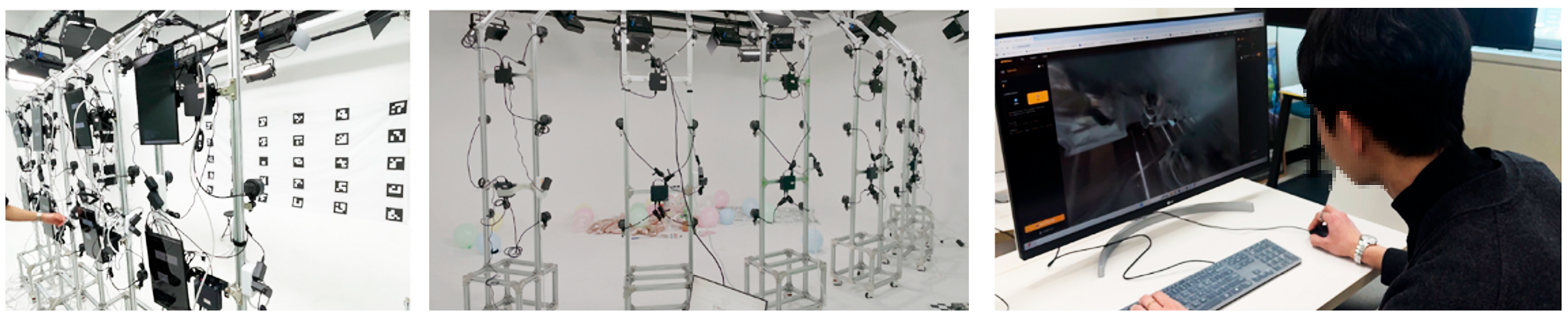
Data were primarily gathered through semi-structured interviews. In addition, shadowing observations were conducted with five participants in real work environments (
Figure 1). This approach enabled the study to capture both self-reported descriptions and observed behaviors during task performance. All participants provided informed consent before observation, and all images were anonymized to ensure the protection of participant identities.
This study employs an expert-centered approach, a method frequently utilized in UX and usability research. Previous research has demonstrated that a limited number of expert users can effectively identify recurring usability issues and workflow patterns. Specifically, approximately five participants can identify around 80–85% of usability problems, with additional participants yielding diminishing returns [
28].
This study included ten participants to more reliably capture workflow-level patterns. The objective of this study was not statistical generalization but rather the identification of recurring workflow patterns and decision-making structures within real-world contexts. Interviews were conducted until no additional workflow stages or decision patterns were identified. After approximately the ninth interview, no new categories emerged, indicating that data saturation had been achieved. All interviews were conducted and analyzed by members of the research team. To minimize bias in qualitative interpretation, the coding results were continuously reviewed throughout the analysis process. This approach facilitated the consistent identification of task structures and decision-making patterns. Comprehensive participant information is presented in
Table 2.
3.3. Data Collection
As outlined in
Section 3.1, data were gathered using semi-structured interviews and shadowing observations. This section outlines the interview design and the data collection procedure. The interviews were structured to capture workflows and decision-making processes throughout the entire 3DGS pipeline, from data acquisition to the generation of the final output. Participants were requested to describe the task objectives, execution procedures, utilized tools and interfaces, as well as the challenges encountered at each stage. Particular attention was devoted to situations involving repeated rework or retraining, emphasizing the decision-making processes within these contexts.
The interview design was guided by hierarchical task analysis (HTA) to structure the workflow, decision-centered design (DCD) to elucidate decision-making processes, and human–computer interaction (HCI) research on error and recovery. The questions were designed to mirror the cognitive demands encountered during task performance. The interview procedure consisted of five stages: (1) warm-up, (2) exploration of 3DGS workflows, (3) decision-making during tasks, (4) failure and error analysis, and (5) system comparison. The stages related to workflows, decision-making, and failure analysis correspond to the main analytical dimensions of Workflow, Decision-Making, and Failure Experience, as presented in
Table 3.
The system comparison stage was incorporated to identify strategies and decision-making patterns across various task contexts, whereas the warm-up stage aimed to gather information on participants’ backgrounds and work environments. The Cognitive Response dimension was not directly captured through interview questions but was inferred during the analysis based on observed cognitive load and decision-making behaviors. All interviews were recorded, transcribed, and subsequently analyzed. The theoretical foundation for the interview design and analytical framework is outlined in
Table 3, while the complete interview protocol is included in
Appendix A.
3.4. HTA-Based Analysis Procedure
3.4.1. Workflow Stage Identification
To analyze the task structure of the 3DGS production process, HTA was applied to the interview data. First, thematic analysis was conducted on the transcribed data from ten participants to extract task-related statements and recurring patterns. Similar task activities were then grouped based on functional similarity and execution context to derive a common workflow. This process was conducted by the research team, and the identified task categories were continuously reviewed and refined throughout the analysis. This approach supported the consistent identification of task structures across participants.
Based on the analysis results, the 3DGS production process was defined as a structured workflow and decomposed hierarchically using HTA. A total of six main task stages were identified. Each stage was defined based on its functional role and the execution patterns observed in real-world workflows. The definitions of each stage were established based on recurrence across participants and functional consistency between tasks. The identified workflow stages and corresponding task descriptions are summarized in
Table 4.
3.4.2. Coding Reliability
To ensure the reliability of the coding process, the researcher performed two rounds of coding on the interview transcripts. Following the initial round, the same data were recoded after a time interval to assess the consistency of the coding results. Discrepancies between the two coding rounds were resolved by revising and refining the coding scheme, resulting in the establishment of the final coding framework through this process [
29]. Generally, iterative coding is employed to refine the coding scheme as new codes emerge, whereas a second round of coding serves to verify the consistency of the existing coding results. In this study, no new codes or significant changes were identified during the second round of coding, indicating that the coding scheme had reached stability. Consequently, further rounds of coding were deemed unnecessary. To ensure the reliability of the analysis, detailed records of the coding process were maintained. These records were employed to examine the development and revision of codes and to verify the consistency of the analysis results.
3.4.3. Hierarchical Structuring and Plan Definition
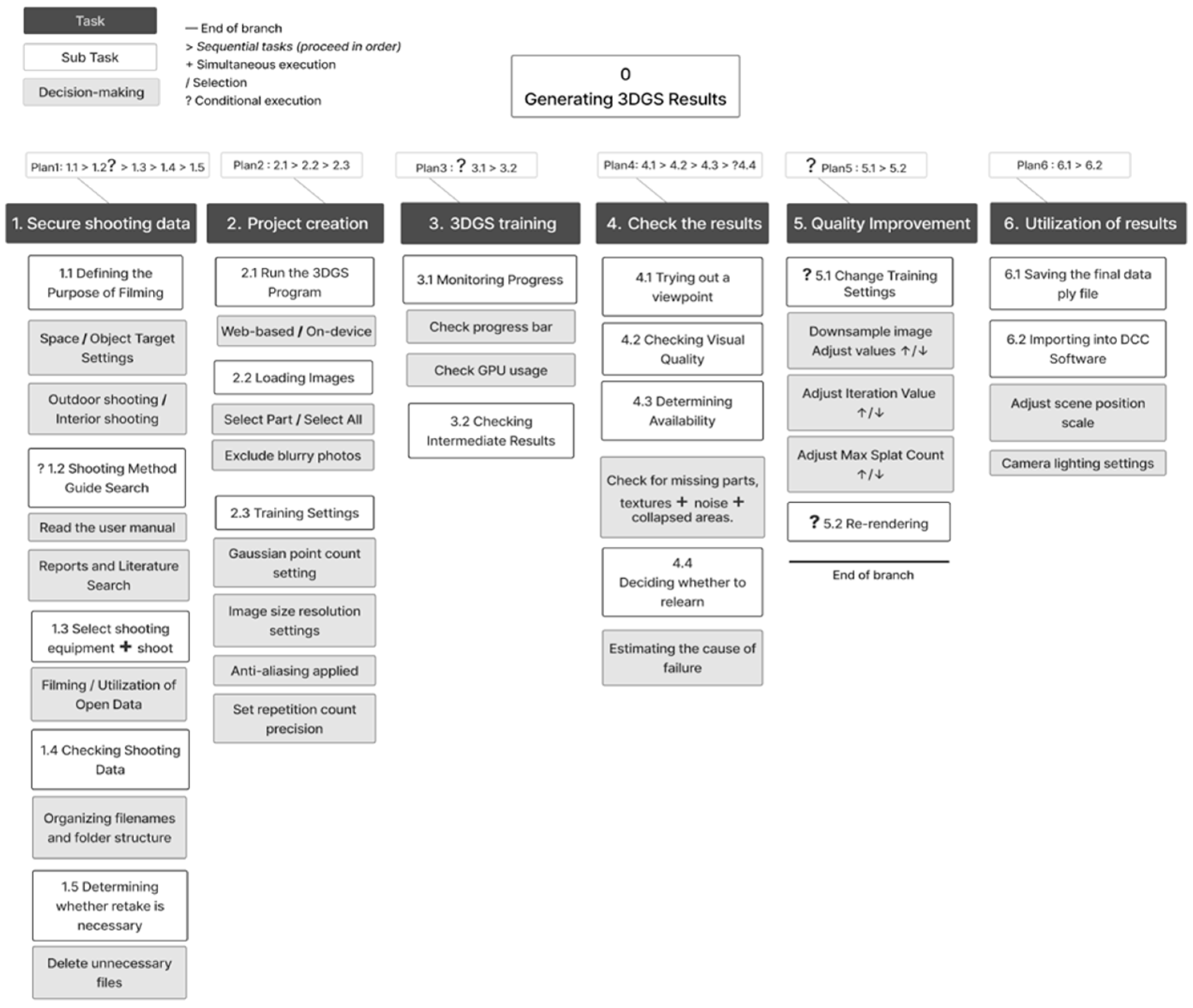
The identified high-level stages were hierarchically decomposed into subgoals and detailed operations following HTA. Each task was further divided into finer-grained action units, and plan rules were defined to explicitly represent the relationships between tasks. The hierarchical structure consists of three levels: Level 0 (overall goal), Level 1 (stages), and Level 2 (sub-tasks). To capture decision points and iterative patterns observed in the workflow, conditional plan rules were incorporated into the structure. This hierarchical representation enables a structured understanding of task dependencies and decision points within the workflow, supporting the identification of complexity arising from iterative execution.
In addition, a symbol-based notation was adopted to represent task relationships [
27]. Task relationships were categorized into five types: sequential (>), parallel (+), selection (/), conditional (?), and termination (−). These symbols indicate sequential progression, concurrent execution, optional selection, condition-based branching, and task completion, respectively.
3.4.4. Analysis of Iterative Processes and Failure Loops in 3DGS Workflows
To investigate recurring patterns within the HTA-based workflow, particular emphasis was placed on iterative processes, especially those associated with decision-making during the result evaluation phase. In many instances, users revisited earlier stages after evaluating output quality, creating iterative loops that were considered fundamental units of analysis. To gain a deeper understanding of these patterns, the frequency of repeated actions across various tasks was analyzed.
Instances of retry were identified through the manual coding of interview transcripts, based on explicit descriptions of repeated task execution. For a subset of participants, observational data from real-world task performance were also employed to support and validate the analysis. Each repeated execution within the same stage was recorded as a single retry, and these counts were aggregated to identify overall iteration patterns throughout the workflow. This approach enables the systematic quantification and comparison of iterative behaviors across different stages of the workflow.
4. Results
4.1. Workflow Structure of 3DGS Production
The analysis indicates that the 3DGS production process can be organized into six distinct stages: Data Acquisition, Project Setup, 3DGS Training, Result Inspection, Quality Refinement, and Output Utilization. These stages occur sequentially; however, iterative revisions and decision-making processes are evident during the actual execution of tasks.
Specifically, throughout the Result Inspection and Quality Refinement stages, users continually determine whether to proceed with training or revert to earlier stages to adjust input data or parameters based on intermediate outcomes. In this process, users engage in parameter adjustment, input modification, and retraining, thereby creating an iterative loop of result inspection, quality refinement, and 3DGS training. This pattern is not confined to particular instances but is consistently observed among the majority of participants and constitutes a fundamental characteristic of 3DGS workflows. This suggests that iterative decision-making is not an exception but an intrinsic characteristic of the 3DGS production process. Therefore, the 3DGS workflow should be understood not as a linear sequence of steps but as a cyclical process that integrates iterative decision-making and task reconfiguration. To investigate the relationships between stages and iterative patterns, the workflow was further organized hierarchically using HTA.
4.2. HTA-Based Task Structure of 3DGS Workflows
The HTA-based analysis shows that the 3DGS workflow is organized as a hierarchical structure consisting of six main stages and their sub-tasks, centered on the overall task goal (
Figure 2). Each stage is broken down into detailed tasks, with relationships among these tasks encompassing sequential progression, selection, conditional branching, and iteration. Although the overall workflow seems sequential, frequent transitions between stages and repeated executions suggest non-linear characteristics.
Specifically, the Result Inspection stage encompasses multiple decision points, including the evaluation of visual quality, usability assessment, error diagnosis, and determinations regarding the necessity of retraining. Based on these decisions, the workflow either advances to the subsequent stage or reverts to previous stages. During the Quality Refinement stage, parameter adjustments and retraining are conducted, after which the process returns to the Result Inspection stage. This establishes an iterative cycle of Result Inspection, Quality Refinement, and 3DGS Training. This pattern is consistently observed and constitutes a fundamental component of the workflow.
In contrast, earlier stages such as Data Acquisition, Project Setup, and 3DGS training involve a more straightforward process, characterized by fewer decision points and less frequent iterations. These findings indicate that the complexity of the 3DGS workflow is unevenly distributed across its stages. Decision-making and repeated execution are concentrated in specific stages, particularly during Result Inspection and Quality Refinement. This distribution accounts for the concentration of user workload and task difficulty in the later stages. These patterns are observed consistently among participants and represent a shared structural characteristic of 3DGS workflows.
4.3. Areas of Frequent Iteration and Failure
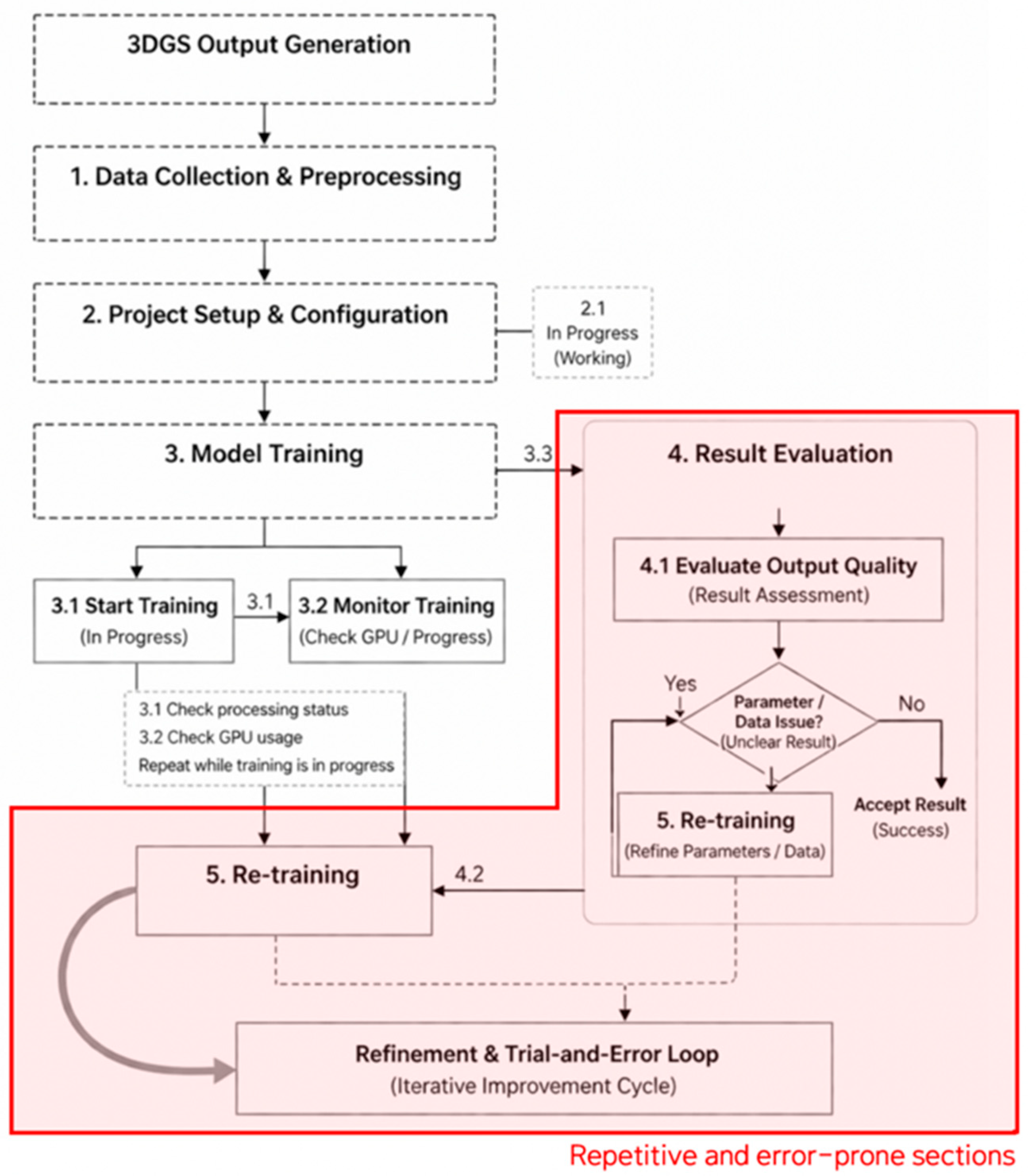
Patterns of iteration and failure were examined based on participants reported retry experiences. Comparing the frequency of retries across various stages revealed that repeated attempts were most concentrated during the result evaluation and quality refinement phases.
Figure 3 illustrates the stages of the workflow in the 3DGS production process where these iterations take place.
In most cases, iteration arises within the cycle of training, evaluating results, and retraining. When the output fails to meet the expected quality during evaluation, users often revert to earlier stages and repeat the process, thereby creating a recurring loop. These failures are often attributed to factors such as insufficient data coverage, the inclusion of problematic frames, or uncertainty in the selection of appropriate modes.
Furthermore, the absence of clear feedback regarding the causes of failure hinders the users’ ability to determine the appropriate course of action, often resulting in repeated attempts. Inefficiencies were also identified during the training phase, as users frequently monitored GPU status and training progress in the absence of clear indicators of completion or performance. This behavior resulted in prolonged iteration cycles and an overall increase in task duration.
4.4. 3DGS Task-Stage Heatmap of Retry Frequency and Decision-Making Burden
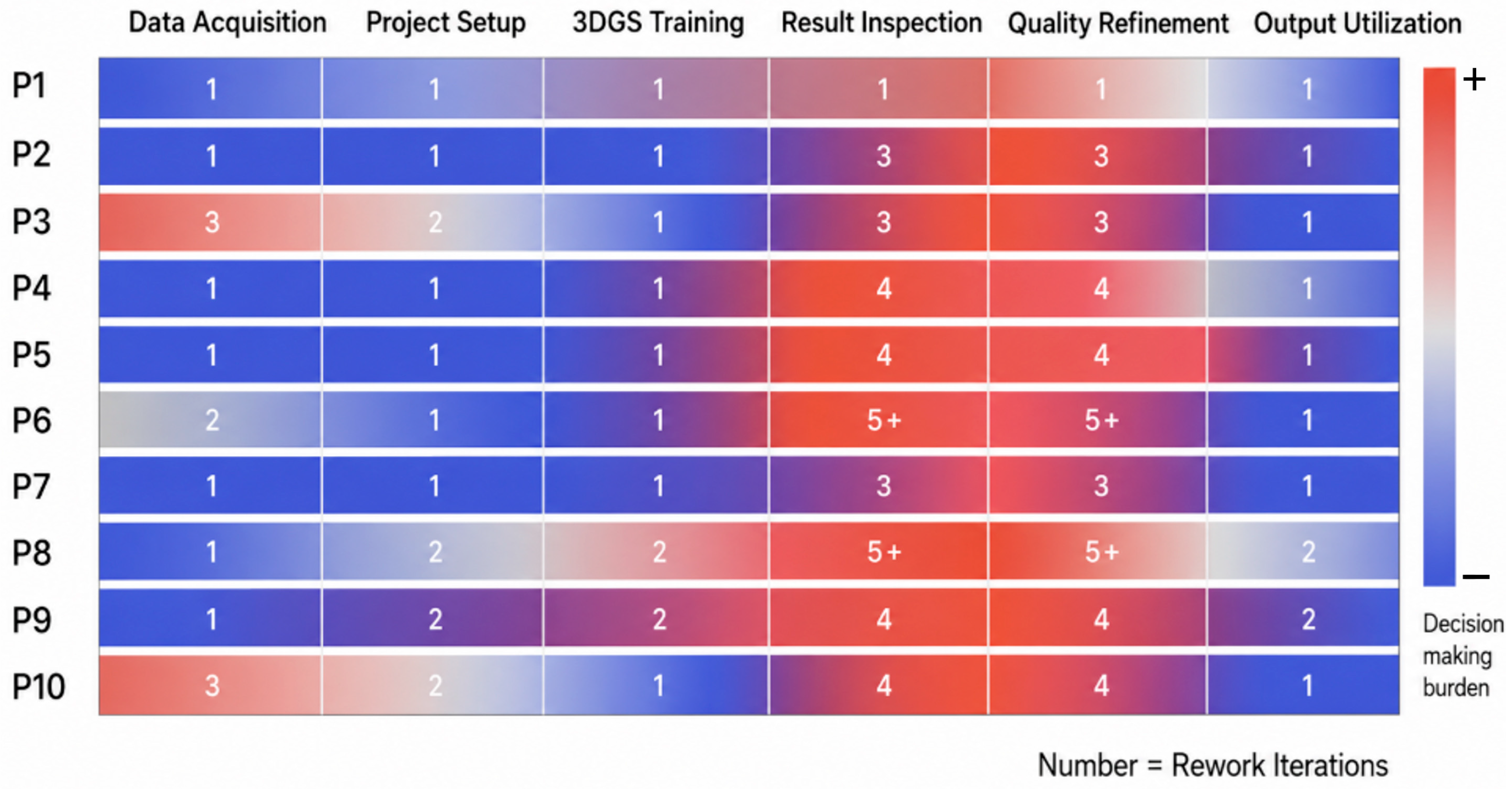
Using the HTA-derived workflow structure, retry frequency was visualized to analyze the distribution of iterative rework and decision-making demands across various task stages.
Figure 4 presents the number of retry iterations for each participant (P1–P10) across all workflow stages. Each cell denotes the number of repeated executions within the corresponding stage, with “5+” indicating five or more iterations. The color scale represents the relative level of decision-making demand associated with these retries, with blue indicating lower demand, gray indicating moderate demand, and red indicating higher demand.
The visualization indicates that higher retry frequencies are concentrated in the Result Inspection and Quality Refinement stages, suggesting that repeated adjustments and decision-making predominantly occur during these phases. In contrast, earlier stages such as Data Acquisition and Project Setup demonstrated relatively low levels of repetition, indicating that the majority of iterative problem-solving transpires during the later phases of the workflow.
Variations in retry frequency among participants were observed and can be attributed to differences in individual acceptance criteria and decision-making strategies. Given that 3DGS-based reconstruction entails complex and variable conditions—such as input data quality, camera alignment, and parameter tuning—variations in the number of iterations are to be expected. The majority of participants (e.g., P3, P6, P8, P10) conducted multiple iterations to enhance output quality, whereas a subset of participants (e.g., P1) accepted the initial results with minimal attempts.
In cases such as P1, lower retry counts are less indicative of differences in task performance ability and more suggestive of higher acceptance thresholds or a preference for rapid task completion. Overall, these findings indicate that variations in retry frequency reflect inherent differences in user behavior among participants, while consistently demonstrating that iterative effort and decision-making demands are concentrated at specific stages of the workflow.
4.5. Identified Pain Points in 3DGS Workflows
Based on the foregoing analyses, four primary challenges contributing to iterative rework in 3DGS workflows were identified. These issues are closely linked to inadequate decision support and restricted information visibility throughout critical stages of the workflow.
(1) Ambiguity in mode and parameter selection was frequently observed during the Data Acquisition stage (P1, P3, P6, and P10). Users often made configuration decisions without fully comprehending the available options due to inadequate explanations and the absence of clear selection criteria. As one participant observed, “I do not fully understand the settings, so I leave them at their default values and attempt multiple trials” (P3), highlighting a reliance on repeated trial and error. This issue underscores the necessity of structured support, such as Mode and Capture Setup, to inform decision-making in the early stages.
(2) A lack of transparency in monitoring training progress was identified during the 3DGS training phase (P4, P5, P8, and P9). The system did not offer clear progress indicators or estimated completion times, causing users to infer its status indirectly through CPU or GPU activity. One participant stated, “I can’t tell if it’s running properly, so I keep checking” (P8), exemplifying monitoring behavior motivated by uncertainty. This underscores the significance of Progress Management functions in enhancing visibility and minimizing unnecessary user intervention.
(3) Limited visibility of the causes of failure was observed during the Result Inspection stage (P1, P2, P6, and P8). The system typically offered minimal feedback, making it challenging for users to ascertain whether failures resulted from data issues or configuration settings. As one participant noted, “I don’t know what went wrong, so I have no choice but to try again” (P6), exemplifying how the lack of diagnostic information prompts repeated attempts. This underscores the necessity of Error Review functions to facilitate failure analysis and support decision-making.
(4) Inefficiencies in editing operations were identified during the Quality Refinement stage, specifically in P2, P3, P5, and P7. Limitations in the selection and alignment functions decreased both accuracy and efficiency, frequently necessitating additional corrective measures. Furthermore, the insufficient availability of in-system editing tools compelled users to depend on external software, thereby prolonging task duration and increasing post-processing efforts. This underscores the necessity of enhancing editing efficiency to facilitate precise and effective refinement.
Overall, these challenges stem not from a lack of functionality but from inadequate decision support and limited information visibility throughout the workflow stages. Notably, these issues were predominantly concentrated in the Result Inspection and Quality Refinement stages, indicating a systematic accumulation of user burden during the later phases of the workflow. Based on these findings, four essential functional requirements were identified to support user decision-making at various stages of the workflow: (1) Mode and Capture Setup, (2) Progress Management, (3) Error Review, and (4) Editing Efficiency. Each of these functions directly addresses the identified challenges by offering structured guidance for configuration, enhancing transparency during training, facilitating effective diagnosis of failure causes, and supporting efficient refinement processes.
5. Interface Design Proposal for 3DGS Workflows
This study proposes an interface design intended to enhance the efficiency and usability of 3DGS workflows, grounded in HTA-based workflow analysis, visualization of retry iterations, and insights from interviews. The findings suggest that the main challenges stem not from a deficiency in functionality, but from inadequate information support for user decision-making. As indicated by [
30], effective 3D interface design should take into account the users’ task context and cognitive demands.
Drawing from the identified pain points, the proposed interface aims to enhance decision support and increase information visibility throughout the critical stages of the workflow. Specifically, the four major issues identified in
Section 4—namely, ambiguity in mode and parameter selection, lack of transparency in training progress, limited visibility into failure causes, and inefficiencies in editing operations—are addressed through four corresponding functional areas: (1) Mode & Capture Setup, (2) Progress Management, (3) Error Review, and (4) Editing Efficiency.
Each functional area is designed to facilitate user decision-making at various stages of the workflow. It offers structured guidance for configuration, improves transparency throughout the training process, facilitates effective diagnosis of failure causes, and supports efficient refinement operations.
5.1. Mode & Capture Setup
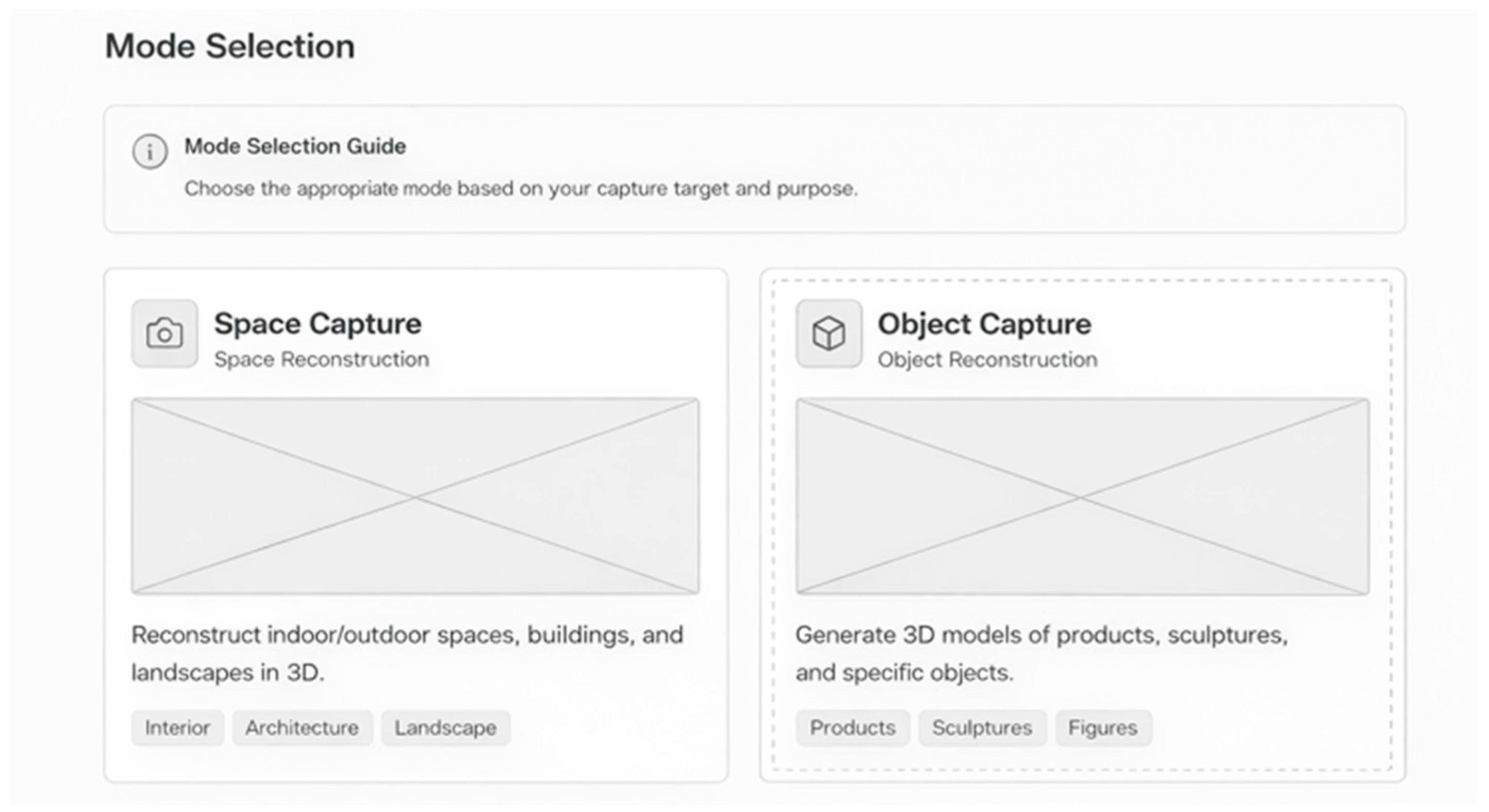
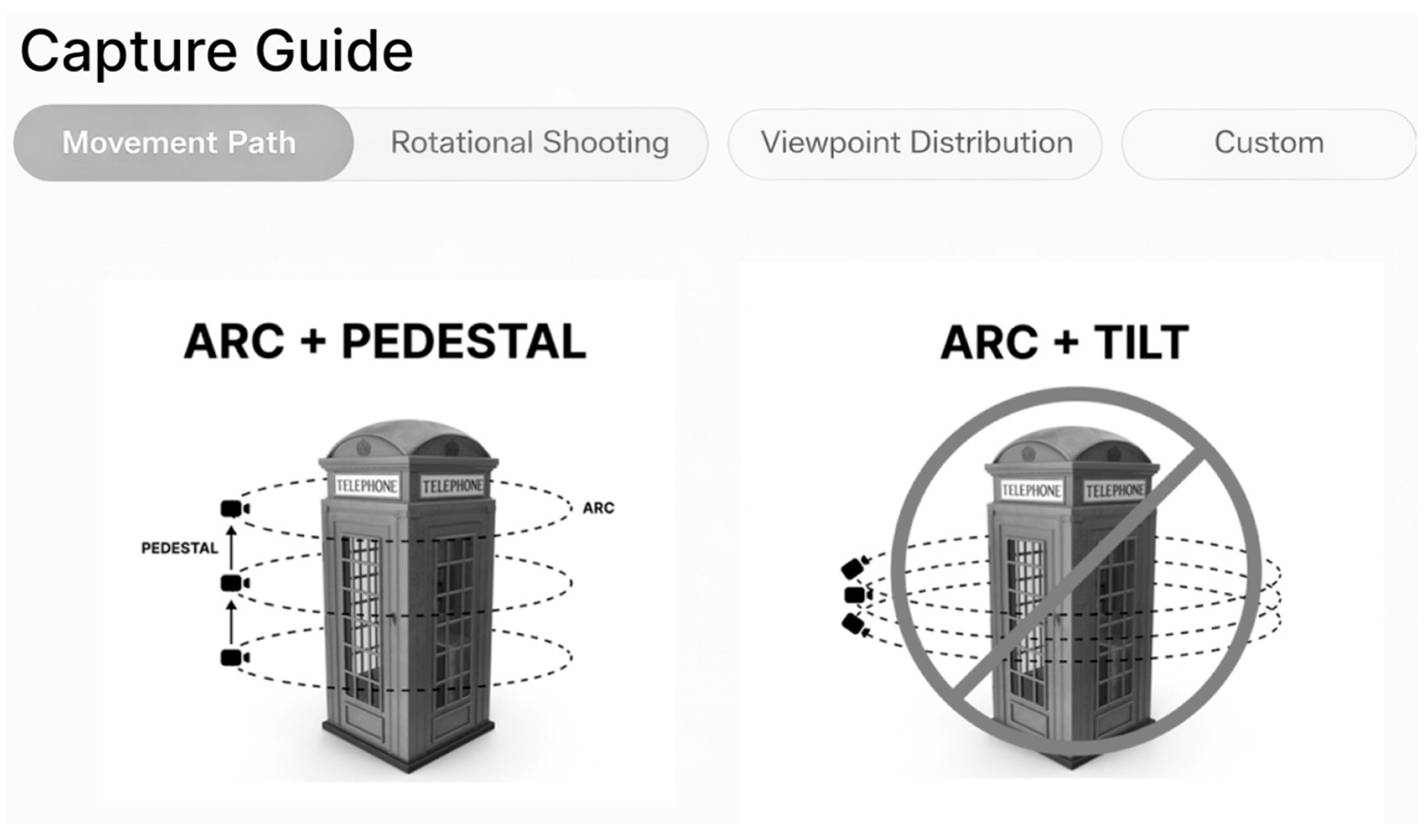
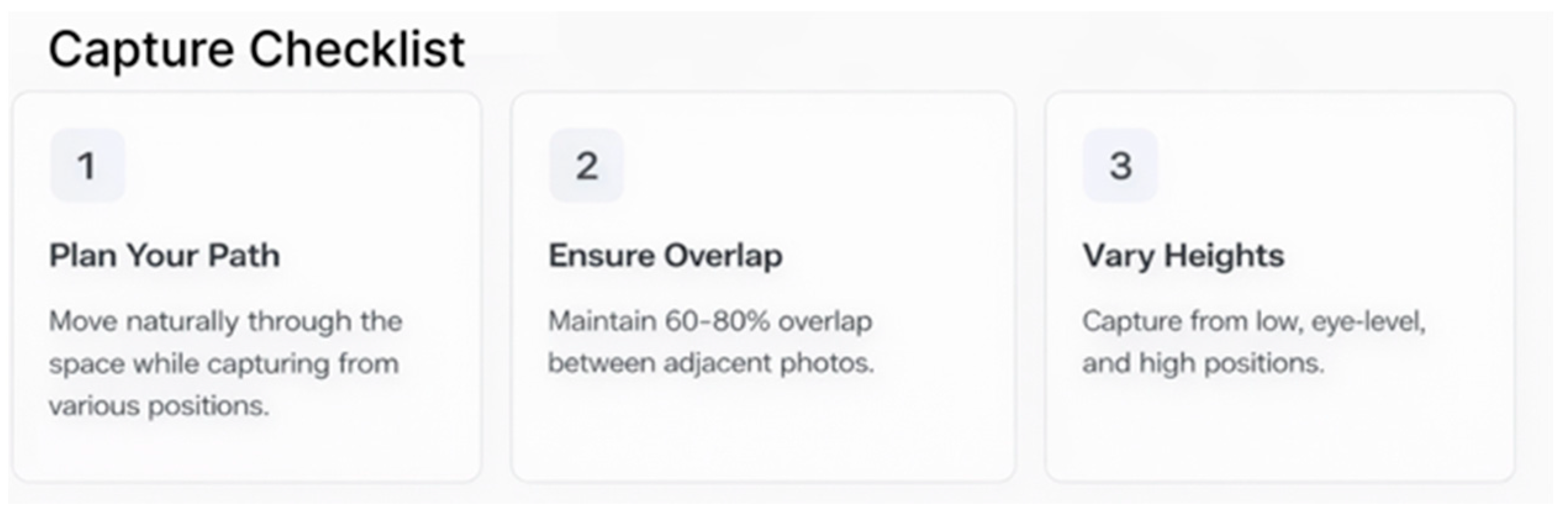
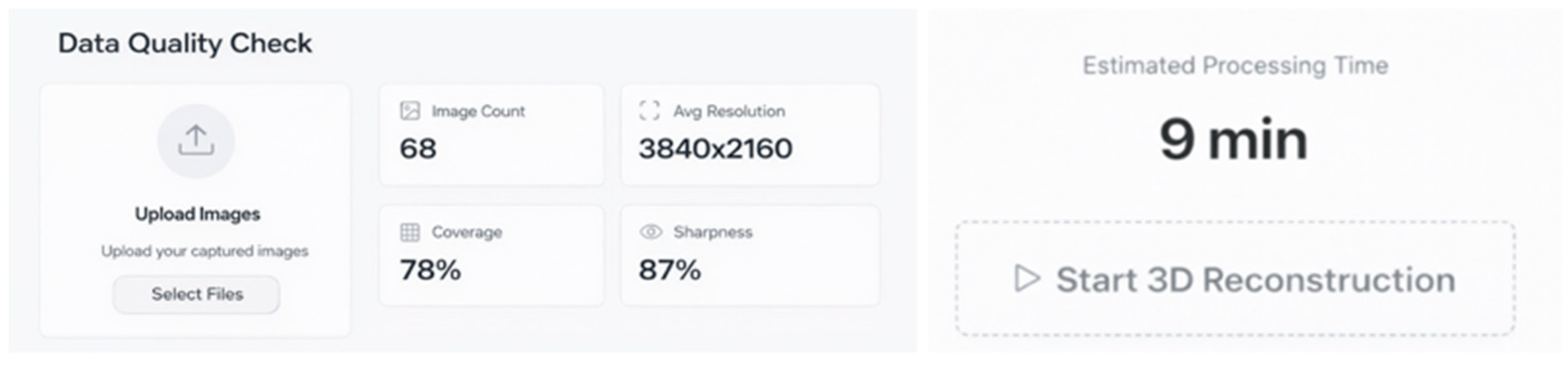
Workflow analysis indicated that the absence of explicit criteria hindered the users’ ability to select appropriate modes, resulting in repeated trial-and-error attempts. This issue primarily arises from inadequate guidance during the Data Acquisition stage, where users are required to make early decisions without a clear understanding of the capture requirements. To overcome this limitation, the proposed interface incorporates structured decision support that connects capture modes and data acquisition strategies to the intended reconstruction target. Instead of requiring users to interpret technical parameters, the interface offers context-aware guidance that aligns capture settings with task objectives. Furthermore, the interface facilitates decision-making by enhancing the visibility of capture requirements and expected outcomes. This involves offering guidance on data acquisition strategies and facilitating users’ assessment of whether the collected data satisfy the conditions required for successful reconstruction. By prioritizing decision support over feature expansion, the proposed design decreases ambiguity in early-stage decisions and reduces unnecessary trial-and-error iterations. The interface components supporting the proposed workflow are presented in
Figure 5,
Figure 6,
Figure 7 and
Figure 8.
5.2. Progress Management
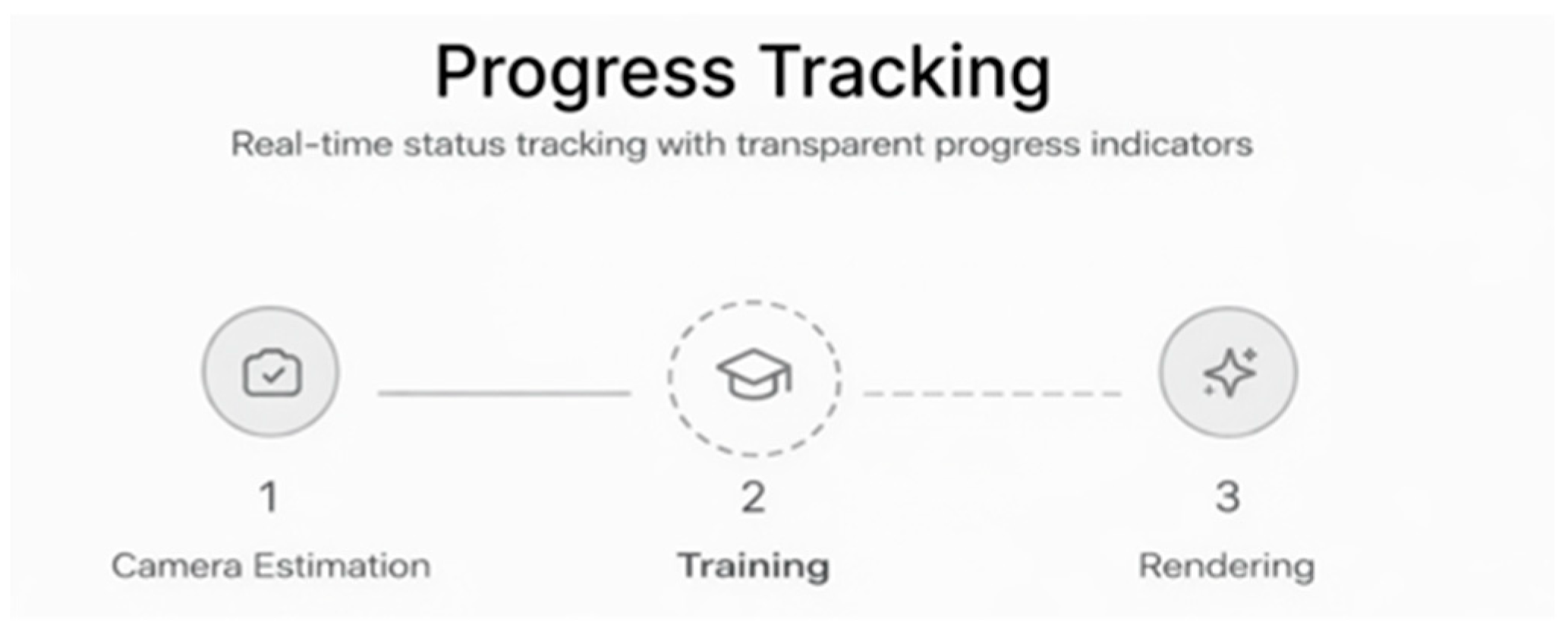
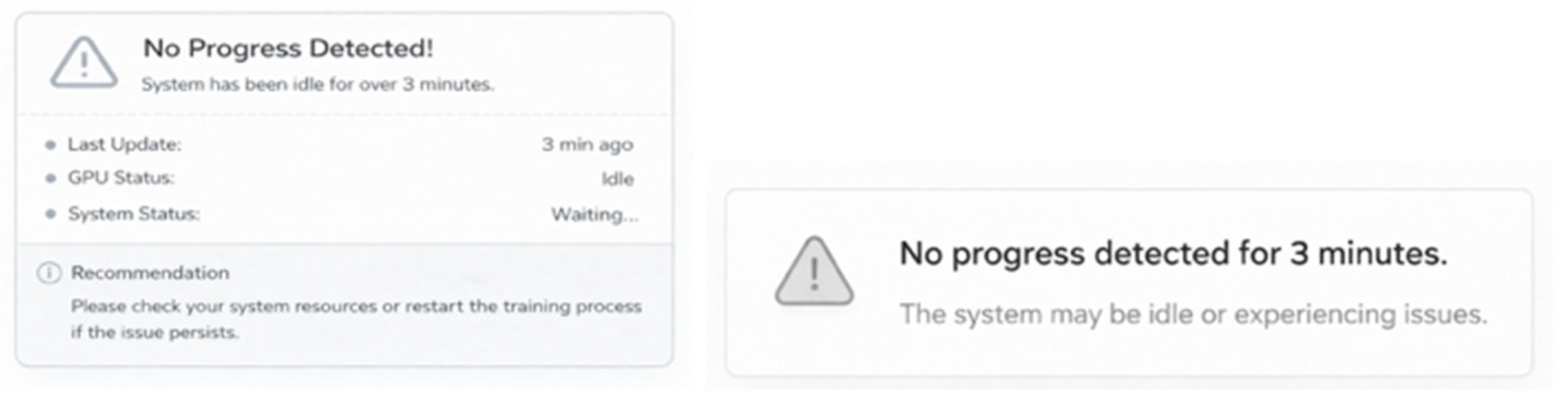
Workflow analysis indicated that users encountered considerable uncertainty during the 3DGS training phase due to limited visibility of system progress. Specifically, the absence of clear indicators impeded the users’ ability to discern whether the process was actively progressing or had stalled, resulting in frequent and inefficient monitoring behaviors. This issue stems from insufficient transparency regarding the system status, requiring users to infer progress through indirect indicators such as GPU activity. Consequently, unnecessary interruptions and repeated verifications arise, leading to increased cognitive load and diminished overall efficiency.
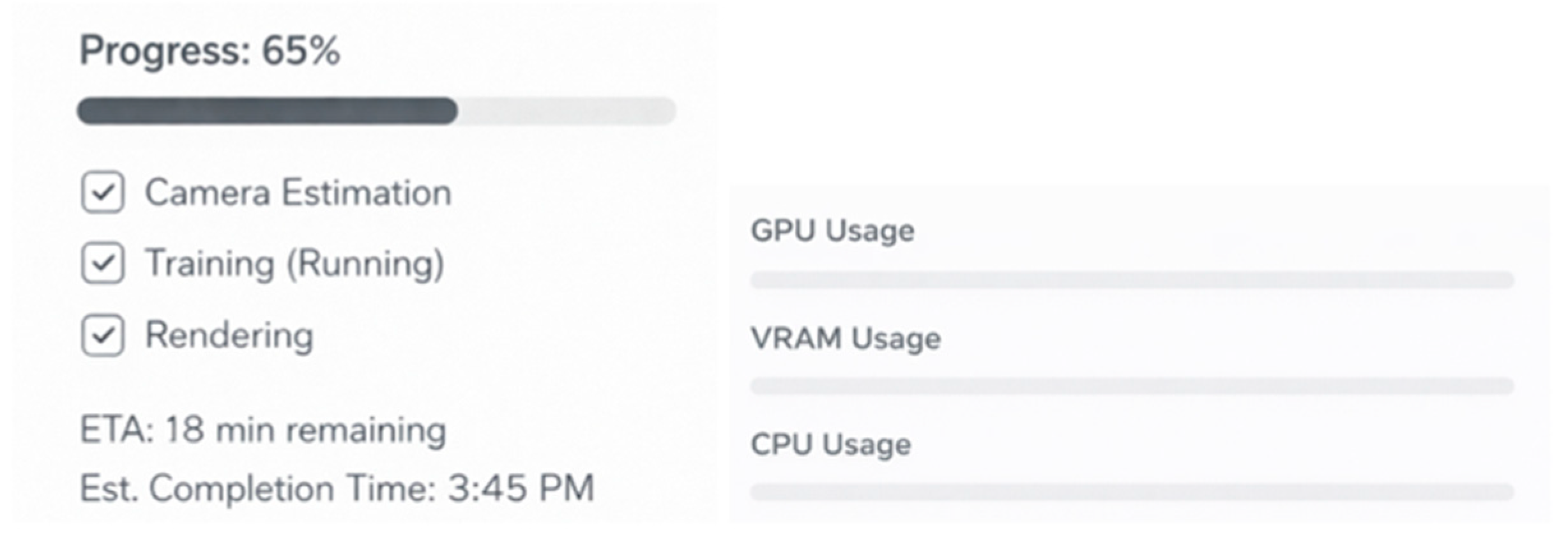
To overcome this limitation, the proposed interface improves transparency by offering continuous updates on system progress and status. Instead of obliging users to interpret low-level system signals, the interface provides contextual information that enables them to comprehend the current processing stage and anticipated progress. Furthermore, the interface facilitates decision-making by allowing users to differentiate between normal execution and potential stagnation. By enhancing the visibility and interpretability of system progress, the proposed design facilitates more efficient task execution and reduces cognitive load during the training phase.
Figure 9,
Figure 10 and
Figure 11 illustrate examples of the proposed interface for progress management during the training phase.
5.3. Error Review
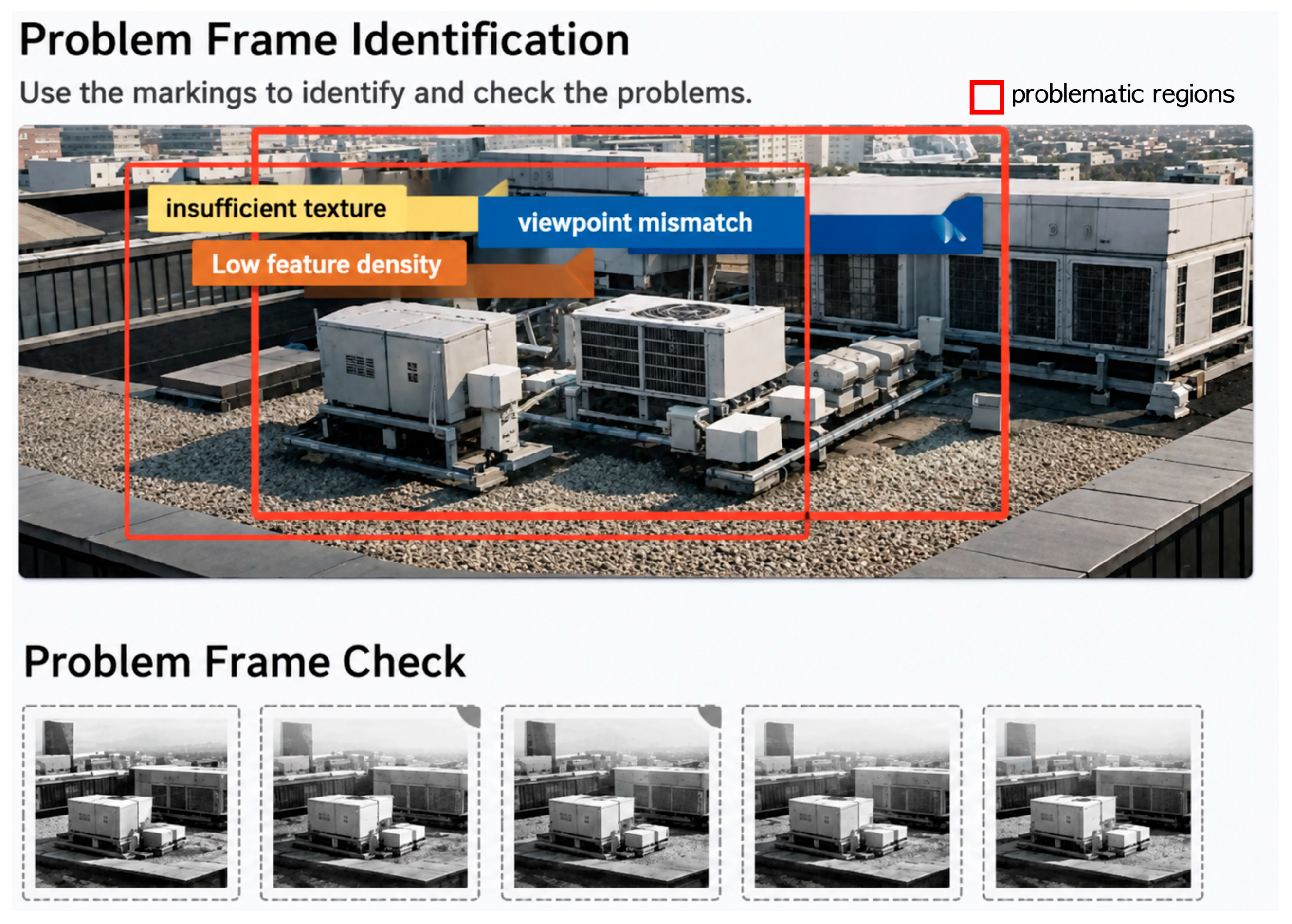
Workflow analysis indicated that users experienced difficulty determining the causes of failure due to insufficient system feedback during the Result Inspection stage. In numerous instances, users were unable to ascertain whether errors stemmed from input data, parameter settings, or reconstruction conditions, resulting in repeated attempts without a clear understanding. This issue stems from the absence of interpretable diagnostic information, whereby the system offers limited feedback, compelling users to deduce causes through trial and error. Consequently, decision-making becomes inefficient and heavily reliant on user experience.
To overcome this limitation, the proposed interface facilitates error diagnosis by improving the interpretability of information related to failures. Rather than offering predefined solutions, the interface allows users to investigate potential causes by analyzing structured information associated with the reconstruction results. Furthermore, the interface facilitates decision-making by enabling users to identify problematic data regions and comprehend potential sources of failure. This facilitates a more systematic approach to problem-solving throughout the evaluation and refinement stages. By enhancing the visibility and interpretability of error-related information, the proposed design reduces uncertainty in failure analysis and minimizes unnecessary retry iterations. Examples of the proposed error-review interface are illustrated in
Figure 12 and
Figure 13.
5.4. Editing Efficiency
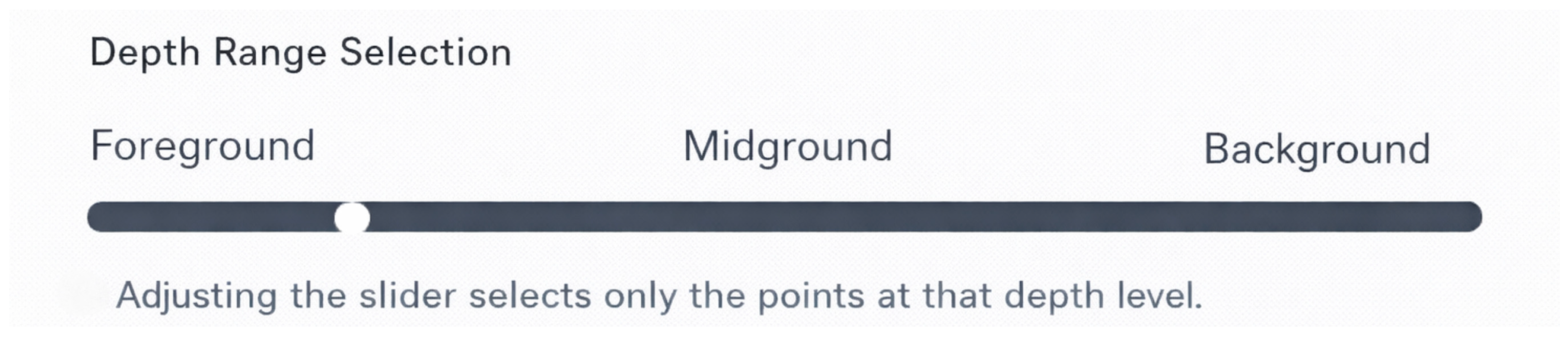
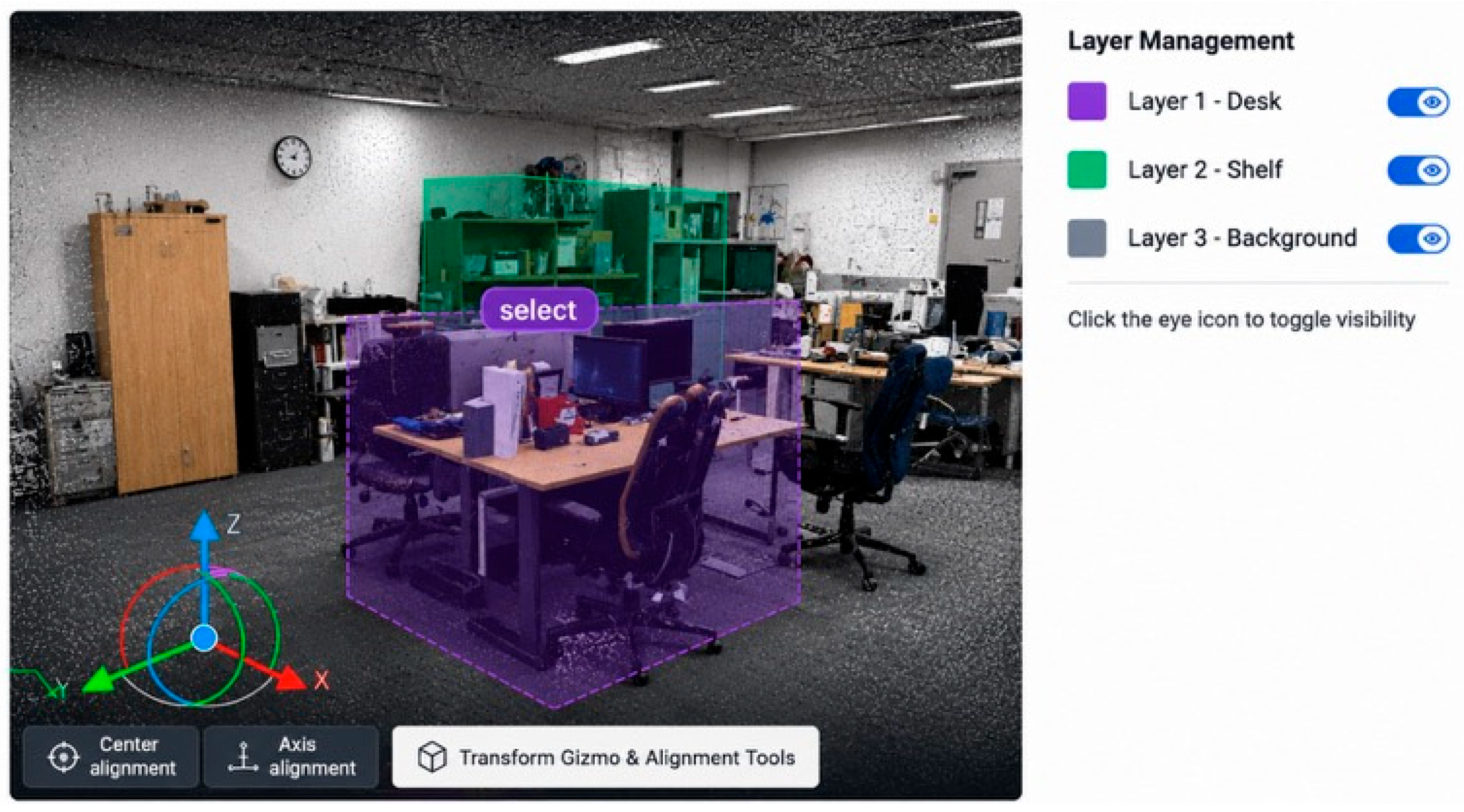
Workflow analysis indicated that editing tasks were frequently inefficient due to limited control over selection and fragmented processes during the Quality Refinement stage. Users often faced challenges in accurately selecting target regions, necessitating repetitive correction steps or dependence on external tools, which led to increased task duration and cognitive load. This issue stems from the inadequate integration of editing operations and the system’s limited support for fine-grained manipulation. Consequently, editing transforms into a fragmented process that disrupts workflow continuity and diminishes overall efficiency.
To overcome this limitation, the proposed interface enhances editing efficiency by enabling more precise and integrated manipulation within a unified environment. Instead of obliging users to toggle between various tools or make manual adjustments, the interface facilitates more direct and precise interaction with the reconstruction results. Furthermore, the interface improves decision-making during refinement by enabling users to more effectively assess the impact of editing operations. This facilitates a more streamlined and iterative process of refinement. By enhancing precision, integration, and evaluation support in editing tasks, the proposed design minimizes redundant correction steps and improves both task efficiency and output quality. Examples of the proposed editing-support interface are presented in
Figure 14,
Figure 15,
Figure 16 and
Figure 17.
6. Interface Design Evaluation
To evaluate the effectiveness of the proposed interface, a user study was conducted to compare the proposed interface with an existing 3DGS interface commonly used in practice. The evaluation focused on usability, decision-making support, and task efficiency across key workflow stages identified through the HTA-based analysis. Given the small sample size (n = 10) and the repeated-measures design, non-parametric statistical tests were applied.
6.1. Evaluation Method
Each functional area (Mode & Capture Setup, Progress Management, Error Review, and Editing Efficiency) was evaluated based on four questionnaire items, and the average score for each participant was used for analysis. Differences between the proposed interface and the existing 3DGS interface were analyzed using the Wilcoxon signed-rank test. To examine whether the magnitude of improvement varied across functional areas, the difference between the proposed interface and the existing 3DGS interface was calculated for each participant. These differences were analyzed using the Friedman test, followed by post hoc Wilcoxon signed-rank tests for pairwise comparisons where appropriate.
6.2. Comparison of User Evaluation Scores
As shown in
Table 5, the proposed interface received significantly higher evaluation scores than the existing 3DGS interface across all four functional areas (
p < 0.01). Across functional areas, Mode & Capture Setup and Progress Management showed similar mean scores (M = 4.25), representing improvements of more than 1.7 points compared to the existing interface. Error Review demonstrated a substantial increase, with a mean score of 4.05 compared to 1.53, indicating notable improvement in error inspection tasks. Editing Efficiency recorded the highest mean score (M = 4.55), showing the greatest improvement in terms of editing performance and ease of manipulation.
These results indicate that the proposed interface improved the user evaluation scores across all functional areas, with particularly strong improvements observed in Error Review and Editing Efficiency. The findings imply that usability challenges in 3DGS workflows are more pronounced in stages requiring iterative evaluation and corrective actions.
6.3. Differences in Improvement Magnitude
To examine whether the magnitude of improvement differed across functional areas, a Friedman test was conducted (
Table 6). The results revealed a statistically significant difference in improvement magnitude across the four functional areas (χ
2 = 7.979,
p = 0.046). Among the functional areas, Editing Efficiency showed the largest mean improvement (M = 2.675), followed by Error Review (M = 2.525). In contrast, Mode & Capture Setup (M = 1.775) and Progress Management (M = 1.75) exhibited relatively smaller and comparable improvements.
These results indicate that although all functional areas benefited from the proposed interface, the extent of improvement varied depending on the characteristics of the workflow stage. In particular, greater improvements in Editing Efficiency and Error Review suggest that interface support is especially impactful in stages involving iterative refinement, inspection, and repeated decision-making.
6.4. Pairwise Comparison of Improvement
Given that significant differences in improvement magnitude were identified across functional areas, additional pairwise comparisons were conducted to determine which specific functional areas differed from each other. These post hoc comparisons were performed using the Wilcoxon signed-rank test, as shown in
Table 7.
The results revealed significant differences between Editing Efficiency and both Mode & Capture Setup (p = 0.036) and Progress Management (p = 0.028), indicating that the improvement observed in Editing Efficiency was significantly greater than in these functional areas. In contrast, no statistically significant differences were found between Mode & Capture Setup and Progress Management (p = 0.952), Mode & Capture Setup and Error Review (p = 0.057), Progress Management and Error Review (p = 0.172), or Error Review and Editing Efficiency (p = 0.720). These findings suggest that the differences in improvement magnitude across functional areas were primarily driven by Editing Efficiency, while the remaining functional areas exhibited relatively similar levels of improvement.
Overall, improvements were primarily driven by Editing Efficiency, underscoring that interface design interventions are most effective in stages characterized by iterative refinement and intensive decision-making.
7. Discussion
This study examined the structure of 3DGS workflows and the challenges users encounter during the production process. The findings show that 3DGS workflows are not strictly sequential but involve iterative and decision-making processes. Cycles of result inspection and quality refinement were consistently observed, indicating that repeated decision-making and rework are inherent to the workflow.
These findings extend prior research that has focused on algorithm performance and system efficiency in 3D reconstruction. This study instead highlights the role of user behavior and decision-making in real-world workflows. The results indicate that user difficulties are not only caused by technical limitations but are also related to insufficient decision support and limited information visibility in the interface.
Workflow complexity is not evenly distributed. Early stages, such as data acquisition and project setup, follow relatively simple processes, while later stages—especially result inspection and quality refinement—require more decision-making and repeated actions. The evaluation results show that the proposed interface improves usability across all functional areas. The largest improvement was observed in Editing Efficiency, suggesting that support for refinement tasks contributes to overall workflow performance.
The analysis of improvement magnitude shows that all functional areas improved, but the extent of improvement differed. Pairwise comparisons show that Editing Efficiency improved more than Mode & Capture Setup and Progress Management, while no significant difference was found between Editing Efficiency and Error Review. These results suggest that editing tasks are more sensitive to interface design changes, while improvements in other functional areas are relatively consistent. Overall, differences across functional areas were mainly associated with Editing Efficiency, while Error Review showed a similar level of improvement.
8. Implications and Limitations
Existing research on 3DGS has primarily focused on technical aspects such as reconstruction performance and system efficiency, while expert user studies addressing real-world 3DGS workflows with high complexity and diverse variables remain limited. In particular, because workflows dynamically vary depending on production environments and conditions, there are inherent challenges in quantitatively modeling user experience and decision-making processes. Accordingly, this study focused primarily on the exploratory analysis of expert users’ workflow structures and iterative decision-making processes, rather than directly incorporating quantitative performance measurements or cognitive modeling. However, as 3DGS technologies and production environments continue to evolve, the need for usability analyses and quantitative evaluation frameworks that reflect real-world user workflows is expected to become increasingly important. In tasks that require repeated inspection and refinement, interfaces that clearly present task status and support user judgment can contribute to improving overall task efficiency.
This study has several limitations. First, the evaluation was based on subjective user feedback; future work could incorporate objective measures such as task completion time and error rates. Second, while this study analyzed decision points and iteration patterns, it did not explicitly incorporate formal models of decision making, cognitive workload, or quantitative workflow metrics. Integrating HTA with decision modeling, cognitive workload measures, and quantitative indicators, such as iteration frequency and task duration, would provide a more comprehensive understanding of workflow performance.
9. Conclusions
This study analyzed user workflows in 3DGS-based content creation using hierarchical task analysis (HTA), focusing on stages involving iterative execution and decision-making. Based on this analysis, a user-centered interface was developed to reflect workflow structure and support decision-making processes, and its effectiveness was evaluated through a user study. The results demonstrate that the proposed interface improved usability across all functional areas, including Editing Efficiency, Error Review, Progress Management, and Mode & Capture Setup. In particular, greater improvements were observed in Editing Efficiency and Error Review, suggesting that usability challenges are more pronounced in stages involving iterative refinement and evaluation. Unlike prior research focused on system performance or isolated usability metrics, this study provides a workflow-level perspective on 3DGS production and identifies stage-specific patterns of iteration and decision-making. The findings highlight the importance of interface design that supports workflow structure, information visibility, and user decision-making in complex iterative tasks.
Author Contributions
Conceptualization, H.C.; methodology, H.C.; software, H.C.; validation, H.C. and H.K. (Heewon Kang); formal analysis, H.C.; investigation, H.C.; resources, H.K. (Hyunsuk Kim); data curation, H.C.; writing—original draft preparation, H.C.; writing—review and editing, H.C., H.K. (Heewon Kang) and H.K. (Hyunsuk Kim); visualization, H.C.; supervision, H.K. (Hyunsuk Kim); project administration, H.K. (Hyunsuk Kim); funding acquisition, H.K. (Hyunsuk Kim). All authors have read and agreed to the published version of the manuscript.
Funding
This research was supported by the Culture, Sports and Tourism R&D Program through the Korea Creative Content Agency grant funded by the Ministry of Culture, Sports and Tourism in 2024 (Project Name: Near Real-Time 4D Nerf-based VFX system ‘WITH’ R&D and R&D PBL, Project Number: RS-2024-00349479, Contribution Rate: 100%). This work was supported by 2026 Hongik University Innovation Support Program Fund.
Institutional Review Board Statement
Ethical review and approval were waived due to the minimal risk nature of the study, as it involved anonymous survey data and did not include sensitive personal information.
Informed Consent Statement
Informed consent was obtained from all participants involved in the study.
Data Availability Statement
The data that support the findings of this study are available from the corresponding author upon reasonable request.
Conflicts of Interest
The authors declare no conflicts of interest.
Appendix A
Table A1.
Interview questions and their analytical purposes.
Table A1.
Interview questions and their analytical purposes.
| Category | No. | Question Items | Analytical Purpose |
|---|
| Warm-up | 1 | What are your job role, years of experience, and main software tools used? | Understanding user background |
| 2 | What is your purpose for using 3DGS, and what is your final goal? | Defining user goals |
| 3 | What is a representative task you performed recently, and what were your criteria for success? | Identifying success criteria |
| Workflow | 4 | Please describe the entire workflow step by step. | Deriving task structure |
| 5 | What are your criteria for task completion and failure? | Defining completion criteria |
| Decision-Making | 6 | At what points during the task did you need to make choices? | Identifying decision points |
| 7 | What criteria did you use for those decisions? | Analyzing decision criteria |
Failure
Analysis | 8 | What was a recent failure case you experienced? | Analyzing error patterns |
| 9 | How did you determine the cause of the failure? | Understanding cause identification processes |
| 10 | What actions did you take afterward? | Analyzing recovery strategies |
| System Comparison | 11 | What are the differences between the programs you use? | Tool comparison |
| 12 | For the same task, how does the workflow differ across programs? | Workflow comparison |
References
- Fei, B.; Xu, J.; Zhang, R.; Zhou, Q.; Yang, W.; He, Y. 3D Gaussian Splatting as a New Era: A Survey. IEEE Trans. Vis. Comput. Graph. 2025, 31, 4429–4449. [Google Scholar] [CrossRef] [PubMed]
- Yu, Y.; Verbree, E.; van Oosterom, P.; Pottgiesser, U.; Peng, Y.; Poux, F. From comparison to integration: A workflow evaluation of 3D Gaussian splatting and LiDAR point cloud for modern architectural heritage. Autom. Constr. 2025, 180, 106509. [Google Scholar] [CrossRef]
- Hornbæk, K. Current Practice in Measuring Usability: Challenges to Usability Studies and Research. Int. J. Hum.-Comput. Stud. 2006, 64, 79–102. [Google Scholar] [CrossRef]
- Kaptelinin, V.; Nardi, B.A. Acting with Technology: Activity Theory and Interaction Design; MIT Press: Cambridge, MA, USA, 2006. [Google Scholar]
- Stanton, N.A. Hierarchical Task Analysis: Developments, Applications, and Extensions. Appl. Ergon. 2006, 37, 55–79. [Google Scholar] [CrossRef] [PubMed]
- Chen, G.; Wang, W. A Survey on 3D Gaussian Splatting. ACM Comput. Surv. 2026. advance online publication. [Google Scholar] [CrossRef]
- Qiu, S.; Xie, B.; Liu, Q.; Heng, P.-A. Advancing Extended Reality with 3D Gaussian Splatting: Innovations and Prospects. arXiv 2024, arXiv:2412.06257. [Google Scholar] [CrossRef]
- Mildenhall, B.; Srinivasan, P.P.; Tancik, M.; Barron, J.T.; Ramamoorthi, R.; Ng, R. NeRF: Representing Scenes as Neural Radiance Fields for View Synthesis. In Proceedings of the European Conference on Computer Vision, Glasgow, UK, 23–28 August 2020; pp. 405–421. [Google Scholar] [CrossRef]
- Pumarola, A.; Corona, E.; Pons-Moll, G.; Moreno-Noguer, F. D-NeRF: Neural Radiance Fields for Dynamic Scenes. In Proceedings of the IEEE/CVF Conference on Computer Vision and Pattern Recognition, Virtual, 19–25 June 2021; pp. 10318–10327. [Google Scholar] [CrossRef]
- Müller, T.; Evans, A.; Schied, C.; Keller, A. Instant Neural Graphics Primitives with a Multiresolution Hash Encoding. ACM Trans. Graph. 2022, 41, 102. [Google Scholar] [CrossRef]
- Kerbl, B.; Kopanas, G.; Leimkühler, T.; Drettakis, G. 3D Gaussian Splatting for Real-Time Radiance Field Rendering. ACM Trans. Graph. 2023, 42, 139. [Google Scholar] [CrossRef]
- Khedr, M.; Metawie, M.; Eldin, A.S.; Hamdy, A.; El-Shihy, A.; Azab, S.; Abdelaty, A.; Marzouk, M. 3D Visualization of Damaged Statues Using Gaussian Splatting and Web Interface Integration. npj Herit. Sci. 2025, 13, 587. [Google Scholar] [CrossRef]
- Haslbauer, P.; Pullen, M.; Praprotnik, M.; Stimec, S.P.; Hospital, M.; Grosbois, A.; Reichherzer, C.; Smolic, A. VR Planica: Gaussian Splatting Workflows for Immersive Storytelling. In Proceedings of the ACM International Conference on Interactive Media Experiences Workshops, Niterói, RJ, Brazil, 3–6 June 2025; pp. 47–53. [Google Scholar] [CrossRef]
- Billinghurst, M.; Clark, A.; Lee, G. A Survey of Augmented Reality. Found. Trends Hum.-Comput. Interact. 2015, 8, 73–272. [Google Scholar] [CrossRef]
- Norman, D.A. The Design of Everyday Things: Revised and Expanded Edition; Basic Books: New York, NY, USA, 2013. [Google Scholar]
- Nielsen, J. Usability Engineering; Morgan Kaufmann: San Francisco, CA, USA, 1994. [Google Scholar]
- Prabhu, P.V.; Prabhu, G.V. Human Error and User-Interface Design. In Handbook of Human-Computer Interaction, 2nd ed.; Helander, M.G., Landauer, T.K., Prabhu, P.V., Eds.; Elsevier: Amsterdam, The Netherlands, 1997; pp. 489–501. [Google Scholar] [CrossRef]
- Reason, J. Human Error; Cambridge University Press: Cambridge, UK, 1990. [Google Scholar]
- Klein, G.; Moon, B.; Hoffman, R.R. Making Sense of Sensemaking 1: Alternative Perspectives. IEEE Intell. Syst. 2006, 21, 70–73. [Google Scholar] [CrossRef]
- Marai, G.E. Activity-Centered Domain Characterization for Problem-Driven Scientific Visualization. IEEE Trans. Vis. Comput. Graph. 2018, 24, 913–922. [Google Scholar] [CrossRef]
- Sedig, K.; Parsons, P. Interaction Design for Complex Cognitive Activities with Visual Representations: A Pattern-Based Approach. AIS Trans. Hum. -Comput. Interact. 2013, 5, 84–133. [Google Scholar] [CrossRef]
- Langote, M.; Saratkar, S.; Kumar, P.; Verma, P.; Puri, C.; Gundewar, S.; Gourshettiwar, P. Human–Computer Interaction in Healthcare: Comprehensive Review. AIMS Bioeng. 2024, 11, 343–390. [Google Scholar] [CrossRef]
- Sharp, H.; Rogers, Y.; Preece, J. Interaction Design: Beyond Human–Computer Interaction, 4th ed.; Wiley: Chichester, UK, 2015. [Google Scholar]
- Annett, J. Hierarchical Task Analysis. In Handbook of Cognitive Task Design; Hollnagel, E., Ed.; CRC Press: Boca Raton, FL, USA, 2003; pp. 17–36. [Google Scholar]
- Diaper, D.; Stanton, N.A. (Eds.) The Handbook of Task Analysis for Human-Computer Interaction; Lawrence Erlbaum Associates: Mahwah, NJ, USA, 2004. [Google Scholar]
- Annett, J. Hierarchical Task Analysis (HTA). In Handbook of Human Factors and Ergonomics Methods; Stanton, N.A., Hedge, A., Brookhuis, K., Salas, E., Hendrick, H.W., Eds.; CRC Press: Boca Raton, FL, USA, 2004; pp. 355–363. [Google Scholar]
- Dreger, F.A.; Gattermann, F.; Petrasch, F. Hierarchical Task Analysis (HTA) for Application Research on Operator Work Practices and the Design of Training and Support Systems for Forestry Harvester. Forests 2023, 14, 424. [Google Scholar] [CrossRef]
- Virzi, R.A. Refining the Test Phase of Usability Evaluation: How Many Subjects Is Enough? Hum. Factors 1992, 34, 457–468. [Google Scholar] [CrossRef]
- Belotto, M.J. Data Analysis Methods for Qualitative Research: Managing the Challenges of Coding, Interrater Reliability, and Thematic Analysis. Qual. Rep. 2018, 23, 2622–2633. [Google Scholar] [CrossRef]
- Kharoub, H.; Lataifeh, M.; Ahmed, N. 3D User Interface Design and Usability for Immersive VR. Appl. Sci. 2019, 9, 4861. [Google Scholar] [CrossRef]
Figure 1.
Observation of participants in real-world 3DGS-based reconstruction workflows.
Figure 1.
Observation of participants in real-world 3DGS-based reconstruction workflows.
Figure 2.
HTA-based workflow structure and decision-making flow in 3DGS production.
Figure 2.
HTA-based workflow structure and decision-making flow in 3DGS production.
Figure 3.
Workflow illustrating the concentration of iteration and failure in 3DGS production.
Figure 3.
Workflow illustrating the concentration of iteration and failure in 3DGS production.
Figure 4.
Heatmap of retry frequency and decision-making burden across task stages in the 3DGS workflow.
Figure 4.
Heatmap of retry frequency and decision-making burden across task stages in the 3DGS workflow.
Figure 5.
Interface supporting mode selection based on capture purpose and data characteristics.
Figure 5.
Interface supporting mode selection based on capture purpose and data characteristics.
Figure 6.
Interface providing capture guidance for data acquisition.
Figure 6.
Interface providing capture guidance for data acquisition.
Figure 7.
Checklist-based interface for validating capture conditions during data acquisition.
Figure 7.
Checklist-based interface for validating capture conditions during data acquisition.
Figure 8.
Interface providing data quality feedback and estimated processing time to support decision making.
Figure 8.
Interface providing data quality feedback and estimated processing time to support decision making.
Figure 9.
Interface providing real-time progress tracking across processing stages.
Figure 9.
Interface providing real-time progress tracking across processing stages.
Figure 10.
Interface providing notifications to indicate task stagnation.
Figure 10.
Interface providing notifications to indicate task stagnation.
Figure 11.
Interface providing system status information, including estimated time and resource usage.
Figure 11.
Interface providing system status information, including estimated time and resource usage.
Figure 12.
Interface supporting error analysis and cause inference based on problematic frames.
Figure 12.
Interface supporting error analysis and cause inference based on problematic frames.
Figure 13.
Interface providing action guidance to support problem-solving exploration.
Figure 13.
Interface providing action guidance to support problem-solving exploration.
Figure 14.
Interface supporting depth-based selection for precise region control.
Figure 14.
Interface supporting depth-based selection for precise region control.
Figure 15.
Interface providing layer-based management for organizing point cloud elements.
Figure 15.
Interface providing layer-based management for organizing point cloud elements.
Figure 16.
Interface supporting integrated editing and alignment operations.
Figure 16.
Interface supporting integrated editing and alignment operations.
Figure 17.
Interface providing before–after comparison for evaluating editing results.
Figure 17.
Interface providing before–after comparison for evaluating editing results.
Table 1.
Comparison of previous studies on 3DGS.
Table 1.
Comparison of previous studies on 3DGS.
| Study | Method | Focus | Limitation |
|---|
| Conventional 3D Reconstruction Methods [7] |
Traditional photogrammetry and reconstruction pipelines
| Accurate reconstruction |
Complex processing
|
| NeRF-Based Methods [8] |
Neural radiance fields (NeRF)
| Novel view synthesis |
High computational cost
|
| Dynamic Scene Extensions [9] |
Dynamic NeRF approaches
| Dynamic scene reconstruction | Slow workflow |
| Efficient Neural Representations [10] |
Optimized neural rendering structures
| Computational efficiency | Limited usability |
| 3D Gaussian Splatting [11] |
Gaussian primitive-based scene representation
| Real-time reconstruction | Limited workflow support |
| Workflow-Oriented 3DGS [13] |
3DGS in immersive media production workflows
|
Immersive media production
| Limited decision support |
|
Proposed Study
|
HTA-based interface
| Improved decision support | - |
Table 2.
Characteristics of study participants (n = 10).
Table 2.
Characteristics of study participants (n = 10).
| No. | ID | Age | Job | Experience in Using 3DGS | Primary Programs | Primary Reconstruction Type |
|---|
|
1
|
P1
|
30
|
VFX Artist
|
8 months
| Postshot (v.1.0), Luma AI (v1.3.14) |
Space + Object
|
|
2
|
P2
|
20
|
3D Content Creator
|
6 months
| With Vision (v0.0.3) |
Space + Object
|
|
3
|
P3
|
30
|
Digital Twin Specialist
|
12 months
| Postshot (v.1.0) |
Objects
|
|
4
|
P4
|
40
|
Movie Background Maker
|
12 months
| With Vision (v0.0.3),
Super Splat (v2.18.1) |
Space
|
|
5
|
P5
|
20
|
Game Asset Creator
|
4 months
| Luma AI (v1.3.14), Polycam (v5.2.3) |
Objects
|
|
6
|
P6
|
30
|
PhD Researcher
|
11 months
| With Vision (v0.0.3), Postshot (v.1.0) |
Space + Research
|
|
7
|
P7
|
40
|
Professor (HCI)
|
7 months
| Postshot (v.1.0) |
Research
|
|
8
|
P8
|
30
|
Product Designer
|
11 months
| Luma AI (v1.3.14) |
Objects
|
|
9
|
P9
|
20
|
Freelance 3D Artist
|
5 months
| With Vision (v0.0.3) |
Objects
|
|
10
|
P10
|
30
|
Digital Twin Specialist
|
9 months
| Postshot (v.1.0), Polycam (v5.2.3) |
Space
|
Table 3.
Theoretical basis of interview design and analytical dimensions.
Table 3.
Theoretical basis of interview design and analytical dimensions.
| Analytical Dimensions | Analytical Purpose | Theoretical Basis |
|---|
| Workflow | Task structure identification | Hierarchical task analysis (HTA) [24,25] |
| Decision-Making | Decision criteria analysis | Decision-centered design (DCD) [19] |
| Failure Experience | Error and recovery analysis | Error/Recovery in HCI [15,18] |
| Cognitive Response | Cognitive workload analysis | HCI cognitive workload [15] |
Table 4.
Workflow stages of 3DGS reconstruction process.
Table 4.
Workflow stages of 3DGS reconstruction process.
| No. | Task Name | Key Activities |
|---|
| 1 | Data Acquisition | Image capture and data collection, data preprocessing, and removal of blurred or duplicate images |
| 2 | Project Setup | Data import, mode selection, and parameter configuration |
| 3 | 3DGS Training | Model training and monitoring of training progress |
| 4 | Result Inspection | Visual quality evaluation and identification of errors (e.g., distortion, noise) |
| 5 | Quality Refinement | Parameter adjustment and retraining |
| 6 | Output Utilization | Result editing and file export |
Table 5.
Comparison of user evaluation scores between the existing 3DGS interface and the proposed 3DGS interface.
Table 5.
Comparison of user evaluation scores between the existing 3DGS interface and the proposed 3DGS interface.
| Functional Areas | Proposed 3DGS
Interface M ± SD | Existing 3DGS
Interface M ± SD | V | p-Value |
|---|
| Mode & Capture Setup, | 4.25 ± 0.645 | 2.475 ± 0.901 | 45 | 0.009 |
| Progress Management | 4.25 ± 0.471 | 2.500 ± 1.041 | 55 | 0.006 |
| Error Review | 4.05 ± 0.468 | 1.525 ± 0.786 | 55 | 0.006 |
| Editing Efficiency | 4.55 ± 0.405 | 1.875 ± 0.592 | 55 | 0.006 |
Table 6.
Differences in improvement magnitude across functional categories.
Table 6.
Differences in improvement magnitude across functional categories.
| Functional Areas | Difference Value
M ± SD | χ2 | p-Value |
|---|
| Mode & Capture Setup | 1.775 ± 0.731 | 7.979 | 0.046 |
| Progress Management | 1.75 ± 1.027 |
| Error Review | 2.525 ± 0.982 |
| Editing Efficiency | 2.675 ± 0.800 |
Table 7.
Post hoc Wilcoxon signed-rank test results for pairwise comparisons.
Table 7.
Post hoc Wilcoxon signed-rank test results for pairwise comparisons.
Compared Functional
Area | Functional Areas A
Improvement (M) ± SD | Functional Areas B
Improvement (M) ± SD | V | p-Value |
|---|
| Mode & Capture Setup vs. Progress Management | 1.775 ± 0.731 | 1.750 ± 1.027 | 23.5 | 0.952 |
Mode & Capture Setup vs.
Error Review | 1.775 ± 0.731 | 2.525 ± 0.982 | 4.0 | 0.057 |
Mode & Capture Setup vs.
Editing Efficiency | 1.775 ± 0.731 | 2.675 ± 0.8 | 6.5 | 0.036 |
Progress Management vs.
Error Review | 1.750 ± 1.027 | 2.525 ± 0.982 | 10.5 | 0.172 |
Progress Management vs.
Editing Efficiency | 1.750 ± 1.027 | 2.675 ± 0.8 | 3.5 | 0.028 |
Error Review vs.
Editing Efficiency | 2.525 ± 0.982 | 2.675 ± 0.8 | 23.5 | 0.720 |
| Disclaimer/Publisher’s Note: The statements, opinions and data contained in all publications are solely those of the individual author(s) and contributor(s) and not of MDPI and/or the editor(s). MDPI and/or the editor(s) disclaim responsibility for any injury to people or property resulting from any ideas, methods, instructions or products referred to in the content. |