Bioactive Potential of Ptelea trifoliata Flower Extracts: Antioxidant, Enzyme-Modulating, and Wound Healing Activities with Possible Biomedical and Dermal Applications

 , , , ,
  ,
,  and
and
Abstract
1. Introduction
2. Materials and Methods
2.1. Chemical Reagents
2.2. Plant Material
2.3. Extraction Process
2.4. Chemical Characterisation of the Extracts
2.4.1. Total Polyphenol Content
2.4.2. Total Flavonoid Content
2.4.3. Quantitative Analysis of the Extract Using LC–MS/MS
2.4.4. Quantitative Analysis of the Extract Using HPLC
2.5. Studies of Biological Activity of Extracts
2.5.1. Antioxidant Activity Assay
- DPPH assay
- CUPRAC assay
- FRAP assay
- Chelation Power on Ferrous (Fe2+) Ions assay
2.5.2. Inhibition of Inflammation- and Pigmentation-Related Enzymes
- Anti-Hyaluronidase activity assay
- Anti-tyrosinase activity assay
2.6. Wound Healing (Scratch) Assay
2.7. Statistical Analysis
3. Results and Discussion
3.1. Phytochemical Study of Ptelea trifoliata Flowers Extracts
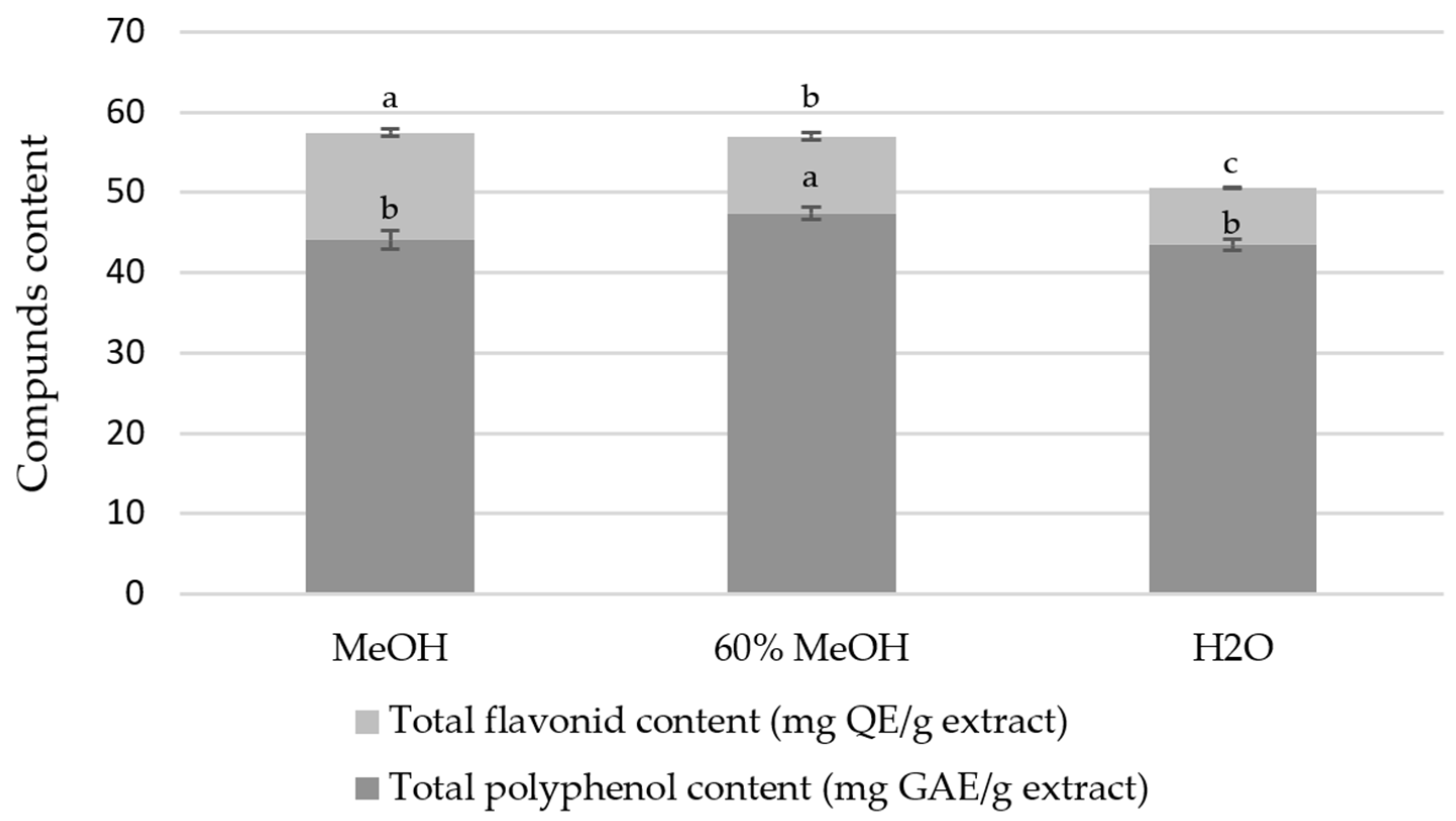
3.1.1. Total Polyphenol (TPC) and Flavonoid (TFC) Content in Ptelea trifoliata Extracts
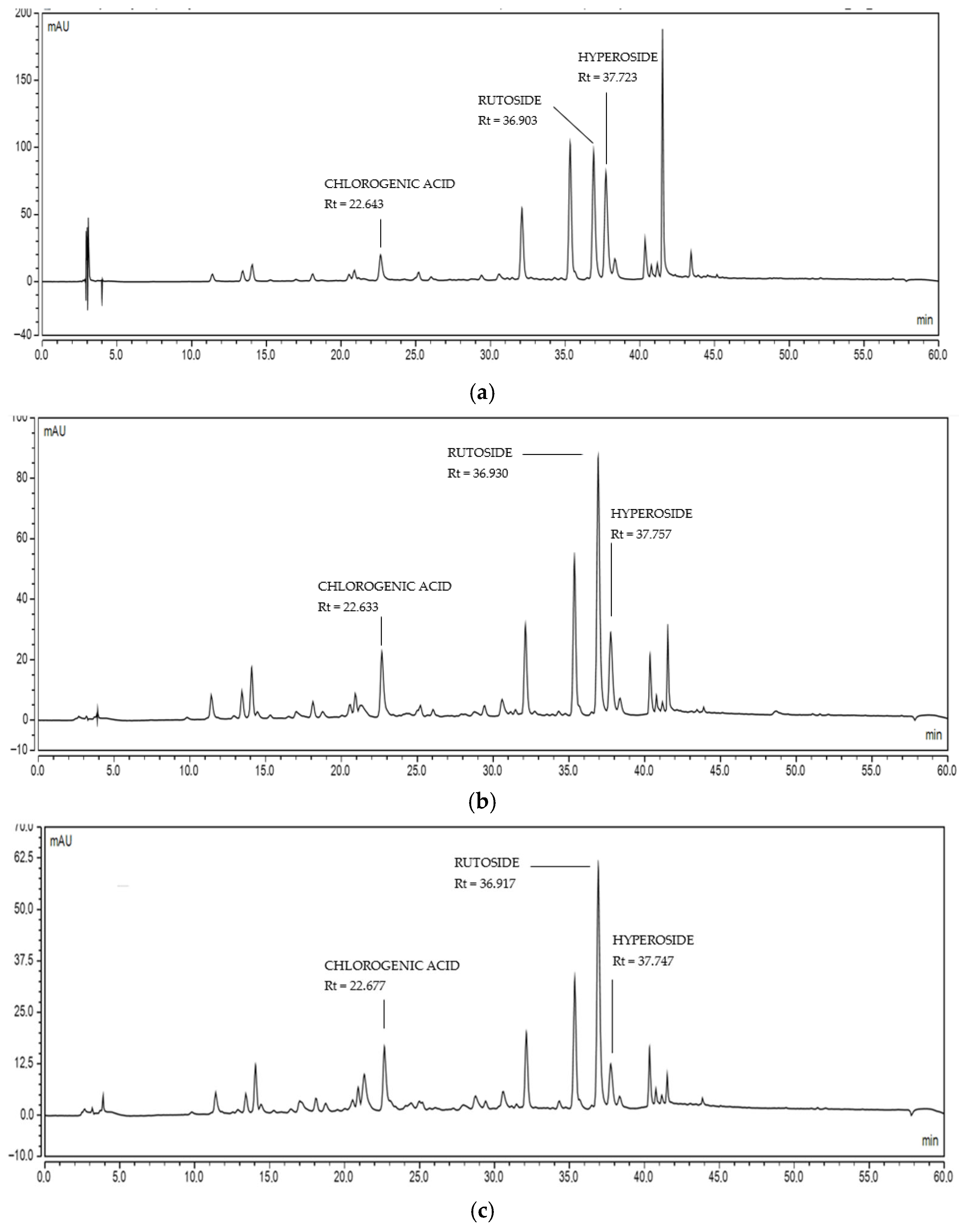
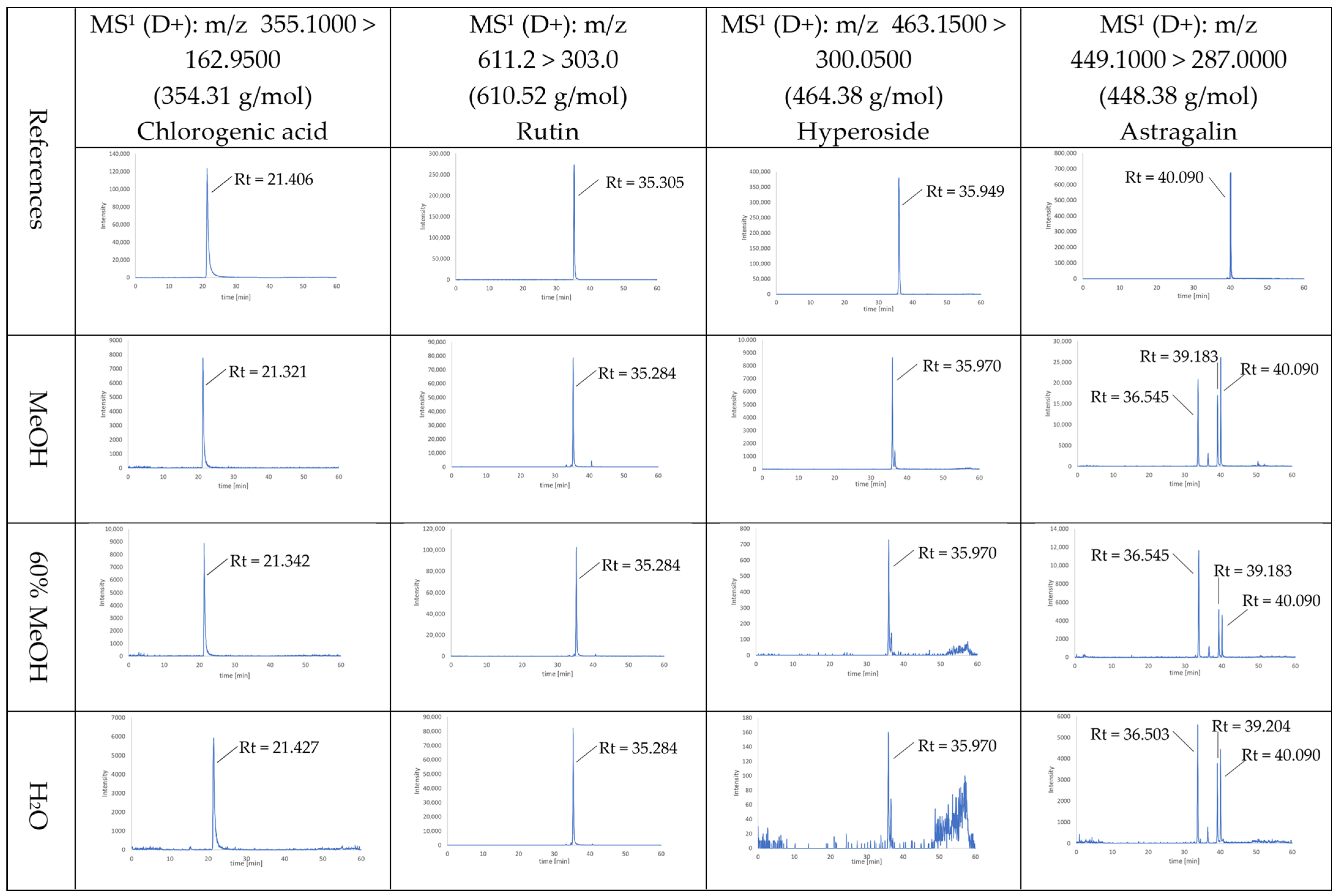
3.1.2. Phytochemical Analysis of the Extract Using LC–MS/MS and HPLC-DAD Analysis
3.2. Evaluation of the Biological Potential of Ptelea trifoliata Flower Extracts in Cell-Free Assays
3.2.1. Flower Extracts of Ptelea trifoliata Demonstrate Antioxidant Activity in DPPH, CUPRAC, FRAP, and Fe2+ Chelation Assays
3.2.2. Extracts from the Flowers of Ptelea trifoliata Show Anti-Hyaluronidase and Anti-Tyrosinase Activity
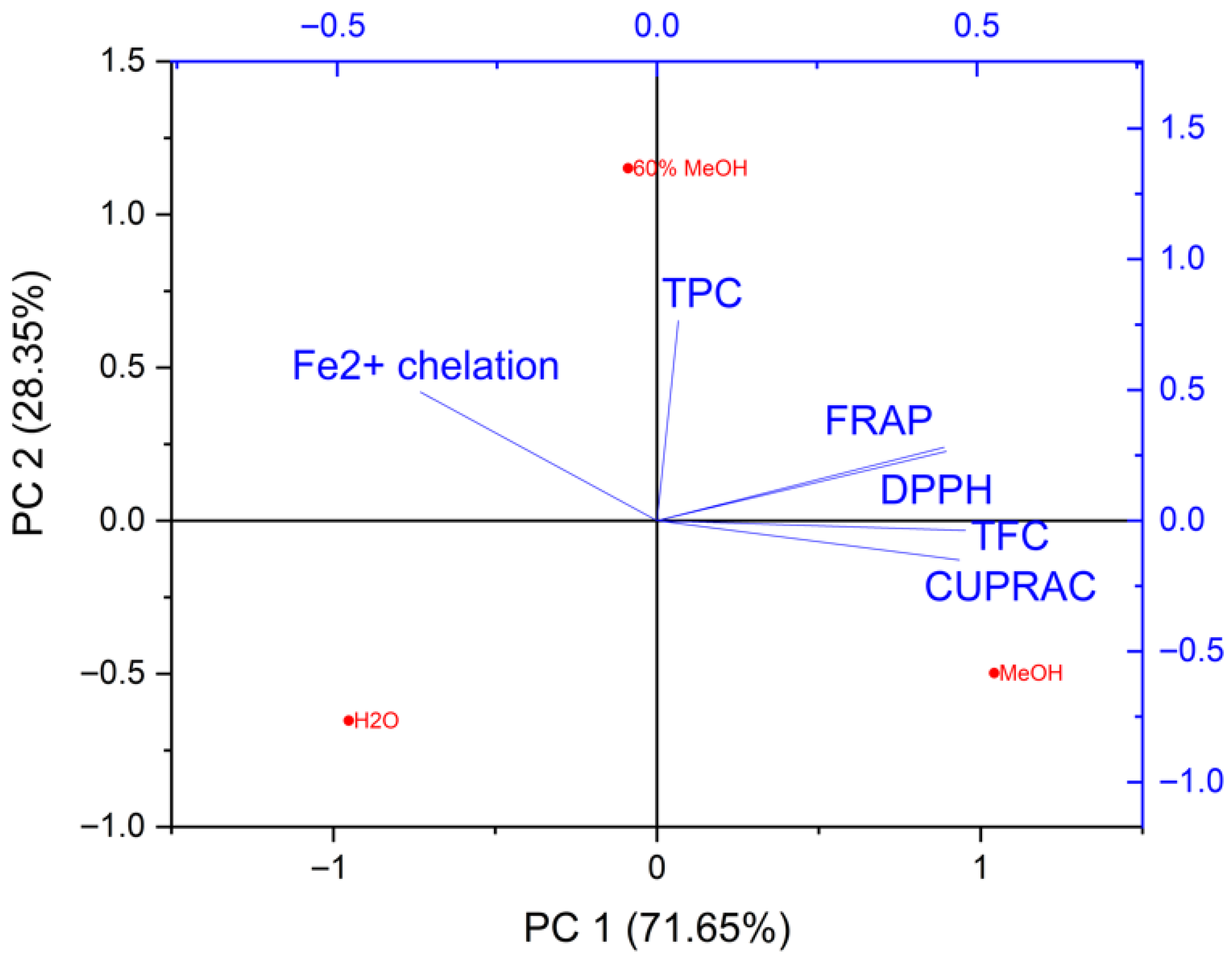
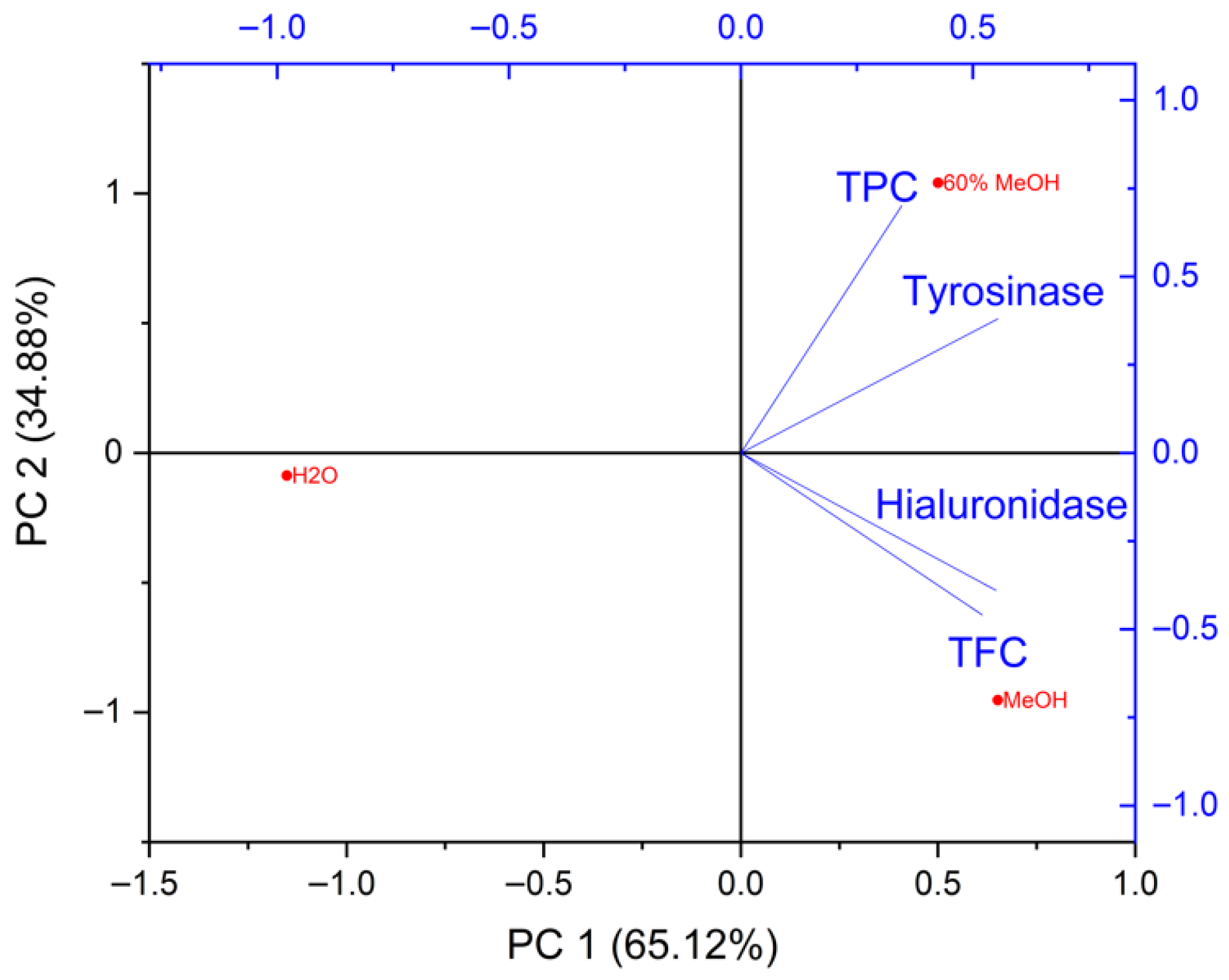
3.2.3. Principal Component Analysis Reveals Relationships Between Bioactive Compounds and Antioxidant as Well as Enzymatic Activities
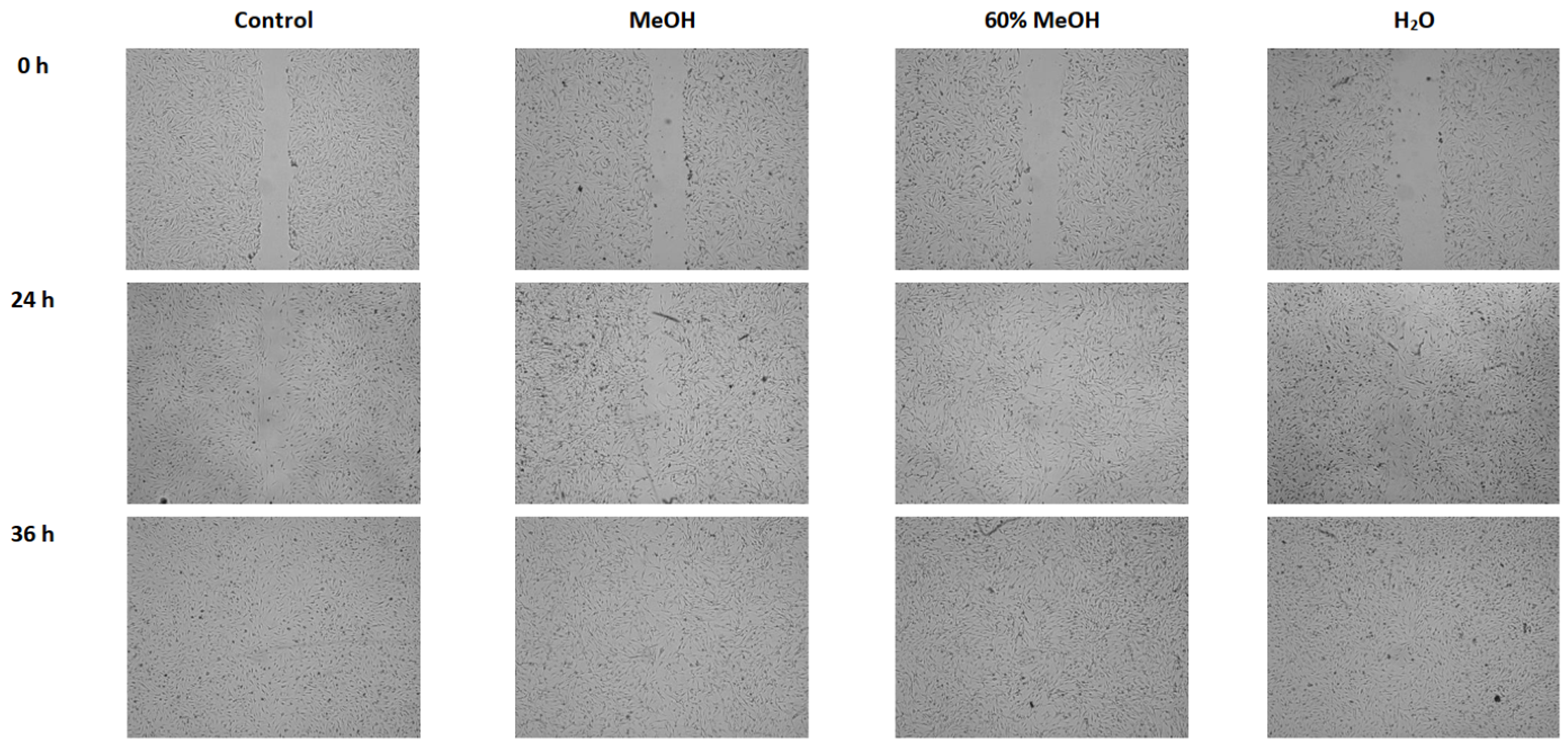
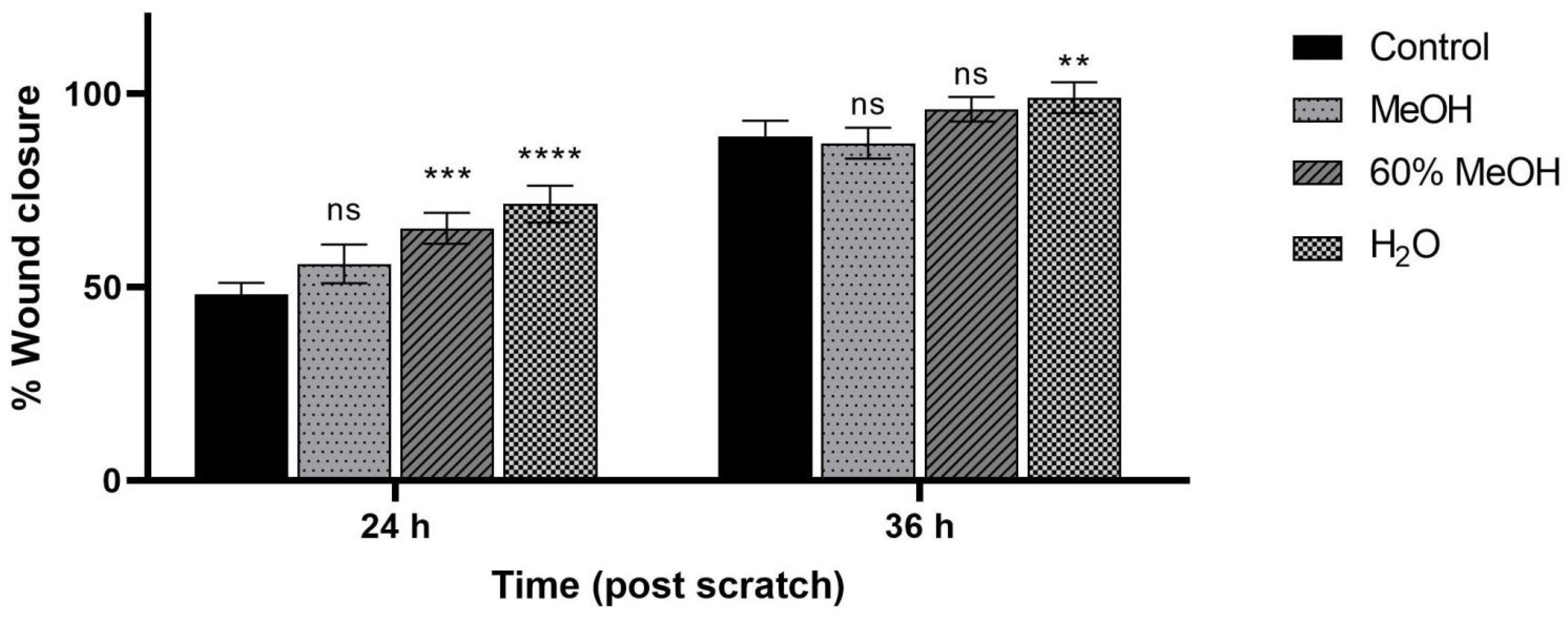
3.3. Evaluation of the Wound-Healing Potential of Ptelea trifoliata Flower Extracts in Cell-Based Assays
4. Conclusions
Supplementary Materials
Author Contributions
Funding
Data Availability Statement
Acknowledgments
Conflicts of Interest
References
- Bailey, V.L. Revision of the Genus Ptelea (Rutaceae). Brittonia 1962, 14, 1–45. [Google Scholar] [CrossRef][Green Version]
- Museum, M.P. Bulletin of the Public Museum of the City of Milwaukee; Trustees of the Public Museum: Milwaukee, WI, USA, 1927.
- Habitat, H. AF Whiting’s Ethnography of a Traditional Indian Culture; University of Arizona: Tucson, AZ, USA, 1985. [Google Scholar]
- Vannier, L.; Poirier, J. Précis de Matière Médicale Homoeopathique; Doin & Cie: Paris, France, 1962; ISBN 2704003777. [Google Scholar]
- Petit-Paly, G.; Montagu, M.; Trémouillaux-Guiller, J.; Chenieux, J.C.; Rideau, M. Ptelea trifoliata (Quinine Tree, Hop Tree): In Vitro Culture and the Production of Alkaloids and Medicinal Compounds. In Medicinal and Aromatic Plants IV; Springer: Berlin/Heidelberg, Germany, 1993; pp. 280–295. [Google Scholar]
- Reisch, J.; Szendrei, K.; Novák, I.; Minker, E.; Pàpay, V. Inhaltsstoffe Der Blüten von Ptelea trifoliata: Arctigenin-Methyläther,(+)-Hydroxylunin Und Ptelefolin. Tetrahedron Lett. 1969, 10, 3803–3806. [Google Scholar] [CrossRef]
- Novak, I.E.A. Investigations on Indigenous Species of the Ruta-Ceae: Ptelea trifoliata. Herba Hung. 1970, 9, 23. [Google Scholar]
- da Silva, M.F.D.G.F.; Fernandes, J.B.; Forim, M.R.; Vieira, P.C.; de Sá, I.C.G. Alkaloids Derived from Anthranilic Acid: Quinoline, Acridone, and Quinazoline. In Natural Products; Springer: Berlin/Heidelberg, Germany, 2013; pp. 715–859. ISBN 3642221440. [Google Scholar]
- Bibak, B.; Shakeri, F.; Barreto, G.E.; Keshavarzi, Z.; Sathyapalan, T.; Sahebkar, A. A Review of the Pharmacological and Therapeutic Effects of Auraptene. Biofactors 2019, 45, 867–879. [Google Scholar] [CrossRef]
- Wu, D.; Jin, L.; Huang, X.; Deng, H.; Shen, Q.; Quan, Z.; Zhang, C.; Guo, H.-Y. Arctigenin: Pharmacology, Total Synthesis, and Progress in Structure Modification. J. Enzym. Inhib. Med. Chem. 2022, 37, 2452–2477. [Google Scholar] [CrossRef]
- Setzer, W.N.; Satyal, P. Essential Oil Compositions of Male and Female Flowers of Ptelea trifoliata. Am. J. Essent. Oils Nat. Prod. 2019, 7, 18–22. [Google Scholar]
- El Mihyaoui, A.; da Silva, J.C.G.; Charfi, S.; Candela Castillo, M.E.; Lamarti, A.; Arnao, M.B. Chamomile (Matricaria chamomilla L.): A Review of Ethnomedicinal Use, Phytochemistry and Pharmacological Uses. Life 2022, 12, 479. [Google Scholar] [CrossRef] [PubMed]
- López, V.; Nielsen, B.; Solas, M.; Ramírez, M.J.; Jäger, A.K. Exploring Pharmacological Mechanisms of Lavender (Lavandula angustifolia) Essential Oil on Central Nervous System Targets. Front. Pharmacol. 2017, 8, 280. [Google Scholar] [CrossRef]
- Viapiana, A.; Wesolowski, M. The Phenolic Contents and Antioxidant Activities of Infusions of Sambucus nigra L. Plant Foods Hum. Nutr. 2017, 72, 82–87. [Google Scholar] [CrossRef]
- Sokolova, E.; Krol, T.; Adamov, G.; Minyazeva, Y.; Baleev, D.; Sidelnikov, N. Total Content and Composition of Phenolic Compounds from Filipendula Genus Plants and Their Potential Health-Promoting Properties. Molecules 2024, 29, 2013. [Google Scholar] [CrossRef]
- Książkiewicz, M.; Karczewska, M.; Nawrot, F.; Grabowska, K.; Szymański, M.; Cielecka-Piontek, J.; Studzińska-Sroka, E. Edible Flowers as Bioactive Food Ingredients with Antidiabetic Potential: A Study on Paeonia officinalis L., Forsythia × Intermedia, Gomphrena globosa L., and Clitoria ternatea L. Plants 2025, 14, 2603. [Google Scholar] [CrossRef]
- Paczkowska-Walendowska, M.; Gościniak, A.; Szymanowska, D.; Szwajgier, D.; Baranowska-Wójcik, E.; Szulc, P.; Dreczka, D.; Simon, M.; Cielecka-Piontek, J. Blackberry Leaves as New Functional Food? Screening Antioxidant, Anti-Inflammatory and Microbiological Activities in Correlation with Phytochemical Analysis. Antioxidants 2021, 10, 1945. [Google Scholar] [CrossRef]
- Studzińska-Sroka, E.; Bulicz, M.; Henkel, M.; Rosiak, N.; Paczkowska-Walendowska, M.; Szwajgier, D.; Baranowska-Wójcik, E.; Korybalska, K.; Cielecka-Piontek, J. Pleiotropic Potential of Evernia Prunastri Extracts and Their Main Compounds Evernic Acid and Atranorin: In Vitro and In Silico Studies. Molecules 2024, 29, 233. [Google Scholar] [CrossRef]
- Tiveron, A.P.; Melo, P.S.; Bergamaschi, K.B.; Vieira, T.M.F.S.; Regitano-d’Arce, M.A.B.; Alencar, S.M. Antioxidant Activity of Brazilian Vegetables and Its Relation with Phenolic Composition. Int. J. Mol. Sci. 2012, 13, 8943–8957. [Google Scholar] [CrossRef]
- Dinis, T.C.P.; Madeira, V.M.C.; Almeida, L.M. Action of Phenolic Derivatives (Acetaminophen, Salicylate, and 5-Aminosalicylate) as Inhibitors of Membrane Lipid Peroxidation and as Peroxyl Radical Scavengers. Arch. Biochem. Biophys. 1994, 315, 161–169. [Google Scholar] [CrossRef] [PubMed]
- Studzińska-Sroka, E.; Dudek-Makuch, M.; Chanaj-Kaczmarek, J.; Czepulis, N.; Korybalska, K.; Rutkowski, R.; Łuczak, J.; Grabowska, K.; Bylka, W.; Witowski, J. Anti-Inflammatory Activity and Phytochemical Profile of Galinsoga Parviflora Cav. Molecules 2018, 23, 2133. [Google Scholar] [CrossRef]
- Studzińska-Sroka, E.; Majchrzak-Celińska, A.; Bańdurska, M.; Rosiak, N.; Szwajgier, D.; Baranowska-Wójcik, E.; Szymański, M.; Gruszka, W.; Cielecka-Piontek, J. Is Caperatic Acid the Only Compound Responsible for Activity of Lichen Platismatia glauca within the Nervous System? Antioxidants 2022, 11, 2069. [Google Scholar] [CrossRef] [PubMed]
- Paczkowska-Walendowska, M.; Koumentakou, I.; Lazaridou, M.; Bikiaris, D.; Miklaszewski, A.; Plech, T.; Cielecka-Piontek, J. 3D-Printed Chitosan-Based Scaffolds with Scutellariae baicalensis Extract for Dental Applications. Pharmaceutics 2024, 16, 359. [Google Scholar] [CrossRef] [PubMed]
- Lee, J.H.; Park, J.; Shin, D.W. The Molecular Mechanism of Polyphenols with Anti-Aging Activity in Aged Human Dermal Fibroblasts. Molecules 2022, 27, 4351. [Google Scholar] [CrossRef]
- Liu, Y.; Fang, M.; Tu, X.; Mo, X.; Zhang, L.; Yang, B.; Wang, F.; Kim, Y.-B.; Huang, C.; Chen, L.; et al. Dietary Polyphenols as Anti-Aging Agents: Targeting the Hallmarks of Aging. Nutrients 2024, 16, 3305. [Google Scholar] [CrossRef]
- Liu, L.; Ma, W.; Wang, J.; Wang, X.; Li, S. Recent Progress in Polyphenol-Based Hydrogels for Wound Treatment and Monitoring. Biosensors 2025, 15, 657. [Google Scholar] [CrossRef]
- Tajammal, S.A.; Coffey, A.; Tan, S.P. Green Tea Polyphenols in Wound Healing: Therapeutic Mechanisms, Potential Applications and Challenges in Commercial Use for Diabetic Wound Healing. Processes 2025, 13, 653. [Google Scholar] [CrossRef]
- Rispo, F.; De Negri Atanasio, G.; Demori, I.; Costa, G.; Marchese, E.; Perera-del-Rosario, S.; Serrano-Candelas, E.; Palomino-Schätzlein, M.; Perata, E.; Robino, F.; et al. An Extensive Review on Phenolic Compounds and Their Potential Estrogenic Properties on Skin Physiology. Front. Cell Dev. Biol. 2024, 11, 1305835. [Google Scholar] [CrossRef] [PubMed]
- Farhan, M. The Promising Role of Polyphenols in Skin Disorders. Molecules 2024, 29, 865. [Google Scholar] [CrossRef]
- Floares, D.; Cocan, I.; Alexa, E.; Poiana, M.-A.; Berbecea, A.; Boldea, M.V.; Negrea, M.; Obistioiu, D.; Radulov, I. Influence of Extraction Methods on the Phytochemical Profile of Sambucus nigra L. Agronomy 2023, 13, 3061. [Google Scholar] [CrossRef]
- Wiliantari, S.; Iswandana, R.; Elya, B. Total Polyphenols, Total Flavonoids, Antioxidant Activity and Inhibition of Tyrosinase Enzymes from Extract and Fraction of Passiflora ligularis Juss. Pharmacogn. J. 2022, 14, 672–680. [Google Scholar] [CrossRef]
- Talcott Stewart, A.J.; Boylston, T.; Wilson, L.; Graves, W.R. Floral Aromatics of Ptelea: Chemical Identification and Human Response. J. Am. Soc. Hortic. Sci. 2022, 147, 25–34. [Google Scholar] [CrossRef]
- Ding, M.; Zheng, L.; Zhou, A.; Li, Y.; Wang, Y.; Zhang, X.; Sun, W.; Gao, W.; Li, P.; Yang, H. High-Throughput Discrimination of Chlorogenic Acid Isomers in Lonicerae japonicae Flos by U-Shaped Mobility Analyzer-Mass Spectrometer. Food Chem. 2025, 493, 146130. [Google Scholar] [CrossRef]
- Farah, A.; de Paulis, T.; Trugo, L.C.; Martin, P.R. Effect of Roasting on the Formation of Chlorogenic Acid Lactones in Coffee. J. Agric. Food Chem. 2005, 53, 1505–1513. [Google Scholar] [CrossRef]
- Ramabulana, A.-T.; Steenkamp, P.; Madala, N.; Dubery, I.A. Profiling of Chlorogenic Acids from Bidens pilosa and Differentiation of Closely Related Positional Isomers with the Aid of UHPLC-QTOF-MS/MS-Based In-Source Collision-Induced Dissociation. Metabolites 2020, 10, 178. [Google Scholar] [CrossRef]
- Zhang, W.; Zhao, P.X. Quality Evaluation of Extracted Ion Chromatograms and Chromatographic Peaks in Liquid Chromatography/Mass Spectrometry-Based Metabolomics Data. BMC Bioinform. 2014, 15, S5. [Google Scholar] [CrossRef] [PubMed]
- Jang, G.H.; Kim, H.W.; Lee, M.K.; Jeong, S.Y.; Bak, A.R.; Lee, D.J.; Kim, J.B. Characterization and Quantification of Flavonoid Glycosides in the Prunus Genus by UPLC-DAD-QTOF/MS. Saudi J. Biol. Sci. 2018, 25, 1622–1631. [Google Scholar] [CrossRef] [PubMed]
- Kumar, B.R. Application of HPLC and ESI-MS Techniques in the Analysis of Phenolic Acids and Flavonoids from Green Leafy Vegetables (GLVs). J. Pharm. Anal. 2017, 7, 349–364. [Google Scholar] [CrossRef]
- Jang, D.; Jung, Y.S.; Kim, M.-S.; Oh, S.E.; Nam, T.G.; Kim, D.-O. Developing and Validating a Method for Separating Flavonoid Isomers in Common Buckwheat Sprouts Using HPLC-PDA. Foods 2019, 8, 549. [Google Scholar] [CrossRef]
- Marczak, Ł.; Znajdek-Awiżeń, P.; Bylka, W. The Use of Mass Spectrometric Techniques to Differentiate Isobaric and Isomeric Flavonoid Conjugates from Axyris amaranthoides. Molecules 2016, 21, 1229. [Google Scholar] [CrossRef]
- Mizzi, L.; Chatzitzika, C.; Gatt, R.; Valdramidis, V. HPLC Analysis of Phenolic Compounds and Flavonoids with Overlapping Peaks. Food Technol. Biotechnol. 2020, 58, 12–19. [Google Scholar] [CrossRef]
- Prasad, R.; Prasad, S.B. A Review on the Chemistry and Biological Properties of Rutin, a Promising Nutraceutical Agent. Asian J. Pharm. Pharmacol. 2019, 5, 1–20. [Google Scholar] [CrossRef]
- Asgharian, S.; Hojjati, M.R.; Ahrari, M.; Bijad, E.; Deris, F.; Lorigooini, Z. Ruta Graveolens and Rutin, as Its Major Compound: Investigating Their Effect on Spatial Memory and Passive Avoidance Memory in Rats. Pharm. Biol. 2020, 58, 447–453. [Google Scholar] [CrossRef]
- Lopes, F.B.; Sarandy, M.M.; Novaes, R.D.; Valacchi, G.; Gonçalves, R. V OxInflammatory Responses in the Wound Healing Process: A Systematic Review. Antioxidants 2024, 13, 823. [Google Scholar] [CrossRef]
- Tu, Y.; Quan, T. Oxidative Stress and Human Skin Connective Tissue Aging. Cosmetics 2016, 3, 28. [Google Scholar] [CrossRef]
- El Ayadi, A.; Salsbury, J.R.; Enkhbaatar, P.; Herndon, D.N.; Ansari, N.H. Metal Chelation Attenuates Oxidative Stress, Inflammation, and Vertical Burn Progression in a Porcine Brass Comb Burn Model. Redox Biol. 2021, 45, 102034. [Google Scholar] [CrossRef]
- Asem, N.; Abdul Gapar, N.A.; Abd Hapit, N.H.; Omar, E.A. Correlation between Total Phenolic and Flavonoid Contents with Antioxidant Activity of Malaysian Stingless Bee Propolis Extract. J. Apic. Res. 2020, 59, 437–442. [Google Scholar] [CrossRef]
- Muflihah, Y.M.; Gollavelli, G.; Ling, Y.-C. Correlation Study of Antioxidant Activity with Phenolic and Flavonoid Compounds in 12 Indonesian Indigenous Herbs. Antioxidants 2021, 10, 1530. [Google Scholar] [CrossRef]
- Yang, J.; Guo, J.; Yuan, J. In Vitro Antioxidant Properties of Rutin. LWT Food Sci. Technol. 2008, 41, 1060–1066. [Google Scholar] [CrossRef]
- Enogieru, A.B.; Haylett, W.; Hiss, D.C.; Bardien, S.; Ekpo, O.E. Rutin as a Potent Antioxidant: Implications for Neurodegenerative Disorders. Oxid. Med. Cell. Longev. 2018, 2018, 6241017. [Google Scholar] [CrossRef]
- Choi, S.-S.; Park, H.-R.; Lee, K.-A. A Comparative Study of Rutin and Rutin Glycoside: Antioxidant Activity, Anti-Inflammatory Effect, Effect on Platelet Aggregation and Blood Coagulation. Antioxidants 2021, 10, 1696. [Google Scholar] [CrossRef]
- Michalak, M. Plant-Derived Antioxidants: Significance in Skin Health and the Ageing Process. Int. J. Mol. Sci. 2022, 23, 585. [Google Scholar] [CrossRef]
- Ramadoss, T.; Weimer, D.S.; Mayrovitz, H.N. Topical Iron Chelator Therapy: Current Status and Future Prospects. Cureus 2023, 15, e47720. [Google Scholar] [CrossRef] [PubMed]
- Žádníková, P.; Šínová, R.; Pavlík, V.; Šimek, M.; Šafránková, B.; Hermannová, M.; Nešporová, K.; Velebný, V. The Degradation of Hyaluronan in the Skin. Biomolecules 2022, 12, 251. [Google Scholar] [CrossRef]
- Tomas, M.; Günal-Köroğlu, D.; Kamiloglu, S.; Ozdal, T.; Capanoglu, E. The State of the Art in Anti-Aging: Plant-Based Phytochemicals for Skin Care. Immun. Ageing 2025, 22, 5. [Google Scholar] [CrossRef] [PubMed]
- Liyanaarachchi, G.D.; Samarasekera, J.K.R.R.; Mahanama, K.R.R.; Hemalal, K.D.P. Tyrosinase, Elastase, Hyaluronidase, Inhibitory and Antioxidant Activity of Sri Lankan Medicinal Plants for Novel Cosmeceuticals. Ind. Crops Prod. 2018, 111, 597–605. [Google Scholar] [CrossRef]
- van der Heijden, J.; Kolliopoulos, C.; Skorup, P.; Sallisalmi, M.; Heldin, P.; Hultström, M.; Tenhunen, J. Plasma Hyaluronan, Hyaluronidase Activity and Endogenous Hyaluronidase Inhibition in Sepsis: An Experimental and Clinical Cohort Study. Intensive Care Med. Exp. 2021, 9, 53. [Google Scholar] [CrossRef] [PubMed]
- Lu, J.; Zhao, Z.; Pan, L.; Wu, H.; Wang, S.; Tong, X.; Wu, S. Hyaluronidase: Structure, Mechanism of Action, Diseases and Therapeutic Targets. Mol. Biomed. 2025, 6, 50. [Google Scholar] [CrossRef]
- Mihaylova, D.; Vrancheva, R.; Desseva, I.; Teneva, D.; Denev, P.; Krastanov, A. Influence of the Extraction Method on Phytochemicals Content and Antioxidant Activity of Sambucus nigra Flowers. Agric. Sci. Technol. 2023, 15, 63–71. [Google Scholar] [CrossRef]
- Gębalski, J.; Graczyk, F.; Załuski, D. Paving the Way towards Effective Plant-Based Inhibitors of Hyaluronidase and Tyrosinase: A Critical Review on a Structure–Activity Relationship. J. Enzym. Inhib. Med. Chem. 2022, 37, 1120–1195. [Google Scholar] [CrossRef]
- Hertel, W.; Peschel, G.; Ozegowski, J.; Müller, P. Inhibitory Effects of Triterpenes and Flavonoids on the Enzymatic Activity of Hyaluronic Acid-splitting Enzymes. Arch. Der Pharm. Int. J. Pharm. Med. Chem. 2006, 339, 313–318. [Google Scholar] [CrossRef] [PubMed]
- Si, Y.-X.; Yin, S.-J.; Oh, S.; Wang, Z.-J.; Ye, S.; Yan, L.; Yang, J.-M.; Park, Y.-D.; Lee, J.; Qian, G.-Y. An Integrated Study of Tyrosinase Inhibition by Rutin: Progress Using a Computational Simulation. J. Biomol. Struct. Dyn. 2012, 29, 999–1012. [Google Scholar] [CrossRef]
- Iosageanu, A.; Mihai, E.; Seciu-Grama, A.-M.; Utoiu, E.; Gaspar-Pintiliescu, A.; Gatea, F.; Cimpean, A.; Craciunescu, O. In Vitro Wound-Healing Potential of Phenolic and Polysaccharide Extracts of Aloe Vera Gel. J. Funct. Biomater. 2024, 15, 266. [Google Scholar] [CrossRef]
- Ickovski, J.D.; Arsić, B.B.; Mitić, M.N.; Stojković, M.B.; Đorđević, M.M.; Stojanović, G.S. Chemometric Approach to the Composition of Flavonoid Compounds and Phenolic Acids and Antioxidant Potential of Artemisia Species from Different Habitats. Chem. Biodivers. 2022, 19, e202200365. [Google Scholar] [CrossRef]
- Milić, A.; Adamović, B.; Nastić, N.; Tepić Horecki, A.; Pezo, L.; Šumić, Z.; Pavlić, B.; Živanov, M.; Pavković, N.; Vojnović, Đ. Cluster and Principal Component Analyses of the Bioactive Compounds and Antioxidant Activity of Celery (Apium graveolens L.) Under Different Fertilization Schemes. Foods 2024, 13, 3652. [Google Scholar] [CrossRef]
- Studzińska-Sroka, E.; Paczkowska-Walendowska, M.; Kledzik, J.; Galanty, A.; Gościniak, A.; Szulc, P.; Korybalska, K.; Cielecka-Piontek, J. Antidiabetic Potential of Black Elderberry Cultivars Flower Extracts: Phytochemical Profile and Enzyme Inhibition. Molecules 2024, 29, 5775. [Google Scholar] [CrossRef] [PubMed]
- Li, Q.; Niu, Y.; Xing, P.; Wang, C. Bioactive Polysaccharides from Natural Resources Including Chinese Medicinal Herbs on Tissue Repair. Chin. Med. 2018, 13, 7. [Google Scholar] [CrossRef]
- Huang, H.; Chen, L.; Hou, Y.; He, W.; Wang, X.; Zhang, D.; Hu, J. Self-Assembly of Chlorogenic Acid into Hydrogel for Accelerating Wound Healing. Colloids Surf. B Biointerfaces 2023, 228, 113440. [Google Scholar] [CrossRef] [PubMed]
- Arribas-López, E.; Zand, N.; Ojo, O.; Snowden, M.J.; Kochhar, T. The Effect of Amino Acids on Wound Healing: A Systematic Review and Meta-Analysis on Arginine and Glutamine. Nutrients 2021, 13, 2498. [Google Scholar] [CrossRef]
- Iordache, A.M.; Nechita, C.; Podea, P.; Șuvar, N.S.; Mesaroṣ, C.; Voica, C.; Bleiziffer, R.; Culea, M. Comparative Amino Acid Profile and Antioxidant Activity in Sixteen Plant Extracts from Transylvania, Romania. Plants 2023, 12, 2183. [Google Scholar] [CrossRef]
- Li, K.-Y.; Ye, J.-T.; Yang, J.; Shao, J.-Q.; Jin, W.-P.; Zheng, C.; Wan, C.-Y.; Peng, D.-F.; Deng, Q.-C. Co-Extraction of Flaxseed Protein and Polysaccharide with a High Emulsifying and Foaming Property: Enrichment through the Sequence Extraction Approach. Foods 2023, 12, 1256. [Google Scholar] [CrossRef]
- Zhu, Y.; Feng, X.; Guo, J.; Wang, L.; Guo, X.; Zhu, X. A Review of Extraction, Purification, Structural Properties and Biological Activities of Legumes Polysaccharides. Front. Nutr. 2022, 9, 1021448. [Google Scholar] [CrossRef]
- Ammar, I.; Bardaa, S.; Mzid, M.; Sahnoun, Z.; Rebaii, T.; Attia, H.; Ennouri, M. Antioxidant, Antibacterial and in Vivo Dermal Wound Healing Effects of Opuntia Flower Extracts. Int. J. Biol. Macromol. 2015, 81, 483–490. [Google Scholar] [CrossRef]
- Ozturan, Y.A.; Akin, I. Calendula officinalis Extract Enhances Wound Healing by Promoting Fibroblast Activity and Reducing Inflammation in Mice. Cutan. Ocul. Toxicol. 2025, 44, 161–171. [Google Scholar] [CrossRef]
- Possa, G.d.O.K.; Chopek, S.; Pereira, A.V.; Koga, A.Y.; de Oliveira, M.R.P.; Costa, M.D.M. Calendula Glycolic Extract Enhances Wound Healing of Alginate Hydrogel. Acta Cir. Bras. 2024, 39, e399724. [Google Scholar] [CrossRef] [PubMed]




| Extracts | Chlorogenic Acid (mg/g of Extract) | Rutin (mg/g of Extract) | Hyperoside (mg/g of Extract) |
|---|---|---|---|
| MeOH | 3.78 ± 0.04 b | 8.61 ± 0.06 a | 4.71 ± 0.02 a |
| 60% MeOH | 4.10 ± 0.08 a | 7.72 ± 0.04 b | 1.71 ± 0.02 b |
| H2O | 3.41 ± 0.05 c | 5.11 ± 0.00 c | 0.64 ± 0.10 c |
| Extracts/ Substance | DPPH (IC50 mg/mL) | CUPRAC (IC0.5 mg/mL) | FRAP (IC0.5 mg/mL) | Fe2+ Chelation (IC50 mg/mL) |
|---|---|---|---|---|
| MeOH | 2.18 ± 0.25 b | 0.24 ± 0.01 b | 0.60 ± 0.03 b | 0.18 ± 0.01 a |
| 60% MeOH | 2.67 ± 0.2 b | 0.43 ± 0.01 c | 0.67 ± 0.06 c | 0.04 ± 0.00 a |
| H2O | 7.77 ± 0.76 c | 0.59 ± 0.01 d | 1.08 ± 0.03 d | 0.05 ± 0.00 a |
| Trolox | 0.056 ± 0.003 a | 0.056 ± 0.001 a | 0.059 ± 0.002 a | nd |
| Quercetin | nd | nd | nd | 2.06 ± 0.20 b |
| Extracts/ Substance | Anti-Hyaluronidase | IC50 (mg/mL) | ||||
|---|---|---|---|---|---|---|
| Concentration (mg/mL) | ||||||
| 50.0 | 40.0 | 30.0 | 20.0 | 10.0 | ||
| MeOH | nd | 79.57 ± 3.99% | 55.82 ± 3.39% | 36.27 ± 3.65% | 12.77 ± 0.58% | 26.81 ± 1.40 a |
| 60% MeOH | 91.30 ± 8.13% | 65.53 ± 5.61% | 31.48 ± 4.84% | 7.76 ± 1.42% | nd | 35.48 ± 1.71 c |
| H2O | 18.39 ± 3.83% | 14.11 ± 2.78% | 9.50 ± 2.86% | 5.17 ± 2.12% | nd | >50.00 |
| Concentration (mg/mL) | ||||||
| 9.0 | 8.0 | 7.0 | 6.0 | 5.0 | 7.41 ± 0.23 a | |
| Escin | 67.98 ± 1.64% | 60.31 ± 7.03% | 46.60 ± 4.50% | 33.58 ± 4.28% | 16.92 ± 2.84% | |
| Extracts/ Substance | Anti-Tyrosinase | IC50 (mg/mL) | |||||||
|---|---|---|---|---|---|---|---|---|---|
| Concentration (mg/mL) | |||||||||
| 50.0 | 40.0 | 30.0 | 5.0 | 2.5 | 0.25 | ||||
| MeOH | nd | 61.31 ± 0.96% | nd | 38.66 ± 1.18% | 30.41 ± 1.15% | 2.62 ± 1.71% | 14.22 ± 1.19 c | ||
| 60% MeOH | 66.32 ± 1.68% | nd | 58.95 ± 11.10% | 44.09 ± 1.96% | nd | 13.79 ± 2.92% | 10.24 ± 1.89 b | ||
| H2O | 57.61 ± 1.83% | nd | 44.75 ± 0.80% | 30.45 ± 0.24% | 27.76 ± 1.56% | nd | 37.93 ± 2.07 d | ||
| Concentration (mg/mL) | |||||||||
| 1.6 | 0.8 | 0.4 | 0.2 | ||||||
| Azelaic acid | 85.35 ± 1.85% | 45.10 ± 0.87% | 24.34 ± 1.79% | 13.05 ± 3.30% | 0.91 ± 0.03 a | ||||
| Coefficients of PC1 | Coefficients of PC2 | |
|---|---|---|
| Extracted Eigenvectors | ||
| TPC | 0.03321 | 0.76492 |
| TFC | 0.48173 | −0.03735 |
| DPPH | 0.45254 | 0.26518 |
| CUPRAC | 0.47288 | −0.15082 |
| FRAP | 0.44889 | 0.28042 |
| Fe2+ chelation | −0.37005 | 0.49174 |
| Coefficients of PC1 | Coefficients of PC2 | |
|---|---|---|
| Extracted Eigenvectors | ||
| TPC | 0.34696 | 0.70141 |
| TFC | 0.52024 | −0.45983 |
| Hialuronidase | 0.5499 | −0.39013 |
| Tyrosinase | 0.55369 | 0.37997 |
Disclaimer/Publisher’s Note: The statements, opinions and data contained in all publications are solely those of the individual author(s) and contributor(s) and not of MDPI and/or the editor(s). MDPI and/or the editor(s) disclaim responsibility for any injury to people or property resulting from any ideas, methods, instructions or products referred to in the content. |
© 2025 by the authors. Licensee MDPI, Basel, Switzerland. This article is an open access article distributed under the terms and conditions of the Creative Commons Attribution (CC BY) license.
Share and Cite
Kuhn, P.; Sobiak, J.; Plech, T.; Rosiak, N.; Cielecka-Piontek, J.; Karaźniewicz-Łada, M.; Studzińska-Sroka, E. Bioactive Potential of Ptelea trifoliata Flower Extracts: Antioxidant, Enzyme-Modulating, and Wound Healing Activities with Possible Biomedical and Dermal Applications. Appl. Sci. 2026, 16, 88. https://doi.org/10.3390/app16010088
Kuhn P, Sobiak J, Plech T, Rosiak N, Cielecka-Piontek J, Karaźniewicz-Łada M, Studzińska-Sroka E. Bioactive Potential of Ptelea trifoliata Flower Extracts: Antioxidant, Enzyme-Modulating, and Wound Healing Activities with Possible Biomedical and Dermal Applications. Applied Sciences. 2026; 16(1):88. https://doi.org/10.3390/app16010088
Chicago/Turabian StyleKuhn, Patryk, Joanna Sobiak, Tomasz Plech, Natalia Rosiak, Judyta Cielecka-Piontek, Marta Karaźniewicz-Łada, and Elżbieta Studzińska-Sroka. 2026. "Bioactive Potential of Ptelea trifoliata Flower Extracts: Antioxidant, Enzyme-Modulating, and Wound Healing Activities with Possible Biomedical and Dermal Applications" Applied Sciences 16, no. 1: 88. https://doi.org/10.3390/app16010088
APA StyleKuhn, P., Sobiak, J., Plech, T., Rosiak, N., Cielecka-Piontek, J., Karaźniewicz-Łada, M., & Studzińska-Sroka, E. (2026). Bioactive Potential of Ptelea trifoliata Flower Extracts: Antioxidant, Enzyme-Modulating, and Wound Healing Activities with Possible Biomedical and Dermal Applications. Applied Sciences, 16(1), 88. https://doi.org/10.3390/app16010088