Systematic Review

A One Health Approach to Climate-Driven Infectious Diseases in Sub-Saharan Africa: Strengthening Cross-Sectoral Responses for Resilient Health Systems

1
Climate Change and Health Division, Research and Transfer Centre “Climate Change and Sustainable Development”, Hamburg University of Applied Sciences, Ulmenliet 20, 21033 Hamburg, Germany
2
Faculty of Life Sciences, Hamburg University of Applied Sciences, Ulmenliet 20, 21033 Hamburg, Germany
*
Author to whom correspondence should be addressed.
Appl. Sci. 2026, 16(1), 261; https://doi.org/10.3390/app16010261
Submission received: 7 September 2025 / Revised: 24 November 2025 / Accepted: 20 December 2025 / Published: 26 December 2025
(This article belongs to the Special Issue Advances in Climate-Associated Impact on Infectious Diseases)

Abstract

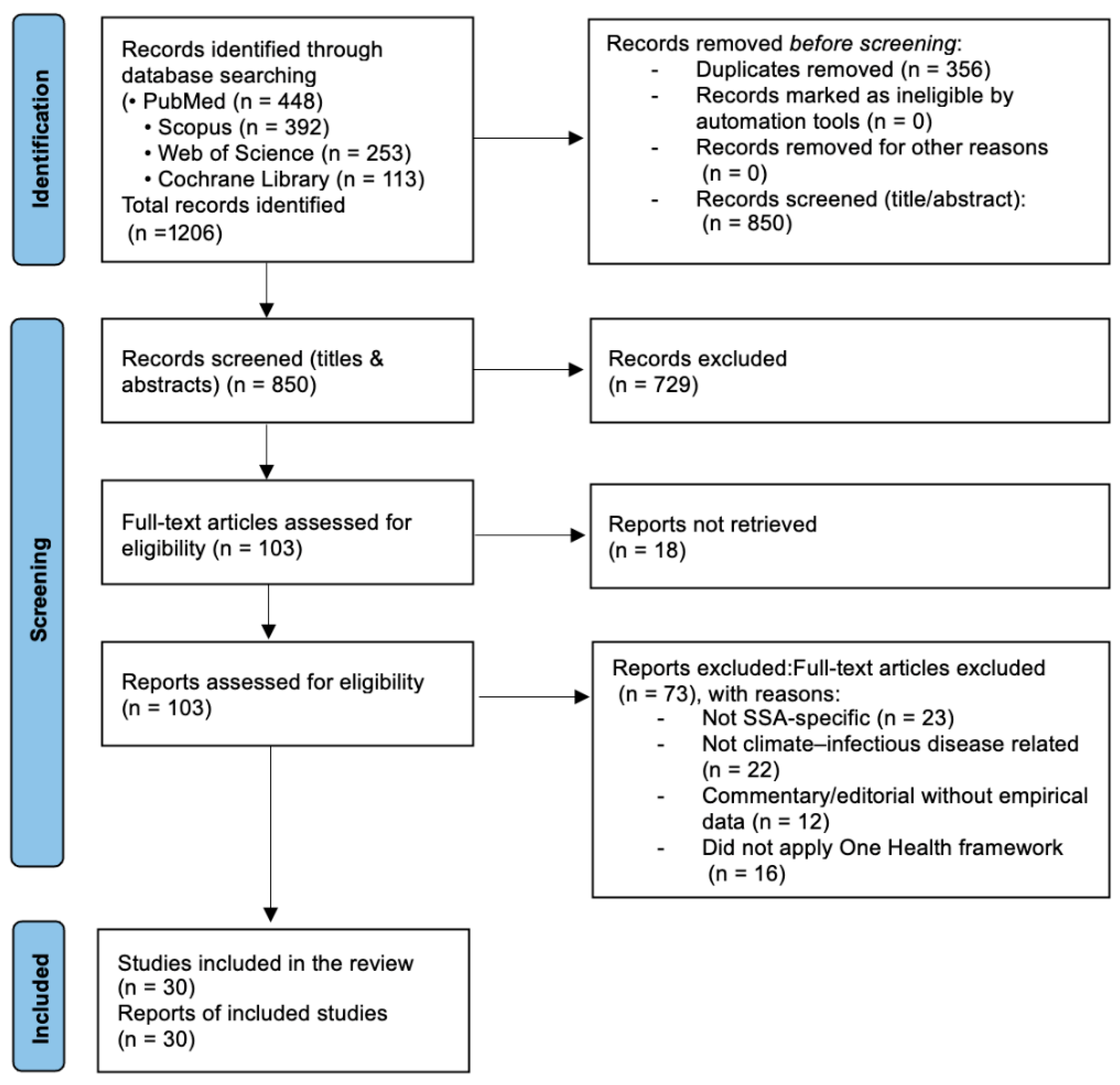
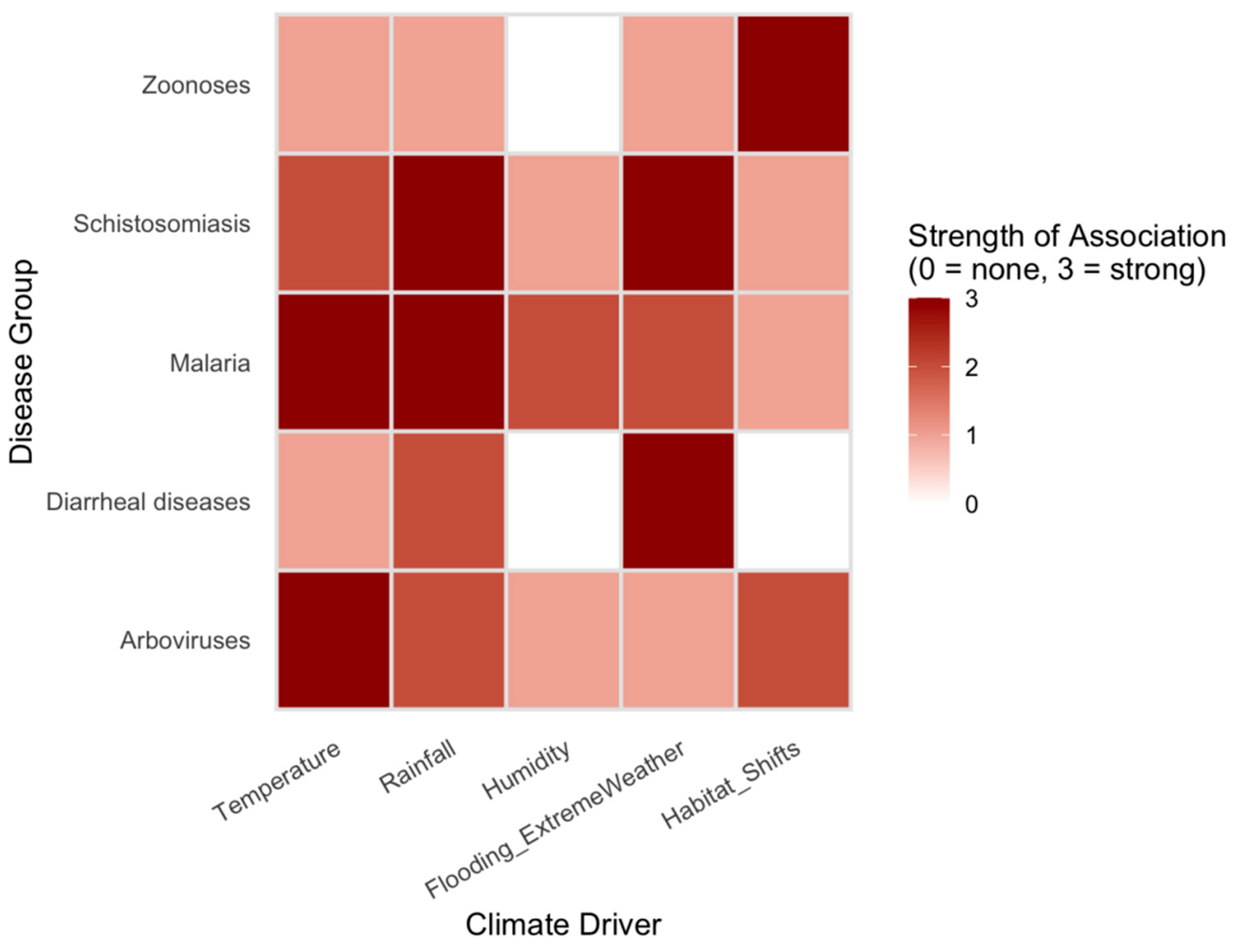
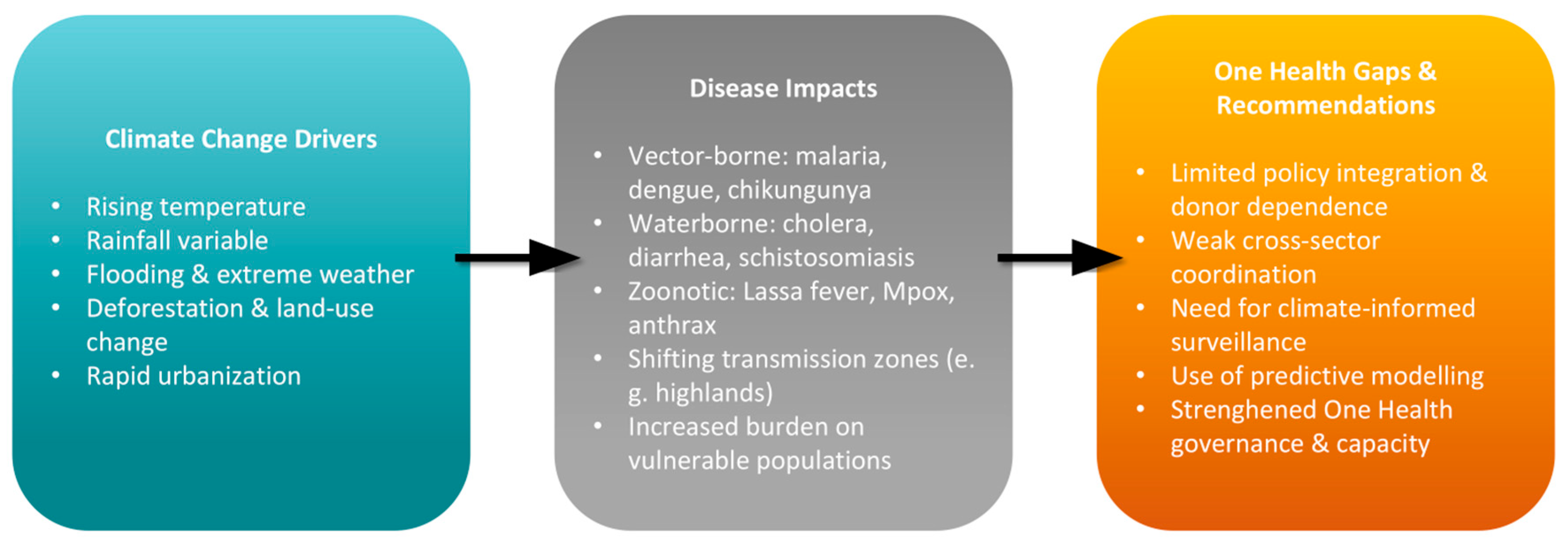
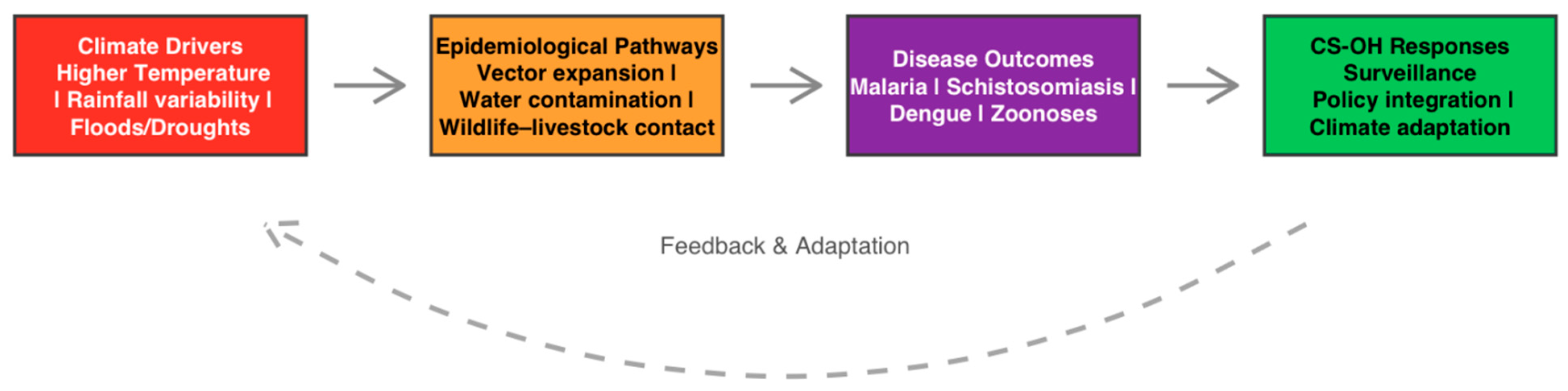
Background: Climate change is increasingly altering the distribution and burden of infectious diseases in Sub-Saharan Africa, where ecological diversity, fragile health systems, and widespread poverty heighten vulnerability. The One Health approach, which integrates human, animal, and environmental health, provides a useful framework for addressing these climate-sensitive health challenges; its application in the region remains limited. Methods: This review was conducted in accordance with PRISMA-ScR guidelines and synthesized evidence from 30 peer-reviewed studies published between 2019 and 2025, identified through PubMed, Scopus, Web of Science, and the Cochrane Library. Results: Studies consistently showed that rising temperatures, altered rainfall patterns, and extreme weather events shifted malaria transmission into highland zones, modified schistosomiasis risk through changes in snail habitats, and drove diarrheal outbreaks following flooding. While One Health initiatives such as Ghana’s Climate-Smart One Health framework and university-led programmes in East Africa demonstrated promise, their impact remained constrained by donor dependence, institutional silos, and limited policy integration. Conclusions: To enhance climate resilience, national strategies need to integrate climate-informed surveillance, predictive modelling, and One Health governance. Future research should extend beyond malaria and schistosomiasis, incorporate longitudinal data, and establish standardized metrics for assessing One Health interventions.
Keywords: One Health; climate change; infectious diseases; Sub-Saharan Africa; health systems resilience; malaria; schistosomiasis; diarrhoeal diseases; climate-sensitive health risks One Health; climate change; infectious diseases; Sub-Saharan Africa; health systems resilience; malaria; schistosomiasis; diarrhoeal diseases; climate-sensitive health risks