Analysis of Blasting Damage Variations in Rocks of Different Strengths

Abstract
1. Introduction
2. Experimental System and Materials
2.1. Experimental System
- (1)
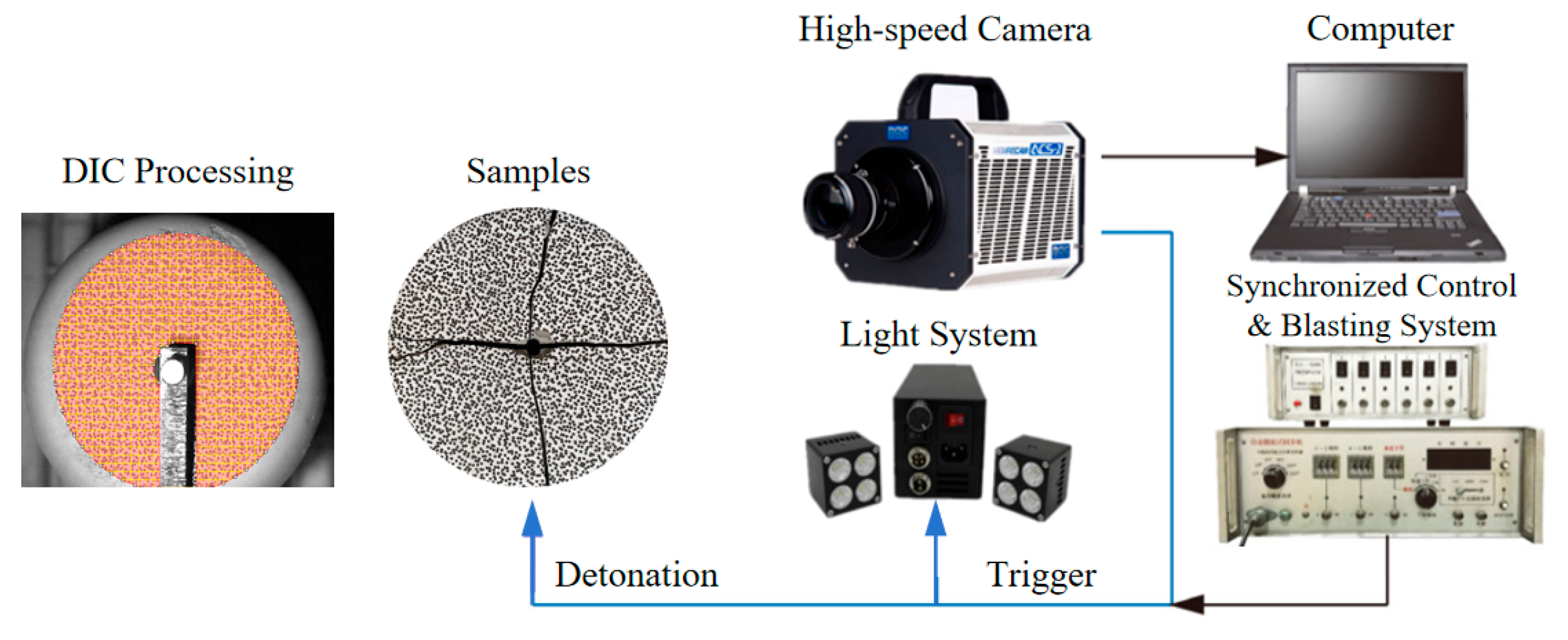
- High-speed camera: The camera model was ACS-1 M60 (NAC Image Technology, Tokyo, Japan), and the resolution is 1280 pixel × 896 pixel. The highest shooting frequency can reach 220,000 fps, that is, the minimum time interval between two adjacent photos can reach 4.54 μs.
- (2)
- Illumination system: The lighting system includes two DannyU high-speed cameras with highlight flashless LED light source U-40T (DannyU), and an external power supply [26]. The full-bright mode can be continuously turned on for more than 72 h and has the function of adjusting the light intensity.
- (3)
- Synchronous control and detonation system: The synchronous controller can realize the orderly control of the high-speed camera and the pulse initiator so as to ensure that the high-speed camera can capture the whole explosion process of the specimen.
- (4)
- Detonation device: The detonation device, developed by the University of Science and Technology Beijing, can instantaneously release a voltage of 2000 volts at its tip, capable of igniting black powder.
- (5)
- Digital image correlation calculation software: The VIC-2D software (VIC-2D 7) is used to calculate the digital image correlation through the standardized square difference correlation function. The software has a strong sensitivity to the brightness change of the shooting field of view and has low sensitivity to brightness of the experimental light field and can automatically calibrate the graphics scaling factor to ensure the optimization of the calculation process. In the computational system, the subset was selected as 17, and the step was selected as 7.
2.2. Specimen Preparation
3. General Charge Blasting
3.1. Strain Field Analysis of General Charge Blasting
3.2. Stress Wave Attenuation of General Charge Blasting
3.3. Rock Damage Analysis of General Charge Blasting
4. Slit Charge Blasting
4.1. Strain Field Analysis of Slit Charge Blasting
4.2. Crack Propagation Velocity Analysis
4.3. Rock Damage Analysis of Slit Charge Blasting
5. Conclusions
- (1)
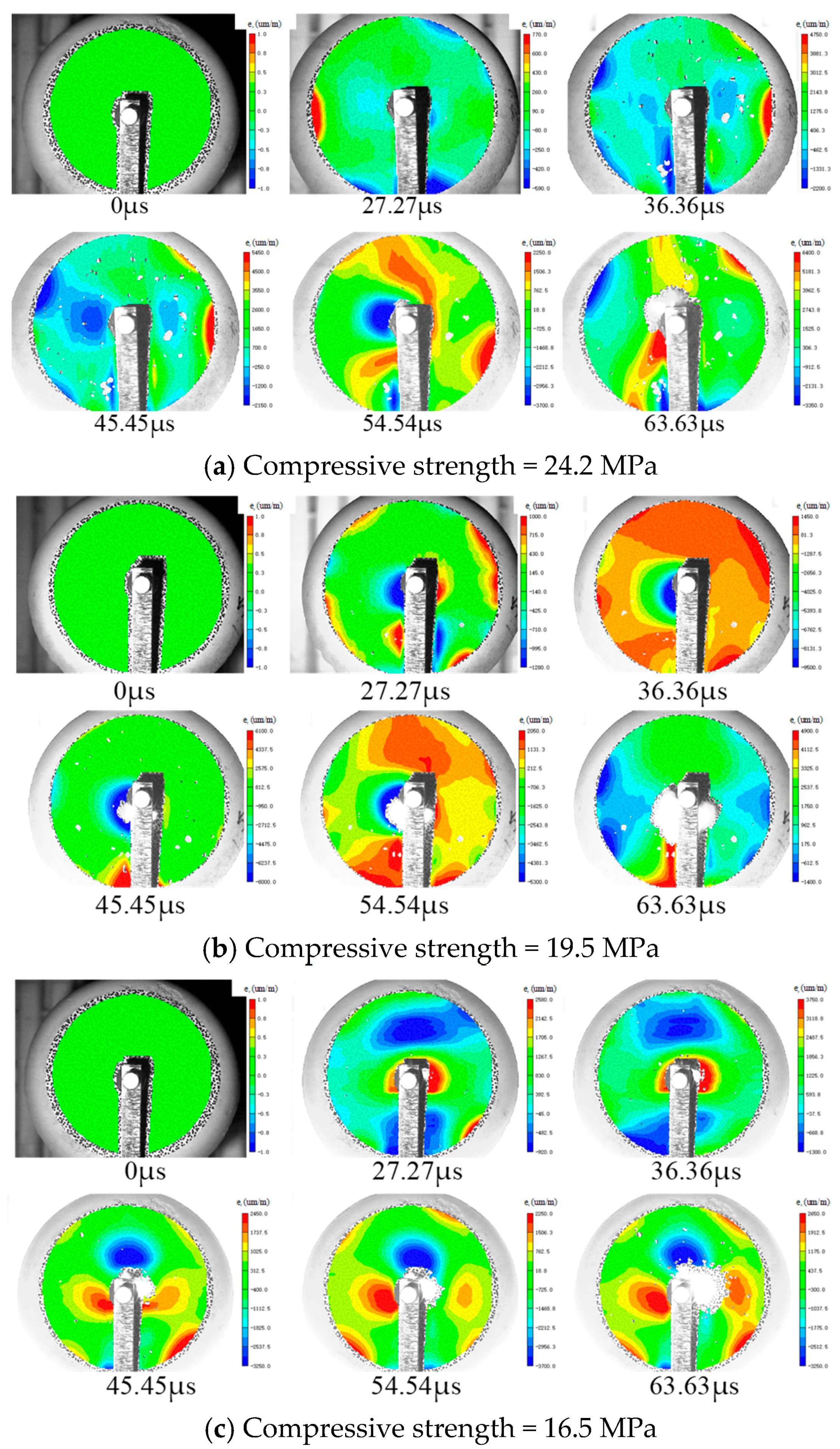
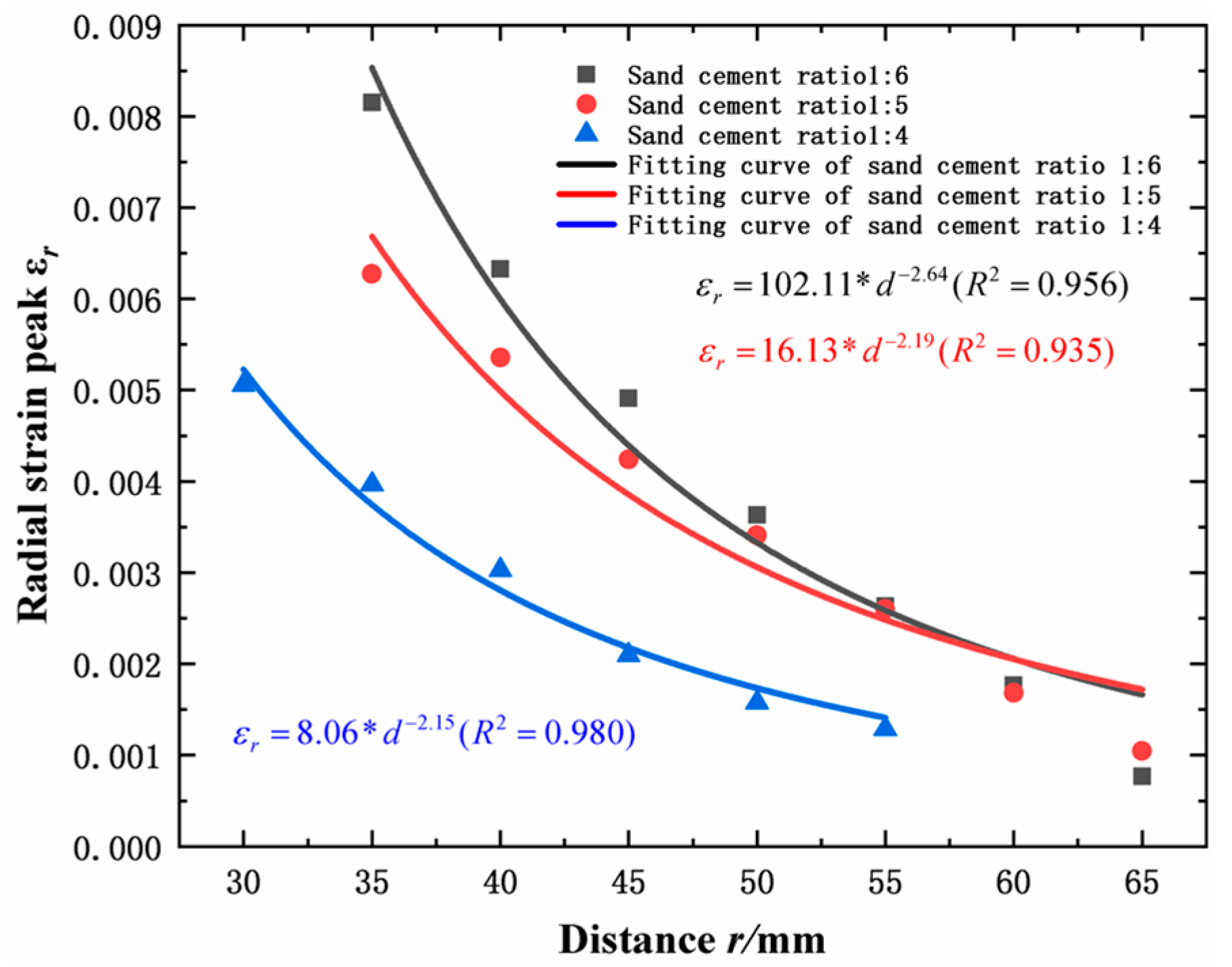
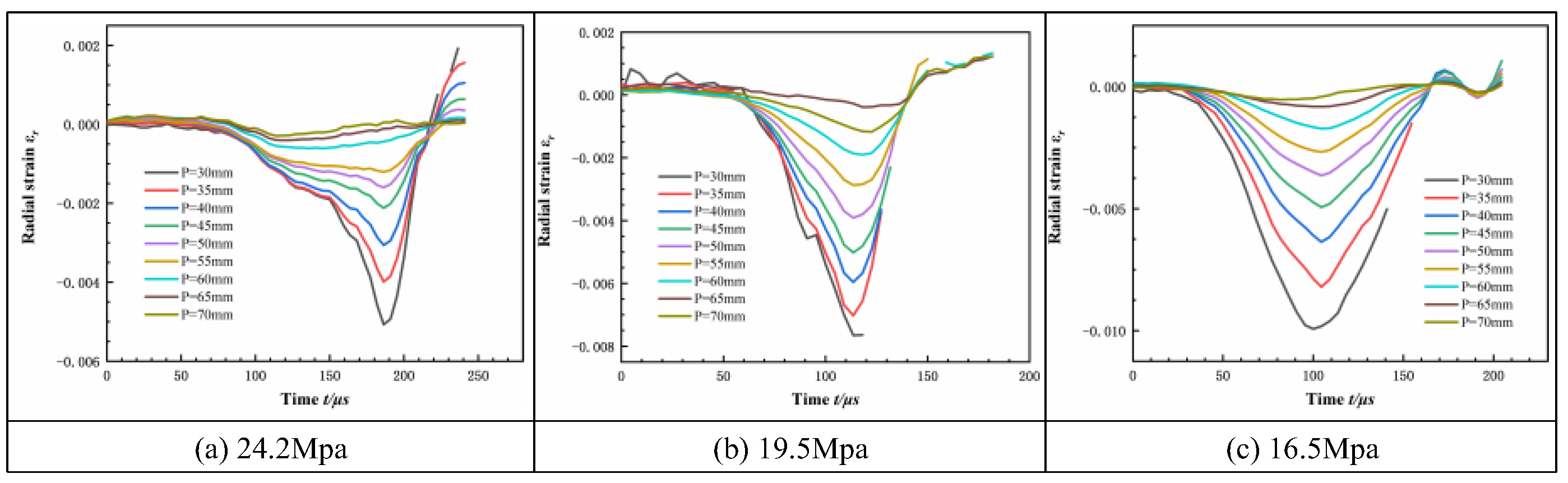
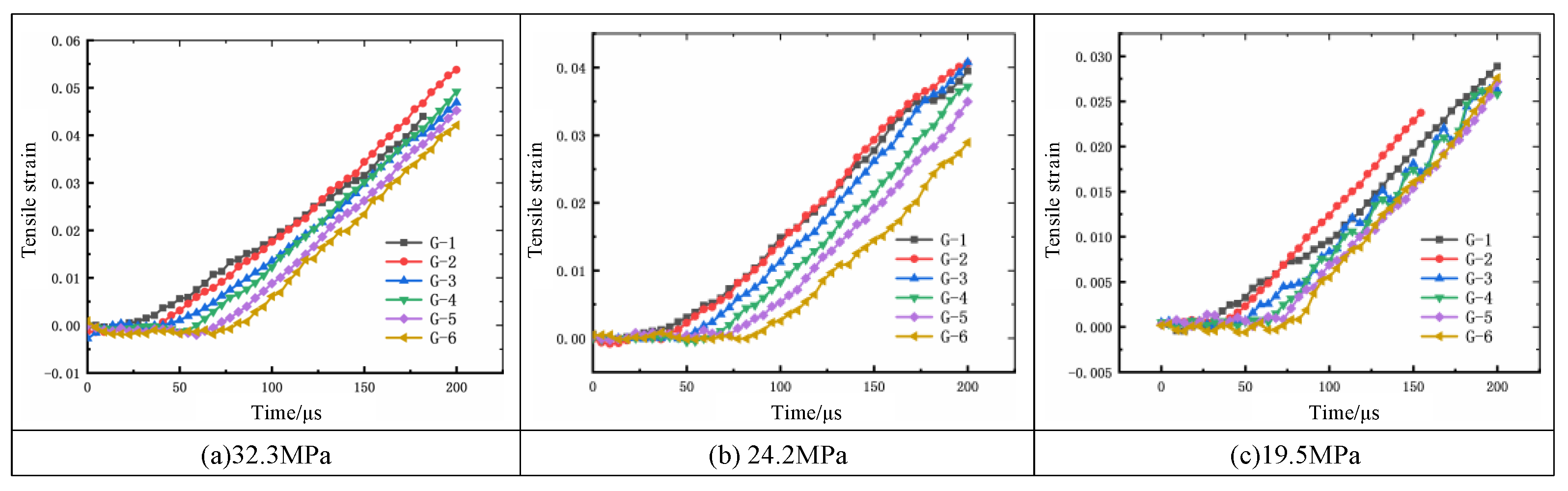
- When rock strength is low, the strain rate is low, and the radial strain peak is maximum (9985 με). When rock strength is high, the strain rate is high, and the radial strain peak is minimum (5102 με). Regarding strain decay trends, specimens with lower strength exhibit higher overall peak strain values, whilst radial strain decay induced by the explosive stress wave is more rapid.
- (2)
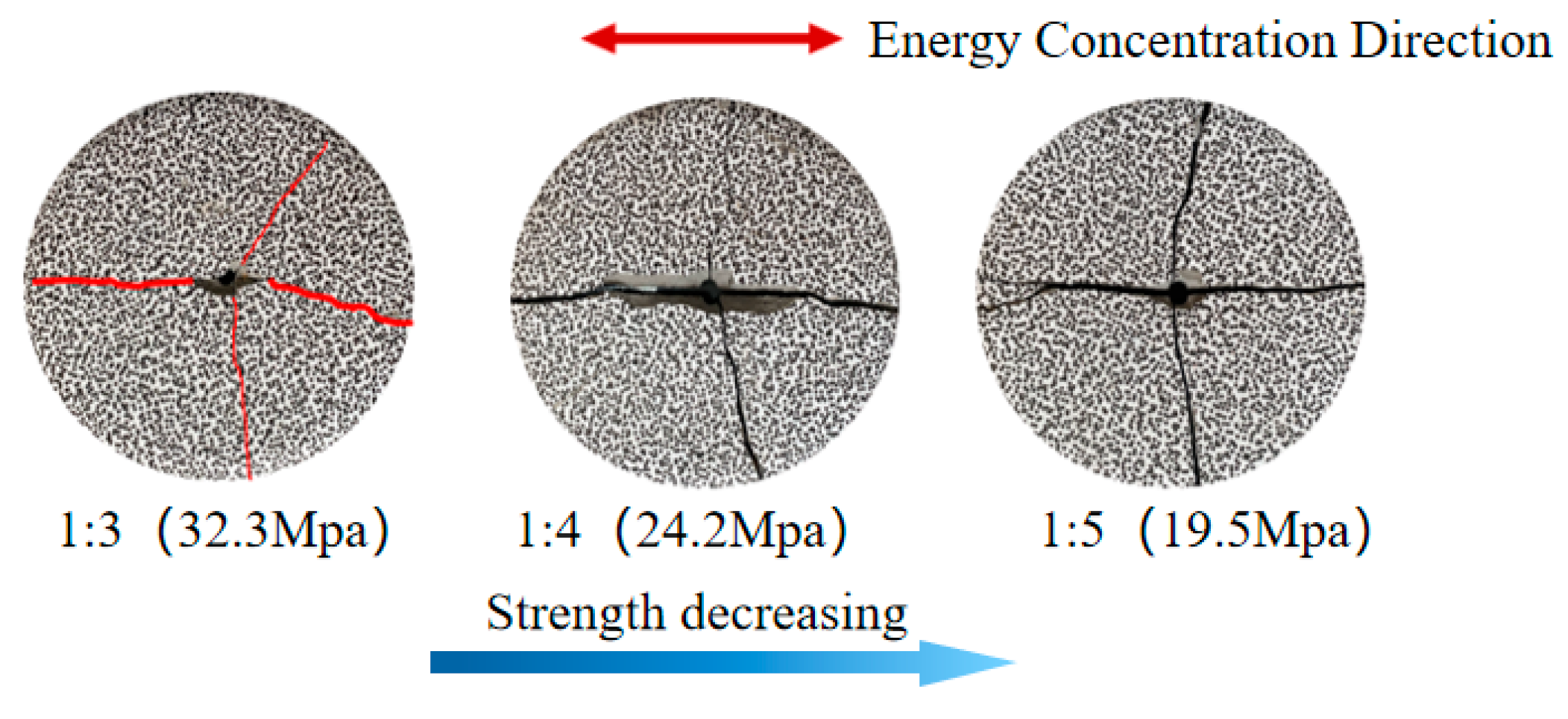
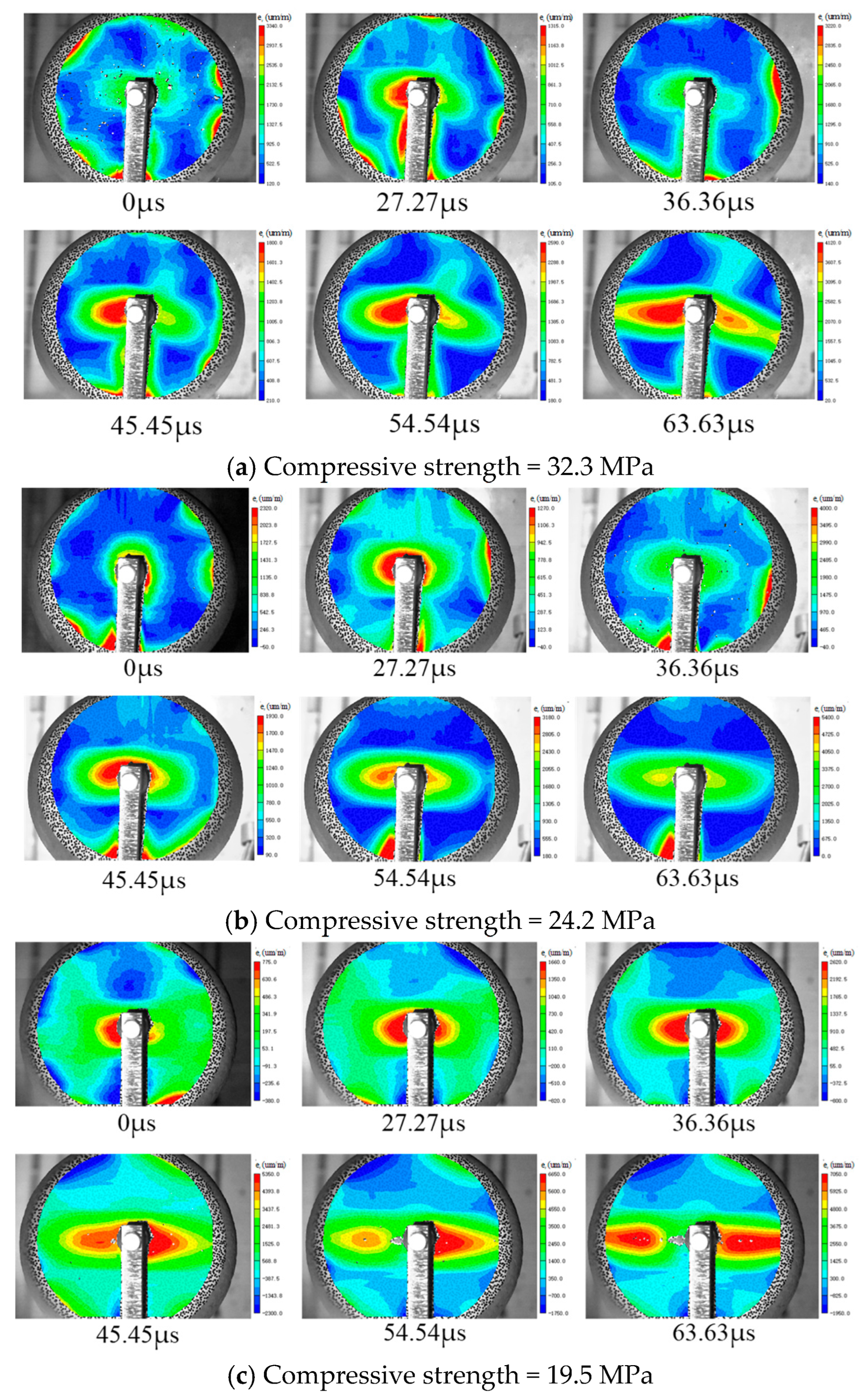
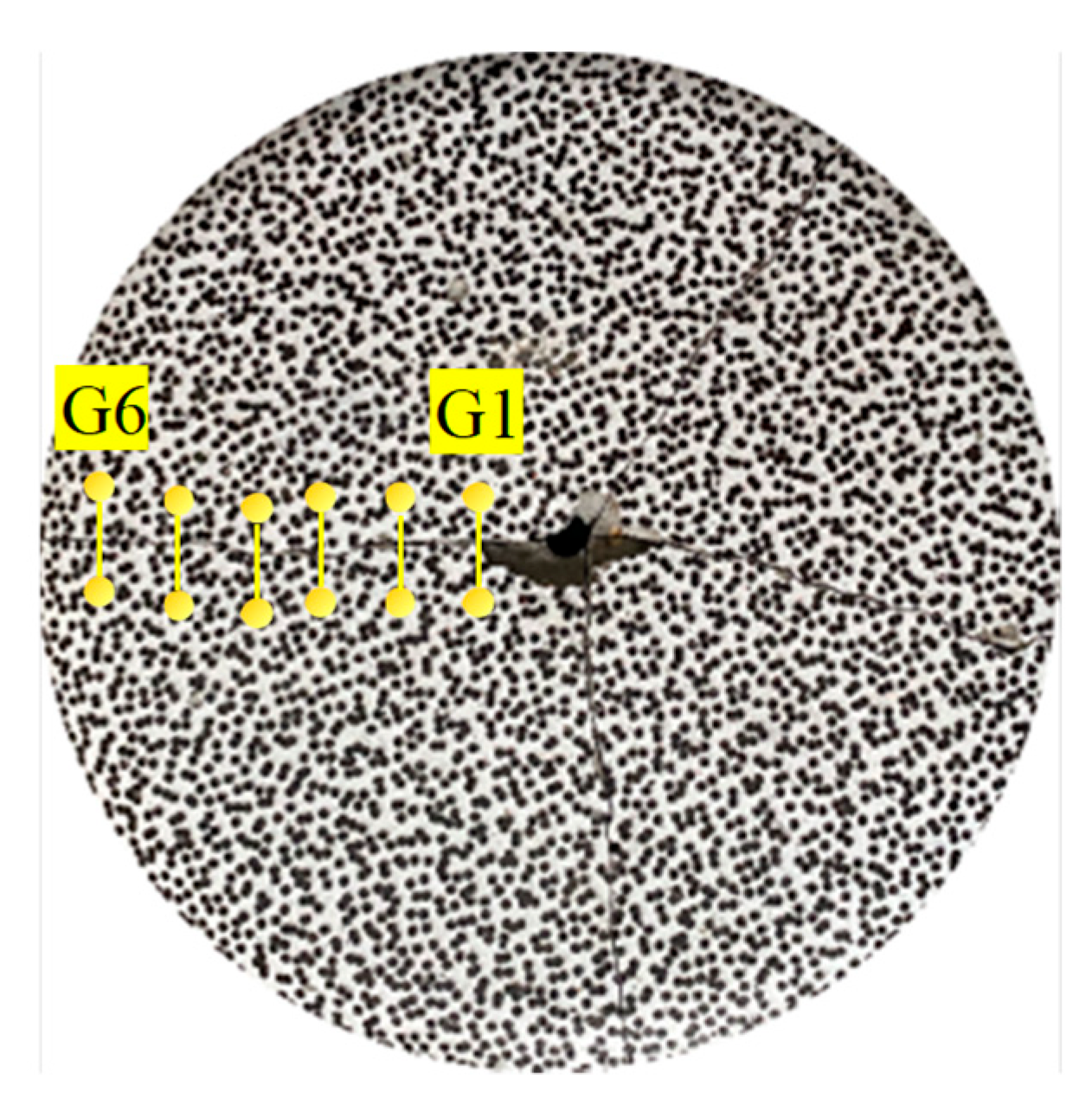
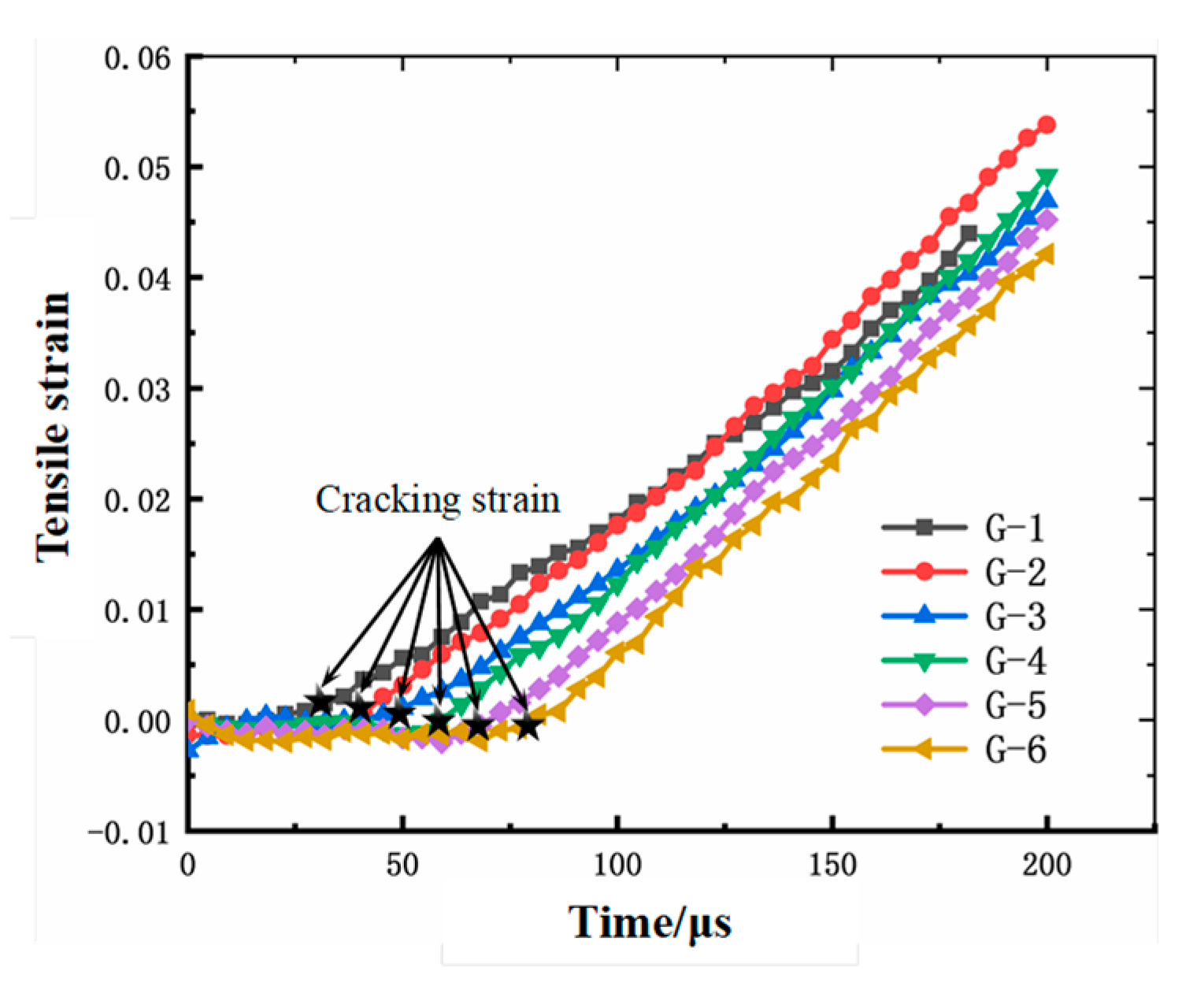
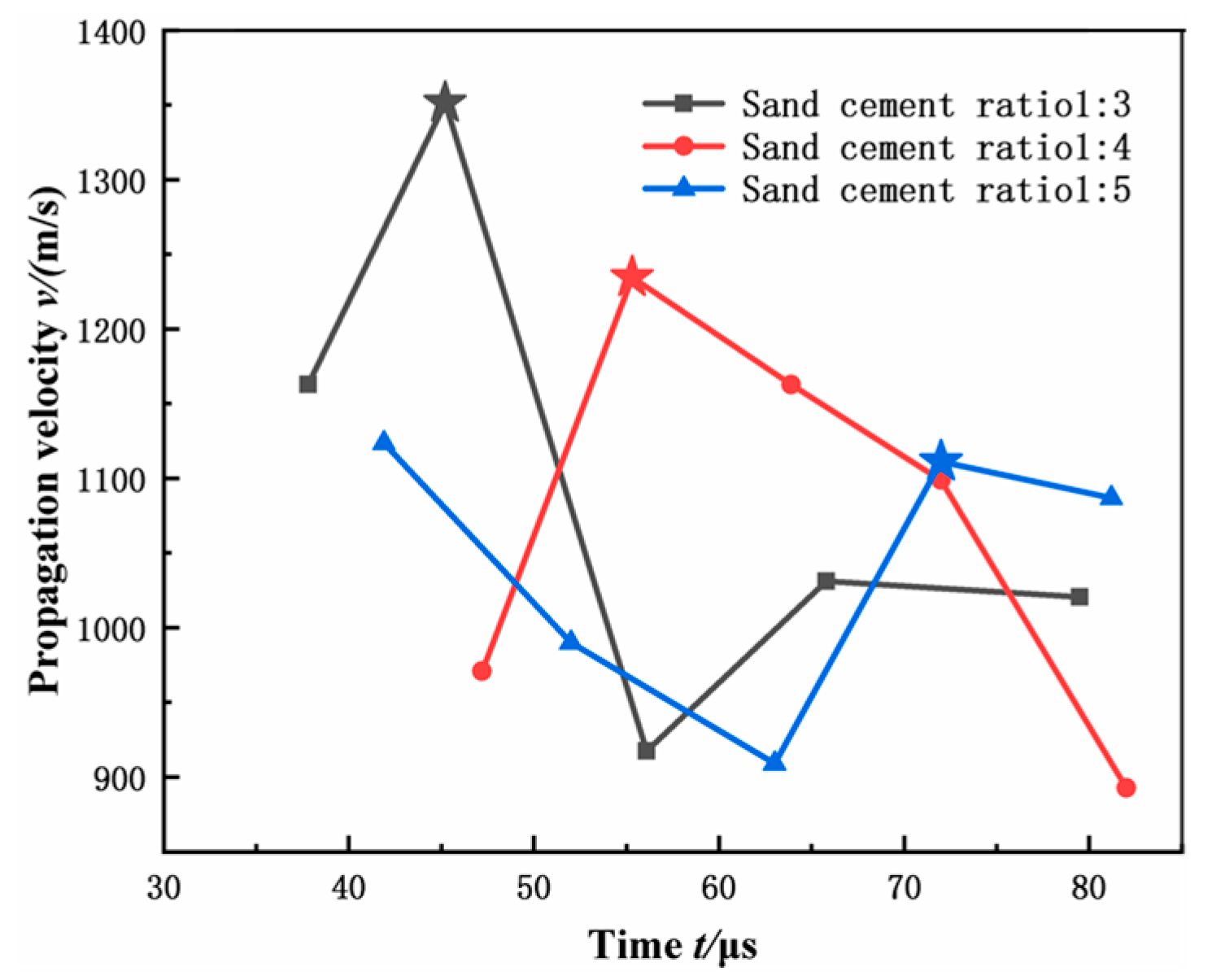
- When the specimen strengths were 32.3 MPa, 24.2 MPa, and 19.5 MPa, the average crack propagation velocities were 1096.5 m/s, 1071.9 m/s, and 1044.1 m/s, respectively; the peak crack propagation velocities were 1351.35 m/s, 1234.5 m/s, and 1123.596 m/s, respectively. This indicates that higher rock strength correlates with both higher peak and average crack propagation velocities. In higher-strength rock masses, dynamic crack propagation exhibits greater inertia. At equivalent propagation speeds, cracks in hard rock demonstrate superior penetration capability.
- (3)
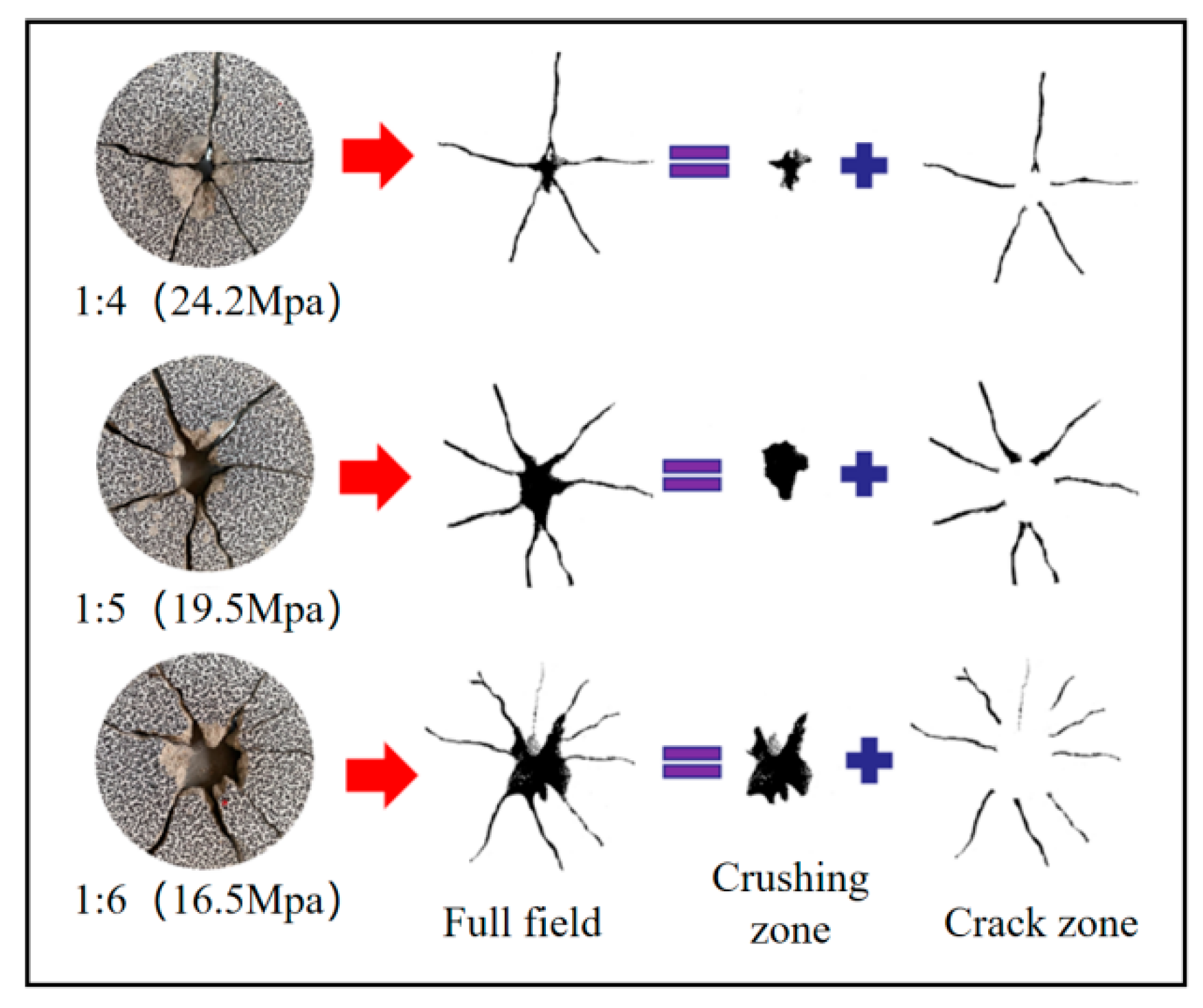
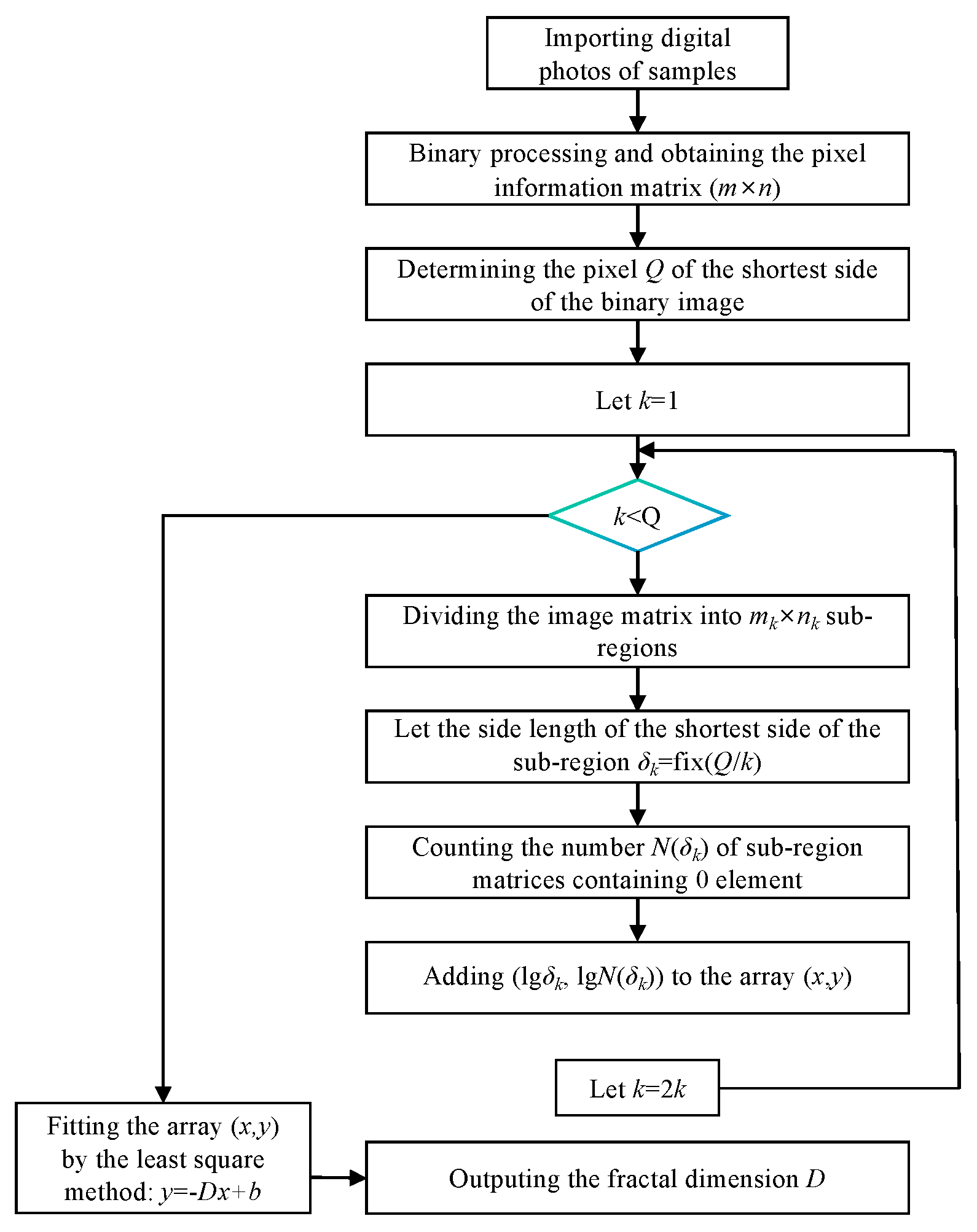
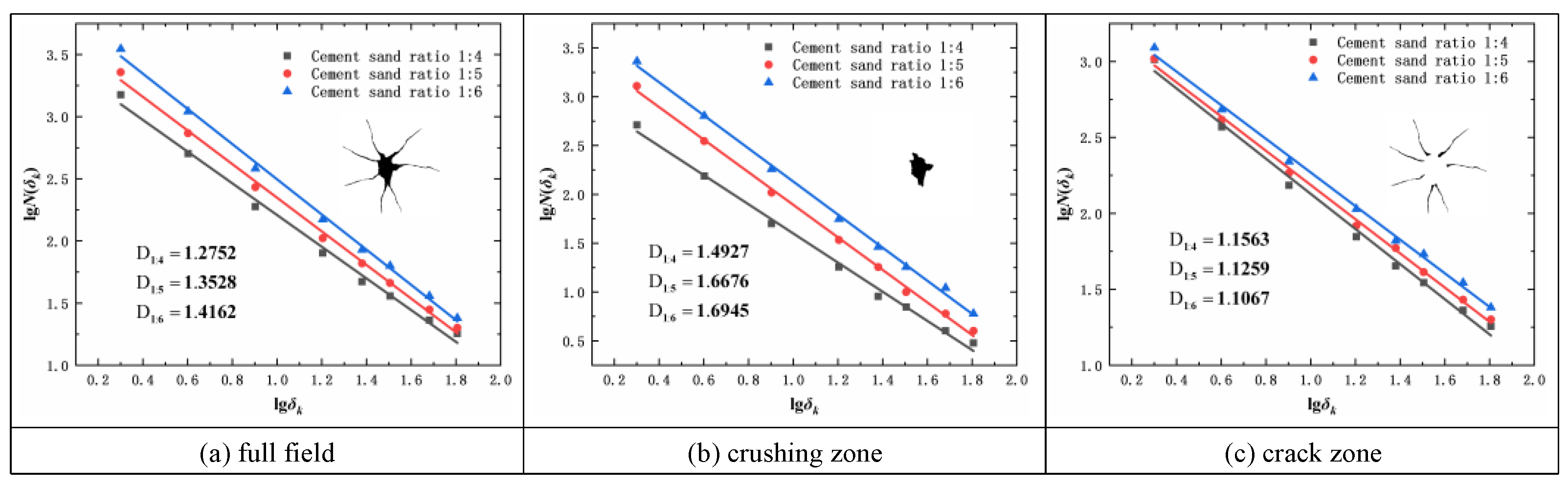
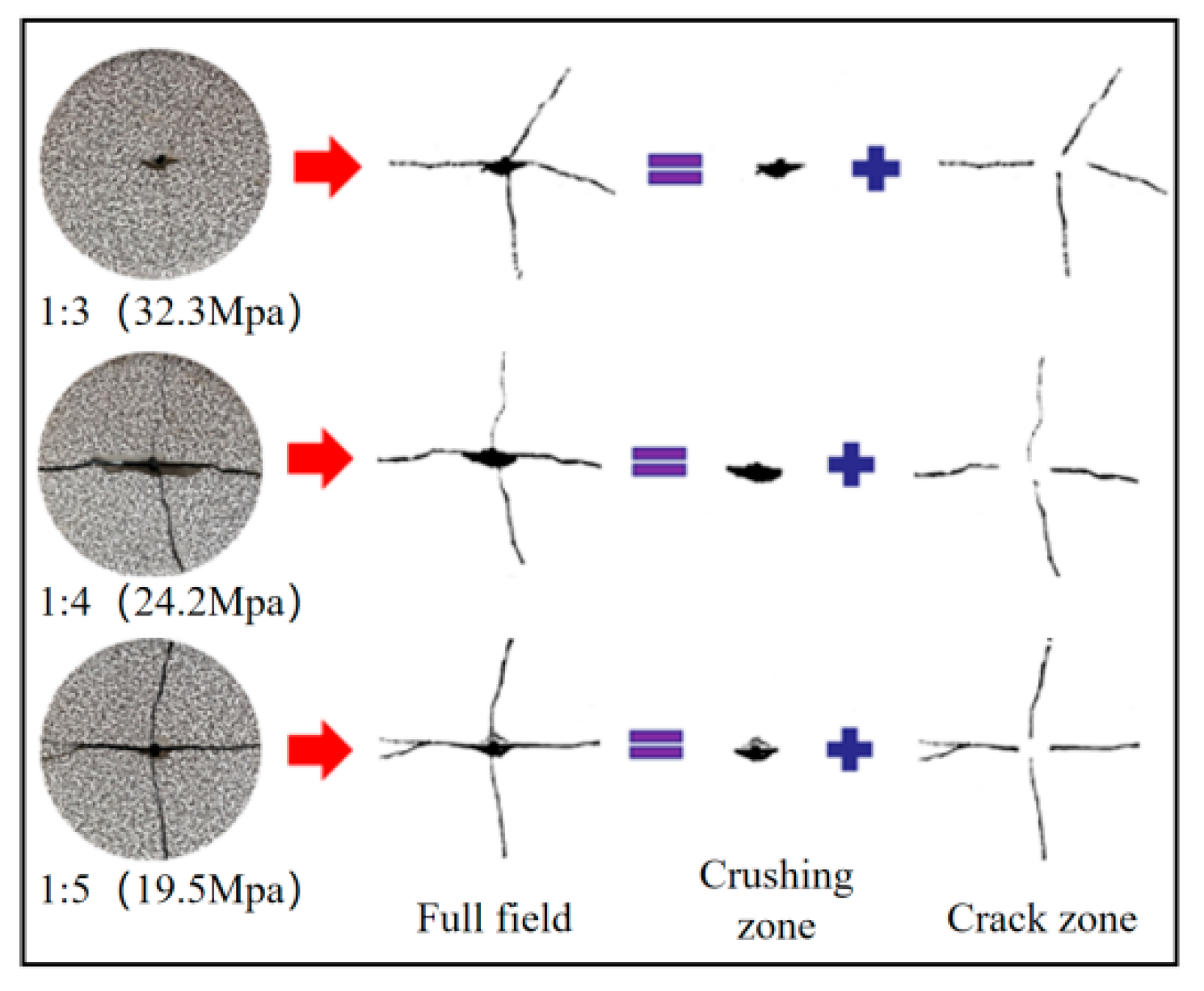
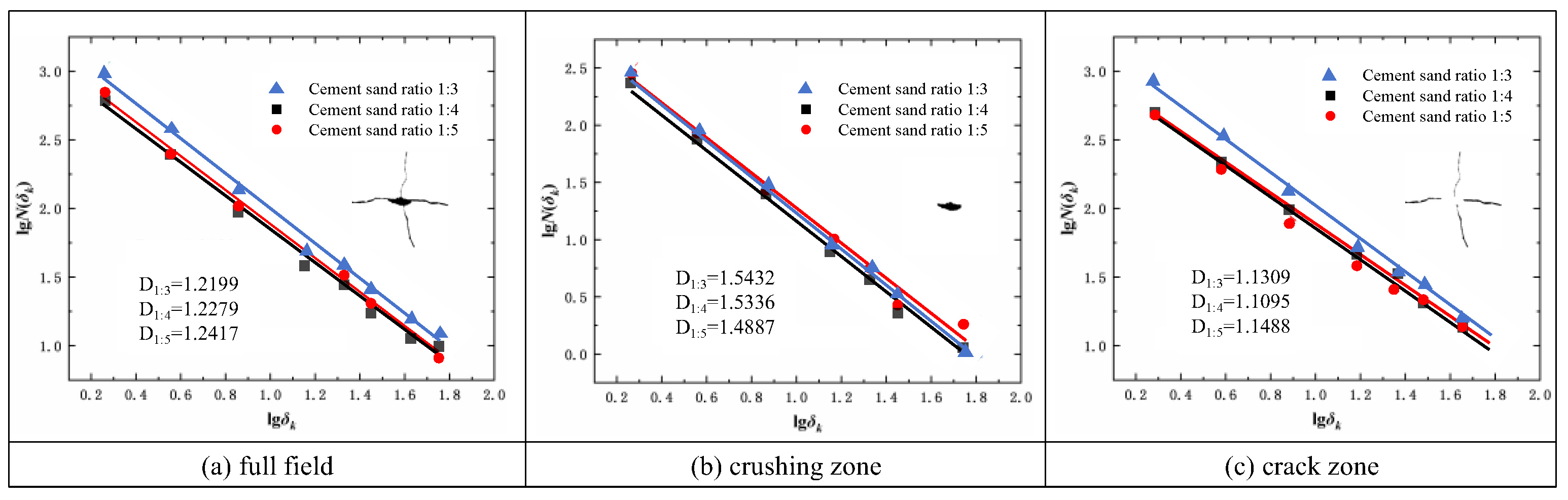
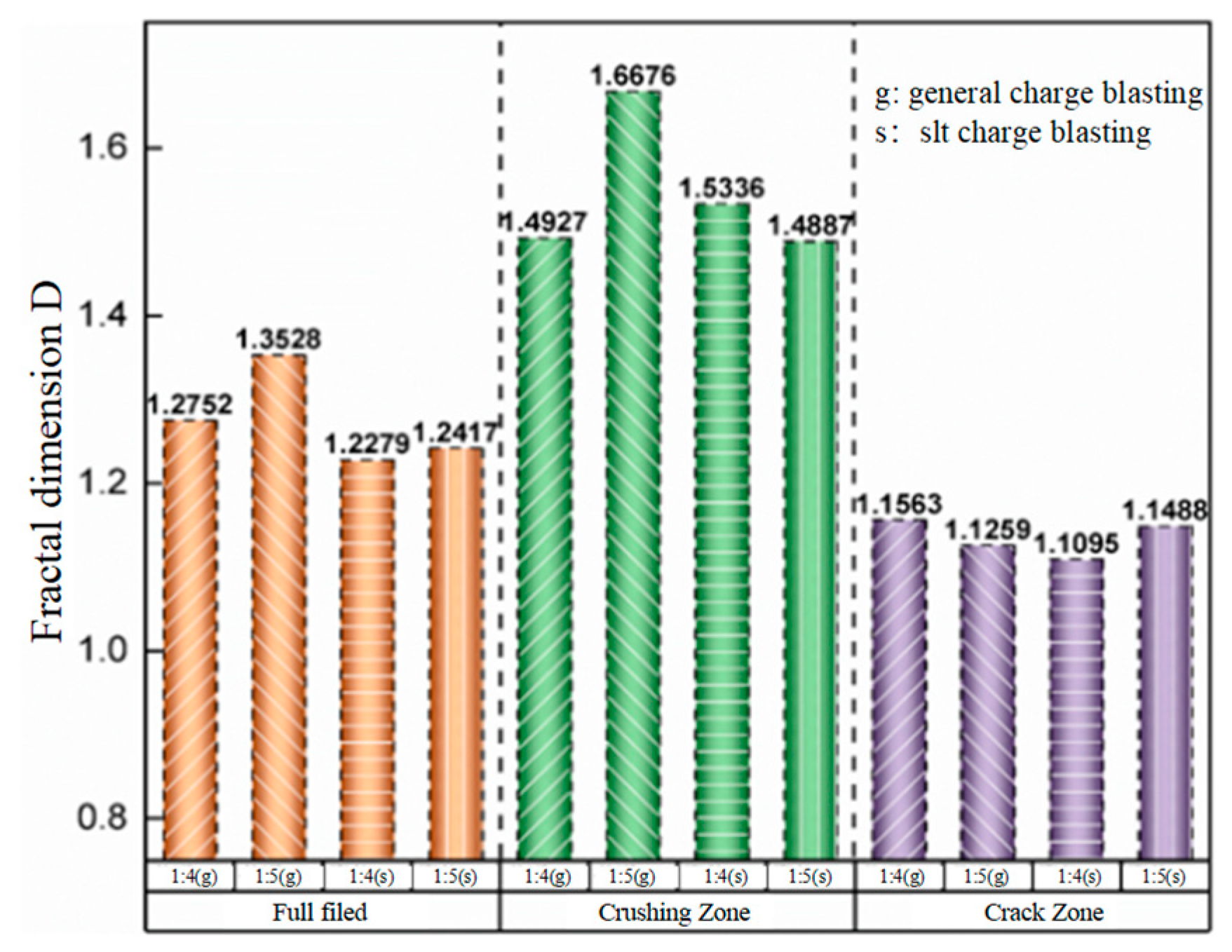
- Across the entire site, the fractal dimension of general blasting consistently exceeded that of slit charge blasting. Within the crushing zone, the average fractal dimension of general blasting likewise surpassed that of slit charge blasting. However, within the crack zone, the difference in fractal dimension between the two blasting methods was negligible. This indicates that slit charge blasting can effectively reduce overall rock mass damage, with the reduction being most significant within the crushing zone.
Author Contributions
Funding
Data Availability Statement
Conflicts of Interest
References
- Chen, M.; Ye, Z.W.; Lu, W.B.; Wei, D.; Yan, P. An improved method for calculating the peak explosion pressure on the borehole wall in decoupling charge blasting. Int. J. Impact Eng. 2020, 146, 103695. [Google Scholar] [CrossRef]
- Huo, X.F.; Qiu, X.Y.; Shi, X.Z. Experimental and numerical investigation on the peak value and loading rate of borehole wall pressure in decoupled charge blasting. Int. J. Rock Mech. Min. Sci. 2023, 170, 105535. [Google Scholar] [CrossRef]
- Li, C.X.; Yang, R.S.; Zuo, J.J. Theory and field tests of innovative cut blasting method for rock roadway excavation. Tunn. Undergr. Space Technol. 2025, 155, 106180. [Google Scholar] [CrossRef]
- Peng, Y.Q.; Liu, Z.B.; Li, Y. Research and application of comprehensive detection methods for geological structural planes in drill and blast tunnels. J. Appl. Geophys. 2024, 228, 105449. [Google Scholar] [CrossRef]
- Wang, F.; Xue, Y.H.; Zhang, Y.Y.; Pan, Y.; Luo, C. Response of existing lining subjected to closed blasting in zero-spacing twin tunnels and its damping measures. Eng. Fail. Anal. 2024, 166, 108847. [Google Scholar] [CrossRef]
- Lu, A.; Yan, P.; Lu, W.B.; Li, X.; Liu, X.; Luo, S.; Huang, S.; Grasselli, G. Crack propagation mechanism of smooth blasting holes for tunnel excavation under high in-situ stress. Eng. Fract. Mech. 2024, 304, 110144. [Google Scholar] [CrossRef]
- Xiao, C.L.; Yang, R.S.; You, Y.Y.; Guo, Y.; Zhao, Y.; Zheng, C. Research on directional blasting of multiple slit charge. Eng. Fract. Mech. 2024, 308, 110179. [Google Scholar] [CrossRef]
- Zhao, J.J.; Li, D.Y.; Ranjith, P.G.; Su, X.; Li, Y.; Lyu, X. Innovative cut blasting method for rock excavation at depth based on numerical simulation and field tests. Tunn. Undergr. Space Technol. 2025, 155, 106211. [Google Scholar] [CrossRef]
- Liu, C.Y.; Yang, J.X.; Yu, B. Rock-breaking mechanism and experimental analysis of confined blasting of borehole surrounding rock. Int. J. Min. Sci. Technol. 2017, 27, 795–801. [Google Scholar] [CrossRef]
- Peng, J.Y.; Zhang, F.P.; Du, C.; Yang, X. Effects of confining pressure on crater blasting in rock-like materials under electric explosion load. Int. J. Impact Eng. 2020, 139, 103534. [Google Scholar] [CrossRef]
- Si, Y.T.; Liu, J.P.; Li, F.T.; Shi, H.; Yan, G.; Song, J.; Zhang, C. Experimental and theoretical investigation of roadway fracture induced by static-blast loading using acoustic emission. Eng. Fail. Anal. 2023, 143, 106909. [Google Scholar] [CrossRef]
- Silva, J.; Worsey, T.; Lusk, B. Practical assessment of rock damage due to blasting. Int. J. Min. Sci. Technol. 2019, 29, 379–385. [Google Scholar] [CrossRef]
- Wang, H.C.; Wang, Z.L.; Wang, J.G.; Wang, S.; Wang, H.; Yin, Y.; Li, F. Effect of confining pressure on damage accumulation of rock under repeated blast loading. Int. J. Impact Eng. 2021, 156, 103961. [Google Scholar] [CrossRef]
- Cai, Y.Z.; Xu, Z.H.; Liu, Y.F.; Chen, X.; Qi, W.; Liu, L. Weakly confined slotted cartridge blasting in jointed rock mass. Theor. Appl. Fract. Mech. 2024, 134, 104695. [Google Scholar] [CrossRef]
- Guo, Y.C.; Yang, R.S.; Peng, S.P.; Xiao, C. Experimental study on decoupled charge blasting-induced crack propagation with parabolic shaped charge. Eng. Fract. Mech. 2024, 304, 110178. [Google Scholar] [CrossRef]
- Zhu, F.H.; Liu, Z.G.; Huang, A.C. Study on the coupling mechanism of shaped blasting and empty hole to crack coal body. Process Saf. Environ. Prot. 2023, 175, 644–653. [Google Scholar] [CrossRef]
- Li, J.F.; Ying, P.; Zhu, Z.M.; Wang, M.; Jiang, Y.; Wan, D.; Gong, J. A new method for measuring the dynamic fracture toughness under blast loads using arc-edge rectangle with edge notches. Theor. Appl. Fract. Mech. 2021, 112, 102891. [Google Scholar] [CrossRef]
- Liu, X.; Yan, P.; Lu, W.B.; Lu, A.; Zhang, X.; Chen, M.; Wang, G. Numerical investigation of an improved deep-hole presplitting method based on notched blasting for deep-buried high sidewall structures. J. Build. Eng. 2023, 70, 106310. [Google Scholar] [CrossRef]
- Wan, D.Y.; Zhu, Z.M.; Liu, R.F.; Liu, B.; Li, J. Measuring method of dynamic fracture toughness of mode I crack under blasting using a rectangle specimen with a crack and edge notches. Int. J. Rock Mech. Min. Sci. 2019, 123, 104104. [Google Scholar] [CrossRef]
- Li, C.X.; Yang, R.S.; Wang, Y.B.; Zhang, Y. Theory and numerical simulation of deep hole cut blasting based on dispersed charge and staged detonation. Int. J. Rock Mech. Min. Sci. 2023, 169, 105453. [Google Scholar] [CrossRef]
- Ding, C.X.; Yang, R.S.; Xiao, C.L. Directional fracture behavior and stress evolution process of the multi-slit charge blasting. Soil Dyn. Earthq. Eng. 2022, 152, 107037. [Google Scholar] [CrossRef]
- Yang, R.S.; Ding, C.X.; Li, Y.L.; Zhao, Y. Crack propagation behavior in slit charge blasting under high static stress conditions. Int. J. Rock Mech. Min. Sci. 2019, 119, 117–123. [Google Scholar] [CrossRef]
- Vormwald, M.; Hos, Y.; Freire, J.L.F.; Gonzales, G.L.G.; Diaz, J.G. Crack tip displacement fields measured by digital image correlation for evaluating variable mode-mixity during fatigue crack growth. Int. J. Fatigue 2018, 115, 53–66. [Google Scholar] [CrossRef]
- Gao, G.; Yao, W.; Xia, K.; Li, Z. Investigation of the rate dependence of fracture propagation in rocks using digital image correlation (DIC) method. Eng. Fract. Mech. 2015, 138, 146–155. [Google Scholar] [CrossRef]
- Grzegorz, L.G. Measurement of fracture mechanics parameters of concrete containing fly ash thanks to use of Digital Image Correlation (DIC) method. Measurement 2019, 135, 96–105. [Google Scholar] [CrossRef]
- Ge, Y.; Cai, Z.X.; Zhang, X.C. An experimental investigation on the damage of granite under uniaxial tension by using a digital image correlation method. Opt. Lasers Eng. 2015, 73, 46–52. [Google Scholar] [CrossRef]
- Meng, S.Q.; Shi, Z.M.; Niu, Y.F.; Zheng, H.; Xia, C. Fundamental insights into the crack propagation behavior of functional gradient ultra-high-performance concrete using the digital image correlation method. Constr. Build. Mater. 2023, 376, 131053. [Google Scholar] [CrossRef]







| Cement Sand Ratio | Volume Weight (kg/m3) | Compressive Strength (MPa) | P Wave Velocity (m/s) |
|---|---|---|---|
| 1:3 | 2412 | 32.3 | 3963 |
| 1:4 | 2345 | 24.2 | 3654 |
| 1:5 | 2188 | 19.5 | 3375 |
| 1:6 | 2013 | 16.5 | 3154 |
| Measuring Point | σ = 32.3 MPa | σ = 24.2 MPa | σ = 19.5 MPa | ||||||
|---|---|---|---|---|---|---|---|---|---|
| Time (μs) | Time Difference (μs) | v (m/s) | Time (μs) | Time Difference (μs) | v (m/s) | Time (μs) | Time Difference (μs) | v (m/s) | |
| G-1 | 29.2 | 36.9 | 33 | ||||||
| G-2 | 37.8 | 8.6 | 1162.7 | 47.2 | 10.3 | 969.1 | 41.9 | 8.9 | 1123.5 |
| G-3 | 45.2 | 7.4 | 1351.3 | 55.3 | 8.1 | 1234.5 | 52 | 10.1 | 990 |
| G-4 | 56.1 | 10.9 | 917.4 | 63.9 | 8.6 | 1162.7 | 63 | 11 | 909 |
| G-5 | 65.8 | 9.7 | 1030 | 73 | 9.1 | 1097.4 | 72 | 9 | 1111.1 |
| G-6 | 75.6 | 9.8 | 1017 | 84.2 | 11.2 | 891.8 | 81.2 | 9.2 | 1086.9 |
Disclaimer/Publisher’s Note: The statements, opinions and data contained in all publications are solely those of the individual author(s) and contributor(s) and not of MDPI and/or the editor(s). MDPI and/or the editor(s) disclaim responsibility for any injury to people or property resulting from any ideas, methods, instructions or products referred to in the content. |
© 2025 by the authors. Licensee MDPI, Basel, Switzerland. This article is an open access article distributed under the terms and conditions of the Creative Commons Attribution (CC BY) license.
Share and Cite
Zhang, Y.; Ren, W.; Gu, P.; Chen, Y.; Wang, B. Analysis of Blasting Damage Variations in Rocks of Different Strengths. Appl. Sci. 2026, 16, 137. https://doi.org/10.3390/app16010137
Zhang Y, Ren W, Gu P, Chen Y, Wang B. Analysis of Blasting Damage Variations in Rocks of Different Strengths. Applied Sciences. 2026; 16(1):137. https://doi.org/10.3390/app16010137
Chicago/Turabian StyleZhang, Yuantong, Wentao Ren, Peng Gu, Yang Chen, and Bo Wang. 2026. "Analysis of Blasting Damage Variations in Rocks of Different Strengths" Applied Sciences 16, no. 1: 137. https://doi.org/10.3390/app16010137
APA StyleZhang, Y., Ren, W., Gu, P., Chen, Y., & Wang, B. (2026). Analysis of Blasting Damage Variations in Rocks of Different Strengths. Applied Sciences, 16(1), 137. https://doi.org/10.3390/app16010137