Article

Characterization and Selection of Lactobacillus Strains with Potential Probiotic Applications

by
Yulian Tumbarski
1,*,
Ivelina Peykova-Shapkova
2,
Mihaela Ivanova
2,
Remzi Cholakov
3,
Agata Dutkiewicz
4 and
Krzysztof Grzymajło
4
1
Department of Microbiology and Biotechnology, University of Food Technologies, 4002 Plovdiv, Bulgaria
2
Department of Milk and Dairy Products, University of Food Technologies, 4002 Plovdiv, Bulgaria
3
Özgazi B. V. Dairy Foods, 4879 AP Etten-Leur, The Netherlands
4
Department of Biochemistry and Molecular Biology, Wrocław University of Environmental and Life Sciences, 50-375 Wrocław, Poland
*
Author to whom correspondence should be addressed.
Appl. Sci. 2025, 15(6), 2902; https://doi.org/10.3390/app15062902
Submission received: 1 February 2025 / Revised: 26 February 2025 / Accepted: 4 March 2025 / Published: 7 March 2025
(This article belongs to the Special Issue New Insights into Food Ingredients for Human Health Promotion)

Abstract

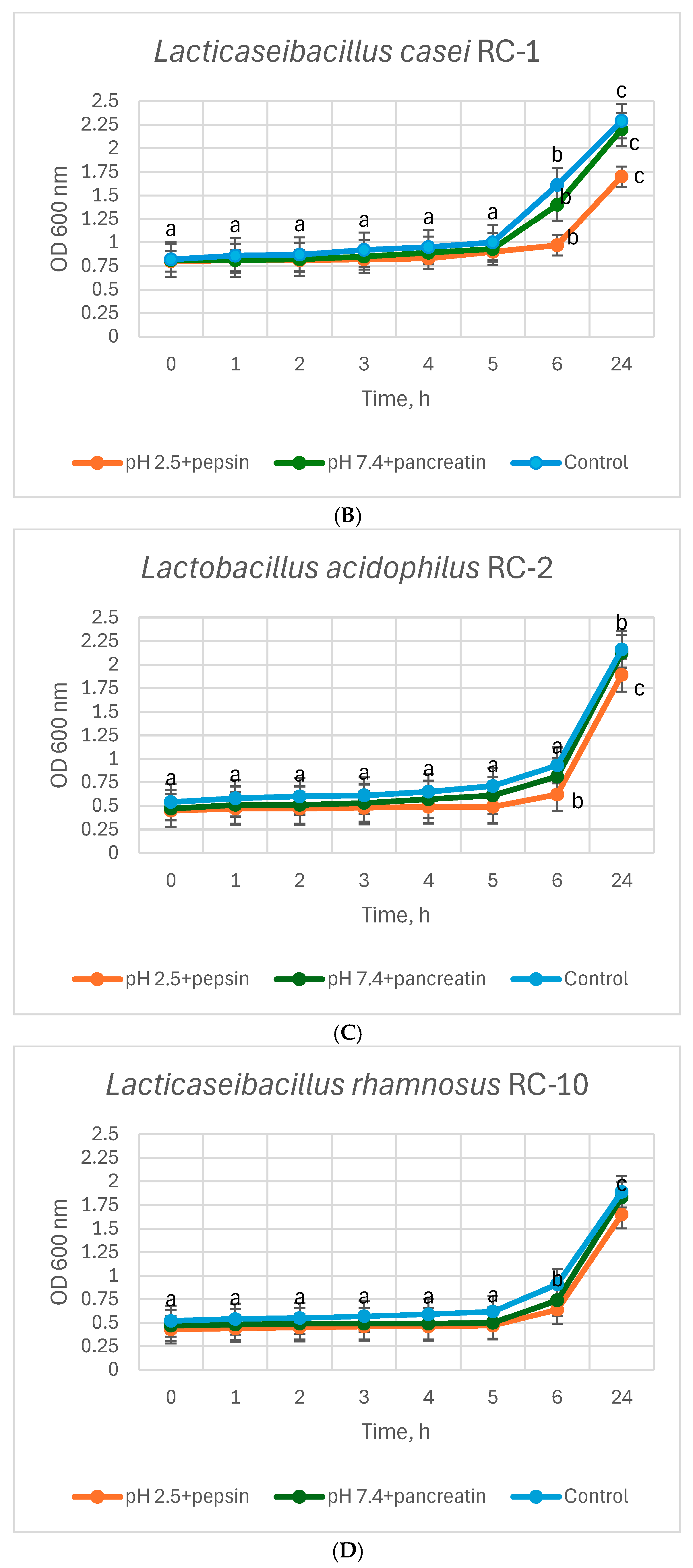
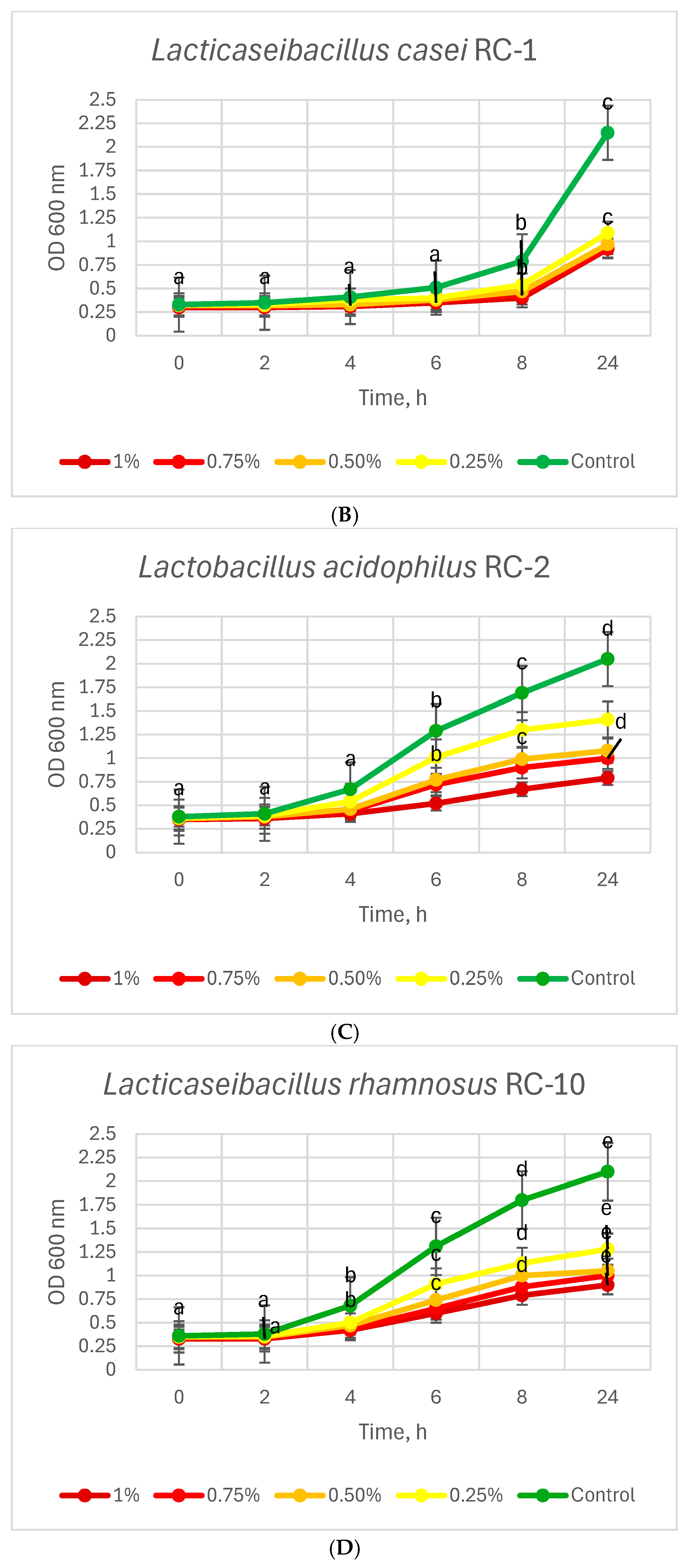
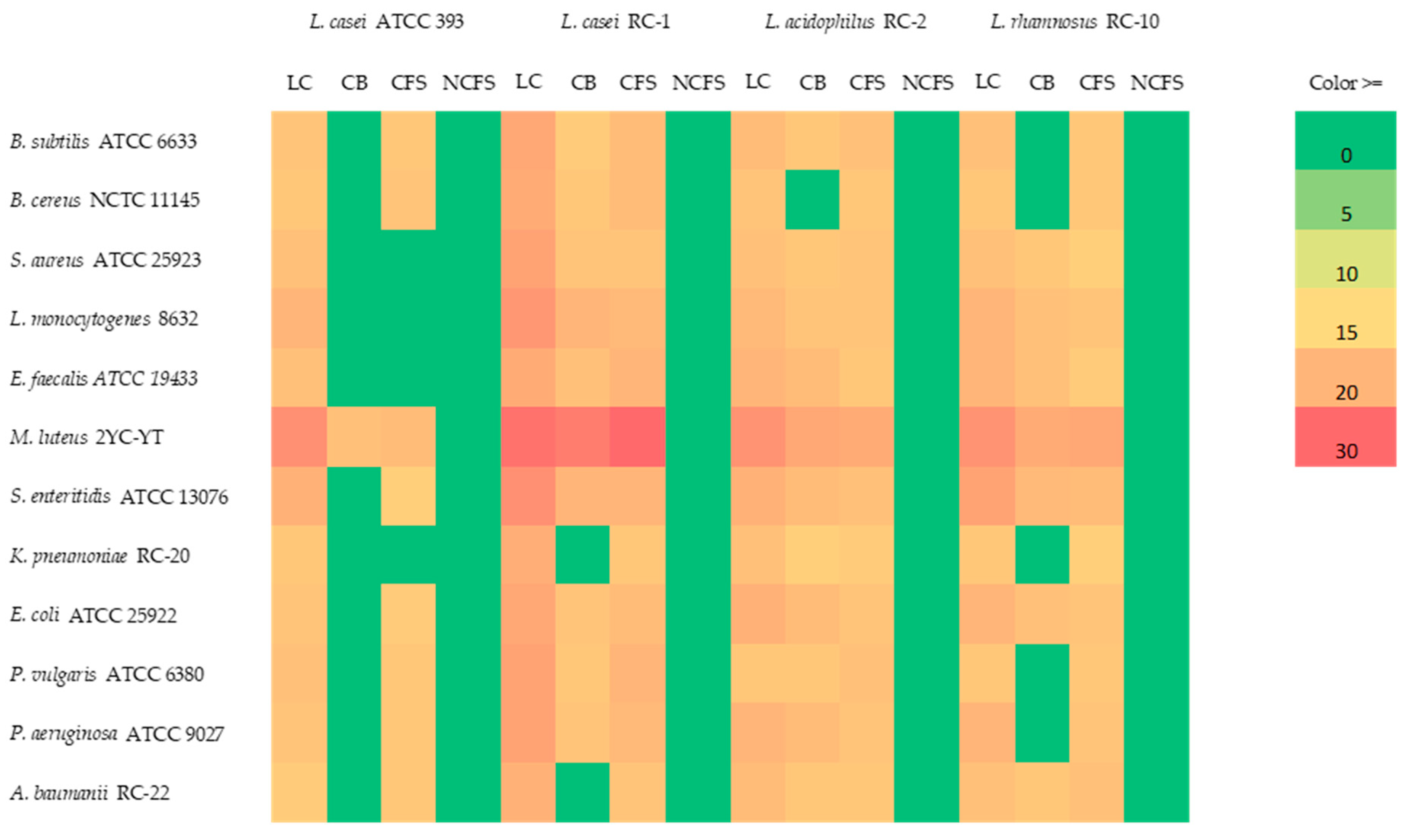
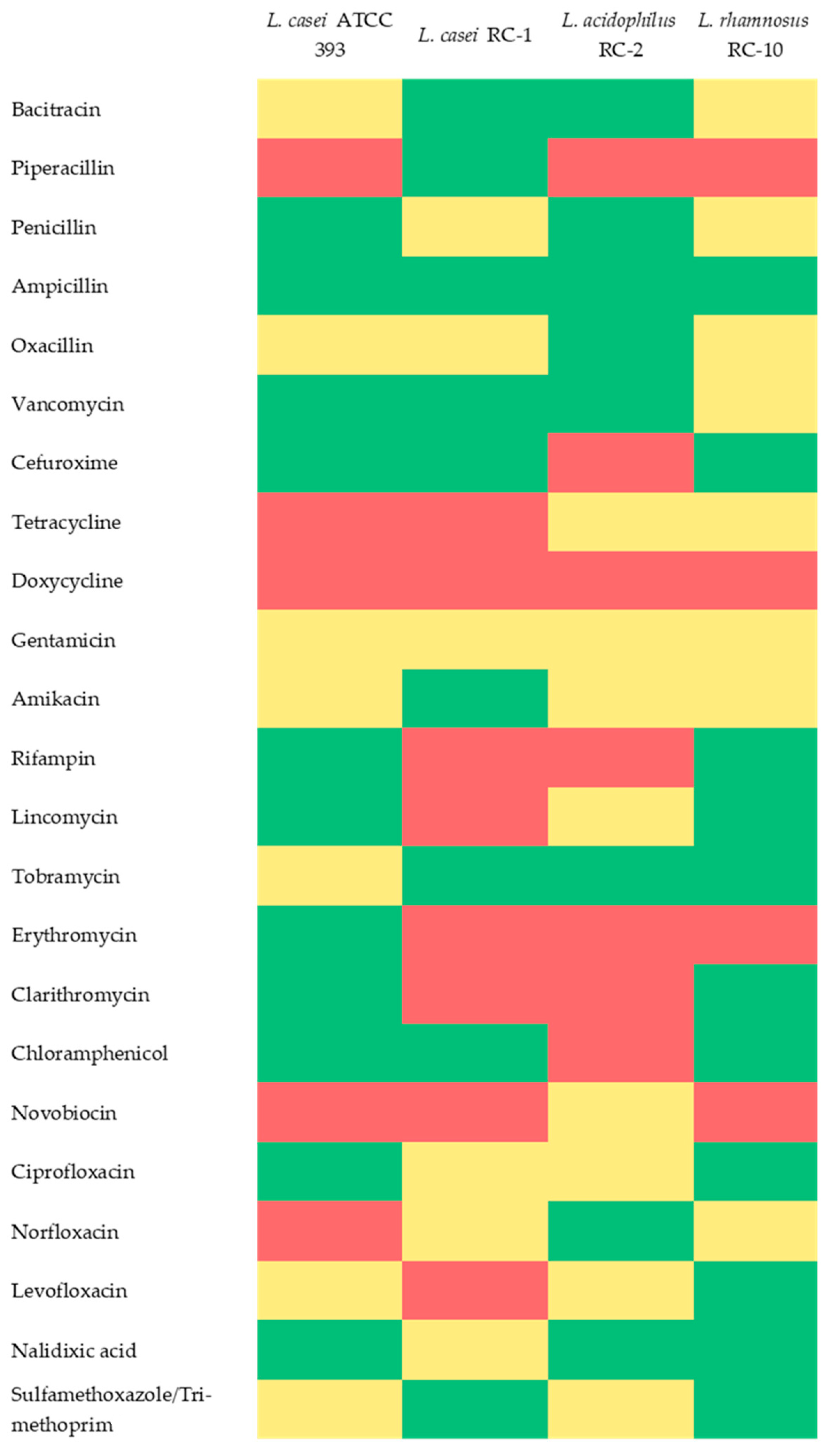
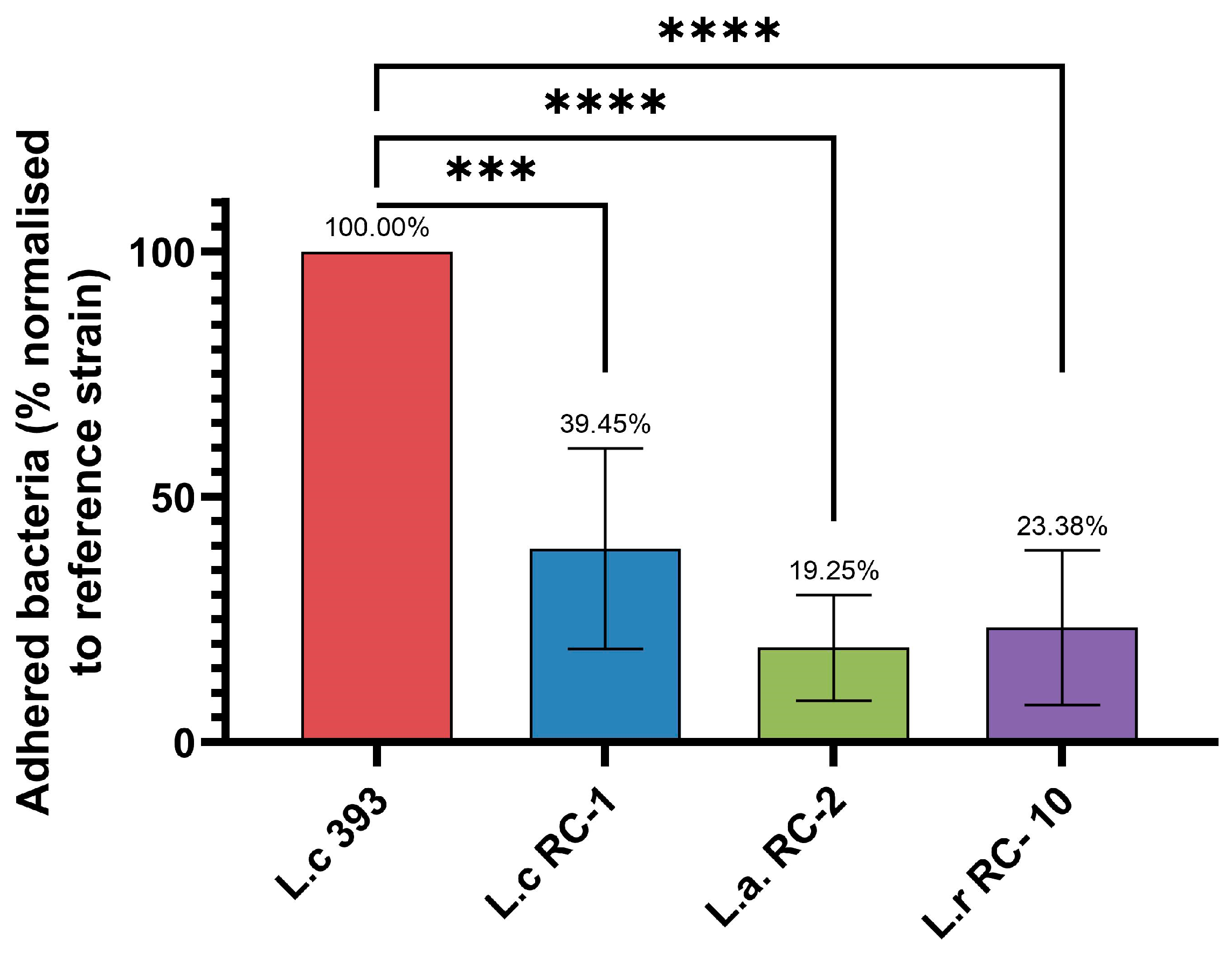
In the present study, four Lactobacillus strains (Lacticaseibacillus casei ATCC 393, Lacticaseibacillus casei RC-1, Lactobacillus acidophilus RC-2 and Lacticaseibacillus rhamnosus RC-10) were investigated to determine their probiotic potential. The strains were evaluated based on their resistance to simulated upper gastrointestinal conditions, tolerance to bile salts, antimicrobial activity, antibiotic resistance and ability to adhere to intestinal cells. All the strains were resistant to simulated upper gastrointestinal conditions (pH 2.5 + pepsin and pH 7.4 + pancreatin) and exhibited cell recovery rates varying between 74.24 and 87.50% (pH 2.5 + pepsin) and between 93.95 and 98.15% (pH 7.4 + pancreatin) at the 24th h of cultivation. The strains demonstrated resistance to various concentrations of bile salts (0.25, 0.5, 0.75 and 1%) with survival rates > 50% (L. casei ATCC 393 and L. casei RC-1) and >60% (L. acidophilus RC-2 and L. rhamnosus RC-10) in bile salt concentration of 0.25% at the 24th h of incubation. The four Lactobacillus components—Lactobacillus culture (LC), cell biomass (CB) and cell-free supernatant (CFS) exhibited moderate to high antimicrobial activity against six Gram-positive and six Gram-negative bacteria; however, they failed to inhibit the growth of yeasts and fungi tested in the antimicrobial screening. In addition, the neutralized to pH = 7.0 cell-free supernatant (NCFS) of the four strains completely lost its antimicrobial effect. The results for antibiotic susceptibility of four Lactobacillus strains showed that L. casei ATCC 393 was resistant to 11, L. casei RC-1 was resistant to 9, L. acidophilus RC-2 was resistant to 8, and L. rhamnosus RC-10 was resistant to 11 of the total 23 antibiotics tested. The highest degree of adhesion of the studied isolates to the intestinal cell line IPEC-J2 was observed in L. casei RC-1 (39.45%), L. rhamnosus RC-10 (23.38%) and L. acidophilus RC-2 (19.25%) in comparison with the reference probiotic strain L. casei ATCC 393. Based on the results obtained, the strains studied can be considered as having probiotic potential.
Keywords: Lactobacillus; probiotic strains; probiotic properties; probiotics; biological activities Lactobacillus; probiotic strains; probiotic properties; probiotics; biological activities