Article

The Impact of Heavy Metal Contamination on the Fatty Acid Profile on Milk and on the Oxidative Stability of Dairy Products: Nutritional and Food Safety Implications


Department of Food Engineering, Faculty of Food Engineering, Ștefan cel Mare University of Suceava, 720229 Suceava, Romania
*
Author to whom correspondence should be addressed.
Appl. Sci. 2025, 15(24), 13193; https://doi.org/10.3390/app152413193
Submission received: 18 November 2025 / Revised: 12 December 2025 / Accepted: 12 December 2025 / Published: 16 December 2025

Abstract

The aim of the study was to evaluate how controlled laboratory addition with Pb, Cd, and Cu affects the fatty acid profile of milk and acid-coagulated cheese from three geographical regions (R1, R2, R3), considering the influence of regional characteristics and the March–April 2025 harvesting period. Comparative analysis of the lipid profile (SFA and UFA) and the ratios between fatty acids showed that region R2 displayed the most balanced nutritional structure, followed by regions R1 and R3. The lipid indices (IA 2.5–4, IT 3–4.4, HH 0.4–0.6, HPI 0.2–0.4) confirmed this pattern across all regions, indicating that R2 is characterized by a favorable, antiatherogenic, and antithrombotic lipid profile, whereas R1 exhibits an intermediate profile and R3 a markedly unbalanced profile. The same trend was observed for the lipid composition of the blank cheese samples. Heavy metal fortification produced major shifts in fatty acid composition and lipid indices. At the maximum level permitted by legislation, the changes were moderate, with SFA increasing from 71% to 77% and essential ω-3 and ω-6 PUFA decreasing, resulting in increased IA and IT and reduced HH and HPI. At 10× the maximum limit, the lipid profile became severely unbalanced: SFA increased to 81%, UFA dropped to 17%, ω-3 fatty acids were nearly absent, and ω-6 levels declined sharply, amplifying their imbalance. These changes were accompanied by a substantial deterioration in all lipid indices. These findings demonstrate that fatty acid composition (SFA, MUFA, PUFA) and lipid parameters (IA, IT, HH, HPI) serve as highly sensitive markers of heavy metal-induced oxidative stress in dairy products. Overall, the study shows that while the fatty acid profiles of milk from different regions reliably indicate both geographical origin and nutritional quality, exposure to heavy metal addition profoundly disrupts these profiles, together with their lipid indices, producing changes significant enough to signal compromised safety and diminished functional value of the resulting cheese.

1. Introduction

Milk is a nutritionally complete food because it contains all the necessary components for human health, including proteins, lipids, carbohydrates, minerals, and bioactive elements, which make it vital for dairy processing operations [1,2,3,4,5,6]. The fatty acid structure in triacylglycerols and membrane lipids determines the functional characteristics and nutritional benefits of milk fat. The fatty acid composition of milk serves as a biological indicator of how production systems respond to feeding practices, breed selection, seasonal changes, and environmental factors [7,8,9,10,11,12,13,14,15,16,17,18,19].
The public has become more aware of toxic elements that exist in food production systems, including milk consumption. The dairy production system receives lead (Pb), cadmium (Cd), and copper (Cu) through contaminated water sources, animal feed, and processing equipment [8,9,10,11,12,13,14,15]. The human body contains trace amounts of Pb and Cd, which lead to redox imbalances that disrupt essential biochemical reactions, threaten food security, and result in permanent metabolic issues [9,10,11,12]. The risks associated with heavy metal contamination in milk require ongoing testing to safeguard public health [13,14,15].
Heavy metals in milk fat composition undergo changes because of their ability to affect metabolic pathways that determine milk fat composition. The enzymes that perform fatty acid biosynthesis encounter competition from Pb2+ and Cd2+ because these metals bind to essential cofactors, including Zn2+ and Mg2+, while Cu2+ accelerates polyunsaturated fatty acid oxidation because of its powerful redox capabilities [10,11,12]. The metabolic effects of trace elements on dairy systems produce different responses because Cr supplementation improves metabolic efficiency and boosts milk production by enhancing insulin sensitivity [20].
The different effects of trace elements on lipid metabolism in dairy systems demonstrate their complex interaction. Scientists have discovered multiple crucial facts about heavy metals in milk through their research; however, they need to solve several remaining essential questions. Research has not fully investigated how different levels of Pb, Cd, and Cu affect the fatty acid composition of milk and acid-coagulated cheese when added at levels that match or exceed regulatory standards.
The research lacks studies that evaluate how these metals affect the composite nutritional indices, including IA, IT, HH, and HPI, to determine their impact on lipid quality and human health. The identification of biochemical changes caused by heavy metals enables scientists to determine their presence and evaluate their effects on the nutritional value of dairy products.
This study investigated the effects of controlled laboratory additions of Pb, Cd, and Cu on the fatty acid composition and lipid quality indicators in milk and acid-coagulated cheese produced from three Romanian locations. This study investigated the effects of metal exposure on dairy product lipid composition through fatty acid analysis, polyunsaturated fraction stability tests, and nutritional quality assessments to determine its effects on food safety, nutritional value, and regional traceability.

2. Materials and Methods

2.1. Samples

Raw cow milk samples were collected from three different geographical regions of Romania, region R1 (central, 3 counties), region R2 (northeastern 2 counties) and region R3 (southern 2 counties) from farms between March and April 2025, with a minimum of 1 L for each sample, using polypropylene containers. After collection, the samples were homogenized and stored at −20 ± 1 °C. Cheese samples, from spiked artificial milk, were produced under controlled laboratory conditions from the same milk batches using acid coagulation. The cheese type corresponded to a fresh, non-ripened cow’s milk cheese, selected for its reproducible composition and absence of confounding biochemical maturation processes. For validation and comparison, additional blank cheese samples were produced following identical technological steps. All cheese samples were stored at 4 °C until analysis for a maximum of 48 h. Until establishing the experiment, the initial concentrations of Pb, Cd, and Cu were determined using atomic absorption spectrophotometry (AAS) and two basic physicochemical parameters. All raw milk samples showed Pb, Cd, and Cu levels below the laboratory limits of quantification (LOQ) confirming the absence of detectable heavy metals. The raw milk used as the experimental substrate was free of measurable heavy metals, the concentrations selected for controlled metal addition were established in accordance with current European regulatory thresholds, specifically EU Regulation 2023/915, which set a maximum level of 0.02 mg/kg Pb only for milk, EU Regulation 2005/396 with supplementing Regulation (EC) (No 149/2008) which set 2 mg/kg Cu for milk, and 0.01 mg/kg Cd for milk from Codex Alimentarius. These legally defined limits were used as reference values for designing metal addition plan that were both experimentally relevant and toxicologically meaningful [21,22,23]. Thus, the chosen concentrations do not imply the existence of environmental contamination in the sampled regions but instead reflect standardized regulatory benchmarks that allow the controlled assessment of how defined levels of Pb, Cd, and Cu influence the fatty acid composition and lipid indices of milk and acid-coagulated cheese.

2.2. Chemical Analysis

The fat content in milk and dairy products was determined using the Gerber method, according to SR ISO 2446:2023 [24]. First, 10 mL of concentrated sulfuric acid was introduced into the Gerber butyrometer, avoiding contact with the neck of the instrument. Then, 11 mL of the homogenized milk sample was added, and it was poured down the walls of the butyrometer to form a distinct layer above the acid. Then, 1 mL of amyl alcohol was added, and the mixing of the phases was minimized. The butyrometer was sealed with a special stopper and shaken vigorously until a homogeneous solution was obtained without undissociated protein particles. Centrifugation at 1420 rpm for 5 min ensured complete separation of the lipid layer. After centrifugation, the butyrometer was placed cap down in a thermostatic bath at 65 ± 2 °C for 3–10 min to stabilize the fat column volumetrically. After wiping and fine-tuning the position of the stopper to align the base of the fat column with a reference graduation, the upper meniscus is read in a vertical position at eye level, the result being expressed as a percentage of fat by mass; three consecutive readings are taken to validate the determination.
Density (g/mL) was determined by the aerometric method using a thermolactodensimeter by homogenizing the milk sample and bringing it to 20 °C, the reference temperature. The sample was placed in a graduated cylinder, and the thermolactodensimeter was carefully placed in the liquid to avoid the formation of air bubbles and contact with the walls of the vessel. After the instrument stabilized, the density was read directly from its scale at the lower level of the meniscus, and if the temperature differed from 20 °C, the corresponding correction was applied according to the compensation tables.

2.3. Heavy Metal Analysis

To investigate the behavior of these elements during acid coagulation and their potential influence on the fatty acid profile of cheese, the milk was subsequently subjected to controlled metal addition with defined amounts of Pb, Cd, and Cu. The added concentrations were selected based on the maximum permissible limits established by the legislation [21,22,23]. For heavy metal analysis using atomic absorption spectrophotometry (AAS-VARIAN DUO AA280FS and AA280Z/GTA120/PSD120) in flame and graphite furnace modes. The method involved Agilent Technologies hollow cathode lamps (Pb lamp code: 5610124800, Cd lamp code: 5610122700) at wavelengths of 283.3 and 228.8 nm to measure Pb and Cd concentrations. The pyrolysis process required a 3% orthophosphoric acid matrix modifier to stabilize the samples, as it stopped premature volatilization and generated more stable signals. The calibration curves for Pb and Cd used Merck–Supelco standard solutions in the form of Pb (NO3)2 and Cd(NO3)2, at concentrations of 0, 10, 20, 30, 40, and 50 µg/L for Pb and 0, 1, 2, 3, 4, and 5 µg/L for Cd. The furnace thermal program followed the typical sequence of drying, pyrolysis, and atomization at 95–120 °C, 250–600 °C, and 2000–2100 °C, respectively, while argon flow management allowed for optimal transfer of atoms into the gas phase. Cu was determined by air-acetylene flame atomic absorption using an Agilent lamp (Cu lamp code: 5610123300) at 324.8 nm, and the calibration curve was constructed with points 0.0, 0.2, 0.4, 0.6, 0.8, and 1.0 mg/L Cu, based on the standard in the form of Cu (NO3)2·3H2O, traceable to NIST. The validity of the results was verified by analyzing the certified reference material ERM-BD151 (skimmed milk powder), for which the relevant values are Pb = 0.028 ± 0.003 mg/kg, Cd = 0.003 ± 0.001 mg/kg, and Cu = 0.611 ± 0.023 mg/kg, procedural blanks, and triplicate samples, yielding recoveries within 90–110%. confirming compliant recoveries and stability of the determinations in the matrix.
The determination of Pb and Cd in samples was performed by dry mineralization and involves weighing 5–25 g of the sample in a porcelain crucible, followed by drying at a maximum of 100 °C and a controlled temperature increase to 450 °C for complete carbonization and calcination, with the addition of peroxide water for ash bleaching. The ash obtained was then solubilized by successive moistening and evaporation with deionized water or peroxide water, boiling with 6 M hydrochloric acid until evaporation, and final dissolution in 0.1 M nitric acid. The filtered solution was brought to volume and used for the instrumental determination of Pb and Cd. Copper was determined by microwave digestion, which involved weighing a sample portion of approximately 0.5–2 g (or 1–2 mL) into a Teflon digestion vessel and adding 3.5 mL of 65% nitric acid and 1.5 mL of peroxide water. The mixture was left for 8–16 h at room temperature for a preliminary reaction. The vessel was hermetically sealed and placed in the rotor of a Berghof Speed Wave microwave oven, where the digestion program was applied. After complete cooling, the contents of the vessel were quantitatively transferred to a graduated flask by washing with deionized water, and the solution was brought to a final volume of 20–25 mL for analysis.
Two levels for all three elements were analyzed, one at the maximum permissible limit and the other 10 times higher than the maximum limit. The milk samples are brought to room temperature (22 °C) and divided into 50 mL centrifuge tubes. For each county in the analyzed region, four tubes (milk, blank cheese V1, LM cheese V2, 10 LM cheese V3) were used for acidic coagulation processes, in laboratory conditions. For the LM level, were used: 100 μL of standard Pb solution 10 mg/L, obtained from 1000 mg/L, 50 μL of standard Cd solution 10 mg/L obtained from 1000 mg/L, and 100 μL of standard Cu solution 1000 mg/L and for the 10 LM level, 100 μL of standard Pb solution 100 mg/L obtained from 1000 mg/L, 50 μL of standard Cd solution 100 mg/L obtained from 1000 mg/L, and 1 mL of standard Cu solution 1000 mg/L were added. After adding the spiked solution, the samples were gently shaken and left to equilibrate for 1 h at 20–25 °C. The milk fortified according to the protocol was heated to 35–40 °C, and 5% acetic acid was gradually added while monitoring the pH until it reached 4.6. The samples of milk were incubated at 35 °C, for 60 min, without stirring, until a clot formed. After coagulation, the tubes with samples were centrifuged for 15 min at 4000 rpm and 4 °C, separating the casein (protein precipitate) from the whey (serum phase) and a thin film of fat. The coagulum was separated and analyzed to determine the fatty acid profiles.

2.4. Free Fatty Acid Analysis

The method used to determine fatty acids was AOAC Official Method 996.06 [24], adapted in the laboratory. The reagents used for determining the fatty acids were of high purity (ethanol, n-hexane diethyl ether—(GC grade; Honeywell Riedel-de Haën, Seelze, Germany), methanol (VWR Chemicals, Leuven, Belgium), 25% ammonia solution, potassium hydroxide (Sigma-Aldrich, St. Louis, MO, USA)). The fatty acid profile was analyzed by gas chromatography with a flame ionization detector after converting free fatty acids (FFA) and esterified fatty acids into methyl esters of fatty acids (FAME) by a transesterification reaction in a methanolic medium with potassium hydroxide.

2.4.1. Fat Extraction from Milk and Cheese Samples

Milk samples: A total of 100 mL of milk was mixed with 80 mL of ethanol and 20 mL of 25% ammonia solution in a separating funnel. After the addition of 100 mL of diethyl ether, the mixture was shaken vigorously for 1 min and allowed to stand until phase separation occurred. Subsequently, 150 mL n-hexane was added, gently mixed, and the mixture was left to separate again. The aqueous phase was discarded, and the organic phase was transferred through a funnel lined with filter paper containing 10 g activated anhydrous sodium sulfate into a rotary-evaporator flask. Solvents were removed under nitrogen at 50 °C using a rotary evaporator.
Cheese samples: 10–25 g of finely chopped cheese was extracted with 150 mL n-hexane and homogenized for 1 h on a platform shaker. The organic phase was filtered through activated anhydrous sodium sulfate (10 g) into a rotary-evaporator flask and evaporated under reduced pressure at 50 °C until dryness.
The extracted fat from both milk and cheese samples was subsequently used for fatty-acid determination by GC-FID.

2.4.2. Preparation of FAME for GC-FID Analysis

Approximately 0.1 ± 0.001 g of extracted fat was weighed into a 4 mL glass vial and dissolved in 2 mL n-hexane, with gentle homogenization (slight warming if necessary). Subsequently, 0.5 mL of 2 M methanolic potassium hidroxide was added, and the mixture was stirred for 1 min until complete clarification occurred. The solution was then allowed to stand for 10 min. An aliquot of 180 µL from the upper layer was transferred into a GC vial and diluted to 1 mL with n-hexane. After 2 min of shaking, the samples were analyzed by gas chromatography. Fresh milk and acid-coagulated cheese naturally contain very small amounts of free fatty acids, typically well below 0.5%, as described in classical dairy lipid studies [25,26]. At these low levels, lipolysis is minimal, and the lipid fraction is dominated by intact triacylglycerols. This makes the alkaline transesterification approach fully appropriate for these matrices, as it selectively converts the triacylglycerol fraction into methyl esters while leaving the small free fatty acid fraction unaffected [25]. GC-FID Analysis of Fatty Acid Methyl Esters
Fatty-acid profiles were determined using a Thermo Trace 1310 GC (Thermo Fisher Scientific, Waltham, MA, USA) equipped with a flame ionization detector (FID). The injector was set at 240 °C and operated in split mode (split flow 10 mL/min, split ratio 10:1). The detector temperature was maintained at 250 °C. Helium served as the carrier gas at a constant flow of 1 mL/min, while nitrogen was used as make-up gas at 40 mL/min. Combustion gases were supplied at 35 mL/min hydrogen and 350 mL/min air. The oven program was: 95 °C (0.5 min) → ramp of 2 °C/min to 240 °C, followed by a 15 min hold. The injection volume was 1 µL. Chromatographic separation was performed on a Thermo Scientific TR-FAME fused-silica capillary column (100 m × 0.25 mm internal diameter, 0.25 µm film thickness) with a cyanopropyl-phenyl stationary phase, optimized for high-resolution FAME analysis.
The methyl esters of individual fatty acids (FAME) were identified by comparing their chromatographic retention times with those of a certified reference material, a 37-component FAME mixture (batch LRAD8598), for which the complete composition profile, traceability, and chromatographic assignment were documented in the corresponding certificate of analysis. The standard includes saturated, monounsaturated, and polyunsaturated methyl esters with values ranging from C4:0 to C24:0 to confirm the identity of FAME found in milk and cheese.
Following the analysis of the chromatograms obtained for the samples, it was observed that FAME had high stability, with retention times ranging from 10.452 min (C4:0) to 72.930 min (C24:0). All fatty acids analyzed showed reproducibility, with constant RSD values of retention time below 0.5%, confirming the robustness and stability of the analytical system used.
The critical geometric isomers exhibited high selectivity. The acids C18:1 trans and C18:1 cis had average retention times of 55.640 min and 56.192 min, respectively, providing a separation of ΔRT = 0.552 min, which ensured a good resolution. The C18:2 trans and C18:2 cis isomers were eluted at 57.072 min and 58.365 min, respectively, with a wide separation of ΔRT = 1.293 min, allowing for good selectivity. The ω-3 isomer C18:3 cis-9,12,15 was also consistently detected, eluting at 60.987 min, with minimal variation between replicates.
The C18:2 cis and C18:2 trans peaks correspond to the unconjugated geometric isomers of linoleic acid and should not be interpreted as conjugated linoleic acids (CLA). Although CLA is naturally present in cow’s milk, individual quantification was not possible under the chromatographic conditions used in this study. The Supelco 37 FAME Mix (Sigma-Aldrich RTC, Laramie, WY, USA batch LRAD8598) used for identification does not contain CLA isomers, and alkaline transesterification does not ensure selective or complete derivatization of conjugated dienes. Consequently, CLA species did not appear as discrete, identifiable peaks and could not be reliably separated or quantified in the chromatogram.
Together, these results confirm that the GC-FID method used provides reproducible retention behavior, good resolution of C18 isomer pairs, and identification of unconjugated linoleic acid isomers, clearly distinguishing them from CLA species that were not detectable under the chromatographic conditions used.
The performance criteria established for the chromatographic system were: retention time with a repeatability RSD ≤ 0.5% and chromatographic peak area with repeatability RSD ≤ 1.5%. The validation parameters monitored were repeatability and reproducibility < 5%, accuracy between 80 and 120%, and measurement uncertainty for k = 2, with a confidence level of 95%, between 2 and 14 limit of detection (LOD) between 0.31 and 0.94 µg/mL and the limit of quantification (LOQ) between 1.04 and 3.20 µg/mL were established for each fatty acid. The FAMEs were separated on a TR-FAME type fused silica capillary chromatography column identified by comparing retention times with the 37 FAME Mix reference standard. The results were expressed as percentages of the total identified fatty acids. All measurements were performed in triplicate (n = 3).

2.5. Statistical Analysis

Data were analyzed using Excel-Stat software (2025, trial version). Differences between samples were assessed using ANOVA with Tukey’s post hoc test at a 95% confidence level.

3. Results and Discussions

The values obtained for the physical-chemical parameters were within the quality requirements, as follows: for R1, the fat content was between 3.5 and 4.1% with an average density of 1.029 g/mL; R2 had a fat content of 3.8–3.9% with a density of 1.030 g/mL; and R3 had a fat content of 3.2–3.7% with a density of 1.031 g/mL.
Preliminary analyses were performed to verify the native levels of heavy metals in the milk. All samples showed concentrations of Pb, Cd, and Cu below the laboratory limits of quantification (LOQ: 0.010 mg/L for Pb, 0.002 mg/L for Cd, and 0.1 mg/L for Cu), in accordance with current regulations [27].
The V1 samples corresponded to cheese obtained from milk without added metals and were used only as a procedural blank. Since they do not contribute information about the behavior of Pb, Cd, or Cu during coagulation or their potential influence on fatty acids, they were not considered further in the interpretation. Focusing exclusively on the samples with metal addition (V2 and V3) allows a clear and meaningful understanding of how each metal interacts with the cheese matrix (Table 1).
Another important aspect is related to the determination and evaluation of nutritional indices based on the composition of fatty acids. In addition to the classic indices represented by the atherogenicity index (IA), the HH (hypocholesterolemic/hypercholesterolemic) ratio, the unsaturation index (UI), the thrombogenicity index (IT), the health promotion index (HPI), the percentage of SFA, MUFA, PUFA, n−3 PUFA, n−6 PUFA, the PUFA/SFA ratio, the n−6/n−3ratio. Of these indices, IA and IT are most commonly used to assess the nutritional quality of the fatty acid profile, as they provide a direct picture of the potential impact on cardiovascular health [28]. Each index has advantages and limitations, which is why choosing the right indicator for the purpose of the analysis is essential for a relevant interpretation of the nutritional value of lipids [29,30]. The calculation method for these indices is shown in Table 2.
To date, there are no legislative standards for these indicators, only scientific references that provide average ranges considered optimal or acceptable for assessing the quality of fatty acids in milk fat. These ranges are shown in Table 3.
The results obtained for the indicators in the case of cow’s milk and cheese samples taken into consideration, as well as for cheese obtained by acid coagulation, are shown in Table 4.
The lipid indices of milk and cheese did not show significant differences (p < 0.05) among the three regions, indicating comparable natural profiles, with the exception of the n−6/n−3 ratio, which was higher in cheese from region 3.
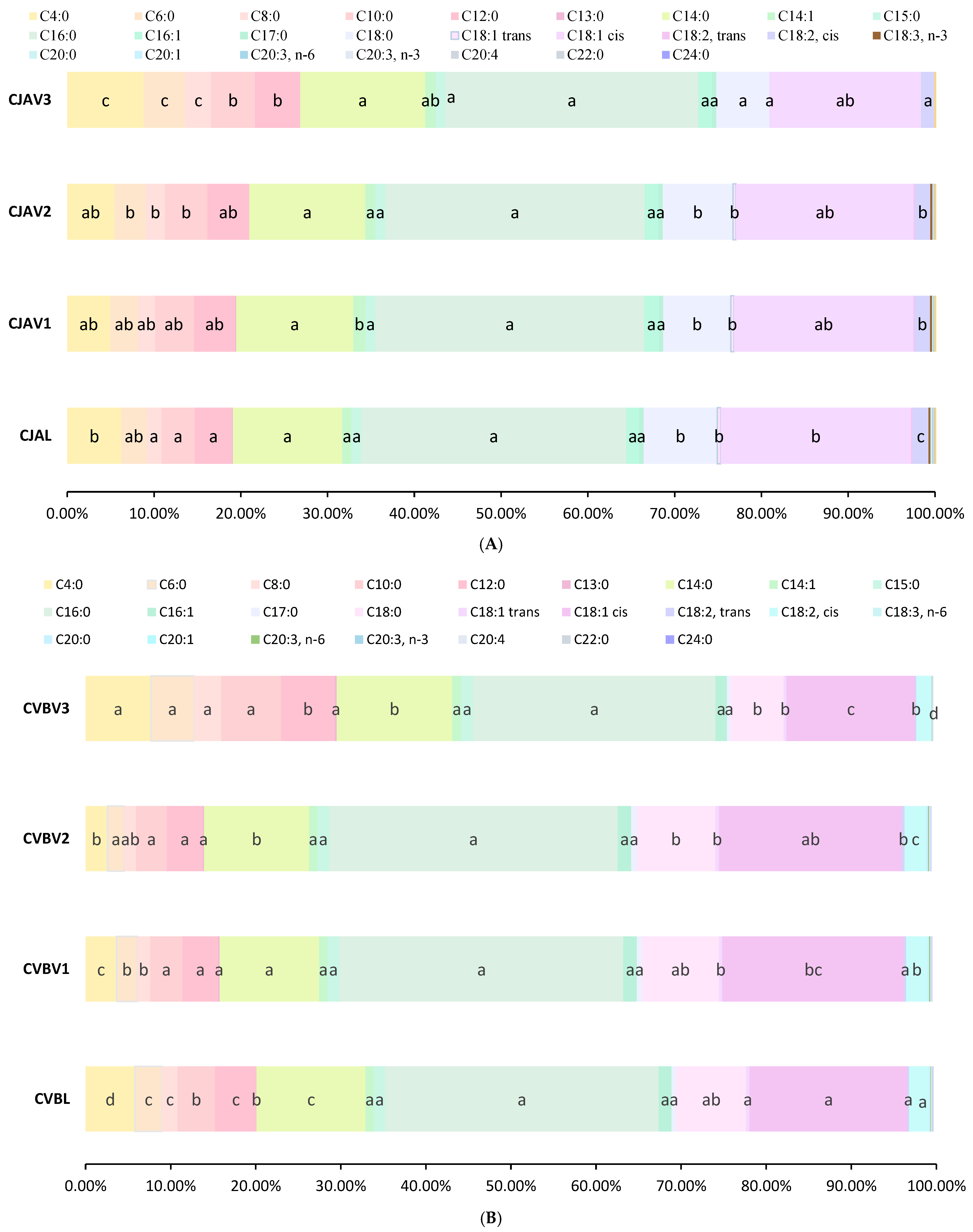
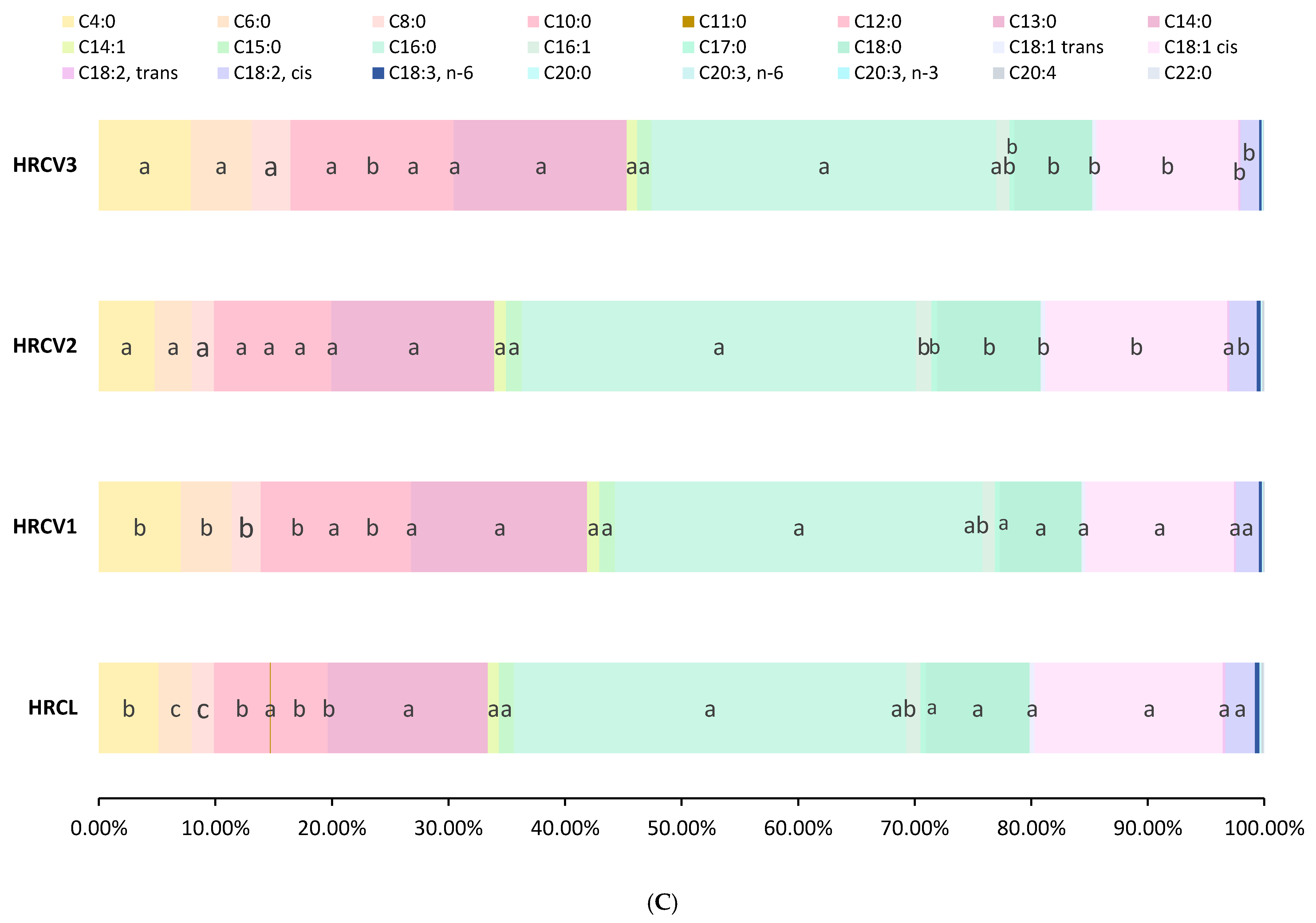
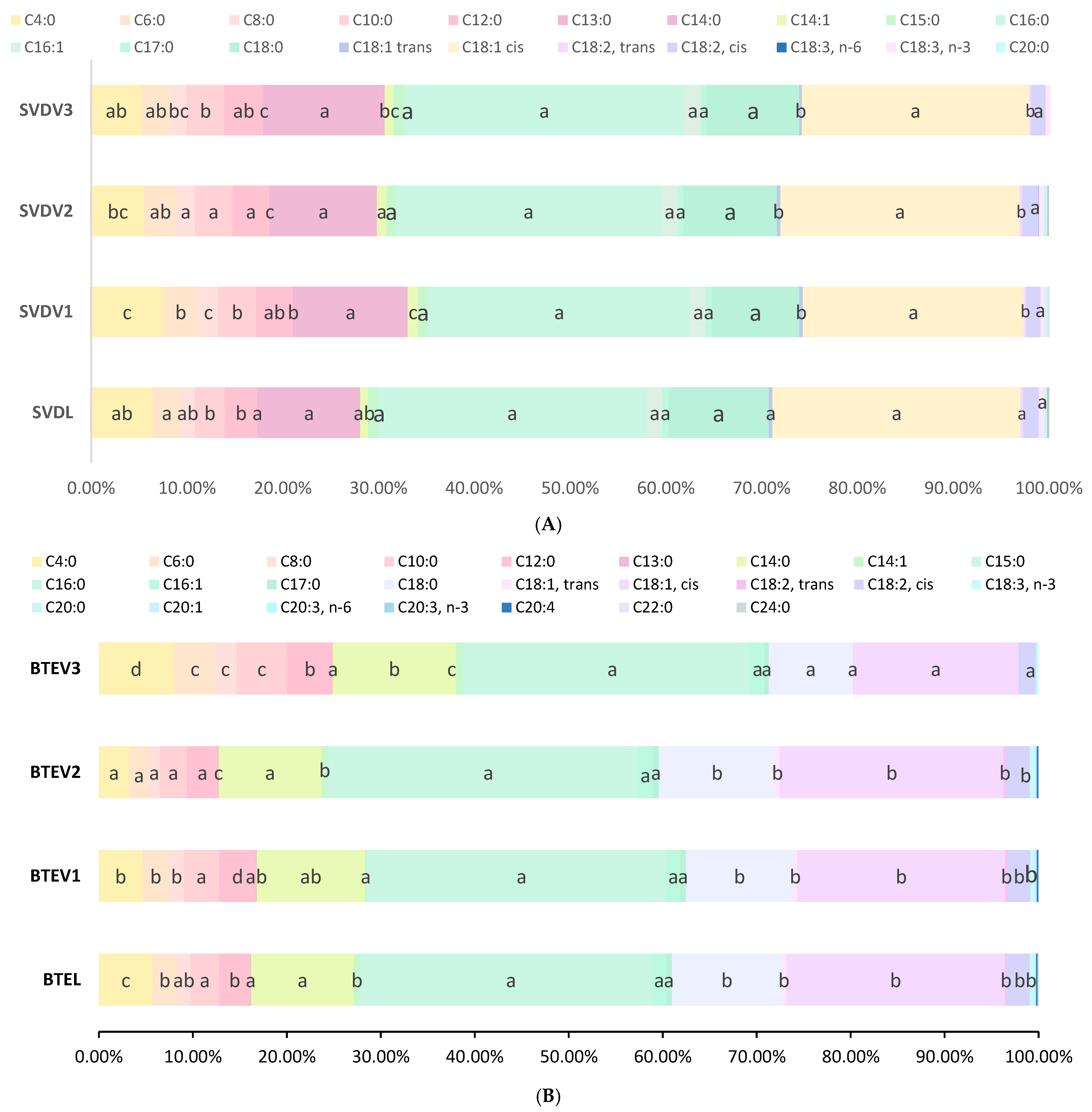
Across all seven regions (Covasna, Harghita, Suceava, Olt, Teleorman, Botoșani, and Cluj), represented in Figure 1, Figure 2 and Figure 3, the ANOVA (p < 0.05) results reveal a consistent pattern showing how heavy-metal contamination alters the fatty-acid profile of milk and cheese, but also highlight important regional differences in the magnitude and type of changes. In every region, the cheese contaminated at 10× LM shows the strongest deviation from both the blank samples and the LM-contaminated cheese, demonstrating a clear contamination-dependent effect. Short- and medium-chain fatty acids (C4:0–C13:0) are sensitive to contamination in all regions, but their behavior varies: in Covasna, Harghita, Olt, Botoșani, and Cluj, these fatty acids show a gradual and predictable increase or decrease with rising contamination, while in Teleorman the changes are milder and less consistent. Across regions, the blank milk and blank cheese tend to share very similar fatty-acid compositions, confirming that under normal, uncontaminated conditions, milk–cheese conversion does not significantly distort the lipid profile.
The strongest regional differences appear in how unsaturated fatty acids respond to contamination. In Covasna, Harghita, Suceava, Olt, and Cluj, unsaturated and polyunsaturated fatty acids (especially C18:1 trans, C18:3, C20:1, C20:3, and C20:4) show the most pronounced reductions at higher contamination, often disappearing or decreasing sharply at 10× LM. This indicates high sensitivity to pollutants and a dose-dependent degradation of unsaturated lipids. Teleorman stands out because most major unsaturated fatty acids remain relatively stable, with only a few (such as C18:1 trans, C18:3, and some C20 fatty acids) showing significant alterations. Botoșani presents one of the strongest disruptions, where both short-chain and unsaturated fatty acids are heavily affected, showing clear separation between blank, LM, and 10× LM samples.
Long-chain saturated fatty acids (C14:0–C18:0) behave similarly across all regions: they remain largely stable regardless of contamination level, showing minimal or no variation. This pattern is consistent in Harghita, Suceava, Olt, Teleorman, Botoșani, and Cluj, confirming that these fatty acids are structurally robust and less susceptible to heavy-metal-induced changes. Differences among regions appear mainly in highly unsaturated fatty acids (PUFAs) and some medium-chain fatty acids, which show region-specific sensitivity depending on environmental or physiological factors.
In summary, while the overall pattern is consistent—low contamination causes moderate changes and high contamination leads to major alterations—the intensity of the response varies by region. Covasna, Harghita, Suceava, Olt, Botoșani, and Cluj show strong and progressive changes, especially in unsaturated fatty acids, whereas Teleorman shows a milder response with fewer fatty acids affected. These similarities and differences demonstrate that although heavy-metal contamination universally disrupts the fatty-acid profile, the degree of impact is influenced by regional factors such as local environmental conditions, feeding systems, and baseline milk composition.
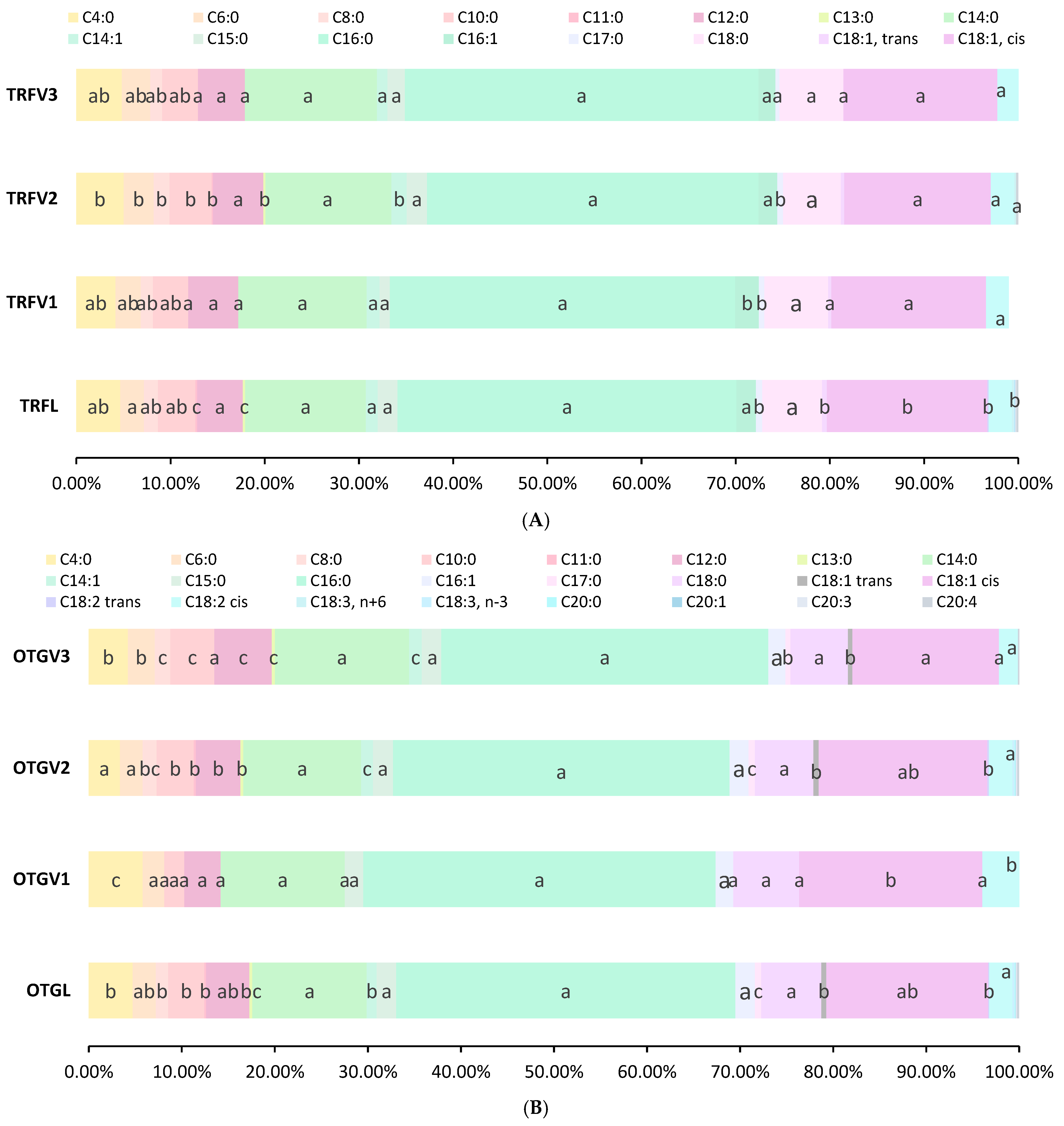
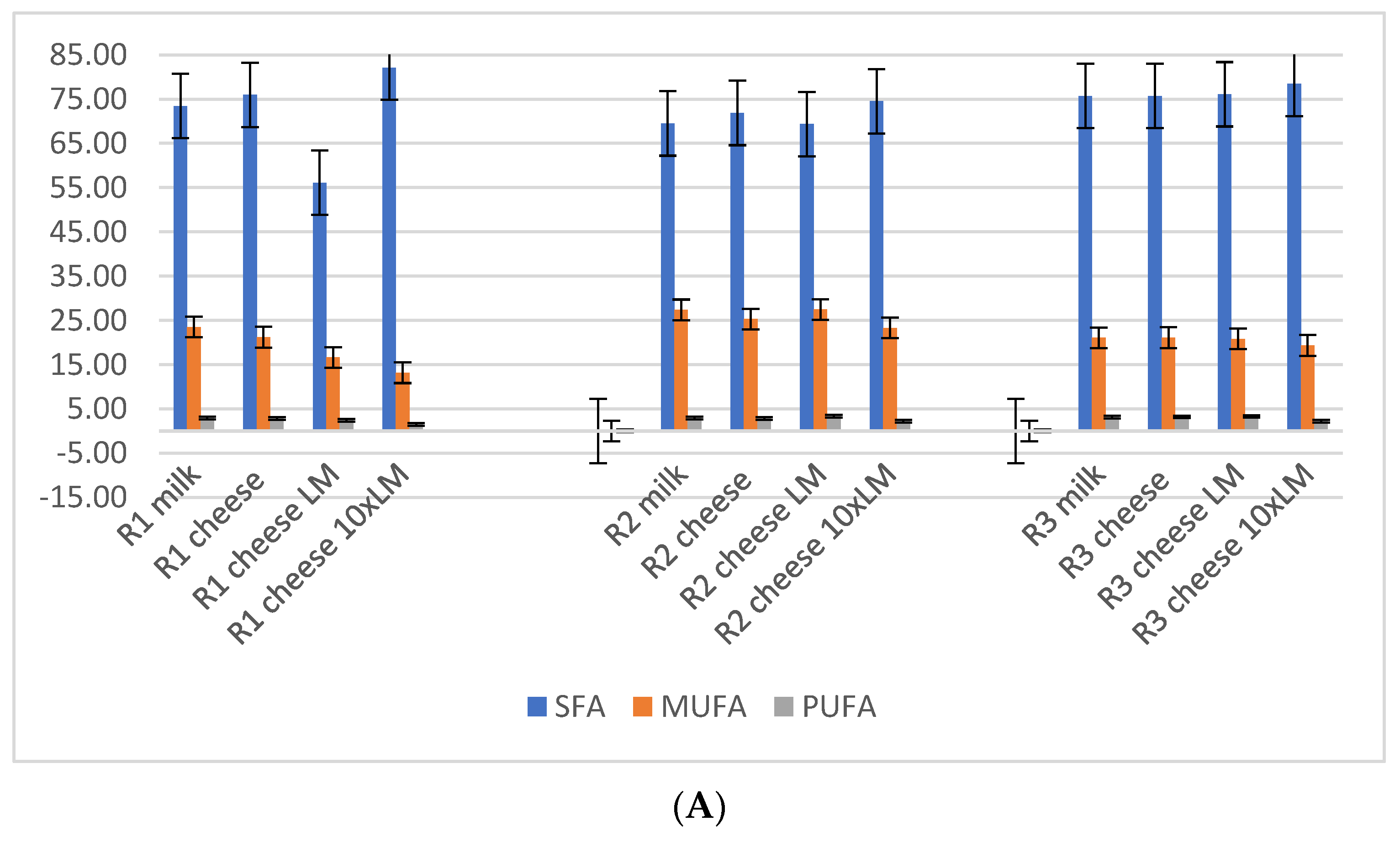
The controlled addition of Pb, Cd, and Cu caused all tested areas to develop saturated lipid profiles at the same rate. The natural samples contained 72–76% SFA before the addition of metals, but the percentage increased to 78–81% after the addition of metals, while the amounts of MUFA and PUFA decreased accordingly. The PUFA content in region 2 decreased from 2.85% to 2.19%, which was the smallest decrease among all regions (Figure 4A).
The PUFA content in region 1 decreased from 2.8% to 2.0%, while MUFA levels decreased from 21% to 17%. The 10× level of n-3 fatty acids disappeared completely in region 3, which showed the greatest imbalance. ANOVA statistical analysis showed that the addition of metals caused significant changes (p < 0.05) in all samples with metal addition.
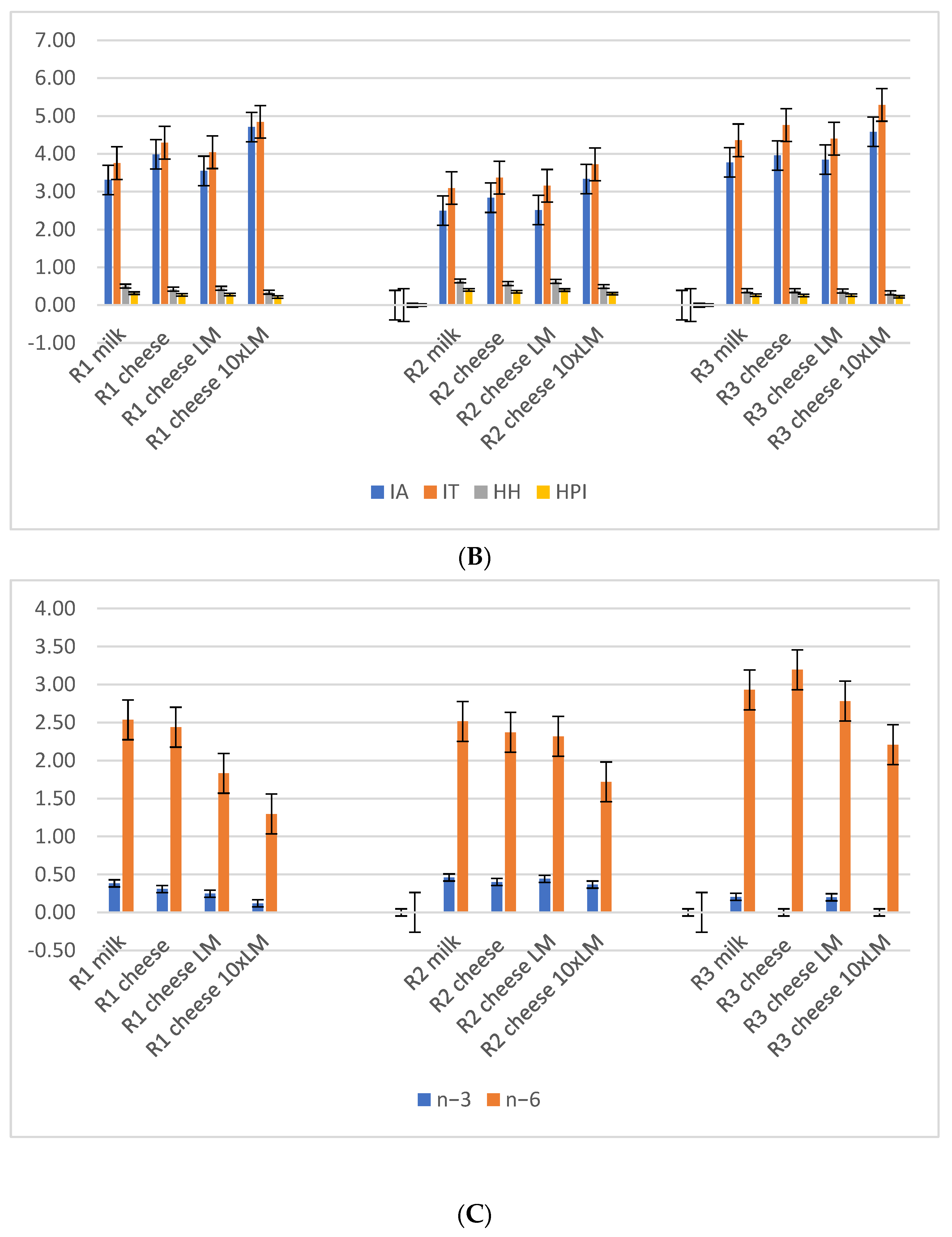
These compositional changes were accompanied by marked increases in the IA and IT indices; for example, IA increased from ~2.8 to ~3.4 in Region 2 and up to ~4.6 in Region 3, indicating a progressive shift toward a lipid profile associated with an elevated cardiovascular risk The research indicates that the addition of metals causes disruption of the lipid structure in all regions, but R2 shows the highest resistance, R1 shows medium sensitivity, and R3 shows the highest vulnerability to metal-induced oxidative damage (Figure 4B).
These patterns align with the radical oxidation mechanism described in [33], in which Pb2+, Cd2+, and Cu2+ reduce the activation energy for lipid peroxidation, accelerating PUFA degradation and favoring cis-trans isomerization [34,35].
From a food safety perspective, these results are important: loss of N-3 PUFA, increased atherogenic and thrombogenic indices, and disruption of lipid balance indicate that high levels of metals, even within regulated limits, can significantly affect the nutritional quality of dairy fats (Figure 4C). This reinforces the need for strict monitoring of heavy metal levels in milk and assessment not only of their concentration but also of their biochemical impact on food quality.

4. Conclusions

This study assessed significant changes in the fatty acid profile and nutritional quality indices of cheese obtained under controlled laboratory metal addition with Pb, Cd, and Cu. Increasing metal levels caused a progressive rise in saturated fatty acids, accompanied by a reduction in monounsaturated and polyunsaturated fatty acids, especially the n−3 fraction, resulting in a PUFA/SFA ratio < 0.04 and a pronounced imbalance of the n−6/n−3 ratio (>10 under 10× LM conditions). These structural and functional alterations in the lipid fraction were associated with higher IA and IT values and reduced HH and HPI values, reflecting intensified oxidative degradation of lipids and impaired enzymatic activity involved in PUFA metabolism, respectively.
A comparative evaluation of the regions showed that cheese derived from the north-eastern region (R2) exhibited the greatest metabolic stability and resistance to metal-induced oxidative stress. R2 samples were characterized by moderate SFA values (around 70%), low IA (around 2.8) and IT (around 3.4), an n−6/n−3 ratio within the physiological interval (4–6), and measurable levels of N-3 fatty acids, even under 10 × LM conditions. In contrast, samples from the southern region R3 displayed the strongest lipid imbalance, marked by SFA levels exceeding 78%, a complete loss of N-3 fatty acids, and elevated IA and IT values (>4.5), indicating high atherogenic and pro-inflammatory potential. The central region R1 showed an intermediate profile but still demonstrated substantial shifts as metal levels increased, confirming the metabolic sensitivity of the lipid matrix to oxidative stress.
Overall, the results demonstrate that fatty acid composition (SFA, MUFA, and PUFA) and derived nutritional indices serve as sensitive biochemical markers of oxidative stress and lipid degradation triggered by elevated metal levels in dairy systems. The observed alterations have important nutritional implications, as they lower the biological value of milk fat and increase the metabolic risk associated with the long-term consumption of dairy products exposed to higher metal loads. Therefore, monitoring heavy metals and lipid indices provides an effective approach for evaluating food safety, geographical traceability, and nutritional quality of dairy products.

Author Contributions

Conceptualization, M.N.C., S.A. and A.P.; methodology, M.N.C., S.A. and A.P.; software, A.P.; validation, M.N.C., S.A. and A.P.; formal analysis, M.N.C.; investigation, M.N.C.; resources, M.N.C.; data curation, M.N.C. and S.A.; writing—original draft preparation, M.N.C. and S.A.; writing—review and editing, M.N.C., S.A. and A.P.; supervision, S.A. All authors have read and agreed to the published version of the manuscript.

Funding

This research received no external funding.

Institutional Review Board Statement

Not applicable.

Informed Consent Statement

Not applicable.

Data Availability Statement

The original contributions presented in this study are included in the article. Further inquiries can be directed to the corresponding author.

Conflicts of Interest

The authors declare no conflicts of interest.

Abbreviations

The following abbreviations are used in this manuscript:
AASAtomic Absorption Spectrophotometry
BTBotoşani County
CdCadmium
CJCluj County
CrChromium
CuCopper
CVCovasna County
EPAEicosapentaenoic acid
FAMEFatty Acid Methyl Esters
FFAFree Fatty Acids
FIDFlame Ionization Detector
GCGas Cromatography
GC-FIDGas Cromatography with Flame Ionization Detection
CLAConjugated linoleic acids
HPIHealth Promoting Index
HRHarghita County
IAAtherogenicity Index
ITThrombogenicity Index
LALinoleic acid
LMMaximum legal limit for heavy metals
LODLimit of Detection
LOQLimit of Quantification
MgMagnesium
MUFAMonounsaturated Fatty Acids
N-3Omega-3 Polyunsaturated Fatty Acids
N-6Omega-6 Polyunsaturated Fatty Acids
OT/OTGOlt County
PbLead
PUFAPolyunsaturated Fatty Acids
R1Region 1 (Central Romania)
R2Region 2 (Northeastern Romania)
R3Region 3 (Southern Romania)
RSDRelative Standard Deviation
RTRetention time
SFASaturated Fatty Acids
SVSuceava County
TRTeleorman County
UIUnsaturation Index
V1Blank cheese
V2Cheese with metal addition at maximum permitted level
V3Cheese with 10× metal addition at maximum permitted level
ZnZinc

References

  1. Kailasapathy, K. Chemical composition, physical and functional properties of milk and milk ingredients. In Dairy Processing and Quality Assurance, 2nd ed.; Chandan, R.C., Kilara, A., Shah, N.P., Eds.; Wiley-Blackwell: Hoboken, NJ, USA, 2015; pp. 77–105. [Google Scholar] [CrossRef]
  2. Petrović, S.M.; Savić, S.R.; Petronijević, Ž.B. Macro- and micro-element analysis in milk samples by inductively coupled plasma-optical emission spectrometry. Acta Period. Technol. 2016, 47, 51–62. [Google Scholar] [CrossRef]
  3. Dauda, A.; Ochefu, A.O.; Idi, Y.; Gambo, B.M. Comparative analysis of nutritional, physicochemical, antioxidant, and microbial properties of cattle, sheep and goat milk. J. Agric. Food Environ. Anim. Sci. 2025, 6, 230–243. [Google Scholar]
  4. Acquavia, M.A.; Villone, A.; Rubino, R.; Bianco, G. A Comprehensive Review of Milk Components: Recent Developments on Extraction and Analysis Methods. Molecules 2025, 30, 1994. [Google Scholar] [CrossRef]
  5. Lindmark-Månsson, H. Fatty acids in bovine milk fat. Food Nutr. Res. 2008, 52, 1821. [Google Scholar] [CrossRef]
  6. Kasapidou, E.; Stergioudi, R.-A.; Papadopoulos, V.; Mitlianga, P.; Papatzimos, G.; Karatzia, M.-A.; Amanatidis, M.; Tortoka, V.; Tsiftsi, E.; Aggou, A.; et al. Effect of Farming System and Season on Proximate Composition, Fatty Acid Profile, Antioxidant Activity, and Physicochemical Properties of Retail Cow Milk. Animals 2023, 13, 3637. [Google Scholar] [CrossRef]
  7. Mollica, M.P.; Di Guida, F.; Vassallo, E.; Lionetti, L. Milk fatty acid profiles in different animal species: Focus on the potential effect of selected PUFAs on metabolism and brain functions. Nutrients 2021, 13, 1116. [Google Scholar] [CrossRef] [PubMed]
  8. Briffa, J.; Sinagra, E.; Blundell, R. Heavy metal pollution in the environment and their toxicological effects on humans. Heliyon 2020, 6, e04691. [Google Scholar] [CrossRef] [PubMed]
  9. Kaur, H.; Yadav, S.K.N.V. Whole-cell based electrochemical biosensor for monitoring lead ions in milk. Biotechnol 2010, 10, 259–266. [Google Scholar] [CrossRef]
  10. Jomova, K.; Alomar, S.Y.; Nepovimova, E.; Kuca, K.; Valko, M. Heavy metals: Toxicity and human health effects. Arch. Toxicol. 2025, 99, 153–209. [Google Scholar] [CrossRef] [PubMed]
  11. Yang, Y.; Zhao, M.; Qiu, L.; Lin, H. Effects of cadmium pollution on human health: A narrative review. Environ. Toxicol. Rev. 2025, 16, 225. [Google Scholar] [CrossRef]
  12. Jaishankar, M.; Tseten, T.; Anbalagan, N.; Mathew, B.B.; Beeregowda, K.N. Toxicity, mechanism and health effects of some heavy metals. Interdiscip. Toxicol. 2014, 7, 60–72. [Google Scholar] [CrossRef]
  13. Souto, M.R.S.; Pimenta, A.M.; Catarino, R.I.L.; Leal, M.F.C.; Simões, E.T.R. Heavy metals in milk and dairy products: Safety and analysis. Pollutants 2025, 5, 29. [Google Scholar] [CrossRef]
  14. Şahin, M.; Kaya, G.; Arıkan, B.; Alpaslan, M. A methodological approach to the assessment of trace elements in milk and dairy products. Sci. Total Environ. 2025, 91, 4443–4448. [Google Scholar] [CrossRef]
  15. Yadav, S.; Singh, S.; Kumar, R. Determination of toxic heavy metals (Pb, Cd, Hg) in cow milk by ICP–MS and risk assessment for consumers. Food Chem. 2022, 373, 131505. [Google Scholar] [CrossRef]
  16. Guetouache, M.; Guessas, B.; Bettache, M.; Medjekal, S. Composition and nutritional value of raw milk. Issues Biol. Sci. Pharm. Res. 2014, 2, 115–122. [Google Scholar]
  17. Rațu, R.N.; Cojocaru, C.; Nistor, C.; Tătaru, I. Effects of dairy cows management systems on the physicochemical and nutritional quality of milk and yogurt in a North-Eastern Romanian farm. Agriculture 2023, 13, 1295. [Google Scholar] [CrossRef]
  18. Gross, J.; Van Dorland, H.A.; Bruckmaier, R.M.; Schwarz, F.J. Milk fatty acid profile related to energy balance in dairy cows. J. Dairy. Res. 2011, 78, 479–488. [Google Scholar] [CrossRef]
  19. Fantuz, F.; Mazzi, M.; Ferraro, S.; Salimei, E. Detailed mineral profile of milk, whey, and cheese from cows, buffaloes, goats, ewes, and dromedary camels, and efficiency of recovery of minerals in their cheese. J. Dairy Sci. 2024, 59, 46–50. [Google Scholar] [CrossRef]
  20. Stojković, B.; Stojanović, B.; Davidović, V.; Ivetić, A.; Šimunović, S.; Ignjatović, A.; Grujičić, I. Effect of chromium propionate supplementation on lactation performance and blood parameters of Simmental cows in mid-lactation under heat stress. Chil. J. Agric. Res. 2025, 85, 268–276. [Google Scholar] [CrossRef]
  21. Codex Alimentarius Commission. General Standard for Contaminants and Toxins in Food and Feed (CXS 193-1995); FAO/WHO: Rome, Italy, 1995. [Google Scholar]
  22. European Commission. Commission Regulation (EC) No 149/2008 of 29 January 2008 amending Regulation (EC) No 396/2005 by establishing Annexes II, III and IV setting maximum residue levels for products covered by Annex I thereto. Off. J. Eur. Union 2008, L58, 1–398. [Google Scholar]
  23. European Commission. Commission Regulation (EU) 2023/915 of 25 April 2023 on maximum levels for certain contaminants in food and repealing Regulation (EC) No 1881/2006. Off. J. Eur. Union 2023, L119, 103–157. [Google Scholar]
  24. SR ISO 2446:2023; Milk—Determination of Fat Content. Romanian Standards Association (ASRO): Bucharest, Romania, 2023.
  25. Hy, A.; Chro, G.; Ac, M.F. AOAC Official Method 996.01—Fat (Total, Saturated, Unsaturated, and Monounsaturated) in cereal products. AOAC Int. 2006, 5. Available online: https://www.aoac.org/ (accessed on 17 November 2025).
  26. Fox, P.F.; Uniacke-Lowe, T.; McSweeney, P.L.H.; O’Mahony, J.A. Dairy Chemistry and Biochemistry, 2nd ed.; Springer International Publishing: Cham, Switzerland, 2015. [Google Scholar] [CrossRef]
  27. Walstra, P.; Wouters, J.T.M.; Geurts, T.J. Dairy Science and Technology, 2nd ed.; CRC Press: Boca Raton, FL, USA, 2006. [Google Scholar]
  28. European Commission. Commission Regulation (EC) No 333/2007 of 28 March 2007 laying down the methods of sampling and analysis for the official control of the levels of lead, cadmium, mercury, inorganic tin, 3-MCPD and benzo(a)pyrene in foodstuffs. Off. J. Eur. Union 2007, L88, 29–38. [Google Scholar]
  29. Ulbricht, T.L.V.; Southgate, D.A.T. Coronary heart disease: Seven dietary factors. Lancet 1991, 338, 985–992. [Google Scholar] [CrossRef]
  30. Kęszycka, M.M.; Czyżak, G.; Lipińska, P.; Wójtowski, J. Fatty acid profile of milk—A review. Bull. Vet. Inst. Pulawy 2013, 57, 135–139. [Google Scholar] [CrossRef]
  31. Lanier, S.J.; Corl, B.A. Challenges in enriching milk fat with polyunsaturated fatty acids. J. Anim. Sci. Biotechnol. 2015, 6, 26. [Google Scholar] [CrossRef] [PubMed]
  32. Chen, J.; Liu, H. Nutritional indices for assessing fatty acids: A mini-review. Int. J. Mol. Sci. 2020, 21, 6260. [Google Scholar] [CrossRef]
  33. Frelich, J.; Šlachta, M.; Hanuš, O.; Špička, J.; Samková, E. Fatty acid composition of cow milk fat produced on low-input mountain farms. Czech J. Anim. Sci. 2009, 54, 532–539. [Google Scholar] [CrossRef]
  34. Bielecka, M.; Ziajka, J.; Staniewski, B.; Nowak, H. Oxidative stability and health-related indices of anhydrous milk fat and vegetable oil blends. Int. Dairy J. 2023, 137, 105–118. [Google Scholar] [CrossRef]
  35. Yin, H.; Xu, L.; Porter, N.A. Free radical lipid peroxidation: Mechanisms and analysis. Chem. Rev. 2011, 111, 5944–5972. [Google Scholar] [CrossRef]
Figure 1. (A) Variation in fatty acids in Cluj County (CJ); (B) Covasna County (CV); (C) Harghita County (HR) in response to controlled laboratory metal addition in region R1 (CJAL/CVBL/HRL—milk blank; CJAV1/CVBV1/HRCV1—cheese without metal addition; CJAV2/CVBV2/HRCV2—cheese at the maximum level; CJAV3/CVBV3/HRCV3—cheese at 10× the maximum level). Abbreviations: CJ = Cluj County; CV = Covasna County; HR = Harghita County; V1 = no metal addition; V2 = metal addition at the maximum level; V3 = metal addition at 10× the maximum level; C4:0 = butyric acid; C6:0 = caproic acid; C8:0 = caprylic acid; C10:0 = capric acid; C11:0 = undecylic acid; C12:0 = lauric acid; C13:0 = tridecanoic acid; C14:0 = myristic acid; C14:1 = myristoleic acid; C15:0 = pentadecanoic acid; C16:0 = palmitic acid; C16:1 = palmitoleic acid; C17:0 = heptadecanoic acid; C18:0 = stearic acid; C18:1 cis = oleic acid; C18:1 trans = elaidic acid; C18:2 cis = linoleic acid; C18:2 trans = linolelaidic acid; C18:3 n−3 = α-linolenic acid; C18:3 n−6 = γ-linolenic acid; C20:1 = gondoic acid; C20:3 n−6 = cis-8,11,14-eicosatrienoic acid; C20:3 n−3 = cis-11,14,17-eicosatrienoic acid; C20:4 = arachidonic acid; C22:0 = behenic acid; C24:0 = lignoceric acid. The lowercase letters represent statistical groupings obtained from one-way ANOVA followed by Tukey’s HSD post hoc test (p < 0.05). Different letters indicate statistically significant differences, while samples sharing at least one letter are not significantly different.
Applsci 15 13193 g001aApplsci 15 13193 g001b
Figure 2. (A) Variation in fatty acids in Suceava County (SV); (B) Botosani County (BT); in response to controlled laboratory metal addition in region R2 (SVDL, BTEL—milk blank, SVDV1/BTEV1—cheese without metal addition; SVDV2/BTEV2—cheese at the maximum level; SVDV3/BTEV3—cheese at 10× the maximum level). Abbreviations: SV = Suceava County; BT = Botoșani County; V1 = no metal addition; V2 = metal addition at the maximum level; V3 = metal addition at 10× the maximum level. C4:0 = butyric acid; C6:0 = caproic acid; C8:0 = caprylic acid; C10:0 = capric acid; C11:0 = undecylic acid; C12:0 = lauric acid; C13:0 = tridecanoic acid; C14:0 = myristic acid; C14:1 = myristoleic acid; C15:0 = pentadecanoic acid; C16:0 = palmitic acid; C16:1 = palmitoleic acid; C17:0 = heptadecanoic acid; C18:0 = stearic acid; C18:1 cis = oleic acid; C18:1 trans = elaidic acid; C18:2 cis = linoleic acid; C18:2 trans = linolelaiidic acid; C18:3 n-3 = α-Linolenic acid; C18:3 n-6 = γ-linolenic acid; C20:0 = arachidonic acid; C20:1 = gondoic acid; C20:3 n,6 = cis-8,11,14-eicosatrienoic acid; C20:3 n-3 = cis-11,14,17-eicosatrienoic acid; C20:4 = arachionic acid; C22:0 = eicosadienoic acid; C23:0 = cis-11,14,17-eicosatrienoic acid; C24:0 = lignoceric acid. The lowercase letters represent statistical groupings obtained from one-way ANOVA followed by Tukey’s HSD post hoc test (p < 0.05). Different letters indicate statistically significant differences, while samples sharing at least one letter are not significantly different.
Applsci 15 13193 g002
Figure 3. (A) Variation in fatty acids in Teleorman County (TR); (B) Olt County (OT); in response to controlled laboratory metal addition in region region R3 (TRFL, OTGL—milk blank, TRFV1/OTGV1—cheese without metal addition; TRFV2/OTGV2—cheese at the maximum level; TRFV3/OTGV3—cheese at 10× the maximum level). Abbreviations: TR = Teleorman County; OT = Olt County; V1 = no metal addition; V2 = metal addition at the maximum level; V3 = metal addition at 10× the maximum level; C4:0 = butyric acid; C6:0 = caproic acid; C8:0 = caprylic acid; C10:0 = capric acid; C11:0 = undecylic acid; C12:0 = lauric acid; C13:0 = tridecanoic acid; C14:0 = myristic acid; C14:1 = myristoleic acid; C15:0 = pentadecanoic acid; C16:0 = palmitic acid; C16:1 = palmitoleic acid; C17:0 = heptadecanoic acid; C18:0 = stearic acid; C18:1 cis = oleic acid; C18:1 trans = elaidic acid; C18:2 cis = linoleic acid; C18:2 trans = linolelaiidic acid; C18:3 = γ-linolenic acid; C20:0 = arachidonic acid; C20:3 n,6 = cis-8,11,14-eicosatrienoic acid; C20:3 n-3 = cis-11,14,17-eicosatrienoic acid; C20:4 = arachionic acid; C22:0 = eicosadienoic acid. The lowercase letters represent statistical groupings obtained from one-way ANOVA followed by Tukey’s HSD post hoc test (p < 0.05). Different letters indicate statistically significant differences, while samples sharing at least one letter are not significantly different.
Applsci 15 13193 g003
Figure 4. Effect of controlled laboratory metal addition (LM and 10× LM) on nutritional indices in cheese obtained from milk across different regions comparative to milk and cheese blank (A) SFA, MUFA, PUFA; (B) IA, IT, HH, HPI; (C) n−3, n−6.
Applsci 15 13193 g004aApplsci 15 13193 g004b
Table 1. Percentage distribution (%) of Pb, Cd, and Cu in the casein fraction of cheese obtained from milk subjected to metal addition (V2 and V3 samples).
Region/AreaSample CodePb (%)Cd (%)Cu (%)
R1/CJAV287.5393.5789.24
R1/CJAV381.4684.8877.39
R1/CVBV290.2793.8689.59
R1/CVBV385.4085.2078.86
R1/HRCV289.5693.4987.74
R1/HRCV383.2984.5177.03
R2/SVDV288.1297.1789.10
R2/SVDV381.6588.6077.60
R2/BTEV290.5496.0488.34
R2/BTEV380.2888.3083.46
R3/TRFV293.1493.2688.75
R3/TRFV386.2586.3982.06
R3/OTGGV290.8995.9089.07
R3/OTGV379.5888.9779.55
Notes: Values represent recovery (%) for cheese samples obtained in the laboratory from milk subjected to metal addition in the three regions and their respective sub-areas using Pb, Cd, and Cu. Samples marked V2 correspond to metal addition at the maximum permitted level, while V3 corresponds to metal addition at 10× the maximum permitted level.
Table 2. Nutritional indices used to evaluate the fatty acid profile of cow’s milk and cheese [30].
NoParameter/Index NameCalculation Formula [30]Physiological/
Nutritional Significance
1PUFA/SFAPUFA/SFA = ƩPUFA/ƩSFAOverall degree of unsaturation; high values, healthier lipid profile
2Atherogenic indexIA = (C12:0 + 4 × C14:0 + C16:0)/(ΣMUFA + ΣPUFA)Estimates the potential of lipids to promote atherosclerosis; low values, antiatherogenic effect.
3Thrombogenic indexIT = (C14:0 + C16:0 + C18:0)/(0.5 × ΣMUFA + 0.5 × ΣPUFA-n6 + 3 × ΣPUFA-n3 + ΣPUFA-n3/ΣPUFA-n6)Reflects the potential risk of thrombus formation; low values, reduced cardiovascular risk.
4Hypocholesterolemic/hypercholesterolemic
ratio
HH = (C18:1CIS + ƩPUFA)/(C12:0 + C14:0 + C16:0)Ratio between beneficial fatty acids and hypercholesterolemic fatty acids.
5Health promotion index HPI = 1/IAThe inverse of the IA index; high values, superior nutritional potential.
6n−6/n−3n−6/n−3= Ʃn−6 PUFA/Ʃn−3 PUFAAssessment of the ratio between pro-inflammatory (n−6) and anti-inflammatory (n−3) fatty acids; optimal ratio < 4.
7Σn−3 PUFA (ω-3)Ʃn−3 PUFA = C18:3CIS9,12,15 + C20:5 + C22:5 + C22:6Represents the total ω−3 fatty acids; contributes to cardiovascular protection
8Σn−6 PUFA (ω-6)Ʃn−6 PUFA = C18:2CIS9,12 + C18:3CIS6,9,12 + C20:3 + C20:4 + C22:4Total n−6 fatty acids; in excess, they can promote inflammation.
Table 3. Guideline values for nutritional indices for cow milk fatty acid profile [31,32].
Parameter/Index NameOptimal Range/Favorable Value 1Physiological Significance
SFA (%)<70Excessive growth of saturated fatty acids accentuates membrane rigidity and increases atherogenic risk.
MUFA (%)>25Monounsaturated fatty acids (MUFAs) lower LDL cholesterol and increase membrane fluidity.
PUFA (%)>3Polyunsaturated acids have anti-inflammatory and cardioprotective effects.
PUFA/SFA>0.045Evaluates the ratio between unsaturated fatty acids and saturated fatty acids.
IA<3.0Low values indicate a low potential for promoting fatty deposits.
IT<3.5Means there is a risk of thrombus formation, low values indicate a protective effect.
HH>0.5The ratio between fatty acids that lower and those that raise serum cholesterol.
HPI>0.35High HPI values indicate a protective nutritional effect.
n−3 PUFA (%)>0.4Omega-3 fatty acids are acids with anti-inflammatory and anti-atherogenic properties.
n−6 PUFA (%)2–4Omega-6 acids are essential, but in excess they become pro-inflammatory.
n−6/n−3 (ω−6/ω−3)<4–5A balanced ratio between n−6 and n−3 indicates a low metabolic risk.
1 value according to references [31,32].
Table 4. Nutritional indices in cow’s milk and cheese from the three regions analyzed (values expressed as mean ± standard deviation).
Index NameRegion 1Region 2Region 3
MilkCheeseMilkCheeseMilkCheese
SFA (%)74.74 ± 2.66 a75.97 ± 5.47 a69.64 ± 1.51 a71.88 ± 0.72 a75.73 ± 0.18 a75.71 ± 1.75 a
MUFA (%)22.24 ± 3.10 a21.21 ± 4.21 a27.38 ± 1.98 a25.27 ± 1.38 a22.04 ± 0.16 a21.10 ± 0.68 a
PUFA (%)3.02 ± 0.46 a2.82 ± 0.63 a2.97 ± 0.49 a2.85 ± 0.66 a3.14 ± 0.03 a3.19 ± 1.08 a
PUFA/SFA0.038 ± 0.00 a0.037 ± 0.01 a0.043 ± 0.01 a 0.040 ± 0.01 a0.040 ± 0.00 a 0.042 ± 0.01 a
IA3.56 ± 0.55 a3.98 ± 1.31 a2.50 ± 0.18 a2.84 ± 0.12 a3.77 ± 0.08 a3.96 ± 0.33 a
IT4.01 ± 0.52 a4.32 ± 1.12 a3.12 ± 0.36 a3.39 ± 0.39 a4.38 ± 0.04 a4.55 ± 0.27 a
HH0.46 ± 0.07 a0.42 ± 0.11 a0.64 ± 0.05 a0.57 ± 0.03 a0.38 ± 0.01 a0.38 ± 0.06 a
HPI0.28 ± 0.04 a0.27 ± 0.08 a0.40 ± 0.03 a0.35 ± 0.01 a0.27 ± 0.01 a0.26 ± 0.02 a
n−3 (%)0.33 ± 0.07 a0.31 ± 0.10 a0.46 ± 0.13 a0.40 ± 0.08 a0.21 ± 0.01 a0.197 ± 0.04 a
n−6 (%)2.48 ± 0.37 ab2.31 ± 0.56 ab2.25 ± 0.60 a2.17 ± 0.72 a2.80 ± 0.02 ab2.99 ± 1.08 b
n−6/n−37.79 ± 1.04 a7.76 ± 1.12 a7.76 ± 1.12 a5.72 ± 2.87 a13.68 ± 0.82 a15.14 ± 0.91 a
Results are expressed as values ± standard deviation. Results followed by different superscript letters are significantly different (p < 0.05).
Disclaimer/Publisher’s Note: The statements, opinions and data contained in all publications are solely those of the individual author(s) and contributor(s) and not of MDPI and/or the editor(s). MDPI and/or the editor(s) disclaim responsibility for any injury to people or property resulting from any ideas, methods, instructions or products referred to in the content.