Optimized Green Cut-and-Fill Mining Method for Subsidence Control and Material Self-Sufficiency



Abstract
1. Introduction
2. Methodological Overview
2.1. Basic Principles of Cut-and-Fill Mining
2.2. Existing Technical Basis Analysis
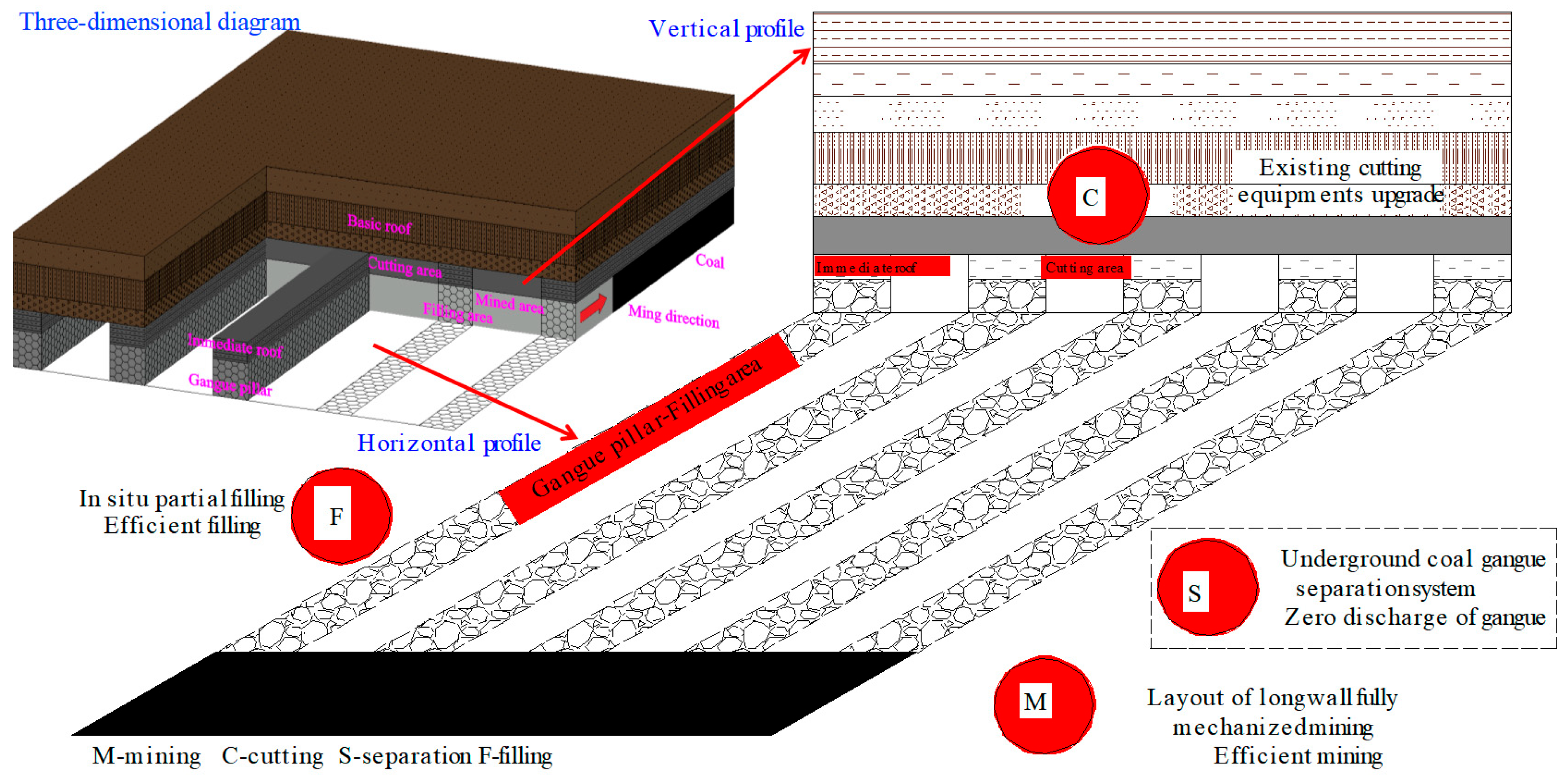
2.2.1. “Mining, Separation, Filling + X” Coal Mining
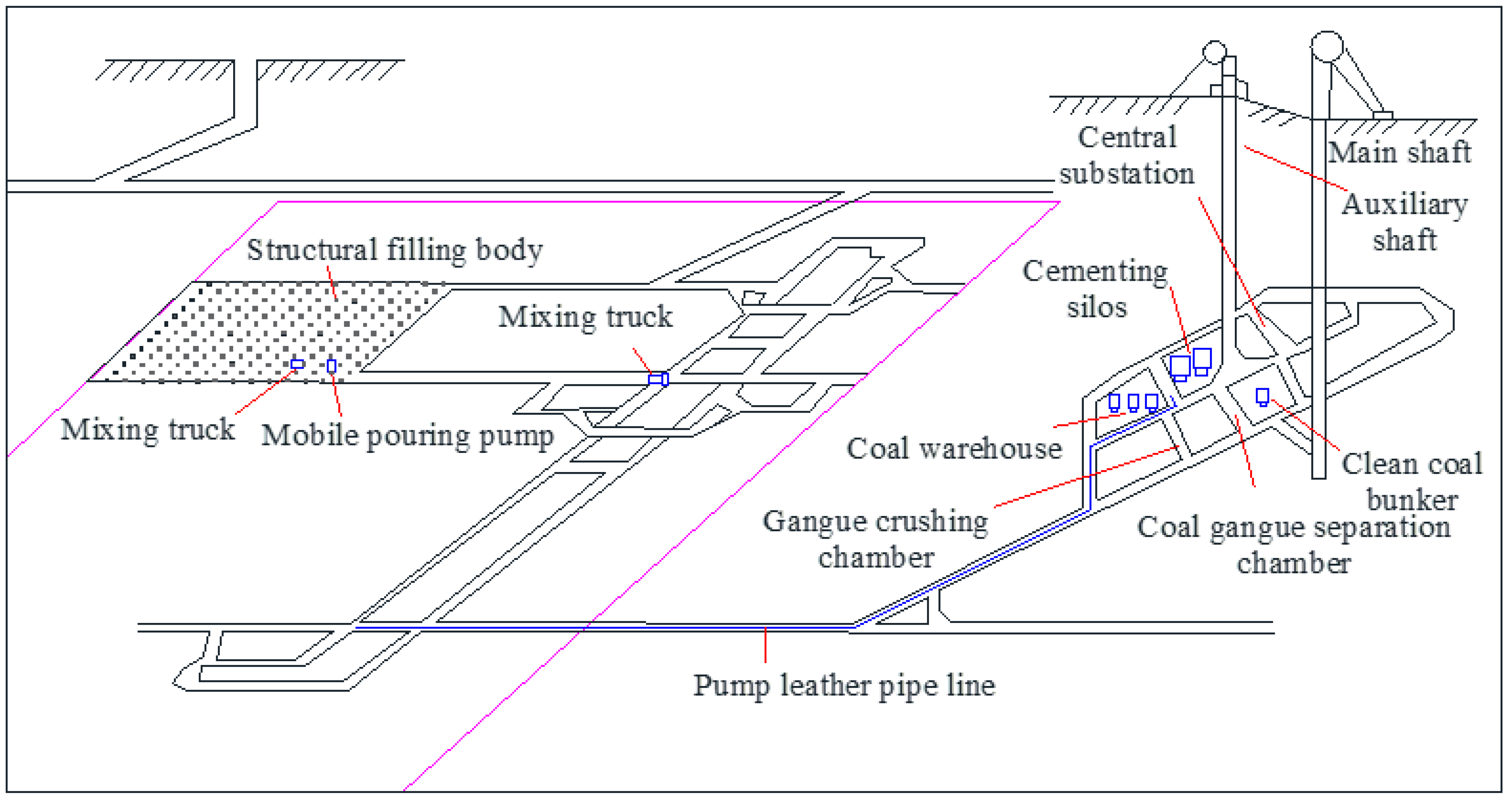
2.2.2. Structural Backfilling Mining
3. Simulation Analysis
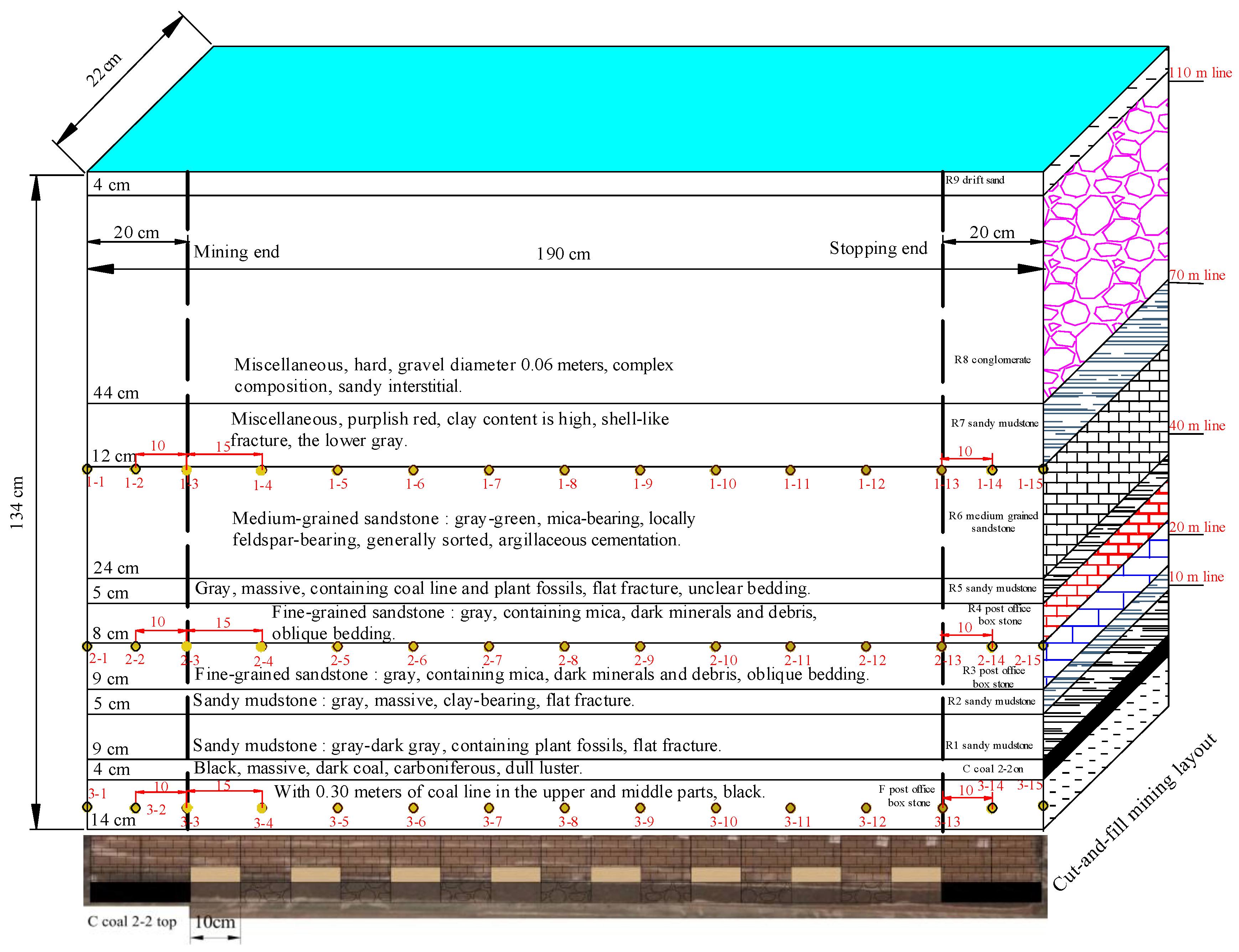
3.1. Similar Simulation Experimental Plan
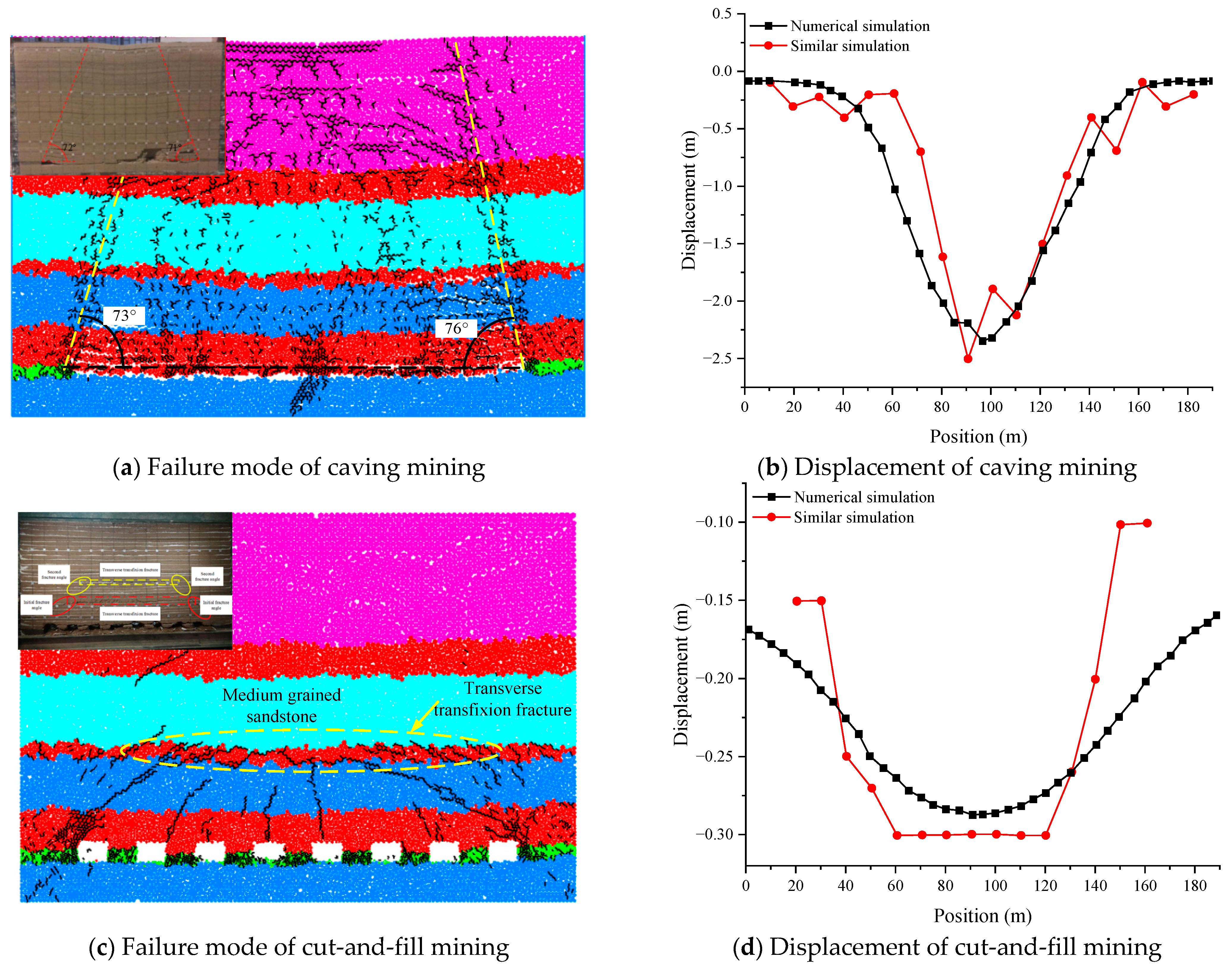
3.2. Similar Simulation Analysis of Caving and Cut-and-Fill Mining
3.2.1. Analysis of Bedrock Displacement Evolution Law
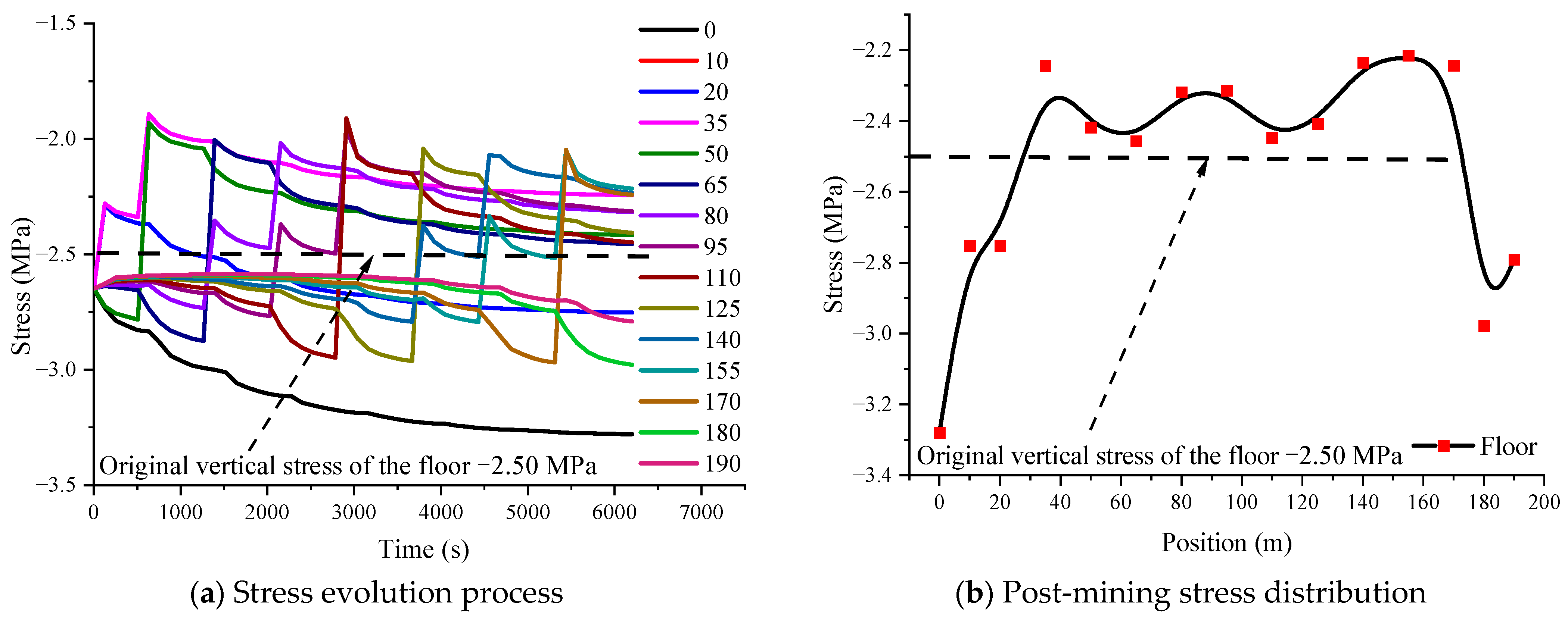
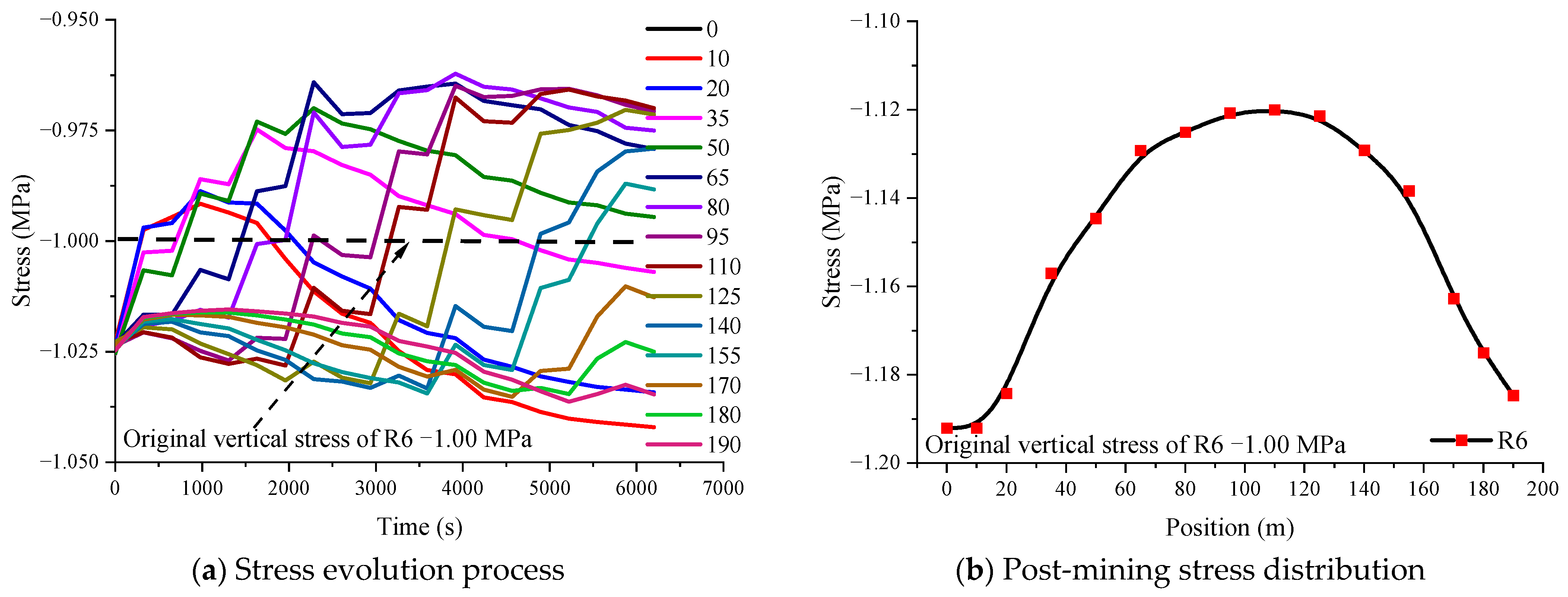
3.2.2. Analysis of the Law of Bedrock Stress Evolution
3.3. Numerical Simulation Analysis of Caving and Cut-and-Fill Mining
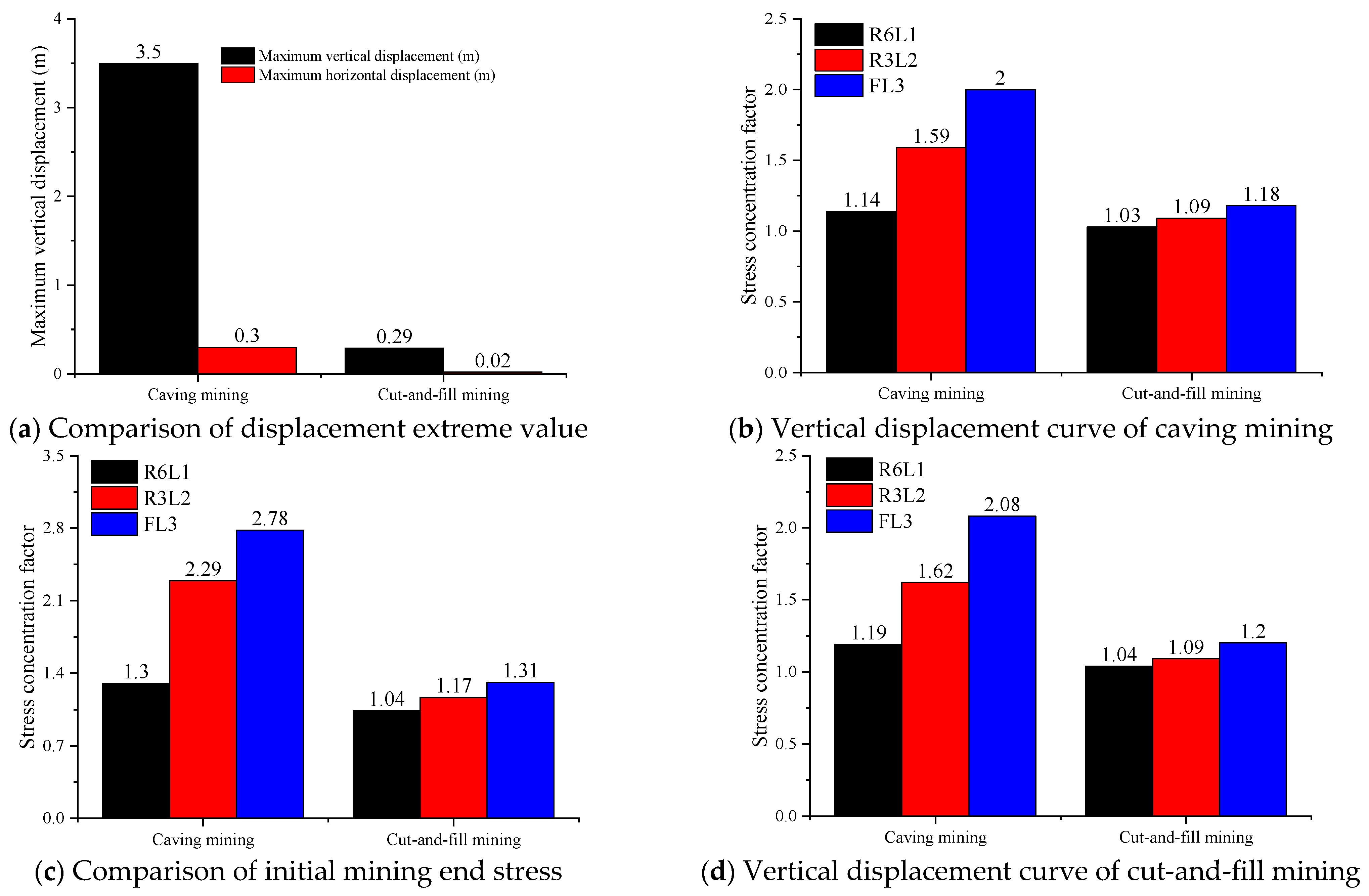
3.4. Comparative Analysis of Caving and Cut-and-Fill Mining
3.4.1. Comparison of Displacement Deformation and Stress State
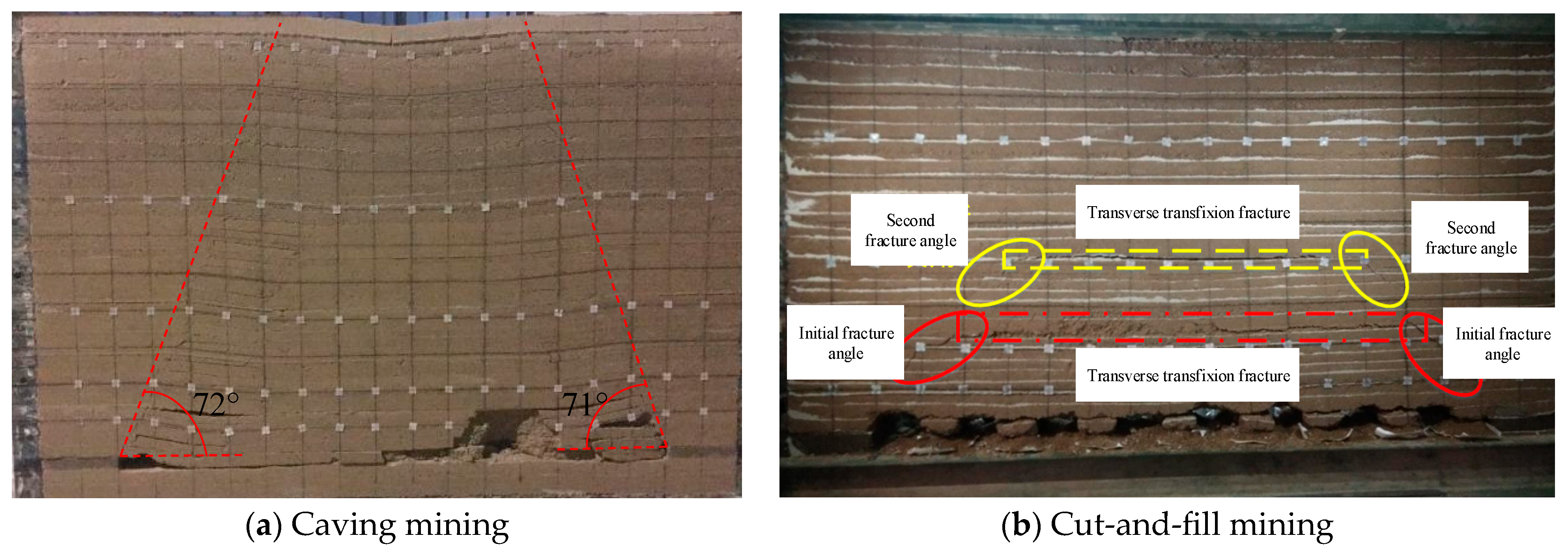
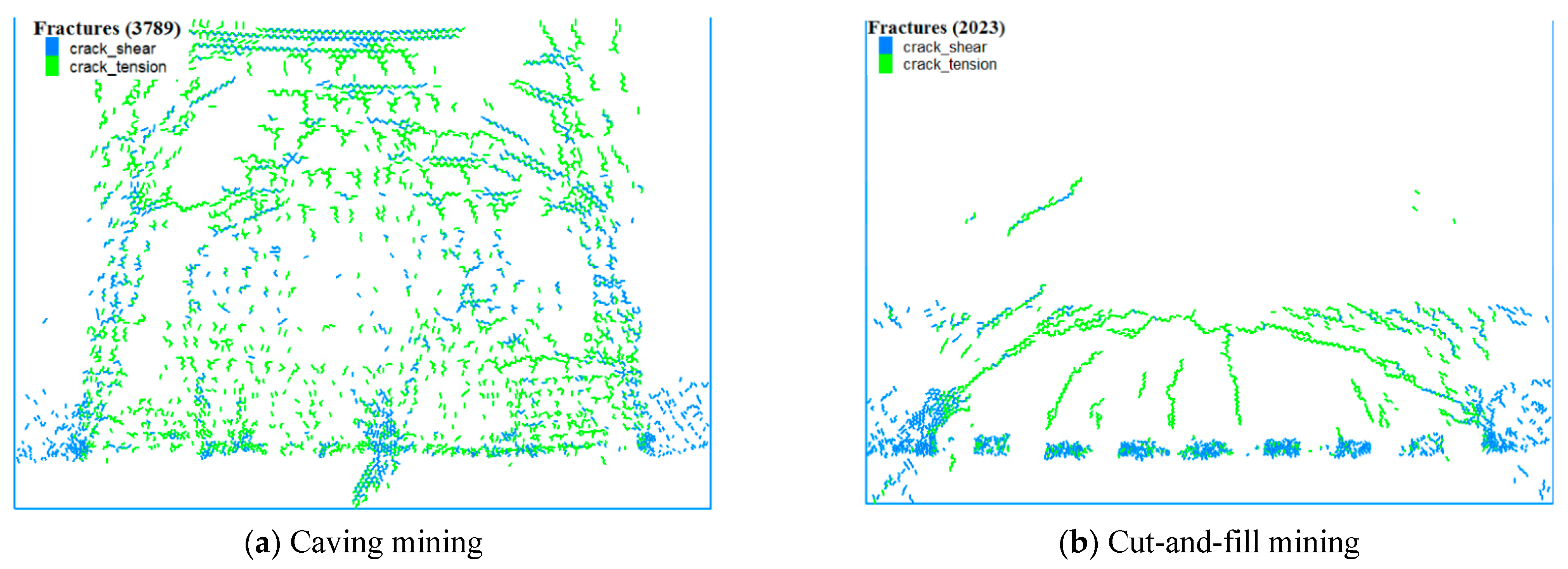
3.4.2. Quantitative Comparative Analysis of the Mining-Induced Fractures
4. Discussion
4.1. Damage Control Effect of Cut-and-Fill Mining
4.2. Feasibility of Cut-and-Fill Mining
4.3. Limitations and Future Work Regarding Gangue Column Behavior
5. Conclusions
- (1)
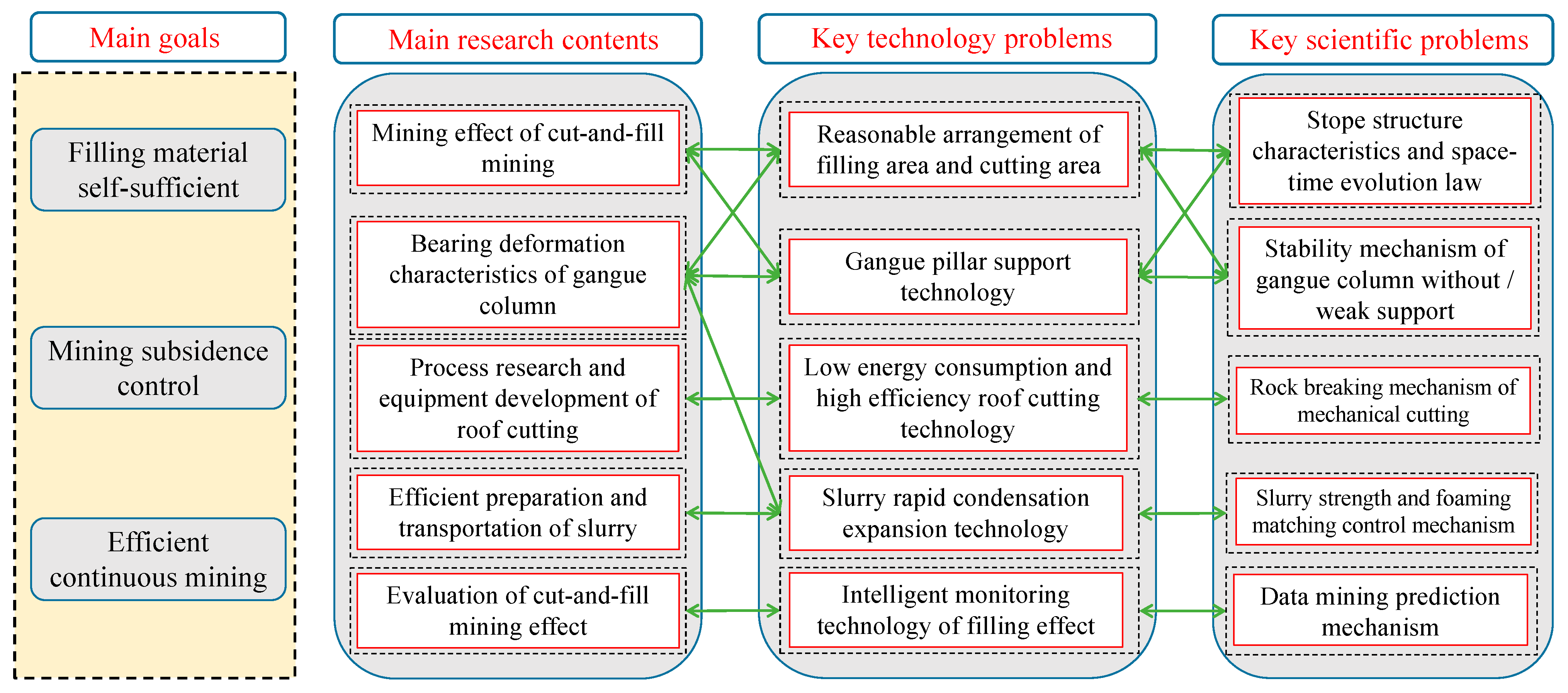
- The proposed cut-and-fill mining method demonstrates significant potential as a green mining technology by achieving material self-sufficiency through the utilization of the goaf roof as in situ filling material. This approach substantially reduces the reliance on external filling materials and associated transportation costs, while the observed reductions in surface subsidence and mining-induced fractures contribute to improved environmental protection.
- (2)
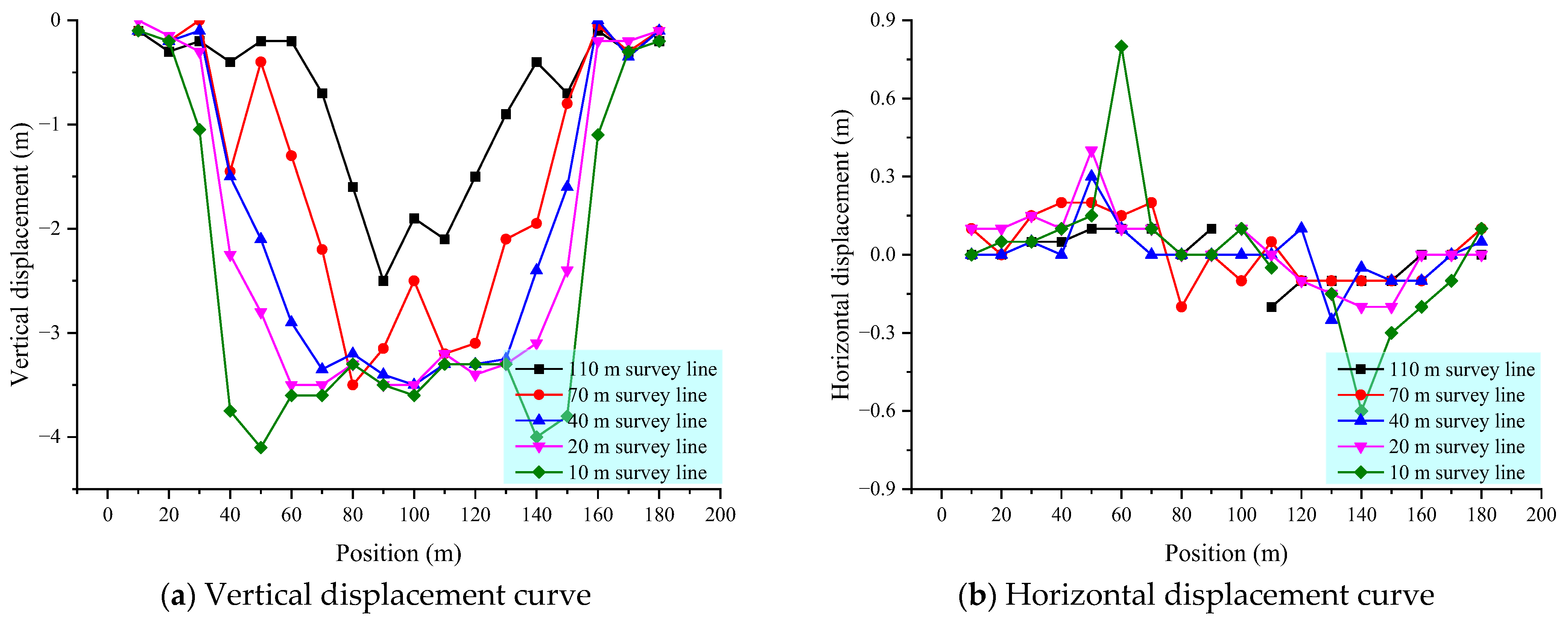
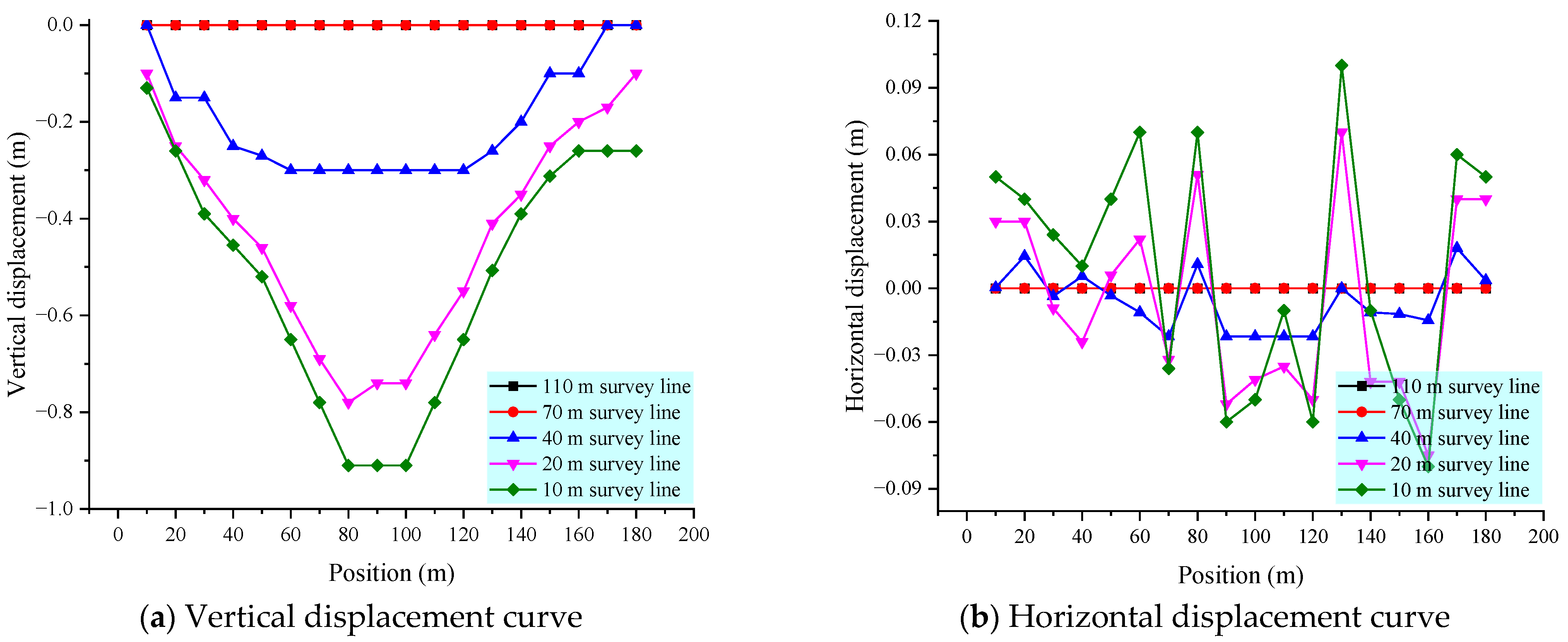
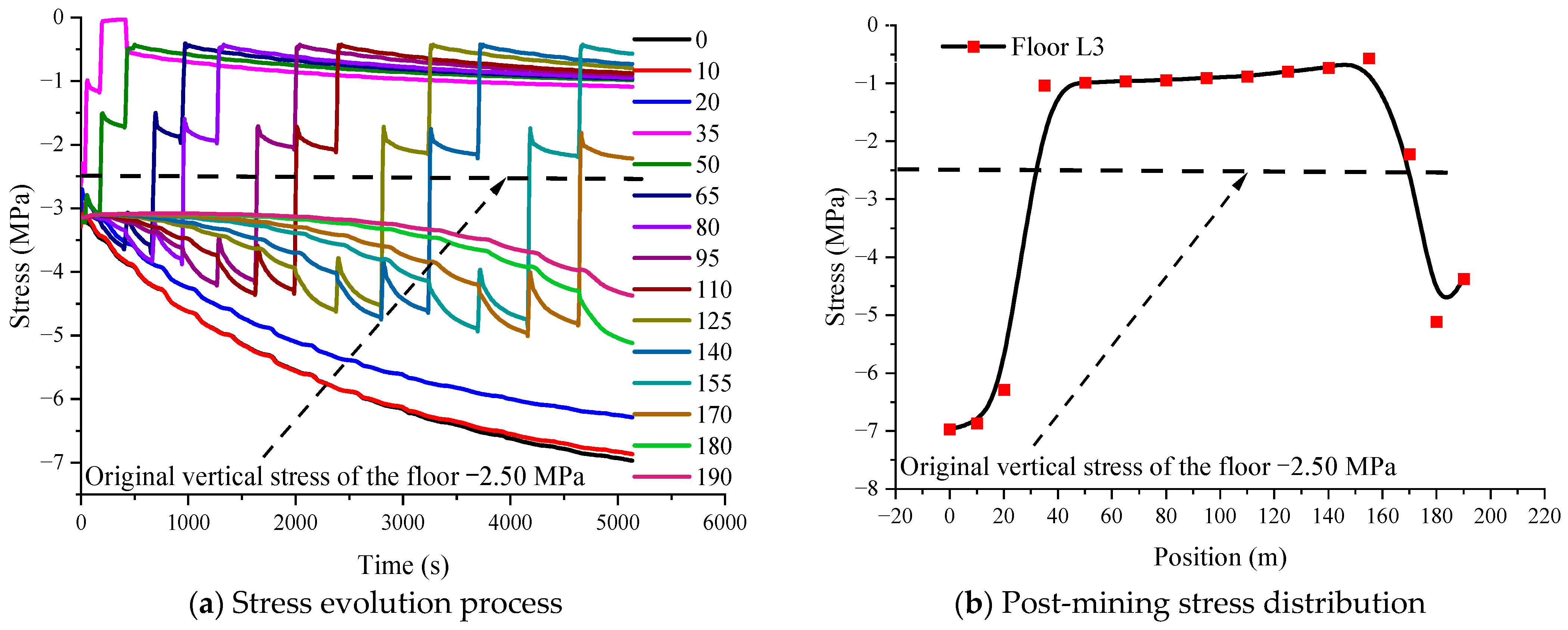
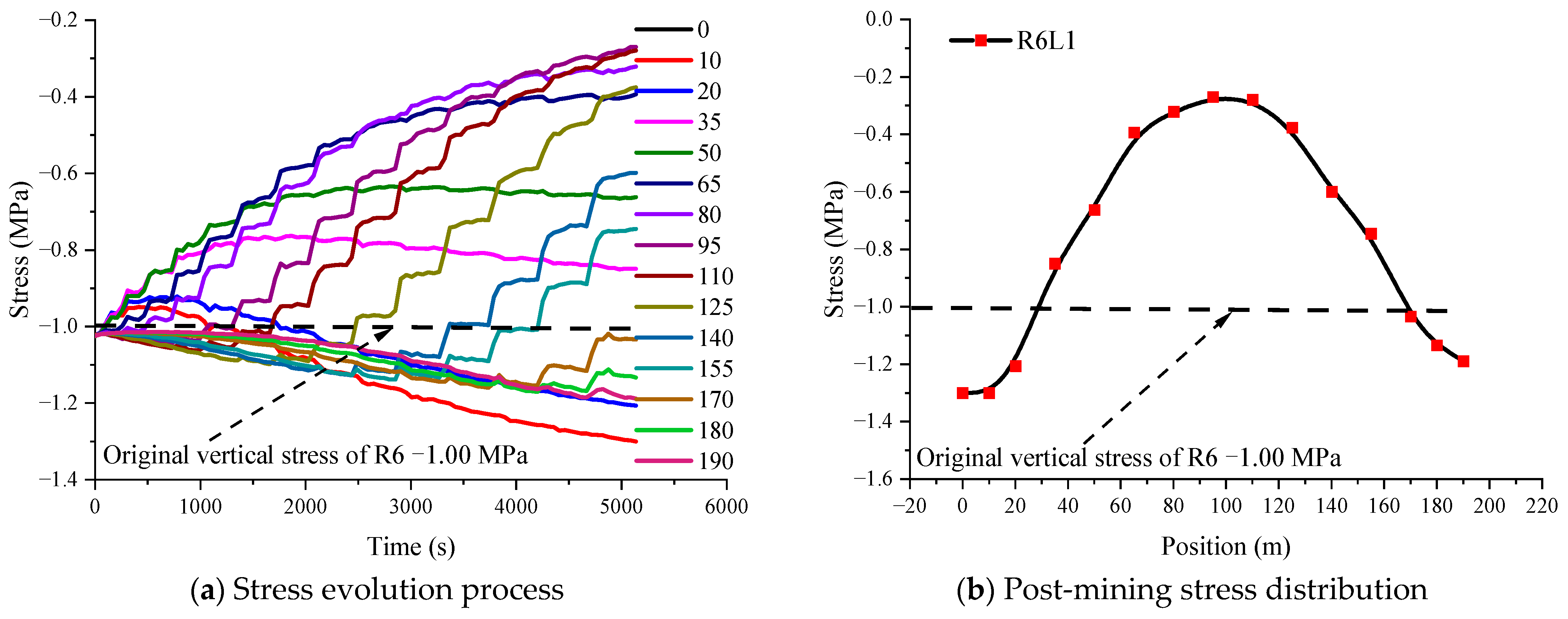
- Through a similar simulation, the maximum surface vertical and horizontal displacement reached 2.51 m and 0.19 m of caving mining, resulting in a stepped subsidence pattern. The maximum vertical and horizontal displacement along the 40 m survey line was 0.29 m and 0.02 m of cut-and-fill mining, offering a more uniform and controlled deformation pattern. The stress concentration coefficient of the floor in cut-and-fill mining was 56.00% of that in caving mining.
- (3)
- Numerical simulation reveals a substantial reduction in the total number of fractures with cut-and-fill mining, with shear fractures decreasing by 8.8% and tensile fractures decreasing by 66.9%. The gangue column effectively supports the roof, significantly reducing the displacement differences and suppressing the generation of fractures. Cut-and-fill mining leads to a linked deformation pattern across the mining area, effectively extending the overall deformation time compared to caving mining.
Author Contributions
Funding
Data Availability Statement
Conflicts of Interest
References
- Ercikdi, B.; Baki, H.; İzki, M. Effect of desliming of sulphide-rich mill tailings on the long-term strength of cemented paste backfill. J. Environ. Manag. 2013, 115, 5–13. [Google Scholar] [CrossRef] [Scilit]
- Ercikdi, B.; Yılmaz, T.; Külekci, G. Strength and ultrasonic properties of cemented paste backfill. Ultrasonics 2014, 54, 195–204. [Google Scholar] [CrossRef] [Scilit]
- Liu, K.G.; Xu, J.H.; Miao, X.X. Shortwall Mining Technology and Its Application; Coal Industry Press: Beijing, China, 2007. [Google Scholar]
- Munjeri, D. Prevention of subsidence using stowing methods. Colliery Guardian 1987, 235, 245–246. [Google Scholar]
- Shaposhnik, Y.N.; Neverov, A.A.; Kudrya, A.O.; Neverov, S.A.; Nikol’sky, A.M. Justification of Extraction of Ore Reserves under Bottom and in Pitwall Rock Mass Using Cut-and-Fill Method in Transition from Open Pit to Underground Mining in the Artemevsky Mine. J. Min. Sci. 2024, 60, 966–975. [Google Scholar] [CrossRef] [Scilit]
- Xuan, D.X.; Hu, G.L.; Zhu, W.B.; Wang, L. Field test on dynamic disaster control by grouting below extremely thick igneous rock. J. China Coal Soc. 2012, 37, 1967–1974. [Google Scholar]
- Jaiswal, A.; Shrivastva, B.K. Stability analysis of the proposed hybrid method of partial extraction for underground coal mining. Int. J. Rock Mech. Min. Sci. 2012, 52, 103–111. [Google Scholar] [CrossRef] [Scilit]
- Zhang, J.X.; Miao, X.X.; Zhang, Q.; Zhang, J.G.; Yan, H. Integrated coal and gas simultaneous mining technology: Mining-dressinggas draining-backfilling. J. China Coal Soc. 2016, 41, 1683–1693. [Google Scholar]
- Zhang, J.X.; Zhang, Q.; Ju, F.; Zhou, N.; Li, M.; Sun, Q. Theory and technique of greening mining integrating mining, separating and backfilling in deep coal resources. J. China Coal Soc. 2018, 43, 377–389. [Google Scholar]
- Guo, G.L.; Wang, Y.H.; Ma, Z.G. A New method for ground subsidence control in coal mining. J. China Univ. Min. Technol. 2004, 33, 26–29. [Google Scholar]
- Onica, I.; Marian, D. Ground surface subsidence as effect of underground mining of the thick coal seams in the Jiu valley basin. Arch. Min. Sci. 2012, 57, 547–577. [Google Scholar] [CrossRef] [Scilit]
- Dai, H.Y.; Guo, J.T.; Yan, Y.G.; Li, P.X.; Liu, Y.S. Principle and application of subsidence control technology of mining coordinately mixed with backfilling and keeping. J. China Coal Soc. 2014, 39, 1602–1610. [Google Scholar]
- Xu, J.; You, Q.; Zhu, W.; Li, X.S.; Lai, W. Theoretical study of strip-filling to control mining subsidence. J. China Coal Soc. 2007, 32, 119–122. [Google Scholar]
- Li, X.; Xu, J.; Zhu, W.; Wang, X. Theoretical study on the backfill grouting in caving area with stripmining. J. China Coal Soc. 2008, 33, 1205–1210. [Google Scholar]
- Liu, Y.X.; Guo, G.L.; Zha, J.F.; Li, Y. A new method of point-pillar paste filling in coal mining. J. Min. Saf. Eng. 2009, 26, 490–493. [Google Scholar]
- Ning, J.; Wang, J.; Tan, Y.; Xu, Q. Mechanical mechanism of overlying strata breaking and development of fractured zone during close-distance coal seam group mining. Int. J. Min. Sci. Technol. 2020, 30, 207–215. [Google Scholar] [CrossRef] [Scilit]
- Zhienbayev, A.; Balpanova, M.; Asanova, Z.; Zharaspaev, M.; Nurkasyn, R.; Zhakupov, B. Analysis of the roof span stability in terms of room-and-pillar system of ore deposit mining. Min. Miner. Depos. 2023, 17, 129–137. [Google Scholar] [CrossRef] [Scilit]
- Takhanov, D.; Zhienbayev, A.; Zharaspaev, M. Determining the parameters for the overlying stratum caving zones during re-peated mining of pillars. Min. Miner. Depos. 2024, 18, 93–103. [Google Scholar] [CrossRef] [Scilit]
- Wang, X.; Silva, M.C.E.; Costa Pereira, M.F.; Bras, H.; Paneiro, G. Strength behavior and deformability characteristics of paste backfill with the addition of recycled rubber. Int. J. Min. Reclam. Environ. 2023, 37, 713–730. [Google Scholar] [CrossRef] [Scilit]
- Hong, Z.J.; Li, Z.H.; Du, F.; Xu, L.; Zhu, C. Experimental investigation of the mechanical properties and large-volume laboratory test of a novel filling material in mining engineering. Geomech. Geophys. Geo-Energy Geo-Resour. 2023, 9, 46. [Google Scholar] [CrossRef] [Scilit]
- Su, H.; Luo, C.; Jia, Y.; Wang, Z. Study on roof movement law of local filling mining under peak cluster landform. Sci. Rep. 2023, 13, 14715. [Google Scholar] [CrossRef] [Scilit]
- ZHAO, Y.; YANG, Y.; WANG, Z.; GU, Q.; WEI, S.; LI, X.; WANG, C. Innovative cut-and-fill mining method for controlled surface subsidence and resourceful utilization of coal gangue. Minerals 2025, 15, 146. [Google Scholar] [CrossRef] [Scilit]
- Zhang, J.X.; Zhang, Q.; Ju, F.; Zhou, N.; Li, M.; Zhang, W. Practice and technique of green mining with integration of mining, dressing, backfilling and X in coal resources. J. China Coal Soc. 2019, 44, 64–73. [Google Scholar]
- Zhang, J.; Ju, F.; Li, M.; Zhou, N.; Zhang, Q. Method of coal gangue separation and coordinated in-situ backfill mining. J. China Coal Soc. 2020, 45, 131–140. [Google Scholar]
- Zhang, J.X.; Tu, S.H.; Cao, Y.J.; Tan, Y.L.; Xin, H.Q.; Pang, J.L. Research progress of technologies for intelligent separation and in-situ backfill in deep coal mines in China. J. Min. Saf. Eng. 2020, 37, 1–10. [Google Scholar]
- Feng, G.; Du, X.; Guo, Y.; Qi, T.; Wang, Z.; Li, Q.; Li, H.; Kang, L. Basic theory of constructional backfill mining and the underground space utilization concept. J. China Coal Soc. 2019, 44, 74–84. [Google Scholar]
- Ji, S.; Karlovsek, J. Calibration and uniqueness analysis of microparameters for DEM cohesive granular material. Int. J. Min. Sci. Technol. 2022, 32, 16. [Google Scholar] [CrossRef] [Scilit]
- Ji, S.; Wang, Z.; Karlovsek, J. Analytical study of subcritical crack growth under modeI loading to estimate the roof durability in underground excavation. Int. J. Min. Sci. Technol. 2022, 32, 11. [Google Scholar] [CrossRef] [Scilit]
- Itasca Consulting Group, Inc. PFC-Particle Flow Code in 2 and 3 Dimensions, Version 5.0; Itasca Consulting Group, Inc.: Minneapolis, MN, USA, 2018.
- Hofmann, H.; Babadagli, T.; Yoon, J.S.; Zang, A.; Zimmermann, G. A grain based modeling study of mineralogical factors affecting strength, elastic behavior and micro fracture development during compression tests in granites. Eng. Fract. Mech. 2015, 147, 261–275. [Google Scholar] [CrossRef] [Scilit]
- Bahrani, N.; Kaiser, P.K.; Valley, B. Distinct element method simulation of an analogue for a highly interlocked, non-persistently jointed rockmass. Int. J. Rock Mech. Min. Sci. 2014, 71, 117–130. [Google Scholar] [CrossRef] [Scilit]



| Fracture Name | Caving Method | Cut-and-Fill Mining | Decreasing Range |
|---|---|---|---|
| Total fracture/strip | 3789 | 2023 | 46.6% |
| Shear fracture/strip | 1325 | 1208 | 8.8% |
| Tensile fracture/strip | 2464 | 815 | 66.9% |
Disclaimer/Publisher’s Note: The statements, opinions and data contained in all publications are solely those of the individual author(s) and contributor(s) and not of MDPI and/or the editor(s). MDPI and/or the editor(s) disclaim responsibility for any injury to people or property resulting from any ideas, methods, instructions or products referred to in the content. |
© 2025 by the authors. Licensee MDPI, Basel, Switzerland. This article is an open access article distributed under the terms and conditions of the Creative Commons Attribution (CC BY) license (https://creativecommons.org/licenses/by/4.0/).
Share and Cite
Wang, L.; Gu, Q.; Song, X.; Zhao, N.; Liu, X.; Guo, W.; Wang, C. Optimized Green Cut-and-Fill Mining Method for Subsidence Control and Material Self-Sufficiency. Appl. Sci. 2025, 15, 12923. https://doi.org/10.3390/app152412923
Wang L, Gu Q, Song X, Zhao N, Liu X, Guo W, Wang C. Optimized Green Cut-and-Fill Mining Method for Subsidence Control and Material Self-Sufficiency. Applied Sciences. 2025; 15(24):12923. https://doi.org/10.3390/app152412923
Chicago/Turabian StyleWang, Lixin, Qingheng Gu, Xinying Song, Naiqiang Zhao, Xuesheng Liu, Weiyao Guo, and Changxiang Wang. 2025. "Optimized Green Cut-and-Fill Mining Method for Subsidence Control and Material Self-Sufficiency" Applied Sciences 15, no. 24: 12923. https://doi.org/10.3390/app152412923
APA StyleWang, L., Gu, Q., Song, X., Zhao, N., Liu, X., Guo, W., & Wang, C. (2025). Optimized Green Cut-and-Fill Mining Method for Subsidence Control and Material Self-Sufficiency. Applied Sciences, 15(24), 12923. https://doi.org/10.3390/app152412923