1. Introduction
Wood is increasingly regarded as a strategic renewable material for sustainable construction and manufacturing owing to its low embodied energy, recyclability, and significant carbon-storage capacity [
1,
2,
3,
4,
5,
6,
7,
8,
9]. Nevertheless, natural wood exhibits intrinsic limitations such as moisture sensitivity, dimensional instability, susceptibility to biological degradation, and relatively low mechanical performance that restrict its suitability for high-performance or long-service-life applications. Consequently, a wide range of wood modification technologies has been developed to improve durability, dimensional stability, and mechanical properties [
10,
11,
12,
13,
14].
Among the various modification strategies, wood densification has emerged as one of the most effective approaches to enhance stiffness and strength [
2,
15,
16,
17,
18]. Conventional methods typically rely on thermo-hydro-mechanical (THM) treatments or chemical softening prior to compression [
7,
19,
20]. Alkali-based pretreatments (e.g., NaOH or Na
2SO
3) are particularly effective in removing hemicelluloses and partially delignifying the cell wall, thereby enabling cellulose microfibril rearrangement and the production of highly dense, stiff materials [
16]. Densification also results in characteristic through-thickness density profiles influenced by temperature and moisture gradients, compression time, and the glass-transition behavior of the cell-wall polymers [
4,
21]. Since density strongly governs strength and stiffness, the mechanical performance of densified wood is closely linked to the processing conditions [
13,
22].
Thermal treatments represent a promising alternative to aggressive chemical softening, with hydrothermal modification performed in the presence of steam or liquid water under controlled pressure and temperature being particularly attractive [
23,
24,
25]. Hydrothermal processing reduces the equilibrium moisture content of wood through thermal deactivation of hydroxyl groups [
26], thereby improving dimensional stability, increasing hydrophobicity, and reducing susceptibility to fungal degradation [
27,
28,
29]. Despite these advantages, hydrothermal treatment alone does not always yield optimal performance, and further refinement of the process is still required [
17].
Recent research has therefore focused on greener pretreatments, including steam-assisted densification, controlled humidity temperature treatments, and deep eutectic solvents (DES), which can soften the wood structure and selectively degrade hemicelluloses while minimizing cell-wall damage [
30]. Reviews on thermal modification confirm that water-based treatments significantly affect color, viscoelastic properties, lignin softening, hygroscopicity, and set-recovery, with hybrid chemical-thermal approaches providing improved performance at reduced environmental cost [
31]. However, despite this growing body of work, hydrothermal densification of hardwoods, particularly oak, remains insufficiently investigated. Most available studies either address generic thermal modification, hydrothermal pretreatments for biomass valorization, or densification processes not explicitly coupled with hydrothermal chemistry. Furthermore, direct comparisons between hydrothermal and alkali pretreatments under equivalent densification conditions are largely absent, limiting the ability to assess the true benefits and drawbacks of hydrothermal processing. The need for milder pretreatments to reduce set-recovery and improve dimensional stability has been highlighted in recent hybrid densification strategies [
31].
Oak represents a hardwood species of considerable technological and industrial relevance [
32,
33], widely employed in construction, furniture, and engineered wood products. Its dense structure and high lignin content pose challenges for conventional densification but also offer opportunities for selective hydrothermal modification, particularly through controlled hemicellulose hydrolysis and lignin rearrangement while preserving the cellulose network. Only a limited number of studies have examined hydrothermal densification of hardwoods, and research specifically targeting oak remains scarce [
30].
In this context, the present work introduces a sustainable hydrothermal densification route for oak wood using a Teflon-lined stainless-steel autoclave and a mild water–ethanol medium. The pretreatment is performed at 195 °C for 80 min in a 10% v/v ethanol–water solution, followed by densification at 100 °C under 5 MPa for 24 h. The method eliminates corrosive reagents, minimizes waste, and exploits selective hydrothermal degradation to soften the cell wall prior to compression. A direct comparison is carried out with a conventional alkaline pretreatment under identical pressing conditions. A comprehensive multi-scale characterization-encompassing microstructure (SEM), chemical composition (FTIR, gravimetry), thermal stability (TGA, DSC), density, and dynamic mechanical properties enables a detailed assessment of how each treatment affects the wood material.
The results demonstrate that hydrothermal densification leads to substantial hemicellulose degradation, reduced carbonyl absorption, and improved mechanical performance, yielding a 19.6% increase in storage modulus relative to alkali-treated samples. SEM analyses reveal a more compact structure and less cell-wall damage, confirming the gentler nature of the hydrothermal process. By isolating the effects of controlled hydrothermal conditions and contrasting them with those of an alkaline treatment, this study provides new insights into environmentally benign densification strategies and contributes to the development of sustainable high-performance wood materials for structural and composite applications.
2. Materials and Methods
2.1. Materials
Oak wood samples were sourced from Naples Gardens (Naples, Italy). Slices measuring 10 × 10 cm with a thickness of 1 cm were prepared, ensuring uniform growth ring orientation. The age of the trees was 45–60 years. The age was estimated based on the data provided by the technical staff of the gardens and through visual observation of the annular section. The diameter at chest height was 35–40 cm, and there were 4 individual involved trees. Oak samples were cut and stored at an average moisture content of about 70% under ambient conditions at approximately 20–25 °C. All chemical reagents, including sodium sulfite (Na2SO3), sodium hydroxide (NaOH), and ethanol (99% v/v), were purchased from Merck Life Science (Milano, Italy) and used without further purification.
2.2. Wood Densification Procedures
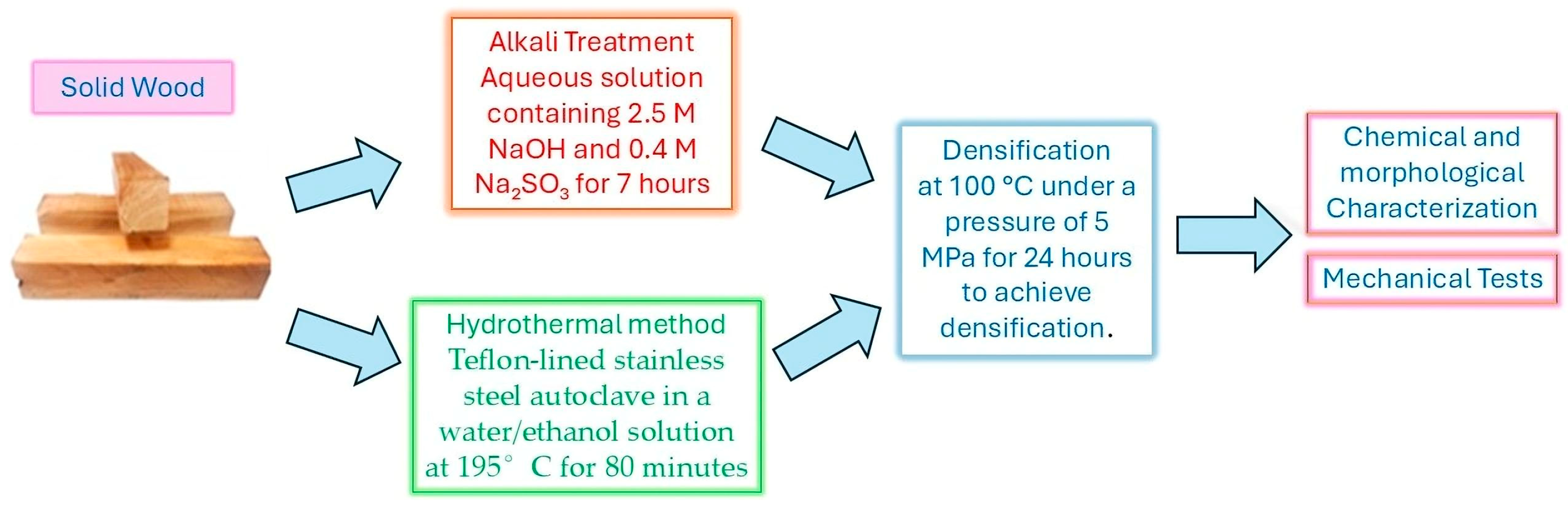
To evaluate the structural effects of different treatments on wood cell walls, two methods were compared: a conventional alkali treatment and a sustainable hydrothermal process (see
Figure 1). All samples were taken from wood with no visible defects, such as cracks or insect markings in order to ensure uniformity in the experimental tests. In particular, 30 oak wood samples were prepared and treated, in order to have 10 untreated samples, 10 samples for the alkaline method and 10 samples for the hydrothermal method. To ensure the statistical significance of the results, each experimental test was performed five times.
The samples were taken from the lower part of the trunk, about 0.8–1.5 m above the ground, by means of radial cuts through the cross section and by considering the intermediate zones, avoiding the most peripheral areas, to ensure homogeneity of structure and of the physical–mechanical properties. The heartwood/sapwood ratio was estimated to be around 85:15, while the initial thickness of oak wood samples was about 1 cm.
2.2.1. Alkali Treatment
Oak wood slices (10 × 10 cm, average thickness 5 mm) were immersed in a boiling aqueous solution containing 2.5 M NaOH and 0.4 M Na2SO3 for 7 h. Post-treatment, the samples were rinsed multiple times in boiling deionized water to eliminate residual chemicals. The wood-to-solution volume ratio was approximately 10 × 10 cm/700 mL. Subsequently, the treated wood blocks were subjected to compression at 100 °C under a pressure of 5 MPa for 24 h to achieve densification.
2.2.2. Hydrothermal Treatment
In contrast to conventional methods, the green hydrothermal treatment was conducted in a sealed, Teflon-lined stainless-steel autoclave using only water and ethanol as processing media, eliminating the use of harsh chemicals. Based on preliminary optimization and literature data on thermal degradation thresholds, the hydrothermal conditions were set to 195 °C for 80 min. This temperature range (180–200 °C) is known to promote the degradation of hemicelluloses and increase lignin extractability while maintaining structural integrity. Similar chemical trends—selective hemicellulose degradation and lignin condensation—have also been reported in recent densification research, confirming their central role in stiffness enhancement. Lower temperatures or shorter times resulted in insufficient modification, whereas higher values caused excessive breakdown. The corresponding pressure, approximately 6 bar, facilitated the penetration of liquid into the wood cell gaps and intercellular spaces, occasionally inducing cracks in the intercellular layer [
34].
Due to the autoclave chamber size, oak samples measuring 10 × 5 cm were used by preserving a proper fiber orientation consistent with the samples subjected to the alkaline treatment and by ensuring complete immersion in the reactive fluid and uniform exposure to heat and pressure. The samples were first immersed in a 10%
v/
v ethanol–water solution, then placed in the autoclave (external dimensions: 17 cm height, 7 cm diameter; internal Teflon chamber: 8 cm height, 4.5 cm diameter). The wood-to-liquid volume ratio was maintained at 10 × 5 cm/40 mL. The sealed environment enabled controlled thermodynamic conditions that facilitated deeper lignin extraction, particularly from surface layers, enhancing reaction kinetics and reducing overall treatment time. No harmful by-products were produced; only wood pulp was generated as minimal sub-waste. Post-treatment, the samples were thoroughly washed in deionized water to remove residual substances. Final densification was achieved by compressing the blocks at 100 °C under 5 MPa for 24 h (see
Figure 1).
2.3. Chemical Composition Analysis
The content of cellulose, hemicellulose, and lignin before and after the treatment was determined. In particular, the content of cellulose was evaluated using the Kürschner–Hoffer method [
35], the lignin by ASTM D 1106-96 [
36], and Seifert cellulose by means of the Acetylacetone method [
37]. Based on the Kürschner–Hoffer method, wood-extracted sawdust (1 g) is boiled with a mixture of concentrated HNO
3 and 95% ethyl alcohol (1:4) in a flask under reflux for 1 h. After filtering, washing (ethanol, HNO
3, and hot water), and drying in an oven at a temperature of 105 °C to constant weight, the amount of cellulose was determined gravimetrically. The procedure according to ASTM D 1106-96 is based on two-stage treatment with sulfuric acid. The brown lignin precipitate was settled, filtered through a weighed glass filter, thoroughly washed with hot water, followed by drying in an oven at a temperature of 105 °C to constant weight, and the amount of lignin was determined gravimetrically. In the procedure based on the Acetylacetone method, 1 g of extracted sawdust was heated in a boiling water bath for 30 min in a mixture of acetylacetone, dioxane, and HCl (37%
w/
w). Cooling was followed by the addition of methanol, hot water, and dioxane. Subsequently, the sample was dried to constant weight in an oven at a temperature of 105 °C and the amount of Seifert cellulose was determined gravimetrically. The content of hemicelluloses was measured as the difference between the holocellulose and cellulose content.
2.4. Analytical Techniques
All experimental tests have been performed five times for each group of samples: untreated, alkaline, and hydrothermal treated samples.
Density measurements
The density measurement was carried out by the gravimetric method by measuring the mass and volume of samples, after drying at constant temperature (105 °C) up to constant weight according to ASTM D2395-17 standard [
38].
Scanning Electron Microscopy and X-ray microanalysis (SEM-EDX)
The morphology of oak wood was investigated by scanning electron microscopy (SEM) using a field emission instrument Quanta 200 FEG (Thermo Fisher Scientific Italia, Milan, Italy). Sample was covered with a layer of gold/palladium alloy in a high-resolution metallizer Emitech K575X (State College, PA, USA). X-Ray microanalysis was performed by EDX Inca Oxford 250 instrument (Staufen im Breisgau, Germany). The cut directions were the transverse for all samples.
Thermogravimetric analysis
The specimens were scanned by a TA Instrument Q500 TGA (TA Instruments, New Castle, DE, USA) under air atmosphere conditions at a heating rate of 10 °C/min from environmental temperature to 800 °C.
Differential scanning calorimetry
The specimens were double scanned by a TA Instrument TRIOS Q5000 DSC (TA Instruments, New Castle, DE, USA) under an air atmosphere at a heating rate of 10 °C/min from −50 °C to 250 °C.
Fourier-transform infrared spectroscopy
Fourier-transform infrared spectroscopy (FTIR) measurements on the wood samples have been performed with Perkin Elmer FTIR-NIR Spectrum Frontier (System 2000 FT-IR, Perkin–Elmer, Waltham, MA, USA) to estimate principal chemical bonds present on the samples and to verify any changes induced by the processes.
Dynamic mechanical analysis (DMA)-three point bending
The Dynamic Mechanical Analyzer (DMA) instrument is used to detect the viscoelastic properties of wood by applying either a small oscillating strain and measuring the resulting stress, or a periodic stress and measuring the resulting strain. In this study, particular attention was given to determining the storage modulus (E′), which reflects the elastic (energy-storing) behavior of the samples. Specimens were analyzed using a TA Instrument 2980 Dynamic Mechanical Analyzer (TA Instruments, New Castle, DE, USA).
The DMA tests were performed at 3 °C/min from the environmental temperature to 200 °C by using a three-point bending configuration. Experimental measurements were performed on five different specimens under controlled conditions to assess the dynamic mechanical response.
3. Results
3.1. Effects of Alkali and Hydrothermal Modification on Oak Wood Properties and Morphology
After the alkali and hydrothermal process, the degradation of hemicellulose caused the production of chromophores and the color change in oak wood samples due to chemicals and high temperature. In particular, as the treatment temperature and time increase, the treated wood becomes dark [
35]. Partial removal of hemicellulose and lignin, followed by reorganization of the cell-wall structure, explains the observed increase in mechanical properties of densified samples. This mechanism is consistent with recent studies on hydrothermal densification; for example, Gondaliya et al. [
30] demonstrated that the use of deep eutectic solvents (DES) allows wood pretreatment and in situ lignin regeneration, producing densified materials with high strength and stability
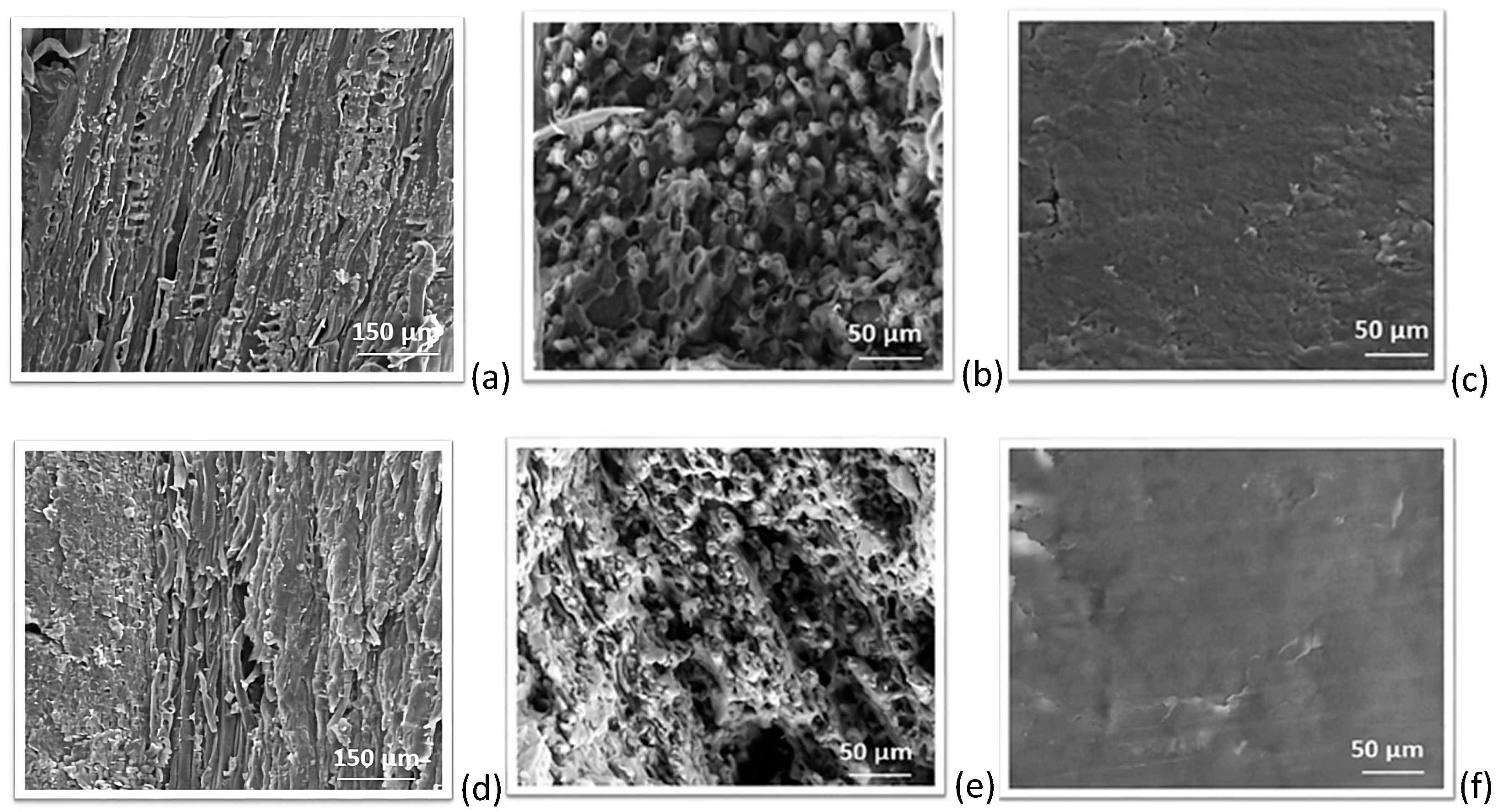
Figure 2 shows structural modifications that occur during densification modification, both using alkali and hydrothermal processes.
Oak wood treated in diluted acid aqueous solution showed a distributed high level of porosity. Upon hot-pressing at 100 °C along the transverse direction to the wood growth, the porous wood cell walls collapse entirely, realizing a densified wood with a thickness reduction to 3.86 mm, about 23%.
Conversely, for samples subjected to hydrothermal treatment, a less porous and more compact structure of the wood with small pores is noted. Hot-pressing causes the porous wood cells to collapse, and the thickened piece of wood shrinks in thickness to 1.62 mm, about 67%, compared to alkali treatment.
3.2. Chemical Properties
Oak wood cell walls are primarily composed of cellulose, hemicellulose, and lignin, along with minor amounts of extractives, proteins, and inorganic components. During both alkali and hydrothermal treatments, hemicellulose undergoes degradation through processes such as deacetylation, depolymerization, and dehydration, which results in its significant reduction (
Table 1). This degradation contributes to an increase in cellulose crystallinity, enhancing the wood’s mechanical strength. The observed increase in cellulose crystallinity is due to the degradation of amorphous components, such as hemicellulose and the amorphous regions of cellulose. This results in a higher relative content of crystalline cellulose. In addition, thermal treatment can induce partial reorganization of disordered cellulose into more crystalline domains. Meanwhile, lignin experiences structural modifications, including polycondensation and crosslinking with cell-wall components, yielding a more condensed and resilient matrix that improves dimensional stability. The role of lignin in post-densification dimensional stability is further highlighted by Kilumets et al. [
39], which showed that modulation of lignin content or state can significantly reduce shape recovery (set-recovery), contributing to improved dimensional stability of densified wood materials. Volatile extractives tend to evaporate or degrade during these treatments, although secondary compounds, including low molecular weight phenolics, may be generated and influence the treated wood’s chemical and physical characteristics. While total extractive content was quantified to track overall compositional changes, a detailed analysis of these secondary compounds falls beyond the scope of this study and represents a valuable direction for future research. Ash content, which reflects the inorganic fraction, generally remains stable throughout such processes, with minor fluctuations potentially arising from aqueous leaching as noted in the literature. Although ash content was not measured here, incorporating it in future analyses could provide a more comprehensive compositional picture [
40,
41,
42,
43,
44]. Moreover, Pelit and Yorulmaz [
10] found that thermal pretreatments applied to densified wood, such as spruce and poplar, improve moisture resistance and dimensional stability. These findings outline that moderate thermo-hydro treatments provide a more sustainable and less aggressive alternative compared to conventional chemical modifications.
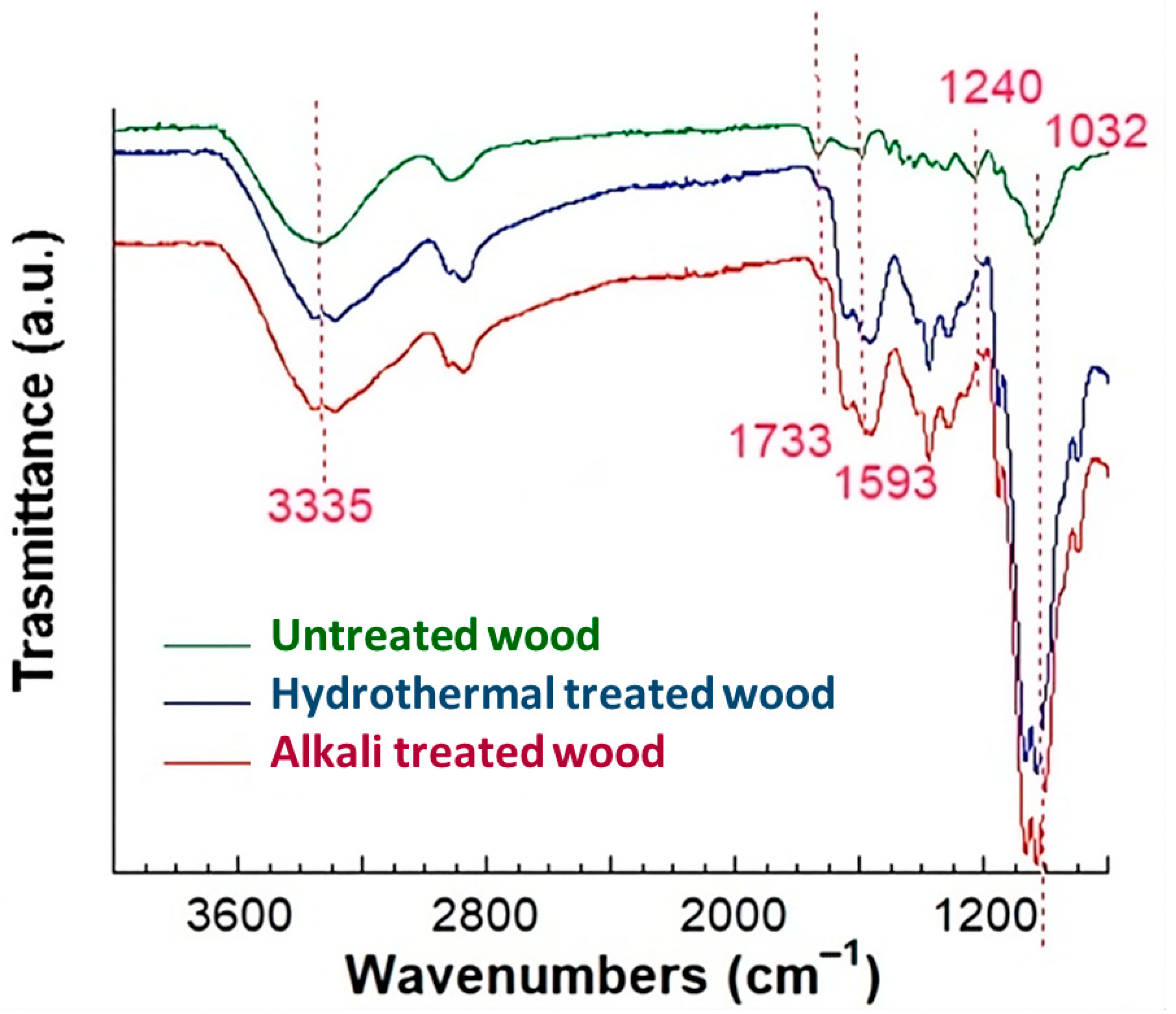
FTIR analyses were conducted to investigate the chemical changes occurring in the wood cell walls during the densification process (see
Figure 3). The spectral range analyzed was 4000–600 cm
−1. Spectra were collected using the Attenuated Total Reflectance (ATR) mode. Each spectrum represents the average of 30 scans acquired at a resolution of 4 cm
−1. Samples were conditioned at room temperature and humidity prior to measurement. Key absorbance bands at 3378 cm
−1 and 2900 cm
−1 correspond to O–H and C–H stretching vibrations common to cellulose, hemicellulose, and lignin. The disappearance of the 1733 cm
−1 band, assigned to C=O stretching in unconjugated ketones of hemicellulose, confirmed extensive hemicellulose removal post-treatment. Notable changes were observed in lignin-related bands: the 1593 cm
−1 peak (C=C stretching in aromatic rings) slightly increased after treatment, indicating lignin condensation and poly-saccharide carboxylation, while the 1240 cm
−1 band (C–H vibration of the guaiacyl ring) revealed transformations from a glassy to a more elastic lignin structure [
35].
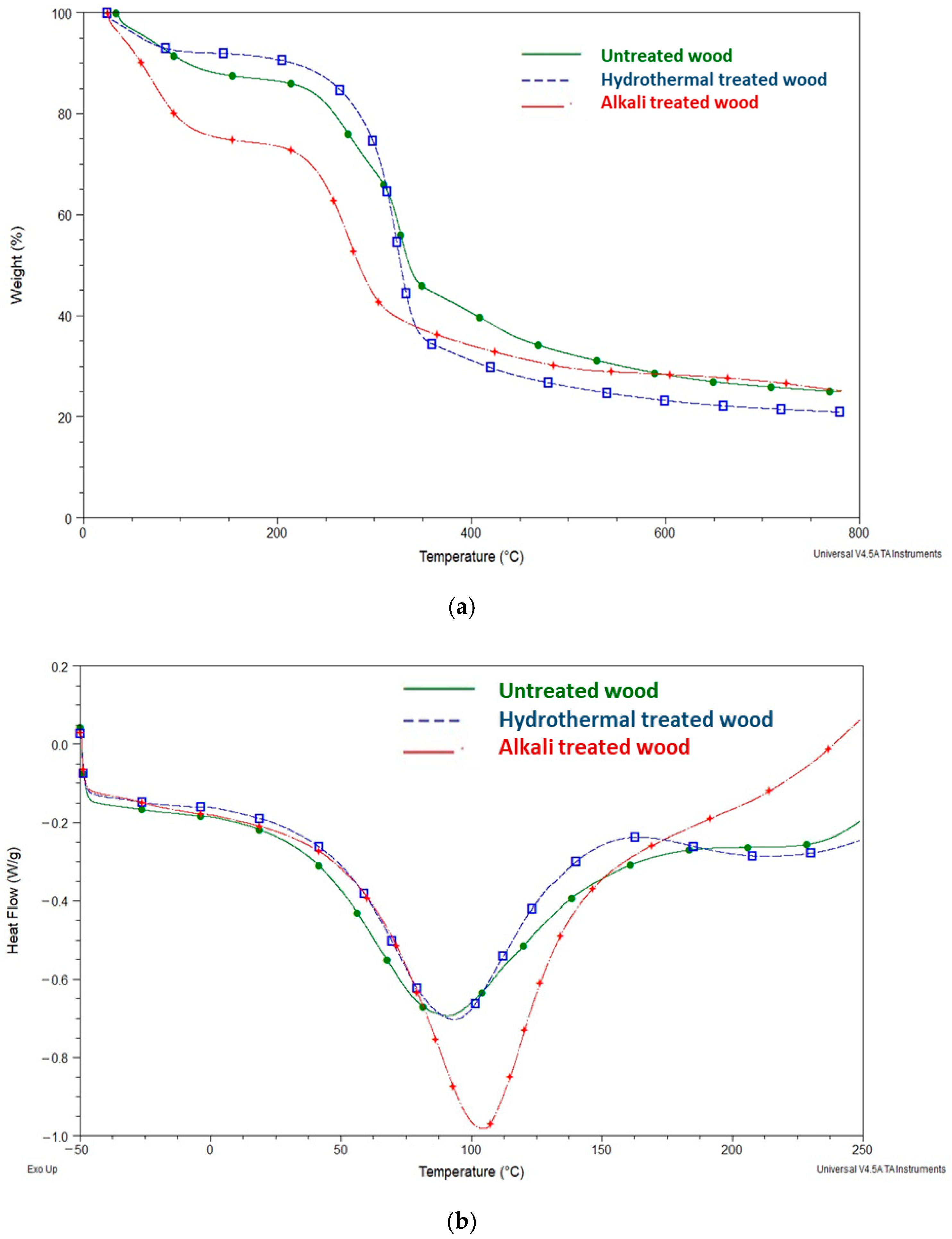
Thermogravimetric analysis (TGA) further characterized the thermal stability of untreated and treated samples (
Figure 4a). Initial mass loss between 25 °C and 150 °C, mainly due to moisture evaporation, was approximately 15% in untreated wood, increased to 20% in alkali-treated samples, and reduced to about 8% in hydrothermal treated samples. The second degradation phase, beginning at 200 °C to 400 °C, is attributed to the breakdown of hemicellulose, cellulose, and lignin. Untreated wood exhibited an 85% mass loss with a maximum degradation temperature (Tm) around 354 °C. Hydrothermal treatment raised Tm to 366 °C, likely reflecting increased lignin content and hemicellulose removal, while alkali treatment lowered Tm, suggesting cellulose polymerization and partial delignification. Differential scanning calorimetry (DSC) (
Figure 4b) revealed an endothermic peak between 50 °C and 180 °C in untreated wood [
45], indicating high moisture content; treated samples showed similar, yet altered, endothermic profiles.
Overall, the chemical modifications induced by these treatments enhance the wood’s mechanical and thermal properties by restructuring its fundamental components, thereby enabling potential applications requiring improved performance and stability.
3.3. Physical and Mechanical Properties
The oak wood’s physical characteristics mainly include density, dry shrinkage coefficient, elasticity, and strength. Both alkali and hydrothermal treatments change the density of oak wood. In fact, cellulose is in a very rigid packing crystalline form, able to form hydrogen bonds responsible for wood strength. Lignin provides a protective cover around the cellulose structure and is strongly interconnected. It binds cellulose fibers and ensures stiffness to the cell walls. Hemicellulose is strongly bound to cellulose fibrils. It has an amorphous structure and hydrophilic characteristics. Due to its hydrophilic nature, hemicellulose can absorb water molecules, reducing its dimensional stability.
Alkali treatment is the most well-known as an effective surface modification technique for wood. This treatment enables improvement of interfacial adhesion by reducing the hemicellulose and lignin covering the wood surface, thereby producing a rough surface of oak wood. The reduction in hemicellulose and cellulose crystallinity, increased by alkali treatment, is the major cause that induces the decrease in thickness swelling [
15]. Reduction in lignin on the wood surface can increase the sites for cellulose and resin interactions and improve the mechanical properties. Alkali treatment provides an increased accessible surface area of cellulose for contact with the matrix, allowing an efficient stress transfer from matrix to wood and, consequently, improving the bending properties of the wood composite [
16].
Similarly, green hydrothermal modification can improve dimensional stability by significantly changing the chemical composition of wood using only water at high temperatures. During hydrothermal modification, mass loss depends on the wood species, heating medium, temperature, and duration of the treatment [
18].
During hydrothermal processes, the released acids reduce pH (from pH 7 to pH measured equal to 4.5), the deacetylation of hemicellulose, mass loss, and, hence, the reduction in mechanical strength, which has been visually observed before press densification. The degradation rate of carbohydrates is high in acidic environments and is particularly promoted by the high availability and amorphous structure of hemicelluloses, which makes them more susceptible to hydrolysis. Further, variations in the acidity of the treatment media increase due to thermal treatment in wet environments and the formation of acetic and formic acids on the basis of the hemicellulose decomposition.
Storage modulus is a critical index to measure the energy storage capability of a material after elastic deformation, and is an index of resilience.
Table 2 reports the average values of density and storage modulus for the untreated and treated wood, obtained by considering five tests.
The density and storage modulus of alkali-treated and hydrothermal treated wood samples increased considerably compared to the untreated sample (see
Table 2). This effect demonstrates that the chemical and temperature–pressure treatments increase the elastic properties of the wood samples and decrease their brittleness, probably by high cross-linkage between the celluloses and acidic hydrolysis or degradation of cell walls under high acidity and high temperature. Finally, to establish a preliminary correlation between the wood composition and the physical and mechanical properties could provide useful guidelines for the future design of new wood-based materials, the Pearson coefficient has been evaluated for each main wood constituent with reference to the density and the storage modulus, finding the results shown in
Table 3.
It is possible to outline that density is most influenced by cellulose and lignin, while the storage modulus is most affected by hemicellulose content. Thus, the reduction in the hemicellulose leads to the stiffness increase.
3.4. Comparison of Hydrothermal Modification and Alkali Treatment
The above discussed results evidence that the hydrothermal method is a green alternative to the alkali-based treatments by mitigating the detrimental effects associated with the formation of the acidic compounds during the carbohydrate degradation. Its main advantages are relative to the absence of corrosive chemical reactants, ensuring a safer process and preventing the formation of secondary pollutants. Further, the adoption of water as a reaction medium promotes eco-sustainability and allows a low-cost management of minimal by-products.
Hydrothermal modification influences wood properties through the removal of extractives, the hydrolysis of hemicelluloses, and the partial extraction of lignin and cellulose. These transformations occur in a far milder and more controlled manner compared with alkali treatment. In contrast, alkaline processes often generate aggressive acidic condensates originating from moisture evaporation during heating waste streams that must be carefully neutralized and safely disposed of due to their hazardous nature.
The recent work by Huang et al. [
46], which employed high-pressure steam followed by hot-pressing on partially delignified wood, confirms that it is possible to obtain densified wood with high mechanical performance without relying solely on aggressive alkaline treatments, reinforcing the validity of green approaches for structural wood modification.
Unlike the previously reported hydrothermal or steam-assisted strategies, the method adopted in this work operates without catalysts, acids, alkalis, or deep eutectic solvents, relying exclusively on water in a Teflon-lined autoclave. This avoids secondary chemical reactions typically encountered in more aggressive hydrothermal systems and enables a clearer interpretation of the intrinsic structural modifications driven by temperature and pressure. Moreover, the direct comparison with a conventional alkaline treatment provides new insights into the relative performance and environmental benefits of green hydrothermal densification, an aspect rarely examined in earlier studies.
Therefore, the hydrothermal method is characterized by fewer risks to human health, less energy, and reduced waste thanks to the use of just water with 10% v/v ethanol, whereas the alkaline route requires significant amounts of sodium hydroxide (typically 5–10 wt%), a corrosive compound that must be fully neutralized after treatment and properly disposed. In contrast, effluents from the hydrothermal process consist mainly of water with dissolved wood extractives, require no pH adjustment, and pose negligible disposal challenges.
In addition, during hydrothermal treatment, the temperature-induced hydrolysis of hemicelluloses releases small amounts of organic acids, mainly acetic acid formic and lactic acids, inducing mildly acidic conditions (pH 4–5), which remain far less aggressive than the strongly alkaline or highly acidic environments produced by conventional chemical treatments. These weak acids promote further hemicellulose depolymerization and partial solubilization of lignin fragments, facilitating cell-wall softening and more efficient densification during hot-pressing. Analysis of the recovered liquid confirmed the presence of dissolved extractives and low concentrations of saccharide degradation products, but no corrosive inorganic species. Importantly, the effluent remains non-corrosive and neutralization is not required, supporting the hydrothermal process as an environmentally benign alternative. On the other hand, in the case of the alkaline method, it generates a high amount of NaOH that leads to saline waste water that must be chemically neutralized and treated prior to disposal.
Thus, these findings demonstrate that hydrothermal treatment not only offers a cleaner and less hazardous alternative to alkali modification, but also provides a clearer understanding of wood’s intrinsic thermo-chemical behavior, positioning it as a robust and sustainable pathway for future wood densification technologies.
4. Conclusions
This work demonstrates that hydrothermal densification using a mild water–ethanol system is an effective and environmentally sustainable method for enhancing the structural performance of oak wood by avoiding the use of corrosive chemical agents typically involved in conventional treatments. However, the approach actually requires the use of pressure-resistant autoclaves, demands longer treatment times than conventional chemical methods, and restricts the size of the specimens that can be processed due to the internal dimensions of the reactor. Future investigations should therefore aim to refine the operating parameters, such as temperature, residence time, and wood-to-liquid ratio to shorten processing times and reduce energy requirements. Additional work will also be needed to evaluate the scalability of the method for industrial implementation, including the development of continuous or larger-capacity reactor systems. Finally, long-term performance under real environmental conditions and potential integration into composite structures represent important issues to drive future research.
Despite these limitations, the hydrothermal process offers performance and environmental benefits thanks to selective hemicellulose removal, higher cellulose crystallinity, rearrangements within the cell-wall matrix and, hence, efficient densification during hot-pressing. In fact, compared to conventional alkali treatment, the hydrothermally modified oak exhibited superior mechanical improvements, including a 125% increase in storage modulus relative to untreated wood and a 19.6% improvement over alkali-treated samples. From an environmental perspective, the hydrothermal process is a “green” process. It avoids corrosive reagents, requires only limited amounts of benign solvents, and produces effluents that are far easier to manage and dispose than those produced by alkali treatments. While a complete life-cycle assessment was not carried out in this study, the simplicity of the waste stream and the reduced chemical burden strongly indicate that this method offers a more sustainable pathway for wood densification. In conclusion, compared with alkali-based approaches, the hydrothermal method, when applied under controlled temperature and pressure using water as the principal medium, provides greater property enhancement while simplifying the process and aligning more closely with current sustainability goals.






 ,
,