2.1. Waste Recognition System (WRS) and Technology Integration
The Waste Recognition System (WRS), recognized as a key technology in secondary raw material solutions, is notable for its ability to enhance the precision of waste stream sorting. Traditional waste collection systems often face difficulties related to incorrect material classification, which leads to reduced efficiency and increased contamination in recycling processes. According to Martikkala et al. (2023) [
14], these issues can be effectively addressed through the use of advanced algorithms designed to precisely classify and identify different categories of secondary raw materials. The adoption of this approach not only optimizes the collection process but also significantly improves accuracy, thereby facilitating the implementation of more effective recycling strategies [
14].
The substantial change in the domain of recyclable materials management, incorporating technological advancements, more precisely, the IoT, has emerged as a transformative influence. This segment provides an in-depth analysis of integrating the IoT into secondary raw materials management, explicitly emphasizing implementing intelligent receptacles that can communicate in real-time with the cloud. Through an examination of the numerous advantages that this technology offers, including enhanced route planning for collection vehicles and improved operational efficiency, it explores its crucial function in fundamentally transforming the recyclable materials management paradigm. The use of intelligent endpoints, which are smart receptacles, signifies the incorporation of IoT into recyclable materials management via the collection network. These receptacles are outfitted with sensors that enable them to transmit real-time information regarding their filling levels.
In the context of smart cities, a multitude of IoT-driven intelligent systems have emerged as potential solutions to the various challenges faced by current recyclable materials management systems. According to the literature, recyclable materials management is identified as the most critical concern for smart cities. Researchers have implemented a range of methods and strategies in order to address these concerns, with a particular focus on secondary raw material management. Incorporating the IoT into recyclable materials management, explicitly utilizing smart receptacles equipped with real-time communication capabilities to the cloud, signifies a paradigm shift in the disposal and collection approach. Strategically integrating technology to optimize operational efficiency, cost-effectiveness, and sustainability is a fundamental component in the progression of contemporary secondary raw materials management systems [
15,
16].
Hannan et al., 2011 [
17] presented an integrated RFID and communication technology framework for a truck and bin monitoring system. The framework of bins and trucks involves elements such as an RFID, global positioning system (GPS), general packet radio service (GPRS), geographic information system (GIS), and camera-based technologies. In addition, a novel type of integrated theoretical model, hardware architecture, and interface method has been implemented. The information relating to the identity of each bin and truck, the date and time of collection, the current status of each bin, the quantity of secondary raw materials inside, the GPS coordinates of the bins and trucks, and other relevant data are compiled and stored within this system in order to facilitate monitoring and management operations [
17].
In another study, Al Mamun et al., 2013 [
18] introduced an innovative framework for monitoring collection bins in real time. In addition, the system employs a wireless sensor network and various communication technologies for tracking the status of the bins in real time. Furthermore, the sensor nodes are utilized to measure bin variables in a manner that minimizes the consumption of energy throughout the system. Moreover, real-time information regarding the status of the container is provided to the user via the web-based application [
18].
Cerchecci et al., 2018 [
19] highlighted the significance of energy-efficient systems, focusing on a system to monitor bin filling levels and transmit data in real-time to a central collection hub. Utilizing low-power wide-area network (LPWAN) technology, specifically LoRa, their network architecture strikes a balance between energy consumption and performance. Notably energy efficient, LoRa modules require about 20 mA of transmission current, compared with 40 mA for ZigBee modules such as the XBee Series 2. Additionally, LoRa offers an extensive transmission range, facilitating urban networks with fewer access points, thus enhancing its urban applicability. By substituting a single component with a low-power alternative, they achieved a remarkable enhancement in battery longevity, extending it from 259 days to 502 days [
19].
Abdullah et al., 2019 [
20] investigated optimal IoT frameworks applicable to secondary raw materials management systems. Their research highlights the current shortcomings characterized by inefficient collection processes and substantial time consumption. Consequently, the authors propose an enhanced recyclable materials management system designed to address these challenges. This system incorporates adaptive strategies based on urban population dynamics and growth, employing varied truck sizes tailored to specific fractions. Additionally, it leverages IoT technologies to improve communication between various components of the system, including smart bins, generation zones, collection trucks, and recyclable materials management facilities [
20].
In the next study, Latif et al., 2019 [
21] developed a smart recyclable materials management system that integrates various techniques, including IoT and blockchain, for modeling the system. The integrated technologies encompass blockchain, IoT, Unified Modeling Language (UML), and Temporal Logic of Actions (TLA+) for modeling and automating management. The model defines numerous operations, such as identification of secondary raw material, location tracing, categorizing, transferring, recycling, and the decision-making process. The blockchain-based UML model provides a detailed representation of the system’s functioning, and the UML models were subsequently converted into a formal model for formal validation. The results demonstrated that the proposed model offers evidence of accuracy, precision, and completeness using the TLA+ specification language [
21].
Wilson et al., 2019 [
22] presented a smart bin system that utilizes IoT technology for monitoring both fill levels and odor levels. This system integrates an ultrasonic sensor for level measurement and an MQ136 sensor for detecting unpleasant odors. Workers are granted access to the application through their Gmail accounts. Data is retrieved from the Firebase database into the application, allowing for notifications to be sent to workers when the bin reaches capacity or when there is a significant increase in foul odor emissions. Through the implementation of this system, there is a potential to mitigate pollution and the release of harmful gases [
22]. According to Ahmed et al., 2020 [
23], research technology utilizes radio-frequency signals to facilitate the distinct identification and monitoring of receptacles throughout their lifespan. A streamlined and instantaneous tracking system is achieved through RFID readers that receive data from identifiers affixed to containers. The system features a messaging component designed to inform users about proper recyclable materials disposal practices as they place secondary raw materials into the appropriate bins [
23].
Pardini et al., 2020 [
24] introduced a real-time, efficient secondary raw material model based on the IoT system with the aim of enhancing the urban living environment from the standpoint of the residents. By utilising communication and sensor methods, the proposed system collects real-time data from the smart bins and transmits it to an online portal where citywide container availability can be viewed by citizens. The effectiveness of the proposed system in optimising financial and material resources, while improving recyclable materials management for individuals, was established on the basis of case study experiments, the creation of a physical prototype of the smart container, and the integration of a new mobile application and Web version for recyclable materials management [
24].
Sheng et al., 2020 [
25] introduced an intelligent secondary raw material collection through the implementation of various components, including sensors for bin status monitoring, the low-range (LoRa) communication protocol for long-range and low-power data transmission, and TensorFlow-based object detection for identification and classification. In addition, the lightweight nature of the pretrained object detection model SSDMobileNetV2 enables it to operate efficiently on the Raspberry Pi 3 Model B+. The proposed system efficiently detects and categorizes objects into distinct classes, including paper, plastic, and metal. Nevertheless, augmenting the training duration and the quantity of training data—specifically, the number of images—can enhance the model’s precision. Furthermore, the segregation process is effectively coordinated and interfaced with the object detection and servomotor system that regulates the lid of each compartment [
25].
Ramson et al., 2021 [
26] introduced an innovative self-sustaining, smart, and interconnected IoT system aimed at enhancing solid waste management practices. A key experimental component concentrated on assessing power consumption metrics. This included an analysis of the current draw and the required duration for battery recharging, which led to a projection of the bin’s operational lifespan. The findings indicate that the battery charge can maintain functionality for an impressive duration of 434 days. Moreover, even under adverse conditions such as inclement weather, the system consistently performs effective monitoring of the bins’ fill levels without any disruption [
26].
Gupta et al., 2021 [
27] identified inefficiencies in traditional secondary raw material management and suggested a process for transitioning to a smarter system. The proposed system improves storage, collection, and disposal practices using a blockchain. Furthermore, this study uses smart contracts on the Ethereum blockchain to create a proof-of-concept for the intended smart recyclable materials management system, which can thus be evaluated at technology readiness level 4 (TRL 4). This is only a theoretical concept that omits the detailed connection of the system with other specific sensors. At the same time, it has been emphasized that, in combination with additional sensors, the level of sorting can be effectively increased. In addition, blockchain technology incentivizes users with tokens for proper secondary raw material disposal [
27].
Kanaga et al., 2021 [
28] emphasized the efficiency of working with large amounts of data and data security. Privacy concerns, data security, and standardized protocols are pivotal elements that necessitate meticulous deliberation to guarantee the ethical and responsible implementation of the IoT in secondary raw material management [
28]. Ijemaru et al., 2021 [
29] identified an issue relating to the power supply of IoT sensors, highlighting the constraint that batteries possess a finite operational duration and not every sensor is capable of being outfitted with an autonomous power source. They proposed a system utilizing wireless power transfer (WPT), wherein vehicles function as wireless mobile power transmitters (data mules), thus facilitating periodic recharging of sensor batteries. However, empirical measurements of charging efficiency indicate that actual performance diminishes significantly with distance. Effective charging occurs at distances of up to one meter, while at distances approaching two meters, the efficiency nearly collapses [
29].
Ashwin et al., 2021 [
30] introduced the smart bin shell, designed to be compatible with the widely utilized 1100 L container. This innovative secondary raw materials management solution is powered by a solar panel that harnesses renewable energy, generating approximately 800 W of energy daily. The smart bin incorporates several advanced features, including the ability to segregate dry and wet fractions, a human detection system, and a level monitoring mechanism. Furthermore, it automates the opening and closing of the bin lid. In addition to these functionalities, the smart bin is integrated with a sanitizing system aimed at odor control, which includes a storage tank for organic enzymes [
30].
Seker et al., 2022 [
31] focused on reducing costs and minimizing environmental pollution by creating a collection and transportation system integrated with IoT technologies in Istanbul. The author presented the selection of the most suitable smart collection system using the Combinative Distance-based Assessment (CODAS) method and modified entropy measure based on interval-valued q-rung orthopair fuzzy sets (IVq-ROFSs), which allowed for improved management of complex decision-making involving multiple factors and stakeholders. As a result, the optimal alternative identified was the integration of RFID, GIS, and GPRS technologies, which meets the requirements of a modern, healthy, and hygienic city that is designed with minimal costs and reduced environmental impact. The findings suggest that the proposed approach could be applied in different countries and fields relating to management, highlighting its versatility and potential to support critical long-term decision-making [
31].
Chen, 2022 [
32] investigated the critical function that machine learning algorithms fulfill in the dynamic adjustment of routes, the minimization of petroleum consumption, and the reduction in operational costs. This flexibility facilitates waste collection that is both environmentally conscious and operates more efficiently, thereby adhering to the tenets of sustainability. The advantages transcend mere operational efficiency and encompass the facilitation of well-informed decision-making. Experimental results demonstrated that the proposed method achieved high performance metrics, including an accuracy ratio, cost-effectiveness, and efficiency, along with commendable tracking and recycling rates, thereby outperforming alternative methods [
32].
Joshi et al., 2022 [
33] presented an innovative approach through the development of a wireless personal area network (WPAN) coupled with a cloud-assisted framework aimed at facilitating the real-time monitoring of solid waste. This system utilized Xbee communication alongside Internet access, which allowed for the remote surveillance of bins. Notably, tailor-made hardware was effectively integrated into these bins, which operationalized real-time data collection and management, thus significantly improving the efficacy of solid waste management operations. The findings from this research underscore the essential importance of real-time monitoring in enhancing the management of solid waste systems, showcasing its capacity to optimize operational processes, decrease costs, and lessen adverse environmental impacts [
33]. Shahab et al. [
34] developed a system aimed at identifying unauthorized waste disposal sites. This system employs AI models to detect objects within images. It incorporates city mapping and user-friendly applications designed for community members. Research findings indicate a significant effectiveness in both the recognition and categorization, as well as in pinpointing contaminated locations [
34].
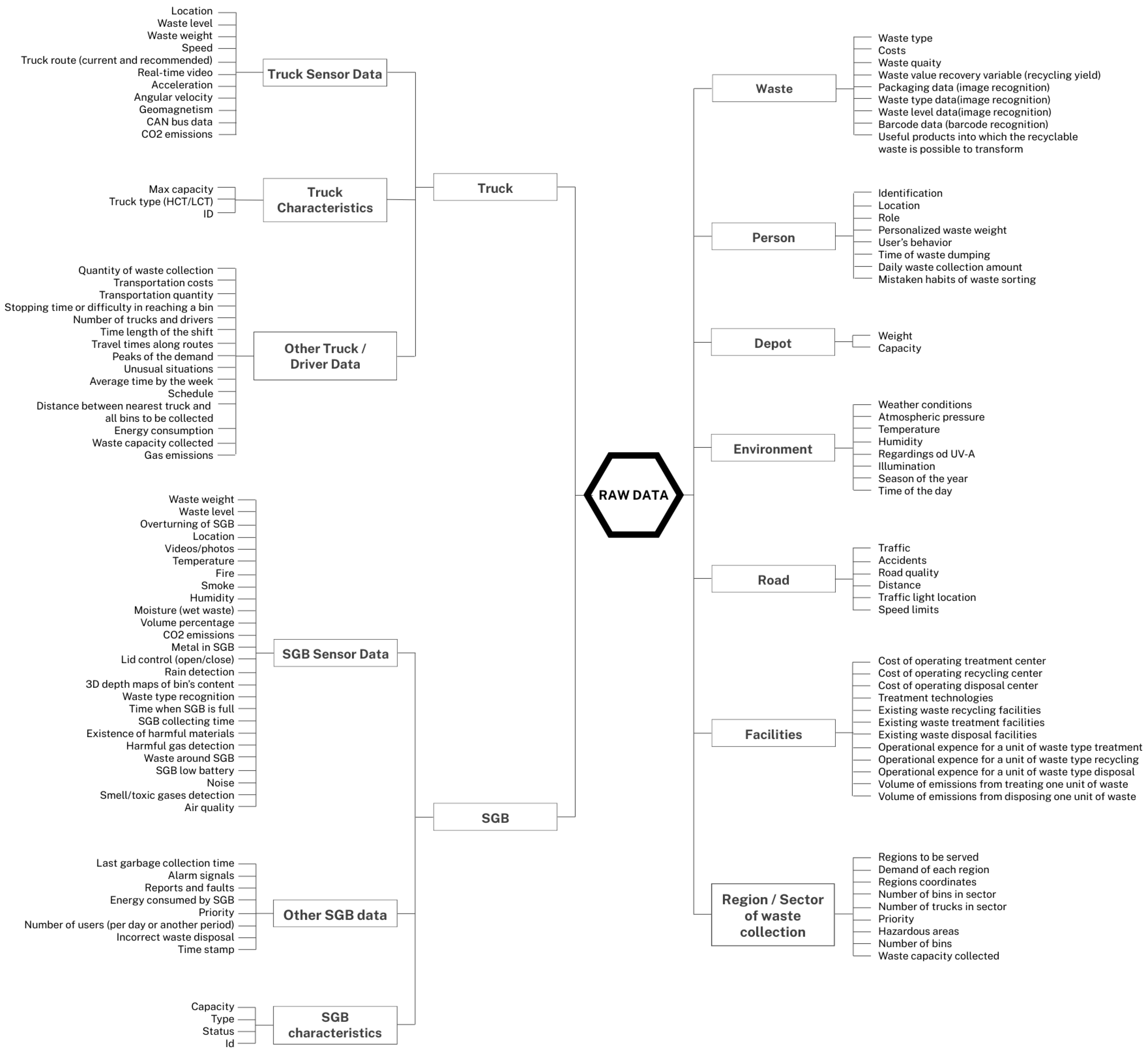
Sosunova and Porras conducted a review of 173 scholarly articles that examined research in systems, applications, and methodologies related to the collection and processing of solid waste within smart recyclable materials management systems. They delineated the predominant strategies and services utilized in city-scale and individual smart bin-level recyclable materials management systems. A total of 27 distinct sensor types were identified as instrumental in data collection. The gathered data enables an accurate measurement system for secondary raw materials. It is essential that this data is structured into two distinct tiers: one for raw data associated with smart bins and another for processed data at the broader smart recyclable materials management system level. The raw data pertaining to smart bins encompasses diverse sensor metrics, including weight and CO emissions, container characteristics like capacity and type, user-specific information such as disposal location, timing, and behavioral patterns, truck sensor data including speed, position, and capacity, truck features encompassing maximum capacity and type, regional metrics such as the quantity of smart bins and trucks, and waste-related data concerning types and costs, alongside other pertinent information (
Figure 1). This comprehensive dataset undergoes processing through algorithms to facilitate critical services at the smart secondary raw materials management system level, including route planning, optimization, environmental impact analysis, and decision support [
35].
The data is transmitted without interruption to cloud-based platforms, establishing a centralized repository that enables instantaneous evaluation and decision-making. According to Ahmadzadeh et al., 2023 [
36], establishing such connectivity facilitates the development of a resilient and adaptable recyclable materials management system, laying the groundwork for subsequent progressions [
36].
Tellbach et al., 2023 [
37] conducted a detailed analysis of chipless RFID technology’s potential in identifying eight distinct material types within the recycling chain. The study employs the frequency range of 1.5–6 GHz in conjunction with eight dual-frequency complementary resonant rings (CRRs) to facilitate effective material identification via both receive (RX) and transmit (TX) measurements. The research highlights that the random forest classification algorithm (RFA) attained a convergence accuracy of 93% with RX data, which was superior to the performance with TX data. It further emphasizes that the prominence of sharper resonance peaks in the spectral responses is more significant than variations in frequency and amplitude. Additionally, the study reports a rapid data acquisition time of 632 ms, suggesting that chipless RFID technology holds great promise for enhancing the efficiency of material flow at collection points [
37].
In a study by Ramya 2023 [
38], the author conducted a classification process for raw materials after completing the routing phase. Initially, significant features required for classification were extracted from pre-processed input images. Using these features, data augmentation was performed, and the raw materials were classified with a shallow convolutional neural network (ShCNN) classifier. The training of the ShCNN employed a newly developed technique named fractional horse herd gas optimization-based (FrHHGO), which is a hybrid of fractional Henry gas optimization (FHGO) and horse herd optimization algorithm (HOA) algorithms. The proposed method exceeded the performance of several existing techniques while using minimal energy and resulted in lower delay [
38].
A recent investigation conducted by Henaien et al., 2024 [
39] unveiled a sustainable smart city recyclable materials management framework that includes three principal subsystems: intelligent bins, optimized urban routes for smart collection trucks, and real-time user information paired with decision support mechanisms. The findings indicated that this cohesive system markedly improved the effectiveness and punctuality of collection efforts, alleviated the issues linked to overflowing bins, diminished environmental repercussions, and contributed to a cleaner and more sanitary living space for the community [
39].
Chavhan et al., 2024 [
40] presented an IoT waste segregator system that integrates real-time data collection, machine learning algorithms, and user-friendly visualization techniques. The primary objective of this system is to automate the segregation of raw materials. A deep learning model, developed using the Keras framework, analyzes the data obtained from various sensors. This model is specifically trained to identify a range of material categories, such as organic fraction, recyclables, and non-recyclables. By employing a convolutional neural network (CNN) architecture, specifically ResNet-101, the system effectively learns to differentiate between various types of fractions based on visual inputs. Furthermore, the system exhibits a capacity for self-improvement, enhancing its sorting efficiency over time [
40]. Regulatory bodies possess the ability to discern periods of increased recyclable materials disposal, seasonal fluctuations, and regions characterized by peak recyclable materials generation. Newswire 2024 argued that this information facilitates proactive problem-solving, strategic resource allocation, and the formulation of efficient management strategies [
41].
Chen et al., 2024 [
42] introduced a system that leverages an enhanced version of the ShuffleNet V2 model, which exhibits marked advancements in both accuracy and efficiency. The deployment of artificial intelligence (AI) driven image recognition frameworks, particularly those influenced by the RailFOD23 dataset, illustrates the capacity of generative AI models like ChatGPT (v3.5) and Stable Diffusion to create varied datasets. This capability addresses the prevalent issue of data scarcity, a common obstacle faced in recyclable materials management contexts [
42]. Sinduja et al., 2024 [
43] introduced an advanced application-based system designed for the segregation and collection of recyclable materials. This system is characterized by its intelligent recyclable materials management framework, which integrates smart self-segregating bins with a cohesive application. The model demonstrates a commendably high average accuracy of 97.22% across three distinct categories (i.e., recycling, organic, and electronic fraction) and achieves an impressive average precision of 95.8%. These metrics substantiate the efficacy of the employed image classification model in the context of recyclable materials management [
43].
Sharma et al., 2024 [
44] conducted an analysis regarding the application of 6G technology within the framework of smart cities. The authors identify potential avenues for enhanced efficiency, attributed to the capability of integrating a greater number of sensors and transmitting data at speeds that are an order of magnitude faster than those offered by 5G technology [
44]. Raviprabhakaran 2024 [
45] introduced a deep learning framework aimed at the recognition and classification of plastics, employing a CNN. This advanced method, in contrast to traditional machine learning approaches, facilitates superior outcomes, ultimately leading to enhanced quality of secondary raw materials [
45].
Daas et al., 2025 [
46] introduced the Smart EcoRecycler Manager system, which effectively tackles multiple deficiencies identified in current research on smart secondary raw materials management. This system presents a thorough and novel approach to the inherent challenges of recyclable materials management. It encompasses a diverse set of functionalities, incorporating IoT technology, LoRa communication protocols, and both cloud and edge computing resources. Additionally, a gamification element has been incorporated to enhance user interaction, allowing users to accumulate points that can be redeemed for rewards [
46].
2.2. Optimization of Raw Materials Truck Routes
In the quest to find an equilibrium between the quality of waste collection and the associated expenses, Murciego 2016 undertook simulations that modified the acceptable thresholds for container fill levels. These variations directly influenced the frequency of trips made by collection vehicles. The findings indicated that by establishing a fill level threshold at 70%, it is feasible to realize a cost reduction of 73.3% while still ensuring a robust quality and availability of service [
47].
Fujdiak, 2016 [
48] has devised a proprietary route determination system aimed at enhancing the logistics involved in recyclable materials collection. This system employs an internally developed GA to optimize the efficiency of the collecting truck routes. The solution yields calculations that result in more effective routing for collection vehicles [
48]. Shah, 2018 [
49] focused on optimizing raw materials collection routes by dividing recyclables into those requiring segregation, which were transported by small-capacity vehicles operating in designated sectors of the city, and those that can be directly transferred to recovery points, for which large trucks were used across the entire urban area. The objective is to maximize the profit obtained from recovery operations. The application of the model was illustrated using the example of plastic recovery [
49].
Lozano, 2018 [
50] executed simulations utilizing intelligent containers aimed at identifying the most efficient routing strategies. The findings from the route optimization indicated an average distance reduction of 28% for the scenarios assessed. This reduction in distance correlated with decreased truck usage and, subsequently, led to lower workforce expenses. Furthermore, the simulation, which focused on the collection of paper and board fractions along with the data acquired, revealed that biweekly collection does not align with the varying recyclable materials production rates of different towns within the community. In some instances, the capacity to collect is insufficient, while in others, it is excessive. Therefore, establishing an appropriate collection frequency is crucial for enhancing the efficiency of this operation. Consequently, a system that dynamically generates routes based on updated information serves as an effective decision-making tool, enabling secondary raw materials collections to occur at optimal intervals, thereby ensuring that resources are utilized only when truly necessary [
50].
The proposed optimization algorithm by Bueno-Delgado, 2019 [
51] offers a comprehensive approach, not only optimizing the number of trucks and their routes, but also considering constraints to limit the acoustic impact on the surrounding area. The program optimizes the number of trucks and their routes while also allowing constraints to be set on the number of passes along a particular street, for example, to limit the acoustic impact on the surrounding area. This is a crucial consideration, as minimizing noise pollution is essential for maintaining a high quality of life for residents in the vicinity. The dimensions of the collecting trucks were also considered in the analysis. For instance, in the case of Cartagena, when the number of collection points is less than 40% of the total, deploying a smaller collecting truck with a capacity of 2600 kg proves to be more economical. Conversely, when the number of collection points exceeds the 40% threshold, employing larger trucks with a capacity of 6700 kg becomes the more cost-effective option [
51].
Rabbouch et al., 2020 [
52] introduced an innovative and adaptive algorithm known as the empirical simulated annealing algorithm, designed to address potential shortcomings associated with the traditional simulated annealing approach. This method systematically incorporates the previous least favorable yet acceptable solutions in order to refine the acceptance criterion inherent in the standard simulated annealing algorithm. The authors asserted that this strategy diminishes the inherent randomness characteristic of conventional simulated annealing, enhances convergence rates, and ultimately leads to enhanced overall performance [
52]. In the research conducted by Vu et al., 2020 [
53], the primary aim was to optimize the routes for collection trucks by analyzing single- and double-chamber vehicle configurations alongside varying payloads. The findings indicated that the composition of recyclable materials plays a critical role in determining travel distances, independent of the specific design of double-chamber trucks. Implementing a biweekly collection schedule for these vehicles led to reductions of up to 18.2% in travel distance and 41.9% in travel time. The most effective collection strategy identified involved using a 25-m
3 double-chamber truck, adhering to a biweekly collection regimen, and maintaining an equal split in compartment volume at a 50:50 ratio [
53].
In the next study, Baldoquin et al., 2020 [
54] introduce a mixed-integer linear programming (MILP) model framework tailored for several iterations of the capacitated vehicle routing problem (CVRP), which encompasses periodic vehicle routing problem (PVRP), consistent PVRP (ConPVRP), ConPVRP with time windows (ConPVRP-TW), consistent time-dependent PVRP (ConTDPVRP), and ConTDPVRP with time windows (ConTDPVRP-TW)—this last pair representing novel approaches. The framework is distinctive in that it integrates two non-traditional objective functions in addition to a standard one for comparative analysis. The ConPVRP-TW model underwent validation through an experimental design that scrutinized variables, such as the choice of objective function and depot centrality. These findings indicate that models optimized for minimizing the time required to reach the last customer demonstrate a substantial superiority over those focused on reducing maximum route duration [
54].
In the research conducted by Ali et al., 2020 [
55], a novel approach for secondary raw materials collection in smart cities is introduced. The system, which operates on solar energy, utilizes an IoT sensing prototype to assess the secondary raw materials levels in bins and transmits this data to a centralized server via internet connectivity. The primary focus of the study is on the system’s efficiency and operational costs. Although the initial financial investment for IoT-based solutions is marginally elevated due to installation and maintenance requirements, their operational expenses are significantly lower compared with traditional non-IoT alternatives. The findings from this research indicate that the system can forecast future secondary raw materials generation with both satisfactory precision and operational efficiency [
55].
Erçin, 2021 [
56] discussed a system designed for optimizing truck routes, which highlights that incorporating machine learning techniques alongside forecasting fill levels, via utilizing historical data, has the potential to enhance the effectiveness of the system significantly [
56]. The processes of collection and transportation represent a complex aspect of recyclable materials management that can either support or hinder policymakers in their efforts to achieve sustainable development goals. If the routes for transportation and the positioning of intermediate collection facilities are not properly planned, the significant increase in recyclable materials generation due to population growth can lead to substantial inefficiencies, resulting in excessive fuel consumption, time loss, and resource expenditure. Masmoudi et al., 2022 [
57] studied the waste collection vehicle routing problem with time windows (WCVRPTW) using compressed natural gas plug-in hybrid electric vehicles (CNG-PHEVs), termed the hybrid waste collection problem (HWCP). This research tackled the complexity of routing for vehicles with dual power sources and utilized a realistic fuel consumption model. The developed hybrid threshold acceptance (HTA) algorithm effectively optimized routing and refueling decisions, demonstrating strong performance in comparison to existing algorithms. Sensitivity analyses indicated that using CNG-PHEVs offers a beneficial trade-off between operational costs and travel distances. The findings promote the transition to fuel-efficient vehicles and suggest increasing charging station availability [
57].
Ghahramani et al., 2022 [
58] provided an analysis of simulations conducted on a novel routing algorithm. A distinguishing feature of this algorithm is its capability to generate multiple advantageous routes concurrently within a timeframe that is deemed efficient [
58]. Tomitagawa et al., 2022 [
59] identify deficiencies in the collection system and propose integrating a mobile robot to assist workers. A key challenge is the robots’ limited energy availability. To tackle this issue, the capacitated vehicle routing problem (CVRP) models the recyclable materials collection process. The study presents two ant colony optimization (ACO) algorithms: a traditional one focused on minimizing travel distance and an adapted version emphasizing energy efficiency. A new ACO algorithm is proposed, considering path distance and recyclable materials weight as visibility metrics and adjusting pheromone levels for travel distance and energy use. Simulation experiments evaluated the three ACO algorithms. Results revealed that, while the energy-focused adapted ACO leads to longer travel distances, the proposed ACO algorithm optimally balances energy efficiency and distance traveled, showcasing greater effectiveness against its traditional and adapted counterparts [
59].
Zhang, 2022 [
60] introduced a genetic algorithm (GA) aimed at identifying the most efficient route for the shredder. They conducted ten simulations to compare this novel method against conventional routing techniques. The results indicated that in 7 out of 10 scenarios, the GA was more effective; in 2 instances, it yielded results comparable to the traditional method, while in one case, it resulted in a slightly extended route. The authors highlight that the primary objective was cost reduction; however, they also acknowledge alternative approaches where resident comfort may take precedence. One illustrative factor discussed is the importance of collection punctuality [
60].
In an analytical evaluation of the applications of AI in recyclable materials management within Australia, Andeobu et al., 2022 [
61] highlighted numerous instances where AI has been implemented in route optimization. The outcomes of these implementations indicate a significant reduction in collecting truck routes by 20%, alongside a decrease in the frequency of container pickups by 10% [
61].
The research of Dereci and Karabekmez 2022 [
62] involved a comparative analysis of four algorithms leveraging two primary methodologies: heuristics and metaheuristics. This examination was conducted within the framework of two distinct scenarios that were structured according to the secondary raw materials production coefficients associated with various neighborhoods. The first scenario entailed a double tour that serviced two neighborhoods that exhibit significant separation from other areas based on their secondary raw materials output, in conjunction with a single trip covering the remaining neighborhoods. The second scenario focused on enhancing citizen satisfaction by promoting a more balanced distribution of workloads among trucks and personnel, thereby mitigating the potential for container overfill. This study introduced certain simplifications, notably by disregarding the variability in container fill levels and utilizing geodetic distances rather than actual road maps for route planning. The findings indicated that the implemented algorithms yielded varying outcomes, underscoring their distinct operational impacts [
62].
Ijemaru et al., 2022 [
63] analyzed the integration of IoT methodologies in recyclable materials management systems within supply chains, with a significant focus on the challenges associated with the energy consumption of sensor nodes. This consumption issue is intensified by the overhead linked to routing and control operations. The authors introduced an innovative approach that leverages the Internet of Vehicles (IoV) framework for data collection, positioning vehicles as mobile data collectors (MDCs) to optimize energy utilization. They further advocated for the application of swarm intelligence techniques to enhance data gathering efficiency. This research delineates an energy-efficient routing framework that incorporates ant-based algorithms and presents rigorous analytical methods for assessing energy consumption. The proposed architecture integrates elements of embedded intelligence, cyber-physical systems, and data communication systems, ultimately facilitating the autonomous, concurrent, and synergistic operation of various functionalities. The network topology comprises static source nodes (smart bins), mobile nodes (MDCs), and sink or destination nodes. To foster energy efficiency, the study suggests implementing swarm-intelligence methods aimed at improving both energy conservation and data acquisition. Simulation results indicate that this novel architectural framework, which incorporates vehicle-to-everything (V2X) technologies alongside various components—including vehicles, sensors, roadside units, infrastructures, personal devices, and actuators—demonstrates significant energy efficiency. The findings revealed that the proposed model stands as a viable option for cutting-edge recyclable materials management strategies in smart cities. The performance metrics indicated that algorithms based on swarm intelligence exceed the performance of traditional algorithms [
63].
Mohammadi, 2023 [
64] presented a dynamic system aimed at enhancing the efficiency of truck routing by segmenting the operational area into smaller zones. This approach resulted in a notable decrease in transport costs by 32% and, when employing multi-chamber garbage trucks, the cost reduction escalated to 42% relative to initial expenditures. The authors asserted that the methodology utilized, known as GA particle swarm optimization (GAPSO), demonstrates superior effectiveness compared with alternative strategies such as tree growth algorithm (TGA) and tabu search (TS) [
64]. Martikkala et al., 2023 [
14] examined the enhancement of textile fraction collection processes through the implementation of fill level sensors and optimization of collection routes. They juxtaposed dynamic routing against static scheduling methods. The findings indicated that utilizing a dynamic collection approach resulted in decreased travel distances and reduced stop frequency, leading to significant decreases in operational time, fuel usage, and overall costs. Notably, a follow-up study conducted over four weeks revealed that the collection cost per kilogram of textile fraction for the dynamic model was approximately 7.4% lower compared with the traditional model. Furthermore, there was an observed reduction in CO
2 emissions by 10.2% [
14].
Kapadia et al., 2023 [
65] presented an analytical exploration of a clustering-oriented approach to enhance the efficiency of collection vehicle routing. This research introduced a weighted multiple heuristic-based Optimum A* (Op-A*) algorithm aimed at dynamic path optimization, incorporating a range of heuristics including distance metrics, traffic conditions, road quality, fuel levels, the volume of recyclable materials in smart bins, and vehicle load capacity. Attention is given to the implementation and empirical evaluation of the proposed Op-A* algorithm using a synthetic dataset, with a comparative analysis against existing leading algorithms in the field. The results demonstrate that the proposed algorithm offers substantial improvements over established benchmarks found in the literature, particularly regarding total transportation costs and the time required for path selection in the context of collection vehicle routing [
65].
Sahib et al., 2023 [
66] conducted a study focused on optimizing collecting routes in the city of Karbala. The proposed solutions for the designated study area were informed by an analysis that prioritized not only the total distance traveled but also the necessity of servicing streets with high-density traffic, indicative of significant recyclable materials generation. This strategic approach aimed to minimize vehicle movement through secondary streets, ultimately resulting in reduced operational costs [
66]. Li et al., 2023 [
67] undertook research, based on carbon neutrality, that compared an improved ACO algorithm with conventional ACO, particle swarm optimization (PSO), and GA. Their model focused on recyclable materials collection and transportation, emphasizing eco-friendly and low-carbon vehicle routing. The enhanced ACO algorithm notably outperformed GA and PSO in speed and performance. When assessing collection strategies, the improved ACO led to the shortest distance traveled and the lowest costs, reducing them by 1.66% and 1.89% against GA and PSO, respectively. Additionally, optimized routing minimized vehicle operating costs by 31.2% and fixed costs by 60%, while cutting carbon emissions by 25.3%, offering substantial economic benefits [
67].
Kumaravel et al., 2023 [
68] have introduced a system that leverages the 3G Global System for Mobile Communications (GSM) communication network to transmit sensor data from bins to an IoT server. Their findings, derived from both experimental and field investigations, indicate that this approach demonstrates significant efficiency in the challenging terrains of Oman, especially in hilly regions where internet connectivity is largely unavailable. Additionally, the study revealed that ultrasonic sensors are particularly effective in accurately gauging the bin levels, even under adverse climatic conditions [
68]. Chen et al., 2024 created a comprehensive collection proposal for rural areas. In their proposed system, they also included route optimization based on the shortest distance between designated points [
69]. Hossen et al., 2024 [
70] introduced a WRS that employs both cameras and AI. A distinctive feature of this system is the utilization of score-CAM-based heatmaps in conjunction with standard camera inputs. This approach not only enhances the understanding of the model’s performance but also effectively emphasizes its capability to identify a diverse range of fraction types through visual representations [
70].
Prata et al., 2025 [
71] analyzed the deployment of real-time monitoring systems by LIPOR, a secondary raw materials management association located in northern Portugal, aiming to optimize collection processes. The incorporation of real-time monitoring technologies notably enhanced the operational efficiency and effectiveness of municipal solid waste collection in Póvoa de Varzim. Through the integration of RFID, GIS technologies, and customized communication strategies for citizens, the municipality successfully re-engaged about 26% of previously disengaged residents in the studied area. This effort not only resulted in a significant uptick in citizen participation but also facilitated a reduction in operational expenditures and improved service delivery, culminating in an approximately 47% increase in the total amount of recyclable materials collected. Such advancements have also streamlined the implementation of pay-as-you-throw (PAYT) systems, aligning operations with forthcoming legislative requirements. Additionally, the findings indicate that optimizing scheduling informed by real-time data contributes to considerable operational enhancements, which include more efficient resource utilization—illustrated by the immediate elimination of one of the two existing collection routes—while also increasing collection volumes by an average of 19%. Moreover, the strategic repositioning of underperforming equipment, directed by data analytics, showcases the potential for real-time insights to foster substantive improvements in service performance, ultimately achieving a utilization increase of approximately 95% [
71].
2.3. Blockchain in Secondary Raw Material Management
Blockchain technology is one of the most popular technologies, which is used to make processes secure and enhance the security of IT systems. Zheng et al., 2018 [
72] emphasized the increasing demand for significant data storage solutions in their assessment of blockchain technology. This need arises from the intrinsic nature of blockchain, which retains all historical data and perpetually accumulates new information. Nonetheless, efforts are being made to optimize the existing datasets, aiming to reduce the amount of disk space required for storage [
72].
Pieroni, 2018 [
73] presents a proposal for an innovative, high-tech architecture within the smart environment pillar of the smart city evolution. Specifically, it focuses on improving the quality of life and enhancing the quality of services for citizens in a more advanced smart city. The author presents possible solutions for intelligent blockchain networks on various levels, e.g., locally and regionally [
73].
According to Allerin 2020, [
74], blockchain technology has the capability to monitor the entire process of recyclable materials management. This capability serves as a deterrent to the illegal trading and trafficking of secondary raw materials, a prevalent issue in today’s society. Through the utilization of blockchain technology, the author describes the possibility of rewarding people who segregate recyclable materials [
74].
Wang, 2020 [
75] outlined the first steps toward creating a system framework for blockchain-enabled circular supply chain administration in the fast fashion sector. In addition, the research discusses the managerial consequences of utilizing blockchain technology to further the circular economy’s goal. In the presented system, the blockchain tracks the entire product life cycle [
75].
Ahmad et al., 2021 [
76] analyzed the application of blockchain technology in the context of secondary raw materials management within smart cities, emphasizing attributes such as decentralization, tamper-resistance, transparency, traceability, auditability, security, and trustworthiness. The analysis highlights several critical observations, which include the following:
Blockchain technology’s transparency and immutability help trace and monitor collection in a community, detailing fraction types, collectors, collection locations, and disposal paths.
Blockchain’s fault tolerance and tamper-proof nature provide a strong system for managing recyclable materials resources, detecting fraud in illegal disposal, and imposing penalties on those involved in improper hazardous waste management.
Performance of blockchain recyclable materials management solutions is affected by system throughput, transaction latency, data volume, stakeholder interests, smart contract bugs, and gas/block size.
Highly autonomous robots can enhance segregation in smart cities, reducing human involvement and improving health safety. Blockchain enables these robots to make decisions based on secure and verifiable data.
Implementing a public blockchain for recyclable materials management in smart cities poses challenges for data and transaction privacy. Compliance with GDPR laws is essential to improve the viability of these platforms in urban contexts [
76].
Wu et al., 2021 [
77] presented a proposal aimed at enhancing the functionality of the pallet pooling strategy. In alignment with circular economy principles, the proposed system underwent an assessment through the ReSOLVE framework. This evaluation revealed that the PalletaaS, designed within a closed-loop system, contributes significantly to minimizing industrial recyclable materials, optimizing the use of renewable materials, and refining the pallet management process. Consequently, this research explored the potential for a novel business synergy through the integration of blockchain and Internet of Things (BIoT) technology, aimed at facilitating the decentralization of pallet management. The author noted that a similar system can be used for other materials [
77].
Bhushan, 2021 [
78] noticed that the successful implementation of a blockchain platform in the secondary raw materials management industry requires robust infrastructure, including systems for recyclable materials transportation, traffic control and management, detailed models for transparent incentives and penalties, and real-time monitoring through IoT devices. However, the current legal and regulatory frameworks surrounding blockchain are still underdeveloped, limiting its adaptability in the recyclable materials management sector. Additionally, successful implementation of a blockchain platform in the secondary raw materials management industry requires robust infrastructure, including systems for transportation, traffic control and management, detailed models for transparent incentives and penalties, and real-time monitoring through IoT devices. However, the current legal and regulatory frameworks surrounding blockchain are still underdeveloped, limiting its adaptability in the recyclable materials management sector [
78].
Song et al., 2022 [
79] have introduced a novel information management system for hazardous waste transportation (HWT), leveraging blockchain technology to mitigate issues associated with information asymmetry, including qualification assessments, application evaluations, transportation oversight, and payment mechanisms. This research addresses a notable gap in the literature regarding the use of blockchain in hazardous waste management practices. A comprehensive framework for HWT management has been established, outlining specific application functions, such as differentiated information dissemination among stakeholders, the ability to trace HWT-related information, and the provision of real-time monitoring of the entire HWT workflow. The proposed system aims to improve operational management by facilitating secure information exchange among production, transportation, and treatment entities, ensuring that transaction details are stored in a traceable manner on the blockchain, and permitting real-time oversight of activities. While this framework offers an innovative strategy for HWT management, the author recognizes the necessity for additional assessment of its operational effectiveness and identifies opportunities for future research aimed at further refining the system, as well as broadening the application of blockchain technology across the complete hazardous waste lifecycle and addressing various other recyclable materials management issues [
79].
Bamakan et al., 2022 [
80] conducted a comprehensive analysis of blockchain systems employed in hospital recyclable materials management. Their findings indicate that the integration of blockchain technology enhances the identification and tracking of different types of recyclable materials produced, thereby facilitating improved management of recyclable materials and more effective tracking of hazardous waste. Additionally, the implementation of such technology is expected to bolster the reliability of proper disposal practices concerning secondary raw materials, foster sustained partnerships with various suppliers, and ultimately enhance and expedite service delivery within the realm of secondary raw materials management [
80].
Jiang et al., 2023 [
81] offered a comprehensive analysis of current applications of blockchain technology within the realm of secondary raw materials management. The findings indicate that blockchain technology is increasingly essential for modernized recyclable materials management systems. The research highlights various blockchain-associated technologies—such as smart contracts, consensus mechanisms, data traceability, distributed ledgers, and the incorporation of IoT solutions—demonstrating their growing integration into the industrial aspects of recyclable materials management. Notably, developmental trends are surfacing throughout the entire secondary raw materials management life cycle, encompassing stages from segregation and the establishment of recycling supply chains to the processes of recycling, treatment, and final disposal of secondary raw materials [
81].
Holanda Filho et al., 2023 [
82] presented an advanced secondary raw materials management system that integrates sensor technologies to assess recyclable materials accumulation and employs the LoRaWAN protocol to facilitate low-power, long-range data communication. A significant innovation within this framework is the integration of blockchain technology, which enhances the system’s availability through a decentralized approach to key management. This modern method supplants the conventional Join Server by utilizing a smart contract for key administration and ensures secure authentication via the over-the-air activation (OTAA) method. Notably, authentication requests are documented on a permissioned blockchain, contributing to the system’s robustness. To assess the proposed architecture, a series of experiments was performed, including performance evaluations in a cloud setting with varying configurations of endorsing peers and differing workloads. The findings indicate a performance-availability trade-off; specifically, reduced numbers of endorsing peers yield improved throughput in less demanding scenarios, whereas increased endorsing peers demonstrate superior performance in contexts with high transaction volumes. The analysis suggests that adopting multiple endorsing peers is the most effective strategy for optimizing LPWAN applications [
82].
Bułkowska et al., 2024 [
83] reviewed blockchain technology in the management of recyclable plastic. They paid attention to decentralized applications (DApps) that utilize blockchain technology, which are gaining traction for their potential to enhance the management of plastic waste. By employing a secure and immutable ledger of transactions, DApps revolutionize plastic recyclable materials management practices. The inherent transparency of the system allows manufacturers, consumers, and recyclers to verify the provenance, treatment, and ultimate disposal of plastic materials. For instance, a DApp can accurately document and authenticate the journey of a plastic bottle, assuring that it has undergone recycling in accordance with established environmental protocols. Furthermore, DApps facilitate efficient, real-time data management, which is crucial for optimizing the overall recycling process [
83].