3.2.1. Energy to Failure Under Quasi-Static Load
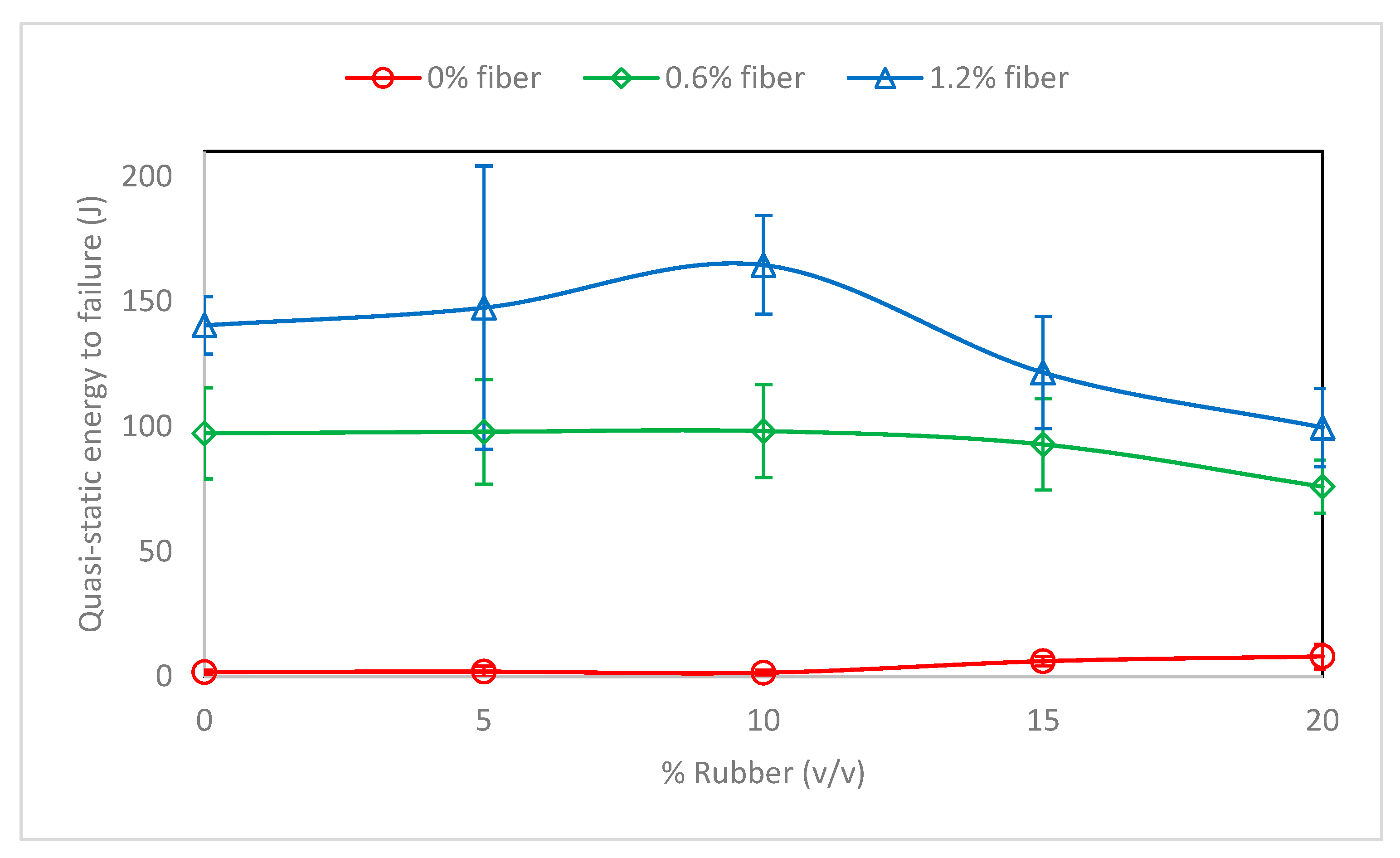
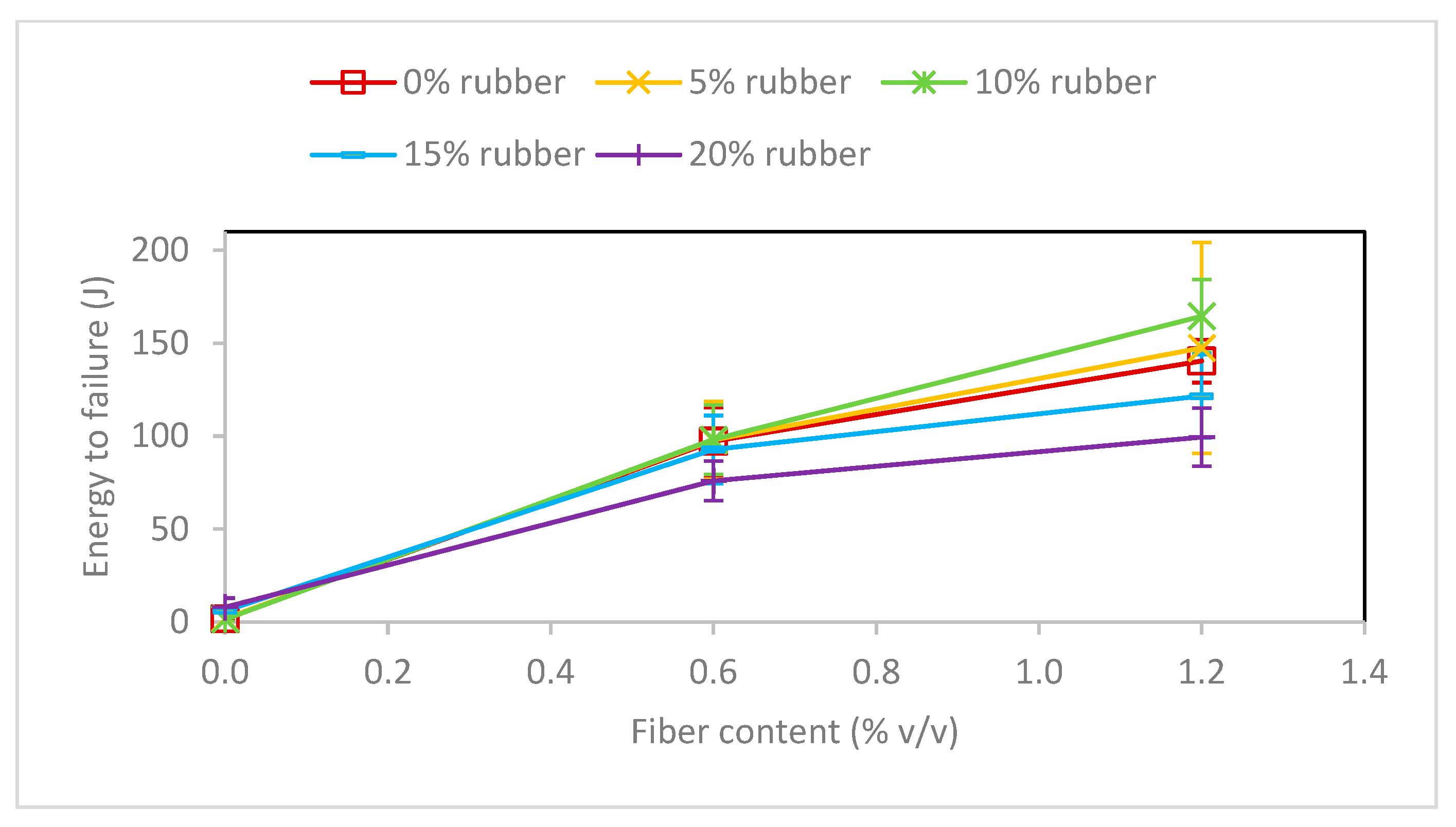
Figure 12 presents the beams’ energy to failure (or 35 mm displacement). Including fiber in the concrete significantly enhances energy absorption, consistent with the findings reported in the literature [
71,
78]. Notably, the increase in energy to failure is not linear to fiber content; specifically, doubling the fiber content added does not result in doubling the energy. This effect is exceptionally minimal for the mix with 20% rubber.
Including rubber in the mix increased the energy to failure only for the mix without fiber. However, this increment is negligible relative to the energy absorbed by the fibers. Moreover, the increment is in the range of the standard deviation of the repetitions.
The combined effect of fibers and rubber is not clear. The mixes with 1.2% fibers demonstrate some energy increment to failure for 5% and 10% rubber relative to the mix without fibers. The mixes with 0.6% fibers show no clear tendency. The behavior of the 1.2% fibers may be a real phenomenon or a random result due to the high variability of test results. A research program with more data points or lower variation is needed to answer this question.
3.2.2. Energy to Failure Under Dynamic Load
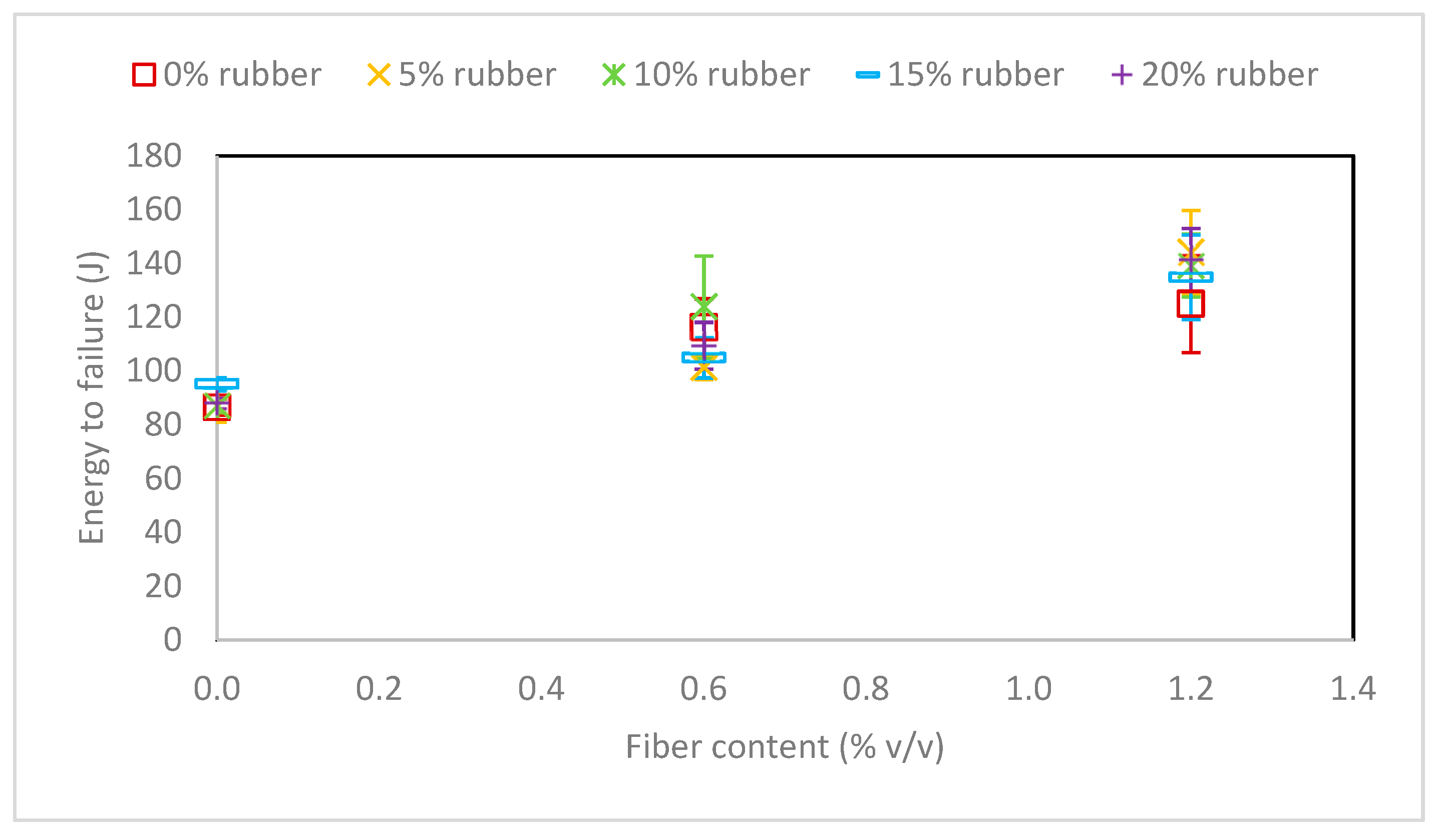
Figure 13 presents the energy to failure for the different mixes under dynamic loading. The differences between the fiber content of 0.6% to 1.2% fibers were minimal, with both fiber contents demonstrating higher energy to failure than the 0% fiber mixes. As the rubber content increased, the energy to failure for the 0% and 1.2% fiber mixes also increased, decreasing for the 0.6% fiber mix. Values for these observations are 0.08, 0.28, and 0.60, respectively (calculated for each fiber content separately), indicating that the rubber content does not significantly affect the dynamic energy absorption, particularly when fibers are included in the concrete mix.
These results do not align well with the literature, which reports a significant energy absorption enhancement for rubberized concrete [
8,
31,
38,
47,
79,
80,
81,
82]. This discrepancy can be settled by considering several factors. First, most experimental procedures measured the concrete under a compression load [
31,
38,
39,
81] while the present investigation assessed it under a bending load. Furthermore, many studies evaluated energy to failure using repeated impacts [
8,
31,
81,
82,
83] or only a quasi-static load [
45,
80,
84]. There is no reason to assume that the overall energy of repeated impacts is correlated with the energy of a single impact. In repeated impact settings, part of the energy is stored and released as elastic energy [
31,
39]. So, as the number of impacts increases, the elastic energy of each impact is incorporated into the reported total energy to failure. (3) The energy absorbance of the fiber makes the rubber contribution insignificant. Consequently, as the number of impacts increases, the elastic energy from each impact accumulates, contributing to the perceived total energy to failure. Lastly, the energy absorption capabilities of the fibers may diminish the significance of the rubber’s contribution to energy absorption.
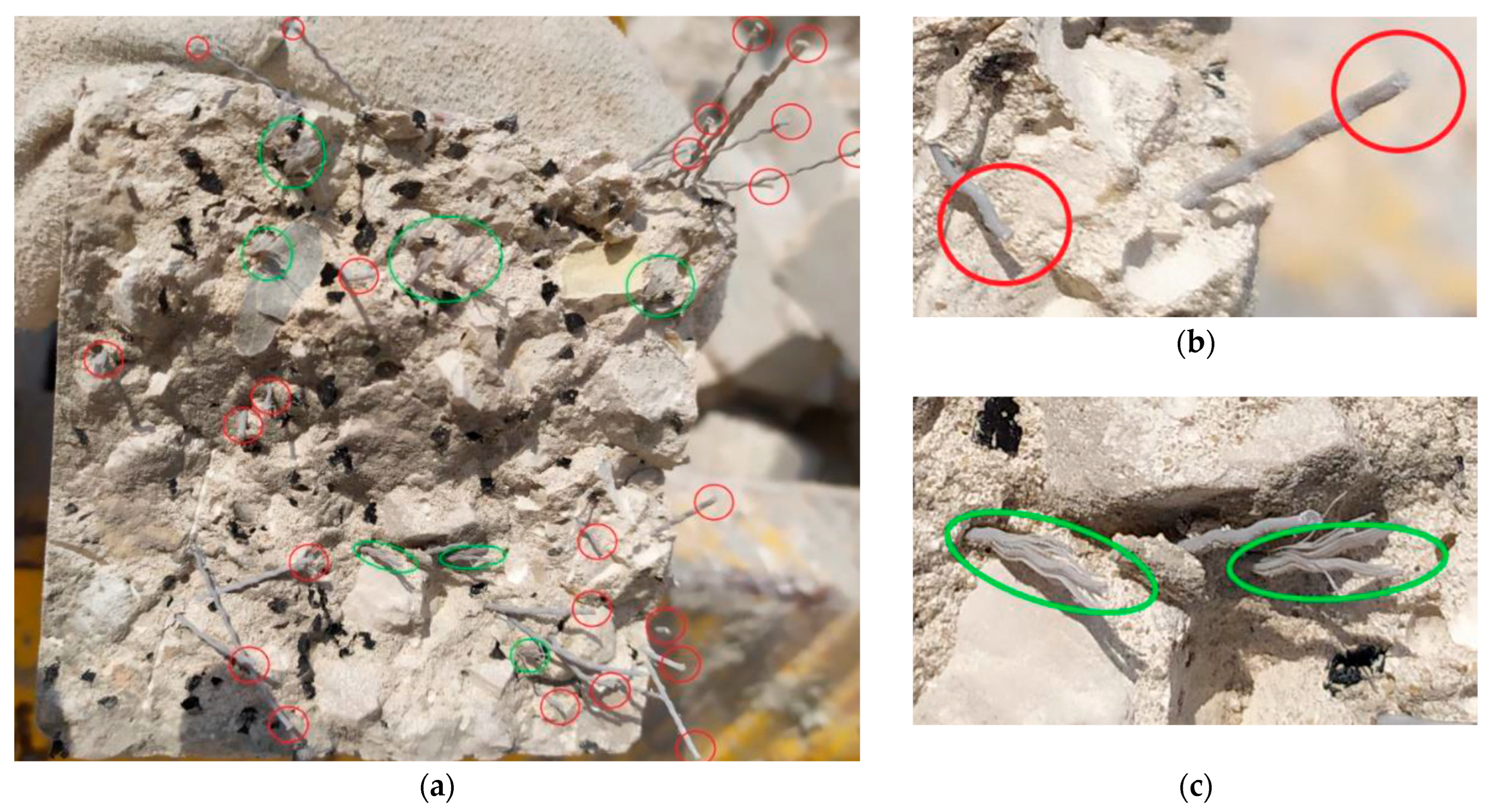
Inspecting the fractured surface of the concrete reveals that most fibers fail by a pull-out mechanism. The pull-out mechanism for polymer fibers is well known in the literature [
85,
86]. This will be discussed later in
Section 3.2.3.
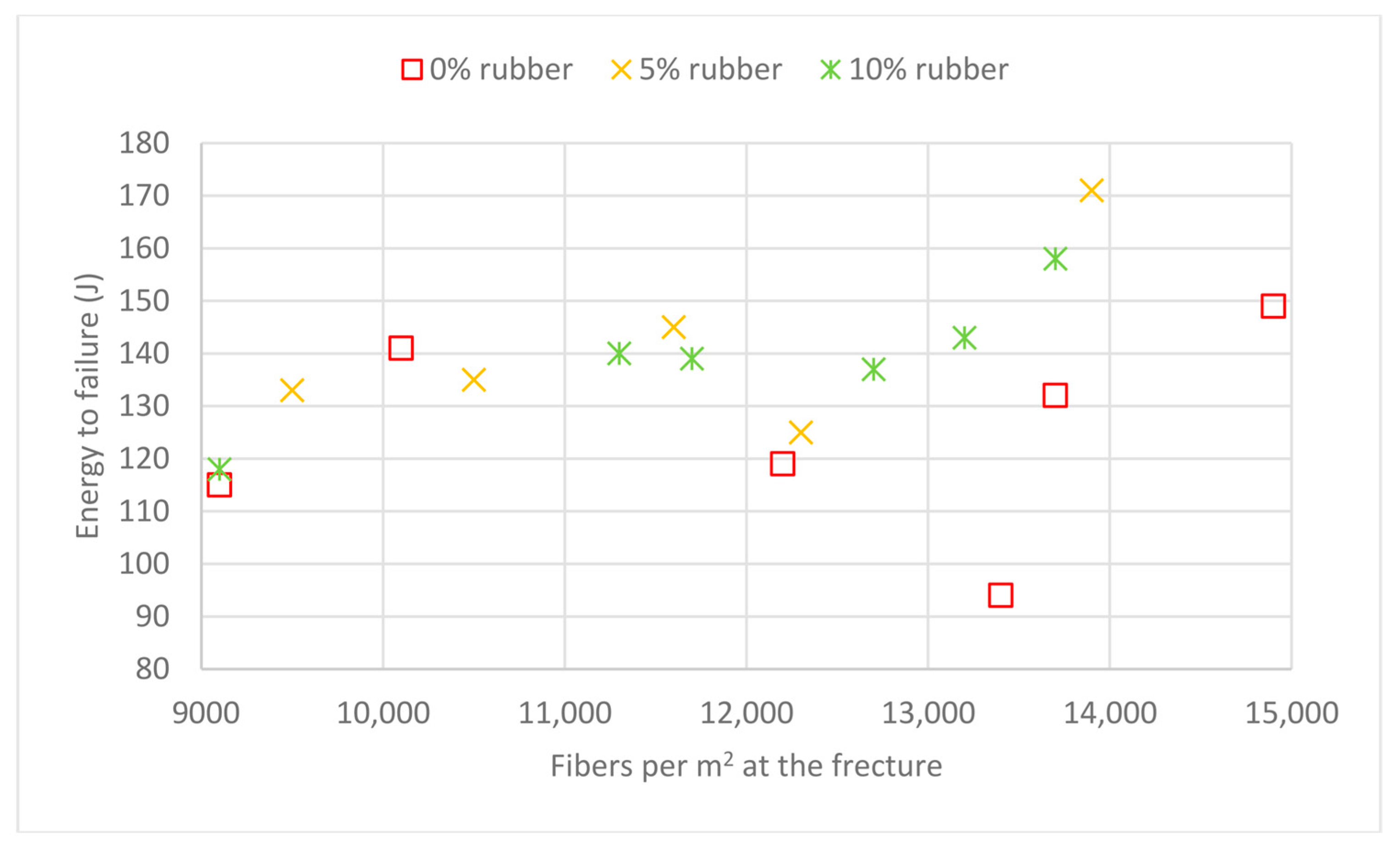
Counting the number of fibers present on the fractured surfaces of the beams after the impact test revealed a strong correlation (
p-value of 0.0051) between the number of fibers and the energy to failure (
Figure 14). This correlation was consistent across all specimens, irrespective of fiber content. These findings underscore the critical importance of fiber distribution within the cast for effective energy absorption [
87,
88,
89,
90,
91]. In the case of the bending impact load of a cantilever beam, only the distribution along the beam is important. However, the current literature does not offer a solution to reduce the longitudinal distribution. Being cast in the beam mold forces the fibers in the longitudinal direction. Pouring the concrete into the mold in small portions by hand may cause small inconsistencies in the fiber distribution. To overcome this problem, in future studies, it is advised to cast a plate and cut it into specimens. This casting and cutting result in a distribution similar to a real cast. Using larger specimens, preferably as in the intended use size, is another way to reduce variability. The drawback of this solution is an increase in research costs.
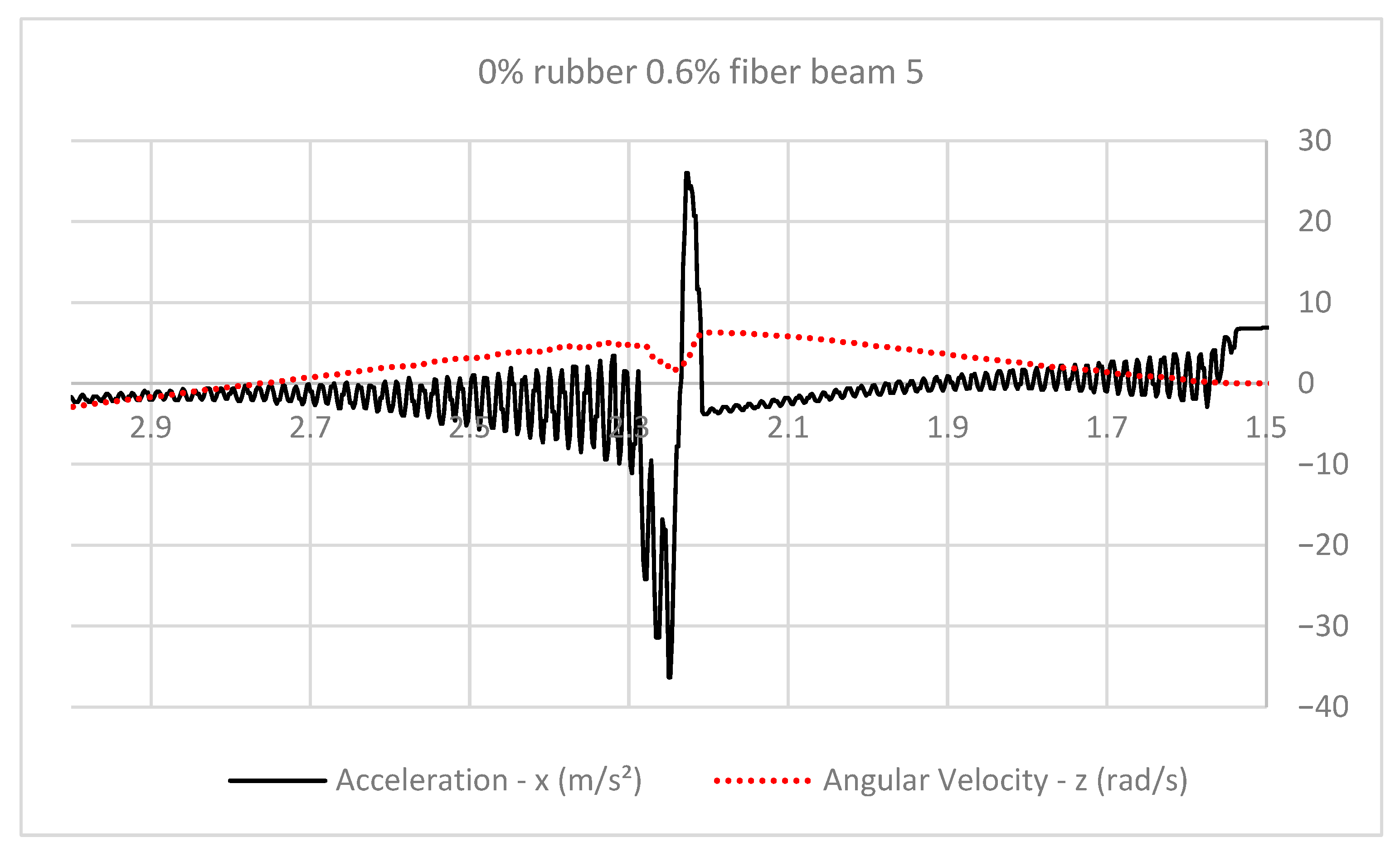
The acceleration measurements were found to be noisy, likely due to the natural frequency of the hammer pendulum mechanism, which closely matches the duration of the impact. For four of the concrete mixes, angular velocity was also recorded. In retrospect, angular velocity proved to be a more reliable measurement than linear acceleration within the given experimental setup. A typical result is shown in
Figure 15, where the impact is clearly observable in the angular velocity data.
By integrating the product of the pendulum radius and angular velocity, the displacement of the cantilever tip during impact was calculated. Assuming a static bending profile for the cantilever beam, the corresponding strain and strain rate were then derived. These values—impact duration, strain, and strain rate—are presented in
Table 5.
The results show that impact duration is independent of the concrete mix. Moreover, variations in strain and strain rate among different mixes are comparable to the standard deviation within each group. This suggests that the strain rate is primarily determined by the hammer’s impact velocity, which remains relatively constant across tests.
The measured strain rates, ranging from 2.5 to 3 s
−1, are one to two orders of magnitude lower than those typically reported using the Split Hopkinson Pressure Bar (SHPB) method [
21,
24,
25,
26,
27,
28,
29,
30,
31,
32,
33,
34,
48,
92], but significantly higher than those achieved with hydraulic presses [
38].
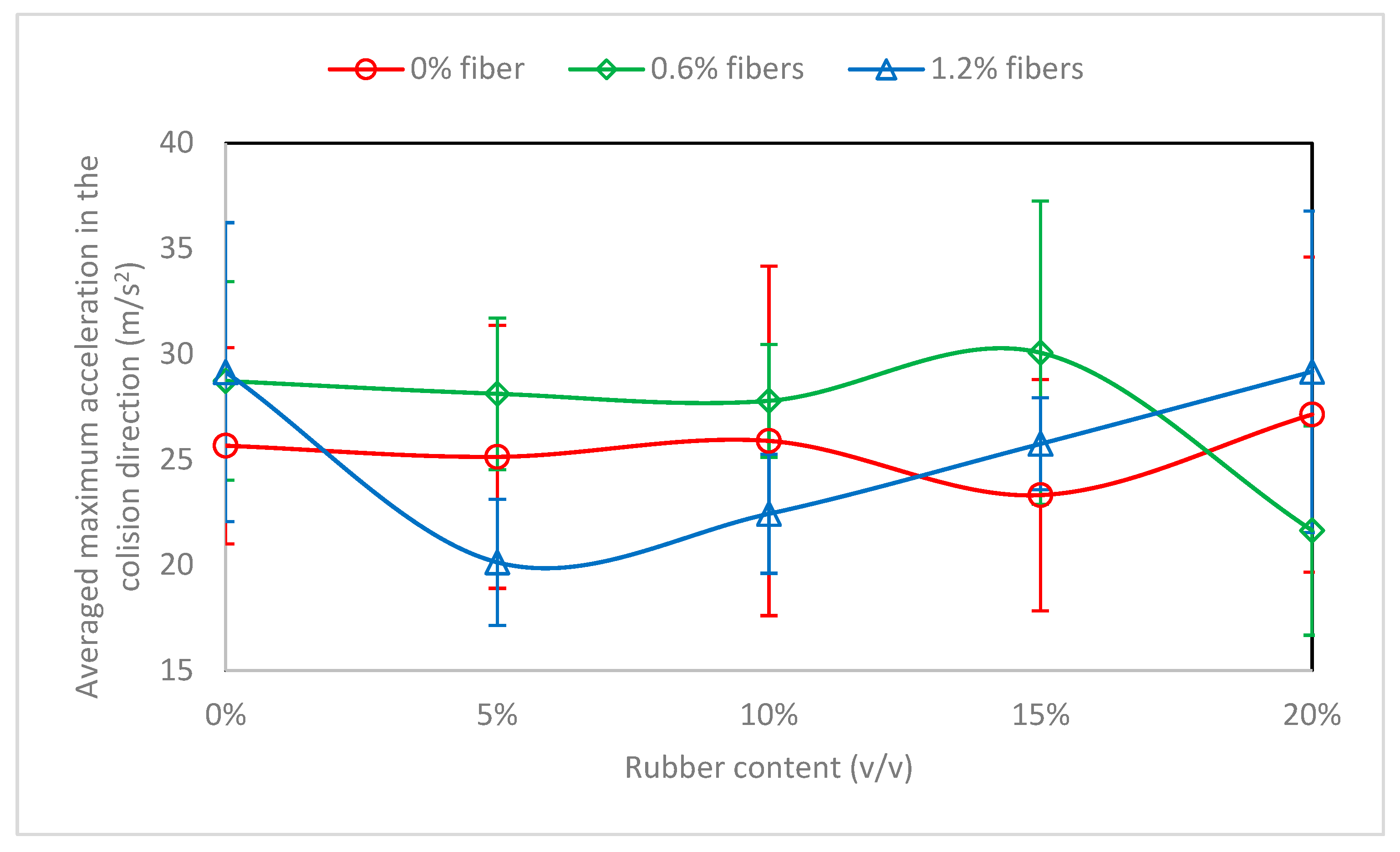
The measured maximum acceleration on impact does not decrease significantly with the increase in rubber content (
Figure 16). The variation in measured acceleration is very high, relative to the differences between averages. Part of the high variation may result from a vibration of the pendulum itself, as is visible from the negative peak in
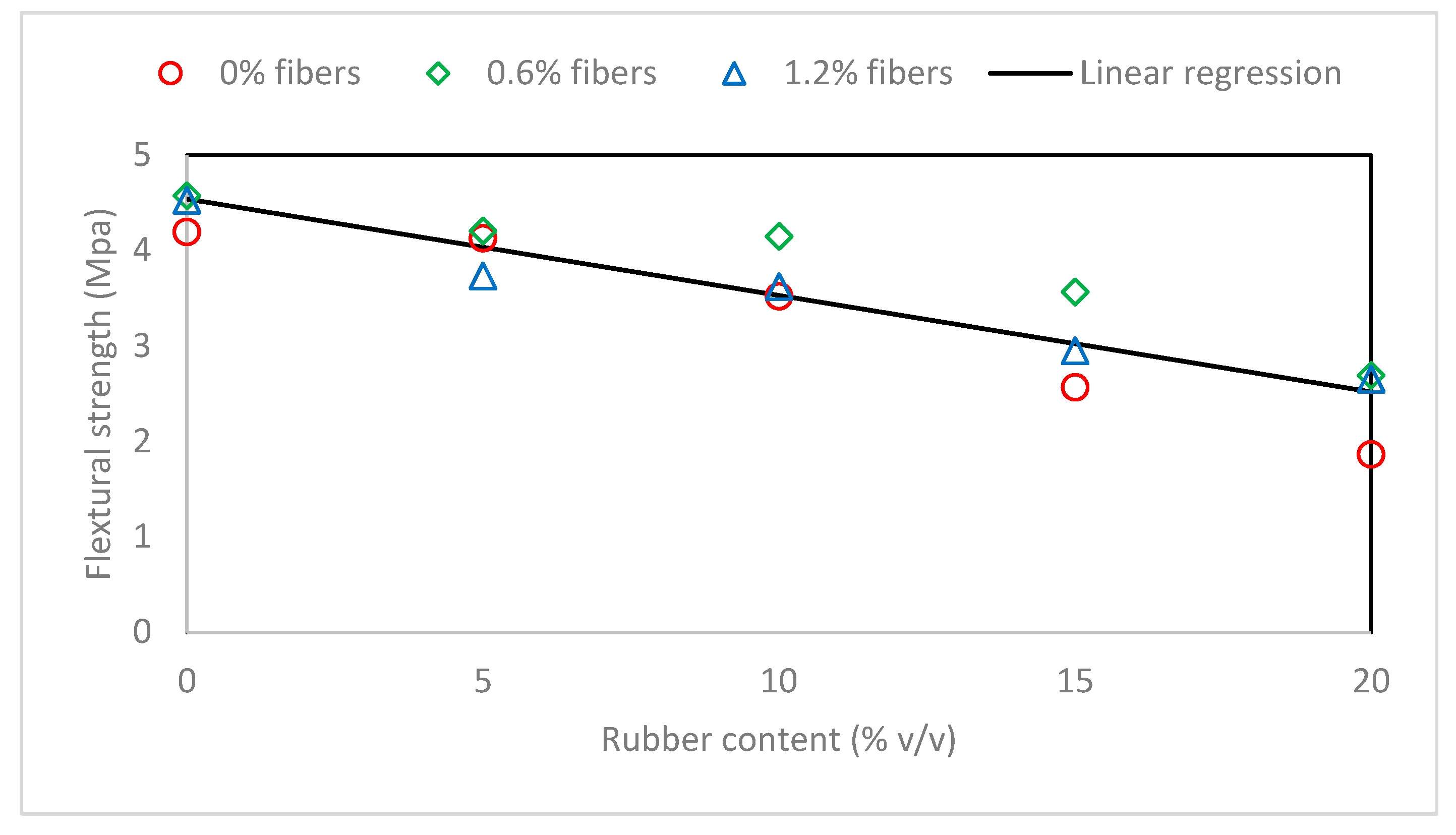
Figure 15, which limits the usage of the acceleration data. However, if the factor of flexural strength increases with the strain rate is independent of rubber content, according to the flexural strength results (
Figure 9), the impact acceleration should be reduced with rubber content. For future research, a different method for acceleration measurement must be used to verify the quasi-static results. The lower acceleration is crucial because it is a component of the ASI (acceleration severity index), which is the parameter used to define whether the safety barrier is forgiving. Lower acceleration means milder injuries for vehicle passengers in the case of a crash [
1]. Durability concerns dictate the maximum W/C ratio, and rubber enables a reduction in strength without increasing the W/C ratio.
3.2.3. Comparison of Quasi-Static and Dynamic Load Response
To compare the results of static and dynamic loads, the force and deflection of the quasi-static load were converted to an equivalent cantilever static scheme having the same stress. Since it is known that the maximum moment in a beam with a central force is: [
93].
And the maximum moment in a cantilever loaded at its free end is: [
93].
We may assume that both the beam in bending and in cantilever loads fail at the maximum moment. So:
Hence, the following equation is derived:
For the maximal displacement, Equation (5) is known for a beam with a central force, and Equation (6) for a cantilever loaded at its free end [
93].
Since the modulus of elasticity and the momentum of inertia are equal, Equation (7) can be used to calculate the expected displacement of a cantilever edge based on the results of a beam bending.
In these equations,
is the deflection, and
is the applied force. The corrected force–displacement graphs, as shown in
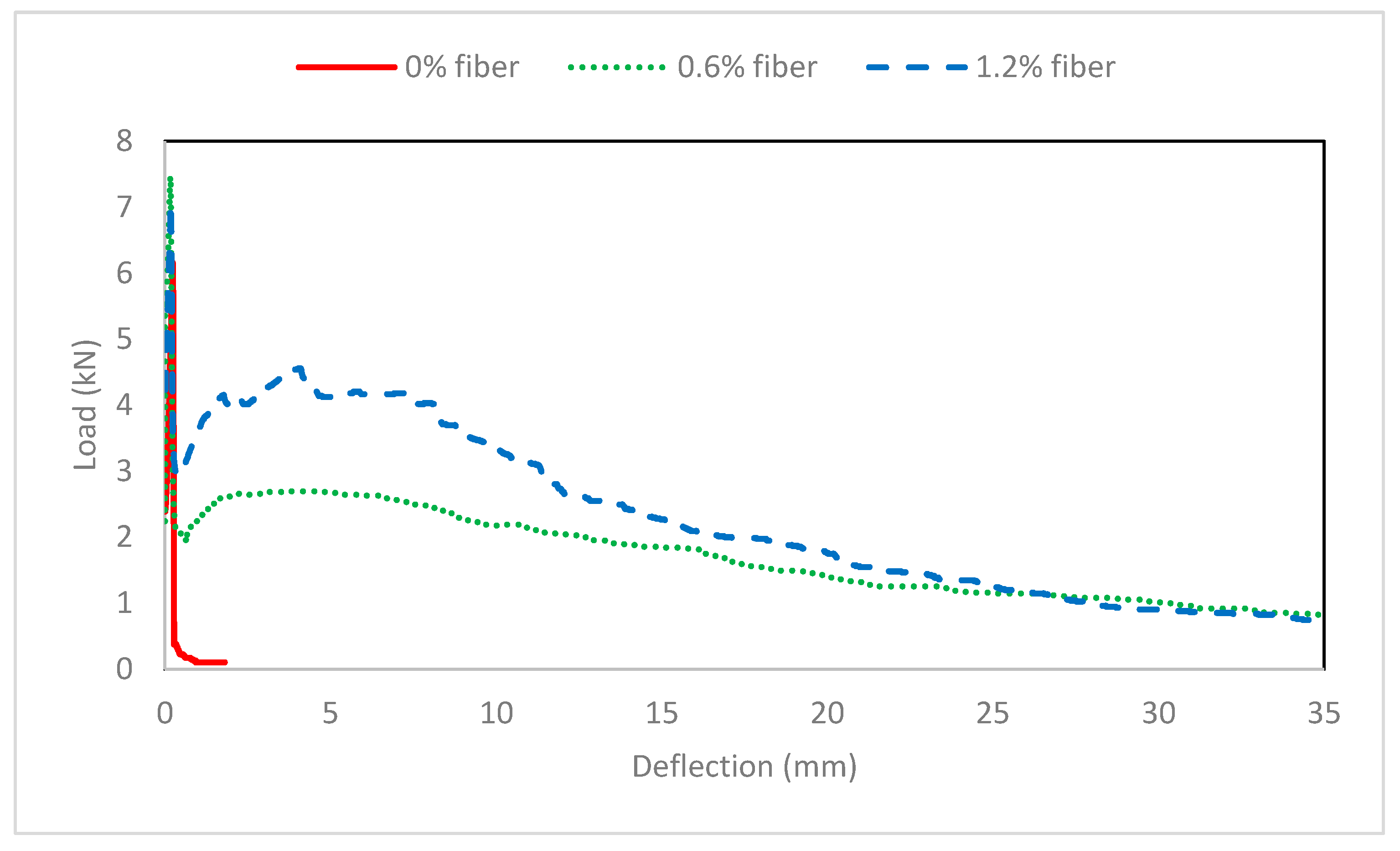
Figure 10, were subjected to numerical integration using the trapezoid method.
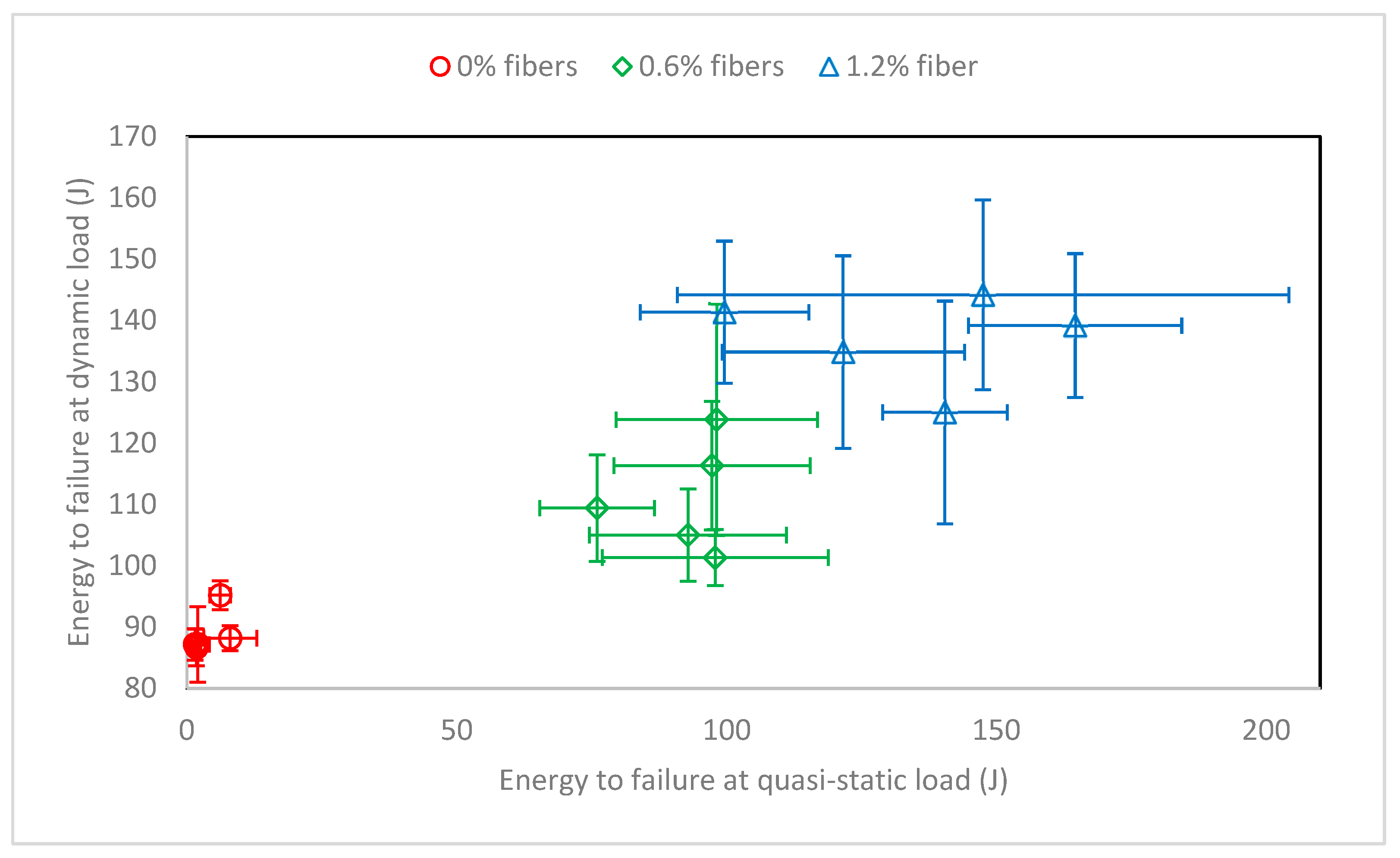
Figure 17 presents the comparison between the quasi-static and dynamic methods. The mixes that lacked fibers exhibited significantly higher energy absorption during the dynamic test, absorbing between 14 and 68 times more energy than in the quasi-static tests. Similarly, the fiber-containing mixes also demonstrated greater energy absorption under dynamic loading; however, as the energy levels increased, their results increasingly resembled those observed in the quasi-static tests.
One possible explanation for the increased energy absorption under dynamic loading is the failure mode of fibers. An examination of the fractures of the quasi-static loaded beams found that pull-out was the predominant cause of fiber failure. This fiber-based failure is a typical failure mode for polypropylene fibers [
85,
86], characterized by erosion through friction, which leaves holes on the fractured surface [
94]. In contrast, the fibers on the fracture surface of beams that failed under dynamic loading exhibited a higher proportion of fibers that failed by tearing (
Figure 18).
All beams subjected to quasi-static loading failed at the maximum moment location, specifically in the middle of the opening. No visible parallel fissures were observed at the bottoms of the beams, indicating that the fibers absorbed energy only during the development of the fracture. In contrast, all beams tested under dynamic loading exhibited parallel fissures. Multiple cracks can account for some of the additional energy absorbed. Notably, the beams made with mixes that did not contain fibers failed at two distinct locations; however, this alone cannot fully explain the observed increase in energy to failure for these mixes. A more comprehensive explanation must be derived from the fracture mechanisms under varying strain rates, as documented in numerous studies of compression loading [
21,
24,
25,
26,
27,
28,
29,
36,
38,
95,
96].
Since the results from the quasi-static tests can serve as an indicator of energy absorption capacity, it is useful to compare them with values reported in the literature for plain concrete of strength class B-40, which is often used as a reference for fiber-reinforced concrete. For example, an energy absorption of approximately 4.2 J was reported for a cross-sectional area of 0.0255 m2, corresponding to about 165 J/m2. In contrast, the energy to failure of the specimen tested in this study (0.01 m2 cross-section, containing 0.6% fibers by volume) was approximately 90 J, or about 9000 J/m2—more than an order of magnitude higher. Furthermore, the energy to failure of fiber-reinforced concrete under cantilever loading is not directly correlated with compressive strength. Therefore, it can be concluded that any fiber-reinforced concrete mix will perform at least as well as B-40 grade concrete in terms of energy absorption.
The maximum force and the resulting acceleration can be estimated based on the Dynamic Increase Factor (DIF) models available in the literature.
Table A1 (in the
Appendix A) summarizes the calculated tensile strengths for different rubber contents according to five representative models proposed in recent studies. It is evident that the model proposed by Lan et al. [
97], with forecasts below 1 MPa, underestimates the tensile strength, whereas that of Huang et al. [
98], with forecasts above 100 MPa, significantly overestimates it. The models by Ye et al. [
99] and Elzeadani et al. [
100] provide intermediate and more realistic estimates.
The maximum tensile strength required for a “forgiving” concrete element still needs to be determined through finite-element modeling. Nevertheless, based on the estimations from the Ye et al. and Elzeadani et al. models, a rubber content of 15–20% appears sufficient to achieve the desired strength reduction, within an approximate range of 3 MPa. These comparisons demonstrate that the predictive capacity of existing DIF models for rubberized concrete remains limited, particularly at low strain rates. However, the present results help narrow the realistic range of dynamic strength for low-strength, rubber- and fiber-modified concretes.
In this context, the present experimental findings provide a valuable quantitative benchmark for refining and validating future DIF models, thereby bridging the gap between empirical formulations and practical design applications.
3.2.4. Quantitative Comparison of Rubber and Fiber Effects
To better interpret the dynamic flexural response, the strain rate during impact was estimated based on the hammer velocity and the specimen height, yielding values of approximately 2.5–3.0 s−1. These strain rates are relevant to low-rate impact conditions typically encountered during vehicle–barrier collisions.
The quantitative comparison of the different mixtures clearly demonstrates that fiber reinforcement is the dominant factor influencing flexural energy absorption. For example, when 0.6% polymer fibers (by volume) were incorporated, the absorbed energy reached approximately 9000 J/m2, compared with about 187 J/m2 typically reported for conventional B-40 grade concrete—an improvement of more than one order of magnitude. In contrast, rubber contributed only a modest increase, primarily related to enhanced deformability and damping rather than crack-bridging resistance.
When both rubber and fibers were used together, the rubber effect became secondary, while fibers governed post-cracking behavior through bridging and pull-out mechanisms. Increasing the fiber content beyond 0.6% led to only limited further improvement (<15%), indicating diminishing returns at higher fiber volumes.
Overall, these results show that a combination of 10–20% recycled rubber aggregate with 0.6% polymer fibers provides an effective balance between controlled strength reduction and substantial flexural energy absorption. This data-driven insight forms a strong basis for selecting mix proportions for forgiving and sustainable concrete safety barrier designs, as discussed in
Section 4.