


Exploring Apis mellifera Propolis Extracts: Bioavailability, Protective Strategies, and Applications in Food Systems

 , , ,
, , ,  ,
,
Abstract
Featured Application
Abstract
1. Introduction
2. Propolis
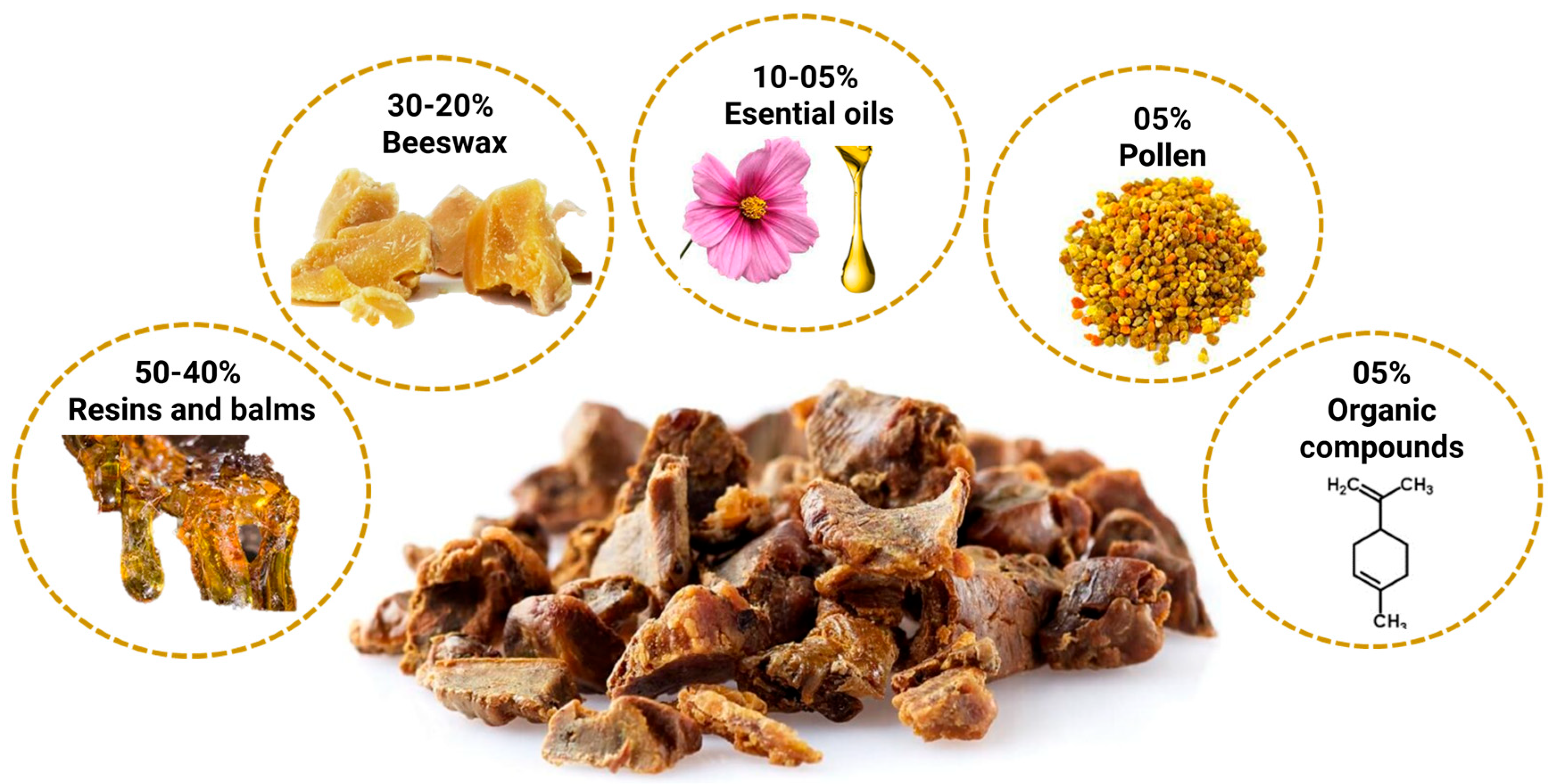
2.1. Composition and Bioactive Compounds of Propolis

| Group | Chemical Compound | References |
|---|---|---|
| Benzoic acid and derivates | Benzoic acid, salicylic acid, gentisic acid, gallic acid, benzoic acid from phenylmethyl ester, salicylic acid phenylmethyl ester, trans-coniferyl benzoate, trans-p-coumaryl benzoate, protocatechuic acid | [6,41,42,43] |
| Benzaldehyde derivates | Vanillin, caproic aldehydes, isovanillin, p-hydroxybenzaldehyde, protocatechualdehyde | [44] |
| Cinnamic alcohol, cinnamic acid derivates, | Cinnamyl alcohol, hydrocaffeic acid, isoferulic acid, cinnamic acid methyl ester, cinnamic acid ethyl ester, Cinnamylacetate caffeic acid, ferulic acid | [19,45] |
| Aliphatic hydrocarbons | Eicosin, 1-octadecene, tricosane, pentacosane, eicosane, heneicosane | [46,47] |
| Sugar | D-ribofuranose, D-fructose, sorbitol, D-glucose, thallose, sucrose, fructofuranose-1, fructofuranose-2, galactotyl, gluconic acid, galacturonic acid, 2-O-glycerylgalactose | [19,48,49,50] |
| Vitamins and minerals | B1, B2, B6, C, E, Sr, Ba, Cd, Sn, Pb, Ti, Ag, Co, Mo, Al, Si, V, Mn, Cr, Na, Mg, Cu, Ca, Zn, Fe, K | [26,48,51,52,53,54,55,56,57,58,59] |
| Chalcones and dihydrochalcones | Alpinetin, nirigin, pinobanksi, 3-acetate, pinostrobin, pinocembrin, sakuranetin, 2,6,a-trihydroxy-4methoxy, 2,6,dihidroconeo-4-methoxy-dihydro, 4,6-trihidroxydihydro | [19,60] |
| Esters | Methyl palmitate, cinnamyl-trans-4-coumarate, ethyl palmitate, stearic acid methyl ester, phthalate ester, benzyl benzoate, benzyl trans-coumarate, 3-methyl-3-butenyl, 3-methyl-3-butenyl caffeate, 2-methyl-2–butenyl caffeate, 3-methyl-2-bytenyl caffeate, benzyl caffeate, benzyl caffeate phenylethyl, cinnamly caffeate, tetradecyl caffeate, tetradecyl caffeate (isomer), tetradecyl caffeate, hexadecyl caffeate | [8,61,62] |
| Other acids and derivates | 14-methylpentadecanoic acid phenylmethyl ester, palmitic acid ethyl ester, myristic acid, sorbic acid, phthalic acid butyl-2-methylpropyl ester, stearic acid, acoustic acid methyl ester | [43,63] |
| Alcohol, ketones, phenols, and heteroaromàtic compounds | Benzyl alcohol, hexadecanol acetate, coumarin, pterostilbene. Xanthorrheaol, scopoleto | [49,64] |
| Terpenes, sesquiterpenes, alcohol, and derivates | Geraniol, neroledol, ß-bisabolol, guaiol, farnisol, dihydroeudesmol, α-acetoxybetulenol, | [60] |
| Sterols and steroid hydrocarbons | Chostrylene, cholinesterol, stigmasterol, ß-dihydrofucosterol, lanosterol, cholesterol | [65,66] |
| Enzymes | Glucose-6-phosphatase, acid phosphatase, adenosine triphosphatase, succinic dehydrogenase | [26,51,67,68] |
| Ketones | Acetophenone, p-acetophenacetophenone, methylacetophenone, 6-methylketone | [43,66] |
| Waxy acids | Acid behenic. Acetic, lauric, linoleic, lignoceric, manganic | [69] |
| Benzene methanol, cinnamic alcohol, glycerol, α-glycerophosphate, phenethyl alcohol, isobutenol, hydroquinone, prenyl alcohol | [70,71] | |
| Aliphatic acids and aliphatic esters | Acetic, angelic, butyric, crotonic, fumaric, isobutyric, methylbutyric, isobutyl acetate, isopentyl acetate, isopentenyl acetate, Lactic, hydroxyacetic, alic, 5-hydroxy-n-valeric, 2,3-dihydroxypropanoic, pentonic-2-deoxy-3,5-dihydroxy-y-lactone, pentonic-2-deeoxy-3,5-dihydroxy-y-lactone (isomer), succinic, 2.3.4.5-tetrahydroxypentanoic 1,4-lactone, 2.3.4.5-tetrahydroxypentanoic 1,4-lactone (isomer), nonanoic, palmitic, oleic, decanoic, dodecanoic, tetradecanoic, heptadecanoic octadecanoic, tetracosanoic, eicosanoic, hexacosanoic, 2-hydroxyhexacosanoic | [21,43] |
| Other compounds | Phosphoric acid, 1,4-Dihydroxybenzene, 4-Hydroxy-benzaldehyde, 4-Hydroacetophenone, 1,2,3-trihydroxybutane, 1,2,3-trihydroxybutanal, 1,2,3- trihydroxybutanal (isomer), myristicin, 2,4-bis(dimethylbenzyl)-6-t-butyl phenol, 1,8-dihydroxy-3-methyl anthraquinone, myristicin (isomer) | [43,66] |
2.2. Phenolic Compounds
2.3. Flavonoids
2.4. Terpenes
2.5. Sugars
2.6. Hydrocarbons
2.7. Minerals
3. Biological Properties of Propolis
3.1. Antimicrobial Activity
3.2. Antioxidant Activity
3.3. Antidiabetic Activity
3.4. Anti-Inflammatory Activity
3.5. Cardioprotective Activity
4. Extraction Methods
5. Bioavailability of Propolis Extracts
6. Encapsulation Methods of Propolis Extracts
7. Potential Applications in Foods
8. Possible Allergenicity and Toxicity of Propolis, Limiting Situations for Its Use in Food
9. Future Research Directions
10. Conclusions
Author Contributions
Funding
Conflicts of Interest
References
- Bernardini, S.; Tiezzi, A.; Laghezza Masci, V.; Ovidi, E. Natural products for human health: An historical overview of the drug discovery approaches. Nat. Prod. Res. 2018, 32, 1926–1950. [Google Scholar]
- Bhargava, P.; Mahanta, D.; Kaul, A.; Ishida, Y.; Terao, K.; Wadhwa, R.; Kaul, S.C. Experimental evidence for therapeutic potentials of propolis. Nutrients 2021, 13, 2528. [Google Scholar] [CrossRef]
- Dezmirean, D.S.; Paşca, C.; Moise, A.R.; Bobiş, O. Plant sources responsible for the chemical composition and main bioactive properties of poplar-type propolis. Plants 2020, 10, 22. [Google Scholar] [CrossRef]
- Salatino, A.; Salatino, M.L.F. Scientific note: Often quoted, but not factual data about propolis composition. Apidologie 2021, 52, 312–314. [Google Scholar] [CrossRef]
- Shehata, M.G.; Ahmad, F.T.; Badr, A.N.; Masry, S.H.; El-Sohaimy, S.A. Chemical analysis, antioxidant, cytotoxic and antimicrobial properties of propolis from different geographic regions. Ann. Agric. Sci. 2020, 65, 209–217. [Google Scholar] [CrossRef]
- Hossain, R.; Quispe, C.; Khan, R.A.; Saikat, A.S.M.; Ray, P.; Ongalbek, D.; Yeskaliyeva, B.; Jain, D.; Smeriglio, A.; Trombetta, D. Propolis: An update on its chemistry and pharmacological applications. Chin. Med. 2022, 17, 100. [Google Scholar] [CrossRef]
- Giampieri, F.; Quiles, J.L.; Cianciosi, D.; Forbes-Hernández, T.Y.; Orantes-Bermejo, F.J.; Alvarez-Suarez, J.M.; Battino, M. Bee products: An emblematic example of underutilized sources of bioactive compounds. J. Agric. Food Chem. 2022, 70, 6833–6848. [Google Scholar] [CrossRef]
- Kasote, D.; Bankova, V.; Viljoen, A.M. Propolis: Chemical diversity and challenges in quality control. Phytochem. Rev. 2022, 21, 1887–1911. [Google Scholar] [CrossRef]
- Sarhan, M.; Farghaly, A.; Abd El-Aal, N.; Farag, S.M.; Ali, A.A.; Farag, T. Egyptian propolis and selenium nanoparticles against murine trichinosis: A novel therapeutic insight. J. Helminthol. 2022, 96, e50. [Google Scholar] [CrossRef]
- Aloutaibi, G.T. Cardioprotective Effect of Pomegranate Juice and Propolis Against Myocardial Infarction in Rats; King Abdulaziz University: Jeddah, Saudi Arabia, 2016. [Google Scholar]
- Nandre, V.S.; Bagade, A.V.; Kasote, D.M.; Lee, J.H.; Kodam, K.M.; Kulkarni, M.V.; Ahmad, A. Antibacterial activity of Indian propolis and its lead compounds against multi-drug resistant clinical isolates. J. Herb. Med. 2021, 29, 100479. [Google Scholar] [CrossRef]
- Irigoiti, Y.; Navarro, A.; Yamul, D.; Libonatti, C.; Tabera, A.; Basualdo, M. The use of propolis as a functional food ingredient: A review. Trends Food Sci. Technol. 2021, 115, 297–306. [Google Scholar] [CrossRef]
- Popova, M.; Trusheva, B.; Bankova, V. Chemistry and Applications of Propolis. In Gums, Resins and Latexes of Plant Origin: Chemistry, Biological Activities and Uses; Springer: Berlin/Heidelberg, Germany, 2021; pp. 1–33. [Google Scholar]
- Zulhendri, F.; Chandrasekaran, K.; Kowacz, M.; Ravalia, M.; Kripal, K.; Fearnley, J.; Perera, C.O. Antiviral, antibacterial, antifungal, and antiparasitic properties of propolis: A review. Foods 2021, 10, 1360. [Google Scholar] [CrossRef] [PubMed]
- Banwo, K.; Olojede, A.O.; Adesulu-Dahunsi, A.T.; Verma, D.K.; Thakur, M.; Tripathy, S.; Singh, S.; Patel, A.R.; Gupta, A.K.; Aguilar, C.N. Functional importance of bioactive compounds of foods with Potential Health Benefits: A review on recent trends. Food Biosci. 2021, 43, 101320. [Google Scholar] [CrossRef]
- Câmara, J.S.; Albuquerque, B.R.; Aguiar, J.; Corrêa, R.C.; Gonçalves, J.L.; Granato, D.; Pereira, J.A.; Barros, L.; Ferreira, I.C. Food bioactive compounds and emerging techniques for their extraction: Polyphenols as a case study. Foods 2020, 10, 37. [Google Scholar] [CrossRef] [PubMed]
- Bakour, M.; El Menyiy, N.; El Ghouizi, A.; Lyoussi, B. Hypoglycemic, hypolipidemic and hepato-protective effect of bee bread in streptozotocin-induced diabetic rats. Avicenna J. Phytomedicine 2021, 11, 343. [Google Scholar]
- Nna, V.U.; Bakar, A.B.A.; Mohamed, M. Malaysian propolis, metformin and their combination, exert hepatoprotective effect in streptozotocin-induced diabetic rats. Life Sci. 2018, 211, 40–50. [Google Scholar] [CrossRef]
- Šuran, J.; Cepanec, I.; Mašek, T.; Radić, B.; Radić, S.; Tlak Gajger, I.; Vlainić, J. Propolis extract and its bioactive compounds—From traditional to modern extraction technologies. Molecules 2021, 26, 2930. [Google Scholar] [CrossRef]
- Tumbarski, Y.; Topuzova, M.; Todorova, M. Food Industry Applications of Propolis: A Review. J. Hyg. Eng. Des. 2022, 40, 257–265. [Google Scholar]
- Segueni, N.; Boutaghane, N.; Asma, S.T.; Tas, N.; Acaroz, U.; Arslan-Acaroz, D.; Shah, S.R.A.; Abdellatieff, H.A.; Akkal, S.; Peñalver, R. Review on Propolis Applications in Food Preservation and Active Packaging. Plants 2023, 12, 1654. [Google Scholar] [CrossRef]
- El-Sakhawy, M.; Salama, A.; Mohamed, S.A. Propolis applications in food industries and packaging. Biomass Convers. Biorefinery 2024, 14, 13731–13746. [Google Scholar] [CrossRef]
- Ribeiro, V.P.; Mejia, J.A.A.; Rodrigues, D.M.; Alves, G.R.; de Freitas Pinheiro, A.M.; Tanimoto, M.H.; Bastos, J.K.; Ambrósio, S.R. Brazilian Brown Propolis: An Overview About Its Chemical Composition, Botanical Sources, Quality Control, and Pharmacological Properties. Rev. Bras. De Farmacogn. 2023, 33, 288–299. [Google Scholar] [CrossRef] [PubMed]
- Gülbandilar, A. Antimicrobial activities of propolis samples collected from different provinces of Turkey. Mas J. Appl. Sci. 2022, 7, 433–442. [Google Scholar] [CrossRef]
- Belmehdi, O.; El Menyiy, N.; Bouyahya, A.; El Baaboua, A.; El Omari, N.; Gallo, M.; Montesano, D.; Naviglio, D.; Zengin, G.; Skali Senhaji, N. Recent advances in the chemical composition and biological activities of propolis. Food Rev. Int. 2023, 39, 6078–6128. [Google Scholar]
- Stojanović, S.T.; Najman, S.J.; Popov, B.B.; Najman, S.S. Propolis: Chemical composition, biological and pharmacological activity–a review. Acta Medica Median. 2020, 59, 108–113. [Google Scholar] [CrossRef]
- Woźniak, M.; Sip, A.; Mrówczyńska, L.; Broniarczyk, J.; Waśkiewicz, A.; Ratajczak, I. Biological activity and chemical composition of propolis from various regions of Poland. Molecules 2022, 28, 141. [Google Scholar] [CrossRef]
- Šturm, L.; Ulrih, N.P. Advances in the propolis chemical composition between 2013 and 2018: A review. eFood 2020, 1, 24–37. [Google Scholar] [CrossRef]
- Hudz, N.; Korytniuk, O.; Yezerska, O.; Motyka, O.; Turkina, V.; Korytniuk, R.; Wieczorek, P.P. Evaluation of the total flavonoid content and antimicrobial activity of the tinctures of propolis of Ukrainian origin. Acta Pol. Pharm. 2020, 77, 897–907. [Google Scholar]
- Cui, J.; Duan, X.; Ke, L.; Pan, X.; Liu, J.; Song, X.; Ma, W.; Zhang, W.; Liu, Y.; Fan, Y. Extraction, purification, structural character and biological properties of propolis flavonoids: A review. Fitoterapia 2022, 157, 105106. [Google Scholar] [CrossRef]
- Hernandez Zarate, M.S.; Abraham Juarez, M.d.R.; Ceron Garcia, A.; Ozuna Lopez, C.; Gutierrez Chavez, A.J.; Segoviano Garfias, J.d.J.N.; Avila Ramos, F. Flavonoids, phenolic content, and antioxidant activity of propolis from various areas of Guanajuato, Mexico. Food Sci. Technol. 2018, 38, 210–215. [Google Scholar] [CrossRef]
- Wieczorek, P.P.; Hudz, N.; Yezerska, O.; Horčinová-Sedláčková, V.; Shanaida, M.; Korytniuk, O.; Jasicka-Misiak, I. Chemical variability and pharmacological potential of propolis as a source for the development of new pharmaceutical products. Molecules 2022, 27, 1600. [Google Scholar] [CrossRef] [PubMed]
- Alenezi, S.S.; Natto, M.J.; Igoli, J.O.; Gray, A.I.; Fearnley, J.; Fearnley, H.; De Koning, H.P.; Watson, D.G. Novel flavanones with anti-trypanosomal activity isolated from Zambian and Tanzanian propolis samples. Int. J. Parasitol. Drugs Drug Resist. 2020, 14, 201–207. [Google Scholar] [CrossRef]
- Ivana Tlak, G.; Iva, P.; Mirza, B.; Ivan, K.; Siniša, S.; Toni, V.; Josipa, V. Components responsible for antimicrobial activity of propolis from continental and Mediterranean regions in Croatian. Czech J. Food Sci. 2017, 35, 376–385. [Google Scholar] [CrossRef]
- Nichitoi, M.M.; Josceanu, A.M.; Isopescu, R.D.; Isopencu, G.O.; Geana, E.-I.; Ciucure, C.T.; Lavric, V. Polyphenolics profile effects upon the antioxidant and antimicrobial activity of propolis extracts. Sci. Rep. 2021, 11, 20113. [Google Scholar] [CrossRef] [PubMed]
- Bankova, V.; Popova, M.; Trusheva, B. Propolis volatile compounds: Chemical diversity and biological activity: A review. Chem. Cent. J. 2014, 8, 28. [Google Scholar] [CrossRef] [PubMed]
- Bankova, V.; Trusheva, B.; Popova, M. Propolis extraction methods: A review. J. Apic. Res. 2021, 60, 734–743. [Google Scholar] [CrossRef]
- de Oliveira, M.S.; Cruz, J.N.; Ferreira, O.O.; Pereira, D.S.; Pereira, N.S.; Oliveira, M.E.C.; Venturieri, G.C.; Guilhon, G.M.S.P.; Souza Filho, A.P.d.S.; Andrade, E.H.d.A. Chemical composition of volatile compounds in Apis mellifera propolis from the northeast region of Pará state, Brazil. Molecules 2021, 26, 3462. [Google Scholar] [CrossRef]
- Mohtar, L.G.; Rodríguez, S.A.; Nazareno, M.A. Comparative analysis of volatile compound profiles of propolis from different provenances. J. Sci. Food Agric. 2018, 98, 3409–3415. [Google Scholar] [CrossRef]
- Segueni, N.; Khadraoui, F.; Moussaoui, F.; Zellagui, A.; Gherraf, N.; Lahouel, M.; Rhouati, S. Volatile constituents of Algerian propolis. Ann. Biol. Res. 2010, 1, 103–107. [Google Scholar]
- Escriche, I.; Juan-Borrás, M. Standardizing the analysis of phenolic profile in propolis. Food Res. Int. 2018, 106, 834–841. [Google Scholar] [CrossRef] [PubMed]
- Nyandwi, R.; Kılıç, A.S.; Çelik, M.; Oruç, H.H. Determination and quantification of gallic acid in raw propolis by high-performance liquid chromatography–Diode Array Detector in Burundi. East Afr. Sci. 2019, 1, 43–48. [Google Scholar] [CrossRef]
- Anjum, S.I.; Ullah, A.; Khan, K.A.; Attaullah, M.; Khan, H.; Ali, H.; Bashir, M.A.; Tahir, M.; Ansari, M.J.; Ghramh, H.A. Composition and functional properties of propolis (bee glue): A review. Saudi J. Biol. Sci. 2019, 26, 1695–1703. [Google Scholar] [CrossRef]
- Cagri Akman, T.; Simsek, S.; Kayir, Ö.; Aksit, Z.; Aksit, H.; Genc, N. LC-ESI-MS/MS Chemical Characterization, Antioxidant and Antidiabetic Properties of Propolis Extracted with Organic Solvents from Eastern Anatolia Region. Chem. Biodivers. 2023, 20, e202201189. [Google Scholar] [CrossRef]
- Osés, S.M.; Marcos, P.; Azofra, P.; de Pablo, A.; Fernández-Muíño, M.Á.; Sancho, M.T. Phenolic profile, antioxidant capacities and enzymatic inhibitory activities of propolis from different geographical areas: Needs for analytical harmonization. Antioxidants 2020, 9, 75. [Google Scholar] [CrossRef]
- Fayaz, G.; Goli, S.A.H.; Kadivar, M.; Valoppi, F.; Barba, L.; Balducci, C.; Conte, L.; Calligaris, S.; Nicoli, M.C. Pomegranate seed oil organogels structured by propolis wax, beeswax, and their mixture. Eur. J. Lipid Sci. Technol. 2017, 119, 1700032. [Google Scholar] [CrossRef]
- El Alı, M.; Jaber, A.; Dorra, Z.; El Rıachı, M.; Ibrahım, G.; Cheble, E. Chemical Analysis and Antioxidant Activity of Four Propolis Samples Collected from Different Regions of Lebanon. J. Apitherapy Nat. 2021, 4, 1–21. [Google Scholar] [CrossRef]
- Ismail, T.; Sulaiman, S.A.; Ponnuraj, K.T.; Man, C.N.; Hassan, N.B. Chemical constituents of Malaysian Apis mellifera propolis. Sains Malays. 2018, 47, 117–122. [Google Scholar] [CrossRef]
- Tran, C.T.; Brooks, P.R.; Bryen, T.J.; Williams, S.; Berry, J.; Tavian, F.; McKee, B.; Tran, T.D. Quality assessment and chemical diversity of Australian propolis from Apis mellifera bees. Sci. Rep. 2022, 12, 13574. [Google Scholar] [CrossRef]
- Fallah, M.; Najafi, F.; Kavoosi, G. Proximate analysis, nutritional quality and anti-amylase activity of bee propolis, bee bread and royal jelly. Int. J. Food Sci. Technol. 2022, 57, 2944–2953. [Google Scholar] [CrossRef]
- Eroglu, N.; Akkus, S.; Yaman, M.; Asci, B.; Silici, S. Amino acid and vitamin content of propolis collected by native caucasican honeybees. J. Apic. Sci. 2016, 60, 101–110. [Google Scholar] [CrossRef]
- Ahangari, Z.; Naseri, M.; Vatandoost, F. Propolis: Chemical composition and its applications in endodontics. Iran. Endod. J. 2018, 13, 285. [Google Scholar]
- Kekecoglu, M.; Sonmez, E.; Yalcin, N.E.; Acar, M.K.; Caprazli, T. Analysis of Detailed Chemical and Bioactive Components of Yığılca Honeybee Propolis and Determination of Antioxidant Potential. Biol. Bull. 2022, 49, 381–391. [Google Scholar] [CrossRef]
- Ali, A.M.; Kunugi, H. Apitherapy for Parkinson’s disease: A focus on the effects of propolis and royal jelly. Oxidative Med. Cell. Longev. 2020, 2020, 1727142. [Google Scholar] [CrossRef] [PubMed]
- Sarıçoban, C.; Yerlikaya, S. As a protective material: Propolis. J. Agroaliment. Process. Technol. 2016, 22, 56–63. [Google Scholar]
- Souza, E.; Zaluski, R.; Veiga, N.; Orsi, R. Effects of seasonal variations and collection methods on the mineral composition of propolis from Apis mellifera Linnaeus Beehives. Braz. J. Biol. 2016, 76, 396–401. [Google Scholar] [CrossRef] [PubMed]
- Tosic, S.; Stojanovic, G.; Mitic, S.; Pavlovic, A.; Alagic, S. Mineral composition of selected Serbian propolis samples. J. Apic. Sci. 2017, 61, 5–15. [Google Scholar] [CrossRef]
- Pant, K.; Thakur, M.; Chopra, H.K.; Dar, B.N.; Nanda, V. Assessment of fatty acids, amino acids, minerals, and thermal properties of bee propolis from Northern India using a multivariate approach. J. Food Compos. Anal. 2022, 111, 104624. [Google Scholar] [CrossRef]
- Moraru, D.; Alexa, E.; Cocan, I.; Obiștioiu, D.; Radulov, I.; Simiz, E.; Berbecea, A.; Grozea, A.; Dragomirescu, M.; Vintilă, T. Chemical Characterization and Antioxidant Activity of Apilarnil, Royal Jelly, and Propolis Collected in Banat Region, Romania. Appl. Sci. 2024, 14, 1242. [Google Scholar] [CrossRef]
- Pellati, F.; Prencipe, F.P.; Bertelli, D.; Benvenuti, S. An efficient chemical analysis of phenolic acids and flavonoids in raw propolis by microwave-assisted extraction combined with high-performance liquid chromatography using the fused-core technology. J. Pharm. Biomed. Anal. 2013, 81, 126–132. [Google Scholar] [CrossRef]
- da Silva Mirowski, P.; da Silva Coutinho de Araújo Bueno, G.; Elsner Rodrigues, V.; Fernandes Barros, T.; da Costa Jr, A.G.; Yoshida, N.C.; da Rosa Guterres, Z.; Trentin, D.S.; Rodrigues Garcez, F. Chemical Composition and Evaluation of Antibacterial, Antibiofilm, and Mutagenic Potentials of a Propolis Sample from the Atlantic Forest of Midwest Brazil. Chem. Biodivers. 2023, 20, e202301238. [Google Scholar] [CrossRef]
- Xu, Y.; Luo, L.; Chen, B.; Fu, Y. Recent development of chemical components in propolis. Front. Biol. China 2009, 4, 385–391. [Google Scholar] [CrossRef]
- Vasilaki, A.; Hatzikamari, M.; Stagkos-Georgiadis, A.; Goula, A.M.; Mourtzinos, I. A natural approach in food preservation: Propolis extract as sorbate alternative in non-carbonated beverage. Food Chem. 2019, 298, 125080. [Google Scholar] [CrossRef] [PubMed]
- Ramnath, S.; Venkataramegowda, S.; Singh, C. Chemical composition of bee propolis collected from different regions in India by GCMS analysis. Int. J. Pharmacogn. Phytochem. 2015, 30, 1319–1328. [Google Scholar]
- Odiba, J.; Musa, A.; Hassan, H.; Yahay, S.; Okolo, E. Antimicrobial activity of isolated stigmast-5-en-3-β-ol (β-sitosterol) from honeybee propolis from North-Western, Nigeria. Int. J. Pharm. Sci. Res. 2014, 5, 908–918. [Google Scholar]
- Silici, S. Turkish propolis: Chemical constituents. Mellifera 2010, 10, 24. [Google Scholar]
- Hernández-Martínez, J.A.; Zepeda-Bastida, A.; Morales-Rodríguez, I.; Fernández-Luqueño, F.; Campos-Montiel, R.; Hereira-Pacheco, S.E.; Medina-Pérez, G. Potential Antidiabetic Activity of Apis mellifera Propolis Extraction Obtained with Ultrasound. Foods 2024, 13, 348. [Google Scholar] [CrossRef]
- Cauich-Kumul, R.; Sauri-Duch, E.; Toledo-López, V.; Acevedo-Fernández, J.J.; Segura-Campos, M. Propolis of Apis mellifera from Yucatán, México: Study of biological properties. Ecosistemas Y Recur. Agropecu. 2020, 7, e2604. [Google Scholar]
- Arslan, M.; Sevgiler, Y.; Güven, C.; Murathan, Z.T.; Erbil, N.; Yıldırım, D.; Büyükleyla, M.; Karadaş, Ş.; Çelik, R.; Rencüzoğulları, E. Chemical and biological characteristics of propolis from from the Ardahan and Erzurum provinces of Turkey: A comparative study. Arch. Ind. Hyg. Toxicol. 2021, 72, 53–69. [Google Scholar]
- Shi, H.; Yang, H.; Zhang, X.; Sheng, Y.; Huang, H.; Yu, L. Isolation and characterization of five glycerol esters from Wuhan propolis and their potential anti-inflammatory properties. J. Agric. Food Chem. 2012, 60, 10041–10047. [Google Scholar] [CrossRef]
- Talla, E.; Tamfu, A.N.; Gade, I.S.; Yanda, L.; Mbafor, J.T.; Laurent, S.; Elst, L.V.; Popova, M.; Bankova, V. New mono-ether of glycerol and triterpenes with DPPH radical scavenging activity from Cameroonian propolis. Nat. Prod. Res. 2017, 31, 1379–1389. [Google Scholar] [CrossRef]
- Mountford-McAuley, R.; Prior, J.; Clavijo McCormick, A. Factors affecting propolis production. J. Apic. Res. 2023, 62, 162–170. [Google Scholar] [CrossRef]
- Huang, S.; Zhang, C.-P.; Wang, K.; Li, G.Q.; Hu, F.-L. Recent advances in the chemical composition of propolis. Molecules 2014, 19, 19610–19632. [Google Scholar] [CrossRef]
- Zabaiou, N.; Fouache, A.; Trousson, A.; Baron, S.; Zellagui, A.; Lahouel, M.; Lobaccaro, J.-M.A. Biological properties of propolis extracts: Something new from an ancient product. Chem. Phys. Lipids 2017, 207, 214–222. [Google Scholar] [CrossRef]
- Sun, G.-w.; Qiu, Z.-d.; Wang, W.-n.; Sui, X.; Sui, D.-j. Flavonoids extraction from propolis attenuates pathological cardiac hypertrophy through PI3K/AKT signaling pathway. Evid. Based Complement. Altern. Med. 2016, 2016, 6281376. [Google Scholar] [CrossRef]
- Graikou, K.; Popova, M.; Gortzi, O.; Bankova, V.; Chinou, I. Characterization and biological evaluation of selected Mediterranean propolis samples. Is it a new type? LWT-Food Sci. Technol. 2016, 65, 261–267. [Google Scholar]
- Mahamat, A.A.; Nyemb, J.N.; Gade, I.S.; Ngenge, A.T.; Talla, E.; Céline, H.; Sophie, L.; Mbafor, J.T. A New fatty acid and some triterpenoids from propolis of Nkambe (North-West Region, Cameroon) and evaluation of the antiradical scavenging activity of their extracts. Open Chem. 2020, 18, 239–243. [Google Scholar] [CrossRef]
- Bayram, N.E.; Gerçek, Y.C. Major constituents of different propolis samples. Hacet. J. Biol. Chem. 2017, 45, 581–584. [Google Scholar] [CrossRef]
- Bayram, N.; Sorkun, K.; Öz, G.; Salih, B.; Topcu, G. Chemical characterization of 64 propolis samples from Hakkari, Turkey. Rec. Nat. Prod. 2018, 12, 569–581. [Google Scholar] [CrossRef]
- El Menyiy, N.; Bakour, M.; El Ghouizi, A.; El Guendouz, S.; Lyoussi, B. Influence of geographic origin and plant source on physicochemical properties, mineral content, and antioxidant and antibacterial activities of Moroccan Propolis. Int. J. Food Sci. 2021, 2021, 5570224. [Google Scholar] [CrossRef] [PubMed]
- Soós, Á.; Bódi, É.; Várallyay, S.; Molnár, S.; Kovács, B. Mineral content of propolis tinctures in relation to the extraction time and the ethanol content of the extraction solvent. LWT 2019, 111, 719–726. [Google Scholar] [CrossRef]
- Hodel, K.V.; Machado, B.A.; Santos, N.R.; Costa, R.G.; Menezes-Filho, J.A.; Umsza-Guez, M.A. Metal content of nutritional and toxic value in different types of Brazilian propolis. Sci. World J. 2020, 2020, 4395496. [Google Scholar] [CrossRef]
- González-Martín, M.I.; Escuredo, O.; Revilla, I.; Vivar-Quintana, A.M.; Coello, M.C.; Palacios Riocerezo, C.; Wells Moncada, G. Determination of the mineral composition and toxic element contents of propolis by near infrared spectroscopy. Sensors 2015, 15, 27854–27868. [Google Scholar] [CrossRef]
- Giovanini de Oliveira Sartori, A.; Papa Spada, F.; Pena Ribeiro, V.; Rosalen, P.L.; Ikegaki, M.; Kenupp Bastos, J.; de Alencar, S.M. An insight into the botanical origins of propolis from permanent preservation and reforestation areas of southern Brazil. Sci. Rep. 2021, 11, 22043. [Google Scholar] [CrossRef]
- Fernandes-Silva, C.C.; Teixeira, E.W.; Alves, M.L.T.; Negri, G.; Salatino, M.L.F.; Salatino, A. Propolis obtained in a clearing inside the Atlantic Forest in Ubatuba (São Paulo state, Brazil): Essential oil and possible botanical origin. J. Apic. Res. 2021, 60, 853–861. [Google Scholar] [CrossRef]
- Qiao, J.; Wang, Y.; Zhang, Y.; Kong, L.; Zhang, H. Botanical origins and antioxidant activities of two types of flavonoid-rich poplar-type propolis. Foods 2023, 12, 2304. [Google Scholar] [CrossRef]
- Nada, A.A.; Nour, I.H.; Metwally, A.M.; Asaad, A.M.; Eldin, S.M.S.; Ibrahim, R.S. An integrated strategy for chemical, biological and palynological standardization of bee propolis. Microchem. J. 2022, 182, 107923. [Google Scholar] [CrossRef]
- Alvear, M.; Santos, E.; Cabezas, F.; Pérez-SanMartín, A.; Lespinasse, M.; Veloz, J. Geographic area of collection determines the chemical composition and antimicrobial potential of three extracts of Chilean propolis. Plants 2021, 10, 1543. [Google Scholar] [CrossRef] [PubMed]
- Tomazzoli, M.M.; Zeggio, A.R.S.; Pai Neto, R.D.; Specht, L.; Costa, C.; Rocha, M.; Yunes, R.A.; Maraschin, M. Botanical source investigation and evaluation of the effect of seasonality on Brazilian propolis from Apis mellifera L. Sci. Agric. 2020, 77, e20180258. [Google Scholar] [CrossRef]
- Letullier, C.; Manduchet, A.; Dlalah, N.; Hugou, M.; Georgé, S.; Sforcin, J.; Cardinault, N. Comparison of the antibacterial efficiency of propolis samples from different botanical and geographic origins with and without standardization. J. Apic. Res. 2020, 59, 19–24. [Google Scholar] [CrossRef]
- Garcia, R.C.; Oliveira, N.T.E.d.; Camargo, S.C.; Pires, B.G.; Oliveira, C.A.L.d.; Teixeira, R.d.A.; Pickler, M.A. Honey and propolis production, hygiene and defense behaviors of two generations of Africanized honey bees. Sci. Agric. 2013, 70, 74–81. [Google Scholar] [CrossRef]
- Hodges, C.R.; Delaplane, K.S.; Brosi, B.J. Textured hive interiors increase honey bee (Hymenoptera: Apidae) propolis–hoarding behavior. J. Econ. Entomol. 2019, 112, 986–990. [Google Scholar] [CrossRef]
- El-Sakhawy, M. Propolis harvesting and extraction. Egypt. J. Chem. 2023, 66, 313–321. [Google Scholar]
- Kiziltas, H.; Erkan, C. The effects of different beehives on propolis production and quality. Food Sci. Technol. 2020, 41, 877–883. [Google Scholar] [CrossRef]
- Ożarowski, M.; Karpiński, T.M.; Alam, R.; Łochyńska, M. Antifungal properties of chemically defined propolis from various geographical regions. Microorganisms 2022, 10, 364. [Google Scholar] [CrossRef] [PubMed]
- Salatnaya, H.; Widodo, W.; Fuah, A. The influence of environmental factors on the activity and propolis production of Tetragonula laeviceps. J. Ilmu Produksi Dan Teknol. Has. Peternak. 2020, 8, 67–71. [Google Scholar] [CrossRef]
- Turcatto, A.P.; Lourenço, A.P.; De Jong, D. Propolis consumption ramps up the immune response in honey bees infected with bacteria. Apidologie 2018, 49, 287–296. [Google Scholar] [CrossRef]
- Bouchelaghem, S. Propolis characterization and antimicrobial activities against Staphylococcus aureus and Candida albicans: A review. Saudi J. Biol. Sci. 2022, 29, 1936–1946. [Google Scholar] [CrossRef]
- Przybyłek, I.; Karpiński, T.M. Antibacterial properties of propolis. Molecules 2019, 24, 2047. [Google Scholar] [CrossRef]
- Nainu, F.; Masyita, A.; Bahar, M.A.; Raihan, M.; Prova, S.R.; Mitra, S.; Emran, T.B.; Simal-Gandara, J. Pharmaceutical prospects of bee products: Special focus on anticancer, antibacterial, antiviral, and antiparasitic properties. Antibiotics 2021, 10, 822. [Google Scholar] [CrossRef] [PubMed]
- Siheri, W.; Alenezi, S.; Tusiimire, J.; Watson, D.G. The chemical and biological properties of propolis. In Bee Products–Chemical and Biological Properties; Springer Nature Switzerland: Cham, Switzerland, 2025; pp. 209–269. [Google Scholar]
- Mouhoubi-Tafinine, Z.; Ouchemoukh, S.; Tamendjari, A. Antioxydant activity of some algerian honey and propolis. Ind. Crops Prod. 2016, 88, 85–90. [Google Scholar] [CrossRef]
- Boufadi, Y.M.; Van Antwerpen, P.; Chikh Alard, I.; Nève, J.; Djennas, N.; Riazi, A.; Soubhye, J. Antioxidant effects and bioavailability evaluation of propolis extract and its content of pure polyphenols. J. Food Biochem. 2018, 42, e12434. [Google Scholar] [CrossRef]
- Gondi, M.; Prasada Rao, U. Ethanol extract of mango (Mangifera indica L.) peel inhibits α-amylase and α-glucosidase activities, and ameliorates diabetes related biochemical parameters in streptozotocin (STZ)-induced diabetic rats. J. Food Sci. Technol. 2015, 52, 7883–7893. [Google Scholar] [CrossRef]
- Rivera-Yañez, N.; Rodriguez-Canales, M.; Nieto-Yañez, O.; Jimenez-Estrada, M.; Ibarra-Barajas, M.; Canales-Martinez, M.; Rodriguez-Monroy, M. Hypoglycaemic and antioxidant effects of propolis of Chihuahua in a model of experimental diabetes. Evid.-Based Complement. Altern. Med. 2018, 2018, 4360356. [Google Scholar] [CrossRef]
- Medina-Pérez, G.; Zaldívar-Ortega, A.K.; Cenobio-Galindo, A.d.J.; Afanador-Barajas, L.N.; Vieyra-Alberto, R.; Estefes-Duarte, J.A.; Campos-Montiel, R.G. Antidiabetic activity of cactus acid fruit extracts: Simulated intestinal conditions of the inhibitory effects on α-amylase and α-glucosidase. Appl. Sci. 2019, 9, 4066. [Google Scholar] [CrossRef]
- Almeida, E.d.; Menezes, H. Anti-inflammatory activity of propolis extracts: A review. J. Venom. Anim. Toxins 2002, 8, 191–212. [Google Scholar] [CrossRef]
- Silva, H.; Francisco, R.; Saraiva, A.; Francisco, S.; Carrascosa, C.; Raposo, A. The cardiovascular therapeutic potential of propolis—A comprehensive review. Biology 2021, 10, 27. [Google Scholar] [CrossRef] [PubMed]
- Golmahi, Z.; Hossein Elhamirad, A. Ultrasound-assisted extraction of phenolics and antioxidants from propolis for stabilization of sunflower oil. Rev. De Cienc. Agrícolas 2021, 38, 4–19. [Google Scholar] [CrossRef]
- Irigoiti, Y.; Navarro, A.S.d.R.; Yamul, D.K. Actividad antioxidante y características espectroscópicas de extractos etanólicos de propóleos líquido y liofilizado. In Proceedings of the XXI Congreso Latinoamericano y del Caribe de Ciencia y Tecnología de Alimentos y XVII Congreso Argentino de Ciencia y Tecnología de Alimentos—CyTAL®-ALACCTA 2019, Buenos Aires, Argentina, 20–22 November 2019. [Google Scholar]
- Coronel, B.M.B. Uso del propóleo en el desarrollo de alimentos funcionales de alto poder antioxidante. Cienc. Docencia Tecnol. Supl. 2019, 9, 255–274. [Google Scholar]
- Wong-Paz, J.E.; Aguilar-Zárate, P.; Veana, F.; Muñiz-Márquez, D.B. Impacto de las tecnologías de extracción verdes para la obtención de compuestos bioactivos de los residuos de frutos cítricos. TIP Rev. Espec. Cienc. Químico-Biológicas 2020, 23, 1–11. [Google Scholar] [CrossRef]
- Melo-Guerrero, M.C.; Ortiz-Jurado, D.E.; Hurtado-Benavides, A.M. Comparación de la composición y de la actividad antioxidante del aceite esencial de manzanilla (Matricaria chamomilla L.) obtenido mediante extracción con fluidos supercríticos y otras técnicas verdes. Rev. Acad. Colomb. Cienc. Exactas Físicas Nat. 2020, 44, 845–856. [Google Scholar] [CrossRef]
- Stashenko, E.; Martínez, R.; Castrillón, J. Application of the matrix solid-phase dispersion method to hydrocarbon isolation from bituminouos rocks. Boletín De Geol. 2014, 36, 29–35. [Google Scholar]
- Arana Torres, N.M. Una Revisión de los Beneficios en la Salud Humana y Métodos de Extracción de Compuestos Bioactivos de Vaccinium Meridionale; Universidad Nacional de Frontera: Sullana, Peru, 2021. [Google Scholar]
- Yara-Varón, E.; Li, Y.; Balcells, M.; Canela-Garayoa, R.; Fabiano-Tixier, A.-S.; Chemat, F. Vegetable oils as alternative solvents for green oleo-extraction, purification and formulation of food and natural products. Molecules 2017, 22, 1474. [Google Scholar] [CrossRef]
- Yıldırım, H.K. Assessment of propolis treated by different extraction methods. Braz. Arch. Biol. Technol. 2022, 65, e22210251. [Google Scholar] [CrossRef]
- Proaño Tapia, J.K. Extracción Asistida por Ultrasonido de Licopenos Provenientes de Residuos Agroindustriales de Tomate de Árbol (Solanum betaceum Cav.) con Capacidad Antioxidante; Universidad Técnica de Ambato. Facultad de Ciencia e Ingeniería en Alimentos: Ambato, Ecuador, 2021. [Google Scholar]
- Robles-Ozuna, L.; Ochoa-Martínez, L. Ultrasonido y sus Aplicaciones en el Procesamiento de Alimentos. Rev. Iberoam. De Tecnol. Postcosecha 2012, 13, 109–122. [Google Scholar]
- Rojas, T.; Fuentes Campos, M.E.; Contreras-López, E.; Gómez, S.; Muñoz-Jáuregui, A.M. Extracción asistida por ultrasonido de compuestos fenólicos de la cáscara de sanky (Corryocactus brevistylus). Rev. De La Soc. Química Del Perú 2019, 85, 258–267. [Google Scholar] [CrossRef]
- Aboulghazi, A.; Touzani, S.; Fadil, M.; Lyoussi, B. Physicochemical characterization and in vitro evaluation of the antioxidant and anticandidal activities of Moroccan propolis. Vet. World 2022, 15, 341. [Google Scholar] [CrossRef] [PubMed]
- Bagade, S.B.; Patil, M. Recent advances in microwave assisted extraction of bioactive compounds from complex herbal samples: A review. Crit. Rev. Anal. Chem. 2021, 51, 138–149. [Google Scholar] [CrossRef]
- Judith Sthefani, P.C. Efecto del Solvente y Tiempo en la Extracción por Microondas de Glucosinolatos y Compuestos Fenólicos de Mashua Morada (Tropaeolum tuberosum); Universidad nacional del Centro del Perú: Huancayo, Peru, 2019. [Google Scholar]
- Pimentel-Moral, S.; Borrás-Linares, I.; Lozano-Sánchez, J.; Arráez-Román, D.; Martínez-Férez, A.; Segura-Carretero, A. Microwave-assisted extraction for Hibiscus sabdariffa bioactive compounds. J. Pharm. Biomed. Anal. 2018, 156, 313–322. [Google Scholar] [CrossRef]
- Amarante, S.J.; Catarino, M.D.; Marçal, C.; Silva, A.M.; Ferreira, R.; Cardoso, S.M. Microwave-assisted extraction of phlorotannins from Fucus vesiculosus. Mar. Drugs 2020, 18, 559. [Google Scholar] [CrossRef]
- Ávila Ávila, W.; Medina Vargas, O.J.; Moreno Bastidas, L.M. Application of a 23 factorial design in the assisted extraction by microwave and evaluation of the antioxidant activity of the compounds present in Vaccinium meridionale fruits. Rev. Colomb. Cienc. Químico-Farm. 2019, 48, 643–661. [Google Scholar]
- Kim, B.S.; Kim, J.U.; So, K.H.; Hwang, N.S. Supercritical fluid-based decellularization technologies for regenerative medicine applications. Macromol. Biosci. 2021, 21, 2100160. [Google Scholar]
- Shimizu, K.; Ashida, H.; Matsuura, Y.; Kanazawa, K. Antioxidative bioavailability of artepillin C in Brazilian propolis. Arch. Biochem. Biophys. 2004, 424, 181–188. [Google Scholar] [CrossRef]
- Yen, C.-H.; Chiu, H.-F.; Wu, C.-H.; Lu, Y.-Y.; Han, Y.-C.; Shen, Y.-C.; Venkatakrishnan, K.; Wang, C.-K. Beneficial efficacy of various propolis extracts and their digestive products by in vitro simulated gastrointestinal digestion. LWT 2017, 84, 281–289. [Google Scholar] [CrossRef]
- Tavares, L.; Smaoui, S.; Lima, P.S.; de Oliveira, M.M.; Santos, L. Propolis: Encapsulation and application in the food and pharmaceutical industries. Trends Food Sci. Technol. 2022, 127, 169–180. [Google Scholar] [CrossRef]
- González Montiel, L.; León-López, A.; García-Ceja, A.; Franco-Fernández, M.J.; Pérez-Soto, E.; Cenobio-Galindo, A.d.J.; Campos-Montiel, R.G.; Aguirre-Álvarez, G. Stability, content of bioactive compounds and antioxidant activity of emulsions with propolis extracts during simulated in vitro digestion. Foods 2024, 13, 779. [Google Scholar] [CrossRef]
- Busch, V.M.; Pereyra-Gonzalez, A.; Šegatin, N.; Santagapita, P.R.; Ulrih, N.P.; Buera, M.d.P. Propolis encapsulation by spray drying: Characterization and stability. LWT 2017, 75, 227–235. [Google Scholar] [CrossRef]
- Jansen-Alves, C.; Martins Fonseca, L.; Doring Krumreich, F.; Zavareze, E.D.R. Applications of propolis encapsulation in food products. J. Microencapsul. 2023, 40, 567–586. [Google Scholar] [CrossRef]
- Sá, S.H.G.; Mazzocato, M.C.; Saliba, A.S.M.; Alencar, S.M.; Favaro-Trindade, C.S. Evaluation of the release, stability and antioxidant activity of Brazilian red propolis extract encapsulated by spray-drying, spray-chilling and using the combination of both techniques. Food Res. Int. 2023, 164, 112423. [Google Scholar]
- Alencar, S.M.d.; Oldoni, T.L.C.; Castro, M.; Cabral, I.; Costa-Neto, C.M.; Cury, J.; Rosalen, P.; Ikegaki, M. Chemical composition and biological activity of a new type of Brazilian propolis: Red propolis. J. Ethnopharmacol. 2007, 113, 278–283. [Google Scholar] [CrossRef]
- Jansen-Alves, C.; Maia, D.S.; Krumreich, F.D.; Crizel-Cardoso, M.M.; Fioravante, J.B.; da Silva, W.P.; Borges, C.D.; Zambiazi, R.C. Propolis microparticles produced with pea protein: Characterization and evaluation of antioxidant and antimicrobial activities. Food Hydrocoll. 2019, 87, 703–711. [Google Scholar] [CrossRef]
- Ligarda-Samanez, C.A.; Choque-Quispe, D.; Moscoso-Moscoso, E.; Huamán-Carrión, M.L.; Ramos-Pacheco, B.S.; Peralta-Guevara, D.E.; De la Cruz, G.; Martínez-Huamán, E.L.; Arévalo-Quijano, J.C.; Muñoz-Saenz, J.C. Obtaining and characterizing andean multi-floral propolis nanoencapsulates in polymeric matrices. Foods 2022, 11, 3153. [Google Scholar] [CrossRef] [PubMed]
- Shakoury, N.; Aliyari, M.A.; Salami, M.; Emam-Djomeh, Z.; Vardhanabhuti, B.; Moosavi-Movahedi, A.A. Encapsulation of propolis extract in whey protein nanoparticles. LWT 2022, 158, 113138. [Google Scholar] [CrossRef]
- Refaat, H.; Mady, F.M.; Sarhan, H.A.; Rateb, H.S.; Alaaeldin, E. Optimization and evaluation of propolis liposomes as a promising therapeutic approach for COVID-19. Int. J. Pharm. 2021, 592, 120028. [Google Scholar] [CrossRef]
- Syukri, Y.; Purwati, R.; Hazami, N.; Tahmid, H.A.; Fitria, A. Standardization of specific and non-specific parameters of propolis extract as raw material for herbal product. EKSAKTA: J. Sci. Data Anal. 2020, 20, 36–43. [Google Scholar] [CrossRef]
- Soleimanifard, M.; Feizy, J.; Maestrelli, F. Nanoencapsulation of propolis extract by sodium caseinate-maltodextrin complexes. Food Bioprod. Process. 2021, 128, 177–185. [Google Scholar] [CrossRef]
- Baysan, U.; Bastıoğlu, A.Z.; Coşkun, N.Ö.; Takma, D.K.; Balçık, E.Ü.; Sahin-Nadeem, H.; Koç, M. The effect of coating material combination and encapsulation method on propolis powder properties. Powder Technol. 2021, 384, 332–341. [Google Scholar] [CrossRef]
- Paulo, F.; Paula, V.; Estevinho, L.M.; Santos, L. Propolis microencapsulation by double emulsion solvent evaporation approach: Comparison of different polymeric matrices and extract to polymer ratio. Food Bioprod. Process. 2021, 127, 408–425. [Google Scholar] [CrossRef]
- El-aziz, E.A.E.-d.A.; Elgayar, S.F.; Mady, F.M.; Abourehab, M.A.; Hasan, O.A.; Reda, L.M.; Alaaeldin, E. The potential of optimized liposomes in enhancement of cytotoxicity and apoptosis of encapsulated Egyptian propolis on hep-2 cell line. Pharmaceutics 2021, 13, 2184. [Google Scholar] [CrossRef]
- Aytekin, A.A.; Tuncay Tanrıverdi, S.; Aydın Köse, F.; Kart, D.; Eroğlu, İ.; Özer, Ö. Propolis loaded liposomes: Evaluation of antimicrobial and antioxidant activities. J. Liposome Res. 2020, 30, 107–116. [Google Scholar] [CrossRef] [PubMed]
- de Mélo Silva, I.S.; do Amorim Costa Gaspar, L.M.; Rocha, A.M.O.; da Costa, L.P.; Tada, D.B.; Franceschi, E.; Padilha, F.F. Encapsulation of red propolis in polymer nanoparticles for the destruction of pathogenic biofilms. Aaps Pharmscitech 2020, 21, 49. [Google Scholar] [CrossRef]
- Sato, T.; Mello, D.; Vasconcellos, L.; Valente, A.J.; Borges, A. Chitosan-based coacervate polymers for propolis encapsulation: Release and cytotoxicity studies. Int. J. Mol. Sci. 2020, 21, 4561. [Google Scholar] [CrossRef] [PubMed]
- Afra, B.; Mohammadi, M.; Soleimani, M.; Mahjub, R. Preparation, statistical optimization, in vitro characterization, and in vivo pharmacological evaluation of solid lipid nanoparticles encapsulating propolis flavonoids: A novel treatment for skin edema. Drug Dev. Ind. Pharm. 2020, 46, 1163–1176. [Google Scholar] [CrossRef]
- Chang, X.; Feng, W.; He, L.; Chen, X.; Liang, L. Fabrication and characterisation of whey protein isolate–propolis–alginate complex particles for stabilising α-tocopherol-contained emulsions. Int. Dairy J. 2020, 109, 104756. [Google Scholar] [CrossRef]
- Keskin, M.; Keskin, Ş.; Kolayli, S. Preparation of alcohol free propolis-alginate microcapsules, characterization and release property. LWT 2019, 108, 89–96. [Google Scholar] [CrossRef]
- Seibert, J.B.; Bautista-Silva, J.P.; Amparo, T.R.; Petit, A.; Pervier, P.; dos Santos Almeida, J.C.; Azevedo, M.C.; Silveira, B.M.; Brandão, G.C.; de Souza, G.H.B. Development of propolis nanoemulsion with antioxidant and antimicrobial activity for use as a potential natural preservative. Food Chem. 2019, 287, 61–67. [Google Scholar] [CrossRef]
- Jansen-Alves, C.; Victoria, F.N.; Borges, C.D.; Zambiazi, R.C. Encapsulation of propolis extract in ovalbumin protein particles: Characterization and in vitro digestion. Nat. Prod. Res. 2024, 38, 1766–1770. [Google Scholar] [CrossRef]
- Bruschi, M.L. Recent advances and future directions of propolis delivery. Expert Opin. Drug Deliv. 2025. [Google Scholar] [CrossRef]
- Burdock, G. Review of the biological properties and toxicity of bee propolis (propolis). Food Chem. Toxicol. 1998, 36, 347–363. [Google Scholar] [CrossRef]
- Pobiega, K.; Kraśniewska, K.; Gniewosz, M. Application of propolis in antimicrobial and antioxidative protection of food quality–A review. Trends Food Sci. Technol. 2019, 83, 53–62. [Google Scholar] [CrossRef]
- López-Mas, L.; Romero del Castillo, R. Sensory analysis of nougat: Methodology, training, and validation of a panel for protected geographical indication Torró d’Agramunt. J. Sens. Stud. 2022, 37, e12722. [Google Scholar] [CrossRef]
- Vargas-Sánchez, R.D.; Torrescano-Urrutia, G.R.; Acedo-Félix, E.; Carvajal-Millán, E.; González-Córdova, A.F.; Vallejo-Galland, B.; Torres-Llanez, M.J.; Sánchez-Escalante, A. Antioxidant and antimicrobial activity of commercial propolis extract in beef patties. J. Food Sci. 2014, 79, C1499–C1504. [Google Scholar] [CrossRef] [PubMed]
- Han, S.K.; Park, H.K. Accumulation of thiobarbituric acid-reactive substances in cured pork sausages treated with propolis extracts. J. Sci. Food Agric. 2002, 82, 1487–1489. [Google Scholar] [CrossRef]
- Ozturk, I. Antifungal Activity of Propolis, Thyme Essential Oil and Hydrosol on Natural Mycobiota of Sucuk, a Turkish Fermented Sausage: Monitoring of Their Effects on Microbiological, Color and Aroma Properties. J. Food Process. Preserv. 2015, 39, 1148–1158. [Google Scholar] [CrossRef]
- Gutiérrrez-Cortés, C.; Suárez, H. Antimicrobial activity of propolis and its effect on the physicochemical and sensorial characteristics in sausages. Vitae 2014, 21, 90–96. [Google Scholar] [CrossRef]
- Taşdemir, Y.; Gölge, E. Application of microencapsulated propolis extract in yoghurt production. Ital. J. Food Sci. Riv. Ital. Di Sci. Degli Aliment. 2024, 36, 157–164. [Google Scholar] [CrossRef]
- Filgueiras, C.T.; Fakhouri, F.M.; Garcia, V.A.d.S.; Velasco, J.I.; Nogueira, G.F.; Ramos da Silva, L.; Oliveira, R.A.d. Effect of adding red propolis to edible biodegradable protein films for coating grapes: Shelf life and sensory analysis. Polymers 2024, 16, 888. [Google Scholar] [CrossRef]
- Abarca, R.L.; Vargas, F.; Medina, J.; Paredes, J.C.; López, B.C.; Ortiz, P.A.; Vargas-Bello-Pérez, E. Development and characterization of films with propolis to inhibit mold contamination in the dairy industry. Foods 2023, 12, 1633. [Google Scholar] [CrossRef]
- Rendueles, E.; Mauriz, E.; Sanz-Gómez, J.; González-Paramás, A.M.; Adanero-Jorge, F.; García-Fernández, C. Exploring Propolis as a Sustainable Bio-Preservative Agent to Control Foodborne Pathogens in Vacuum-Packed Cooked Ham. Microorganisms 2024, 12, 914. [Google Scholar] [CrossRef]
- Biratu, G.; Woldemariam, H.W.; Gonfa, G. Development of active edible films from coffee pulp pectin, propolis, and honey with improved mechanical, functional, antioxidant, and antimicrobial properties. Carbohydr. Polym. Technol. Appl. 2024, 8, 100557. [Google Scholar] [CrossRef]
- Akkuzu, N.; Karakas, C.Y.; Devecioglu, D.; Guler, F.K.; Sagdic, O.; Karadag, A. Emulsion-based edible chitosan film containing propolis extract to extend the shelf life of strawberries. Int. J. Biol. Macromol. 2024, 273, 133108. [Google Scholar] [CrossRef] [PubMed]
- Castañón Vilca, J.A.; Ortiz-Quispe, B.S.; Apaza-Cusiatau, C.R.; Medrano de Jara, E.; Quequezana-Bedregal, M.J.; Gutierrez-Oppe, E.E.; Pessôa Filho, P.d.A. Evaluation of the barrier and antimicrobial properties of biodegradable films based on potato waste starch containing natural additives. SN Appl. Sci. 2023, 5, 370. [Google Scholar] [CrossRef]
- Silva, J.W.D.; de Almeida, V.V.S.; Oliveira, A.C.; Santos, L.S.; Paixão, T.R.; da Silva, A.P.G.; Santos, L.V.; de Lima Júnior, D.M.; Silva, R.R. Red propolis extract reduces the lipid oxidation of lamb meat. Anim. Prod. Sci. 2024, 64, AN23013. [Google Scholar] [CrossRef]
- Betancur-D’ Ambrosio, M.C.; Pérez-Cervera, C.E.; Barrera-Martinez, C.; Andrade-Pizarro, R. Antimicrobial activity, mechanical and thermal properties of cassava starch films incorporated with beeswax and propolis. J. Food Sci. Technol. 2024, 61, 782–789. [Google Scholar] [CrossRef]
- Hosseini Khabbazi, S.; Mansouripour, S.; Saremnezhad, S. The effect of propolis extract as a valuable natural additive on the quality characteristics of toast bread. Food Sci. Nutr. 2023, 11, 5438–5445. [Google Scholar] [CrossRef]
- Mafra, J.F.; de Santana, T.S.; Cruz, A.I.C.; Ferreira, M.A.; Miranda, F.M.; Araújo, F.M.; Ribeiro, P.R.; Evangelista-Barreto, N.S. Influence of red propolis on the physicochemical, microbiological and sensory characteristics of tilapia (Oreochromis niloticus) salami. Food Chem. 2022, 394, 133502. [Google Scholar] [CrossRef]
- Gumus, D.; Kizil, M. Comparison of the reducing effects of blueberry and propolis extracts on heterocyclic aromatic amines formation in pan fried beef. Meat Sci. 2022, 186, 108746. [Google Scholar] [CrossRef]
- Hassanien, A.A.; Shaker, E.M.; El-Sharkawy, E.E.; Elsherif, W.M. Antifungal and antitoxin effects of propolis and its nanoemulsion formulation against Aspergillus flavus isolated from human sputum and milk powder samples. Vet. World 2021, 14, 2306. [Google Scholar] [CrossRef]
- Liao, N.; Sun, L.; Wang, D.; Chen, L.; Wang, J.; Qi, X.; Zhang, H.; Tang, M.; Wu, G.; Chen, J. Antiviral properties of propolis ethanol extract against norovirus and its application in fresh juices. LWT 2021, 152, 112169. [Google Scholar] [CrossRef]
- Osuna, M.B.; Romero, C.A.; Rivas, F.P.; Judis, M.A.; Bertola, N.C. Apple pectin based film with Apis mellifera Honey and/or propolis extract as sources of active compounds. Food Biophys. 2025, 20, 13. [Google Scholar] [CrossRef]
- Sforcin, J.M.; Bankova, V. Propolis: Is there a potential for the development of new drugs? J. Ethnopharmacol. 2011, 133, 253–260. [Google Scholar] [CrossRef] [PubMed]
- Kujumgiev, A.; Tsvetkova, I.; Serkedjieva, Y.; Bankova, V.; Christov, R.; Popov, S. Antibacterial, antifungal and antiviral activity of propolis of different geographic origin. J. Ethnopharmacol. 1999, 64, 235–240. [Google Scholar] [CrossRef]
- Zullkiflee, N.; Taha, H.; Usman, A. Propolis: Its role and efficacy in human health and diseases. Molecules 2022, 27, 6120. [Google Scholar] [CrossRef] [PubMed]
- Braakhuis, A. Evidence on the health benefits of supplemental propolis. Nutrients 2019, 11, 2705. [Google Scholar] [CrossRef]
- Akbay, E.; Özenirler, Ç.; Çelemli, Ö.G.; Durukan, A.B.; Onur, M.A.; Sorkun, K. Effects of propolis on warfarin efficacy. Kardiochirurgia I Torakochirurgia Pol./Pol. J. Thorac. Cardiovasc. Surg. 2017, 14, 43–46. [Google Scholar] [CrossRef]
- Mozaffar, M. Propolis and Its Effects as a Supplement; Univerzita Karlova, Farmaceutická fakulta v Hradci Králové: Hradec Králové, Czech Republic, 2024. [Google Scholar]
- Fidan, M.; İnal, B.; Tokgün, O.; Çelikkaya, B.; Teğin, İ.; Yabalak, E. Propolis as a functional plant-derived food: Antioxidant and anti-cancer properties from Şırnak and Hakkari Regions. Eur. Food Res. Technol. 2025, 1–14. [Google Scholar] [CrossRef]
- Zhang, Q.; Yang, A.; Tan, W.; Yang, W. Development, physicochemical properties, and antibacterial activity of propolis microcapsules. Foods 2023, 12, 3191. [Google Scholar] [CrossRef]
- Wang, T.; Liu, Q.; Wang, M.; Zhang, L. Metabolomics reveals discrimination of Chinese propolis from different climatic regions. Foods 2020, 9, 491. [Google Scholar] [CrossRef]
- Garzarella, E.U.; Navajas-Porras, B.; Pérez-Burillo, S.; Ullah, H.; Esposito, C.; Santarcangelo, C.; Hinojosa-Nogueira, D.; Pastoriza, S.; Zaccaria, V.; Xiao, J. Evaluating the effects of a standardized polyphenol mixture extracted from poplar-type propolis on healthy and diseased human gut microbiota. Biomed. Pharmacother. 2022, 148, 112759. [Google Scholar] [CrossRef] [PubMed]
- Fonseca, L.; Ribeiro, M.; Schultz, J.; Borges, N.A.; Cardozo, L.; Leal, V.O.; Ribeiro-Alves, M.; Paiva, B.R.; Leite, P.E.; Sanz, C.L. Effects of propolis supplementation on gut microbiota and uremic toxin profiles of patients undergoing hemodialysis. Toxins 2024, 16, 416. [Google Scholar] [CrossRef] [PubMed]
| Encapsulation Type | Particle Size | Covering Material | Reference |
|---|---|---|---|
| Microencapsulation | 21.8–266.7 µm | Arabic gum, vegetable fat (cottonseed, soybean, and palm) | [134] |
| Microencapsulation | 5.7–33.9 µm | Maltodextrin, tara gum | [135] |
| Microencapsulation | 6.7–6.8 µm | Ovoalbumin | [136] |
| Nanoencapsulation | 99.76–242.22 nm | Maltodextrin, Arabic gum | [137] |
| Nanoencapsulation | 10.34–89.34 nm | Whey protein | [138] |
| Microencapsulation | 10.34–89.34 µm | Maltodextrin | [58] |
| Nanoemulsion | - | Phospholipids cholesterol | [139] |
| Nanoemulsion | 11.7–44.7 nm | Labrasol, labrafac, cremophor RH 40, castor oil, sesame oil, sunflower oil, coconut oil, Tween 20 | [140] |
| Nanoemulsion | 611–4064 nm | Sodium caseinate, maltodextrin | [141] |
| Microemulsion | 1.42–74.39 µm | Maltodextrine, lactose, arabic gum, gelatin, sodium caseinate, whey protein isolate, sunflower oil | [142] |
| Nanoencapsulation | 4.6 ± 0.3 µm | Ethylcellulose, Polylactic-co-glycolic acid, Polycaprolactone, Polyvinyl alcohol | [143] |
| Nanoemulsion | 126–723 nm | Phospholipids, soy lecithin, Phosphatidylcholine | [144] |
| Nanoemulsion | 374–759 nm | Phospholipidose | [145] |
| Nanoemulsion | 42–69 nm | Polylactic co-glycolic acid | [146] |
| Emulsion | - | Chitosan, pectin | [147] |
| Nanoencapsulation | 51–281 nm | Glyceril monostearate, Tween 80, soybean lecithin, Polietilglycone 400 | [148] |
| Nanoencapsulation | 75–170 nm | Whey protein isolate, sodium alginate, sunflower oil | [149] |
| Microencapsulation | 500–800 µm | Sodium alginate, Tween 80 | [150] |
| Nanoemulsion | 50–561 nm | Corn oil, Span 80, Tween 80 | [151] |
| Microencapsulation | 5–20 µm | Rice protein, soybean protein, ovoalbumin | [152] |
| Food Matrix/Application | Propolis Type/Formulation | Main Effect Observed | Reference |
|---|---|---|---|
| Yogurt (stirred style) | Spray-dried microencapsulated ethanolic propolis extract (0.5–2%) | Lower pH, higher antioxidant activity, and phenolic content; slight sensory losses at higher concentrations after 21 days of storage | [161] |
| Grapes (postharvest) | Gelatin edible coating with red propolis extract (5–25%) | Lower weight loss, good sensory acceptability (>78%), antimicrobial effect against S. aureus and P. aeruginosa, improved storage stability at 5–25 °C | [162] |
| Ripened cheese/dairy industry | Sodium alginate active film with ethanolic propolis extract (EEP) | Inhibition of filamentous fungi improved functional properties and antimicrobial protection in ripened cheese | [163] |
| Vacuum-packed cooked ham | Propolis extract as bio-preservative/partial nitrite replacement | Control of major foodborne pathogens (Listeria monocytogenes, Staph. aureus, Bacillus cereus, Clostridium sporogenes) during storage; sustainable potential as preservative | [164] |
| Active edible films (coffee pulp pectin base) | Coffee pulp pectin + propolis + honey, with varying ratios of plasticizers | Improved mechanical and functional properties; higher antioxidant capacity and antimicrobial activity compared with controls without propolis | [165] |
| Strawberries (postharvest) | Chitosan edible film loaded with oil-in-water emulsion of propolis (PEF film) | Higher retention of phenolics, anthocyanins, vitamin C; better antioxidant properties; lower degradation of organic acids and soluble solids vs. non-coated fruit | [166] |
| Biodegradable films from potato starch waste | Potato starch waste + ethanolic propolis extract + natural clay + plasticizers | Increased antimicrobial activity of films; improved barrier properties; thermal stability evaluated | [167] |
| Lamb carcasses | Propolis extract as a natural feed additive | The red propolis extract improved the lipid profile of the lamb meat. | [168] |
| Cassava starch films incorporated with beeswax and propolis | Cassava starch + propolis + beeswax | The films reduced the growth of Aspergillus niger by 51% | [169] |
| Toast bread dough | Propolis ethanolic extract as a natural preservative additive | The bread with propolis ethanolic extract 0.5% had the lowest mold count after 5 days of storage | [170] |
| Tilapia fish salami | Red propolis hydroalcoholic extract (RPHE) | Salami with 0.4% RPHE showed high sensory acceptance and effectively delayed deterioration and lipid oxidation of salami. | [171] |
| Pan-fried beef | Samples were marinated overnight with different concentrations (0%, 0.25%, 0.5%, and 1%) of blueberry or propolis extracts. | Natural propolis antioxidant-based marinades had mitigating effects on HAAs formation in beef samples pan-fried at 150 °C and 200 °C. | [172] |
| Milk powder | Water extracted propolis nano emulsion, Propolis powder | Inhibitory action against Aflatoxin from Aspergillus flavus | [173] |
| Fresh juice | Propolis water extracts (PWE) and propolis ethanol extracts (PEE) | The PEE improved the safety of fresh juices by acting as a novel natural antiviral preservative for fresh juices | [174] |
| Apple Pectin-Based Film | Honey and/or propolis ethanolic extract (PEE) | Antiradical and antimicrobial properties against Listeria innocua and Staphylococcus aureus. | [175] |
Disclaimer/Publisher’s Note: The statements, opinions and data contained in all publications are solely those of the individual author(s) and contributor(s) and not of MDPI and/or the editor(s). MDPI and/or the editor(s) disclaim responsibility for any injury to people or property resulting from any ideas, methods, instructions or products referred to in the content. |
© 2025 by the authors. Licensee MDPI, Basel, Switzerland. This article is an open access article distributed under the terms and conditions of the Creative Commons Attribution (CC BY) license (https://creativecommons.org/licenses/by/4.0/).
Share and Cite
Pelaez-Acero, A.; Cortes-Hernández, M.; Jottar-Bernal, A.; Luna-Rodríguez, L.; Zepeda-Bastida, A.; Morales-Rodríguez, I.; Medina-Pérez, G. Exploring Apis mellifera Propolis Extracts: Bioavailability, Protective Strategies, and Applications in Food Systems. Appl. Sci. 2025, 15, 11043. https://doi.org/10.3390/app152011043
Pelaez-Acero A, Cortes-Hernández M, Jottar-Bernal A, Luna-Rodríguez L, Zepeda-Bastida A, Morales-Rodríguez I, Medina-Pérez G. Exploring Apis mellifera Propolis Extracts: Bioavailability, Protective Strategies, and Applications in Food Systems. Applied Sciences. 2025; 15(20):11043. https://doi.org/10.3390/app152011043
Chicago/Turabian StylePelaez-Acero, Armando, Marycarmen Cortes-Hernández, Anuar Jottar-Bernal, Lorena Luna-Rodríguez, Armando Zepeda-Bastida, Irma Morales-Rodríguez, and Gabriela Medina-Pérez. 2025. "Exploring Apis mellifera Propolis Extracts: Bioavailability, Protective Strategies, and Applications in Food Systems" Applied Sciences 15, no. 20: 11043. https://doi.org/10.3390/app152011043
APA StylePelaez-Acero, A., Cortes-Hernández, M., Jottar-Bernal, A., Luna-Rodríguez, L., Zepeda-Bastida, A., Morales-Rodríguez, I., & Medina-Pérez, G. (2025). Exploring Apis mellifera Propolis Extracts: Bioavailability, Protective Strategies, and Applications in Food Systems. Applied Sciences, 15(20), 11043. https://doi.org/10.3390/app152011043

