1. Introduction
In recent decades, the number of human-made objects orbiting the Earth has grown significantly. This includes operational satellites, inactive spacecraft, launch vehicles, and debris from satellite collisions or breakups [
1,
2]. Space Situational Awareness (SSA) aims to provide accurate and timely information about space traffic to prevent collisions and mitigate potential threats [
3]. To support these objectives, recent efforts have focused on the development of advanced sensors for detecting, identifying, and characterizing space objects using data collected from both terrestrial and space-based observation systems [
4]. The goal is to establish a comprehensive network of SSA sensors for the all-orbit identification and characterization of space assets.
Extensive studies have shown that most space debris, operational satellites, and spacecraft are in Low Earth Orbit (LEO) [
5]. Therefore, emphasis is placed on the sensitive detection of these objects and the accurate estimation of their position, velocity, and trajectory, as these capabilities are critical for enhancing safety in the near-Earth environment. The continuous and precise monitoring of such debris is also essential to maintain stable orbital positioning and to ensure the long-term sustainability of space operations [
2,
6].
To address these challenges, bistatic radar systems have proven to be essential in space surveillance and debris detection, owing to their ability to cover extensive distances and wide spatial areas [
7]. Their configuration allows for the detection of objects that may be difficult to track by using monostatic systems, especially those with low radar cross-sections, such as small debris fragments or stealth satellites [
8]. Moreover, bistatic radars can operate over greater ranges and from diverse geometrical angles, enhancing their effectiveness in tracking fast-moving objects in Earth orbit [
9].
These advantages, however, come with the need for increased sensitivity and precision, leading to more stringent performance requirements for the antennas employed in such systems [
10]. In this context, Circularly Polarized (CP) antennas offer significant benefits, as they reduce the need for precise alignment between transmitting and receiving units, thereby mitigating errors caused by multipath propagation [
11].
CP microstrip patch antennas are widely adopted in satellite communication systems due to their advantageous electromagnetic characteristics and structural simplicity [
12]. Their planar structure allows easy integration into electronic systems without requiring complex fabrication steps, making them ideal for mass deployment using standard Printed Circuit Board (PCB) technologies [
13]. Additionally, their design can be easily customized to meet specific frequency requirements and performance criteria, offering the flexibility needed to support a wide range of applications with varying specifications [
14].
A fundamental limitation of microstrip patch antennas is their inherently low gain, which frequently necessitates the use of array configurations to satisfy performance requirements [
15]. Antenna arrays are typically realized by spatially distributing individual radiating elements in specific geometric arrangements, such as linear, rectangular, or circular layouts. These configurations enhance radiation properties, particularly in terms of gain and directivity, by exploiting constructive and destructive interference patterns of the radiated electromagnetic fields [
16]. The resultant radiation pattern is the vector sum of the individual electric fields of the array elements. For efficient directional radiation, constructive interference must occur in the desired direction, while destructive interference is required in undesired directions to minimize side lobes. Among the different types of antenna arrays, phased arrays provide the capability of electronic beam steering, achieved by manipulating the amplitude and phase of the individual element excitations. This allows for the dynamic control of the radiation pattern without requiring mechanical movement. However, traditional phased arrays have been constrained by factors such as limited impedance bandwidth, reduced scan volume, and significant size and weight requirements, which have historically impeded their widespread deployment [
17]. Recent advances in fabrication technologies, notably the integration of impedance matching and phase control within lithographically defined microstrip feed networks, have helped mitigate these limitations. This approach enables the realization of higher-gain arrays without substantial increases in manufacturing complexity or cost, as feed network optimization is performed concurrently with the fabrication of the radiating elements.
This paper presents the design, simulation, prototyping and testing of an innovative receiving antenna array intended for use in a bistatic radar system. The array is designed to operate at a center frequency of 412 MHz, with an operational bandwidth of approximately 10 MHz, spanning from 407 MHz to 417 MHz. The proposed architecture consists of 19 radiating elements arranged in a hexagonal lattice, with a maximum array dimension of approximately 3 m. The adoption of a hexagonal configuration alters the angular periodicity of the element distribution, effectively suppressing the formation of grating lobes and enhancing the beam-steering performance of the receiving antenna [
18]. This setup effectively reduces the Side Lobe Level (SLL) to −17 dB, underscoring the importance of suppressing unwanted radiation while achieving the targeted array gain of 17 dBi.
Each radiating element within the array system is implemented as a circular slotted-patch antenna integrated with a cavity-based metallic superstrate. It features dual feed points, enabling the reception of signals with both Right-Hand Circular Polarization (RHCP) and Left-Hand Circular Polarization (LHCP) signals.
The array exhibits radiation characteristics comparable to those of an equivalently sized parabolic reflector, while offering superior beam-steering capabilities. Moreover, it ensures dual circular polarization reception, which is essential for space applications such as the one considered in this work. A prototype of the novel design has been fabricated and tested, confirming that the measured results are in excellent agreement with full-wave simulation data, thereby validating both the electromagnetic model and the practical feasibility of the proposed solution.
The paper is organized as follows:
Section 2 outlines the characteristics and performance of selected European radar sensors currently active in space surveillance and tracking.
Section 3 focuses on presenting the design and analysis of the array system, detailing its individual elements and the associated feeding network.
Section 4 and
Section 5 present the simulated performance of the dual-CP array and the experimental results obtained from the prototype measurements, respectively. Finally,
Section 6 summarizes the main contributions of this work and outlines potential directions for future research.
2. Background and Related Works
In a time of growing dependence on space-based infrastructure, space has become a key factor in ensuring the strategic autonomy of the European Union (EU) and its Member States. Modern economies, public services, and citizens increasingly rely on data and services delivered from space. Within this context, the SSA component of the EU Space Programme plays a critical role by providing reliable information about the space environment and supporting the safe and continuous operation of space assets [
3]. SSA activities encompass three main domains. The first is related to Space Surveillance and Tracking (SST), which focuses on detecting and monitoring artificial Earth-orbiting objects to assess collision risks. The second is represented by Space Weather Events (SWEs), responsible for monitoring and predicting solar-driven radiation and energetic particles that may impact electronic systems and human health. The third, and last, domain is Near-Earth Objects (NEOs), which identifies and tracks natural celestial bodies that could pose a threat to Earth.
This paper presents the development of a novel SST radar sensor whose feasibility was evaluated through a comprehensive survey and comparative analysis of existing radar installations within the European SST network. Detection radars include well-known systems such as the French bistatic GRAVES (Grand Réseau Adapté à la VEille Spatiale) radar, which operates in the VHF band around 143 MHz [
19,
20]. It conducts continuous surveillance and can detect multiple objects simultaneously by acquiring angular measurements, Doppler shifts, and Doppler rates. The system provides accurate tracking data for objects up to an altitude of 1000 km, with a detection range exceeding 2500 km.
The Italian BIRALES (BIstatic RAdar for LEo Survey) system is a bistatic UHF radar operating at 410 MHz, featuring a 10 kW transmitter with a 7 m fully steerable parabolic antenna, with a maximum speed of 3 deg/s [
21]. Initially operating in Continuous Wave (CW) mode for Doppler-only measurements, the radar sensor was later upgraded with pulse compression techniques to enable range measurements and enhance debris detection in LEO.
Other systems include the Spanish S3TSR (Spanish Space Surveillance and Tracking Surveillance Radar), a monostatic system operating in a close-configuration setup within the L-band (1215–1400 MHz). It provides the automatic detection and tracking of LEO objects at altitudes from 200 to 2000 km and features a modular design that enables scalability by adding transmitter and receiver units [
22]. Lastly, the Portuguese ATLAS (Advanced Tracking and Localization of Active Satellites) radar is a more recent monostatic tracking system operating in the C-band at 5.56 GHz. It is equipped with a 9 m parabolic antenna providing 46 dB of gain and a 5 kW solid-state transmitter. ATLAS is designed to detect objects with radar cross-sections greater than 10 cm
2 at altitudes around 1000 km, enhancing the overall coverage of the European SST network [
23].
Complementing these detection systems, high-precision tracking radars include, for example, the S-band TIRA radar with a 34 m antenna capable of high-resolution debris imaging [
24], the X-band GESTRA radar designed for small debris tracking [
25], and the dual-frequency MFDR-MR and MFDR-LR systems offering extended range and detailed monitoring [
26]. The Romanian CHEIA SST radar currently under development also aims to join this network, leveraging insights gained from these systems to enhance regional capabilities in space object detection and tracking [
27].
The combined capabilities of these radar systems establish a robust framework for space situational awareness, which informs and supports the development of an efficient SST sensor network. This framework provides our system with the opportunity to be integrated within it.
3. Array System Overview
This section describes the design of the Single Antenna (SA) element, which serves as a fundamental unit within a larger receiving array system operating at a central frequency of 412 MHz.
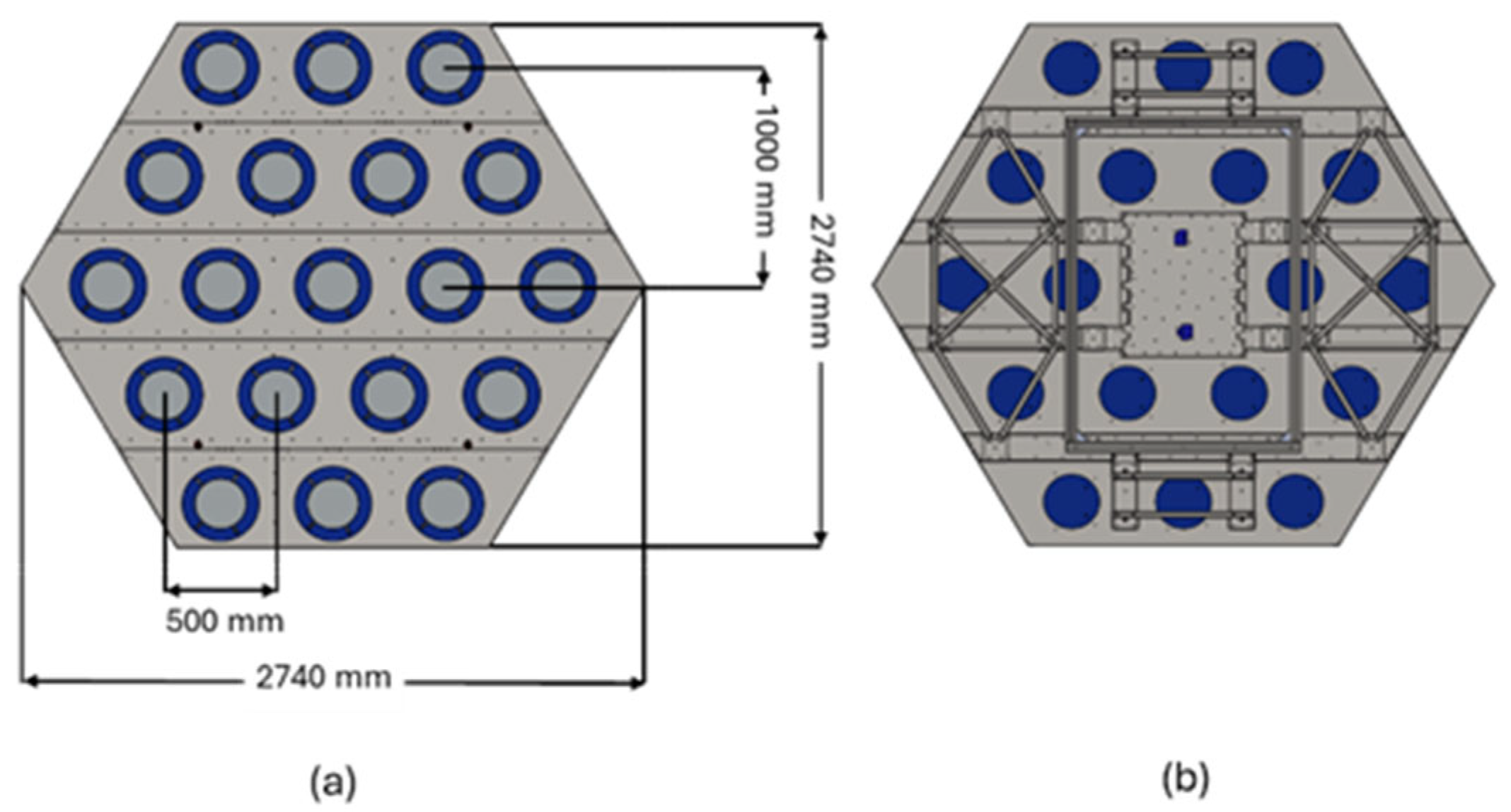
Each SA adopts a hexagonal configuration, as illustrated in
Figure 1, consisting of 19 circular radiating elements mounted on a metallic ground plane, following the design already presented in [
28]. The choice of our array configuration followed a dimensioning procedure using sensor array analysis tools. This approach considered both the performance of individual elements and the overall array specifications. The hexagonal layout of 19 elements emerged as optimal, offering improved SLL control and preventing the coherent reinforcement of grating lobes at specific scan angles. This result is mainly due to the variation in element spacing along different directions (500 mm along the
x-axis and 1000 mm along the
y-axis) and the odd number of elements, which breaks the symmetry of the layout and helps disrupt regular interference patterns.
The overall footprint of the SA spans approximately 2.7 m along its maximum dimension, corresponding to about 3.7λ at the operating frequency.
The SA is designed to provide a gain of approximately 17 dBi, with an SLL of −17 dB and a Half Power Beamwidth (HPBW) of 16°, in accordance with the specified requirements. Additionally, it supports the reception of both Right-Hand Circular Polarization (RHCP) and Left-Hand Circular Polarization (LHCP) signals on separate channels. For this reason, each individual element of the SA is equipped with two feeding ports, one for each polarization, and is connected to two separate dual beamforming networks located beneath the ground plane, both operating in the broadside direction. One feeding network is dedicated to the RHCP port, while the other is connected to the LHCP port.
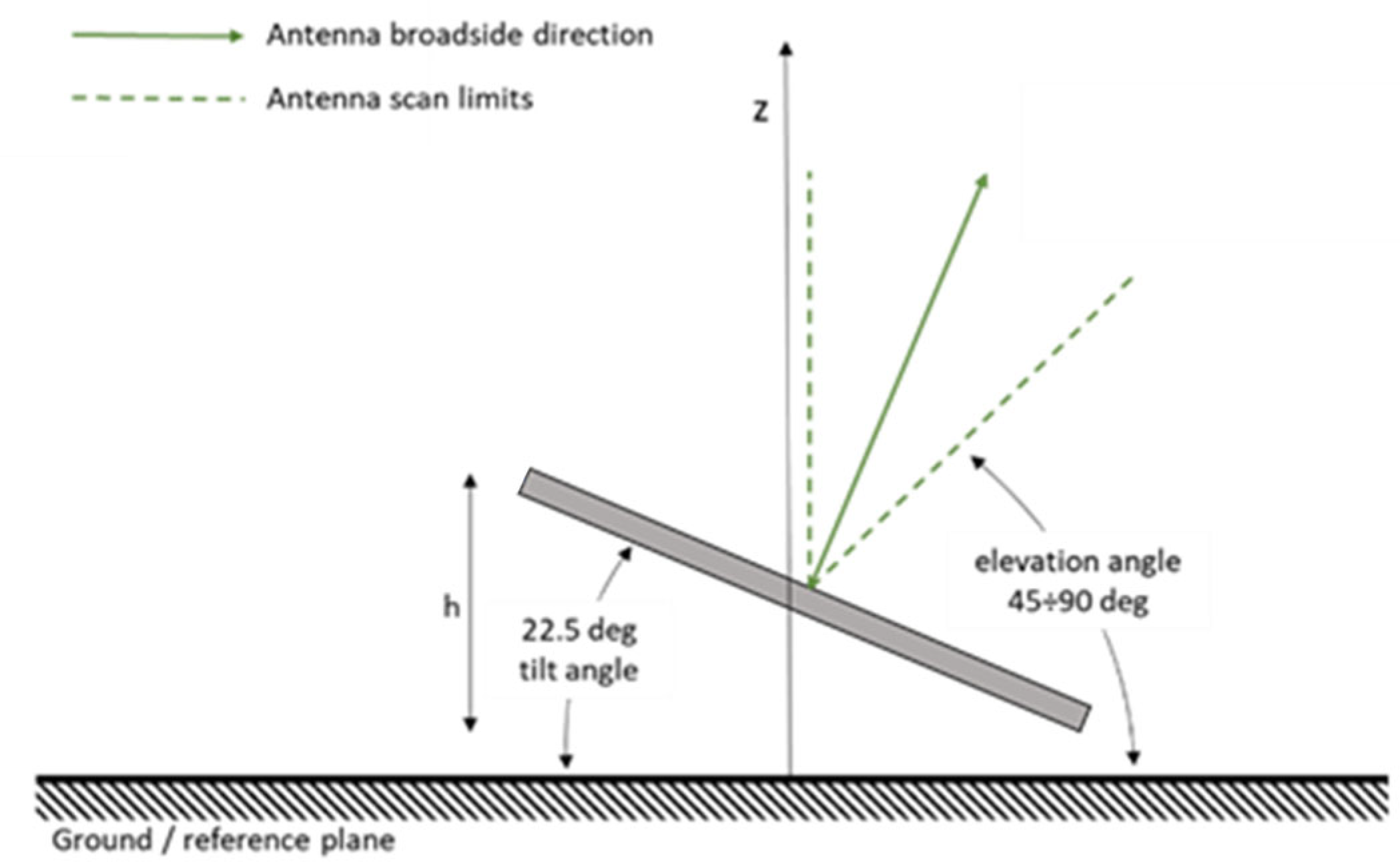
One of the main objectives of the SA system is to enable electronic scanning across a ±45° Field of Regard (FoR). To significantly reduce the complexity and physical size of the feeding networks, electronic scanning is constrained to the elevation plane. More precisely, full coverage of the FoR is achieved through a hybrid approach: in the elevation plane, electronic scanning is combined with a fixed mechanical tilt of 22.5° relative to the horizontal axis, and in the azimuth plane, beam steering is performed mechanically by rotating the entire SA array using an external positioner. In this way, the electronic scanning range is deliberately restricted to ±22.5°, thereby containing SA array movements and effectively suppressing side lobe levels. Full-wave electromagnetic simulations were carried out to characterize the resulting radiation performance, allowing for a precise evaluation of the maximum achievable beam tilt and the preservation of key array metrics, such as gain, HPBW, and SLLs, throughout the specified scanning interval. The scanning mechanism is illustrated in
Figure 2.
3.1. Single Element of SA Array
The single antenna element of the SA consists of a slotted-patch antenna, as in [
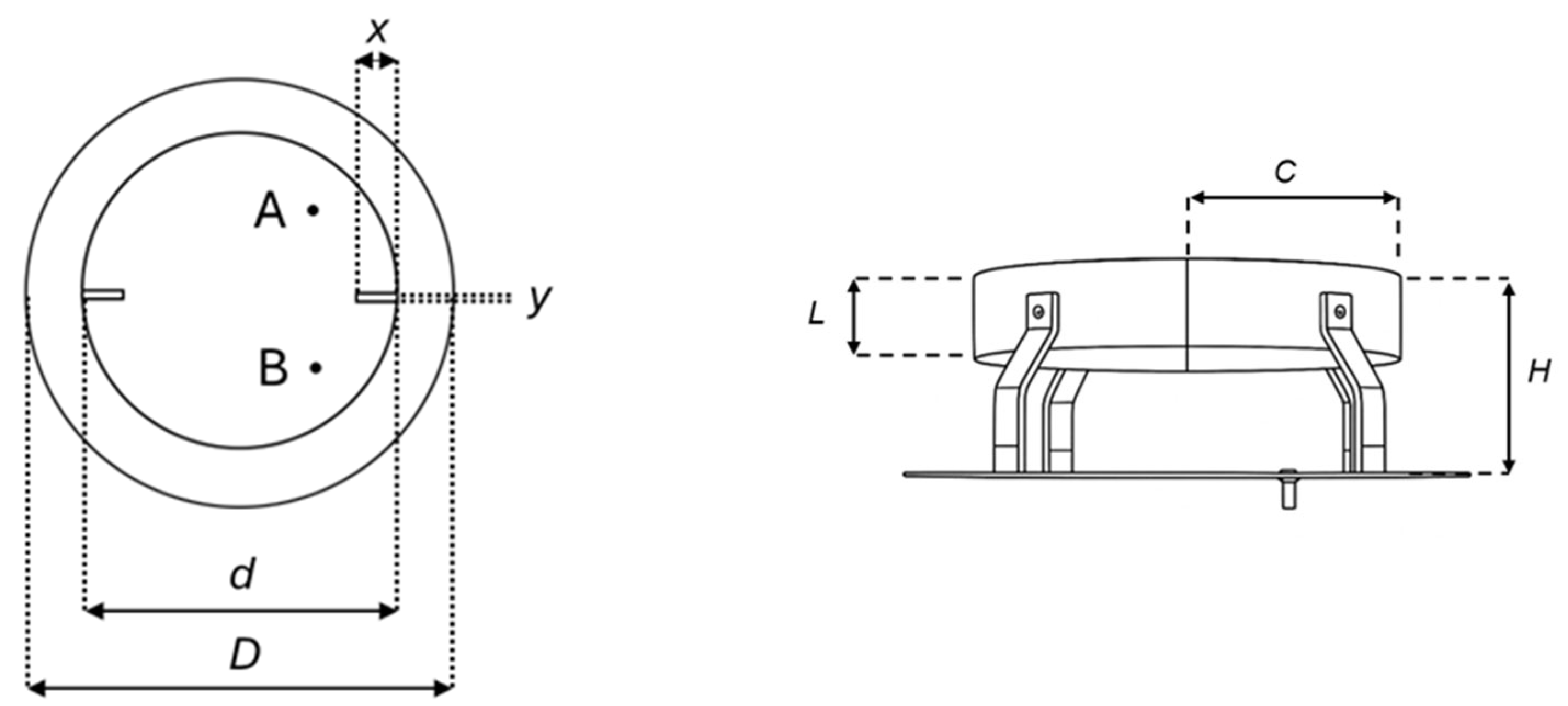
29], integrated with a semi-cylindrical metallic superstrate closed on the upper side, as illustrated in
Figure 3. The configuration of the slotted-patch antenna consists of a single metallic layer mounted on a dielectric substrate, which dimension-matches the ground plane beneath it. The substrate material exhibits a relative permittivity of 3 and a dielectric loss tangent of 0.0017, with a thickness of 1.5 mm. The metallic layer consists of a circular patch with a thickness of 35 μm. The patch incorporates two identical, narrow square-shaped slots of equal side length, symmetrically distributed along its perimeter.
It is excited by two coaxial probes positioned in planes inclined at 45° with respect to the principal axes and located 90 mm from the patch center. The slot geometry, together with the placement of the coaxial feeding points, is optimized to excite two orthogonal modes in quadrature, thereby enabling the generation of Circularly Polarized (CP) radiation. The presence of two independent feeding points also enables dual circular polarization; as illustrated in
Figure 3, Port A is designated for RHCP, while Port B handles LHCP.
Also shown in
Figure 3, the slotted patch antenna is then connected to the cylindrical metallic superstrate by four supports, which create an air gap separating the antenna from the superstrate. The superstrate consists of a circular aluminum sheet with 1 mm thickness and radius
C, positioned approximately at a distance of λ/7 above the slotted-patch antenna. Surrounding the disk, a cylindrical crown is integrated to minimize electromagnetic leakage in unwanted directions and reduce mutual coupling between adjacent elements in array configurations. The overall structure functions as a Fabry–Perot Cavity (FPC) antenna, where constructive interference between direct and reflected waves enhances radiation gain. In standard FPC designs, this condition is achieved with a cavity height of approximately λ/2 [
30]. Our configuration compensates for the reduced height through the phase-shifting effect introduced by the curved metallic rim. This geometry alters the boundary conditions and the reflection phase at the superstrate, allowing constructive interference to occur at a much lower cavity height. Although this compact structure does not reach the theoretical directivity of a full-height FPC, it achieves a gain improvement of approximately 5 dBi while maintaining circular polarization and bandwidth performance. This solution offers a favorable trade-off between size, fabrication simplicity, and electromagnetic efficiency while also avoiding the performance degradation typically associated with ultra-thin dielectric superstrates [
31].
The key dimensional parameters and their corresponding values for the SA are reported in
Table 1.
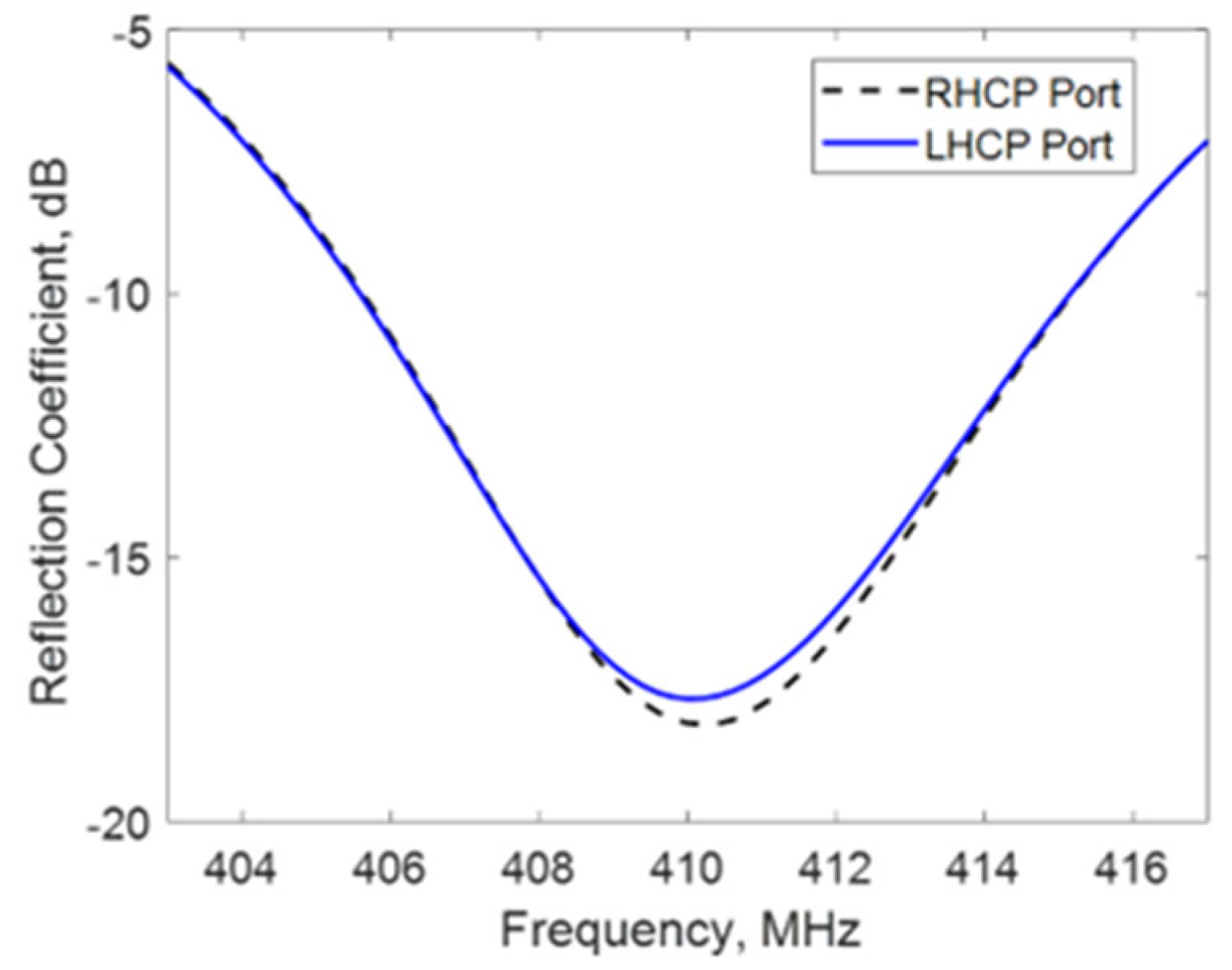
The reflection coefficient of the overall SA element structure, shown in
Figure 4, exhibits a magnitude below −10 dB over a 10 MHz bandwidth centered at 412 MHz. Measurement results are provided for both ports, corresponding to RHCP and LHCP excitations.
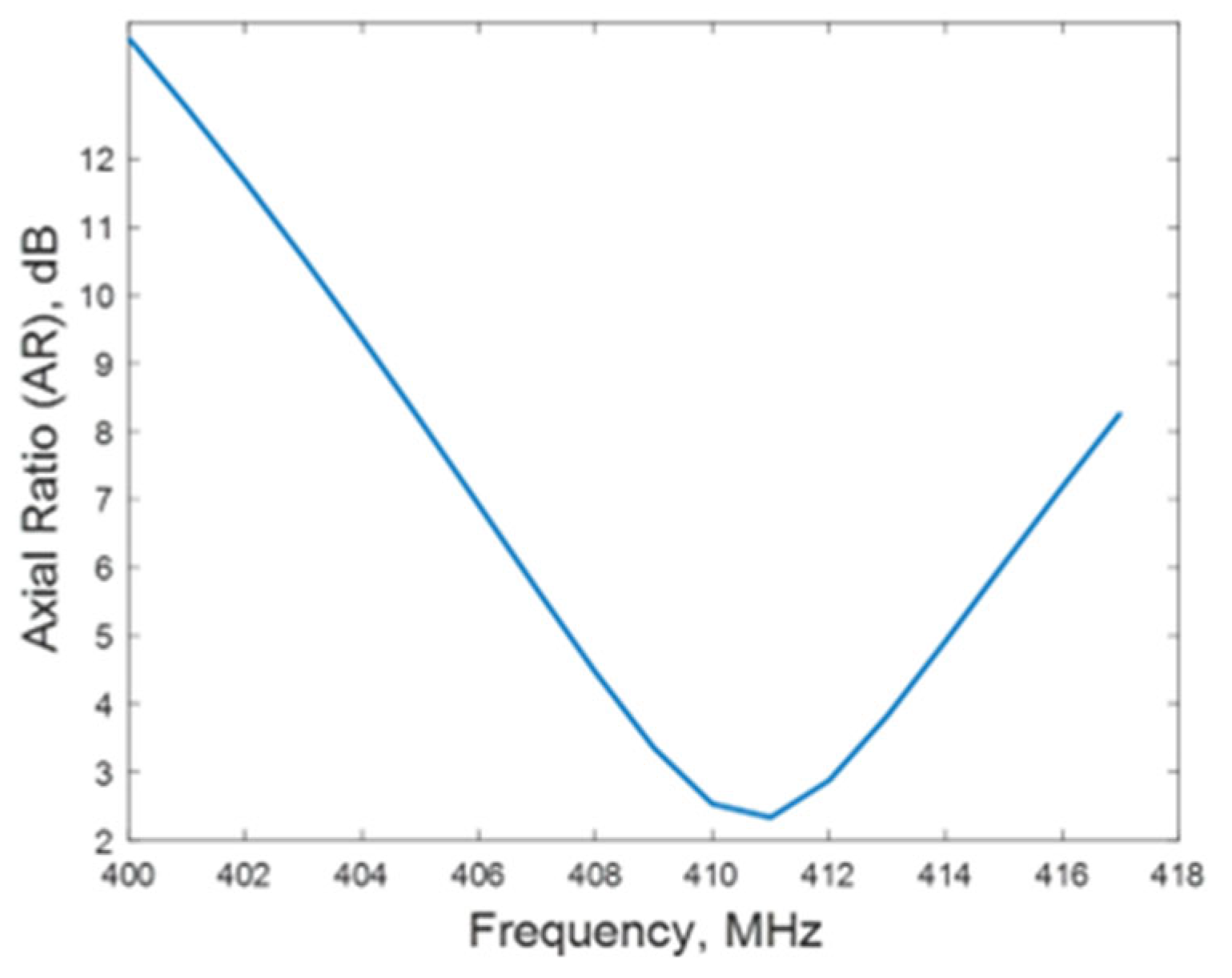
The introduction of the semi-cylindrical metallic superstrate results in an improvement of approximately 5 dBi in the realized gain compared to the standalone slotted patch antenna. The metallic reflector also effectively preserves circular polarization at 412 MHz within a 2 MHz bandwidth, as demonstrated by the Axial Ratio (AR) behavior shown in
Figure 5.
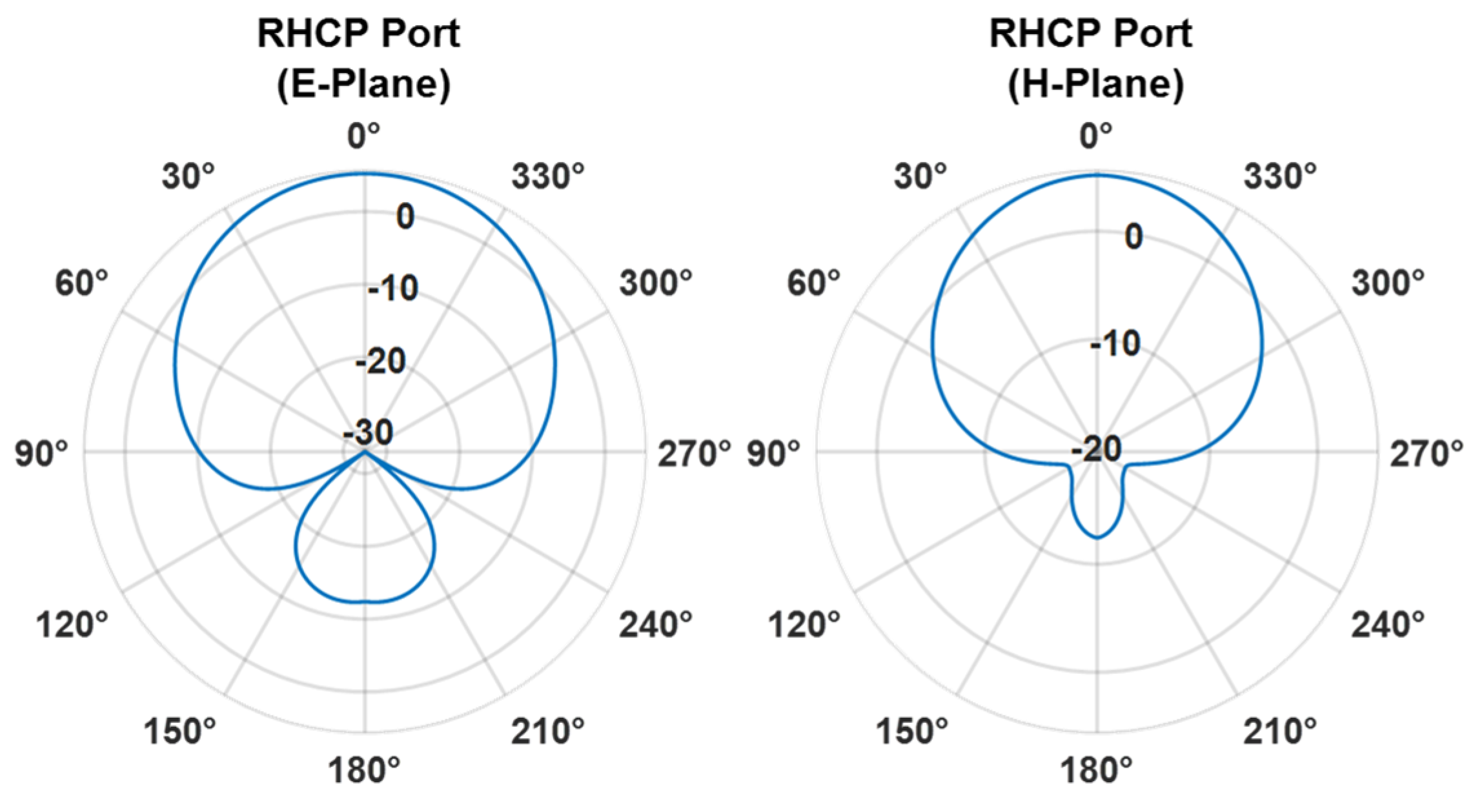
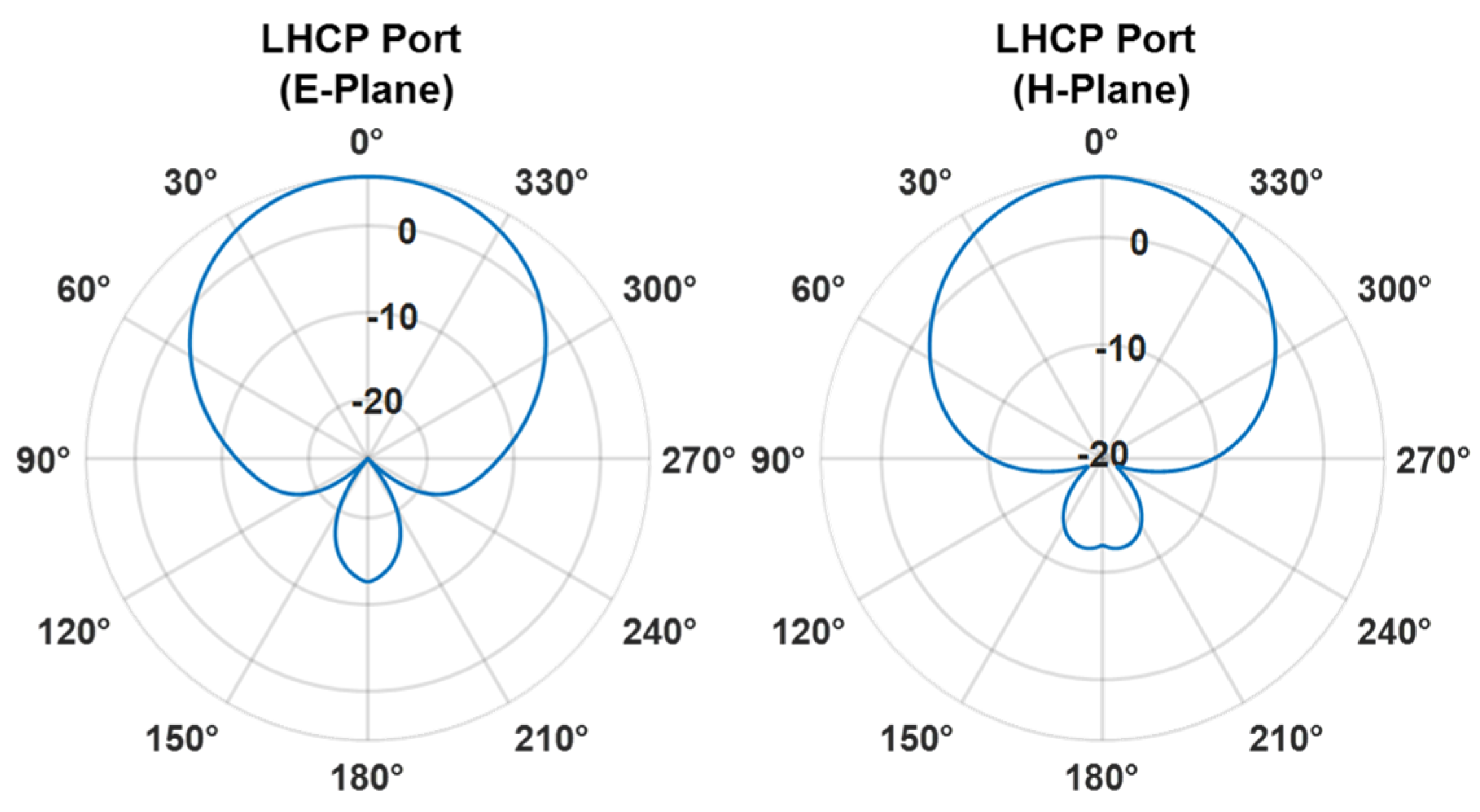
The realized gain value is confirmed by the measured results shown in
Figure 6 and
Figure 7, which present the realized gain for both RHCP and LHCP ports, in both principal planes. The HPBW is equal to 75°, while the measured SLL is approximately −10 dB in both cases.
The polarization isolation between the co-polar and cross-polar components in the E plane and H plane is approximately 12 dB, which is sufficient to ensure proper separation between orthogonally polarized signal components.
3.2. SA Feeding Network
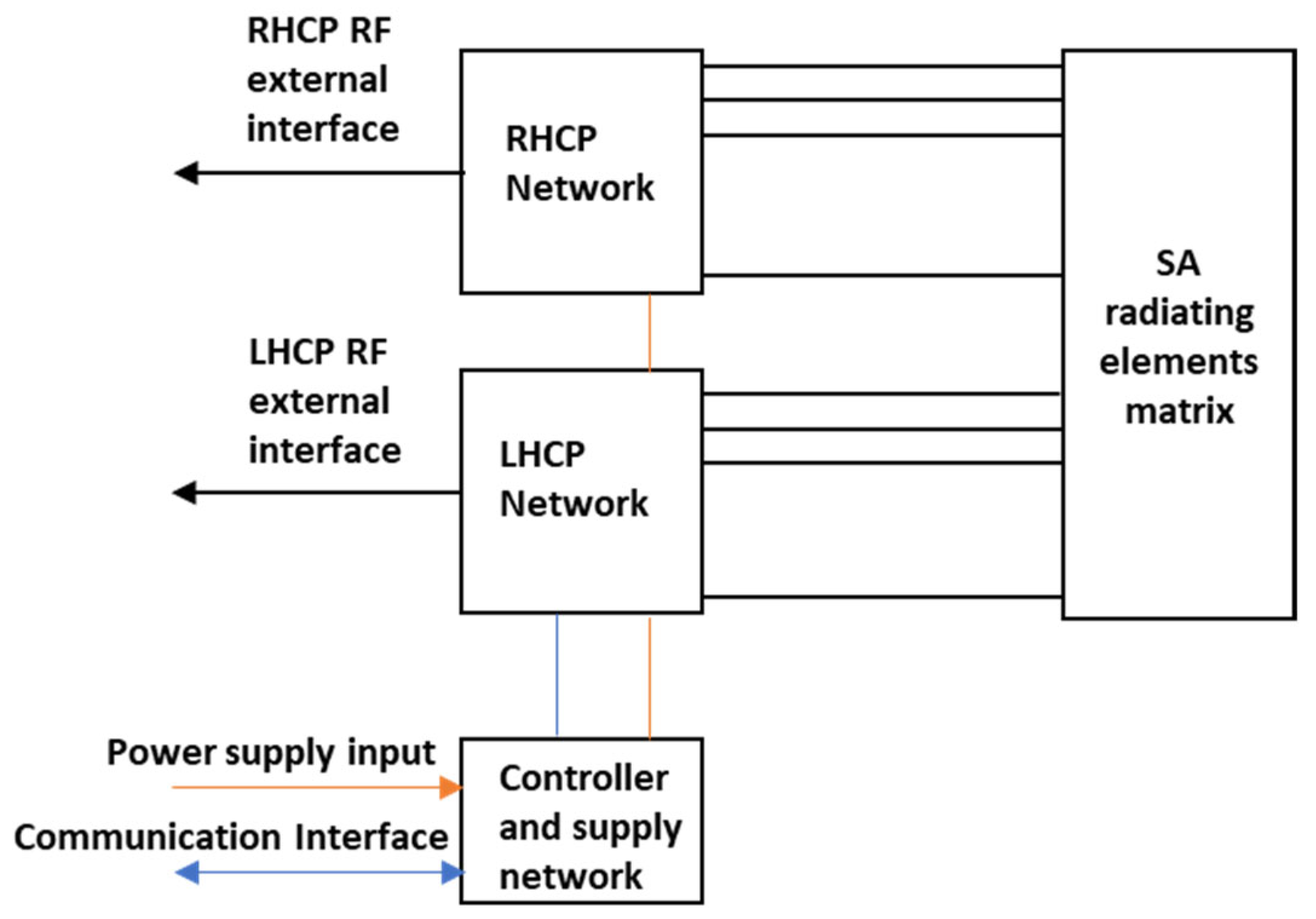
The SA system consists of three main components, as predictable from
Figure 8.
The first is the SA array of dual-CP slotted-patch antennas with cavity-based metallic superstate. The second component currently consists of analog feeding networks, one for each polarization, which combine signals from the SA elements. These networks should enable phase shifting and amplitude tapering to facilitate electronic scanning and beam shaping in the elevation plane. However, in our case, the feeding networks are prototypes intended to validate the general operation of the antenna system, primarily in the broadside direction. They are not yet configured to perform full beamforming functionality or dynamic beam steering.
Finally, a dedicated circuit manages the DC power supply and controls the beamforming networks. This unit handles power distribution and enables communication with external systems for SA control.
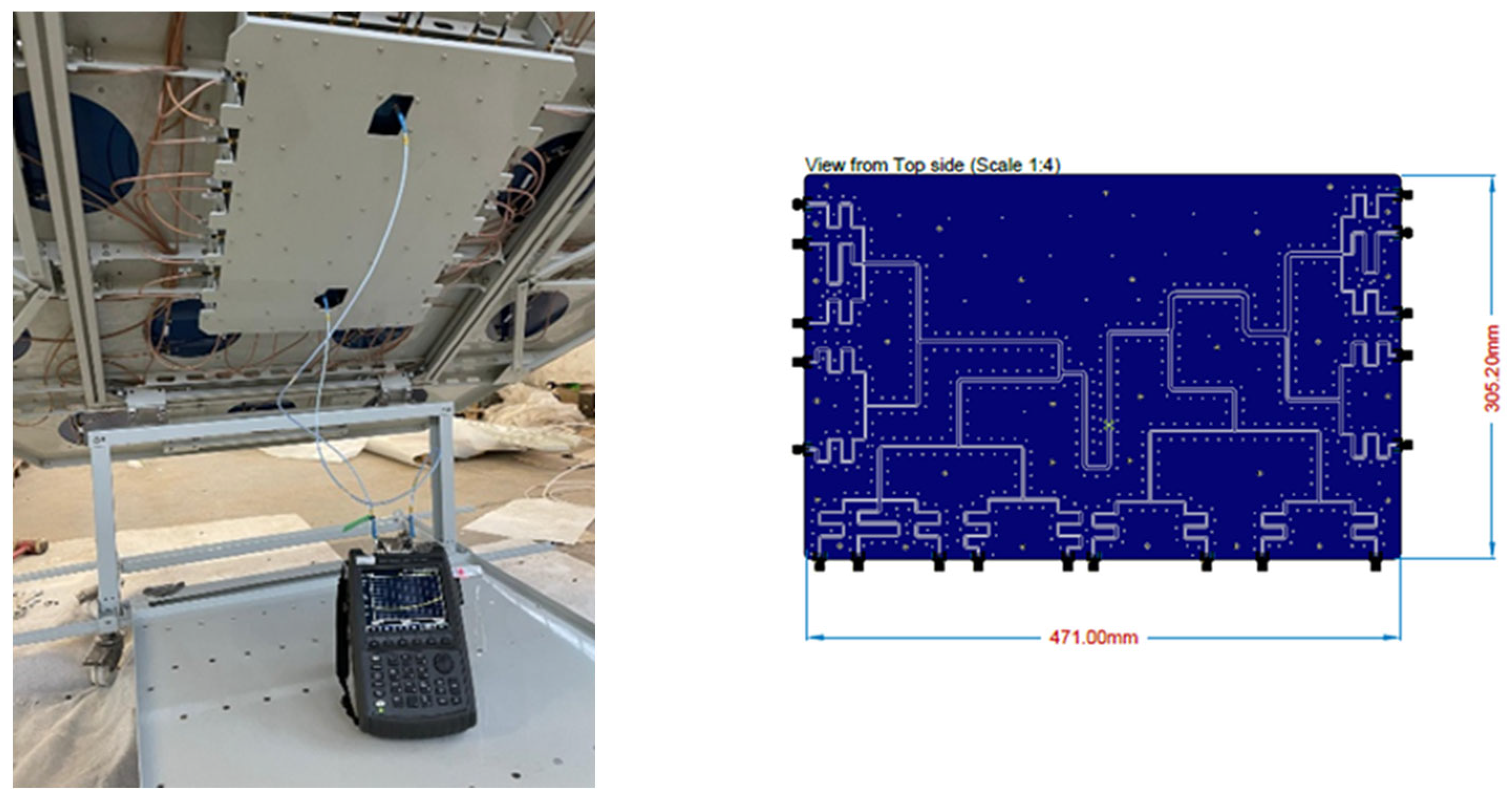
The SA comprises 19 radiating elements, each featuring two RF connectors, one for each polarization. The connectors are directly routed to two separate beamforming boards located beneath the ground plane: one dedicated to RHCP, the other to LHCP. The overall dimensions of a single feeding network are approximately 470 mm per 300 mm.
Figure 9, on the right, illustrates the layout of the network, showing the individual transmission lines of the power division structure, which have been miniaturized to fit within the available space. The circuit is implemented on a 0.8 mm thick dielectric layer made of ASTRA MT-77, the same material used for the slotted patch antenna substrate. Amplitude tapering across individual channels can be implemented by introducing controlled impedance mismatches at the corresponding ports. In the same figure, on the left, the physical placement of the networks is also shown.
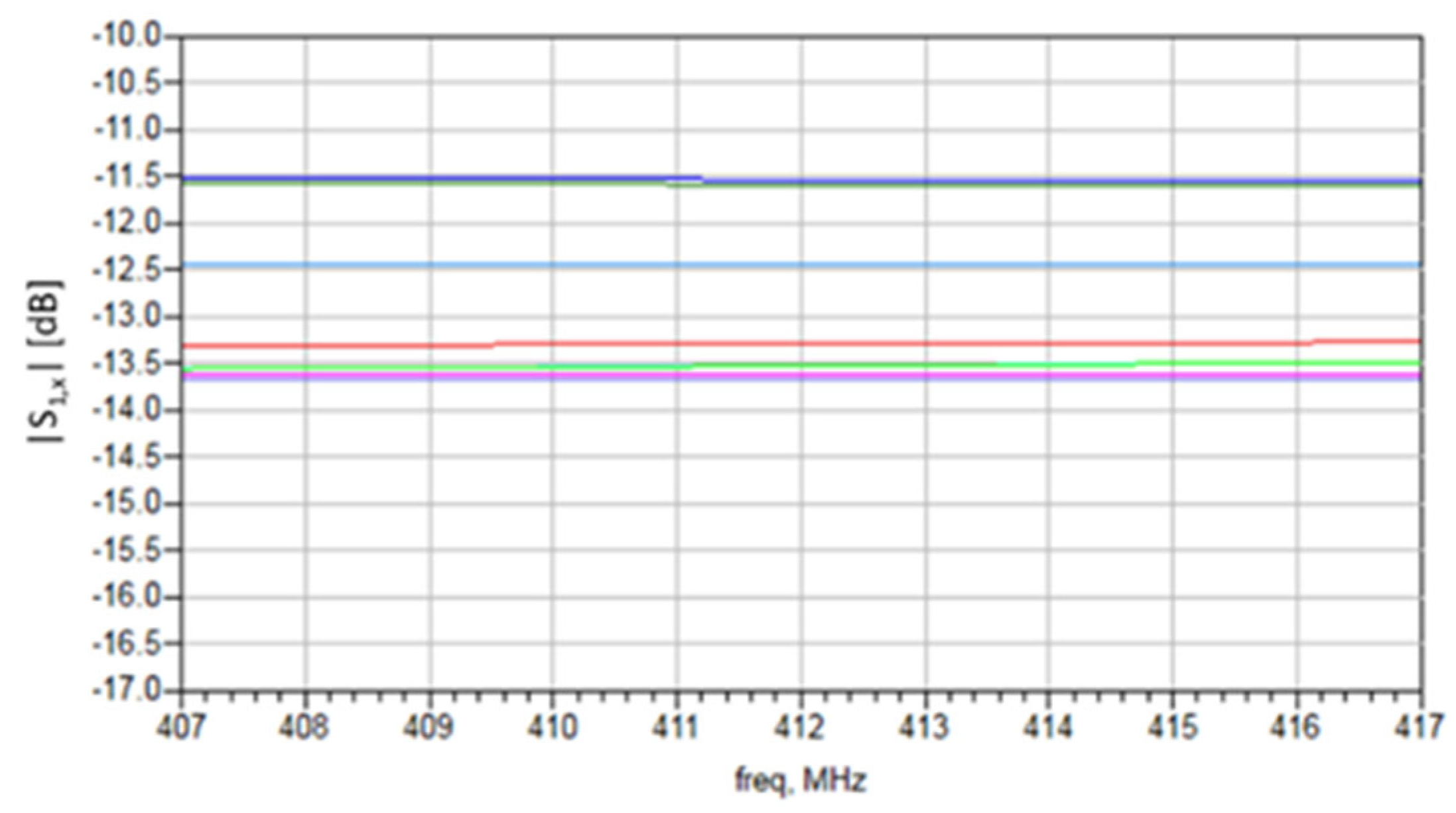
The feeding network is a corporate combining network with 19 input ports and a single output port, providing equal power distribution with a 1/19 split at each input port. This uniform power division can be verified through the scattering parameters of the network, representing the transmission from each input port to the output port. In this context, port 1 denotes the output (or sum) port, while ports x corresponds to the index of the 19 input ports. To ensure equal contribution from each input, the scattering coefficient,
, is defined as
, which corresponds to an amplitude attenuation of approximately −12.79 dB. The simulated scattering parameters for one of the network configurations are reported in
Figure 10, showing a maximum variation of 1 dB among different paths. The corresponding parameters for the dual network are identical, as expected from the inherent duality of the two architectures.
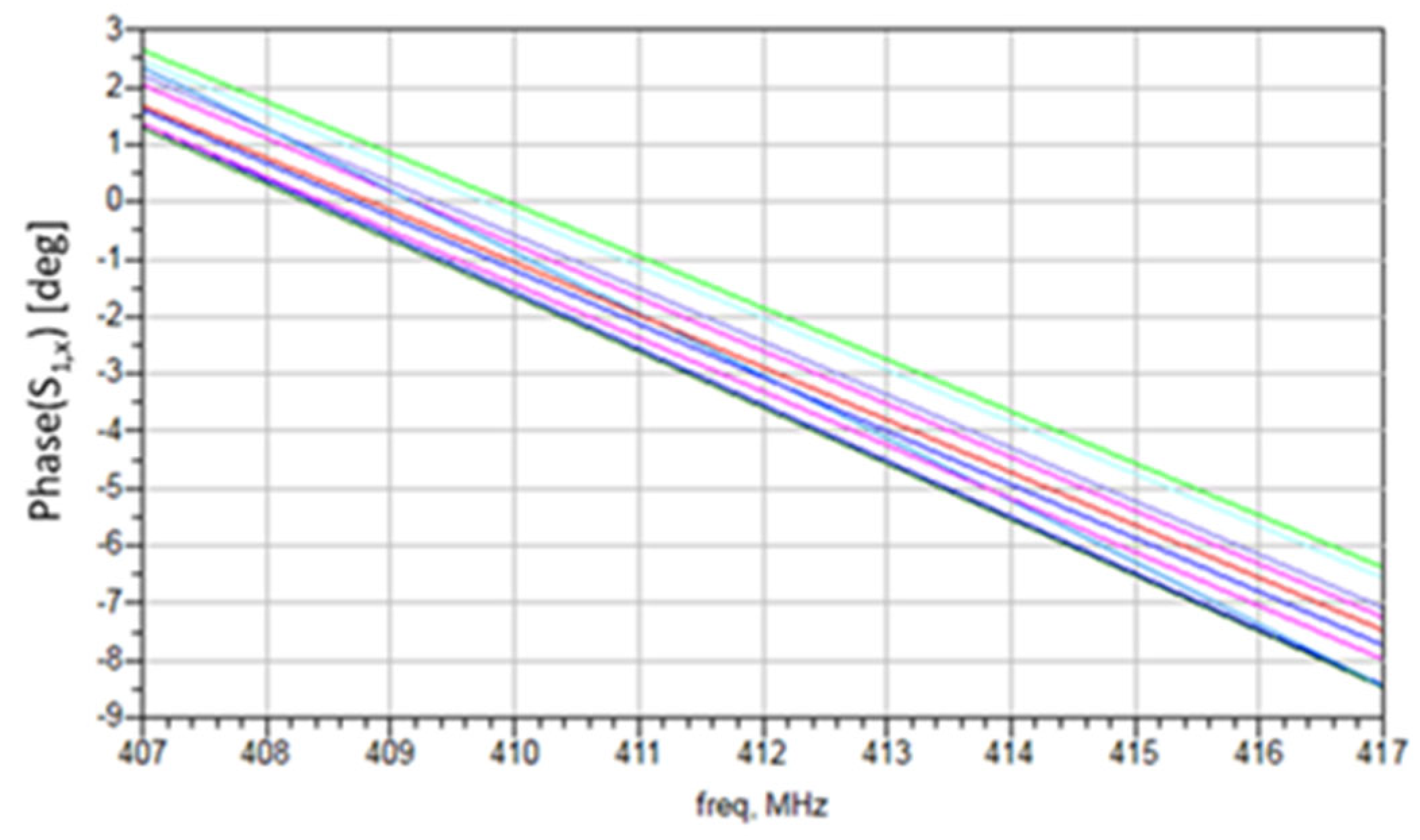
Each network guarantees the phase alignment of the signals at all input ports within ±2.0° as shown in
Figure 11; to support this requirement, all 38 RG142 coaxial cables (19 per polarization) connecting the antenna ports to the beamforming boards are precisely matched to a length of 1 m, with a tolerance of ±2.8 mm, thereby ensuring phase coherence across the entire SA array.
4. Array Simulated Results
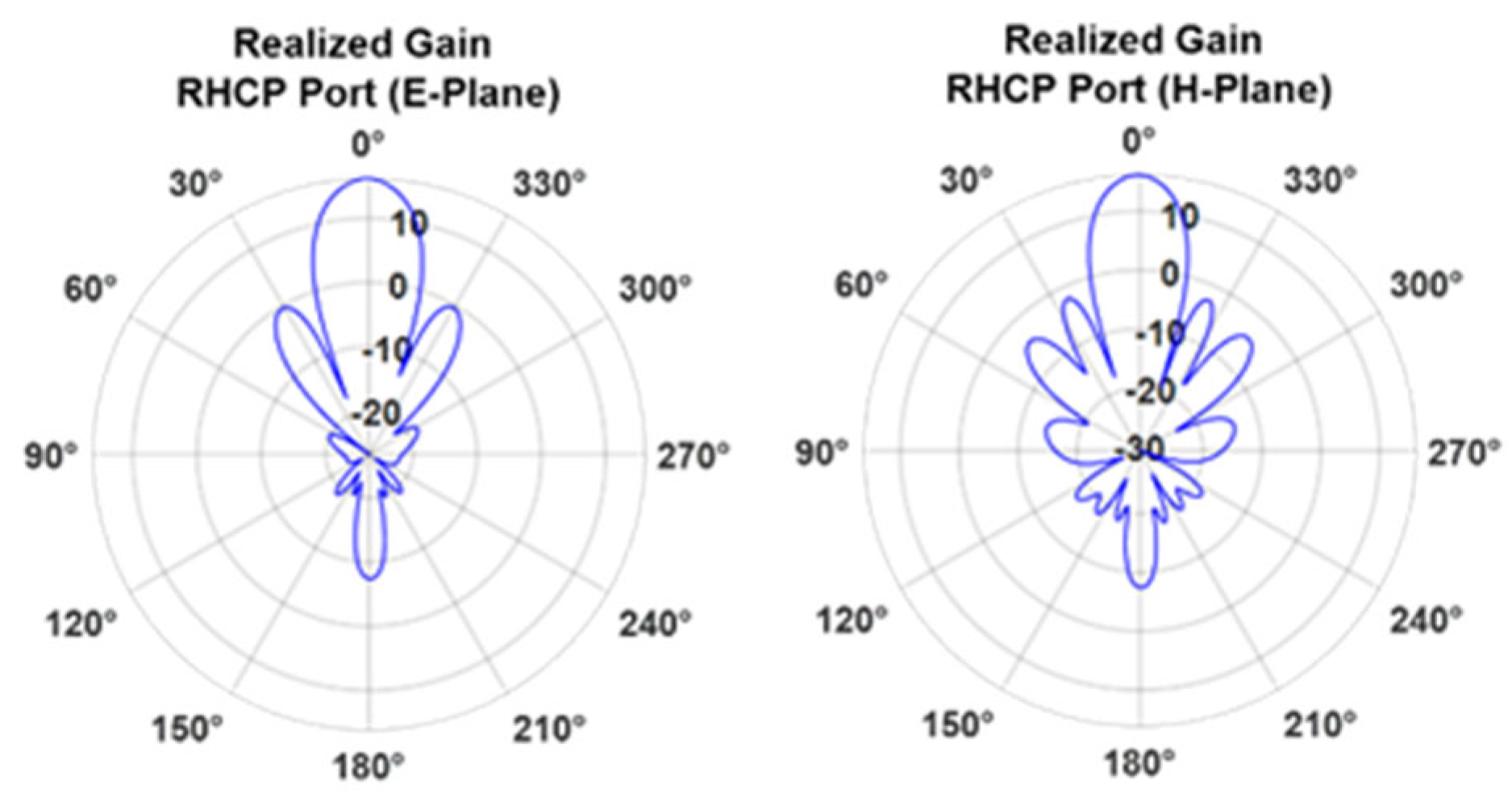
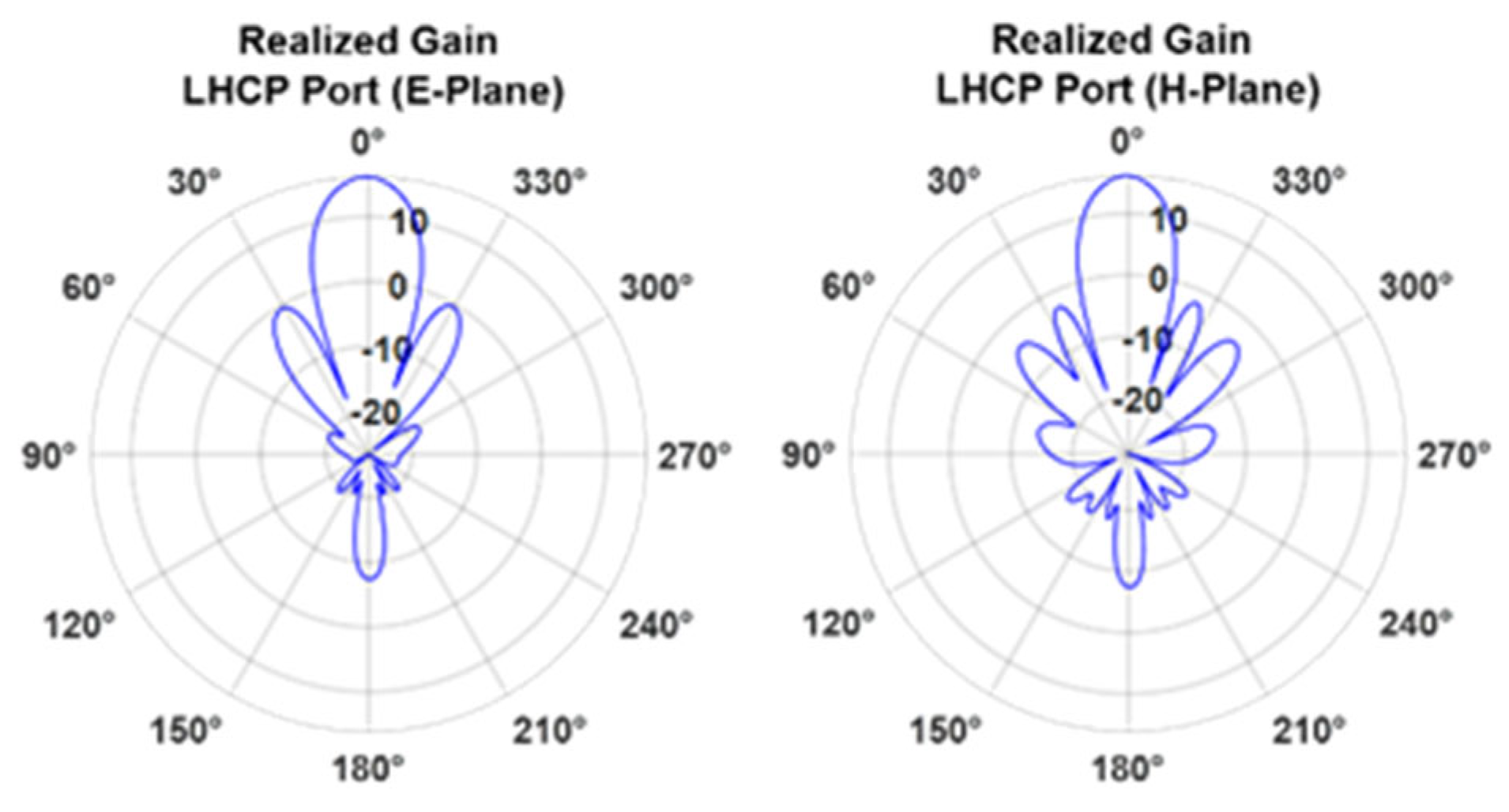
To evaluate the performance of the proposed SA array design, full-wave electromagnetic simulations have been performed, confirming that the required specifications have been met. The radiation patterns of the SA array in the E and H planes, for both the RHCP and LHCP ports, are presented in
Figure 12 and
Figure 13, respectively. The maximum realized gain for both ports is approximately 17 dBi, while the HPBW is 16°. The SLLs are around −16 dB for RHCP and better than −18 dB for LHCP.
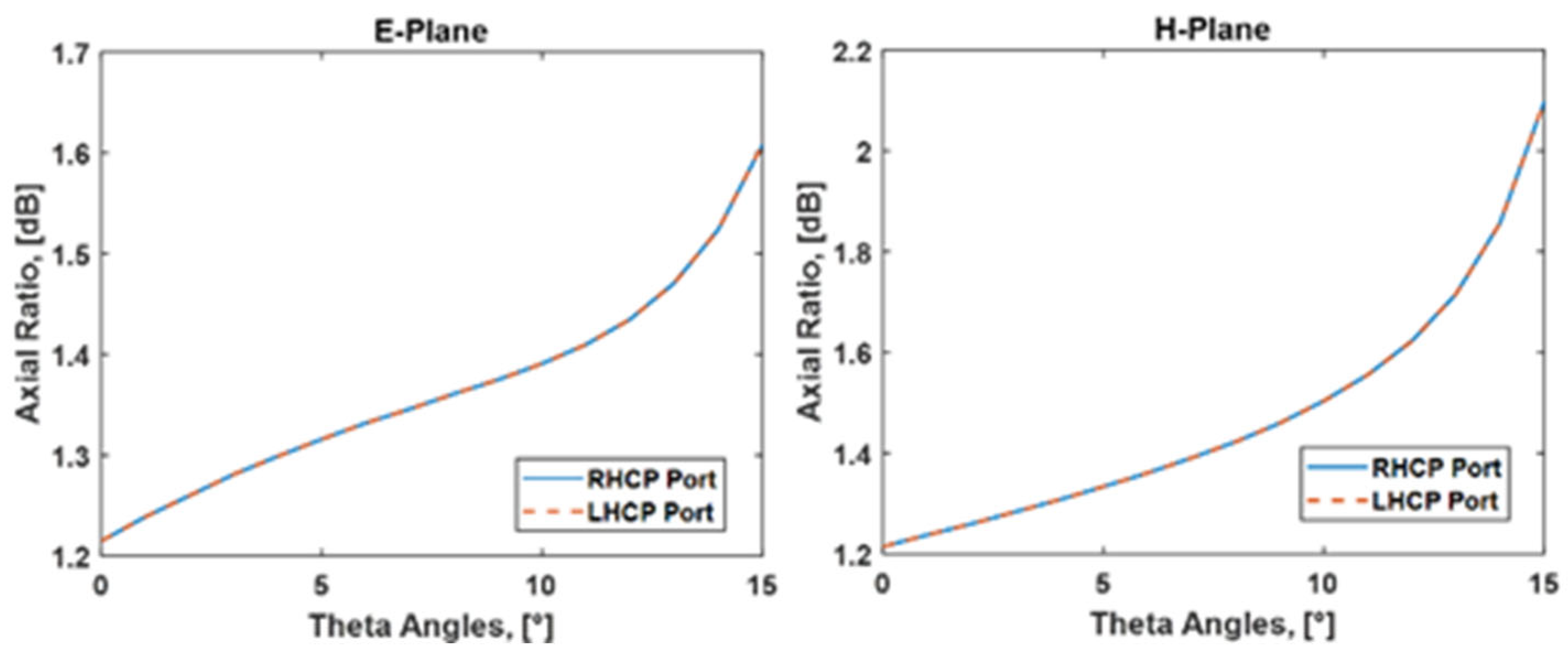
The SA array system exhibits favorable AR performance, primarily due to the incorporation of slots and the dual feeding configuration for each radiating element.
Figure 14 presents the simulated AR of the proposed antenna array at the frequency of 412 MHz in both the φ = 0° (E plane) and φ = 90° (H plane) cuts, showing values consistently below 3 dB across the entire main beamwidth.
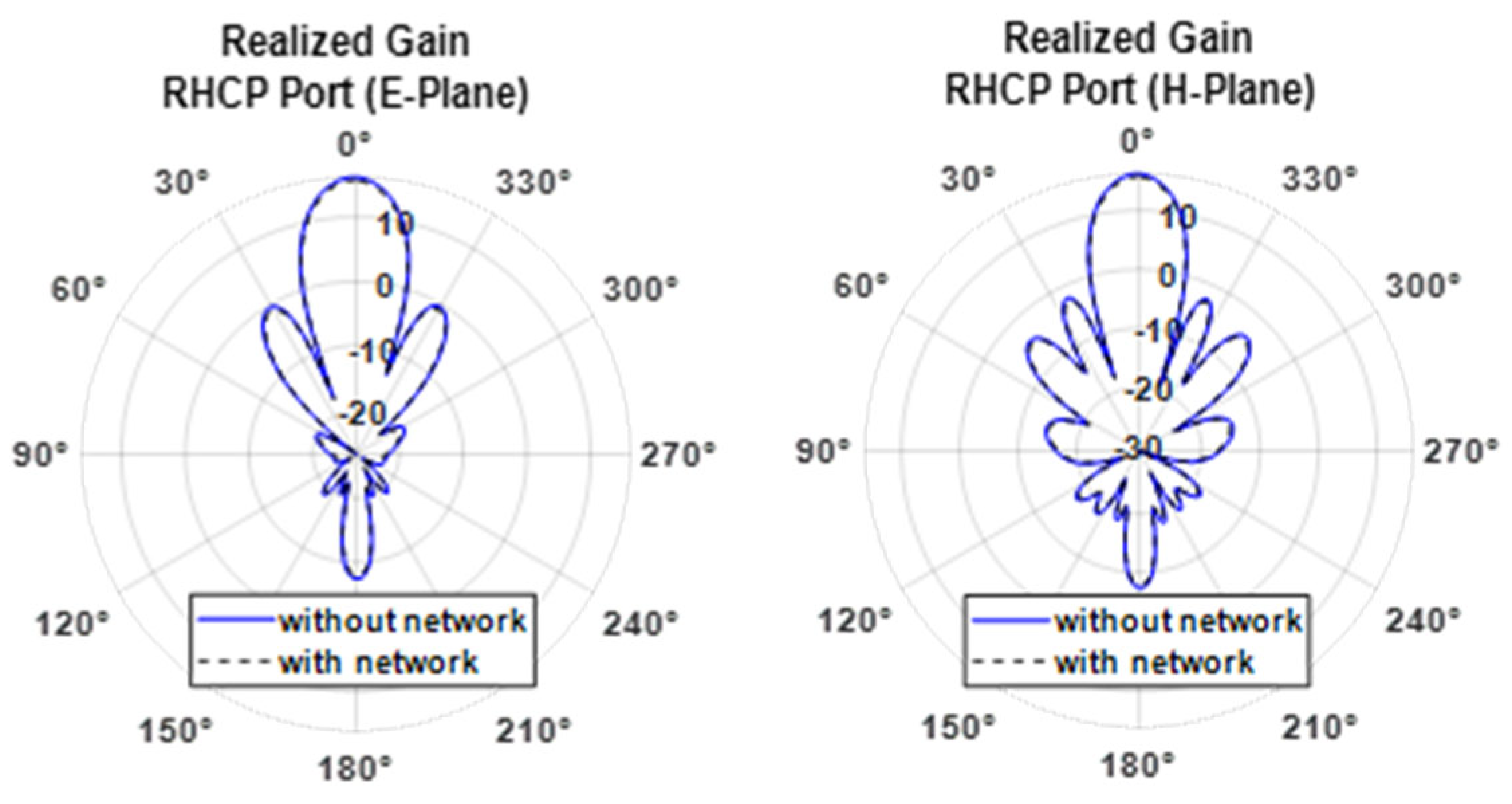
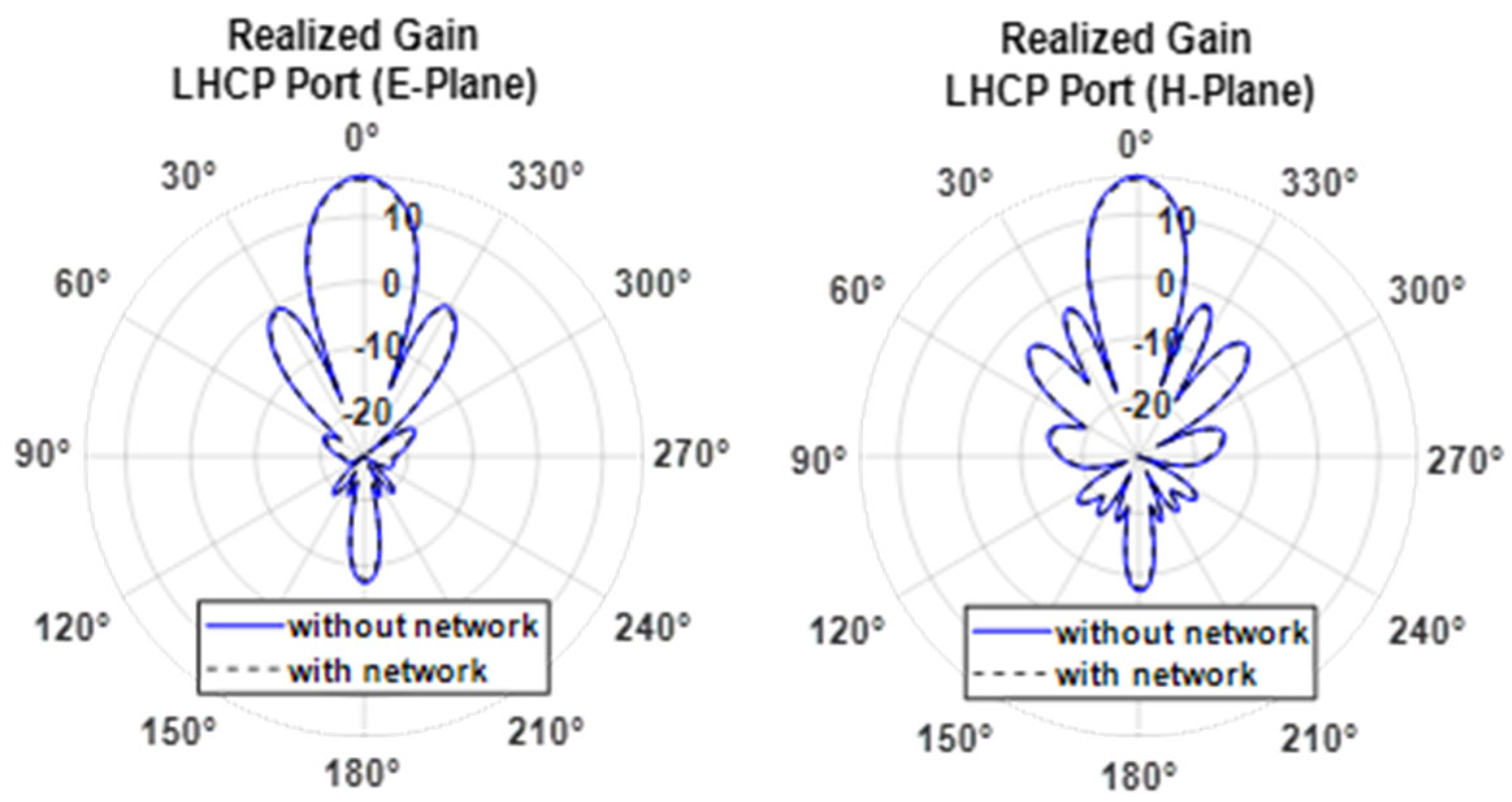
Also, a full-wave electromagnetic analysis is performed on the complete system, which includes the SA array and the two feeding networks dedicated singularly to RHCP and LHCP, to assess its overall performance. The S parameters of the feeding networks were integrated into the antenna schematic to analyze the system’s electromagnetic behavior, particularly in terms of radiation pattern and gain. The same set of S parameters is used for both the RHCP and LHCP networks, with each port connected to the corresponding port of the individual radiating elements. This approach enables the identification of any losses introduced by the feeding structure.
Figure 15 and
Figure 16 compare the realized gain across both the RHCP and LHCP ports and E and H planes, revealing a slight reduction in realized gain of approximately 0.5 dBi due to the presence of the feeding networks.
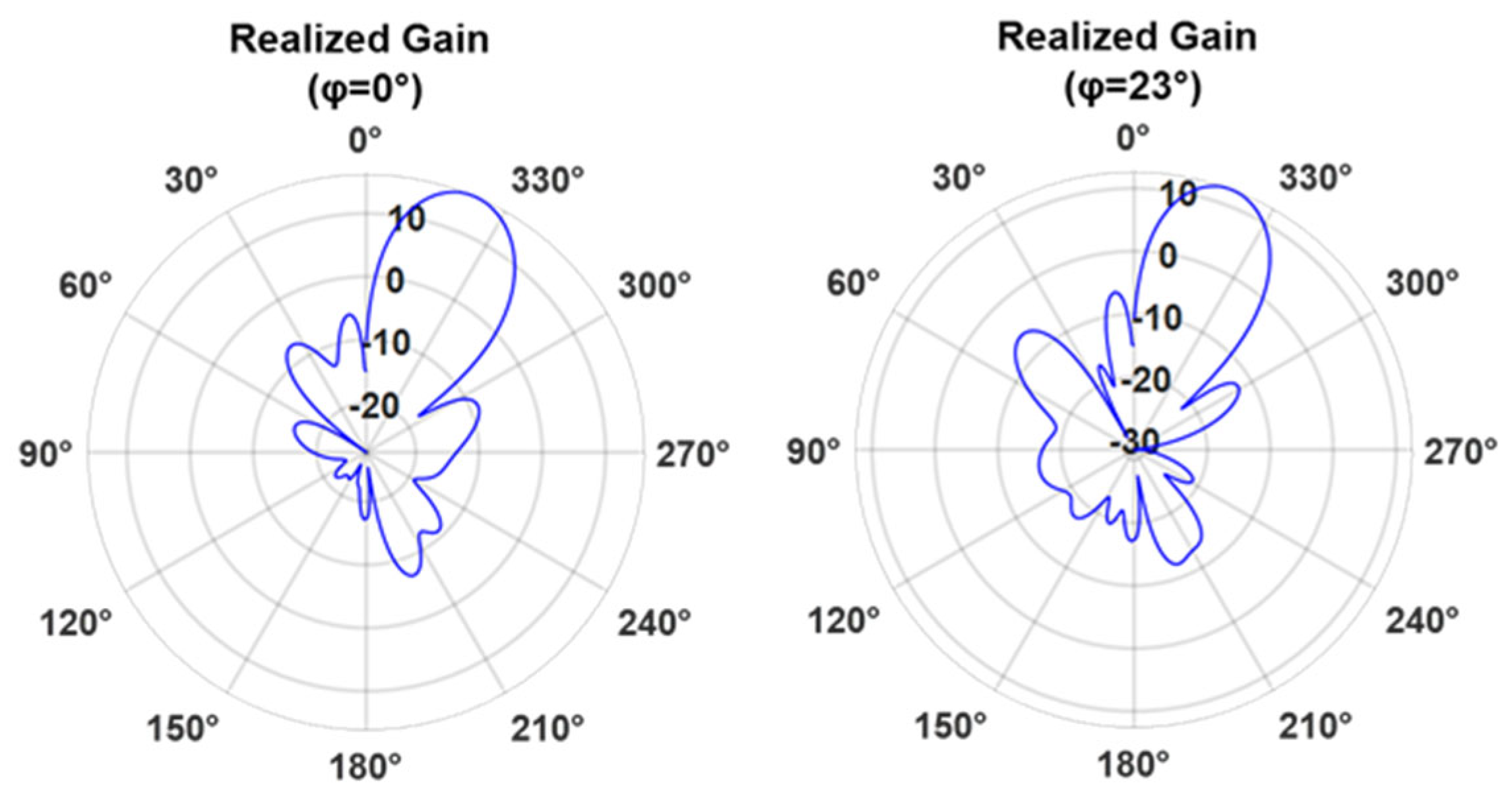
Although internal analog phase shifters have not yet been implemented, electronic beam steering in elevation up to ±22.5° relative to the array normal has been thoroughly investigated through simulation. These analyses have provided a detailed understanding of the trade-offs involved and have supported key architectural decisions in the design process.
Figure 17 shows the realized gain in both the E plane and steered plane for a beam tilt rounded to 23°. This result was obtained by applying custom tapering and steering during the post-processing of the antenna simulation files. The applied tilt leads to an increase in the HPBW to approximately 20°, along with a noticeable degradation in the SLLs. In the E plane (φ = 0°), the maximum realized gain is preserved. However, in the H plane (φ = 90°), the main lobe is no longer visible at its peak due to a shift exceeding one full HPBW. For this reason, the H plane pattern is omitted and replaced with the radiation pattern in the steered plane (φ = 23°), which accurately reflects the main beam direction.
We also conducted an evaluation of the active S parameters for the 19-element antenna array. The analysis was performed separately for the two circular polarizations (RHCP and LHCP) by simultaneously exciting the corresponding ports with amplitude and phase distributions configured to achieve the 23° beam tilt. The active S parameters were computed at the design frequency and provide an accurate assessment of the input impedance matching under beamforming conditions. For both RHCP and LHCP excitations, the active reflection coefficients remain below −9 dB, indicating satisfactory impedance matching across the array.
This preliminary study will be further investigated in future work to optimize beam steering performance and reduce associated degradations.
5. Prototype Measurement Results
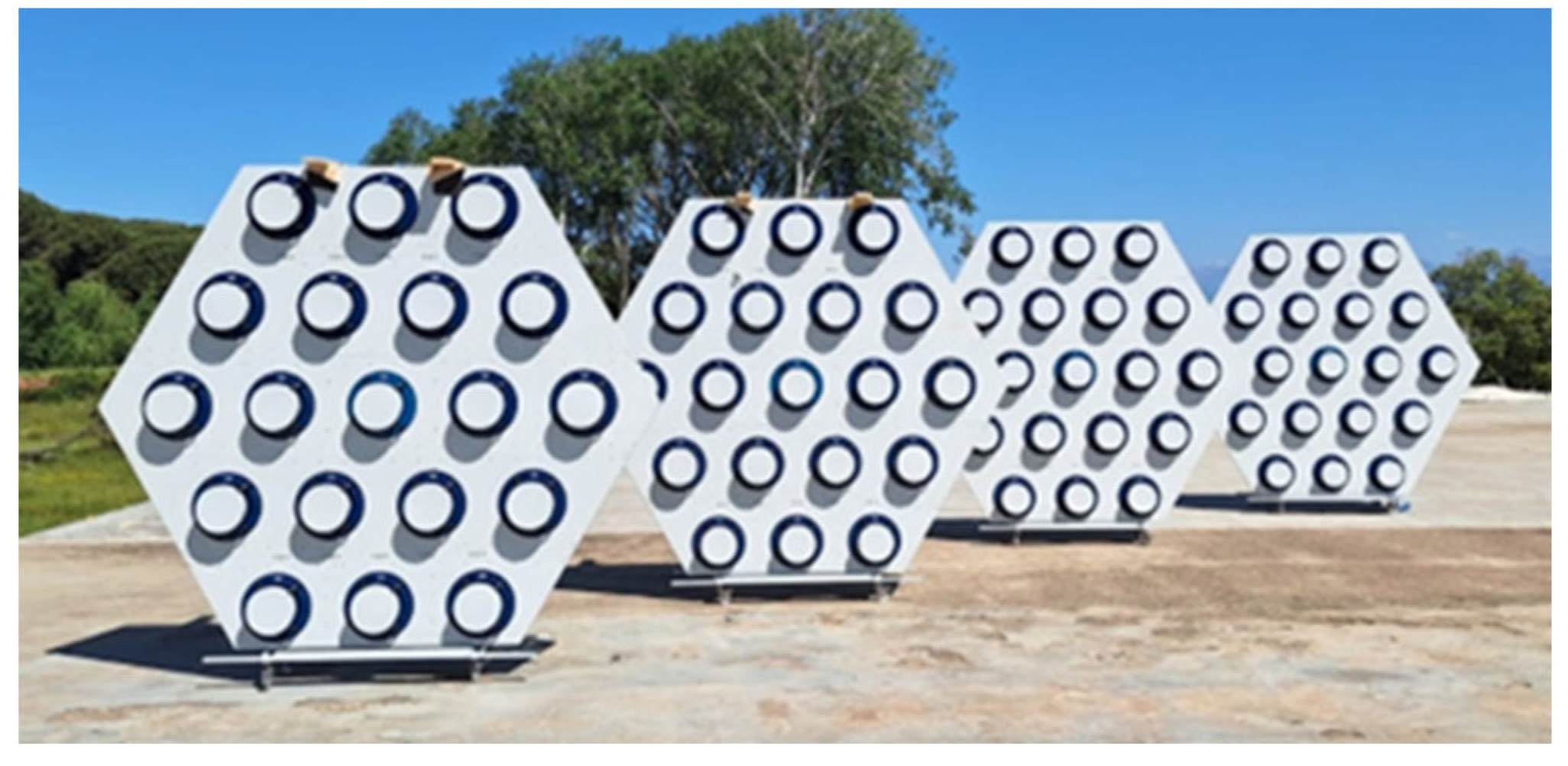
The final prototype of the SA array is shown in
Figure 18.
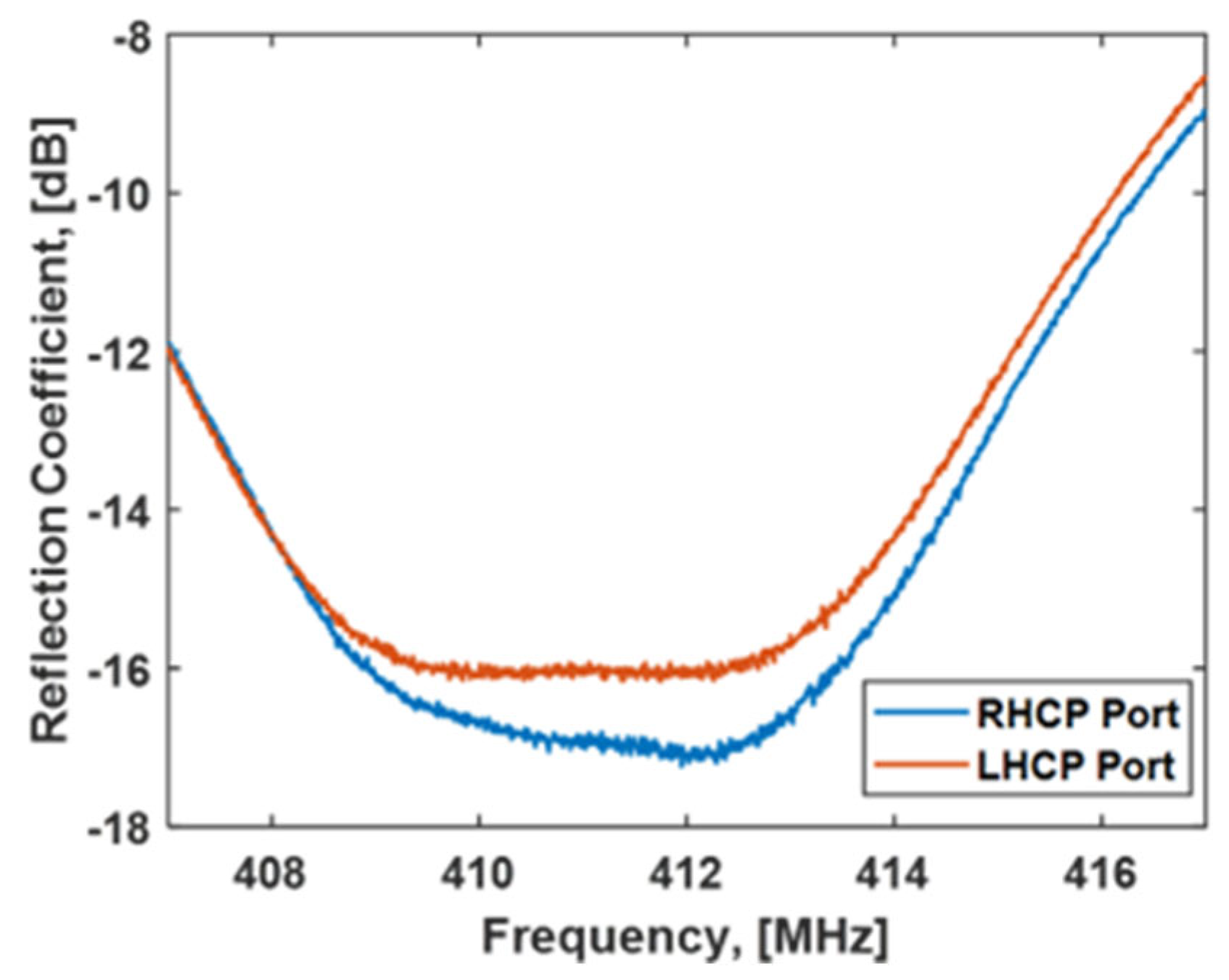
A measurement campaign was conducted to evaluate the radiative properties of the SA array. The input impedance was obtained using a Vector Network Analyzer (VNA), calibrated at the two ports of the feeding network. To reduce environmental influence on the measurement, tests were carried out in an open-site setup with a reference ground plane. The measurement procedure involved alternating connections: port 1 was connected to the output of the RHCP network, while port 2 corresponded to the LHCP path. During each measurement step, one port was connected to the SA network while the other was terminated with a matched 50 Ohm load, and vice versa. The results, expressed in terms of reflection coefficient magnitude, are presented in
Figure 19 and show values below −10 dB across the entire frequency band of interest, from 407 MHz to 417 MHz.
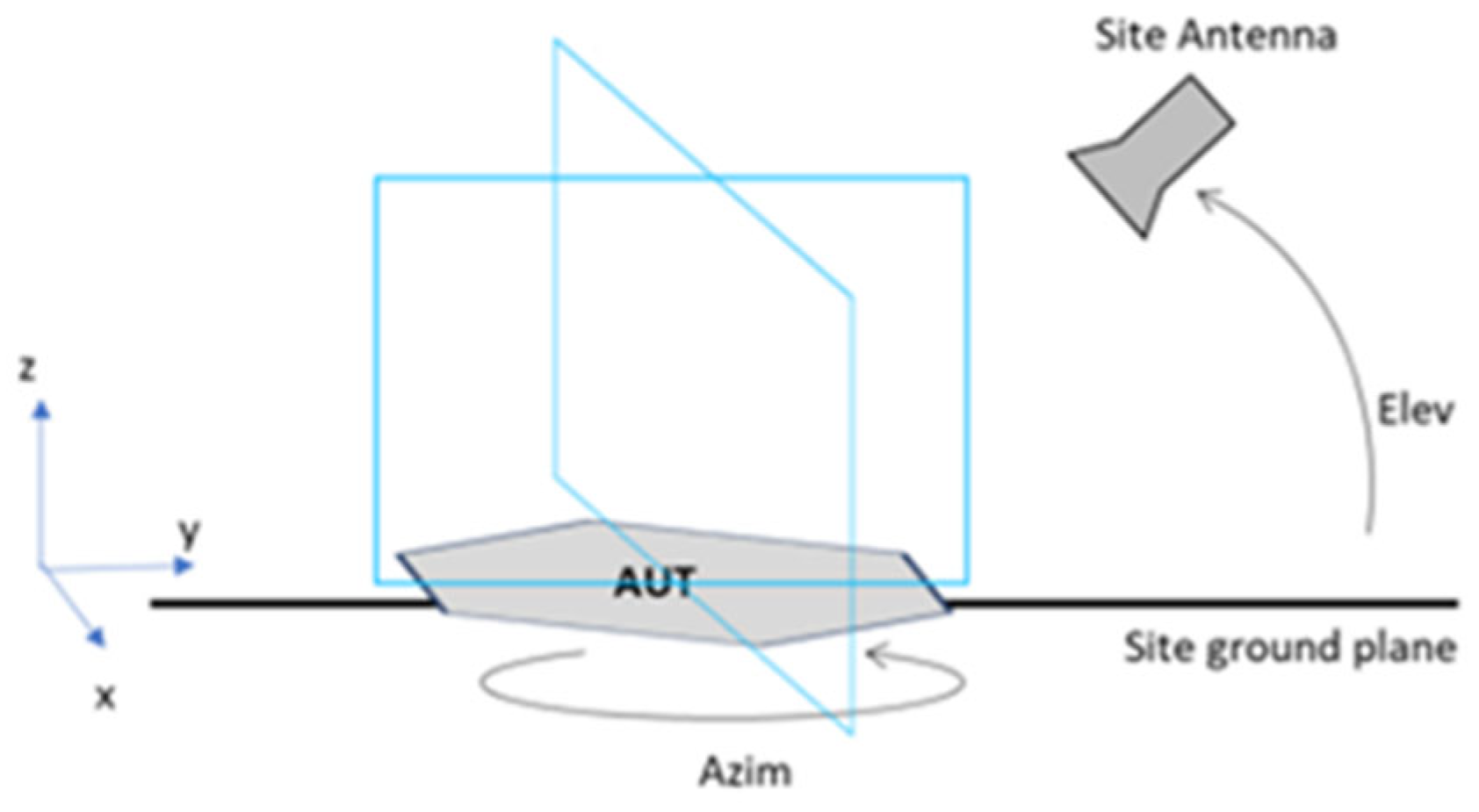
The radiation pattern of the SA array was measured by placing it on a reference ground plane and recording the received power as a function of the incidence angle of the transmitting antenna over the two principal orthogonal planes. A schematic diagram of the measurement setup is shown in
Figure 20.
The transmitting site antenna, operating in circular polarization, was positioned at approximately 15 m to ensure far-field conditions. The angular scans were performed in two cuts: one in the azimuth plane (Phi = 0°) and the other in the elevation plane (Phi = 90°). The radiation pattern for each SA polarization port was derived from the received power at each scanning angle, under both RHCP and LHCP transmission. The gain values were obtained using the two-antenna method, with the single patch element of the SA array used as the reference antenna.
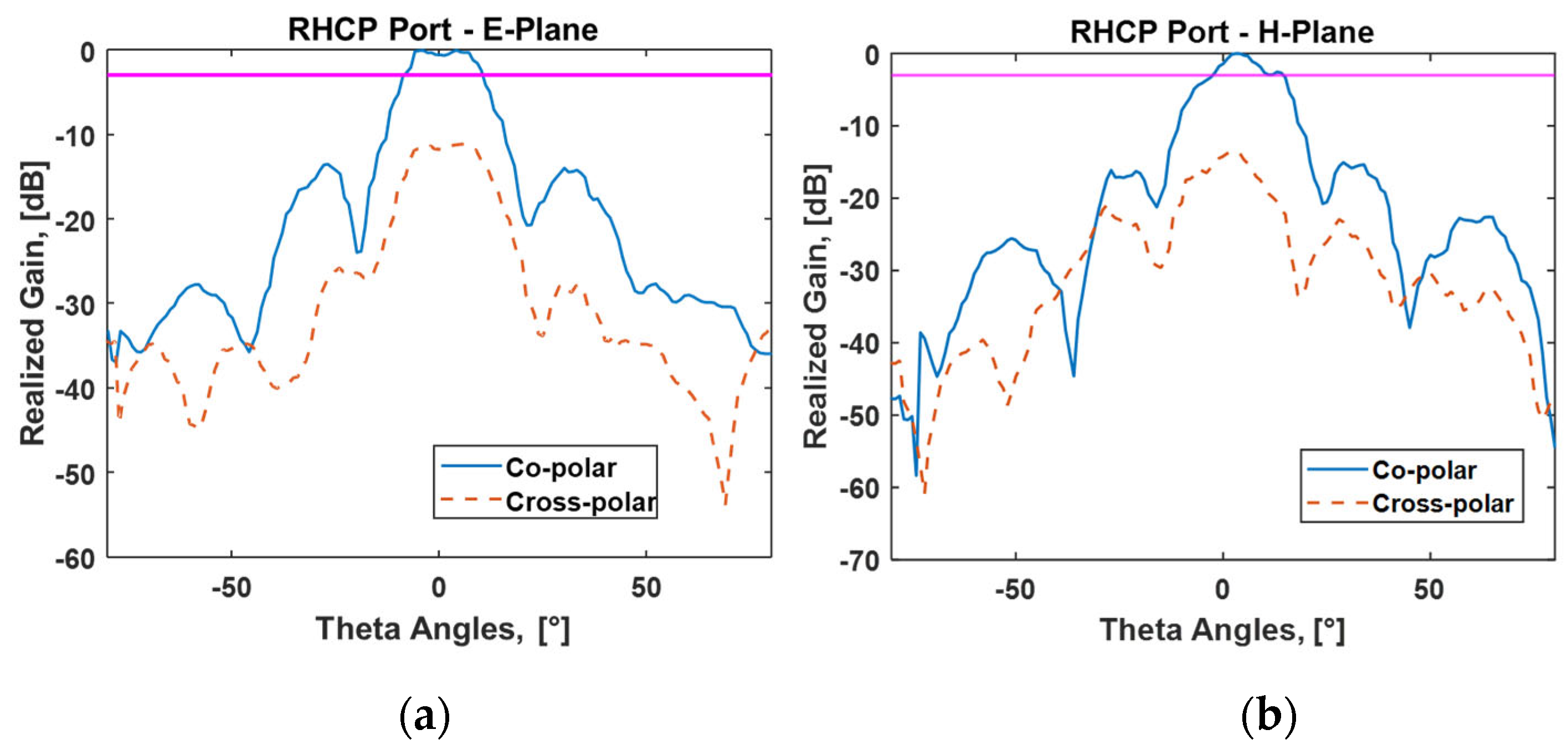
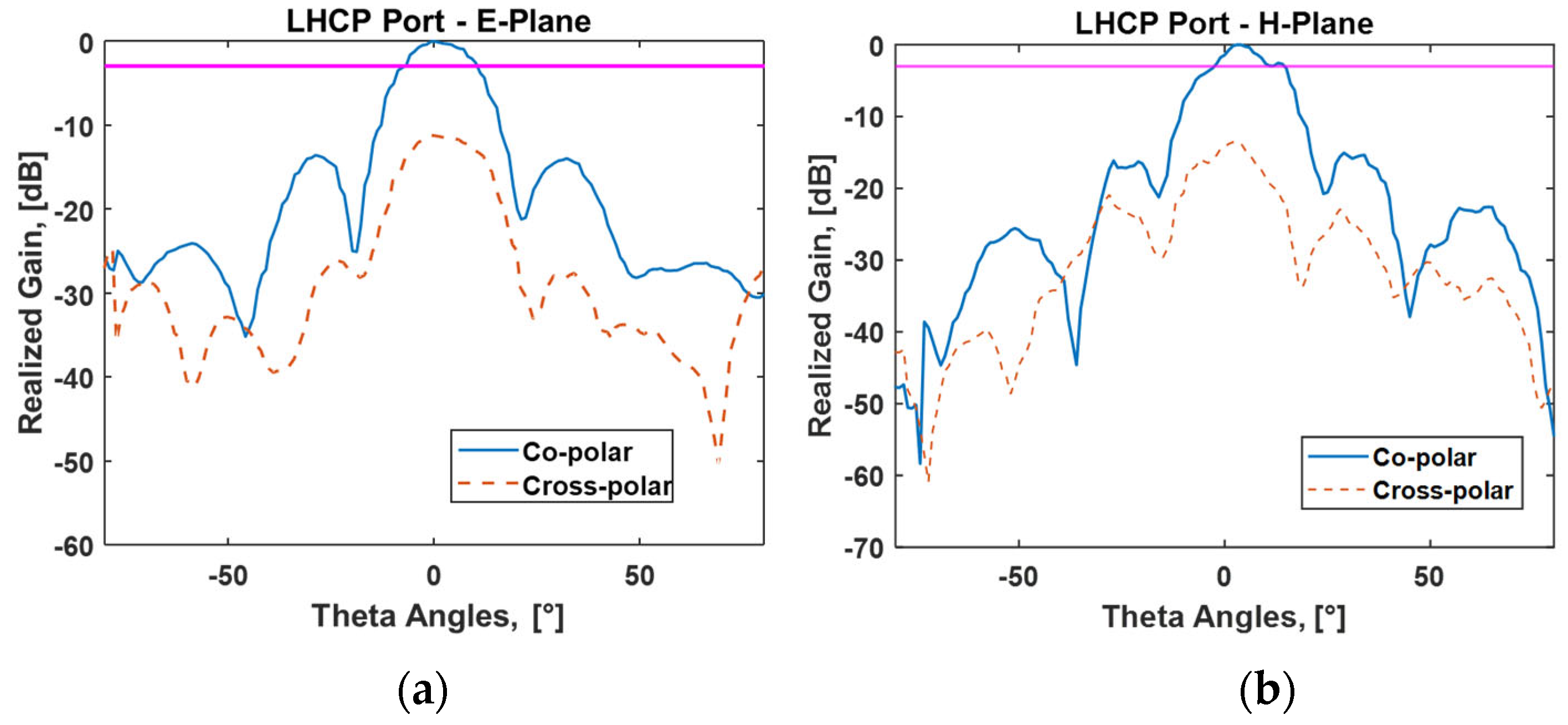
Figure 21 and
Figure 22 present the realized gain patterns corresponding to the two circular polarizations, evaluated over the principal planes (the E plane and H plane). Co-polar and cross-polar components were normalized with respect to the maximum received power and are expressed in dBi. As expected, the maximum realized gain is approximately 16 dBi, with an HPBW of 17°, indicated by the horizontal line in the graphs.
The co-polar and cross-polar components are plotted together for each principal plane, allowing the evaluation of the polarization isolation at each antenna port. In all cases, the isolation is found to be greater than 10 dB.