Article

REACT: Relation Extraction Method Based on Entity Attention Network and Cascade Binary Tagging Framework

School of Information Science and Engineering, Xinjiang University, Urumqi 830017, China
*
Author to whom correspondence should be addressed.
Appl. Sci. 2024, 14(7), 2981; https://doi.org/10.3390/app14072981
Submission received: 23 February 2024 / Revised: 28 March 2024 / Accepted: 29 March 2024 / Published: 2 April 2024

Abstract

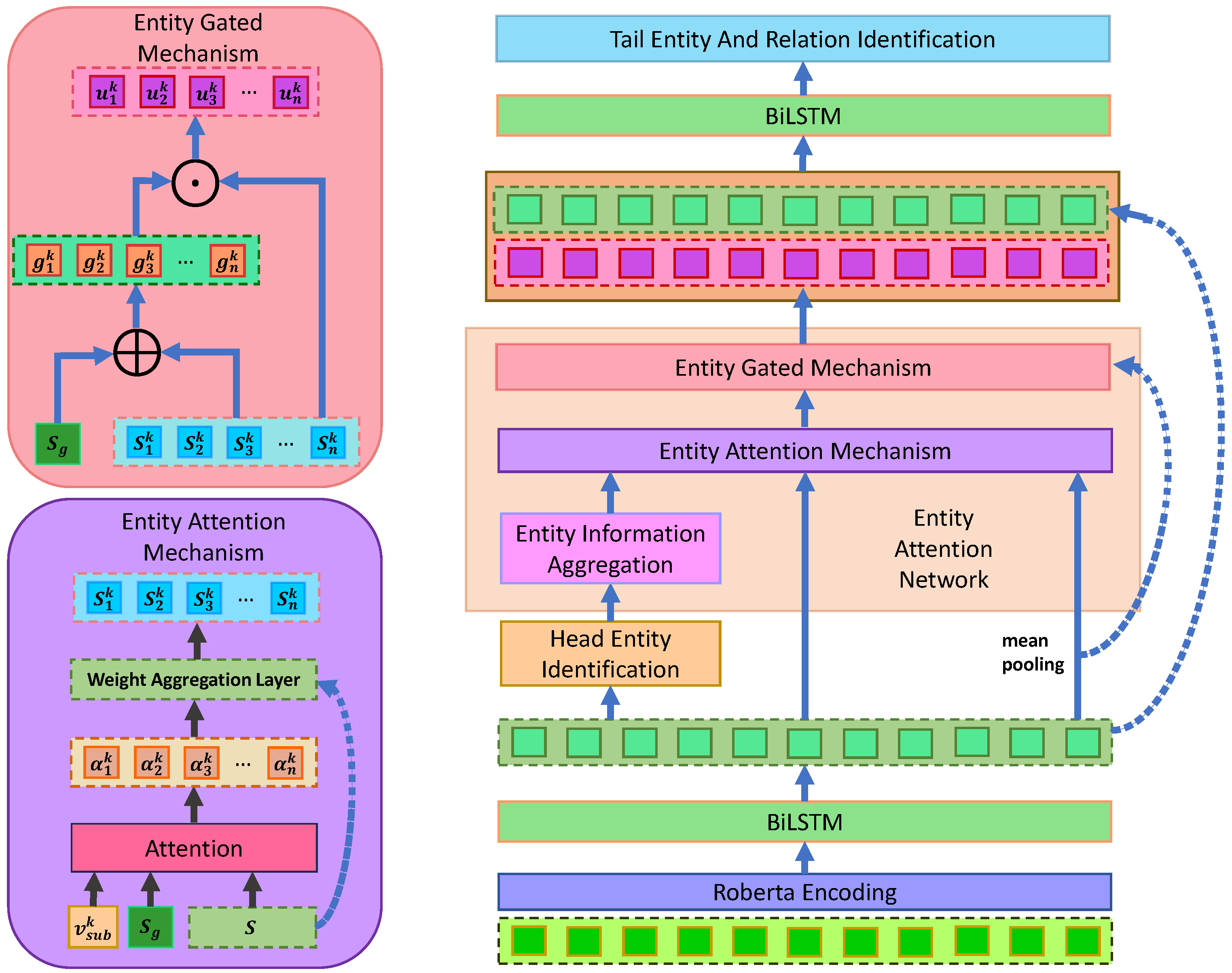
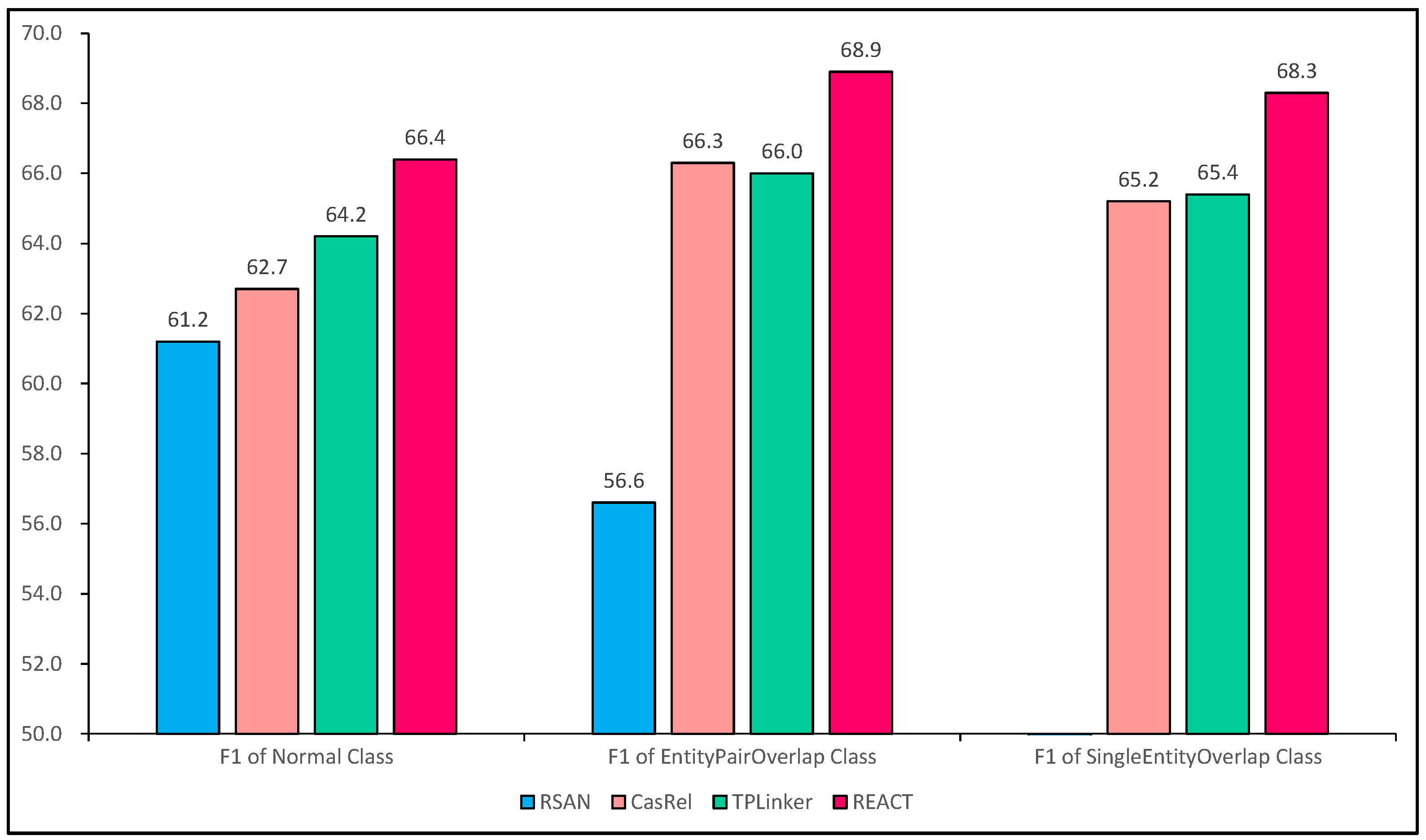
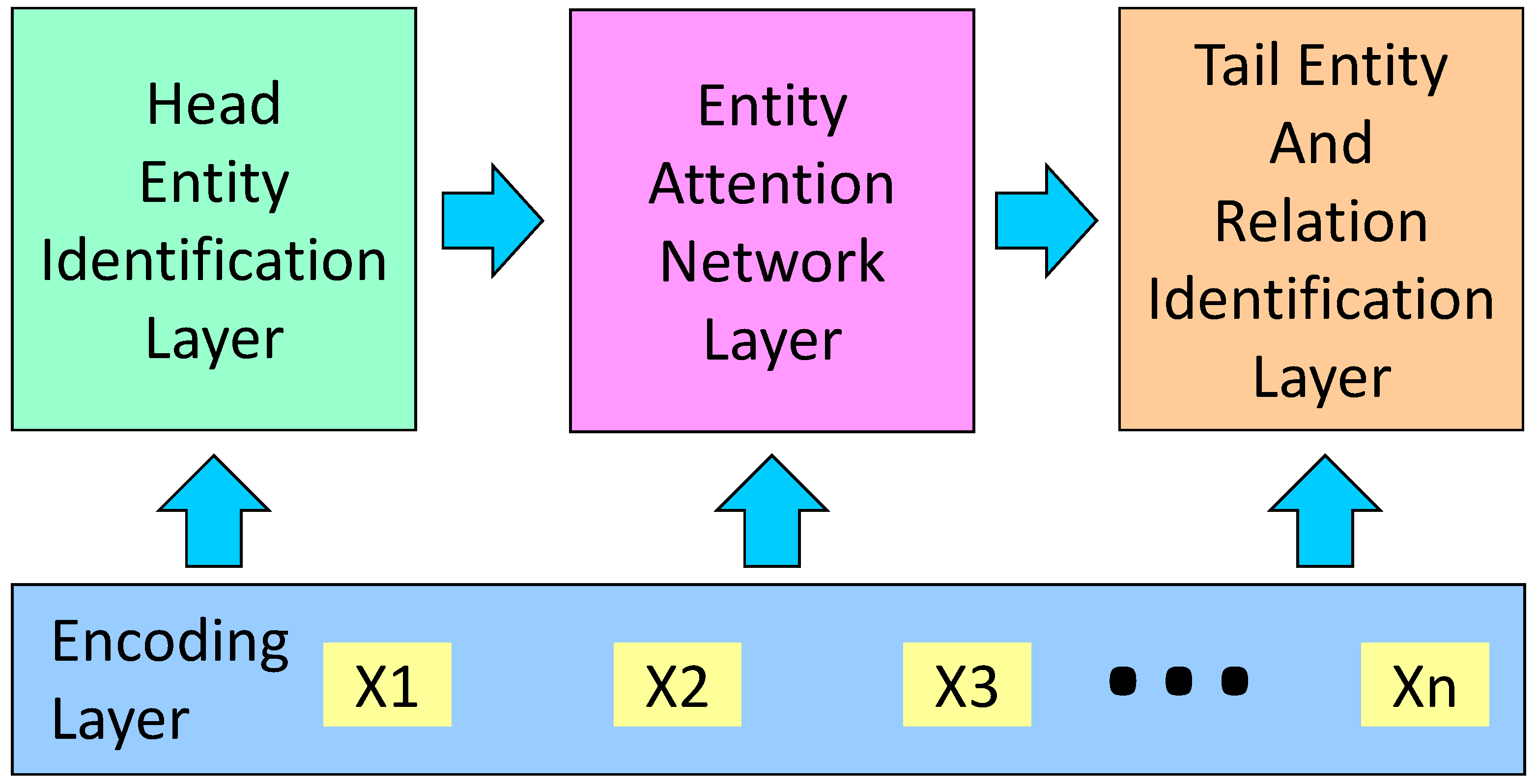
With the development of the Internet, vast amounts of text information are being generated constantly. Methods for extracting the valuable parts from this information have become an important research field. Relation extraction aims to identify entities and the relations between them from text, helping computers better understand textual information. Currently, the field of relation extraction faces various challenges, particularly in addressing the relation overlapping problem. The main difficulties are as follows: (1) Traditional methods of relation extraction have limitations and lack the ability to handle the relation overlapping problem, requiring a redesign. (2) Relation extraction models are easily disturbed by noise from words with weak relevance to the relation extraction task, leading to difficulties in correctly identifying entities and their relations. In this paper, we propose the Relation extraction method based on the Entity Attention network and Cascade binary Tagging framework (REACT). We decompose the relation extraction task into two subtasks: head entity identification and tail entity and relation identification. REACT first identifies the head entity and then identifies all possible tail entities that can be paired with the head entity, as well as all possible relations. With this architecture, the model can handle the relation overlapping problem. In order to reduce the interference of words in the text that are not related to the head entity or relation extraction task and improve the accuracy of identifying the tail entities and relations, we designed an entity attention network. To demonstrate the effectiveness of REACT, we construct a high-quality Chinese dataset and conduct a large number of experiments on this dataset. The experimental results fully confirm the effectiveness of REACT, showing its significant advantages in handling the relation overlapping problem compared to current other methods.
Keywords: relation extraction; relation overlapping problem; attention mechanism; gate mechanism relation extraction; relation overlapping problem; attention mechanism; gate mechanism