


The Effects of the Addition of Strontium on the Biological Response to Calcium Phosphate Biomaterials: A Systematic Review

 ,
,  and
and
Abstract
1. Introduction
2. Material and Methods
2.1. Database Search Strategy
2.2. Selection and Eligibility Criteria
2.3. Quality Assessment of the Selected Studies and Data Extraction
3. Results
3.1. Database Search
3.2. Quality Assessment
4. Discussion
4.1. Functionalization with Strontium
4.2. Strontium Release
4.3. In Vitro Studies
4.4. In Vivo Studies
4.5. Involvement of Signaling Pathways
5. Conclusions
Author Contributions
Funding
Institutional Review Board Statement
Informed Consent Statement
Data Availability Statement
Acknowledgments
Conflicts of Interest
References
- Liang, W.; Zhou, C.; Bai, J.; Zhang, H.; Jiang, B.; Wang, J.; Fu, L.; Long, H.; Huang, X.; Zhao, J.; et al. Current advancements in therapeutic approaches in orthopedic surgery: A review of recent trends. Front. Bioeng. Biotechnol. 2024, 12, 1328997. [Google Scholar] [CrossRef]
- Fendi, F.; Abdullah, B.; Suryani, S.; Usman, A.N.; Tahir, D. Development and application of hydroxyapatite-based scaffolds for bone tissue regeneration: A systematic literature review. Bone 2024, 183, 117075. [Google Scholar] [CrossRef] [PubMed]
- Ramírez Fernández, M.P.; Gehrke, S.A.; Mazón, P.; Calvo-Guirado, J.L.; De Aza, P.N. Implant Stability of Biological Hydroxyapatites Used in Dentistry. Materials 2017, 10, 644. [Google Scholar] [CrossRef] [PubMed]
- Diez-Escudero, A.; Espanol, M.; Beats, S.; Ginebra, M.P. In vitro degradation of calcium phosphates: Effect of multiscale porosity, textural properties and composition. Acta Biomater. 2017, 60, 81–92. [Google Scholar] [CrossRef] [PubMed]
- Dornelas, J.; Dornelas, G.; Rossi, A.; Piattelli, A.; Pietro, N.D.; Romasco, T.; Mourão, C.F.; Alves, G.G. The Incorporation of Zinc into Hydroxyapatite and Its Influence on the Cellular Response to Biomaterials: A Systematic Review. J. Funct. Biomater. 2024, 15, 178. [Google Scholar] [CrossRef]
- De Lima, I.R.; Alves, G.G.; Soriano, C.A.; Campaneli, A.P.; Gasparoto, T.H.; Ramos, E.S.; De Sena, L.Á.; Rossi, A.M.; Granjeiro, J.M. Understanding the impact of divalent cation substitution on hydroxyapatite: An in vitro multiparametric study on biocompatibility. J. Biomed. Mater. Res. Part A 2011, 98, 351–358. [Google Scholar] [CrossRef]
- Kahler, B.; Chugal, N.; Lin, L. Alkaline Materials and Regenerative Endodontics: A Review. Materials 2017, 10, 1389. [Google Scholar] [CrossRef]
- Reginster, J.Y.; Brandi, M.L.; Cannata-Andía, J.; Cooper, C.; Cortet, B.; Feron, J.M.; Genant, H.; Palacios, S.; Ringe, J.D.; Rizzoli, R. The position of strontium ranelate in today’s management of osteoporosis. Osteoporos. Int. 2015, 26, 1667–1671. [Google Scholar] [CrossRef]
- Dahl, S.G.; Allain, P.; Marie, P.J.; Mauras, Y.; Boivin, G.; Ammann, P.; Tsouderos, Y.; Delmas, P.D.; Christiansen, C. Incorporation and distribution of strontium in bone. Bone 2001, 28, 446–453. [Google Scholar] [CrossRef]
- Schneider, K.; Schwarz, M.; Burkholder, I.; Kopp-Schneider, A.; Edler, L.; Kinsner-Ovaskainen, A.; Hartung, T.; Hoffmann, S. "ToxRTool", a new tool to assess the reliability of toxicological data. Toxicol. Lett. 2009, 189, 138–144. [Google Scholar] [CrossRef]
- Aina, V.; Bergandi, L.; Lusvardi, G.; Malavasi, G.; Imrie, F.E.; Gibson, I.R.; Cerrato, G.; Ghigo, D. Sr-containing hydroxyapatite: Morphologies of HA crystals and bioactivity on osteoblast cells. Mater. Sci. Eng. C 2013, 33, 1132–1142. [Google Scholar] [CrossRef] [PubMed]
- Alkhraisat, M.H.; Moseke, C.; Blanco, L.; Je, B.; Lopez-Carbacos, E.; Gbureck, U.; Hamdan Alkhraisat, M.; Moseke, C.; Blanco, L.; Barralet, J.E.; et al. Strontium modified biocements with zero order release kinetics. Biomaterials 2008, 29, 4691–4697. [Google Scholar] [CrossRef]
- Alkhraisat, M.H.; Mariño, F.T.; Rodríguez, C.R.; Jerez, L.B.; Cabarcos, E.L. Combined effect of strontium and pyrophosphate on the properties of brushite cements. Acta Biomater. 2008, 4, 664–670. [Google Scholar] [CrossRef] [PubMed]
- Birgani, Z.T.; Malhotra, A.; van Blitterswijk, C.A.; Habibovic, P. Human mesenchymal stromal cells response to biomimetic octacalcium phosphate containing strontium. J. Biomed. Mater. Res. Part A 2016, 104, 1946–1960. [Google Scholar] [CrossRef]
- Boanini, E.; Torricelli, P.; Fini, M.; Sima, F.; Serban, N.; Mihailescu, I.N.; Bigi, A. Magnesium and strontium doped octacalcium phosphate thin films by matrix assisted pulsed laser evaporation. J. Inorg. Biochem. 2012, 107, 65–72. [Google Scholar] [CrossRef]
- Boanini, E.; Torricelli, P.; Sima, F.; Axente, E.; Fini, M.; Mihailescu, I.N.; Bigi, A. Strontium and zoledronate hydroxyapatites graded composite coatings for bone prostheses. J. Colloid. Interface Sci. 2015, 448, 1–7. [Google Scholar] [CrossRef]
- Bracci, B.; Torricelli, P.; Panzavolta, S.; Boanini, E.; Giardino, R.; Bigi, A. Effect of Mg2+, Sr2+, and Mn2+ on the chemico-physical and in vitro biological properties of calcium phosphate biomimetic coatings. J. Inorg. Biochem. 2009, 103, 1666–1674. [Google Scholar] [CrossRef]
- Capuccini, C.; Torricelli, P.; Sima, F.; Boanini, E.; Ristoscu, C.; Bracci, B.; Socol, G.; Fini, M.; Mihailescu, I.N.; Bigi, A. Strontium-substituted hydroxyapatite coatings synthesized by pulsed-laser deposition: In vitro osteoblast and osteoclast response. Acta Biomater. 2008, 4, 1885–1893. [Google Scholar] [CrossRef] [PubMed]
- Yw, C.; Gq, S.; Yl, D.; Xx, Y.; Xh, Z.; Cs, Z.; Cx, W. In vitro study on the influence of strontium-doped calcium polyphosphate on the angiogenesis-related behaviors of HUVECs. J. Mater. Sci. Mater. Med. 2008, 19, 2655–2662. [Google Scholar]
- Chen, S.; Wang, Y.; Ma, J. A facile way to construct Sr-doped apatite coating on the surface of 3D printed scaffolds to improve osteogenic effect. J. Biomater. Appl. 2022, 37, 344–354. [Google Scholar] [CrossRef]
- Chen, F.; Tian, L.; Pu, X.; Zeng, Q.; Xiao, Y.; Chen, X.; Zhang, X. Enhanced ectopic bone formation by strontium-substituted calcium phosphate ceramics through regulation of osteoclastogenesis and osteoblastogenesis. Biomater. Sci. 2022, 10, 5925–5937. [Google Scholar] [CrossRef]
- Chung, C.J.; Long, H.Y. Systematic strontium substitution in hydroxyapatite coatings on titanium via micro-arc treatment and their osteoblast/osteoclast responses. Acta Biomater. 2011, 7, 4081–4087. [Google Scholar] [CrossRef] [PubMed]
- Gu, Z.; Xie, H.; Li, L.; Zhang, X.; Liu, F.; Yu, X. Application of strontium-doped calcium polyphosphate scaffold on angiogenesis for bone tissue engineering. J. Mater. Sci. Mater. Med. 2013, 24, 1251–1260. [Google Scholar] [CrossRef] [PubMed]
- Gu, Z.; Wang, H.; Li, L.; Wang, Q.; Yu, X. Cell-mediated degradation of strontium-doped calcium polyphosphate scaffold for bone tissue engineering. Biomed. Mater. 2012, 7, 065007. [Google Scholar] [CrossRef]
- Gu, X.; Lin, W.; Li, D.; Guo, H.; Li, P.; Fan, Y. Degradation and biocompatibility of a series of strontium substituted hydroxyapatite coatings on magnesium alloys. RSC Adv. 2019, 9, 15013–15021. [Google Scholar] [CrossRef] [PubMed]
- Harrison, C.J.; Hatton, P.V.; Gentile, P.; Miller, C.A. Nanoscale Strontium-Substituted Hydroxyapatite Pastes and Gels for Bone Tissue Regeneration. Nanomater 2021, 11, 1611. [Google Scholar] [CrossRef]
- Hernández, L.; Parra, J.; Vázquez, B.; Bravo, A.L.; Collía, F.; Goñi, I.; Gurruchaga, M.; San Román, J.S. Injectable acrylic bone cements for vertebroplasty based on a radiopaque hydroxyapatite. Bioactivity and biocompatibility. J. Biomed. Mater. Res. Part B Appl. Biomater. 2009, 88, 103–114. [Google Scholar] [CrossRef]
- Huang, C.; Li, L.; Yu, X.; Gu, Z.; Zhang, X. The inhibitory effect of strontium-doped calcium polyphosphate particles on cytokines from macrophages and osteoblasts leading to aseptic loosening in vitro. Biomed. Mater. 2014, 9, 025010. [Google Scholar] [CrossRef]
- Huang, M.; Li, T.; Zhao, N.; Yao, Y.; Yang, H.; Du, C.; Wang, Y. Doping strontium in tricalcium phosphate microspheres using yeast-based biotemplate. Mater. Chem. Phys. 2014, 147, 540–544. [Google Scholar] [CrossRef]
- Qh, J.; Gong, X.; Xx, W.; Fm, H. Osteogenesis of rat mesenchymal stem cells and osteoblastic cells on strontium-doped nanohydroxyapatite-coated titanium surfaces. Int. J. Oral Maxillofac. Implants 2015, 30, 461–471. [Google Scholar]
- Jiang, S.; Wang, X.; Ma, Y.; Zhou, Y.; Liu, L.; Yu, F.; Fang, B.; Lin, K.; Xia, L.; Cai, M. Synergistic Effect of Micro-Nano-Hybrid Surfaces and Sr Doping on the Osteogenic and Angiogenic Capacity of Hydroxyapatite Bioceramics Scaffolds. Int. J. Nanomed. 2022, 17, 783–797. [Google Scholar] [CrossRef] [PubMed]
- Kuang, G.-M.; Yau, W.P.; Lam, W.M.; Wu, J.; Chiu, K.Y.; Lu, W.W.; Pan, H. An effective approach by a chelate reaction in optimizing the setting process of strontium-incorporated calcium phosphate bone cement. J. Biomed. Mater. Res. Part B-Appl. Biomater. 2012, 100B, 778–787. [Google Scholar] [CrossRef] [PubMed]
- Li, J.; Yang, L.; Guo, X.; Cui, W.; Yang, S.; Wang, J.; Qu, Y.; Shao, Z.; Xu, S. Osteogenesis effects of strontium-substituted hydroxyapatite coatings on true bone ceramic surfaces in vitro and in vivo. Biomed. Mater. 2017, 13, 015018. [Google Scholar] [CrossRef] [PubMed]
- Liang, Y.; Li, H.; Xu, J.; Li, X.; Qi, M.; Hu, M. Morphology, composition, and bioactivity of strontium-doped brushite coatings deposited on titanium implants via electrochemical deposition. Int. J. Mol. Sci. 2014, 15, 9952–9962. [Google Scholar] [CrossRef]
- Liu, F.; Zhang, X.; Yu, X.; Xu, Y.; Feng, T.; Ren, D. In vitro study in stimulating the secretion of angiogenic growth factors of strontium-doped calcium polyphosphate for bone tissue engineering. J. Mater. Sci. Mater. Med. 2011, 22, 683–692. [Google Scholar] [CrossRef]
- Lourenço, A.H.; Torres, A.L.; Vasconcelos, D.P.; Ribeiro-Machado, C.; Barbosa, J.N.; Barbosa, M.A.; Barrias, C.C.; Ribeiro, C.C. Osteogenic, anti-osteoclastogenic and immunomodulatory properties of a strontium-releasing hybrid scaffold for bone repair. Mater. Sci. Eng. C Mater. Biol. Appl. 2019, 99, 1289–1303. [Google Scholar] [CrossRef]
- Ma, P.; Chen, T.; Wu, X.; Hu, Y.; Huang, K.; Wang, Y.; Dai, H. Effects of bioactive strontium-substituted hydroxyapatite on osseointegration of polyethylene terephthalate artificial ligaments. J. Mater. Chem. B 2021, 9, 6600–6613. [Google Scholar] [CrossRef]
- Mohan, B.G.; Suresh Babu, S.; Varma, H.K.; John, A.; Bg, M.; Suresh Babu, S.; Hk, V.; John, A. In vitro evaluation of bioactive strontium-based ceramic with rabbit adipose-derived stem cells for bone tissue regeneration. J. Mater. Sci. Mater. Med. 2013, 24, 2831–2844. [Google Scholar] [CrossRef]
- Nguyen, T.T.; Jang, Y.S.; Lee, M.H.; Bae, T.S. Effect of strontium doping on the biocompatibility of calcium phosphate-coated titanium substrates. J. Appl. Biomater. Funct. Mater. 2019, 17, 2280800019826517. [Google Scholar] [CrossRef]
- Ni, G.X.; Yao, Z.P.; Huang, G.T.; Liu, W.G.; Lu, W.W. The effect of strontium incorporation in hydroxyapatite on osteoblasts in vitro. J. Mater. Sci. Mater. Med. 2011, 22, 961–967. [Google Scholar] [CrossRef]
- Olivier, F.; Rochet, N.; Delpeux-Ouldriane, S.; Chancolon, J.; Sarou-Kanian, V.; Fayon, F.; Bonnamy, S. Strontium incorporation into biomimetic carbonated calcium-deficient hydroxyapatite coated carbon cloth: Biocompatibility with human primary osteoblasts. Mater. Sci. Eng. C Mater. Biol. Appl. 2020, 116, 111192. [Google Scholar] [CrossRef]
- Pal, A.; Nasker, P.; Paul, S.; Chowdhury, A.R.; Sinha, A.; Das, M. Strontium doped hydroxyapatite from Mercenaria clam shells: Synthesis, mechanical and bioactivity study. J. Mech. Behav. Biomed. Mater. 2019, 90, 328–336. [Google Scholar] [CrossRef] [PubMed]
- Ramadas, M.; Ferreira, J.M.F.; Ballamurugan, A.M. Fabrication of three dimensional bioactive Sr2+ substituted apatite scaffolds by gel-casting technique for hard tissue regeneration. J. Tissue Eng. Regen. Med. 2021, 15, 577–585. [Google Scholar] [CrossRef] [PubMed]
- Sartoretto, S.C.; Calasans-Maia, M.D.; Atnn, A.; Resende, R.F.B.; da Costa Fernandes, C.J.; de Magalhães Padilha, P.; Rossi, A.M.; Teti, A.; Granjeiro, J.M.; Zambuzzi, W.F. The role of apoptosis associated speck-like protein containing a caspase-1 recruitment domain (ASC) in response to bone substitutes. Mater. Sci. Eng. C Mater. Biol. Appl. 2020, 112, 110965. [Google Scholar] [CrossRef]
- Stipniece, L.; Ramata-Stunda, A.; Vecstaudza, J.; Kreicberga, I.; Livkisa, D.; Rubina, A.; Sceglovs, A.; Salma-Ancane, K. A Comparative Study on Physicochemical Properties and In Vitro Biocompatibility of Sr-Substituted and Sr Ranelate-Loaded Hydroxyapatite Nanoparticles. ACS Appl. Bio Mater. 2023, 6, 5264–5281. [Google Scholar] [CrossRef]
- Sun, L.; Li, T.; Yu, S.; Mao, M.; Guo, D. A Novel Fast-Setting Strontium-Containing Hydroxyapatite Bone Cement With a Simple Binary Powder System. Front. Bioeng. Biotechnol. 2021, 9, 643557. [Google Scholar] [CrossRef] [PubMed]
- Tovani, C.B.; Oliveira, T.M.; Soares, M.P.R.; Nassif, N.; Fukada, S.Y.; Ciancaglini, P.; Gloter, A.; Ramos, A.P. Strontium Calcium Phosphate Nanotubes as Bioinspired Building Blocks for Bone Regeneration. ACS Appl. Mater. Interfaces 2020, 12, 43422–43434. [Google Scholar] [CrossRef]
- Xie, H.; Wang, J.; Li, C.; Gu, Z.; Chen, Q.; Li, L. Application of strontium doped calcium polyphosphate bioceramic as scaffolds for bone tissue engineering. Ceram. Int. 2013, 39, 8945–8954. [Google Scholar] [CrossRef]
- Xie, H.; Gu, Z.; He, Y.; Xu, J.; Xu, C.; Li, L.; Ye, Q. Microenvironment construction of strontium-calcium-based biomaterials for bone tissue regeneration: The equilibrium effect of calcium to strontium. J. Mater. Chem. B 2018, 6, 2332–2339. [Google Scholar] [CrossRef]
- Xing, H.; Li, R.; Wei, Y.; Ying, B.; Li, D.; Qin, Y. Improved Osteogenesis of Selective-Laser-Melted Titanium Alloy by Coating Strontium-Doped Phosphate With High-Efficiency Air-Plasma Treatment. Front. Bioeng. Biotechnol. 2020, 8, 367. [Google Scholar] [CrossRef]
- Yuan, B.; Raucci, M.G.; Fan, Y.; Zhu, X.; Yang, X.; Zhang, X.; Santin, M.; Ambrosio, L. Injectable strontium-doped hydroxyapatite integrated with phosphoserine-tethered poly(epsilon-lysine) dendrons for osteoporotic bone defect repair. J. Mater. Chem. B 2018, 6, 7974–7984. [Google Scholar] [CrossRef] [PubMed]
- Zhang, W.; Shen, Y.; Pan, H.; Lin, K.; Liu, X.; Darvell, B.W.; Lu, W.W.; Chang, J.; Deng, L.; Wang, D.; et al. Effects of strontium in modified biomaterials. Acta Biomater. 2011, 7, 800–808. [Google Scholar] [CrossRef]
- Zhao, Y.; Guo, D.; Hou, S.; Zhong, H.; Yan, J.; Zhang, C.; Zhou, Y. Porous Allograft Bone Scaffolds: Doping with Strontium. PLoS ONE 2013, 8, e69339. [Google Scholar] [CrossRef]
- Zhao, R.; Chen, S.; Zhao, W.; Yang, L.; Yuan, B.; Ioan, V.S.; Iulian, A.V.; Yang, X.; Zhu, X.; Zhang, X. A bioceramic scaffold composed of strontium-doped three-dimensional hydroxyapatite whiskers for enhanced bone regeneration in osteoporotic defects. Theranostics 2020, 10, 1572–1589. [Google Scholar] [CrossRef]
- Zhou, J.; Li, B.; Han, Y.; Zhao, L. The osteogenic capacity of biomimetic hierarchical micropore/nanorod-patterned Sr-HA coatings with different interrod spacings. Nanomed. Nanotechnol. Biol. Med. 2016, 12, 1161–1173. [Google Scholar] [CrossRef] [PubMed]
- Am, B.; Xia, W.; Palmquist, A.; Lindahl, C.; Emanuelsson, L.; Lausmaa, J.; Engqvist, H.; Thomsen, P.; Ballo, A.M.; Xia, W.; et al. Bone tissue reactions to biomimetic ion-substituted apatite surfaces on titanium implants. J. R. Soc. Interface 2012, 9, 1615–1624. [Google Scholar] [CrossRef][Green Version]
- Cheng, C.; Alt, V.; Pan, L.; Thormann, U.; Schnettler, R.; Strauss, L.G.; Schumacher, M.; Gelinsky, M.; Dimitrakopoulou-Strauss, A. Preliminary evaluation of different biomaterials for defect healing in an experimental osteoporotic rat model with dynamic PET-CT (dPET-CT) using F-18-sodium fluoride (NaF). Injury 2014, 45, 501–505. [Google Scholar] [CrossRef]
- Elgali, I.; Turri, A.; Xia, W.; Norlindh, B.; Johansson, A.; Dahlin, C.; Thomsen, P.; Omar, O. Guided bone regeneration using resorbable membrane and different bone substitutes: Early histological and molecular events. Acta Biomater. 2016, 29, 409–423. [Google Scholar] [CrossRef]
- Gx, N.; Ww, L.; Tang, B.; Ah, N.; Ky, C.; Km, C.; Zy, L.; Kd, L. Effect of weight-bearing on bone-bonding behavior of strontium-containing hydroxyapatite bone cement. J. Biomed. Mater. Res. A 2007, 83, 570–576. [Google Scholar]
- Machado, C.P.G.; Sartoretto, S.C.; Alves, A.T.N.N.; Lima, I.B.C.; Rossi, A.M.; Granjeiro, J.M.; Calasans-Maia, M.D. Histomorphometric evaluation of strontium-containing nanostructured hydroxyapatite as bone substitute in sheep. Braz. Oral Res. 2016, 30, e45. [Google Scholar] [CrossRef]
- Yan, J.; Sun, J.-F.; Chu, P.K.; Han, Y.; Zhang, Y.-M. Bone integration capability of a series of strontium-containing hydroxyapatite coatings formed by micro-arc oxidation. J. Biomed. Mater. Res. Part A 2013, 101, 2465–2480. [Google Scholar] [CrossRef] [PubMed]
- Yang, L.; Perez-Amodio, S.; Fy, B.-d.G.; Everts, V.; van Blitterswijk, C.A.; Habibovic, P. The effects of inorganic additives to calcium phosphate on in vitro behavior of osteoblasts and osteoclasts. Biomaterials 2010, 31, 2976–2989. [Google Scholar] [CrossRef] [PubMed]
- Zarins, J.; Pilmane, M.; Sidhoma, E.; Salma, I.; Locs, J. Immunohistochemical evaluation after Sr-enriched biphasic ceramic implantation in rabbits femoral neck: Comparison of seven different bone conditions. J. Mater. Sci. Mater. Med. 2018, 29, 119. [Google Scholar] [CrossRef] [PubMed]
- Zhang, J.; Liu, L.; Zhao, S.; Wang, H.; Yang, G. Characterization and In Vivo Evaluation of Trace Element-Loaded Implant Surfaces in Ovariectomized Rats. Int. J. Oral Maxillofac. Implant. 2015, 30, 1105–1112. [Google Scholar] [CrossRef]
- Zhao, C.-R.; Wang, R.-Q.; Li, G.; Xue, X.-X.; Sun, C.-J.; Qu, X.-J.; Li, W.-B. Synthesis of indazole based diarylurea derivatives and their antiproliferative activity against tumor cell lines. Bioorganic Med. Chem. Lett. 2013, 23, 1989–1992. [Google Scholar] [CrossRef]
- Martín-Merino, E.; Petersen, I.; Hawley, S.; Álvarez-Gutierrez, A.; Khalid, S.; Llorente-Garcia, A.; Delmestri, A.; Javaid, M.K.; Van Staa, T.P.; Judge, A.; et al. Risk of venous thromboembolism among users of different anti-osteoporosis drugs: A population-based cohort analysis including over 200,000 participants from Spain and the UK. Osteoporos. Int. 2018, 29, 467–478. [Google Scholar] [CrossRef]
- McWilliam, R.H.; Chang, W.; Liu, Z.; Wang, J.; Han, F.; Black, R.A.; Wu, J.; Luo, X.; Li, B.; Shu, W. Three-dimensional biofabrication of nanosecond laser micromachined nanofibre meshes for tissue engineered scaffolds. Biomater. Transl. 2023, 4, 104–114. [Google Scholar] [CrossRef]
- Francis, W.R.; Liu, Z.; Owens, S.E.; Wang, X.; Xue, H.; Lord, A.; Kanamarlapudi, V.; Xia, Z. Role of hypoxia inducible factor 1alpha in cobalt nanoparticle induced cytotoxicity of human THP-1 macrophages. Biomater. Transl. 2021, 2, 143–150. [Google Scholar] [CrossRef]
- Akiko Sakai, A.V.M.O.K.I.; Shigeki, M. Preparation of Sr-containing carbonate apatite as a bone substitute and its properties. Dent. Mater. J. 2012, 31, 197–205. [Google Scholar] [CrossRef]
- Wan, B.; Wang, R.; Sun, Y.; Cao, J.; Wang, H.; Guo, J.; Chen, D. Building Osteogenic Microenvironments With Strontium-Substituted Calcium Phosphate Ceramics. Front. Bioeng. Biotechnol. 2020, 8, 591467. [Google Scholar] [CrossRef]
- Golub, E.E.; Boesze-Battaglia, K. The role of alkaline phosphatase in mineralization. Curr. Opin. Orthop. 2007, 18, 444–448. [Google Scholar] [CrossRef]
- Marie, P.J.; Felsenberg, D.; Brandi, M.L. How strontium ranelate, via opposite effects on bone resorption and formation, prevents osteoporosis. Osteoporos. Int. 2011, 22, 1659–1667. [Google Scholar] [CrossRef] [PubMed]
- Zambuzzi, W.F.; Coelho, P.G.; Alves, G.G.; Granjeiro, J.M. Intracellular signal transduction as a factor in the development of "smart" biomaterials for bone tissue engineering. Biotechnol. Bioeng. 2011, 108, 1246–1250. [Google Scholar] [CrossRef] [PubMed]
- Kozhemyakina, E.; Lassar, A.B.; Zelzer, E. A pathway to bone: Signaling molecules and transcription factors involved in chondrocyte development and maturation. Development 2015, 142, 817–831. [Google Scholar] [CrossRef]
- Sartoretto, S.; Gemini-Piperni, S.; da Silva, R.A.; Calasans, M.D.; Rucci, N.; dos Santos, T.M.; Lima, I.B.C.; Rossi, A.M.; Alves, G.; Granjeiro, J.M.; et al. Apoptosis-associated speck-like protein containing a caspase-1 recruitment domain (ASC) contributes to osteoblast differentiation and osteogenesis. J. Cell. Physiol. 2019, 234, 4140–4153. [Google Scholar] [CrossRef] [PubMed]
- Brennan, L.M.; Widder, M.W.; Lee, L.E.J.; van der Schalie, W.H. Long-term storage and impedance-based water toxicity testing capabilities of fluidic biochips seeded with RTgill-W1 cells. Toxicol. Vitr. Int. J. Publ. Assoc. BIBRA 2012, 26, 736–745. [Google Scholar] [CrossRef]
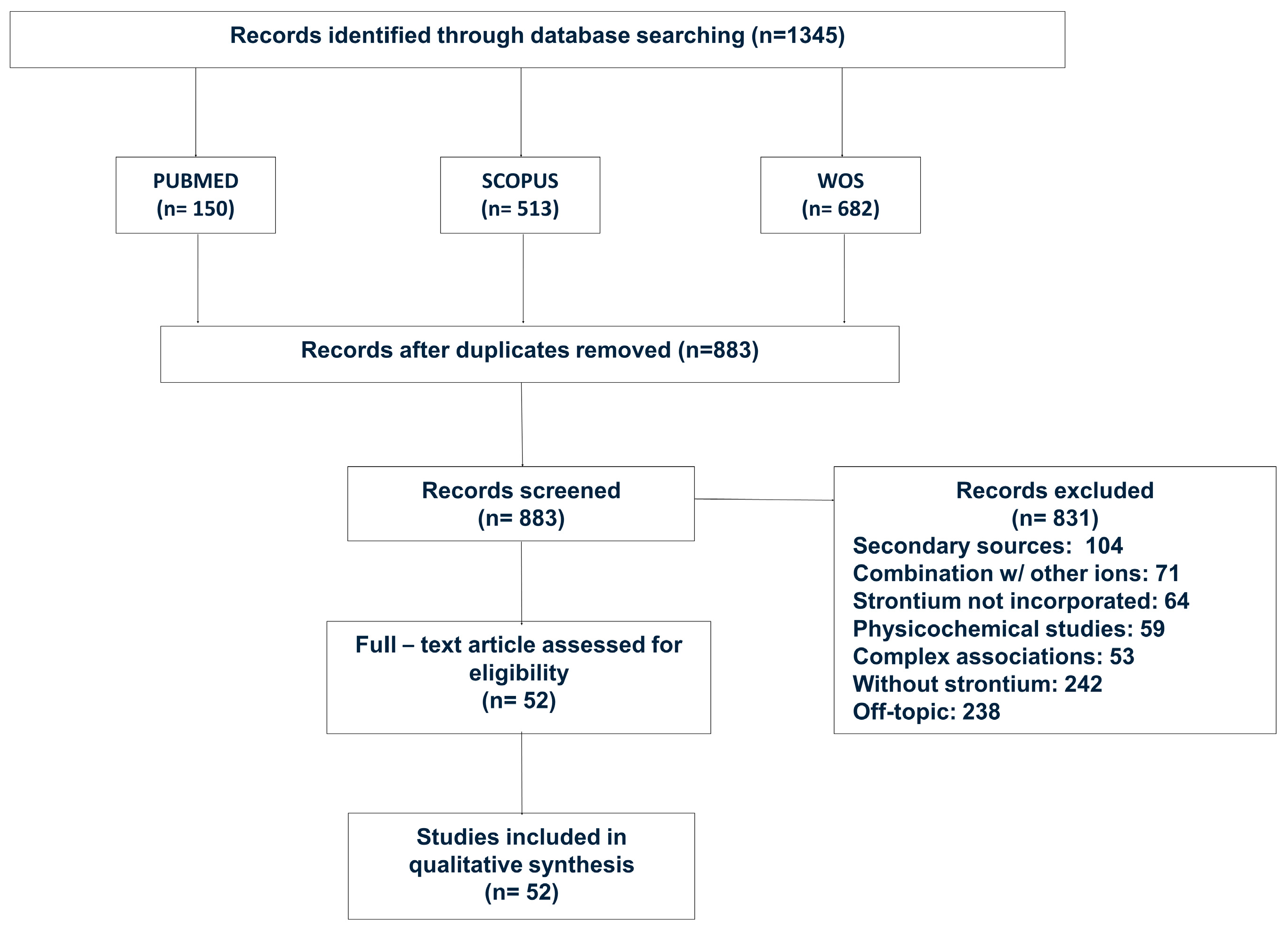
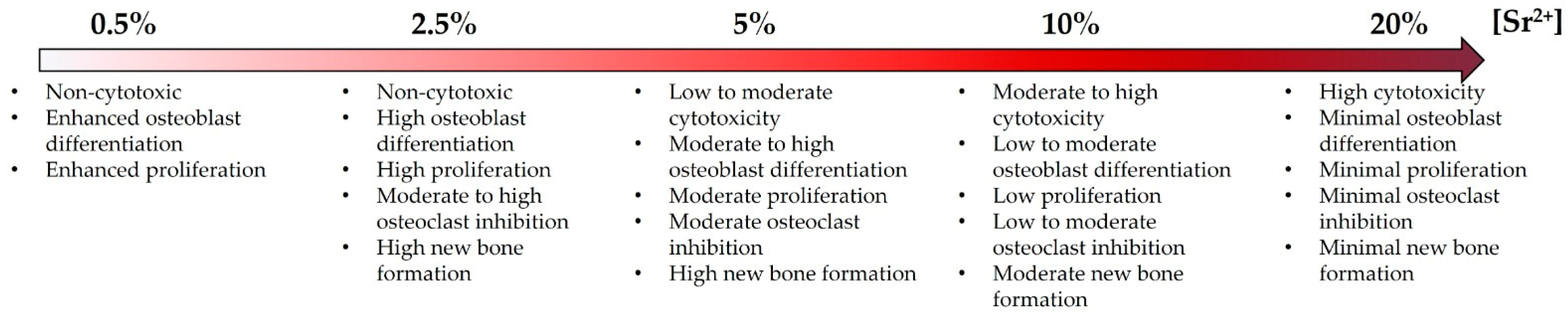
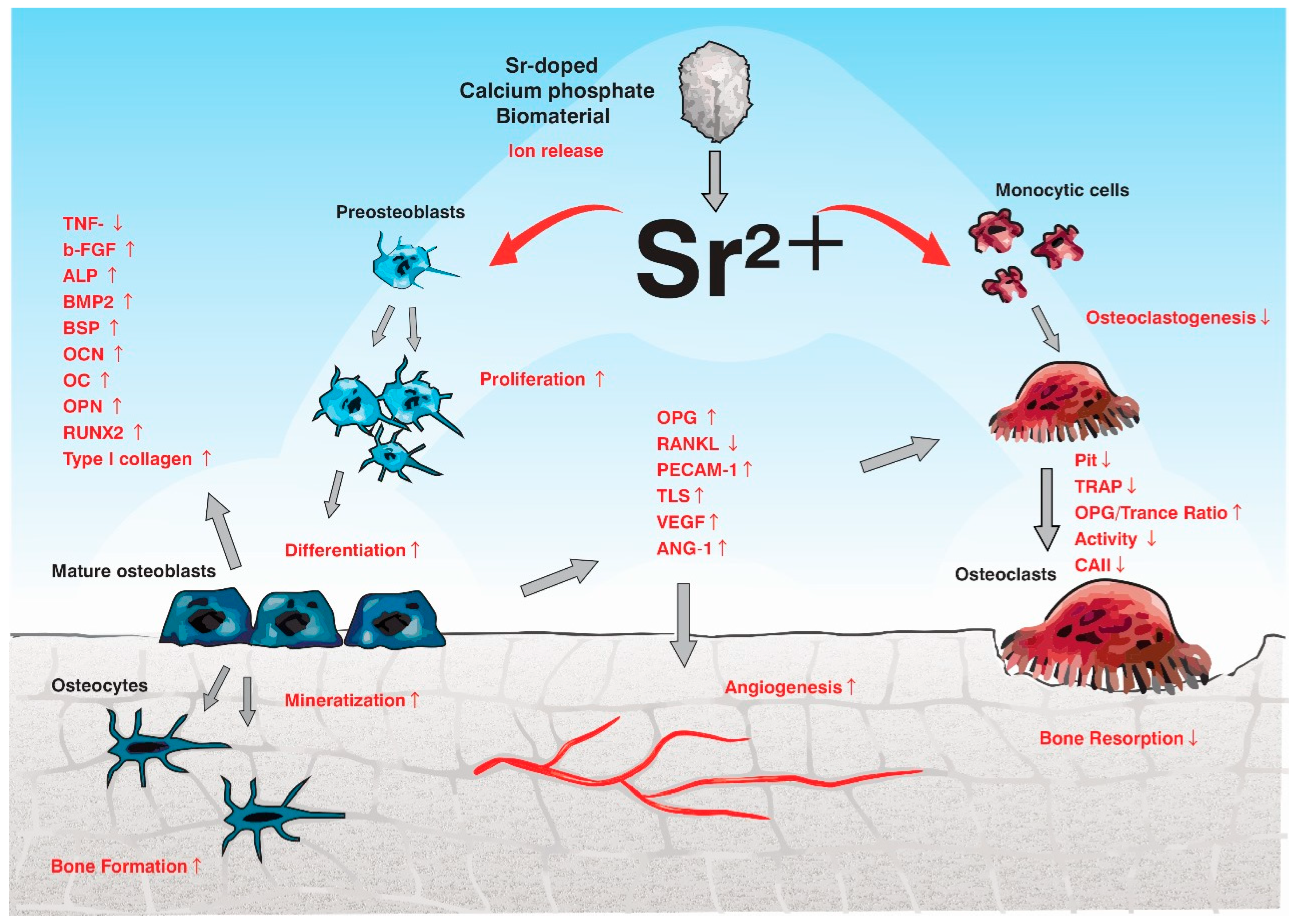

| Database | Search Key |
|---|---|
| PubMed | (“tissue engineering”[tiab] OR “Bone repair”[tiab] OR “Bone therapy”[tiab] OR “bone regeneration”[tiab] OR osteoblast*[tiab] OR “Bone tissue” [tiab] OR “bone cell*”[tiab] OR “mesenchymal stem cell*”[tiab] OR “Mesenchymal Progenitor Cell*”[tiab] OR “Bone Marrow Stromal Cells” [tiab] OR preosteoblast*[tiab] OR osteocyte*[tiab]) AND (“Strontium”[Mesh] OR SR [tiab] OR SR2+[tiab] OR strontium [tiab] OR “strontium-containing hydroxyapatite” [Supplementary Concept]) AND (“Hydroxyapatites”[Mesh] OR Hydroxyapatite*[tiab] OR Ca10(PO4)6(OH)2 [tiab] OR “tricalcium phosphate”[tiab] OR “biphasic calcium phosphate*”[tiab] OR BCP[tiab] OR beta-TCP[tiab] OR B-TCP[tiab] OR alpha-TCP[tiab] OR brushite[tiab] OR monetite[tiab] OR durapatite [tiab] OR HA[tiab] OR HAp[tiab] OR “amorphous calcium phosphate”[tiab]OR “calcium phosphate*”[tiab]) AND (“Biocompatible Materials”[Mesh] OR biomaterial*[tiab] OR “smart material*”[tiab] OR “Biomimetic Material*” OR “Biomimetic Materials”[mesh] OR “Biomimicry Material*”[tiab]) AND (biocompatib*[tiab] OR osteogen*[tiab] OR cytocompatib*[tiab] OR osteoind*[tiab] OR osteoconduc*[tiab] OR clinic*[tiab] OR surg*[tiab]) |
| Scopus | TITLE-ABS-KEY (“tissue engineering” OR “Bone therapy” OR “bone regeneration” OR osteoblast* OR “Bone tissue” OR “bone cell*” OR “mesenchymal stem cell*” OR “Mesenchymal Progenitor Cell*” OR “Bone Marrow Stromal Cells” OR preosteoblast* OR osteocyte) AND TITLE-ABS-KEY (sr OR sr2* OR strontium OR “strontium-containing hydroxyapatite”) AND TITLE-ABS-KEY (“Biocompatible Materials” OR biomaterial* OR “smart material*” OR “Biomimetic Material*” OR “Biomimicry Material*”) AND TITLE-ABS-KEY (biocompatib* OR osteogen* OR cytocompatib* OR osteoind* OR osteoconduc* OR clinic* OR surg*) AND (LIMIT-TO (DOCTYPE, “ar”)) |
| Web of Science | (tw:(“tissue engineering” OR “Bone repair” OR “Bone therapy” OR “bone regeneration” OR osteoblast* OR “Bone tissue” OR “bone cell*” OR “mesenchymal stem cell*” OR “Mesenchymal Progenitor Cell” OR “Bone Marrow Stromal Cells” OR preosteoblast* OR osteocyte*)) AND (tw:(sr OR sr2+ OR strontium OR “strontium-containing hydroxyapatite”)) AND (tw:(“Biocompatible Materials” OR biomaterial* OR “smart material*” OR “Biomimetic Material*” OR “Biomimicry Material*”)) AND (tw:(biocompatib* OR osteogen* OR cytocompatib* OR osteoind* OR osteoconduc* OR clinic* OR surg*)) AND (instance:”regional”) AND (type:(“article”)) |
| Publication | Group I: Test Substance Identification | Group II: Test System Characterization | Group III: Study Design Description | Group IV: Study Results Documentation | Group V: Plausibility of Study Design and Data | Total |
|---|---|---|---|---|---|---|
| In Vitro Studies | 4 | 3 | 6 | 3 | 2 | 18 |
| Aina et al. [11] | 4 | 2 | 5 | 3 | 2 | 16 |
| Alkhraisat et al. [12] | 4 | 2 | 4 | 3 | 2 | 15 |
| Alkhraisat et al. [13] | 4 | 4 | 6 | 3 | 2 | 19 |
| Birgani et al. [14] | 4 | 3 | 5 | 3 | 2 | 17 |
| Boanini et al. [15] | 4 | 2 | 5 | 3 | 2 | 16 |
| Boanini et al. [16] | 4 | 2 | 6 | 3 | 2 | 17 |
| Bracci et al. [17] | 4 | 2 | 5 | 3 | 2 | 17 |
| Capuccini a et al. [18] | 4 | 2 | 5 | 3 | 2 | 16 |
| Chen et al. [19] | 4 | 2 | 5 | 3 | 2 | 16 |
| Chen et al. [20] | 4 | 2 | 4 | 3 | 2 | 15 |
| Chen et al. [21] | 4 | 2 | 5 | 3 | 2 | 16 |
| Chung et al. [22] | 4 | 1 | 5 | 3 | 2 | 15 |
| De Lima et al. [6] | 4 | 3 | 6 | 3 | 2 | 18 |
| Gu et al. [23] | 4 | 3 | 6 | 3 | 2 | 18 |
| Gu et al. [24] | 4 | 2 | 6 | 3 | 2 | 17 |
| Gu et al. [25] | 4 | 2 | 6 | 3 | 2 | 17 |
| Harrison et al. [26] | 4 | 2 | 6 | 3 | 2 | 17 |
| Hernández et al. [27] | 4 | 1 | 5 | 3 | 2 | 15 |
| Huang et al. [28] | 4 | 3 | 6 | 3 | 2 | 18 |
| Huang et al. [29] | 4 | 3 | 6 | 3 | 2 | 18 |
| Jiang et al. [30] | 4 | 2 | 4 | 3 | 2 | 15 |
| Jiang et al. [31] | 4 | 3 | 5 | 3 | 2 | 17 |
| Kuang et al. [32] | 4 | 2 | 5 | 3 | 2 | 16 |
| Li et al. [33] | 4 | 2 | 5 | 3 | 2 | 16 |
| Liang et al. [34] | 4 | 1 | 3 | 2 | 2 | 12 |
| Liu et al. [35] | 4 | 3 | 5 | 3 | 2 | 17 |
| Lourenço et al. [36] | 4 | 2 | 6 | 3 | 2 | 17 |
| Ma et al. [37] | 4 | 3 | 6 | 3 | 2 | 18 |
| Mohan et al. [38] | 4 | 3 | 5 | 2 | 2 | 16 |
| Nguyen et al. [39] | 4 | 2 | 5 | 3 | 2 | 16 |
| Ni et al. [40] | 4 | 2 | 5 | 3 | 2 | 16 |
| Olivier et al. [41] | 4 | 2 | 5 | 3 | 2 | 16 |
| Pal et al. [42] | 4 | 2 | 6 | 3 | 2 | 17 |
| Ramadas et al. [43] | 4 | 2 | 5 | 2 | 2 | 15 |
| Sartoretto et al. [44] | 4 | 2 | 5 | 3 | 2 | 16 |
| Stipniece et al. [45] | 4 | 2 | 6 | 3 | 2 | 17 |
| Sun et al. [46] | 4 | 2 | 6 | 3 | 2 | 17 |
| Tovani et al. [47] | 4 | 2 | 5 | 3 | 2 | 16 |
| Xie et al. [48] | 4 | 2 | 5 | 3 | 2 | 16 |
| Xie et al. [49] | 4 | 2 | 3 | 3 | 2 | 14 |
| Xing et al. [50] | 4 | 2 | 3 | 3 | 2 | 14 |
| Yang et al. [51] | 4 | 1 | 4 | 3 | 2 | 14 |
| Yuan et al. [51] | 4 | 2 | 3 | 3 | 2 | 14 |
| Zhang et al. [52] | 4 | 3 | 5 | 3 | 2 | 17 |
| Zhao et al. [53] | 4 | 1 | 4 | 3 | 2 | 14 |
| Zhao et al. [54] | 4 | 2 | 5 | 3 | 2 | 16 |
| Zhou et al. [55] | 4 | 2 | 6 | 3 | 2 | 17 |
| In Vivo Studies | 4 | 5 | 6 | 3 | 2 | 21 |
| Ballo et al. [56] | 4 | 5 | 6 | 2 | 2 | 19 |
| Chen et al. [19] | 4 | 5 | 7 | 3 | 2 | 21 |
| Cheng et al. [57] | 4 | 5 | 7 | 3 | 2 | 21 |
| Elgali et al. [58] | 4 | 5 | 7 | 3 | 2 | 21 |
| Gu et al. [23] | 4 | 3 | 7 | 3 | 2 | 19 |
| Gu et al. [24] | 4 | 4 | 7 | 3 | 2 | 20 |
| Ni et al. [59] | 4 | 3 | 6 | 3 | 2 | 18 |
| Hernández et al. [27] | 4 | 5 | 6 | 2 | 2 | 19 |
| Jiang et al. [31] | 4 | 4 | 6 | 3 | 2 | 19 |
| Li et al. [33] | 4 | 3 | 6 | 3 | 2 | 18 |
| Lourenço et al. [36] | 4 | 4 | 7 | 3 | 2 | 20 |
| Ma et al. [37] | 4 | 4 | 7 | 3 | 2 | 20 |
| Machado et al. [60] | 4 | 4 | 7 | 2 | 2 | 19 |
| Mohan et al. [38] | 4 | 5 | 7 | 3 | 2 | 21 |
| Ni et al. [40] | 4 | 3 | 6 | 3 | 2 | 18 |
| Ramadas et al. [43] | 3 | 3 | 7 | 3 | 2 | 18 |
| Sartoretto et al. [44] | 4 | 5 | 7 | 3 | 2 | 21 |
| Xie et al. [48] | 4 | 5 | 7 | 3 | 2 | 21 |
| Xing et al. [50] | 4 | 5 | 7 | 3 | 2 | 21 |
| Yan et al. [61] | 4 | 3 | 7 | 3 | 2 | 19 |
| Yang et al. [62] | 4 | 3 | 4 | 3 | 2 | 16 |
| Yuan et al. [51] | 4 | 2 | 5 | 3 | 2 | 16 |
| Zarins et al. [63] | 4 | 5 | 7 | 3 | 2 | 21 |
| Zhang et al. [64] | 4 | 3 | 6 | 2 | 2 | 17 |
| Zhao et al. [53] | 4 | 3 | 6 | 2 | 2 | 17 |
| Zhao et al. [54] | 4 | 5 | 7 | 3 | 2 | 21 |
| Article | Type of the Biomaterial | Biomaterial’s Shape | Theoretical Amount of Sr in the Biomaterial (wt.%) | Amount of Sr Released from Biomaterial |
|---|---|---|---|---|
| Aina et al. [11] | Sr-HA | Discs | 20 and 40 (at.%) | 0.5–3.2 ppm (MEM culture medium) after 14 days |
| Alkhraisat et al. [12] | Sr Β-TCP | Cement | 6.7–33 (at.%) | 38–58 ppm (deionized water) after 3 days |
| Ballo et al. [56] | Sr-HA | Rod (titanium coating) | 10.6 ug (3.55 at.%) | Not specified |
| Birgani et al. [14] | Sr-OCP | Scaffolds (titanium coating) | 1 and 3 (at.%) | Not specified |
| Boanini et al. [15] | Sr-OCP | Discs (titanium coating) | 10 (0.6 experimental) (at.%) | Not specified |
| Boanini et al. [16] | Sr-HA | Discs (titanium coating) | 8.4 (experimental) (at.%) | Not specified |
| Bracci et al. [17] | Sr-CaP | Powder/Discs (titanium coating) | 5 and 10% (3.2/5.5 experimental) (at.%) | Not specified |
| Capuccini a et al. [18] | Sr-HA | Discs (titanium coating) | 1, 5 and 10 (0.5; 3.0 and 7.0 experimental) (at.%) | Not specified |
| Chen et al. [19] | Sr-CPC | Discs | 1 (at.%) | 1.2–1.8 ppm |
| Chen et al. [20] | Sr-HA | Coating on 3D printed scaffolds | Up to 8.2% | Gradually released, peaking at ~1.2 µg/mL on day 14 |
| Chen et al. [21] | Sr-BCP | Ceramic Porous scaffolds | 6.75 wt% | 1.84 ppm over 6 days in media without cells |
| Cheng et al. [57] | Sr-CPC | Cement | 0.7–2.2 (at.%) | Not specified |
| Chung et al. [22] | Sr-HA | Discs (titanium coating) | 0, 3, 7, 15, 25, 50, 75, and 100 (at.%) | Not specified |
| De Lima et al. [6] | Sr-HA | Granules | 1 (<0.5 experimental) (at.%) | Not detectable |
| Elgali et al. [58] | Sr-HA | Granules | 5, 25 and 50 (~24 experimental) (at.%) | 26–139 ppm (Tris-HCL) after 7 days |
| Gu et al. [23] | Sr-CPC | Discs | 1 (at.%) | 10 ppm in presence of cells/2 ppm in cell absence |
| Gu et al. [24] | Sr-CPC | Scaffolds | 8 (at.%) | Not specified |
| Gu et al. [25] | Sr-HA | Coating on magnesium alloys | 10%, 20%, 50%, 100% | Up to 20 µg/mL over 10 days |
| Harrison et al. [26] | Sr-HA | Pastes and Gels | 0, 2.5, 5, 10, 50, 100 at.% Sr | Not specified |
| Hernández et al. [27] | Sr-HA | Cement | 10 and 20% (Sr substitution) | Not specified |
| Huang et al. [28] | Sr-CPP | Cylinders | 8% (Sr substitution) | Not indicated |
| Huang et al. [29] | Sr-TCP | Powder | 1, 5, 10 and 15% (Sr substitution) | 4.5% (PBS) after 30 days (cumulative release) |
| Jiang et al. [30] | Sr-HA | Discs (titanium coating) | 10% | ~1.5 ppm (PBS) after 9 days |
| Jiang et al. [31] | Sr-HA | Disc | 2.5%, 5%, 10%, 20% | 0.2–1.0 µg/mL over 4 days |
| Kuang et al. [32] | Sr-CPC | Cement | 5, 10 and 20 (at.%) | Not specified |
| Li et al. [33] | Sr-HA | Scaffolds (titanium coating) | 10, 40 and 100% (9.14, 37.80 and 100 experimental) | Not specified |
| Liang et al. [34] | Sr-Brushite | Rod (titanium coating) | 5, 10 and 20 (at.%) | Not indicated |
| Liu et al. [35] | Sr-CPP | Cylinders | 1, 2, 5, 8 and 10 (at.%) | Not indicated |
| Lourenço et al. [36] | Sr-HA | Powders | 5%, 10%, 15%, 20% | Not specified |
| Ma et al. [37] | Sr-HA | Coating on PET artificial ligaments | 2, 4, 6, 8, 10 mol% | 6.33, 7.48, 11.23, 14.96, 20.26 mg/mL (PBS) after 30 days |
| Machado et al. [60] | Sr-HA | Spheres | 0.71 (at.%) | Not specified |
| Mohan et al. [38] | Sr-HA | Discs | 50 (at.%) | ~8 ppm (SBF) and 20 ppm (PBS) after 28 days |
| Ni et al. [40] | Sr-HA | Powder | 1, 5 and 10% (Sr substitution) | 5.05, 12.7 and 19.46 ppm in media after 24 h. |
| Olivier et al. [41] | Sr-HA | Coatings on Activated Carbon Fiber Cloth | 5% and 10% | Not specified |
| Pal et al. [42] | Sr-HA | Powders and Pellets | 10%, 30%, 50%, 70% of Ca replaced by Sr | Not specified |
| Ramadas et al. [43] | Sr-HA | Porous Scaffold | 2.8 wt% | Not specified |
| Sartoretto et al. [44] | Sr-CHA | Microspheres | 5 (at.%) | ~4 ppm (culture medium) after 24 h |
| Stipniece et al. [45] | Sr-nHAp | Powder | 1, 3 and 10 wt% | up to 1 mg/mL |
| Sun et al. [46] | Sr-α-TCP cement | Disc | 8.3 and 16.7% | Not specified |
| Tovani et al. [47] | Sr-CaP | Nanotubes | 10% and 50 at.% | 2–18 mg/L |
| Xie et al. [48] | Sr-CPC | Scaffolds | 8 (at.%) | ~0.020 ppm (SBF) after 4 weeks |
| Xie et al. [49] | Sr-CaP | Scaffold | 4.2% | Not specified |
| Xing et al. [50] | Sr-CaP | Coating on titanium alloy | 2 wt% | Not specified |
| Yan et al. [61] | Sr-HA | Rod (titanium coating) | 5, 10 and 20 (7.6, 13 and 22.7 experimental) | Not specified |
| Yang et al. [62] | Sr-HA | Disks | (9.1, 91 and 98.6 experimental) (at.%) | Not specified |
| Yuan et al. [51] | Sr-HA | Injectable Gel | 15 mol% | Not specified |
| Zarins et al. [63] | Sr-HAP/TCP | Granules | 5 wt% | Not specified |
| Zhang et al. [52] | Sr-HA | Discs | 10, 40 and 100 (8.73, 37.95 and 100 experimental) (at.%) | 14, 35 and 50 ppm (DMEM) after 24 h. |
| Zhang et al. [64] | Sr-HA | Cylinders (titanium coating) | 2.5 (at.%) | ~0.53 ppm (NaCl 0.9%) after 24 days |
| Zhao et al. [53] | Sr-ABS | Scaffolds | ~2–5 experimental (at.%) | ~5 ppm (deionized water) after 5 days |
| Zhao et al. [54] | Sr-HA | Whisker-like Scaffolds | 10% | 1.5–2.0 ppm (in vitro, over 7 days) |
| Zhou et al. [55] | Sr-HA | Scaffolds (titanium coating) | 16.5 (at.%) | Not specified |
| Article | Cell Type | Test Performed | Effects |
|---|---|---|---|
| Aina et al. [11] | Human osteoblast | ALP, LDH and H3-thymidine incorporation | Increased osteoblast differentiation |
| Alkhraisat et al. [12] | Human osteoblasts (hFOB1.19) | Electronic cell counting and WST1 | Similar to the control |
| Birgani et al. [14] | hMSCs | ALP, cell morphology | Increased ALP activity; smaller cell area |
| Boanini et al. [15] | Osteoblast-like (MG-63) | WST1, ALP, Type 1 collagen, OSC and Cell morphology | Increased osteoblast differentiation |
| Boanini et al. [16] | Osteoblast and osteoclast | WST1, ALP, Type 1 collagen, OPG, TRAP, RANKL and Cell morphology | Increased osteoblast differentiation |
| Bracci et al. [17] | Osteoblast-like (MG-63) | WST1, LDH, ALP, Type 1 collagen, OSC and cell morphology | Increased osteoblast differentiation |
| Capuccini a et al. [18] | Osteoblast-like (MG63)/Osteoclasts (human) | WST1, ALP, Type 1 collagen, OSC, OPG OSC, TRAP and cell morphology | Decreased formation of osteoclasts/increased osteoblast differentiation |
| Chen et al. [19] | Human endothelial cells (ECV304) | SEM, MTT, migration activity | Increased migration and proliferation |
| Chen et al. [20] | MC3T3-E1 osteoblasts | Cell attachment, proliferation (CCK-8 assay), differentiation (ALP activity, RT-PCR for Col I, Runx-2, OPN, and Osterix) | Enhanced cell attachment, proliferation, increased ALP activity, and upregulated expression of osteogenic markers (Col I, Runx-2, OPN, and Osterix) |
| Chen et al. [21] | RAW 264.7 macrophages, mMSCs | Cell proliferation (AlamarBlue assay), cell morphology (CLSM, SEM), gene expression (RT-PCR), protein expression (ELISA, Western blot) | Enhanced osteogenic differentiation, inhibited osteoclastic differentiation, upregulated osteogenic gene expression, downregulated osteoclast-specific protein activity (TRAP, CAII) |
| Chung et al. [22] | MC3T3-E1 osteoblast/RAW264.7 osteoclast | MTT and cell morphology. | Decreased formation of osteoclasts/increased osteoblast differentiation |
| De Lima et al. [6] | Balb/c 3T3 fibroblasts/Primary human osteoblasts | XTT, NR, CVDE, apoptosis induction and cell morphology and adhesion. | Increased osteoblast differentiation |
| Gu et al. [23] | Murine macrophage (RAW264.7)/rabbit osteoclasts | MTT, TRAP and SEM | Increased macrophage-mediated degradation/inhibited osteoclasts activity |
| Gu et al. [24] | Endothelial cells/primary human osteoblasts | MTT, TLS | Increased proliferation and TLS formation |
| Gu et al. [25] | MC3T3-E1 osteoblasts | Cell proliferation (CCK-8 assay), ALP activity, fluorescent staining | Enhanced proliferation, higher ALP activity, improved cell morphology with increasing Sr content |
| Harrison et al. [26] | MG63 human osteoblast-like cells | Direct biocompatibility (PrestoBlue® assay, Thermo Fisher Scientific, Waltham, MA, USA), indirect biocompatibility (PrestoBlue® assay) | High viability for indirect biocompatibility; direct biocompatibility affected by paste/gel disaggregation, highest viability observed with 0 and 100 at.% SrHA |
| Hernández et al. [27] | Human fibroblasts | MTT, Alamar blue, LDH, and SEM | Increased cytotoxicity |
| Huang et al. [28] | hMSCs | Cell counting and WST8 | Increased proliferation |
| Huang et al. [29] | Osteoblasts (ROS17/2.8)/macrophages (RAW264.7) | OPG and RANKL | More secretion of OPG after 48 h and less secretion of RANKL after 24 h |
| Jiang et al. [30] | MC3T3-E1 and rat’s BMSC | Flow cytometry, ALP, OCN, alizarin red | Increased differentiation and proliferation |
| Jiang et al. [31] | Bone marrow stromal cells (BMSCs) | Cell adhesion, proliferation (MTT), ALP activity, gene expression (qRT-PCR), protein expression (Western blot) | Enhanced adhesion, proliferation, ALP activity; increased expression of COL1, BSP, BMP-2, OPN, VEGF, ANG-1 |
| Kuang et al. [32] | Osteoblast-like (MG63) | WST1, ALP, and SEM | Higher proliferation rate and ALP activity of MG-63 |
| Li et al. [33] | MC3T3-E1 osteoblasts | Cell adhesion, proliferation (MTT), ALP activity, gene expression (Runx2), protein expression (OPN, OCN) | Enhanced adhesion and proliferation, increased ALP activity, higher Runx2 gene expression, and elevated OPN and OCN protein levels |
| Liang et al. [34] | Osteoblast (MC3T3-E1) | MTT | Increased proliferation in the 5 and 10% of Sr |
| Liu et al. [35] | Osteoblast (ROS17/2.8) | ALP, MTT and SEM | Increased proliferation |
| Lourenço et al. [36] | Human adipose-derived stem cells | Cell viability, differentiation (ALP activity, mineralization) | Sr-modified scaffolds promoted cell viability and differentiation, with increased mineral deposition compared to control |
| Ma et al. [37] | Rat Bone Marrow Stem Cells (rBMSCs) | ALP activity, ARS staining, real-time PCR (RT-PCR) | Increased ALP activity and mineralization in 2SrHA-PET group. |
| Mohan et al. [38] | Adipose-MSCs | Mineralization, ALP, SEM, CLS and Micro-CT | Increased differentiation and proliferation |
| Nguyen et al. (2018) | Mouse osteoblast-like cells (MC3T3-E1) | Cell attachment, cell proliferation (CCK-8), cell morphology (CLSM) | Enhanced cell attachment, better proliferation on ASH55 group with 20 cycles, improved cell morphology |
| Ni et al. [40] | Fibroblasts (L-929) | Fluorescense microscopy | non-cytotoxic |
| Olivier et al. [41] | Human primary osteoblasts | Cell viability and proliferation (calcein-AM and ethidium-homodimer-1 assay) | Sr-doped coatings (5% and 10%) showed significant improvement in cell proliferation compared to non-doped coatings |
| Pal et al. [42] | Mouse osteoblast (MC3T3-E1) | MTT assay for cytotoxicity, cell proliferation | Non-cytotoxic, cell proliferation decreases with more than 50% Sr substitution |
| Ramadas et al. [43] | MG-63 osteoblasts | Cytotoxicity (MTT assay), cell viability | Cell viability significantly reduced with increased concentration of scaffolds (93–45% for 10 and 1000 μg/mL, respectively) |
| Sartoretto et al. [44] | Pre-osteoblastic MC3T3-E1 cells | MTS, Runx2, Osterix, ALP, Collagen 1a1 | Higher than control (MTS assay); significant upregulation in osteogenic medium treated groups (qPCR analysis) |
| Stipniece et al. [45] | MG-63 osteoblasts | ALP activity, gene expression (COL1, OCN, OPN) | Increased ALP activity, expression of collagen I and osteocalcin indicating boosted bone formation |
| Sun et al. [46] | MC3T3-E1 pre-osteoblasts | Cell proliferation (MTT), cytotoxicity test | Enhanced proliferation, lower cytotoxicity at lower Sr concentrations |
| Tovani et al. [47] | Pre-osteoblastic MC3T3-E1 cells; bone marrow macrophages (BMMs) | Cell viability (MTT assay), ALP activity (ELISA), Osteocalcin expression (PCR; Osteoclastic differentiation (TRAP activity)) | Enhanced cell viability and differentiation, increased ALP activity and osteocalcin expression; dose dependent activation of osteoclasts |
| Xie et al. [48] | Osteoblast-like (ROS17/2.8) | MTT | Similar to the control |
| Xie et al. [49] | MC3T3-E1 osteoblasts | Cell proliferation assay, ALP activity assay, Alizarin red staining | Increased proliferation, higher ALP activity, and greater mineralization under high calcium conditions |
| Xing et al. [50] | Rabbit bone marrow stromal cells (rBMSCs) | Cell adhesion assay, cell proliferation assay, ALP activity assay, Alizarin red staining | Enhanced cell adhesion, increased proliferation, higher ALP activity, and greater mineralization in Sr-CaP-p group |
| Yang et al. [62] | Osteoblast (MC3T3-E1)/primary rabbit osteoclasts | Alamar Blue, ALP and resorption pits | Decreased resorption pits and ALP expression, similar to the control |
| Yuan et al. [51] | Mouse Raw 264.7 macrophages, MC3T3-E1 osteoblasts | MTT assay, gene expression (IL-1β, IL-6, TNF-α), cytokine secretion (ELISA for IL-1β, IL-6, TNF-α, RANTES, MCP-1, MIP-1α), real-time PCR (OPG, ALP, OCN, COL-I, c-fos) | Decreased macrophage proliferation, down-regulated gene expression and cytokine secretion of IL-1β, IL-6, TNF-α, increased osteoblast viability, and osteogenic gene expression |
| Zhang et al. [52] | Osteoblast-like (MG63) | MTT and ALP | The 10% Sr-HÁ promoted proliferation while higher concentrations decreased it |
| Zhao et al. [53] | Fibroblasts (L929) | MTT | Similar to the control |
| Zhao et al. [54] | Pre-osteoblastic MC3T3-E1 cells | ALP staining, real-time PCR | Increased osteoblast differentiation |
| Zhou et al. [55] | Rat MSCs | CCK-8, ALP, OCN, OPN and Type 1 collagen | Interrod spacing larger than 137 nm inhibited in vitro mesenchymal stem cell functions |
| Article | Animal Type | Test Performed | Effects |
|---|---|---|---|
| Ballo et al. [56] | Sprague-Dawley rats | Histology, histomorphometry, and SEM | Increased new bone formation |
| Chen et al. [21] | Male Balb/c mice | Intramuscular implantation of Sr-BCP scaffolds; histological analysis, TRAP staining, IHC staining for CTSK | Enhanced ectopic osteogenesis and reduced osteoclastogenesis compared to BCP scaffolds |
| Chen et al. [21] | Sprague-Dawley rats | 3D fused PET-CT image | Similar to the control |
| Elgali et al. [58] | Rats | Histology, histomorphometry, and immunohistochemistry | Increased bone area |
| Gu et al. [23] | New Zealand white rabbits | VEGF histological marking | Increased angiogenesis |
| Gu et al. [24] | New Zealand white rabbits | Histology, X-ray | Accelerated bone repair |
| Hernández et al. [27] | Wistar rats | Histology | Similar to the control |
| Jiang et al. [30] | Rat calvarial defect model | Micro-CT, histological analysis | Enhanced bone and blood vessel regeneration, highest in 10% Sr-doped mnHAp group |
| Li et al. [33] | New Zealand rabbits | 3D-CT analysis, histological evaluation | Significant bone formation and faster degradability in Sr10-TBC group, new bone area ratio higher in Sr10-TBC group compared to TBC |
| Liang et al. [34] | Sprague-Dawley rats | X-ray, Micro-CT, removal torque | Accelerated bone repair in the 10% concentration and increased removal torque (5 and 10%). |
| Lourenço et al. [36] | Rat Critical-Sized Defect Model | Bone regeneration | Promoted bone regeneration, modulated immune response towards M2 macrophage phenotype, induced collagen formation around implants |
| Machado et al. [60] | Santa Ines sheep | X-ray microfluorescence, SEM histology and histomorphometry | Similar to the control |
| Mohan et al. [38] | New Zealand rabbits | X-ray, Micro-CT, histology, and histomorphometry | Increased bone formation |
| Ramadas et al. [43] | Rabbit tibia bone defect model | Histological analysis | Significant bone mineralization process, scaffold replaced with fibrous tissue, including trabecular and spongy bone tissues, vascular tissue |
| Sartoretto et al. [44] | WT and ASC KO mice | Subcutaneous and tibia implantation; histomorphometry | Bone formation (% new bone) in Sr-containing groups higher in WT than ASC KO, CHA > HA for WT; degradation of biomaterial in vivo higher in CHA, similar between SrCHA and HÁ |
| Xie et al. [48] | New Zealand rabbits | X-ray microradiography | Increased new bone formation after eight weeks |
| Xie et al. [49] | Rabbits | Histological analysis, Micro-CT | Enhanced bone formation and osseointegration under high calcium conditions |
| Xing et al. [50] | Rabbits | Histological analysis, Micro-CT | Improved bone formation and osseointegration in Sr-CaP-p group compared to control |
| Yan et al. [61] | New Zealand white rabbits | Micro-CT, histology and pull-out test. | The 20% SrHA promoted better bone–implant integration and new bone formation. |
| Yuan et al. [51] | Ovariectomized rat femoral defect model | Surgical procedure, micro-computed tomography (µ-CT), histological assessment, immunohistochemical staining for IL-6 | Enhanced new bone formation with 15SrHA/G3-K PS group, lower gene expression of IL-1β, TNF-α, and IL-6, increased IL-6 expression in HA/G3-K PS group |
| Zarins et al. [63] | Rabbits | Histological and immunohistochemical analysis | Enhanced bone regeneration, increased expression of OC, OPG, NFkB 105, BMP 2/4, and Col-1α in the peri-implant zone of Sr-enriched HAP/TCP group compared to non-operated leg and sham surgery groups |
| Zhang et al. [52] | Sprague-Dawley rats | histomorphometry | Increased bone-to-implant contact and new bone apposition |
| Zhao et al. [53] | New Zealand white rabbits | Compressive strength and confocal microscopy | Similar to the control |
| Zhao et al. [54] | Osteoporotic rat model | Histological analysis, μCT analysis | Enhanced bone regeneration in osteoporotic defects, substantial vascular-like structures, increased new bone formation |
| Zhou et al. [55] | New Zealand rabbits | Histology | Interrod spacing larger than 137 nm inhibited in vivo osseointegration |
Disclaimer/Publisher’s Note: The statements, opinions and data contained in all publications are solely those of the individual author(s) and contributor(s) and not of MDPI and/or the editor(s). MDPI and/or the editor(s) disclaim responsibility for any injury to people or property resulting from any ideas, methods, instructions or products referred to in the content. |
© 2024 by the authors. Licensee MDPI, Basel, Switzerland. This article is an open access article distributed under the terms and conditions of the Creative Commons Attribution (CC BY) license (https://creativecommons.org/licenses/by/4.0/).
Share and Cite
Alves Côrtes, J.; Dornelas, J.; Duarte, F.; Messora, M.R.; Mourão, C.F.; Alves, G. The Effects of the Addition of Strontium on the Biological Response to Calcium Phosphate Biomaterials: A Systematic Review. Appl. Sci. 2024, 14, 7566. https://doi.org/10.3390/app14177566
Alves Côrtes J, Dornelas J, Duarte F, Messora MR, Mourão CF, Alves G. The Effects of the Addition of Strontium on the Biological Response to Calcium Phosphate Biomaterials: A Systematic Review. Applied Sciences. 2024; 14(17):7566. https://doi.org/10.3390/app14177566
Chicago/Turabian StyleAlves Côrtes, Juliana, Jessica Dornelas, Fabiola Duarte, Michel Reis Messora, Carlos Fernando Mourão, and Gutemberg Alves. 2024. "The Effects of the Addition of Strontium on the Biological Response to Calcium Phosphate Biomaterials: A Systematic Review" Applied Sciences 14, no. 17: 7566. https://doi.org/10.3390/app14177566
APA StyleAlves Côrtes, J., Dornelas, J., Duarte, F., Messora, M. R., Mourão, C. F., & Alves, G. (2024). The Effects of the Addition of Strontium on the Biological Response to Calcium Phosphate Biomaterials: A Systematic Review. Applied Sciences, 14(17), 7566. https://doi.org/10.3390/app14177566

