Article

Verification of Estimated Cosmic Neutron Intensities Using a Portable Neutron Monitoring System in Antarctica


1
Department of Radiation Biophysics, Research Institute for Radiation Biology and Medicine, Hiroshima University, Hiroshima 734-8553, Japan
2
Institute for Space-Earth Environmental Research, Nagoya University, Nagoya 464-8601, Japan
3
National Institutes of Quantum Science and Technology, National Institute of Radiological Sciences (QST–NIRS), Chiba 263-8555, Japan
*
Author to whom correspondence should be addressed.
Appl. Sci. 2023, 13(5), 3297; https://doi.org/10.3390/app13053297
Submission received: 7 February 2023 / Revised: 27 February 2023 / Accepted: 3 March 2023 / Published: 4 March 2023
(This article belongs to the Special Issue Advances in Environmental Applied Physics)

Featured Application

A portable neutron-monitoring system can be effectively applied to verification of the models used for estimating cosmic radiation intensities over a wide range of altitudes in a harsh environment such as in Antarctica.

Abstract

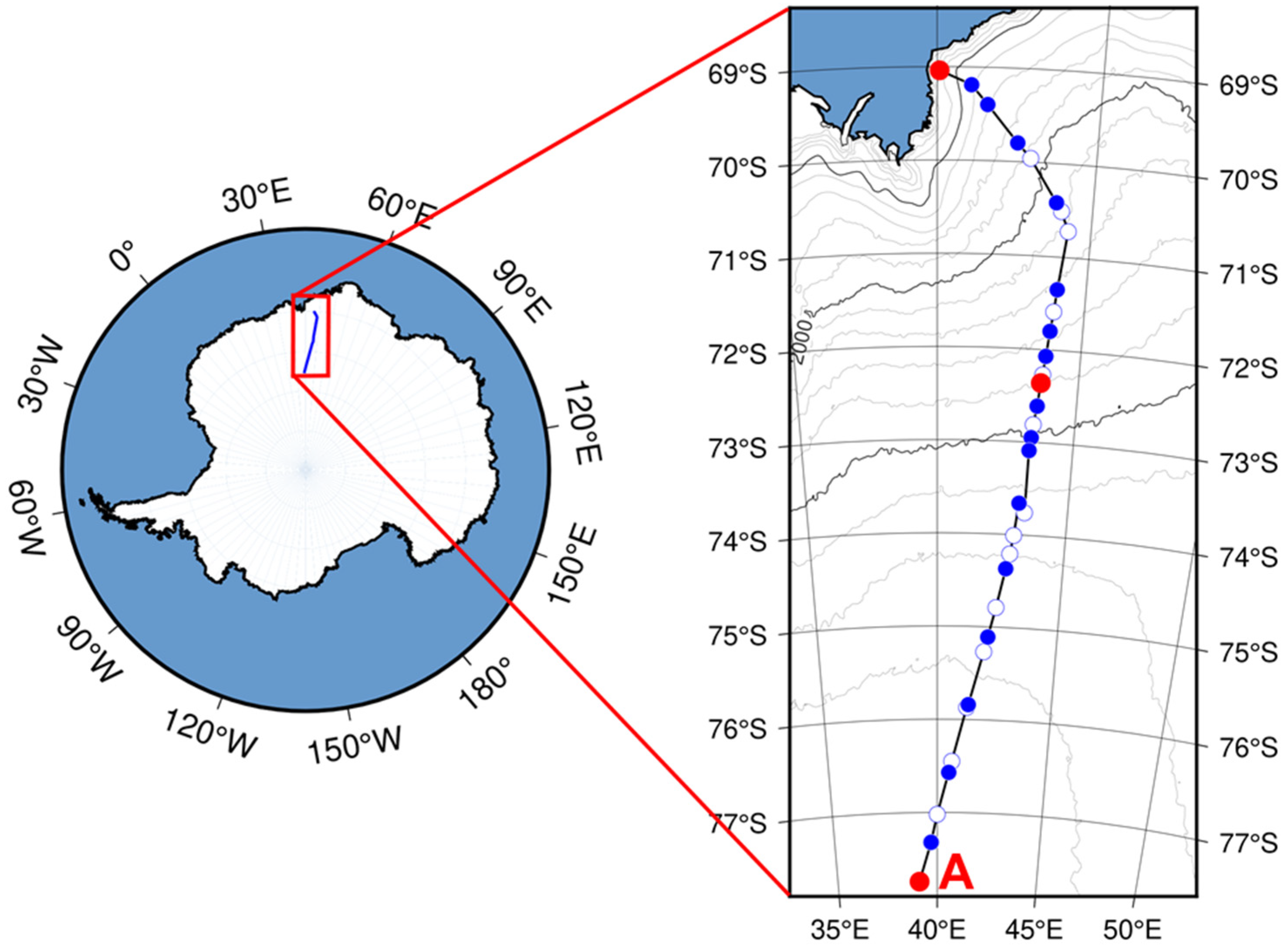
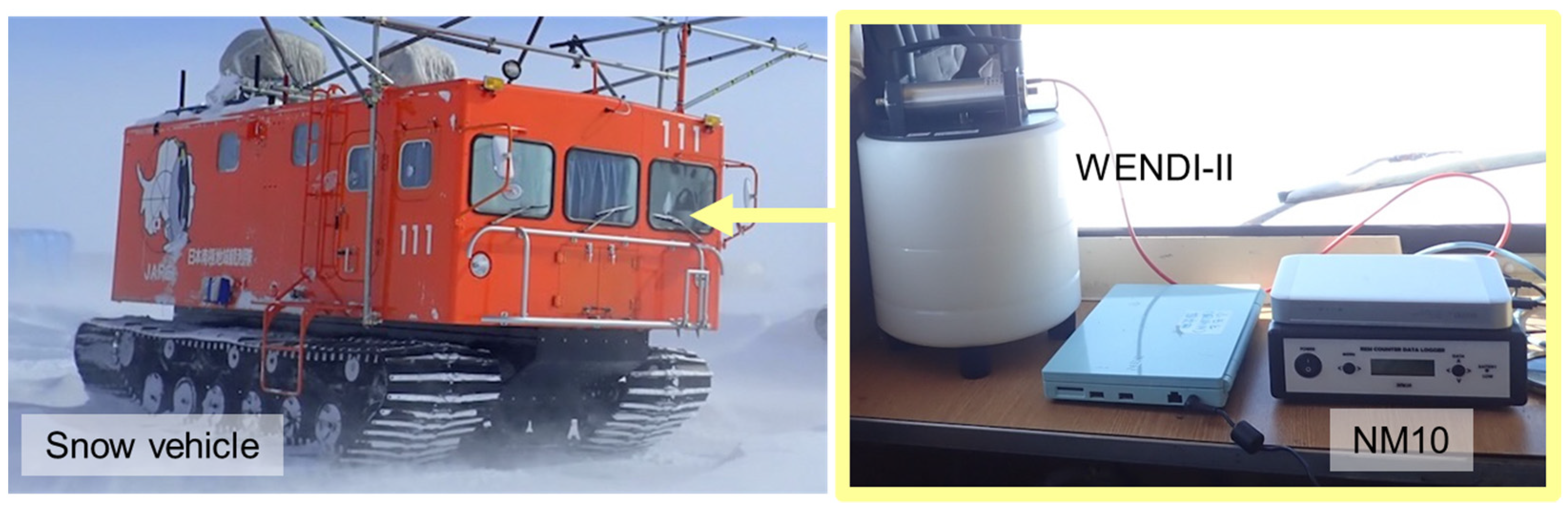
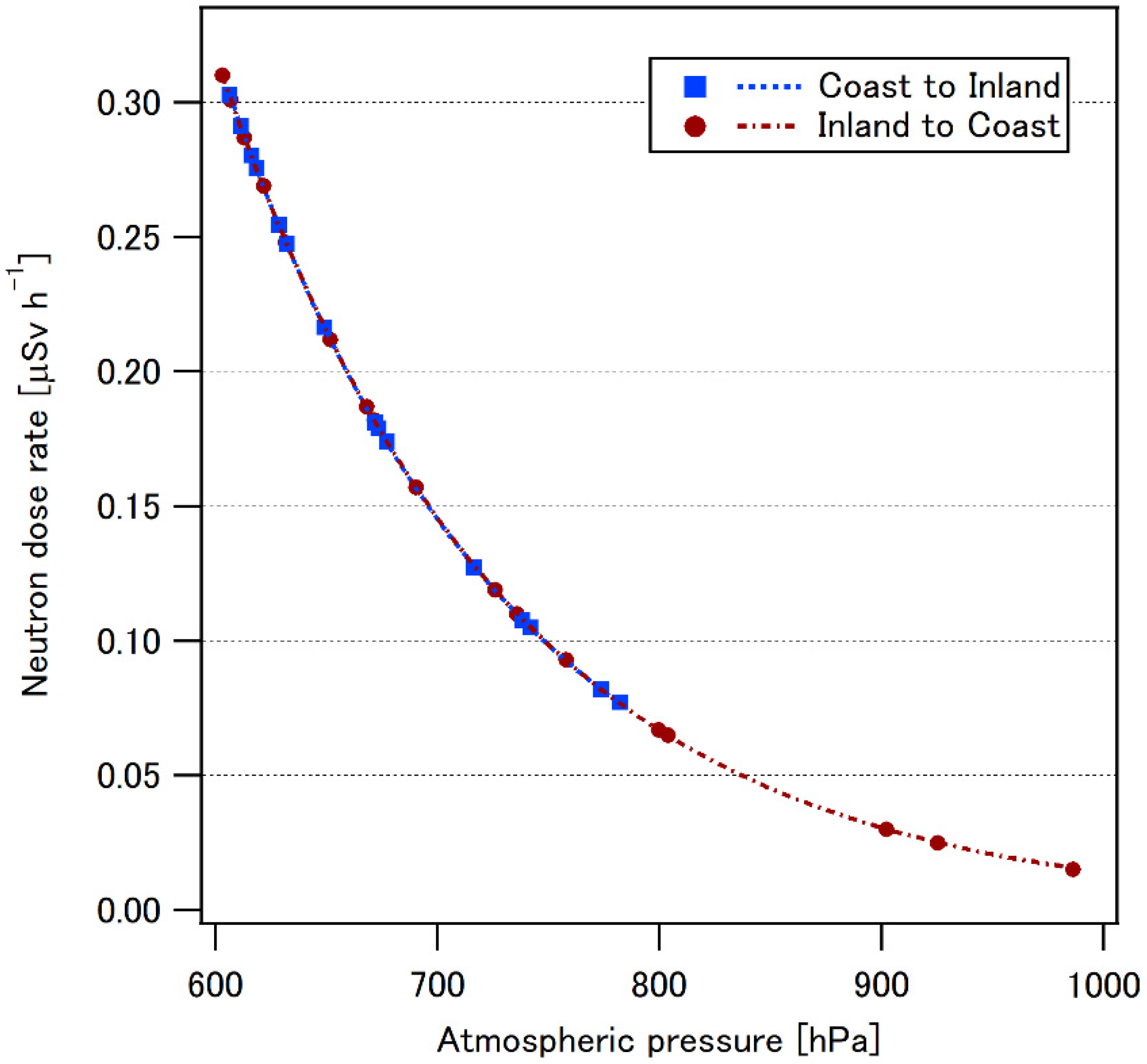
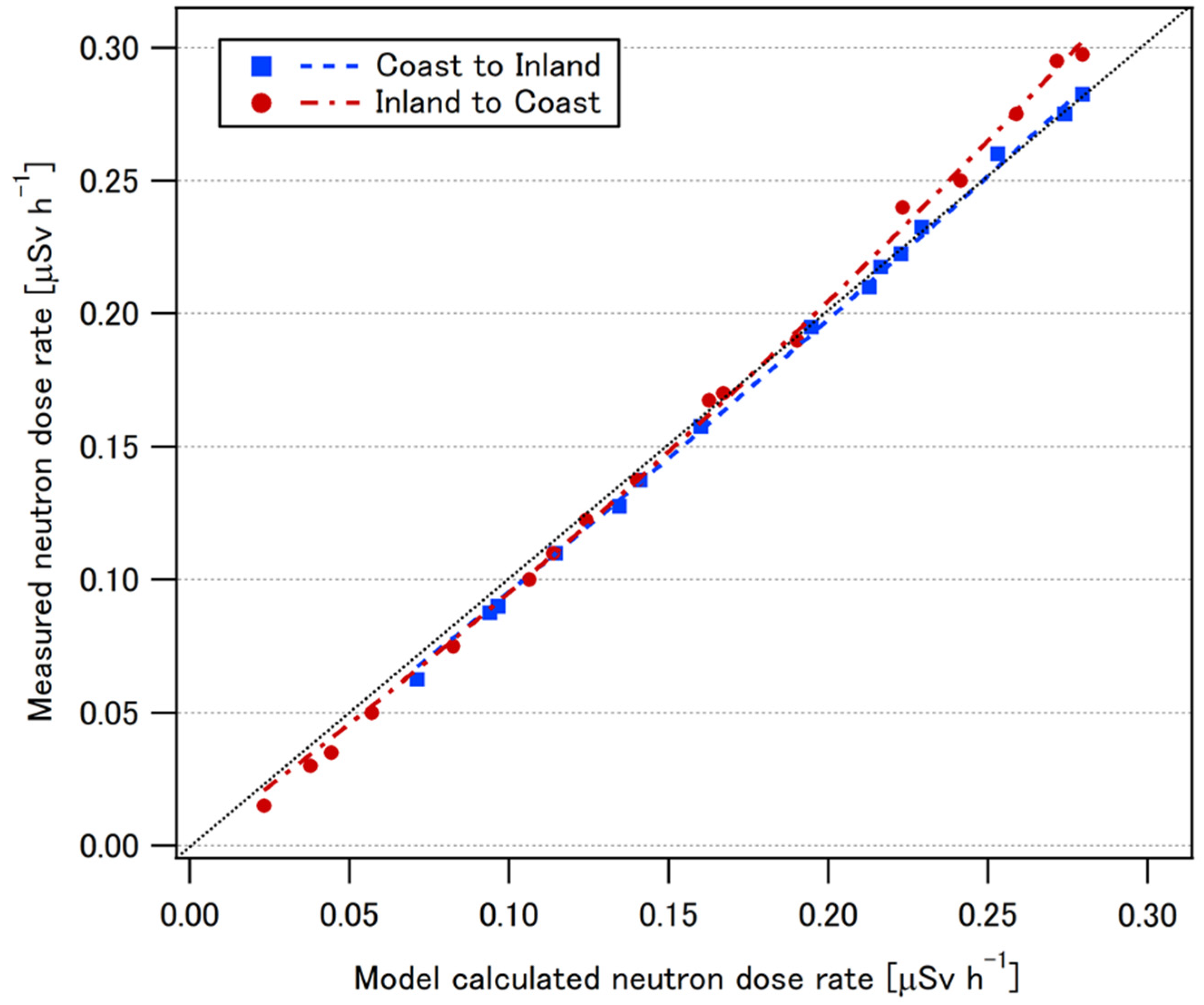
Many ongoing studies for predicting the production rates of cosmogenic nuclides, forecasting changes of atmospheric compositions and climate, assessing the cosmic-radiation exposure of aircraft crew, and the effects on precise electronic devices use numerical models that estimate cosmic-radiation intensities in the atmosphere. Periodic verifications of those models are desirable to be performed for assuring the reliability of the study outcomes. Here, we investigated an application of a portable neutron-monitoring system composed of an extended-energy-range neutron monitor and a small data logger for monitoring of cosmic-neutron intensities in a polar region. As a result of measurements in the east Antarctica region covering a wide range of altitudes (from 30 m to 3762 m) and comparisons with the model calculations performed with an analytical model based on comprehensive Monte Carlo simulations (PARMA), it was demonstrated that the portable neutron-monitoring system could be effectively applied for periodic verification of cosmic-neutron intensities that would improve the reliability of related studies.
Keywords: Antarctica; cosmic rays; atmosphere; radiation detector; neutron measurement; portable monitoring system Antarctica; cosmic rays; atmosphere; radiation detector; neutron measurement; portable monitoring system