Article

Dynamic Response Threshold Model for Self-Organized Task Allocation in a Swarm of Foraging Robots


1
School of Mechanical, Electrical & Information Engineering, Shandong University, Weihai 264209, China
2
Shandong Jinpiao Food Machinery Co., Ltd., Weihai 264209, China
3
Institute of Oceanology, Chinese Academy of Sciences, Qingdao 266071, China
*
Author to whom correspondence should be addressed.
Appl. Sci. 2023, 13(16), 9107; https://doi.org/10.3390/app13169107
Submission received: 9 July 2023 / Revised: 8 August 2023 / Accepted: 9 August 2023 / Published: 10 August 2023
(This article belongs to the Special Issue AI Technology and Application in Various Industries)

Abstract

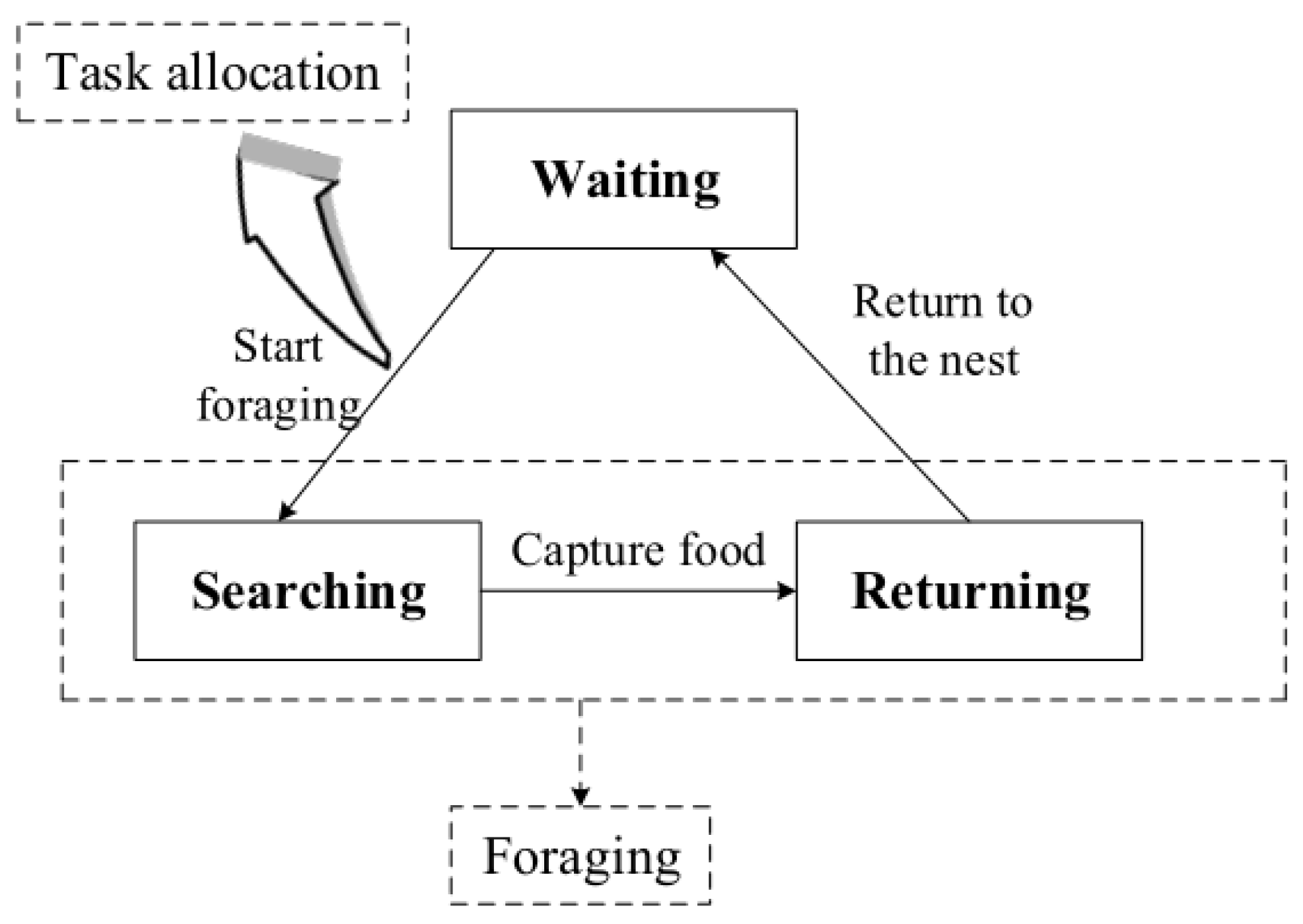
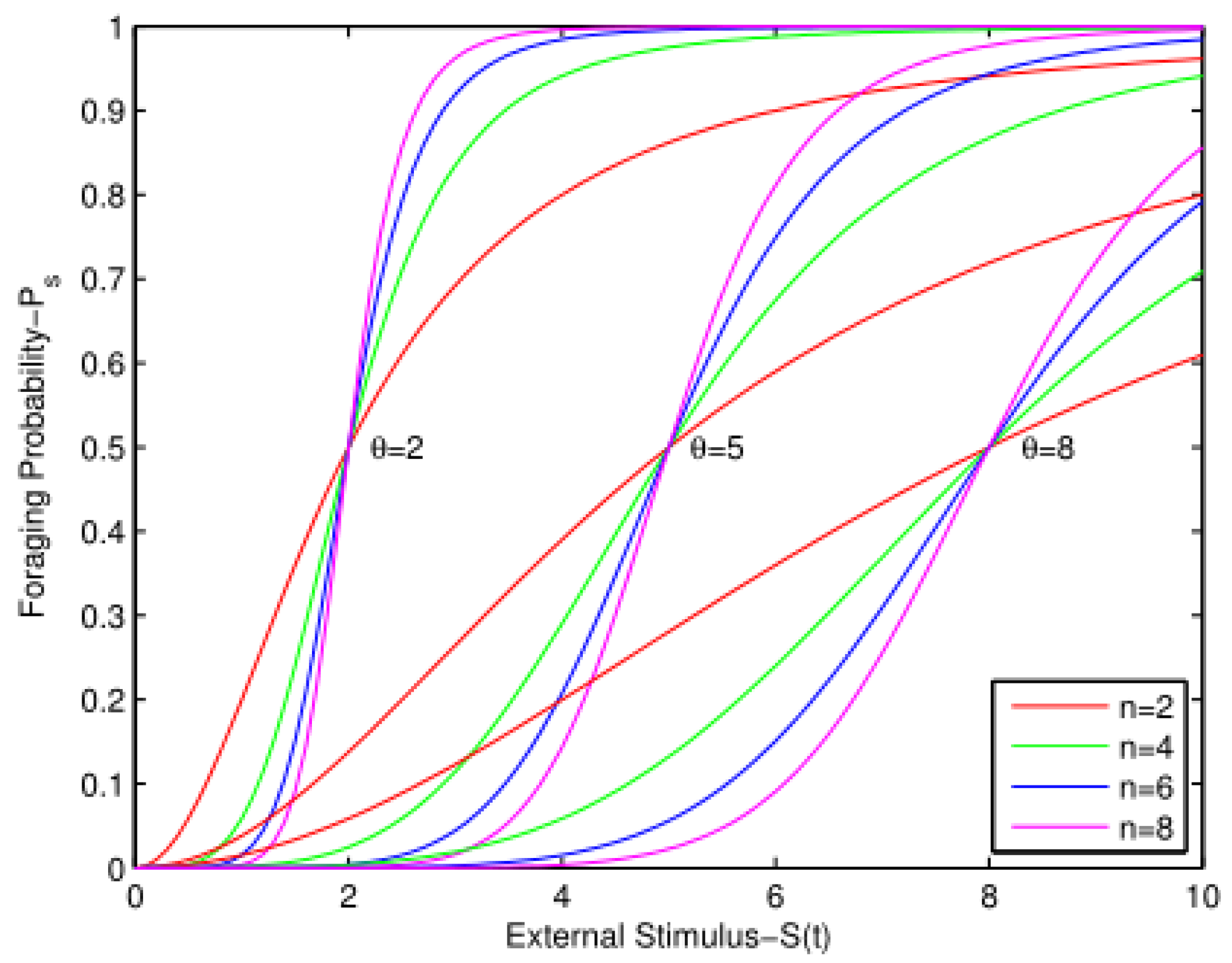
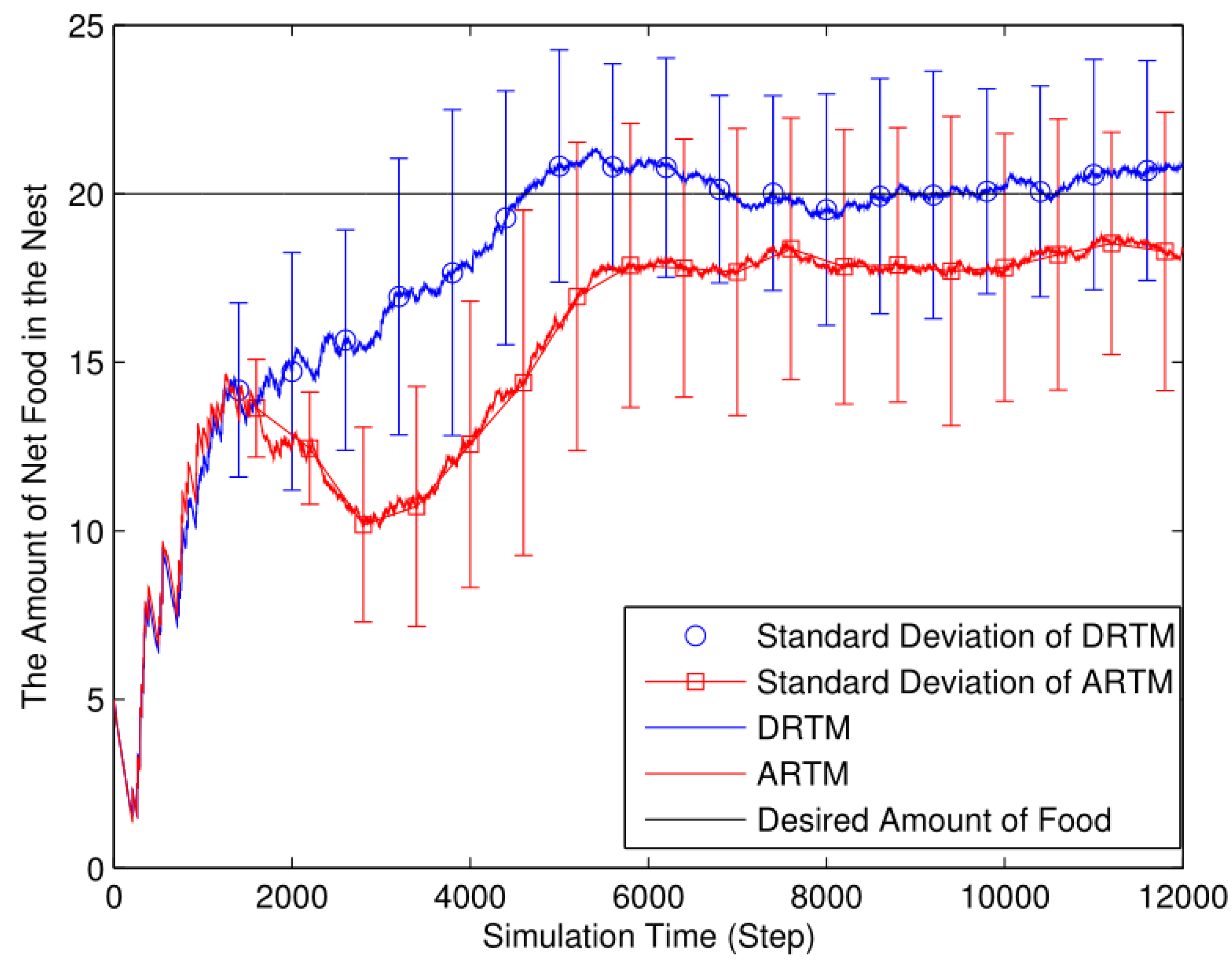
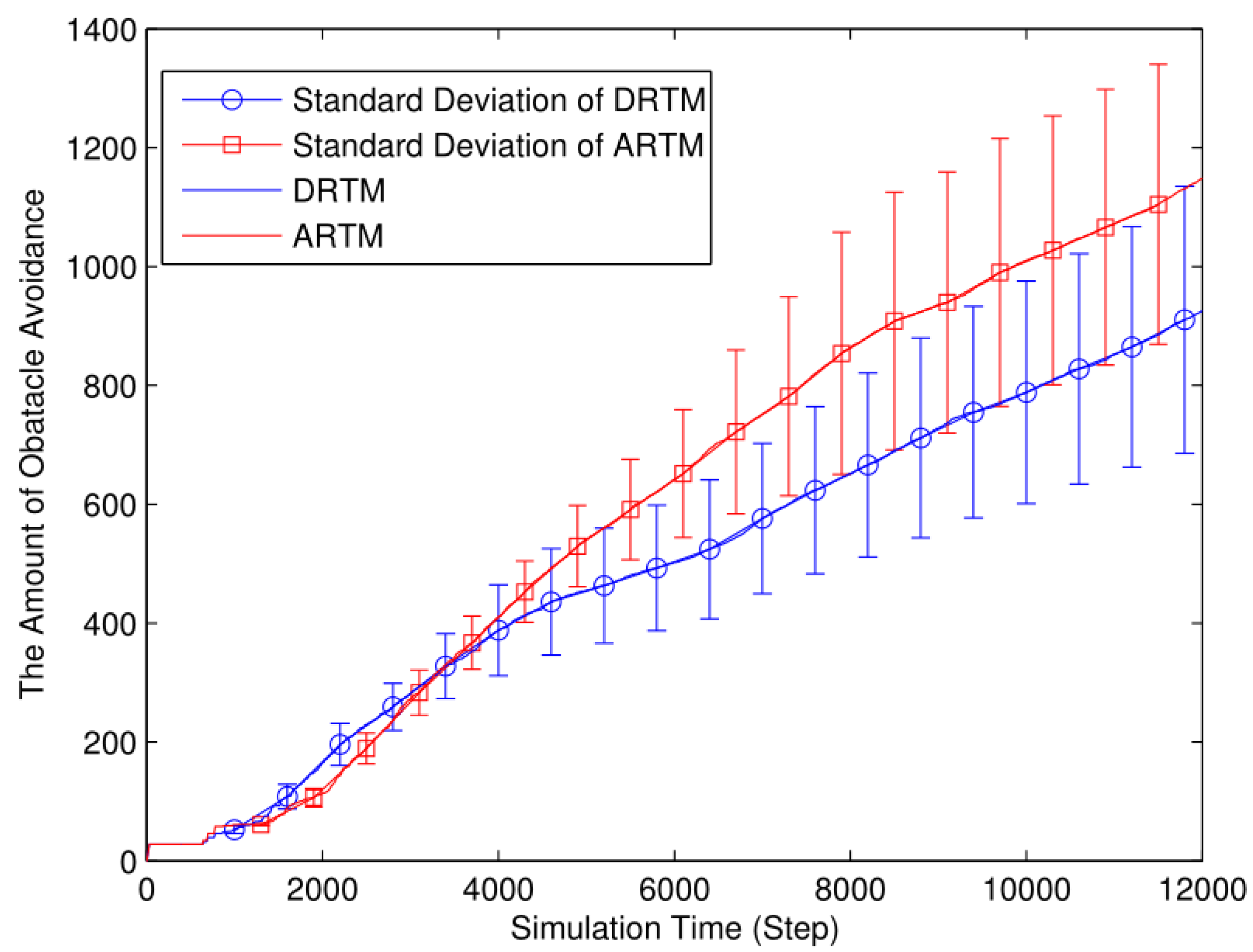
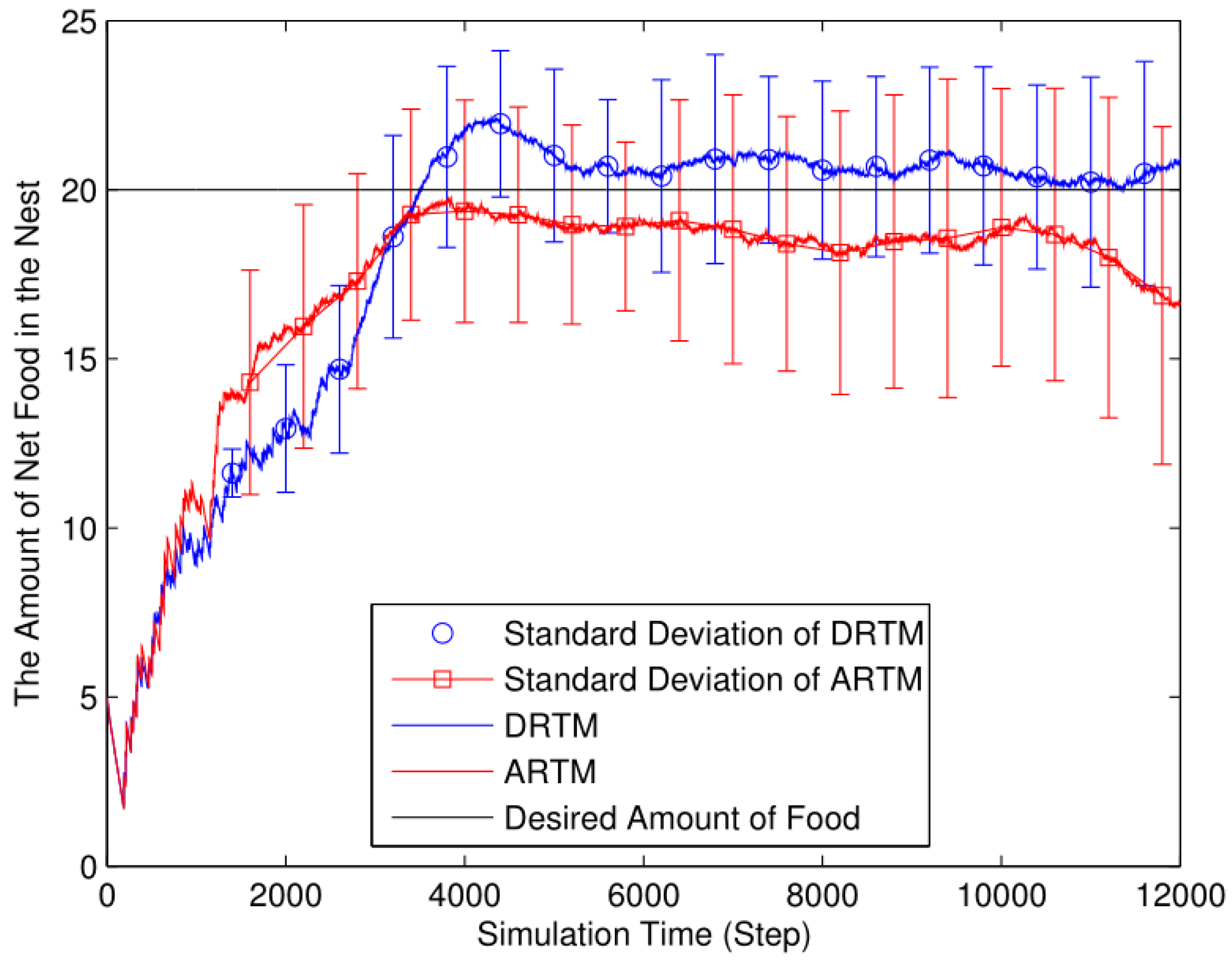
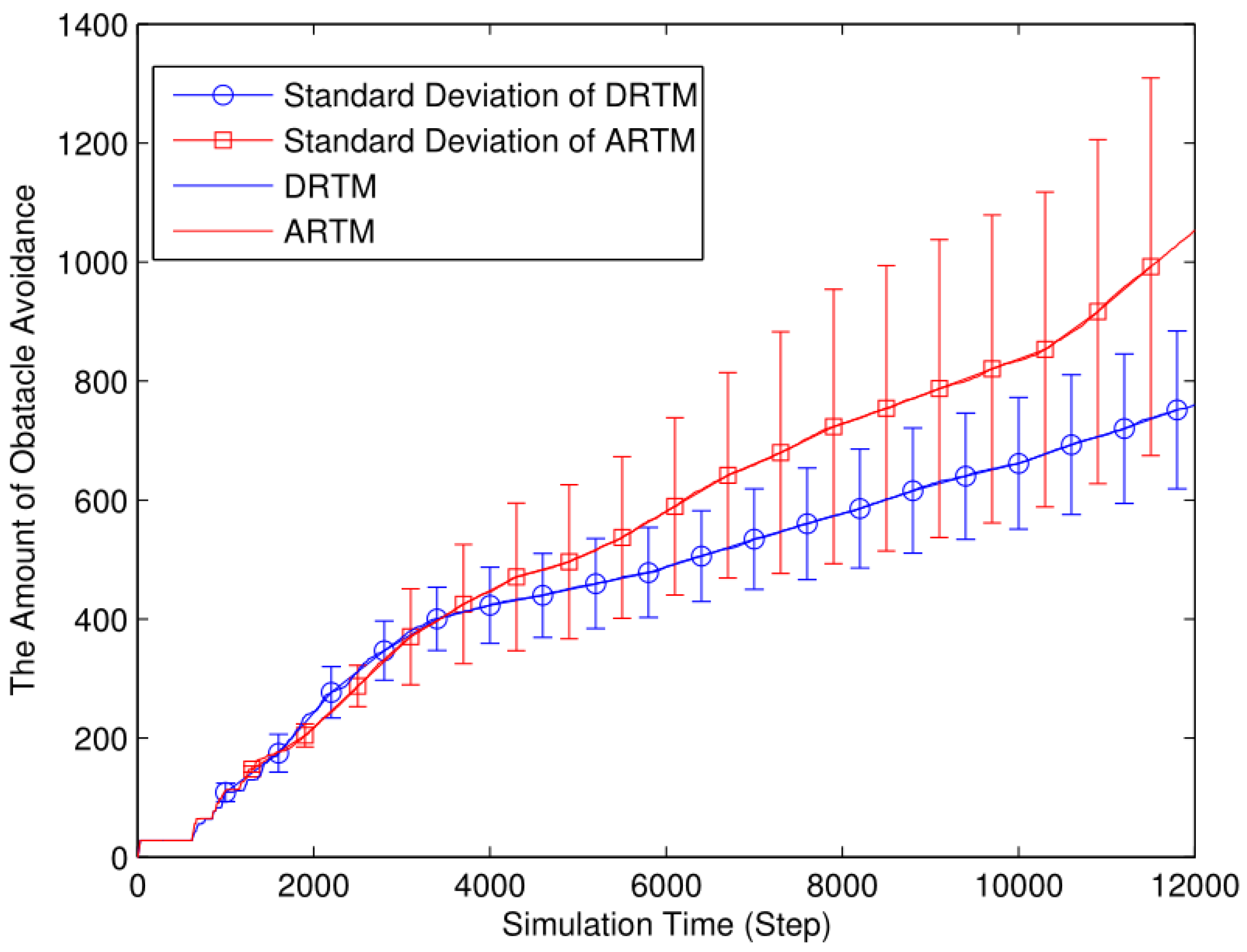
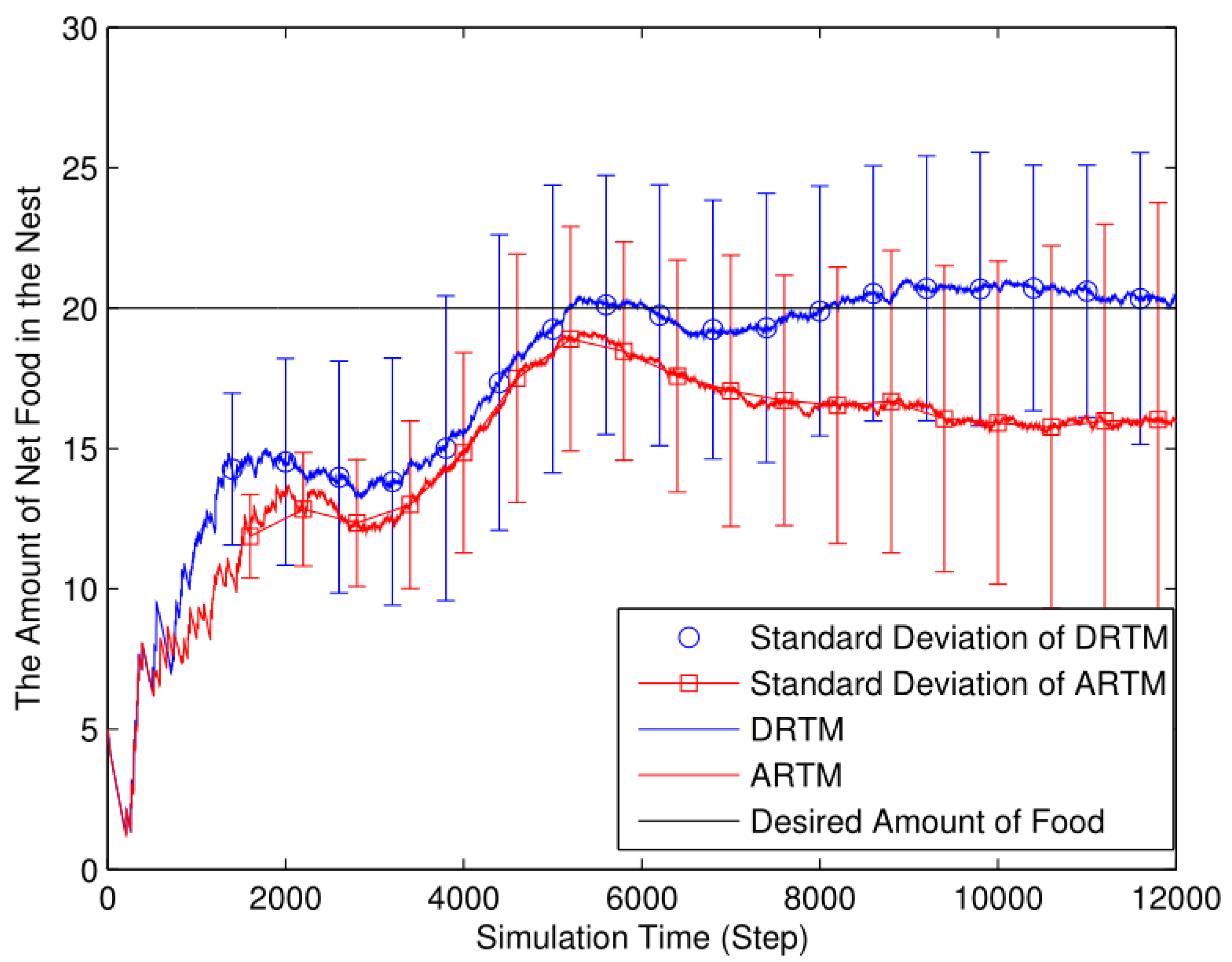
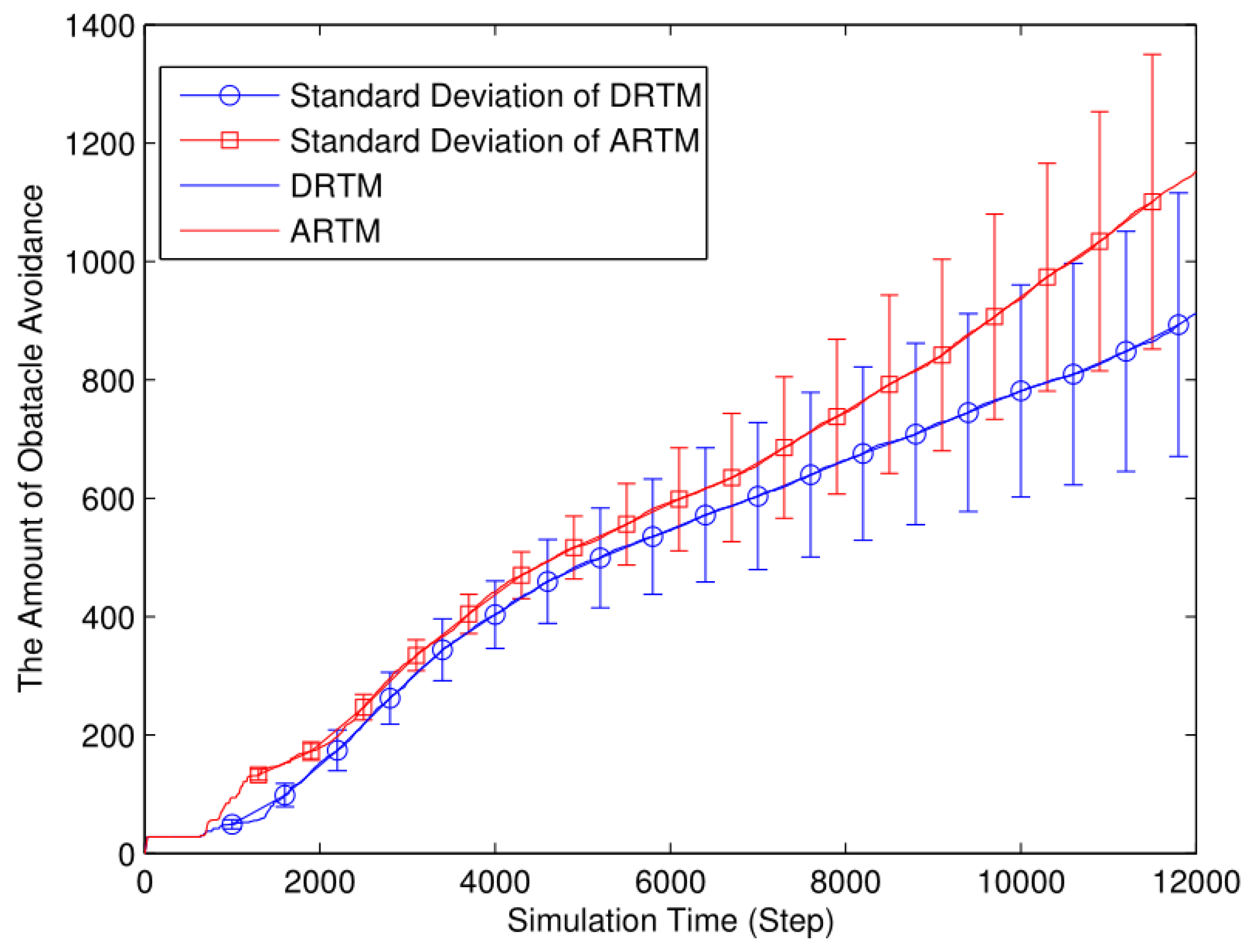
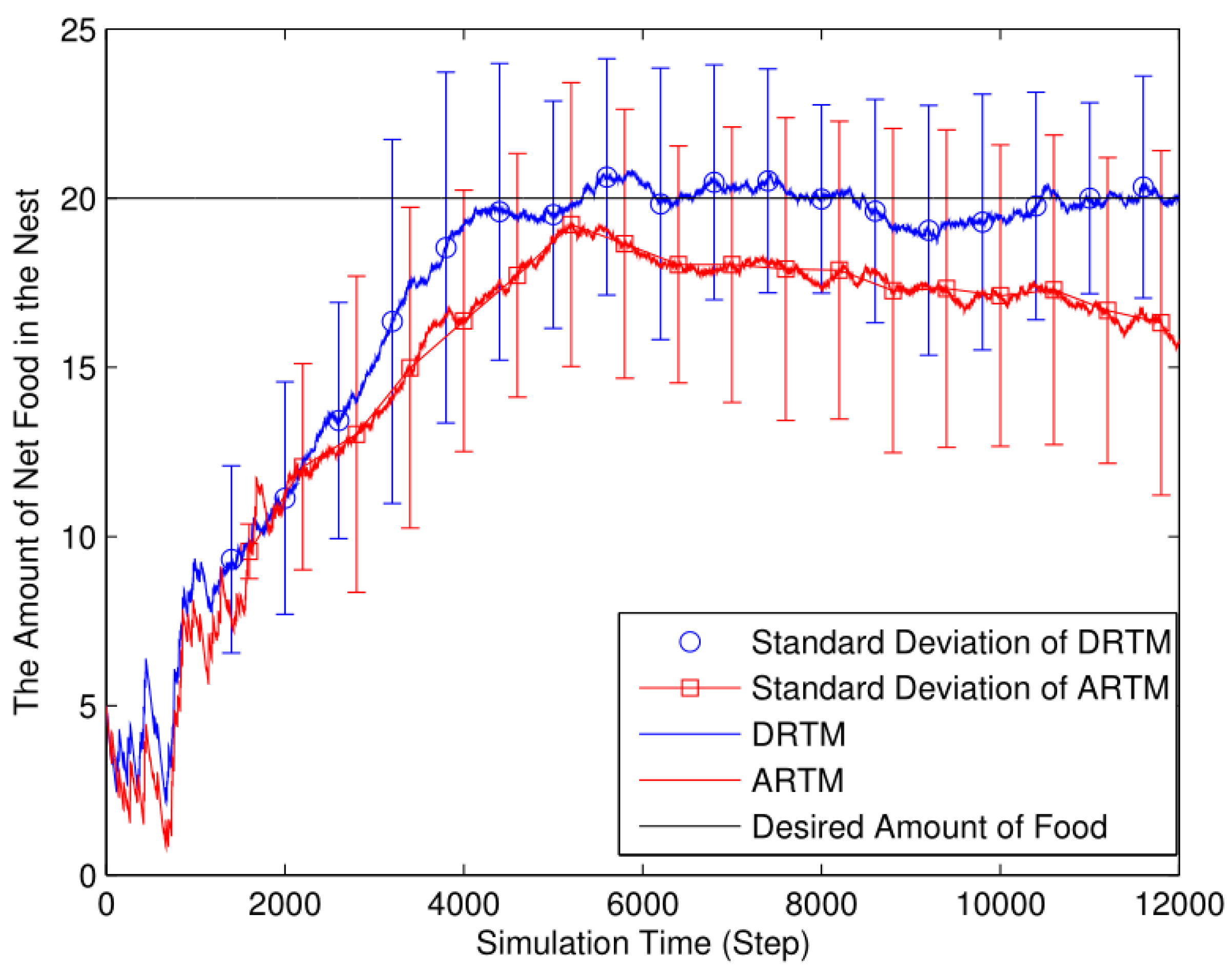
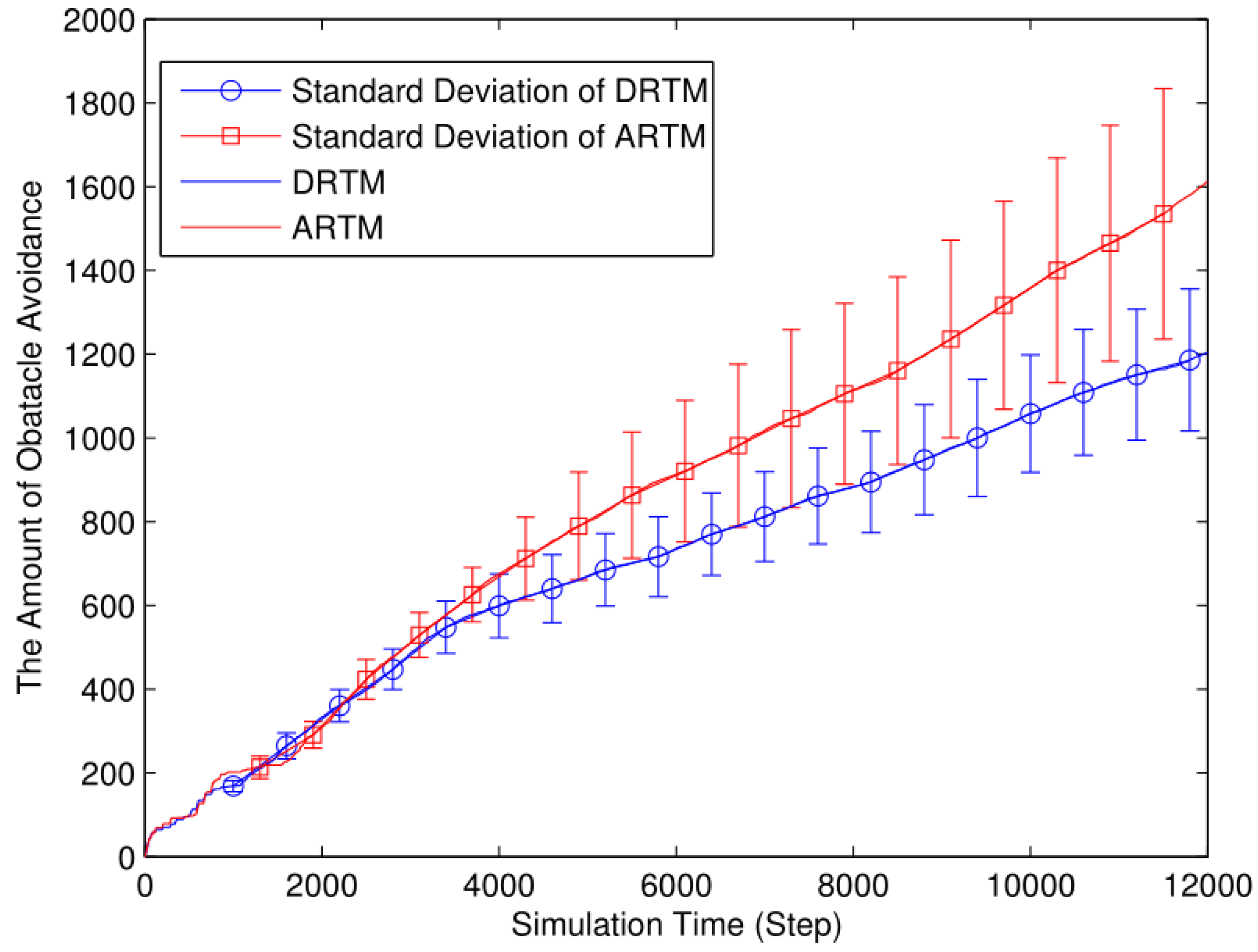
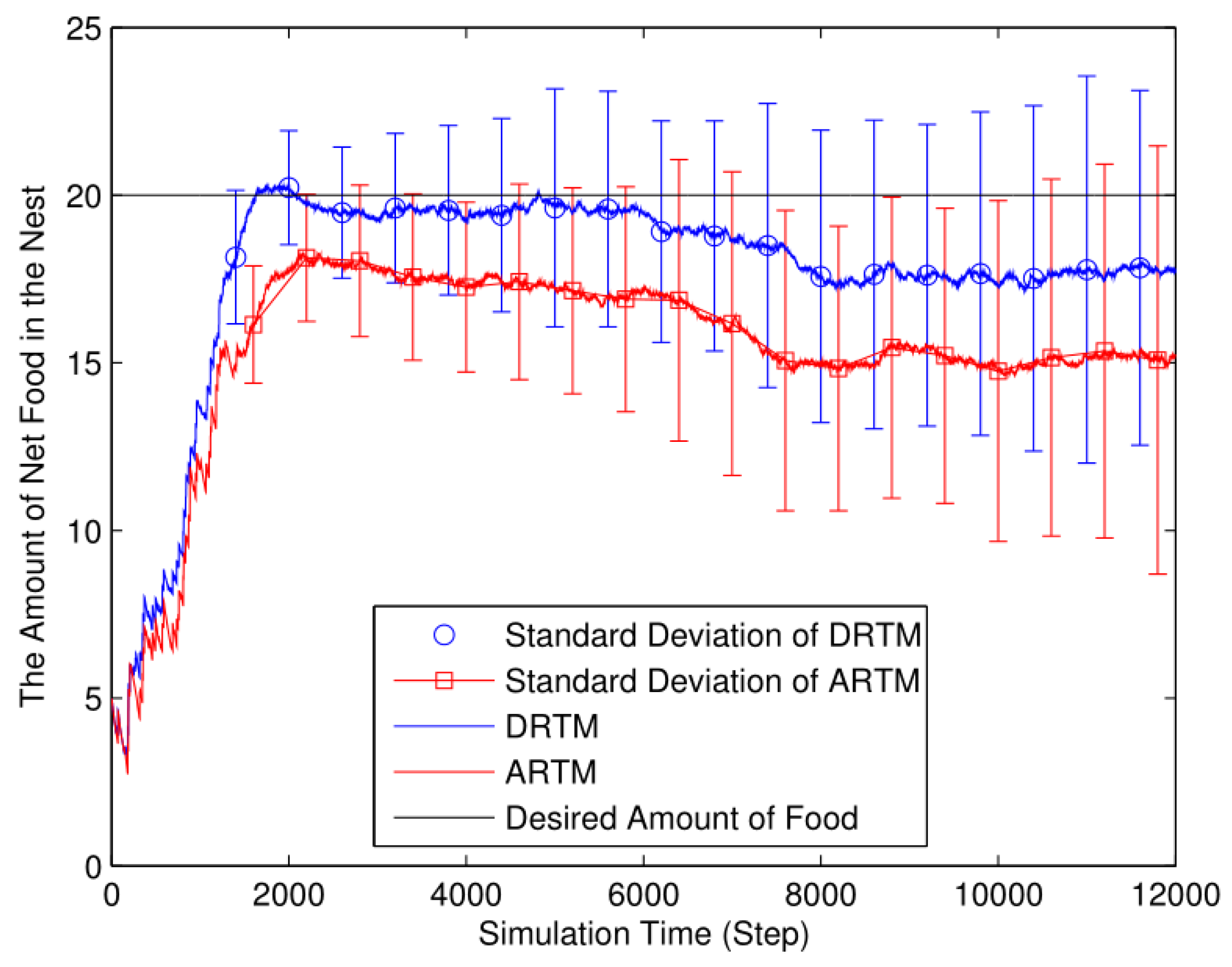
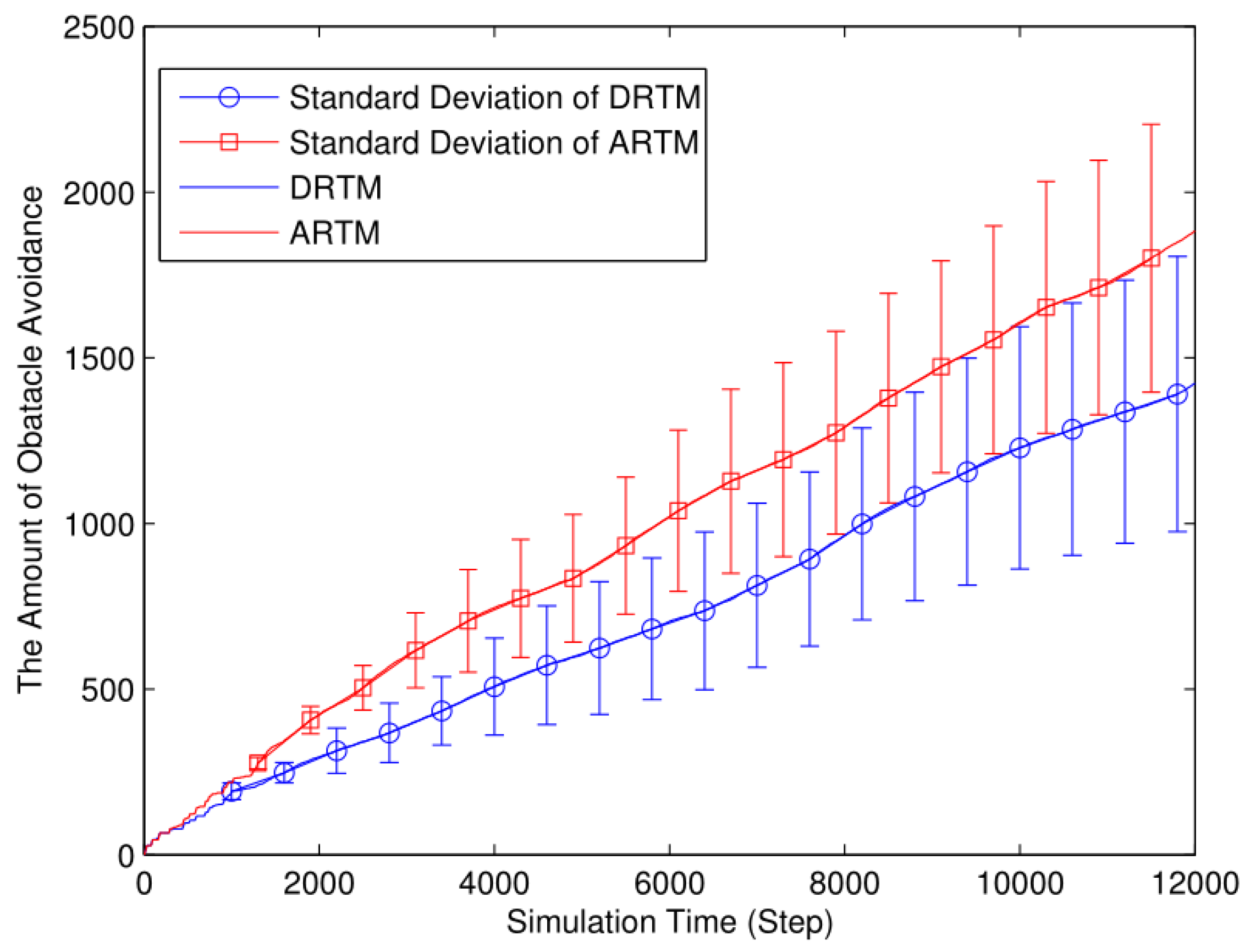
In swarm-robotics foraging, the purpose of task allocation is to adjust the number of active foraging robots dynamically based on the task demands and changing environment. It is a difficult challenge to generate self-organized foraging behavior in which each robot can adapt to environmental changes. To complete the foraging task efficiently, this paper presents a novel self-organized task allocation strategy known as the dynamic response threshold model (DRTM). To adjust the behavior of the active foraging robots, the proposed DRTM newly introduces the traffic flow density, which can be used to evaluate the robot density. Firstly, the traffic flow density and the amount of obstacle avoidance are used to adjust the threshold which determines the tendency of a robot to respond to a stimulus in the environment. Then, each individual robot uses the threshold and external stimulus to calculate the foraging probability that determines whether or not to go foraging. This paper completes the simulation and physical experiments, respectively, and the performance of the proposed method is evaluated using three commonly used performance indexes: the average deviation of food, the energy efficiency, and the number of obstacle avoidance events. The experimental results show that the DRTM is superior to and more efficient than the adaptive response threshold model (ARTM) in all three indexes.
Keywords: swarm robotics; adaptive foraging; self-organized; task allocation; dynamic response threshold model; traffic flow density swarm robotics; adaptive foraging; self-organized; task allocation; dynamic response threshold model; traffic flow density