Article

Spatial Assessment and Prediction of Urbanization in Maseru Using Earth Observation Data

1
School of Geography, Archaeology and Environmental Studies, University of the Witwatersrand, Johannesburg 2025, South Africa
2
School of Agricultural, Earth and Environmental Sciences, University of KwaZulu-Natal, Westville Campus, Durban 4000, South Africa
*
Author to whom correspondence should be addressed.
Appl. Sci. 2023, 13(10), 5854; https://doi.org/10.3390/app13105854
Submission received: 26 February 2023 / Revised: 4 May 2023 / Accepted: 4 May 2023 / Published: 9 May 2023

Abstract

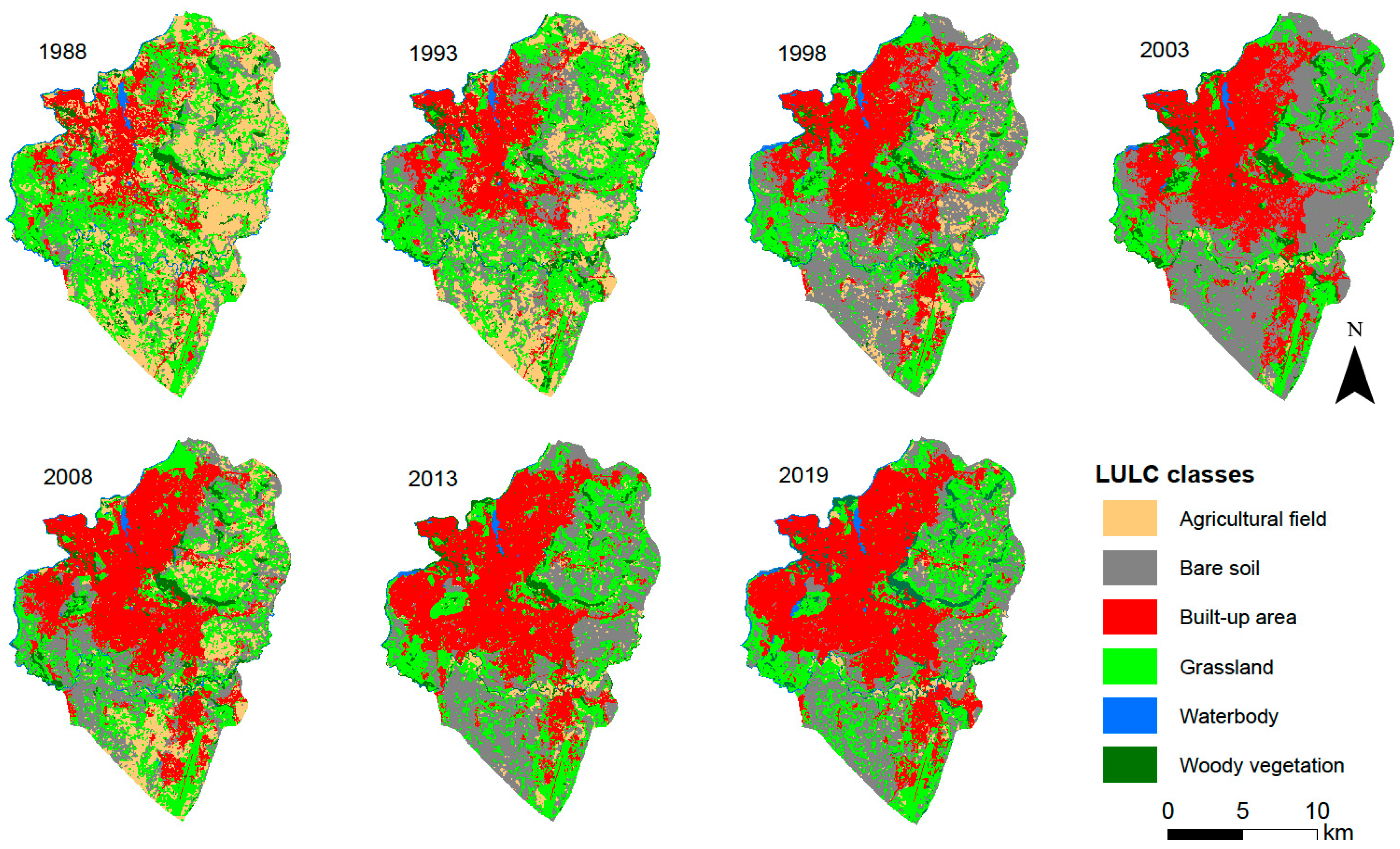
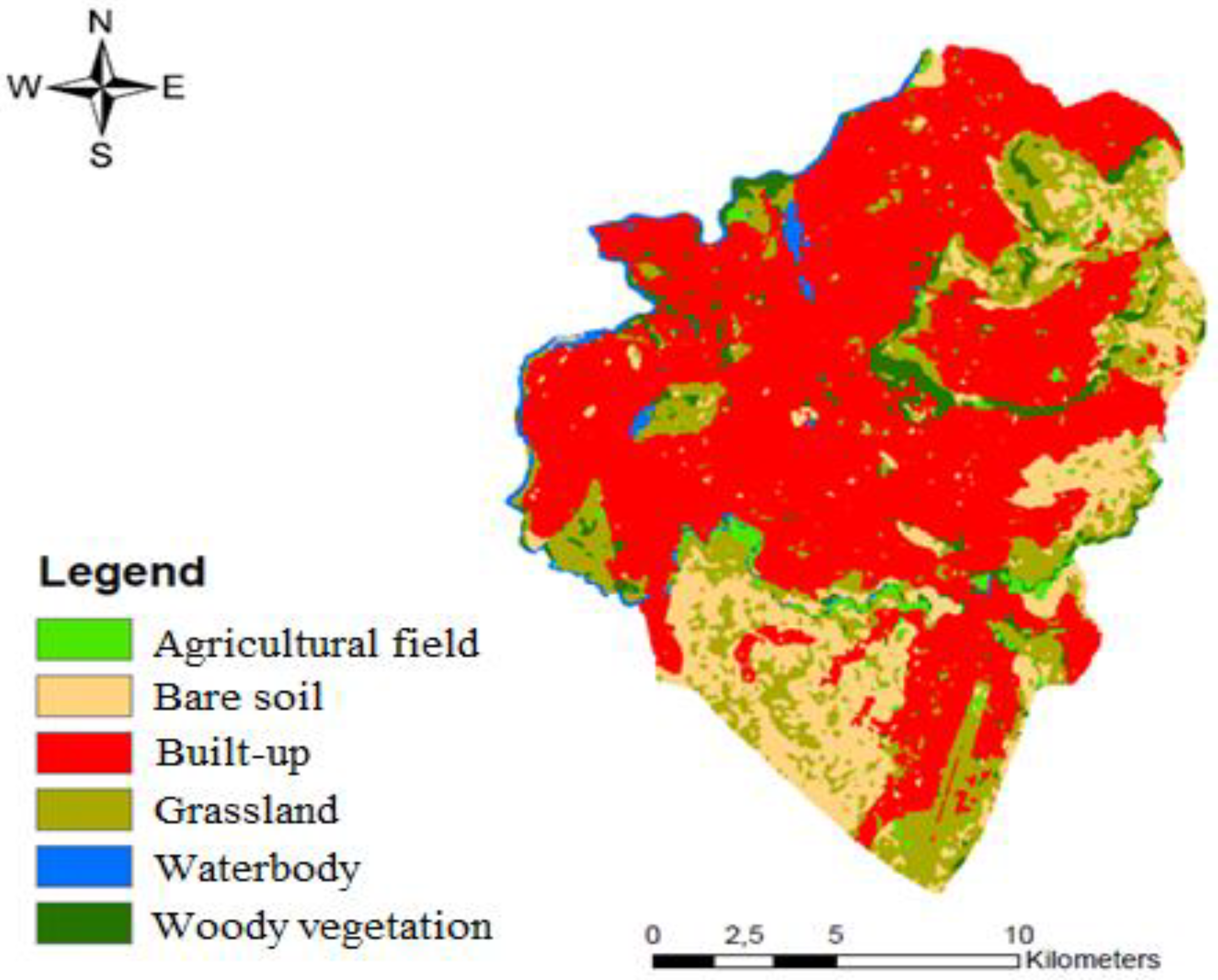
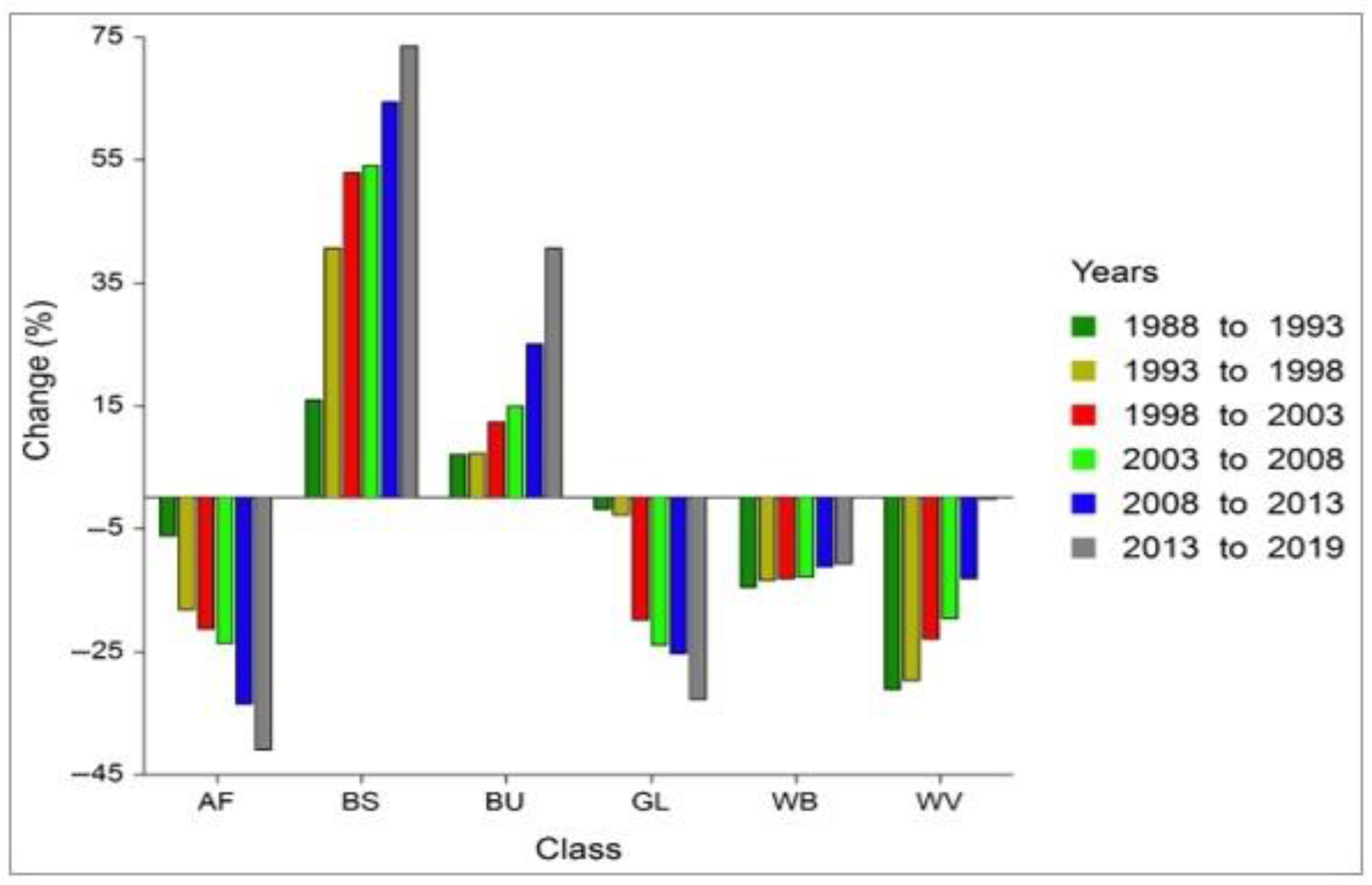
The availability of geospatial data infrastructure and earth observation technology can play an essential role in facilitating the monitoring of sustainable urban development. However, in most developing countries, a spatiotemporal evaluation of urban growth is still lacking. Maseru, Lesotho’s capital and largest city, is growing rapidly due to various socioeconomic and demographic driving forces. However, urban expansion in developing countries has been characterized by entangled structures and trends exacerbating numerous negative consequences such as ecological degradation, the loss of green space, and pollution. Understanding the urban land use and land cover (LULC) dynamic is essential to mitigate such adverse impacts. This study focused on mapping and quantifying the urban extension in Maseru, using Landsat imagery from 1988 to 2019, based on the Support Vector Machines (SVM) classifier. We also simulated and predicted LULC changes for the year 2050 using the cellular automata model of an artificial neural network (ANN-CA). Our results showed a notable increase in the built-up area from 15.3% in 1988 to 48% in 2019 and bare soil from 12.3% to 35.3%, while decreased agricultural land (21.7 to 1.7%), grassland (43.3 to 10.5%) and forest vegetation (5.5 to 3.2%) were observed over the study period. The classified maps have high accuracy, between 88% and 95%. The ANN-CA projections for 2050 show that built-up areas will continue to increase with a decrease in agricultural fields, bare soil, grasslands, water bodies and woody vegetation. To our knowledge, this is the first detailed, long-term study to provide insights on urban growth to planners and other stakeholders in Maseru in order to improve the implementation of the Maseru 2050 urban plan.
Keywords: urbanization; land use and land cover (LULC) changes; ANN-CA; Landsat; change detection; prediction; Lesotho urbanization; land use and land cover (LULC) changes; ANN-CA; Landsat; change detection; prediction; Lesotho