Article

hLSTM-Aging: A Hybrid LSTM Model for Software Aging Forecast

1
Departamento de Informática, Universidade Federal do Agreste de Pernambuco, Garanhuns 55292-270, Brazil
2
School of Software, College of Computer Science, Kookmin University, Seoul 02707, Korea
3
Konkuk Aerospace Design-Airworthiness Research Institute (KADA), Konkuk University, Seoul 05029, Korea
4
Department of Computer Science and Engineering, College of Engineering, Konkuk University, Seoul 05029, Korea
*
Authors to whom correspondence should be addressed.
Appl. Sci. 2022, 12(13), 6412; https://doi.org/10.3390/app12136412
Submission received: 28 May 2022 / Revised: 17 June 2022 / Accepted: 20 June 2022 / Published: 24 June 2022
(This article belongs to the Special Issue Dependability and Security of IoT Network)

Abstract

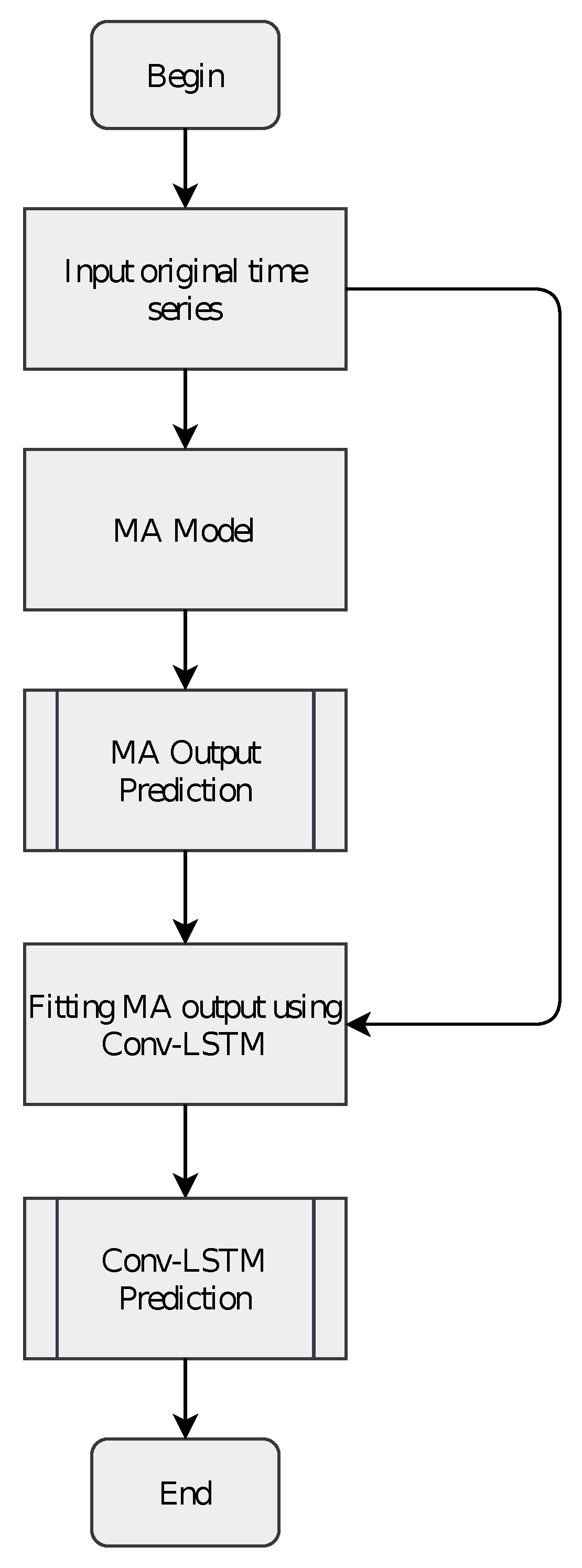
Long-running software, such as cloud computing services, is now widely used in modern applications. As a result, the demand for high availability and performance has grown. However, these applications are more vulnerable to software aging issues and are more likely to fail due to the accumulation of mistakes in the system. One popular strategy for dealing with such aging-related problems is to plan prediction-based software rejuvenation activities based on previously obtained data from long-running software. Prediction algorithms enable the activation of a mitigation mechanism before the problem occurs. The long short-term memory (LSTM) neural network, the present state of the art in temporal series prediction, has demonstrated promising results when applied to software aging concerns. This study aims to anticipate software aging failures using a hybrid prediction model integrating long short-term memory models and statistical approaches. We emphasize the capabilities of each strategy in various long-running software scenarios and provide an untried hybrid model (hLSTM-aging) based on the union of Conv-LSTM networks and probabilistic methodologies, attempting to combine the strengths of both approaches for software aging forecasts. The hLSTM-aging prediction results revealed how hybrid models are a compelling solution for software-aging prediction. Experiments showed that hLSTM-aging increased MSE criteria by 8.54% to 50% and MAE criteria by 3.53% to 14.29% when compared to Conv-LSTM, boosting the model’s initial performance.
Keywords: time series; software aging; resources prediction; mitigating techniques; LSTM time series; software aging; resources prediction; mitigating techniques; LSTM