Article

Analysis of Correlation between Pad Temperature and Asperity Angle in Chemical Mechanical Planarization
Graduated School of Mechanical Engineering, Pusan National University, Busan 46703, Korea
*
Author to whom correspondence should be addressed.
Appl. Sci. 2021, 11(4), 1507; https://doi.org/10.3390/app11041507
Submission received: 5 January 2021 / Revised: 2 February 2021 / Accepted: 3 February 2021 / Published: 7 February 2021
(This article belongs to the Special Issue Chemical Mechanical Polishing and Grinding)

Abstract

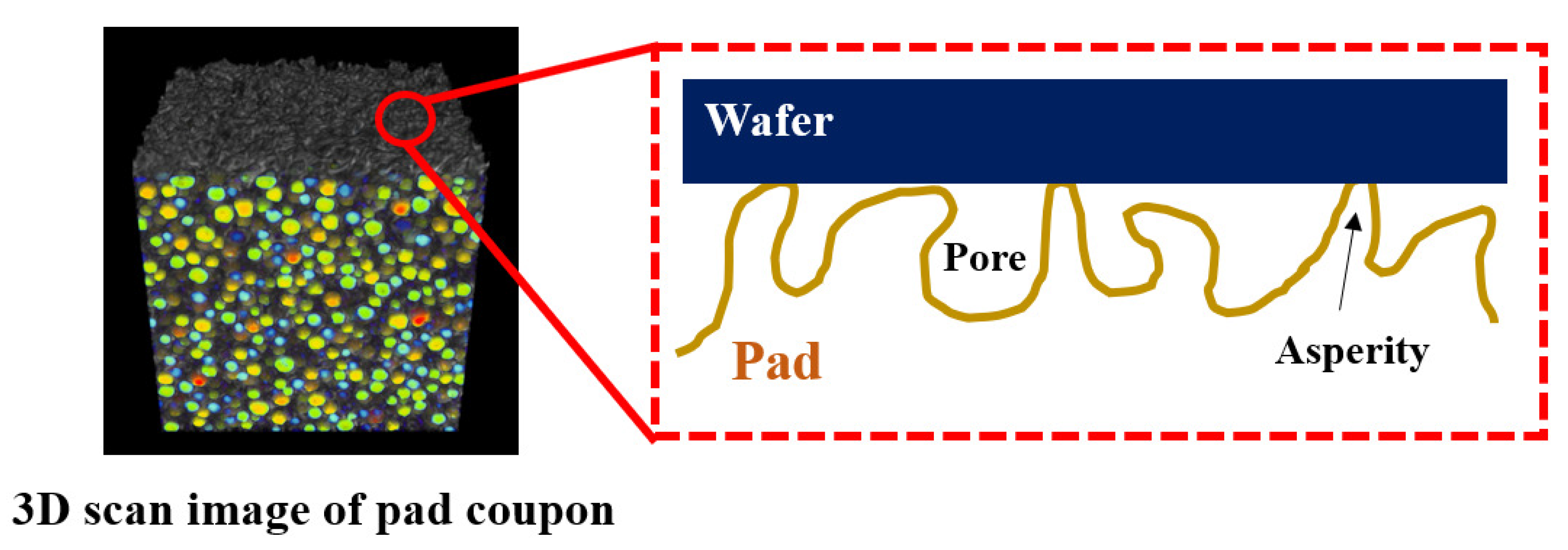
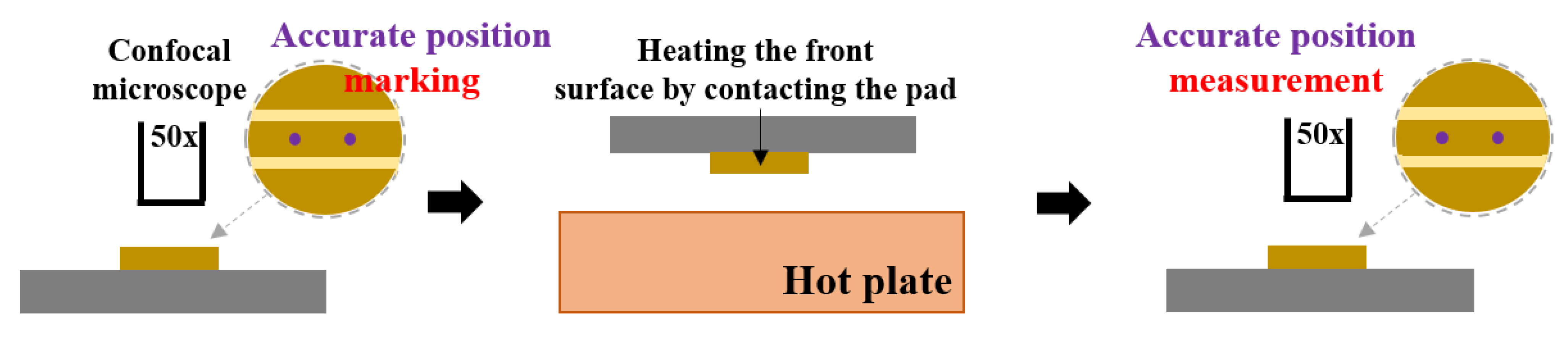
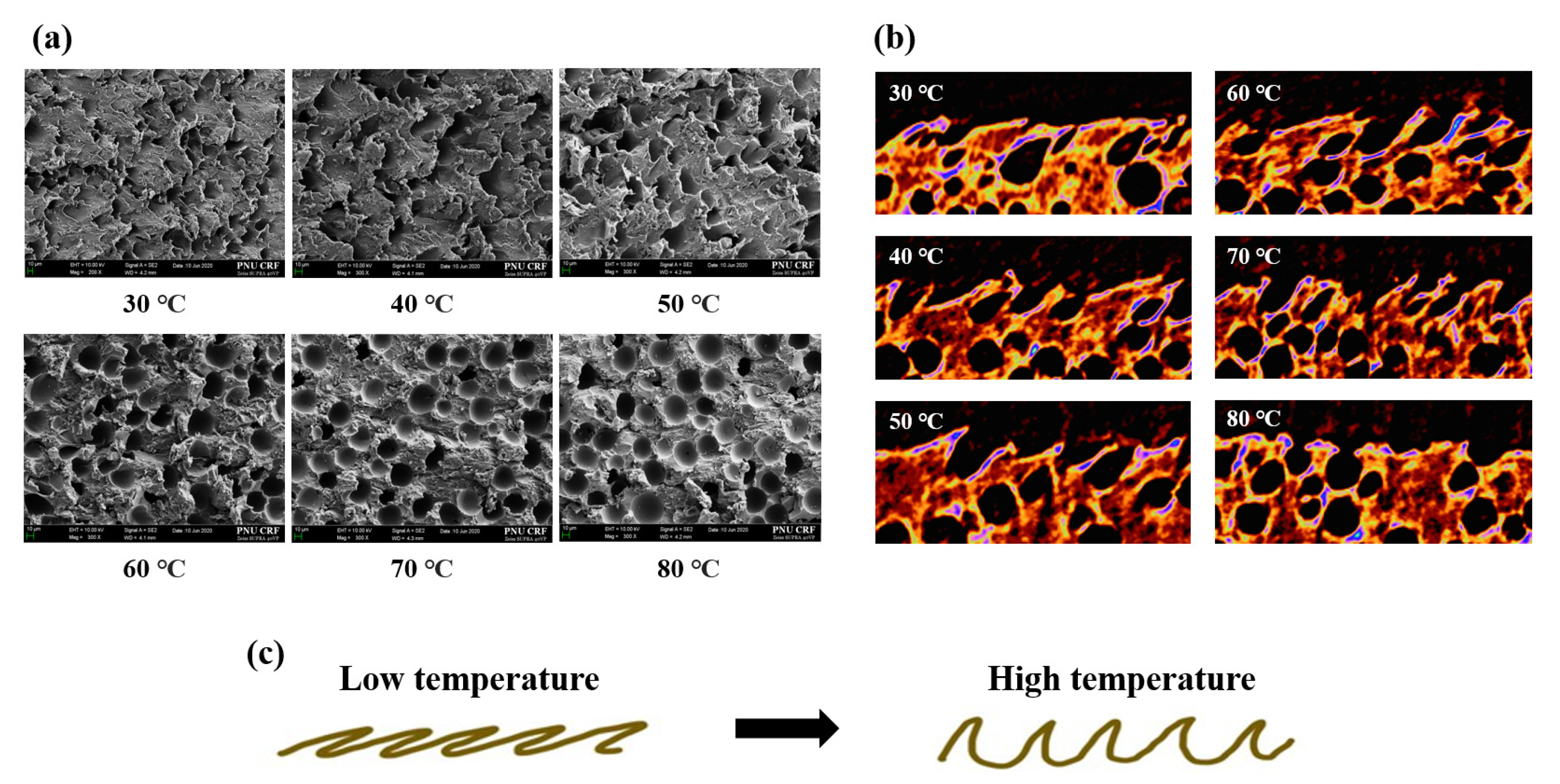
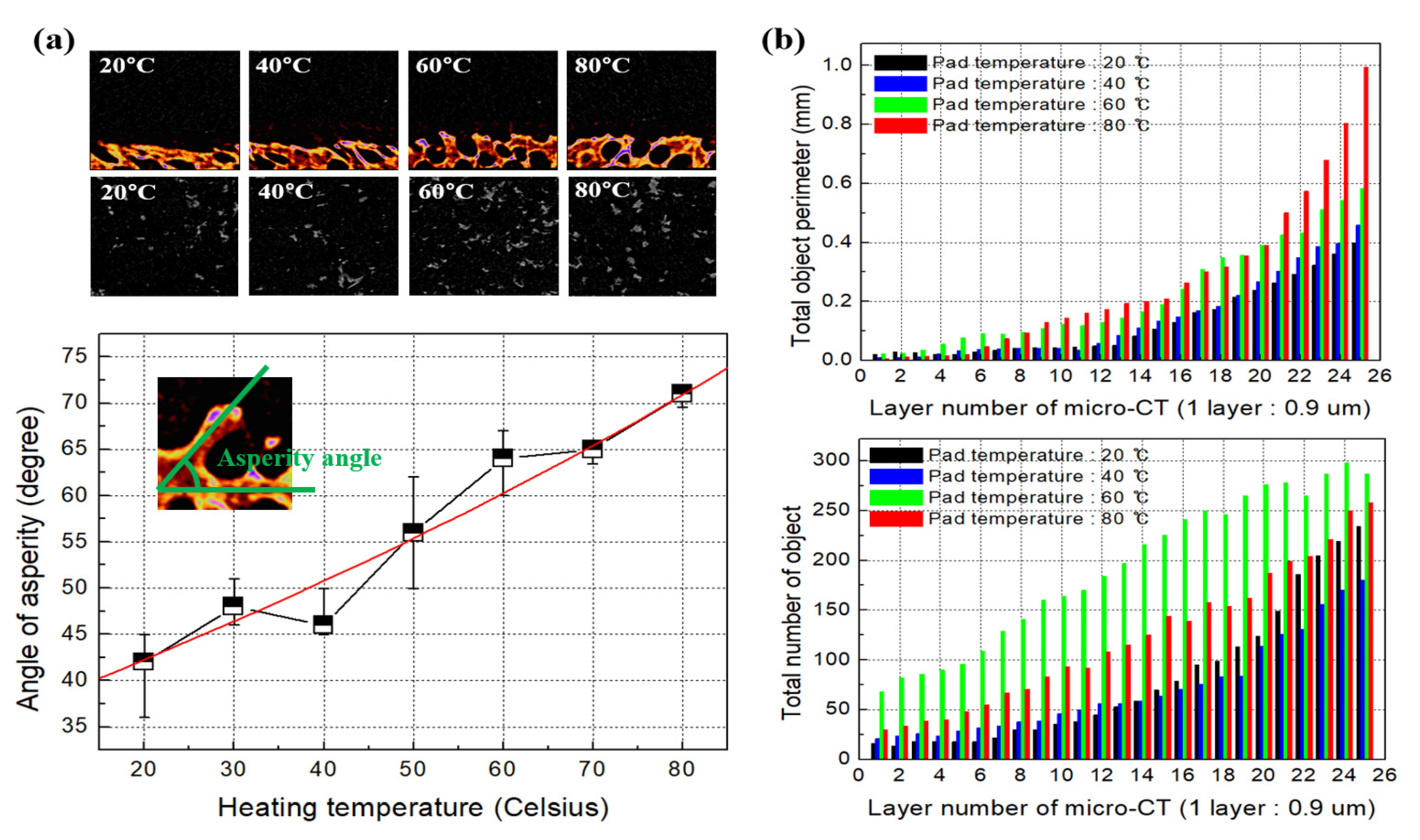
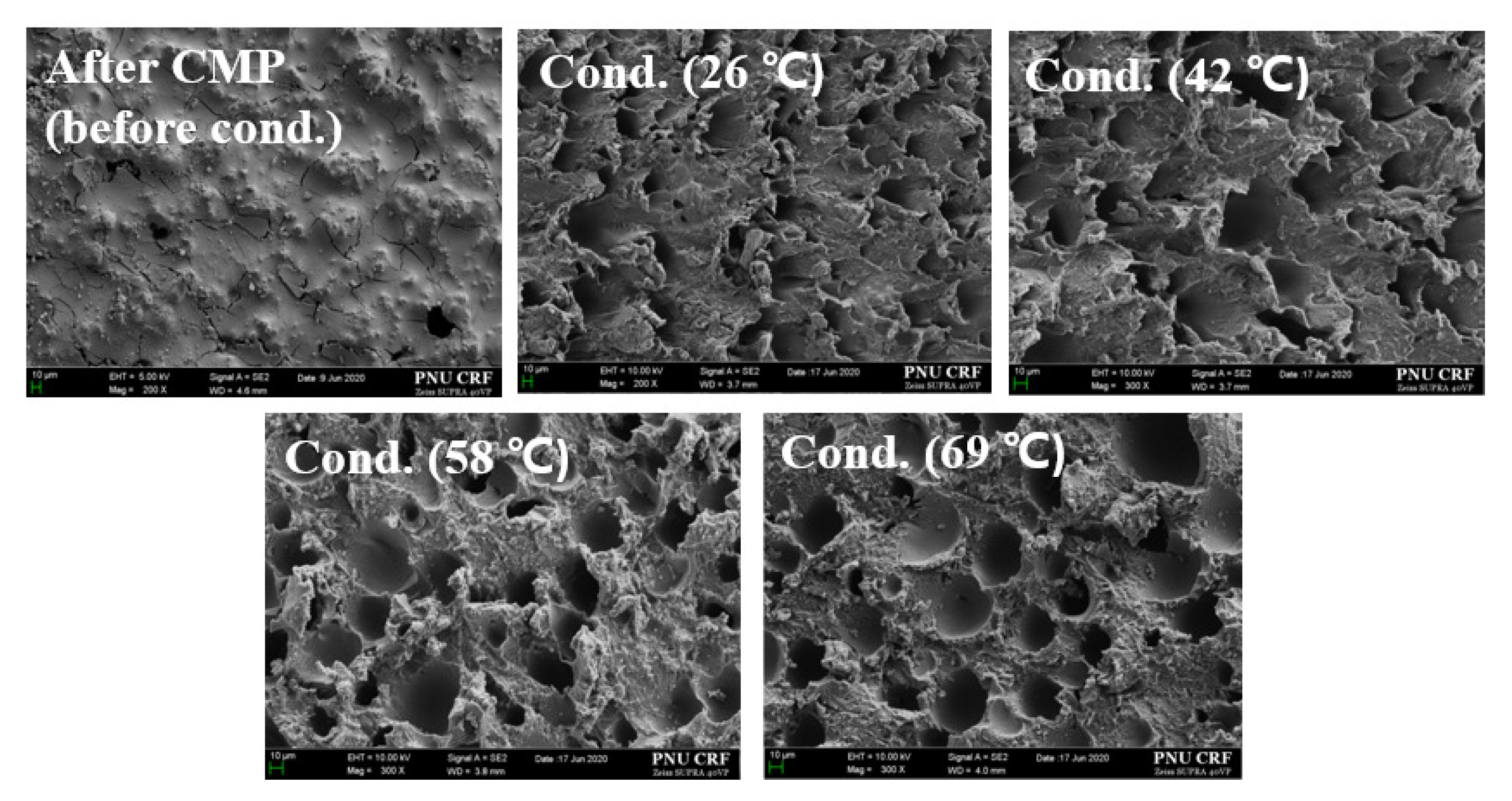
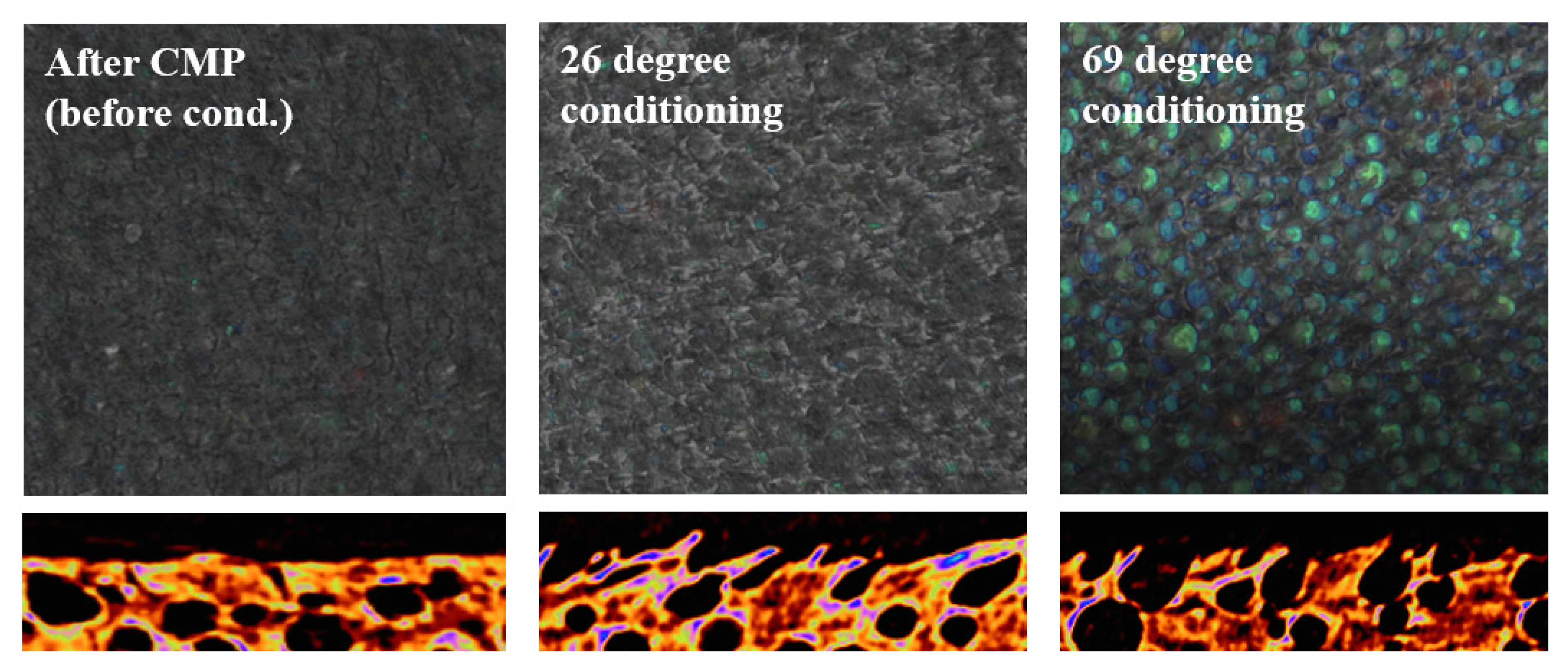
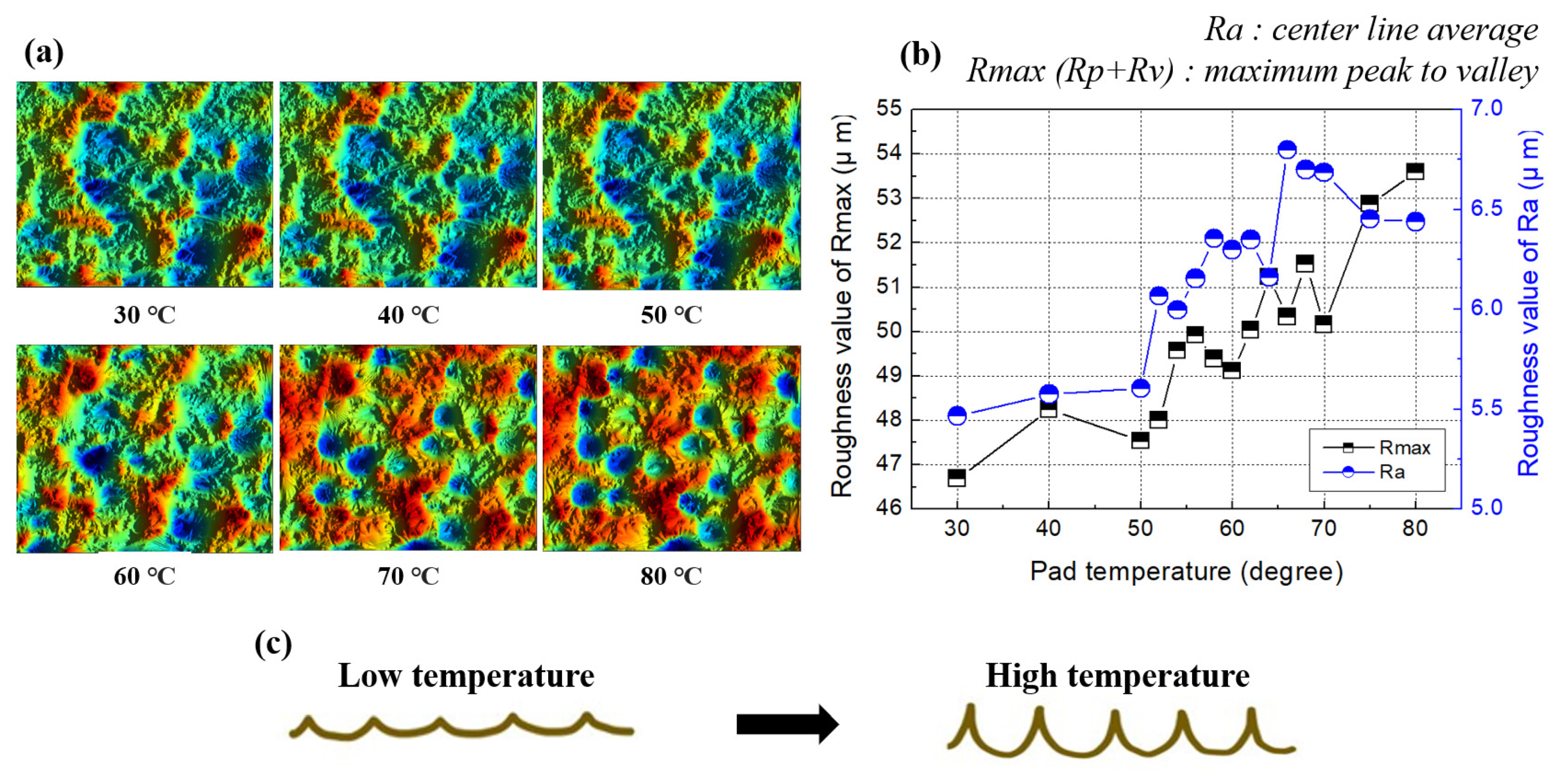
Chemical mechanical planarization (CMP) is a technology widely employed in device integration and planarization processes used in semiconductor fabrication. In CMP, the polishing pad plays a key role both mechanically and chemically. The surface of the pad, consisting of asperities and pores, undergoes repeated cycles of glazing induced by polishing followed by the recovery of roughness by a conditioning process applied during CMP. As a polymer material, the pad also experiences thermal expansion from changes in temperature. Such changes can be expressed in terms of surface roughness values, but these do not fully capture the actual changes to the pad surface. In this study, the change in pad temperature occurring during CMP was analyzed with regard to its effect on the asperity angle, and the influence on CMP outcome was assessed. The changes in the surface asperities according to the steady-state pad temperature were evaluated using various measurement methods. The change in pad roughness was characterized in terms of the asperity angle, and the contact state predicted according to temperature were validated by measuring the contact perimeter, the number of contact points, and related values. Through Scanning Electron Microscope (SEM) and micro-CT analysis, it was confirmed that in the continuous polishing process and the conditioning process, the changes in asperity angle due to changes in pad temperature affect the polishing outcome.
Keywords: chemical mechanical planarization (CMP); pad temperature; asperity angle; Micro-CT chemical mechanical planarization (CMP); pad temperature; asperity angle; Micro-CT