Article

What Children with Neuromotor Disabilities Need to Play with Technological Games

by
Roberta Nossa
1,*,
Matteo Porro
2,
Odoardo Picciolini
2,
Matteo Malosio
3,
Simone Pittaccio
4,
Matteo Valoriani
5,
Valentina Asperti
5,
Francesco Clasadonte
5,
Luigi Oliveto
5,
Marta Mondellini
3,
Simone Luca Pizzagalli
3,
Matteo Lavit Nicora
3,
Jacopo Romanò
4,6,
Fabio Lazzari
4,6,
Lorenzo Garavaglia
4,
Alessandro Scano
3,
Francesca Fedeli
7,
Eleonora Diella
1,
Sara Meloni
2 and
Emilia Biffi
1,*
1
Scientific Institute, IRCCS Eugenio Medea, 23842 Bosisio Parini, LC, Italy
2
Fondazione IRCCS Ca’ Granda Ospedale Maggiore Policlinico, Pediatric Physical Medicine & Rehabilitation Unit, 20122 Milan, MI, Italy
3
Institute of Intelligent Industrial Technologies and Systems for Advanced Manufacturing, National Research Council of Italy, STIIMA—CNR, 23900 Lecco, LC, Italy
4
Institute of Condensed Matter Chemistry and Technologies for Energy, National Research Council of Italy, ICMATE—CNR, 23900 Lecco, LC, Italy
5
Fifthingenium, 20131 Milan, MI, Italy
6
Politecnico di Milano, Department of Chemistry, Materials and Chemical Engineering “Giulio Natta” (CMIC), 20133 Milan, MI, Italy
7
FightTheStroke.org Foundation, 20125 Milan, MI, Italy
*
Authors to whom correspondence should be addressed.
Appl. Sci. 2021, 11(21), 9886; https://doi.org/10.3390/app11219886
Submission received: 1 October 2021 / Revised: 18 October 2021 / Accepted: 19 October 2021 / Published: 22 October 2021
(This article belongs to the Special Issue Human‑Computer Interaction: Designing for All)

Abstract

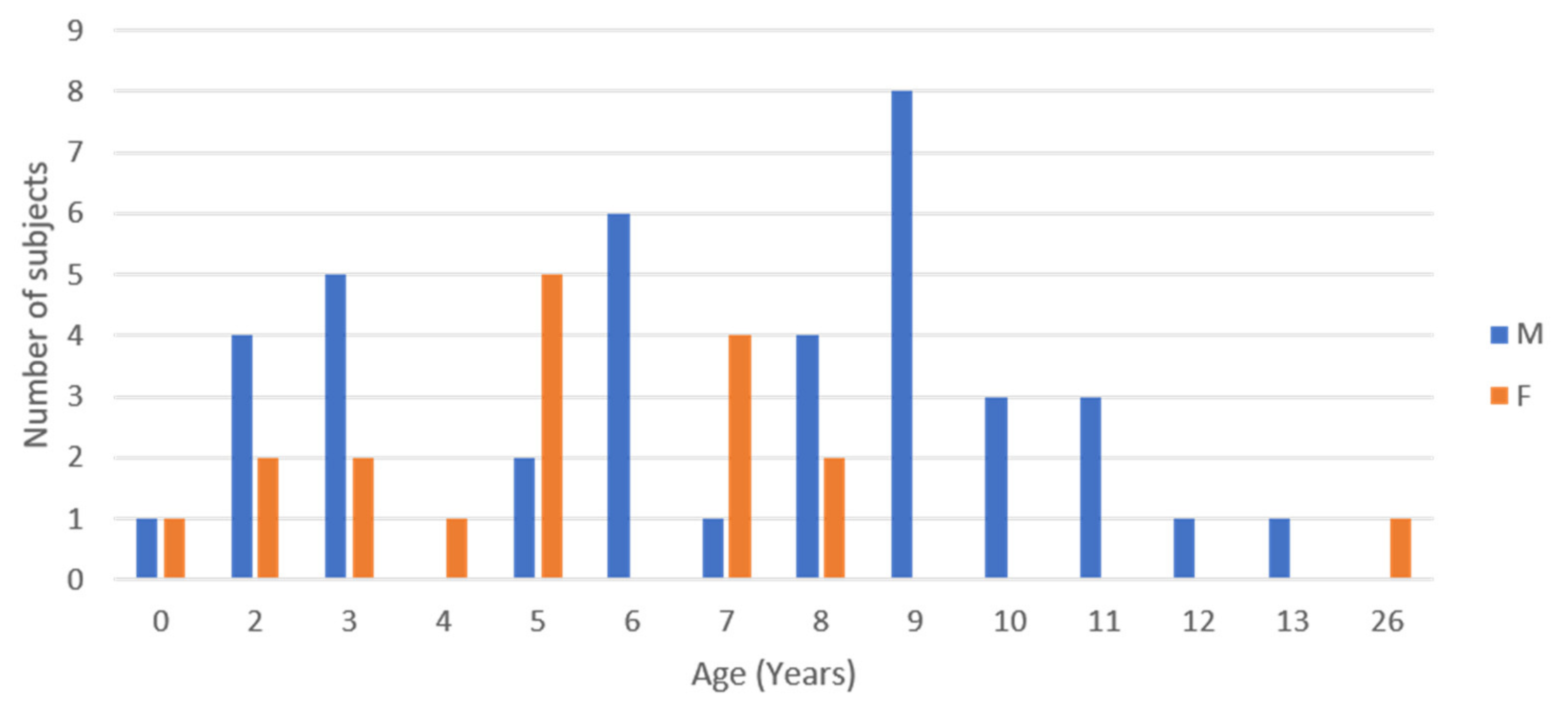
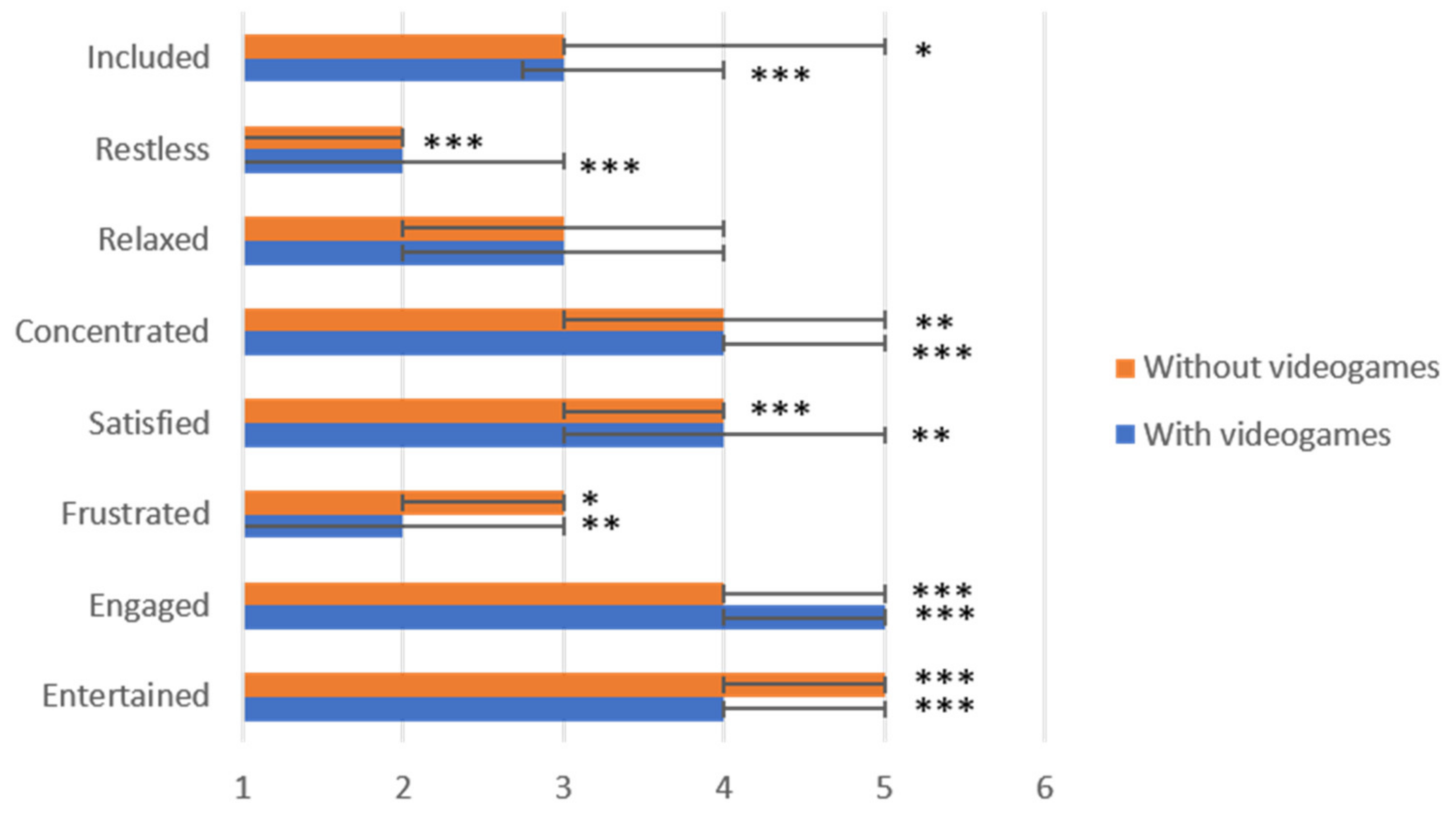
Game activity is fundamental for children’s cognitive and social development. During recent years, technology development has led to changes in several areas, including the ludic one. However, while in the literature, there are plenty of studies that report the importance of technology-based games in rehabilitation program, little attention has been paid to their role as pure entertainment. In contrast, the market does not provide videogames that are engaging, accessible, and inclusive. In this context, a survey was distributed to families who have a child with neuromotor limitations to investigate how these children deal with play, in particular with videogames, and what the requirements are for accessible and inclusive videogames. FightTheStroke distributed the questionnaire to families with a child with neuromotor impairments in April 2020. Fifty-six families responded to the survey. The answers revealed that children generally manifest positive feelings when playing with videogames, especially with cooperative ones, even if they are not fully accessible. The survey also collected user needs and suggestions from families about the design of videogames for neuromotor-impaired children. Guidelines derived from the survey are reported for the development of entertaining, inclusive, and accessible videogames, playable by children with neuromotor disabilities.
Keywords: technology-based games; play; neuromotor disabilities; videogames; cerebral palsy; accessible videogames; inclusive videogames technology-based games; play; neuromotor disabilities; videogames; cerebral palsy; accessible videogames; inclusive videogames