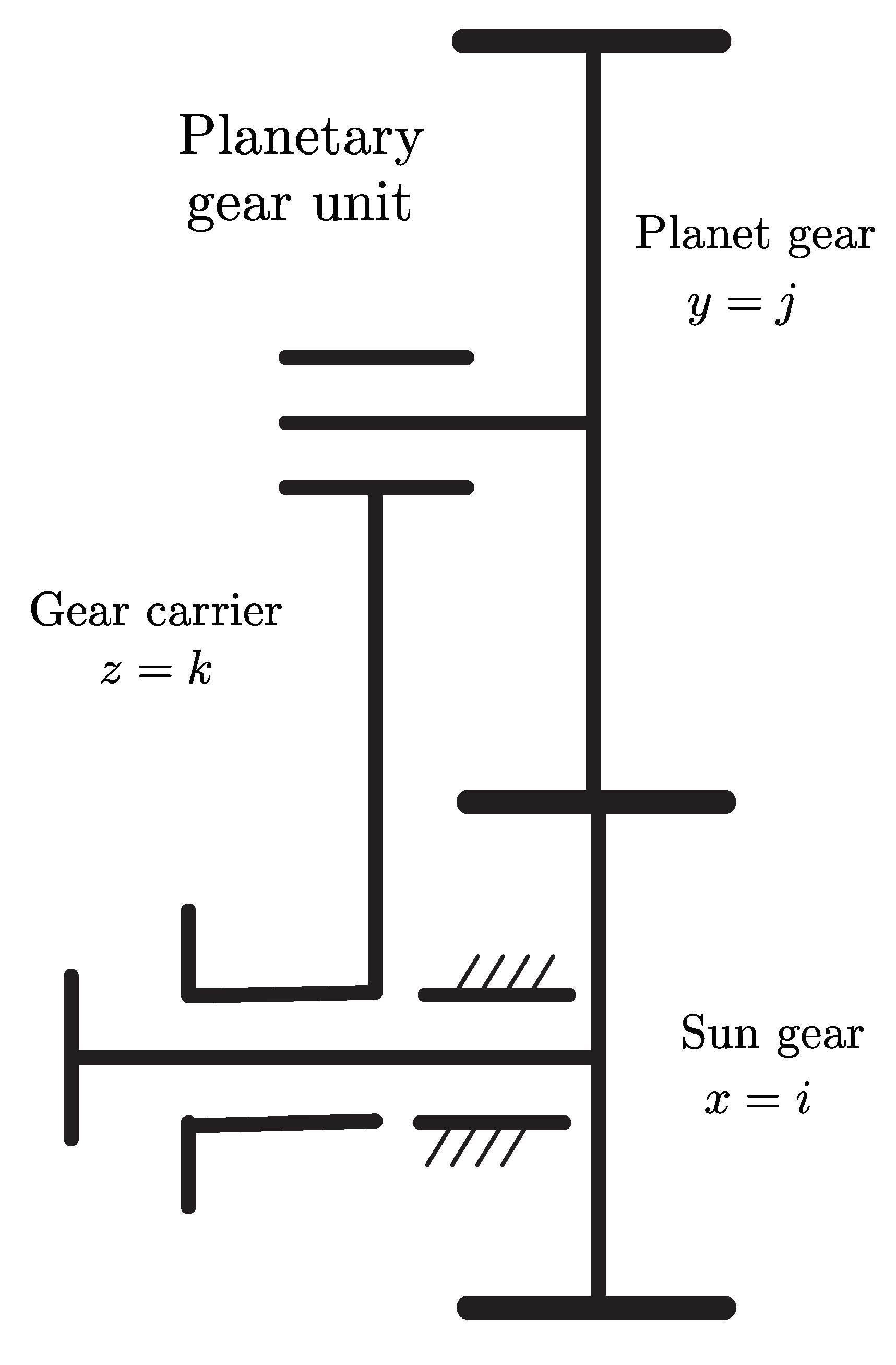
Power-Flow and Mechanical Efficiency Computation in Two-Degrees-of-Freedom Planetary Gear Units: New Compact Formulas

Abstract
Share and Cite
Esmail, E.L.; Pennestrì, E.; Cirelli, M. Power-Flow and Mechanical Efficiency Computation in Two-Degrees-of-Freedom Planetary Gear Units: New Compact Formulas. Appl. Sci. 2021, 11, 5991. https://doi.org/10.3390/app11135991
Esmail EL, Pennestrì E, Cirelli M. Power-Flow and Mechanical Efficiency Computation in Two-Degrees-of-Freedom Planetary Gear Units: New Compact Formulas. Applied Sciences. 2021; 11(13):5991. https://doi.org/10.3390/app11135991
Chicago/Turabian StyleEsmail, Essam Lauibi, Ettore Pennestrì, and Marco Cirelli. 2021. "Power-Flow and Mechanical Efficiency Computation in Two-Degrees-of-Freedom Planetary Gear Units: New Compact Formulas" Applied Sciences 11, no. 13: 5991. https://doi.org/10.3390/app11135991
APA StyleEsmail, E. L., Pennestrì, E., & Cirelli, M. (2021). Power-Flow and Mechanical Efficiency Computation in Two-Degrees-of-Freedom Planetary Gear Units: New Compact Formulas. Applied Sciences, 11(13), 5991. https://doi.org/10.3390/app11135991