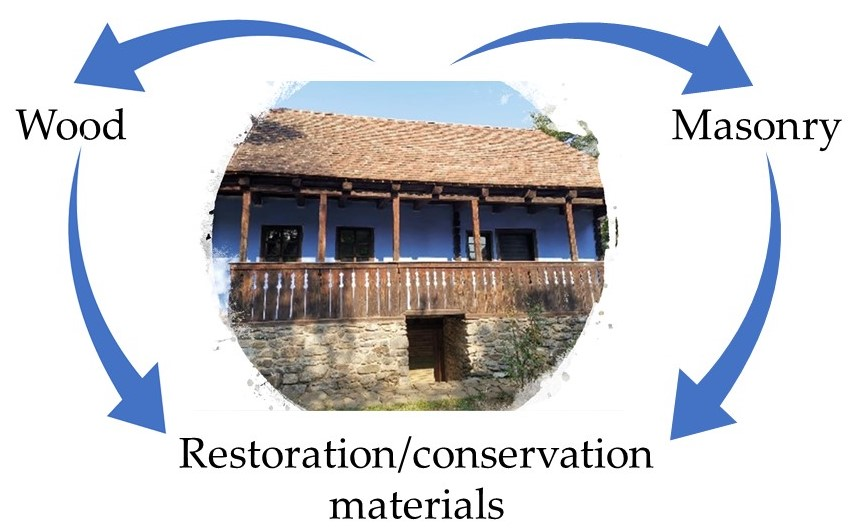
Selected Aspects Regarding the Restoration/Conservation of Traditional Wood and Masonry Building Materials: A Short Overview of the Last Decade Findings




Abstract
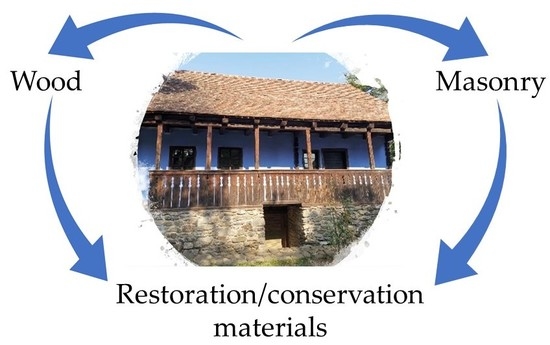
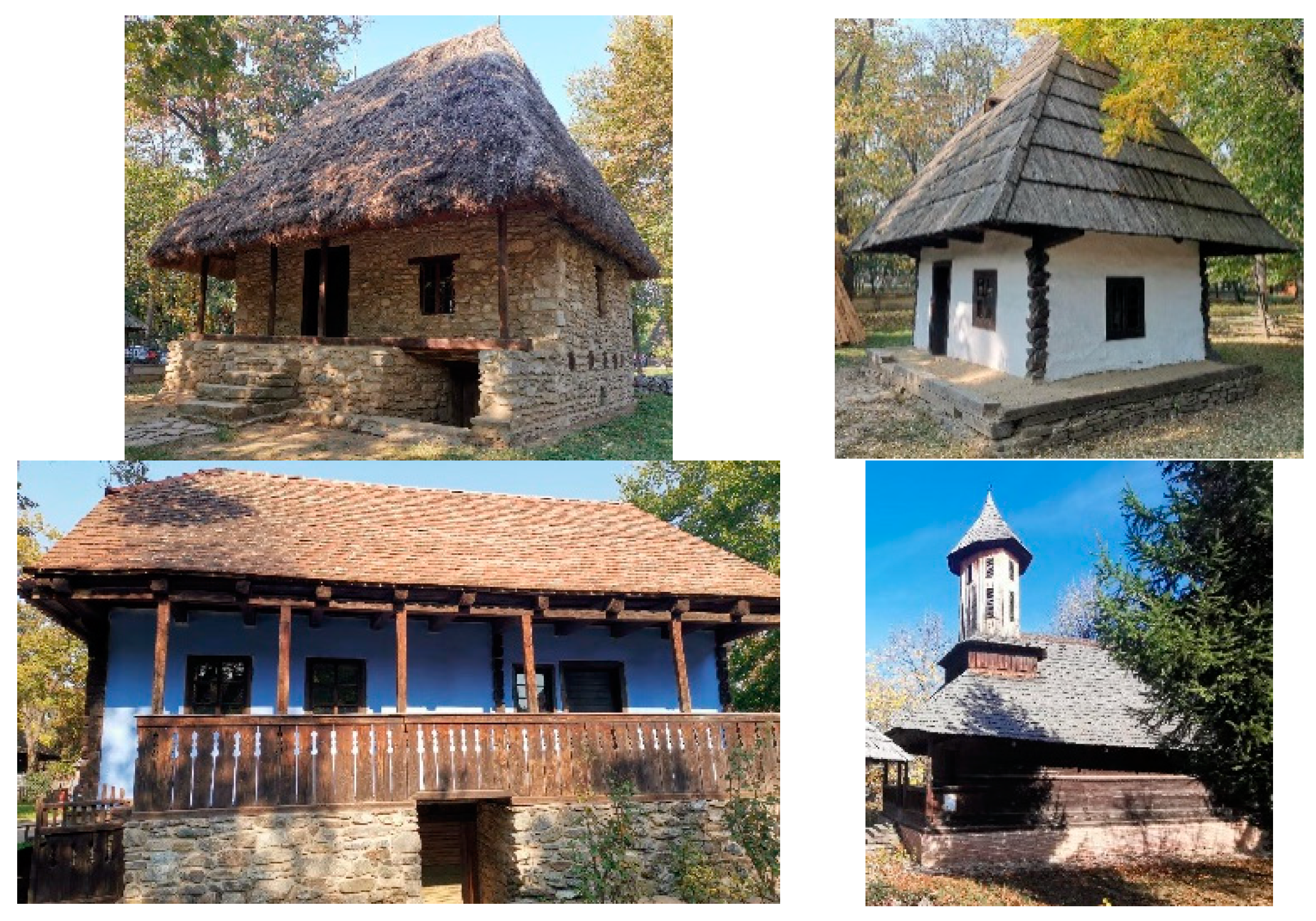
1. Introduction
2. Materials Used for Restoration and Conservation of Wooden Elements
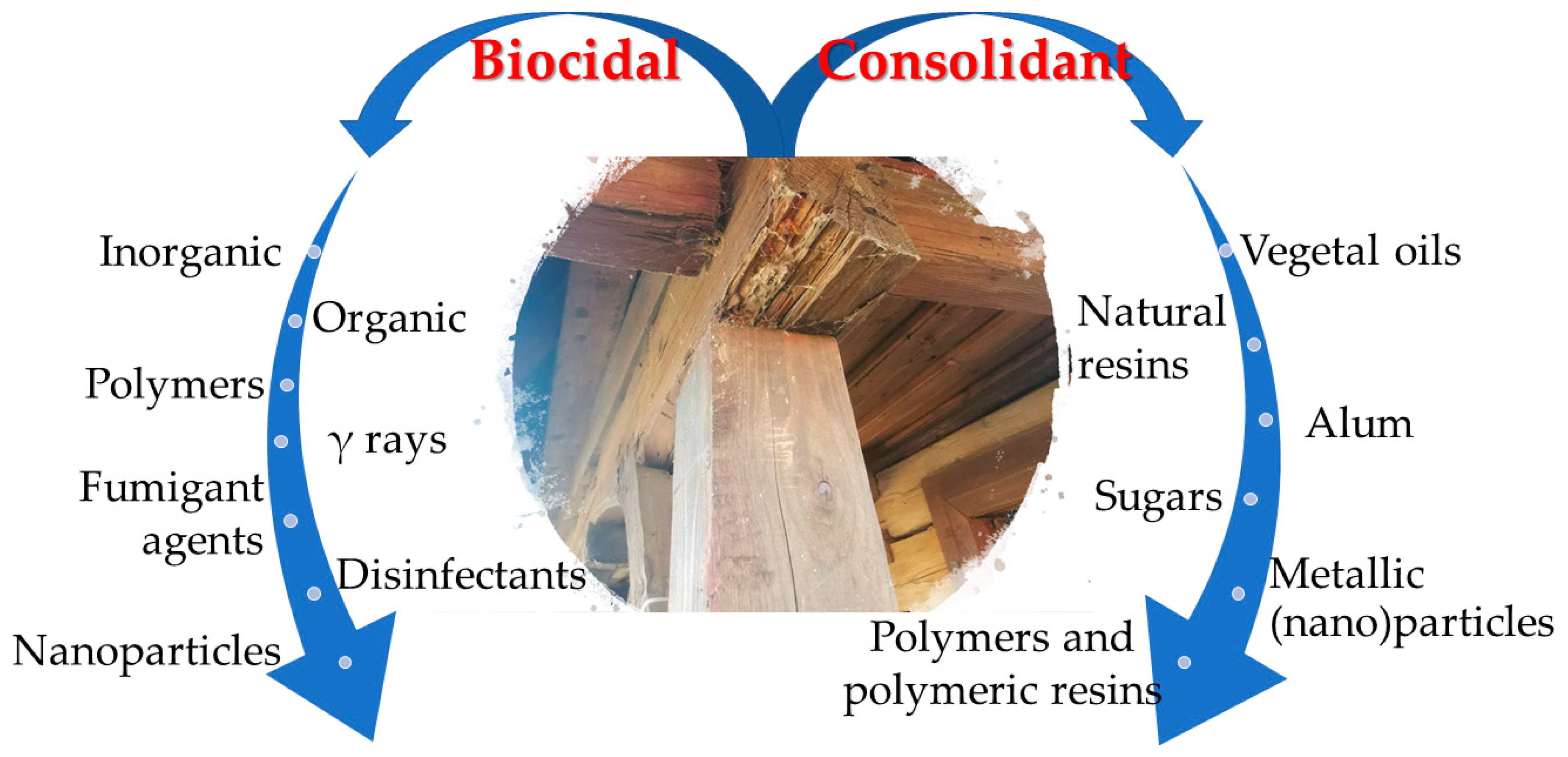
2.1. Biocidal Materials Used for Wooden Elements
2.2. Consolidants Used for Wooden Elements
3. Materials Used for Restoration and Conservation of Masonry Elements
3.1. General Considerations
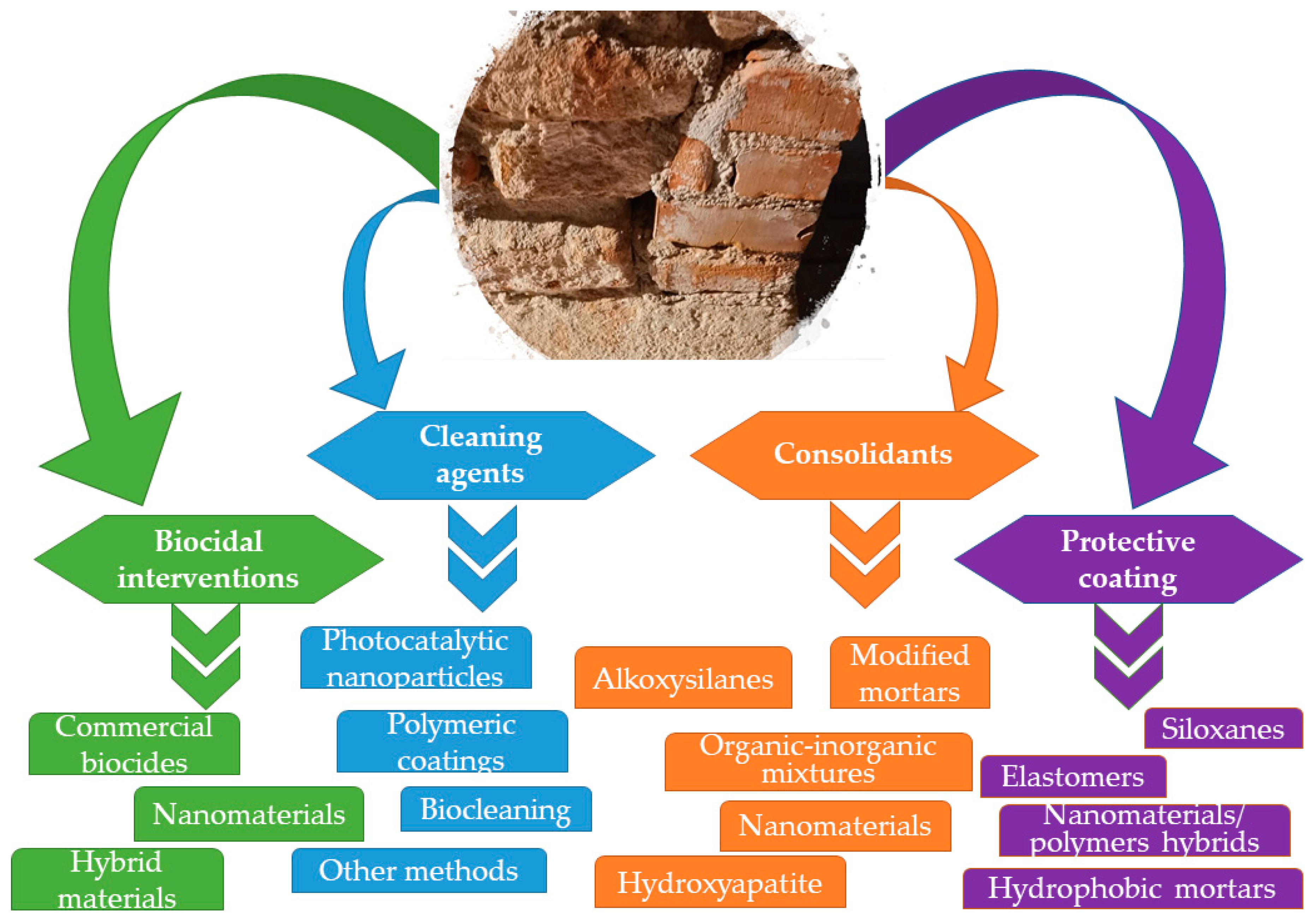
3.2. Biocidal Interventions
3.2.1. Classical Approaches
3.2.2. Nanotechnological Approaches
3.3. Restoration/Conservation of Masonry Materials against Abiotic Factors
3.3.1. Deterioration of Masonry Materials by Abiotic Factors—General Considerations
- Intrinsic characteristics of the materials:
- ○
- Chemical and mineralogical composition (species solubility and their variation, presence of oxidable species, surface and ionic phenomena);
- ○
- Structure and texture (mainly the pore distribution, resulting in gelifraction and salt crystallization resistance, water absorption and drying rates).
- Extrinsic factors:
- ○
- Water presence;
- ○
- Presence of foreign substances altering the pH or the composition;
- ○
- Pressure and wind;
- ○
- Thermal variations;
- ○
- Anthropogenic abiotic factors (mainly related to pollution products).
- Cracks (including fracture, star cracks, hair cracks, craquele and splitting) and deformation;
- Detachment (blistering, bursting and delamination);
- Material loss (alveolization, erosion, mechanical damage);
- Discoloration and deposits (crusts, coloration, bleaching, staining, efflorescence and encrustation).
- Cleaning, often performed mechanically or with dedicated gentle solutions;
- Consolidation (in order to increase the resistance of the material);
- Protection (generally focused on the use of water repellant solutions, as water represents one of the main factors involved in the degradation, as previously presented).
3.3.2. Cleaning Agents
3.3.3. Consolidation and Protection Agents
4. Current Limitations and Future Perspectives
5. Conclusions
Author Contributions
Funding
Conflicts of Interest
References
- Spišáková, M.; Mačková, D. The use potential of traditional building materials for the realization of structures by modern methods of construction. SSP J. Civ. Eng. 2015, 10, 127–138. [Google Scholar] [CrossRef]
- Doğangün, A.; Tuluk, O.I.; Livaoğlu, R.; Acar, R. Traditional wooden buildings and their damages during earthquakes in Turkey. Eng. Fail. Anal. 2006, 13, 981–996. [Google Scholar] [CrossRef]
- Dutu, A.; Niste, M.; Spatarelu, I.; Dima, D.I.; Kishiki, S. Seismic evaluation of Romanian traditional buildings with timber frame and mud masonry infills by in-plane static cyclic tests. Eng. Struct. 2018, 167, 655–670. [Google Scholar] [CrossRef]
- Mısırlısoy, D.; Günçe, K. A critical look to the adaptive reuse of traditional urban houses in the Walled City of Nicosia. J. Archit. Conserv. 2016, 22, 149–166. [Google Scholar] [CrossRef]
- Nilsson, T.; Rowell, R. Historical wood – structure and properties. J. Cult. Herit. 2012, 13, S5–S9. [Google Scholar] [CrossRef]
- Kim, Y.S.; Singh, A.P. Wood as cultural heritage material and its deterioration by biotic and abiotic agents. In Secondary Xylem Biology. Origins, Functions, and Applications; Kim, Y.S., Funada, R., Singh, A.P., Eds.; Academic Press: London, UK, 2016; pp. 233–257. [Google Scholar]
- Eken, E.; Taşcı, B.; Gustafsson, C. An evaluation of decision-making process on maintenance of built cultural heritage: The case of Visby, Sweden. Cities 2019, 94, 24–32. [Google Scholar] [CrossRef]
- Morkunaite, Z.; Podvezko, V.; Zavadskas, E.K.; Bausys, R. Contractor selection for renovation of cultural heritage buildings by PROMETHEE method. Arch. Civ. Mech. Eng. 2019, 19, 1056–1071. [Google Scholar] [CrossRef]
- Cronk, Q.C.B.; Forest, F. The Evolution of Angiosperm Trees: From Palaeobotany to Genomics. In Comparative and Evolutionary Genomics of Angiosperm Trees. Plant Genetics and Genomics: Crops and Models; Groover, A., Cronk, Q., Eds.; Springer: Cham, Switzerland, 2017; Volume 21, pp. 1–17. [Google Scholar]
- Escobin, R.P.; Conda, J.M.; Ramos, M.; Rizare, M.D.; Cortez, R.E., Jr. Scientific restoration of national shrines and landmarks in the Philippines by the Forest Products Research and Development Institute wood identification technique. Int. J. Conserv. Sci. 2019, 10, 25–38. [Google Scholar]
- Hunt, D. Properties of wood in the conservation of historical wooden artifacts. J. Cult. Herit. 2012, 13, S10–S15. [Google Scholar] [CrossRef]
- Unger, A. Decontamination and “deconsolidation” of historical wood preservatives and wood consolidants in cultural heritage. J. Cult. Herit. 2012, 13, S196–S202. [Google Scholar] [CrossRef]
- PD CEN/TR 15003, Durability of Wood and Wood-Based Products. Criteria for Hot Air Processes for Curative uses against Wood Destroying Organisms; The British Standards Institution: London, UK, 2012; Available online: https://standards.globalspec.com/std/9693/bs-pd-cen-ts-15003 (accessed on 3 December 2019).
- Clausi, M.; Crisci, G.M.; La Russa, M.F.; Malagodi, M.; Palermo, A.; Ruffolo, S.A. Protective action against fungal growth of two consolidating products applied to wood. J. Cult. Herit. 2011, 12, 28–33. [Google Scholar] [CrossRef]
- Stejskal, V.; Douda, O.; Zouhar, M.; Manasova, M.; Dlouhy, M.; Simbera, J.; Aulicky, R. Wood penetration ability of hydrogen cyanide and its efficacy for fumigation of Anoplophora glabripennis, Hylotrupes bajulus (Coleoptera), and Bursaphelenchus xylophilus (Nematoda). Int. Biodeter. Biodegr. 2014, 86, 189–195. [Google Scholar] [CrossRef]
- Querner, P.; Simon, S.; Morelli, M.; Fürenkranz, S. Insect pest management programmes and results from their application in two large museum collections in Berlin and Vienna. Int. Biodeter. Biodegr. 2013, 84, 275–280. [Google Scholar] [CrossRef]
- Koziróg, A.; Rajkowska, K.; Otlewska, A.; Piotrowska, M.; Kunicka-Styczyńska, A.; Brycki, B.; Nowicka-Krawczyk, P.; Kościelniak, M.; Gutarowska, B. Protection of historical wood against microbial degradation-selection and application of microbiocides. Int. J. Mol. Sci. 2016, 22, 1364. [Google Scholar] [CrossRef] [PubMed]
- Goffredo, G.B.; Citterio, B.; Biavasco, F.; Stazi, F.; Barcelli, S.; Munafò, P. Nanotechnology on wood: The effect of photocatalytic nanocoatings against Aspergillus niger. J. Cult. Herit. 2017, 27, 125–136. [Google Scholar] [CrossRef]
- Walsh-Korb, Z.; Avérous, L. Recent developments in the conservation of materials properties of historical wood. Progr. Mater. Sci. 2019, 102, 167–221. [Google Scholar] [CrossRef]
- Schönemann, A.; Edwards, H.G.M. Raman and FTIR microspectroscopic study of the alteration of Chinese Tung oil and related drying oils during ageing. Anal. Bioanal. Chem. 2011, 400, 1173–1180. [Google Scholar] [CrossRef]
- Humar, M.; Lesar, B. Efficacy of linseed- and tung-oil-treated wood against wood-decay fungi and water uptake. Int. Biodeter. Biodegr. 2013, 85, 223–227. [Google Scholar] [CrossRef]
- Freitag, C.; Kamke, F.A.; Morrell, J.J. Resistance of resin-impregnated VTC processed hybrid-poplar to fungal attack. Int. Biodeter. Biodegr. 2015, 99, 174–176. [Google Scholar] [CrossRef]
- Hoffmann, P. The Sucrose Method. In Conservation of Archaeological Ships and Boats. Personal Experiences; Archetype Publications: London, UK, 2013; pp. 81–90. [Google Scholar]
- Hoffmann, P. The Lactitol Method. In Conservation of Archaeological Ships and Boats. Personal Experiences; Archetype Publications: London, UK, 2013; pp. 93–96. [Google Scholar]
- Andriulo, F.; Braovac, S.; Kutzke, H.; Giorgi, R.; Baglioni, P. Nanotechnologies for the restoration of alum-treated archaeological wood. Appl. Phys. A 2016, 122, 322. [Google Scholar] [CrossRef]
- De Filpo, G.; Maria Palermo, A.; Rachiele, F.; Pasquale Nicoletta, F. Preventing fungal growth in wood by titanium dioxide nanoparticles. Int. Biodeter. Biodegrad. 2013, 85, 217–222. [Google Scholar] [CrossRef]
- Poggi, G.; Toccafondi, N.; Chelazzi, D.; Canton, P.; Giorgi, R.; Baglioni, P. Calcium hydroxide nanoparticles from solvothermal reaction for the deacidification of degraded waterlogged wood. J. Colloid. Interface Sci. 2016, 473, 1–8. [Google Scholar] [CrossRef] [PubMed]
- Schofield, E.J.; Sarangi, R.; Mehta, A.; Jones, A.M.; Smith, A.; Mosselmans, J.F.W.; Chadwick, A.V. Strontium carbonate nanoparticles for the surface treatment of problematic sulfur and iron in waterlogged archaeological wood. J. Cult. Herit. 2016, 18, 306–312. [Google Scholar] [CrossRef]
- Tuduce Traistaru, A.A.; Timar, M.C.; Câmpean, M. Studies upon penetration of Paraloid B72 into poplar wood by cold immersion treatments. Bull. Transilv. Univ. Brasov 2011, 4, 1–8. [Google Scholar]
- Genco, G.; Pelosi, C.; Santamaria, U.; Lo Monaco, A.; Picchio, R. Study of colour change due to accelerated sunlight exposure in consolidated wood samples. Wood Res. 2011, 56, 511–524. [Google Scholar]
- Hoffmann, P. Methods of application of polyethylene glycol. In Conservation of Archaeological Ships and Boats. Personal Experiences; Archetype Publications: London, UK, 2013; pp. 43–80. [Google Scholar]
- Hoffmann, P.; Wittkoepper, M. The Kauramin Method. In Conservation of Archaeological Ships and Boats. Personal Experiences; Archetype Publications: London, UK, 2013; pp. 97–104. [Google Scholar]
- Bonifazi, G.; Serranti, S.; Capobianco, G.; Agresti, G.; Calienno, L.; Picchio, R.; Lo Monaco, A.; Santamaria, U.; Pelosi, C. Study of consolidating materials applied on wood by hyperspectral imaging. Proceeding of Advanced Environmental, Chemical, and Biological Sensing Technologies XIII, Baltimore, MD, USA, 17–21 April 2016; Volume 9862. [Google Scholar] [CrossRef]
- Alfieri, P.V.; Lofeudo, R.; Canosa, G. Impregnant formulation to the preservation, protection and consolidation of wood heritage assets. Int. J. Conservat. Sci. 2018, 9, 629–640. [Google Scholar]
- Fejfer, M.; Pietrzak, I.; Zborowska, M. Dimensional stabilization of oak and pine waterlogged wood with keratin aqueous solutions. Proceeding of the CONDITION 2015 Conservation and Digitalization, Gdansk, Poland, 19–22 May 2015; Print Group: Gdansk, Poland, 2015; pp. 95–98. [Google Scholar]
- Christensen, M.; Larnøy, E.; Kutzke, H.; Hansen, F.K. Treatment of waterlogged archaeological wood using chitosan- and modified chitosan solutions. Part 1: Chemical compatibility and microstructure. J. Am. Inst. Conserv. 2015, 54, 3–13. [Google Scholar] [CrossRef]
- Fulcher, K. An investigation of the use of cellulose-based materials to gap-fill wooden objects. Stud. Conserv. 2017, 62, 210–222. [Google Scholar] [CrossRef]
- Cataldi, A.; Corcione, C.E.; Frigione, M.; Pegorettia, A. Photocurable resin/microcrystalline cellulose composites for wood protection: Physical-mechanical characterization. Prog. Org. Coat. 2016, 99, 230–239. [Google Scholar] [CrossRef]
- Moise, V.; Stanculescu, I.; Vasilca, S.; Cutrubinis, M.; Pincu, E.; Oancea, P.; Raducan, A.; Meltzer, V. Consolidation of very degraded cultural heritage wood artefacts using radiation curing of polyester resins. Rad. Phys. Chem. 2019, 156, 314–319. [Google Scholar] [CrossRef]
- Ndiaye, D.; Tidjani, A. Physical changes associated with gamma doses on wood/ polypropylene composites. IOP Conf. Ser.: Mater. Sci. Eng. 2014, 62, 012025. [Google Scholar] [CrossRef]
- Vlasov, D.Y.; Panova, E.G.; Zelenskaya, M.S.; Vlasov, A.D.; Sazanova, K.V.; Rodina, O.A.; Pavlova, O.A. Biofilms on granite Rapakivi in natural outcrops and urban environment: Biodiversity, metabolism and interaction with substrate. In Processes and Phenomena on the Boundary between Biogenic and Abiogenic Nature. Lecture Notes in Earth System Sciences; Frank-Kamenetskaya, O., Vlasov, D., Panova, E., Lessovaia, S., Eds.; Springer: Cham, Switzerland, 2019; pp. 535–559. [Google Scholar]
- Rapp, G.R. Building, Monumental, and Statuary Materials. In Archaeomineralogy. Natural Science in Archaeology; Rapp, G.R., Ed.; Springer: Berlin/Heidelberg, Germany, 2002; pp. 243–273. [Google Scholar]
- Siedel, H. The city of Dresden in the mirror of its building stones: Utilization of natural stone at façades in the course of time. In Materials, Technologies and Practice in Historic Heritage Structures; Dan, M.B., Přikryl, R., Török, Á., Eds.; Springer: Dordrecht, Germany, 2010; pp. 137–156. [Google Scholar]
- Chen, A.; Ng, Y.; Zhang, E.; Tian, M. Dictionary of Geotourism; Springer Nature: Singapore, 2020; pp. 468–516. [Google Scholar]
- Koralay, T.; Çelik, S.B. Minero-petrographical, physical, and mechanical properties of moderately welded ignimbrite as a traditional building stone from Uşak Region (SW Turkey). Arab. J. Geosci. 2019, 12, 732. [Google Scholar] [CrossRef]
- Alves, R.; Faria, P.; Simão, J. Experimental characterization of a Madeira Island basalt traditionally applied in a regional decorative mortar. J. Build. Eng. 2017, 13, 326–335. [Google Scholar] [CrossRef]
- Tang, L.; Santosh, M. Neoarchean granite-greenstone belts and related ore mineralization in the North China Craton: An overview. Geosci. Front. 2018, 9, 751–768. [Google Scholar] [CrossRef]
- Dipasquale, L.; Rovero, L.; Fratini, F. Ancient stone masonry constructions. In Nonconventional and Vernacular Construction Materials. Characterisation, Properties and Applications; Harries, K.A., Sharma, B., Eds.; Woodhead Publishing: Duxford, UK, 2016; pp. 301–332. [Google Scholar]
- Hyslop, E.K.; Albornoz-Parra, L. Developing a future repairs strategy for a sandstone city: A petrographic investigation of building stone in Glasgow, Scotland. Mater. Character. 2009, 60, 636–643. [Google Scholar] [CrossRef]
- Stéphan, E.; Cantin, R.; Caucheteux, A.; Tasca-Guernouti, S.; Michel, P. Experimental assessment of thermal inertia in insulated and non-insulated old limestone buildings. Build. Environ. 2014, 80, 241–248. [Google Scholar] [CrossRef]
- Freire, M.T.; Silva, A.S.; do Rosário Veiga, M.; de Brito, J. Studies in ancient gypsum based plasters towards their repair: Mineralogy and microstructure. Constr. Build. Mater. 2019, 196, 512–529. [Google Scholar] [CrossRef]
- Taelman, D.; Delpino, C.; Antonelli, F. Marble decoration of the Roman theatre of Urvinum Mataurense (Urbino, Marche region, Italy): An archaeological and archaeometric multi-method provenance study. J. Cult. Herit. 2019, 39, 238–250. [Google Scholar] [CrossRef]
- Kakakhel, M.A.; Wu, F.; Gu, J.D.; Feng, H.; Shah, K.; Wang, W. Controlling biodeterioration of cultural heritage objects with biocides: A review. Int. Biodeter. Biodegr. 2019, 143, 104271. [Google Scholar] [CrossRef]
- Rolón, G.; Cilla, G. Adobe wall biodeterioration by the Centris muralis Burmeister bee (Insecta: Hymenoptera: Apidae) in a valuable colonial site, the Capayán ruins (La Rioja, Argentina). Int. Biodeter. Biodegr. 2012, 66, 33–38. [Google Scholar] [CrossRef]
- Straulino, L.; Sedov, S.; Michelet, D.; Balanzario, S. Weathering of carbonate materials in ancient Maya constructions (Río Bec and Dzibanché): Limestone and stucco deterioration patterns. Quatern. Int. 2013, 315, 87–100. [Google Scholar] [CrossRef]
- Jurado, V.; Miller, A.Z.; Cuezva, S.; Fernandez-Cortes, A.; Benavente, D.; Rogerio-Candelera, M.A.; Reyes, J.; Cañaveras, J.C.; Sanchez-Moral, S.; Saiz-Jimenez, C. Recolonization of mortars by endolithic organisms on the walls of San Roque church in Campeche (Mexico): A case of tertiary bioreceptivity. Constr. Build. Mater. 2014, 53, 348–359. [Google Scholar] [CrossRef]
- Morillas, H.; Maguregui, M.; Marcaida, I.; Trebolazabala, J.; Salcedo, I.; Madariaga, J.M. Characterization of the main colonizer and biogenic pigments present in the red biofilm from La Galea Fortress sandstone by means of microscopic observations and Raman imaging. Microchem. J. 2015, 121, 48–55. [Google Scholar] [CrossRef]
- Mihajlovski, A.; Gabarre, A.; Seyer, D.; Bousta, F.; Di Martino, P. Bacterial diversity on rock surface of the ruined part of a French historic monument: The Chaalis abbey. Int. Biodeter. Biodegr. 2017, 120, 161–169. [Google Scholar] [CrossRef]
- Guerra, F.L.; Lopes, W.; Cazarolli, J.C.; Lobato, M.; Masuero, A.B.; Dal Molin, D.C.C.; Bento, F.M.; Schrank, A.; Vainstein, M.H. Biodeterioration of mortar coating in historical buildings: Microclimatic characterization, material, and fungal community. Build. Environ. 2019, 155, 195–209. [Google Scholar] [CrossRef]
- Tonon, C.; Favero-Longo, S.E.; Matteucci, E.; Piervittori, R.; Croveri, P.; Appolonia, L.; Meirano, V.; Serino, M.; Elia, D. Microenvironmental features drive the distribution of lichens in the House of the Ancient Hunt, Pompeii, Italy. Int. Biodeter. Biodegr. 2019, 136, 71–81. [Google Scholar] [CrossRef]
- Favero-Longo, S.E.; Benesperi, R.; Bertuzzi, S.; Bianchi, E.; Buffa, G.; Giordani, P.; Loppi, S.; Malaspina, P.; Matteucci, E.; Paoli, L.; et al. Species- and site-specific efficacy of commercial biocides and application solvents against lichens. Int. Biodeter. Biodegr. 2017, 123, 127–137. [Google Scholar] [CrossRef]
- Fierascu, I.; Ion, R.M.; Radu, M.; Dima, S.O.; Bunghez, I.R.; Avramescu, S.M.; Fierascu, R.C. Comparative study of antifungal effect of natural extracts and essential oils of Ocimum basilicum on selected artefacts. Rev. Roum. Chim. 2014, 59, 207–211. [Google Scholar]
- Rotolo, V.; Barresi, G.; Di Carlo, E.; Giordano, A.; Lombardo, G.; Crimi, E.; Costa, E.; Bruno, M.; Palla, F. Plant extracts as green potential strategies to control the biodeterioration of cultural heritage. Int. J. Conserv. Sci. 2016, 7, 839–846. [Google Scholar]
- Rosado, T.; Santos, R.; Silva, M.; Galvão, A.; Mirao, J.; Candeias, A.; Caldeira, A.T. Mitigation approach to avoid fungal colonisation of porous limestone. Int. J. Conserv. Sci. 2019, 10, 3–14. [Google Scholar]
- Careddu, N.; Marras, G. The effects of solar UV radiation on the gloss values of polished stone surfaces. Constr. Build. Mater. 2013, 49, 828–834. [Google Scholar] [CrossRef]
- Fidanza, M.R.; Caneva, G. Natural biocides for the conservation of stone cultural heritage: A review. J. Cult. Herit. 2019, 38, 271–286. [Google Scholar] [CrossRef]
- Fierascu, I.; Fierascu, I.C.; Dinu-Pirvu, C.E.; Fierascu, R.C.; Anuta, V.; Velescu, B.S.; Jinga, M.; Jinga, V. A short overview of recent developments on antimicrobial coatings based on phytosynthesized metal nanoparticles. Coatings 2019, 9, 787. [Google Scholar] [CrossRef]
- Ruffolo, S.A.; Ricca, M.; Macchia, A.; La Russa, M.F. Antifouling coatings for underwater archaeological stone materials. Prog. Org. Coat. 2017, 104, 64–71. [Google Scholar] [CrossRef]
- Ruffolo, S.A.; De Leo, F.; Ricca, M.; Arcudi, A.; Silvestri, C.; Bruno, L.; Urzì, C.; La Russa, M.F. Medium-term in situ experiment by using organic biocides and titanium dioxide for the mitigation of microbial colonization on stone surfaces. Int. Biodeter. Biodegr. 2017, 123, 17–26. [Google Scholar] [CrossRef]
- Noeiaghaei, T.; Mukherjee, A.; Dhami, N.; Chae, S.R. Biogenic deterioration of concrete and its mitigation technologies. Constr. Build. Mater. 2017, 149, 575–586. [Google Scholar] [CrossRef]
- Noeiaghaei, T.; Dhami, N.; Mukherjee, A. Nanoparticles surface treatment on cemented materials for inhibition of bacterial growth. Constr. Build. Mater. 2017, 150, 880–891. [Google Scholar] [CrossRef]
- Goffredo, G.B.; Accoroni, S.; Totti, C. Nanotreatments to inhibit microalgal fouling on building stone surfaces. In Nanotechnology in Eco-efficient Construction, 2nd ed.; Pacheco-Torgal, F., Diamanti, M.V., Nazari, A., Granqvist, C.G., Pruna, A., Amirkhanian, S., Eds.; Woodhead Publishing: Duxford, UK, 2019; pp. 619–647. [Google Scholar]
- Becerra, J.; Mateo, M.; Ortiz, P.; Nicolás, G.; Zaderenko, A.P. Evaluation of the applicability of nano-biocide treatments on limestones used in cultural heritage. J. Cult. Herit. 2019, 38, 126–135. [Google Scholar] [CrossRef]
- Carrillo-González, R.; Martínez-Gómez, M.A.; González-Chávez, M.D.C.A.; Mendoza Hernández, J.C. Inhibition of microorganisms involved in deterioration of an archaeological site by silver nanoparticles produced by a green synthesis method. Sci. Total Environ. 2016, 565, 872–881. [Google Scholar] [CrossRef]
- Fierascu, I.; Georgiev, M.I.; Ortan, A.; Fierascu, R.C.; Avramescu, S.M.; Ionescu, D.; Sutan, A.; Brinzan, A.; Ditu, L.M. Phyto-mediated metallic nanoarchitectures via Melissa officinalis L.: Synthesis, characterization and biological properties. Sci. Rep. 2017, 7, 12428. [Google Scholar] [CrossRef] [PubMed]
- Sutan, N.A.; Manolescu, D.S.; Fierascu, I.; Neblea, A.M.; Sutan, C.; Ducu, C.; Soare, L.C.; Negrea, D.; Avramescu, S.M.; Fierascu, R.C. Phytosynthesis of gold and silver nanoparticles enhance in vitro antioxidant and mitostimulatory activity of Aconitum toxicum Reichenb Rhizomes alcoholic extracts. Mater. Sci. Eng. C 2018, 93, 746–758. [Google Scholar] [CrossRef] [PubMed]
- Dresler, C.; Saladino, M.L.; Demirbag, C.; Caponetti, E.; Chillura Martino, D.F.; Alduina, R. Development of controlled release systems of biocides for the conservation of cultural heritage. Int. Biodeter. Biodegr. 2017, 125, 150–156. [Google Scholar] [CrossRef]
- Fierascu, I.; Fierascu, I.C.; Brazdis, R.I.; Baroi, A.M.; Fistos, T.; Fierascu, R.C. Phytosynthesized metallic nanoparticles—Between nanomedicine and toxicology. A brief review of 2019’s findings. Materials 2020, 13, 574. [Google Scholar] [CrossRef]
- Valentini, F.; Diamanti, A.; Carbone, M.; Bauer, E.M.; Palleschi, G. New cleaning strategies based on carbon nanomaterials applied to the deteriorated marble surfaces: A comparative study with enzyme-based treatments. Appl. Surf. Sci. 2012, 258, 5965–5980. [Google Scholar] [CrossRef]
- Gómez-Ortíz, N.; De la Rosa-García, S.; González-Gómez, W.; Soria-Castro, M.; Quintana, P.; Oskam, G.; Ortega-Morales, B. Antifungal coatings based on Ca(OH)2 mixed with ZnO/TiO2 nanomaterials for protection of limestone monuments. ACS Appl Mater Interfaces 2013, 5, 1556–1565. [Google Scholar] [CrossRef]
- MacMullen, J.; Zhang, Z.; Dhakal, H.N.; Radulovic, J.; Karabela, A.; Tozzi, G.; Hannant, S.; Alshehri, M.A.; Buhé, V.; Herodotou, C.; et al. Silver nanoparticulate enhanced aqueous silane/siloxane exterior facade emulsions and their efficacy against algae and cyanobacteria biofouling. Int. Biodeter. Biodegr. 2014, 93, 54–62. [Google Scholar] [CrossRef]
- Graziani, L.; Quagliarinin, E.; D’Orazio, M. TiO2-treated different fired brick surfaces for biofouling prevention: Experimental and modelling results. Ceramic. Int. 2016, 42, 4002–4010. [Google Scholar] [CrossRef]
- Goffredo, G.B.; Accoroni, S.; Totti, C.; Romagnoli, T.; Valentini, L.; Munafò, P. Titanium dioxide based nanotreatments to inhibit microalgal fouling on building stone surfaces. Build. Environ. 2017, 112, 209–222. [Google Scholar] [CrossRef]
- Ruggiero, L.; Crociani, L.; Zendri, E.; El Habra, N.; Guerriero, P. Incorporation of the zosteric sodium salt in silica nanocapsules: Synthesis and characterization of new fillers for antifouling coatings. Appl. Surf. Sci. 2018, 439, 705–711. [Google Scholar] [CrossRef]
- Ruggiero, L.; Di Bartolomeo, E.; Gasperi, G.; Luisetto, I.; Talone, A.; Zurlo, F.; Peddis, D.; Ricci, M.A.; Sodo, A. Silica nanosystems for active antifouling protection: Nanocapsules and mesoporous nanoparticles in controlled release applications. J. Alloy. Comp. 2019, 798, 144–148. [Google Scholar] [CrossRef]
- Rives, V.; García-Talegón, J. Decay and conservation of building stones on cultural heritage monuments. Mater. Sci. Forum 2006, 514–516, 1689–1694. [Google Scholar] [CrossRef]
- Verges-Belmin, V. Illustrated Glossary on Stone Deterioration Patterns, Glossaire Illustré sur les formes d’altération de la pierre, English-French ed.; ICOMOS International Scientific Committee for Stone: Paris, France, 2008. [Google Scholar]
- Doehne, E.; Price, C.A. Stone Conservation: An Overview of Current Research, 2nd ed.; Getty Conservation Institute: Los Angeles, CA, USA, 2010. [Google Scholar]
- Grimmer, A.E. Keeping It Clean: Removing Exterior Dirt, Paint, Stains and Graffiti from Historic Masonry Buildings; Forgotten Books: London, UK, 2018; Available online: https://www.forgottenbooks.com/en/books/KeepingItClean_10896659 (accessed on 4 December 2019).
- Rampazzi, L.; Andreotti, A.; Bressan, M.; Colombini, M.P.; Corti, C.; Cuzman, O.; d’Alessandro, N.; Liberatore, L.; Palombi, L.; Raimondi, V.; et al. An interdisciplinary approach to a knowledge-based restoration: The dark alteration on Matera Cathedral (Italy). Appl. Surf. Sci. 2018, 458, 529–539. [Google Scholar] [CrossRef]
- Mazzinghi, P.; Margheri, F. A short pulse, free running, Nd: YAG laser for the cleaning of stone cultural heritage. Opt. Laser. Eng. 2003, 39, 191–202. [Google Scholar] [CrossRef]
- Pozo-Antonio, J.S.; Rivas, T.; López, A.J.; Fiorucci, M.P.; Ramil, A. Effectiveness of granite cleaning procedures in cultural heritage: A review. Sci. Total Environ. 2016, 571, 1017–1028. [Google Scholar] [CrossRef] [PubMed]
- La Russa, M.F.; Rovella, N.; de Buergo, M.A.; Belfiore, C.M.; Pezzino, A.; Crisci, G.M.; Ruffolo, S.A. Nano-TiO2 coatings for cultural heritage protection: The role of the binder on hydrophobic and self-cleaning efficacy. Progr. Org. Coat. 2016, 91, 1–8. [Google Scholar] [CrossRef]
- Quagliarini, E.; Bondioli, F.; Goffredo, G.B.; Licciulli, A.; Munafò, P. Self-cleaning materials on Architectural Heritage: Compatibility of photo-induced hydrophilicity of TiO2 coatings on stone surfaces. J. Cult. Herit. 2013, 14, 1–7. [Google Scholar] [CrossRef]
- Giacomucci, L.; Toja, F.; Sanmartín, P.; Toniolo, L.; Prieto, B.; Villa, F.; Cappitelli, F. Degradation of nitrocellulose-based paint by Desulfovibrio desulfuricans ATCC 13541. Biodegradation 2012, 23, 705–716. [Google Scholar] [CrossRef]
- Gomes, V.; Dionísio, A.; Pozo-Antonio, J.S. Conservation strategies against graffiti vandalism on Cultural Heritage stones: Protective coatings and cleaning methods. Progr. Org. Coat. 2017, 113, 90–109. [Google Scholar] [CrossRef]
- Ottosen, L.M.; Christensen, I.V. Electrokinetic desalination of sandstones for NaCl removal—Test of different clay poultices at the electrodes. Electrochim. Acta 2012, 86, 192–202. [Google Scholar] [CrossRef]
- Feijoo, J.; Ottosen, L.M.; Pozo-Antonio, J.S. Influence of the properties of granite and sandstone in the desalination process by electrokinetic technique. Electrochim. Acta 2015, 181, 280–287. [Google Scholar] [CrossRef]
- Matyščák, O.; Ottosen, L.M.; Rörig-Dalgaard, I. Desalination of salt damaged Obernkirchen sandstone by an applied DC field. Constr. Build. Mater. 2014, 71, 561–569. [Google Scholar] [CrossRef]
- Graziani, G.; Sassoni, E.; Scherer, G.W.; Franzoni, E. Penetration depth and redistribution of an aqueous ammonium phosphate solution used for porous limestone consolidation by brushing and immersion. Constr. Build. Mater. 2017, 148, 571–578. [Google Scholar] [CrossRef]
- Rivas, T.; Alvarez, E.; Mosquera, M.J.; Alejano, L.; Taboada, J. Crystallization modifiers applied in granite desalination: The role of the stone pore structure. Constr. Build. Mater. 2010, 24, 766–776. [Google Scholar] [CrossRef]
- Granneman, S.J.C.; Lubelli, B.; van Hees, R.P.J. Mitigating salt damage in building materials by the use of crystallization modifiers—A review and outlook. J. Cult. Herit. 2019, 40, 183–194. [Google Scholar] [CrossRef]
- Possenti, E.; Colombo, C.; Conti, C.; Marinoni, N.; Merlini, M.; Negrotti, R.; Realini, M.; Gatta, G.D. Consolidation of building materials with a phosphate-based treatment: Effects on the microstructure and on the 3D pore network. Mater. Charact. 2019, 154, 315–324. [Google Scholar] [CrossRef]
- Zornoza-Indart, A.; Lopez-Arce, P.; Leal, N.; Simão, J.; Zoghlami, K. Consolidation of a Tunisian bioclastic calcarenite: From conventional ethyl silicate products to nanostructured and nanoparticle based consolidants. Constr. Build. Mater. 2016, 150, 188–202. [Google Scholar] [CrossRef]
- Zornoza-Indart, A.; Lopez-Arce, P. Silica nanoparticles (SiO2): Influence of relative humidity in stone consolidation. J. Cult. Herit. 2016, 18, 258–270. [Google Scholar] [CrossRef]
- Xu, F.; Zeng, W.; Li, D. Recent advance in alkoxysilane-based consolidants for stone. Progr. Org. Coat. 2019, 127, 45–54. [Google Scholar] [CrossRef]
- Liu, Y.; Liu, J. Synthesis of TEOS/PDMS-OH/CTAB composite coating material as a new stone consolidant formulation. Constr. Build. Mater. 2016, 122, 90–94. [Google Scholar] [CrossRef]
- Kapridaki, C.; Verganelaki, A.; Dimitriadou, P.; Maravelaki-Kalaitzaki, P. Conservation of monuments by a three-layered compatible treatment of TEOS-nano-calcium oxalate consolidant and TEOS-PDMS-TiO2 hydrophobic/photoactive hybrid nanomaterials. Materials 2018, 11, 684. [Google Scholar] [CrossRef] [PubMed]
- Sassoni, E. Hydroxyapatite and other calcium phosphates for the conservation of cultural heritage: A review. Materials 2018, 11, 557. [Google Scholar] [CrossRef] [PubMed]
- Pesce, C.; Moretto, L.M.; Orsega, E.F.; Pesce, G.L.; Corradi, M.; Weber, J. Effectiveness and compatibility of a novel sustainable method for stone consolidation based on di-ammonium phosphate and calcium-based nanomaterials. Materials 2019, 12, 3025. [Google Scholar] [CrossRef] [PubMed]
- Fierascu, I.; Fierascu, R.C.; Ion, R.M.; Radovici, C. Synthesized apatitic materials for artefacts protection against biodeterioration. Rom. J. Mater. 2014, 44, 292–297. [Google Scholar]
- Ion, R.M.; Turcanu-Caruţiu, D.; Fierascu, R.C.; Fierascu, I.; Bunghez, I.R.; Ion, M.L.; Teodorescu, S.; Vasilievici, G.; Raditoiu, V. Caoxite-hydroxyapatite composition as consolidating material for the chalk stone from Basarabi-Murfatlar churches ensemble. Appl. Surf. Sci. 2015, 358, 612–618. [Google Scholar] [CrossRef]
- Ion, R.M.; Ion, M.L.; Radu, A.; Şuică-Bunghez, R.I.; Fierascu, R.C.; Fierascu, I.; Teodorescu, S. Nanomaterials-based mortars for building façades preservation. Rom. J. Mater. 2016, 46, 412–418. [Google Scholar]
- Fierascu, I.; Fierascu, R.C.; Somoghi, R.; Ion, R.M.; Moanta, A.; Avramescu, S.M.; Damian, C.M.; Ditu, L.M. Tuned apatitic materials: Synthesis, characterization and potential antimicrobial applications. Appl. Surf. Sci. 2018, 438, 127–135. [Google Scholar] [CrossRef]
- Santarelli, M.L.; Sbardella, F.; Zuena, M.; Tirillò, J.; Sarasini, F. Basalt fiber reinforced natural hydraulic lime mortars: A potential bio-based material for restoration. Mater. Des. 2014, 63, 398–406. [Google Scholar] [CrossRef]
- Moropoulou, A.; Bakolas, A.; Moundoulas, P.; Aggelakopoulou, E.; Anagnostopoulou, S. Optimization of compatible restoration mortars for the earthquake protection of Hagia Sophia. J. Cult. Herit. 2013, 14S, 147–152. [Google Scholar] [CrossRef]
- Andrejkovičová, S.; Velosa, A.; Gameiro, A.; Ferraz, E.; Rocha, F. Palygorskite as an admixture to air lime–metakaolin mortars for restoration purposes. Appl. Clay Sci. 2013, 83–84, 368–374. [Google Scholar]
- Ventolà, L.; Vendrell, M.; Giraldez, P. Newly-designed traditional lime mortar with a phase change material as an additive. Constr. Build. Mater. 2013, 47, 1210–1216. [Google Scholar] [CrossRef]
- Rosato, L.; Stefanidou, M.; Milazzoc, G.; Fernandez, F.; Livreri, P.; Muratore, N.; Terranova, L.M. Study and evaluation of nano-structured cellulose fibers as additive for restoration of historical mortars and plasters. Mater. Today Proc. 2017, 4, 6954–6965. [Google Scholar] [CrossRef]
- Gour, K.A.; Ramadoss, R.; Selvaraj, T. Revamping the traditional air lime mortar using the natural polymer—Areca nut for restoration application. Constr. Build. Mater. 2018, 164, 255–264. [Google Scholar] [CrossRef]
- Pavlík, Z.; Pokorný, J.; Pavlíková, M.; Zemanová, L.; Záleská, M.; Vyšvaril, M.; Žižlavský, T. Mortars with crushed lava granulate for repair of damp historical buildings. Materials 2019, 12, 3557. [Google Scholar] [CrossRef] [PubMed]
- Stefanidou, M.; Pachta, V.; Papayianni, I. Design and testing of artificial stone for the restoration of stone elements in monuments and historic buildings. Constr. Build. Mater. 2015, 93, 957–965. [Google Scholar] [CrossRef]
- Papayianni, I.; Pachta, V. Earth block houses of historic centers. A sustainable upgrading with compatible repair materials. Proc. Environ. Sci. 2017, 38, 274–282. [Google Scholar] [CrossRef]
- Camerini, R.; Chelazzi, D.; Giorgi, R.; Baglioni, P. Hybrid nano-composites for the consolidation of earthen masonry. J. Colloid Interf. Sci. 2019, 539, 504–515. [Google Scholar] [CrossRef]
- Zhang, H.; Liu, Q.; Liu, T.; Zhang, B. The preservation damage of hydrophobic polymer coating materials in conservation of stone relics. Progr. Org. Coat. 2013, 76, 1127–1134. [Google Scholar] [CrossRef]
- Cao, Y.; Salvini, A.; Camaiti, M. Oligoamide grafted with perfluoropolyether blocks: A potential protective coating for stone materials. Progr. Org. Coat. 2017, 111, 164–174. [Google Scholar] [CrossRef]
- Corcione, C.E.; Striani, R.; Frigione, M. UV-cured siloxane-modified methacrylic system containing hydroxyapatite as potential protective coating for carbonate stones. Progr. Org. Coat. 2013, 76, 1236–1242. [Google Scholar] [CrossRef]
- Cappelletti, G.; Fermo, P.; Camiloni, M. Smart hybrid coatings for natural stones conservation. Progr. Org. Coat. 2015, 78, 511–516. [Google Scholar] [CrossRef]
- Aslanidou, D.; Karapanagiotis, I.; Lampakis, D. Waterborne superhydrophobic and superoleophobic coatings for the protection of marble and sandstone. Materials 2018, 11, 585. [Google Scholar] [CrossRef] [PubMed]
- Falchi, L.; Müller, U.; Fontana, P.; Izzo, F.C.; Zendri, E. Influence and effectiveness of water-repellent admixtures on pozzolana–lime mortars for restoration application. Constr. Build. Mater. 2013, 49, 272–280. [Google Scholar] [CrossRef]
- Camuffo, D. Microclimate for Cultural Heritage. Measurement, Risk Assessment, Conservation, Restoration, and Maintenance of Indoor and Outdoor Monuments, 3rd ed.; Elsevier: Amsterdam, The Netherlands, 2019; pp. 125–152. [Google Scholar]
- Quagliarini, E.; Bondioli, F.; Goffredo, G.B.; Cordoni, C.; Munafò, P. Self-cleaning and de-polluting stone surfaces: TiO2 nanoparticles for limestone. Constr. Build. Mater. 2012, 37, 51–57. [Google Scholar] [CrossRef]
- D’Orazio, L.; Grippo, A. A water dispersed Titanium dioxide/poly(carbonate urethane) nanocomposite for protecting cultural heritage: Preparation and properties. Progr. Org. Coat. 2015, 79, 1–7. [Google Scholar] [CrossRef]
- Gherardi, F.; Colombo, A.; D’Arienzo, M.; Di Credico, B.; Goidanich, S.; Morazzoni, F.; Simonutti, R.; Toniolo, L. Efficient self-cleaning treatments for built heritage based on highly photo-active and well-dispersible TiO2 nanocrystals. Microchem. J. 2016, 126, 54–62. [Google Scholar] [CrossRef]
- Pozo-Antonio, J.S.; Dionísio, A. Physical-mechanical properties of mortars with addition of TiO2 nanoparticles. Constr. Build. Mater. 2017, 148, 261–272. [Google Scholar] [CrossRef]
- Crupi, V.; Fazio, B.; Gessini, A.; Kis, Z.; La Russa, M.F.; Majolino, D.; Masciovecchio, C.; Ricca, M.; Rossi, B.; Ruffolo, S.A.; et al. TiO2–SiO2–PDMS nanocomposite coating with self-cleaning effect for stone material: Finding the optimal amount of TiO2. Constr. Build. Mater. 2018, 166, 464–471. [Google Scholar] [CrossRef]
- Carmona-Quiroga, P.M.; Martínez-Ramírez, S.; Viles, H.A. Efficiency and durability of a self-cleaning coating on concrete and stones under both natural and artificial ageing trials. Appl. Surf. Sci. 2018, 433, 312–320. [Google Scholar] [CrossRef]
- Remzova, M.; Sasek, P.; Frankeova, D.; Slizkova, Z.; Rathousky, J. Effect of modified ethylsilicate consolidants on the mechanical properties of sandstone. Constr. Build. Mater. 2016, 112, 674–681. [Google Scholar] [CrossRef]
- Zornoza-Indart, A.; Lopez-Arce, P.; López-Polín, L. Durability of traditional and new nanoparticle based consolidating products for the treatment of archaeological stone tools: Chert artifacts from Atapuerca sites (Burgos, Spain). J. Cult. Herit. 2017, 24, 9–21. [Google Scholar] [CrossRef]
- Tzavellos, S.; Pesce, G.L.; Wu, Y.; Henry, A.; Robson, S.; Ball, R.J. Effectiveness of nanolime as a Stone Consolidant: A 4-Year Study of Six Common UK Limestones. Materials 2019, 12, 2673. [Google Scholar] [CrossRef] [PubMed]
- Ban, M.; Mascha, E.; Weber, J.; Rohatsch, A.; Rodrigues, J.D. Efficiency and compatibility of selected alkoxysilanes on porous carbonate and silicate stones. Materials 2019, 12, 156. [Google Scholar] [CrossRef] [PubMed]
- Striani, R.; Corcione, C.E.; Dell’Anna Muia, G.; Frigione, M. Durability of a sunlight-curable organic–inorganic hybrid protective coating for porous stones in natural and artificial weathering conditions. Progr. Org. Coat. 2016, 101, 1–14. [Google Scholar] [CrossRef]
- Stefanidou, M.; Karozou, A. Testing the effectiveness of protective coatings on traditional bricks. Constr. Build. Mater. 2016, 111, 482–487. [Google Scholar] [CrossRef]
- Corcione, C.E.; De Simone, N.; Santarelli, M.L.; Frigione, M. Protective properties and durability characteristics of experimental and commercial organic coatings for the preservation of porous stone. Progr. Org. Coat. 2017, 103, 193–203. [Google Scholar] [CrossRef]
- Andreotti, S.; Franzoni, E.; Esposti, M.D.; Fabbri, P. Poly(hydroxyalkanoate)s-based hydrophobic coatings for the protection of stone in cultural heritage. Materials 2018, 11, 165. [Google Scholar] [CrossRef] [PubMed]
- Elhaddad, F.; Carrascosa, L.A.M.; Mosquera, M.J. Long-term effectiveness, under a mountain environment, of a novel conservation nanomaterial applied on limestone from a roman archaeological site. Materials 2018, 11, 694. [Google Scholar] [CrossRef] [PubMed]
- Feilden, B.M.; Jokilehto, J. Management Guidelines for World Cultural Heritage Sites, 2nd ed.; ICCROM—International Centre for the Study of the Preservation and Restoration of Cultural Property: Rome, Italy, 1998; pp. 59–76. [Google Scholar]
- Turk, J.; Pranjić, A.M.; Hursthouse, A.; Turner, R.; Hughes, J.J. Decision support criteria and the development of a decision support tool for the selection of conservation materials for the built cultural heritage. J. Cult. Herit. 2019, 37, 44–53. [Google Scholar] [CrossRef]
- Viñas, S.M. Contemporary theory of conservation. Stud. Conserv. 2002, 47, 25–34. [Google Scholar] [CrossRef]
- Rivas, T.; Pozo, S.; Fiorucci, M.P.; López, A.J.; Ramil, A. Nd:YVO4 laser removal of graffiti from granite. Influence of paint and rock properties on cleaning efficacy. Appl. Surf. Sci. 2012, 263, 563–572. [Google Scholar] [CrossRef]
- Evola, G.; Marletta, L.; Natarajan, S.; Patanè, E.M. Thermal inertia of heavyweight traditional buildings: Experimental measurements and simulated scenarios. Energy Procedia 2017, 42–52. [Google Scholar] [CrossRef]
- Bugini, R.; Corti, C.; Folli, L.; Rampazzi, L. The use of mortar to imitate white marble and other stones. Int. J. Conserv. Sci. 2018, 9, 3–12. [Google Scholar]


| Procedure | Agent | Characteristics | Application Method | Ref. |
|---|---|---|---|---|
| Inhibition of fungal growth | Paraloid B72 and Regalrez 1126 | Slowing of fungal growth in treated samples; short-term effect | Surface application | [14] |
| Consolidant | Vegetable oil (linseed, Tung), natural resins (colophony) | Water repellent, crack-filling, non-toxic, easy to obtain and apply | Surface application | [20,21,22] |
| Consolidant | Polymers and polymeric resins (melamine- or urea-formaldehyde, Paraloid B72, Regalrez 1162, Poly(ethylene glycol), Acrylic resins, Silanes, Epoxy resins) | Wide-spread treatments, easy to apply, good stability; last generation treatments (acrylic or epoxy resins) although have better properties, require vacuum application | Surface application, immersion | [29,30,31,32,33,34] |
| Consolidant | Sugars and sugar alcohols (sucrose, lactilol, trehalose) | Reversible, non-toxic, increase stability upon crystallization of sugars | Immersion of the wood artifacts | [23,24] |
| Consolidant | Inorganic particles (calcium hydroxide, magnesium hydroxide, titanium dioxide, alkaline carbonate) | Ability to neutralize acids within the wood (in some cases even continuous deacidification), reduce cellulose hydrolysis; some have biocidal action | Spraying, surface applications | [26,27,28] |
| Consolidant | Biobased solutions (keratin, cellulose, chitosan) | Natural resource, easy to apply, good compatibility; can undergo the same degradation issues as the wood | Immersion | [35,36,37] |
| Biocidal | didecyldimethylammonium chloride, N-(3-aminopropyl)-N-dodecylpropane-1,3-diamine, hydrogen peroxide, glutaraldehyde, sodium hypochlorite, boric acid, lactic acid | Sprayable 30% Boramon and 8% Rocima 101 effectively protected the wood against bacterial growth for 12 months; and molds for 3 months | Spraying, fogging | [17] |
| Consolidant | Methacrylic-siloxane resin and microcrystalline cellulose | Increase of the dynamic moduli, systematic decrease of the thermal expansion coefficient, increase of the flexure stiffness, increase hydrophobicity | Surface application (coating) | [38] |
| Consolidant | Alum | Naturally occurring, can cause acidic depolymerization of cellulose | Immersion | [25] |
| Antifungal | Inorganic nanoparticles (TiO2 suspension, containing silver or copper nanoparticles) | The highest antifungal efficiency was observed for suspensions containing highest level of metallic nanoparticles | Brushing | [18] |
| Disinfection, consolidant | Polyester acrylate and polyester resin dissolved in styrene, by gamma curing | Changes in thermal, chemical and photochemical stability | Immersion, gamma curing | [39] |
| Class | Type | Examples | Composition | Characteristics and Uses | Ref. |
|---|---|---|---|---|---|
| Intrusive rocks | Felsic | Granite | Quartz (20%–60%), felspars, mica; ratio Plagioclase/(Plagioclase + Alkali feldspar) = 10–65 | Granular, phaneritic, massive, hard and tough. Average density 2.65 and 2.75 g/cm3, compressive strength >200 MPa; used for the construction of pyramids, lumns, door lintels, sills, wall coverings; mostly used as size stone | [41] |
| Intermediate | Diorite | Plagioclase feldspar, biotite, hornblende, pyroxene | Phaneritic, occasionally porphyritic, extremely hard, usually used for sculptures, roads, drainage or inscriptions | [42] | |
| Mafic | Gabbro | Plagioclase and clinopyroxene | Used as ornamental facing or paving stones | [43] | |
| Ultramafic | Peridotite | Olivine and pyroxene | Coarse-grained, dense, uncommon at the surface, unstable, rarely used | [44] | |
| Extrusive rocks | Felsic | Rhyolite | Quartz (>20%), alkali feldspar (>35%) | Very viscous; used as building, facing or paving stone. | [44] |
| Intermediate | Andesite | Plagioclase, pyroxene, hornblende | Porphyritic structure, density 2.11–2.36 g/cm3, used as filling material, for sculptures or monuments | [45] | |
| Mafic | Basalt | Pyroxene (augite), plagioclase, olivine | Aphanitic, the most encountered volcanic rock, used as building blocks, cobblestones, for statues | [46] | |
| Ultramafic | Komatiite | Olivine, pyroxene, anorthite, chromite | Spinifex texture, rare, not usually used for traditional construction | [47] | |
| Sedimentary rocks | Clastic | Sandstone | Quartz or feldspar | Grain size, 0.06–2 mm, variable hardness and color; versatile uses (dependent on the composition)—construction, decoration | [48,49] |
| Biochemical | Limestone | Calcite and aragonite | Variable grain size and texture, hard; used for buildings, decorations or mortars | [50] | |
| Chemical | Gypsum | Calcium sulfate dihydrate | Variable color and luster, Mohs hardness 2, specific gravity 2.31–2.33; used for plasters, decorations | [51] | |
| Metamorphic rocks | Marble | Calcite or dolomite | Usually white, medium grained, hard, relatively abundant; used for buildings, decorations, sculptures or flooring | [52] |
| Support Material | Site | Biodeteriogens | Effect | Ref. |
|---|---|---|---|---|
| Adobe | Capayán ruins (Argentina) | Centris muralis Burmeister bee | Massive erosion, high density of cavities | [54] |
| Limestone and lime stucco | Maya constructions (Mexico) | Fungi, cyanobacteria | Dissolution and recrystallization of calcite, physical breakdown | [55] |
| Limestone and lime mortar | San Roque church, (Mexico) | Cyanobacteria and Bryophyta | Apparition of dark green to black biofilms after restoration | [56] |
| Sandstone | La Galea Fortress (Spain) | Trentepohlia algae | Reddish biofilm, material disintegration, erosion, discoloration | [57] |
| Limestone | Chaalis Abbey (France) | Alphaproteobacteria, Actinobacteria, Cyanobacteria, Bacteroidetes, Betaproteobacteria, Deinococcus, Acidobacteria, etc. | Biocorrosion, discoloration, detachment of mineral grains, salt crystallization | [58] |
| Mortar | Casa Godoy (Porto Alegre, Brazil) | Fungal species: A. niger; T. atroviride; T. harzianum; Trichoderma sp.; C. sphaerospermum; Cladosporium sp.; Lecanicillium sp.; Penicillium oxalicum; and Purpureocillium lilacinum | Chemical alterations in mortar substrates, physical damages due to the growth of filamentous structures | [59] |
| Tuff and limestone blocks, mortar and plasters, frescoes | Casa della caccia antica (Pompeii, Italy) | Twenty-two lichen species (the most encountered being Dirina massiliensis, Verrucaria macrostoma and Lepraria lobificans) | Physical or chemical interaction with the substrate: hyphal penetration, expansion and contraction of thalli, secretion of metabolites with acidic and chelating functions endolithic growth of other lithobiotic microorganisms | [60] |
| Nanomaterial | Nanomaterial Characteristics | Application | Treated Material | Ref. |
|---|---|---|---|---|
| Functionalized carbon nanofibers and nanotubes | 80–150 nm/1.2–1.4 nm diameter, commercially available | Surface treatment (removal of black and gray patina), finishing cleaning method | Marble | [79] |
| Ca(OH)2 mixed with ZnO/TiO2 | 500/10–30/<50 nm | Antimicrobial (against Penicillium oxalicum and Aspergillus niger) | Limestone | [80] |
| Ag nanopowder/ silane/siloxane emulsions | <100 nm, PVP coated, commercially available | Surface treatment emulsion for facades (against algae and cyanobacteria biofouling | Mortar | [81] |
| TiO2/SiO2 nanocomposites | Theoretical proposal, no studies performed | Preventing biodeterioration | Mortar | [56] |
| Ag nanoparticles | Phytosynthesized, 39 to >100 nm | Surface treatment (against Pectobacterium carotovorum and Alternaria alternate) | Stucco (pozzolanic material), calcite and basalt | [74] |
| TiO2 | 4 nm, commercially available | Surface treatment (antifouling, against Chlorella cf. mirabilis Andreeva and Chroococcidiopsis fissurarum) | Fired bricks | [82] |
| TiO2, TiO2/Ag, TiO2/Cu nanoparticles | TiO2− 40–50 nm | Surface treatment, spraying in three layers (against different algal species) | Travertine | [83] |
| TiO2, ZnO and Ag nanoparticles dispersed in melted siloxane wax | Particles mean diameter 100 nm, commercially available | Antifouling agent for underwater stone materials (against epilitic and endolithic micro-organisms) | Marble | [68] |
| Pristine and functionalized silica (MCM41) | Commercially available | Controlled release of commercially available biocides New Des 50 and Biotin T. | Stone | [77] |
| ZnO and Ag nanoparticles | 30/25 nm, commercially available | Dip-coated mortar disks (against B. cereus and E. coli) | Mortar | [71] |
| Si nanocapsules | 148 nm | Controlled release of an eco-friendly biocidal agent for antifouling coatings | Proposed for cultural heritage applications | [84] |
| Si nanocapsules and nanoparticles | 128/39 nm, with entrapped active ingredient | Controlled release of a commercial biocidal agent | Proposed for cultural heritage applications | [85] |
| Ag nanoparticles and Ag/TiO2 nanocomposites | 36/72/94 nm hydrodynamic diameter, depending on the synthesis pathway | Surface treatment (against multiple Chlorophyta and cyanobacteria) | Limestone | [72] |
| Procedure (Effect) | Material | Characteristics and Application | Stone Type | Ref. |
|---|---|---|---|---|
| Cleaning | TiO2 nanoparticles | 18 nm, aqueous solution, applied by spraying | Travertine | [132] |
| TiO2 nanoparticles | 10–20 nm obtained by sol-gel and hydrothermal method, applied by spray coating | Travertine | [94] | |
| TiO2/poly(carbonate urethane) nanocomposite | 31 nm, commercially available, aqueous dispersion; with associated protective role | - | [133] | |
| TiO2 nanoparticles | Commercially available nanoparticles (25 nm), incorporated in different commercial coatings | Marble, calcarenite | [93] | |
| TiO2 nanoparticles | 5–6 nm, dispersed in water and ethylene glycol, applied by brush | Marble, calcarenite | [134] | |
| TiO2 nanoparticles | Commercially available nanoparticles (30 nm), incorporated in different mortars | Lime-, cement- and lime/cement-based mortars | [135] | |
| TiO2—tetraethoxysilane-polydimethylsiloxane | 25 nm, commercially available, applied by brush | Modica Stone (limestone) | [136] | |
| TiO2 nanoparticles | 10–40 nm, commercially available, aqueous solution, applied by spraying | Sandstone, concrete slabs | [137] | |
| TiO2 nanoparticles | External layer in a multi-purpose solution, with oxalic acid in the interface with environment; surface application, by brush | biomicritic limestone, travertine, calcitic sandstone, ceramic materials, mortars | [108] | |
| Consolidation | Different inorganic additives | Earth of Milos, brick powder, crushed brick, used as pozzolanic additives for lime mortars | Mortar | [116] |
| Inorganic additives | Palygorskite and metakaolin, used as pozzolanic additives for lime mortars | Mortar | [117] | |
| Organic additive | Commercial product (consisting of n-heptadecane core and polymethyl-methacrylate shell, PCM DS 5001 Micronal®®), incorporated in lime mortar | Mortar | [118] | |
| Basalt fibers | Incorporation in different composition for development of restoration mortars | Mortar | [115] | |
| Silicic acid esters (tetraethyl orthosilicate, dioctyltin dilaurate) | Polymeric coating, commercially available (Tegovakon®® V100), surface application (by brush/drop-by-drop) | Bioclastic calcarenite, chert | [104] | |
| Ethyl silicate hybrid binder (hydrolyzate) | Polymeric coating, commercially available (Wacker®® Tes 40 WN), surface application (by brush/drop-by-drop) | Bioclastic calcarenite, chert | [105] | |
| Nano SiO2 | Nanoparticles suspension (<20 nm), commercially available (NanoEstel), surface application (by brush/drop-by-drop) | Bioclastic calcarenite, chert | [104,105] | |
| Nano Ca(OH)2 | Nanoparticles suspension in isopropyl alcohol (Nanorestore®®), surface application (by brush/drop-by-drop) | Bioclastic calcarenite, chert | [104] | |
| Polymeric composite | Tetraethoxysilane having as additives hydroxyl-terminated polydimethylsiloxane and cetyl trimethyl ammonium bromide; application by immersion | Sandstone | [107] | |
| SiO2/polymer | 13.5–24 nm, SiO2 pristine/hydrophobized (methylated or octylated), incorporated in ethoxysilanes mixture; surface application, by pipetting | Sandstone | [138] | |
| Hydroxyapatite (formed in situ) | Using diammonium phosphate; application by brushing and immersion | Limestone | [100] | |
| Ca(OH)2 | Water solution, limewater poultice for desalinization | Limestone | [100] | |
| Acrylic resin | Polymeric coating, commercially available (Paraloid®® B72), surface application (drop-by-drop) | Chert | [139] | |
| Cellulose fibers | Nano-fibrils, commercially available, incorporated in lime mortar | Mortar | [119] | |
| Ca(OH)2/polymer | 7–15 nm, amorphous calcium hydroxide monohydrate nanoparticles incorporated in tetraethoxysilane; first layer in in a multi-purpose solution; surface application, by brush | biomicritic limestone, travertine, calcitic sandstone, ceramic materials, mortars | [108] | |
| Natural polymer | Areca nut (natural polymer) incorporated in lime mortar | Mortar | [120] | |
| Diammonium hydrogenphosphate | Water solution, with cellulose pulp, poultice for desalinization | Limestone | [103] | |
| Ca(OH)2 | Commercially available (CaLoSiL®® E25), known as nanolime; surface application (by syringe) to saturation of the sample | Clunch, ooidal limestones (Bath, Barnack, Portland), coarse-grained shelly limestone (Ham), magnesian limestone | [140] | |
| TiO2 and alkoxysilane | Tetraethyl-orthosilicate and alkyl-trialkoxysilane doped with synthesized (5–40 nm method not disclosed); application by capillary suction | Limestone, sandstone | [141] | |
| Hydroxyapatite (formed in situ) | Using two types of nanomaterials—Ca(OH)2 and CaCO3, and diammonium phosphate; application by capillary suction | Limestone, sandstone | [110] | |
| Crushed lava granulates | Used as sand replacement in hydrated lime, natural hydraulic lime, or cement-lime binder | Mortar | [111] | |
| Ternary composition | Commercial SiO2 nanoparticles (25 nm), Ca(OH)2 nanoparticles (200 nm), hydroxypropyl cellulose, in hydroalcoholic desertion; immersion treatment | Adobe | [124] | |
| Protection | Organosilicons | Long chain polymerized siloxane, short chain polymerized siloxane, alkyl potassium silicate; surface application | Sandstone, dolomite, marble, granite | [125] |
| Hydroxyapatite/siloxane-methacrylic formulations | Commercial micrometric hydroxyapatite added in siloxane-modified mixture; application by brush followed by photo-curing | Calcarenitic stones | [127] | |
| Stearate/silane | Incorporation of calcium stearate and silane/stearate (Silres A®®) in pozzolana-lime binders | Mortar | [130] | |
| Nano TiO2/silane resin | TiO2 nanoparticles solution mixed in a commercial silane resin (Alpha®® SI30); application by airbrush | Marble, dolomite | [128] | |
| Polymer hybrid coating | Trimethylpropane trimethylacrylate, trimethoxypropyl silane methacrylate, poly(dimethylsiloxane)-terminated vinyl, alkoxy-silane, bis(2,4,6-trimethylbenzoyl)-phenylphosphineoxide, 2-hydroxy-2-methyl-1-phenyl-1-propanone; applied by brushing | Calcarenitic stone | [142] | |
| Neat and nanomodified coatings | Protective coatings (linseed oil, silane/siloxane, alkosiloxane) neat or with silica nanoparticles (14 nm); applied by full immersion on fired bricks | Fired bricks | [143] | |
| Boehmite/polymers | Incorporation of organic-modified boehmite mineral in a series of commercially available protective coatings; application by brushing | Calcarenitic stones | [144] | |
| Oligoamides | Partially fluorinated oligoadipamide, ethylenediamide and hexamethylenediamide, solutions in propanol; adsorption into the stone materials. | Limestone, marble | [126] | |
| Silanes | Tetraethoxysilane/polydimethylsiloxane composite, intermediate layer in in a multi-purpose solution; surface application, by brush | biomicritic limestone, travertine, calcitic sandstone, ceramic materials, mortars | [108] | |
| Poly(hydroxyalkanoate)s | Poly(3-hydroxybutyrate) and poly(3-hydroxybutyrate-co-3-hydroxyvalerate co-4-hydroxyvalerate), compared with silane and siloxane commercial formulations—Idrosil®® and Antipluviol®®; applied by dip-coating, poultice, spray. | Sandstone, limestone, marble | [145] | |
| Siloxanes | Oligomeric ethoxysilane, hydroxyl-terminated polydimethylsiloxane in aqueous n-octylamine solution (original solution proposed by the authors), compared with the commercial product BS290 (Wacker); application by spraying | Limestone | [146] | |
| SiO2/polymer | Commercially available SiO2 nanoparticles (7 nm) dispersed in commercially available emulsion of alkoxy silanes and organic fluoropolymer (Silres BS29A); applied by spraying | Marble, sandstone, concrete | [129] |
© 2020 by the authors. Licensee MDPI, Basel, Switzerland. This article is an open access article distributed under the terms and conditions of the Creative Commons Attribution (CC BY) license (http://creativecommons.org/licenses/by/4.0/).
Share and Cite
Fierascu, R.C.; Doni, M.; Fierascu, I. Selected Aspects Regarding the Restoration/Conservation of Traditional Wood and Masonry Building Materials: A Short Overview of the Last Decade Findings. Appl. Sci. 2020, 10, 1164. https://doi.org/10.3390/app10031164
Fierascu RC, Doni M, Fierascu I. Selected Aspects Regarding the Restoration/Conservation of Traditional Wood and Masonry Building Materials: A Short Overview of the Last Decade Findings. Applied Sciences. 2020; 10(3):1164. https://doi.org/10.3390/app10031164
Chicago/Turabian StyleFierascu, Radu Claudiu, Mihaela Doni, and Irina Fierascu. 2020. "Selected Aspects Regarding the Restoration/Conservation of Traditional Wood and Masonry Building Materials: A Short Overview of the Last Decade Findings" Applied Sciences 10, no. 3: 1164. https://doi.org/10.3390/app10031164
APA StyleFierascu, R. C., Doni, M., & Fierascu, I. (2020). Selected Aspects Regarding the Restoration/Conservation of Traditional Wood and Masonry Building Materials: A Short Overview of the Last Decade Findings. Applied Sciences, 10(3), 1164. https://doi.org/10.3390/app10031164