1. Introduction
The rapid diffusion of Generative Artificial Intelligence (GenAI) has fundamentally altered the technological landscape in which small and medium-sized enterprises (SMEs) operate. Following the public release of large language models and multimodal generative systems, firms across industries have accelerated experimentation and integration efforts, often under strong competitive and institutional pressure (
Holmström & Carroll, 2025;
Rajaram & Tinguely, 2024). What distinguishes GenAI from previous waves of digital innovation is not merely its technical sophistication but its capacity to directly augment cognitive, creative, and decision-making processes traditionally reserved for human actors (
Mariani & Dwivedi, 2024). In strategic management and innovation research, GenAI is increasingly associated with two overarching promises. First, it is framed as a powerful lever for operational efficiency. Through automation of routine tasks, optimization of information processing, and enhancement of data-driven decision-making, GenAI can reduce costs, compress cycle times, and improve productivity (
Albashrawi, 2025;
Shao et al., 2025;
Zhou & Sheu, 2025). For SMEs in particular, often constrained by limited resources and managerial bandwidth (
Bettoni et al., 2021;
Bitetti & Gibbert, 2022), such efficiency gains may represent a critical source of competitiveness (
Bilali, 2022;
Omowole et al., 2024). Second, GenAI is portrayed as an enabler of growth and strategic renewal. By facilitating market intelligence, customer personalization, rapid prototyping, and experimentation, GenAI expands firms’ capacity to explore new opportunities, refine value propositions, and enter new markets (
Norbäck & Persson, 2024;
Usmanova, 2024). In this sense, GenAI is positioned not only as an efficiency-enhancing tool but also as a catalyst for business model innovation and entrepreneurial scaling (
Kanbach et al., 2024). This dual narrative (i.e., efficiency enhancement and growth acceleration) has increasingly positioned Generative AI as a strategic imperative rather than a discretionary technological experiment (
McCauley et al., 2025). However, while existing research and practitioner-oriented contributions emphasize these strategic performance outcomes, they often treat GenAI as a relatively homogeneous capability whose benefits materialize in broad efficiency or growth gains (
Prado & Mantovani, 2025). Limited attention has been devoted to systematically differentiating the specific GenAI functions that underpin these distinct strategic objectives. As a result, the mechanisms through which particular uses of GenAI translate into efficiency-oriented versus growth-oriented outcomes remain insufficiently theorized. This limited functional differentiation constrains our understanding of how particular uses of Generative AI coherently align with efficiency-oriented versus growth-oriented value logics.
Yet, the realization of efficiency and growth benefits through GenAI is far from guaranteed. Empirical evidence shows that SMEs adopting GenAI technologies experience heterogeneous outcomes, ranging from substantial performance improvements to marginal or short-lived gains (
Schwaeke et al., 2025;
Rajaram & Tinguely, 2024). Such variation suggests that strategic value creation does not stem solely from the technological features of GenAI, but from the organizational and environmental conditions under which it is embedded. A growing body of research has therefore examined the barriers and enabling conditions shaping GenAI adoption in SMEs. Several recent studies have examined the barriers and enabling conditions shaping GenAI adoption in SMEs, often identifying technological, organizational, and environmental determinants as critical dimensions of implementation (
Badghish & Soomro, 2024;
Bran et al., 2025;
Sánchez et al., 2025;
Saup et al., 2026;
Schwaeke et al., 2025). While some of these contributions explicitly adopt the Technology–Organization–Environment (TOE) framework (
Tornatzky & Fleischer, 1990) as their analytical lens, others converge on similar categories without formally grounding their analysis in the TOE model. Across these studies, technological factors such as system compatibility, infrastructure maturity, data accessibility, and perceived relative advantage emerge as central prerequisites. Organizational conditions, including digital skills, resource availability, governance practices, cultural openness, and sustainable human capital, are repeatedly highlighted as decisive for moving beyond pilot experimentation. Environmental elements, such as competitive pressure, regulatory clarity, ecosystem support, and market demand, further influence the depth and scope of AI integration. At the same time, obstacles such as integration costs, privacy concerns, ethical uncertainties, and weak institutional coordination are shown to constrain effective implementation. Collectively, this body of research suggests that GenAI adoption in SMEs is embedded in a multidimensional configuration of readiness conditions. However, despite this growing convergence around technological, organizational, and environmental determinants, existing studies primarily focus on explaining adoption likelihood or implementation challenges. Less attention has been devoted to how such contextual conditions shape the realization of differentiated strategic outcomes, such as efficiency-oriented exploitation or growth-oriented exploration, once specific GenAI functions are deployed. This distinction is not trivial. If GenAI encompasses multiple functional applications, and if SMEs pursue heterogeneous strategic orientations, then the impact of specific GenAI uses on efficiency or growth outcomes is likely to be contingent upon the firm’s readiness profile. Integrating the functional differentiation of GenAI with a contingency-based understanding of technological, organizational, and environmental readiness, therefore, becomes essential for explaining why similar technologies generate divergent strategic results across SMEs.
Despite these advances, a clear understanding of how GenAI contributes to differentiated strategic outcomes in SMEs remains limited. In particular, existing research does not sufficiently explain how distinct GenAI functions relate to different strategic objectives, nor how these relationships are shaped by firms’ readiness conditions. This gap constitutes the central research problem addressed in this study. Building on these considerations, this study adopts an explicitly exploratory perspective, shifting the analytical focus from technology adoption per se to the strategic alignment between GenAI functions and SME value logics. Rather than examining whether firms adopt GenAI, we investigate how distinct functional uses of GenAI relate to differentiated strategic objectives (i.e., efficiency-oriented exploitation and growth-oriented exploration) and how technological, organizational, and environmental readiness shape the extent to which these objectives are realized. Accordingly, the objective of this study is to develop a function-centric and contingency-based understanding of GenAI strategic value creation in SMEs by examining how differentiated GenAI functions contribute to distinct strategic objectives and how technological, organizational, and environmental readiness conditions shape this relationship. Therefore, this study addresses the following research question: How do differentiated GenAI functions contribute to distinct strategic objectives in SMEs, namely efficiency-oriented and growth-oriented, and how are these relationships shaped by technological, organizational, and environmental (TOE) readiness conditions?
To address this question, we adopt a Delphi-based research design that allows for the structured aggregation of expert knowledge in an emerging and rapidly evolving domain. This study focuses on SMEs operating in the Canton of Ticino, Switzerland, a highly competitive and supply-oriented regional economy characterized by a strong prevalence of SMEs operating within cross-border value chains. This context provides a particularly relevant setting for examining how firms strategically align emerging technologies such as GenAI with resource constraints and competitive pressures. A more detailed description of the empirical context is provided in the methodology section.
By combining a function-centric perspective on GenAI with a contingency-based interpretation of technological, organizational, and environmental readiness, the study develops a strategic framework that explains why similar GenAI deployments generate divergent strategic outcomes across SMEs. In doing so, the paper moves beyond adoption-centric explanations and contributes to a more nuanced understanding of strategic value realization in AI-enabled business contexts.
The remainder of the article is structured as follows.
Section 2 develops the theoretical foundations of the study by reviewing literature on strategic orientation and value logics, GenAI as a multifunctional capability, and organizational readiness perspectives.
Section 3 outlines the research design and the Delphi methodology employed.
Section 4 presents the empirical findings and introduces the resulting strategic framework.
Section 5 is dedicated to theoretical and managerial implications, and in
Section 6 we discuss limitations and avenues for future research.
3. Materials & Methods
3.1. Research Design and Methodological Approach
To develop and empirically ground the proposed conceptual framework linking GenAI functions, strategic value logics, and technological–organizational–environmental readiness, this study adopts a Delphi-based research design. The Delphi method is a structured approach for eliciting and consolidating expert judgment through iterative rounds of data collection and feedback, particularly suitable for exploring emerging phenomena characterized by high uncertainty and limited empirical consolidation (
Dalkey & Helmer, 1963;
Linstone & Turoff, 1975). In the field of innovation management, the Delphi method has been widely used to identify technological trajectories, explore strategic implications of emerging technologies, and develop theoretically grounded frameworks based on expert consensus (
Laukkanen & Patala, 2014;
Mariani & Dwivedi, 2024;
van de Linde & van der Duin, 2011). This methodological approach is particularly appropriate for studying GenAI in SMEs, given the rapid evolution of the technology and the limited availability of consolidated empirical evidence linking specific GenAI functions to differentiated strategic outcomes. Rather than testing predefined hypotheses, the Delphi method enables the systematic identification, refinement, and validation of GenAI functions and readiness conditions through iterative expert evaluation. This aligns with the exploratory and theory-building nature of the present study.
The empirical focus on SMEs located in Southern Switzerland, more precisely in Canton Ticino (i.e., the Italian-speaking region of Switzerland located on the Swiss–Italian border), provides a particularly revealing context for examining GenAI adoption and strategic value realization. Ticino represents a highly competitive, supply-oriented regional economy characterized by a strong prevalence of SMEs operating as specialized suppliers, service providers, and niche players within cross-border value chains. Due to structural resource constraints and exposure to international competitive pressure, SMEs in this context must strategically align technological adoption with clearly defined strategic objectives (
Fernández-Amador et al., 2025). This makes the region a suitable empirical setting for examining how GenAI functions and readiness configurations shape strategic outcomes in resource-constrained environments. Insights derived from this context are analytically relevant for SMEs operating in similarly competitive and structurally constrained regional ecosystems.
The Delphi study was conducted between April and December 2025 and involved three iterative rounds designed to progressively refine expert assessments and achieve convergence on key constructs. The method was employed to identify and validate (1) the functional applications of GenAI relevant to SMEs’ efficiency- and growth-oriented strategic objectives, and (2) the technological, organizational, and environmental readiness factors shaping the strategic value realization of these functions.
3.2. Expert Panel
The Delphi panel consisted of 20 experts with diverse and complementary expertise. Experts were selected using a purposive sampling strategy, consistent with established Delphi research practices (
Linstone & Turoff, 1975). Selection criteria included (1) demonstrated expertise in areas related to GenAI, digital transformation, or SME strategy, (2) direct professional experience in applying or advising on AI-related solutions, and (3) the ability to provide informed perspectives on both strategic and operational implications of GenAI adoption. To ensure diversity of perspectives and reduce domain-specific bias, the panel included participants from multiple domains, including AI consultants, corporate managers, legal experts in AI governance and data protection, academic researchers, and public-sector representatives. This heterogeneity is considered a key strength in Delphi studies, as it enhances the robustness and external validity of the results, particularly when examining complex and multidimensional phenomena (
Linstone & Turoff, 1975). The panel included experts from five primary domains, i.e., (1) GenAI and digital transformation consultants; (2) senior managers responsible for AI and automation in large and medium-sized organizations, (3) legal and regulatory experts specializing in technology governance and data protection, (4) academic researchers with expertise in GenAI from both a technical and an innovation management perspective; and (5) public-sector professionals including policymakers and digital transformation leaders responsible for digitalization strategies and implementation. To ensure anonymity and minimize potential bias or dominance effects, individual expert identities are not disclosed, consistent with established Delphi methodology standards (
Dalkey & Helmer, 1963). The diversity of expertise ensured comprehensive coverage of technological, organizational, and environmental perspectives relevant to GenAI adoption and strategic deployment in SMEs.
3.3. Structure of the Delphi Study
The Delphi study was structured to identify GenAI functional applications and readiness conditions relevant to SME strategic value realization. The study focuses on small and medium-sized enterprises, defined in line with the European Commission classification as firms employing between 10 and 250 employees. Micro-enterprises (fewer than 10 employees) were not explicitly considered within the scope of this research. The first round consisted of open-ended and structured questions designed to elicit expert perspectives on how GenAI is expected to transform SME activities and strategic processes over the coming decade. The initial section explored future transformation scenarios through open-ended questions, asking experts to describe how GenAI could reshape SME operations, strategy, and business models in 2035. Responses were analyzed using qualitative content analysis to identify recurring themes and functional patterns. Building on this exploratory phase, the study focused on identifying specific GenAI functional applications relevant to SME strategic objectives. While the initial questions covered a broad range of opportunities, including efficiency, growth, and innovation-related applications, subsequent analysis consolidated these into two primary strategic value domains: efficiency-oriented and growth-oriented functions. In parallel, experts evaluated technological, organizational, and environmental readiness factors using structured Likert-scale assessments. These evaluations measured the perceived relevance and impact of specific readiness conditions for GenAI deployment in SMEs. Readiness factors were derived from the TOE framework and refined iteratively across Delphi rounds based on expert feedback. To enhance transparency and provide further detail on the measures used in the Delphi study, the questionnaire structure and measurement approach are documented in
Appendix A.
3.4. Delphi Rounds and Convergence Process
The Delphi study consisted of three iterative rounds conducted between February and May 2025. Each round followed the core Delphi logic of structured elicitation, synthesis, and feedback, with the objective of progressively refining expert judgments and increasing convergence on key constructs (
Dalkey & Helmer, 1963;
Linstone & Turoff, 1975).
Round 1 (April–June 2025) combined (1) an open-ended elicitation component and (2) a structured assessment component. First, experts responded to a future-oriented scenario prompt (2035 horizon) intended to elicit rich qualitative input about how GenAI could reshape SME activities, decision-making, and business practices. Second, experts were asked to discuss and exemplify GenAI-enabled opportunities in relation to strategic objectives, using prompts centered on efficiency/profitability and growth (with innovation and new business creation treated as part of a broader growth-oriented logic). In parallel, the questionnaire included an initial list of readiness-related barriers and enablers inspired by the TOE framework, which experts assessed through Likert-type ratings and open-ended comments. In addition to Likert-scale evaluations, experts were invited to provide qualitative explanations regarding how these factors influence GenAI effectiveness. This allowed capturing not only their perceived relevance, but also their role in eventually facilitating or constraining the strategic impact of GenAI applications. Following Round 1, the research team synthesized the qualitative responses and performed a first consolidation of (a) GenAI functions and (b) readiness factors. This synthesis served as input for structured feedback to participants.
Round 2 (July–September 2025) provided experts with a structured summary of Round 1 findings and asked them to reassess and refine the emerging categories. At this stage, GenAI functions were presented as a consolidated list, and experts were asked to evaluate their relevance for SMEs’ efficiency and/or growth strategic objectives. Readiness-related barriers and enablers were similarly presented in consolidated form and re-rated, enabling the identification of items with increasing agreement and those requiring revision or clarification.
Round 3 (October–December 2025) focused on final convergence and validation. Experts received feedback on the distribution of Round 2 assessments (e.g., central tendency and dispersion) and were invited to provide a final evaluation of the consolidated GenAI functions and readiness factors. In addition, they were asked to identify which items were most critical versus less critical in the studied context, supporting final prioritization. This final round enabled the stabilization of the set of functions and readiness conditions that constitute the empirical basis of the conceptual framework.
Across rounds, the feedback process was designed to support convergence while preserving the diversity of expert perspectives, consistent with Delphi methodological standards. Rather than forcing consensus, the objective was to achieve reasoned convergence on key constructs, supported by iterative reflection and refinement.
3.5. Data Collection and Analysis Procedures
The study generated both qualitative and quantitative data. Qualitative inputs consisted of open-ended responses to the future-oriented scenario prompt and to questions eliciting examples and rationales regarding GenAI functions, barriers, and enablers. Quantitative inputs consisted of Likert-type ratings used to assess the perceived relevance and impact of identified functions and readiness factors. All questionnaire data were exported into Microsoft Excel, which served as a working tool for organizing responses, managing the iterative feedback process, and conducting descriptive analyses. Qualitative data were analyzed through manual coding. The research team first conducted open coding to identify recurring themes and functional patterns in expert statements. These codes were then iteratively grouped into higher-level categories corresponding to GenAI functions and to readiness-related barriers and enablers. Coding decisions were discussed within the research team to ensure conceptual coherence and consistent category definitions across rounds. Quantitative data were analyzed using descriptive statistics (e.g., means and dispersion indicators) to support convergence assessment across rounds and to identify items with stable expert evaluations. These statistics were used primarily to (a) structure feedback to experts between rounds and (b) support final prioritization of functions and readiness factors. Given the exploratory and theory-building purpose of the study, the quantitative component was not intended to test causal relationships but to complement qualitative synthesis and strengthen the robustness of the resulting categories. Moreover, several procedures were implemented to ensure methodological rigor, as well as the validity and reliability of the measures and constructs used in the study. In the context of Delphi-based research, validity and reliability are primarily ensured through iterative consensus-building, convergence of expert evaluations, and the integration of qualitative and quantitative data. First, the iterative structure of the Delphi methodology inherently strengthens reliability through controlled feedback and progressive convergence (
Linstone & Turoff, 1975). By exposing experts to synthesized results from prior rounds and allowing them to reassess their evaluations, the process reduces random variation and enhances the stability and robustness of identified constructs. The use of three rounds enabled the refinement and validation of GenAI functions and readiness conditions until conceptual stabilization was achieved. Second, qualitative data analysis followed a systematic manual coding procedure. All textual responses were exported into Microsoft Excel and coded iteratively. Initial open coding identified recurring concepts and functional patterns in expert responses. These were subsequently grouped into higher-order categories corresponding to GenAI functions and TOE readiness conditions. Coding decisions were reviewed and refined across Delphi rounds to ensure internal consistency and conceptual coherence. The iterative comparison of responses across rounds enabled the progressive refinement of category definitions and reduced interpretive ambiguity. Third, methodological transparency was ensured by maintaining a structured audit trail documenting the evolution of categories, expert feedback, and coding refinements across rounds. This process strengthened the traceability of analytical decisions and enhanced the credibility of the resulting framework. Fourth, the integration of qualitative synthesis with quantitative descriptive indicators supported methodological triangulation. Quantitative ratings provided structured validation of qualitatively derived constructs by enabling the identification of convergence patterns and stability of expert evaluations across rounds. Rather than serving as hypothesis-testing measures, these indicators functioned as convergence and validation tools consistent with Delphi-based theory-building approaches. Finally, the use of a heterogeneous expert panel strengthened external validity by incorporating perspectives from multiple domains, including technology, industry, policy, and academia. This diversity reduced the risk of domain-specific bias and enhanced the generalizability of the identified constructs beyond individual firm contexts. Overall, these procedures ensured that the measures and constructs used in the study are both reliable, in terms of stability and convergence across Delphi rounds, and valid, in terms of their grounding in expert knowledge and iterative refinement.
3.6. Operationalization of Constructs: GenAI Functions and TOE Readiness
The Delphi process operationalized two central construct families that directly reflect the study’s conceptual framework. These operational definitions provided the basis for mapping GenAI functional deployment to strategic objectives and for interpreting readiness as a contingency condition shaping heterogeneous strategic outcomes across SMEs.
3.6.1. GenAI Functions
GenAI functions were defined as recurring functional applications through which SMEs can deploy GenAI to support strategic objectives. Functions were identified inductively from expert responses and iteratively refined across rounds. In line with the strategic orientation lens adopted in this study, functions were ultimately interpreted relative to two strategic value domains: efficiency-oriented and growth-oriented objectives. Innovation- and new-business-related applications were conceptually integrated within the broader growth-oriented domain, consistent with exploration-oriented value logics.
3.6.2. TOE Readiness Conditions
Readiness conditions were operationalized as technological, organizational, and environmental factors that enable or constrain SMEs’ ability to deploy GenAI effectively and realize strategic value. Consistent with the TOE framework (
Tornatzky & Fleischer, 1990), technological readiness reflects issues such as infrastructure maturity, system compatibility, and data-related constraints; organizational readiness reflects skills, resources, governance, and cultural conditions; and environmental readiness reflects market dynamics, regulatory clarity, ecosystem support, and institutional incentives. Barriers and enablers were treated as two complementary facets of these readiness conditions, capturing both constraining and enabling influences that shape GenAI value realization.
4. Results
The Delphi study was designed to identify how distinct GenAI functions contribute to efficiency-oriented and growth-oriented strategic objectives, and to examine how technological, organizational, and environmental readiness conditions shape the realization of these strategic outcomes. Through three iterative rounds, the process enabled the systematic identification, refinement, and validation of both GenAI functional applications and readiness factors influencing their strategic impact.
The analysis revealed two main findings. First, the results identified a set of distinct GenAI functions and clarified their differentiated contribution to efficiency-oriented and growth-oriented strategic objectives. Second, the study identified a multidimensional readiness configuration spanning technological, organizational, and environmental domains, which acts as a moderating condition shaping the extent to which these GenAI functions translate into strategic value. The following sections present these findings in detail.
4.1. GenAI Functions and Their Alignment with Strategic Objectives
4.1.1. Identification of GenAI Functions
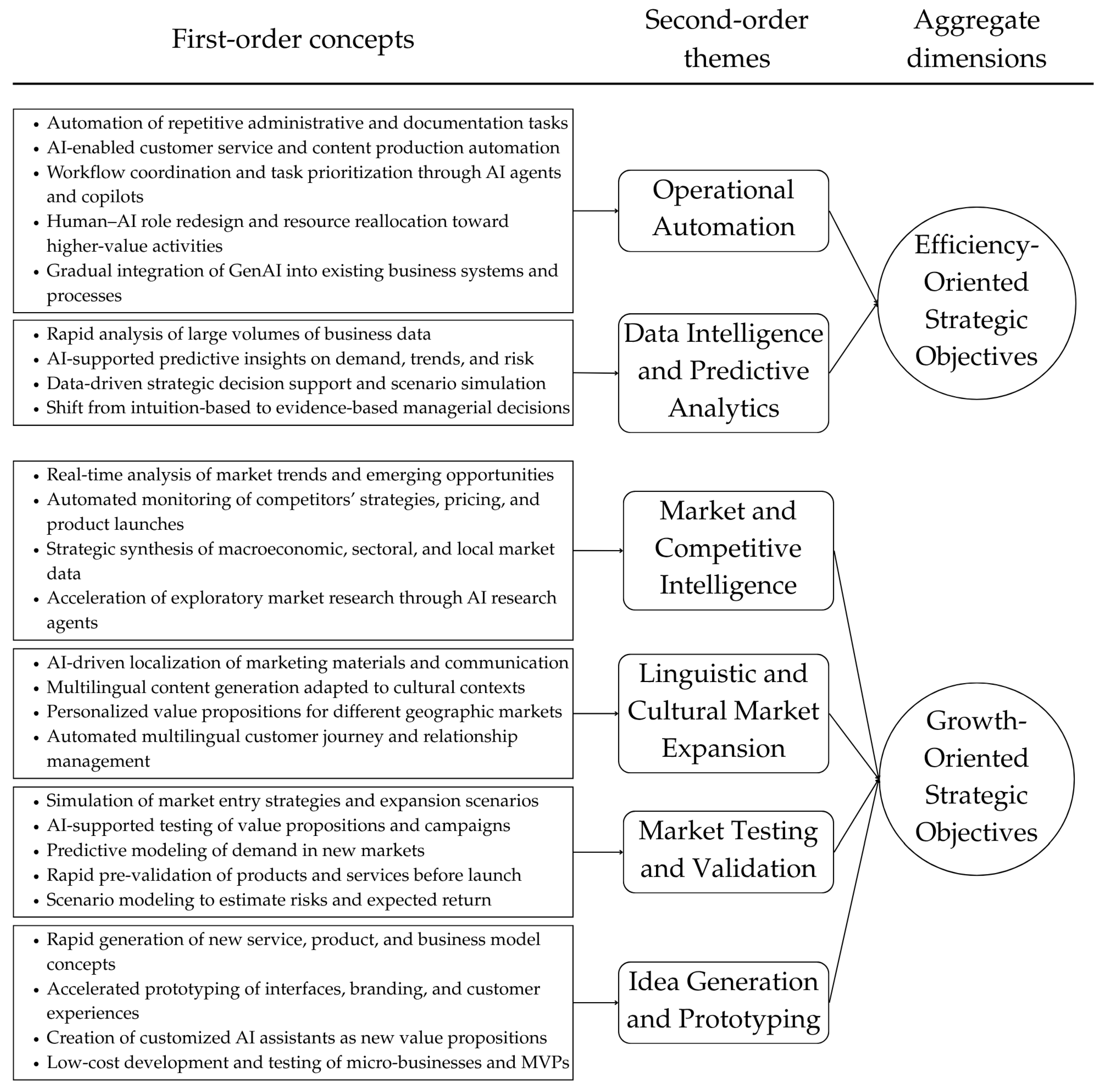
The first objective of the Delphi study was to identify the specific functional applications through which GenAI contributes to SME strategic objectives. To ensure methodological rigor in identifying GenAI functions, qualitative responses from the first Delphi round were analyzed using an inductive coding approach following the Gioia methodology (
Gioia et al., 2013). This approach enables the systematic progression from informant-centric expressions to theoretically meaningful constructs. First-order concepts were derived directly from expert responses. These were subsequently grouped into second-order themes representing distinct GenAI functions. Finally, these functions were categorized into aggregate dimensions reflecting their primary strategic orientation, distinguishing between efficiency-oriented and growth-oriented strategic objectives.
The resulting Gioia data structure is presented in
Figure 2.
The inductive analysis resulted in a structured set of GenAI functional applications that map onto two distinct strategic value logics: efficiency-oriented and growth-oriented objectives. As illustrated in
Figure 2, the coding process identified two second-order themes within the efficiency dimension, namely (1) Operational Automation and (2) Data Intelligence and Predictive Analytics, and four second-order themes within the growth dimension, that is (1) Market and Competitive Intelligence, (2) Linguistic and Cultural Market Expansion, (3) Market Testing and Validation, and (4) Idea Generation and Prototyping. Within the efficiency-oriented dimension, experts consistently emphasized GenAI’s role in automating repetitive administrative and documentation tasks, streamlining customer service and content production, and coordinating workflows through AI agents and copiloting systems. These applications were frequently associated with the reallocation of human resources toward higher-value activities and with the gradual integration of GenAI into existing ERP, CRM, and operational systems. In parallel, Data Intelligence and Predictive Analytics emerged as a complementary efficiency function, characterized by the rapid analysis of large volumes of business data, AI-supported forecasting of demand and risk, scenario simulation, and a broader shift from intuition-based to evidence-based managerial decision-making. While a strong consensus was observed regarding the value of data-driven support, some experts noted that advanced predictive capabilities remain contingent upon the maturity of firms’ data infrastructures. The growth-oriented dimension revealed a more exploratory set of applications. Market and Competitive Intelligence functions were associated with real-time analysis of market trends, automated monitoring of competitors, and accelerated exploratory research through AI agents. Linguistic and Cultural Market Expansion captured GenAI’s ability to localize communication, generate multilingual content, and tailor value propositions to diverse geographic and cultural contexts. Market Testing and Validation reflected the use of GenAI to simulate entry strategies, test value propositions, and pre-validate offerings in new markets. Finally, Idea Generation and Prototyping encompassed the rapid generation of new product and service concepts, accelerated prototyping of customer experiences, the creation of customized AI assistants as standalone value propositions, and the low-cost development of micro-businesses and MVPs.
Overall, the findings suggest that experts perceive GenAI not as a monolithic technology but as a multifunctional strategic capability. Different functional applications are associated with distinct strategic objectives, reinforcing the importance of a function-centric understanding of GenAI in explaining heterogeneous strategic value realization across SMEs.
4.1.2. Validation, Convergence, and Strategic Alignment of GenAI Functions
In the second and third Delphi rounds, experts were asked to evaluate the relevance of each identified GenAI function and to assess its contribution to efficiency-oriented and growth-oriented strategic objectives using structured Likert-scale measures (1–5). This iterative evaluation process enabled convergence toward a stable consensus regarding both the strategic relevance and the objective-specific alignment of the identified functions.
As reported in
Table 1, all GenAI functions received high relevance scores in the final round, with mean values ranging from 3.5 to 4.5. This indicates broad expert agreement that each identified function represents a meaningful strategic mechanism through which GenAI can contribute to SME performance. The stability of evaluations between the second and third rounds further confirms the robustness of this consensus.
Beyond overall relevance, the structured assessments reveal a clear, though not absolute, functional differentiation between efficiency-oriented and growth-oriented objectives. Operational Automation (M_efficiency = 4; M_growth = 2.6) and Data Intelligence and Predictive Analytics (M_efficiency = 3.5; M_growth = 3) were evaluated as contributing more strongly to efficiency-oriented objectives. These functions are primarily associated with task automation, operational optimization, and enhanced decision efficiency, reinforcing exploitation-oriented value logics. In contrast, Market and Competitive Intelligence (M_efficiency = 2.5; M_growth = 3), Linguistic and Cultural Market Expansion (M_efficiency = 2.5; M_growth = 3), and Idea Generation and Prototyping (M_efficiency = 2.5; M_growth = 3.5) were more strongly aligned with growth-oriented objectives. These functions enable exploratory activities such as opportunity identification, international expansion, innovation development, and experimentation. Market Testing and Validation (M_efficiency = 2; M_growth = 2.5) also showed a stronger association with growth, although with more moderate overall scores.
Importantly, the differentiation between efficiency and growth contributions is relative rather than absolute. While certain functions are more strongly associated with one strategic objective, none of the functions received negligible scores on the alternative objective. This suggests that GenAI functions are not strictly confined to a single value logic; rather, they exhibit cross-objective potential, with their dominant contribution depending on strategic orientation and implementation context. Overall, the findings confirm that GenAI does not represent a homogeneous capability. Instead, it comprises distinct functional mechanisms that display differentiated, yet partially overlapping, contributions to efficiency- and growth-oriented strategic objectives. This empirical differentiation provides the basis for examining how readiness conditions influence the extent to which specific functions translate into realized strategic value.
4.2. Technological, Organizational, and Environmental Readiness as a Contingency Condition Shaping GenAI Strategic Impact
In addition to identifying GenAI functions, the Delphi study examined technological, organizational, and environmental readiness factors influencing GenAI implementation. Experts were asked to evaluate the relevance and impact of specific barriers and enabling conditions using Likert-scale assessments, complemented by qualitative explanations collected through open-ended responses. Beyond assessing their general relevance, experts were explicitly invited to reflect on how these readiness conditions influence the ability of SMEs to translate GenAI applications into strategic outcomes. This approach allowed capturing not only the perceived importance of individual readiness factors, but also their role in facilitating or constraining the strategic effectiveness of GenAI deployment.
The findings indicate that GenAI’s strategic impact is not determined solely by the functional application of the technology but is contingent upon the firm’s technological, organizational, and environmental readiness configuration. In particular, strategic value realization in SMEs is shaped primarily by organizational readiness conditions rather than technological or environmental constraints.
4.2.1. Identification and Expert Assessment of Technological, Organizational, and Environmental Readiness Factors
The results indicate that organizational barriers represent the most critical constraints to GenAI adoption and strategic deployment in SMEs. Cultural resistance and reluctance to change emerged as the single most important barrier, receiving the highest final relevance score among all constraints. Experts consistently emphasized that entrenched routines, skepticism toward AI-generated outputs, and managerial hesitation substantially hinder the integration of GenAI into core business processes. Closely following this, the absence of a clear organizational GenAI strategy was identified as the second most critical barrier. Experts stressed that many SMEs adopt GenAI in an opportunistic and fragmented manner, without a coherent strategic roadmap or clearly articulated objectives. This strategic ambiguity reduces alignment between GenAI applications and firm-level priorities, thereby limiting potential strategic impact. The shortage of qualified GenAI personnel ranked as the third most critical barrier, increasing significantly in relevance across Delphi rounds. This suggests growing expert recognition that internal capabilities and expertise are decisive for effective deployment. Limited awareness of GenAI benefits also remained a relevant organizational constraint, reinforcing the view that cognitive and capability-related barriers outweigh purely technical obstacles. In contrast, technological barriers were perceived as secondary. Although inadequate infrastructure and insufficient data availability were acknowledged as relevant challenges, they were ranked substantially below organizational constraints. Notably, interoperability issues and technical integration problems were among the least critical barriers. This indicates that experts do not perceive technological feasibility as the primary bottleneck to GenAI strategic value realization. Environmental barriers were assessed as the least constraining. Regulatory uncertainty, data protection concerns, and market resistance received comparatively low relevance scores in the final round. Particularly striking is the low ranking of market rejection and regulatory ambiguity, suggesting that external institutional constraints are not considered decisive obstacles in the current SME context. These findings challenge dominant narratives in the broader AI adoption literature, which frequently emphasize regulatory and technological barriers as primary inhibitors.
The analysis of enabling factors further reinforces the centrality of organizational readiness. Organizational culture supportive of change was identified as the most important enabling condition overall, receiving the highest relevance score among all facilitators. Experts emphasized that openness to experimentation, leadership commitment, and a learning-oriented mindset create the necessary internal conditions for effective GenAI integration. In addition to these literature-derived factors, experts also highlighted the importance of an iterative experimentation approach and the presence of AI usage guidelines, both of which emerged inductively from qualitative responses and were confirmed as relevant enabling conditions in subsequent Delphi rounds. Technological readiness ranked second among enabling factors, particularly in terms of infrastructure maturity and system preparedness. However, its influence was consistently perceived as contingent upon organizational alignment. Similarly, digital skills and internal capabilities were rated as highly important facilitators, confirming that competence development is a central lever for strategic GenAI value realization. By contrast, environmental enabling factors were considered comparatively less decisive. Government incentives, regulatory clarity, and collaboration networks received lower relevance scores. Competitive pressure was recognized as a moderate driver, but not as a primary determinant of successful GenAI deployment. Overall, the results reveal a clear hierarchy across the TOE dimensions: organizational readiness constitutes the dominant condition shaping GenAI strategic value realization, followed by technological preparedness, while environmental factors play a comparatively limited role.
Table 2 presents the expert-assessed relevance of technological, organizational, and environmental readiness factors, including their classification according to the TOE framework, their type (barrier or enabler), and their final evaluation scores. For each factor, key references to the existing literature are reported where applicable, while factors emerging from qualitative explanations collected through open-ended responses are explicitly indicated.
4.2.2. Readiness as a Contingency Mechanism Shaping GenAI Strategic Impact
Beyond their general relevance, qualitative responses collected during the Delphi rounds revealed strong expert consensus regarding the contingency role of readiness conditions in shaping GenAI strategic outcomes. Experts consistently emphasized that the same GenAI functions may generate substantially different strategic results depending on the firm’s readiness profile. In particular, technological readiness was described as a prerequisite enabling the effective integration of GenAI into operational workflows, while organizational readiness factors such as digital skills and strategic clarity were identified as critical for translating GenAI outputs into actionable strategic decisions. Environmental conditions, including regulatory clarity and ecosystem support, were also perceived as amplifying or constraining firms’ ability to exploit GenAI strategically. These findings indicate that readiness conditions act as contingency factors influencing the extent to which GenAI functions contribute to efficiency-oriented and growth-oriented strategic objectives. Rather than directly generating strategic value, readiness conditions shape the effectiveness with which firms can leverage specific GenAI functional applications. This expert-based evidence provides empirical support for conceptualizing technological, organizational, and environmental readiness as moderating conditions shaping the strategic value realization of GenAI in SMEs.
5. Discussion
5.1. A Function-Centric Perspective on GenAI Strategic Value Realization
The findings of this study provide insights into how GenAI may create strategic value in SMEs. Specifically, the results suggest that GenAI strategic value is not technology-uniform but may depend on the differentiated contribution of specific functional applications. While prior research has broadly recognized GenAI’s potential to enhance both operational efficiency and strategic growth (
Kanbach et al., 2024;
Mariani & Dwivedi, 2024), existing studies have largely examined these outcomes independently or at an aggregate technology level. This has contributed to an implicit assumption that GenAI uniformly improves performance across strategic contexts (
Holmström & Carroll, 2025;
Rajaram & Tinguely, 2024). This study contributes to this literature by introducing and empirically informing a function-centric perspective. The Delphi results indicate that all identified GenAI functions are perceived as strategically relevant, yet their alignment with efficiency- and growth-oriented objectives varies in relative intensity. Operational Automation and Data Intelligence and Predictive Analytics received higher scores for efficiency-oriented objectives, reflecting their stronger association with process optimization, task automation, and decision support. In contrast, Market and Competitive Intelligence, Linguistic and Cultural Market Expansion, and Idea Generation and Prototyping were evaluated as contributing more strongly to growth-oriented objectives, reflecting their role in opportunity identification, expansion, and innovation. These functional distinctions are reflected in concrete applications reported by experts, such as the use of GenAI for automating internal workflows and supporting data-driven decision-making in efficiency-oriented contexts, as well as for generating new service concepts, testing market opportunities, and localizing offerings in growth-oriented contexts. Importantly, the differentiation is relative rather than absolute. None of the GenAI functions was exclusively associated with a single strategic objective. Although certain functions displayed stronger alignment with either efficiency or growth, all functions received meaningful scores on both dimensions. This suggests that GenAI functions exhibit cross-objective potential, but with varying dominant value orientations. In other words, GenAI should not be conceptualized as a binary efficiency-versus-growth enabler, but as a portfolio of differentiated yet partially overlapping functional capabilities.
These findings contribute to strategic management theory by extending the exploration–exploitation framework (
March, 1991) and the defender–prospector typology (
Miles et al., 1978) into the context of GenAI deployment. The results demonstrate that GenAI does not constitute a monolithic strategic resource; rather, it represents a configurable set of functional mechanisms whose dominant strategic contribution depends on alignment with the firm’s prevailing value logic. This perspective refines prior work on digital transformation by providing a more granular explanation of how specific technological functions support differentiated strategic pathways (
Heikkilä et al., 2018). By explicitly linking GenAI functional deployment to relative strategic objective alignment, this study offers a more nuanced explanation for heterogeneous GenAI performance outcomes across SMEs. This function-centric perspective provides a more precise explanation of how GenAI contributes to heterogeneous strategic outcomes across SMEs, addressing a key limitation in prior research. Firms pursuing efficiency-oriented strategies may derive greater value from automation- and analytics-centered functions, whereas firms prioritizing growth may benefit more from intelligence-, experimentation-, and innovation-oriented functions. At the same time, the cross-functional spillover observed in the findings suggests that strategic value realization remains contingent upon broader organizational and contextual conditions, which is an issue addressed in the subsequent analysis of readiness as a moderating mechanism.
5.2. TOE Readiness as a Contingency Mechanism Shaping GenAI Strategic Impact
Beyond identifying function-specific strategic effects, the findings also suggest that the realization of GenAI strategic value is contingent upon firms’ technological, organizational, and environmental readiness configuration. While prior research has established the importance of TOE readiness as an antecedent of technology adoption (
Badghish & Soomro, 2024;
Bhuiyan, 2024;
Sánchez et al., 2025;
Schwaeke et al., 2025;
Tornatzky & Fleischer, 1990), its role in shaping post-adoption strategic value realization has remained insufficiently theorized. The present study extends the TOE framework by demonstrating that readiness conditions function as contingency mechanisms that amplify or constrain the strategic impact of specific GenAI functions. Findings suggest that the strategic impact of GenAI is not solely determined by technological availability, but critically depends on firms’ readiness configurations, thereby extending the TOE framework beyond its traditional focus on adoption. Expert consensus revealed that technological readiness, including infrastructure maturity and system compatibility, determines the feasibility and reliability of GenAI integration. Organizational readiness, encompassing digital skills, strategic clarity, and cultural openness, shapes firms’ ability to interpret and operationalize GenAI outputs. Environmental readiness, including ecosystem support, regulatory clarity, and competitive pressure, further influences firms’ capacity to translate technological capabilities into strategic outcomes. The findings also provide important theoretical insights regarding the relative importance of different readiness dimensions. While prior research has often emphasized technological infrastructure and regulatory conditions as primary barriers to GenAI adoption, the present study suggests that organizational readiness may represent a particularly critical determinant of GenAI strategic value realization. Cultural openness, strategic clarity, and internal capabilities emerged as significantly more influential than technological infrastructure or regulatory frameworks. These findings challenge technology-centric perspectives on GenAI adoption (
Zhu et al., 2026) and reinforce the importance of organizational alignment in shaping technology-enabled strategic transformation (
Peñarroya-Farell et al., 2025;
Shao et al., 2025). Consistent with contingency theory, the results indicate that technological capabilities alone are insufficient to generate strategic value without corresponding organizational readiness conditions. This suggests that GenAI strategic impact may be more strongly constrained by organizational than by technological limitations. In fact, these findings align with contingency theory by demonstrating that technological capabilities do not generate strategic value independently, but require alignment with organizational and environmental conditions (
Donaldson, 2001). In this context, TOE readiness may operate as a moderating mechanism influencing the effectiveness of GenAI functional deployment. This extends recent research conceptualizing readiness as a systemic condition shaping technological value realization (
Bhuiyan, 2024), by explicitly linking readiness configurations to differentiated strategic outcomes associated with distinct GenAI functions. In fact, experts also highlighted that in low-readiness contexts, these applications often remain fragmented, for instance when automation tools are used in isolated tasks without integration into core processes, or when experimentation with new business ideas is not supported by sufficient organizational capabilities to scale.
This contribution shifts the analytical focus from adoption likelihood (
Iyelolu et al., 2024;
Schwaeke et al., 2025;
Shao et al., 2025) to value realization, demonstrating that the strategic effectiveness of GenAI depends not only on whether firms adopt the technology, but on their readiness to leverage specific functional applications effectively.
5.3. An Integrated Framework of GenAI Strategic Value Realization
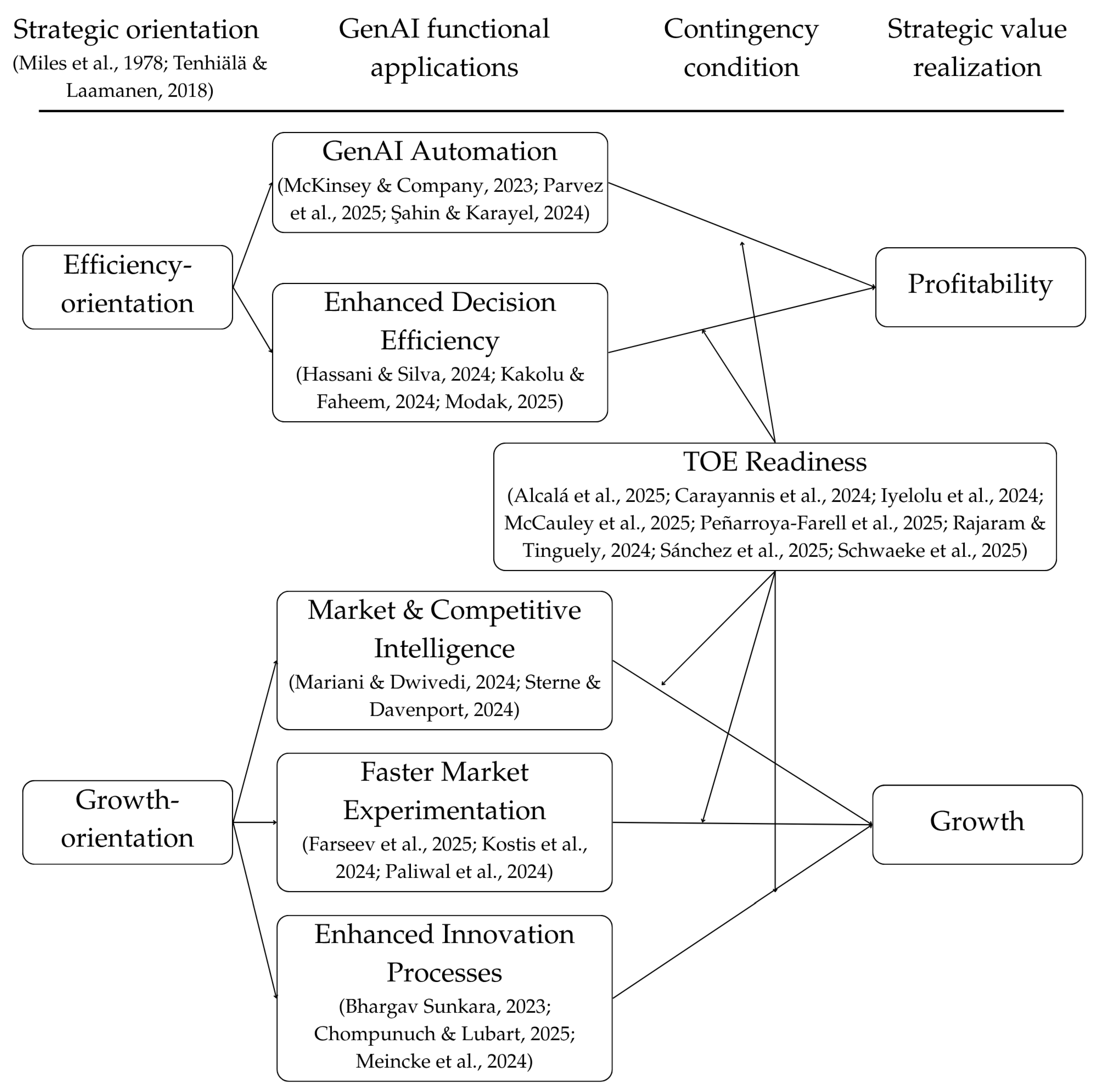
Taken together, these findings support the development of an integrated framework in which GenAI functions act as the primary mechanisms enabling strategic value creation, while TOE readiness conditions shape the extent to which this value can be realized. This integrated framework represents a central contribution of the study by combining functional, strategic, and readiness perspectives into a unified explanation of GenAI strategic value realization. Strategic orientation provides the broader value logic guiding technology deployment, GenAI functions represent the operational mechanisms through which strategic objectives are pursued, and readiness conditions determine the effectiveness of functional implementation.
This integrated perspective contributes to the literature by bridging three previously disconnected streams of research: strategic orientation theory (
March, 1991;
Tenhiälä & Laamanen, 2018), GenAI functional capability research (
Bran et al., 2025;
McKnight et al., 2024), and technology adoption readiness frameworks (
Iyelolu et al., 2024;
Schwaeke et al., 2025;
Shao et al., 2025). By integrating these dimensions, the study provides a more comprehensive explanation of heterogeneous GenAI strategic outcomes across SMEs. Importantly, this framework suggests that GenAI strategic value realization is not purely technology-deterministic nor universally attainable. Instead, it emerges from the alignment between strategic orientation, functional deployment, and readiness configuration. This perspective advances current understanding of GenAI from a generic productivity-enhancing technology to a contingent strategic capability whose impact depends on firm-specific conditions.
The integrated framework developed in this study also provides a conceptual foundation for identifying distinct GenAI strategic positioning profiles based on the interaction between strategic orientation and TOE readiness. Combining efficiency-oriented and growth-oriented strategic objectives with high or low levels of technological, organizational, and environmental readiness suggests the potential emergence of differentiated GenAI deployment patterns across SMEs. Firms characterized by high TOE readiness and an efficiency-oriented strategic focus may be better positioned to embed GenAI systematically into operational processes. In such contexts, operational automation and predictive analytics may become integrated across workflows, potentially supporting cost control, decision efficiency, and scalable process optimization. Conversely, firms with high TOE readiness and a growth-oriented strategic focus may be more likely to institutionalize GenAI in market intelligence, experimentation, and idea generation activities, thereby potentially enabling structured innovation and opportunity exploration. In contrast, firms with lower levels of TOE readiness may experience more fragmented or constrained GenAI implementation. Efficiency-oriented firms with limited readiness may rely on isolated automation tools without achieving deeper integration into core processes, resulting in incremental rather than systemic gains. Similarly, growth-oriented firms with low readiness may engage in opportunistic experimentation; however, organizational and technological gaps may limit the translation of exploratory initiatives into sustained strategic impact. Importantly, this readiness–orientation matrix should be interpreted as a conceptual extension of the moderating mechanism identified in this study rather than as an empirically validated firm typology. It illustrates how TOE readiness may shape the extent to which function-specific GenAI applications translate into realized strategic outcomes. As such, the matrix provides a structured lens for understanding heterogeneous GenAI adoption pathways and offers a foundation for future research examining longitudinal GenAI transformation trajectories across SMEs.
Table 3 illustrates a conceptual TOE Readiness–Strategic Orientation matrix, highlighting how different levels of technological, organizational, and environmental readiness may shape the realization of efficiency- and growth-oriented GenAI strategic objectives.
As such, the proposed matrix not only synthesizes the study’s findings, but also provides a conceptual foundation for understanding heterogeneous GenAI strategic trajectories in SMEs. The matrix further illustrates how different levels of technological, organizational, and environmental readiness may shape the extent to which GenAI applications translate into strategic outcomes across SMEs. In particular, firms characterized by lower levels of readiness may face limitations in achieving stable and integrated use of GenAI within their processes and organizational structures. In such contexts, GenAI deployment may remain fragmented, limiting the realization of its full strategic potential. More specifically, firms with a growth-oriented strategic focus but low readiness may engage in exploratory and opportunistic uses of GenAI, for instance in idea generation or market experimentation. However, without sufficient organizational and technological alignment, these initiatives may remain isolated and may not translate into sustained strategic impact. Similarly, efficiency-oriented firms with low readiness may rely on limited and incremental applications of automation tools, resulting in localized improvements rather than broader process integration. Conversely, higher levels of readiness may enable firms to more effectively embed GenAI into core processes and strategic activities. In such cases, efficiency-oriented firms may achieve more systematic process optimization, while growth-oriented firms may be better positioned to institutionalize innovation, experimentation, and market-oriented applications of GenAI.
These patterns are consistent with practical applications observed by experts involved in the Delphi panel, who reported concrete uses of GenAI in SMEs, such as process automation, decision support, market analysis, and rapid prototyping. This provides additional empirical grounding to the identified functional categories and supports their relevance in real-world organizational contexts. However, this interpretation should be considered as a conceptual extension of the study’s findings rather than as evidence of deterministic or linear development paths. The matrix provides a structured lens for interpreting heterogeneous GenAI deployment patterns, highlighting how readiness conditions may influence the extent to which function-specific applications translate into realized strategic value. While the findings are grounded in a specific regional context, the proposed framework may also offer analytical relevance for SMEs operating in other competitive and resource-constrained environments, such as export-oriented manufacturing firms, service providers embedded in international value chains, or SMEs facing high competitive pressure and limited internal capabilities. In particular, the function-centric and readiness-based perspective developed in this study provides a transferable lens for understanding how GenAI strategic value may vary across different socio-economic and institutional settings.
6. Conclusions
This study develops a contingency-based framework to explain how GenAI may create differentiated strategic value across SMEs. Moving beyond technology-centric perspectives, the findings suggest that GenAI strategic impact depends on the alignment between functional deployment, strategic orientation, and technological, organizational, and environmental readiness. By adopting a function-centric perspective, the study shows that distinct GenAI functions may contribute differently to efficiency-oriented and growth-oriented strategic objectives. At the same time, it highlights that technological, organizational, and environmental readiness conditions play an important role in shaping the extent to which these strategic benefits can be realized, helping to explain why similar GenAI deployments may lead to divergent outcomes across firms.
6.1. Theoretical Implications
This study contributes to the emerging literature on GenAI and strategic management by advancing a function-centric and contingency-based perspective on GenAI-enabled value creation (
Kanbach et al., 2024;
Mariani & Dwivedi, 2024). First, it moves beyond technology-level explanations by conceptualizing GenAI as a multifunctional strategic capability composed of distinct functional domains, each aligned with different strategic value logics. In doing so, it extends existing research that tends to treat GenAI as a homogeneous resource (
Prado & Mantovani, 2025) and provides a more granular understanding of how specific functions support either efficiency-oriented exploitation or growth-oriented exploration.
Second, the study extends the literature by integrating technological, organizational, and environmental readiness into a unified contingency framework. Rather than treating readiness as a static precondition for adoption (
McCauley et al., 2025), the findings suggest conceptualizing it as a dynamic capability that shapes the realization of strategic value. This perspective extends the growing body of research examining technological, organizational, and environmental (TOE) conditions shaping GenAI adoption in SMEs (
Badghish & Soomro, 2024;
Bran et al., 2025;
Sánchez et al., 2025;
Saup et al., 2026;
Schwaeke et al., 2025). While prior studies have primarily focused on TOE factors as determinants of adoption, this study contributes to the literature by conceptualizing readiness as a contingency mechanism that shapes how GenAI functional deployment translates into strategic value realization.
Finally, the study contributes to the understanding of heterogeneous GenAI strategic outcomes by helping to explain why similar GenAI implementations may lead to different strategic results across firms. Consistent with prior research on strategic orientation (
March, 1991;
Tenhiälä & Laamanen, 2018), GenAI functional capabilities (
Bran et al., 2025;
McKnight et al., 2024), and technology readiness frameworks (
Iyelolu et al., 2024;
Schwaeke et al., 2025;
Shao et al., 2025;
Steinhauser & Heid, 2026) the findings suggest that GenAI strategic value is not purely technology-deterministic, but contingent upon the alignment between strategic orientation, functional deployment, and readiness configuration. This perspective provides a useful foundation for future research on GenAI-enabled transformation in SMEs.
6.2. Practical Implications
From a managerial perspective, the findings suggest that firms may benefit from avoiding adopting GenAI as a generic technological solution and instead align its deployment with clearly defined strategic objectives. Managers should recognize that different GenAI functions serve different purposes and may therefore be selectively implemented depending on whether the firm prioritizes efficiency improvements or growth-oriented initiatives.
The results also emphasize the critical role of organizational readiness in enabling effective GenAI adoption. Managers should prioritize the development of cultural openness, strategic clarity, and internal capabilities, as these factors appear more influential than technological infrastructure alone in determining strategic outcomes. In particular, firms should invest in workforce reskilling, establish governance mechanisms for GenAI use, and foster collaboration between technical and business functions.
Moreover, the findings highlight the importance of embedding GenAI into core business processes rather than using it as an isolated tool. Firms that develop integrated approaches, combining functional deployment with appropriate readiness conditions, may more likely to translate GenAI investments into sustained strategic value. Conversely, organizations lacking such alignment may experience fragmented adoption and limited performance gains.
6.3. Limitations and Future Research
This study presents several limitations that open important avenues for future research. First, the empirical evidence is based on a Delphi study involving a panel of experts rather than direct observations of firm-level GenAI implementation. While the Delphi method is well suited to exploring emerging technological phenomena characterized by uncertainty and limited historical data, it does not allow for the statistical testing of causal relationships between variables. As such, the relationships proposed in this study should be interpreted as analytically derived and expert-informed rather than empirically tested, and the findings should be understood as theory-building rather than theory-testing. Expert-based assessments necessarily reflect informed expectations and interpretations rather than observed firm-level behaviors. Future research should therefore complement this approach with quantitative firm-level data and longitudinal designs to validate and test the proposed relationships between GenAI functional deployment, readiness conditions, and strategic outcomes.
Second, the study focuses on SMEs operating within a specific regional context. While this setting offers a valuable and realistic lens for examining GenAI adoption in resource-constrained environments, contextual characteristics, such as institutional support, ecosystem maturity, and regional innovation dynamics, may influence both readiness conditions and strategic priorities. Future research could extend and replicate this study within broader and more complex national and systemic contexts, for instance by comparing more mature economies with high-growth emerging markets, in order to assess the generalizability of the framework and uncover context-specific dynamics in GenAI adoption.
Third, while this study identifies technological, organizational, and environmental readiness as critical contingency conditions, readiness is conceptualized at an aggregate level. Future research could further refine this construct by developing validated measurement scales and examining the relative and interactive effects of specific readiness dimensions on the effectiveness of distinct GenAI functions.
Fourth, the present study adopts a function-centric perspective and links GenAI functional deployment to efficiency-oriented and growth-oriented strategic objectives. However, the dynamic evolution of GenAI capabilities and firms’ learning processes over time may further influence how value is realized. Future research would benefit from longitudinal and process-based studies aimed at mapping the temporal development of capabilities and examining how this evolution shapes the progressive adoption and integration of AI practices within firms. Longitudinal research could explore how readiness configurations and functional deployment co-evolve, shaping firms’ strategic trajectories and performance outcomes.
Finally, the conceptual framework developed in this study proposes a contingency-based model of GenAI-enabled strategic value realization. Future empirical research could formally test this model using configurational approaches, such as fuzzy-set qualitative comparative analysis (fsQCA), or structural equation modeling, to examine how combinations of GenAI functions and readiness conditions jointly influence strategic outcomes.