1. Introduction
1.1. Background and Rationale
Contemporary businesses invest significant resources in digital transformation projects, sustainability programmers, employee health, and well-being improvement. However, with all these efforts being implemented simultaneously, empirical results are still sporadic and unsatisfactory. Many companies complain of exhaustion due to long-term active involvement, loss of labor enthusiasm, and the failure to achieve regular benefits on huge investments in human-resources technology. This paradox exists in the context of a more general issue of resource fragmentation: organizations view digital tools, sustainability values, and wellness mechanisms as independent events, not as a cohesive model that creates the experience of an employee. Understanding the relationship between these unequal resources and how they work with one another to create employee resonance and vitality is a big challenge to a modern-day manager. Existing theoretical frameworks do not have a sufficient explanation for this complexity. The High-Performance Work Systems (HPWS) paradigm is a paradigm that bundles HR practices in a synergistic manner; nonetheless, it is mostly process-driven and unsuitable to the specifics of digitalization and sustainability. Psychological Capital (PsyCap) on the other hand focuses on personal abilities—hope, efficacy, resilience, and optimism—and does not focus much on the socio-technical environment that develops these abilities. Employee Experience (EX) models focus on touchpoints and emotion more than the organizational resources that support performance. As a result, none of these standpoints adequately reflect the integrative, cross-domain resource system, which contemporary employees face in hybrid, AI-driven, wellness-based workplaces. This gap forms the main research question, as follows: How can organizations integrate their socio-technical and psychological resources to create one higher-quality capital that fosters resonance, vitality, and performance? It is the disintegration of surviving models that creates a theoretical vacuum, as well as a managerial one, which, however, is a sum of the parts but does not capture the entirety of the phenomenon.
1.2. Contemporary Workplace Drivers
Digital autonomy is the degree to which workers take the initiative in the modalities of technology used in their work processes, a construct that has always been correlated with intrinsic motivation and engagement (
Deci & Ryan, 1985;
Marsh et al., 2024). Inclusive cognition denotes the recognition of aberrant cognitive profiles, such as neurodiversity, which, in its turn, leads to greater problem-solving abilities and creativity (
Edmondson, 1999). Company alignment with sustainability goals shows the way organizational needs to tackle the environmental and social goals are integrated into the overall mission, which enhances the legitimacy and commitment of employees (
Sethi et al., 2017). AI synergy refers to the level of knowledge of artificial intelligence technologies among employees, which has become one of the major predictors of job satisfaction and well-being (
Jarrahi, 2018). Thoughtful work design helps maintain focus and reduce stress, and learning agility helps employees quickly adapt to change and drive innovation (
Bedford, 2019).
1.3. The Need for an Integrative Framework
Although individual workplace resources such as autonomy, inclusivity, and learning agility have received significant scholarly attention, the literature fails to provide a comprehensive framework wherein the above factors as well as the new ones, including AI synergy and wellness technology, are incorporated into a single model that can explain employee as well as organizational outcomes. The resulting lack of synthesis is a significant gap. Each of the factors has been historically studied on an empirical level, thus limiting our current knowledge of their potential to be combined and provide a disproportionate impact when combined. Also, there are considerable intervening and contextual processes that are poorly explored. Although constructs like engagement and vitality have been shown to exert a mediating influence on resource performance connections in a fragmented manner, the dual mediation of work resonance and employee vitality has not been investigated in a rigorous manner. Similarly, the well-being of employees is often considered as a result, but not a moderator. There is limited empirical research into the existence or absence of the amplification or attenuation effects of well-being on the effect of resource bundles on performance. These gaps in the methodology highlight the significance of the current study, which investigates the contribution of an overall set of modern organizational resources, denominated Employee Experience Capital, to sustainable organizational performance as a result of the interactive effects of work resonance and vitality at different degrees of employee well-being.
1.4. Research Gaps and Needs
Although studies acknowledge the role of autonomy, inclusivity, digital tools, sustainability orientation, and wellness practices in shaping engagement, three important gaps persist:
G1—Resource Bundling: Few studies conceptualize or empirically test a higher-order reflective construct that integrates digital, sustainable, inclusive, AI-enabled, mindful, and wellness dimensions into one resource system.
G2—Transmission Logic: Dual, complementary psychological mechanisms—resonance (alignment and meaning) and vitality (energy and self-regulation)—are rarely examined together as simultaneous mediators between resources and performance.
G3—Boundary Role: Employee well-being is generally considered only as a consequence; however, the possibilities of its potential role as a boundary condition defining the efficacy of resonance and vitality are, however, yet to be investigated in the existing theoretical literature.
1.5. Theoretical and Practical Significance
High-Performance Work Systems (HPWSs) and Psychological Capital (PsyCap) remain the most used systems to explain the outcomes of employees. However, an HPWS predicts managerial human-resources-linked practices such as recruitment, training, and reward systems whereas PsyCap predicts the psychological characteristics of the individual such as hope, self-efficacy, resilience, and optimism. Neither of the constructs can sufficiently respond to the cross-domain integration of digital, sustainable, and wellness-based resources characteristic of the hybrid, AI-enabled organizations of today. Employee Experience Capital (EEC) goes a step further and puts forward its own perspective, namely, as a second-order, organization-level construct that integrates both socio-technical and psychosocial resources into the Job Demands–Resources (JD-R) and Resource-Based View (RBV) frameworks. In terms of concept, EEC is opposed to HPWSs since it integrates digital autonomy, inclusivity, and well-being technologies as fundamental job resources instead of using managerial practices. Similarly, it builds on PsyCap by modifying the focus of attention to structural, experience-making resources provided by the organization. This repositioning defines EEC as a unique and new theoretical model that replicates how integrated resource systems initiate resonance, energy, and performance. Practically, the EEC lens can provide managers with a roadmap that is measurable to integrate technology, sustainability, and wellness programs and ensure that employee experiences translate into performance realities.
1.6. Objectives and Hypothesis Overview
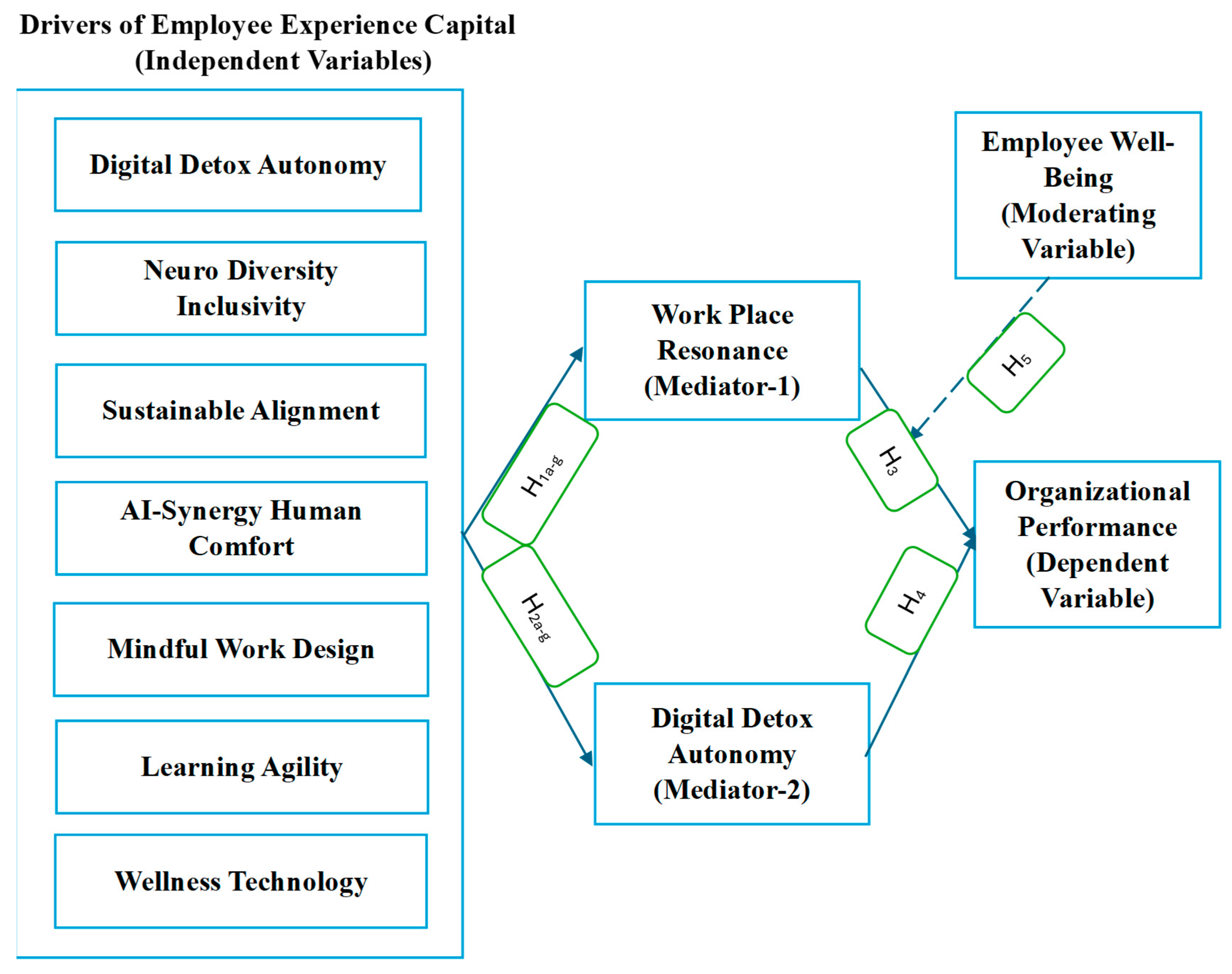
The current research will investigate the relationship between Employee Experience Capital (EEC) and organizational performance by the two mediators of work resonance and employee vitality and the moderating role of employee well-being. The investigation will be carried out based on the assumptions of the Job Demands–Resources (JD-R) and Resource-Based View (RBV) frameworks and answer the following research questions:
RQ 1: What is the effect of Employee Experience Capital on improved organizational performance in digitally intensive workplaces?
RQ 2: Does the relationship between EEC and organizational performance mediate work resonance and employee vitality?
RQ 3: How is the mediating relationship between vitality and resonance in the performance outcomes mediated by employee well-being?
RQ 4: How can the integrative EEC–resonance–vitality–well-being model be applied to inform sustainable human capital strategies in the AI-driven and wellness-oriented organization?
The objectives of this study are fourfold: (1) to investigate how the seven drivers of Employee Experience Capital contribute to shaping work resonance and employee vitality; (2) to analyze the effects of Employee Experience Capital on organizational performance; (3) to evaluate the dual mediating roles of work resonance and employee vitality in linking the drivers of Employee Experience Capital with organizational performance; and (4) to assess the moderating role of employee well-being in the relationship between the mediators (work resonance and employee vitality) and organizational performance. Based on these objectives, five hypotheses are proposed and tested in the subsequent sections.
1.7. Clarification on Scope and Construct Selection
Previously conceptual versions of this framework included Green Brand Love (GBL) as an attitudinal outcome between sustainability value and the identification of employees. But later in the model refinement process, both theoretical and methodological reasons led to the removal of the construct. The initial empirical convergence tests showed that GBL has a high level of conceptual overlap with work resonance. Both denote the congruency of personal and corporate values; however, resonance is a broader experience level that includes the congruency of personal and corporate values in a broader way than just egocentric affection. Second, it becomes essential since the main unit of analysis of the study is not consumer–brand attachment but rather the inner psychological mechanism of the employee. Keeping GBL would thus have mixed internal and external relationships levels. Based on this, the updated model relies on Employee Experience Capital (EEC) as a resource system which promotes both resonance and vitality moderated by well-being to predict the organizational performance. The boundary clarification makes the theoretical precision more precise but at the same time does not refute the notion that value-based affinity constructions like GBL will continue to have a role in future studies and will be able to connect sustainable employer branding to employee outcomes.
6. Discussion
The results of the empirical findings support the motivational trajectory identified by the Job Demands–Resources (JD-R) model and highlight the idea that aggregated workplace resources, namely Experiential and Economic Capitals (EECs), act in a proactive manner to promote work resonance and vitality, which are two of the key job-related affective states. At the same time, using the Resource-Based View (RBV) paradigm, the causal relationships between EEC and organizational performance have been empirically supported, which supports the idea that integrated and experience-based resources serve as a strategic source of human capital, thus creating a sustainable competitive advantage.
6.1. Overview of the Main Findings
The current study was aimed at empirically questioning how a collective of modern workplace resources, all of which are referred to as Employee Experience Capital, can be translated into organizational performance through two intervening and modulating mechanisms. Specifically, the theoretical model assumed that seven drivers, including digital autonomy, inclusive thinking, sustainability alignment, AI–human synergy comfort, mindful design, learning agility, and wellness technology, would have a positive influence on two primary psychological conditions: work resonance and employee vitality. These states, in turn, were supposed to improve organizational performance. Also, the moderating effect of the relationship between the mediators and the performance was theorized to be higher at higher levels of employee well-being.
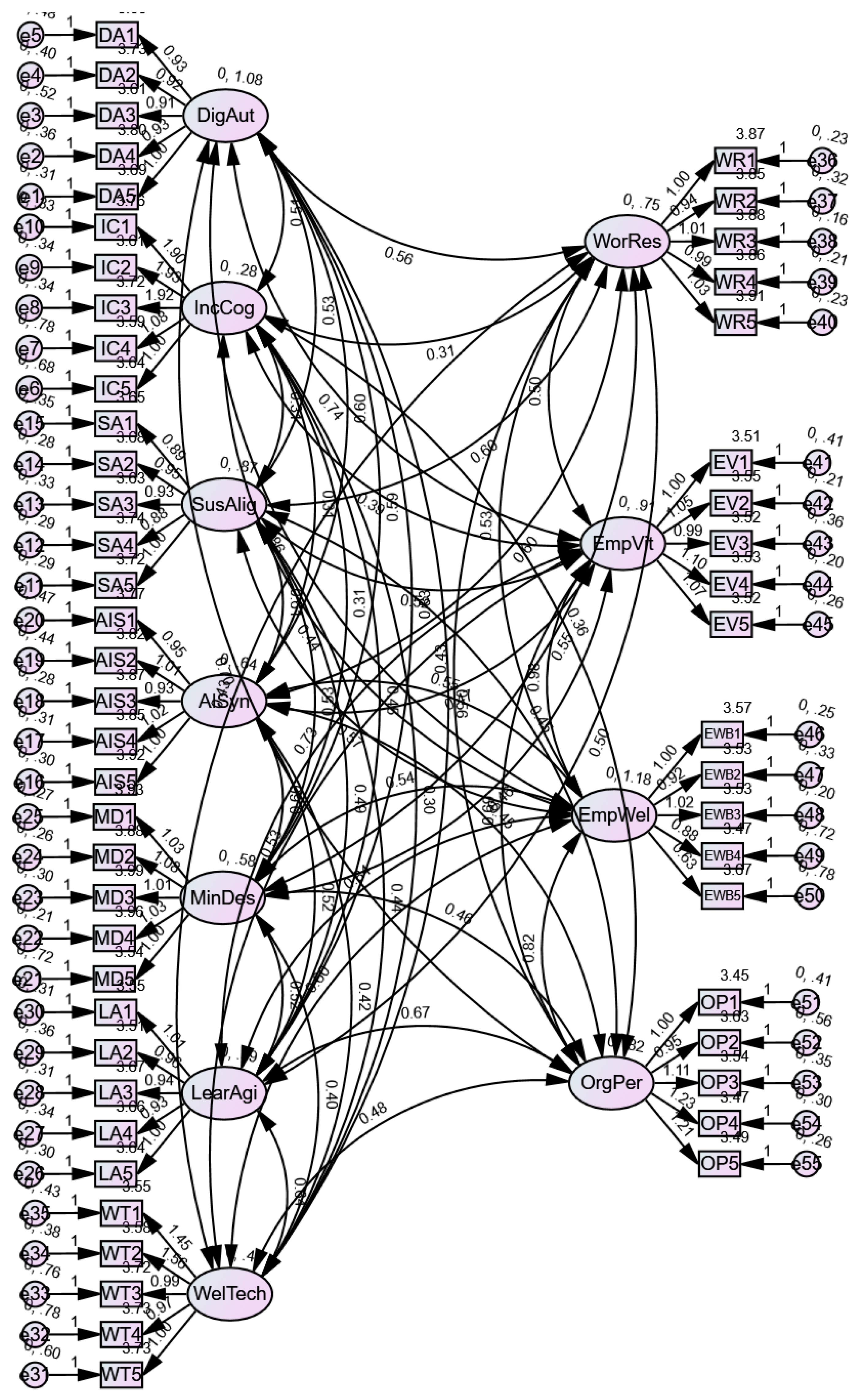
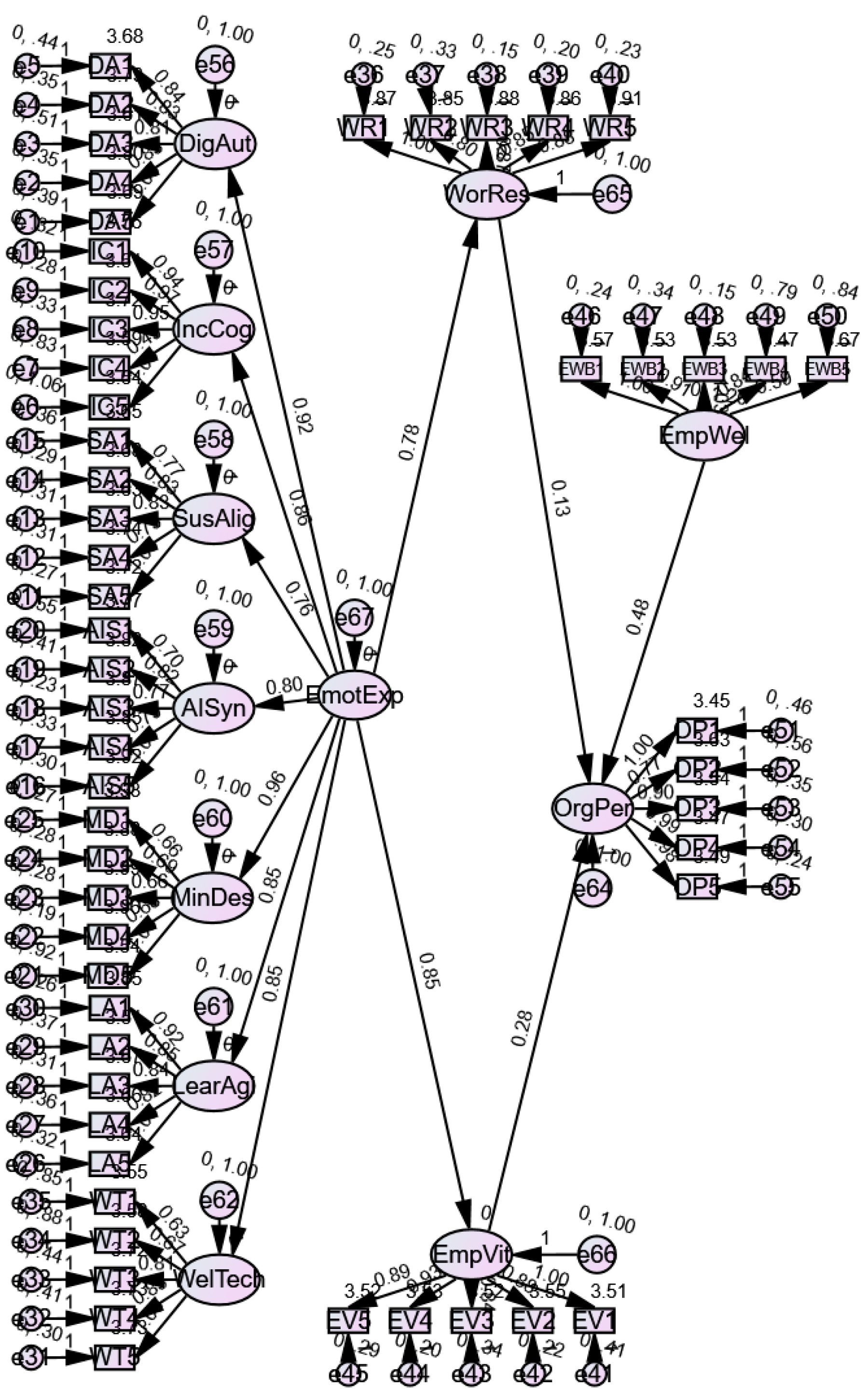
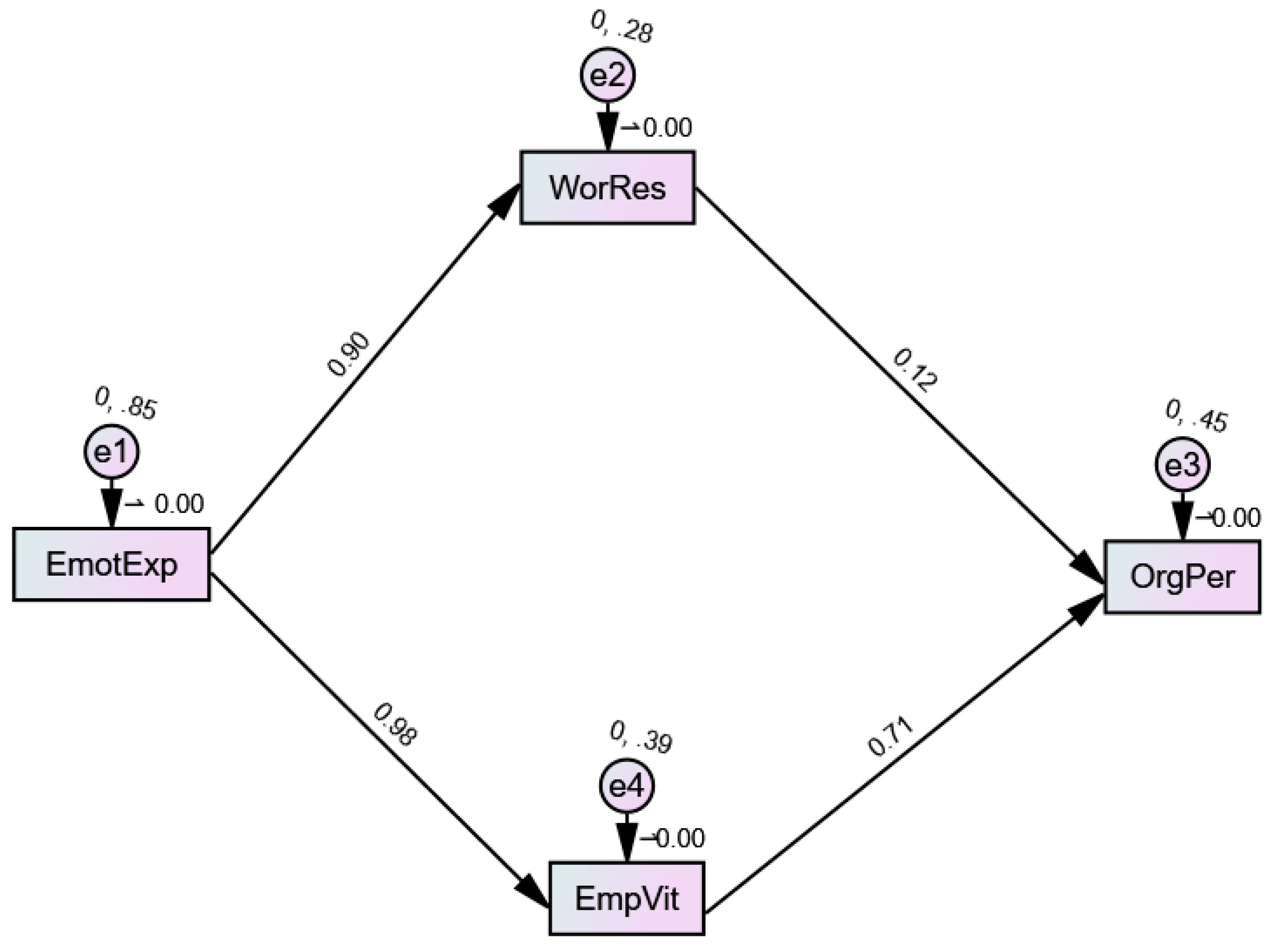
The hypothesized direct and indirect pathways were mostly supported by empirical data. The interaction of the seven drivers had a significant positive effect on both the mediators but a stronger effect on vitality than resonance. These findings highlight that Employee Experience Capital is not an abstract or diffuse concept but a measurable set of job resources capable of energizing employees in two complementary ways, the development of a sense of connection and alignment (resonance) and the provision of the psychological energy required to engage in proactive behaviors (vitality). Besides these indirect effects, the resource bundle showed a high direct effect on organizational performance, indicating that some benefits are realized through processes other than mediators. More importantly, employee vitality per se showed a strong positive impact on organizational performance, serving as a crucial indicator of the role of employee vitality as a self-regulatory resource that connects the state of affairs in the workplace with performance.
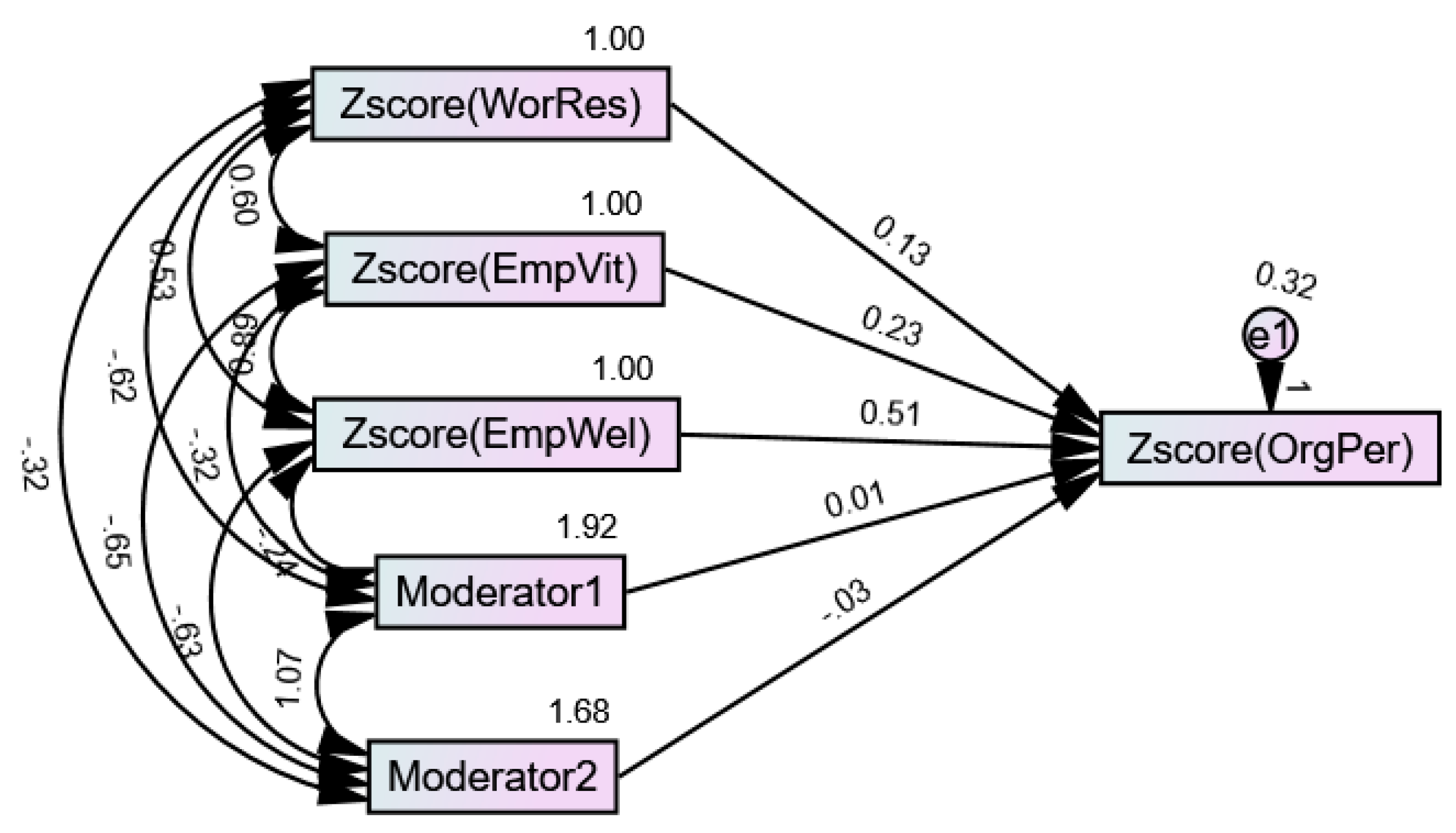
On the other hand, moderation analysis failed to support the hypothesis that organizational performance is magnified by employee well-being in the presence of work resonance or vitality. Even though employee well-being also had a substantial main effect on performance, and thus confirmed its position as an important standalone outcome and resource, the terms of interaction did not turn out to be significant, and the conditional effects were not variable at different levels of employee well-being. This tendency suggests that well-being, though a positive factor, might not have necessarily changed the magnitude of the causal relationships between resonance or vitality and performance in the studied sample.
Collectively, these results are a strong indication of the central role of Employee Experience Capital and mediating processes, as well as the narrow scope of understanding the boundary conditions within which the relationships are occurring. We recommend that further studies be conducted to clarify other avenues in which these resources can affect performance and also examine the situational domain that can precondition the mediating effect of employee well-being.
6.2. Interpretation of Direct Effects (H1–H3)
The strong direct effects found between Employee Experience Capital and the mediators of work resonance and vitality are the empirical measurements that support Hypothesis 1 and are consistent with the essence of the provisions expressed in the Job Demands–Resources (JD-R) model and self-determination theory. Employees facing high levels of autonomy, inclusion, alignment with sustainability imperatives, and helpful technological affordances are more likely to feel that they are experiencing a sense of meaning and alignment with their work (resonance), as well as a pulsating sense of energy and aliveness (vitality). These results build upon previous research by showing that the psychological conditions of interest cannot be attributed to the effect of a single resource or psychological state but are the combination of numerous and mutually enhancing resources. The findings also reinforce the emerging literature on resource bundles or capability bundles in the management of human resources, including that it is the combined practices that are more effective than individual interventions.
Hypothesis 2 indicates that, despite the lack of mediating processes, resource-rich environments perform better, although the relationship between the experience capital of the employees and the performance of the organization is direct. This process can occur since conducive environments boost not only individual vigor and congruency but also group activities like teamwork, creativity, and discretionary work, which, in turn, are directly converted into quantifiable performance indicators. The latter is consistent with resource-based views, which claim that human capital practices grant a sustainable competitive advantage when they are indeed valuable, rare, inimitable, and non-substitutable.
Hypothesis 3 regarding the tremendous direct impact of employee vitality on organizational performance supports the idea that vitality is a key process whereby job resources are transformed into performance. Vitality is theorized as an energy system that is self-regulating to maintain focus, persistence, and creativity in challenging environments. When employees feel vital, they are more active and stronger and ready to go a step further, beyond the expectations of their role in the organization, thus increasing organizational effectiveness. This conclusion intersects those of other prior studies that have linked subjective vitality to engagement, proactivity, and well-being in the workplace, but it adds to the existing body of research by drawing a picture of how vitality can be incorporated in both a wider, digitally oriented model and sustainability-infused resource model.
Remarkably, although work resonance had significant predicted performance in the bivariate analyses conducted, when vitality was added to the model, the effect of work resonance became mostly indirect. This is an indication that resonance is more of an influencer by virtue of making employees feel more energized and not necessarily a performance driver. An implication of such a distinction is that although both alignment and meaning are conditions for sustaining energy, it is the energized state (vitality) that drives performance behaviors the most.
6.3. Interpretation of Mediation (H4)
The mediating variables assessed in the mediation analysis were work resonance and employee vitality as mediators between Employee Experience Capital and organizational performance. The results strongly argue in favor of a two-mediation model. The indirect effect that was transmitted through vitality was large and significant whilst the resonance-mediated indirect effect, though significant, had a relatively small magnitude. Together, the total indirect influence was found to be statistically significant, indicating the supplementary nature of the psychological constructs to the significant amount of influence that the resource bundle has on performance outcomes. Such findings contribute to theoretical dialogue discourse in a number of relevant ways.
These results contribute to theoretical discussion in a number of ways. First, they support the thesis that modern work resources not only influence performance in the capacity to endow employees with capabilities or chances but also through the process of energization and psychological alignment. This is in line with the self-determination theory that states that the satisfaction of fundamental psychological needs creates a sense of meaning and energy, resulting in optimal functioning. Second, the findings build on the Job Demands–Resources literature by defining two complementary mediators, resonance, which reflects meaningful alignment, and vitality, which reflects energy and aliveness (as well as assessing them simultaneously in the same structural model).
The relatively high power of vitality as a mediator of performance as compared to resonance has theoretical significance. It indicates that the operationalization of performance behaviors is more related to an energized state even though alignment and meaning act as necessary antecedents. That is, employees would self-identify with organizational values but would still perform poorly in the face of a lack of vitality, and when vitality is coupled with alignment, performance will be at its best. This finding is consistent with thriving-at-work studies, which theorize thriving as the co-experience of learning and vitality and show that vitality is a more behaviorally operationalized dimension. By including both mediators, the current research is able to capture this subtlety and provide a deeper description of the way resource bundles become performance.
From a practical perspective, mediation outcomes suggest that interventions to boost the experience capital of employees should go beyond structural or policy-level changes (e.g., the implementation of digital tools or sustainability plans) to include programs that create vitality. Some of these are the design of tasks that offer recovery opportunities, include wellness technologies, and provide training on energy management. These strategies will help organizations to maximize the benefits of resource-abundant environments in the behaviors and performance outcomes of workers.
6.4. Interpretation of Moderation (H5)
The dual-path analysis provides strong data that the resonance of work and vitality of employees are two independent but complementary psychological processes in which Employee Experience Capital (EEC) enhances organizational performance. These outcomes of the mediation model prove that vitality produces stronger power, and energy and proactivity prove to be the main pathways through which resource-rich environments are converted into the best results. Resonance, in turn, serves a supporting purpose in that it develops alignment and meaning, which, in turn, indirectly renews vitality and maintains engagement throughout the length of time. All these processes demonstrate that EEC is not only a discrete collection of resources but also a logical motivational system that fosters alignment and energy at the same time, two essential elements of success at work.
Even though the affective qualities of employee well-being, vitality, and resonance have similar qualities of affectivity and motivational response, they exist at different levels of psychological functioning. Under the Job Demands–Resources (JD-R) paradigm, well-being is treated as a higher-level personal resource that defines how these temporal states of experience transform into long-term consequences. Following the Self-Determination Theory (SDT), well-being increases the internalization of autonomy and competence, and thus enhances the overall positive effect of vitality and resonance on organizational performance. Therefore, by treating well-being as a moderator, as opposed to a mediator, the stabilizing effect of well-being on the strength of such state-based relationships without confusing their time frames or conceptual spaces is achieved.
The moderation analysis also explains the conditions of the boundary regarding this process. Employee well-being (WB) showed a substantial influence on performance but no significant change in the strength of the indirect connections between resonance, vitality, and performance. This trend suggests that the salutary effect of mediators is strong under varying states of well-being. In theory, WB describes a more sustained mental state, whereas resonance and vitality describe state-like experiences, which are directly linked to the immediate working situation. They overlap at the expense of moderation; the energizing and affective aspects of well-being are already within the context of vitality. In line with this, WB is a contributing factor to performance as an independent resource instead of a boundary variable.
These results can be narrowed to theoretical predictions based on the JD-R and SDT theories. They point out that the performance of augmenting bundles of job resources is mainly supported by internally generated meaning and energy as opposed to externally mediated well-being contingencies. In practice, this would imply that organizations need to create interventions that simultaneously resonate and activate both vitality, by helping organizations match work and purpose, by promoting inclusive and mindful practices, and by providing recovery opportunities, and well-being, by sustaining it as an indirect, parallel product. Further studies can examine alternative moderators such as leadership climate, team psychological safety, or resilience capacity to determine situations where the motivational pathways between resonance and vitality to performance are stronger or weaker.
6.5. Theoretical Contributions
The findings provide empirical confirmation of the JD–R model’s motivational pathway, demonstrating that bundled workplace resources (EEC) enhance work resonance and vitality—two critical job-related states. Simultaneously, from the RBV perspective, the confirmed paths from EEC to organizational performance validate the view that integrated, experience-based resources constitute a form of strategic human capital that yields a sustainable advantage.
The significant dual-mediation effects of resonance and vitality extend existing theory by specifying how resource integration translates into outcomes. Resonance reflects cognitive–affective alignment, while vitality embodies affective energy; together, they operationalize the transmission logic proposed by the JD–R and RBV models. Thus, this study advances theoretical integration by bridging micro-level psychological mechanisms and macro-level resource frameworks.
This research has a number of substantive implications for the behavioral sciences and the literature on human resource management in that it combines constructs represented by digital transformation, sustainability, and positive organizational psychology into a single explanatory framework. Firstly, this study goes beyond conventional one-resource models because it conceptualizes the experience capital of employees as a combination of seven modern drivers, including digital autonomy, inclusive cognition, sustainability alignment, AI–human synergy comfort, mindful work design, learning agility, and wellness technology. It directly reacts to calls by scholars to study resource caravans as opposed to resources in a job and therefore offers a more ecologically valid illustration of the contemporary workplace.
Second, this research introduces and empirically confirms work resonance as a mediator between the vitality of employees and work resonance. Although the concept of vitality has been well-researched as an element of success in the workplace, it has been found that the concept of resonance has remained mostly theoretical. Operationalizing resonance as psychological identification and the significance of resource-based work-related environments, this research paper provides the first empirical evidence of its involvement in transferring the benefits of resource-based Employee Experience Capital to business performance. This is an addition to the Job Demands–Resources paradigm, which traditionally focuses on motivational or health-protective mechanisms but not both at the same time.
Third, the results narrow down our knowledge about the relative salience of psychological mechanisms. Although the two mediators are important, the impacts of vitality are stronger, indicating that energy and aliveness have more proximal impacts on performance than alignment does. This subtly adds value to existing theories, suggesting that alignment can be a necessary but not sufficient antecedent, and vitality is the motivating stimulus that changes alignment into performance behaviors that can be observed.
Fourth, the lack of evidence on significant moderation by employee well-being runs against the existing hypothesis that all positive work processes are moderated by well-being. The findings reveal that in circumstances whereby psychological mediators already explain substantive amounts of the variance connected with well-being, further moderation effects could be insignificant. This requires a re-evaluation of the conceptualization and measurement of the employee resource and employee outcome models’ boundary conditions by researchers. It further highlights the need to differentiate between general traits like well-being and context-specific, state-like indicators in theorizing moderation effects.
Last, this research makes methodological contributions by proving that complex mediating models can be tested using large samples in digitally transformed workplaces. The combination of proven scales that have been adjusted to new environments and the application of structural equation modeling with bootstrapped confidence intervals are consistent with the best practices in the research of behavioral science and thus contribute to the strengthening of the results and their predictability.
6.6. Managerial and Practical Implications
The results of this research paper provide practical recommendations to managers, policymakers, and human resources planners who may want to improve organizational performance through the architecture of employee experience. The findings have shown that Employee Experience Capital (EEC), a composite of digital autonomy, inclusivity, sustainability alignment, AI–human synergy, mindful design, and learning agility, as well as wellness technology, is an integrated resources system that drives work resonance and employee vitality. In turn, managers should consider these dimensions as complementary levers of the same workplace strategy instead of single efforts.
Since vitality emerged as the more powerful mediator, interventions that serve to energize employees should be given priority by organizations alongside efforts mapping them to purpose. Equally, initiatives that enhance work resonance, including participatory sustainability, clear communication of organizational purpose, and co-designing digital tools may enhance meaning and engagement. Once followed, alignment and energy result in a reinforcing cycle that will translate resources into quantifiable performance outcomes.
The finding of non-significant moderation of employee well-being implies that well-being must be regarded as a strategic asset and not a condition. Management can thus continue to invest in mental health support, work–life balance policies, and psychologically safe cultures because of their intrinsic and performance-related advantages. A moderated focus on both health and liveliness is in tandem with existing research indicating that healthy employees are the pillars of sustainable competitiveness.
Cross-functional collaboration is also required in practical implementation. It should be the work of HR leaders, digital transformation teams, and sustainability officers to develop resource-rich environments that do not lead to initiative fragmentation. Necessary documentation on scale use and performance metrics will lead to reproducible and evidence-based decision-making. Lastly, the ability to coordinate such diverse resource packages, namely offering autonomy, fostering inclusivity, enabling AI cooperation, and integrating mindfulness into daily management, should be developed in leadership development programs. This kind of integrated leadership makes Employee Experience Capital a living organizational capability instead of an intervention that is a onetime event.
For practitioners, the results highlight that performance gains stem not from isolated HR or wellness initiatives but from synergistic alignment. Managers should design policies that integrate digital autonomy, inclusive cognition, and wellness technology under a single resource framework. Such bundling fosters resonance and vitality—precursors of sustainable productivity and employee well-being.
6.7. Conclusions
Combined, the results of the current study provide strong support to the fact that an integrated strategy towards Employee Experience Capital can significantly increase the psychological processes that underlie organizational dynamics and result in their practical implementation. This study confirms that digital autonomy, inclusive cognition, sustainability alignment, AI–human synergy, mindful work design, learning agility, and wellness technology are all foretelling of work resonance, employee vitality, and ultimate organizational performance, supporting the strategic need to create resource-abundant work environments that are coherent and supportive.
The dual-mediation aspects of resonance and vitality unveil the fact that consistency with organizational values and a consistent sense of energetic agency are decisive conduits of resources being converted to performance. Even though employee well-being is not a moderator of these associations, its strong direct influence on organizational performance emphasizes its long-lasting worth as a stand-alone outcome and strategic resource. Overall, these findings can strengthen our theoretical perspectives on resource caravans, expand the Job Demands–Resources model to digitally transformed workplaces, and clarify practical directions of leaders who intend to create high-performing, resilient organizations.
This study combines insights on positive organizational scholarship, sustainability research, and digital transformation, making Employee Experience Capital a core construct of the behavioral sciences. The evidence points to the fact that, when organizations invest in coherent bundles of supportive practices, employees not only thrive but also provide sustainable competitive advantages.
Future studies may develop these foundations by using longitudinal, multi-source and cross-cultural designs to explain the mechanisms and boundary conditions of these effects more precisely.
6.8. Limitations and Future Research
Despite the fact that the current study provides solid empirical evidence to support the suggested Employee Experience Capital (EEC) model, there are a number of limitations that should be considered. A weakness of the cross-sectional design is that it does not allow for conclusive causal relationships. Future studies should use longitudinal, experimental, or time-lag design to determine temporal orders between EEC, resonance, vitality, well-being, and performance. Multi-wave data would also be useful in separating bi-directional relationships and reversible feedback between employee resources and the outcomes.
The other shortcoming is the use of exclusively self-reported data. Perceptual bias cannot be ruled out even with procedural and statistical measures to reduce common-method variance. Future studies ought to conduct triangulation involving self-reports and supervisor ratings or archival or objective measures of performance in order to improve methodological rigor.
The sample, although multi-sectoral and large, was mostly composed of digitally intensive organizations. Applying the model to a public-sector, non-profit, or traditional manufacturing setting would raise the question as to whether EEC could work in a lower-technology setting. Cross-cultural or cross-industry comparisons might also form part of future research to determine the impact of national culture, institutional support, and sectoral digital maturity in determining the effectiveness of EEC components.
Theoretically, the seven-dimensional specification of EEC is new but not comprehensive. Other workplace resources like algorithmic transparency, hybrid-team psychological safety, or ethical AI design may be embedded to perfect the construct. Further research into the interactions between these emerging resources and vitality and resonance can lead to a better understanding of resource configurations in the modern workplace.
Lastly, the insignificant moderation of employee wellness leads to the possibility of investigating alternative boundary circumstances. In future research, moderators that have not been investigated might include resilience, leadership climate, or daily well-being changes, which could be analyzed using diary or multilevel models. These designs would aid in defining situation contexts where resonance and vitality in performance motivational pathways would be stronger or weaker.



 ,
,