Gendered Financial Literacy and Digital Marketing Adoption: Insights from Female Entrepreneurs in an Emerging Economy



Abstract
1. Introduction
- RQ1: How do women entrepreneurs describe and enact their financial literacy in business practice?
- RQ2: How is financial literacy implemented in women-managed SMEs?
- RQ3: How can a gender-sensitive financial literacy model explain the adoption of digital marketing among women-led SMEs?
2. Theoretical Framework
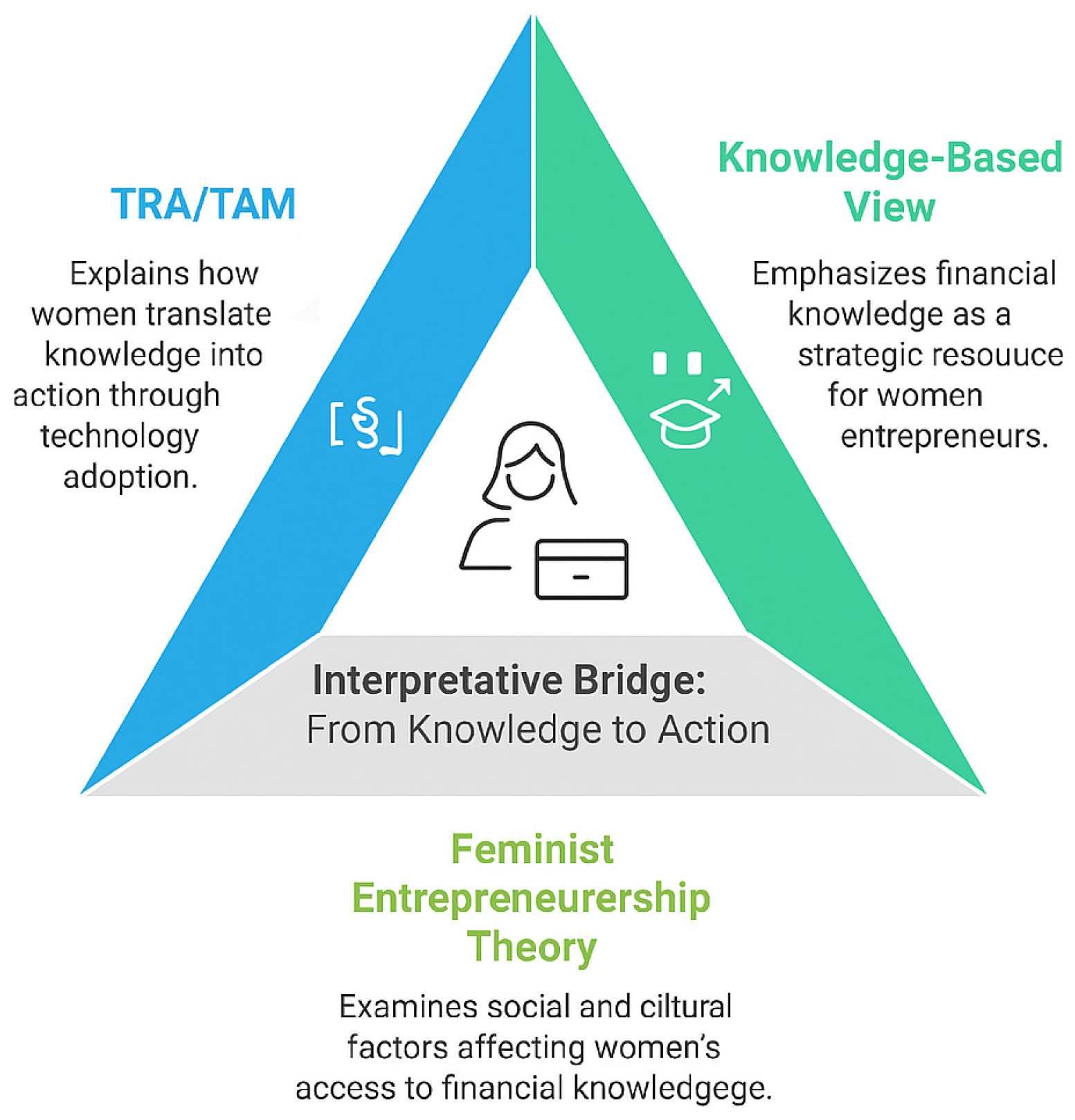
2.1. Theoretical Background: Knowledge-Based Innovation and Gendered Financial Literacy in Digital Entrepreneurship
2.2. Empirical Background: Gendered Financial Literacy Models in Digital Context
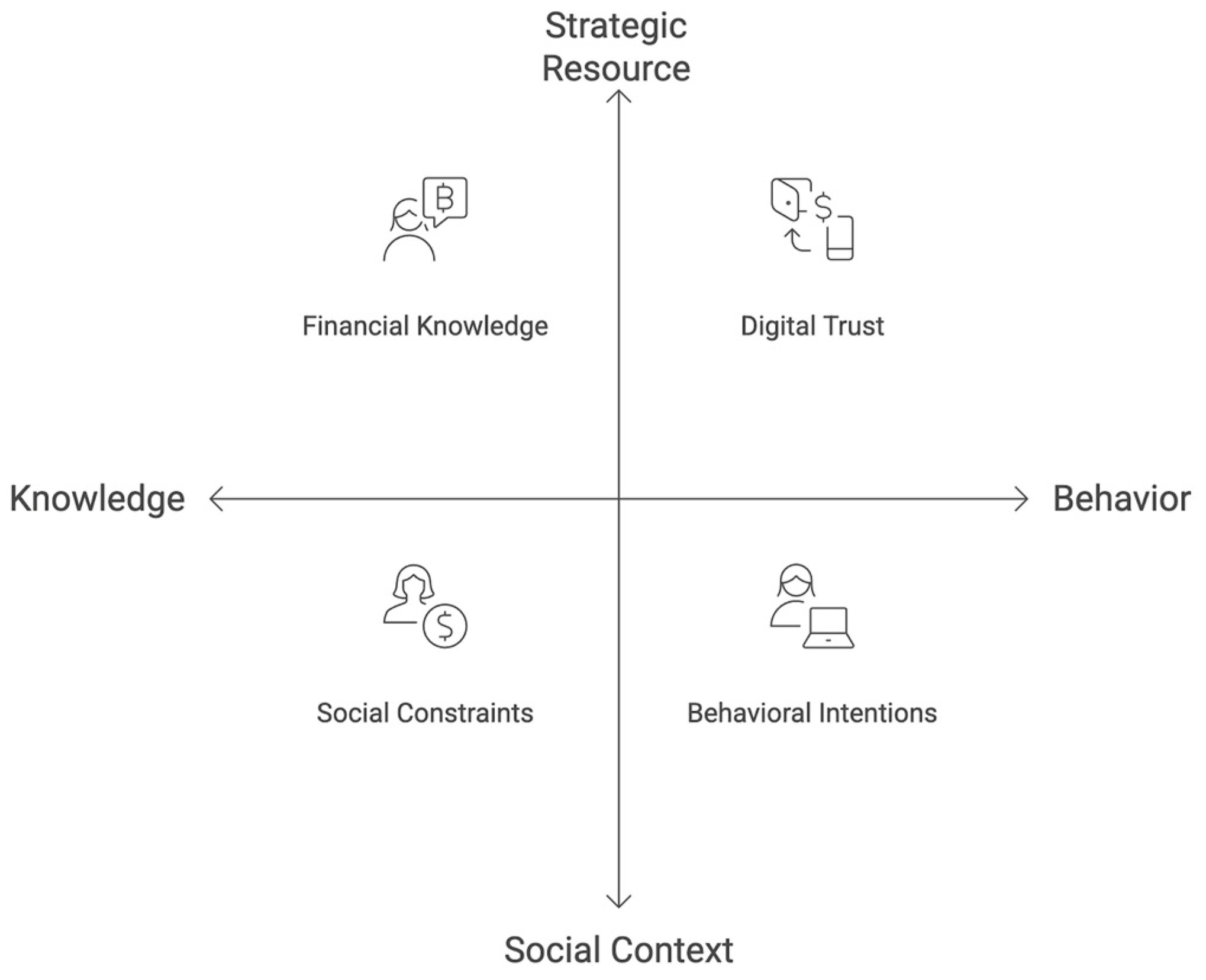
2.3. Conceptual Framework
- Financial cognition—budgeting discipline, saving behavior, loan awareness, investment understanding.
- Digital trust formation—perceptions of safety, trust in digital platforms, perceived fairness of transactions.
- Constrained agency—gender norms, household responsibilities, mobility limitations that shape financial enactment.
- Reflective capability/adaptive learning—learning-by-doing, trial-and-error experimentation, iterative strategic adjustment based on social and digital cues.
3. Materials and Methods
3.1. Research Approach and Stages
- Problem formulation, resulting in three research questions (RQ) derived from theoretical and empirical gaps identified in the literature.
- Literature review, aimed at identifying the main theoretical foundations, including financial literacy theory, digital consumer behavior theory, and relevant empirical findings from previous studies.
- Research design development, which involved defining the qualitative method, constructing the data collection plan, and identifying suitable informants.
- Instrument design and validation, where the interview guide and focus group discussion (FGD) protocols were constructed and tested for clarity, cultural sensitivity, and contextual relevance.
- Data collection and analysis, integrating in-depth interviews and FGDs with culturally responsive approaches to ensure validity and richness of data.
- Interpretation and conclusion, where emerging patterns were synthesized to address the research questions and derive theoretical and practical implications.
3.2. Informants, Data Collection, and Ethical Approval
3.3. Focus of Study
- General financial knowledge—encompassing women’s understanding of fundamental financial concepts, access to financial products, and utilization of technology-based financial services as cognitive capital for business innovation.
- Savings behavior—exploring motives, strategies, and challenges of managing savings amidst the dual financial responsibilities of household and business obligations.
- Loan management—focusing on women’s access to credit, perceptions of financial risk, and decision-making logic in supporting business expansion and stability.
- Investment capability—examining how women entrepreneurs adopt investment as a resilience and sustainability strategy to ensure long-term business continuity.
- Digital marketing literacy—assessing how entrepreneurs leverage social media, e-commerce platforms, and online communication channels to enhance competitiveness, customer engagement, and digital trust.
3.4. Data Analysis Procedures
- Objectivity, achieved by cross-checking patterns across informants;
- Creativity, through interpretive abstraction of experiential meanings;
- External validation, ensured via peer and expert review;
- Reliability, maintained through transparent documentation and traceability between raw data and conceptual interpretation.
4. Results
4.1. Financial Knowledge as a Strategic Capability (RQ1)
4.2. Implementation of Financial Literacy in Women-Managed SMEs (RQ2)
4.2.1. Savings as Everyday Resilience
4.2.2. Credit Use: Opportunity Under Caution
4.2.3. Investment for Stability and Growth
4.3. Gender-Sensitive Financial Literacy and Digital Marketing Adoption (RQ3)
4.3.1. Financial Knowledge as Cognitive Foundation
4.3.2. Digital Trust as a Behavioral Mechanism
4.3.3. Behavioral Intention and Reflective Digital Use
4.3.4. Social Constraints as Contextual Framework
4.4. Synthesis and Model Development
4.4.1. Input Stage—Financial Literacy as Cognitive and Attitudinal Foundation (RQ1)
4.4.2. Process Stage—Translating Financial Literacy into Digital Marketing Practice (RQ2)
4.4.3. Output Stage—Financially Informed Digital Sustainability (RQ3)
4.4.4. Recursive Learning and Empowerment Loop
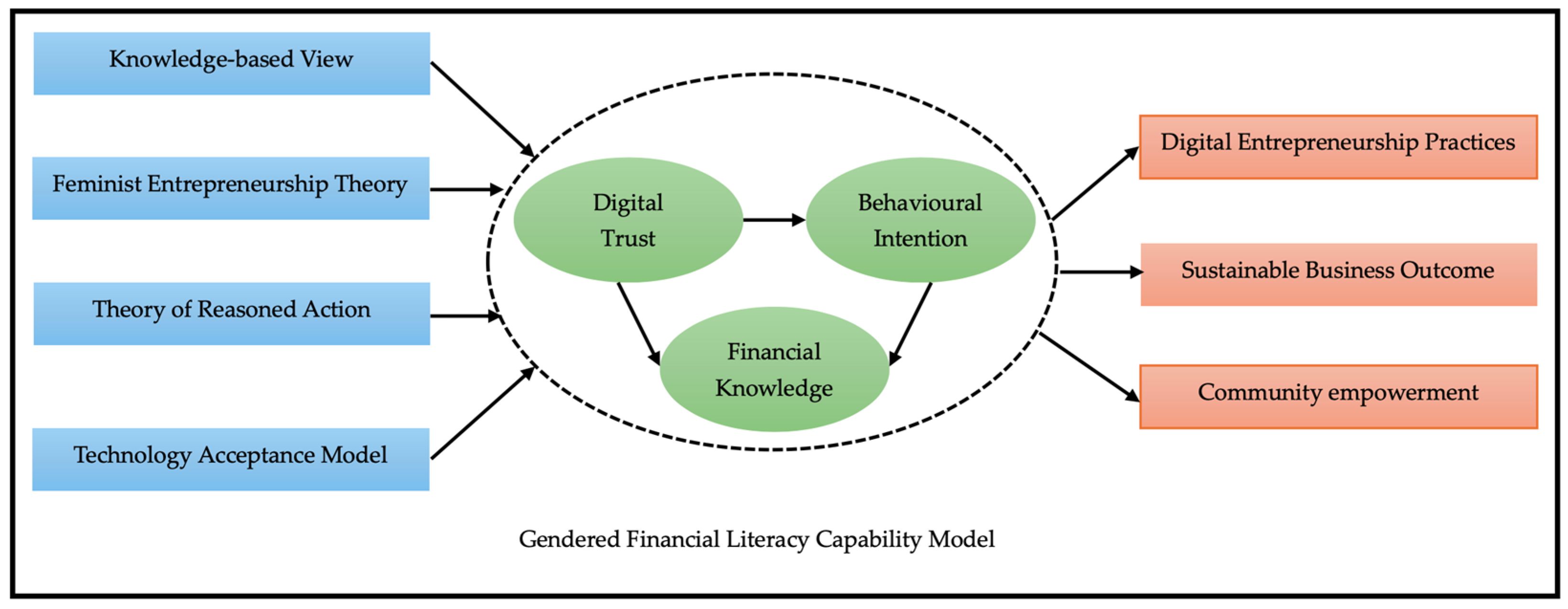
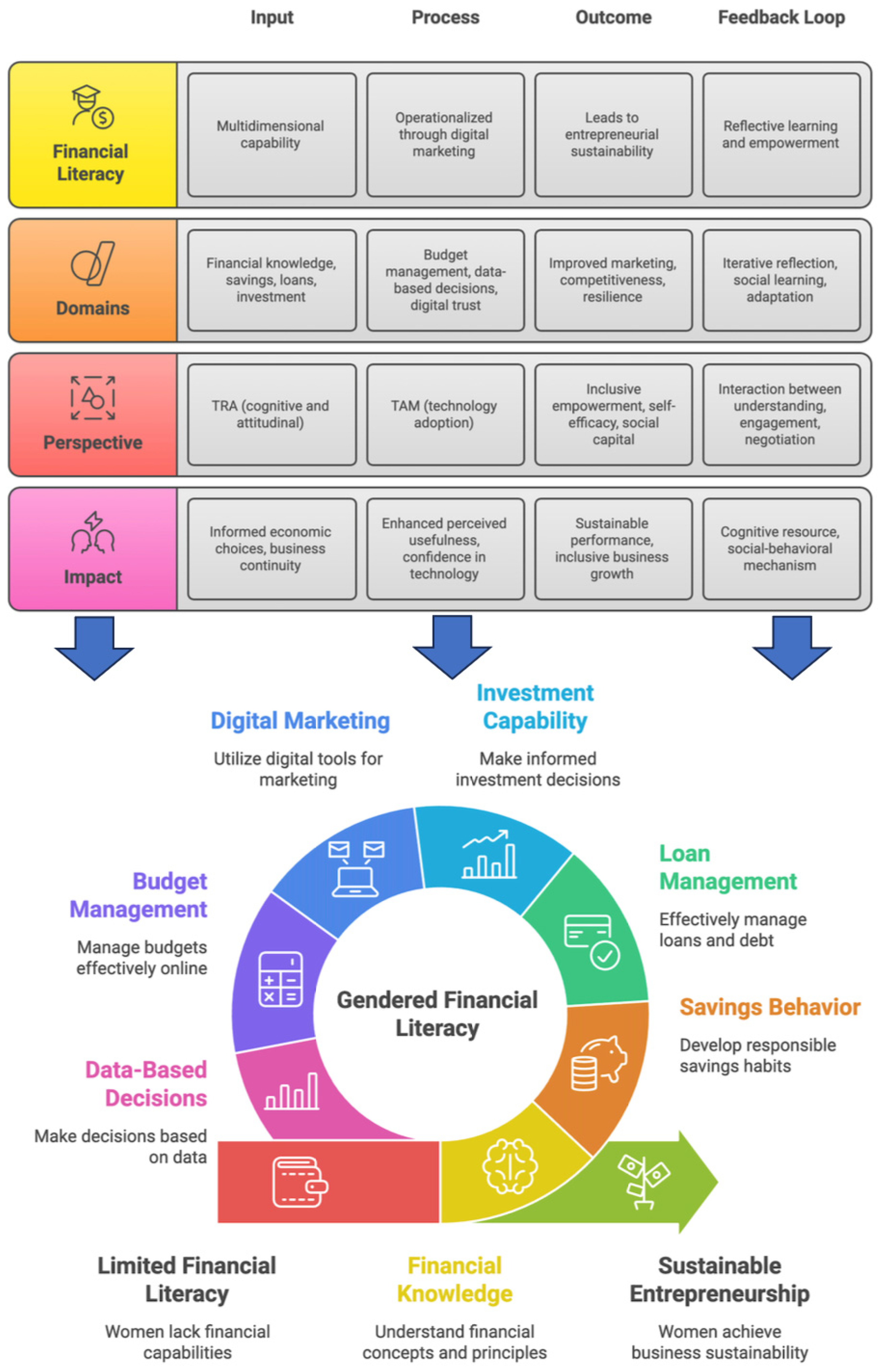
4.4.5. Synthesis: G-FLCM
- Input (TRA perspective): Financial cognition, including knowledge, savings, loans, and investment as attitudinal foundations.
- Process (TAM perspective): Financially grounded digital behavior, where budgeting and decision-making shape technology adoption.
- Output (Sustainability perspective): Financial-digital synergy yielding marketing effectiveness, competitiveness, and business resilience.
4.5. Gendered Financial Literacy Capability Model
5. Discussion and Conclusions
5.1. Integrated Discussion of Findings
5.2. Theoretical Contributions
5.3. Practical Contributions
5.4. Limitations and Future Research
Author Contributions
Funding
Institutional Review Board Statement
Informed Consent Statement
Data Availability Statement
Acknowledgments
Conflicts of Interest
Appendix A. Full Interview Guide and Coding Schema

| Domain | Purpose of Exploration | Guiding Questions |
|---|---|---|
| Financial cognition | To explore women’s basic financial knowledge, reasoning, and daily financial practices. |
|
| Digital trust formation | To understand how women develop trust in digital platforms, financial technologies, and online transactions. |
|
| Constrained agency (Gendered constraints) | To capture social, cultural, and structural constraints that shape financial and digital capability. |
|
| Reflective capability/adaptive learning | To explore how women learn, adapt, and reflect on financial and digital practices. |
|
| Digital marketing practices | To identify how financial literacy translates into digital marketing adoption and adaptation. |
|
| Business sustainability and outcomes | To understand outcomes related to resilience, competitiveness, and long-term sustainability. |
|
| 1st-Order Concepts | 2nd-Order Themes | Aggregate Dimensions |
|---|---|---|
| Daily financial recording; disciplined saving behavior; loan avoidance due to risk; cautious small-scale investment attempts | Financial cognition practices | Financial cognition |
| Trust-building through peer experiences; gradual comfort with digital banking; perceived platform safety; trust in fairness of transactions | Digital trust formation | Digital trust |
| Adjusting ads based on chats or likes; simple monitoring of sales trends; trial-and-error digital promotions; perceived data-based adjustments | Basic analytical orientation | Behavioral intention and analytical adjustment |
| Husband permission for loans; household duties limiting business time; cultural norms discouraging risk; mobility restrictions | Gendered constraints | Constrained agency |
| Learning-by-doing; feedback-driven improvement; reflective evaluation; monthly review of outcomes | Reflective capability | Reflective capability/adaptive learning |
| Adoption of digital platforms; active social media selling; improved competitiveness; stronger customer engagement | Digital entrepreneurship behaviors | Digital entrepreneurship outcomes |
| Stabilized revenue; increased ROI; sustainable operations during uncertainty | Business sustainability indicators | Sustainable business outcomes |
| Helping other women; community sharing; peer mentoring | Community-oriented empowerment | Community empowerment |
References
- Abdallah, W., Harraf, A., Ghura, H., & Abrar, M. (2025). Financial literacy and small and medium enterprises performance: The moderating role of financial access. Journal of Financial Reporting and Accounting, 23(4), 1345–1364. [Google Scholar] [CrossRef] [Scilit]
- Abdelwahed, N. A. A., Bano, S., Al Doghan, M. A., Aljughiman, A. A., Shah, N., & Soomro, B. A. (2025). Empowering women through digital technology: Unraveling the nexus between digital enablers, entrepreneurial orientation and innovations. Equality, Diversity and Inclusion: An International Journal, 44(5), 602–626. [Google Scholar] [CrossRef] [Scilit]
- Agarwal, S., & Lenka, U. (2018). Why research is needed in women entrepreneurship in India: A viewpoint. International Journal of Social Economics, 45(7), 1042–1057. [Google Scholar] [CrossRef] [Scilit]
- Agyapong, D., & Attram, A. B. (2019). Effect of owner-manager’s financial literacy on the performance of SMEs in the Cape Coast Metropolis in Ghana. Journal of Global Entrepreneurship Research, 9(1), 67. [Google Scholar] [CrossRef] [Scilit]
- Agyemang, E. F., & Bokpin, G. A. (2025). Women economic empowerment through digitalization: Analyzing social networks, risk and time preferences. International Journal of Economic Policy Studies, 19(1), 209–230. [Google Scholar] [CrossRef] [Scilit]
- Ajzen, I. (2006). Perceived behavioral control, self-efficacy, locus of control, and the theory of planned behavior. Journal of Applied Social Psychology, 32(4), 665–683. [Google Scholar] [CrossRef] [Scilit]
- Alhajri, A., & Aloud, M. (2024). Female digital entrepreneurship: A structured literature review. International Journal of Entrepreneurial Behavior & Research, 30(2/3), 369–397. [Google Scholar] [CrossRef] [Scilit]
- Alom, K., Rahman, M. Z., Khan, A. I., Akbar, D., Hossain, M. M., Ali, M. A., & Mallick, A. (2025). Digital finance leads women entrepreneurship and poverty mitigation for sustainable development in Bangladesh. Journal of Innovation and Entrepreneurship, 14(1), 34. [Google Scholar] [CrossRef] [Scilit]
- Andriamahery, A., & Qamruzzaman, M. (2022). Do access to finance, technical know-how, and financial literacy offer women empowerment through women’s entrepreneurial development? Frontiers in Psychology, 12, 776844. [Google Scholar] [CrossRef] [Scilit]
- Aryani, Y. A., Mahendrastiti, A. E., Setiawan, D., Arifin, T., & Gantyowati, E. (2024). Women director characteristics and earnings quality: Evidence from banking industry in Indonesia. Cogent Business & Management, 11(1), 2304371. [Google Scholar] [CrossRef] [Scilit]
- Asif, M., & Sarwar, F. (2025). Impact of customer relationship management, financial literacy and social influence on online banking adoption: The moderating role of personal innovativeness. Asia-Pacific Journal of Business Administration, 17(3), 744–764. [Google Scholar] [CrossRef] [Scilit]
- Bandura, A. (1989). Human agency in social cognitive theory. American Psychologist, 44(9), 1175–1184. [Google Scholar] [CrossRef]
- Barone, M., Bussoli, C., & Fattobene, L. (2024). Digital financial consumers’ decision-making: A systematic literature review and integrative framework. International Journal of Bank Marketing, 42(7), 1978–2022. [Google Scholar] [CrossRef] [Scilit]
- Bastian, B. L., Metcalfe, B. D., & Zali, M. R. (2019). Gender inequality: Entrepreneurship development in the MENA region. Sustainability, 11(22), 6472. [Google Scholar] [CrossRef] [Scilit]
- Botha, M., & Taljaard, A. (2021). Exploring the entrepreneurial intention-competency model for nascent entrepreneurs: Insights from a developing country context. Frontiers in Psychology, 12, 516120. [Google Scholar] [CrossRef] [Scilit] [PubMed]
- Bucher-Koenen, T., Lusardi, A., Alessie, R., & Van Rooij, M. (2017). How financially literate are women? An overview and new insights. Journal of Consumer Affairs, 51(2), 255–283. [Google Scholar] [CrossRef] [Scilit]
- Caliskan, A., Özkan Özen, Y. D., & Ozturkoglu, Y. (2021). Digital transformation of traditional marketing business model in new industry era. Journal of Enterprise Information Management, 34(4), 1252–1273. [Google Scholar] [CrossRef] [Scilit]
- Cillo, V., Mazzucchelli, A., Pisano, P., & Graziano, D. (2023). Inside talent management: The strategic role of knowledge sharing and ICT capabilities in MNEs’ performance. European Journal of International Management, 19(4), 614–633. [Google Scholar] [CrossRef] [Scilit]
- Corrêa, V. S., Brito, F. R. D. S., Lima, R. M. D., & Queiroz, M. M. (2022). Female entrepreneurship in emerging and developing countries: A systematic literature review. International Journal of Gender and Entrepreneurship, 14(3), 300–322. [Google Scholar] [CrossRef] [Scilit]
- Creswell, J. W., & Creswell, J. D. (2017). Research design: Qualitative, quantitative, and mixed methods approaches (5th ed.). SAGE Publications. [Google Scholar]
- Cullen, U. (2020). Sociocultural factors as determinants of female entrepreneurs’ business strategies. Journal of Entrepreneurship in Emerging Economies, 12(1), 144–167. [Google Scholar] [CrossRef] [Scilit]
- Davis, F. D. (1989). Perceived usefulness, perceived ease of use, and user acceptance of information technology. MIS Quarterly, 13(3), 319–340. [Google Scholar] [CrossRef] [Scilit]
- Dhahri, S., Slimani, S., & Omri, A. (2021). Behavioral entrepreneurship for achieving the sustainable development goals. Technological Forecasting and Social Change, 165, 120561. [Google Scholar] [CrossRef] [Scilit]
- Eniola, A. A., & Entebang, H. (2017). SME managers and financial literacy. Global Business Review, 18(3), 559–576. [Google Scholar] [CrossRef] [Scilit]
- Esmaeilpour Moghadam, H., & Karami, A. (2023). Financial inclusion through FinTech and women’s financial empowerment. International Journal of Social Economics, 50(8), 1038–1059. [Google Scholar] [CrossRef] [Scilit]
- Fishbein, M., & Ajzen, I. (1975). Belief, attitude, intention and behavior: An introduction to theory and research. Addison-Wesley. [Google Scholar]
- Frimpong, S. E., Agyapong, G., & Agyapong, D. (2022). Financial literacy, access to digital finance and performance of SMEs: Evidence from central region of Ghana. Cogent Economics & Finance, 10(1), 2121356. [Google Scholar] [CrossRef] [Scilit]
- Gefen, D., Karahanna, E., & Straub, D. W. (2003). Trust and TAM in online shopping: An integrated model. MIS Quarterly, 27, 51–90. [Google Scholar] [CrossRef] [Scilit]
- Gioia, D. A., Corley, K. G., & Hamilton, A. L. (2013). Seeking qualitative rigor in inductive research: Notes on the Gioia methodology. Organizational Research Methods, 16(1), 15–31. [Google Scholar] [CrossRef] [Scilit]
- Grant, R. M. (1996). Toward a knowledge-based theory of the firm. Strategic Management Journal, 17(S2), 109–122. [Google Scholar] [CrossRef] [Scilit]
- Graña-Alvarez, R., Lopez-Valeiras, E., Gonzalez-Loureiro, M., & Coronado, F. (2022). Financial literacy in SMEs: A systematic literature review and a framework for further inquiry. Journal of Small Business Management, 62(1), 331–380. [Google Scholar] [CrossRef] [Scilit]
- Guest, G., Namey, E., & Chen, M. (2020). A simple method to assess and report thematic saturation in qualitative research. PLoS ONE, 15(5), e0232076. [Google Scholar] [CrossRef] [Scilit]
- Gupta, N., & Mirchandani, A. (2018). Investigating entrepreneurial success factors of women-owned SMEs in UAE. Management Decision, 56(1), 219–232. [Google Scholar] [CrossRef] [Scilit]
- Gupta, S., Wei, M., Tzempelikos, N., & Shin, M. M. (2024). Women empowerment: Challenges and opportunities for sustainable development goals. Qualitative Market Research: An International Journal, 27(4), 608–630. [Google Scholar] [CrossRef] [Scilit]
- Hasan, M., Jannah, M., Supatminingsih, T., Ahmad, M. I. S., Sangkala, M., Najib, M., & Elpisah. (2024). Understanding the role of financial literacy, entrepreneurial literacy, and digital economic literacy on entrepreneurial creativity and MSMEs success: A knowledge-based view perspective. Cogent Business & Management, 11(1), 2433708. [Google Scholar] [CrossRef] [Scilit]
- Hendriani, S., Efni, Y., & Tiyasiningsih, E. (2019). The effect of knowledge, entrepreneurship motives and the society’s culture in increasing the women micro business performance in Riau province. International Journal of Law and Management, 61(5/6), 563–574. [Google Scholar] [CrossRef] [Scilit]
- Henry, C., Coleman, S., Foss, L., Orser, B. J., & Brush, C. G. (2021). Richness in diversity: Towards more contemporary research conceptualisations of women’s entrepreneurship. International Small Business Journal, 39(7), 609–618. [Google Scholar] [CrossRef] [Scilit]
- Hidayat-ur-Rehman, I. (2025). The role of financial literacy in enhancing firm’s sustainable performance through Fintech adoption: A moderated mediation analysis. International Journal of Innovation Science, 17(4), 754–785. [Google Scholar] [CrossRef] [Scilit]
- Hirata, G., & Soares, R. R. (2020). Competition and the racial wage gap: Evidence from Brazil. Journal of Development Economics, 146, 102519. [Google Scholar] [CrossRef] [Scilit]
- Huang, Y., Zhang, J., Xu, Y., Yuan, Y., Zhang, M., & Huang, L. (2025). Digital entrepreneurial ecosystem and female entrepreneurial activity. Humanities and Social Sciences Communications, 12(1), 162. [Google Scholar] [CrossRef] [Scilit]
- Huston, S. J. (2010). Measuring financial literacy. Journal of Consumer Affairs, 44(2), 296–316. [Google Scholar] [CrossRef] [Scilit]
- Jabeen, R., Khan, K. U., Zain, F., Atlas, F., & Khan, F. (2024). Investigating the impact of social media advertising and risk factors on customer online buying behavior: A trust-based perspective. Future Business Journal, 10(1), 123. [Google Scholar] [CrossRef] [Scilit]
- Jayawarna, D., Marlow, S., & Swail, J. (2021). A gendered life course explanation of the exit decision in the context of household dynamics. Entrepreneurship Theory and Practice, 45(6), 1394–1430. [Google Scholar] [CrossRef] [Scilit]
- Jennings, J. E., Rahman, Z., & Dempsey, D. (2023). Challenging what we think we know: Theory and evidence for questioning common beliefs about the gender gap in entrepreneurial confidence. Entrepreneurship Theory and Practice, 47(2), 369–397. [Google Scholar] [CrossRef] [Scilit]
- Kahneman, D., & Tversky, A. (1984). Choices, values, and frames. American Psychologist, 39(4), 341–350. [Google Scholar] [CrossRef]
- Kakeesh, D. F. (2024). Female entrepreneurship and entrepreneurial ecosystems. Journal of Research in Marketing and Entrepreneurship, 26(3), 485–526. [Google Scholar] [CrossRef] [Scilit]
- Kala Kamdjoug, J. R., Djuitchou Chengo, S. M., & Gueyie, J. P. (2020). Factors affecting the adoption of information technologies by small woman-managed enterprises in Cameroon. Journal of Small Business & Entrepreneurship, 33(4), 433–451. [Google Scholar] [CrossRef] [Scilit]
- Khan, R. U., Salamzadeh, Y., Shah, S. Z. A., & Hussain, M. (2021). Factors affecting women entrepreneurs’ success: A study of small-and medium-sized enterprises in emerging market of Pakistan. Journal of Innovation and Entrepreneurship, 10, 11. [Google Scholar] [CrossRef] [Scilit]
- Kim, K. T., Anderson, S. G., & Seay, M. C. (2019). Financial knowledge and short-term and long-term financial behaviors of millennials in the United States. Journal of Family and Economic Issues, 40, 194–208. [Google Scholar] [CrossRef] [Scilit]
- Klapper, L., & Lusardi, A. (2020). Financial literacy and financial resilience: Evidence from around the world. Financial Management, 49(3), 589–614. [Google Scholar] [CrossRef] [Scilit]
- Kumar, P., Pillai, R., Kumar, N., & Tabash, M. I. (2023). The interplay of skills, digital financial literacy, capability, and autonomy in financial decision making and well-being. Borsa Istanbul Review, 23(1), 169–183. [Google Scholar] [CrossRef] [Scilit]
- Lemaire, S., Gael, B., Haddad, G., Razgallah, M., Maalaoui, A., & Cavallo, F. (2023). Knowledge transfer from and within digital incubators: Does the context of entrepreneurship matter? The case of women entrepreneurs in France. Journal of Knowledge Management, 27(10), 2642–2670. [Google Scholar] [CrossRef] [Scilit]
- Lusardi, A. (2019). Financial literacy and the need for financial education: Evidence and implications. Swiss Journal of Economics and Statistics, 155, 1. [Google Scholar] [CrossRef] [Scilit]
- Lusardi, A., & Mitchell, O. S. (2014). The economic importance of financial literacy: Theory and evidence. American Economic Journal: Journal of Economic Literature, 52(1), 5–44. [Google Scholar] [CrossRef] [Scilit] [PubMed]
- Mahajan, R., & Bandyopadhyay, K. R. (2021). Women entrepreneurship and sustainable development: Select case studies from the sustainable energy sector. Journal of Enterprising Communities: People and Places in the Global Economy, 15(1), 42–75. [Google Scholar] [CrossRef] [Scilit]
- Martinez Dy, A., Jayawarna, D., & Marlow, S. (2024). Racial capitalism and entrepreneurship: An intersectional feminist labour market perspective on UK self-employment. Sociology, 58(5), 1038–1060. [Google Scholar] [CrossRef] [Scilit]
- Martinez Dy, A., Martin, L., & Marlow, S. (2018). Emancipation through digital entrepreneurship? A critical realist analysis. Organization, 25(5), 585–608. [Google Scholar] [CrossRef] [Scilit]
- Maziriri, E. T., Nyagadza, B., & Chuchu, T. (2023). Key innovation abilities on capability and the performance of women entrepreneurs: The role of entrepreneurial education and proactive personality. Business Analyst Journal, 44(2), 53–83. [Google Scholar] [CrossRef] [Scilit]
- Mindra, R., & Moya, M. (2017). Financial self-efficacy: A mediator in advancing financial inclusion. Equality, Diversity and Inclusion: An International Journal, 36(2), 128–149. [Google Scholar] [CrossRef] [Scilit]
- Mishra, D., Agarwal, N., Sharahiley, S., & Kandpal, V. (2024). Digital financial literacy and its impact on financial decision-making of women: Evidence from India. Journal of Risk and Financial Management, 17(10), 468. [Google Scholar] [CrossRef] [Scilit]
- Mousa, M., Shahzad, F., & Misbah Shabana, M. (2024). Digital entrepreneurship among Egyptian women: Autonomy, experience and community. Journal of Small Business and Enterprise Development, 31(7), 1378–1399. [Google Scholar] [CrossRef] [Scilit]
- Mushi, H. M. (2024). Digital marketing strategies and SMEs performance in Tanzania: Insights, impact, and implications. Cogent Business & Management, 11(1), 2415533. [Google Scholar] [CrossRef] [Scilit]
- Nazir, M. A., & Khan, M. R. (2024). Identification of roles and factors influencing the adoption of ICTs in the SMEs of Pakistan by using an extended Technology Acceptance Model (TAM). Innovation and Development, 14(1), 189–215. [Google Scholar] [CrossRef]
- Negi, P., & Jaiswal, A. (2024). Impact of financial literacy on consumer financial behavior: A systematic review and research agenda using TCCM framework. International Journal of Consumer Studies, 48(3), e13053. [Google Scholar] [CrossRef] [Scilit]
- Nonaka, L., Takeuchi, H., & Umemoto, K. (1996). A theory of organizational knowledge creation. International Journal of Technology Management, 11(7–8), 833–845. [Google Scholar] [CrossRef]
- Oggero, N., Rossi, M. C., & Ughetto, E. (2020). Entrepreneurial spirits in women and men. The role of financial literacy and digital skills. Small Business Economics, 55, 313–327. [Google Scholar] [CrossRef] [Scilit]
- Okello Candiya Bongomin, G., Mpeera Ntayi, J., & Akol Malinga, C. (2020). Analyzing the relationship between financial literacy and financial inclusion by microfinance banks in developing countries: Social network theoretical approach. International Journal of Sociology and Social Policy, 40(11/12), 1257–1277. [Google Scholar] [CrossRef] [Scilit]
- Olsson, A. K., & Bernhard, I. (2021). Keeping up the pace of digitalization in small businesses–Women entrepreneurs’ knowledge and use of social media. International Journal of Entrepreneurial Behavior & Research, 27(2), 378–396. [Google Scholar] [CrossRef] [Scilit]
- Pareek, P., & Bagrecha, C. (2017). A thematic analysis of the challenges and work-life balance of women entrepreneurs working in small-scale industries. Vision, 21(4), 461–472. [Google Scholar] [CrossRef] [Scilit]
- Punyatoya, P. (2019). Effects of cognitive and affective trust on online customer behavior. Marketing Intelligence & Planning, 37(1), 80–96. [Google Scholar] [CrossRef] [Scilit]
- Radicic, D., & Petković, S. (2023). Impact of digitalization on technological innovations in small and medium-sized enterprises (SMEs). Technological Forecasting and Social Change, 191, 122474. [Google Scholar] [CrossRef] [Scilit]
- Rai, K., Dua, S., & Yadav, M. (2019). Association of financial attitude, financial behaviour and financial knowledge towards financial literacy: A structural equation modeling approach. FIIB Business Review, 8(1), 51–60. [Google Scholar] [CrossRef] [Scilit]
- Rehman, K., & Mia, M. A. (2024). Determinants of financial literacy: A systematic review and future research directions. Future Business Journal, 10(1), 75. [Google Scholar] [CrossRef] [Scilit]
- Rotman, A., & Mandel, H. (2023). Gender-specific wage structure and the gender wage gap in the US labor market. Social Indicators Research, 165(2), 585–606. [Google Scholar] [CrossRef] [Scilit] [PubMed]
- Salamzadeh, A., Dana, L. P., Ghaffari Feyzabadi, J., Hadizadeh, M., & Eslahi Fatmesari, H. (2024). Digital technology as a disentangling force for women entrepreneurs. World, 5(2), 346–364. [Google Scholar] [CrossRef] [Scilit]
- Saner, R., & Yiu, L. (2019). Jamaica’s development of women entrepreneurship: Challenges and opportunities. Public Administration and Policy, 22(2), 152–172. [Google Scholar] [CrossRef] [Scilit]
- Sarker, T., Roy, R., Yeasmin, S., Rabbany, M. G., & Asaduzzaman, M. (2025). Technology adoption intention and sustainable entrepreneurship ability of rural women in Bangladesh. Business Strategy & Development, 8(1), e70067. [Google Scholar] [CrossRef] [Scilit]
- Sarpong-Kumankoma, E., Ab-Bakar, S., & Akplehey, F. N. (2023). Gender and financial literacy in Ghana. African Journal of Economic and Management Studies, 14(4), 569–582. [Google Scholar] [CrossRef] [Scilit]
- Shehadeh, M., Dawood, H. M., & Hussainey, K. (2025). Digital financial literacy and usage of cashless payments in Jordan: The moderating role of gender. International Journal of Accounting & Information Management, 33(2), 354–382. [Google Scholar] [CrossRef] [Scilit]
- Sherani, Zhang, J., Shehzad, M. U., Ali, S., & Cao, Z. (2025). Unlocking digital innovation: A moderated-mediation approach exploring the knowledge creation processes, IT-enabled capabilities and absorptive capacity in software SMEs. Business Process Management Journal, 31(1), 170–201. [Google Scholar] [CrossRef] [Scilit]
- Showkat, M., Nagina, R., Baba, M. A., & Yahya, A. T. (2024). The impact of financial literacy on women’s economic empowerment: Exploring the mediating role of digital financial services. Cogent Economics & Finance, 13(1), 2440444. [Google Scholar] [CrossRef] [Scilit]
- Skare, M., Gavurova, B., & Kovac, V. (2025). Female entrepreneurship involvement in digital transformation process through perspective of gender employment and pay gaps. International Entrepreneurship and Management Journal, 21, 50. [Google Scholar] [CrossRef] [Scilit]
- Tang, C. S. (2022). Innovative technology and operations for alleviating poverty through women’s economic empowerment. Production and Operations Management, 31(1), 32–45. [Google Scholar] [CrossRef] [Scilit]
- Theresia, S., Sihombing, S. O., & Antonio, F. (2025). From effectuation to empowerment: Unveiling the impact of women entrepreneurs on small and medium enterprises’ performance—Evidence from Indonesia. Administrative Sciences, 15(6), 198. [Google Scholar] [CrossRef] [Scilit]
- Trianto, B., Nik Azman, N. H., & Masrizal, M. (2025). E-payment adoption and utilization among micro-entrepreneurs: A comparative analysis between Indonesia and Malaysia. Journal of Science and Technology Policy Management, 16(2), 314–343. [Google Scholar] [CrossRef] [Scilit]
- Venkatesh, V., & Davis, F. D. (2000). A theoretical extension of the technology acceptance model: Four longitudinal field studies. Management Science, 46(2), 186–204. [Google Scholar] [CrossRef] [Scilit]
- Venkatesh, V., Morris, M. G., Davis, G. B., & Davis, F. D. (2003). User acceptance of information technology: Toward a unified view. MIS Quarterly, 27(3), 425–478. [Google Scholar] [CrossRef] [Scilit]
- Wang, J., Shahzad, F., & Ashraf, S. F. (2023). Elements of information ecosystems stimulating the online consumer behavior: A mediating role of cognitive and affective trust. Telematics and Informatics, 80, 101970. [Google Scholar] [CrossRef] [Scilit]
- Wihardja, M. M., & Pradana, A. T. (2024). Examining the drivers of changes in mean earnings and earnings inequality in Indonesia. Asian Economic Journal, 38(2), 232–255. [Google Scholar] [CrossRef] [Scilit]
- Wulandari, P., & Hj. Kassim, S. (2025). Empowering female entrepreneurs through access to digital microfinance services. International Journal of Gender and Entrepreneurship, 17(2), 245–261. [Google Scholar] [CrossRef] [Scilit]
- Xu, S., & Jiang, K. (2024). Knowledge creates value: The role of financial literacy in entrepreneurial behavior. Humanities and Social Sciences Communications, 11, 679. [Google Scholar] [CrossRef] [Scilit]
- Yadav, U. S., Tripathi, R., Kumar, A., & Shastri, R. K. (2025). Evaluation of factors affecting women artisans as entrepreneurs in the handicraft sector: A study on financial, digital technology factors and developmental strategies about ODOP in Uttar Pradesh to boost economy. Journal of the Knowledge Economy, 16(1), 3663–3716. [Google Scholar] [CrossRef] [Scilit]
- Zahid, R. A., Rafique, S., Khurshid, M., Khan, W., & Ullah, I. (2024). Do women’s financial literacy accelerate financial inclusion? Evidence from Pakistan. Journal of the Knowledge Economy, 15(1), 4315–4337. [Google Scholar] [CrossRef] [Scilit]
- Zahoor, N., Zopiatis, A., Adomako, S., & Lamprinakos, G. (2023). The micro-foundations of digitally transforming SMEs: How digital literacy and technology interact with managerial attributes. Journal of Business Research, 159, 113755. [Google Scholar] [CrossRef] [Scilit]


| No. | Model & Key Sources | Conceptual Description | Limitations/Weaknesses | Empirical Gaps |
|---|---|---|---|---|
| 1 | Traditional Financial Literacy Model (Huston, 2010; Rai et al., 2019; Kim et al., 2019) | Emphasizes three main dimensions of financial literacy: knowledge, attitude, and behavior in financial decision-making. | Neglects social and gender dimensions; overly focused on individual cognitive aspects. | Fails to explain variations in women’s financial experiences in developing countries. |
| 2 | Digital Financial Empowerment Model (Klapper & Lusardi, 2020; Esmaeilpour Moghadam & Karami, 2023; Agyemang & Bokpin, 2025) | Highlights the role of technology and fintech in promoting inclusion and control over financial decisions. | Focuses on technological access without considering women’s social dynamics and reflective adaptation to digital tools. | Does not explain how women’s financial literacy strengthens digital adoption strategies. |
| 3 | Trust and Digital Consumer Behavior Model (Gefen et al., 2003; Punyatoya, 2019; Wang et al., 2023; Jabeen et al., 2024) | Emphasizes the importance of trust in security, credibility, and user experience in digital transactions. | Fails to consider gender bias in digital trust formation. | Lacks explanation of trust formation processes among female entrepreneurs. |
| 4 | Social Influence and Digital Financial Literacy Model (Ajzen, 2006; Bandura, 1989; Okello Candiya Bongomin et al., 2020; Asif & Sarwar, 2025) | Digital financial behavior is influenced by social norms, networks, and communities. | Underemphasizes women’s agency in negotiating social influence and independent decision-making. | Does not link social learning with women’s financial self-efficacy in digital marketing contexts. |
| 5 | Digital Financial Decision-Making Model (Kahneman & Tversky, 1984; Kumar et al., 2023; Barone et al., 2024) | Integrates cognitive and psychological aspects in digital financial decision-making. | Overly; individualistic; neglects social, cultural, and gender factors. | Fails to explain how women’s perception of risk and bias is shaped by social experiences. |
| No. | Concept | Research Focus | Data Source |
|---|---|---|---|
| 1 | Financial literacy | Financial knowledge, financial products, use of digital tools | Key and Supporting Informants |
| 2 | Savings | Saving behavior, strategies, and challenges | Key and Supporting Informants |
| 3 | Loans | Types, risks, and implications of borrowing | Key and Supporting Informants |
| 4 | Investment | Forms of investment, risk perception | Key and Supporting Informants |
| 5 | Digital marketing | Benefits, strategies, and tools used | Key and Supporting Informants |
| Research Question | Thematic Focus | Theoretical Lens | Resulting Proposition |
|---|---|---|---|
| RQ1: What is the level of financial literacy among women entrepreneurs? | Financial cognition, saving behavior, loan management, and investment practices. | TRA—Cognitive and attitudinal foundation for entrepreneurial decision-making. | P1: Financial literacy serves as a cognitive–attitudinal capability shaping prudent financial and digital behavior. |
| RQ2: How is financial literacy implemented in women-managed SMEs? | Operationalization of financial knowledge into marketing budget, digital decision-making, and trust formation. | TAM—Mechanisms of perceived usefulness, perceived ease of use, and digital trust. | P2: Financial literacy enhances the perceived usefulness of digital marketing tools and strengthens decision confidence. |
| RQ3: How can a gender-sensitive financial literacy model explain the adoption of digital marketing among women-led SMEs? | Interaction of financial literacy, digital trust, behavioral intention, and social constraints in shaping adoption and outcomes. | KBV & Feminist Entrepreneurship Theory—Knowledge as strategic capital; agency within gendered constraints. | P3: Gender-sensitive financial literacy mediates the relationship between knowledge, trust, and digital adoption, enhancing business sustainability. |
| Entrepreneurial sustainability and competitiveness outcomes. | Integrated TRA–TAM synthesis with contextual learning and empowerment feedback. | P4: Integration of financial and digital literacy fosters marketing effectiveness, competitiveness, and community empowerment. | |
| Reflective learning and empowerment as recursive mechanisms for model evolution. | Feminist and transformative learning perspectives. | P5: Women’s financial–digital capability evolves through recursive learning, reflection, and empowerment across contexts. |
| Model/Framework | Core Focus | Limitations | Distinct Contribution of G-FLCM |
|---|---|---|---|
| Financial capability frameworks | Individual-level financial knowledge and financial behaviors | Do not explain how financial literacy transforms into digital adoption; minimal attention to gendered sociocultural constraints | Adds a capability-development pathway linking financial cognition → digital trust → reflective behavioral intention → entrepreneurial sustainability |
| Feminist digital entrepreneurship models | Gendered constraints, structural barriers to technology adoption, sociocultural inequalities | Do not articulate mechanisms through which women convert financial understanding into digital capability | Introduces a processual, gender-sensitive mechanism showing how capability develops through negotiation, reflection, and social learning |
| TRA and TAM | Cognitive antecedents of behavior (attitudes, subjective norms, perceived usefulness/ease of use) | Linear, individual-centered; lack gendered negotiation and feedback learning; do not conceptualize literacy as capability | Embeds TRA/TAM inside a non-linear capability framework with social learning, trust formation, and reflective adaptation |
| Knowledge-based view (KBV) | Knowledge as strategic resource; experiential learning | Not gender-sensitive; no linkage between financial knowledge and digital entrepreneurial capability | Reframes financial literacy as a gendered micro-foundation of innovation shaped by sociocultural learning cycles |
| G-FLCM | Financial literacy as a gendered, evolving capability enabling digital adoption and sustainability | Provides the only integrated model uniting cognitive, behavioral, relational, and contextual mechanisms into a single capability sequence |
Disclaimer/Publisher’s Note: The statements, opinions and data contained in all publications are solely those of the individual author(s) and contributor(s) and not of MDPI and/or the editor(s). MDPI and/or the editor(s) disclaim responsibility for any injury to people or property resulting from any ideas, methods, instructions or products referred to in the content. |
© 2025 by the authors. Licensee MDPI, Basel, Switzerland. This article is an open access article distributed under the terms and conditions of the Creative Commons Attribution (CC BY) license.
Share and Cite
Nuraisyiah; Azis, M.; Hasan, M. Gendered Financial Literacy and Digital Marketing Adoption: Insights from Female Entrepreneurs in an Emerging Economy. Adm. Sci. 2026, 16, 11. https://doi.org/10.3390/admsci16010011
Nuraisyiah, Azis M, Hasan M. Gendered Financial Literacy and Digital Marketing Adoption: Insights from Female Entrepreneurs in an Emerging Economy. Administrative Sciences. 2026; 16(1):11. https://doi.org/10.3390/admsci16010011
Chicago/Turabian StyleNuraisyiah, Muhammad Azis, and Muhammad Hasan. 2026. "Gendered Financial Literacy and Digital Marketing Adoption: Insights from Female Entrepreneurs in an Emerging Economy" Administrative Sciences 16, no. 1: 11. https://doi.org/10.3390/admsci16010011
APA StyleNuraisyiah, Azis, M., & Hasan, M. (2026). Gendered Financial Literacy and Digital Marketing Adoption: Insights from Female Entrepreneurs in an Emerging Economy. Administrative Sciences, 16(1), 11. https://doi.org/10.3390/admsci16010011