Systematic Review

Digital Transformation in the Higher Education Sector: A Systematic Literature Review

by
Phuti Alfred Patrick Mabotha
and
Bethuel Sibongiseni Ngcamu
*
Public Administration and Management Department, School of Public and Operations Management, College of Economic and Management Sciences, University of South Africa, Tshwane 0003, South Africa
*
Author to whom correspondence should be addressed.
Adm. Sci. 2026, 16(1), 1; https://doi.org/10.3390/admsci16010001
Submission received: 1 September 2025 / Revised: 20 October 2025 / Accepted: 20 October 2025 / Published: 19 December 2025
(This article belongs to the Special Issue Challenges and Future Trends in Digital Government)

Abstract

In this epoch of the Fourth Industrial Revolution (4IR), digital advancement, technological initiatives, and advancements, as well as their imperative role, have improved universities’ performance and transformed business models, practices, and processes. This study aimed to systematically review the existing digital transformation discourses as the main axis for the higher education (HE) sector. It elucidates the required skill sets, benefits, barriers, and challenges brought about by digital transformation. The article commences by identifying the relevant literature on digital transformation in general, which is not confined to one methodology. It also includes the case studies that were conducted across the globe, the skills needed to drive the transformation agenda, the benefits, the barriers, and the challenges that impede digital transformation in the HE sector. This article found that the sector has been exploiting digital tools to improve performance, business processes, restructuring systems, structures, and practices. The myriad of digital transformation impacts, benefits, and skills to drive the digital transformation have been overshadowed by diverse barriers and challenges in the HE sector. Constraints such as inadequate funding, employee resistance, limited digital literacy, and insufficient infrastructure stand in opposition to the principles of the connectivity theory, which emphasises access, interaction, and the knowledge flow as prerequisites for effective digital integration.

1. Introduction

The present era of the 4IR, with digital transformation (DT) at the forefront, has seen massive benefits, barriers, and disruptive digital technologies with a perpetual influence on the development of flexible and creative business models. According to Abedini-Livari et al. (2020), the digital transformation experienced in the higher education sector (HES) is a result of technological developments, and it was immensely motivated by the requirements of the COVID-19 pandemic. Digital transformation is considered inevitable (Rodríguez-Abitia & Bribiesca-Correa, 2021), and it should be dealt with in a tactical way, considering each institution’s peculiarity (Fernández et al., 2023). This review analysed the impacts of DT and the digital skill set necessary to drive the transformation agenda, benefits, barriers, and challenges in HES. This study questioned whether the barriers and challenges brought by DT impede the massive impacts and benefits post the radical implementation of digital tools in the HES.
Digital transformation in higher education is a journey that evolved from earlier technological integrations (Dmitriev & Dmitrieva, 2020). During the early period of the 21st century, around 2000 and 2005, the higher education focus was largely on integrating information and communication technologies (IT) and the burgeoning e-learning field (Yoke et al., 2020; Aldraiweesh & Alturki, 2023). In that period, the institutions of higher learning, such as universities, were exploring the potential of digital tools to augment traditional instruction and offer online courses (Natuna et al., 2021). During these early stages of technological advancement, concepts such as “computer-assisted instruction” and “learning technologies” were central to the academic discourse (Calamlam, 2020). It was, furthermore, in this period that the internet was specifically regarded and identified as a transformative force that would bring radical changes and deliver non-contact education that would also bring forth the introduction of e-learning (Bembenutty, 2023).
The major improvement in this era was the phasing in as well as increasing the utilisation of virtual learning environments within the higher education sector. The area that was leading at that juncture was the UK around the years 2001 and 2005 (Kovtoniuk et al., 2022). The learning platforms, which were perceived as valuable resources when combined with appropriate teaching strategies like problem-based learning, as well as Blackboard 5, were introduced to support learning and enhance capacity building (Chen et al., 2021; Ifijeh & Yusuf, 2020). During the 1997–2001 period, the adoption of technology to enhance and boost distance education saw rapid growth (Kovtoniuk et al., 2022); furthermore, widespread change in pedagogic practices was not yet universally evident (Chen et al., 2021). The epoch of this era became a crucial recognition of technology’s potential to enhance learning and administrative processes, thereby necessitating an equilibrium between innovation and robust infrastructure to support such transformations (Toapanta et al., 2022). The discourse around ICT’s impact on education was becoming prominent, with observed alterations towards more student-centred learning, with teachers transitioning into facilitators, discouraging memorisation in favour of deeper inquiry and understanding (Chen et al., 2021; Ifijeh & Yusuf, 2020).
Gkrimpizi et al. (2023), as well as Reis and Melão (2023), state that the current era of the 4IR and digital transformation in tertiary education has massive benefits, barriers, and disruptive digital technologies, with a perpetual influence on the development of flexible and creative business models. The impact of these technologies on education has fundamentally altered traditional models and pushed institutions to adapt to new changes (Gkrimpizi et al., 2023). Furthermore, the digital transformation experienced in the higher education sector has been profoundly influenced by disruptive technological developments and immensely motivated by the requirements of the COVID-19 pandemic. Digital transformation is increasingly considered as unavoidable (Alenezi, 2023; Rodríguez-Abitia & Bribiesca-Correa, 2021).
Considering each institution’s unique circumstances, the approach should be universal, but it must infuse the local conditions for effective and efficient utilisation (Mohamed Hashim et al., 2022). This review analysed the impacts of DT, the digital skill sets necessary to drive the transformation agenda (Bouwmans et al., 2024; Rêgo et al., 2024), and the benefits, barriers, and challenges in the HES (Singun, 2025). This study questioned whether the identified barriers and challenges brought by DT impede the massive impacts and benefits post the radical implementation of digital tools in the HES, recognising that despite the belief in DT’s benefits, implementation can be complex and fraught with resistance (Reis & Melão, 2023; Užule & Verina, 2023). Furthermore, the historical context highlighted supra (paragraph 2, page 2) brings forth a critical milieu for understanding the rapid advancements and disruptive changes characteristic of the present era, driven by the 4IR, and highlights the challenges as well as the opportunities experienced around the 2000s, for instance, technological integration hurdles, infrastructural development, and the integration of new tools into existing pedagogies, which, to date, have not disappeared but amplified in scale and complexity within the 4IR landscape.

2. Methods

Procedures, as described by various authors such as Keele (2007) as well as Webster and Watson (2002), have been discussed in recent studies like those by Kabir et al. (2023), Santos and Nakagawa (2022), Hashim et al. (2020), and Varsha et al. (2024). The hermeneutic approach to literature reviews, as described by Boell and Cecez-Kecmanovic, has been applied and referenced in contemporary research (Husain et al., 2022; Maliwichi et al., 2021). These recent works demonstrate the continued influence and application of these foundational methodologies in current academic practice.
A pre-determined review protocol was used to detail methods and to reduce the possibility of researcher bias (Bandara & Syed, 2024; Caldwell & Bennett, 2020; Pérez et al., 2020; Shaheen et al., 2023).
The protocols, as guided by the previous authors, included the rationale, the research questions that the review was attempting to answer, the search strategy, the selection criteria (inclusion and exclusion criteria), the study selection procedures, including the role of assessors, the quality assessment checklists, the data extraction strategy, the synthesis of the extracted data, and the dissemination strategy (Pérez et al., 2020; Shaheen et al., 2023). To refine the research question, a systematic literature review was undertaken to examine topical debates in the higher education sector, with particular focus on the requisite skills for driving digital transformation, as well as the associated benefits, barriers, and challenges. The online searches were performed on highly credible databases, which are highly ranked, as well as cited journals (with high h-indexes) listed on Scopus and the Web of Science (WoS).
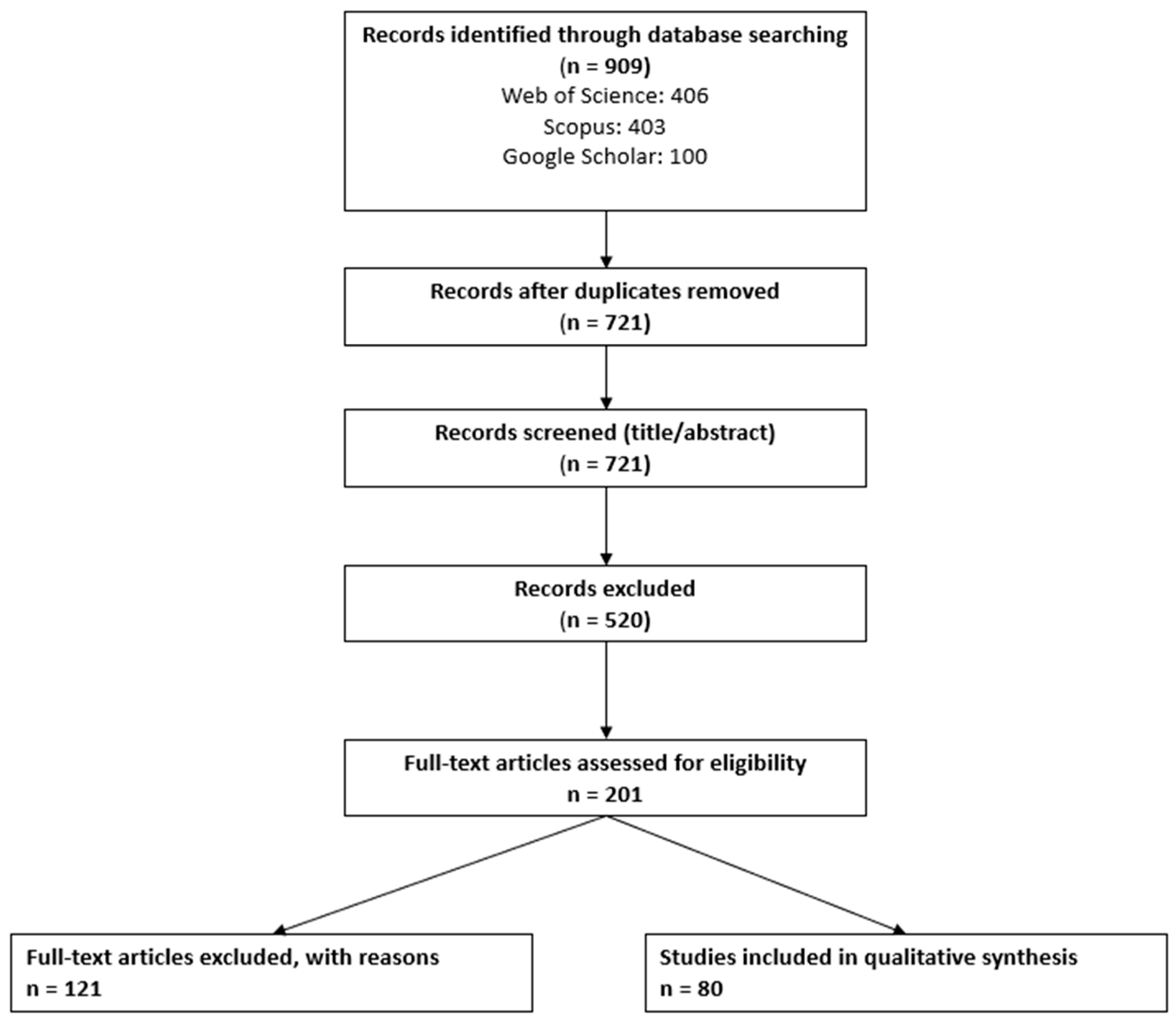
In the search engines, the following keywords were used for the generic search stream created on the 18th of September 2025, and 406 articles were found on the WoS, 403 documents were found on Scopus, and 100 were found on Google Scholar (Refer to Table 1): (TS = (“digital transformation” OR “digital revolution” OR “technological shift” OR “digital evolution” OR “tech modernisation” OR “digital upgrade”) AND TS = (“higher education” OR “tertiary education” OR “post-secondary education” OR “university education” OR “college education” OR “post-school education”)) AND (PY==(“2025” OR “2020” OR “2021” OR “2022” OR “2023” OR “2024”) AND DT==(“ARTICLE” OR “BOOK CHAPTER”) AND LA==(“ENGLISH”) AND OAJ==(“ALL OPEN ACCESS”).
The refined stream yielded a core collection of 324 articles on the 18th of September 2025. Google Scholar yielded 80 documents, Scopus 142, and WOS 102 with the following search stream: (TS = (“digital transformation” OR “digital revolution” OR “technological shift” OR “digital evolution” OR “tech modernization” OR “digital upgrade”) AND TS = (“higher education” OR “tertiary education” OR “post-secondary education” OR “university education” OR “college education” OR “post-school education”)) AND (PY==(“2025” OR “2020” OR “2021” OR “2022” OR “2023” OR “2024”) AND DT==(“ARTICLE” OR “BOOK CHAPTER”) AND LA==(“ENGLISH”) AND OAJ==(“ALL OPEN ACCESS”) AND TASCA==(“EDUCATION EDUCATIONAL RESEARCH” OR “SOCIAL SCIENCES INTERDISCIPLINARY” OR “COMPUTER SCIENCE INTERDISCIPLINARY APPLICATIONS” OR “COMPUTER SCIENCE INFORMATION SYSTEMS”).
  • Breakdown of % reduction by database:
  • WOS: 75% reduction (406 → 102);
  • Scopus: 65% reduction (403 → 142);
  • Google Scholar: 20% reduction (100 → 80).
The literature was searched on three databases, namely, Web of Science, Scopus, and Google Scholar, utilising the generic and refined search strategy. In the generic search stream, the utilised keywords were related to digital transformation and higher education. Figure 1 shows a total number of articles was 909 documents (406 in WOS, 403 in Scopus, and 100 in Google Scholar). For ensuring a more appropriate and synthesised disciplinary focus, a refined search stream was conducted, incorporating TASCA subject categories, namely, Education Research, Social Sciences Interdisciplinary, Computer Science Interdisciplinary Applications, and Computer Science Information Systems. The refined search yielded 324 documents composed of 102 in WOS, 142 in Scopus, and 80 in Google Scholar. The total reduction overall was 64%. Furthermore, the refined dataset was considered more appropriate for systematic analysis, in relation to its capability to capture the literature on education, social sciences, and computer science while filtering out publications that were not focused on this study. In the case of the utilised databases, the inclusion criteria considered articles that were published from 2020 to 2025. The published articles before the period were excluded due to the high volume of the published material available on the mentioned databases.
Secondly, data analysis was conducted using ATLAS.ti, following a systematic coding framework guided by both the research questions and the principles of connectivism. Firstly, a deductive coding scheme was developed, with broad categories such as “digital skills”, “benefits”, “barriers”, and “challenges”, derived from the literature and theoretical constructs of connectivism, with a particular emphasis on knowledge networks, digital interaction, and collaborative learning. Secondly, inductive coding was then applied to capture the emergent concepts that were not anticipated in the initial framework. To ensure reliability, two researchers independently coded a subset of the literature, after which coding discrepancies were discussed and reconciled. Thirdly, the final codebook was refined through an iterative review, ensuring consistency and alignment with theoretical assumptions. Fourthly, emerging themes and patterns were further verified through peer debriefing with independent experts (ICT) specialising in digital learning and teaching, thereby enhancing the credibility, validity, and trustworthiness of the findings.
The Table 2 explains how categories and sub-categories were derived and explicitly tied to connectivism as the guiding theory.
Table 3 reviews and effectively substantiates the Global North/South distinction by revealing a clear imbalance in the reviewed literature. The process pointedly strengthens the argument for the research gaps in the Global South, as shown in the table above. The table demonstrates that the dataset was heavily skewed towards the Global North, with 25 studies focusing on regions such as the USA, UK, and Germany, thereby primarily addressing technological advancement, innovative strategies, and curriculum reform. In contrast, only eight studies were identified from the Global South, covering South Africa, India, Brazil, and Nigeria, with hindrances such as funding constraints, infrastructural gaps, and policy influence. This distribution underscores the observed lack of empirical literature on digital transformation in the Global South and highlights the critical need for more research in these regions, particularly regarding local challenges, effective interventions, and the impact of digital transformation on various stakeholders, which remain largely untested.

3. Results

3.1. Conceptual

Digital transformation has been termed differently by different authors in different disciplines. For instance, during the period 2000 and 2005, the application of information technology in education was often denoted with varied terminology such as “online learning”, “e-learning”, “web-based learning”, “distance learning”, “blockchain”, the “Internet of Things” (IOT), and “cyber learning” (Gong & Ribière, 2021; Elkadi & El Tazi, 2023). Some authors, such as Schmitt et al. (2023) and Sultan et al. (2022), have linked it to business operations harnessing technology to reinvent or improve business performance and expand business. Similarly, some researchers (Sultan et al., 2022; Wu et al., 2021) share similar sentiments that digital transformation is central to institutional change and encapsulates processes, systems, strategies, structures, people, and competitive dynamics by advancing emerging technologies and achieving a competitive edge (Alenezi, 2021; Riedl et al., 2024). Digital transformation is the amalgamation of individual and firm IT conditions, and it encompasses the transformative consequence of the latest digital technologies, such as social, mobile, analytical, cloud, and IoT (SMACIT) technologies (Ziyadin et al., 2020). In this epoch, digital transformation has been considered as a complex phenomenon and an evolutionary process (Hanelt et al., 2021; Kaya & Bozbura, 2023; Pani & Pramanik, 2020; Shahi & Sinha, 2021; Vrana & Singh, 2023; Wu et al., 2021), influencing cultures, processes, people, organisations, and technology that will prepare institutions to compete in the era of the 4IR (Aljanazrah et al., 2022; Costello et al., 2024; Prabowo & Bandur, 2021; Rodríguez-Abitia & Bribiesca-Correa, 2021). Digital transformation can be described as the formation of IT institutional practices and operations (Wu et al., 2021) and as a process involving dramatic and disruptive changes as well as outcomes, leading to the disruption of an organisational environment (Alenezi, 2021). It leverages digital technologies and capabilities as an evolutionary process, yielding positive results by generating value-adding business models (Egodawele et al., 2022), as well as improved and efficient business practices and operations, thus improving service delivery (Ancillai et al., 2023; Apostolov & Coco, 2021; Cennamo et al., 2020; Coskun-Setirek & Tanrıkulu, 2020; Mancuso et al., 2025; Soluk & Kammerlander, 2021).
The crucial term ‘digital transformation’ has been extensively used and applied in scholarly literature in other sectors, with minimal reference to the higher education sector. Furthermore, the effects of digital transformation improving operational efficiency, culture and mindset change, processes, systems, and institutional change have not been precisely and scientifically analysed by scholars in the university sector across the globe. This necessitated a systematic literature review to study the existing concepts and how they show the impacts, outcomes, and barriers to the university sector.

3.2. Theoretical Frame

In the past seven decades, educational technology has been receiving attention in the education sector (Mhlanga et al., 2022), with a host of researchers with an interest in the intellectual processes behind the human learning process coining numerous teachings and technology-oriented learning theories, including cognitivism, constructivism, experiential learning, innovative diffusion, and anchored instruction (Mhlanga et al., 2022; Abu-Rasheed et al., 2023). A plethora of researchers have anchored connectivism theory in providing insights and realities in a global world by facilitating e-learning in a constant and evolving digital way (Abad-Segura et al., 2020). The pertinent role of internet technologies, opening opportunities in teaching and learning and sharing of information (Mhlanga et al., 2022), encourages students to use search engines and social media to connect with external stakeholders during the learning process (Al-Hail, 2025; García-Peñalvo, 2021; Alsayer, 2023). This systematic review study was informed by the connectivism theory, as it is guided by technology, and it intended to analyse the theoretical dimensions and realities of digital transformation, as well as the essential skills and competencies to drive the digital agenda in the higher education sector. The inherent nature of the connectivism theory, as a newly invented learning theory, is influenced immensely by technology, as coined by Siemens in 2004, which has become known as the theory of the digital era (Chen & Xu, 2022). Using the lens of the connectivism theory, various constructs, including digital transformation in HEIs, are the essential skills required to drive digital transformation, global studies, benefits, barriers, and challenges, and these were systematically reviewed and analysed in this study.

3.3. Digital Transformation in a Global Arena: Prospects and Challenges

The emerging digital technologies have been exploited as well as embraced by universities and have gained momentum, with an intent to improve performance, transforming processes, practices, models, and the adoption of a technologically savvy society (Alenezi, 2021; Rodríguez-Abitia & Bribiesca-Correa, 2021). In HEIs, digital transformation presents some challenges that impede the development of digital processes that might be considered when defining policies and strategies (Iivari et al., 2020; Rodríguez-Abitia & Bribiesca-Correa, 2021). The radical changes that result in digital transformation in the HEI sector encapsulate the transfer of scientific and technological knowledge (Alenezi, 2023; Díaz-Suárez et al., 2025; Gkrimpizi et al., 2023), as well as transferring analytical and professional skills (Filatova et al., 2020; Palacios-Rodríguez et al., 2023; Razinkina et al., 2021). Furthermore, it contributes to new strategic options using policies and plans to respond to the new demands of the labour market that have been brought by ICT to HEIs (Akour & Alenezi, 2022; Benavides et al., 2020; Mohamed Hashim et al., 2022) and newly invented business models to respond to internal and external stakeholder needs (Díaz-García et al., 2022; Bashir & Lapshun, 2025).
The European policy-making innovations in HEIs have been influenced by the impact of digital transformation and permeated by the prospects of technological advancement and 4IR (Benavides et al., 2020; Vicente et al., 2020). In countries like Portugal, individual HEIs have made concerted efforts to digitalise institutions rather than be influenced by policy-making processes (Díaz-Suárez et al., 2025), including “Bologna Digital” (Mischenko & Quadrado, 2020) and a digital education action plan (Alvarez-Blanco et al., 2023).
A plethora of disruptions, mostly observed in the Global South, radical reforms, and innovations, coupled with the disruptive force of the digital revolution, have changed the HES landscape, including online courses (MOOCs), massive open models and free education, blended learning, and collaborative models, mostly in elite universities (Maatuk et al., 2022; Shoaib et al., 2023). In developed countries such as Australia, the digital revolution has been compounded by funding cuts and proposed reforms to the university funding model. Digital transformation capability, a lack of holistic vision, and data structure and processing were found in a study by Marks and Al-Ali (2022) conducted in the United Arab Emirates HEIs, which investigated the role of digital transformation. In Russia, new technological advancements with new formats of education have led to new important restructuring and challenges, and the transformation of universities has been without the state’s intervention (Abedini-Livari et al., 2020).

3.4. Skills and Digital Transformation

In the 21st century, the workforce does not stay in one organisation during their career span (Mahlow, 2023). Therefore, universities should ensure that students are prepared for continuous learning and development through employability and technical and programming skills to survive in the labour market for the next 30 to 40 years (Alenezi, 2021). Though such digital skills have not been limited to technology, digital learning, in particular, has been observed as enhancing pedagogical approaches, thus increasing the quality of learning and the remote exchanges of information and cooperation (Kieu, 2023; Aris et al., 2022). Hence, it is essential that self-sufficient adaptive thinking (Chappell & Hager, 2020), cognitive and computational skills, and data analytics be acquired by employees in the area of information technology. The latter can be accomplished through digital transformation, playing an important role in contextualising learning with a “critical-thinking” and “abstract-thinking” model (Benavides et al., 2020; Hashim et al., 2020). The digital transformation of higher education institutions should not be limited to the adoption of advanced digital tools (Alenezi, 2021), as it should equip learners with digitisation skills rather than focusing on supporting the learning processes with technology (Kurbakova et al., 2021) and enriching traditional pedagogical approaches and education systems through digital tools (Aravena et al., 2020). The innovation driven by HEIs encapsulates various dimensions, which include human capital and the skill development of both students and employees, locally relevant research and development activities, exchanging knowledge by engaging with external stakeholders and the availability of digital technology (Aravena et al., 2020) and digital technology shaping HEIs (Posselt et al., 2019). However, soft- and hard-core skill competencies have not been scientifically tested by scholars on how students and graduates have adapted to the workplace environment, with the benefits, weaknesses, and strengths gleaned from the applied digital skills and tools.

3.5. Benefits of Digital Transformation

The significance of digital transformation at the macro level in HE sectors includes the adoption of digital transformation to innovate, improve service delivery and the education system, meet international standards, adhere to policies and standards, and support students with advanced learning mechanisms and knowledge delivery aspects that are tailored to the curriculum (Alenezi, 2021). In Latin American countries such as Chile, higher education institutions have established digital transformation to be multi-perspectival and multi-dimensional in response to the needs of various interest groups in the economic, social, environmental, and cultural arenas (País et al., 2024; Antón-Sancho et al., 2024). In terms of the cultural dimension, Rodríguez-Abitia and Bribiesca-Correa (2021) posit that through digital transformation, knowledge becomes a trade-off between action and inquiry, which is composed of connections and networked entities. Furthermore, universities as knowledge-intensive institutions have a national imperative and strategic role to play in generating technological knowledge transferable to the industry, which can bring economic growth, social cohesion and social growth, values, and development to society, consumers, and clients (Tijssen et al., 2021).
The economic benefits brought about by digital transformation are pertinent in the HES as they improve efficient operating processes (Gkrimpizi et al., 2023), encourage profitable business models, lower the cost of exchanging information, enhance the value proposition, and introduce automated processes by selecting talented students and researchers in accordance with sustainable management (Mohamed Hashim et al., 2022; Rodríguez-Abitia & Bribiesca-Correa, 2021; Rof Bertrans et al., 2020).
Socially, digital transformation integrates digital technologies into learning, teaching, and institutional practices, as well as improving students’ experience and lifestyle (Valdés et al., 2021). Putri et al. (2023) link effective knowledge transfer to survivability, increased productivity, and giving a competitive advantage (Valdés et al., 2021). Conversely, the failure to cooperate and collaborate may lead to failure to transfer knowledge (Rodgers et al., 2020). Digital tools should make sure that supporting the learning of students with digital transformation at the centre ensures that the production and processing of knowledge occur through information technologies such as online learning video integration, virtual reality, big data, and gamification (Murillo-Zamorano et al., 2021; Riega-Virú & Vargas-Murillo, 2025; Aguiar-Castillo et al., 2020). Furthermore, the benefits of digital transformation in the HES have been exemplified by attracting better students, improving teaching materials and courses, detecting training obstacles and reducing dropouts, training processes, and developing and nurturing demand-driven digital and technical skills (Murillo-Zamorano et al., 2021; Riega-Virú & Vargas-Murillo, 2025; Zeleza & Okanda, 2021).
Digital technologies can transform a plethora of dimensions, including the usage of tools that respond to educational techniques and standards (Alenezi, 2023), thus impacting curricula, organisation, and structure (Molina et al., 2021). They further provide new roles and responsibilities to academics, researchers, and learners, thereby increasing more engaged, interactive, and stimulating methods of teaching and learning (Djibran et al., 2024), as well as establishing digital skills and curriculum modernisation (Djibran et al., 2024; Nkomo et al., 2021; Qolamani & Mohammed, 2023). Digital transformation also equips employees with the technological skills, expertise, and contemporary knowledge that are essential and in demand in this era (Djibran et al., 2024); prepares students to be employable and equips them with technical and instructional advice (Nkomo et al., 2021); and adds value to the digital transformation of the administrative architecture, which results in an agile and flexible architecture with management who can adapt effectively and efficiently to the emerging technological systems (Murillo-Zamorano et al., 2021). Lastly, it makes data-driven, proactive, and informed decisions and the management of student data and curricula possible, innovates their management experiences (Estermann et al., 2020), and enables digital learning, as it tends to cause various learning experiences and improves teaching materials and training processes (Rodríguez-Abitia & Bribiesca-Correa, 2021).
Numerous researchers have cited different advantages of digital teaching that include designing examinations to meet legal requirements, avoiding technical problems (Valdés et al., 2021), and flexibility for both teachers and learners (Orellana et al., 2019). Other scholars have mentioned the valuable information that digital teaching eliminates commutes for students and lecturers, thereby saving time (Sultan et al., 2022). While the sustainable digitisation of research is notable, progress is slow (Mahlow, 2023). Equally, the risks associated with digitalisation have been cited as including increased consumption of raw materials (Estermann et al., 2020), an increase in the consumption of resources and the disposal of digital devices (Estermann et al., 2020), an increase in greenhouse gas emissions (Mabalane Junior, 2025; Omar & Abdullahi, 2024), and increased electricity demands (Omar & Abdullahi, 2024). Inadequacy in preparing for overcoming barriers, the lack of understanding of barriers, and failure to design as well as implement digital transformation make it difficult to formulate relevant transformation strategies. In addition, learning can be attained in the digital transformation era individually and socially to support diverse ideas (Mpungose, 2020), which is the opposite of traditional learning methods, although learning can happen, provided that internet connectivity and technology are available on campuses and in homes. While the benefits of digital transformation in the HES are mainly about the effective transfer and sharing of knowledge, as well as improving the curricula and the teaching and learning process, there is a paucity of data on the benefits to the industry, society, and teaching staff.

3.6. Barriers to Transformation

While strides have been made with regard to the planning and implementation of digital transformation across the globe, a myriad of barriers have hampered the gains made in previous years. In the Indonesian higher education sector, 22 barriers to the implementation of digital transformation were identified that were classified into nine groups, which included strategy and policy, leadership, knowledge technology, vision, resources, digital skills, resistance to change, technology, and government and economics (Aditya et al., 2021). The authors categorised the previous barriers to digital transformation as social, contextual, technical, and cultural barriers. Similarly, there are various main, strategic, high-level challenges that act as obstacles while adopting digital transformation in the higher education sector (Alhubaishy & Aljuhani, 2021; Gkrimpizi et al., 2023; Saini et al., 2025; Singun, 2025; Smith & Beretta, 2021). These high-level challenges include prioritisation (prioritising immediate results); decentralised decision making (which may cause delays in the implementation of the large-scale projects), and human resistance to change (adjusting to new teaching and learning methods and models). In South Africa, an abrupt change to online learning brought by the COVID-19 pandemic increased universities’ reliance on digital technologies (Denhere & Moloi, 2021) while bringing to the fore deficiencies (Weeden & Cornwell, 2020), with strategic planning (Bond et al., 2018) for the sector being understudied and academic staff members’ existing constraints to digital innovation being overlooked (Vicente et al., 2020). Rodríguez-Abitia and Bribiesca-Correa (2021), who assessed the level of maturity in the HEI sector regarding digital transformation and compared it with other sectors, revealed the university sector as lagging behind due to an inadequate degree of innovation and financial support, effective leadership, and cultural changes. There are both technological and non-technological factors linked to the failure or success of digital strategy in an organisation, which include organisation silos; legal and regulatory implications; the lack of data to justify the value of digital transformation; the culture and internal organisation; the organisational resistance to change; the understanding of the behaviour or impact of customers; lack of resources and budget; and lack of competencies and digital literacy (Hafsi & Assar, 2016). Alenezi (2021) posited that the most crucial barrier to digital transformation is fed by the generation gap of native students, which emanates from decentralised decision making, short-term outcomes, insufficient prioritisation of investments, the digital literacy of academic staff members, and internal resistance.
Some of the challenges or barriers to digital transformation include the lack of organisational, technical, legal, and user-related perspectives to ensure a consistent flow of information across digital services (Gkrimpizi et al., 2023; Singun, 2025). Gkrimpizi and Peristeras (2022) mention fragmentation and diversity of data as some of the challenges with regard to digital transformation in the higher education sector. In countries such as Saudi Arabia, some researchers such as (Alhubaishy & Aljuhani, 2021) focused on examining the non-technical challenges to implementing digital transformation in the category of students and academic professors. The analyses by previous authors were categorised into cognitive, behavioural, and affective barriers. Early identification of barriers can allow decision-makers to take appropriate and coordinated countermeasures (Gkrimpizi & Peristeras, 2022).
Table 4 describes and provides adequate information on the distribution of the reviewed studies across Global North and Global South contexts, and it presents a critical overview of the geographical focus as well as the thematic concentration within the systematic review. It categorises 37 reviewed studies into Global North, Global South, and mixed/comparative contexts. Notably, the dataset exhibits a significant imbalance, with 25 studies (approximately 67.6%) originating from the Global North, covering regions such as the USA, UK, Germany, Finland, and Spain. These studies predominantly focused on technological advancement, innovative strategies, service delivery, and curriculum reform. In stark contrast, only eight studies (approximately 21.6%) are from the Global South, representing countries like South Africa, India, Brazil, and Nigeria, with key focus areas often revolving around funding constraints, infrastructural gaps, policy influence, and capacity challenges. A smaller proportion of four studies (10.8%) fell into the mixed/comparative category, engaging in cross-regional analyses. This pronounced disparity in the research distribution strongly substantiates the review’s assertion of a Global North dominance in the literature and underscores the significant empirical research gaps pertaining to digital transformation in higher education within the Global South. The differing thematic foci further highlight the distinct challenges and advancements experienced in these varied regional contexts.

4. Discussion

4.1. Digital Transformation

The systematically reviewed literature reveals similar themes and patterns regarding the characteristics of digital transformation, which are linked to performance improvement, as well as business processes and models, with practices and restructuring being conspicuous to the universities in the Global North that have responded to the technologically savvy society and are responsive to both internal and external stakeholder needs and challenges (Alenezi, 2021; Rodríguez-Abitia & Bribiesca-Correa, 2021; Díaz-García et al., 2022; Abedini-Livari et al., 2020). The Global North scholars have, through empirical studies, documented technological advancement and 4IR prospects (Benavides et al., 2020; Vicente et al., 2020), highlighted innovative strategies to improve the education system and service delivery, adhered to international standards, advanced learning methods, and scientific and technological knowledge transfer that is aligned to the curricula (Zahedi, 2024; Jin et al., 2024; Alenezi, 2021; Razinkina et al., 2021). While other notable studies have reservations about the sustainability of digital transformation in HE sectors, others cite funding cuts, inadequacy regarding digital transformation capability, and the lack of broad institutional vision, data structure, and processing (Marks & Al-Ali, 2022).

4.2. Skill Set

Common themes have emerged on the impact of digital transformation through digital learning that prepare students through continuous learning to attain digitisation and employability skills supported by technology (Alenezi, 2021; Epler & Jacobs, 2022; Susanto & Nurtamam, 2024). Digital learning tools have been seen to enhance the traditional pedagogical approaches and education system, thus increasing the quality of learning and open distance exchanges of information and cooperation (Singh & Datt, 2020; Sevnarayan, 2023). The most common soft (problem solving, creative thinking, and creative thinking), technical (computational skills and data analytics), and cognitive skills, including cross-cultural competencies and agile working skills, are said to be attained through digital learning processes (Alenezi, 2021).

4.3. Benefits

Fanea-Ivanovici and Pană (2020) opined that digital transformation has benefitted a host of interest groups in the economic, social, environmental and cultural spheres. The literature has shown the benefits for students extensively, namely, knowledge transfer, improved education methods and mechanisms, and enhanced innovative strategies. For instance, digital technologies in learning have been found to have improved students’ experience and well-being (Valdés et al., 2021) and have enhanced the technological transfer that is used in the industry, which impacts socio-economic growth (Mofam et al., 2023). Furthermore, the transfer of knowledge through online learning has been linked to productivity, a competitive edge, and the production and processing of knowledge (Kamel, 2021; Giannakos et al., 2022).
Researchers have unearthed a host of digital transformation benefits in the HES, which include the techniques and standards being invented (Chugh et al., 2023; Al-Saudi & Flayyih, 2024), and the academics’ and researchers’ new roles and responsibilities being introduced, which have enhanced more engaged, interactive, and simulated methods of teaching and learning (Cabrera-Duffaut et al., 2024; Almasri, 2024). In addition, digital skills and curriculum modernisation (Alenezi, 2023; Mabalane Junior, 2025), capacitating academics with technical and instructional methods, and improvements in the learning and teaching materials and training process (Rodríguez-Abitia & Bribiesca-Correa, 2021) have been experienced in the HES.

4.4. Barriers to Digital Transformation

The literature reveals common themes in terms of the barriers to digital transformation, which are based on internal resistance, lack of digital skills, culture, decision making, and lack of funding and innovation (Aditya et al., 2021). The lack of digital innovations amongst employees in the HE sector being overlooked (Vicente-Saez et al., 2020), silo mentality, inadequate existence of data to justify the value of digital transformation, resistance to change, lack of funding, competencies, and increased digital illiteracy (Akaraeen & Al-Ashaab, 2021) have been mentioned as some of the barriers to digital transformation. This has resulted directly from the shortage of skills to understand and prepare for overcoming the design and implementation of digital transformation barriers and the lack of digital infrastructure, weak governance, and resources in HE sectors, and has been behind the slow progress in the realisation of the digital transformation agenda.
The empirical literature on digital transformation in the Global South is lacking, though there are concerted efforts by governments to influence HE sectors to increase technological advancement on campuses and digitalise university operations, systems, processes, learning, and teaching, as well as research. The lack of perception studies on the satisfaction and effects of academic and non-academic staff members, as well as students, is disturbing, as digital transformation remains untested. Another gap in the literature is a failure to shed light on the extent and inputs of performance improvement and productivity, restructuring, systems, and structures, as well as curricula reform, and their conversion to socio-economic benefits brought by digital transformation in the university sector. The widely shared challenges in digital capabilities amongst staff members and students have been discussed without providing scientific evidence on the interventions and initiatives to fill the void.
There are contradictions in the literature depicting how digital transformation enhances students’ soft and technical skills, although one of the barriers mentioned is the inadequate capability to apply digital tools in HE sectors by staff members and students. Furthermore, the literature has failed to provide scientific evidence on how blended learning and teaching between traditional pedagogy and digital transformation have contributed to the development of the skills of learners. These silent data on the salient matter of how such blending has contributed to the personal development of both staff members and students are missing in the existing literature.
The benefits of digital transformation in universities are commended, though it is unclear how they have changed the workload for the workforce, and the case studies on the legal implications of such reported radical changes are missing. Similarly, the risks associated with such innovations and agile business processes, systems, practices, and structures that are influenced by digital transformation are missing in the literature.
In view of the above, the host of barriers to digital transformation in HE sectors overshadows the gains of digitalising university operations and scholarships, with programmes, interventions, and initiatives to counter the barriers missing in the literature. Furthermore, the systematically reviewed literature advances the research field by offering a comprehensive understanding of digital transformation in higher education by consolidating recurring themes in relation to characteristics, performance improvements, and alignment with global North universities, and methodically outlines the subsequent benefits, which, amongst others, include the invention of new techniques and standards like personalised learning and immersive technologies that include the evolution of academics’ roles into facilitators and technology integrators.
This review further clarifies the critical importance of developing specific digital skill sets and modernising the curricula to prepare students for the digital era. Moreover, the systematically identified barriers include the lack of digital innovation, funding, and cultural resistance. This research discloses an important gap regarding the empirical evidence of effective interventions, the nuanced impact of blended learning on skill development, and the overlooked aspects of workload changes and legal implications, in so doing, charting a clear and focused agenda for future academic inquiry.
Practitioners can leverage these findings to strategically implement digital transformation, focusing on holistic organisational change, proactive barrier mitigation, like digital illiteracy and resistance, and developing targeted interventions informed by a clear institutional vision. For scholars, the identified research gaps explicitly direct future inquiry towards empirical studies on effective interventions, a deeper understanding of the impact of blended learning on skill development, and comprehensive stakeholder perception studies, particularly in under-researched contexts like the Global South. This synthesis contributes a nuanced understanding of digital transformation’s evolution from early ICT integration to a complex multidisciplinary concept within 4IR, highlighting the necessity for context-specific strategies to address diverse regional challenges. Ultimately, this work enriches academic discourse by providing a structured overview of digital transformation’s benefits, barriers, and evolving academic roles, while also establishing a robust agenda for future research to fill critical evidential voids in higher education.

4.5. Operationalising Connectivity Theory

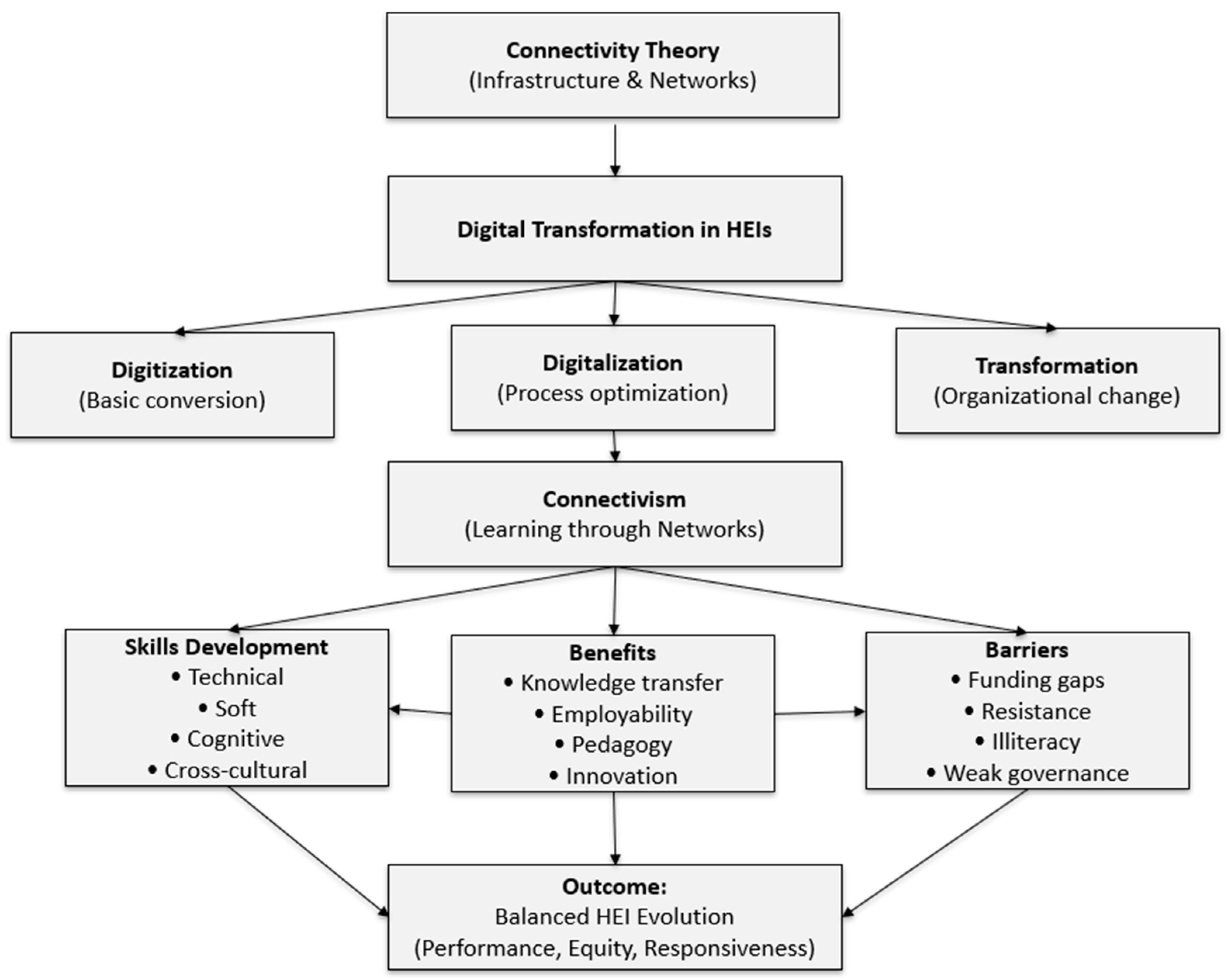
Figure 2 demonstrates how digital transformation in higher education is put into practice through the connectivity theory and connectivism. Cogently, the connectivity theory emphasises the importance of infrastructure and technical networks that affect changes to take place. In the process, there are three digital change types, namely, digitisation, which is ‘changing analogue to digital’, digitalisation, which ‘makes the processes work better’, and full digital transformation, which ‘changes the way an organisation works. These processes shape learning in networks through connectivism, which leads to skills development through technical, soft, cognitive, and cross-cultural aspects that create the benefits of knowledge transfer, employability, and innovative pedagogy, and face the barriers of funding gaps, resistance, digital illiteracy, and weak governance. The combination of these aspects results in the overall outcome of balanced HEI evolution, characterised by enhanced performance, equity, and responsiveness to stakeholders.
  • Coding Framework
Table 5 presents the coding framework derived from the systematic review of 80 studies on digital transformation in higher education, making explicit the thematic categories, sub-themes, and regional distribution of the evidence. The findings indicate that digital skills represent the most prevalent theme (62 studies), reflecting the centrality of technical, cognitive, and cross-cultural competencies in shaping institutional readiness for transformation. Benefits were also widely emphasised (58 studies), particularly within Global North contexts where stable infrastructure and funding supported curriculum modernisation and improved student outcomes. In contrast, the barriers (54 studies) were most evident in Global South studies, highlighting persistent challenges, such as resource scarcity, governance limitations, and infrastructural deficits. The challenges (41 studies) and emerging themes (37 studies), including equity concerns, workload distribution, and shifting academic roles, further illustrate the systemic and cultural dimensions of digital transformation.
The regional balance of studies (42 in the Global North and 38 in the Global South) demonstrates the global relevance of digital transformation while underscoring the uneven conditions under which it unfolds. From a connectivist perspective, the framework reveals how opportunities to form and sustain digital learning networks are shaped by material realities, with inequitable infrastructures in the Global South limiting participation. This unevenness carries important policy implications, suggesting that digital transformation cannot be achieved through technological investment alone but requires systemic interventions addressing governance, sustainability, and equity. By articulating how themes were derived and interpreted, the coding framework enhances methodological transparency, links empirical patterns to theoretical insights, and contributes to a more nuanced understanding of the digital transformation of higher education across diverse contexts.
  • Evidence Mapping
Table 6 confirms that digital transformation in higher education is globally relevant yet unevenly experienced across regions. Studies from the Global North (n = 42) concentrated on digital skills and curriculum modernisation, reflecting contexts where infrastructure and funding are comparatively stable. In contrast, Global South studies (n = 38) foregrounded barriers such as resource scarcity, governance challenges, and infrastructural gaps, which often constrain the full realisation of digital initiatives. Across both regions, emerging themes (particularly equity concerns), increased academic workload, and the shifting role of lecturers, illustrate how digital transformation reconfigures teaching and learning networks. Viewed through the lens of connectivism, these findings highlight that access to and participation in digital knowledge networks remain stratified by material conditions and institutional capacities. The Global North–South split, therefore, underscores the need for policy frameworks that move beyond technological provision to address systemic inequalities, ensuring that digital transformation enhances, rather than reproduces, global disparities in higher education.
These insights directly informed the research question by illustrating how the interplay of skills, benefits, barriers, and challenges shapes the uneven trajectory of digital transformation across higher education systems globally.

5. Conclusions

This study sought to investigate the existing literature debates on digital transformation in the HE sectors in the Global North and South, alongside an examination of the skill sets, benefits, and barriers brought by this transformation. This study established that common themes define digital transformation in line with performance improvement, smooth business processes, restructuring, systems, and practices, predominantly observed in the Global North. However, a range of challenges, including funding cuts, limited digital transformation capabilities, and a lack of clear institutional vision, frequently pose significant impediments to the full realisation of technological advancements and 4IR inroads. These challenges can then hinder the effective implementation of principles aligned with the connectivism theory by Siemens (2004), which facilitates e-learning and open teaching and learning, thereby affecting the application of digital tools in these contexts.
This study also found digitalisation and employability skills to support both traditional and digital learning approaches, impacting students’ socio-economic, cultural, and environmental benefits. However, comparable benefits have not been consistently observed or documented for academic and non-academic staff members. The positive intentions and strides brought by digital transformation in HE sectors are met by a multiplicity of barriers, as displayed in the existing literature. According to the results, these barriers mainly include employee resistance, a lack of digital knowledge, skills, and innovations, and a culture of traditional business operations that contrasts with the new norm of digitalisation. The latter barriers are compounded by inadequate digital infrastructure, governance mechanisms, and funding. The barriers, as shown in the existing literature, often highlight factors that can significantly restrict the widespread adoption of collaborative information sharing and the active utilisation of social media platforms and search engines by students, which are central tenets of the connectivism theory.
It is recommended that business processes should be mapped, universities’ existing set-up must be restructured, strategic plans must be realigned, and universities must embark on a radical re-curriculation of programmes so that they are aligned with the demands of digital transformation. The new literature should empirically focus on identifying the digital deficiencies of teaching and non-teaching staff members, showing academic performance and productivity, well-being, learning and teaching, research, and engaged scholarship for students. It is noted that the published study results show that university leaders should allocate sufficient budgets to initiatives and projects that will drive the digital transformation agenda, which will directly empower all university stakeholders with the relevant skills and improve governance mechanisms, infrastructural development, and institutional cultural change.
While this article reviewed the literature holistically, the primary limitation was the dominance of studies originating from the Global North, potentially leading to a one-sided perception of digital transformation. Furthermore, the reviewed literature was inherently constrained by the available published research, which overlooked undocumented emerging practices, particularly in regions that are less researched, such as the Global South, where significant hurdles persist due to funding hindrances, infrastructure, and policy implementation. The rapid evolution of digital technologies further presents a temporal limitation for most literature-based studies. Moving from these points, future research is strongly encouraged to undertake empirical investigations, specifically within higher education institutions in the Global South, to assess their unique challenges and opportunities, exploring the effective application of connectivism theory. Furthermore, there is a perilous need for more scientific evidence on interventions, particularly quantitative and qualitative assessments of digital transformation’s impact on academic and non-academic staff’s productivity, well-being, existence, and skill development, and comprehensive stakeholder perception studies. The mentioned endeavours will seal existing emblematic voids and update the effective digital transformation strategies.

Author Contributions

Conceptualization, P.A.P.M. and B.S.N.; methodology, P.A.P.M. and B.S.N.; software, P.A.P.M. and B.S.N.; validation, P.A.P.M. and B.S.N.; formal analysis, P.A.P.M. and B.S.N.; investigation, P.A.P.M. and B.S.N.; resources, P.A.P.M. and B.S.N.; data curation, P.A.P.M. and B.S.N.; writing—original draft preparation, P.A.P.M. and B.S.N.; writing—review and editing, B.S.N.; visualization, P.A.P.M. and B.S.N.; supervision, B.S.N.; project administration, B.S.N.; funding acquisition, N/A. All authors have read and agreed to the published version of the manuscript.

Funding

This research received no external funding.

Institutional Review Board Statement

Not applicable.

Informed Consent Statement

Not applicable.

Data Availability Statement

The data that support the findings of this study are available from the corresponding author, [B.S.N.], upon reasonable request.

Conflicts of Interest

The authors declare no conflict of interest.

Abbreviations

The glossary and alignment of the core concepts in digital transformation research are presented. The table provides the definitions adapted from the systematic literature review sources and the applications contextualised to this study.
TermDefinitionApplication in Paper
DigitisationConversion of analogue information into digital format.Referenced in relation to basic IT adoption (scanning and storing data).
DigitalisationIntegration of digital technologies to improve existing processes and services.Highlighted in HE practices where technology enhances efficiency.
Digital transformationHolistic organisational change enabled by digital technologies, reshaping culture, strategy, and operations.Core axis of analysis: universities restructure models, curricula, and stakeholder engagement.
Connectivity theoryFocuses on the technological infrastructure enabling access, interaction, and knowledge flow.Used to explain barriers, such as inadequate infrastructure and funding.
ConnectivismA learning theory emphasising knowledge creation through networks, digital tools, and collaborative learning.Applied to skill development, digital learning, and student employability.

References

  1. Abad-Segura, E., González-Zamar, M. D., Infante-Moro, J. C., & Ruipérez García, G. (2020). Sustainable management of digital transformation in higher education: Global research trends. Sustainability, 12(5), 2107. [Google Scholar] [CrossRef]
  2. Abedini-Livari, A., Firuzi, K., & Vakilian, M. (2020). Distinguishing polymeric insulators PD sources through RF PD measurement. IET Generation, Transmission & Distribution, 14(21), 4859–4865. [Google Scholar] [CrossRef]
  3. Abu-Rasheed, H., Weber, C., & Fathi, M. (2023). Context based learning: A survey of contextual indicators for personalized and adaptive learning recommendations—A pedagogical and technical perspective. Frontiers in Education, 8, 1210968. [Google Scholar] [CrossRef]
  4. Aditya, B. R., Ferdiana, R., & Kusumawardani, S. S. (2021). Categories for barriers to digital transformation in higher education: An analysis based on literature. International Journal of Information and Education Technology, 11(12), 658–664. [Google Scholar] [CrossRef]
  5. Aguiar-Castillo, L., Hernández-López, L., De Saá-Pérez, P., & Perez-Jimenez, R. (2020). Gamification as a motivation strategy for higher education students in tourism face-to-face learning. Journal of Hospitality, Leisure, Sport & Tourism Education, 27, 100267. [Google Scholar]
  6. Akaraeen, M., & Al-Ashaab, A. (2021). Toward the digitalisation of the organisational learning capability to enhance organisational performance. Available online: https://dspace.lib.cranfield.ac.uk/browse/publisher?startsWith=World%20Scientific%20and%20Engineering%20Academy%20and%20Society%20(WSEAS) (accessed on 22 September 2025).
  7. Akour, M., & Alenezi, M. (2022). Higher education future in the era of digital transformation. Education Sciences, 12(11), 784. [Google Scholar] [CrossRef]
  8. Aldraiweesh, A., & Alturki, U. (2023). Exploring factors influencing the acceptance of e-learning and students’ cooperation skills in higher education. Sustainability, 15(12), 9363. [Google Scholar] [CrossRef]
  9. Alenezi, M. (2021). Deep dive into digital transformation in higher education institutions. Education Sciences, 11(12), 770. [Google Scholar] [CrossRef]
  10. Alenezi, M. (2023). Digital learning and digital institution in higher education. Education Sciences, 13(1), 88. [Google Scholar] [CrossRef]
  11. Al-Hail, M. A. (2025). Digital education for sustainability (d–EƒS): Investigations on challenges and opportunities for digital learning of sustainability concepts through social media [Doctoral dissertation, Hamad Bin Khalifa University]. [Google Scholar]
  12. Alhubaishy, A., & Aljuhani, A. (2021). The challenges of instructors’ and students’ attitudes in digital transformation: A case study of Saudi Universities. Education and Information Technologies, 26(4), 4647–4662. [Google Scholar] [CrossRef]
  13. Aljanazrah, A., Yerousis, G., Hamed, G., & Khlaif, Z. N. (2022). Digital transformation in times of crisis: Challenges, attitudes, opportunities and lessons learned from students’ and faculty members’ perspectives. Frontiers in Education, 7, 1047035. [Google Scholar] [CrossRef]
  14. Almasri, F. (2024). Exploring the impact of artificial intelligence in teaching and learning of science: A systematic review of empirical research. Research in Science Education, 54(5), 977–997. [Google Scholar] [CrossRef]
  15. Al-Saudi, N. H., & Flayyih, H. H. (2024). The impact of digital transformation on office management efficiency. Journal of Economics and Administrative Sciences, 30(142), 645–661. [Google Scholar] [CrossRef]
  16. Alsayer, A. A. (2023). Learners’ experiences in an online learning environment: An analysis of the impact of international collaboration. Sage Open, 13(4), 21582440231208524. [Google Scholar] [CrossRef]
  17. Alvarez-Blanco, L., Castro-Lopez, A., & Cervero, A. (2023). Intelligent analysis of the quality of education through teaching practices on virtual campuses. European Journal of Psychology of Education, 38(3), 1111–1128. [Google Scholar] [CrossRef] [PubMed]
  18. Ancillai, C., Sabatini, A., Gatti, M., & Perna, A. (2023). Digital technology and business model innovation: A systematic literature review. Technological Forecasting and Social Change, 188, 122307. [Google Scholar] [CrossRef]
  19. Antón-Sancho, Á., Fernández-Arias, P., & Vergara, D. (2024). Arts professors’ perception of the didactic use of virtual reality. International Journal of Instruction, 17(3), 19–36. [Google Scholar] [CrossRef]
  20. Apostolov, M., & Coco, N. (2021). Digitalization-based innovation case study framework. International Journal of Innovation and Technology Management, 18(05), 2050025. [Google Scholar] [CrossRef]
  21. Aravena, M., Campos-Soto, M. N., & Rodríguez-Jiménez, C. (2020). Learning strategies at a higher taxonomic level in primary education students in the digital age. Sustainability, 12(23), 9877. [Google Scholar] [CrossRef]
  22. Aris, S. R. S., Teoh, S. H., Deni, S. M., Nadzri, F. A., & Dalim, S. F. (2022). Digital skills framework in higher education. Proceedings, 82(1), 61. [Google Scholar] [CrossRef]
  23. Bandara, W., & Syed, R. (2024). The role of a protocol in a systematic literature review. Journal of Decision Systems, 33(4), 583–600. [Google Scholar] [CrossRef]
  24. Bashir, S., & Lapshun, A. L. (2025). E-learning future trends in higher education in the 2020s and beyond. Cogent Education, 12(1), 2445331. [Google Scholar] [CrossRef]
  25. Bembenutty, H. (2023). Self-regulated learning with computer-based learning environments. New Directions for Teaching and Learning, 2023(174), 11–15. [Google Scholar] [CrossRef]
  26. Benavides, L. M. C., Tamayo Arias, J. A., Arango Serna, M. D., Branch Bedoya, J. W., & Burgos, D. (2020). Digital transformation in higher education institutions: A systematic literature review. Sensors, 20(11), 3291. [Google Scholar] [CrossRef]
  27. Bond, M., Marín, V. I., Dolch, C., Bedenlier, S., & Zawacki-Richter, O. (2018). Digital transformation in German higher education: Student and teacher perceptions and usage of digital media. International Journal of Educational Technology in Higher Education, 15(1), 1–20. [Google Scholar] [CrossRef]
  28. Bouwmans, M., Lub, X., Orlowski, M., & Nguyen, T. V. (2024). Developing the digital transformation skills framework: A systematic literature review approach. PLoS ONE, 19(7), e0304127. [Google Scholar] [CrossRef]
  29. Cabrera-Duffaut, A., Pinto-Llorente, A. M., & Iglesias-Rodríguez, A. (2024). Immersive learning platforms: Analyzing virtual reality contribution to competence development in higher education a systematic literature review. Frontiers in Education, 9, 1391560. [Google Scholar] [CrossRef]
  30. Calamlam, J. M. M. (2020). The development of 21st-century e-learning module assessment tool. Journal of Educational Technology Systems, 49(3), 289–309. [Google Scholar] [CrossRef]
  31. Caldwell, P. H., & Bennett, T. (2020). Easy guide to conducting a systematic review. Journal of Pediatrics and Child Health, 56(6), 853–856. [Google Scholar] [CrossRef]
  32. Cennamo, C., Dagnino, G. B., Di Minin, A., & Lanzolla, G. (2020). Managing digital transformation: Scope of transformation and modalities of value co-generation and delivery. California Management Review, 62(4), 5–16. [Google Scholar] [CrossRef]
  33. Chappell, C., Gonczi, A., & Hager, P. (2020). Competency-based education. In Understanding adult education and training. Routledge. [Google Scholar]
  34. Chen, L., Ifenthaler, D., & Yau, J. Y. (2021). Online and blended entrepreneurship education: A systematic review of applied educational technologies. Entrepreneurship Education, 4(2), 191–232. [Google Scholar] [CrossRef]
  35. Chen, L., & Xu, Y. (2022). Theoretical development of connectivism through innovative application in China. Canadian Journal of Learning and Technology, 48(4), 1–19. [Google Scholar] [CrossRef]
  36. Chugh, R., Turnbull, D., Cowling, M. A., Vanderburg, R., & Vanderburg, M. A. (2023). Implementing educational technology in Higher Education Institutions: A review of technologies, stakeholder perceptions, frameworks and metrics. Education and Information Technologies, 28(12), 16403–16429. [Google Scholar] [CrossRef]
  37. Coskun-Setirek, A., & Tanrıkulu, Z. (2020). The applications of intelligent system technologies in service processes. International Journal of Innovative Technology and Exploring Engineering, 9, 2276–2283. [Google Scholar] [CrossRef]
  38. Costello, E., Brunton, J., Otrel-Cass, K., Lyngdorf, N. E. R., & Brown, M. (2024, June 16–18). Hacking happier futures: An AI-augmented student hackathon to address affective and ethical digital learning challenges [Conference session]. EDEN 2024 Annual Conference (p. 9), Graz, Austria. [Google Scholar]
  39. Denhere, V., & Moloi, T. (2021). Technologies, technological skills and curriculum needs for South African public TVET college students for relevance in the 4IR era. Journal of African Education, 2(3), 195. [Google Scholar] [CrossRef]
  40. Diaz-Garcia, V., Montero-Navarro, A., Rodríguez-Sánchez, J. L., & Gallego-Losada, R. (2022). Digitalization and digital transformation in higher education: A bibliometric analysis. Frontiers in Psychology, 13, 1081595. [Google Scholar] [CrossRef] [PubMed]
  41. Díaz-Suárez, V., Martín-Paciente, M., & Travieso-González, C. M. (2025). Exploring the impact of digital platforms on teaching practices: Insights into competence development and openness to active methodologies. Applied System Innovation, 8(3), 64. [Google Scholar] [CrossRef]
  42. Djibran, A. K. S., Subiyanto, P., Wakhudin, W., & Rahayu, N. S. (2024). Transforming education in the digital age: How technology affects teaching and learning methods. Journal of Pedagogi, 1(3), 141–155. [Google Scholar] [CrossRef]
  43. Dmitriev, D. S., & Dmitrieva, D. S. (2020). E-learning formation retrospective analysis in the theory and practice of education. SHS Web of Conferences, 87, 00014. [Google Scholar] [CrossRef]
  44. Egodawele, M., Sedera, D., & Bui, V. (2022). A systematic review of digital transformation literature (2013–2021) and the development of an overarching a priori model to guide future research. arXiv. [Google Scholar] [CrossRef]
  45. Elkadi, H., & El Tazi, N. (2023). Consolidated definition of digital transformation by using text mining. International Journal of Advanced Computer Science and Applications, 14(3), 1–9. [Google Scholar] [CrossRef]
  46. Epler, P., & Jacobs, J. (Eds.). (2022). Guide to integrating problem-based learning programs in higher education classrooms: Design, implementation, and evaluation: Design, implementation, and evaluation. IGI Global. [Google Scholar]
  47. Estermann, B., Fivaz, J., Frecè, J. T., Harder, D., Jarchow, T., & Wäspi, F. (2020). Digitalisierung und umwelt: Chancen, ris iken und handlungsbedarf. Ergebnisse einer Studie im Auftrag des Bundesamtes für Umwelt, 2018–2147. Available online: https://arbor.bfh.ch/server/api/core/bitstreams/11e792a5-8ca0-44b1-b986-4b92c7a44439/content (accessed on 31 August 2025).
  48. Fanea-Ivanovici, M., & Pană, M. C. (2020). From culture to smart culture. How digital transformations enhance citizens’ well-being through better cultural accessibility and inclusion. IEEE Access, 8, 37988–38000. [Google Scholar] [CrossRef]
  49. Fernández, A., Llorens-Largo, F., Molina-Carmona, R., & Claver, J. M. (2023, June 14–16). Digital maturity evolution of Spanish universities [Paper presentation]. EUNIS Congress, Vigo, Spain. [Google Scholar]
  50. Filatova, O., Khoroshavina, G., Gordeev, M., Chibirev, S., & Pozdnyakov, V. (2020). Innovative potential of “digital methodology” in the training of personnel of nuclear industry enterprises. E3S Web of Conferences, 210, 22005. [Google Scholar] [CrossRef]
  51. García-Peñalvo, F. J. (2021). Avoiding the dark side of digital transformation in teaching. An institutional reference framework for eLearning in higher education. Sustainability, 13(4), 2023. [Google Scholar] [CrossRef]
  52. Giannakos, M. N., Mikalef, P., & Pappas, I. O. (2022). Systematic literature review of e-learning capabilities to enhance organizational learning. Information Systems Frontiers, 24(2), 619–635. [Google Scholar] [CrossRef]
  53. Gkrimpizi, T., & Peristeras, V. (2022, October 4–7). Barriers to digital transformation in higher education institutions [Conference session]. International Conference on Theory and Practice of Electronic Governance (pp. 154–160), Guimarães, Portugal. [Google Scholar] [CrossRef]
  54. Gkrimpizi, T., Peristeras, V., & Magnisalis, I. (2023). Classification of barriers to digital transformation in higher education institutions: Systematic literature review. Education Sciences, 13(7), 746. [Google Scholar] [CrossRef]
  55. Gong, C., & Ribière, V. (2021). Developing a unified definition of digital transformation. Technovation, 102, 102217. [Google Scholar] [CrossRef]
  56. Hafsi, M., & Assar, S. (2016, August 29–September 1). What enterprise architecture can bring for digital transformation: An exploratory study. 2016 IEEE 18th Conference on Business Informatics (CBI) (Volume 2, pp. 83–89), Paris, France. [Google Scholar]
  57. Hanelt, A., Firk, S., Hildebrandt, B., & Kolbe, L. M. (2021). Digital M&A, digital innovation, and firm performance: An empirical investigation. European Journal of Information Systems, 30(1), 3–26. [Google Scholar]
  58. Hashim, S., Masek, A., Abdullah, N. S., Paimin, A. N., & Muda, W. H. N. W. (2020). Students’ intention to share information via social media: A case study of COVID-19 pandemic. Indonesian Journal of Science and Technology, 5(2), 236–245. [Google Scholar] [CrossRef]
  59. Husain, L., Greenhalgh, T., Hughes, G., Finlay, T., & Wherton, J. (2022). Desperately seeking intersectionality in digital health disparity research: Narrative review to inform a richer theorization of multiple disadvantages. Journal of Medical Internet Research, 24(12), e42358. [Google Scholar] [CrossRef]
  60. Ifijeh, G., & Yusuf, F. O. (2020). COVID-19 pandemic and the future of Nigeria’s university system: The quest for libraries’ relevance. The Journal of Academic Librarianship, 46(6), 102226. [Google Scholar] [CrossRef] [PubMed]
  61. Iivari, N., Sharma, S., & Ventä-Olkkonen, L. (2020). Digital transformation of everyday life—How COVID-19 pandemic transformed the basic education of the young generation and why information management research should care? International Journal of Information Management, 55, 102183. [Google Scholar] [CrossRef]
  62. Jin, Y., Yan, L., Echeverría, V., Gašević, D., & Martínez-Maldonado, R. (2024). Generative AI in higher education: A global perspective of institutional adoption policies and guidelines. arXiv. [Google Scholar] [CrossRef]
  63. Kabir, R., Hayhoe, R., Bai, A. C., Vinnakota, D., Sivasubramanian, M., Afework, S., Chilaka, M., Mohammadnezhad, M., Aremu, O., Sah, R. K., & Khan, H. T. (2023). The systematic literature review process: A simple guide for public health and allied health students. International Journal of Research in Medical Sciences, 11(9), 3498–3506. [Google Scholar] [CrossRef]
  64. Kamel, S. (2021). The role of digital transformation in development in Egypt. Journal of Internet and e-business Studies, 2021(2021), 1–10. [Google Scholar] [CrossRef]
  65. Kaya, Y., & Bozbura, F. T. (2023). Digital transformation: A cognitive study for organizations to shape their journeys. International Journal of Professional Business Review, 8(5), 76. [Google Scholar] [CrossRef]
  66. Keele, S. (2007). Guidelines for performing systematic literature reviews in software engineering (Vol. 5). Technical report, ver. 2.3 ebse technical report. ebse. [Google Scholar]
  67. Kieu, Q. T. (2023). Designing internships for the development of digital skills of agricultural students in Vietnam. Problems of Education in the 21st Century, 81(5), 627–646. [Google Scholar] [CrossRef]
  68. Kovtoniuk, M., Кoсoвець, О., Сoя, О., & Tyutyun, L. (2022). Virtual learning environments: Major trends in the use of modern digital technologies in higher education institutions. Educational Technology Quarterly, 2022(3), 183–202. [Google Scholar] [CrossRef]
  69. Kurbakova, S. N., Volkova, Z. N., & Kurbakov, A. V. (2021, January 10–13). Developing students’ cognitive abilities in e-learning environment [Conference session]. International Conference on E-Education, E-Business, E-Management, and E-Learning (pp. 124–130), Tokyo, Japan. [Google Scholar]
  70. Maatuk, A. M., Elberkawi, E. K., Aljawarneh, S., Rashaideh, H., & Alharbi, H. (2022). The COVID-19 pandemic and E-learning: Challenges and opportunities from the perspective of students and instructors. Journal of Computing in Higher Education, 34(1), 21–38. [Google Scholar] [CrossRef]
  71. Mabalane Junior, D. K. (2025). Analyzing teachers’ perceptions of mobile learning in senior secondary schools: A FRAME model perspective in Sub-Saharan Africa. Journal of Educational Technology Development and Exchange (JETDE), 18(2), 127–150. [Google Scholar] [CrossRef]
  72. Mahlow, C. (2023). Large language models and artificial intelligence, the end of (language) learning as we know it—Or not quite? International Journal of Economics and Management Systems, 7, 1–14. [Google Scholar]
  73. Maliwichi, P., Chigona, W., & Sowon, K. (2021). Appropriation of mHealth interventions for maternal health care in Sub-Saharan Africa: Hermeneutic review. JMIR mHealth and uHealth, 9(10), e22653. [Google Scholar] [CrossRef] [PubMed]
  74. Mancuso, I., Petruzzelli, A. M., Panniello, U., & Frattini, F. (2025). The role of explainable artificial intelligence (XAI) in innovation processes: A knowledge management perspective. Technology in Society, 82, 102909. [Google Scholar] [CrossRef]
  75. Marks, A., & Al-Ali, M. (2022). Digital transformation in higher education: A framework for maturity assessment. In COVID-19 challenges to university information technology governance (pp. 61–81). Springer International Publishing. [Google Scholar]
  76. Mhlanga, D., Denhere, V., & Moloi, T. (2022). COVID-19 and the key digital transformation lessons for higher education institutions in South Africa. Education Sciences, 12(7), 464. [Google Scholar] [CrossRef]
  77. Mischenko, E. S., & Quadrado, J. C. (2020). Engineering educators pedagogical training and system of pedagogical education quality assessment based on multi-criteria approach. ITM Web of Conferences, 35, 08002. [Google Scholar] [CrossRef]
  78. Mofam, R., Nafiu, A., Asuquo, P., & Igwe, A. (2023). The impact of international technology transfer on technology gap in the context of developing countries. Innovare Journal of Education, 11(4), 1–20. [Google Scholar] [CrossRef]
  79. Mohamed Hashim, M. A., Tlemsani, I., & Matthews, R. (2022). Higher education strategy in digital transformation. Education and Information Technologies, 27(3), 3171–3195. [Google Scholar] [CrossRef]
  80. Molina, G. M. T., Coronado, M. L. F., Falcon, C. F., Rivera-Zamudio, J., & Lira, L. A. N. (2021). Digital teaching skills: Comparative study in higher education. Revista Tempos e Espaços em Educação, 14(33), e15527. [Google Scholar] [CrossRef]
  81. Mpungose, C. B. (2020). Emergent transition from face-to-face to online learning in a South African University in the context of the Coronavirus pandemic. Humanities and Social Sciences Communications, 7(1), 1–9. [Google Scholar] [CrossRef]
  82. Murillo-Zamorano, L. R., López Sánchez, J. Á., Godoy-Caballero, A. L., & Bueno Muñoz, C. (2021). Gamification and active learning in higher education: Is it possible to match digital society, academia and students’ interests? International Journal of Educational Technology in Higher Education, 18(1), 15. [Google Scholar] [CrossRef]
  83. Natuna, D. A., Putra, M. J. A., & Azhar, A. (2021). Teachers’ performance in online learning during COVID-19 outbreak: An analysis based on 21st century proficiency. International Journal of Educational Best Practices, 5(2), 197. [Google Scholar] [CrossRef]
  84. Nkomo, L. M., Daniel, B. K., & Butson, R. J. (2021). Synthesis of student engagement with digital technologies: A systematic review of the literature. International Journal of Educational Technology in Higher Education, 18(1), 34. [Google Scholar]
  85. Omar, A. M., & Abdullahi, M. O. (2024). A bibliometric analysis of sustainable digital transformation in developing countries’ higher education. Frontiers in Education, 9. [Google Scholar] [CrossRef]
  86. Orellana, C. I., Wada, R., & Gillam, R. B. (2019). The use of dynamic assessment for the diagnosis of language disorders in bilingual children: A meta-analysis. American Journal of Speech-Language Pathology, 28(3), 1298–1317. [Google Scholar] [CrossRef]
  87. País, M. R., Véliz-Campos, M., & Quiroz, J. S. (2024). Digital competences in Chilean year-1 university students from technical-vocational secondary education (TVSE) and scientific-humanistic secondary education (SHSE). Education and Information Technologies, 29(8), 9825–9842. [Google Scholar] [CrossRef]
  88. Palacios-Rodríguez, A., Llorente-Cejudo, C., & Cabero-Almenara, J. (2023). Educational digital transformation: New technological challenges for competence development. Frontiers in Education, 8, 1267939. [Google Scholar] [CrossRef]
  89. Pani, A. K., & Pramanik, H. S. (2020). Digital transformation of organizations—Defining an emergent construct. In International working conference on transfer and diffusion of IT (pp. 511–523). Springer International Publishing. [Google Scholar]
  90. Pérez, J., Díaz, J., Garcia-Martin, J., & Tabuenca, B. (2020). Systematic literature reviews in software engineering—Enhancement of the study selection process using Cohen’s Kappa statistic. Journal of Systems and Software, 168, 110657. [Google Scholar] [CrossRef]
  91. Posselt, T., Abdelkafi, N., Fischer, L., & Tangour, C. (2019). Opportunities and challenges of Higher Education institutions in Europe: An analysis from a business model perspective. Higher Education Quarterly, 73(1), 100–115. [Google Scholar] [CrossRef]
  92. Prabowo, H., & Bandur, A. (2021). Digital transformation in higher education: Global trends and future research direction. Journal of Innovation in Business and Economics, 5(02), 103–118. [Google Scholar] [CrossRef]
  93. Putri, N. K. S., Permatasari, D., Susanto, R., Lee, C. K., & Kurniawan, Y. (2023). Knowledge management evaluation using digital capability maturity model in higher education institution. Electronic Journal of Knowledge Management, 21(2), 140–157. [Google Scholar] [CrossRef]
  94. Qolamani, K. I. B., & Mohammed, M. M. (2023). The digital revolution in higher education: Transforming teaching and learning. QALAMUNA: Jurnal Pendidikan, Sosial, dan Agama, 15(2), 837–846. [Google Scholar] [CrossRef]
  95. Razinkina, E., Zima, E., & Pankova, L. (2021). Formation of digital competencies in higher education as the basis for realization of sustainable development goals. E3S Web of Conferences, 296, 08012. [Google Scholar] [CrossRef]
  96. Reis, J., & Melão, N. (2023). Digital transformation: A meta-review and guidelines for future research. Heliyon, 9(1), e12834. [Google Scholar] [CrossRef]
  97. Rêgo, B. S., Lourenço, D., Moreira, F., & Pereira, C. S. (2024). Digital transformation, skills and education: A systematic literature review. Industry and Higher Education, 38(4), 336–349. [Google Scholar] [CrossRef]
  98. Riedl, R., Stieninger, M., Muehlburger, M., Koch, S., & Hess, T. (2024). What is digital transformation? A survey on the perceptions of decision-makers in business. Information Systems and e-Business Management, 22, 61–95. [Google Scholar] [CrossRef]
  99. Riega-Virú, Y. B., & Vargas-Murillo, A. R. (2025). Impact of gamification on teaching-learning criminal law: A quasi-experimental study with university students. TEM Journal, 14(1), 612. [Google Scholar] [CrossRef]
  100. Rodgers, W., Degbey, W. Y., Housel, T. J., & Arslan, A. (2020). Microfoundations of collaborative networks: The impact of social capital formation and learning on investment risk assessment. Technological Forecasting and Social Change, 161, 120295. [Google Scholar] [CrossRef]
  101. Rodríguez-Abitia, G., & Bribiesca-Correa, G. (2021). Assessing digital transformation in universities. Future Internet, 13(2), 52. [Google Scholar] [CrossRef]
  102. Rof Bertrans, A., Bikfalvi, A., & Marquès i Gou, P. (2020). Digital transformation for business model innovation in higher education: Overcoming the tensions. Sustainability, 12(12), 4980. [Google Scholar] [CrossRef]
  103. Saini, S., Gomis, K., Polychronakis, Y., Saini, M., & Sapountzis, S. (2025). Identifying challenges in implementing digital transformation in UK higher education. Quality Assurance in Education, 33(1), 109–123. [Google Scholar] [CrossRef]
  104. Santos, V. D., & Nakagawa, E. Y. (2022). Towards a maturity model for systematic literature review process. arXiv. [Google Scholar] [CrossRef]
  105. Schmitt, J. B., Goldmann, A., Simon, S. T., & Bieber, C. (2023). Conception and interpretation of interdisciplinarity in research practice: Findings from group discussions in the emerging field of digital transformation. Minerva, 61(2), 199–220. [Google Scholar] [CrossRef]
  106. Sevnarayan, K. (2023). Moodle as a tool to reduce transactional distance at an open distance and e-learning university. Studies in Learning and Teaching, 4(1), 13–29. [Google Scholar] [CrossRef]
  107. Shaheen, N., Shaheen, A., Ramadan, A., Hefnawy, M. T., Ramadan, A., Ibrahim, I. A., & Flouty, O. (2023). Appraising systematic reviews: A comprehensive guide to ensuring validity and reliability. Frontiers in Research Metrics and Analytics, 8, 1268045. [Google Scholar] [CrossRef] [PubMed]
  108. Shahi, C., & Sinha, M. (2021). Digital transformation: Challenges faced by organizations and their potential solutions. International Journal of Innovation Science, 13(1), 17–33. [Google Scholar] [CrossRef]
  109. Shoaib, M. H., Sikandar, M., Yousuf, R. I., Parkash, M., Kazmi, S. J. H., Ahmed, F. R., Ahmed, K., Saleem, M. T., & Zaidi, S. H. (2023). Graduate and postgraduate educational challenges during the COVID-19 pandemic period: Its impact and innovations—A scoping review. Systematic Reviews, 12(1), 195. [Google Scholar] [CrossRef]
  110. Siemens, G. (2004). Elearnspace. Connectivism: A learning theory for the digital age. Elearnspace. org, 14–16. [Google Scholar]
  111. Singh, G., & Datt, G. (2020). Ict in open and distance education: A tool for learner support services and policy development. Humanities & Social Sciences Reviews, 8(5), 275–284. [Google Scholar] [CrossRef]
  112. Singun, A. J. (2025). Unveiling the barriers to digital transformation in higher education institutions: A systematic literature review. Discover Education, 4(1), 37. [Google Scholar] [CrossRef]
  113. Smith, P., & Beretta, M. (2021). The gordian knot of practicing digital transformation: Coping with emergent paradoxes in ambidextrous organizing structures. Journal of Product Innovation Management, 38(1), 166–191. [Google Scholar] [CrossRef]
  114. Soluk, J., & Kammerlander, N. (2021). Digital transformation in family-owned Mittelstand firms: A dynamic capabilities perspective. European Journal of Information Systems, 30(6), 676–711. [Google Scholar] [CrossRef]
  115. Sultan, M. F., Hussain, A., Khan, S., & Khan, R. A. (2022). Social innovation in higher education: Business and social impacts and implications. In Frugal innovation and social transitions in the digital Era (pp. 119–122). IGI Global. [Google Scholar]
  116. Susanto, R., & Nurtamam, M. E. (2024). Development of AR-Based educational games for mathematics learning in elementary schools. Journal of Computer Science Advancements, 2(5), 273–284. [Google Scholar] [CrossRef]
  117. Tijssen, R., Edwards, J., & Jonkers, K. (2021). Regional innovation impact of universities. In Regional Innovation Impact of Universities. Edward Elgar Publishing. [Google Scholar]
  118. Toapanta, S. M. T., Díaz, E. Z. G., Zambrano, M., & Chávez, E. E. O. (2022). Analysis of artificial intelligence applied in virtual learning environments in higher education for ecuador. Frontiers in Artificial Intelligence and Applications, 363, 436–443. [Google Scholar] [CrossRef]
  119. Užule, K., & Verina, N. (2023). Digital barriers in digital transition and digital transformation: Literature review. Economics and Culture, 20(1), 125–143. [Google Scholar] [CrossRef]
  120. Valdés, K. N., Alpera, S. Q., & Cerdá Suárez, L. M. (2021). An institutional perspective for evaluating digital transformation in higher education: Insights from the Chilean case. Sustainability, 13(17), 9850. [Google Scholar] [CrossRef]
  121. Varsha, P. S., Chakraborty, A., & Kar, A. K. (2024). How to undertake an impactful literature review: Understanding review approaches and guidelines for high-impact systematic literature reviews. South Asian Journal of Business and Management Cases, 13(1), 18–35. [Google Scholar] [CrossRef]
  122. Vicente, P. N., Lucas, M., Carlos, V., & Bem-Haja, P. (2020). Higher education in a material world: Constraints to digital innovation in Portuguese universities and polytechnic institutes. Education and Information Technologies, 25(6), 5815–5833. [Google Scholar] [CrossRef]
  123. Vicente-Saez, R., Gustafsson, R., & Van den Brande, L. (2020). The dawn of an open exploration era: Emergent principles and practices of open science and innovation of university research teams in a digital world. Technological Forecasting and Social Change, 156, 120037. [Google Scholar] [CrossRef]
  124. Vrana, J., & Singh, R. (2023). Modeling digital penetration of the industrialized society and its ensuing transfiguration. Digital Society, 2(3), 54. [Google Scholar] [CrossRef]
  125. Webster, J., & Watson, R. T. (2002). Analyzing the past to prepare for the future: Writing a literature review. MIS Quarterly, xiii–xxiii. [Google Scholar]
  126. Weeden, K. A., & Cornwell, B. (2020). The small-world network of college classes: Implications for epidemic spread on a university campus. Sociological Science, 7, 222–241. [Google Scholar] [CrossRef]
  127. Wu, M., Kozanoglu, D. C., Min, C., & Zhang, Y. (2021). Unraveling the capabilities that enable digital transformation: A data-driven methodology and the case of artificial intelligence. Advanced Engineering Informatics, 50, 101368. [Google Scholar] [CrossRef]
  128. Yoke, S. K., Ahmad, S. A., Yunos, R. M., Amin, J. M., Sulaiman, N., & Majid, F. A. (2020). Educator’s readiness for 21st century education. Journal of Engineering and Applied Sciences, 14(9), 10687–10692. [Google Scholar] [CrossRef]
  129. Zahedi, M. H. (2024). Digital transformation in higher education: Education as a service. AI and Tech in Behavioral and Social Sciences, 8, 77–89. [Google Scholar] [CrossRef]
  130. Zeleza, P. T., & Okanda, P. M. (2021). Enhancing the digital transformation of African universities. Journal of Higher Education in Africa, 19(1), 1–28. [Google Scholar] [CrossRef]
  131. Ziyadin, S., Suieubayeva, S., & Utegenova, A. (2020). Digital transformation in business. In Digital age: Chances, challenges and future 7 (pp. 408–415). Springer International Publishing. [Google Scholar]
Figure 1. PRISMA diagram: generic vs. refined research search results (18 September 2025).
Admsci 16 00001 g001
Figure 2. Conceptual framework of digital transformation in higher education, operationalised through the connectivity theory and connectivism.
Admsci 16 00001 g002
Table 1. Generic vs. refined research search results (18 September 2025).
Search TypeWeb of ScienceScopusGoogle ScholarTotal% Reduction
Generic search406403100909-
Refined search1021428032464% overall
Table 2. Coding framework guided by research questions and connectivism.
CategorySub-CategoriesAlignment with ConnectivismExample Codes
Digital skillsTechnical skills, cognitive skills, and soft skillsReflects connectivism’s focus on knowledge acquisition via digital networks and continuous learning“data analytics,” “problem-solving,” and “agile working”
BenefitsStudent outcomes, institutional performance, and knowledge transferDemonstrates value of learning through digital collaboration and networked environments“enhanced learning quality” and “knowledge sharing”
BarriersFunding constraints,
resistance, and lack of infrastructure
Illustrates disconnections that hinder access and interaction in digital networks“digital illiteracy” and “lack of infrastructure”
ChallengesGovernance, sustainability, and workload implicationsConnectivism highlights systemic and structural challenges in sustaining networked learning“weak governance” and “unsustainable reforms”
Emerging themesBlended learning, curriculum reform, and evolving academic rolesRepresents expansion of knowledge networks and dynamic knowledge construction“curriculum modernization” and “facilitator role”
Table 3. Distribution of reviewed studies across Global North and Global South contexts.
RegionNumber of Studies ReviewedRepresentative
Countries
Key Focus Areas
Global North25USA, UK, Germany, Finland, and SpainTechnological advancement, innovative strategies, service delivery, and curriculum reform
Global South8South Africa, India, Brazil, and NigeriaFunding constraints, infrastructural gaps, policy influence, and capacity challenges
Mixed/Comparative4Cross-regionalComparative analyses of digital transformation adoption and barriers
Total37
Table 4. Core benefits and barriers of digital transformation in higher education, as identified from the systematically reviewed literature.
CategoryDescriptor
Benefits
Enhanced learning experiences and skills developmentImproved student experience and well-being, fostering attainment of critical soft, technical (e.g., computational skills and data analytics), and cognitive skills essential for employability.
Modernised curriculum and pedagogiesIntegration of innovative strategies, advanced learning methods, and scientific/technological knowledge transfer aligned with curricula, and academics adopt more engaged as well as interactive teaching roles.
Improved operational efficiencySignificant performance improvement, streamlined business processes, and organisational restructuring within universities, particularly noted in the Global North.
Socio-economic impactTechnological transfer utilised in industry contributes to socio-economic growth, increased productivity, and a competitive advantage through effective knowledge transfer.
New techniques and standardsLeads to the invention of novel approaches and the establishment of new standards in teaching, learning, and administrative processes within higher education institutions.
Barriers
Lack of funding and resourcesInsufficient funding, budget cuts, and inadequate resources significantly impede the initiation, implementation, and long-term sustainability of digital transformation.
Insufficient digital skills and capabilitiesA widespread lack of digital skills among employees, limited innovation, increased digital illiteracy, and inadequate capacity to effectively apply digital tools.
Organisational resistance and cultureInternal resistance to change, a prevailing “silos” mentality, and an organisational culture favouring traditional business operations over new digital norms.
Inadequate infrastructure and governanceDeficiencies in robust digital infrastructure, weak governance mechanisms, and challenges related to data structure and processing capabilities.
Limited empirical evidence and research gapsScarcity of empirical literature, especially concerning the Global South, and a lack of perception studies on stakeholder satisfaction and the specific impact of blended learning.
Table 5. Coding framework for systematic review of 80 studies on digital transformation in higher education.
ThemeSub-ThemesOperational DefinitionFrequency (n = 80)Representative Evidence (Studies)
Digital skillsTechnical, soft, cognitive, and cross-culturalCompetencies enabling students and staff to adapt to digital environments in HEIs62/80Alenezi (2021); Epler and Jacobs (2022)
BenefitsCurriculum modernisation, student outcomes, and knowledge transferPositive outcomes attributed to digital transformation in teaching, learning, and management.58/80Valdés et al. (2021); Rodríguez-Abitia and Bribiesca-Correa (2021)
BarriersResistance, infrastructure gaps, funding, and governanceFactors hindering adoption or sustainability of digital transformation in HEIs54/80Aditya et al. (2021); Marks and Al-Ali (2022);
ChallengesPolicy gaps, sustainability, workload, and cultural changeLonger-term systemic issues affecting transformation processes41/80Vicente et al. (2020)
Emerging themesBlended learning, academic roles, and equity concernsNew trends or overlooked aspects across studies (e.g., workload, equity, and blended pedagogy)37/80Sevnarayan (2023); Cabrera-Duffaut et al. (2024)
Table 6. Evidence mapping of digital transformation in higher education (n = 80 studies, by region).
ThemeSub-ThemesOperational DefinitionGlobal North (n = 42)Global South (n = 38)Total (n = 80)Representative Evidence
Digital skillsTechnical, soft, cognitive, and cross-culturalCompetencies required by students, staff, and institutions to adapt to digital environments352762Alenezi (2021); Epler and Jacobs (2022)
BenefitsCurriculum modernisation, student outcomes, and knowledge transferPositive institutional and individual outcomes from digital transformation322658Valdés et al. (2021); Rodríguez-Abitia and Bribiesca-Correa (2021);
BarriersResistance, infrastructural gaps, funding, and governanceStructural, organisational, or cultural constraints hindering transformation282654Aditya et al. (2021); Marks and Al-Ali (2022)
ChallengesPolicy gaps, sustainability, workload, and cultural changeSystemic, long-term issues affecting implementation and sustainability212041Vicente et al. (2020)
Emerging themesBlended learning, academic roles, and equity concernsTrends or overlooked issues (e.g., workload, equity, and blended pedagogy)191837Sevnarayan (2023); Cabrera-Duffaut et al. (2024)
Disclaimer/Publisher’s Note: The statements, opinions and data contained in all publications are solely those of the individual author(s) and contributor(s) and not of MDPI and/or the editor(s). MDPI and/or the editor(s) disclaim responsibility for any injury to people or property resulting from any ideas, methods, instructions or products referred to in the content.