
Article

PFAS in Mallard Breast Tissue and Surface Water in Green Bay, Wisconsin, USA
Wisconsin Department of Natural Resources, Madison, WI 53707, USA
*
Author to whom correspondence should be addressed.
Environments 2026, 13(5), 271; https://doi.org/10.3390/environments13050271
Submission received: 27 March 2026 / Revised: 8 May 2026 / Accepted: 10 May 2026 / Published: 13 May 2026
(This article belongs to the Special Issue Health Effects of per- and Polyfluoroalkyl Substances (PFAS))

Abstract

Green Bay, Wisconsin, USA, is a popular waterfowl hunting location with thousands of waterfowl hunters visiting the area annually. Despite its popularity, the potential exposure to per- and polyfluoroalkyl substances (PFAS) through the consumption of waterfowl harvested in the area is unknown. Between 2022 and 2024, mallard duck (Anas platyrhynchos) breast tissue was collected from Green Bay and an unimpacted reference location to better understand waterfowl hunters’ exposure to PFAS. Results indicate that PFAS exposure is site-specific, as only two mallards from the reference location had detectable levels of perfluorooctane sulfonate (PFOS) in the breast tissue, while mallard breast tissue detection rates ranged from 67% to over 90% in two Green Bay locations. PFOS concentrations in the duck breast tissue were high enough to warrant a “one meal per month” (10 ng/g) and a “do not eat” (40 ng/g) advisory for mallards from Middle and Lower Green Bay, respectively, based on current consumption advisory thresholds used in Wisconsin. Paired water samples at the Lower Green Bay mallard collection site had PFOS concentrations higher than the Wisconsin surface water criteria of 8 ng/L, and the relative composition of PFAS in the water indicated multiple sources of PFAS to the area.

1. Introduction

Per- and polyfluoroalkyl substances (PFAS) are a large group of human-made chemicals that have been widely used in industry and consumer products worldwide since the 1950s. Examples of PFAS uses include non-stick cookware, stain-resistant carpets, grease-resistant paper and paperboard products, and firefighting foams. Due to the wide adoption of these chemicals, PFAS can be found in various media throughout Wisconsin including water, sediment, fish, and wildlife [1,2,3]. Globally, PFAS compounds have become a key focus for determining health risks associated with the consumption of game species due to the demonstrated toxicity and carcinogenic properties of certain PFAS compounds [4,5,6,7]. Consumption advisories are a tool routinely used by government agencies to help inform the public of the risk of exposure to contaminants through the consumption of harvested animals. In Wisconsin, perfluorooctane sulfonate has been the focus of consumption advisories for fish and wildlife, as PFOS tends to bioaccumulate in biota (e.g., in the muscle tissue and liver) at higher concentrations than other PFAS and more is known about its potential health impacts [8,9]. The focus on PFOS mimics the approach taken by other states [4] and the European Union [10]. In order to determine the consumption advisories in the state, the Wisconsin Department of Natural Resources (WDNR) routinely conducts assessments of PFAS levels in fish and has also worked on assessments of deer populations near known contamination sites [11,12]. Currently, there is no routine assessment of consumption risk related to waterfowl hunting in Wisconsin, which means there is relatively little information on this potential PFAS exposure pathway for waterfowl hunters and those who consume locally harvested waterfowl meat in the state. Previous data collection efforts conducted by the WDNR illustrated that PFAS can be detected in waterfowl breast tissue [13,14]. While science supports that PFAS can be detected in waterfowl, globally, there have been limited efforts to understand PFAS accumulation in waterfowl and subsequent risk to hunters [15,16,17].
Waterfowl hunting is popular in Wisconsin with over 47,000 duck and 42,000 goose hunters estimated to have participated in the 2021 season [18], and mallards are one of the most harvested ducks by Wisconsin hunters [19]. One of the most popular areas for duck hunting in Wisconsin is along the western shoreline of Green Bay. PFAS-related health concerns along the western shoreline of Green Bay near Peshtigo, Wisconsin are well documented due to contamination from the Johnson Controls, Inc. and Tyco Fire Products production facility in the area that manufactured PFAS-containing aqueous film-forming foam [20,21]. At the time of this study, there were minimal environmental samples for PFAS in the lower portion of Green Bay, limited to just a few published results for surface water grabs in tributaries [22]. While PFAS contamination has been documented in Green Bay, at the time of this study there were no known data for PFAS in waterfowl from this area.
In this study, breast tissue samples from mallards (Anas platyrhynchos), a representative dabbling duck species, are collected from Green Bay and a reference site with no known sources of PFAS contamination [23]. The results are compared to understand waterfowl hunters’ potential exposure to PFAS and whether exposure may differ depending on hunting location within the state. Mallard breast tissue collected from Lower Green Bay is also paired with surface water samples from that area to better understand PFAS sources for Lower Green Bay, filling a data gap. This paper represents the first analysis of PFAS concentrations in duck breast tissue from ducks harvested in Green Bay and is one of the few papers to use waterfowl as an indicator of local PFAS contamination [15,16,17].

2. Materials and Methods

2.1. Duck Collection and Analysis

To assess the potential for PFAS exposure through hunters consuming dabbling ducks, mallard duck breast tissue was collected from three locations in Northeast Wisconsin, USA: Lower Green Bay near the city of Green Bay, Wisconsin; Middle Green Bay near Peshtigo, Wisconsin; and the Navarino Wildlife Area (Figure 1). Green Bay is a long embayment on the northwestern shore of Lake Michigan, one of the North American Great Lakes. Navarino Wildlife Area is a reference location with no known exposure to contaminants and limited industrial impacts [23].
Mallards were collected between the end of July and prior to the start of the early blue-winged teal and Canada goose hunting season on 1 September. Mallards were harvested using ethical methods approved by the Wisconsin Department of Natural Resources Animal Use and Care Committee, including walk-in traps, floating traps, or hunting by WDNR or United States Department of Agriculture Animal and Plant Inspection Services (USDA APHIS) staff. The period between the end of July and the start of hunting season was chosen as mallards would have been feeding in the local area since spring and it is prior to increased movement in the fall. If mallards were collected via traps, they were aged by trained staff using the presence of edged feathers, the shape of middle/lesser coverts, and tertial feather width as either juvenile (<1 year) or adult (>1 year) [24]. The desired age group was humanely euthanized. Both juveniles and adults were collected from the Lower Green Bay and Navarino Wildlife Area to allow for site-specific comparisons, as juvenile mallards may better represent local exposure since this age group has largely only fed near the collection location. Adult animals are typically used for any consumption advisories put in place by the WDNR so that age group was collected from all three sites. The Middle Bay samples include four wood ducks (Aix sponsa). Wood ducks and mallards are both classified as dabbling ducks and thus feed on similar food sources. Ducks were collected between 2022 and 2024 to attempt to meet a minimum of 15 adult ducks from each location. Both male and female mallards were used in the study, and the analysis grouped both sexes.
Mallards were frozen whole in a walk-in freezer at −10 °C until the duck breast tissue was removed by WDNR staff. Once the ducks were thawed overnight, the feathers were removed from the breast. The skin on duck breast tissue filets was collected using a sterile disposable steel scalpel and placed in polypropylene tubes (Fisher Scientific, Pittsburg, Pennsylvania) approved by the Wisconsin State Lab of Hygiene (WSLH), a lab accredited by Wisconsin and the United States Environmental Protection Agency for PFAS in water and tissue analysis, for PFAS analysis. A new scalpel was used for each duck. A portion of the skin on the duck breast tissue from both the left and right breasts was submitted for analysis. All samples were frozen and stored at −10 °C prior to submission to the WSLH for HPLC-MS/MS analysis of per- and polyfluorinated compounds in tissues via isotope dilution (See Supplementary Materials). The right and left breast tissue samples were homogenized into one representative sample for each duck by WSLH staff prior to extraction. Twenty-seven different PFAS were analyzed (Table S1). Method details, including extraction procedures, cleanup methods, internal standard (ISD) recoveries, QA/QC acceptance criteria, and key instrument parameters, are included in the Supplementary Materials along with an example internal standard recovery and chromatogram from this dataset (Table S5 and Figure S1). All samples reported in this paper met the laboratory QA/QC requirements. The method detection limit (MDL) and method reporting limit (MRL) for each sample were determined by standard calculations. The MDLs are based on 40 CFR Appendix B to Part 136 guidelines [25] and the MRLs were established by multiplying the MDL by two and rounding to the next-highest calibration standard.

2.2. Water Sampling Locations

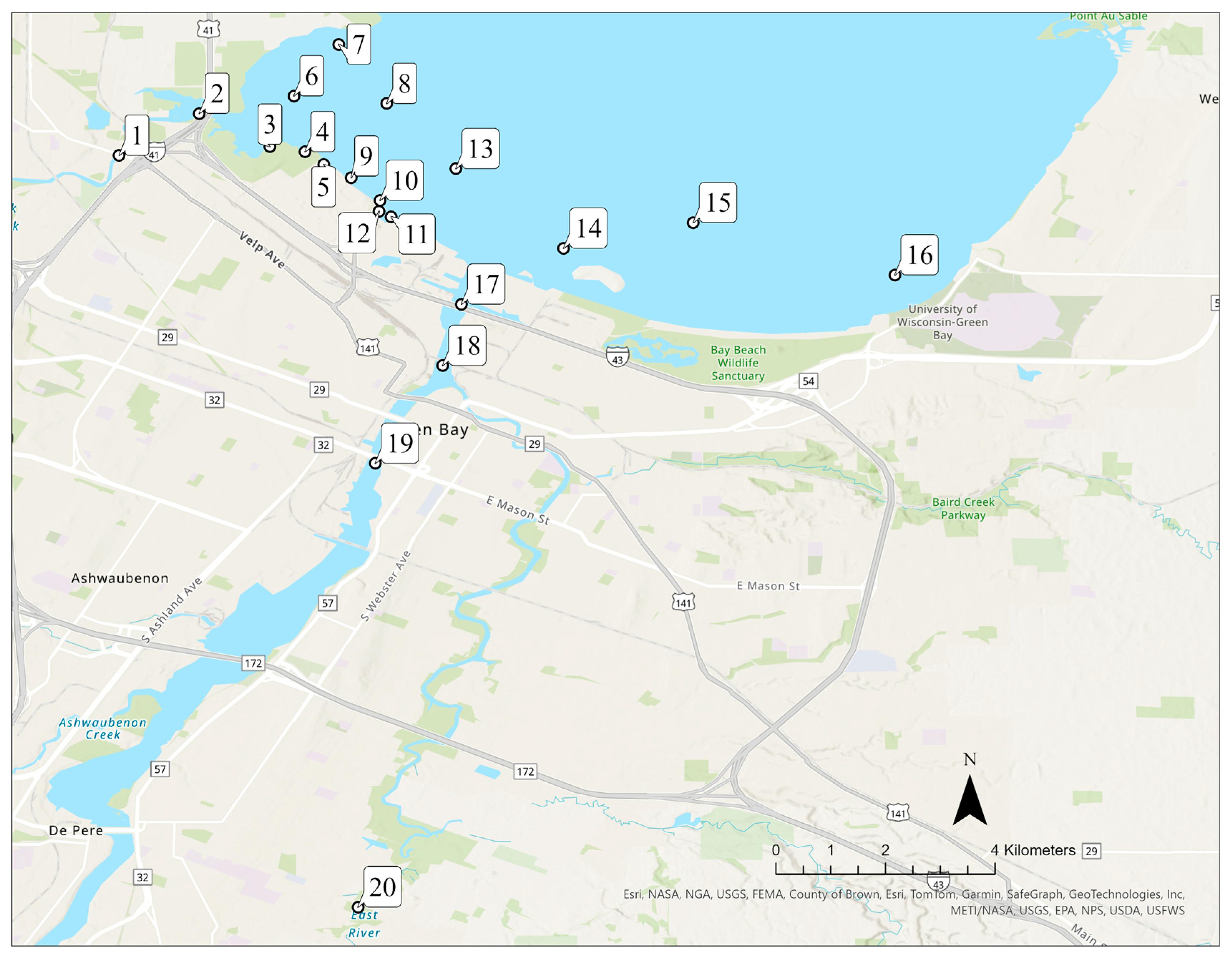
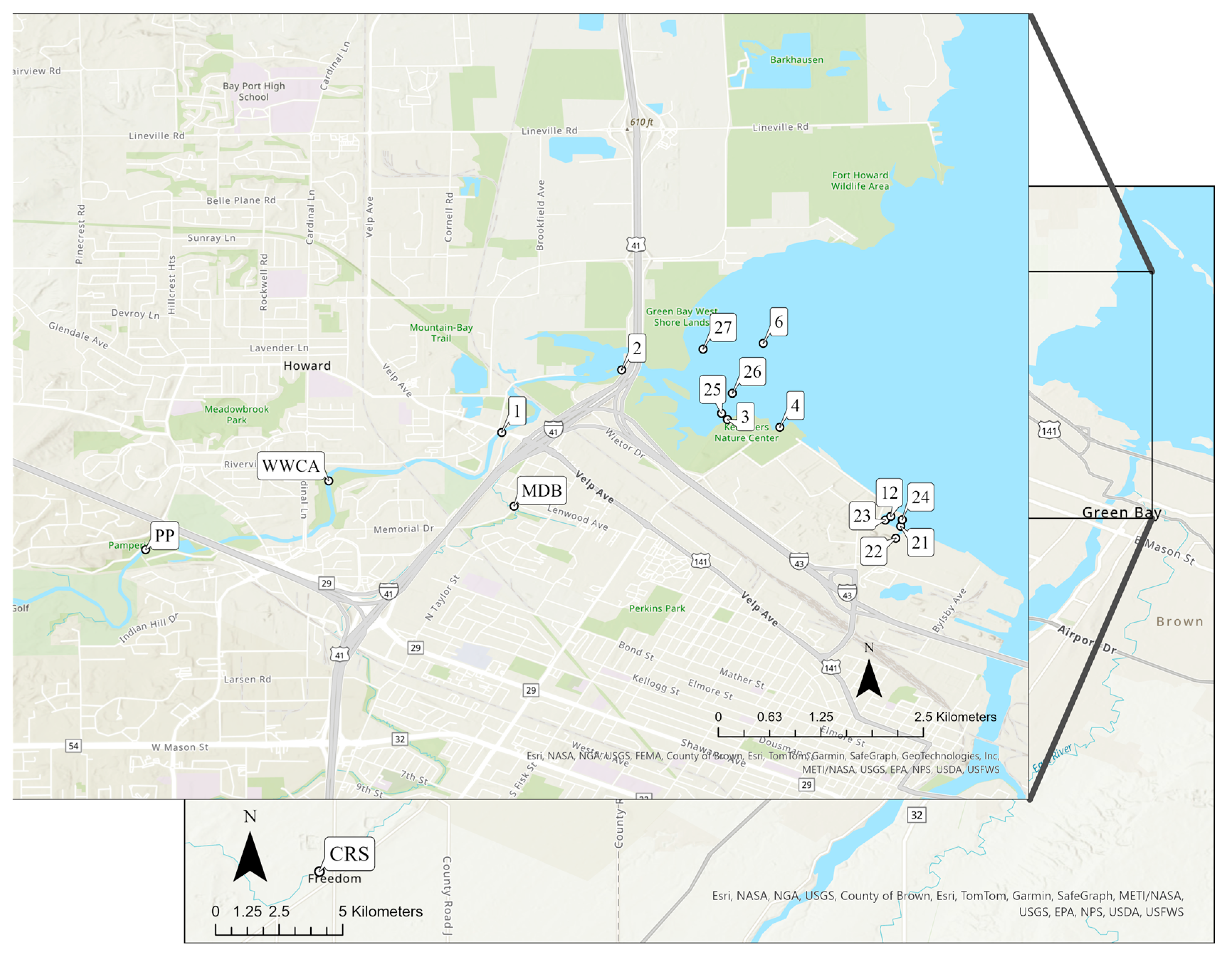
Preliminary results indicated that the Lower Green Bay mallards contained elevated PFOS concentrations compared to the other locations, therefore paired water sampling in Lower Green Bay was included for the last year of mallard collection in 2024. Water sampling occurred in three different events in 2024: one in July (Figure 2) and two in September (Figure 3).

2.3. Water Collection

Surface water grab samples were collected following WDNR standard operating procedures for PFAS sampling [26]. Nitrile gloves were worn during sampling collection and changed for each site. Field staff wore PFAS-free clothing and sunscreen for all field events. PFAS-free high-density polyethylene (HDPE) bottles (Thermo Fisher Scientific, Rochester, NY, USA) provided by the WSLH were submerged approximately 6 inches below the water surface and filled approximately to the shoulder. The bottle was closed prior to exposure to the air. Bottles were labeled with the site, date, and time of collection. All samples were held on ice or in a refrigerator until delivery to the WSLH.
Field blanks were collected during each sampling event by pouring PFAS-free water into the sample bottle while on station. Blanks were taken at the first and last location during each field event. During the July event, blanks were also taken at the 10th station sampled. No PFAS compounds were detected in any of the field blanks from this study. Field duplicates were included in the September events. Field duplicates are included in the graphs and are denoted with FDUP following the site name or number.

2.4. Water Analysis

All water samples were analyzed by the WSLH using an HPLC-MS/MS method applicable to determine per- and polyfluorinated compounds in drinking and non-potable waters following a modified version of ISO Method 21675 and Wisconsin PFAS Aqueous (Non-Potable Water) and Non-Aqueous Matrices Method Expectations published previously in its entirety [26]. Thirty-three PFAS compounds are reported with this method (Table S1). Similar to the tissue method, the MDL and MRL for each sample were determined by 40 CFR Appendix B to Part 136 guidelines [25] and the MRLs were set at 1.00 ng/L or by multiplying the MDL by two and rounding up to the nearest calibration standard. The higher value between the two methods of calculation was used as the MRL.

2.5. Data Analysis

All data analysis was performed in R version 1.4.1106 [27], all graphs were made with ggplot2 version 4.0.0 [28], and all maps were created using ArcGIS Pro version 3.2.4 [29]. The relevant R packages not included in base R are cited in the description of the analysis below.
To determine potential risk to waterfowl hunters in Green Bay, waterfowl breast tissue PFOS concentrations were compared to the advisory thresholds used in Wisconsin as described below. Comparison between mallards collected at the various sites focused on PFOS, as this was the only compound detected at all locations. In 2025, Wisconsin adopted new thresholds for PFOS consumption advisories following the guidance from the Great Lakes Consortium for Fish Consumption Advisories [9]. The current thresholds are 10 ng/g and 40 ng/g for a “one meal per month” and a “do not eat” advisory, respectively. In the state of Wisconsin, the same consumption advisory applied to fish is applied to wildlife game species. The Great Lakes Consortium thresholds were determined based on a conservative risk model that included fish consumption rates, a standard body mass, bioavailability, and a 1 ng/(kg day) health protection value, which is a rounded value based on published effects levels by the USEPA for cardiovascular and developmental endpoints [9].
PFOS values in duck breast tissue below the MDL were set to half of the MDL for comparisons to the advisory thresholds and between locations. The rationale for setting these sample results to one-half of the MDL is that the true concentration is unknown and only known to be less than the MDL, but a concentration value is required for data analysis. Using a value of one-half the MDL was used as a reasonable compromise approach since using a concentration of zero or omitting the sample result completely would create greater bias in the data. Mallard breast tissue samples that fell below the MRL were treated as if the results were below the limit of detection. To determine if PFOS results from the two Green Bay sites were less than the 10 ng/g and 40 ng/g thresholds, a Wilcoxon signed-rank test with an alpha value of 0.05 was used. Adult and juvenile mallard samples from the Lower Green Bay location were compared to the thresholds separately. Results from the Navarino location were not compared to the thresholds. Only 2 out of 30 ducks collected from the Navarino location had detectable concentrations of PFOS and both samples were below 5 ng/g.
To compare the PFOS concentrations within the duck breast tissue from the three locations, a Kruskal–Wallis test with an alpha value of 0.05 was used. A Dunn’s post hoc test was applied with a Bonferroni p-value adjustment for multiple comparisons [30]. Juveniles collected from the Navarino Wildlife Area were not included in the comparisons, as there were no detections of any PFAS.
For the paired water sampling in Lower Green Bay, the relative proportion of the PFAS compounds for each water sample was plotted with stacked bar graphs. All water results above the MRL are included in the graphs. Any water result with a PFOS concentration above 8 ng/L was considered a potential risk associated with PFAS contamination, as 8 ng/L represents the Wisconsin surface water criteria for PFOS. In the context of this publication, comparisons against a surface water criteria do not indicate waterbody impairment as this sampling was not conducted consistently with the assessment methodology for PFOS [31]. All values described as “exceedance” of surface water criteria are used as a reference value to compare against for the overall evaluation of potential risks associated with PFAS contamination in this location. A principal component analysis (PCA) of the July 2024 water results using the relative proportion of the 33 PFAS compounds above the MRL with partitioning around medoids (PAM) was used to determine potential patterns in the Lower Green Bay water samples that could indicate PFAS sources [32]. The silhouette width was used to determine the optimum number of clusters, and the silhouette coefficient was used to determine how well the cluster analysis fit the dataset. PCA was performed only using the July data to limit the impacts of separate sample events on data interpretation.

3. Results

3.1. Duck Breast Tissue

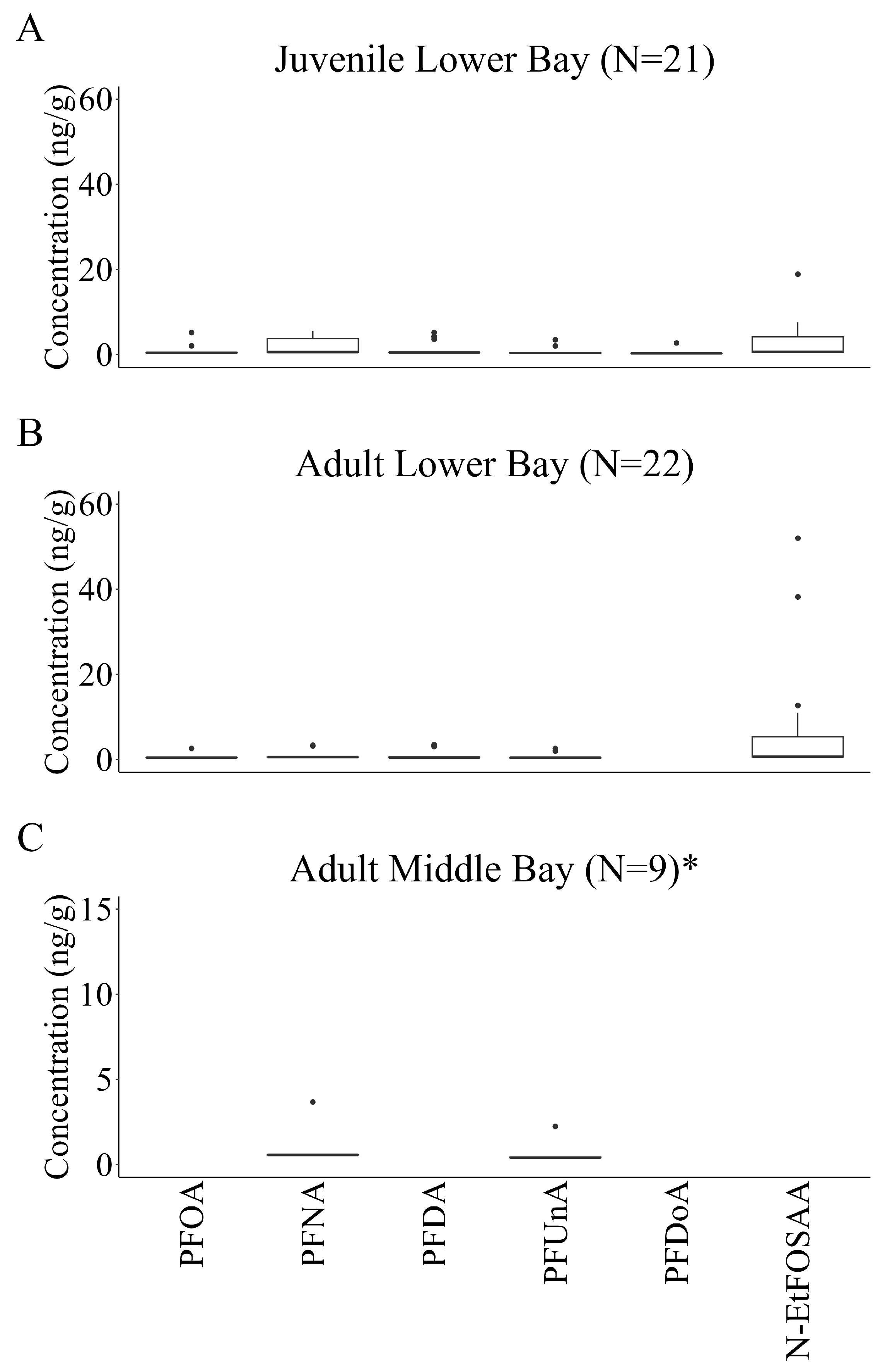
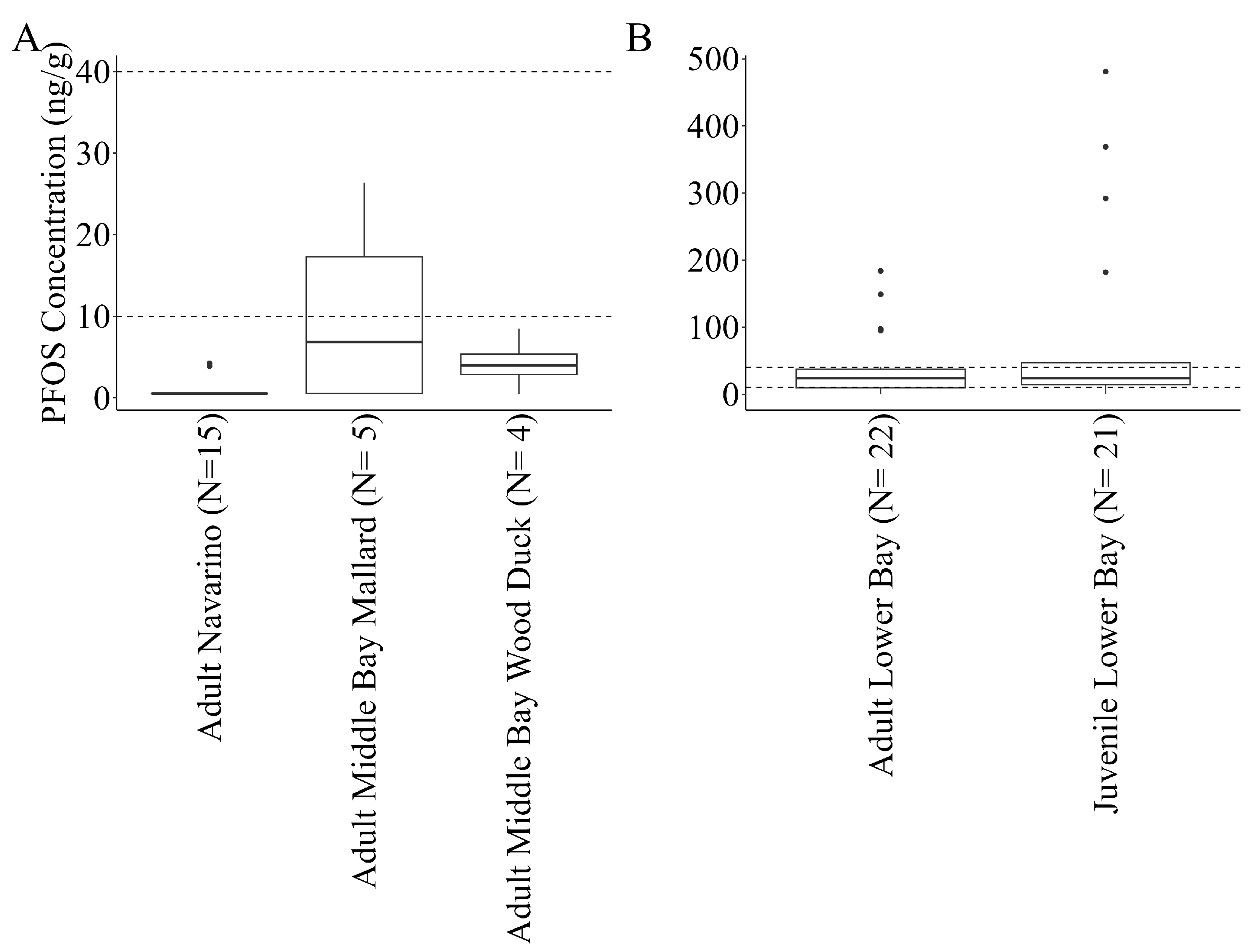
The only PFAS detected in the mallard breast tissue at all locations was PFOS. PFOS was detected more frequently than any other analyte and was measured at higher concentrations than other PFAS (Table S2; Figure 4 and Figure 5). The only group of mallards that did not have any detections of PFAS was the juvenile mallards collected from the Navarino Wildlife Area. PFOA, PFNA, PFDA, PFUnA, PFDoA, and N-EtFOSAA were also detected at a level above the MRL in at least one duck breast tissue sample (Table S2; Figure 4 and Figure 5). N-EtFOSAA, a precursor for PFOS [33], was measured at the second-highest concentration behind PFOS. N-EtFOSAA was only found in ducks from Lower Green Bay, with a mean concentration of 3.0 ng/g and 6.5 ng/g for the juvenile and adult mallards, respectively. N-EtFOSAA is a significant portion of the PFAS profile for ducks collected from this region, as 14% of the mean PFAS profile for adult ducks from this area was composed of N-EtFOSAA (Figure 5), and it was detected in 38% of the adult breast tissue samples (Table S2). N-EtFOSAA represented a smaller portion of the overall PFAS profile for the juvenile ducks from Lower Green Bay at 3% of the mean profile.
The PFOS concentration in the duck breast tissue differed by location based on the Kruskal–Wallis test (p-value < 0.01). The post hoc Dunn’s test with the Bonferroni correction indicated that the PFOS breast tissue concentrations in the adult and juvenile mallards from Lower Green Bay did not differ significantly. Both groups from Lower Green Bay were significantly higher than the mallards collected from the Navarino reference location (Table 1). Duck breast tissue from the Middle Bay did not significantly differ from any group, most likely due to the low sample size and the fact that the samples were composed of both mallards and wood ducks (9 samples). The mean, median, and range of PFOS concentrations from each location are reported in Table S2. The highest PFOS duck breast tissue concentration was found in a juvenile mallard from Lower Green Bay with a concentration of 480 ng/g.
Mallards from Middle and Lower Green Bay were compared to the 40 ng/g (do-not-eat advisory) and 10 ng/g (one meal per month advisory) consumption advisory thresholds using a Wilcoxon signed-rank test. Mallards (N = 5) from the middle portion of Green Bay were significantly less than the 40 ng/g threshold with a p-value of 0.03 but were not significantly less than the 10 ng/g threshold with a p-value of 0.5. The adult mallards from Lower Green Bay (N = 22) were not statistically less than the 40 ng/g with a p-value of 0.09. Similarly, the juvenile mallards from Lower Green Bay (N = 21) were not statistically less than 40 ng/g with a p-value of 0.17. While the Wilcoxon signed-rank test is useful to determine if the sample median values statistically fall below the advisory thresholds, it should be noted that the process for putting an advisory in place in the state of Wisconsin simply relies on the average value being above the threshold. The average concentrations of PFOS in mallard tissue were 81, 39, 59, and 10 ng/g for Lower Green Bay juveniles, Lower Green Bay adults, Lower Green Bay juveniles and adults combined, and Middle Bay adults, respectively.

3.2. Surface Water

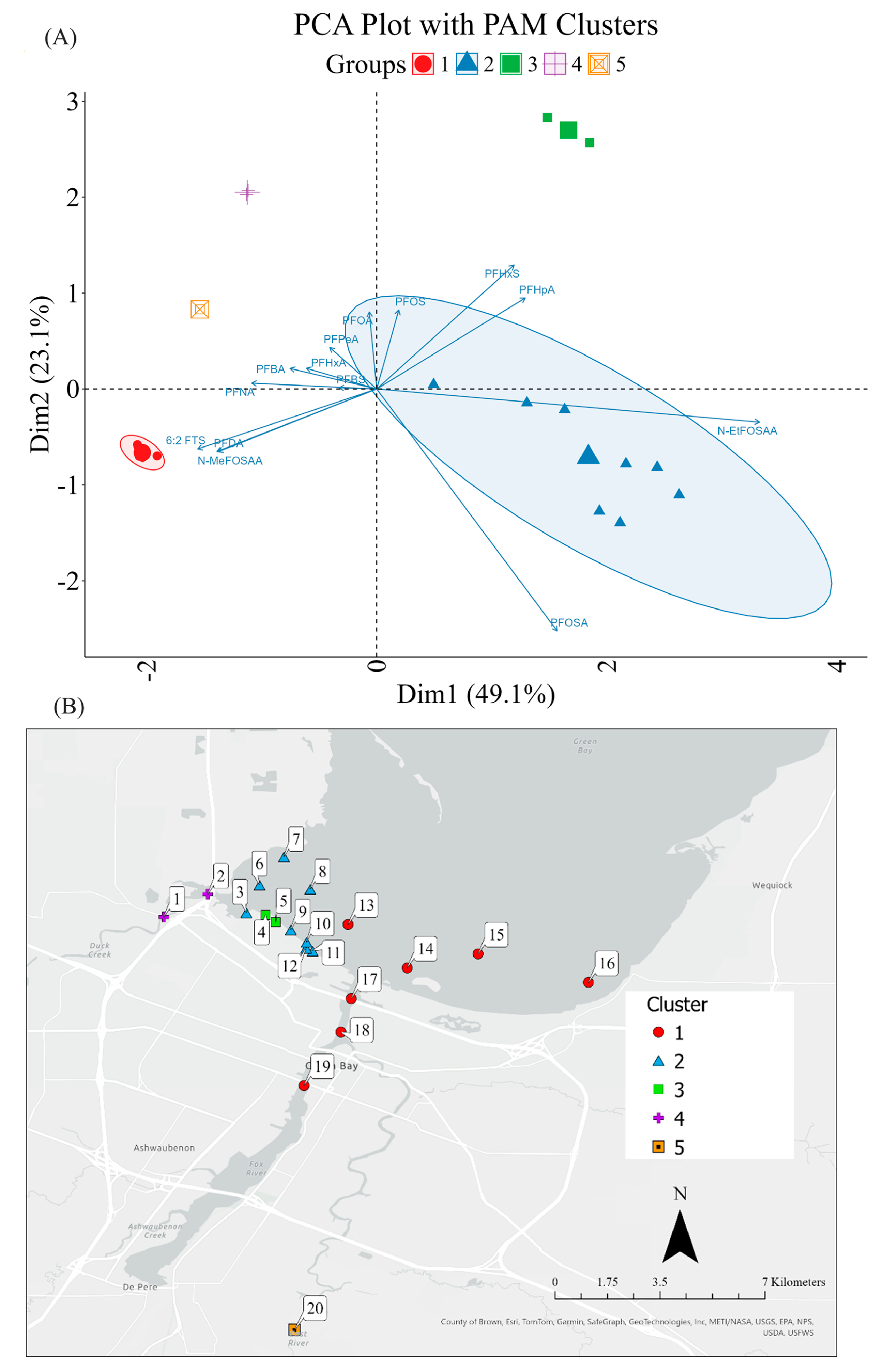
PCA of the July 2024 sampling event using the relative proportion of PFAS detected indicated five different clusters of PFAS profiles in the Lower Green Bay surface water samples (Figure 6). Five clusters were chosen for PAM analysis based on optimizing the silhouette width. The silhouette coefficient for the model was 0.58. Sites along the Fox River and towards the eastern side of Lower Green Bay clustered together (Cluster 1; sites 13–19). Along the southwestern shoreline, there were three distinct clusters of PFAS profiles: Duck Creek (Cluster 4; sites 1 and 2), directly adjacent to the shoreline (Cluster 3; sites 4 and 5), and the area from the mouth of Duck Creek enclosed by Cat Island (Cluster 2; sites 3, 6–12). The location on the East River was distinct from the other sample locations (Cluster 5; site 20). The detection of N-EtFOSAA largely dictated a separate cluster for the southwestern shoreline immediately adjacent to where mallards were collected in Lower Green Bay. It should be noted that the N-EtFOSAA was detected in the mallard breast tissue collected from this location.
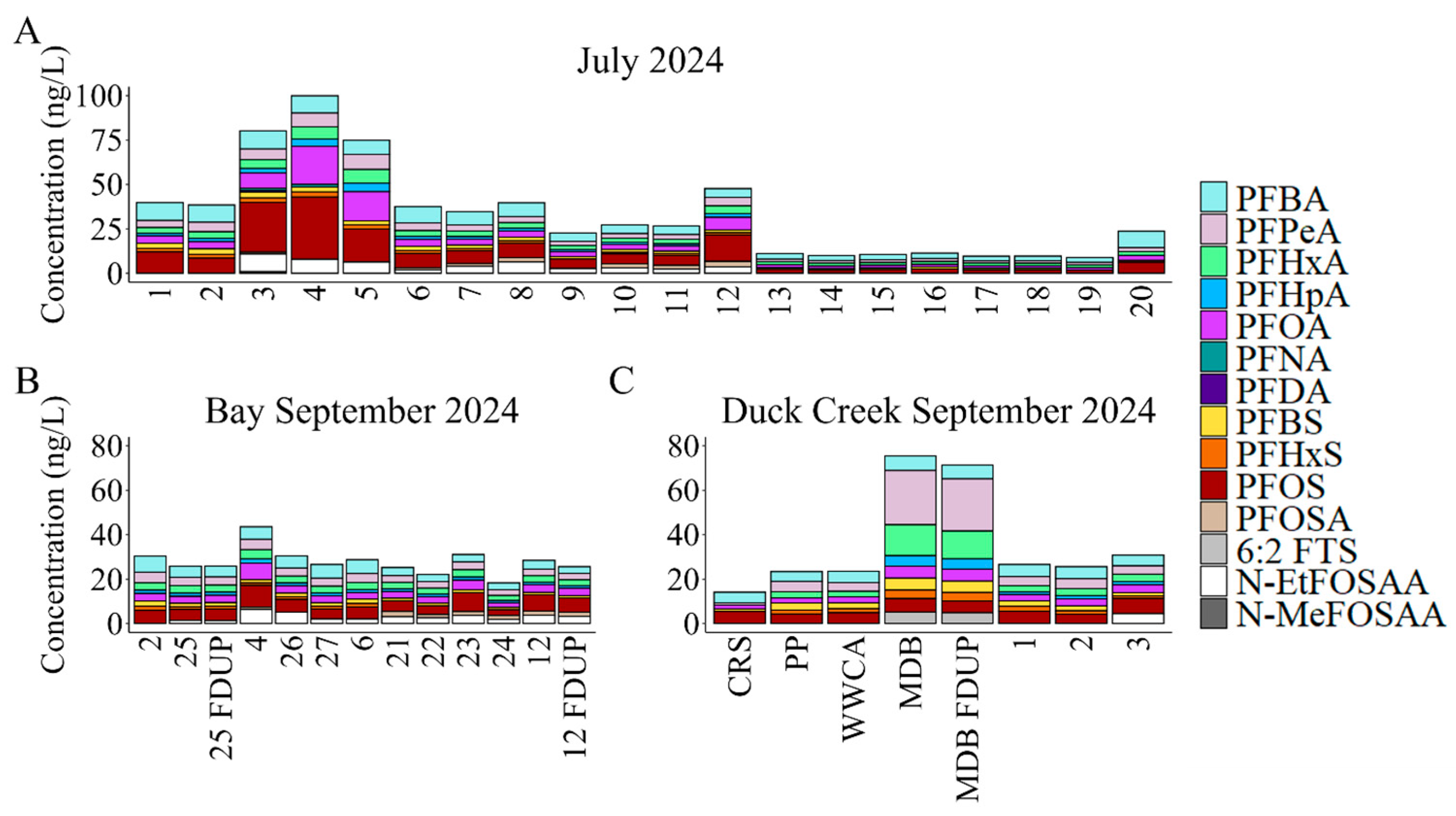
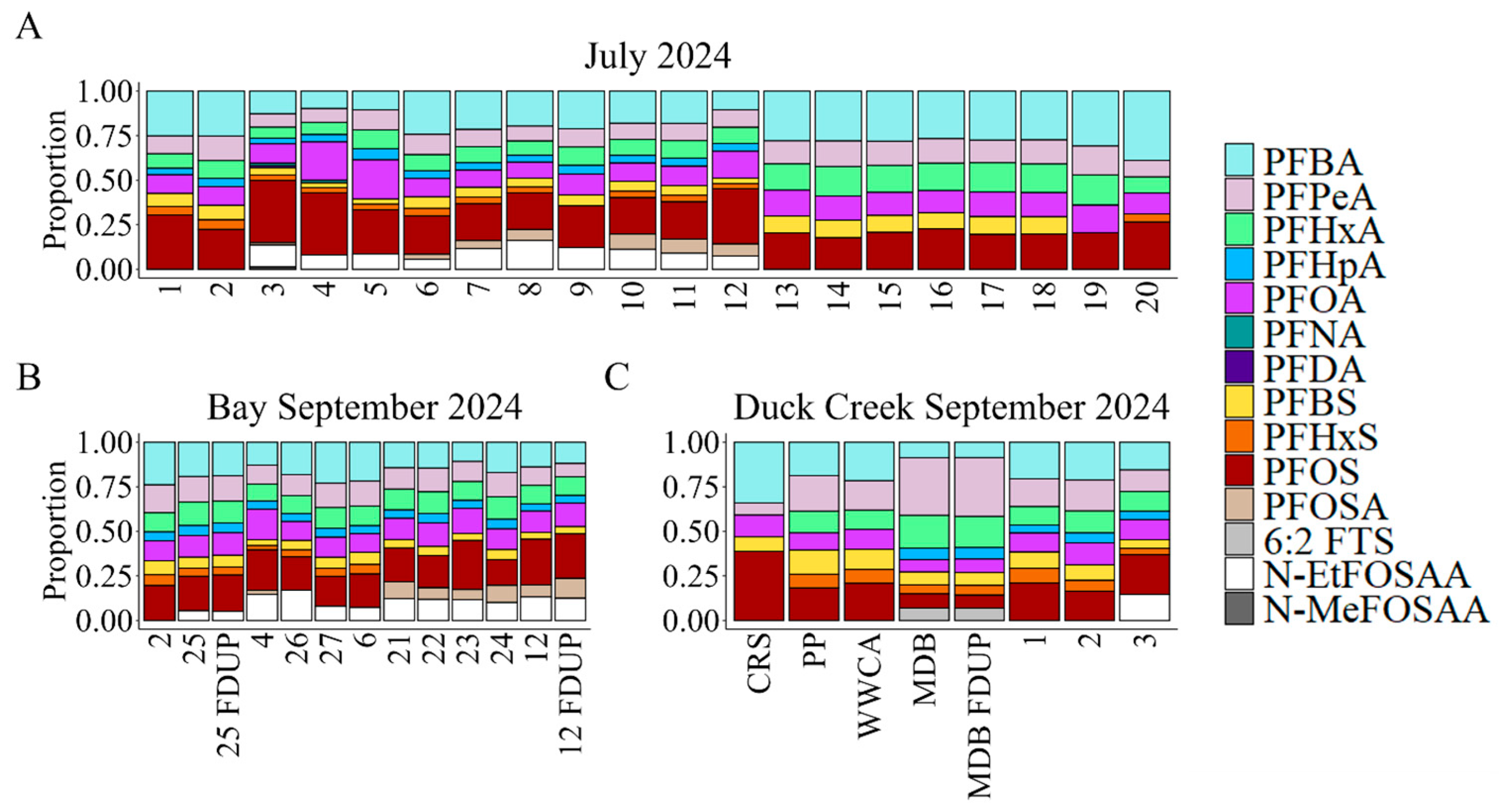
PFBA, PFPeA, PFHxA, PFHpA, PFOA, PFNA, PFDA, PFBS, PFHxS, PFOS, PFOSA, 6:2 FTS, N-EtFOSAA, and N-MeFOSAA were detected in at least one surface water sample. PFBA, PFPeA, PFOA, and PFOS were detected in every surface water sample. The highest concentrations of PFOA and PFOS were measured at station 4 during the July sampling date with concentrations of 21.4 ng/L and 35.0 ng/L, respectively (Figure 7). Perfluoroalkyl carboxylic acids (PFCAs) were a higher proportion of the overall PFAS profile for all surface water samples (Figure 8), with PFBA being the most abundant PFCA for most water samples. PFOA was more concentrated than PFBA in samples collected from sites 4, 5, and 12 in July and 4 and 23 in September. PFOA and PFBA were composed of nearly equal proportions of the PFAS profile for site 12 in September, with PFOA representing 12% and PFBA representing 14% of the detected PFAS in that sample.
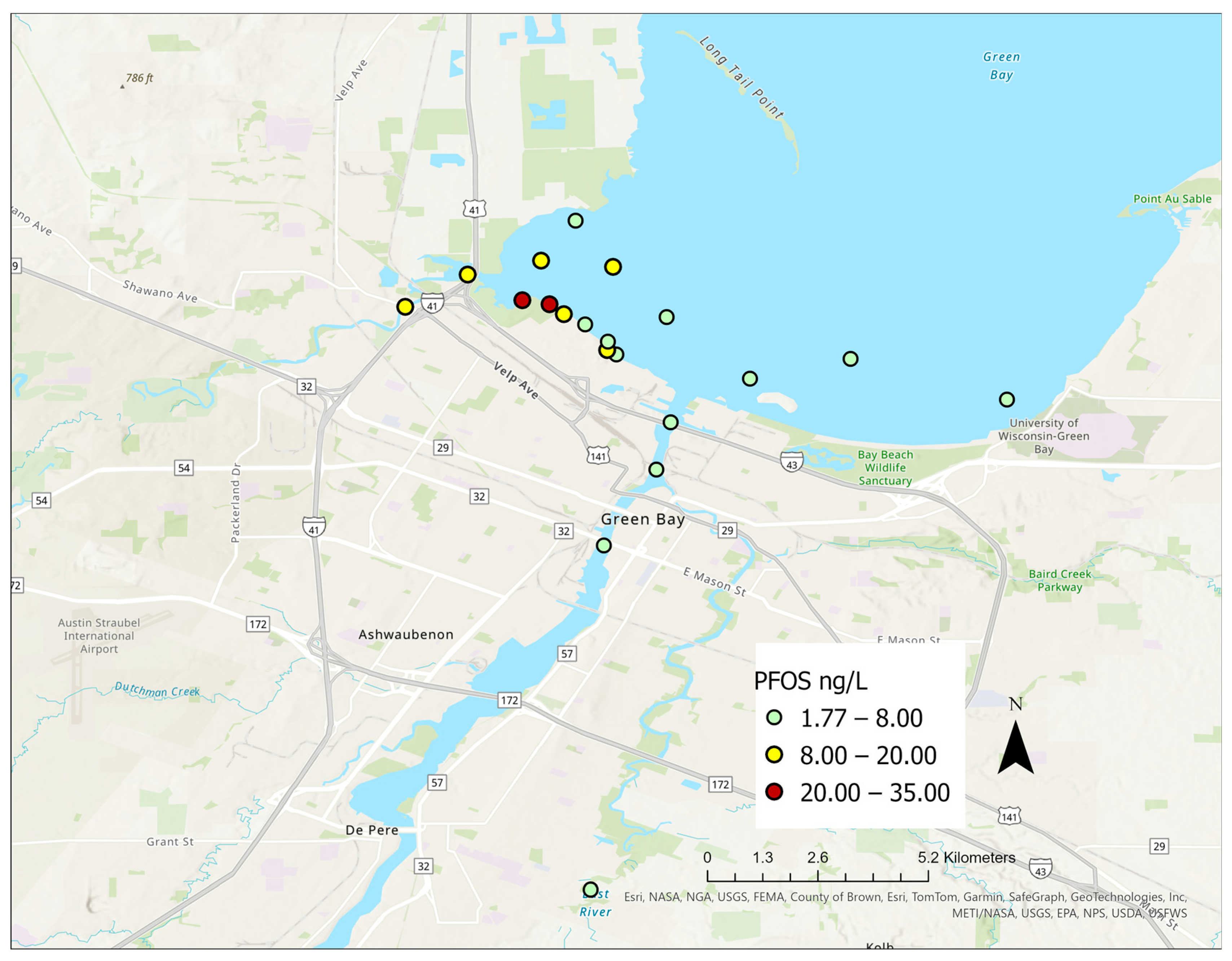
PFOS was the most abundant sulfonic acid (PFSA) for all water samples except for the surface samples collected from site MDB. The surface sample from MDB was the only sample with a detected Fluorotelomer sulfonic acid, 6:2 FTS. PFOS composed the highest proportion of a single PFAS compound in 20 of the 38 standard water samples (excluding field duplicates) (Figure 8). PFOS exceeded the Wisconsin surface water criteria of 8 ng/L in 8 of the 20 samples collected in July. The exceedances were found along Duck Creek and the southwest shoreline of Green Bay (Figure 7). Surface water concentrations were higher during the July event than in September (Figure 7). Water levels during the September events were much lower than in July, as evidenced by exposed banks and culverts that were no longer connected to the system. At point 2, the only location sampled during all three events, measured PFOS concentrations were 8.6, 5.9, and 4.2 ng/L on 22 July 2024, 17 September 2024, and 30 September 2024, respectively. Surface water samples collected from sites 4 and 23 exceeded the surface water criteria in September with concentrations of 9.9 and 8.6 ng/L, respectively.
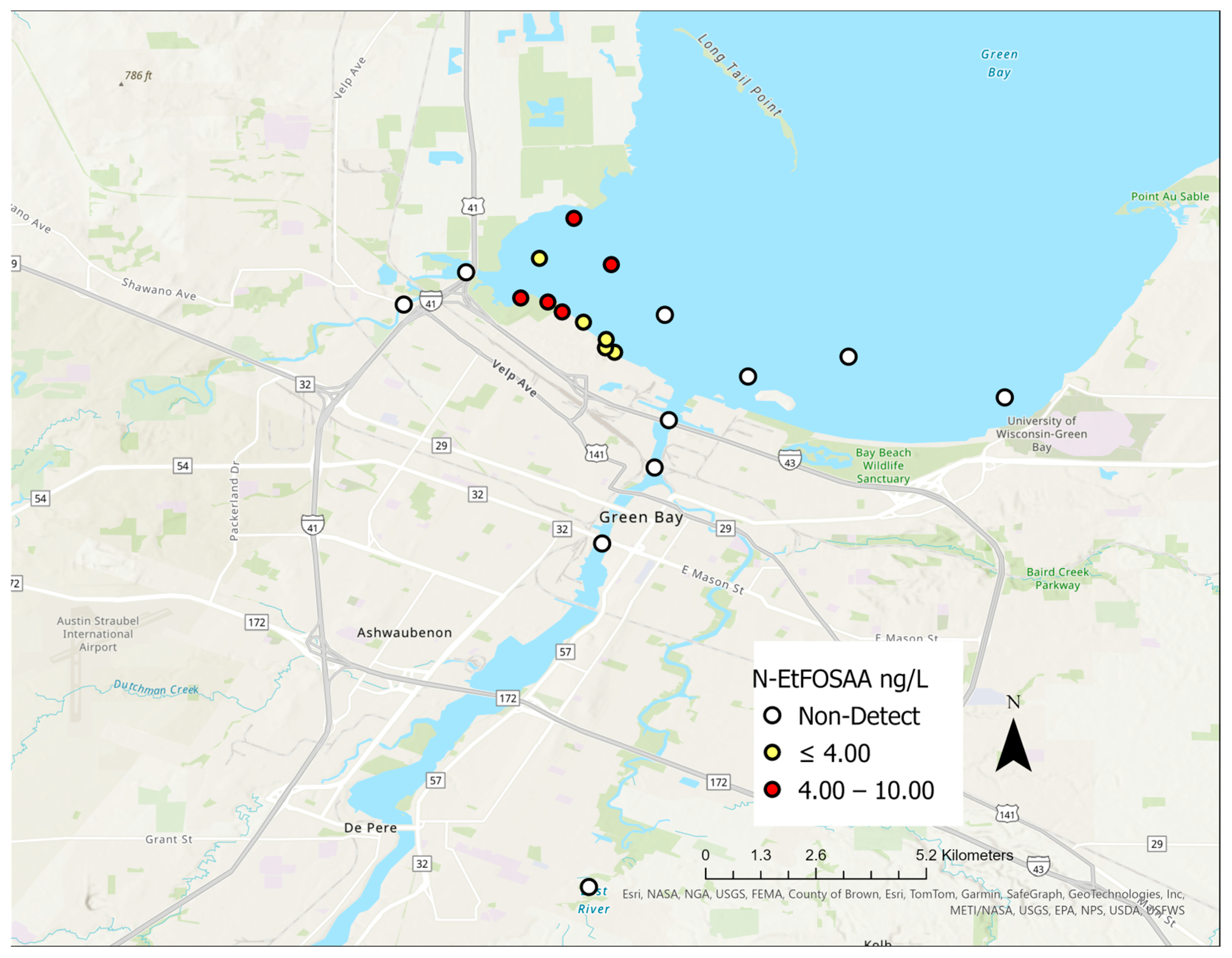
PFOSA was detected in 13 of the 38 samples. The sites with detections of PFOSA were all along the southwestern area of Lower Green Bay (Figure 2, Figure 3, Figure 7 and Figure 9). A similar pattern is evident with N-EtFOSAA, which was detected in 21 of 38 samples. All samples where N-EtFOSAA was detected were found along the southwestern area of Green Bay, and there were no detections in Duck Creek (Figure 7, Figure 9 and Figure 10). N-MeFOSAA was detected in one sample at location 3 in July.

4. Discussion

Associating risk of PFOS exposure with game species consumption can be difficult, as each state within the United States has different guidelines for determining consumption advisories; federal consumption guidelines do not exist in the United States; and establishing thresholds related to risk is still in flux as more research is being conducted [4]. While more work is needed to connect PFAS concentrations with advisory guidelines, consumption of fish and wildlife species is a key pathway for human exposure to PFAS near PFAS-impacted areas [3,4]. In Wisconsin, current consumption advisories related to PFAS for fish and wildlife are based on PFOS concentrations, in part because this is one of the most well-studied PFAS compounds, is toxic at low concentrations, bioaccumulates, and has been found in game species [3,9,13,14]. Human exposure to PFOS has been linked to high cholesterol, thyroid disease, pregnancy-induced hypertension, ulcerative colitis, and higher rates of kidney and testicular cancer [7]. Wisconsin adopted new thresholds for PFOS consumption advisories in 2025, following guidance from the Great Lakes Consortium for Fish Consumption Advisories. The current thresholds are 10 ng/g and 40 ng/g for a “one meal per month” and a “do not eat” advisory, respectively. In the absence of specific guidance related to wild game species, the fish consumption advisory thresholds are applied to wild game meat in Wisconsin. It should be noted that this approach differs from the threshold recommended by the European Union, where the threshold for risk differs by fish species groupings and game species, with the maximum levels of μg/kg wet weight of PFOS for most game species being 5.0 ng/g [5]. This threshold is lower than the one used in this study but supports that the mallard tissue collected from Green Bay, Wisconsin poses a risk to those who consume meat from harvest ducks in this area (see below). The European Union has also adopted thresholds for PFOA, PFNA, and PFHxS, which were not routinely detected in the duck breast tissue in this study [5].
The application of the framework described above for Wisconsin led to consumption advisories for mallards in Green Bay based on this study. The average mallard duck breast tissue collected from Lower Green Bay (juvenile and adult samples combined) was above the 40 ng/g threshold, which led to the adoption of the “do not eat” advisory for Lower Green Bay (the area from the mouth of the Fox River to Longtail Point). Mallards collected from the Middle Bay were above the 10 ng/g threshold but below the 40 ng/g threshold, which led to the “one meal per month” advisory for the area from Longtail Point to Sturgeon Bay [34]. It should be noted that mallard collection was much more successful in Lower Green Bay than in Middle Green Bay. Efforts to hunt and trap ducks near the Peshtigo Wildlife Area from 2022 to 2024, prior to the hunting season, were largely unsuccessful despite setting traps in three different locations known to be frequented by ducks and attempting at least three hunting days each year. Bait was consumed by other wildlife, including deer and geese, which limited trapping success. Hunting was more successful, but limited staff availability and areas able to be hunted prior to the season opening allowed few adults to be collected. While the five adult mallards collected for this effort indicate a risk of PFOS exposure to waterfowl hunters in this area, additional sampling will be needed to verify these results and better delineate where the advisory should be applied.
While the results from this study indicate there is a risk of PFOS exposure at potentially harmful levels, defined by the current advisory thresholds, this study demonstrated that the risk of exposure from the consumption of mallard breast tissue is not consistent across sites in Wisconsin. PFOS waterfowl results between the reference location (Navarino Wildlife Area) and Green Bay indicate that risk can be different between two locations less than 33 miles apart, with minimal to no risk from mallards collected from the reference location compared to moderate risk from those collected from the Lower Green Bay area. While Navarino Wildlife Area is a good reference location due to no known sources of contamination [23], its proximity to the Lower Green Bay location does mean that there is likely crossover between these populations, and mallards banded in Navarino have been reported in Lower Green Bay (WDNR personal communication). Despite potential crossover between these two populations, PFOS was only detected in less than 15% (2 of 15) of adult mallards and no juvenile (0 of 15) mallards at Navarino, while detections were over 90% for both adult (20 of 22) and juvenile (20 of 21) mallards in Lower Green Bay. The difference in PFOS concentrations between mallards collected in Navarino and Green Bay indicates that site-specific exposure, rather than general exposure during migration, is likely the cause of the higher PFOS concentration in the Green Bay waterfowl. These results are similar to an Australian study, where waterfowl PFAS concentrations were found to coincide with sites with higher relative PFAS concentrations in water and sediment and near local point sources of contamination [16].
PFOS concentrations in mallards collected from Lower Green Bay are elevated relative to the reference location in this study and others. In a study examining wildlife accumulation of PFOS in New Mexico, the tissue concentrations of PFOS for mallard and green-winged teal at the non-impacted reference site ranged from non-detection to 5.1 ng/g [16]. In another study examining PFOS concentrations in breast tissue from 107 waterfowl, including 32 mallards, from the Northeast Atlantic Flyway, the average mallard breast tissue concentration was 3.08 ng/g [17]. These results are consistent with the values from this report, indicating that duck breast tissue collected from non-impacted areas is generally low for PFOS. The concentration of PFOS detected in the mallard breast tissue from Lower Green Bay is more in line with impacted sites, though the values are lower than the concentration reported for other impacted locations. In the study of an impacted site in New Mexico, concentrations of green-winged teal at the impact sites ranged from 810 to 20,000 ng/g [16], much higher than the results for mallards in this study. In a pilot study of mallard PFOS levels in Minnesota, the PFOS values in breast tissue from an impacted site ranged from 360 to 1400 ng/g (9 samples), while the reference location ranged from 0.2 to 1 ng/g (5 samples) [35]. These results put the concentrations from Lower Green Bay in context with other sites and support that the mallards from Lower Green Bay are exposed to PFAS from a local source.
Connecting waterfowl exposure to contamination from a specific area is difficult, given the geographic range of waterfowl. Mallards are known to forage over thousands of meters and have home ranges larger than 20,000 hectares or 77 square miles [36], making it difficult to determine both exposure areas and areas to apply consumption advisories. In this study, mallards were collected from the end of July through early September to associate the collected mallards with location-specific exposure to the extent possible. In theory, this period would account for mallards foraging in the area for at least 3 months post-spring migration and precedes increased movements in the fall. In addition, juvenile mallards were also used to increase association with the immediate location, as the juveniles were under a year old and foraged at fewer locations than adults that had experienced at least one full migratory season. It should also be noted that differences between years may also impact the ability to connect waterfowl concentrations to exposure. In this study, mallards were collected over three years. While the lack of a constant sample size between years limits this study’s ability to examine temporal variability in the mallard duck breast tissue, it is likely that waterfowl PFAS exposure in Lower Green Bay differs by year given the variation in PFOS concentrations in water at this site (see below).
After receiving initial waterfowl PFAS results in 2023, it appeared that the waterfowl collected in Lower Green Bay were likely exposed to higher concentrations of PFOS compared to other locations. When the project was originally conceptualized, it was thought that waterfowl collected from the Middle Bay would have the highest PFOS concentrations due to their proximity to a known PFAS-contaminated site [20,21]. The migration of various PFAS compounds and levels of PFAS found in different media, including surface and ground water, were better studied for this area of Green Bay compared to Lower Green Bay at the time of this study [20,21]. Less information was available from Lower Green Bay, with only a few surface water samples from tributaries and one from Green Bay publicly available [22]. As a result, it was not clear if the mallards in Lower Green Bay were exposed to PFAS in Green Bay or from another location. Based on surface water sample collection in 2024, mallards are likely exposed to PFAS in the waters of Green Bay immediately adjacent to the mallard collection site.
Surface water concentrations of PFOS in the area just north of the waterfowl collection site were above the Wisconsin surface water criteria of 8 ng/L in at least one water sample during each collection period. The PFOS surface water criteria were derived by comparing an extensive statewide data set of surface water PFOS concentrations with corresponding fish tissue concentrations. The 8 ng/L PFOS threshold corresponded to fish tissue concentrations of 50 ng/g, which, at the time the threshold was set, equated to a one-meal-per-month advisory threshold [37]. The fish tissue advisory thresholds have since been updated; however, the surface water criteria remain at 8 ng/L at the time of this report. While WDNR had enough data to determine a relationship between surface water and fish tissue concentrations, there is not enough information to do a similar analysis for waterfowl, as waterfowl tissue PFOS concentrations have only been collected at a few locations, and this study represents the most extensive collection of PFAS data in waterfowl tissue undertaken by WDNR to date. Therefore, a more expansive statewide correlation between PFOS surface water concentrations and mallard tissue concentrations is not currently possible. Comparing surface water values against values related to fish tissue consumption advisories is currently the best available reference for a potential pathway of PFAS contamination for mallards.
In July 2024, 8 of the 20 surface water samples collected were above the 8 ng/L threshold. All the samples that exceeded the threshold were along the southwestern part of Green Bay, south of Cat Island, which is the area immediately adjacent to where mallards were collected. When follow-up water sampling was conducted in September, many sites with previously elevated PFOS levels had lower PFOS concentrations, and only two locations exceeded the 8 ng/L threshold (Sites 4 and 23). Between the two water sampling events, the Bay’s water levels declined due to a period without rain. The U.S. Geological Survey gage height at the Fox River at Oil Tank Depot at Green Bay, Wisconsin dropped from an average of 580.12 ft (Stage IGLD85) in July of 2024 to 579.62 ft (Stage IGLD85) in August of 2024 [38]. Field staff also noted that culverts that were hydraulically connected to Green Bay in July were no longer connected during the September 2024 sampling event. PFOS concentrations in the surface water at this site are variable, indicating that exposure to PFOS from these surface waters is not consistent. The variability at this site was further demonstrated when subsequent sampling at this location in August of 2025 by the WDNR indicated higher PFOS concentrations at site 12 with a concentration of 36.7 ng/L than those measured in 2024 [39].
Based on the PFAS profiles and PCA, it appears there are multiple PFAS sources mixing in the Lower Green Bay area. The two most abundant PFAS compounds measured in the surface waters of the sites in Duck Creek, the Fox River, and eastern locations of Lower Green Bay were PFBA and PFOS. The sites along the Fox River and southeastern locations of the Bay were generally similar in their PFAS profiles, which may be expected as this area would be most influenced by the Fox River [40]. The primary difference between the Duck Creek samples and those noted along the Fox River and southeastern bay is the detection of PFHpA. The surface water PFAS concentration at the two Duck Creek locations in July of 2024 exceeded the 8 ng/L screening threshold used in this study. However, all surface water concentrations along Duck Creek were below 8 ng/L during the September 2024 sampling event. That indicates that discharge from the Duck Creek area is at least an intermediate source of elevated PFOS concentrations to Lower Green Bay. While the concentration of PFOS from the Fox River was all below 8 ng/L, other studies have noted that the Fox River is a significant source of PFOS loading to Green Bay due to the high discharge from the river [22].
While the Fox River and Duck Creek are sources of PFAS to the Lower Green Bay, the profile of PFAS along the southwestern shore adjacent to the duck collection location was distinct from both locations based on the PCA (Figure 6). PFOS concentrations were also higher in this area with the highest concentrations noted at sites 3 and 4 during the July sampling event. Based on the PCA, the detection of N-EtFOSAA and PFOSA was largely responsible for the distinction between the southwestern shoreline and the other areas sampled. N-EtFOSAA was only detected in the surface water of this area, which is significant because N-EtFOSAA was also detected in the mallard breast tissue of the mallards collected in Lower Green Bay. The mallard tissue with detectable levels of N-EtFOSAA contained higher levels of PFOS, which seems to match the pattern noted in the surface water samples. Samples with detectable levels of N-EtFOSAA along the southwestern shoreline had higher concentrations of PFOS. Based on the surface water results it is likely that the mallards from Lower Green Bay were exposed to PFOS along the southwestern shoreline.
It is also important to note that N-EtFOSAA is a precursor for PFOS, which means it may contribute to the higher concentration of PFOS found in the mallard duck breast tissue [41]. The presence of N-EtFOSSA in the ducks was unexpected, and unfortunately this study was not designed to quantify N-EtFOSAA uptake by the ducks, but this finding could further be explained by long-term bioaccumulation of N-EtFOSAA, dietary exposure besides water exposure, or in vivo metabolic transformation to increase PFOS body burden. Our finding underscores the need to understand and quantify PFAS precursor uptake into wildlife, which has been identified as a key research gap in previous work [42].
The PFAS profiles indicate at least three potential sources of PFAS to this area: discharge from the Duck Creek, discharge from the Fox River, and at least one source of PFAS from the southwestern shoreline. Based on the site history along the southwestern shoreline, there are potentially multiple sources of PFAS. The area includes a historic landfill that accepted material through the 1970s, placement of dredge material from prior to the Fox River remediation, and industrial activities [43,44,45]. N-EtFOSAA may be a key indicator of a potential source to this area, as this compound has been associated with the production of certain paper products which were and remain a major industry for this area [46,47,48]. Additional investigations are needed to better define potential sources and their relative contribution under different hydraulic conditions, which will aid in further defining sources of PFAS for waterfowl in Lower Green Bay.

5. Conclusions

Mallard duck breast tissue was collected from three locations in Wisconsin: Navarino Wildlife Area, Lower Green Bay, and Middle Green Bay. Mallard PFOS tissue concentrations were low to not detectable at the reference location at Navarino Wildlife Area but were routinely detectable in both Green Bay locations. PFOS concentrations were high enough at both Green Bay locations to warrant a “do not eat” consumption advisory being put in place for Lower Green Bay. When the mallard results are paired with PFAS surface water concentrations and their profiles in Lower Green Bay, it appears that exposure is likely occurring directly adjacent to the mallard collection area along the southwestern shoreline. Based on the PFAS water profiles, there are likely multiple sources of PFAS to Lower Green Bay contributing to the higher concentrations found in mallard breast tissue. Future research in this area should focus on connecting water PFOS concentrations to PFAS exposure in various water bodies in Wisconsin, uptake of PFAS compounds in additional biota in Lower Green Bay, including food items for ducks, and temporal variability of PFAS in both water and biota.

Supplementary Materials

The following supporting information can be downloaded at: https://www.mdpi.com/article/10.3390/environments13050271/s1, Table S1. List of PFAS analytes, abbreviation and detection limits. Table S2. Table of the number of mallard breast tissue samples with detections, mean, median, and range of detected PFAS compounds in ng/g. Table S3. Duck breast tissue sample results from the 2022–2024. Table S4. Surface water sample results from the 2024 sampling. Table S5. Example extracted internal standards (IS) for sample JV-AOC-F-2024-10. Figure S1. Example PFOS Chromatogram for sample JV-AOC-F-2024-10.

Author Contributions

Conceptualization, S.S., R.-A.E., P.G. and M.M.; methodology, R.-A.E., S.S. and P.G.; validation, M.M. and P.G.; formal analysis, R.-A.E.; investigation, R.-A.E.; writing—original draft preparation, R.-A.E.; writing—review and editing, S.S., P.G. and M.M.; visualization, R.-A.E.; project administration, R.-A.E. and S.S.; funding acquisition, R.-A.E. and S.S. All authors have read and agreed to the published version of the manuscript.

Funding

This project has been funded in part by the United States Environmental Protection Agency under assistance agreement GL00E03434 to the Wisconsin Department of Natural Resources. The contents of this document do not necessarily reflect the views and policies of the Environmental Protection Agency, nor does the Environmental Protection Agency endorse trade names or recommend the use of commercial products mentioned in this document.

Institutional Review Board Statement

The study was conducted in accordance with the United States Animal Welfare Act and Public Health Service (PHS) Policy, and the protocol was approved by the Department of Natural Resources Animal Use and Care Committee which is the Institutional Animal Care and Use Committee for the Department (0220608A) on [8 June 2022].

Data Availability Statement

All data used in this report are included in Supplementary Tables S3 and S4.

Acknowledgments

The work presented here could not have been accomplished without the help of USDA APHIS and WDNR field staff including, Brooke Lotto, Aaron Wright, Steve Burns, Bryan Woodbury, James Robaidek, and David Halfmann who spent many hours strategizing the best way to collect the target number of mallards and processing samples.

Conflicts of Interest

The authors declare no conflicts of interest.

Abbreviations

The following abbreviations are used in this manuscript:
6:2 FTS1H,1H,2H,2H-Tridecafluorooctane-1-sulfonic acid
HDPEHigh-Density Polyethylene
MDLMethod Detection Limit
MRLMethod Reporting Limit
N-EtFOSAAN-ethyl perfluorooctanesulfonamidoacetic acid
N-MeFOSAAN-methyl perfluorooctanesulfonamidoacetic acid
PAMPartitioning around medoids
PCAprincipal component analysis
PFASPer- and polyfluoroalkyl substances
PFBAPerfluoro-n-butanoic acid
PFBSPerfluoro-1-butanesulfonic acid
PFCAsPerfluoroalkyl carboxylic acids
PFDAPerfluoro-n-decanoic acid
PFDoAPerfluoro-n-dodecanoic acid
PFHpAPerfluoro-n-heptanoic acid
PFHxSPerflioro-1-hexanesulfonic acid
PFNAPerfluoro-n-nonanoic acid
PFOAPerfluoro-n-octanoic acid
PFOSPerfluoro-1-octanesulfonic acid
PFOSAPerfluorooctanesulfonamide
PFPeAPerfluoro-n-pentanoic acid
PFSASulfonic acids
PFUnAPerfluoro-n-undecanoic acid
USDA APHISUnited States Department of Agriculture Animal and Plant Inspection Services
WDNRWisconsin Department of Natural Resources
WSLHWisconsin State Lab of Hygiene

References

  1. Remucal, C.K. Spatial and Temporal Variability of Perfluoroalkyl Substances in the Laurentian Great Lakes. Environ. Sci. Process. Impacts 2019, 21, 1816–1834. [Google Scholar] [CrossRef] [PubMed]
  2. Strom, S.; Wojcik, B.; Dehnert, G.; Cornelius Ruhs, E. Longitudinal Trends of Per-and Poly-Fluoroalkyl Substances (PFAS) in Nestling Bald Eagles (Haliaeetus leucocephalus) from Wisconsin. Environ. Res. 2025, 276, 121468. [Google Scholar] [CrossRef]
  3. LaSharr, K.; Scher, D.P.; Streets, S.; Carstensen, M.; Keller, B.; Kelly, J. Exposure of Free-Ranging White-Tailed Deer (Odocoileus virginianus) to per- and Polyfluoroalkyl Substances (PFAS) at PFAS-Impacted Sites in Minnesota. Chemosphere 2025, 386, 144642. [Google Scholar] [CrossRef]
  4. Petali, J.M.; Pulster, E.L.; McCarthy, C.; Pickard, H.M.; Sunderland, E.M.; Bangma, J.; Carignan, C.C.; Robuck, A.; Crawford, K.A.; Romano, M.E.; et al. Considerations and Challenges in Support of Science and Communication of Fish Consumption Advisories for Per- and Polyfluoroalkyl Substances. Integr. Environ. Assess. Manag. 2024, 20, 1839–1858. [Google Scholar] [CrossRef]
  5. European Union. 2022/2388 of 7 December 2022 Amending Regulation (EC) No 1881/2006 as Regards Maximum Levels of Perfluoroalkyl Substances in Certain Foodstuffs. Off. J. Eur. Union 2022, 316, 38–42. [Google Scholar]
  6. Austad, H.; Breedveld, G.D.; Kallenborn, R.; Ali, A.M.; Choyke, S.; Mcdonough, C.A.; Higgins, C.P.; Jenssen, M.; Jartun, M.; Allan, I.; et al. Human Exposure to Per- and Polyfluoroalkyl Substances (PFAS) via the Consumption of Fish Leads to Exceedance of Safety Thresholds. Environ. Int. 2024, 190, 4–11. [Google Scholar] [CrossRef]
  7. Sunderland, E.M.; Hu, X.; Dassuncao, C.; Tokranov, A.; Wagner, C.; Allen, J. A Review of the Pathways of Human Exposure to Poly and Perfluoroalkyl Substances (PFASs) and Present Understand of Health Effects. J. Expo. Sci. Environ. Epidemiol. 2019, 29, 131–147. [Google Scholar] [CrossRef]
  8. Wee, S.Y.; Aris, A.Z. Environmental Impacts, Exposure Pathways, and Health Effects of PFOA and PFOS. Ecotoxicol. Environ. Saf. 2023, 267, 115663. [Google Scholar] [CrossRef]
  9. Great Lakes Consortium for Fish Consumption Advisories Best Practice for Perfluorooctane Sulfonate (PFOS). 2025. Available online: https://www.health.state.mn.us/communities/environment/fish/docs/consortium/bestpracticepfos.pdf (accessed on 24 March 2026).
  10. Reinikainen, J.; Bouhoulle, E.; Sorvari, J. Inconsistencies in the EU Regulatory Risk Assessment of PFAS Call for Readjustment. Environ. Int. 2024, 186, 108614. [Google Scholar] [CrossRef] [PubMed]
  11. Wisconsin Department of Natural Resources. Choose Wisely: A Health Guide for Eating Fish in Wisconsin 2024–2026. 2024, PUB-FH-824. Available online: https://widnr.widen.net/s/s6mkcq6tmr/pub_fh_824_choosewisely (accessed on 24 March 2026).
  12. Wisconsin Department of Natural Resources Safely Eating Venison. Available online: https://dnr.wisconsin.gov/topic/wildlifehabitat/eatsafe (accessed on 24 March 2026).
  13. Strom, S. Contaminant Concentrations in Waterfowl from the Sheboygan River Area of Concern Update: 2012 Samples; WI Department of Natural Resources: Madison, WI, USA, 2014.
  14. Strom, S. Contaminant Concentrations in Waterfowl from the Milwaukee Estuary Area of Concern; WI Department of Natural Resources: Madison, WI, USA, 2016.
  15. Sharp, S.; Sardiña, P.; Metzeling, L.; Mckenzie, R.; Leahy, P.; Menkhorst, P.; Hinwood, A. Per-and Poly Fl Uoroalkyl Substances in Ducks and the Relationship with Concentrations in Water, Sediment, and Soil. Environ. Toxicol. Chem. 2021, 40, 846–858. [Google Scholar] [CrossRef] [PubMed]
  16. Witt, C.C.; Gadek, C.R.; Cartron, J.L.E.; Andersen, M.J.; Campbell, M.L.; Castro-Farías, M.; Gyllenhaal, E.F.; Johnson, A.B.; Malaney, J.L.; Montoya, K.N.; et al. Extraordinary Levels of Per- and Polyfluoroalkyl Substances (PFAS) in Vertebrate Animals at a New Mexico Desert Oasis: Multiple Pathways for Wildlife and Human Exposure. Environ. Res. 2024, 249, 118229. [Google Scholar] [CrossRef] [PubMed]
  17. Dayan, D.B.; Hanley, B.J.; Stiller, J.; Richter, W.; Gregg, I.D.; Huck, N.R.; Huang, M.T.; Nichols, T.C.; Spliethoff, H.M.; Becker, J.C.; et al. Environmental Contaminants Assessment for Frequently Harvested Migratory Waterfowl in the Northeast Atlantic Flyway. Sci. Total Environ. 2025, 963, 178474. [Google Scholar] [CrossRef]
  18. Raftovich, R.V.; Fleming, K.K.; Chandler, S.C.; Cain, C.M. Migratory Bird Hunting Activity and Harvest During the 2020–2021 and 2021–2022 Hunting Season. 2022. Available online: https://www.fws.gov/sites/default/files/documents/migratory-bird-hunting-activity-and-harvest-report-2020-to-2021-and-2021-to-2022.pdf (accessed on 24 March 2026).
  19. Finger, T.; Rohrer, T. Wisconsin Waterfowl Management Plan 2020–2030. 2020. Available online: https://widnr.widen.net/view/pdf/jweei3i4gv/undefined (accessed on 24 March 2026).
  20. Balgooyen, S.; Remucal, C.K. Impacts of Environmental and Engineered Processes on the PFAS Fingerprint of Fluorotelomer-Based AFFF. Environ. Sci. Technol. 2023, 57, 244–254. [Google Scholar] [CrossRef] [PubMed]
  21. Wisconsin Department of Natural Resources. PFAS Contamination in the Marinette and Peshtigo Area. Available online: https://dnr.wisconsin.gov/topic/PFAS/Marinette.html (accessed on 24 March 2026).
  22. Balgooyen, S.; Remucal, C.K. Tributary Loading and Sediment Desorption as Sources of PFAS to Receiving Waters. ACS Environ. Sci. Technol. Water 2022, 2, 436–445. [Google Scholar] [CrossRef]
  23. Wisconsin Department of Natural Resources Bureau for Remediation and Redevelopment Tracking System (BRRTS). Available online: https://dnr.wisconsin.gov/topic/Brownfields/botw.html (accessed on 28 April 2026).
  24. Carney, S. Species, Age and Sex Identification of Ducks Using Wing Plumage. 1992. Available online: https://www.fws.gov/sites/default/files/documents/species-age-and-sex-identification-of-ducks-using-wing-plumage_0.pdf (accessed on 28 April 2026).
  25. United States Environmental Protectin Agency. The FederalWater Pollution Control Act Amendments of 1972 as Amended by the CleanWater Act of 1977. eCFR 2024, Title 40, Chapter 1, Subchapter D, Part 136, Appendix B. Available online: https://www.ecfr.gov/current/title-40/appendix-Appendix%20B%20to%20Part%20136 (accessed on 28 April 2026).
  26. Gorski, P.R. The Distribution and Seasonality of Per- and Polyfluoroalkyl Substances (PFAS) in the Vertical Water Column of a Stratified Eutrophic Freshwater Lake. Environments 2025, 12, 48. [Google Scholar] [CrossRef]
  27. Rstudio Team. RStudio: Integrated Development Environment for R; Rstudio: Boston, MA, USA, 2021. [Google Scholar]
  28. Wickham, H. Gglot2: Elegant Graphics for Data Analysis; Springer: Cham, Switzerland, 2016. [Google Scholar]
  29. Esri ArcGIS Pro, Esri: Redlands, CA, USA, 2023.
  30. Ogle, D.; Doll, J.; Wheeler, P.; Dinno, A. FSA: Simple Fisheries Stock Assessment Methods Version 0.10.0. 2026. Available online: https://cran.r-project.org/web/packages/FSA/index.html (accessed on 24 March 2026).
  31. Wisconsin Department of Natural Resources. Wisconsin Consolidated Assessment and Listing Methodology (WisCALM); Beranek, A., Chenevert, J., Eds.; Wisconsin Department of Natural Resources: Madison, WI, USA, 2026.
  32. Kassambara, A.; Mundt, F. Factoextra: Extract and Visualize the Results of Multivariate Data Analyses Version 1.0.7: Marseille, France. 2020. Available online: https://cran.r-project.org/web/packages/factoextra/index.html (accessed on 24 March 2026).
  33. Wen, B.; Pan, Y.; Shi, X.; Zhang, H.; Hu, X.; Huang, H.; Lv, J.; Zhang, S. Behavior of N-Ethyl Perfluorooctane Sulfonamido Acetic Acid (N-EtFOSAA) in Biosolids Amended Soil-Plant Microcosms of Seven Plant Species: Accumulation and Degradation. Sci. Total Environ. 2018, 642, 366–373. [Google Scholar] [CrossRef]
  34. Wisconsin Department of Natural Resources. DNR and DHS Issue New PFAS-Based Consumption Advisory for Ducks Harvested on Green Bay. Available online: https://dnr.wisconsin.gov/newsroom/release/113561 (accessed on 24 March 2026).
  35. Lasharr, K.; Carstensen, M. Waterfowl Exposure to Per- and Polyfluoroalkyl Substances (PFAS) in Minnesota, USA. 2023. Available online: https://files.dnr.state.mn.us/wildlife/research/summaries/2024/pfas-waterfowl.pdf (accessed on 24 March 2026).
  36. Yetter, A.P.; Hagy, H.M.; Horath, M.M.; Lancaster, J.D.; Hine, C.S.; Smith, R.V.; Stafford, J.D. Mallard Survival, Movements, and Habitat Use during Autumn in Illinois. J. Wildl. Manag. 2018, 82, 182–191. [Google Scholar] [CrossRef]
  37. Wisconsin Department of Natural Resources Surface Water Quality Standards for PFOS and PFOA Rule Package Technical Support Document. 2022. Available online: https://dnr.wisconsin.gov/sites/default/files/topic/SurfaceWater/WY-23-19PFOS-PFOA_TechSupportDoc.pdf (accessed on 24 March 2026).
  38. United States Geological Survey (USGS). Fox River at Oil Tank Depot at Green Bay, WI-USGS-040851385 2026. Available online: https://waterdata.usgs.gov/monitoring-location/040851385/ (accessed on 24 March 2026).
  39. Wisconsin Department of Natural Resources Wisconsin PFAS Interactive Data Viewer. Available online: https://dnrmaps.wi.gov/H5/?viewer=WI_PFAS (accessed on 24 March 2026).
  40. Lathrop, R.; Castle, J.; Lillesand, T. Monitoring River Plume Transport and Mesoscale Circulation in Green Bay, Lake Michigan, through Satellite Remote Sensing. J. Great Lakes Res. 1990, 16, 471–484. [Google Scholar]
  41. Martin, J.; Asher, B.; Beesoon, S.; Benskin, J.; Ross, M. PFOS or PreFOS? Are Perfluorooctane Sulfonate Precursors (PreFOS) Important Determinants of Human and Environmental Perfluorooctane Sulfonate (PFOS) Exposure? J. Environ. Monit. 2010, 12, 1979–2004. [Google Scholar] [CrossRef]
  42. De Silva, A.O.; Armitage, J.M.; Bruton, T.A.; Dassuncao, C.; Bernays, H.; Hu, X.C. PFAS Exposure Pathways for Humans and Wildlife: A Synthesis of Current Knowledge and Key Gaps in Understanding. Environ. Toxicol. Chem. 2021, 40, 631–657. [Google Scholar] [CrossRef]
  43. Miller, D. Engineering Report for the Abandonment of City of Green Bay Sanitary Landfills; Prepared for the City of Green Bay; Robert E Lee & Associates, Inc.: Green Bay, WI, USA, 1976. [Google Scholar]
  44. Pollution Issues Are Raised in Harbor Dredging Work. Green Bay Press-Gazette, 10 October 1966; p. 6.
  45. Port of Green Bay Port History. Available online: https://www.portofgreenbay.com/history (accessed on 24 March 2026).
  46. Harris, H.J.; Wenger, R.B.; Sager, P.E.; Val Klump, J. The Green Bay Saga: Environmental Change, Scientific Investigation, and Watershed Management. J. Great Lakes Res. 2018, 44, 829–836. [Google Scholar] [CrossRef]
  47. Newland, A.; Halamek, J.; Ramkumar, S. Remediation of Per- and Polyfluoroalkyl Substances in Nonwoven Production and Paper Sectors: A Brief Review. AATCC J. Res. 2024, 11, 229–238. [Google Scholar] [CrossRef]
  48. Green Bay Mill Division. Available online: https://gbp.com/locations/green-bay-mill (accessed on 24 March 2026).
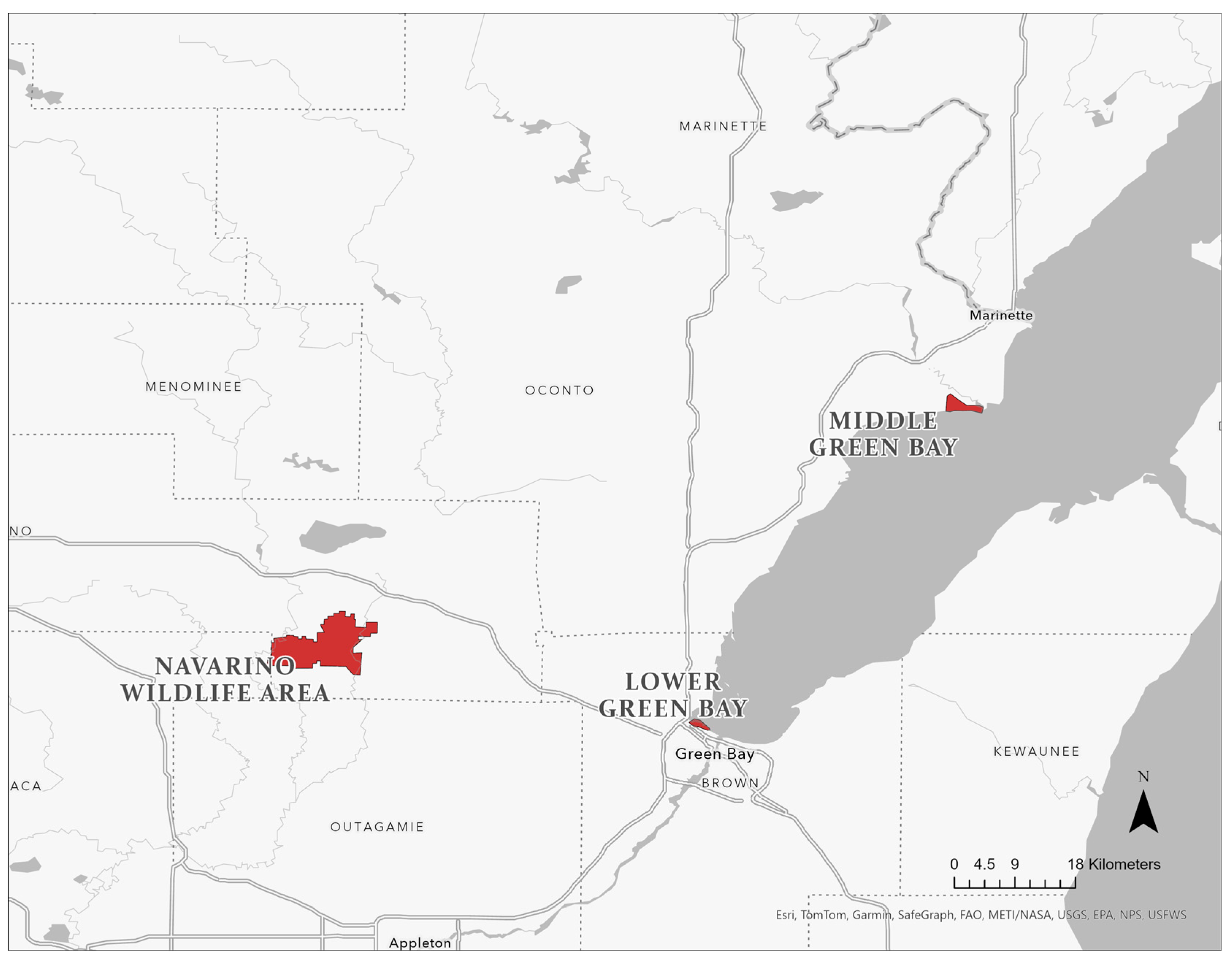
Figure 1. Locations of three sites in Northeastern Wisconsin (Navarino Wildlife Area, Lower Green Bay and Middle Green Bay) where mallard breast was collected for PFAS analysis indicated by a red polygon. Wisconsin County boundaries are indicated by the dashed lines.
Environments 13 00271 g001
Figure 2. Site locations for PFAS surface water collection in July 2024.
Environments 13 00271 g002
Figure 3. Site locations for PFAS surface water collection in September 2024.
Environments 13 00271 g003
Figure 4. Box plots of the PFOS concentrations measured in the duck breast tissue collected from Navarino and Middle Bay (A) and Lower Bay (B). Juvenile mallards from Navarino are not plotted because PFOS was not detected in any samples. The ducks collected from the Middle Bay are separated by species (e.g., mallards and wood ducks). The dashed lines represent the 10 ng/g and 40 ng/g health advisory thresholds.
Environments 13 00271 g004
Figure 5. Box plots of the PFAS detected in the mallard duck breast tissue excluding PFOS. Ducks from Navario are not included in the plots, as only PFOS was detected in the duck breast tissue. (A) Lower Green Bay PFAS detections for juvenile ducks. (B) Lower Green Bay PFAS detections for adult mallards. (C) Middle Bay PFAS detections from both adult mallards and wood ducks. The * symbol indicates that the Adult Middle Bay samples include both mallards and wood ducks.
Environments 13 00271 g005
Figure 6. Principal component analysis (PCA) and partitioning around medoids (PAM) clustering results from the July 2024 surface water samples. (A) Results with Dim1 explaining 49.1% of the variation and Dim2 explaining 23.1% of the variation. The relative proportion of N-EtFOSAA was the largest predictor for cluster groupings. (B) Site locations from Figure 2 with clusters identified from PCA.
Environments 13 00271 g006
Figure 7. Stack bar graph of the concentration (ng/L) of PFAS compounds detected in the surface water for the July 2024 (A), Bay September 2024 (B), and Duck Creek September 2024 (C) sampling events, respectively. Values on the X-axis indicate the sample location.
Environments 13 00271 g007
Figure 8. Stack bar graphs of the relative proportion of PFAS compounds detected in the surface water for the July 2024 (A), Bay September 2024 (B), and Duck Creek September 2024 (C) sampling events, respectively. Values on the X-axis indicate the sample location.
Environments 13 00271 g008
Figure 9. PFOS concentrations for the July 2024 sampling event. Sites with green points were below the Wisconsin surface water criteria of 8 ng/L. Orange and red points indicate sites above the surface water criteria with red sites having a higher concentration of PFOS than orange sites.
Environments 13 00271 g009
Figure 10. Map of the N-EtFOSAA concentrations for the July 2024 sampling event. Sites with a black symbol were below the detection limit. Sites with either a yellow or red symbol indicate N-EtFOSAA was detected with red sites having a higher concentration of N-EtFOSAA.
Environments 13 00271 g010
Table 1. Results from Dunn’s test comparison of mallard PFOS concentrations with Bonferroni-adjusted p values. Juvenile ducks from Navarino Wildlife Area are not included because no PFAS compounds were detected.
Comparisonp-Value (adj.)
Adult Lower Bay (N = 22)–Adult Middle Bay (N = 9)0.15
Adult Lower Bay (N = 22)–Adult Navarino (N = 15)<0.01
Adult Middle Bay (N = 9)–Adult Navarino (N = 15)0.52
Adult Lower Bay (N = 22)–Juvenile Lower Bay (N = 21)1.0 *
Adult Middle Bay (N = 9)–Juvenile Lower Bay (N = 21)0.07
Adult Navarino (N = 15)–Juvenile Lower Bay (N = 21)<0.01
* The p-value prior to adjustment was 0.7, so the Bonferroni adjustment led to a value greater than 1.
Disclaimer/Publisher’s Note: The statements, opinions and data contained in all publications are solely those of the individual author(s) and contributor(s) and not of MDPI and/or the editor(s). MDPI and/or the editor(s) disclaim responsibility for any injury to people or property resulting from any ideas, methods, instructions or products referred to in the content.