1. Introduction
Soil is a finite resource essential for food production, biodiversity, and climate regulation. At the same time, a vast number of soil contaminants, including heavy metals, petroleum hydrocarbons, pesticides, pharmaceuticals, microplastics, and other persistent organic pollutants, have been reported worldwide [
1,
2,
3]. These contaminants originated from a variety of pollution sources, especially in intensively used agricultural and industrialized areas, where they may have long-term impacts on ecosystem functioning and human health [
1,
2,
4].
Petroleum hydrocarbons (PHCs) are one of the most ubiquitous classes of soil contaminants due to the exploration, production, transport, refining, and accidental spills of oil and petroleum products. PHC-contaminated soils show reduced fertility, changes in microbial and faunal communities, and increased exposure to toxic and carcinogenic components of oil such as polycyclic aromatic hydrocarbons and volatile aromatics [
5,
6]. Remediation of PHC-contaminated soils is therefore a priority within many national regulatory frameworks and international environmental agreements [
7,
8].
Conventional physicochemical treatment technologies for petroleum-contaminated soils include excavation and landfilling, soil washing, thermal desorption or incineration, solvent extraction, and chemical oxidation. The rapid decrease in contaminant concentrations by these technologies has been well demonstrated; however, these techniques are energy-intensive and expensive, may transfer contaminants to other media, and may damage the soil structure and biological function, thus restricting their potential for site restoration and reuse [
9,
10]. These negative impacts have led to increasing interest in bioremediation approaches such as biosorption, biostimulation, and bioaugmentation, as an eco-friendly alternative technology [
10,
11]. Biostimulation (BS) and bioaugmentation (BA) have been demonstrated to yield positive outcomes in the enhancement of hydrocarbon biodegradation. Bioaugmentation refers to the addition of cultivated hydrocarbon-degrading microorganisms to contaminated soil and may involve either autochthonous (site-derived) or allochthonous (exogenous) consortia. Biostimulation refers to optimization of environmental conditions, such as nutrient supply, moisture, and aeration, to enhance the activity of resident or added degraders [
12,
13].
Bioaugmentation has been studied extensively at laboratory and field scales as a strategy to enhance PHC degradation rates in soil systems characterized by low native populations of hydrocarbon degraders or extreme environmental conditions. Research has found that consortia of hydrocarbon-degrading bacteria can significantly increase TPH removal when inoculated into contaminated soils along with sufficient nutrients and aeration [
14,
15,
16]. However, recent studies have also reported that the activity of introduced strains can be quite variable in real soils due to competition with native microbial communities, pollutant toxicity, moisture stress, and salinity, all of which can lead to lower survival and activity of inoculated microbes [
17,
18].
An important design decision when considering bioaugmentation is the use of indigenous consortia that have been enriched from the contaminated site, or the use of commercial exogenous products developed for a particular contaminant mixture, or some combination of both. Bioaugmentation using either indigenous or exogenous communities has been reported to enhance the removal of both TPH and volatile organic compounds (VOCs), but not always with a predictable degree of efficiency or stability [
19,
20]. In many cases, indigenous consortia that are acclimated to long-term exposure, salinity, or temperature extremes have been shown to be more persistent and degradative, while commercial inocula have had less than desired performance, or erratic behavior under field conditions [
14,
16]. This has been true for a range of petroleum pollutants in arid soils and indicates a need for site-specific assessments of the potential for indigenous versus exogenous commercial bioaugmentation.
The arid and hyper-arid oilfields, such as those in the Arabian Gulf region, face their own set of constraints. Elevated temperatures, high evaporation rates, low levels of organic matter, and moisture stress result in low abundance and activity of hydrocarbon-degrading microorganisms and limited natural attenuation [
21]. Weathered crude oil in arid zones is generally characterized by a predominance of high molecular weight and poorly soluble fractions that are less bioavailable and more recalcitrant to biodegradation [
22,
23]. However, few studies have directly compared indigenous and exogenous commercial consortia under controlled conditions in arid, nutrient-poor desert soils, and even fewer have translated degradation behavior into kinetic parameters that can support remediation planning in such environments.
Kuwait’s environment suffered extensive damage during the 1991 Gulf War. Numerous oil wells and other oilfield infrastructures were damaged, destroyed, and burned, as well as broken oil pipelines, resulting in massive amounts of oil spillage on the soil surface and underground. Large amounts of oil were released into Kuwait’s desert, forming nearly 70 oil lakes in shallow topographic depressions. Most of the soil around the oil fields has been impacted by hazardous substances [
24]. The Burgan Oil Field area was the most severely hit by the 1991 oil disaster. Approximately 90% of the 35.45 km
2 oil lakes formed in the area [
25,
26]. Kuwait is located in a semiarid region and has a harsh climate, with temperatures frequently exceeding 50 °C during the long, dry summer months [
27]. These legacy dry-oil-lake soils provide a relevant test case for low-input biological remediation in arid environments.
Extensive PHC contamination in Kuwait and other arid oilfields effectively removes large areas of soil from productive use, limiting land available for infrastructure, agriculture, or ecological restoration [
21,
22,
23]. These chronically contaminated desert soils returned to safe use using remediation technologies based on indigenous microbial communities, minimum water and nutrient management. Because such systems can be implemented using existing oilfield equipment and do not require energy-intensive thermal treatment or off-site disposal, they have the potential to improve remediation accessibility and affordability while also increasing the amount of land that can be returned to service in arid regions [
21].
Prediction of the temporal behavior of TPH degradation is an essential aspect of designing remediation systems as well as estimating remediation time to achieve desired cleanup goals. Kinetic models are often used to describe contaminant decay and to calculate rate constants, half-lives, and predicted remediation timescales for a given treatment regime. First-order or pseudo-first-order kinetics have been used to describe TPH decay in oil-contaminated soils undergoing bioremediation in many experimental and field studies, as these approaches provide simple but useful descriptors of process performance and permit comparison among treatments [
28,
29,
30,
31].
Despite advances in PHC bioremediation, two issues remain unresolved: (i) whether site-derived consortia outperform commercial inocula in arid sandy soils under controlled amendment regimes, and (ii) whether treatment performance can be translated into kinetic parameters suitable for cleanup planning. This is particularly relevant for Kuwait and similar arid regions, where extensive areas of sandy soil remain chronically contaminated and where water and nutrient management are the major challenges for remediation.
In this study, bench-scale bioaugmentation experiments were carried out using oil-contaminated sandy soils from the Burgan oil field in Kuwait. Remediation scenarios using an indigenous bacterial consortium, a commercial exogenous product, and uninoculated controls under controlled moisture, aeration, and nutrient conditions were compared based on TPH removal, microbial population dynamics, and environmental parameters over a 140-day period under controlled moisture, aeration, and nutrient conditions. The first-order kinetic model was used to compute degradation rate constants, half-lives, and time required to reach a cleanup criterion of 1 percent TPH for use in designing field-scale treatment of similar arid systems. The specific objectives were to: (i) quantify TPH degradation rates under different microbial amendments and environmental conditions in arid oil-contaminated soil; (ii) compare the effectiveness of indigenous microbial consortia and commercial exogenous strains for bioremediation of hydrocarbon-polluted soils; and (iii) calibrate and validate first-order kinetic models that can be used to estimate cleanup schedules under optimized treatment conditions, and support cost-effective positioning of bioaugmentation–biostimulation systems to restore contaminated desert soils to safe and productive use.
2. Materials and Methods
2.1. Soil Sampling
Soil was collected from old oil-contaminated sites within the Burgan oilfield, Kuwait, including dry oil lakes and oil-contaminated piles. Ambient temperature was 41 ± 2.11 °C during the sampling activity. Trial pits measuring 0.5 m × 0.5 m were excavated manually to depths of 0.30–0.50 m to determine the vertical distribution of contamination and to obtain representative samples. Composite soil samples were collected and bagged with care, sealed, and geo-referenced using GPS, and transported under controlled conditions (4 ± 1.5 °C) to avoid any external cross-contamination.
2.2. Soil Physicochemical Characterization
In the laboratory, the collected bulk soil samples were air-dried at room temperature, homogenized, and passed through a 2 mm sieve to remove stones and debris. The samples were characterized prior to the bioaugmentation experiments. Particle size distribution, pH, electrical conductivity (as an indicator of salinity), organic matter content, and basic nutrients (N, P, K) were determined using standard ASTM and USEPA procedures [
32,
33]. The soil was classified as sandy, comprising approximately 80% sand and 20% fines/coarse fragments. Soil pH ranged from 6.8 to 8.5. Electrical conductivity values of 3487.5 µS cm
−1 indicated moderate to high salinity conditions, while organic matter content and nutrient levels (NPK) were low, consistent with typical arid desert soils. These physicochemical characteristics are important factors influencing microbial activity and hydrocarbon biodegradation.
2.3. Culture-Based Isolation and Enumeration of Hydrocarbon-Degrading Bacteria
The collected soil samples served as the reservoir of indigenous TPH degraders. Various bacterial taxa were isolated from the soil using nutrient agar, whereas plate count agar was employed for the enumeration of Cultivable Heterotrophic Bacteria (TCHB) by the dilution plate technique. A diverse range of hydrocarbon-degrading bacteria, including Pseudomonas spp., Bacillus spp., and Acinetobacter spp., were identified in these isolates.
Microbial abundance was quantified using the colony-forming unit (CFU). Diluted soil suspensions were plated on nutrient agar plates and incubated at 36 ± 1.5 °C for 24 h. In summary, approximately 1 g of soil was suspended in 9 mL sterile saline solution (0.9% NaCl) and serially diluted. Aliquots from appropriate dilutions were spread on nutrient agar plates and incubated at 36 ± 1.5 °C for 24 h, after which colonies were enumerated and expressed as colony-forming units (CFU) per gram of soil. Upon completion of the incubation period, the number of colonies that grew on the plates was counted, thereby providing an estimate of the viable population of microbes capable of degrading hydrocarbons [
34]. Initial indigenous counts in soil before treatment and enrichment were recorded on the order of 10
2 CFU g
−1. The hydrocarbon-degrading bacteria, specifically the genera
Pseudomonas spp. and
Bacillus spp., were further isolated and enriched using various media recipes, including cetrimide selective media, which was used to isolate
Pseudomonas spp., mineral salts agar supplemented with diesel or crude oil as the sole source of carbon [
35]. The composition of one liter of culture medium consisted of 5 g of yeast extract, 5 g of proteose peptone, 5 g of soya peptone extract, 0.5 g of dextrose, 0.5 g of soluble starch, 3 mL of diesel as a carbon source, 0.3 g of dipotassium phosphate, and 0.05 g of magnesium sulfate. A 0.85% NaCl solution, filtered via a 0.22 μm Minisart Syringe Filter (Sartorius, Göttingen, Germany), served as the diluent solution. All cultivations were performed under aerobic conditions at 36 ± 1.5 °C for one week without agitation. All media were subjected to autoclaving at 121 °C for 15 min prior to utilization.
The proliferation of colony-forming units of hydrocarbon-degrading bacteria is typically employed to confirm inoculant establishment and associate microbial population growth with improved total petroleum hydrocarbon (TPH) removal, with
Pseudomonas and
Bacillus often recognized as predominant degraders through culture-based, selective media methodologies [
36]. Culture-based screening recovered colonies assignable to
Pseudomonas spp. and
Bacillus spp.; these data describe the cultivable fraction and should not be interpreted as a full characterization of community structure or diversity [
37].
2.4. Indigenous and Exogenous Commercial Microbial Inocula
Indigenous bacteria capable of degrading crude oil were isolated and enriched from contaminated Kuwaiti soils used in this study. The indigenous consortium, comprised of genera
Pseudomonas spp. and
Bacillus spp., was later used as the primary bioaugmentation inoculum. Enrichment and cultivation of the taxa were performed under controlled laboratory conditions until a dense mixed consortium was obtained. For bioaugmentation, the enriched indigenous consortium, dominated by
Pseudomonas spp. and
Bacillus spp. was adjusted to approximately 10
8 CFU mL
−1. Preliminary calculations indicated that 150 mL of inoculum was necessary to inject 10 kg of soil, and this ratio served as a guideline across all indigenous treatments, with minor modifications based on periodic microbial enumeration to attain satisfactory TCHB on soil. The proliferation of microbes was monitored by colony-forming unit (CFU) counts, which were recorded at specific intervals (Day 0, 60, and 100) to estimate microbial abundance. A commonly cited benchmark for an effective bioaugmentation entails attaining at least 10
6 CFU g
−1 soil, a threshold which was attained in all the experimental treatments in this study [
38].
The exogenous commercial inoculum comprised hydrocarbon-degrading microorganisms formulated with carriers and fillers and was produced in the United States. It typically consisted of aerobic heterotrophic bacteria tolerant to moderate temperature (30–40 °C). Their inclusion was based on their demonstrated ability to metabolize a wide spectrum of hydrocarbons; therefore, their application in the study was as a comparative control against indigenous microbial treatments. The commercial inoculum was prepared and applied following the supplier recommendations, which specified dissolving 250 g of bacterial powder in 250 mL of water and adding and mixing in each tray containing 10 Kg of soil at rates intended to provide a similar order of magnitude of microbial cells per unit soil as the indigenous treatments.
2.5. Experimental Design and Treatments
Bioaugmentation experiments were carried out in metal trays under laboratory bench-scale conditions. Homogenized oil-contaminated soil was allocated to 12 trays corresponding to ten replicate treatments (EXP-1 to EXP-10) and two controls (CONT-1 and CONT-2). The experimental design consisted of replicated treatment groups under uniform experimental conditions. Replicate treatments EXP-1 to EXP-3 represented three identical groups of indigenous bacteria (Group A), characterized by slightly moderate TPH percentages. The treatments EXP-4 to EXP-6 also consisted of triplicate units of Indigenous bacteria (Group B), which exhibited moderate TPH percentages. EXP-7 was established as a single unit utilizing indigenous bacteria for higher TPH percentages due to limitations pertaining to soil availability (Group C). EXP-8-EXP-10 comprised triplicate units of the exogenous commercial microbial consortium treatment (Group D). Two uninoculated control trays (CONT-1 and CONT-2) were included in duplicate (Group E). Each experimental replica was allocated an independent soil tray containing 10 kg of homogenized contaminated soil. Ten treated trays and two controls were established: Group A, indigenous consortium (n = 3), 2.49 ± 0.10% TPH; Group B, indigenous consortium (n = 3), 3.50 ± 0.16%; Group C, indigenous consortium (n = 1), 4.59%; Group D, commercial consortium (n = 3), 2.64 ± 0.50%; and Group E, uninoculated control (n = 2), 4.78 ± 0.35%. Because baseline TPH differed among groups, Group C was interpreted descriptively and cross-group statistical comparisons emphasized replicate-derived kinetics rather than final concentration alone.
Mean baseline Total Petroleum Hydrocarbon (TPH) contents in each group are given in
Table 1, with initial values ranging from about 2.49 ± 0.1% to 4.78 ± 0.35% (
w/
w). The baseline results and the subject treatment approach were as follows:
All group replicates were adjusted to 10.5 ± 0.5% (
w/
w) moisture at the start of the experiment and maintained within this range throughout the 140-day incubation period by periodic irrigation. This moisture content was selected to provide sufficient water availability for microbial activity while maintaining adequate soil aeration in sandy soils, thereby avoiding anoxic conditions that can inhibit aerobic hydrocarbon degradation. The selected range is consistent with moisture levels commonly applied in controlled bioremediation and landfarming practices in arid environments. To improve aeration and oxygen availability, soils in all active treatments were physically tilled at regular intervals. A regulated drip-irrigation system was used, which provided the frequent supply of moisture without causing waterlogging that can lead to anoxic environments, which makes aerobic biodegradation ineffective [
39].
Nutrient amendments containing N and P were supplemented to the bioaugmented trays to approximate a target C:N:P ratio of 100:10:1, which is a balance widely recognized to accelerate hydrocarbon breakdown as recommended by Ou et al. [
40]. To ensure proper nutrient balance, approximately 66 g of urea and 15 g of potassium phosphate were introduced into the soil three times in liquid form throughout the study duration, and the solution was distributed uniformly to ensure microbial access. Organic amendments, including animal manure (100 g) and wood chips (50 g), were added to further support the bioaugmentation process in the present study. Manure was added to improve the structure of the soil, moisture retention level, and microbial diversity [
41].
The indigenous inoculum (150 mL per 10 kg soil) and the exogenous commercial consortium solution (250 g in 250 mL water) were applied evenly across the soil surface in the relevant trays, followed by thorough mixing to achieve uniform distribution of cells. Differences in liquid volume associated with the inocula were accounted for during moisture adjustment, and all treatments were maintained at a consistent moisture content of 10.5 ± 0.5% (w/w) throughout the experiment. Inocula were applied three times over 140 days.
Soil samples were collected on days 0, 15, 30, 45, 60, 75, 90, 100, 115, and 140 days, to monitor TPH and microbial population dynamics.
2.6. Enumeration of Cultivable Heterotrophic Bacteria (TCHB) During Treatment
At selected sampling intervals, soil subsamples from each tray were collected aseptically to determine changes in total heterotrophic bacterial populations and to evaluate the necessity of re-injecting the inoculum during the study. TCHB population in the soil matrix was assessed using the drop plate method as delineated by Lally et al. [
42]. In summary, 1 g of moist soil was suspended in 9 mL of sterile 0.9% saline solution to create a 10
−1 dilution, vortexed, and serially diluted to 10
−9. Aliquots from appropriate dilutions were plated on nutrient agar and incubated at 36 ± 1.5 °C for 24 h. Colony counts were then converted to CFU g
−1 dry soil to assess the required inoculum quantities to be added, following Equation (1). This procedure was repeated throughout the 140-day period to track the response and adaptability of native and commercial consortia and to relate microbial abundance to TPH removal. Cultured media were prepared for bacterial enrichment.
where ΣC is the total colony count from multiple drops, n is the number of drops (5), 100 is a conversion factor from 10 μL to 1 mL, and 10
−d is a dilution factor.
2.7. Determination of Total Petroleum Hydrocarbons (TPH)
TPH in soil was quantified as oil and grease (hexane extractable material, HEM) according to USEPA method 9071B [
43], performed by an accredited external laboratory. This is a gravimetric, solvent-extraction–based approach widely used for regulatory compliance in petroleum-contaminated soils [
44]. Therefore, using TPH-HEM ensures that measured concentrations are directly comparable to established regulatory thresholds and suitable for formal reporting of remediation performance [
21,
45].
For each analysis, about 5 g of soil were air-dried at ≤40 °C and ground to a fine powder. The homogenized soil was mixed with anhydrous sodium sulfate and extracted with 10 mL n-Hexane (C6H14) in a sealed vessel with vigorous mixing. The suspension was centrifuged to separate the solid and solvent phases, and the solvent layer was carefully decanted. The extraction step was repeated twice, and the extracts were pooled to maximize recovery.
The combined extract was left to evaporate at room temperature for approximately 24 h until all solvent had been removed. The residual oil was weighed gravimetrically, and TPH concentration was expressed as percent HEM on a dry weight basis. Mean initial TPH contents for each group are reported in
Table 1.
TPH removal was calculated as described in Equation (2) [
45]:
where C
0 = initial TPH concentration in soil (mg/Kg) and C
t = TPH concentration at a specific time (mg kg
−1).
2.8. Biodegradation Kinetic Model
To describe the temporal reduction of TPH and to derive parameters useful for remediation planning, a first-order kinetic model was applied to all treatments. First-order kinetics were used to estimate TPH degradation rates across all treatments. Under controlled conditions of oxygen, soil moisture (10.5 ± 0.5%), nutrients (C:N:P = 100:10:1), and microbial inoculation, first-order kinetic modelling was employed [
13,
28]. The model assumes that the rate of TPH degradation is proportional to residual hydrocarbon concentration, as expressed in Equation (3):
where C is TPH at time t, C
0 is initial TPH, and k is the degradation rate constant (day
−1). Linearization of Equation (3) gives Equation (4):
The half-life
calculation is given by Equation (5):
A threshold cleanup criterion of 1% TPH (10,000 mg kg
−1 dry weight) was used, as this is considered the regulatory target for oil-contaminated soil treatment in Kuwait [
46]. The expected time to reach the cleanup criterion of 1% TPH (10,000 mg kg
−1) was estimated using Equation (6):
where C
0 is the initial TPH concentration in the tray, and C
target is 1% TPH, which is equivalent to TPH 10,000 mg/kg as the threshold concentration in the present study.
For each independent replica, the degradation rate constant k and the coefficient of determination (R
2) were obtained by linear regression of ln(C
t/C
0) versus time. The slope of the regression line represented−k under first-order kinetic assumptions. These parameters were subsequently used to evaluate biodegradation efficiency, persistence of residual contamination, and suitability of the native and commercial inocula for field-scale applications. The reason for the selection of the first-order kinetic model is its applicability in the description of microbial degradation pertaining to organic pollutants. Nevertheless, it is worth mentioning that the given model presupposes the stability of the conditions, which may not fully account for the variability in the environmental conditions, e.g., temperature, humidity, and nutrient supply. Despite these shortcomings, the first-order model is a widely utilized instrument in the field of environmental remediation, and its projections are valuable in the management of large-scale bioremediation operations [
13]. The predictions of the model were validated against the experiment data by comparing the predicted degradation rates and cleanup times with the actual experimental data (linear regression ln(C
t/C
0) vs. time).
2.9. Environmental Conditions During Incubation
Throughout the 140-day experimental period, key environmental variables identified to influence hydrocarbon biodegradation were monitored and, where possible, controlled. Except for the Control-2, mean moisture content in all active treatment groups was maintained at 10.5 ± 0.5% (w/w) by periodic watering, and soils were tilled regularly to improve porosity and oxygen diffusion. Nutrient supply was adjusted to maintain an approximate C:N:P ratio of 100:10:1 in bioaugmented trays. Soil pH was maintained at (7.5 ± 0.5), and temperature was maintained at 26 ± 0.5 °C; both were recorded periodically to ensure that conditions remained within ranges favorable for mesophilic hydrocarbon-degrading bacteria.
2.10. Statistical Analysis
All experimental data were compiled and organized in Microsoft Excel (Microsoft Corporation, Redmond, WA, USA) and subsequently analyzed using SPSS Statistics version 27 (Statistical Package for the Social science; SPSS Inc., Chicago, IL, USA). To check data normality, the Shapiro–Wilk and Kolmogorov–Smirnov tests were employed, while Levene’s test was utilized to evaluate homogeneity of variances. Variables that satisfied parametric assumptions (p > 0.05) were presented as mean ± standard deviation (SD).
To evaluate degradation performance among treatments, first-order decay constants (k) were derived from the linear regression of ln(Ct/C0) versus time for each replicate. The resultant k values served as the primary dependent variable for evaluating treatment efficacy. Statistical differences in degradation rates among treatments were assessed using one-way Analysis of Variance (ANOVA). When significant effects were detected (p < 0.05), Tukey’s Honestly Significant Difference (HSD) or Duncan’s Multiple Range Test was employed for post hoc pairwise comparisons. Temporal changes were evaluated using repeated-measures ANOVA, with time as the within-subject factor and treatment as the between-subject factor. For all statistical tests, the threshold for significance was established at p < 0.05.
3. Results and Discussion
3.1. TPH (HEM) Reduction During the Bioaugmentation Process
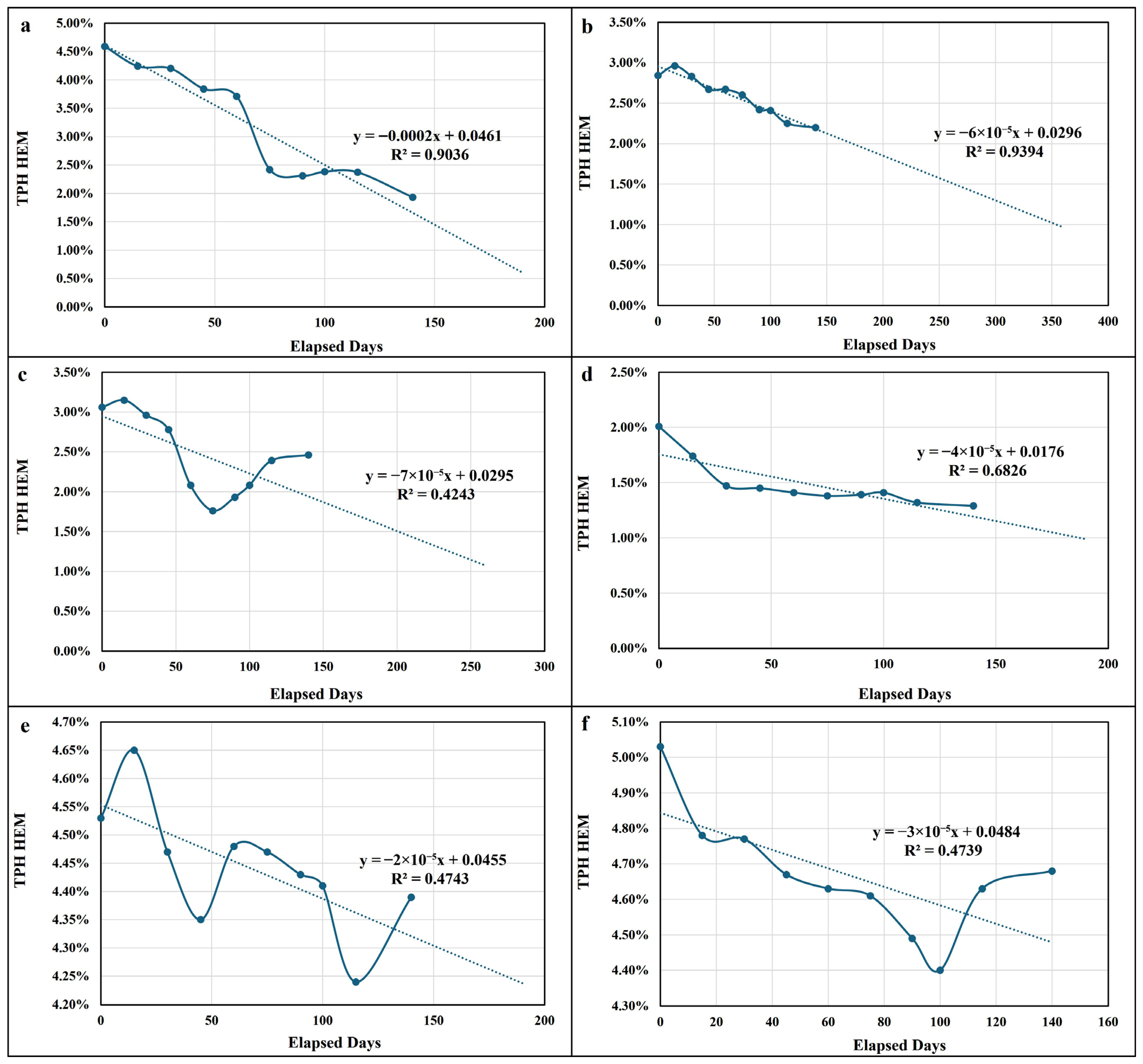
Initial TPH contents in soils from the Burgan oilfield (ranging from 2.49 ± 0.1–4.78 ± 0.35% w/w) indicate long-term petroleum contamination. Among the replicated indigenous treatments, Group A (n = 3) and Group B (n = 3) showed stronger TPH decline than the commercial treatment, whereas Group C (n = 1) is reported descriptively because it was represented by a single tray.
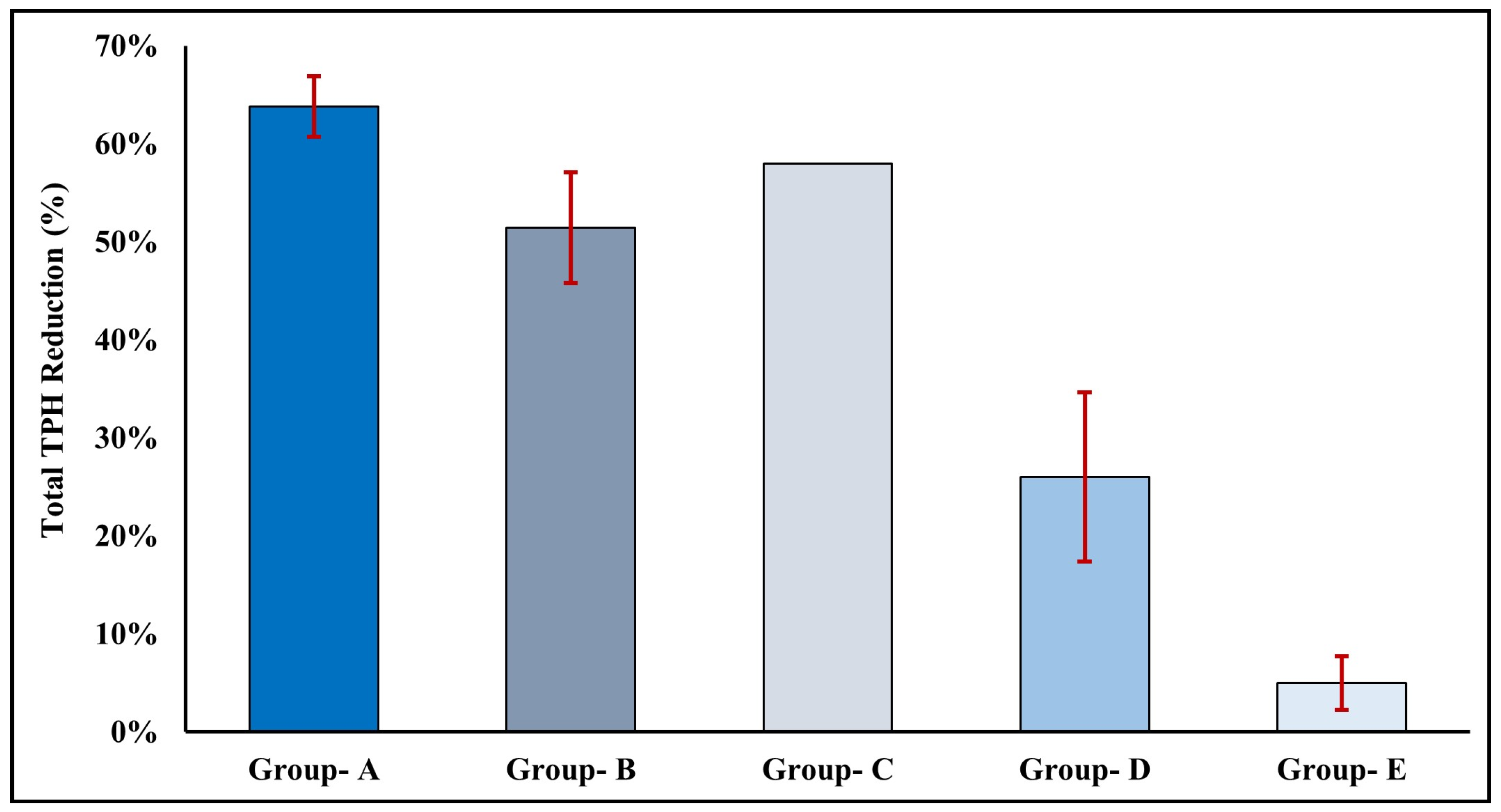
In slightly to moderately contaminated soils (2.49 ± 0.1% TPH) represented by Group-A (
n = 3), treated with the indigenous consortium, achieved 63.8 ± 3.11% TPH removal within 140 days, lowering TPH levels below the 1% cleanup criterion (
Table S1 and
Figure 1). These removal efficiencies are comparable to those reported in other studies using native consortia, where optimized bioaugmentation combined with biostimulation resulted in 77–94% TPH removal within 60 days [
47], and 59–60% diesel degradation in less than one month in joint bioaugmentation–biostimulation systems [
48].
At moderate initial TPH contents (3.50 ± 0.16%) represented by Group-B (
n = 3), the indigenous consortia further removed 51.45 ± 5.67% of TPH over 140 days, although final concentrations were marginally above 1% (
Table S1 and
Figure 1). Furthermore, at slightly higher initial TPH contents (4.59%) represented by Group-C (
n = 1), the indigenous consortia still removed 58% of TPH in a single treatment tray over 140 days, although final concentrations remained slightly above 1% (
Table S1 and
Figure 1). This decline in efficiency at higher contamination loading is consistent with reports that increasing toxicity and reduced bioavailability of heavy hydrocarbon fractions progressively constrain biodegradation as TPH levels rise. A similar pattern has been observed for bioaugmentation with halotolerant consortia in highly contaminated saline soils, where TPH removal is almost complete in well-buffered laboratory systems but becomes slower and less complete in heavily weathered or salt-stressed soils [
49,
50].
In contrast, the exogenous commercial consortia showed markedly different behavior. In comparable less contaminated soil (2.64 ± 0.5%) represented by Group-D (
n = 3), the consortium removed approximately 26 ± 8.64% of TPH over the same period of 140 days, reaching a final TPH content of 1.98 ± 0.61%, whereas replica EXP 9 achieved only 19.6% removal and a final content of 2.46% TPH (
Table S1 and
Figure 1). Higher variability (SD) was observed in exogenous consortia (Group-D), which indicates less consistent degradation performance compared to indigenous groups. This outcome is consistent with findings from many exogenous bioaugmentation studies, where allochthonous consortia often reduce TPH but seldom outperform well-adapted native communities unless optimized formulations or immobilization technologies strongly support them. For example, an exogenous bioaugmentation system using an immobilized mixed consortium achieved a 44% reduction in TPH within three months, while a parallel native consortium under landfarming conditions removed up to 80% of the oil [
51]. Similarly, in highly contaminated soils from China and Kuwait, a consortium of five exogenous strains enhanced TPH degradation relative to nutrient-only controls, but the extent and consistency of removal varied considerably among soils, reflecting strong site-specific constraints [
52].
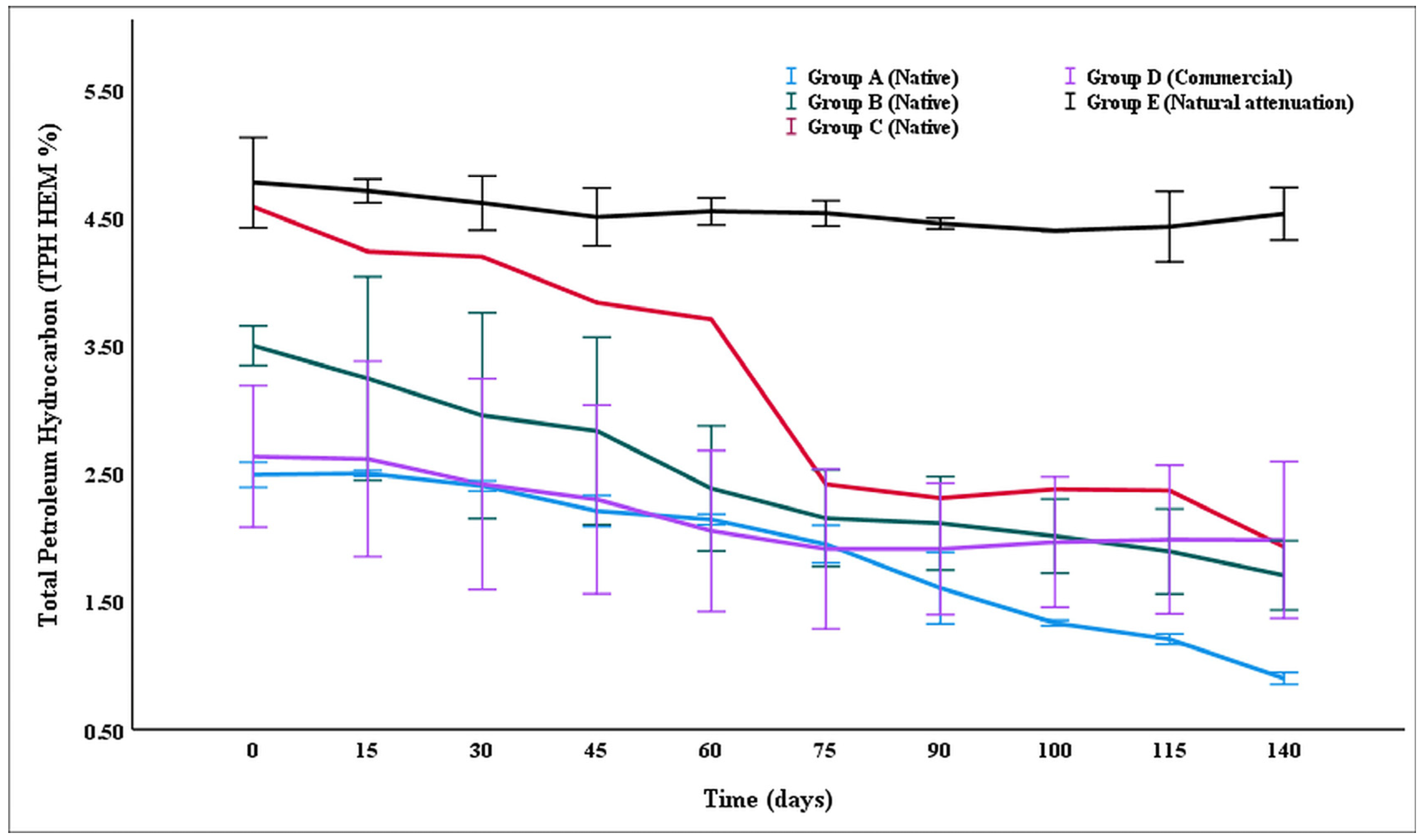
Natural attenuation was minimal in this study. In the water-only and uninoculated controls, TPH concentrations declined by only 5.00 ± 2.73% over 140 days (
Table S1;
Figure 1 and
Figure 2). Similar behavior has been documented in other bioaugmentation studies, where unamended or nutrient-only treatments show limited TPH reductions, whereas bioaugmentation with native consortia, when supplied with optimized nutrients and aeration, achieves much higher removal efficiencies [
47,
48]. Taken together, these findings indicate that bioaugmentation with native consortia, supported by balanced C:N:P ratios and appropriate moisture control, is far more effective than using commercial inocula or relying on natural attenuation for the remediation of heavily contaminated arid soils (
Figure 1).
Treatment effects were evaluated primarily from replicate-level decay constants and within-group temporal trends; comparisons of final TPH were interpreted in light of differing baseline contamination. The temporary elevations in recorded TPH concentrations (
Table S1) may reflect soil heterogeneity, redistribution of hydrocarbons during mixing, analytical variability, or moisture-related changes in extractability rather than genuine hydrocarbon production. Similar short-term TPH fluctuations are frequently reported in field-scale bioremediation studies and do not contradict the overall degradation trend [
53,
54].
Although bulk TPH-HEM was used as the primary regulatory endpoint, class-level SARA fraction data were also obtained for selected treatments (Groups A, B, and D) to provide additional insight into compositional changes during biodegradation (
Tables S2 and S3). These data indicate a greater reduction in the more labile hydrocarbon fractions, particularly saturates and aromatics, whereas the heavier fractions were comparatively more persistent over time. This trend was more evident in the indigenous treatments than in the commercial consortium treatment. However, individual PAHs, volatile hydrocarbons, and ecotoxicological endpoints were not quantified, and therefore compound-specific risk reduction could not be resolved.
3.2. Microbial Population Dynamics
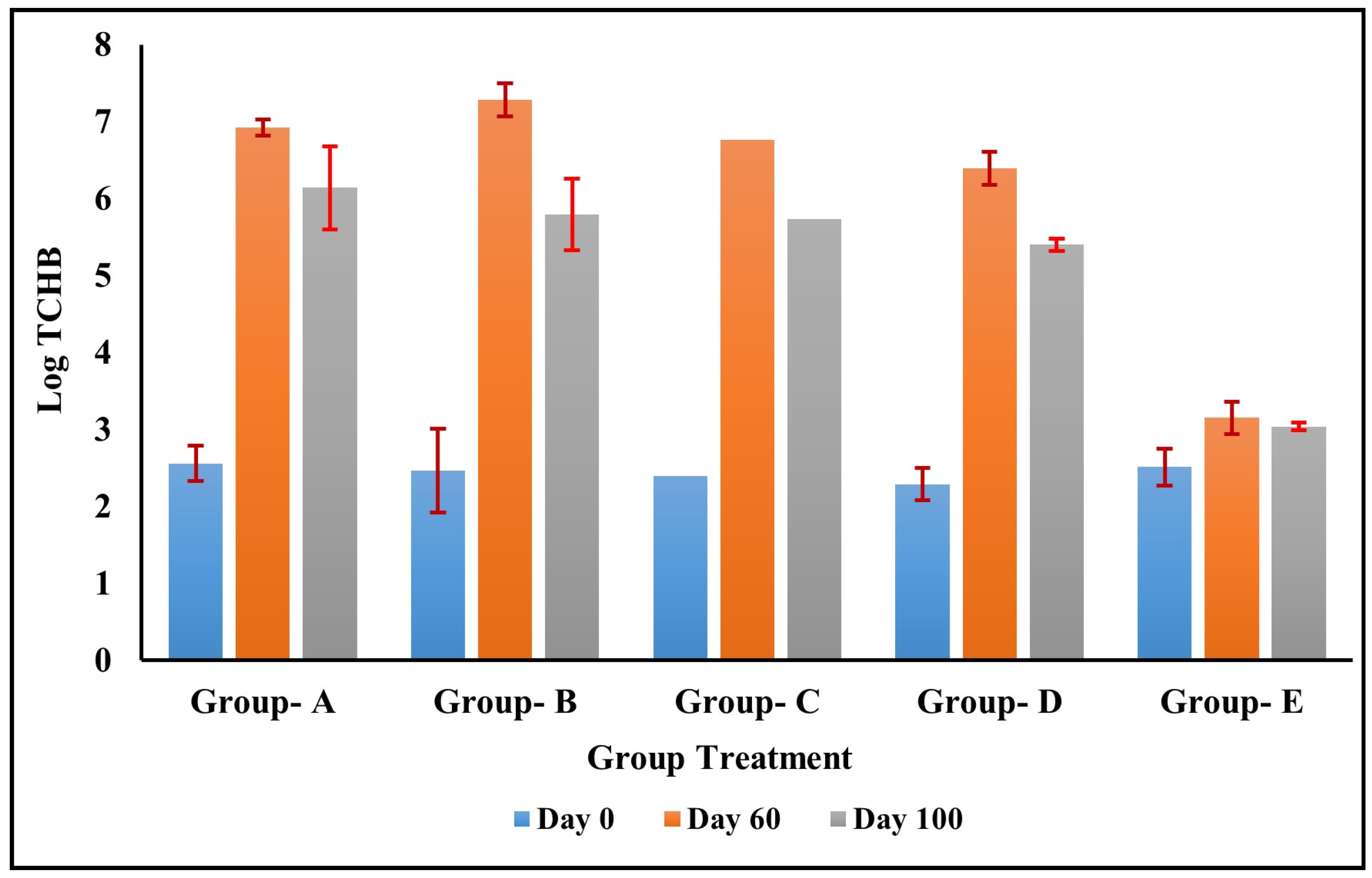
Total cultivable heterotrophic bacteria (TCHB) exhibited treatment-specific temporal responses that corresponded with the observed trends in total petroleum hydrocarbon (TPH) degradation (
Figure 3). On day 0, all groups exhibited similar baseline bacterial counts (log scale), indicating prior adaptation of the native microbial community to prolonged petroleum exposure.
In the indigenous bioaugmentation treatments (Groups A–C), TCHB increased by day 60, aligning with the most notable phase of TPH reduction. Group A, which attained the greatest overall TPH reduction (63.8 ± 3.11%), exhibited persistent microbial enrichment under optimal moisture and nutrient conditions. Groups B and C exhibited significant biomass growth, while responses were slightly reduced at higher initial TPH concentrations, indicating potential substrate inhibition or toxicity effects at higher hydrocarbon concentrations.
By day 100, bacterial populations in Groups A–C had declined slightly; however, they remained elevated relative to baseline values. This decrease aligns with substrate depletion and the switch from exponential development to a maintenance phase, similar to the first-order degradation trend shown in the kinetic study. These treatments also showed the highest decay constants (
Table 2 and
Table 3), and together with the patterns in
Figure 2 and
Figure 3, this supports a link between increased microbial activity and hydrocarbon reduction.
In contrast, the commercial consortium treatment (Group D) showed a less stable population trajectory. Despite an increase in TCHB by day 60, the level of enrichment was lower than that seen in the indigenous treatments, and a subsequent decrease was apparent by day 100. This trend aligns with the understanding that exogenous strains generally have restricted persistence in particular ecological contexts. During the incubation period, Group E (natural attenuation) demonstrated negligible variations in TCHB, reflecting the slight decrease in TPH noted within this group.
The positive relationship between increased bacterial abundance and TPH depletion aligns with earlier work on consortium-based bioaugmentation in diesel- and crude oil-contaminated soils. Chaudhary et al. [
55] reported that bioaugmentation with a microbial consortium combined with nutrient amendments in aged diesel-contaminated soil enhanced total bacterial abundance and shifted the community toward hydrocarbon degraders, which occurred in parallel with substantial TPH removal. Similarly, Li et al. [
48] showed that indigenous consortia can become enriched in hydrocarbon-degrading taxa and associated functional genes during bioaugmentation, whereas exogenous consortia frequently fail to persist under field conditions. In high-salinity crude oil-contaminated soils, Chen et al. [
49] demonstrated that a halotolerant, biosurfactant-producing consortium maintained stable 16S rRNA and alkB gene abundances under combined bioaugmentation and biostimulation, consistent with sustained degradation activity.
In contrast, the weak and unstable performance of the commercial consortia in Group D is in line with reports that exogenous inocula often face intense competition and environmental stress in situ, leading to rapid decline or replacement by indigenous communities. A combined field and microcosm study using an indigenous consortium from highly oil-saturated desert soil showed that bioaugmentation with a constructed consortium did not significantly outperform the native community, and that indigenous populations ultimately dominated hydrocarbon consumption [
56]. Recent reviews of bioaugmentation outcomes similarly highlight that introduced strains rarely remain dominant, and that successful application depends strongly on the ecological compatibility of the consortium with the resident microbiota and soil conditions [
57]. Therefore, the microbial dynamics data from this study and the broader literature indicate that the most robust strategy is to harness well-adapted indigenous consortia, using bioaugmentation primarily to shorten lag phases and enhance indigenous degrader populations, rather than to replace them with foreign commercial strains.
3.3. Biodegradation Kinetics and Model Performance
TPH degradation across treatments was characterized by a first-order kinetic model derived from the linear regression of ln (TPH) versus time. Decay constants (k) were estimated at the replicate level and subsequently employed as the sole variable for statistical comparison of treatments. This kinetic model provides a more comprehensive evaluation of degradation performance than just a comparison of discrete concentration data, as it incorporates the full temporal profile into an analytically informative framework.
3.3.1. Rate Constants and Remediation Timeframes
The indigenous bioaugmentation treatments (Groups A, B, and C) consistently outperformed commercial inoculation (Group D) and natural attenuation (Group E). In Group A (slightly moderate initial TPH levels), the mean decay constants (k) were 0.0075 ± 0.0004 day
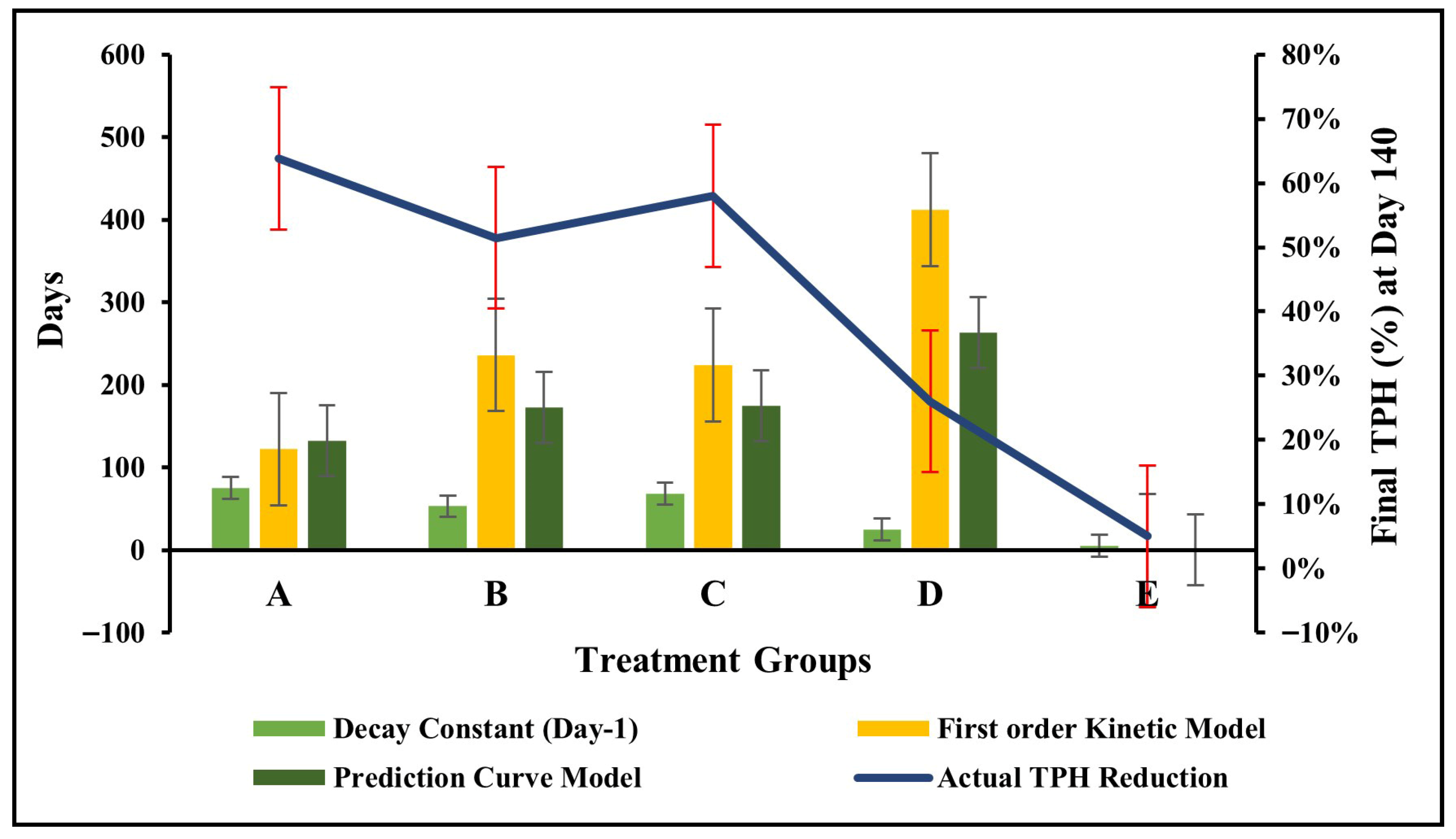
−1, corresponding to half-lives of 93 ± 5 days, indicating that about 122 ± 1 days would be required for the remediation to achieve the 1% threshold. These estimates closely matched the observed remediation period of 140 days (
Table 2 and
Table 3), hence validating the model’s predictive capability. In Groups B and C (moderate to higher initial TPH), k values between 0.0053 ± 0.0006 and 0.0068 day
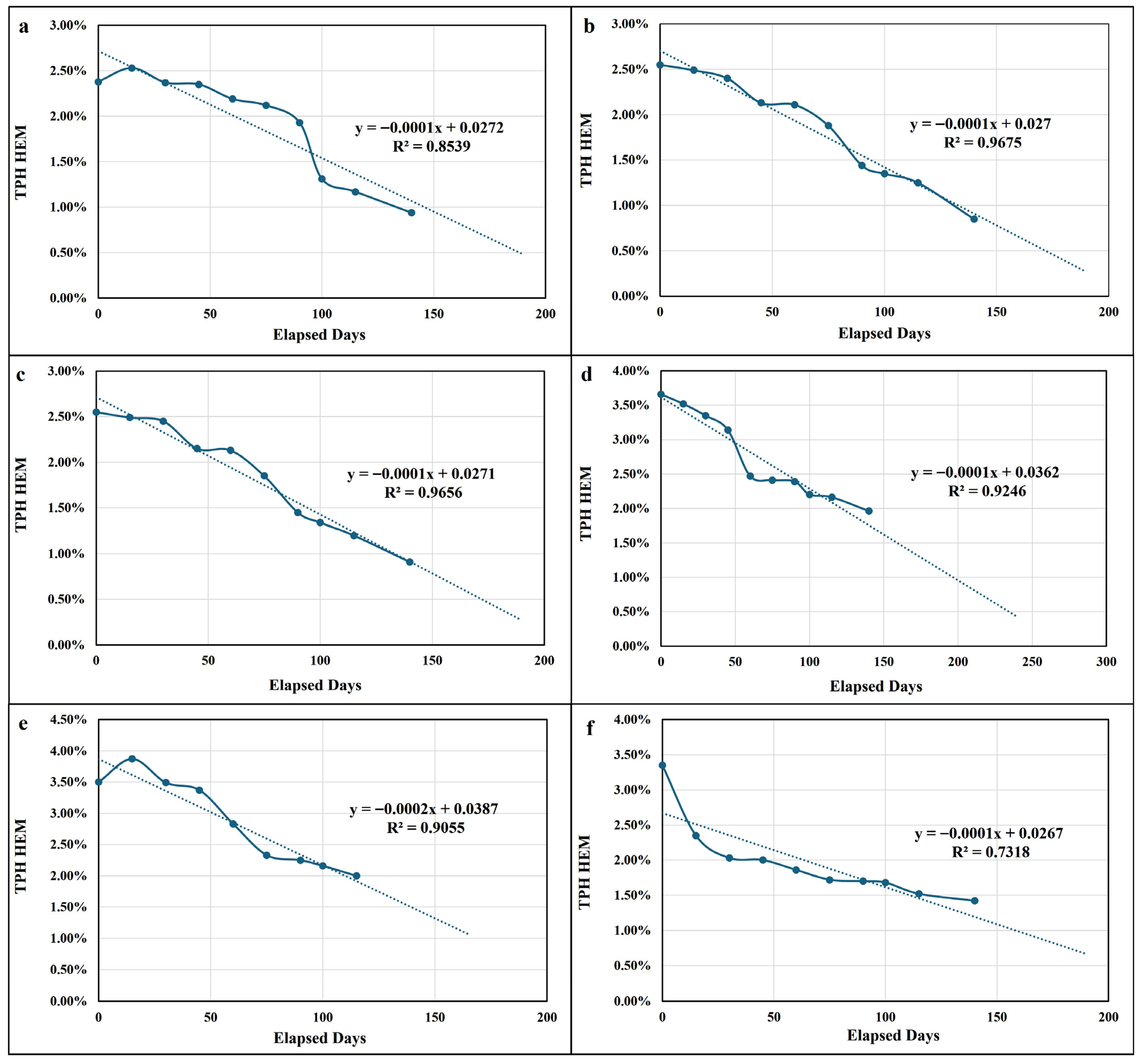
−1 resulted in half-lives of 133 ± 14 (Group-B) to 102 days in the single treatment (Group-C). The predicted cleanup time for Group B was about 240 ± 29 days, consistent with the slower decline in TPH observed experimentally (
Table 2 and
Table 3;
Figure 4). For Group C, the predicted cleanup time was about 225 days (
Table 2 and
Table 3;
Figure 5). These kinetic contrasts clearly identify the indigenous bioaugmentation strategy as the optimal approach for attaining realistic remediation time frames.
In contrast, the commercial consortium and control treatments had significantly lower decay constants and markedly longer half-lives. For Group-D, the rate constant, k, was approximately 0.0025 ± 0.0003 day
−1, corresponding to a half-life of about 281 ± 36 days, and predicted cleanup times of about 386 ± 105 days (
Table 2 and
Table 3;
Figure 5), whereas the controls in Group-E exhibited a negligible k value of 0.0005 ± 0.0001 day
−1, with prolonged predicted half-lives of 1552 ± 423 days. The poor model fit for the control group (R
2 = 0.47 ± 0.0001) and an unrealistic estimated half-life of 1552 ± 423 days underscore the constraints of intrinsic biodegradation to attain the cleanup threshold under these conditions (
Table 2 and
Table 3).
Biodegradation rates were quantified using rate constants derived from a first-order kinetic model, and the resulting trends are summarized in
Figure 4 and
Figure 5 using the prediction-curve model. The graphs show the temporal patterns of TPH reduction at different contamination levels and under various treatment protocols, comparing a consortium of indigenous microorganisms with commercial strains over a treatment duration of 140 days. The first-order kinetic model closely reproduced the observed TPH degradation profiles, indicating good agreement between predicted and measured values. The first-order model fit the indigenous treatments reasonably well but was less reliable for the commercial and control treatments, where replicate R
2 values were lower and more variable. This concordance supports the reliability of the model for scaling up bioaugmentation and biostimulation strategies to full-scale field applications.
3.3.2. Statistical Validation and Comparative Performance
One-way (ANOVA) confirmed highly significant differences in K values across treatments (F = 136.4,
p < 0.001) (
Table S4). Post hoc comparisons among replicated groups indicated that the replicated indigenous treatments (Groups A and B) had higher decay constants than the commercial treatment and uninoculated controls (
p < 0.05). Group C (
n = 1) was not included in inferential comparisons and is interpreted descriptively.
The first-order model exhibited robust predictive accuracy for the indigenous groups, with (R
2) between 0.89 and 0.90. This indicates that the model effectively accounts for the temporal variation in TPH removal under optimized nutrient and moisture conditions. In contrast, the lower R
2 values recorded in the commercial and control treatments (0.67 and 0.47, respectively;
Table 2 and
Table 3) indicate irregular TPH dynamics that a basic first-order model fails to represent effectively.
Figure 6 summarizes the contrast in modeled versus observed cleanup performance.
3.3.3. Analysis of Kinetic Trends
These findings are consistent with other consortium-based bioaugmentation studies, in which first-order or pseudo–first-order models have been successfully fitted to indigenous consortia under optimized conditions. Popoola et al. [
47] showed that a response-surface-based kinetic model captured crude oil degradation up to 93.75% removal by bacteria isolated from a contaminated native site, with close agreement between predicted and measured TPH concentrations. In a related study, Chen et al. [
49] reported that hydrocarbon depletion in saline soils bioaugmented with a halotolerant consortium followed well-defined first-order trajectories, and that rate constants increased when bioaugmentation was combined with biostimulation.
Recent modeling approaches for exogenous consortia likewise employ first-order or similar kinetic formulations, yet they frequently yield lower rate constants and larger gaps between model outputs and field observations, often attributed to inoculum loss or functional mismatch with the receiving environment [
51,
57]. Our results, therefore, further support the view that first-order kinetics perform most reliably when applied to bioaugmentation with well-adapted native consortia under controlled nutrient supply and aeration.
In contrast, the commercial consortia and control treatments showed low-rate constant (k) values and very low R
2 values (
Table 2 and
Table 3), indicating that first-order kinetics do not adequately represent the observed TPH dynamics in these systems. Under such conditions, estimates of half-life and remediation time should be treated cautiously, and the sustained TPH levels imply that additional mechanisms, including mass transfer constraints, toxic effects, or nonbiological losses, may be significant. Future modeling efforts could therefore benefit from biphasic or diffusion-limited kinetic frameworks for describing TPH behavior in heavily weathered soils.
3.4. Comparison with Previous Bioaugmentation Studies
The indigenous treatment performance in this study falls within the range reported for recent bioaugmentation studies, although direct comparison should be made cautiously because contaminant type, weathering state, initial loading, salinity, amendment regime, and experimental scale differ among studies (
Table 4).
At moderate TPH levels, our indigenous treatments attained approximately 63.8% ± 3.11% removal within 140 days and reduced TPH to below the regulatory threshold of 1%. These values are comparable to, or slightly lower than, those of the best-performing indigenous consortia under highly optimized laboratory conditions, yet they remain within the range reported for realistic soil systems. For example, Popoola et al. [
47] reported up to 93.75% removal in 60 days, but only under conditions of very high nutrient input and a pH of 10, which are difficult to reproduce in field soils. Li et al. [
48] found 59.6% diesel removal in 27 days in microcosms and a decrease from 2.7% to 1.12% TPH over 30 days in on-site tests that combined biostimulation and bioaugmentation. Other recent pilot-scale studies using indigenous consortia with organic amendments have obtained similar or higher TPH removal; for instance, Curiel-Alegre et al. [
58] applied an indigenous synthetic consortium with vermicompost and achieved approximately 86 to 90% removal of extractable petroleum hydrocarbons in 90 days at pilot scale.
Indigenous consortia also perform well under more extreme conditions. For example, a halotolerant, biosurfactant-producing consortium achieved 97.1% TPH removal within 10 days in liquid culture and showed the highest degradation rates in salt-enriched soils when bioaugmentation was combined with nutrient addition, although degradation slowed in heavily weathered, high-salinity soils [
49]. Similarly, an indigenous Bacillus consortium degraded approximately one-third of the heavy oil and TPH in oil sludge within 30 days, with preferential removal of long-chain n-alkanes, highlighting the capacity of native consortia to target recalcitrant heavy fractions [
50].
On the other hand, large-scale and multi-site studies often report that commercial or other exogenous consortia do not consistently outperform native communities. In desert soils contaminated with crude oil, Ali et al. [
56] observed that bioaugmentation with a constructed consortium resulted in only a modest increase in oil removal, from 68.5% to 74.6% after six months, and that indigenous bacteria alone removed 50% to 73% of the oil, even at very high loadings, when moisture and nutrients were adequate. A recent study of an exogenous framework using immobilized and lyophilized consortia achieved 34% to 44% TPH removal within three months, whereas a native consortium in a parallel landfarming system reached up to 80% degradation [
51]. A large-scale field trial with a mixed consortium reduced TPH to very low levels, but this required careful adaptation of the inoculum to site-specific soil conditions and extended monitoring to confirm long-term stability [
19,
55]. Comparable exogenous approaches, such as immobilized consortia combined with oxygen-releasing materials [
50] and thermophilic consortia applied at elevated temperatures [
59], have improved TPH removal in contaminated soils, yet they usually depend on sophisticated formulations or specific thermal conditions that can be difficult to maintain in arid landfarming systems. Although constructed consortia and single-strain exogenous inocula can achieve very high removal efficiencies in controlled systems [
45], their performance often converges toward that of indigenous consortia under more realistic outdoor conditions, as shown in diesel-contaminated soils treated with constructed consortia under ambient climatic conditions [
45].
These outcomes are in line with critical reviews of bioaugmentation, which emphasize that indigenous consortia generally exhibit greater ecological fitness and resilience than exogenous strains, and that competition, environmental stress, and functional mismatch frequently limit the benefits of commercial products [
57]. The present results support this view: indigenous consortia not only achieved higher and more reliable TPH removal than commercial inocula but also produced degradation trajectories that could be described using simple kinetic models, enabling realistic prediction of cleanup times.
3.5. Implications for Full-Scale Bioremediation
The combined use of indigenous bacterial inoculants, nutrient amendments, controlled aeration, and periodic tilling increased the rate of hydrocarbon degradation under experimental conditions. Groups A–C achieved degradation efficiencies between 51–63% in 140 days and followed first-order kinetics closely. These outcomes suggest that this approach could be implemented in field conditions if moisture, nutrient dosage, and aeration are carefully managed.
For large-scale remediation, the findings indicate that bioaugmentation with indigenous microbial consortia is advantageous from both operational and environmental perspectives. Previous field studies have made similar observations regarding the ecological flexibility and adaptability of indigenous microbial populations to variable environmental conditions [
60,
61], and have shown that indigenous communities outperform commercial inocula in saline and arid soils. Castro Rodríguez et al. [
62] further emphasized that nutrient supplementation combined with frequent tilling enhances soil oxygenation, an approach that was also used in the present study. However, it is neither practical nor necessary to reproduce the exact configuration of experimental setups at the field scale, because soil heterogeneity, nonuniform contaminant distribution, and fluctuating environmental factors can influence microbial activity and reduce the predictability of treatment performance. In addition, the requirements for sustained aeration and nutrient delivery across extensive contaminated areas present significant logistical challenges that call for robust engineering solutions.
From a resource management standpoint, the ability of indigenous consortium bioaugmentation to reduce moderately contaminated soils below 1% TPH within approximately 140 days has several practical implications. First, it suggests that large volumes of soil currently left in place as oil lakes could be treated on-site in landfarming systems or relatively simple biopiles, rather than being excavated and transported to engineered landfills or thermal treatment facilities. Compared with ex situ thermal desorption or soil washing, such on-site bioremediation typically requires lower energy inputs and less intensive use of heavy equipment, which can substantially reduce the cost per ton of soil treated and the overall carbon footprint of remediation [
7,
8,
19]. Second, the reliance on indigenous consortia avoids the recurring expense and logistical complexity associated with purchasing and transporting commercial microbial products. Third, the operational controls that proved critical in this study, periodic irrigation, maintenance of a C:N:P ratio, and simple mechanical tilling, can be implemented with infrastructure that is already widely available to oilfield operators in Kuwait and other arid regions, increasing the possibility that the technique can be implemented at scale.
3.6. Limitations and Future Directions
The experiments were performed in homogenized, bench-scale trays under regulated conditions, so field soils, which are typically more heterogeneous in texture, contamination, and microclimate, may behave differently. At the field scale, particularly in hyper-arid settings, it is also more challenging to maintain a uniform water supply, nutrient delivery, and aeration. Furthermore, the microbial consortium used in this study was characterized using culture-based techniques and selective media, and taxonomic identification was limited to the genus level (e.g., Pseudomonas spp. and Bacillus spp.). Molecular characterization techniques, such as 16S rRNA gene sequencing, were not performed; therefore, detailed microbial community composition, diversity, and functional gene distribution could not be resolved. Future studies incorporating molecular approaches would provide deeper insight into microbial dynamics and functional pathways involved in hydrocarbon degradation.
The study assessed biodegradation kinetics using regulatory-compliant TPH-HEM analysis. Because sterile controls and molecular community analyses were not included, the study cannot fully separate biological degradation from abiotic processes or directly confirm inoculum persistence; the observed kinetic differences should therefore be interpreted as supportive rather than definitive evidence of a biologically driven mechanism. Future studies that combine microbial community analysis with abiotic variables will yield additional mechanistic understanding. Bulk TPH-HEM was the primary regulatory endpoint, and class-level SARA fraction data were additionally obtained for selected treatments (Groups A, B, and D) (
Tables S2 and S3). However, individual PAHs, volatile hydrocarbons, and ecotoxicological endpoints were not quantified, so compound-specific risk reduction could not be resolved. Future studies should also incorporate pilot-scale applications of indigenous bioaugmentation in biopiles or landfarming systems under local climatic conditions; investigate integration with complementary amendments such as compost, biochar, or vermiremediation where appropriate; and conduct more detailed molecular and ecotoxicological analyses of microbial community shifts and associated changes in risk. The kinetic parameters reported here provide realistic initial values for such designs and can inform the development of hybrid predictive frameworks that couple first-order models with data-driven approaches. Taken together, the results indicate that context-specific, indigenous-consortium-based bioaugmentation represents a feasible and scalable strategy for restoring petroleum-contaminated soils in Kuwait and comparable arid regions. Additional limitations include unequal starting TPH across treatment groups, unbalanced replication, and a single-tray Group C, which restrict the strength of between-group inference.
4. Conclusions
This bench-scale study demonstrates that site-adapted indigenous microbial consortia are more effective than commercial exogenous products for the remediation of aged crude oil-contaminated desert soils from the Burgan oilfield, Kuwait. Under controlled moisture, nutrient, and aeration conditions, indigenous bioaugmentation achieved the highest TPH removal, reducing moderate contamination by 63.8 ± 3.11% and lowering TPH below the 1% cleanup criterion within 140 days. At higher initial TPH levels, indigenous treatments still achieved substantial removal (51–58%), although longer treatment periods were required to approach the same endpoint. In contrast, the commercial consortium showed slower and more variable performance, with only 26 ± 8.64% removal over 140 days, while natural attenuation was negligible at 5 ± 2.73%.
The kinetic analysis supports these findings and provides a practical basis for remediation design. Indigenous treatments showed the highest decay constants (k = 0.0053–0.0075 day−1) and good first-order model fit, indicating that TPH degradation under these conditions was both faster and more predictable than in the commercial and control treatments. The much lower rate constants observed for the exogenous inoculum and natural attenuation confirm that, in this arid and weathered soil system, indigenous consortia offer the most reliable and operationally relevant bioremediation strategy.
Overall, the results support indigenous-consortium–based treatment as a promising candidate for pilot-scale testing in Kuwait; however, broader operational claims should await validation under heterogeneous field conditions using balanced replication, clearly matched controls, and fully specified analytical methods.